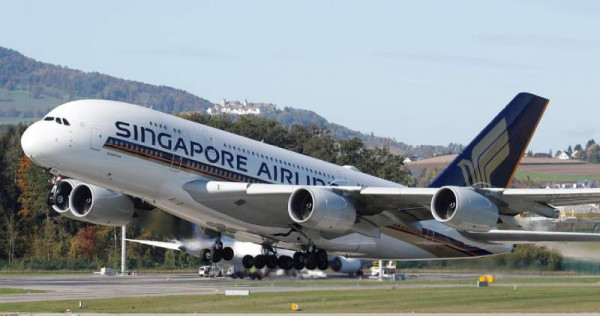
SINGAPORE/SYDNEY – Singapore Airlines Ltd (SIAL.SI) said it had secured up to $19 billion of funding to help see it through the coronavirus crisis and expand afterward, in a sign of confidence travel demand will eventually return.
As many carriers around the world look for cash to weather the crisis, Singapore Airlines’ majority shareholder, state-fund Temasek Holdings [TEM.UL], said it would underwrite the sale of shares and convertible bonds for up to $15 billion. Singapore’s biggest bank DBS Group Holdings Ltd (DBSM.SI) provided a $4 billion loan.
“This transaction will not only tide SIA (Singapore Airlines) over a short term financial liquidity challenge, but will position it for growth beyond the pandemic,” Temasek International Chief Executive Dilhan Pillay Sandrasegara said.
“The delivery of a new generation aircraft over the next few years will provide better fuel efficiencies as well as meet its capacity expansion strategy.”
SINGAPORE: With bigger wage offsets, property tax rebates of up to 100 per cent and more help for badly-hit sectors, Singapore’s newly announced fiscal “bazooka” will help to alleviate the strain that businesses and households are feeling from the COVID-19 outbreak, said economists.
But it will not be able to prevent a recession in Singapore, given the uncertainties over the virus’s spread around the globe and disruptions in the world economy, they added.
Deputy Prime Minister and Finance Minister Heng Swee Keat on Thursday (Mar 26) announced a S$48 billion stimulus package to save jobs and support workers; provide businesses, especially those that have been directly impacted, with help to cope with near-term challenges; as well as strengthen economic and social resilience.
This is on top of the S$6.4 billion announced in Budget 2020 last month. Altogether, Singapore will earmark close to S$55 billion, or about 11 per cent of its gross domestic product (GDP), for its fight against the coronavirus pandemic.
The Resilience Budget is bigger than any of the support packages Singapore has had. It is more than double of what had been the biggest – a S$20.5 billion Resilience Package rolled out during the global financial crisis in 2009 – while other off-Budget packages for the downturns in 1998, 2001 and 2003 ranged from S$230 million to S$11.3 billion.
The Government plans to draw up to S$17 billion from the national reserves for this and has been given an in-principle approval by President Halimah Yacob. This will be the second time Singapore is dipping into its past reserves for special support packages, with the first being in 2009.
A NECESSARY “BAZOOKA”
The S$48 billion figure exceeded economists’ expectations, who had pencilled in a range of S$7 billion to S$33 billion.
But such a “big bazooka” is necessary to cushion the slowdown, said CIMB economist Song Seng Wun, citing preliminary growth figures that show the economy shrinking a worse-than-expected 2.2 per cent year-on-year in the first quarter.
Policymakers have also downgraded the official growth forecast for 2020 to between -4 per cent and -1 per cent, a worse outlook from an earlier predicted range of -0.5 per cent to 1.5 per cent.
“With the economy projected to contract by up to 4 per cent, which would be the most severe since independence, the largest-ever fiscal package is necessary,” Mr Song told CNA. Singapore’s worst recession thus far was during the Asian Financial Crisis in 1998, when the economy contracted 2.2 per cent for the year.
OCBC’s head of treasury research and strategy Selena Ling said: “The shocking first-quarter GDP growth print suggests that the Singapore economy was (in) a cardiac arrest and the Resilience Package is the CPR that is being administered.”
But this latest resuscitation will not keep out a recession scenario, she added.
“A recession likely still beckons this year, with risks firmly tilted to the downside,” said Ms Ling.
Maybank Kim-Eng economists Chua Hak Bin and Lee Ju Ye, who expect negative growth of 2.3 per cent this year, said the fiscal support will reduce job losses and the extent of unemployment.
But it will not be able to lift GDP growth or corporate revenues, they added.
Echoing that, HSBC economists said the recession scenario is “simply a reflection of the gargantuan challenge” confronting Singapore.
“While the spread of the virus domestically has been relatively well contained, the economy is nonetheless affected on multiple levels as a financial services, manufacturing, tourism, and logistics hub.
“Most worryingly, the impact of sharply slowing trade volumes and the collapse in oil prices have yet to seen,” they said.
Clouds over the Singapore skyline. (File photo: AFP/Roslan RAHMAN)
NEW MEASURES – WHAT’S GOOD, WHAT CAN BE BETTER
The measures announced on Thursday included larger wage support and scrapping of property tax for those harder-hit sectors, deferment of corporate income tax payments for three months, S$20 billion to be set aside as loan capital and enhancements to various financing schemes for firms.
Worst-hit sectors will also be given more relief – a S$350 million enhanced aviation support package, S$90 million for the tourism industry when it recovers, a further S$95 million for taxi and private hire car drivers and S$55 million for arts and culture.
This slew of measures sent a clear message that the Government “will do whatever it takes to support the labour market”, HSBC economists wrote in a note.
Given that a rapid labour market deterioration would exacerbate the ongoing downturn, authorities are “attempting to nip any plans for widespread job retrenchments in the bud”, they said, adding that substantial wage subsidies have been effective in preventing a more severe domestic downturn in 2009.
“The finance minister is following a time tested recipe,” they added.
There will also be income relief and more training support for the self-employed. For instance, eligible self-employed persons will get to receive S$1,000 a month in cash for nine months under a new scheme – a move that Ms Ling applauded as “a big deal”.
“It will probably not fully offset the drop in business demand, but at least it recognises that the gig economy is here to stay.
“It does not fully address the structural issues of job security, but that’s something to discuss further down the road after we ride out the COVID-19 storm,” she said.
Together with the cash payouts for low-income workers, unemployment benefits and the additional cash transfers for households, it’s about “boosting morale” during a difficult time, said Mr Song.
“We cannot avoid a recession but what we can do is to cushion the impact on the broader economy by making sure that as many businesses stay afloat and as many people have jobs. These will hopefully support morale.
“Because if your morale is negatively affected, it will impact consumption and amplify the downturn,” he told CNA.
But more can be done and some observers pointed out that the retail sector has been excluded from the enhanced wage offsets, even though they are among the worst-hit.
Ms Ling said bigger wage offsets could be given to retailers, alongside more assistance for PMETs who lose their jobs in the form of cash payouts for the self-employed.
“But perhaps the Government is reserving some things for the third package if there needs to be one,” she said.
Mr Heng, while announcing zero property tax for qualifying commercial properties, reiterated his call for landlords to do their part and pass on these rebates to their tenants “fully”.
While some observers like CBRE head of research for Singapore and Southeast Asia Desmond Sim said this will further incentivise landlords to ease rental costs, some tenants remain skeptical.
The SG Tenants United for Fairness, an informal group of mall tenants that have banded together over the past weeks, said landlords have “mostly taken their time” with the earlier rebates, with help rendered thus far being “very scattered and insufficient”.
“We don’t see any reason to think the zero sum game mentality of landlords has changed with this latest Budget,” a spokesperson said.
Overall, economists from Maybank Kim-Eng reckoned that the newly announced supplementary Budget “may be sufficient for six to nine months”.
“But if the world and Singapore remains in recession in the fourth quarter, another fiscal package may be necessary,” they said.
Mr Heng has said that with uncertainty remaining in the horizon, the Government will continue to monitor the situation closely and when necessary, it will be prepared to propose further draws on past reserves.
If that happens, Singapore certainly has the fiscal muscle to do more, said Mr Song.
The full size of Singapore’s reserves – which comprise the Monetary Authority of Singapore (MAS), GIC and state investor Temasek – is kept confidential for strategic reasons.
Economists are expecting the central bank to deliver the next boost to the economy at its policy meeting on Mar 30.
An easing move is almost certain, economists said, although there are varying expectations of what that might be.
Instead of setting interest rates, MAS operates a managed float regime for the Singapore dollar, allowing the exchange rate to fluctuate within an unspecified policy band.
It changes the slope, width and centre of that band when it wants to adjust the pace of appreciation or depreciation of the Singapore currency.
At the very least, the central bank is likely to flatten the slope of the Singapore dollar nominal effective exchange rate (S$NEER) policy band, said economists from at least four financial houses.
HL Bank strategist Jeff Ng said: “They are letting fiscal policy do the heavy lifting and monetary policy to mainly support, provide liquidity and prevent any contagion effect, which is why I’m expecting them to move gradually with flattening the slope for now.”
There are others who expect the MAS to pull two punches at one go – to opt for a neutral stance and adjust the mid-point lower. Such moves will significantly weaken the Singapore dollar.
Barclays economist Brian Tan said the downgraded growth forecast likely implies “a dramatic swing in the output gap deep into negative territory”, which MAS will attempt to offset with an additional downward re-centering.
For Mr Song, the central bank could make an even more drastic move next week.
“Weaker inflation and sharply weaker growth which may be protracted gives the MAS room to shift the policy band to neutral and re-centre the policy band to a lower level.
“Because we now have a high level of uncertainty about the future path of the economy and inflation which is expected to persist, it may even allow the MAS to widen its policy band,” said the veteran economist.
“This is, after all, an unprecedented downturn with an uncertain growth path ahead.”
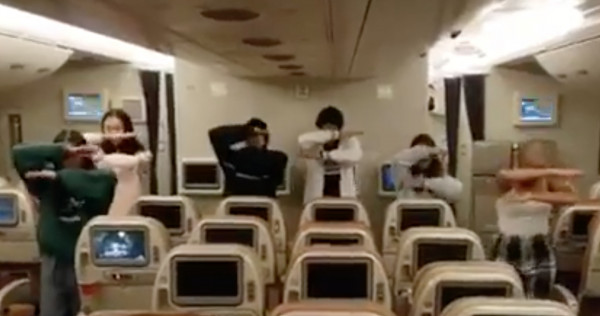
But one group of Singaporean students on the last flight out from New Zealand came up with a way to thank the crew that was just plane awesome.
The students from New Zealand School of Dance in Wellington won the hearts of both Kiwis and Singaporeans when they performed a Maori song dedicated to the crew on their Singapore Airlines (SIA) flight, reported Stuff.
A heartwarming video shared by the school yesterday (March 26) showed the six students standing at the front of the cabin and giving a spirited rendition of their school’s waiata, a Maori song complete with a symbolic dance.
After planning for 18 months and spending more than $15,000, Ms Vivian Kwok has had to put her dream of a perfect wedding on hold indefinitely.
Her nuptials, which had been slated for April 5, which is also her birthday, can no longer go ahead as planned after the latest safe distancing measures to stem the spread of Covid-19.
“No one knows when things will improve. I am feeling a bit helpless, but I am trying to be positive,” Ms Kwok, 26, told The New Paper yesterday:
“I am grateful my family has been supportive. We have been mentally preparing for this eventuality since January when the virus started spreading.”
Ms Kwok said that several guests were flying in from overseas, and friends in the medical sector had taken time off to attend the wedding.
“It has been a logistical challenge, with everyone having to adjust their schedules accordingly. Now we will have to do it all over again.”
Ms Kwok is thinking of going ahead with the customary portion of the wedding with just immediate family members and hopes to hold the wedding reception later this year, Covid-19 permitting.
SINGAPORE: Individuals, event organisers and owners of premises who break rules meant to curb the spread of COVID-19 in Singapore could face jail terms and fines under new regulations that came into effect at 11.59pm on Thursday (Mar 26).
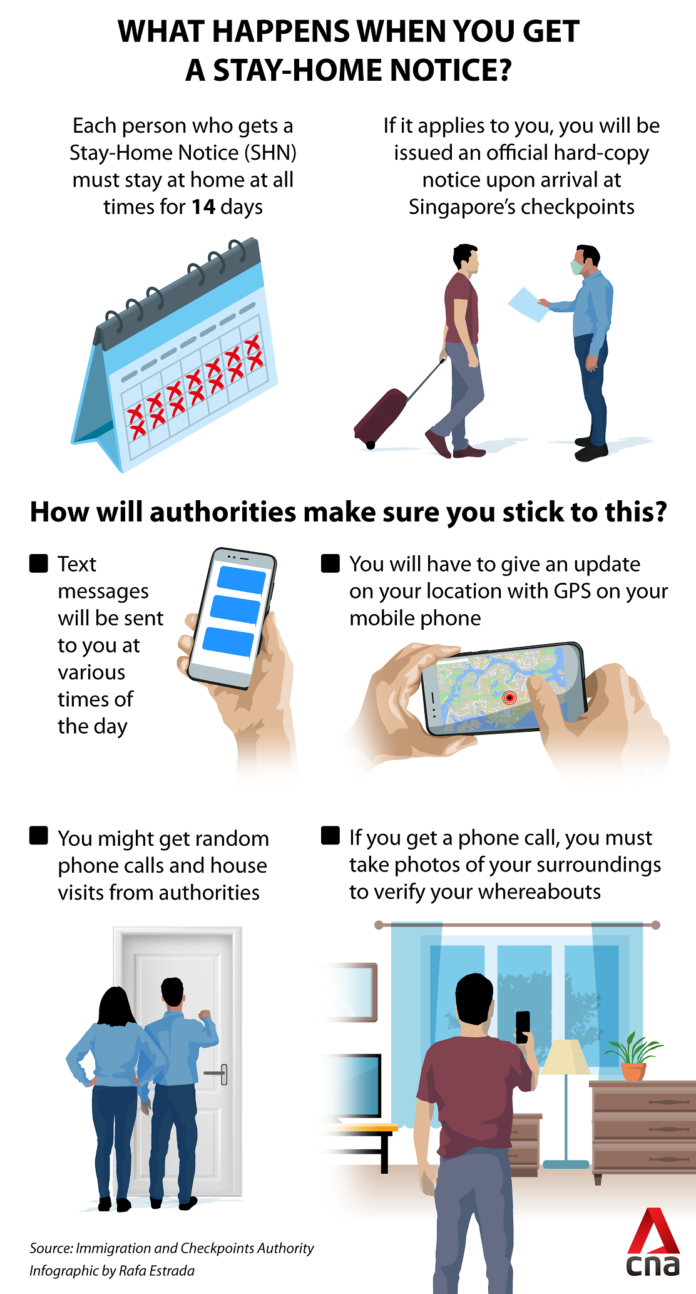
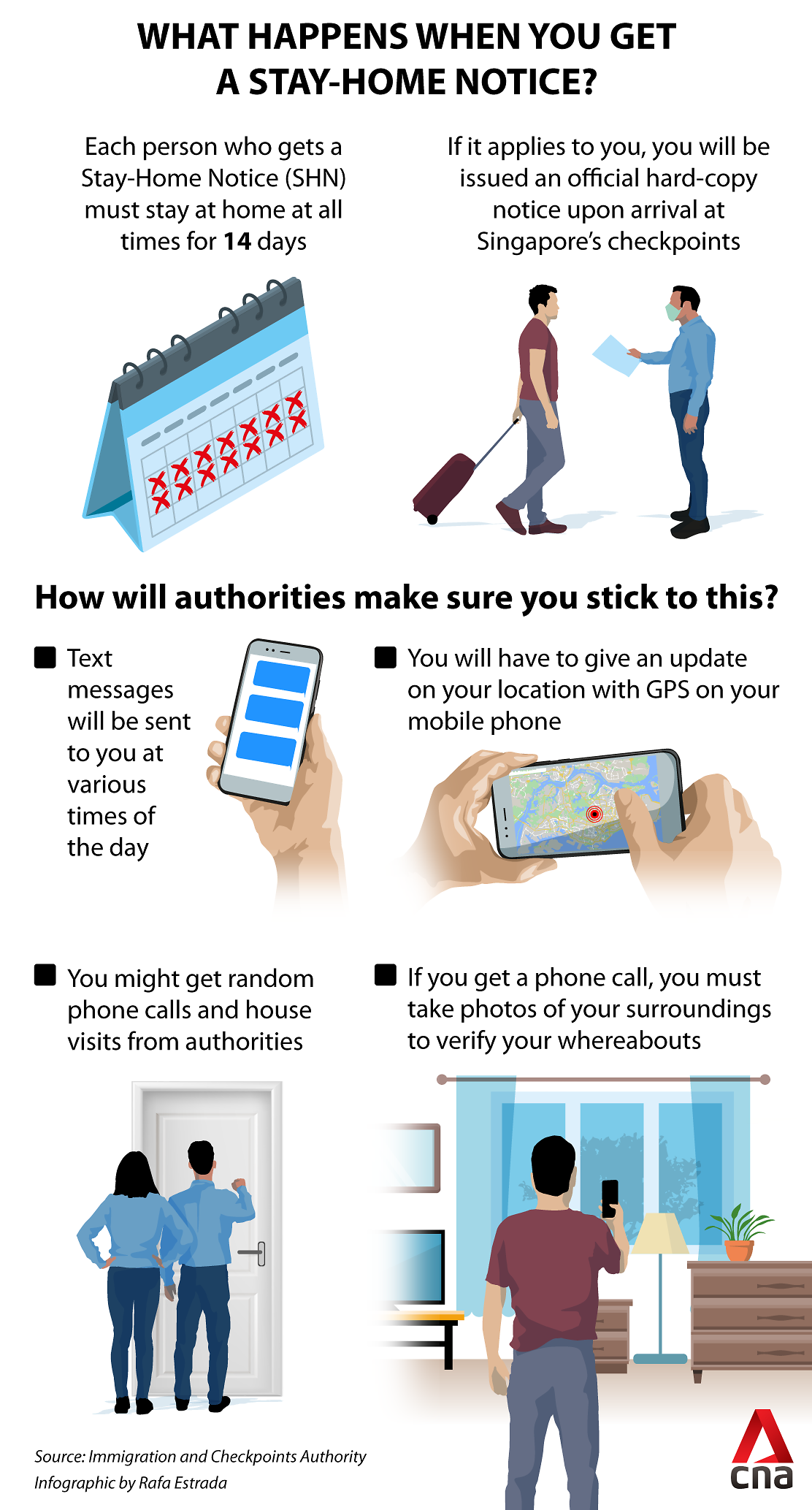
Those who breach their stay-home notice will also face similar penalties.
The regulations, which come under the Infectious Diseases Act, will give legal force to the safe-distancing measures announced by the COVID-19 Multi-Ministry Taskforce, and provide “enhanced enforcement” for breaches of the stay-home notice, the Ministry of Health (MOH) said in a press release.
Those found guilty of breaching the safe-distancing rules may be jailed up to six months, or fined up to S$10,000, or both, MOH said.
As previously announced, starting from Friday, gatherings outside of work or school are limited to 10 people, who must maintain 1m distance from each other. This applies in settings where “interactions are non-transient”, such as at supermarkets, restaurants and shopping malls.
Owners of premises and event organisers must ensure that non-fixed seating is at least 1m away from any other seat at all times. If seats are fixed to the floor, alternate seats need to be demarcated as a seat not to be occupied.
In public places where queues are formed, such as at retail stores or supermarkets, individuals need to stand 1m apart in the queue.
Business owners and event organisers who do not abide by these regulations may be jailed up to six months, or fined up to S$10,000, or both.
Individuals who intentionally sit on demarcated seats or stand in a queue less than 1m away from another individual could also face the above penalties.
In addition, the regulations also prohibit those certified by a doctor to have acute respiratory symptoms from leaving their place of accommodation for five days “without reasonable excuse”, starting on the day the medical certificate is issued.
Those found guilty of failing to comply with the above rule may be jailed up to six months, or fined up to S$10,000, or both
SINGAPORE – Rumours that the Government will raise the Disease Outbreak Response System Condition (Dorscon) alert to Red, the highest level, are false.
“We are aware there has been false information purveyed on various platforms that we are going to declare Dorscon red, that the Government is going to go into a lockdown mode, that we are going to scale back the MRT and bus services,” Communications and Information Minister S. Iswaran told reporters at Parliament on Thursday (March 26).
“All of this is completely untrue. We have issued clarification through the Gov.sg WhatsApp service. Such false information is completely irresponsible and it just serves to raise the level of anxiety and cause fear and panic in our population.”
There are four alert levels – green, yellow, orange and red – depending on the severity and spread of the disease. Each one contains advisories to the public and describes the impact on the community, including steps to be taken in daily life such as temperature screenings and border measures.
Singapore raised the alert level from Dorscon yellow to orange, the second-highest level, in February.
SINGAPORE: One of the most common precautions most of us encounter each day during this coronavirus outbreak has been advisories urging people to practise good hygiene and social distancing.
But elections will challenge these public norms officials are painstakingly putting in place.
Standing close to people at crowded rallies, handling personal identification and voter slips, and heading to booths others have just used to exercise your voting rights all make for a lethal combination that could increase the risk of community transmission.
For this reason, the ongoing Democratic party primary voting in the United States, South Korea’s National Assembly election in April, and a possible Singapore election amid the COVID-19 outbreak should concern election commissions, political leaders and voters.
It is easy enough for national and local governments to invoke regulatory powers to prohibit large public gatherings such as concerts or sporting events, and for venue or event organisers to similarly decide so at their own initiative. Postponing elections, however, is a more difficult political and legal decision.
In many jurisdictions, national and local governments are empowered under existing constitutional or legislative provisions during national emergencies to postpone elections.
US states, including Connecticut, Georgia, Kentucky, Louisiana and Ohio, have in recent weeks postponed their primaries to select the Democrat presidential nominee, given growing concerns over the coronavirus.
Voters cast their ballots for early voting at the Los Angeles County Registrar’s Office in Norwalk, California, a day ahead of the Nov 6 midterm elections in the United States. (AFP/Frederic J. BROWN)
But the challenge to seeking a mandate to postpone elections, if not already built into a political system, becomes more complex and could distract policymakers from needed attention on combating the COVID-19 outbreak.
A postponed election may also give the impression the incumbent government cannot competently manage a public health emergency or seeks to take advantage of the situation to extend its term in office.
After the Sep 11 terrorist attack, New York City Mayor Rudy Giuliani, whose term was scheduled to end on Jan 1, 2002, sought an extension his term.
He received minimal support with commentators noting that neither the United States nor New York City has ever postponed the transfer of power, because the public was convinced it could not get along without the current incumbent and that the very concept went against the concept of being governed by the rule of law.
Where the political and legal bar to postpone an election is high, most electorates will generally prepare for a safe election, notwithstanding the COVID-19 outbreak, particularly where there is a growing expert consensus that the pandemic could last a year or more.
LESSONS FROM PAST AND RECENT ELECTIONS
Looking at contemporary history offers few lessons for best practices for election commissions preparing to execute public elections while discouraging public gatherings in a COVID-19 outbreak.
Asia’s SARS outbreak in the first half of 2003 did not coincide with a significant election, with national elections in Cambodia and Japan and local elections in Hong Kong occurring in the second half of the year.
Similarly, the 2015 Middle East respiratory syndrome outbreak in South Korea did not coincide with an election.
More recent developments may be instructive. Israel held a parliamentary election in early March amid a brewing outbreak.
The Israeli health ministry encouraged voters to exercise their democratic right to vote and re-assured the public of safety and hygiene standards at polling stations.
A paramedic in a protective suit helps a man as he prepares to vote in a special polling station set up by Israel’s election committee. (Photo: Reuters)
Eligible voters under home quarantine after travel to locations in Asia and Italy were allowed to drive to designated pop-up polling stations created especially for them. Israel’s red cross, the Magen David Adom, supplied personnel to staff the voting stations wearing protective gear.
In Taiwan, which has avoided huge surges in cases seen in neighbouring territories, the Kuomintang’s chairman election on Mar 7 saw new safety measures rolled out at polling stations, with regular disinfections, social distancing and masks worn by staff. The KMT urged voters to first take their temperature at home and refrain from voting if they were feverish.
Still, the outbreak also saw voter turn-up at 36 per cent, compared to 58 per cent at the last KMT chairmanship election in 2017.
ON THE CAMPAIGN TRAIL – MEET DON’T GREET
As most regions around the world implement lockdowns, quarantines and self-isolation, there will be knock-on effects for the political campaigning period, typically filled with pomp and generating strong public interest.
Candidates and party officials must wrestle with how best to adjust day-to-day operations during this season, a challenge made more formidable when face-to-face interactions have remained the mainstay of most political campaigns around the world, with meet-and-greets, walkabouts and rallies dotting the electoral calendar.
Such activities requiring close contact should be reduced, if not eliminated, to pare down physical contact between candidates or staff and voters. Mass events like rallies are potential super-spreader events that should be done away with.
Public gatherings should have size limitations and stringent social distancing rules in place. In smaller townhalls, campaign organisations should collect relevant contact information in case contact tracing becomes necessary.
In the US, Democratic presidential candidates Joe Biden and Bernie Sanders cancelled primary night rallies, a prudent decision that avoids the risk of large crowds congregating in a single venue. The Washington DC debate between the two was held with no physical audience.
As physical campaign events shuttered, daily operations have blossomed online, heralding a new normal in digital political engagement.
Democratic presidential hopefuls former US vice president Joe Biden and Senator Bernie Sanders greet each other with a safe elbow bump before the start of the Democratic presidential debate on Mar 15, 2020 (Photo: AFP/Mandel Ngan)
Both Biden and Sanders have ceased in-person events, choosing instead to focus on virtual meetings, broadcasted interviews and speeches, while their campaigning machineries switched to mass texting, video conference calls and Facebook live events.
AT THE POLLING STATION
Authorities must balance encouraging voter turnout against the need to reduce congregating and visits to polling stations by vulnerable population segments such as the elderly.
Polling stations dos and don’ts such as those issued prior to Singapore’s 2015 general election typically refer to facility safety or prohibited activities rather than virus prevention measures, and should be updated and publicised as early as possible prior to the vote.
Around the world, election commissions are considering opening a larger number of stations, in facilities that have sufficient air circulation, requiring disinfection every few hours, with sufficient space inside and outside to allow voters to queue with at last 1.5m between each person and staff. Pens or pencils should be single-use.
We must expect polling stations to also implement temperature screening, provide and instruct on masks and sanitisers, put medical resources on standby, and ensure all polling station staff are well versed in standard operating procedures with regard to sick voters.
Staff should also be instructed on measures to check identification and notifications (such as Singapore’s poll cards) without being in close contact. A redundancy plan is necessary for voters eligible to use that station, in case it must suddenly close.
Some countries avoid the polling station on voting day altogether. South Korea has a well-developed early voting system.
Some US states allow in-mail ballots and are preparing to issue detailed instructions on requirements for witness signatures and timelines for ballots to be distributed and received.
Others are considering scaling up curbside voting, typically reserved for people with disabilities, so voters can vote without getting out of their cars, or even e-voting but the US Democrat Iowa caucus has shown tech is no panacea and technical glitches can feed misinformation.
A paramedic in a protective suit watches as a woman wearing a mask and gloves leaves after voting in a special polling station set up by Israel’s election committee so Israelis under home-quarantine can vote, in Ashkelon. (Photo: Reuters)
Where laws permit, mobile polling stations should be set up to allow populations vulnerable to illness, such as the elderly in assisted living facilities, to vote early.
Where voting also involves overseas diaspora populations who can vote at embassies and consulates, staff must be trained on new safety measures to accompany voting, including contact tracing and precautions for voters with a travel history to infected regions.
Consular posts located within office buildings that are doubling as polling stations must also coordinate additional safety measures with building management. Early planning by foreign ministries, health ministries and elections agencies will be necessary.
The coronavirus may reshape political campaigning and inform the logistics of how voters choose their leaders.
But with the right precautions, there’s no reason a pandemic should threaten the ability of candidates to get their message out to the people or stop voters from safely exercising their right to vote.
Download our app or subscribe to our Telegram channel for the latest updates on the coronavirus outbreak: https://cna.asia/telegram
Ross Darrell Feingold is director, business development at SafePro Group, a consultancy that advises corporate clients about travel safety and risk mitigation around the world.
SINGAPORE: Against a backdrop of about 18,589 deaths and 415,000 infections, the COVID-19 outbreak is bringing the world to its knees. Globally, production lines and supply chains have been disrupted, stock markets are bearing down and businesses are buckling under.
Singapore is no exception. We are seeing the effects of the COVID-19 outbreak just three months from when it first began in Wuhan last December. Prime Minister Lee Hsien Loong has said “definitely our economy will take a hit”. Economists are warning of a recession.
On Thursday (Mar 26), the Ministry of Trade and Industry released data showing that for the first three months of this year, Singapore’s economy contracted by 10.6 per cent from the previous quarter. The Ministry downgraded Singapore’s growth forecast for 2020 to between -4 per cent and -1 per cent.
The Government has offered not one but two rescue packages. The first – the S$4 billion Stabilisation and Support Package delivered during Budget 2020 on Feb 18 – aims to help workers stay employed through wage support and reskilling.
It will also support firms with cash flow and operating costs. The second, announced on Thursday, is a S$48 billion Resilience Budget to save jobs, help households cope with immediate costs and assist companies with cost and credit pressures. .
But how much will the rescue packages help to save jobs?
SALARY CUTS HAVE STARTED
Consumer confidence has impacted discretionary spending. Fears of a disease spread have kept more people indoors,though there are some who spend through digital transactions.Also, workers spend less, fearing a wage cut or layoff. Many industries are thus affected by this drop in consumer spending.
The aviation and tourism sectors have already been hit hard. Given global travel bans, airlines are seeing flight bookings cancelled or postponed.
According to reports, Singapore is bracing for a drop of between 25 and 30 per cent to tourist arrivals this year. Other sectors that are feeling the heat: Retail, food and point-to-point transport services.
This was a Mar 22 announcement that the country will not allow short-term visitors to enter or transit through the country in view of the heightened risk of importation of COVID-19 cases. With tourist arrivals down to near-zero for the near future, the spill-over effect willreverberate through many other sectors of the economy.
Big players have already announced pay cuts of between five and 15 per cent for senior management. Earlier this week, Singapore Airlines CEO Goh Choon Phong declared in a memo to staff that he will be taking a cut of 30 per cent from his base salary while also increasing pay cuts for other senior management and varying amounts of no-pay leave for staff.
FILE PHOTO: A Singapore Airlines plane sits on the tarmac at Singapore’s Changi Airport March 11, 2020. Picture taken March 11, 2020. REUTERS/Edgar Su/File Photo
Other big companies are also exploring the following options: bonus cuts, wage and hiring freezes, and voluntary no-pay leave. These could be a way to shore up their brand names and to maintain shareholder value.
Unlike big, public-listed organisations, smaller firms usually do not have share market values to worry about. But they have another big woe — cash flow.
The ability to maintain a healthy cash flow will weigh heavily on bosses’ minds in the next quarter or two.
RETRENCHMENTS MAY INEVITABLY COME
Manpower costs can be substantially high for firms, depending on the nature of business.
According to the Ministry of Trade and Industry’s 2018 Economic Survey of Singapore, in the services sector, labour costs account for 13 per cent of business costs for firms in the transportation and storage sector and around 40 per cent or more for firms in labour-intensive sectors such as accommodation, food services and retail.
Indeed, for the food sector, labour costs appear to be a comparatively high proportion of their business costs. Food retailers, like Sheng Siong and NTUC Fairprice for example, see staff costs account for as much as 42 per cent of their operating expenditure, data released by DBS in 2019 showed. For food services outlets like BreadTalk, Koufu and Old Chang Kee, this is even higher at about 44 per cent.
Not surprisingly then, manpower costscan be a target for cutswhen companies head into a downturn. Initially, as companies assess jobs and salaries over this period, they are likely to first freeze hiring, then bonuses and lastly wages.
People may be asked to go on shorter work weeks. These belt-tightening measures will mean cost savings in the near term — and less likelihood of rampant layoffs or now.
But where the outbreak will likely last beyond six months,, what would be the job-and-salary game plan then? Certainly, with limited savings, disrupted supplies and creditors at the door, small firms may have to do the inevitable — let people go.
A business that still has recurrent revenue through subscription or membership fees, such as gyms, may still have earnings locked in for a few months. Such companies stand a better chance of positive cash flow and staff retention, even as they may request for their staff to go on no-pay leave.
On the other hand, businesses dependent on staying open to generate revenue like food and beverage outlets, engage in transactions that are upfront — paid via cash or card. Fewer diners means an immediate negative impact to cash flow. As business shrinks, inevitably to survive, they may have to cut head count.
The Resilience Budget delivered on Thursday by DPM Heng Swee Keat, may bring some relief in the form of the Government’s co-funding 25 per cent of wages for local workers until the end of the year. This increases to 50 per cent for workers in the food services sector and 75 per cent for those in aviation and tourism. It will go a long way in helping companies manage their cost pressures and thus jobs.
MITIGATE THE FALL OUT
Despite this Resilience Budget to alleviate cost pressures, and although companies in Singapore have been doing really well in holding out against cutting staff, certain sectors and businesses may have to reduce headcount eventually, as the pandemic continues to put pressures on businesses.
COVID-19 has starved many companies that depend on retail traffic from customers as more people are staying at home.
Businesses that are dependent on staying open to generate revenue like food and beverage outlets, engage in transactions that are upfront — paid via cash or card- and could be hampered by negative cash flow by a drop in consumer. (Photo: Tang See Kit)
But laying off staff should really come last for companies. There are still opportunities for them to work on other measures that tackle their short-term balance sheet challenges but also strengthen their longer-term standing.
Firstly, business should realign business strategies both for the immediate and the longer-term. For instance, a clothing retailer could slash prices of items — even in-season wear. Businesses should use sales earnings for cash flow. Businesses should also look at clearing inventory and reassess how much stock they need for the next season.
Companies should also look to investing in new revenue streams — e-commerce, for instance. Tuition schools could put in place or bone up infrastructure for digital classrooms for instance.
Secondly, businesses must look past the crisis. They should review business processes, decentralise supply sources and plug into myriad schemes in place to refresh the skills of employees in their 40s and 50s, arguably those who will be the hardest hit in bad times.
Finally, employers should not consider layoffs as the first line of defence. They will find it harder to scale up — rehire good talent — in good times.
Rather, it is crucial for companies to protect their employees. Look to a wage freeze or shorter work week first before pay cuts or layoffs. Or, redesign a job — say, job-sharing at pro-rated pay — to save two valued employees.
This is also the time for a cross-functional team — business, human resources and management — to assess how best to retain talent while belt-tightening, and how to tap on the two rescue packages to buffer operation costs.
Businesses should also be sensitive in communicating bad news. If they have to cut employee salaries, assess if they can also dish out an assurance of reinnstatements or back-pay when the business picks up again. Will people have to take no-pay leave? Assure them that they have jobs to return to.
This is of course if the situation returns to business as usual once COVID-19 tapers out.
Linda Teo is Country Manager, ManpowerGroup Singapore.
SINGAPORE: Sailors Kimberly Lim and Cecilia Low are used to facing uncertainties, whether it be the wind, the waves or the weather. And with the 2020 Tokyo Olympics postponed to a yet to be disclosed date, they could possibly face another.
But the duo, who had qualified to compete in the 49erFX event, think the postponement of the quadrennial Games was the right call.
“We believe it is the fairest and safest decision. The current situation amidst the global pandemic is way greater than us and sports. It is time to focus on the safety and health of the people,” they said.
Earlier on Tuesday (Mar 24), a joint-statement issued by the International Olympics Committee (IOC) and the Tokyo 2020 organising committee on Tuesday said that the Games “must be rescheduled to a date beyond 2020 but not later than summer 2021”.
Singapore already has had a number of athletes qualify for the Games, including sailors Lim and Low, swimmers Joseph Schooling and Quah Zheng Wen, as well as gymnast Tan Sze En. Schooling was originally due to defend his 100m Butterfly gold in Tokyo.
Singapore’s top men’s badminton player Loh Kean Yew admitted that it was disappointing that the Olympics were postponed, but called it a “necessary measure”. Loh is ranked 36th in the world and stood a good chance of qualification.
“While it is disappointing that the Olympics got postponed because I’ve been training very hard in preparation for it, but the safety of everyone involved is the most important and I understand that this is a necessary measure,” he said.
But the road ahead will not be easy, especially for athletes who hold full-time jobs such as Joan Poh.
With the timeline of Olympic qualification meets and the exact date of the Games still up in the air, Ms Poh has to make a decision over whether to continue pursuing her Olympic dream, or to return to work.
“To me, qualification is as important as the Olympics, if not more important,” said Ms Poh, who is a nurse. “Most people see it as a postponement but there’s a lot more intricacies involved.”
For Ms Poh, who competes in rowing, it is a case of being stuck at the crossroads.
“It’s not the most logical thing for me to walk away from this campaign altogether now after I have put in four years, but it is also eating at me a lot that being frontline trained, I could be an extra pair of hands that can help in the current virus-fighting situation,” she said.
“I’ve invested so much into trying to pursue and Olympic dream and I feel torn between the two … If I do just go back to work, whatever I’ve gone through, whatever I’ve put my friends and family through will be for nothing. It’s not as straightforward.”
“We share a similar sentiment with respect to all the plans changing so drastically and the amount of uncertainty that lies ahead,” said Lim and Low, who qualified for the Games in December. “However, like sailing, we are always faced with uncontrollable factors, the one who manages them best will succeed.
“Our goal is to best perform at the Olympic Games and that has not changed. With the cards we have been dealt, we will adapt with an open mind to best restructure our plan with the new timeline in place.”
Fencer Amita Berthier is one of the athletes in the process of trying to qualify for the Olympics and has taken the announcement in her stride.
Singapore’s Amita Berthier celebrates scoring a point in the SEA Games women’s fencing semi-finals on Nov 3, 2019. (Photo: Matthew Mohan)
“Of course I was a bit disappointed as the qualifiers were really close and I had been working real hard for it. I took the year off from school to try and qualify for the Olympics,” said Berthier, who was originally due to compete in a zonal qualifier in Seoul, South Korea early next month. Winning the event would have meant Olympic qualification.
“But health is our number one priority and all the athletes should be in the best condition to be able to compete.”
The 19-year-old added that she empathised with those who had already qualified.
“I definitely feel for them, I hope they are not too gutted by this and they can keep their head up and keep going, keep working hard,” she said. “I’m sure they will be driven enough to work hard and achieve whatever they want to achieve at the Olympics.”
“With this extra time, we are going to take it as an opportunity to further better ourselves for the Games,” sailors Lim and Low.
“(The) first step is to sit down and revise plans with the new time frame and current constraints. It is going to be a historic Olympic Games, and we will go at it with all we got.”
A global pandemic (just like the one we’re going through right now) would mean that the time is nigh for the world to start deploying robots en masse. Machines can’t get infected, after all.
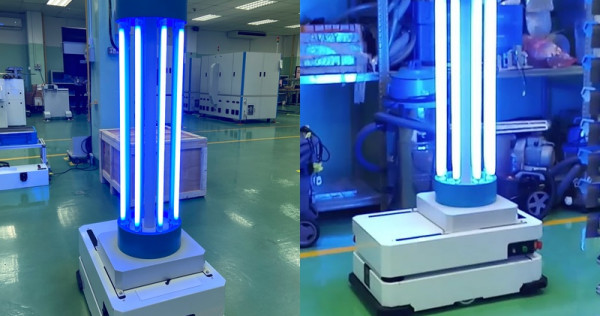
Singapore-listed company DiSa (apparently short for Digital Safety) Pte Ltd just unveiled the country’s first UV Disinfection Autonomous Mobile Robot, an automaton built to counter the eruption of Covid-19 infections.
Technologically, the robot’s not that huge of a leap — DiSa basically stuck some ultraviolet-emitting tubes onto a self-driving computer. The concept involves using a disinfection method that uses short-wavelength ultraviolet (UV-C) light powerful enough to irradiate microorganisms like bacteria and viruses to death. It’s the same tech you see at those 10-minute haircut joints, where barbers sterilise their tools in UV lightboxes.
The idea here is that the robot can make its way around rooms by itself as the UV-C tubes kill microbes in its vicinity. Equipped with laser sensors, the robot is able to map out a room’s layout before being able to automatically (and wirelessly) disinfect areas.