SINGAPORE – Shopping malls and standalone stores must limit the number of shoppers on their premises and disperse groups of more than 10 people, said the authorities on Thursday (March 26).
Operators of malls and standalone stores such as Ikea and Courts Megastore must reduce operating capacity to avoid having more than one person per 16 sq m of usable space – roughly the size of an HDB flat bedroom – to minimise overcrowding, especially during peak periods.
These safe distancing measures take effect from 11.59pm on Thursday until April 30, as Singapore’s fight against Covid-19 enters a new phase amid a wave of imported cases to the country.
The Enterprise Singapore, Housing & Development Board, Singapore Tourism Board and Urban Redevelopment Authority issued a joint statement with a list of measures operators must adhere to.
The new rules would require mall operators to allow tenants to mark queue spots outside their units, spacing shoppers at least 1m from one another.
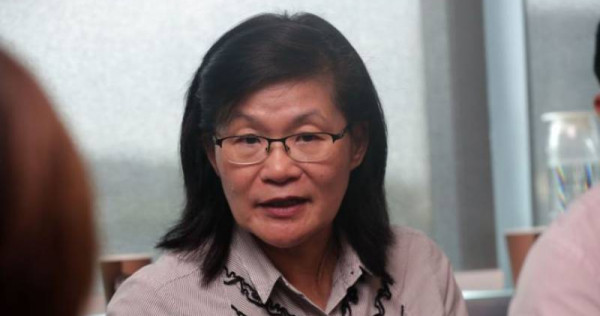
SINGAPORE – Those who are on five days’ medical leave should avoid contact with their elderly family members “at all cost”, warned the National Centre for Infectious Diseases’ (NCID) executive director Leo Yee Sin on Friday (March 27).
That is because the elderly are vulnerable to virus infections, including Covid-19, she said.
Those with symptoms of acute respiratory illness who are prescribed five days’s medical leave at home should avoid contact with all family members of age, even at mealtimes, said Professor Leo.
She added that if it is absolutely necessary to interact with others at home, those on medical leave should put on a surgical mask.
Separately, they should also take care of their personal hygiene, washing their hands frequently with water and soap or using hand sanitiser.
They should keep their surroundings clean, and preferably use a dedicated toilet which others in the house do not use.
If this is not possible, the toilet they use must be kept clean.
Prof Leo said: “This is necessary as we learn more about Sars-CoV-2 that causes Covid-19.”
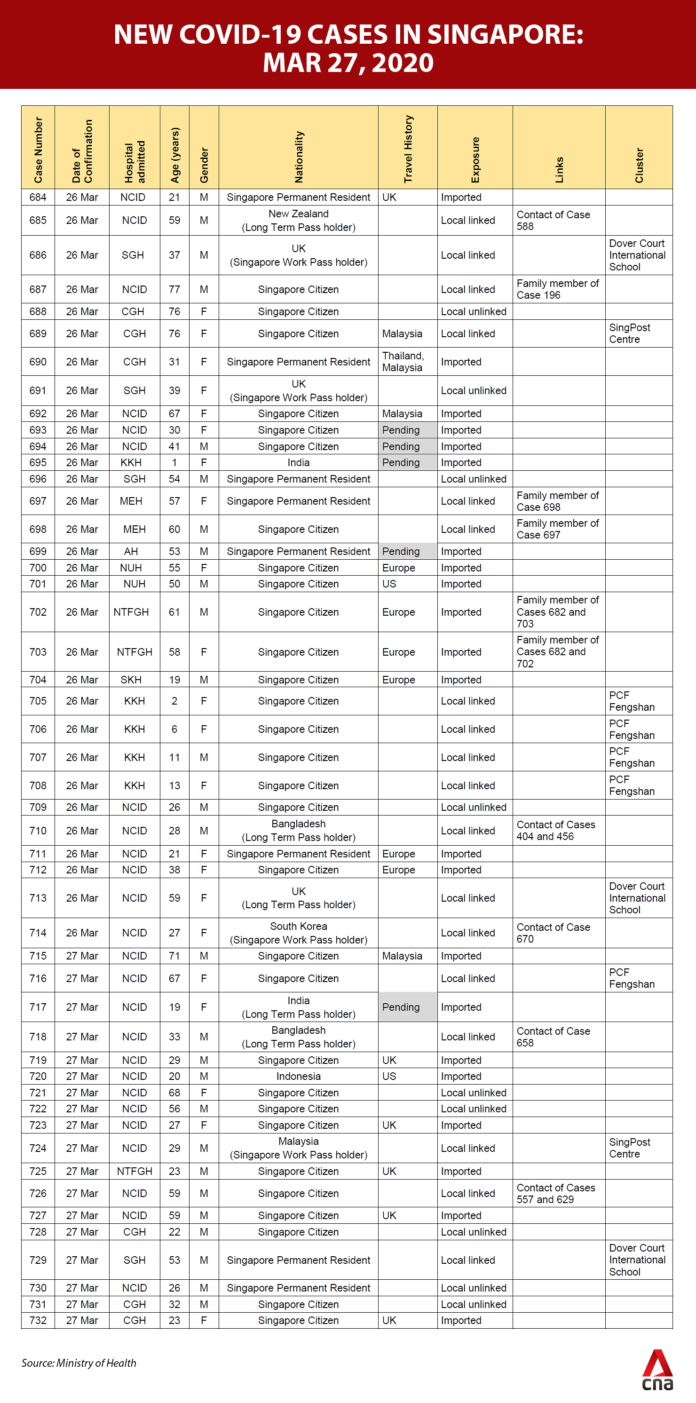
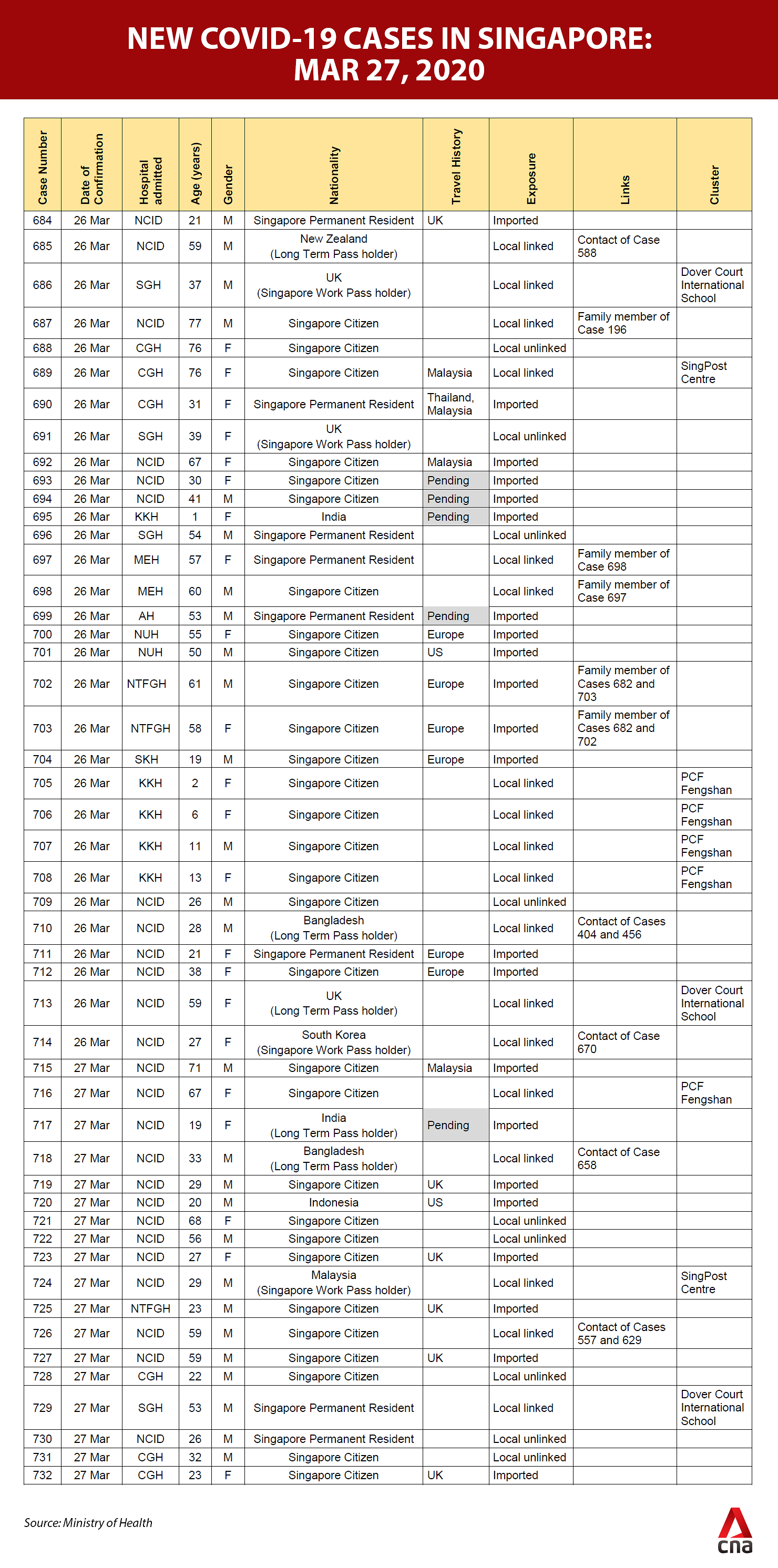
SINGAPORE: Singapore reported 49 new COVID-19 cases on Friday (Mar 27), bringing the total number of cases in the country to 732.
Of the new cases, 22 are imported and had travelled to Europe, North America and ASEAN, said the Ministry of Health (MOH) in a press release.
Eighteen of the cases are linked to clusters or previous cases, while nine cases are currently unlinked. MOH said that contact tracing is ongoing.
Out of the total number of cases, three of the confirmed cases (Cases 581, 689 and 724) are linked to a new cluster at SingPost Centre at 10 Eunos Road 8, said MOH.
Of the new cases, five are linked to the cluster involving PCF Sparkletots pre-school in Fengshan. The total number of infections arising from the cluster is 25.
Eleven more patients have recovered and were discharged, bringing the total to 183. Two patients died last Saturday.
Of the 432 confirmed cases who are still in hospital, most are stable or improving.
Seventeen are in critical condition in the intensive care unit, said MOH.
The ministry added that 115 cases who are clinically well but still tested positive for COVID-19 are being isolated and cared for at Concord International Hospital, Mount Elizabeth Hospital and the Community Isolation Facility at D’Resort NTUC.
PENALTIES IF SAFE DISTANCING RULES, STAY-HOME NOTICES BREACHED
Those found guilty of breaching the stay-home notice may be jailed up to six months, or fined up to S$10,000, or both under the new regulations. Those found guilty of breaching the safe distancing rules face similar penalties.
This is why it is absolutely crucial “to respond effectively to the immediate challenge, and also to give people confidence that we can cope with this”, said Mr Lee in a doorstop interview.
Mr Lee also said that Singapore “was under no illusions that this is the end of the story” as nobody could tell what lies ahead.
SINGAPORE: Analysts have welcomed the S$750 million of support set aside by the Government for the aviation sector, noting that it will help the industry recover more quickly from the blow dealt to it by COVID-19.
On Thursday (Mar 26), Deputy Prime Minister Heng Swee Keat announced a S$48.4 billion package – up to S$17 billion of which will be drawn from past reserves – to protect jobs and support the economy in the wake of the coronavirus outbreak.
More than S$400 million of that money will go to a jobs scheme, which will see the Government pay up to 75 per cent of the first S$4,600 of a worker’s monthly wages.
The other S$350 million will be for an enhanced aviation support package aimed at providing relief to businesses in the aviation sector. This will help retain a minimum level of air connectivity that is “critical to enable overseas Singaporeans to return home and keep our supply lines for essential goods open”, Mr Heng said.
“With travel demand practically zero, airlines are bleeding,” said International Air Transport Association (IATA) spokesman Albert Tjoeng.
“The measures announced by the government will be a big help and is appreciated by the industry at this dire time when airlines are struggling for survival,” he added.
Mr Heng’s speech also showed that the Government has a “clear understanding of the strategic role that aviation plays in the success of Singapore’s broader economy”, Mr Tjoeng added.
Independent aviation analyst Brendan Sobie said the schemes will help the aviation sector to recover more quickly.
“The job support scheme should enable the SIA Group, Jetstar Asia and other types of companies in Singapore’s aviation industry such as handling companies, catering companies and others, to maintain headcount, ensuring flying can quickly recover to pre-crisis levels when demand returns,” said the former chief analyst for the CAPA – Centre for Aviation.
“This is important as a quick recovery in air transport will help support a quick recovery for tourism and other industries as well as the overall economy.”
However Jochen Wirtz, vice dean of graduate studies at the National University of Singapore Business School, said demand for flights may decline in the future.
More firms may choose to use video conferencing for meetings instead – as they do now because of the COVID-19 pandemic – rather than shell out for business trips, he said.
“We laud the support measures for the aviation sector – which have been offered, in particular, to airlines, airport and ground handling operators,” said Association of Aerospace Industries Singapore (AAIS) chief executive Sia Kheng Yok, noting that such measures will help maintain Singapore’s capabilities as an air hub.
“Given the strong link and interdependence between aviation and aerospace, we hope that the Government will also consider extending additional support to our sector as well,” he added.
Noting the aerospace industry in Singapore employs about 21,000 people and commands 10 per cent of the global aerospace market, Mr Sia said airlines rely on aerospace companies and maintenance, repair and overhaul (MRO) services to keep their aircraft flying.
“Though the immediate outlook is uncertain, we must ensure that our industry retains its capabilities and talent to provide critical support for the aviation sector once air travel recovers,” he said, adding that AAIS has formed its own COVID-19 taskforce to support the aerospace sector through this crisis.
The facade of Jewel and the control tower of Changi Airport are seen in Singapore, Apr 11, 2019. (File photo: Reuters/Feline Lim)
SINGAPORE AIRLINES NOW IN “STRONG LONG-TERM POSITION”
Airlines have been badly hit following the imposition of travel restrictions by numerous countries to stem the spread of the pandemic, with IATA projecting US$252 billion in lost revenues as a result.
National carrier Singapore Airlines (SIA) is among the many companies that have suffered, having cut 96 per cent of its capacity and grounded 138 planes from its fleet of 147.
Budget carrier Scoot, which is under the Singapore Airlines Group, has also suspended flights to 49 destinations and grounded 47 of its 49 aeroplanes.
The effort is underwritten by the airline’s biggest investor, Temasek Holdings, which owns about 55 per cent of the group.
“This amount of money they’re raising is staggering. It’s a lot,” said Professor Wirtz, who has co-authored two books on SIA.
Noting that the SIA Group recorded revenue of S$16.3 billion in the last financial year, he suggested that the national carrier aim to not just survive the current crisis but come out stronger.
“Following the Government support package and Temasek equity announcements, the SIA Group is now in a very strong long-term position relative to the overall Asian airline industry,” said Mr Sobie.
While other countries may be pressured to offer similar packages for their airlines, not all governments or government-linked investment firms would be able to offer such a level of support, he added.
SIA may be able to take advantage of opportunities that arise from this crisis by acquiring other airlines or accelerating expansion in Singapore, or both, he said.
“Singapore could emerge as an even stronger hub over the long term, helping justify the massive investments in additional capacity at Changi,” he noted.
However, Shukor Yusof, the founder of aviation consultancy Endau Analytics, suggested the amount SIA hopes to raise means it may be expecting a long-term downturn.
“The amount to be raised is impressive at first glance but it reinforces the gravity of the situation and the length of time SIA may have to endure before the market stabilises,” he said.
Mr Sobie said it is difficult to gauge how long the current crisis will last for the aviation sector.
“While there may be a partial recovery in the second half of this year, it could be a year or even longer before there is a full recovery,” he said.
“However, SIA is now in a very enviable position to be able to wait until the international market recovers, whenever that is.”
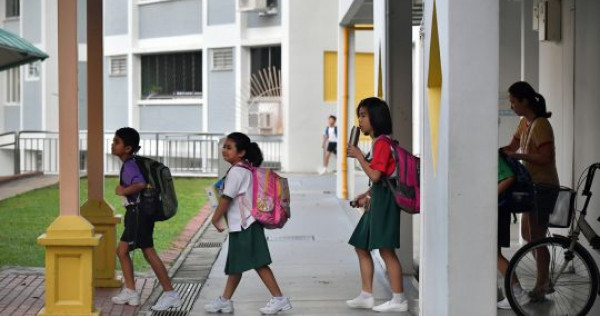
SINGAPORE – Starting April 1 next week, all schools will conduct one day of home-based learning a week, in the light of the recent spike of Covid-19 cases in Singapore.
Primary schools will do so on Wednesdays, secondary schools on Thursdays, and junior colleges and centralised institutes on Fridays.
Education Minister Ong Ye Kung said on Friday (March 27) that this move will better prepare parents and students for more days of home-based learning if and when required.
Schools will also stagger dismissal times to reduce the congestion when students take public transport or the school bus home.
Singapore has ramped up measures over the past few weeks progressively to curb the spread of the virus, said Mr Ong.
“So likewise, for schools, which are a major part of people’s lives, we have also been stepping up (measures). So we will not want to do something dramatic, sudden, that will result in school closure,” he said.
“We still have options. We are not like many countries, where they are forced into sudden school closures.”
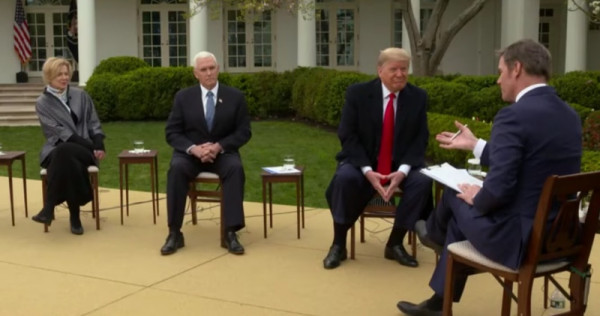
United States President Donald Trump’s insistence on calling the coronavirus a “Chinese virus” hasn’t exactly won him fans in the Asian-American community. It certainly hasn’t done anything to stem the outbreak in the country too as the US now leads the world in confirmed Covid-19 cases — more than China, the epicentre of the pandemic.
As the virus wreaks havoc across the nation, the White House has been paying close attention to Singapore, the country that has won praises left and right for its exemplary handling of the outbreak.
The thing is, they might have gotten a few details wrong about Singapore. Which wouldn’t be the first time, too.
With a total of 2,594,740 Singaporeans eligible to vote in the next general election (which will have to arrive soon, coronavirus or not), that’s a whole lot of first-time voters this time around.
To be exact, there are about 80,000 more Singaporeans who are now able and required to participate in the democratic process of choosing who should run their country.
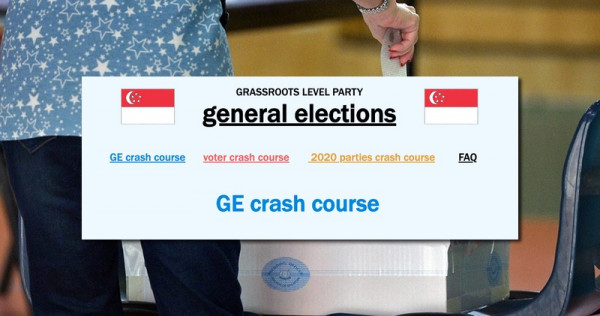
It’s a huge responsibility, of course — and one that could scare many first-timers who previously might not even have cared about local politics. Fortunately for the thousands of new citizens and millennials who’ve come of voting age, there’s a way to grasp everything they need to know quickly, and it’s called Grassroots Level Party.
An independent initiative by music composer Rachel Leia Devadason and filmmaker Megan Lim En, the two former School of the Arts (SOTA) students teamed up to quickly produce a no-frills website that provides a basic overview of the general elections in Singapore.
SINGAPORE: No decision has yet been made as to when a General Election will be called, Prime Minister Lee Hsien Loong said on Friday (Mar 27).
When asked about a possible General Election amid the current COVID-19 outbreak, Mr Lee said that the Government needs to consider if it is possible for them to conduct an election at this time, among other factors.
“I think that we have to weigh conducting an election under abnormal circumstances, against going into a storm with a mandate which is reaching the end of its term. We have to make a decision on that,” Mr Lee said during a door stop on the Resilience Budge at the Istana.
“I would not rule any possibility out.”
A General Election must be held by Apr 14, 2021, which marks the end of the term of the 13th Parliament.
Senior Minister Teo Chee Hean told Parliament on Wednesday that based on advice from the Attorney-General’s Chambers (AGC), to “delay an election beyond the required date in such a manner is unconstitutional”.
The only circumstances in which the elections can be put off is when a state of emergency has been declared.
Presiding officers check the voter details at a polling station in Singapore on Sep 11, 2015. (Photo: AFP / ROSLAN RAHMAN)
Mr Lee said it is a “very difficult decision” on whether an election is called during the current situation.
“We are going into a very big storm and you want to have the strongest team and mandate, and the longest runway so that Singapore can have the best leadership to see it through this storm,” said Mr Lee.
“That is a very desirable, and in fact, an essential requirement for us to see through this together.
“If we were sure that the thing could settle within the next six months, I think we can say well, let us wait for six months, let things calm down, then we carry on. But nobody can say.”
He said he expects matters to “easily get worse before it gets better”.
“You have to make a judgment in this situation with an outbreak going on, with all sorts of exceptional measures implemented in Singapore. Is it possible for us to conduct an election and to get this done, so that we clear the decks and we can go through and deal with whatever lies ahead of us. That is a question,” Mr Lee added.
He noted that “nothing can be organised” should there be a lockdown, citing the situations in the UK and in Wuhan previously. Local and mayoral elections in the UK that were set to take place this year have been postponed until May 2021.
Mr Lee also pointed to the American primary elections in several states and the recent election in Israel and said that an election “can be done” if solutions are provided for issues that crop up.
Voters at a polling station in Singapore. (File photo: Ray Yeh)
“If you are shut down like the UK is shut down or like Wuhan was shut down, everybody stays at home, then nothing can be organised. How do I get ballot boxes, how do I count the ballots, and how do people come up to vote? It cannot be done,” said Mr Lee.
“But short of that situation, even when you have restrictions and some safe distancing measures, life still goes on. People are working, people can travel, people can conduct the poll, and countries have been conducting elections,” he said.
“So these are, to a large extent, solvable problems. You have to think of solutions for them, but it can be done,” said Mr Lee.
“Once all the requirements are cleared, and that includes the electoral boundaries which has been reported, the electoral rolls have to be certified and republished. Once that is done, that means all possibilities are there. I will have to judge the situation,” he added.
“IT IS NOT MASAK MASAK”
On Wednesday, National Development Minister Lawrence Wong teared up in Parliament as he thanked healthcare workers and other Singaporeans who have contributed to the fight against the COVID-19 outbreak.
When asked about the 4G leadership, Mr Lee said he was “very happy” Mr Wong and Health Minister Gan Kim Yong are co-chairing the multi-ministry task force.
Deputy Prime Minister Heng Swee Keat is advising the task force and was “instrumental” in putting together the Budget and supplementary Budget, which was announced on Thursday, he added.
“People have seen them and they have watched them respond,” Mr Lee said.
“They have watched them answer questions, deal with emergency situations – runs on food, runs on toilet rolls, big outbreaks, bad news – I think that they have gained experience and confidence.
“I believe that they have also gained in trust and rapport with people. It is a formative experience for the population and the leadership.”
He said Singapore has seen generations of citizens who have overcome difficult times.
“The first generation, they were born in the crucible of fire,” said Mr Lee.
“They came in, the world was upside down and they were part of a fight. They went fully into the fight and they brought us through that – independence, separation and forward. That was the Pioneer Generation.”
The Merdeka Generation built and played a big part in bringing Singapore forward and they knew “what life was about”.
While Singaporeans have had stable circumstances for “quite a long time”, it is difficult to imagine when “things are turned totally upside down”.
“We regularly tell people Singapore is fragile, what we have achieved is precious, we have to continue to work hard, it can disappear in a moment if you take your eye off the ball,” Mr Lee said.
“People listen to us, but in the back of their mind they do wonder if it is true or not. After all, the show has gone on for so many years. Maybe you can go on autopilot.
“This shows everybody that it is quite serious – it is absolutely existential – life and death. It is not masak masak.
“If you come through this, you have more than one generation settled, knowing what Singapore is about.”
SINGAPORE: The People’s Action Party (PAP) will tweak ground outreach activities to comply with more stringent safety distancing requirements due to COVID-19.
“The People’s Action Party will abide by the guidelines that the taskforce has imposed and make adjustments to its usual outreach activities,” a party spokesperson told CNA on Friday (Mar 27).
“This would include exploring different formats for our upcoming activities when necessary.”
Authorities have announced that from Friday, gatherings outside school and work will be limited to a maximum of 10 people, in the latest measure to curb the outbreak. People should still observe a safe distance of 1m from each other.
Political parties have been implementing precautionary measures during outreach, like not shaking hands and entering people’s homes.
On Thursday, the Workers’ Party (WP), Singapore Democratic Party (SDP), Singapore People’s Party (SPP) and Progress Singapore Party (PSP) announced they would suspend activities like house visits and walkabouts in light of the worsening outbreak.
Marine Parade GRC Member of Parliament (MP) Seah Kian Peng had also posted on Facebook that MPs in the constituency will do the same to protect residents’ health and safety.
“Please remember that safe distancing is a personal responsibility and, if done collectively and stringently, will enable the safety of our families and fellow Singaporeans,” he wrote.
“If you need any help during this period, visit us at our meet-the-people session (MPS) or email us. The necessary precautionary measures will be taken during our MPS.”
Ang Mo Kio MP Ang Hin Kee told CNA on Friday he has suspended such activities in his Cheng San-Seletar ward a week ago to avoid congregation and any potential transmission of the virus.
“MPS will continue, but we are doing it outdoor at the void decks with safe distancing,” he said, noting that only 10 people can be there at once. “We’ve been recommending people to send queries online if they have the option.”
The WP said it would temporarily suspend all house visits in light of “stringent social distancing measures and the spike in COVID-19 cases”.
MPs and town councillors will continue to inspect estates and serve residents’ needs with the help of one or two people, it said, adding that other WP members will walk the ground “with this directive in mind”.
SDP said it would stop house visits and walkabouts until further notice and resume them when circumstances permit, while PSP told CNA it would suspend all outreach activities for now.
“Clear guidelines on how we should conduct our activities when we resume will be communicated to all our members,” PSP said.
SPP chairman Jose Raymond told CNA his team has stopped knocking on doors and has not planned major community-based events during this period in Potong Pasir.
SOME MPs PRESS ON
Despite that, some MPs are pressing ahead with ground outreach activities, albeit with precautionary measures in place.
Mr Zainal Sapari of Pasir Ris-Punggol, Singapore’s largest GRC by voters, told CNA he and the other MPs are still discussing whether to suspend the activities.
“I think there is still some value for us to do very targeted house visits to help vulnerable families,” he said, adding that he still needs to visit some families to get their approval for lift upgrading.
“But we won’t be doing the common type when we visit every unit in each block.”
Mr Zainal said the MPs might also continue with their “important” market visits in smaller groups.
“I notice when I do market visits, I have residents approaching me to voice concerns or give feedback,” he stated. “Of course, when we talk with residents, we have to ensure we maintain that social distance.”
The labour MP said residents have been receptive to the latest safety distancing measures, explaining that they are not offended when he’s had to turn down handshakes.
Even if the MPs decide to stop ground activities, Mr Zainal said staff would still be able to reach out to residents through group messages on Telegram.
“I have asked respective residents’ networks to broadcast if there’s any dengue or crime alert very specific to those areas,” he added. “On most of my house visits, I work with my residents’ network to subscribe to this Telegram channel.”
PARTIES EXPLORE ALTERNATIVES
When it comes to MPS, Mr Zainal said he is mulling over the idea of asking residents to leave their mobile numbers and particulars so volunteers can call them back.
“So, you really don’t have to be at the MPS,” he said, explaining that this would reduce large crowds and long waiting times.
MP for Pasir Ris-Punggol GRC Zainal Sapari speaking in Parliament on May 15.
Mr Ang said his team has identified families in need and have volunteers leave items like groceries, food and hand sanitiser on their doorsteps.
“We also work with volunteer welfare organisations to do some of these low-contact, low-engagement home deliveries,” he added.
The WP said it remains contactable via all its digital platforms and emails, while SPP’s Mr Raymond said most Potong Pasir residents have his number and are aware that “my lines are always open”.
WILL DOWNTIME AFFECT EXPOSURE?
As for whether suspending ground outreach could affect politicians’ visibility at a time when a General Election could be called soon, Mr Ang said: “If you wait until now to do engagement when you are the MP serving the area, it’s a bit late right?”
This comes as Senior Minister Teo Chee Hean told Parliament on Wednesday that it is unconstitutional to delay the election, which must be held by April 2021, even as it remains unknown how long the COVID-19 outbreak will last.
MP Ang Hin Kee at the 2017 National Day Rally at ITE. (Photo: Howard Law)
Mr Ang said programmes to help residents have been ongoing, adding that residents look for more than just visibility on the ground.
“This includes things like lifts for overhead bridges, linkways, silver zones, helping the needy and vulnerable,” he added. “Your initiatives, Parliament debates, proposals and engagements with different communities.”
Mr Zainal said he has been engaging residents to get their sentiment and reassure them during the current turbulent times, “not specifically for the coming General Election”.
“You won’t find me going around distributing party flyers,” he said. “We won’t be doing that.”
During house visits, Mr Zainal said he tries to get residents’ views on whether companies were in favour of them working from home.
“That type of messaging is really to make sure that under the current COVID-19 crisis, we as MPs are getting a ground sensing of whether we are taking the right or wrong steps,” he added.
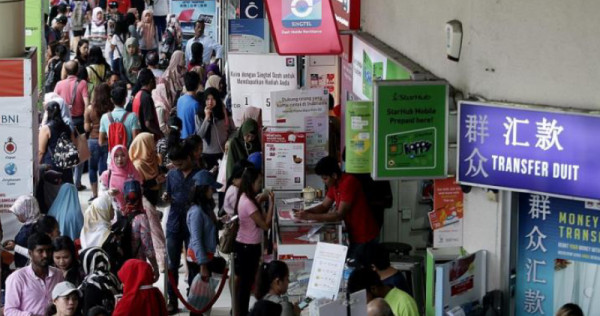
She was in the Philippines on home leave, but her employer in Singapore terminated her work permit before she could even return.
Sharing the story of the Filipina, who is a foreign domestic worker (FDW) here, Mr Michael Khan, director of employment agency Workforce Manpower, told The New Paper: “She wanted to come back, but her employer did not want her to return because she was afraid she might bring the virus back.
“Her employer told her she could not afford to pay her if she was quarantined, and just decided to cancel her work permit. The maid is now jobless, and very unhappy about it.”
This is an example of employers taking extreme measures in response to the Ministry of Manpower (MOM) announcement on March 15 that all new or returning FDWs must serve a 14-day stay-home notice.
On top of that, growing tensions between FDWs and employers over rest day arrangements have surfaced, even before MOM’s advisory last Saturday urged maids to stay home on their rest days.