Home Blog Page 4063

Street protest against Taiwan firm for mass fish deaths in Vietnam

HANOI – Hundreds of people demonstrated in Vietnam on Sunday against a Taiwanese firm they accuse of causing mass fish deaths along the country’s central coast, with some also blaming the government for a sluggish response to a major environmental disaster.

Though an official investigation has found no links between the fish deaths and a $10.6 billion coastal steel plant run by a unit of Taiwan’s Formosa Plastics, public anger against the company has not abated.

Hundreds gathered in Hanoi holding banners that said: “Formosa destroying the environment is a crime” and “Who poisoned the central region’s waters?”

Others said: “Formosa out of Vietnam!” and took aim at the government for being aloof in what it now describes as one of its worst environmental disasters.

Demonstrations are rare in Vietnam and uniformed and plain-clothes police are usually quick to suppress them. On Sunday they cleared traffic to allow demonstrators to do a lap of a big lake in the heart of Hanoi.

Huge numbers of dead fish have appeared at farms and on beaches since April 6, impacting 200 km (124 miles) of coastline in four provinces, with no known cause.

The environment minister has demanded Hung Nghiep Formosa Ha Tinh dig up its waste pipe at the steel project to enable government to monitor its discharge.

The government’s initial probe said the cause could be “red tide”, when algae blooms and produces toxins, or a release of toxic chemicals by humans.

What has stoked public anger was a comment by a Formosa official who said Vietnam had to choose between catching fish and shrimp and building a modern steel industry.

“Here is Vietnam’s territory and there shall never be any case in which a Formosa steel plant has the right to tell the Vietnamese people to choose,” protester Cao Vinh Thinh said.

Several hundred protesters marched in Ho Chi Minh City, the economic hub, according to multiple accounts on Facebook, which is used by 30 millions Vietnamese.

State-controlled media has not reported any of the demonstrations.

Social media and witnesses said protests also took place in central Quang Binh province on Friday, with fishermen throwing fish on the highway after failing to sell their catch. The accounts could not be verified by Reuters.

The government on Saturday ordered the trade and agriculture ministries to help buy seafood caught during deep-sea fishing.

Image: 
Category: 
Publication Date: 
Sunday, May 1, 2016 – 14:05
Send to mobile app: 
Source: 


Story Type: 
Others

Source link

More firms keen to hire those with disabilities

Image: 
Publication Date: 
Sunday, May 1, 2016 – 18:00
Send to mobile app: 
Source: 


Rotator Headline: 
At 92, she's McDonald's oldest employee
Rotator Image: 
Story Type: 
Others

Source link

K-drama superstar Bae Yong Joon and wife expecting first child

SEOUL – Korean Wave icon Bae Yong Joon, 43, and his wife of nine months, actress Park Soo Jin, 30, are expecting their first child, their agency said on Friday (April 29).

She will go to hospital next week to confirm her due date, said Yonhap News Agency, quoting the couple’s agency Keyeast.

Park, who has joined a new food show called Disciples Of Oksu-dong, will decide whether to stay on the show after going to hospital.


This article was first published on April 29, 2016.
Get a copy of The Straits Times or go to straitstimes.com for more stories.

Image: 
Category: 
Publication Date: 
Sunday, May 1, 2016 – 13:25
Send to mobile app: 
Source: 


Story Type: 
Others

Source link

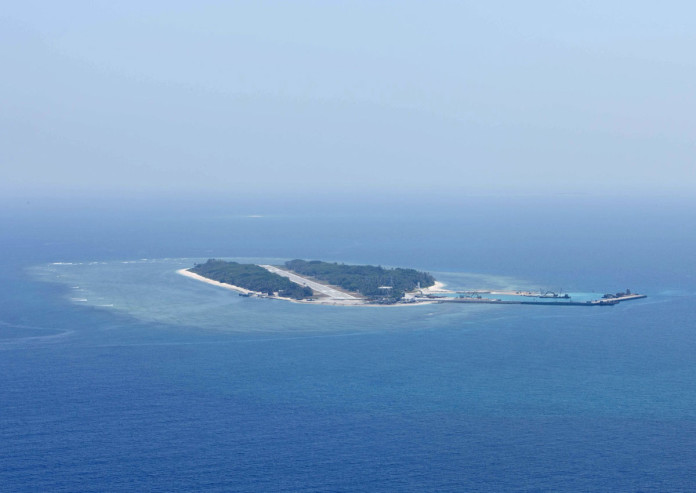
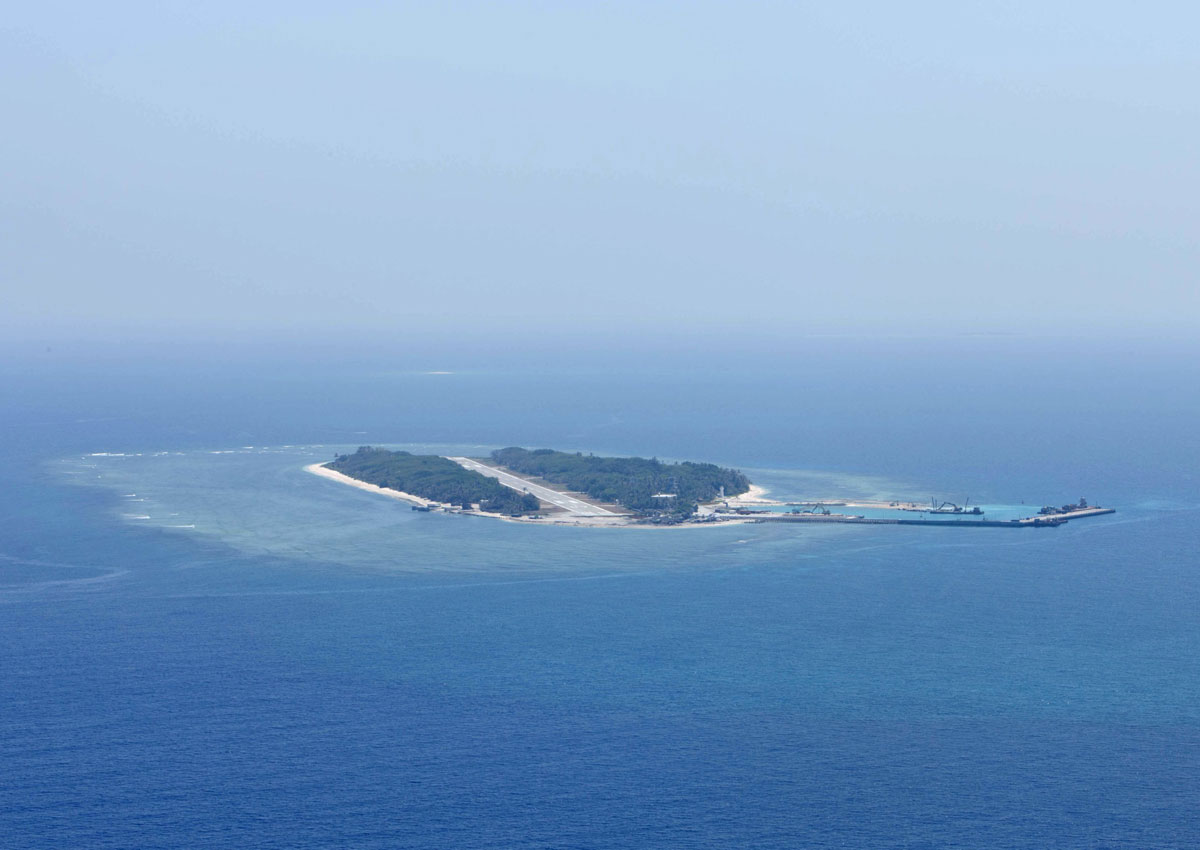
Taiwan sends patrol ships after boat seized by Japan

Taipei – Taiwan Sunday sent two patrol ships to waters surrounding a Japanese atoll amid a dispute over the seizure of one of the island’s fishing boats there.

The detention of the “Tung Sheng Chi 16” near Okinotori-shima last week angered Taiwanese officials, who say Tokyo has no authority over the area.

A Taiwanese coast guard ship and another from the Council of Agriculture departed from the southern port of Kaoshiung Sunday.

“Japan has no right to ban our fishing boats from the area,” Taiwan’s coast guard adminstration said in a statement.

“The government will resolutely defend the rights and freedom of our fisherman in international waters.”

The mission will last for one to three months.

Between 100-200 Taiwanese boats fish in the waters around Okinotori-shima each year.

Japan say it has exclusive rights in the 200 nautical mile area surrounding the uninhabited atoll in the Philippine Sea.

But in addition to Taiwan, China and South Korea also reject the Japanese claim.

Taiwan’s defence ministry said it also plans to deploy warships to “appropriate waters” but spokesman David Lo declined to elaborate.

The maritime row is straining normally friendly relations between Taipei and Tokyo.

It follows a stand-off more than three years ago over a chain of islands in the East China Sea, when coastguard vessels from both sides attacked each other with water cannons.

The islands — known as Senkaku in Japanese and Diaoyu in Chinese — are controlled by Japan but claimed by both China and Taiwan.

But in 2013 Japan and Taiwan forged a fisheries agreement covering the waters off the island chain.

Image: 
Category: 
Blurb: 
Publication Date: 
Sunday, May 1, 2016 – 13:15
Send to mobile app: 
Source: 


Story Type: 
Others

Source link

Recent rise in yen 'extremely worrying': Japan finance minister

Tokyo – Japan’s finance minister said late Saturday the recent sharp rise in the yen is “extremely worrying”, adding Tokyo will take action when necessary.

The remarks, which suggest Tokyo’s possible market intervention, came after the Japanese unit surged to an 18-month high against the dollar in New York Friday.

It extended the previous day’s rally, which was boosted by a surprising monetary decision made by the Bank of Japan.

On Thursday, the central bank shocked markets by failing to provide more stimulus, confounding expectations it would act after a double earthquake and a string of weak readings on the world’s number three economy.

The dollar tumbled to 106.31 yen in New York Friday, its lowest level since October 2014, from 108.11 yen.

The greenback had bought 111.78 yen in Tokyo before the BoJ announcement on Thursday.

“The yen strengthened by five yen in two days. Obviously one-sided and biased, so-called speculative moves are seen behind it,” Japanese Finance Minister Taro Aso told reporters at Haneda airport.

“It is extremely worrying,” he said.

The finance minister left on a trip, which will also take him to an annual Asian Development Bank meeting in Germany.

“Tokyo will continue watching the market trends carefully and take actions when necessary,” he added.

A strong currency is damaging for Japan’s exporting giants, such as Toyota and Sony, as it makes their goods more expensive overseas and shrinks the value of repatriated profits.

Aso has reiterated that Japan could intervene in forex markets to stem the unit’s steep rise, saying moves to halt the currency’s “one-sided, speculative” rally would not breach a G20 agreement to avoid competitive currency devaluations.

Japan last intervened in currency markets around November 2011, when it tried to stem the yen’s rise against the greenback to keep an economic recovery on track after the quake-tsunami disaster earlier that year.

Image: 
Category: 
Publication Date: 
Sunday, May 1, 2016 – 13:01
Keywords: 
Send to mobile app: 
Source: 


Story Type: 
Others

Source link

SDP says character should not be an election issue

The Singapore Democratic Party (SDP) yesterday said it did not believe in attacks on character, after Prime Minister Lee Hsien Loong remarked that its chief Chee Soon Juan’s character “had not changed”.

Mr Lee, PAP secretary-general, had told reporters he would be concerned if Dr Chee were to be elected in the Bukit Batok by-election, adding: “What he says is one thing, but the reality is quite different”.

SDP central executive committee member Paul Tambyah said in a video uploaded on Facebook: “We believe that you can criticise what a person says, or what a person does, but don’t attack the person.

“It’s not right to question his character. A person is not defined by his or her actions or words. In my own field, a person is not defined by their disease… We need to debate the issues, not engage in character assassination.” He also said “neither me, nor anyone from the SDP, will use the same kind of language to criticise the PM, as the (ex) director of the National Neuroscience Institute”. He was referring to Mr Lee’s sister Wei Ling, who had alleged that the Prime Minister abused his power in organising for his own political ends what she considered excessive commemorations for their father’s death anniversary.

PM Lee replied last night: “Character goes to the heart of the fitness of a candidate, whether to be an MP, or indeed to hold any public office. It is understandable why SDP, and particularly Dr Chee Soon Juan, should wish it to be otherwise. But anyone standing for public office should be prepared to have his past actions examined, transparently and honestly, so that voters can make informed, responsible decisions as to who is fit and best qualified to represent them.”

Dr Tambyah also said Mr Lee may have been misled by Lianhe Wanbao, which “admitted to us that they made a mistake”. “They have since apologised to us,” he added.

Wanbao’s associate local news editor Ting Kheng Siong said Wanbao revised its online headline, but did not apologise. Its interview with Dr Chee was headlined “Chee Soon Juan does not regret ‘crazy past'”.

But SDP said the phrase “crazy past” did not come from him, and Wanbao changed this to “Chee Soon Juan: I’m proud of my past” as well as the report’s first paragraph. The rest of the piece was unchanged.

The SDP will hold its rally at Bukit Gombak Stadium tonight, from 7pm to 10pm.


This article was first published on May 1, 2016.
Get a copy of The Straits Times or go to straitstimes.com for more stories.

Image: 
Category: 
Publication Date: 
Sunday, May 1, 2016 – 14:00
Send to mobile app: 
Source: 


Story Type: 
Others

Source link

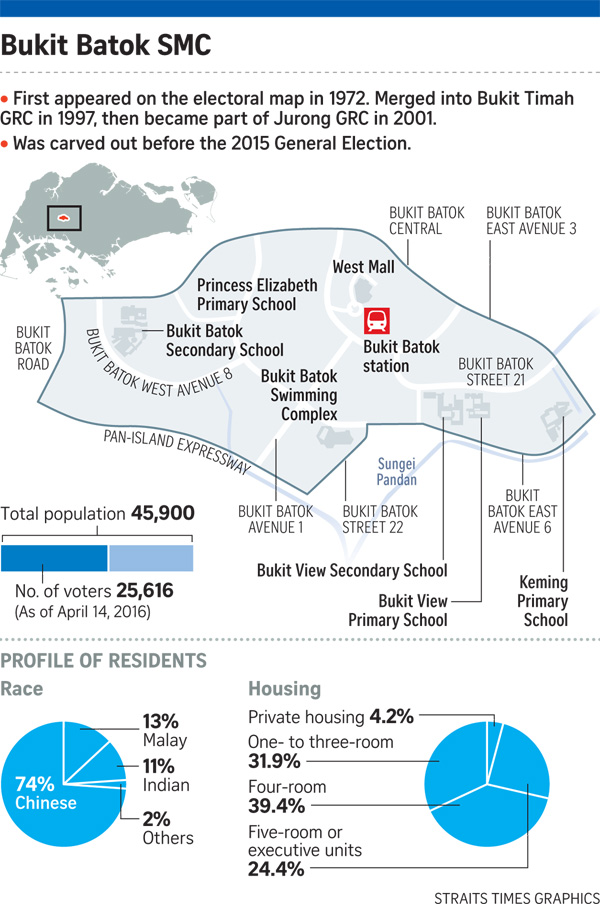
The contest for Bukit Batok

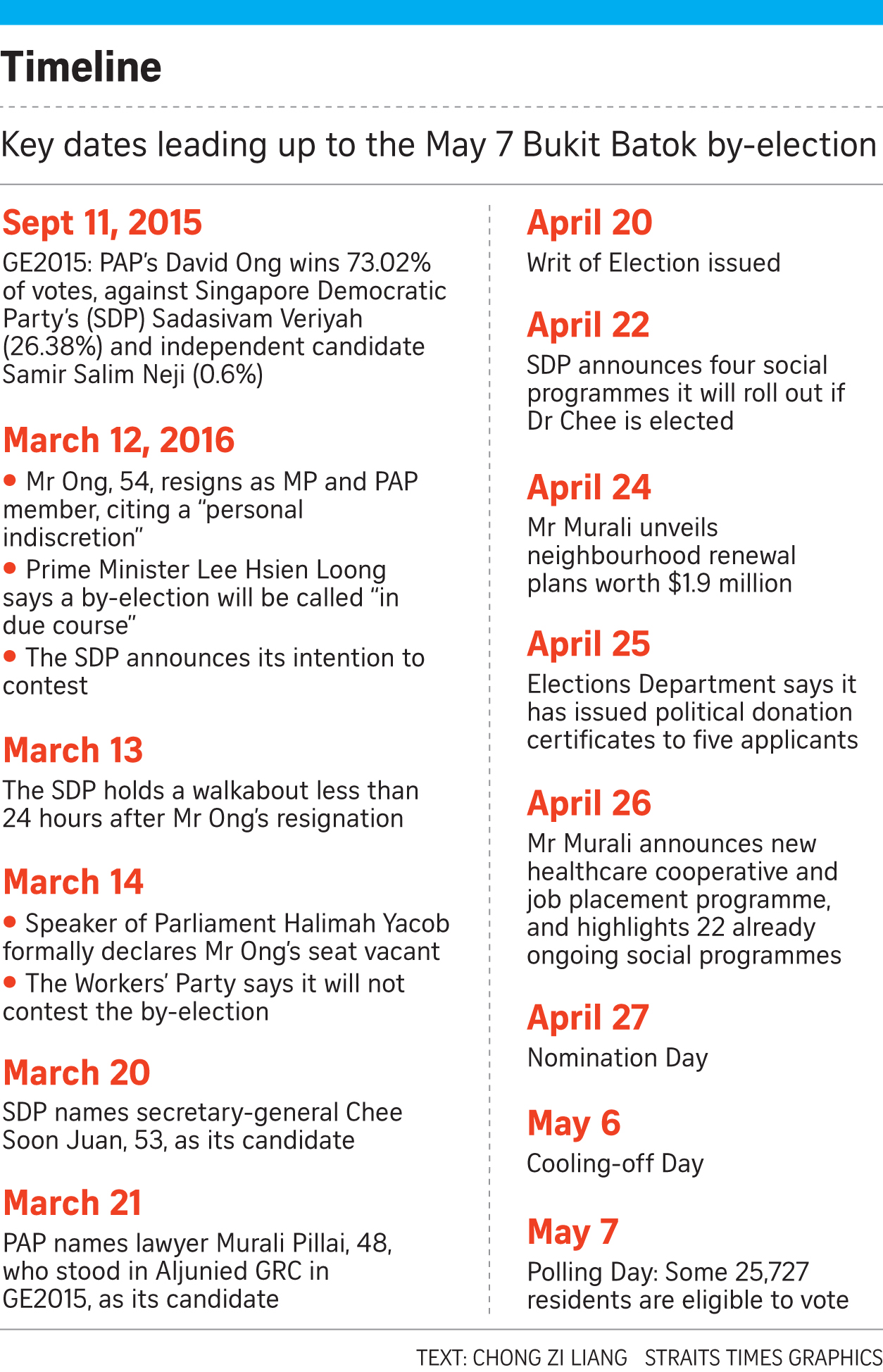
Today is Day Five of the nine-day campaign period for the Bukit Batok by-election on May 7.

Battle lines have been drawn in the mature estate in western Singapore, where some 25,727 eligible voters will cast their ballots this Saturday for the second time in only eight months.

The by-election was triggered by the sudden resignation on March 12 of former People’s Action Party (PAP) MP David Ong over a “personal indiscretion”.’

This is Singapore’s third by-election in four years. The last two, in 2012 and 2013, ended with a win for the opposition Workers’ Party.

The PAP goes into the by-election on the back of a nationwide swing at GE2015, the general election last September, where it garnered 69.9 per cent of the vote – 9.8 percentage points more than it secured in GE2011.

It is fielding lawyer Murali Pillai, 48, emphasising his extensive grassroots experience in Bukit Batok of more than 16 years.

Mr Murali’s opponent is Singapore Democratic Party (SDP) chief Chee Soon Juan, a veteran who contested his first election in 1992 – a by-election in Marine Parade.

At GE2015, Mr Ong won 73 per cent of the vote in a three-way contest against the SDP’s Mr Sadasivam Veriyah, who managed 26.4 per cent, and independent candidate Samir Salim Neji , who got just 150 votes and lost his polls deposit.

The task that Dr Chee now faces is to engineera swing of at least 23.7 percentage points.

Will Mr Murali, the first Indian PAP candidate to vie in a single- seat ward in recent elections, prevail? Or will it be Dr Chee, who says he has moved away from the adversarial politics of the past?

How big could the purported “by-election effect” be? How much will election pledges like estate upgrading – which has taken centrestage in this campaign – hold sway over voters? The Sunday Times looks at these issues.

What issues are in play?

PAP: Murali’s advantage is he’s back on familiar ground

The People’s Action Party (PAP) has stressed the long-term grassroots experience of its candidate, lawyer Murali Pillai, in Bukit Batok.

In cards he has distributed to residents, he writes: “It is my privilege to be with you in Bukit Batok, where I’ve served for 16 years.”

National University of Singapore (NUS) political scientist Hussin Mutalib says this works in the PAP’s favour because it would dispel any criticism that Mr Murali has been “parachuted” into the contest.

He was secretary of the Bukit Batok PAP branch for five years, and tended to residents when then MP Ong Chit Chung died in 2008.

Last Sunday, Dr Ong’s widow accompanied Mr Murali on a walkabout.

Although he moved to Aljunied GRC in 2012 and stood as part of the five-man PAP team that narrowly lost to the Workers’ Party (WP) last year, Mr Murali remains a familiar face in the area, has a good relationship with party activists and grassroots leaders, and can hit the ground running, should he be elected.

One measure of how he and the party are demonstrating those continuing and close ties is his election posters. Many show him with residents – a change from the formal candidate portraits that the PAP had previously used.

The party’s approach of fielding someone who has connections to and is known on the ground contrasts with that in the 2013 by-election in Punggol East.

The PAP had then fielded a political newcomer – colorectal surgeon Koh Poh Koon. He was seen as having been parachuted into an area that was new to him.

That disadvantage showed when he lost the seat to the WP’s candidate, Ms Lee Li Lian, who had contested in the 2011 general election and was making her second bid in Punggol East in the 2013 by-election.

Also central to the PAP’s campaign this time has been its track record in town council management and the upgrading and other work that has been put in place.

National University of Singapore (NUS) sociologist Tan Ern Ser notes that the party has highlighted “its long, capable, reliable stewardship of the constituency and town council management and the specifics it has delivered to residents”.

The prospect of continuity of programmes and projects is important to Bukit Batok residents such as student Cheng Ching Yi, 24, and housewife Jessie Toh, 59.

Mr Cheng, a Bukit Batok resident for 13 years, remarks that the estate has been clean and the facilities well maintained.

Bukit Batok was part of Jurong GRC from 2001 until it was carved out as a single-seat ward in last year’s elections.

The estate came under the Jurong Town Council, and now continues to be under the reconstituted Jurong-Clementi Town Council.

That means Bukit Batok enjoys the benefits of economies of scale and the support of its large neighbour, plus the experience of its MPs, including Deputy Prime Minister Tharman Shanmugaratnam, who anchors Jurong GRC.

Mr Tharman, who is popular with residents, has stumped for Mr Murali on several occasions during the campaign, including at the Keming Primary School nomination centre last Wednesday, and a media conference where Mr Murali unveiled his campaign manifesto.

Says NUS political scientist Bilveer Singh: “Bukit Batok is a PAP stronghold benefiting from the osmosis of Jurong GRC and charismatic personality of Mr Tharman.”

He believes Mr Murali’s position as an “old hand” from Bukit Batok, and Mr Tharman’s support, will give the PAP a lift.

Still, what will be watched is how effective such factors will be in enabling the PAP to break the hoodoo of recent by-elections. It lost in 2012 in Hougang and in 2013 in Punggol East to the WP.

Another unknown this time is whether, or to what extent, the race factor will have an effect.

PAP leaders have recognised that race is a factor in politics but are comfortable in their choice of Mr Murali as the candidate.

Mr Murali is the first Indian PAP candidate in recent elections to vie in a single-seat ward that has a higher proportion of Chinese residents than the national average.

He says Chinese-speaking seniors address him as “Ah Mu” and that the question of reaching out to Singaporeans who do not speak English “is not a new one for me”.

It was a reference to the fact that he managed similar demographics in the Paya Lebar ward of Aljunied GRC in GE2015.

Institute of Policy Studies deputy director for research Gillian Koh says: “If the PAP retains the seat, it will suggest that it isn’t always the case that it will lose a seat in a by-election and also that a minority candidate can do the job if he has a proven track record.”
SDP: Chee faces test of his political makeover

Singapore Democratic Party (SDP) chief Chee Soon Juan, 53, has made four unsuccessful bids to enter Parliament since going into politics in 1992.

Eight months ago in GE2015, his four-man team in Holland-Bukit Timah GRC polled 33.4 per cent, a result he described as “dismal”.

It was slightly higher than the 30.1 per cent of eligible Singaporeans who voted against the ruling People’s Action Party (PAP) nationwide.

Come May 7, Dr Chee will be making another attempt at getting elected.

His stump speeches at last year’s general election drew crowds. Also notable at the hustings was his shift away from his adversarial style of politics of the past, which included a hunger strike in 1993 and heckling former prime minister Goh Chok Tong at a hawker centre before GE2001.

Last year, Dr Chee pledged instead to find common ground and work with the PAP. And so, this by-election becomes the latest test – after GE2015 – of how accepting voters are of his makeover and che- quered political past, observers say.

If he does not succeed in his bid, political watchers suggest that anything less than a 40 per cent vote share will constitute a poor result, especially with the “by-election effect” in play to some extent.

Former Nominated MP Eugene Tan says: “The interesting thing is to see how voters will respond to his outreach and his new image.

“If Dr Chee is unable to secure a good score, it shows he still has quite some way to go. The question, then, is whether he will ever shake off his previous image.”

UniSIM College senior lecturer Walter Theseira says Dr Chee has stronger name recognition compared with his opponent, lawyer Murali Pillai, 48 – a “relatively new PAP face” who entered the public limelight on account of his first electoral contest in Aljunied GRC last year. So it is a golden opportunity for Dr Chee to show he can “translate his name recognition and personality into votes”.

“If Dr Chee polls in the low 30 per cent range, it will not be a good performance for an opposition party leader in such a one-on-one fight.”

National University of Singapore (NUS) political scientist Bilveer Singh’s assessment is harsher. He thinks a loss could “tarnish Dr Chee’s political image and may even open up doors for a potential power struggle within the SDP”.

The impact of Dr Chee’s past could cut both ways.

While there might still be some distrust, Dr Singh’s NUS colleague Hussin Mutalib says there may also be “voter sympathy for his long and arduous struggle – they may wish to give him a chance”.

Dr Chee had to sit out two general elections when he was made a bankrupt after a defamation suit brought by Mr Goh and the late founding prime minister Lee Kuan Yew over remarks he made during GE2001. He was discharged in 2012 after both men accepted his offer of settlement.

Still, Institute of Policy Studies deputy director for research Gillian Koh says the nine days of hustings “can throw up different things, which means the SDP camp has to be careful to remain electable in the eyes of the residents”.

Some Bukit Batok residents, like polytechnic student Toby Chua, 24, said they found Dr Chee’s campaign slogan “Now Is The Time” and online presence appealing.

The SDP has outlined a series of alternative policies. Some, like freedom of speech, struck a chord with lecturer Judy Tham, who is in her 40s. She says: “Dr Chee has proven himself to be someone with a level of intellect who can speak for us, and he is someone who means what he says.”

Given the high-profile lapses in governance and accounting practices that dogged the Workers’ Party-run town council, it is telling that the SDP has moved to assuage residents’ concerns about its abilities by forming a panel to help oversee handover matters in the first 100 days, should Dr Chee win.

Says Dr Norshahril Saat of the Iseas-Yusof Ishak Institute: “They (SDP) understand the need to ensure they do not repeat the mistakes of the opposition party in Parliament, and want to convince voters they can run the town council.”

Still, Dr Singh says Dr Chee’s message in the by-election continues a familiar narrative: that he will be a more effective voice than his PAP rival – who Dr Chee says will echo the party line.

It is not a line that will sway Bukit Batok residents, adds Dr Singh, because if Dr Chee is elected, he will be one man up against the ruling party machinery.

Dr Koh and Dr Theseira argue that last year’s weaker performance by the opposition does not signify a waning in the voters’ desire for more political plurality in Parliament.

Says Dr Theseira: “The question is whether they want those voices to come from the SDP and Dr Chee in particular. This by-election is a test of that proposition.”
Additional reporting by Ng Keng Gene and Samuel Mak

waltsim@sph.com.sg

leepearl@sph.com.sg


This article was first published on May 1, 2016.
Get a copy of The Straits Times or go to straitstimes.com for more stories.

Image: 
Category: 
Publication Date: 
Sunday, May 1, 2016 – 14:00
Keywords: 
Send to mobile app: 
Source: 


Story Type: 
Others

Source link

China trains 'fishing militia' to sail into disputed waters

BAIMAJING – The fishing fleet based in this tiny port town on Hainan island is getting everything from military training and subsidies to even fuel and ice as China creates an increasingly sophisticated fishing militia to sail into the disputed South China Sea.

The training and support includes exercises at sea and requests to fishermen to gather information on foreign vessels, provincial government officials, regional diplomats and fishing company executives said in recent interviews.

“The maritime militia is expanding because of the country’s need for it, and because of the desire of the fishermen to engage in national service, protecting our country’s interests,”said an advisor to the Hainan government who did not want to be named.

But the fishing militia also raises the risk of conflict with foreign navies in the strategic waterway through which $5 trillion of trade passes each year, diplomats and naval experts say.

The United States has been conducting sea and air patrols near artificial islands China is building in the disputed Spratlys archipelago, including by two B-52 strategic bombers in November. Washington said in February it would increase the”freedom of navigation” sail-bys around the disputed sea.

BASIC MILITARY TRAINING

The city-level branches of the People’s Armed Forces Department provide basic military training to fishermen, said the Hainan government advisor. The branches are overseen by both the military and local Communist Party authorities in charge of militia operations nationwide.

The training encompasses search and rescue operations, contending with disasters at sea, and “safeguarding Chinese sovereignty”, said the advisor who focuses on the South China Sea.

The training, which includes exercises at sea, takes place between May and August and the government pays fishermen for participating, he said.

Government subsidies encourage fishermen to use heavier vessels with steel – as opposed to wooden – hulls.

The government has also provided Global Positioning Satellite equipment for at least 50,000 vessels, enabling them to contact the Chinese Coast Guard in maritime emergencies, including encounters with foreign ships, industry executives said.

Several Hainan fishermen and diplomats told Reuters some vessels have small arms.

When “a particular mission in safeguarding sovereignty”, comes up government authorities will coordinate with the fishing militia, the advisor said, asking them to gather information on the activities of foreign vessels at sea.

ROW WITH INDONESIA

That coordination was evident in March, when Indonesia attempted to detain a Chinese fishing vessel for fishing near its Natuna Islands in the South China Sea.

A Chinese coast guard vessel quickly intervened to prevent the Indonesian Navy from towing away the fishing boat, setting off a diplomatic row. Beijing does not claim the Natunas but said the boats were in”traditional Chinese fishing grounds”.

China claims almost all of the South China Sea. The Philippines, Malaysia, Vietnam, Taiwan and Brunei also have conflicting claims over the islets and atolls that constitute the Spratly Archipelago and its rich fishing grounds.

State-controlled fishing companies dominate the fleets that go regularly to the Spratlys and are recipients of much of the militia training and subsidies, industry sources said.

China has by far the world’s biggest fish industry, but depleted fishery resources close to China’s shores have made fishing in disputed waters an economic necessity, fishermen and industry executives say.

State-owned Hainan South China Sea Modern Fishery Group Company says on its website it is “both military and commercial, both soldiers and civilians”. One of its aims, the company says, is to let the “Chinese flag fly” over the Spratlys.

“Defending sovereignty is primarily the government’s concern,” said Ye Ning, the company’s general manager, in an interview at his office in Haikou. “But of course, regular folks being able to fish in their own countries’ waters should be the norm. That goes for us too.”

The company provides fishermen who sail to the Spratlys with fuel, water, and ice, and then purchases fish from them when they returned, according to a written introduction to the company’s work executives provided to Reuters.

‘LOT MORE RISKY’

“It’s gotten a lot more risky to do this with all kinds of foreign boats out there,” said Huang Jing, a local fisherman in the sleepy port town of Baimajing, where a line of massive steel-hulled fishing trawlers stretches as far as the eye can see.

“But China is strong now,” he said. “I trust the government to protect us.”

Chen Rishen, chairman of Hainan Jianghai Group Co. Ltd, says his private but state subsidised company dispatches large fleets of steel-hulled trawlers weighing hundreds of tonnes to fish near the Spratly Islands. They usually go for months at a time, primarily for commercial reasons, he said.

“If some foreign fishing boats infringe on our territory and try to prevent us from fishing there … Then we’re put in the role of safeguarding sovereignty,” he said in an interview in Haikou, the provincial capital of Hainan.

China does not use its fishing fleet to help establish sovereignty claims in the South China Sea, foreign ministry spokesman Lu Kang said: “This kind of situation does not exist.” China had taken measures to ensure the fishing fleets conduct business legally, he told a ministry press briefing last month.

RULES OF ENGAGEMENT

Chen said his fishermen stop at Woody Island in the Paracel islands, where China recently installed surface-to-air missiles, to refuel and communicate with Chinese Coast Guard vessels.

They look forward to using similar facilities China is developing in the Spratly Islands, he said.

China has been pouring sand from the seabed onto seven reefs to create artificial islands in the Spratlys. So far, it has built one airstrip with two more under construction on them, with re-fuelling and storage facilities.

“This all points to the need for establishing agreed protocols for ensuring clear and effective communications between civilian and maritime law enforcement vessels of different countries operating in the area,” said Michael Vatikiotis, Asia Director of the Centre for Humanitarian Dialogue, which is helping claimant states design such confidence building measures.

A regional agreement on communications and procedures when rival navies meet at sea applies only to naval ships and other military vessels, he said.

Image: 
Category: 
Publication Date: 
Sunday, May 1, 2016 – 12:18
Send to mobile app: 
Source: 


Story Type: 
Others

Source link

Indonesia takes aim at palm oil after forest fires

Indonesia is pushing to ban new palm oil operations after last year’s haze-belching forest fires were partly blamed on the industry’s expansion, but producers are warning the move could hit the economy and green groups are sceptical.

President Joko Widodo in April proposed a halt on granting new land for palm oil plantations in the world’s top producer of the edible vegetable oil, a key ingredient in many everyday goods, from biscuits to shampoo and make-up.

In a statement, he said that “palm oil concessions available at the moment are already adequate” and urged producers to concentrate on using better seeds to increase their yields.

Plantations on Sumatra island and the Indonesian part of Borneo have expanded in recent years as demand for palm oil has skyrocketed, bringing huge profits to companies and healthy tax revenues to the government.

But the rapid growth has been blamed for the destruction of tropical forests that are home to many endangered species, and forest fires that occur every year during the dry season due to illegal slash-and-burn clearance.

The 2015 blazes were the most serious for some years, worsened by dry weather caused by an El Nino phenomenon, and cloaked large stretches of Southeast Asia in toxic smog for weeks, causing hundreds of thousands to fall ill, disrupting air travel and fuelling anger at Jakarta.

The proposed moratorium on new concessions is the latest move by Widodo aimed at reducing environmental destruction caused by the industry and halting the annual smog outbreaks.

But the Indonesian Palm Oil Association warned that the ban could damage a mainstay of Southeast Asia’s biggest economy that supports 24 million jobs, directly or indirectly.

“Palm oil is a strategic sector which contributed $19 billion in exports in 2015,” said Tofan Madji, a spokesman for the group, which represents some 650 companies.

“It contributes to economic growth, especially in remote areas.” Activists were cautious about the proposal, with Greenpeace Indonesia warning it would not be effective unless the government introduces a tough regulation, rather than just a weaker “presidential instruction”.

The details of the proposed moratorium are still being discussed, and it is not yet clear when it will be adopted, the environment ministry said.

Kiki Taufik, Greenpeace Indonesia forest campaigner, also warned of implementation problems as various parts of government would need to work together for a ban to operate smoothly.

“This is probably one of the hardest parts. Lack of coordination among officials is common and it often leads to bad implementation of regulations,” Taufik said.

Implementation of laws is also difficult due to heavily decentralisation of power across the archipelago of more than 17,000 islands, with rules set in Jakarta often flouted by local administrations.

A moratorium on new logging permits on primary forest and peatlands – defined as areas not logged in recent history – has been in place since 2011, but campaigners say it has sometimes been ignored when local governments grant concessions.

The palm oil plan follows a 2015 ban on new development on all peatlands after swathes of carbon-rich peat were drained for use as plantations in recent years, creating highly flammable areas.

The government has also pledged to punish more than 50 companies accused over last year’s forest fires. But it suffered a setback in December when a court rejected a $565 million lawsuit against a pulp and paper company accused of failing to prevent the blazes.


Some believe that little can be done to stop the annual fires when there is still money to be made from palm oil.

“The main cause of forest fires is greed,” said Herry Purnomo, a scientist at the Indonesia-based Center for International Forestry Research.

“As long as people want a quick return, quick money, the forest will keep burning.”

Image: 
Category: 
Publication Date: 
Sunday, May 1, 2016 – 11:42
Send to mobile app: 
Source: 


Story Type: 
Others

Source link

NTUC fund to get up to S$200 million more to support mid-career workers

The Labour Movement intends to raise S$50 million to work with universities to support mid-career workers in training, and the Government will match S$3 for every dollar that NTUC raises.

Source link