 SINGAPORE – The labour movement will be partnering Nanyang Technological University (NTU) to support mid-career workers, including PMETs (professionals, managers, executives and technicians), to learn new skills, Prime Minister Lee Hsien Loong announced this…
Source link
PM Lee launches S$200m initiative to help workers learn new skills at universities
Football: Leicester on cusp of miracle in Man United clash

Manchester, United Kingdom – England’s miracle club Leicester City are 90 minutes from sporting immortality as they prepare for a Sunday showdown at Old Trafford with Premier League standard-bearers Manchester United.
The 5,000-1 outsiders, whose team cost less than £30 million ($43.8 million, 38.3 million euros) to assemble, need just three points to become champions for the first time in their 132-year history and complete one of the most inspirational stories in professional sport.
But while manager Claudio Ranieri understands the excitement that his team have generated, he knows that their incredible journey – which began with last season’s narrow escape from relegation – is not yet at an end.
“We are fighting to turn this dream into a reality. But not yet. I see all the happiness around the city and that’s great, but it’s not finished,” said the 64-year-old Italian, who has never won a top-flight title.
“Sunday will be a very tough match. I have a lot of respect for (Louis) van Gaal, the players and Manchester United fans. I know very well it will be a very difficult match. But we go with the same mentality.
“‘Stay calm,’ I tell the players. ‘Stay hungry.’ I told the players that everything is in our hands. If our strength is being solid and concentrated, then we must continue.”
After a sequence of nervy, narrow wins and a fraught 2-2 draw with West Ham United, the title swam into pin-sharp focus for Leicester when their breezy 4-0 victory over Swansea City was followed by second-place Tottenham Hotspur losing ground in a 1-1 draw with West Bromwich Albion.
It means that victory at United will give Leicester the crown and they can claim the title this week even if they drop points, provided Tottenham do not better their result when they visit outgoing champions Chelsea on Monday.
While Ranieri continues to proceed with caution, the city of Leicester is firmly on a title footing.
Local landmarks have been lit up blue in anticipation of the team’s first major silverware since the 2000 League Cup, while the estimated 3,000 supporters making the trip north to Manchester will be rewarded with ‘Forever Fearless’ souvenir T-shirts produced by the club.
It is three years since Old Trafford last staged a title party, but Louis van Gaal’s United side are far from ideal candidates for the role of sacrificial lambs on the Leicester title altar.
United, seeking to reclaim fifth place from West Ham United, boast the division’s strongest home record, having lost only twice on home turf, and have conceded only seven goals in their 17 games at Old Trafford to date.
They are on a run of six successive home wins, which has helped to keep their challenge for a Champions League place alive, and with Manchester City and Arsenal guaranteed to take points off each other when they meet next weekend, Van Gaal’s men are not short of incentives in their pursuit of a top-four finish.
“We have to beat them because we are still in the race for fourth position,” Van Gaal said.
“We cannot allow them to be champions this weekend at Old Trafford. They shall be champions a week later. We don’t spoil the party, only postpone it a little bit.”
Leicester have not won at Old Trafford in seven attempts, since a 1-0 league victory in January 1998, and will again be without 22-goal top scorer Jamie Vardy, who completes a two-game ban stemming from his dismissal for diving against West Ham.
His Argentine understudy Leonardo Ulloa is expected to continue up front despite sustaining a minor back problem after scoring twice against Swansea, while Ranieri must decide whether to keep faith with Jeff Schlupp on the left wing or recall Marc Albrighton.
United, who beat Everton at Wembley last weekend to reach the FA Cup final, are close to full strength, with left-back Luke Shaw (broken leg) and midfielder Bastian Schweinsteiger (knee) their only absentees.
Image:

Publication Date:
Sunday, May 1, 2016 – 10:34
Keywords:
Send to mobile app:
Source:
Story Type:
Others
Holiday Inn Singapore Atrium 1-for-1 Daily Buffet for Maybank Cardmembers from 1 May – 31 Jul…

Holiday Inn Singapore Atrium 1-for-1 daily buffet for Maybank cardmembers
Not a Maybank cardmember? Share this & find someone who is!
Holiday Inn Singapore Atrium 1-for-1 Daily Buffet for Maybank Cardmembers from 1 May – 31 Jul…
Enjoy 1-for-1* Daily Buffet at Holiday Inn Singapore Atrium Restaurant with Maybank cards. Indulge in an extensive buffet that offers international fare alongside signature local dishes such as the famous Singapore chilli crab and laksa.
Construction of seawall may prevent Jakarta from sinking: Governor

Jakarta Governor Basuki “Ahok” Tjahaja Purnama has said that a plan to construct a seawall to protect the city from flooding caused by high waves is also expected to prevent the capital from sinking further.
Akok referred to a statement made by President Joko “Jokowi” Widodo in which he said that the capital would sink in 2030 if no preventative measures were taken on account of land subsidence.
The President ordered the Jakarta administration to strengthen measures to mitigate the problem.
The city administration plans to construct a 3.8-meter-high seawall near the Pluit Reservoir that will be equipped with land subsidence measurement tools.
Meanwhile, the central government will also construct B and C seawalls as a part of National Capital Integrated Coastal Development ( NCICD ).
Seawall B will be built on O, P and Q islets in the Jakarta Bay, while C will be constructed in the northern part of reclaimed islets in Jakarta Bay.
In an effort to slow the land subsidence rate, Ahok said, the city had regulated the exploitation of groundwater.
Many commercial facilities in the city still rely on groundwater for their supply of clean water.
Image:

Publication Date:
Sunday, May 1, 2016 – 11:02
Keywords:
Send to mobile app:
Source:
Story Type:
Others
Korean actor Song Joong-ki wins fans' hearts with ice cream ad

A commercial of ice cream brand Baskin Robbins featuring “Descendants” star Song Joong-ki went viral online as soon as it was released.
In the video uploaded on Baskin Robbins 31’s official YouTube account, Song Joong-ki appears onscreen along with a female actress. The woman asks “(how do you eat) A cotton candy blast?” with Song replying in a sweet voice.
There are a total of four different versions of the video viewers can choose from, with diverse lengths and endings.
These actors are scorching hot, thanks to Descendants of the Sun
Click on thumbnail to view photos. Source:
Viu, Instagram, AFP, StarHub













































christinekim@heraldcorp.com
Image:

Publication Date:
Sunday, May 1, 2016 – 10:38
Keywords:
Send to mobile app:
Source:
Story Type:
Others
'Drug situation is under control. Why should we legalise drugs?'
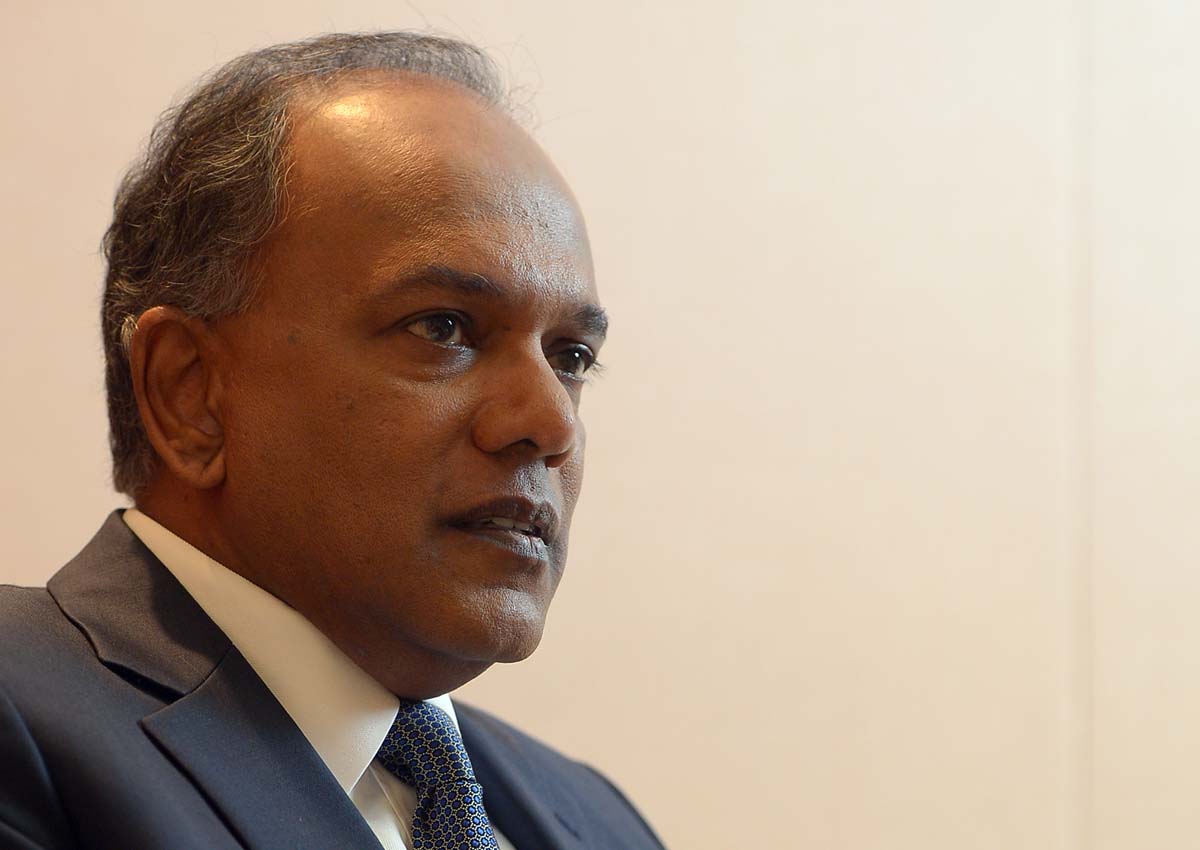
As Singapore has its drug situation under control, “why should we go down the route of legalising drugs”, asked Home Affairs Minister K. Shanmugam.
“If somebody can tell us and show us by evidence that legalising drugs is helpful for the person who is taking the drugs and generally doesn’t impact society, then we can consider,” he said.
He reaffirmed Singapore’s zero-tolerance approach to drugs to The Sunday Times a week after he set out the country’s anti-drugs stance at a special session of the United Nations General Assembly to tackle the world drug problem.
Held from April 19 to 21, the meeting saw several countries call for a move away from criminalising drug use, to instead focus on the health of drug users. Colombia, Bolivia, Uruguay, Mexico, Jamaica, New Zealand and Canada, for instance, argued for reforms such as regulated markets, especially for cannabis.
But in his speech to the assembly on April 20, Mr Shanmugam said: “For us, the choice is clear. We want a drug-free Singapore, not a drug-tolerant Singapore.”
He explained: “We are located in a difficult environment. We are near several major drug production centres. We believe that drugs will destroy our society.
“With 200 million people travelling through our borders every year, and given Singaporeans’ purchasing power, a soft approach will mean our country will be washed over with drugs.
“This is why we have adopted a comprehensive, balanced, sustained and tough approach to tackling both drug supply and demand.
“The results speak for themselves. We are relatively drug-free, and the drug situation is under control. There are no drug havens, no no-go zones, no drug production centres, no needle exchange programmes. Our stance on drugs has allowed us to build a safe and secure Singapore for our people.”
Last week, Mr Shanmugam expanded on this, and addressed the growing calls for countries to adopt “harm reduction” approaches, which are designed to minimise the harms associated with drug use.
That includes providing clean needles for drug abusers and safe, supervised injection sites.
But such measures will also impose social and financial costs on the state and taxpayers.
And this would be unacceptable to the majority of Singaporeans, said Mr Shanmugam, adding that “80 per cent of our local inmate population are either drug addicts or have drug antecedents. What does that tell you?”
He told The Sunday Times that several countries, including those in Europe and Latin America, were trying to make these liberal policies the new norm.
Much of the impetus for harm reduction was coming from countries which were “either major drug producers or have been affected by a large number of drugs flowing through their system”, he explained. “It’s come about because they’re unable to cope with it any more. The traditional method of fighting the drug lords has not succeeded for whatever reason.”
But Singapore is not in such a position and without its strict laws, the country would be swamped with drugs. He highlighted how the Republic is near the Golden Triangle of Myanmar, Laos and Thailand – the second largest heroin production centre in Asia.
Singapore’s standing as an international hub means even drugs from Afghanistan – another major heroin producer – could end up here.
“Our young people will find access to drugs very easy, and once you have access to drugs, trying it out is the next step,” he said.
But “a lot of people know of our tough position. Given this knowledge, people are very, very cautious, and trafficking in Singapore becomes a very risky business”.
Under the Misuse of Drugs Act, capital punishment is mandatory for trafficking certain drugs, for example, if a person is guilty of trafficking in more than 15g of heroin.
That is equivalent to 1,250 straws of heroin, sufficient to feed the addiction of about 180 abusers for a week.
Despite “a strong international movement to move away from the death penalty”, Mr Shanmugam, who is also Law Minister, is adamant that it has proven to be effective in fighting the flow of drugs into Singapore.
The threat of such a sanction means “drug lords, the big drug gangsters don’t come into Singapore”. “The death penalty for traffickers, in our experience, has played a key role in combating drug trafficking. This is part of Singapore’s framework of laws, coupled with effective enforcement based on rule of law.”
One of the key drug threats facing the country now is the growing global acceptance of cannabis, which has been “glorified as a ‘safe’ drug”, said Mr Shanmugam.
In Singapore, cannabis has been increasingly ensnaring young, often well-educated, abusers.
Latest statistics from the Central Narcotics Bureau show that it is now the second most-used drug by new abusers, after methamphetamine. More than two-thirds of new abusers were below 30.
Mr Shanmugam rubbished the claim that there was medical basis for using cannabis.
“This is hogwash because this is the (cannabis) industry trying to present an acceptable reason for using cannabis,” he said, pointing out that it was often so-called “human rights” groups, instead of medical bodies, advocating the drug’s use.
“The doctors have to say this is necessary. I haven’t seen doctors saying that,” said Mr Shanmugam.
Instead, the evidence is to the contrary. A study last year by the Institute of Mental Health found that cannabis abusers risked irreversible brain damage and psychiatric disorders. One in two of those who abuse cannabis daily will go on to develop an addiction.
But as cannabis culture was being promoted through foreign films, documentaries and even supported by celebrities, it made the situation “extremely challenging”.
More young Singaporeans also travel abroad and may experiment with drugs overseas, before bringing their habits back home.
Fighting this requires strong education programmes. “We’ve got to explain to the young people what this is about… and by and large, it’s been successful,” he said.
Mr Shanmugam also stressed that Singapore takes a calibrated approach towards young abusers, a fact that is often overlooked.
If first- or second-time abusers get caught, they are kept out of the criminal system and given a chance to kick the habit.
“He is picked up, he is given counselling, he is given structured urine supervision, sometimes in halfway houses… We try and put him in a safer place, not detention necessarily,” said Mr Shanmugam.
This focus on counselling and rehabilitation also means working with the abuser’s family, educating him, and moving him away from his old contacts. Mr Shanmugam said: “You rebuild a life by giving him the scaffolding. It’s much tougher to do compared with feeding him drugs, which is what (legalising drug use) means.”
The easy way out would be setting up needle exchange centres and drug consumption rooms, where drug use is facilitated.
“But if you’re an addict, how much of your potential, your soul, is being destroyed?” he asked.
Singapore’s approach has allowed it to keep its recidivism rate low at around 30 per cent.
In contrast, some Western cities have a recidivism rate of between 40 and 50 per cent, he said.
He also highlighted how in the 1990s, over 6,000 drug abusers were arrested each year. Now, it is about 3,000 or so, despite the drug trade increasing around the world.
Mr Shanmugam admits that Singapore’s smaller size, tough laws, adherence to the rule of law and no-nonsense approach to corruption mean it is easier to control the drug problem here.
It may be different for larger countries which might have difficulty policing their territories, a growing number of drug users, or a struggle with corruption and the power of drug lords. They might believe legalising some drug use to be the lesser of two evils, but doing so would still mean writing off the lives of a large number of addicts, he said.
This was why he was not keen for others to set a norm for Singapore. He said: “I don’t have to choose between the lesser of two evils.”

This article was first published on May 1, 2016.
Get a copy of The Straits Times or go to straitstimes.com for more stories.
Image:
Publication Date:
Sunday, May 1, 2016 – 10:31
Keywords:
Send to mobile app:
Source:
Story Type:
Others
Right skills for right jobs 'key in future economy'
Singapore must press on with the urgent task of transforming its economy so that there will be more opportunities for workers and their families to improve their lives, said Prime Minister Lee Hsien Loong.
Preparing workers to take on good jobs will remain at the heart of this transformation journey, Mr Lee said in his May Day message, ahead of his May Day Rally today.
“At the heart of our economic transformation is the need to ensure that Singapore continues to offer the right jobs, our workers have the right skills, and there is a good match between the two,” he added.
Mr Lee said the process will entail many changes, but gave the assurance that one thing will not change: “This Government remains on the side of workers.”
Singapore’s economy grew by 2.1 per cent last year, the slowest since the 2009 global financial crisis.
In his message, Mr Lee noted that the ageing population and tight labour market will pose challenges, as will slowing growth in China and strong global competition.
He said: “Due to these factors, we expect growth to remain at 1 to 3 per cent in 2016.”
Amid these conditions, the Government is committed to economic transformation and to supporting those “ready and willing to make the effort”, Mr Lee said.
He cited the recent Budget measures to boost the economy and investments in research and development as examples of resources being pumped in to assist the process.
A Committee on the Future Economy is also coming up with strategies to better position Singapore for this more challenging future.
While these measures are not targeted narrowly at workers, Mr Lee said they will benefit workers when good jobs are created and the economy is strong.
He urged workers to upgrade their skills through SkillsFuture, and be ready to take on the new jobs created.
Mid-career and retrenched workers are also getting help to adapt to changing market demands and to renew their skills to meet them.
The Government, employers and workers all have a role in transforming the economy, Mr Lee added.
Employers must work with unions to redesign jobs and nurture their workers, while workers have to partner employers and stay relevant for the future. “We can succeed if we all work together and each one does his part,” he said.
“This is not the first time that we have had to reinvent our economy,” Mr Lee noted. Economic transformations in the past succeeded because the Government, employers and labour movement worked together to realise a shared vision of improving workers’ lives, he added.
“I am confident that we will succeed again if we stay united, and work resolutely and patiently at this goal,” Mr Lee concluded.
This article was first published on May 1, 2016.
Get a copy of The Straits Times or go to straitstimes.com for more stories.
Image:

Publication Date:
Sunday, May 1, 2016 – 10:20
Keywords:
Send to mobile app:
Source:
Rotator Headline:
Right skills for right jobs 'key in future economy': PM Lee's May Day message
Rotator Image:

Story Type:
Others
IS claims killing of Hindu tailor in Bangladesh: SITE
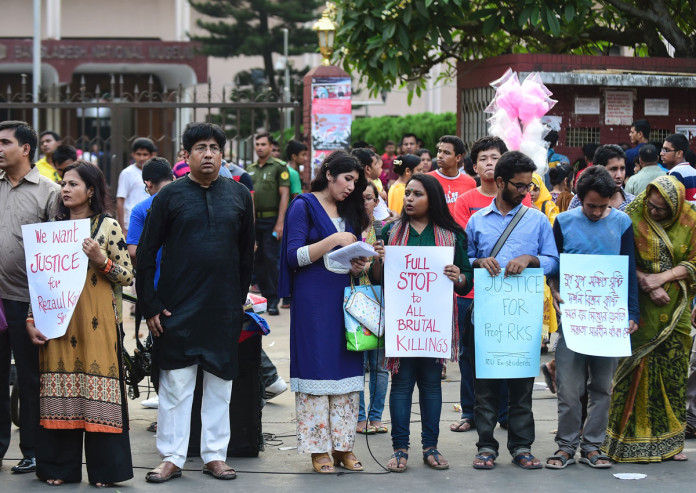
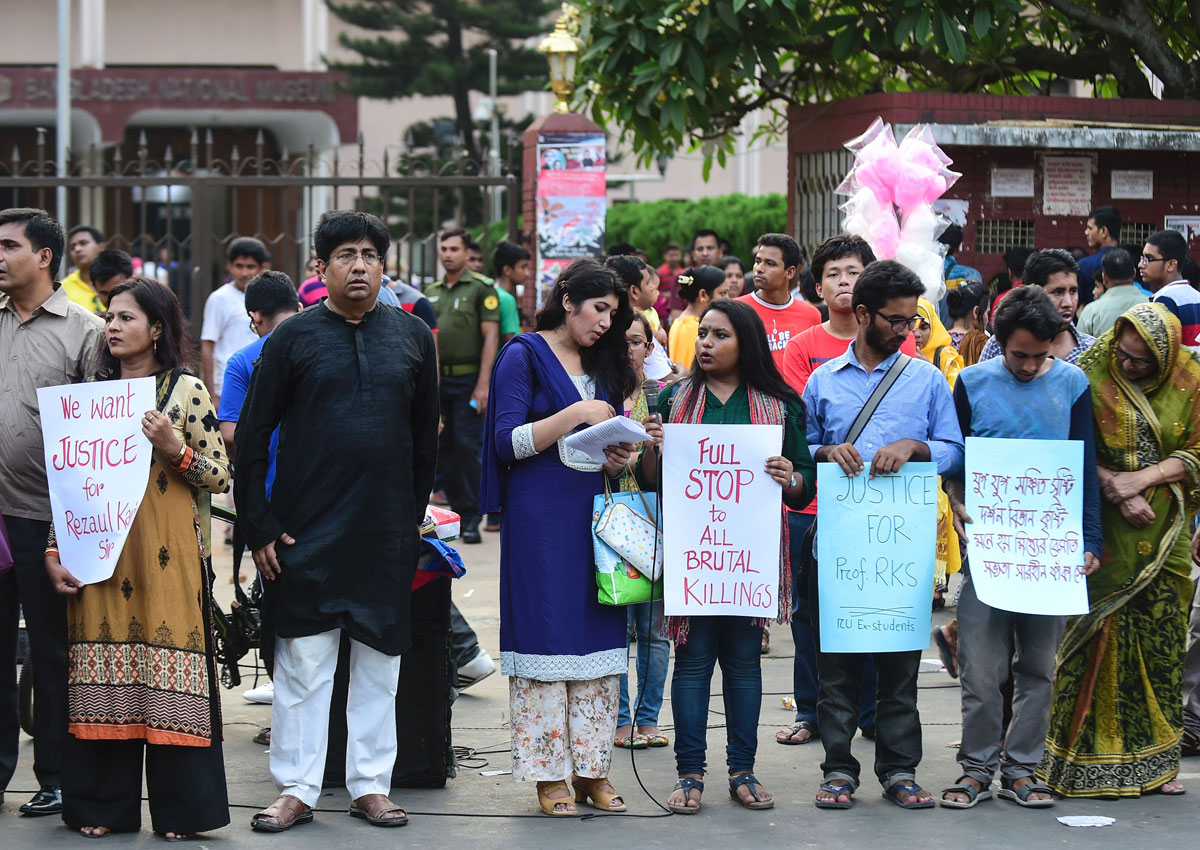
The Islamic State group claimed responsibility for the murder of a Hindu tailor in central Bangladesh on Saturday, a US-based monitoring group said.
Nikhil Chandra Joarder, who was hacked to death by at least two attackers outside his shop, may have been killed for making derogatory remarks about the Prophet Mohammed several years ago, police said.
“Elements from the Islamic State assassinated a Hindu in the city of Tangail in Bangladesh by stabbing him to death,” the IS-affiliated Amaq news agency said, citing a source, according to SITE Intelligence Group.
“He was known for blaspheming the Prophet Muhammad,” Amaq added in the Arabic-language message.
Police officials told AFP they were investigating whether the killing was linked to Islamist militants or tied to a family dispute.
“They came on a motorcycle and attacked him as he sat on a roadside,” deputy chief of Tangail district police Aslam Khan said. “They hacked him on his head, neck and hand.” Muslim-majority Bangladesh is reeling from a series of brutal attacks on members of minority faiths, secularists, foreigners and intellectuals in recent months, including two gay activists and a liberal professor in the past eight days alone.
Many of the killings have been blamed on or claimed by Islamist groups – and in several cases, attackers riding motorbikes hacked the victims to death with machetes or cleavers.
In 2012, local Muslims had filed a complaint with police against Joarder, who owned a tailoring shop, for making derogatory comments about the Prophet Mohammed.
Charged with hurting religious sentiments, he spent three weeks in jail.
The trial did not proceed “after the complainants withdrew the charges,” Abdul Jalil, police chief of Gopalpur sub-district, told AFP.
The dispute appeared to have ended peacefully, another official said, adding that the victim’s family said he was also being threatened by a relative.
The IS group has in recent months claimed responsibility for the killing of Christians, Hindu priests and members of the minority Sufi, Ahmadi and Shiite faiths in Bangladesh.
However, the government denies that international Islamists such as the IS group or Al-Qaeda have a presence in the country, blaming homegrown militants for the killings instead.
“There is no presence of Islamic State in this country. The claim has no base,” Bangladesh home minister Asaduzzaman Khan told The Daily Star newspaper of the IS group claim Saturday.
“In the name of IS, a vested quarter is trying to destabilise the country.” Separately, police said Saturday they had arrested two members of a banned Islamist militant outfit, Jamayetul Mujahideen Bangladesh (JMB), in the case of a Christian convert brutally hacked to death in March.
“The JMB men are suspects in the murder of Hossain Ali Sarker,” Kurigram district police chief Tobarak Ullah told AFP, adding that the arrests took place two days ago.
In February, suspected Islamists decapitated a top Hindu priest inside a temple complex in one of the country’s northern districts, in an attack claimed by the Islamic State group.
The murders come amid a long-running political crisis some suggest has radicalised government opponents. Analysts say Islamists now pose a growing danger in the South Asian country.
At least 30 members of religious minorities, secular activists, foreigners and intellectuals have been murdered in Bangladesh in the past three years.
Hindus, the country’s largest religious minority, make up nearly 10 per cent of Bangladesh’s 160 million people.
Image:
Publication Date:
Sunday, May 1, 2016 – 10:28
Keywords:
Send to mobile app:
Source:
Story Type:
Others
Ryan Reynolds writes touching farewell note for 13-year-old Deadpool fan who died of leukaemia

Deadpool star Ryan Reynolds has penned a touching farewell message for a 13-year-old fan who died of cancer this week.
“Connor was 13. But this kid… He was smart. He was funny. And not just funny ‘for a kid’ – or funny ‘for a person battling something awful’. He was unqualified funny. He had that… thing,” Reynolds wrote in a Facebook post on Thursday (April 28).
Canada-born Reynolds, 39, met Connor McGrath through the Make-a-Wish Foundation. The international foundation grants wishes to children who have life-threatening illnesses.
He said that Connor, who had high-risk acute lymphoblastic leukaemia, was a huge fan of Deadpool.
Connor was diagnosed in 2013 and relapsed last May, the Edmonton Journal reported.
“I’m grateful I got to orbit Connor’s world for a brief time. Grateful for the pages and pages of hilarious texts between us. Grateful to his parents for allowing Connor to spend time with a foul-mouthed child in the body of a 39-year-old,” Reynolds wrote.
Because of his wish, Connor was the first person to see the Deadpool movie. Reynolds travelled to Edmonton where Connor lived to surprise him with a rough cut of the film, he said.
They became friends and Reynolds called Connor “Bubba”. Reynolds also went to Stollery Children’s Hospital to hang out with Connor earlier this year, the Canadian report said.
“We met because he loved Deadpool. In a certain sense he WAS Deadpool. Or, at least everything Deadpool aspires to be; balancing pain, fearlessness, love and a filthy (filthy!) sense of humour in one body. I wish he could’ve stuck around a lot longer,” said Reynolds.
Star Wars, Deadpool, and Superheroes galore at Comic-Con 2015
Click on thumbnail to view photos. Source:
AFP






























































Connor’s family was trying to raise US$800,000 (S$1,075,440) for an experimental treatment at the Children’s Hospital of Philadelphia, said the Edmonton Journal. An online campaign had raised US$35,522.
Reynolds said: “My deepest condolences and thanks to Kim, Gerald and the entire clan McGrath – who loved this little boy so very well. And thankfully, Connor knew it.
“See ya down the road, Bubba.”
This article was first published on April 30, 2016.
Get a copy of The Straits Times or go to straitstimes.com for more stories.
Image:

Publication Date:
Sunday, May 1, 2016 – 09:58
Keywords:
Send to mobile app:
Source:
Story Type:
Others
Lights, camera…. alas, no action in Malaysia's film scene

AN old Chinese uncle and his future gwailo son-in-law, a mixed couple having cold feet on their wedding day, a poor Indian boy from rural Malaysia, the Chinese captain of the 1980 Harimau Malaya team and a super kid who battles aliens with his multi-racial geng…
It has been a colourful few years for our film scene with its diverse array of characters and stories. If life was like the movies, one could even say, to borrow OlaBola’s tagline, “You will believe again”.
As Hollywood continues to be embroiled in a heated “diversity” debate, it is interesting to see our own film industry faring not too badly in the plurality stakes.
To take a slice of J.J. Abrams’ wisdom: diversity is “people see(ing) themselves represented in film”.
Of course, Abrams is the director who dared to test fans’ tolerance by casting a young woman, Daisy Ridley, in the lead Jedi role and a black actor, Jack Boyega, as what many are calling the Han-Solo-heir-apparent-character, Finn, in the Star Wars reboot.
It is clear he believes diversity is not just good, but good for business, as he told Hollywood Reporter after introducing a new policy at his company Bad Robot to increase women and minorities in film: “We’re working to find a rich pool of representative, kick-a** talent and give them the opportunity they deserve… It’s good for audiences and it’s good for the bottom line.”
It appears that diversity has boosted our films’ bottom line too – after a dry spell at the box office, Malaysian films scored big with local Chinese film The Journey and Polis Evo (a Malay film written by a mixed writing trio, Joel Soh, Kyle Goonting and Anwari Ashraf) and OlaBola – The Journey director Chiu Keng Guan’s follow-up. Local horror film Munafik may yet trump all in its ticket sales, but this only shows that there is room for all in our movie landscape, including your conventional Malay movie.
As director Liew Seng Tat points out, it’s not just about race when talking about diversity.
“It should also be about the different kinds of Malaysian voices and stories.
“There are many groups of people making different types of films in Malaysia now, I know they are serious about making good films and they want to change the film scene,” he says.
Just check out the eclectic list of winners at last year’s Malaysian Film Festival (FFM): the Best Picture award went to Liew’s Lelaki Harapan Dunia, for which he also won Best Director.
The Journey’s Frankie Lee bagged the Best Actor award, while Dawn Chong clinched the Most Promising Actress award for her role in Cuak, a film about an interracial couple that was shot mainly in English.
What’s more, Cuak was the collaborative product of five young directors and a mixed team of writers and actors.
Being rewarded at the FFM is encouraging, says Liew.
“It encourages those of us who want to make ‘different’ kinds of films to keep doing it. I don’t know who was in the FFM jury panel but whoever they are it’s clear they didn’t want to play safe either and wanted something new.”
He points at Kil by Nik Amir Mustapha, which won not just the Best Picture award the year before that, but also Best Director and Best Screenplay.
“People behind Kil were all new, and it was great to see Finas and the local film industry recognise this new voice and people who are doing it a bit differently,” he says.
True, from its storyline alone, Kil, which tells of a suicidal young man who hires a suicide agency to kill him off, is clearly not your typical Malaysian film. Nik Amir’s second outing Terbaik Dari Langit, which tells of a dying filmmaker going on a road trip with friends in search of aliens for his last hurrah, may have lost out on the major awards at the FFM last year but its fresh vibe won the hearts of new fans, especially those who don’t normally watch Malay or local movies.
Sadly, there is a blip in the colourful bright lights – many of these films have failed at the box office; many did not even break RM500,000 (S$171,740).
Now, another interesting new voice is feeling the same apathy at the theatre.
Redha, which opened on April 14, features a story yet seen on our local reels: autistic children and their family.
Having gotten attention from film fans across the race aisles, Redha is now down to a handful of screenings in the local circuit and has grossed only around RM150,000 to date.
Many of her friends had called her crazy for wanting to make a film on the complex neurodevelopment disorder, says a resigned Tunku Mona Riza, who wrote and directed Redha.
“So many people that I met had discouraged me. Don’t do it, they said. Malaysia is not ready for this. Who wants to watch a film on autism? ‘You are crazy, Mona… You are taking a risk,'” shares the former commercial director.
Although she initially could not get any investors for her film, she managed to get a Creative Industry Loan from BSN.
“The bank knew me because I had earlier made a commercial for them. So I proposed to them my idea; BSN CEO Datuk Adinan Maning and the bank’s committee listened to my pitch. To my surprise, the bankers liked the idea, they said the story has substance and I should do it,” she says.
Tunku Mona still believes Malaysia is ready for “difficult” topics on film.
“If you talk about autism, we have had many films on it from Hollywood, Bollywood, Hong Kong… they have done well.
“We have had all kinds of films from overseas and Malaysian film fans can accept them,” she says, adding that Redha really deals with the universal theme of love and family.
What is encouraging, she adds, is the opportunities for local women filmmakers.
“We have had quite a few successful female filmmakers here, but we should encourage and support more, especially young women, to tell their own stories,” she notes.
Aspiring scriptwriter June Tan agrees that as far as filmmaking opportunities go here, they should only get better.
“The Government has a lot of meaningful grants and programmes (for industry practitioners).
“I have never felt discriminated, but I think there is more work to do to provide support for women’s voices and stories,” says Tan, who received a Creative Lifelong Learning programme (Cill) grant from Finas to attend the Binger Lab in Amsterdam, which is a workshop for producers and writers.
The scene is buzzing, she muses.
“Many people I know in the scene, from producers to directors, seem to have many different, exciting projects boiling.
“Everyone’s tired of the same characters and stories. Even actors – they are tired of playing the same roles and characters,” notes Tan, who was co-writer with Bunohan director Dain Said for his upcoming film Interchange.
Liew attributes the promising development for local films to Finas director-general Datuk Kamil Othman, who took over the post almost two years ago.
“The Finas D-G is doing a good job in developing new and young voices in Malaysian film – that’s why these diverse voices are obvious now in the local film landscape.
“Datuk Kamil is not just visionary; he is a real film buff and really passionate about filmmaking,” he says.
One development that Liew believes will drive the rise of many more new and interesting voices is the Content Malaysia Pitching Centre, a platform for filmmakers to pitch ideas for funding. The hub, which opened in April last year, also holds various forums and workshops on directing and scriptwriting.
“If you go to the Pitching Centre you can see many filmmakers walking in and out. The centre’s people don’t care who you are – Malay, Chinese, Indian, male, female…
“As long as you have an interesting idea, they will support you. The whole pitching process is very straightforward and transparent.”
Now what is needed is for producers to get out of their comfort zone, Tan says.
“I think the bottleneck is really producers who don’t want to take risks. Many are clinging on to the idea that the audiences are not willing to accept changes. But I have to say that audiences will always surprise you.”
If we take the example of films that have seemingly crossed the boundaries of race like The Journey and OlaBola, we have to admit that they had the advantage of producers who were willing to put the money where it is needed – in marketing and promoting the films outside of their “normal” markets.
“I think if Polis Evo was promoted outside of the conventional Malay film market, it would have been a bigger hit,” Tan opines.
For most filmmakers, however, the issue is still the lack of funds to promote their film, what more to sell it beyond their guaranteed markets.
Local Tamil films, especially, are feeling the pinch.
As Malaysian Indian Artist Association chairman who goes by the stagename VJ Emergency puts it, more than 10 local Tamil movies were produced last year but they were not able to sell them to the local non-Indian market.
“We want to promote our films outside of the local Indian market, but it takes money. And we even have to compete against films from India,” he says.
Liew feels it is not only producers who need to think outside the race box but also film distributors and exhibitors.
“People who went to see OlaBola and The Journey did not see race. Those films’ success tells us that if we take away the racial barriers, we will see the migration of audiences across segments. If we erase them completely, the box office earnings will be even higher.”
This is essential as a film’s domestic box office gross informs foreign distributors in their decision whether to buy a film – the bigger a hit is locally, the more attractive it becomes to foreign buyers.
Liew proposes another diverse route – filmmakers making movies on communities not their own.
His own film Lelaki is shot in Malay and talks about the changing values of the Malay community. Revolving around the old Malay tradition of angkat rumah (where the whole kampung would get together to help carry a house when their neighbour wanted to move to a new place), Lelaki tells of Pak Awang who gets the whole kampung to angkat an abandoned house from the jungle as his daughter’s wedding gift. Surprise, surprise, he gets more than a house – hiding within it is an illegal African migrant on the run.
Liew believes making movies about the different communities of Malaysia, regardless of language and the ethnicity of the filmmaker can be a plus point in a multicultural country like ours.
“I think that is also ‘diversity’. You don’t have to spell it out on the screen. Plus, it was a good experience for me and my crew who were racially mixed and mainly urban to work in a Malay kampung,” he shares.
Of course, our local film industry has always been diverse since it started some 90 years ago, with many non-Malay and non-Malaysian players like the Shaw brothers and Tan Sri L. Krishnan, the Father of Malay Films.
Even today, we have many non-Malay filmmakers who have made a name in the mainstream Malay film scene like David Teo and Bernard Chauly. M. Subash Abdullah, has gone on to direct Chinese films You Believe In Ghost? and Karma Returns after cutting his teeth making Tamil and Malay films.
What we need now is for mainstream Malay filmmakers to venture out of their comfort zones by making films about the other communities and cultures in the country, as Kamil himself had urged after he took the helm of Finas.
Concurring, Liew says he is now thinking beyond language and beyond race.
“My intention is to draw audiences from all races. The easiest thing is to do a muhibbah film but I don’t want to go down that route, so my next film will be a Malaysian Chinese film. I know the only way I can attract non-Chinese audience to watch a local Chinese film is to make it entertaining and to make it good.”
Tunku Mona agrees.
“We hope people can change their mindset about Malaysian films and show support. Without a doubt, we have many good storytellers in the country and they have made good films, regardless of race and religion.
“You know they can push themselves further, and if they were given the support and exposure, I am sure our industry will grow.”
Image:

Blurb:
At the box office, that is. Believe it or not, the Malaysian film scene is excitingly diverse, but many good films are not getting the support they deserve. -The Star
Publication Date:
Sunday, May 1, 2016 – 09:43
Keywords:
Send to mobile app:
Source:
Story Type:
Others


