A speedboat suspected of being used to smuggle illegal immigrants as well as duty unpaid cigarettes was also seized, says the Singapore Police Force.
Source link
4 suspected illegal immigrants arrested in Singapore waters
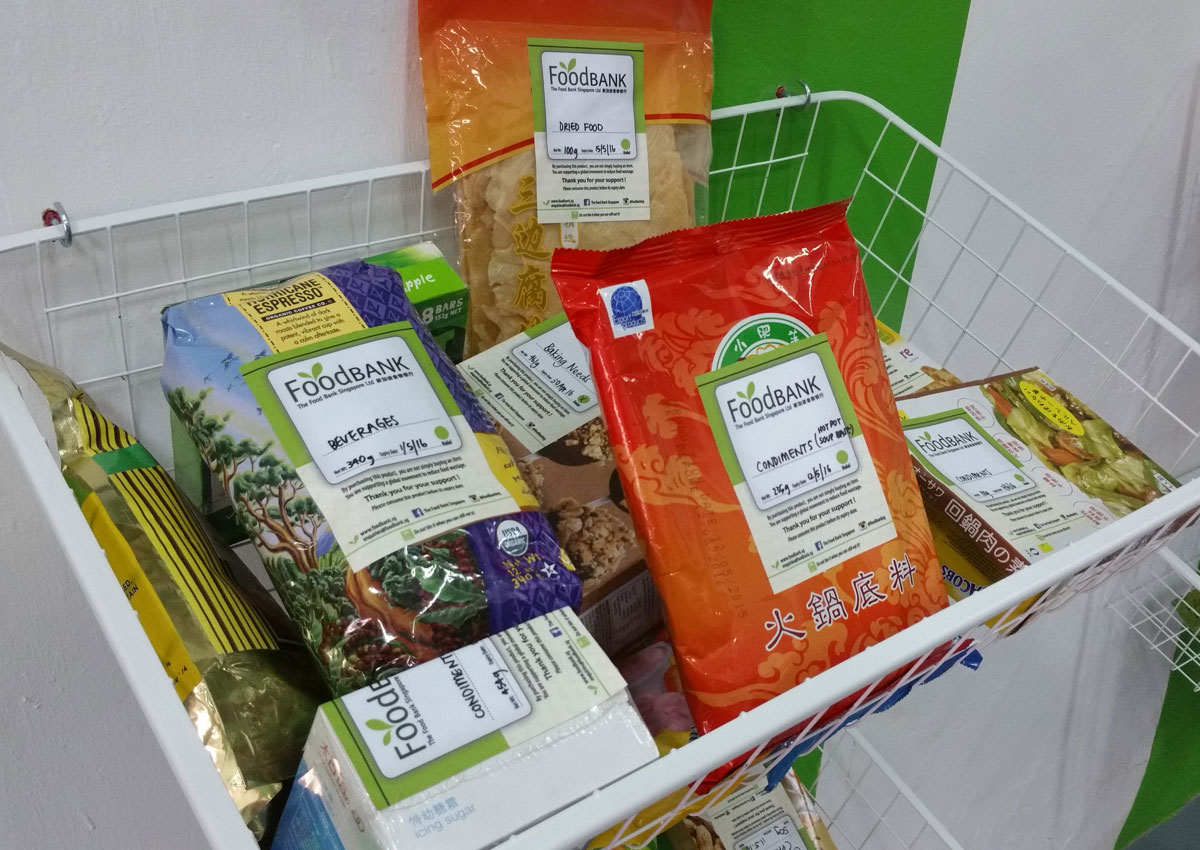
Food Bank collects 60 tonnes of unused food a month
The Food Bank Singapore was founded in 2012 by siblings Nichol and Nicholas Ng. It operates as a bank for companies or individuals to donate their unused or unwanted food.
The food is then assessed for quality and redistributed to the needy through 160 member charity organisations.
Beneficiaries include family service centres, voluntary welfare organisations, various homes, soup kitchens and needy individuals.
The siblings also run a family business, FoodXervices, which distributes more than 4,000 products to food and beverage and hospitality companies.
It was through this business that they learned how much food was wasted. Ms Ng, 37, tells The New Paper on Sunday that The Food Bank Singapore collects an average of 60 tonnes of food per month for redistribution.
The bank does not redistribute expired products or any products past its “use-by” date.
Donors have the option of dropping off excess food with at least four weeks of shelf life at the following locations:
The Food Bank Singapore’s warehouse at Tanjong Pagar Distripark
Bank boxes located at City Square Mall, Sentosa Cove, VivoCity, National University of Singapore, The Grandstand, Parkway Parade and Liang Court.
For more information, visit www.foodbank.sg.
boeylw@sph.comsg

This article was first published on May 1, 2016.
Get The New Paper for more stories.
Image:
Publication Date:
Monday, May 2, 2016 – 06:30
Keywords:
Send to mobile app:
Source:
Story Type:
Others
Unused food sold for a token sum by charity initiative
If everything at the grocery store is just $1, you can bet customers will raid the pantry.
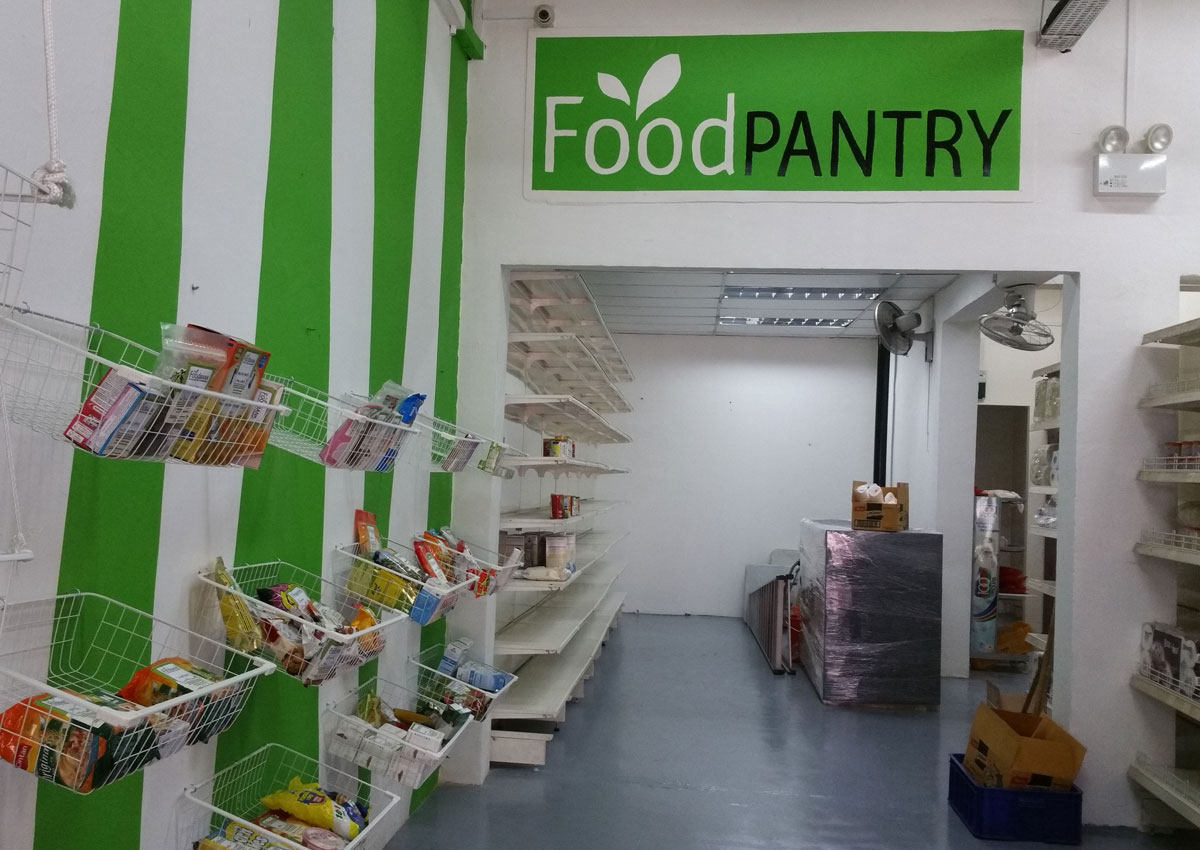
And that happened on April 25 at The Food Pantry. But the store, smaller than a three-room flat, is a grocery business with a difference.
The Food Pantry is a project of Food Bank Singapore, a charity initiative started by two siblings who wanted to tackle the problem of food waste here.
The bank takes donations of unused food from food and beverage companies and then distributes the items to the needy. (See report on facing page.)
Whatever is leftover is not left to waste. Instead it ends up at the Pantry and each item is sold for $1.
The money is then used to cover overheads.
Last Monday, the pantry opened for the first time and people streamed in immediately.
By noon, 80 per cent of the goods were gone – just three hours after the store’s opening.
Ms Nichol Ng of The Food Bank Singapore says she was surprised by the turnout.
“We didn’t expect The Food Pantry to pique so many people’s interest. We are definitely happy that many are receptive to buying these foods despite their shorter shelf life,” says Ms Ng, whose designation is chief food officer.
And that is the catch with items at the Pantry – they generally have a shelf life of around two months.
PRIORITY
Ms Ng says: “Redistributing the food for free to the underprivileged remains our main priority.
“When certain items are rejected by the beneficiaries or if the shelf life is short, then will we consider stocking them at The Food Pantry to give it a last shot at having a chance to be consumed instead of instant disposal.”
Ms Ng hopes to change attitudes with The Food Pantry.
She says consumers tend to pick up the best-looking items with the longest shelf life.
“If you intend to use the stuff tomorrow, you don’t need a year-long shelf life. Help to use up the products with shorter shelf life first before it ends up in the dumpsters,” she says.
Residents in the area had heard of the plan to sell short shelf-life items for $1 and were eagerly waiting for its opening.
The customers were mainly middle-aged and elderly citizens, with a handful of people in their late 20s.
The Food Pantry is hoping to include perishable items next, if people are comfortable paying for items with short shelf life and some defects.
Meat will only be introduced if there is proper storage and refrigeration to ensure that the quality is not compromised.
What expiration dates really mean
Would a can of beans go bad immediately after hitting the use-by date?
Not necessarily, says Dr Leong Lai Peng.
The senior lecturer at National University of Singapore’s Food Science & Technology Programme says some food still tastes good after expiry dates.
She says: “It is certainly not a magical date when the food will suddenly turn bad the day after.”
So what does it mean when the packaging says “best if used by”?
Dr Leong explains some of the more common terms:
What the terms mean
Sell by and manufacture date
Meant for retailers and manufacturers for stock control.
Pack date
For manufacturers to know when the item was packed.
Best if used by
Quality is peak before this date. Quality includes taste, texture and aroma.
Guaranteed fresh
A guarantee that the product tastes fresh by this date.
Use by
You are encouraged to use this product by this date for maximum enjoyment and quality.
Food safety tips
- Whether before or after the expiry date, look out for clues that the food has gone bad. The clues include inflated packaging caused by gases produced by bacteria and a bad odour.
- Store food at the recommended conditions. For example, the storage temperature before and after opening. If the advice is to consume foods within a stipulated number of days after opening, you should also observe that.
- Handle with care. This includes maintaining the cold chain for cold foods. For food that is fragile, be gentle.
- Don’t dent cans as damaging the packaging is similar to opening them. Once opened, the packaging does not protect the food.
- Do not thaw and refreeze food. Similarly, don’t leave chilled foods out at room temperature for too long. Take out what you need and put the rest back in the fridge.
- For food to be consumed over a period of time, use a clean and dry serving spoon to scoop out a portion. Do not eat directly from the packaging and then put it back in the fridge.
boeylw@sph.com.sg
This article was first published on May 1, 2016.
Get The New Paper for more stories.
Image:
Blurb:
Grocery business started by charity initiative sells unused food for a token sum. -The New Paper
Publication Date:
Monday, May 2, 2016 – 06:30
Keywords:
Send to mobile app:
Source:
Story Type:
Others
Food wastage on the rise, but F&B companies not keen to donate
Singapore generates 788,600 tonnes of food waste.
This means each Singaporean contributes about 146kg of food waste yearly, based on figures released by the National Environment Agency in 2014.
The amount has increased by 48 per cent in the past decade.
Households, supermarkets, catering and bakery businesses all contribute to this situation.
Food waste is generated daily through our food cycle: production, distribution, retail and consumption.
“Wastage occurs due to various reasons such as food spoilage due to improper storage or handling, edible food discarded due to blemished appearances, and when individuals overestimate their appetites,” says Mr Eugene Tay, executive director of Zero Waste SG.
He says because Singapore is relatively more affluent and there are more food choices available, people end up buying more than they can consume.
Despite the wastage, food and beverage companies are not so keen to donate excess and unsold food.
This could be because of food poisoning and legal liability issues, says lawyer Luke Lee, 63.
“The party providing the food item may be liable in court. Though the chances of them being liable for damages is not high, you can’t discount that possibility,” he says.
boeylw@sph.com.sg
This article was first published on May 1, 2016.
Get The New Paper for more stories.
Image:
Publication Date:
Monday, May 2, 2016 – 06:30
Keywords:
Send to mobile app:
Source:
Story Type:
Others
Reporter finds it hard to find edible food in dustbins
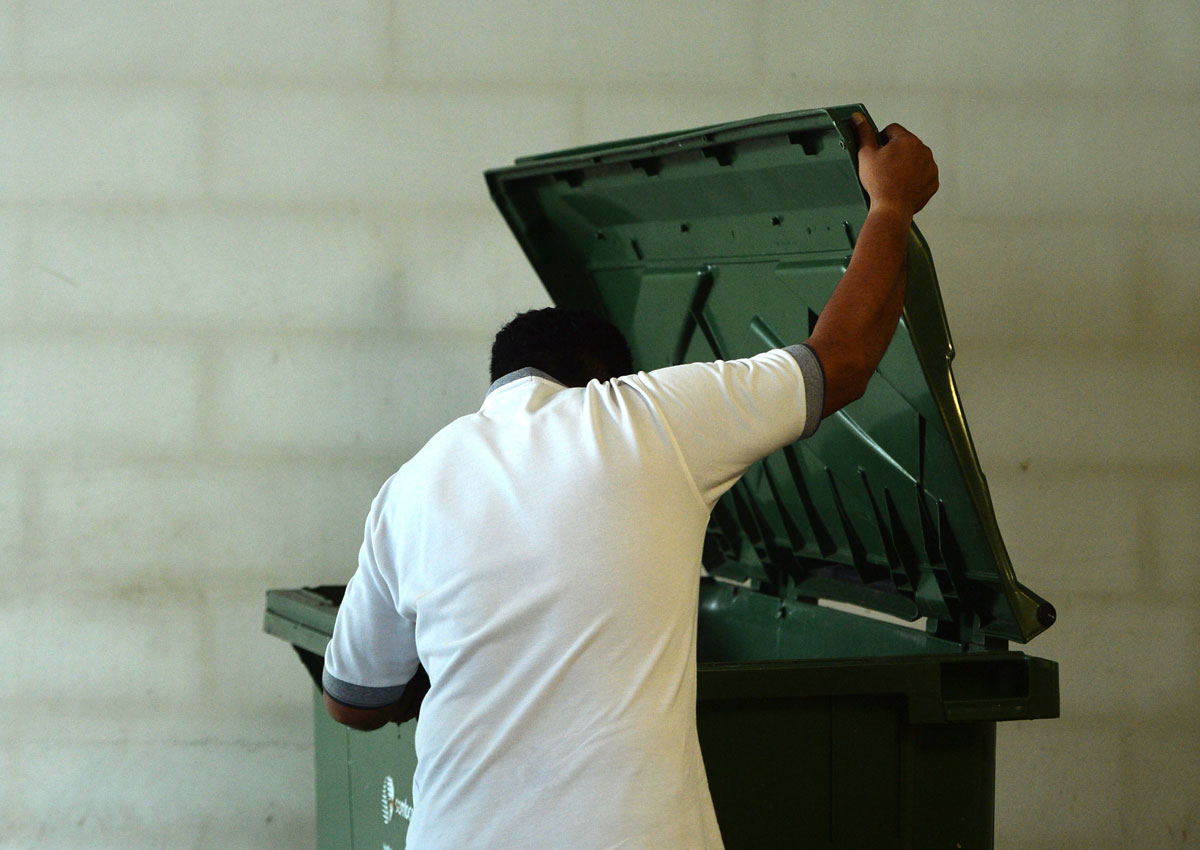
For three days, I visited the refuse areas of markets and wholesale centres to find out who “lives off the land” – or makes use of the immense amount of food wastage that is generated every day.
I looked forward to trying out dumpster diving, thinking it would be like a treasure hunt.
Years ago, a colleague went dumpster diving and wrote positively about the experience.
But while she looked for household items and sundries, I was supposed to forage for what could be a meal.
On the first day of my adventure at Pasir Panjang Wholesale Centre, I found myself staring into a filthy bin that contained a “rojak” of vegetables. I was fiercely debating in my head if people actually ate them. In the end, I left when my gut turned from staring at the bin for too long.
My only find of the day was a watermelon by the side of the road, which some mynahs were staking their claim on.
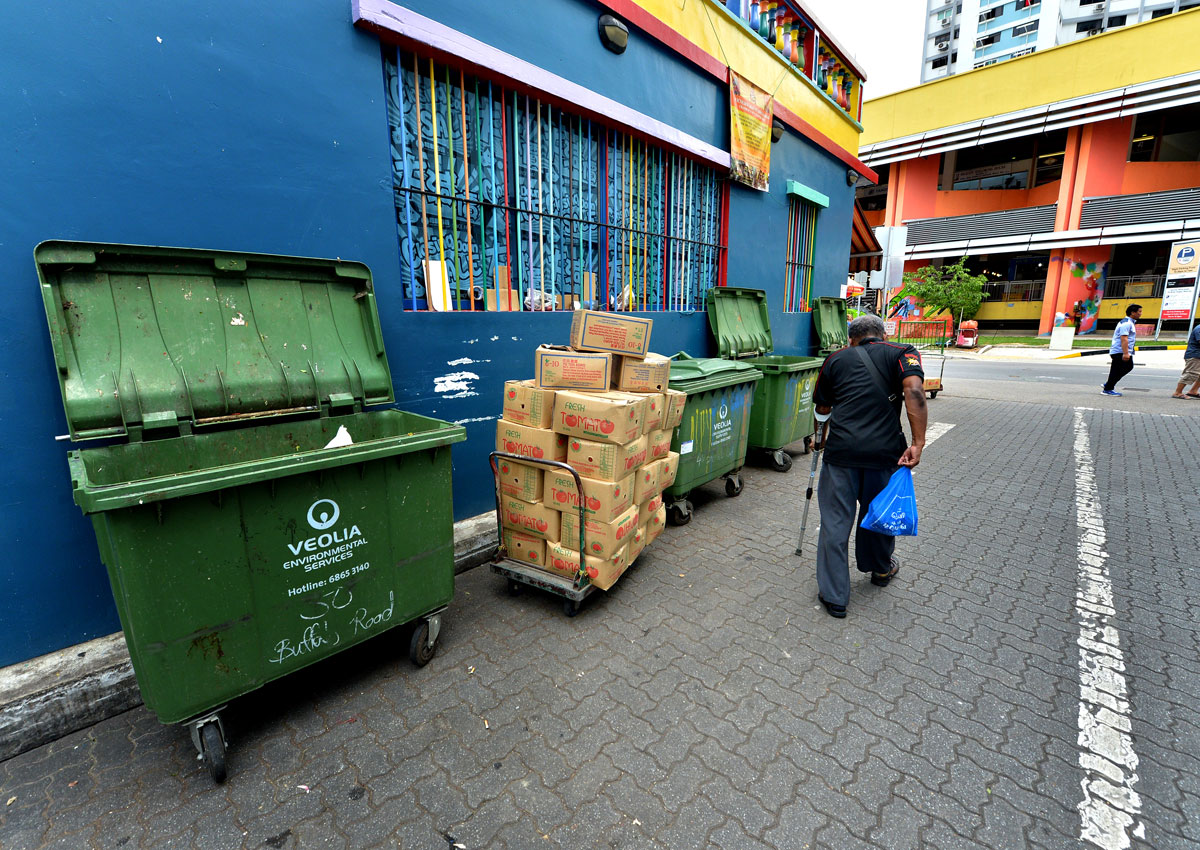
So imagine my joy the next day when I came across boxes of tomatoes, which looked fresh.
Placed neatly next to the bins, I thought I had struck the jackpot until someone came over and claimed the tomatoes as his.
What about canned or dried foodstuffs in the bins? Surely those are safer to eat?
JACKPOT
As it turned out, canned foodstuff nearing their expiry dates are not thrown away into bins. They are, instead, usually sent back to the suppliers for replacements.
As for the dried foodstuff I saw, such as grains, they were poured out of their plastic packets and into the bins to be mixed with all the other trash.
I was not the only one on the prowl – there was competition from the cardboard aunties.
They rummaged through unwanted vegetables that were given by the wholesalers and still in their packaging, before emptying the whole lot into the bin.
There is a lot of food wastage generated by us, and yes, some people manage to salvage some of it. But to cut the approximately 790,000 tonnes of food wasted a year, we need to start further up along the process.
When shops are determined to keep shelves full all day, there is bound to be wastage.
I do not blame them. Shoppers like full shelves, which explains why you see supermarkets chock-full of produce all the time. Consumers also reject ugly fruits and vegetables, resulting in edible food getting discarded.
It really is up to each of us to change how we shop, and perhaps that can eventually encourage companies to make changes to further address the issue of food wastage.
ngjunsen@sph.com.sg
This article was first published on May 1, 2016.
Get The New Paper for more stories.
Image:
Publication Date:
Monday, May 2, 2016 – 06:30
Keywords:
Send to mobile app:
Source:
Story Type:
Others
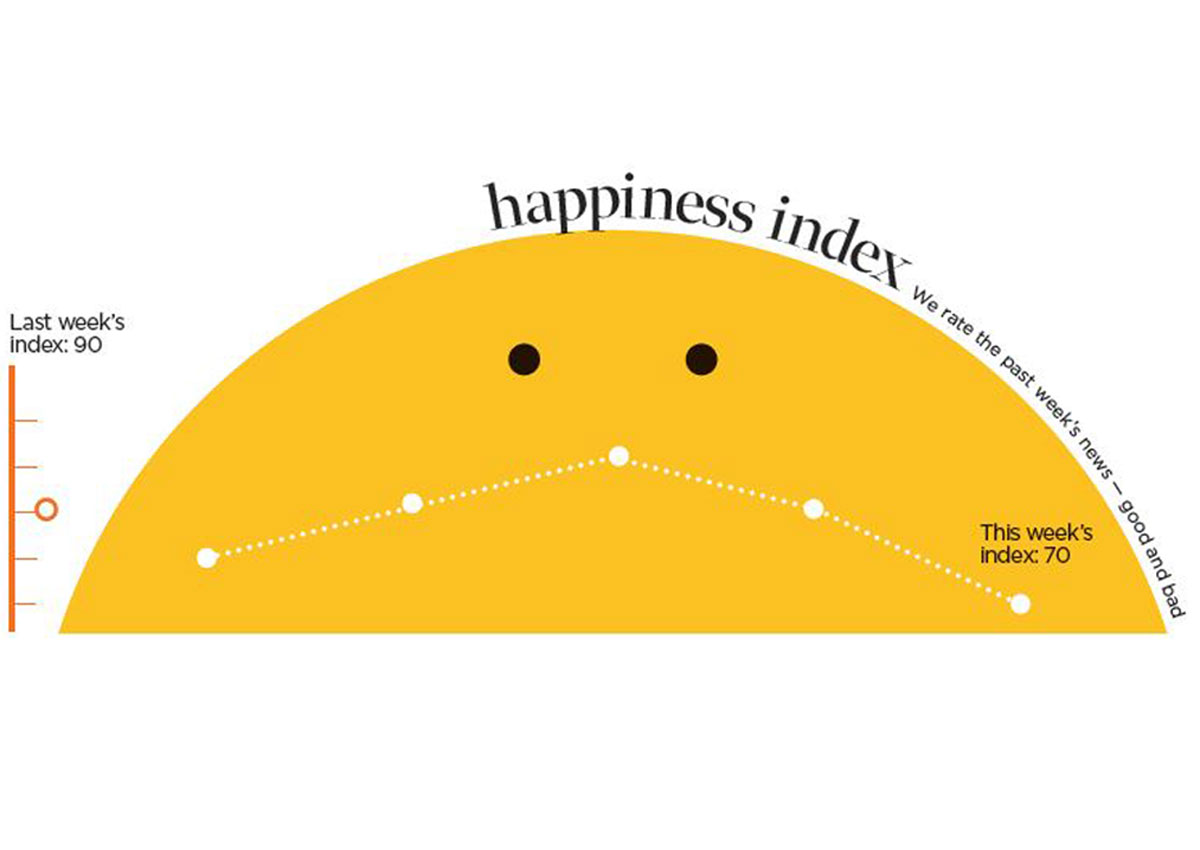
TNP happiness index for Singaporeans last week
-10
In its biannual Macroeconomic Review released on Wednesday, the Monetary Authority of Singapore said negative business sentiment has become more pervasive and unemployment is expected to rise this year, ven as wage growth slows.
+10
The Chinese Development Assistance Council plans to step up efforts to inform the elderly about government schemes to help them. To do so, the self-help group plans to develop its pool of volunteers who are conversant in dialects.
+10
Seven in 10 Singaporeans supported this year’s Budget, according to a poll conducted by government feedback unit Reach. It surveyed 1,327 citizens aged 20 years and above over the telephone between March 28 and April 7.
-10
Electronic Road Pricing rates at four gantries on the Ayer Rajah Expressway and the Bukit Timah Expressway will be revised upwards from tomorrow. The adjustment follows the quarterly review of traffic conditions.
-20
On Monday evening, train services on the North-South, East-West, Circle Line and Bukit Panjang LRT were disrupted during peak hours due to a power trip, SMRT said. Train services from Woodlands to Kranji were disrupted for half an hour after 6.30am on Tuesday.
Last week’s index: 90
This week’s index: 70
This article was first published on May 1, 2016.
Get The New Paper for more stories.
Image:
Publication Date:
Monday, May 2, 2016 – 06:30
Keywords:
Send to mobile app:
Source:
Story Type:
Others
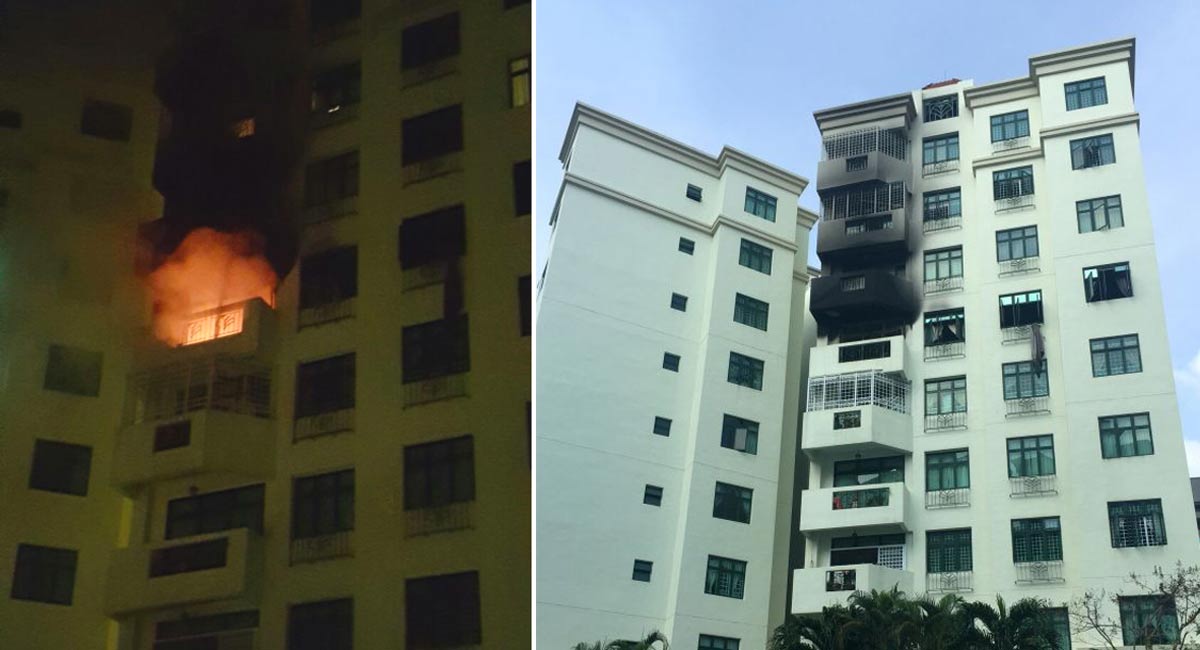
Man climbs down 7th-storey balcony to escape blaze
The family’s cries for help pierced the air, but their neighbours could only watch helplessly as the fierce pre-dawn blaze rolled through the seventh storey Hillview Green condominium unit in Hume Avenue.
According to witnesses, the fire broke out around 5.30am yesterday. Residents quickly vacated the block but the family in the unit was trapped as the fire raged in the living room and blocked the path to the door.
A resident who lives on the fourth storey and wanted to be known only as Mr Han C K told The New Paper on Sunday the fire spread quickly.
“The whole thing was very scary because the fire was huge,” said Mr Han, 62.
It appeared the family tried to find refuge in one of the bedrooms farthest from the living room. From his vantage point on the ground, Mr Han could see one woman at the window.
He said: “You could see her crying and screaming for help but there was nothing we could do.” It is understood that the unit housed 10 occupants – Mr Alvin Ng Swee Seng, 68, his wife Madam Moreen Soh, 69, their two sons Mr Terrence Ng, 41, and Mr Timothy Ng, 29, their wives, two children and two maids.
Related: Elderly man dies after injuries
ESCAPE
Residents said three of the family members – Mr Ng, Madam Soh and their younger son – escaped the flat before the Singapore Civil Defence Force officers arrived.
Mr Timothy Ng told Chinese newspaper Shin Min Daily News he had clambered down from the balcony to a unit below.
He took a fire extinguisher from his neighbours and tried to put out the fire. That was when his parents dashed out the door, through flames and thick smoke, he said. The elderly couple sustained burns.
SCDF dispatched two fire engines, a Red Rhino, two support vehicles and five ambulances to the scene. Using two water jets, firefighters extinguished the blaze and rescued the remaining seven occupants.
All except one were taken to various hospitals for smoke inhalation.
The other Hillview Green residents were gathered at the condo’s tennis court, where SCDF officers did a roll call to ensure everyone was accounted for, said Mr Han.
The elder Mr Ng – who had been taken to Singapore General Hospital with his wife – died later in the day.
Mr Timothy Ng told Shin Min Daily that his father, a retired businessman, suffered from heart problems. Mr Han and his family, who moved to the condo in 2000, had been friends with the Ng family for about 16 years.
“I’m very saddened to hear about Alvin. He was a really nice man and a good friend,” he told TNPS yesterday evening.
Madam Soh is still in the intensive care unit.
Ms Low Yen Ling, Parliamentary Secretary (Education, Trade and Industry) and Choa Chu Kang GRC member, visited the condo yesterday morning.
She told TNPS she and “the community leaders are assisting the family” and will “help the other affected residents as much as possible “.
She added that she would be visiting the victims in hospital. “They are receiving support from their family, friends and the community,” she said.
Investigations into the fire are ongoing.
crober@sph.com.sg
Hillview Green condo fire kills 1 elderly man
Click on thumbnail to view photos. Source:
The New Paper, Han CK


This article was first published on May 1, 2016.
Get The New Paper for more stories.
Image:
Publication Date:
Sunday, May 1, 2016 – 14:56
Keywords:
Send to mobile app:
Source:
Rotator Headline:
Deadly Hillview Green fire: Man climbs down 7th-storey balcony to escape blaze
Story Type:
Others
Interests of Singaporean workers must come first: Chee Soon Juan
SDP chief Chee Soon Juan says if he were elected, he would call on the Government to “retrench foreign workers first, Singaporean workers last”.
Source link
PM Lee's May Day rally speech: What you need to know
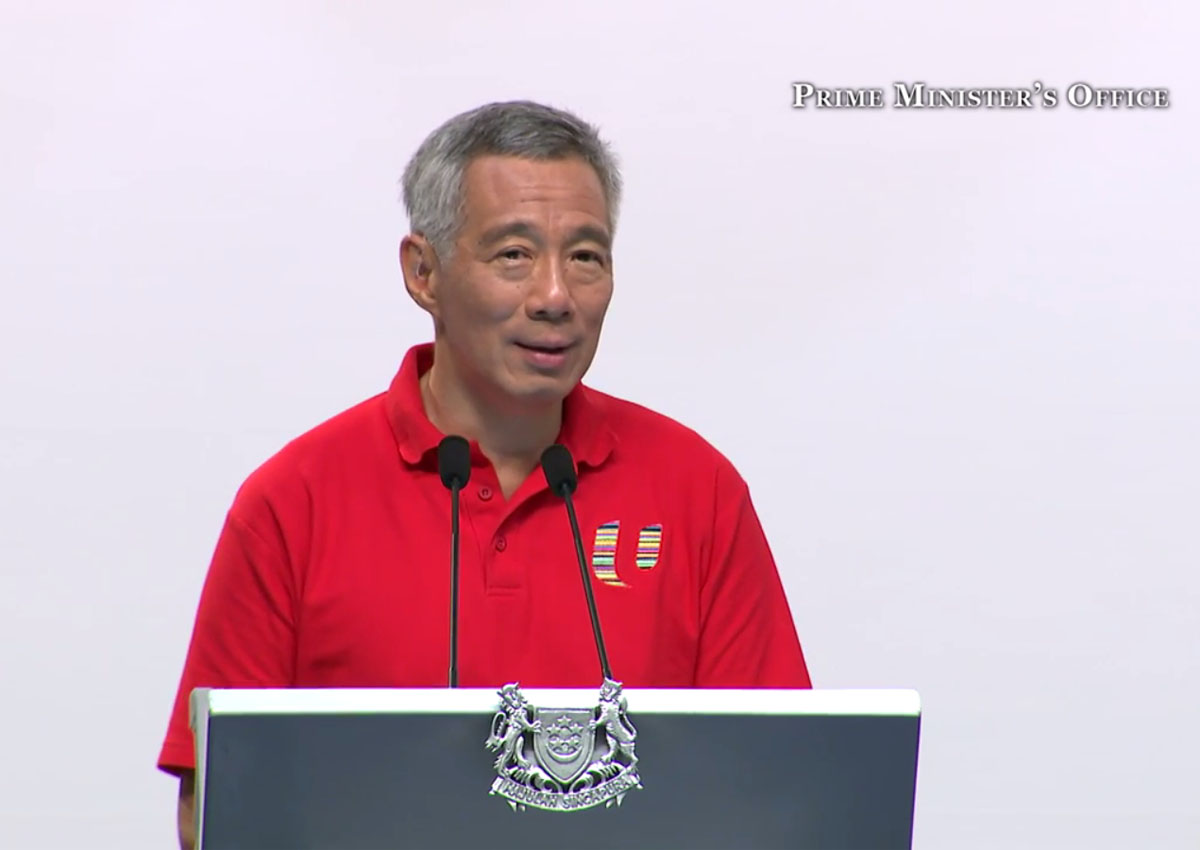
Every year in May, it is a custom for our Prime Minister to deliver his May Day Rally, and this year is no exception. Held at D’Marquee, Downtown East this year, the May Day Rally saw PM Lee sharing several important notes with regards to the current state of the labour workforce in Singapore.
For the benefit of those of you who may have missed the broadcast, here are the key points that PM Lee highlighted:
Singapore is not spared from the global economy downturn
Most of us know now that the current global economy is on a slowdown, and this has many countries on edge. Singapore is no exception, and we join the major economic blocs, whom are facing problems too. Port, Marine, Oil and Gas and Electronics were cited by PM Lee as examples of industries that have been harder hit. On the flip-side, Infocomm Technology, Finance and Insurance, Healthcare and some others have reasons for optimism, with investments and job growth. As these changes are driven by globalisation and technology, it is something all countries go through, not just Singapore.
People are still losing jobs
In Singapore, we are still seeing ongoing retrenchments. Those suffering from the fallout may have difficulty finding another job due to mismatched skill-sets and expectations, with older PMETs (Professionals, Managers, Executives and Technicians) a major concern. While job growth has slowed, there are still more jobs than job seekers, with a shortage of workers.
PM Lee also pointed out that our unemployment is still low and Singaporeans are less likely to be retrenched as compared to foreigners.
Changing landscape of industries
The exponential growth of online-based businesses is rivaling traditional establishments. Taobao is changing the way we buy things, Airbnb, the way we spend our holidays, and Uber, the way we travel around places. Businesses are encouraged to improve upon their existing infrastructure to entice consumers back. At the same time, the government will be introducing measures to ensure fair competition between old and new business models.
Jobs are not as there were before
As the economy shifts into emerging industries, jobs are lost due to forlorn businesses. These jobs are disappearing because companies are moving towards exclusive usage of robots and software, and while in other cases, these companies are moving out to countries with lower costs. Yes, they are jobs available in the new industries, just that the job-seekers who are applying for them do not match the requirements needed by these new industries.
Here’s what being done by the Government
The government has put in place several helplines where both employers and workers can seek financial assistance from. PM Lee shares what is available during the rally.
1. Head-start for students
Preparation of workers for emerging industries is underway with schools being the logical place to start. Students from the various universities, polytechnic, and ITE are being educated in soft skills, including to better prepare them for the workforce, on top of the industry-relevant skills needed. As a result, we have seen a rise of starting salaries across the board.
2. Programmes to aid mid-career switch
According to PM Lee, the Ministry of Manpower (MOM) has three support avenues to help those who are undergoing a mid career switch. There’s the Career Support Programme (CSP), where employers receive wage support from the government to give chances to PMETs who have been retrenched mid-career. Other than that, the Professional Conversion Programme (PCP) and the Place and Train Programme are also in place, where employees can receive re-training courses with the training fees paid for, as well as receive a partial amount of your wages. This is to lessen the burden of transition while also helping to defray cost of living.
3. Reputable re-education
Perhaps one of the most important pointer from PM Lee’s announcement is this: The National Trades Union Congress (NTUC) is partnering with local universities to help mid-career workers attain new skills. This mirrors the existing partnership the NTUC has with the polytechnics and ITEs.
Under the new partnership with local universities, NTU will be the first to work with NTUC, and NTU will offer continuous education through the use of technology enabled learning (TEL). These short courses will be suited for the working population to help them keep abreast of new technologies and developments. Lastly, SkillsFuture is to be further expanded, in due time, to include more schemes.
Singaporeans are well taken care of
Concluding his speech, PM Lee shared that workers around the world are worried not just for their jobs, and also affordable housing and healthcare, as well as retirement. However, the key difference between Singapore and everywhere else is that there are schemes in place for workers in Singapore to help tackle all these problems.
“We may be in a time of change, but I can reassure you honestly that if we work together, we can overcome all these problems. The Government is ready, the Labour Movement is ready. The people need to be ready. And the people are ready. You have supported our programmes. And you have voted for them, and for the team to work with you. With your strong mandate we are able to implement them vigorously, and improve your lives.”
If you would like to re-watch the May Day Rally, make your way over to the Prime Minister’s Office Youtube channel here.

Vulcan Post is all about living life with a digital edge, up and coming startups, and people who inspire conversations.
Visit Vulcan Post for more stories.
Image:
Publication Date:
Sunday, May 1, 2016 – 14:10
Keywords:
Send to mobile app:
Source:
Rotator Image:

Story Type:
Others
Job placement programme has helped Bukit Batok residents: Murali
The programme was unveiled as part of PAP candidate for the Bukit Batok by-election Murali Pillai’s campaign manifesto.
Source link


