NTU says it is hoping to make classes in its new College of Professional and Continuing Education more accessible by taking into account working experience, and by holding some classes outside of the NTU campus itself.
Source link
NTU to 'open door wider' for PMETs to upgrade skills
Cafe Insadong 1-for-1 Bingsu & All Menu Items from 3 – 5 May 2016 | SINGPromos.com
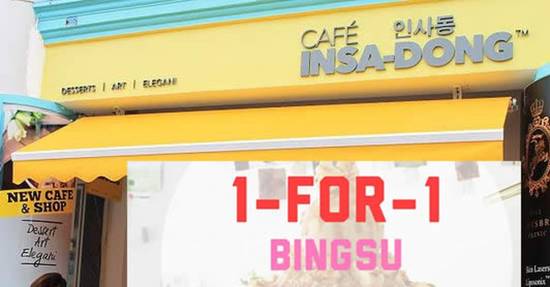
STARTS TOMORROW: Cafe Insadong 1-for-1 Bingsu & ALL Menu Items from 3 – 5 May
Cafe Insadong 1-for-1 Bingsu & All Menu Items from 3 – 5 May 2016 | SINGPromos.com
Cafe Insadong will be offering a 1-for-1 Bingsu and all menu items from 3rd – 5th May at their outlet at 279 Southbridge Road
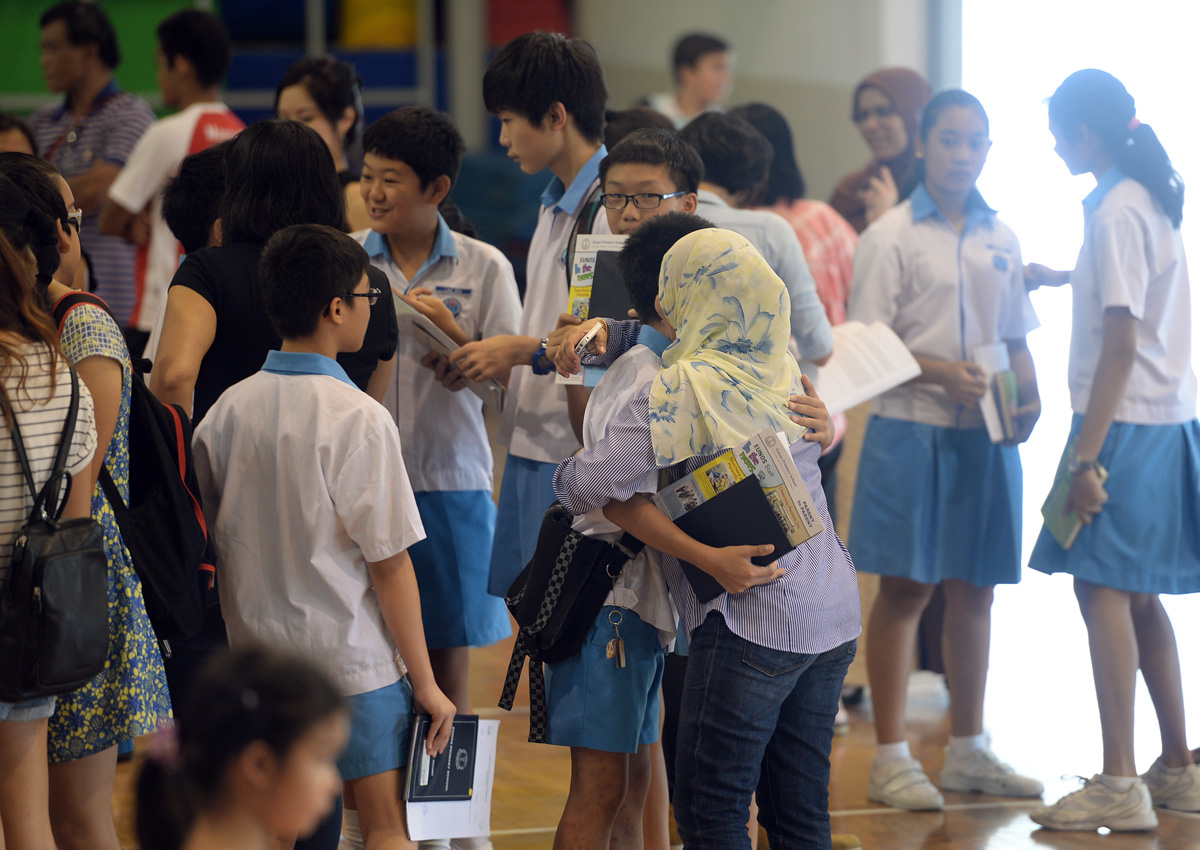
Tweaks to PSLE alone won't relieve pressure on children
For the past two months, we have been watching a re-run of the first season of Junior MasterChef, and it came to a close a few weeks ago.
Jubilation erupted after 12-year-old Alexander Weiss emerged as the winner, but my 10-year-old son made a remark that caught me off-guard.
“Wow, Alexander joined the competition in his PSLE year. Doesn’t he need to study?” he asked.
While I did not expect his comment, I was not surprised that he was aware of the looming exam – three of his closest friends have older siblings who sat the Primary School Leaving Examination in the last two years, and I know they compare notes.
I braced myself for the onslaught of questions that would follow when I said: “Alexander doesn’t have to sit the PSLE. There’s no PSLE in America.”
As expected, he railed: “What? No PSLE? So unfair! Why?”
I tried to explain that different countries have different education systems, and ours favoured an exam at Primary 6 to sort pupils, so they can learn at a pace suitable for them.
It was perhaps too simplistic an explanation but he left it at that, and, after some grumbling, moved on to think about the dishes he was inspired to cook for the family.
We put aside the discussion after that, and he paid only cursory attention when I told him days later that there would be changes to PSLE that would affect his sister, who is in Primary 1 this year.
The PSLE T-score will be replaced by wider scoring bands in 2021, but the bigger issue is how pupils will be sorted, based on those grades. With little information available at present, it is premature to speculate about the outcomes of the changes.
But many people, including my husband, wonder whether the new system, meant to reduce the nation’s obsession with results, will end up creating more stress.
Will the focus on non-academic achievements result in additional pressure for the children?
Will this mean that those who can afford to hone their non-academic skills will have an edge?
Will there be a fair way to allocate school places to children who attain the same letter grades?
And in reality, will it be any different from the current system?
These are some issues the Education Ministry will have to grapple with as it works out the nuts and bolts of the new system.
But these are among the other questions on my mind:
Who are the people obsessed with results?
And what will it take to persuade them otherwise, since mindsets would have to change for the changes to be effective?
It could be a chicken and egg situation.
Parents who load their children with tuition, assessment books and past-year exam papers say they have no choice since they want to give their child an edge in the current system. And the stress begins even before the child enters primary school.
On the other hand, schools say they are catering to parents’ demands. I once asked my son’s pre-school principal why he was given so many worksheets to do in a day, and why playground time was cancelled if worksheets were not completed. She said it was because parents wanted it. And so the vicious circle persists.
When I wrote about pulling him out of that pre-school, like-minded parents shared their stories.
One said she pulled her child out of remedial classes because she did not think the additional hours were necessary since her child was not failing in the subject. “We say we are happy when our child scores a B or C, and we mean it,” she added.
It takes a brave parent to go against the tide and make that decision.
Parents I spoke to also suggested that effort could also be made to level the academic playing field, perceived or otherwise.
This would go some way in assuring parents that the same academic resources are available to their child, no matter which school he is in. After all, the children eventually sit the same national exam.
This could come in the form of a centralised portal where resources, for instance revision notes or exam papers of top schools, could be made available to all schools.
This is even as steps have been taken to help schools distinguish themselves from one another in non-academic areas, to make “every school a good school”.
But apart from parents and educators, mindsets of employers and interview panels for scholarships will also have to change, otherwise the move to reduce academic obsession would be a meaningless exercise.
Even before more details are released on PSLE grading and school allocation, several things are clear.
The change is to reduce the obsession with academic results, not to lower academic standards or remove the rigour from our education system.
It ultimately aims to encourage parents to choose secondary schools based on their child’s interest and strengths. And that to me, as a parent, is a move in the right direction.
The best schools in Singapore that many are aiming to get into may not be the best match for the child, even if he qualifies for them. But at the moment, not many may consider this.
While I cannot control how school allocation is done, I can do my part by telling my children there is more to life than academic results – character and values are what will see them through life.
Eventually, when they leave school and start work, it is their attitude that will go a long way in helping them succeed. Not their PSLE, O-level or A-level results.
So, no matter which secondary school they end up in, it is up to them to make the best of it, and up to me to help them make the best of it.
Of course, most parents, including myself, want to have our cake and eat it too. I want the children to enjoy their childhood, I also want them to do as well as they can for exams. But it is also up to me to help them strike that delicate balance.
If I manage to do that, then joining a competition like Junior MasterChef in the PSLE year may not be such a far-fetched notion, after all.
And if the upcoming changes allow our children to enjoy learning, find their strengths and discover their passions, that would just be cherry on the cake.
Jane Ng, a former education journalist, is now a freelance writer.
stnewsdesk@sph.com.sg

This article was first published on May 2, 2016.
Get a copy of The Straits Times or go to straitstimes.com for more stories.
Image:
Publication Date:
Monday, May 2, 2016 – 17:00
Keywords:
Send to mobile app:
Source:
Story Type:
Others
Murali details plans for healthcare cooperative
Murali Pillai, the People’s Action Party’s candidate for the Bukit Batok by-election, will tap on The Good Life Cooperative as a partner to implement plans for a healthcare cooperative in the ward.
Source link
Chee Soon Juan says he has been working full-time to build SDP
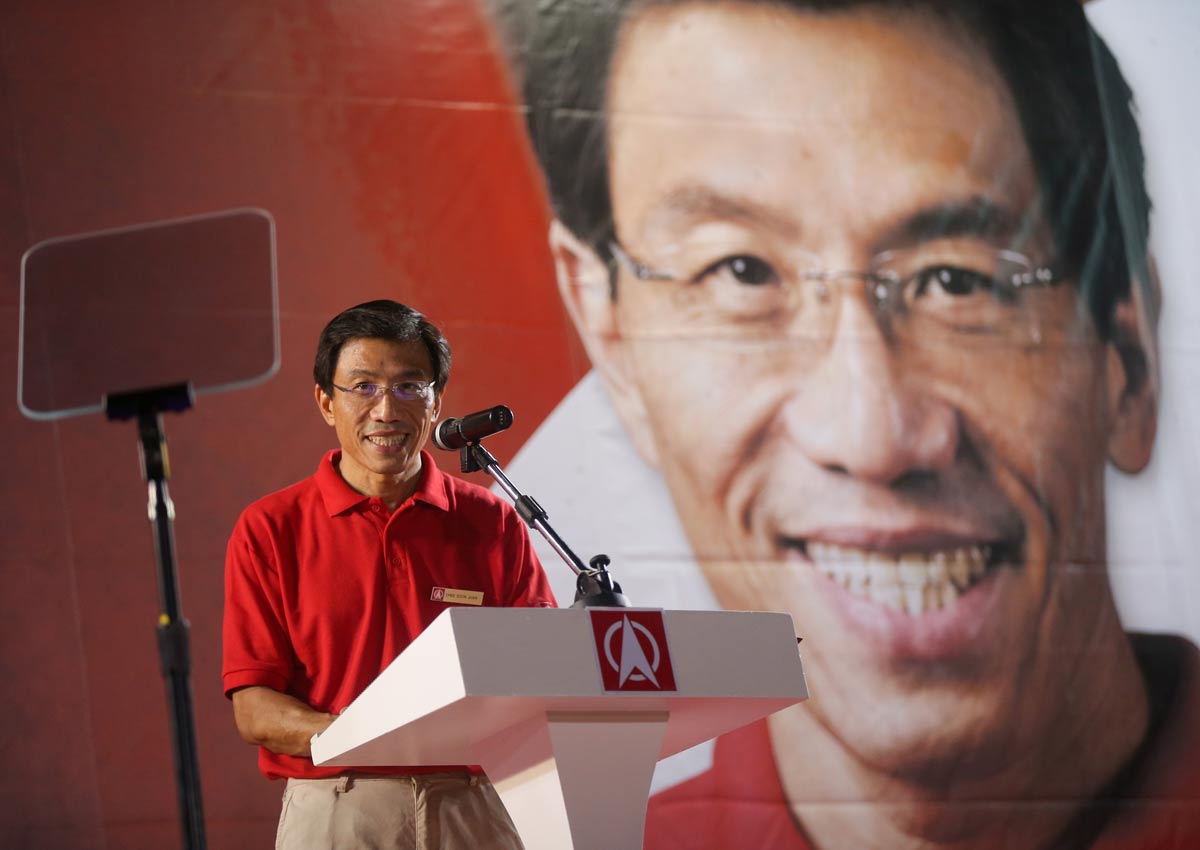
SINGAPORE – Singapore Democratic Party (SDP) chief Chee Soon Juan on Sunday (May 1) defended himself against People’s Action Party (PAP) politicians’ remarks that he does not have a “full-time job”.
“The truth is that I’ve been working every single day to not just keep the SDP together but build it up, and to think and propose and write about ideas for Singapore,” he said in his second rally of the Bukit Batok by-election campaign.
In a 50-minute speech at Bukit Gombak stadium, Dr Chee also outlined previously-announced plans for the single seat and listed some national issues he hopes to take up in Parliament if elected on May 7.
Over the weekend, both Prime Minister Lee Hsien Loong and Minister for Culture, Community and Youth Grace Fu called into question Dr Chee’s suitability to be an MP after not having been employed for several years.
Dr Chee pointed to his political work and his writing of books and articles, and said: “I’ve been working very, very much and very, very hard, it’s just that I have not been asking to be paid very, very much money.
Dr Chee also rebutted other points raised at the PAP’s rally on Friday.
To Ms Fu’s comment that some people have been asking Chinese residents to vote for a Chinese candidate over PAP candidate Murali Pillai, Dr Chee stressed that the SDP was not a racist party.
To Speaker of Parliament Halimah Yacob’s charge that he “does not respect elders” as he heckled then-Prime Minister Goh Chok Tong in 2001, Dr Chee said that PAP’s policies were truly disrespectful for “forcing the elderly” to become cleaners.
Dr Chee also elaborated on four schemes he will introduce in Bukit Batok if elected: providing stipends for needy families and getting well-off residents to adopt them, help for students, financial advice and legal clinics.
The difference between him and Mr Murali, he added, was that he will be a full-time MP and he will be able to speak up in Parliament.
He gave examples of issues he hoped to raise in the House, such as scholarships for ASEAN students and the Government’s land-pricing policy.
Eight speakers spoke before Dr Chee at last night’s SDP rally, and many hit out at the PAP’s remarks on Dr Chee and urged voters not to trust the media.
Ms Jaslyn Go, who polled 26.5 per cent against Ms Fu in Yuhua in last September’s general election, said Ms Fu’s comments about Dr Chee’s work experience were disparaging to stay-at-home mothers and grandparents.
Dr Paul Tambyah, Dr Chee’s running mate in Holland-Bukit Timah GRC last year, noted Mr Lee’s remarks that anyone standing for public office should be prepared to have his past actions examined.
“We totally agree. We welcome the opportunity to examine all the assets of the PAP ministers and MPs,” he said, to laughter from the crowd. “In fact, with the current leak of the Panama Papers and other related documents, the PM may get his wish sooner than he expected,” he quipped, referring to a leak of documents related to offshore companies, which has implicated various politicians worldwide.
janiceh@sph.com.sg
This article was first published on May 1, 2016.
Get a copy of The Straits Times or go to straitstimes.com for more stories.
SDP rally at Bukit Gombak Stadium on May 1
Click on thumbnail to view photos. Source:
AsiaOne, The Straits Times





















Image:
Blurb:
Publication Date:
Monday, May 2, 2016 – 14:31
Keywords:
Send to mobile app:
Source:
Rotator Headline:
Chee rebuts PAP: I've been working very hard for SDP and S'pore politics
Story Type:
Others
Heng Swee Keat criticises SDP's Tambyah on issue of character
The People’s Action Party (PAP) and Singapore Democratic Party (SDP) yesterday continued to spar over the issue of whether character should matter in evaluating election candidates.
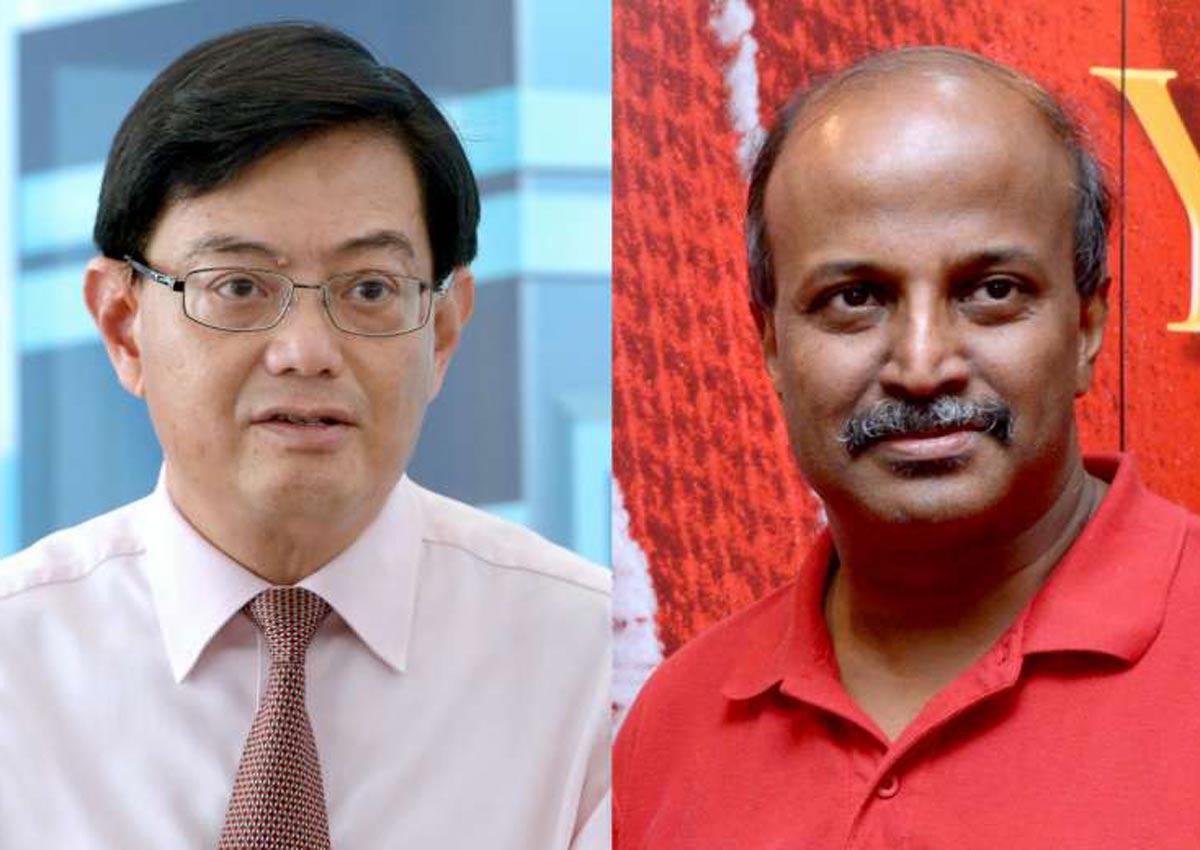
Finance Minister Heng Swee Keat said SDP’s argument that the character of election candidates should be off limits, “has to be one of the most astounding statements ever made in the history of Singapore politics”.
The opposition party hit back at its rally, with SDP chief Chee Soon Juan and SDP central executive committee member Paul Tambyah standing their ground.
Dr Chee also highlighted that he had “ample opportunity” to launch “a very potent attack” on Prime Minister Lee Hsien Loong over his sister Dr Lee Wei Ling’s recent statements, but refrained from doing so as he did not believe in making personal attacks.
She had alleged that Mr Lee had abused his power for his own political ends, by going overboard with commemorations for their father’s death anniversary.
The issue of character came into focus after Mr Lee said on Saturday that Dr Chee’s character had not changed.
He pointed to how the opposition leader had been “completely hypocritical” at a rally last Friday, saying he would not kick a person who is down but yet allowed SDP members to do just that.
Mr Lee, who is PAP secretary-general, also said character goes to the heart of a candidate’s fitness for public office. “Is he honest? Does he have integrity? Is he loyal? Is he committed to serve the people? What are his basic motivations? These come first, before we even talk about how able he is, what experience he brings, or what policies he proposes,” he had said.
Dr Tambyah, responding on Saturday, said “a person is not defined by his or her own actions or words”.
Yesterday, Mr Heng said in a Facebook post: “This means a person can lie, cheat or betray someone with impunity.
“Prof Tambyah and his colleagues believe character doesn’t matter, a person’s words are irrelevant, and we should ignore their actions. They believe they should be allowed to do or say anything and not be held responsible for their actions or words,” said Mr Heng, who is a member of the PAP central executive committee and alternate chairman of the PAP headquarters’ executive committee.
“How are voters to believe what such politicians say or hold them accountable for their actions if they were running a town council?” he asked.
Responding last night after eight speakers at his party’s rally had vouched for his character, Dr Chee charged that PAP leaders had sunk to a “new low” by questioning his character.
He said he would not engage in personal attacks, and had never brought up what Mr Lee’s sister had said until last night.
“I had ample opportunity to attack him on this but I did not. And it would have been a very potent attack because this is not your political opponent saying it. It is your own flesh and blood making these statements about you,” he said. “I refrain from using Dr Lee Wei Ling’s dispute with her brother because that’s not the kind of politics that I want to engage in.”
He added if the tables were turned, PAP and the news outlets would have gone to town with the news.
Dr Tambyah, who spoke before Dr Chee, said: “We could have used Dr Lee’s published allegations to expose the hypocrisy of the Prime Minister’s statements on character but we will not.”
On Mr Heng’s comments, he said “a person is not solely defined by his or her actions and words although they often do reflect his or her values”.
He also referred to Mr Lee’s remarks on Saturday that anyone standing for public office should be prepared to have his past actions examined transparently and honestly.
Mr Lee had said that this is so “voters can make informed, responsible decisions as to who is fit and best qualified to represent them”.
Dr Tambyah said yesterday that he welcomed the opportunity to examine “all the assets of the PAP ministers and MPs”.
“Of course, with the current leak of the Panama Papers and other related documents, the Prime Minister may get his wish sooner than he expected,” he said referring to the recent leak of 11.5 million documents of the Panamanian law firm Mossack Fonseca that exposed shady offshore financial dealings worldwide.
charyong@sph.com.sg
SDP rally at Bukit Gombak Stadium on May 1
Click on thumbnail to view photos. Source:
AsiaOne, The Straits Times
This article was first published on May 2, 2016.
Get a copy of The Straits Times or go to straitstimes.com for more stories.
Image:
Publication Date:
Monday, May 2, 2016 – 14:14
Send to mobile app:
Source:
Rotator Headline:
Heng calls SDP argument on election candidates' character being off limits 'astounding'
Story Type:
Others
Party's over for India's beer and spirits tycoon
India’s flamboyant businessman Vijay Mallya once said that his extravagant lifestyle was “carefully crafted” to promote a business empire that ranged from beer and spirits to an airline and the Sahara Force Formula One team.
The portly, diamond stud-wearing businessman was often photographed with models and Bollywood stars, threw lavish yacht parties in Monaco, helmed high-profile launches and owned a string of luxury homes, cars and a private jet.
Everyone wanted to be invited to his parties and it is no wonder: Pop star Lionel Richie performed at his 50th birthday bash and, in December last year, he flew in pop singer Enrique Iglesias for his 60th birthday celebrations.
But the party is over.
The businessman has racked up bank debts of more than US$1.4 billion (S$1.9 billion) through Kingfisher Airline, his airline business which went bust three years ago.
Mr Mallya left India on March 2 in the midst of a massive political uproar, flying to Britain where his son, Siddharth, is enrolled in acting school.
This took place as a consortium of 17 banks led by the State Bank of India initiated action to recover the loan, making Mr Mallya a symbol of bad debt in corporate India and a cautionary tale for banks.
Related: Former Kingfisher boss to pay $866m in debts
Numerous newspaper stories since have detailed how banks gave a long rope to rich businessmen while highlighting the plight of poor people being harassed for defaulting on their loans.
One of the most dramatic contrasts was the story of a Tamil Nadu farmer who was beaten up by the police for defaulting on a loan of 130,000 rupees (S$2,600).
Still, Mr Mallya, a member of the Upper House of Parliament, is now feeling the heat.
A Mumbai court last week issued an arrest warrant – with no chance of bail – in a money laundering investigation.
This was followed by the government suspending his diplomatic passport. The Ministry of External Affairs has asked Britain to deport him.
Though deportation is a long, complicated process, Mr Mallya has made it clear that he is in no hurry to return to India. He told The Financial Times newspaper in London that he was in “forced exile”.
“We have always been in dialogue with banks saying: ‘We wish to settle.’ But we wish to settle at a reasonable number that we can afford and banks can justify on the basis of settlements done before.”
He added: “By taking my passport or arresting me, they are not getting any money.”
Like the Kingfisher beer tagline – “King of the Good Times” – Mr Mallya, who did his schooling in Kolkata and graduated in commerce from a Mumbai college, has long lived a “king-sized” life.
Related: Banks chasing liquor baron who left country owing more than $1 billion
He was just 28 when he became the chairman of UB Group – which owned India’s largest liquor company, United Spirits – after the death of his father Vittal Mallya in 1983.
Over three decades, the businessman built up the liquor business, even acquiring Glasgow-based Whyte & Mackay in 2007, and was an example of India’s growing global corporate presence.
In his personal life, he divorced his first wife Sameera Tyabjee, the mother of Siddharth, his heir, by the early 1990s and later married Rekha, with whom he has two daughters, Leana and Tanya.
Mr Mallya also dabbled in politics, joining the Janata Dal. He left the party in 2010 and was nominated to the Upper House as an independent twice, with his second term due to end this year.
He allowed the media to feature his fabulous homes, including a sprawling seaside property in southern Goa state, which has multiple indoor and outdoor swimming pools, a helipad, a bar and discotheque.
Mr Mallya travelled the world on his private jet, even offering free rides to fellow MPs whenever he attended Parliament and had to return to Bangalore or any other city.
In 2009, he reportedly sent a bottle of whiskey – Black Dog – to all MPs in the Upper House for Deepavali.
By 2007, his fortune peaked at US$1.6 billion, according to Forbes.
He also donated gold for plating the interiors of Venkateswara Temple, the country’s richest temple.
Related: Heineken eyes control of baron’s brewery
His troubles really started when he entered India’s notoriously difficult aviation sector. He launched Kingfisher Airlines, which was named after his company’s beer, on Siddharth’s 18th birthday.
The airline ran for seven years and built a reputation for perks such as free meals and valet services but flew against the trend of budget airlines and, by 2012, it was done in by high fuel costs – which make up 50 per cent of operating costs.
That same year, Mr Mallya sold most of his shares in United Spirits and gave management control to Britain’s Diageo.
His public image also took a hit when he failed to pay hundreds of Kingfisher employees. Some of them had stayed on for over six months, thinking the airline would overcome its troubles.
In an open letter in March, former employees told him “you stabbed us in the back”.
“You say you are a God-fearing person. How does your God permit you to have lavish birthday parties, and this lavish lifestyle, when you didn’t fulfil your duty of paying salaries to your employees?” they wrote.
Even after being labelled a “wilful defaulter” by the State Bank of India, Mr Mallya still threw himself that lavish 60th birthday bash.
The extent of his current personal wealth remains a matter of speculation. Still, analysts believe the government needs to look at the problems in the system that led to banks giving bad loans.
“…we take sadistic pleasure thinking somebody who was rich and has a good life, (has) taken a knock,” said Mr Shriram Subramanian, the founder of inGovern, a governance research firm.
“If money laundering or corruption is proven, of course the case will take a different turn. We should learn from the Mallya case and apply the learning to other business houses and banks.”
gnirmala@sph.com.sg
This article was first published on May 2, 2016.
Get a copy of The Straits Times or go to straitstimes.com for more stories.
Image:

Publication Date:
Monday, May 2, 2016 – 17:00
Keywords:
Send to mobile app:
Source:
Rotator Headline:
Party's over for tycoon Vijay Mallya who lived extravagant lifestyle to promote his booze
Story Type:
Others
One in three undergrads is from poly: MOE
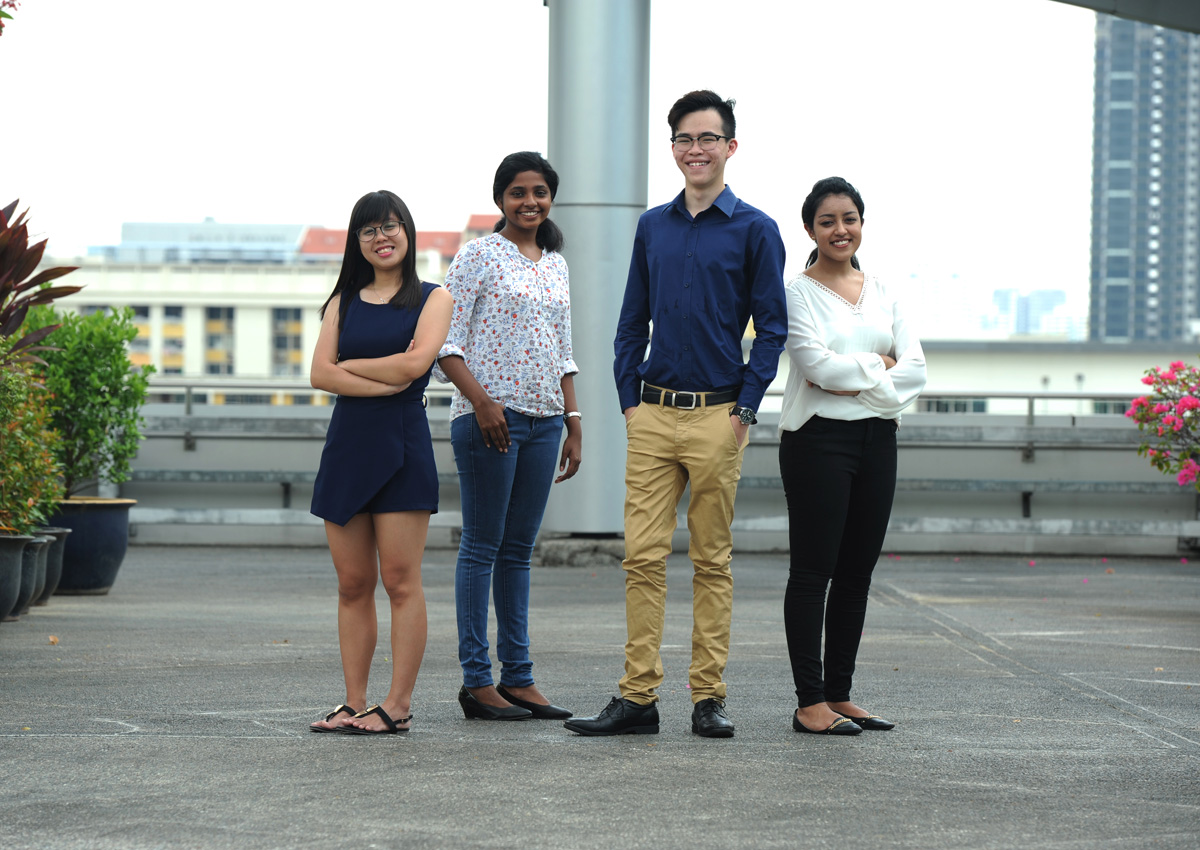
One in three local university students admitted last year is a polytechnic graduate, as the public university landscape expands and diploma holders seek to upgrade themselves.
The Ministry of Education (MOE) has revealed that last year’s local university intake had the highest ever proportion of polytechnic graduates at nearly 34 per cent, up from 24.7 per cent in 2011.
The figures are based on the student intakes of publicly funded undergraduate programmes at the six local universities. They are the National University of Singapore (NUS), Nanyang Technological University, Singapore Management University (SMU), Singapore University of Technology and Design, SIM University (UniSIM) and Singapore Institute of Technology (SIT).
Educators said the greater proportion of poly graduates in local universities is in line with the rising aspirations of diploma holders who want a university degree.
A spokesman for Ngee Ann Polytechnic said poly graduates have more options today. They can work in an area related to their course, go on to other careers or further their studies.
“Ultimately, we want our students to have a passion for their chosen profession and to achieve skills mastery,” she said.
One in five poly graduates won a place in a degree course this year. Four years ago, it was 15 per cent – about one in seven.
Education policy expert Jason Tan of the National Institute of Education noted that students’ aspirations are linked to “the job market’s bias in favour of degree holders”.
“So it’s more for practical reasons than personal interest that most diploma holders want to gain a competitive edge.”
While the Government is taking steps to value the skills and on-the-job performance of diploma holders, people’s mindsets will take time to change, he said.
The median monthly starting salary for polytechnic graduates last year was $2,100, and $3,300 for university graduates.
With the expansion of SIT and UniSIM, more university places have opened up for diploma holders. These two institutions offer longer and more immersive work attachment programmes.
Traditionally, junior college is seen as the most secure route to a degree – previous years’ figures show that more than 70 per cent of A-level holders enter the local universities each year.
But increasingly, a significant proportion of students who enter the polytechnics do so out of choice, and not because they do not qualify for junior college.
MOE said the six universities received about 39,000 applications from A-level holders, and close to 31,000 applications from polytechnic graduates last year.
Each applicant usually goes for two, if not three, different institutions.
Polytechnic students said they are glad the local universities are opening up to them.
Mr Dylan Tan, 23, a mechanical engineering graduate from Singapore Polytechnic, said his sustainable infrastructure engineering (building services) course at SIT is a good continuation from his poly modules.
He was “very relieved” to get a place at SIT. “I don’t have to worry about going to a private university or going overseas and being away from home,” he said.
Ms Naseera Hidayahtullah, 21, a second-year accounting student at UniSIM, said she wanted to further her education after getting a business management diploma from Nanyang Polytechnic, but also wanted work experience.
She chose UniSIM for its six-month work stint during term time. (At other universities, internships are usually during the holidays.)
“The practical training is part of the curriculum and it prepares us for employment,” she said.
Ms Lena Tan, 20, who has a law and management diploma from Temasek Polytechnic, is glad to have clinched a place at SMU law school. The first-year undergraduate said: “If you want to do law, you need a professional degree.
“I knew my chances were very slim especially because I’m competing with top-notch JC students. I’m happy that we are given the same opportunities.”
More poly grads in top degree courses here
These days, you don’t have to be a junior college (JC) student to get into competitive undergraduate programmes such as law.
In the last five years, more students are taking the polytechnic route to these professional degree courses offered by the local universities.
The number of poly graduates in undergraduate courses like law and medicine has grown slightly, said a Ministry of Education spokesman.
These two courses typically take in A-level leavers with a string of As, or poly graduates with near perfect or perfect grade point averages of 4.
Last year, the law and medicine courses each took in seven poly graduates, up from just two and one respectively in 2011.
Poly students now make up about 2 per cent of both courses’ cohorts, from 0.4 to 0.5 per cent previously.
In the same time period, the National University of Singapore (NUS), Nanyang Technological University and Singapore Management University (SMU) admitted 253 students from polys into their accountancy courses, up from 127 before.
NUS’ department of architecture at its school of design and environment had about 40 poly graduates in its intake last year, double the 20 or so five years ago.
Mr Looi Kwok Peng, course manager of Temasek Polytechnic’s law and management course, said: “The desire to get into the local law schools is not new, but the success rate seems to be increasing.
“Until very recently, the law schools did not publish any indicative grade point average for diploma-holders, like they did for JC results,” he said.
Poly students told The Straits Times they knew it would not be easy for them to get into these competitive courses, but were more hopeful after seeing some of their seniors secure places.
Ngee Ann Polytechnic student Bryan Lim, who is graduating with a business studies diploma this year with a grade point average of 3.95, has applied for law at NUS and SMU.
The 20-year-old, who has received an offer to read law at King’s College London, said: “I know it’s challenging, but I’m not too worried as I have seen seniors from my course get into law school.”
His senior Nicholas Yue, 23, who read business information technology in Ngee Ann Polytechnic, earned a spot in NUS Law in 2014 with a grade point average of 3.8.
He had qualified for JC with a L1R5 score of 11, but chose poly as he felt it would prepare him better for work. Still, he was surprised to get an interview for law school.
“It’s good that the choices for polytechnic graduates are not so limited and they can enter university,” he said. “Making that choice after the O levels – that’s quite a young age to decide.”
Ms Pavani Jeyathasan, 20, a first-year accountancy student at SMU, knew JC was not for her as she preferred to focus on her interest in business and accountancy.
Said the Nanyang Polytechnic accountancy and finance graduate: “I didn’t think about the odds of going to university through the poly route. I just worked hard.”
Republic Polytechnic biomedical sciences graduate Kenneth Gwee, 22, who is in his first year reading medicine at NUS, said: “I did aim for a degree but I didn’t think I’d make it this far to medicine. It was my goal and dream ever since primary school to be a doctor.”
ateng@sph.com.sg
This article was first published on May 2, 2016.
Get a copy of The Straits Times or go to straitstimes.com for more stories.
Image:
Publication Date:
Monday, May 2, 2016 – 17:00
Keywords:
Send to mobile app:
Source:
Story Type:
Others
Character takes centre stage in battle for Bukit Batok
SINGAPORE – The issue of character continued to dominate the campaign for the Bukit Batok by-election on Sunday (May 1).
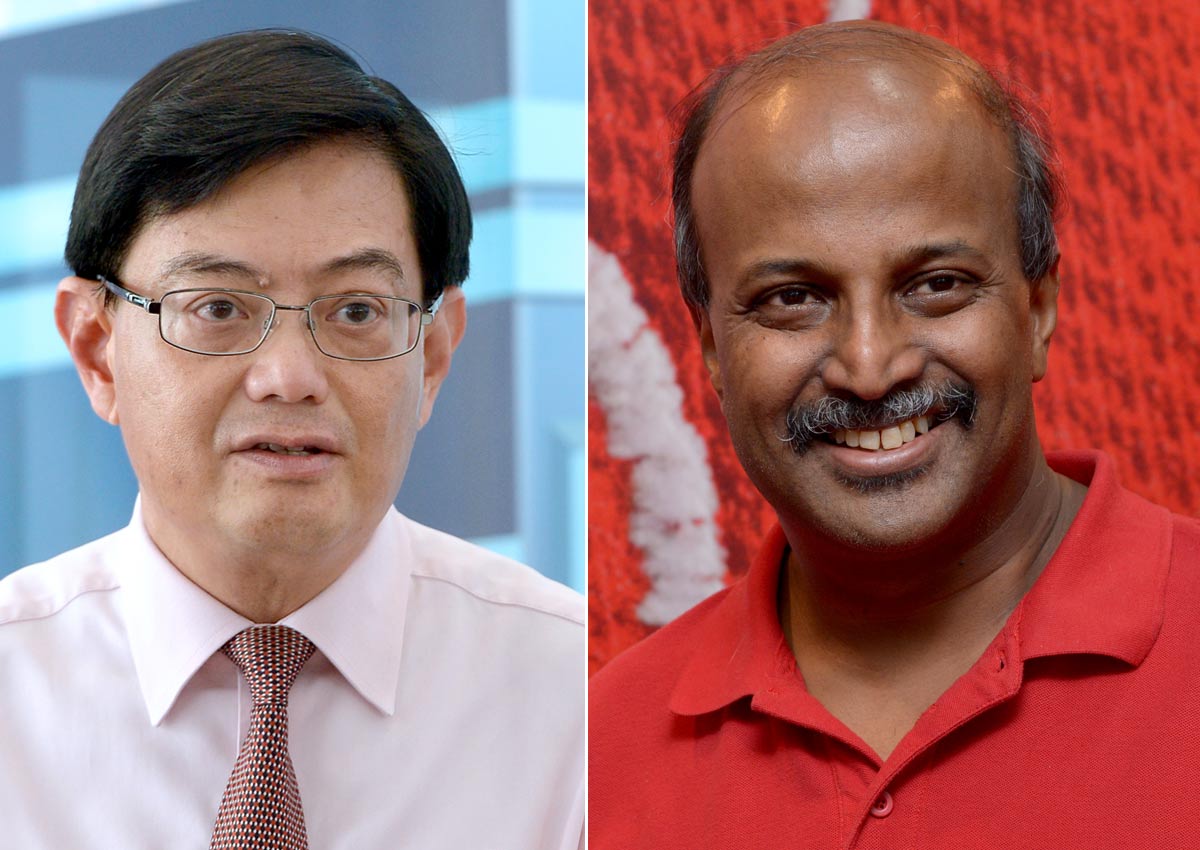
Finance Minister Heng Swee Keat, a member of the People’s Action Party central executive committee (CEC), hit out at the Singapore Democratic Party (SDP) argument that the character of election candidates should be off limits.
Mr Heng said SDP’s argument – made by SDP CEC member Paul Tambyah – was “one of the most astounding statements ever made in the history of Singapore politics”.
Dr Tambyah had said “a person is not defined by his or her own actions or words”.
Mr Heng countered: “This means a person can lie, cheat or betray someone with impunity.
“How are voters to believe what such politicians say, or hold them accountable for their actions if they were running a town council?”
Mr Heng’s comments came a day after Prime Minister Lee Hsien Loong, PAP’s secretary-general, raised questions about the character of SDP chief Chee Soon Juan, who faces PAP’s Mr Murali Pillai in the May 7 by-election.
The PAP did not hold a rally on Sunday, but SDP did, and Dr Chee called on PAP to “stop the gutter politics” and focus on policy issues.
He dismissed what he said were “personal attacks” by PAP leaders, pointing out that he had not used Dr Lee Wei Ling’s recent criticism of her brother – PM Lee – as ammunition when he could have done so.
This line was also taken up by Dr Tambyah at the rally, who repeated his view that while it was fine to criticise a person’s words or actions, which might reflect his values, it was wrong to attack his character, which he accused the PAP of doing.
Both candidates went on walkabouts in Bukit Batok on Sunday. Mr Murali gave details of a job placement scheme he would launch if elected, while Dr Chee called for a retrenchment insurance scheme.
Mr Lee tackled the issue of unemployment insurance at Sunday’s May Day Rally, saying Singapore had something better: schemes paid for by the Government to help workers find jobs.
He also said it was important for Singaporeans to signal their support for government initiatives amid global economic challenges.
“Because we have a strong mandate, I and my team have been able to implement the programmes vigorously in order to improve people’s lives. That is why the (2015) general election was so important,” he said.
“The Bukit Batok by-election matters also. To tackle these challenges, we need your support and we need you to show your support.”
charyong@sph.com.sg
This article was first published on May 2, 2016.
Get a copy of The Straits Times or go to straitstimes.com for more stories.
SDP rally at Bukit Gombak Stadium on May 1
Click on thumbnail to view photos. Source:
AsiaOne, The Straits Times
Image:
Publication Date:
Monday, May 2, 2016 – 13:55
Keywords:
Send to mobile app:
Source:
Rotator Headline:
Heng on Tambyah's argument: One of most astounding statements ever made in history of S'pore politics
Story Type:
Others
Taiwanese bemused by overwhelmingly male Cabinet

When Professor Lee Chih-kung was announced as Taiwan’s incoming Economic Affairs Minister two weeks ago, there was collective bemusement across the island.
The academic at National Taiwan University is known for his groundbreaking research in engineering science. But he has zero industry experience. The 57-year-old admitted to being shocked himself at the appointment. It was a “big surprise”, he said during a press interview.
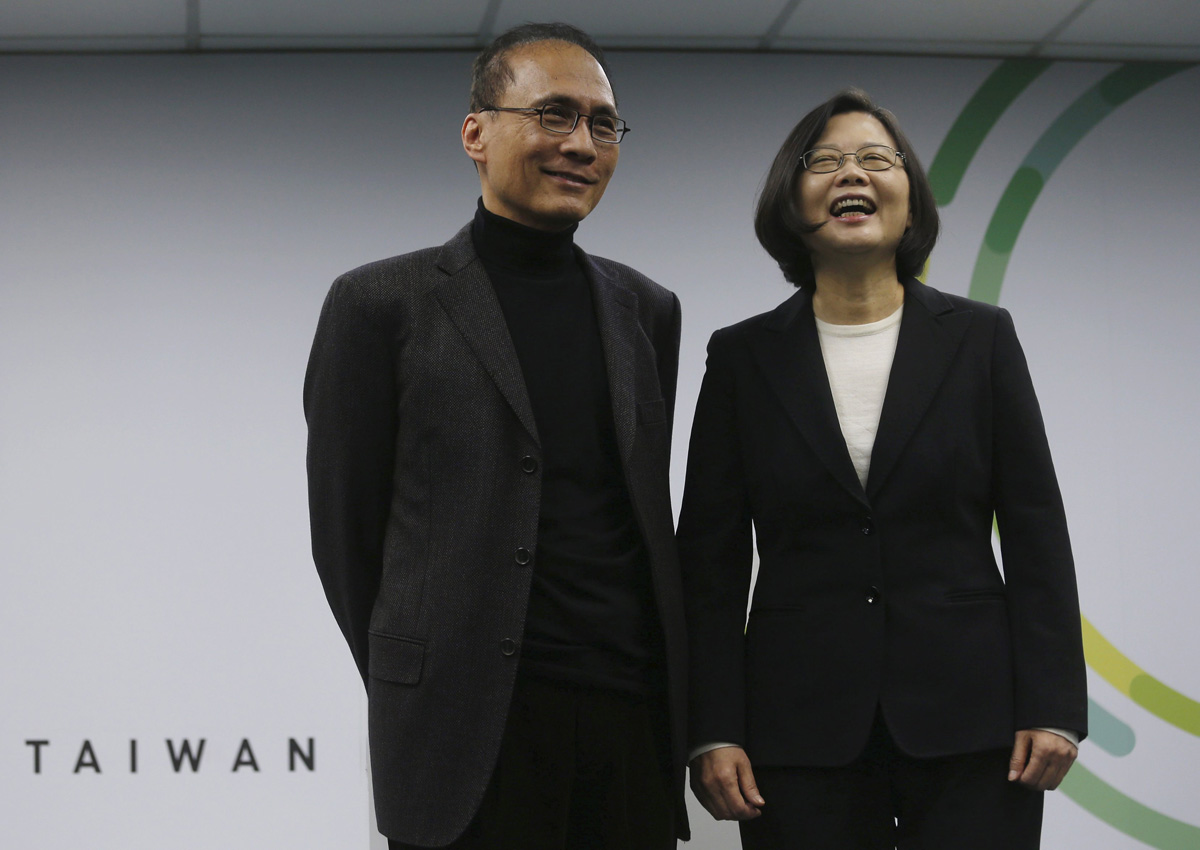
Three weeks before Taiwan’s new President Tsai Ing-wen takes the reins on May 20, the shape and form of her government are filling out.
Over the past weeks, the man she picked to be the premier – economist Lin Chuan who was finance minister in former president Chen Shui-bian’s government – unveiled his 36 Cabinet members in batches. On Thursday, the process was completed.
In broad strokes, it looks like this: a PhD Cabinet that is overwhelmingly male (there are just two women) and older than expected (many are in their 60s).
Many are drawn from Ms Tsai’s inner circle in the pro-independence Democratic Progressive Party (DPP) or were Mr Lin’s classmates or colleagues at the National Chengchi University.
Reactions from the Taiwanese public have been lukewarm so far.
Taiwan elections 2016: As KMT weeps, DPP celebrates
Click on thumbnail to view photos. Source:
AFP, Reuters

















Political commentator Niu Tse-Hsun of the Chinese Culture University says: “To the outside world, it’s not a particularly impressive line-up.”
Faced with a public that is cynical of politicians and yet expecting improvements to their lives, the Cabinet, to be sworn in on May 20, will have its work cut out to win them over.
After 16 years of the Chen and Ma Ying-jeou administrations – years during which “Taiwan’s political and economic systems have remained stalled” as described by a United Daily News editorial – Taiwanese are viewing the new faces with a mix of hope and wariness.
“We can just hope for the best. But it feels like the politicians care more about one-upmanship than people’s lives,” says Ms Jessie Wang, 46, a taxi driver and resident of the southern resort town Kenting.
The disdain has, in turn, made the work of drawing top talent into the Cabinet much harder.
Mr Lin, for instance, said he had approached many experienced industrialists to head the economic affairs portfolio – a critical one given the ailing economy – but was turned down.
Explains Dr Niu: “People with high social standing don’t want to be in government because they are unable to cross the blue-green divide.
Also, they are often attacked by the legislators who show little respect for the ministers.” The blue-green divide refers to the political schism in Taiwan between the pro-unification (blue) and pro-independence (green) camp.
Now, Prof Lee the academic will have to overcome reservations as to whether a man with few links with the business world will be able to get things done.
“A lot of industry bigwigs didn’t even know who he was,” says Dr Niu. “So, without connections, and understanding, how are you going to forge industry links and improve the economy?”
Responding to criticisms of his Cabinet members’ age and gender, and the paucity of “big names”, Mr Lin stressed that what matters most is capability. “Professionalism, ability and experience are the only conditions I would consider,” he told the local media.
The past two presidents have been criticised for not using talent well. While Mr Chen relied on “corrupt” cronies, Mr Ma tapped on technocrats and academics who were “out of touch” with the grassroots, and towards the end, they fled the latter’s increasingly unpopular administration, wrote the UDN editorial.
“Cronyism and selfishness ruled the roost. They were hardly qualified to lead the nation.”
It stressed: “Tsai Ing-wen must learn from Chen and Ma’s recruitment mistakes. She must attempt to create a new political atmosphere. Only then can she enable Taiwan to extricate itself from the quagmire.”
For now, Ms Tsai earns some nods for trying to bring in a few people across the political spectrum including independents and some Kuomintang members.
For instance, career diplomat Katherine Chang has been made the Mainland Affairs Council minister overseeing cross-strait relations. Previously in charge of north American issues in the foreign ministry, she is seen as a safe, if bland, choice.
“Ms Tsai wants to show goodwill,” says Dr Niu. “Instead of appointing a traditional DPP politician which Beijing will view as confrontational, Ms Tsai chose a person who is like a blank piece of paper.”
This is also partly because Ms Tsai herself will be crafting the policy, with Ms Chang as the executor.
But concern has surfaced over the number of people from the previous Chen administration in the new Cabinet, estimated at one-third.
To this, Mr Lin said: “Do not assume that if someone was a member of the Chen administration, he must be bad.”
A couple have also already raised eyebrows over controversial statements. Minister without portfolio-designate Chang Ching-sen – a key figure in Ms Tsai’s presidential campaign – derided a family who were the victims of a forced demolition project in Shilin, Taipei, and whom the DPP had supported, sparking calls for his appointment to be rescinded.
For now, people are in a wait-and-see mood. Kaohsiung resident Lee Yu-tung, 63, a retired factory worker, said: “Whoever they are, they can’t be worse than those in Ma Ying-jeou’s administration.”
In an acknowledgement of the feedback thus far, Ms Tsai said on Thursday that whatever “adjustments that need to be made will be made”, as the DPP evolves from being the opposition to becoming the ruling party.
She pledged: “I hope we will become the best government in Taiwan’s history.”
Tsai Ing-wen set to become Taiwan’s first female president
Click on thumbnail to view photos. Source:
AFP, Reuters





























Tsai’s lieutenants
LIN CHUAN, 64
Premier
When introducing Mr Lin as her pick for premier, President-elect Tsai Ing-wen said: “He is the person most familiar with my political convictions and plans for the nation.” This will be critical. As premier, Mr Lin will have the job of translating Ms Tsai’s vision into policies.
He has no party affiliation but has long been associated with the Democratic Progressive Party (DPP).
He was finance minister in the Chen Shui-bian administration, and later helmed the party’s think-tank Thinking Taiwan Foundation.
His background is in finance and economics – he has a bachelor’s degree in economics from Fu Jen Catholic University, a master’s degree in public finance from National Chengchi University and a PhD in economics from the University of Illinois, Urbana-Champaign.
This will serve him well, given the pressing need for the new government to reform the economy.
JOSEPH WU, 61
Secretary-General of National Security Council
Articulate and fluent in English, Dr Wu – he holds a PhD in political science from Ohio State University – has been the suave face of the Democratic Progressive Party (DPP) as its secretary-general in the post-Chen years.
Now, he will be wielding great influence in the powerful position of National Security Council chief, coordinating and directing policies relating to Taiwan’s security issues.
He is expected to have enormous input in triangulating Taiwan’s position vis-a-vis China and the United States.
He served in the Chen administration in various capacities including as Taiwan’s representative to the US. He was also Mainland Affairs Council Minister, taking over from his current boss, Ms Tsai.
KATHARINE CHANG, 63
Mainland Affairs Council Minister
Three years ago, in an interview, she characterised Taiwan’s relationship with mainland China as being in its “best shape” since 1949.
She will now have the challenge of maintaining it, having been appointed the top official in charge of cross-strait relations.
She is expected to be a steady pair of hands, who will faithfully execute Ms Tsai’s instructions.
A career diplomat, she filled senior posts as Taiwan’s representative to Australia and Britain. She also chaired the Coordination Council for North American Affairs in the Foreign Affairs ministry.
She has a bachelor’s degree in diplomacy from National Chengchi University, and also a master’s degree in international relations from Long Island University.
xueying@sph.com.sg
This article was first published on May 2, 2016.
Get a copy of The Straits Times or go to straitstimes.com for more stories.
Image:
Publication Date:
Monday, May 2, 2016 – 17:00
Keywords:
Send to mobile app:
Source:
Story Type:
Others


