Home Blog Page 3956

Horse's leg had sores oozing with pus, maggots

The Agri-Food and Veterinary Authority (AVA) officer found the horse lying in its stable and it did not get up even when she got close to it.

Its behaviour was already unusual, but its condition was even more shocking, she said.

There was a large wound on its right hind leg, its left thigh was swollen and flies were circling its eyes.

It was also breathing three times more quickly and more heavily than a horse normally would.

“It was obviously in pain. I felt really sorry for the horse,” said Dr Wendy Toh, who was then with the AVA.

The former animal welfare officer described her experience to the court on the second day of the trial involving Gallop Stable Singapore which is accused of failing to provide adequate veterinary attention to thethen 17-year-old thoroughbred mare named Sharpy.

The company, which owns three ranches here and one across the Causeway, has pleaded not guilty. The 20-year-old horse is still with Gallop Stable Singapore.

Yesterday, Dr Toh told the court that she had gone to the

Pasir Ris ranch on May 15, 2013, to investigate a complaint about a pony that was tied up. After finding the pony to be in good condition, she chanced upon Sharpy lying down in its stable and shaking its head to ward off the flies.

She immediately recommended that a veterinarian attend to it. Its condition that day was so dire that the head of Singapore Turf Club’s veterinary department – Dr Jacobus van den Berg, who took the stand yesterday as an expert witness – said he would not have hesitated recommending that Sharpy be put down. 

Also taking the stand yesterday was veterinarian Phyllis Yew, who was engaged by the company on May 16, the day after Dr Toh’s visit.

Dr Yew testified that she found Sharpy with a fever. There were also numerous sores, and some oozing pus on 85 per cent of its right hind leg.

She said that these sores would have developed six to eight days before her visit.

Horse Condition

Defence lawyer Simon Tan said Sharpy had a condition called lymphangitis – inflammation of organs, ducts and glands in its immune system – before Gallop Stable obtained it from Malaysia.

He also said the company staff had hosed the horse with water and got it to walk about to improve its blood circulation days before Dr Toh and Dr Yew’s visits – arguing this was an acceptable

method to treat the horse’s sores and lameness. Dr Yew agreed that it was a fair treatment, but said the company should have sought medical help when the horse did not get better after two days.

She said she prescribed antibiotics and painkillers and showed the stable staff how to clean the horse’s wounds using an anti-bacterial wash.

She also instructed them not to let the horse lie down – as doing so would cause it to shift all its weight onto one side, possibly causing nerve damage. On May 18, Dr Toh visited Sharpy again, but the horse’s condition seemed to have worsened.

After Dr Toh, the attending vet and stable hands hoisted Sharpy to its feetand offered it water, it used its mouth to suck the liquid up, instead of using its tongue to lap the water like normal horses would. It also ate up the hay that was given to it.

“I’ve never seen a horse drink like that,” she testified on Wednesday, adding that Sharpy drank non-stop for two minutes and ate non-stop for a good 20 to 30 minutes.

Two days later, Dr Yew found that maggots had burrowed into a wound on the horse’s leg and she had to dig them out using a pair of forceps.

This means that the wound had not been cleaned for more than six to 12 hours – which is the time it takes for flies to lay the eggs and for them to hatch.

This would not have happened if the staff had cleaned the horse’s wounds twice a day, she said.

She said that merely wiping the wounds, even with a piece of tissue, would clean off the eggs as they are not embedded into the flesh.

When Mr Tan asked if the presence of maggots were “inevitable” due to the wound coming into contact with the ground, Dr Yew said she disagreed.

The trial resumes today, with the defence expected to call several company staff as well as another vet to the stand. If convicted of causing unnecessary suffering to the horse, the company faces a fine of up to $10,000.

Gallop Stable Singapore also made headlines last year when a 73-year old woman died after she dismounted from a horse, which then fell on her, at its Punggol ranch.

I would have recommended horse be put down: STC vet

Had the 17-year-old thoroughbred mare been from the Singapore Turf Club (STC), its handler would have been prosecuted for negligence, said STC veterinary head Jacobus van den Berg in court yesterday.

Dr van den Berg, who took the stand as an expert witness in the Gallop Stable Singapore trial, was called to perform a secondary assessment on the condition of the thoroughbred mare Sharpy.

His findings, based on photographs of Sharpy as well as Dr Wendy Toh and Dr Phyllis Yew’s clinical notes, stated that Sharpy was in dire condition and he even would have recommended the horse be put down.

Dr van den Berg, who has 35 years of experience, pointed out that Sharpy was not given bedding of at least six inches (15.2cm) to lie on, a constant source of food and water, and adequate care, which means at least four staff to turn it over every four to six hours.

“If you want to treat (it) properly, then intense commitment is needed. Someone needs to be at the horse’s side (24 hours),” he said.

Dr van den Berg also said that given the injuries on the horse’s hind leg, it would have been limping badly.

Defence counsel Simon Tan, in cross-examination, asked Dr van den Berg if he had personally seen the horse.

Dr van den Berg said he did not, but referred to the pictures of the horse’s injuries and said: “You must be blind not to call a vet.”


This article was first published on May 13 DAY, 2016.
Get The New Paper for more stories.

Image: 
Category: 
Publication Date: 
Friday, May 13, 2016 – 14:00
Send to mobile app: 
Source: 


Story Type: 
Others

Source link

Singapore signs anti-corruption declaration

The declaration, signed by countries attending the inaugural Anti-Corruption Summit in London, sets out high-level goals to combat corruption.

Source link

Mr Heng Swee Keat was 'carrying an incredible load'

Finance Minister Heng Swee Keat looked his usual self at a pre-Cabinet lunch at the Istana yesterday, said Parliamentary Secretary for Culture, Community and Youth Baey Yam Keng.

But at about 5.30pm, Mr Heng, 54, collapsed at the Cabinet meeting.

A shocked Mr Baey told The New Paper: “He looked perfectly fine during lunch.

“I don’t remember ever seeing him unwell or going on medical leave in the five years that we served Tampines together.”

According to the Prime Minister’s Office (PMO), Mr Heng’s sudden stroke was due to an aneurysm – a localised weakening of a blood vessel.

He has undergone initial neurosurgery to relieve pressure in his brain due to the bleeding and the aneurysm was successfully closed, the statement said.

At press time, Mr Heng remained under close monitoring in the intensive care unit of Tan Tock Seng Hospital (TTSH).

When he collapsed, three doctors in the Cabinet attended to him immediately, Prime Minister Lee Hsien Loong wrote on Facebook yesterday.

Defence Minister Ng Eng Hen, formerly a surgical oncologist in private practice, said in a Facebook post that they managed to resuscitate Mr Heng.

But he added that Mr Heng’s family will need prayers and support as he undergoes critical procedures and treatment for the stroke.

Mr Baey said he found out about the collapse when he received a call from Environment and Water Resources Minister Masagos Zulkifli who was at the Cabinet meeting.

The three of them are MPs of Tampines GRC and they were supposed to meet at 7pm yesterday to discuss the upcoming Tampines Hub.

Fellow Tampines MP Desmond Choo was also shocked at the news.

“We’ve never heard anything like this. To me, he’s like Superman,” said Mr Choo.

“The number of hours he works and the kind of attention span he has, it’s amazing.”

The 2012 Hougang by-election candidate recalled the days when he worked closely with Mr Heng, whom he sees as a fatherly figure and source of inspiration.

“During the by-election period, we would discuss issues until 2am and he would ask me to go home,” said Mr Choo.

“‘As a candidate, you need rest,’ he would tell me while he continued working with activists. When I returned in the morning, at about 6.30am, he’d already be there.”

‘AMAZING ENERGY’

He added that he and Mr Baey had given out carnations with Mr Heng over the weekend for Mother’s Day.

“He has amazing energy,” said Mr Choo.

“Even for us, who are younger, we are always amazed at where Mr Heng finds his energy from. Over the weekend, he was no different.”

Mr Baey recalled that during the last few days of the 2015 General Election campaign, Mr Heng would sleep in the branch office.

“He figured that it would be easier and he could save time that way,” said Mr Baey, adding that Mr Heng was very dedicated to the GRC.

But Home Affairs and Law Minister K Shanmugam posted on Facebook yesterday that he had been working closely with Mr Heng on a number of things and could see that he was very tired.

“I have been telling him that he was overworking so much that it will affect his health,” said Mr Shanmugam.

“He was carrying an incredible load, handling the Finance Ministry, various projects, including SG50, and the Committee for Future Economy, the committee responsible for charting our economic future.”

Mr Heng’s fellow Tampines GRC MPs can attest to his hard work and long hours.

Following news of his stroke, ministers and MPs took to Facebook to express their concern for the Finance Minister, whom Deputy Prime Minister Tharman Shanmugaratnam called “one of Singapore’s finest sons and a leader with much promise”.

PM Lee called Mr Heng a valuable member of his team.

A hashtag #prayforsweekeat was also created.

Former Senior Minister of State Lee Yi Shyan, who suffered a mini stroke a year ago, wished Mr Heng well.

“Swee Keat advised me to go slow and that doing ‘less is more’. Yet he works so hard himself. I really wish he will recover soon and completely,” Mr Lee posted on Facebook.

Mr Masagos wrote: “Our GRC Team will take care of Tampines residents while Heng Swee Keat recovers.”

His finance portfolio will be taken over by DPM Tharman, the PMO said.

Others, like Health Minister Gan Kim Yong, wished Mr Heng a speedy recovery.

But with Mr Heng’s many responsibilities on top of his ministerial role, including chairing the Future Economy Committee, how would his condition affect the Cabinet?

Political analyst Eugene Tan compared Mr Heng’s stroke to then-DPM Lee Hsien Loong’s diagnosis of lymphoma in 1992.

In PM Lee’s case, ex-ministers Tony Tan Keng Yam and S. Dhanabalan were asked by then-PM Goh Chok Tong to return to the Cabinet.

IMPACT

But Associate Professor Tan thinks that in Mr Heng’s case, there might be no noticeable impact on the Government in the short term as there are ministers who can cover for him while he recuperates.

Labour chief Chan Chun Sing and Acting Minister for Education (Higher Education and Skills) Ong Ye Kung, who are also in the Future Economy Committee, can step up to take on Mr Heng’s responsibilities.

In the long term, however, his condition will put a spotlight on leadership renewal and succession, said Prof Tan, a law don at Singapore Management University.

“Mr Heng is a core member of the fourth generation leadership. His sudden stroke could potentially throw a spanner in the works.

“Questions like whether PM Lee would have to delay stepping down would be on the minds of Singaporeans even as they wish and pray for Mr Heng’s recovery.”

What is stroke

Mr Heng’s stroke may be ‘major’

There is a saying among neurologists: Time is brain.

“The quicker we get treatment, the more brain we save, the less the disability suffered,” said Dr Charles Siow.

There is a critical time window of 4½ hours from the onset of stroke symptoms, which can influence recovery from a stroke, the neurologist at Siow Neurology, Headache And Pain Centre told The New Paper.

The window can stretch to six hours if certain instruments are used to pick out clots.

“The most immediate response is to either call an ambulance or go straight to the A&E (Accident and Emergency) department, where neurologists – who can deal with strokes – are present.

EARLY TREATMENT

“If there is early treatment, some patients may have full recovery,” he said.

For Finance Minister Heng Swee Keat, the onset of stroke symptoms will be 5.34pm, when he collapsed, Dr Siow explained.

For a patient to collapse from a stroke, it must have been a major one, he added.

“For more minor strokes, one may have slurred speech but can still move around and sit down and express their thoughts…

“Most of the time, a stroke affects the brain. A patient may become unconscious after collapsing, but his organs should continue to function – unless the stroke is due to a clot in the heart,” said Dr Siow.

In Singapore, stroke is the fourth leading cause of death.

Most victims will survive a stroke, some with varying levels of disability, but a certain percentage of stroke patients will die, Dr Siow said.

BY THE NUMBERS

l Percentage of patients who have disability three months after a stroke: 63 per cent

l Percentage of total deaths in Singapore caused by stroke: 10 to 12 per cent

l New stroke cases in Singapore every day: 26


This article was first published on May 13, 2016.
Get The New Paper for more stories.

Image: 
Category: 
Publication Date: 
Friday, May 13, 2016 – 14:00
Send to mobile app: 
Source: 


Story Type: 
Others

Source link

Foodpanda Free Delivery Promotion from 9 – 22 May 2016 | SINGPromos.com

Foodpanda free delivery for ALL restaurants till 22 May

Foodpanda Free Delivery Promotion from 9 – 22 May 2016 | SINGPromos.com

Are you planning a catch up session with a special someone, a friend or simply your family? Check in with each other over a humble meal, without having to worry about complicated recipes, and or the chores of cooking and packing for a picnic.

Source

Family forgives teacher for fatal traffic accident

A school teacher who hit an elderly pedestrian as she was changing lanes was fined $4,000 and banned from driving for two years yesterday for causing death by negligence.

In a rare move, the prosecution told the court that the 83-year-old woman’s family recognised it was an accident and had forgiven Siti Ainah Maduri.

It asked the court to be lenient to the 25-year-old, said Deputy Public Prosecutor Lee Zu Zhao, who spoke on behalf of a family member.

Siti Ainah admitted to failing to keep a proper lookout while moving from the centre to the right of the three-lane Bukit Batok East Avenue 6 at about 3.40pm on April 27 last year. This resulted in her hitting Madam Chan Poh Quan, who was pronounced dead at the scene by paramedics.

The court heard Siti Ainah was intending to turn right at the cross junction and two-thirds of her car was in the turning lane before she saw Madam Chan crossing the road in front of her.

Siti Ainah applied the brakes but could not stop in time and hit Madam Chan.

Her lawyer Peter Ong said his client was deeply sorry for having caused Madam Chan’s death, and was traumatised after the accident.

He said she had been a careful driver with a clean record.

Mr Ong said he was grateful the prosecution was not pressing for a custodial sentence.

District Judge John Ng said the family recognised Madam Chan had crossed within 50m of the traffic junction and put herself at risk.

“It is clear that if you had paid slightly closer attention, you might have seen Madam Chan earlier, and therefore, you might have avoided this fatal consequence,” he said.

elena@sph.com.sg


This article was first published on May 13, 2016.
Get a copy of The Straits Times or go to straitstimes.com for more stories.

Image: 
Publication Date: 
Friday, May 13, 2016 – 14:00
Keywords: 
Send to mobile app: 
Source: 


Story Type: 
Others

Source link

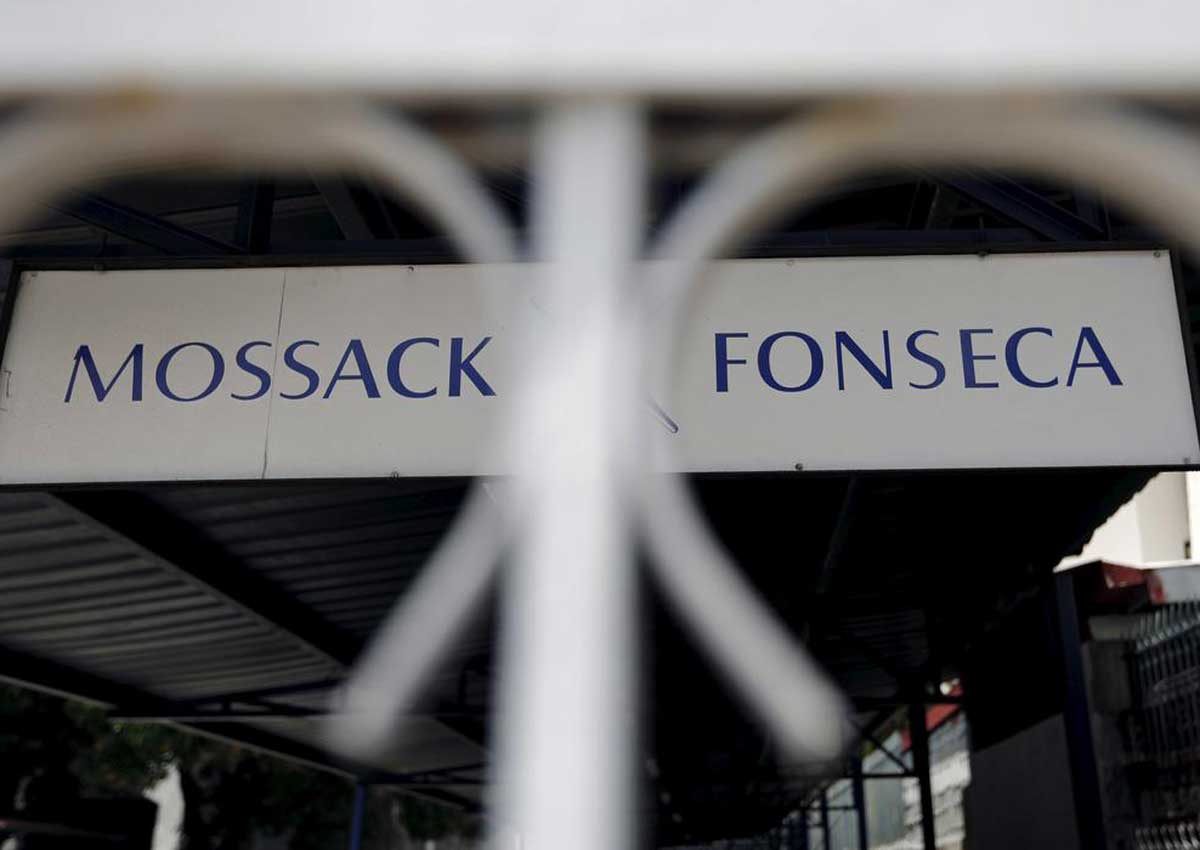
GIC 'not named in Panama Papers'

Image: 
Blurb: 
The investment firm is not named in the so-called Panama Papers. -The Straits Times
Publication Date: 
Friday, May 13, 2016 – 14:00
Keywords: 
Send to mobile app: 
Source: 


Story Type: 
Others

Source link

Danish firm denies link to toxic humidifier disinfectant

Danish chemical company KeTox — which allegedly supplied PGH to Korean company Butterflyeffect — has denied any links to the firm, a civic group working with the victims of toxic humidifier disinfectants said Thursday.

The Danish company denied any business deals with Butterflyeffect in a meeting with representatives of the victims in Denmark on Sunday, according to Choi Ye-yong of the Asian Citizen’s Center for Environment and Health.

The now closed company’s former CEO Frede Damgaard reportedly said that all they had sent to Korea was a 40 ml PGH sample for agricultural use, along with a materials safety data sheet, to an unnamed Korean company in 2007. In a taped conversation with Choi, he argued that the chemicals used in Butterflyeffect’s brand Cefu — one of the sterilizers blamed for the deaths since 2011 — were from China.

Cefu was sold from 2009 to 2011 through online malls often used by mothers. It was advertised as an “environmentally friendly product from Denmark.”

The brand is blamed for 14 deaths and health problems among 41 more people who reported side effects from its use to the government in 2014.

“I’m 99 per cent sure that the company got its ingredients from China,” said Damgaard. But he could not specify the name of the company.

Butterflyeffect is no longer in business and the prosecution has sought an arrest warrant for its former head.

“(What they imported from China) was not PGH, but PHMG,” he added.

This goes against what the Korea Centres for Disease Control and Prevention had identified in 2011 regarding the list of chemicals contained in Cefu.

PGH is a powerful sterilizing agent compared to other chemicals. Denmark has officially banned the use of PGH and PHMG for industrial or agricultural use since 2012, after a warning from the World Health Organisation.

As of 2016, KeTox has no production facilities in Denmark, as the firm went bankrupt in 2012 and closed down last year.

Choi of ACCEH called for a thorough probe into KeTox’s claims and other allegations linked to international companies.

About 68 per cent of victims who died from humidifier sterilizers were known to have used products from European manufacturers such as Reckitt Benckiser and Tesco in UK and KeTox in Denmark,” Choi said.

“The prosecution should, as soon as possible, start an international probe into these firms and summon related officials from Denmark and China,” added Choi.

ddd@heraldcorp.com

Image: 
Category: 
Publication Date: 
Friday, May 13, 2016 – 12:12
Send to mobile app: 
Source: 


Story Type: 
Others

Source link

Tharman to cover as Finance Minister after Heng Swee Keat suffers stroke

Singapore’s Deputy Prime Minister Tharman Shanmugaratnam will be covering the duties of Finance Minister after Heng Swee Keat – a core member of Singapore’s slate of fourth-generation leaders – remains under intensive care after suffering a stroke.

In a statement issued late on Thursday night, the Prime Minister’s Office (PMO) said that 59-year-old Mr Tharman, who was previously Finance Minister, will return to helm the ministry with immediate effect.

Mr Heng, the current Finance Minister, suffered a stroke while at a weekly Cabinet meeting on Thursday afternoon. He is under close monitoring in the intensive care unit of Tan Tock Seng Hospital.

The stroke was caused by an aneurysm, which is a localised weakening of a blood vessel, PMO said.

Mr Heng, 54, underwent initial neurosurgery to relieve pressure in his brain caused by the bleeding. “The aneurysm was successfully closed,” said PMO.

The suddenness of the incident caught many of Mr Heng’s colleagues by surprise.

As wishes for his recovery came pouring in after news of his hospitalisation was made public, his colleagues portrayed him as an invaluable member of the Cabinet who toiled away at fulfilling his many responsibilities.

“Hope Swee Keat will be alright — he is a valuable member of my team,” said Prime Minister Lee Hsien Loong in a Facebook post.

“He is one of Singapore’s finest sons, and a leader with much promise,” said Mr Tharman.

Emeritus Senior Minister Goh Chok Tong added: “He is a core member of the fourth generation leadership team. We need him.”

The opposition Workers’ Party and the Singapore Democratic Party also sent their well-wishes.

Observers said having Mr Tharman helm the Finance Ministry as Mr Heng recovers will help provide stability and steady market sentiment, even as Singapore works to transition its economy amid a global slowdown.

In addition to his DPM post, Mr Tharman is also Coordinating Minister for Economic and Social Policies. He was also once chairman of the International Monetary and Financial Committee, the policy steering committee of the International Monetary Fund.

“There is certainly depth in the bench especially with DPM Tharman – who helmed the Ministry of Finance for eight years previously,” said ANZ economist Ng Weiwen.

Mr Heng had delivered his maiden Budget speech as finance minister just last month.

In his speech, he issued a call to all workers and firms to partner together to help transform the economy.

He unveiled a S$4.5 billion economic programme to integrate Singapore’s restructuring efforts, while introducing measures to address short-term pressures.

Mr Heng also chairs the Committee on the Future Economy (CFE), a high-level committee tasked with charting Singapore’s next phase of economic transition. The committee is slated to conclude its work at the end of this year.

Before the CFE, Mr Heng led the SG50 steering committee that was set up in 2013. The committee oversaw celebrations to commemorate Singapore’s 50th year of independence, or SG50, in 2015.

Mr Heng was first elected as a People’s Action Party Member of Parliament for Tampines at the 2011 General Elections. He was then appointed Education Minister from May 2011 to September 2015.

Prior to holding political office, he served as managing director of the Monetary Authority of Singapore from 2005 to 2011.

Mr Heng’s dedication to his work was not lost on Home Affairs and Law Minister K Shanmugam.

“I could see that he was very tired. I have been telling him that he was working so much that it will affect his health … He was carrying an incredible load,” he said. 


This article was first published on May 13, 2016.
Get The Business Times for more stories.

Image: 
Category: 
Publication Date: 
Friday, May 13, 2016 – 11:58
Send to mobile app: 
Source: 


Story Type: 
Others

Source link

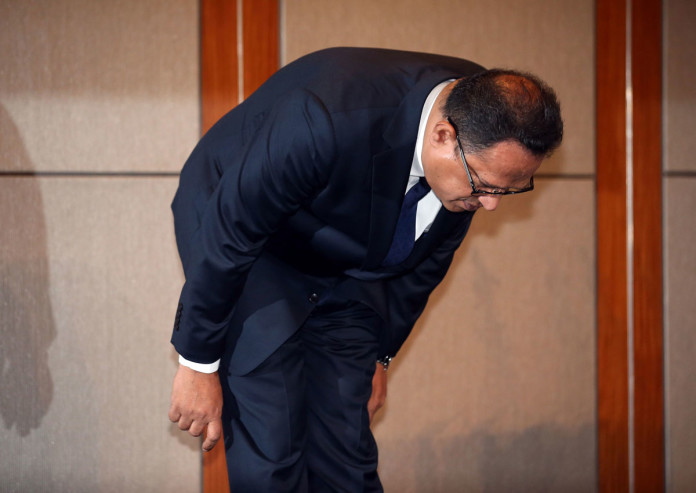
Oxy case tests Korean consumers

Kim Min-sun, a 35-year-old office worker in Seoul, recalls a winter day in 2010 when she bought a bottle of Oxy Ssak Ssak, a humidifier sterilizer accused of killing at least 103 Koreans, at a supermarket in Seoul.

Cheap and convenient, the product was a hit item that built a false hope of getting rid of 99.9 per cent germs inside the water tank of humidifiers.

But what kept Kim wondering at that time was the name of the product manufacturer — Oxy Reckitt Benckiser — a UK company she was familiar with after spending years in England and Switzerland for study.

“I was curious why Reckitt Benckiser was selling a product in Korea that didn’t exist elsewhere — especially in Europe,” she said.

“After watching all these tragedies that the product and the company have caused, I cannot help but think how vulnerable Korean consumers are, particularly to foreign firms.”

Kim is one of a growing number of consumers rethinking their unconditional generosity toward imported products or items manufactured by foreign brands.

The RB case is not the first. Questions over the safety of foreign products have been increasing since last year with Volkswagen Korea’s passive response toward owners of vehicles involved in its emission-cheating scandal. The German carmaker recently came up with detailed cash compensation plans for its US customers, but is yet to release recall plans for Korean customers.

Homeplus, the former local affiliate of British retail giant Tesco, also came under fire for selling customer data to insurance firms for money. The court acquitted the firm in January, saying its customers were duly informed about the data sale. However, consumers were still sceptical, and amid growing criticism over the discount chain’s unethical business it was sold to a consortium of investors led by local private equity firm MBK Partner late last year.

The reasons why Koreans remain vulnerable to possible damages is due to weak legal protection on consumer rights, experts say.

“The absence of class action suits is a major hurdle for consumer compensation,” said a PR representative of Consumer Union in Korea.

Class actions suits, which are a common way for consumers to sue for damages in the US, allow an individual or organisation to represent all consumers who suffered damages from a particular product or service. In Korea, class action is only allowed in securities-related cases and not for general claims.

“In Korea, in order for consumers to start collective action against a company each consumer must come forward as a named plaintiff — making the process long and expensive for those involved,” she said.

Another difficulty is the absence of punitive damages in Korean court rulings.

Punitive damages are awarded beyond the scope of actual damages suffered by claimants, in the hope of reforming or deterring similar actions in the future. Without punitive damages, critics say it is unlikely that consumers in Korea will be compensated enough to be worth long legal fights, and corporations will not feel pressured to reform their practices.

Activists say that foreign companies are aware of the legal loopholes in Korea, and are possibly taking advantage of it.

‘Volkswagen hasn’t even started recalling its vehicles in Korea. It will probably be the only market (left behind),” said Park Ji-ho, an activist with the Citizens’ Coalition for Economic Justice.

“(Foreign) corporations could have a perception that in Korea they don’t have to be serious (about dealing with customers) because there’s no strong protection system,” he said.

Despite a lack of legal protection and the companies taking advantage of it, a movement for consumer rights is emerging over the Oxy RB case.

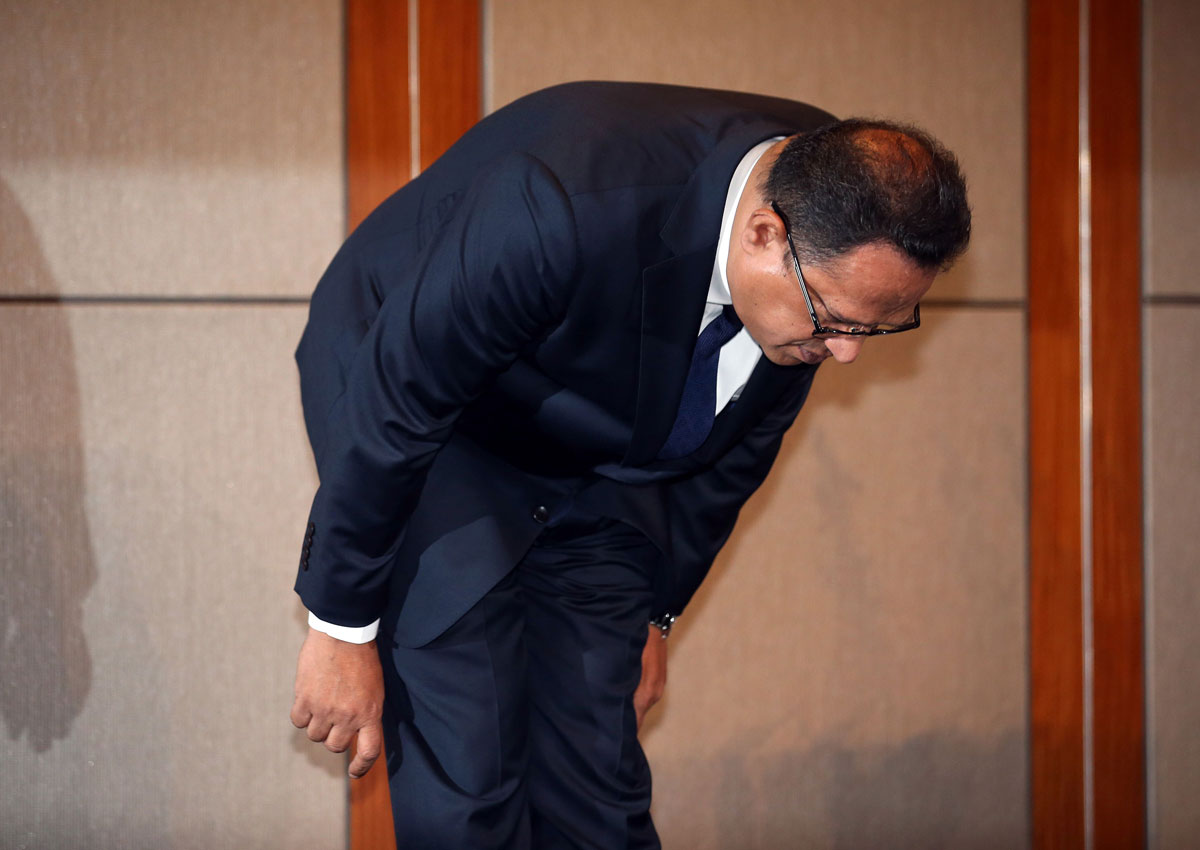
Even after a public apology was delivered by the Seoul office of the British firm earlier this month, a nationwide boycott of RB has been fast spreading, forcing its entire products out from stores both online and offline.

From discount supermarket chains to e-commerce platforms, retailers have decided not to take new orders for RB, in response to the growing public rage, an industry insider said, adding that it is perhaps the first time that retailers have joined a boycott led by consumers. The sales of dehumidifiers and bleachers manufactured and marketed by the firm have also plunged around 50-80 per cent, according to local reports.

“I think until now people were unsure of how to react to such cases (that threaten consumers’ right) because there was no precedence in Korea,” said Park.

“They know now. So I believe not only the citizens but also consumer groups should build a concrete plan on how to deal with companies committing illegal actions from now on and devise a way to legislate such efforts.”

christory@heraldcorp.com

hjwon@heraldcorp.com

Image: 
Category: 
Blurb: 
Recent cases, from RB to Volkswagen, reveal vulnerability of consumer rights and lack of legal protection. -The Korea Herald
Publication Date: 
Friday, May 13, 2016 – 12:05
Send to mobile app: 
Source: 


Story Type: 
Others

Source link

Yellow Ribbon volunteers to get more training

Twice a week, public relations officer Mohamed Fawzi Ali, 46, visits the families of inmates in Macpherson, where he lives.

He fondly recalls how he had helped a 10-year-old girl whose father was in jail. After visiting the child and her mother two years ago, he introduced the girl to a weekend madrasah at a nearby mosque. She has been attending classes there since.

“The kid studied well (at school), but what they wanted was something for the inner self,” said Mr Fawzi, a volunteer with the Yellow Ribbon Community Project since 2012. The project helps the families of inmates.

Grassroots volunteers like him will soon receive further training, an add-on to the one-day programme they now undergo to learn the skills required for the job. This will help them to identify vulnerable children of inmates and provide deeper community support for families, said Parliamentary Secretary (Home Affairs) Amrin Amin yesterday. The training will start this year, and more details will be released later.

Mr Amrin announced this at the annual workplan seminar of Community Action for the Rehabilitation of Ex-Offenders (Care) – a network of agencies that helps rehabilitate former offenders.

Last November, the Yellow Ribbon Fund, which provides financial support for programmes and services for former offenders, became part of the Care Network, allowing better coordination for fund-raising efforts, he said.

Highlighting the need to deepen community involvement, Mr Amrin added: “Without proper family support and a conducive growing- up environment, the children will be at a higher risk of developing anti-social behaviours or may face difficulty coping in school.”

Under the new training programme, volunteers will learn to identify the needs of the children of inmates and connect them to Care Network agencies.

Mr Amrin said volunteers will be encouraged to introduce the families of inmates to grassroots community programmes to widen their social support network, rather than just link them up with resources. Volunteers can also encourage inmates to keep in touch with their family members, added Mr Amrin, a Sembawang GRC MP.

Currently, with inmates’ consent, volunteers approach their families, encouraging them to visit their loved ones in prison.

On average, 70 per cent of newly-admitted offenders agree to take part in the programme.

Since its inception in 2010, the Yellow Ribbon Community Project has helped more than 4,000 families. It has more than 800 grassroots volunteers, up from about 60 in 2010.

Ms Edlyn Tan, 28, a volunteer of three years, hopes more young people can come on board as “it’s never easy to find suitable volunteers for this role”.

She said, for example, that volunteers have to be sensitive to families’ needs by carrying out visits discreetly if the families have not told their children or neighbours about the incarceration.

Noting that he now sees more young families of inmates in Macpherson, Mr Fawzi said he encourages his three sons to help too. “I tell the kids, if I’m not around, please continue this work.”

byseow@sph.com.sg


This article was first published on May 13, 2016.
Get a copy of The Straits Times or go to straitstimes.com for more stories.

Image: 
Category: 
Publication Date: 
Friday, May 13, 2016 – 11:42
Keywords: 
Send to mobile app: 
Source: 


Story Type: 
Others

Source link