Home Blog Page 3957

Amputee close to top of world's highest peak

Double-amputee Chinese climber Xia Boyu is about 1,500 meters away from reaching the summit of the world’s highest mountain.

On Thursday morning, he reached a height of 7,283 meters on the 8,848-meter-high Qomolangma, according to a live broadcast on news portal sina.com.

By the end of the day, the 65-year-old, who was born in Chongqing, was expected to have reached camp C4, where he failed in his first attempt to reach the summit 41 years ago.

In 1975, a violent storm kept Xia – then a new member of China’s national mountaineering team – at the camp at an altitude of 8,600 meters.

The attempt also cost him both his feet to severe frostbite after he gave his sleeping bag to an ailing teammate.

Since then, Xia has overcome despair, disabilities and cancer, and maintained strenuous physical training in an attempt to realise his dream.

“(New Zealander) Mark Inglis climbed the world’s highest mountain without legs. An 80-year-old Japanese also reached the peak. I believe I can climb to the top, too,” Xia was quoted as saying during a radio interview in April.

He said his confidence comes from years of hard training, interrupted for a time when he was diagnosed with cancer in 1996.

Soon after recovering, Xia, equipped with artificial limbs, climbed four peaks more than 6,000 meters high in seven years.

“Reaching the summit of Qomolangma is a dream I’ve never abandoned in the past 40 years,” he was quoted as saying by Xinhua News Agency.

Xue Guangwen, secretary-general of the China Mountaineering Association and a close friend of Xia, said, “He is optimistic and excited.”

A netizen from Guizhou province posted a comment on sina.com paying tribute to Xia and wishing him success.

Another netizen, from Hunan province, said he had watched reports about Xia on TV, had been inspired by him, and also wants to climb Qomolangma.

For his latest attempt, Xia received just one donation from his mountaineering partners during a departure ceremony. “I normally don’t accept any donations. Instead, I sign a contract with enterprises, because I don’t think I can repay the love people show me,” he said.


Image: 
Publication Date: 
Friday, May 13, 2016 – 11:49
Send to mobile app: 
Source: 


Story Type: 
Others

Source link

Gong Li at Cannes: China's film industry too focused on entertainment

Not a single Chinese film is competing for the Palm d’Or, one of the highest honors films can receive at the 69th Cannes International Film Festival, but that didn’t stop Chinese stars from leaving their footprints on the red carpet in Cannes. World-famous actress Gong Li, who is a regular at Cannes, was also there, as she was invited by one of the sponsors for the festival.

Gong, known for her straight-forward attitude, said she felt it was regrettable that China’s film industry was so focused on amusing itself. Many directors place emphasis on the number of films they produce and tickets they sell, instead of the actual quality of the films.

And as for the young actors who frequent the Cannes red carpet, Gong advices them to “see more films and love your job more from deep under. If you go off topic (referring to actresses only showing up to be photographed in international media), you’ve come for nothing, and that’s a pity.”

Q: This is your 15th time at Cannes. Is there anything new each time you come?

Gong: Every time I come I feel that this career is great, and not something to give up on. Sometimes when I’m tired, I really feel like I want to stop filming. But when you come to Cannes, and see so many people respecting films, and when you walk into the theatre to see films, you feel like this is a great career, an indispensable part of your life. Your job is great, carry on.

Q: Many master directors entered their works this year. Which ones are you looking forward to?

Gong: I’ve seen a couple of films from South Korea and Japan. None from China are here this year, that’s a shame. I think the competition is fierce, because some of the directors are newcomers so I don’t know who’ll win. I also don’t know the tastes of the jury, they come from different countries, some are actors and some are directors, so it’s hard to imagine. I want to see all of the entries this year. All films selected to compete in Cannes are great films.

Q: No Chinese films have entered or are participating in the out of competition section. That’s pretty rare.

Gong: It’s not like China has had great films previously and none this year. It’s been like this for some time. China’s market is great, but the biggest problem is it’s trying so hard to amuse itself. It can’t walk out of the shadow Hollywood cast upon it. Chinese films for foreign audiences are still the films of the past, and they don’t have high expectations for today’s films in China. I’m regretful that I haven’t seen a good Chinese film in a long time. Chinese filmmakers should really think about that. Films are not just there for entertainment; films should be able to cleanse your soul.

Q: What’s your take on the rising directors? Would you work with them?

Gong: I don’t care whether the director is young or a master. What attracts me is a good role and a good script. Filming is teamwork. A good director without a good team cannot produce a good film. A good actor in a not-so-good team cannot shine. Many new directors want to try, but their works must sell, so they go to the extremes and film stories aimed at entertaining the audience. This is going off track, and it’d be hard to get back on track for some time. They’ll need some time to let things sink in.

There are many directors in China, but the topics they choose are very similar. Or, they would aim at the market. Quality is not important and all they care are about is numbers, or money. This is neither good for Chinese films nor Chinese culture.

Q: Not just for directors but also for actors. Many young actors are here at Cannes, and even more Chinese internet users say they are just here to walk the red carpet. They want to gain exposure at the festival, and then go back home to take on projects (and not the other way around).

Gong: If they really think this way then they are wrong. But I think you can participate, come, and see what film festivals abroad are like and how much respect actors abroad have for films.

Our actors should go beyond the national border, see some films if they’ve got time, and not just walk on the red carpet and leave right after. See the films, it’ll be helpful for your career, and maybe you’ll love your job more from deep under. If you have this mindset then coming to film festivals won’t do any harm. If you go off the tracks, then you’ve come for nothing, and that’s a pity.

Image: 
Category: 
Publication Date: 
Friday, May 13, 2016 – 11:43
Send to mobile app: 
Source: 


Story Type: 
Others

Source link

Lightning strikes 'won't hurt commuters'

The steel frame of an MRT train keeps commuters inside safe from lightning strikes, and is like the protection offered when one is inside a car or an aeroplane, said experts.

Hence, a lightning strike, which was suspected to have crippled an SMRT train during a heavy thunderstorm on Wednesday afternoon, would not be dangerous to passengers inside the train.

SMRT did not confirm if the train was hit and said only that lightning struck in a location between Yio Chu Kang and Khatib stations along the North-South Line. The affected train had to be pushed to a station by another, and no one was hurt.

Professor Liew Ah Choy from the National University of Singapore’s electrical and computer engineering department said there is no significant voltage difference – which causes electrocution – in a metallic enclosure such as a train cabin when lightning strikes.

Prof Liew said the steel frame of the train rises in voltage during a strike, and the current would flow around the metallic walls of the train car. “In the process of doing so, because the wall is electrically conducting, there is very little voltage difference generated,” he explained.

There is also no danger if a person is clutching a metallic pole in the cabin, he added. “Say, your hand is holding the pole and your feet are on the (train cabin) floor. The voltage on the pole is roughly the same as the voltage on the floor,” he said.

In response to concerns raised by the public about lightning strikes on the MRT network, SMRT said in 2001 that the train cabin is, in scientific terms, a “Faraday cage” – a concept named after the 19th century scientist Michael Faraday.

Other examples of Faraday cages are cars and aeroplanes, where passengers are safe if lightning hits.

The transport operator said in a letter published in The New Paper in 2001: “A person may be electrocuted if there is a high electrical potential difference between two different parts of his body, causing electricity to flow through his body. There is no electrical potential difference inside a Faraday cage.”

In Wednesday’s case, the train’s driver was said to have reported the incident, adding that he smelled something burning.

Asked about this phenomenon, a former SMRT train driver, who declined to be named, said there are electrical components in the train which may have been “shorted” by the sudden surge in voltage.

“The surge protectors may not be able to protect these parts, given that Wednesday’s storm was quite severe. There have been lightning strikes before, when the system tripped, but we were able to get the trains running soon after,” he said.

The former employee said SMRT has over the years installed more lightning rods at viaducts in open areas as additional safety measures.

According to the National Environment Agency, Singapore has one of the highest occurences of lightning activity in the world.

Even so, lightning strikes on MRT trains are not common. The last case reported in the media was in September 2013, when a strike somewhere around Kranji station caused an electrical failure that held up North- South Line services for 35 minutes.

adrianl@sph.com.sg


This article was first published on May 13, 2016.
Get a copy of The Straits Times or go to straitstimes.com for more stories.

Image: 
Category: 
Publication Date: 
Friday, May 13, 2016 – 11:21
Keywords: 
Send to mobile app: 
Source: 


Rotator Image: 
Story Type: 
Others

Source link

Ambassadors and business associations send well-wishes to Heng Swee Keat

SINGAPORE – Foreign dignitaries and local business associations have begun to send their well-wishes to Finance Minister Heng Swee Keat following his stroke on Thursday afternoon.
Among the first to make a statement was United States Ambassador Kirk Wagar….

Source link

ST Electronics, SUTD set up new cyber security lab

The lab, which will be Singapore’s first corporate cyber security laboratory, will focus on areas such as cyber security big data analytics and the development of trusted cyber monitoring and mitigating techniques.

Source link

A Green Bus journey through history

As children, the Ong siblings used to get free rides on public buses sometimes.

Their father, Ong Cheng Siang, was the second-generation owner of the Green Bus Company which operated five routes from its terminal in Queen Street to as far as Lim Chu Kang and Johor Baru.

The iconic 30-seater vehicles – Vulcan omnibuses from England – were painted a deep shade of green.

“As teenagers we took the bus out with friends. The bus conductors recognised us and we got on free,” said 65-year-old Ong Lek Meng, an oil trader.

The most profitable route was bus No. 5 which covered the Bukit Timah area and ended at the Princess Elizabeth estate.

The company was established in the mid-1930s by Mr Ong’s grandfather Ong Chin Chuan and several other partners.

The Ong family has loaned about 50 photos capturing highlights of the company’s history to the National Heritage Board (NHB).

These will be incorporated into a refreshed version of the board’s Bukit Timah heritage trail which will be launched in September.

Mr Alvin Tan, NHB’s assistant chief executive of policy and community, said the Ong family’s photos and personal stories “fill a crucial gap in Singapore’s early transport history”.

Mr Tan hopes the families of other early bus companies will also share their stories and photographs “so we can have a fuller understanding of Singapore’s early bus networks and operations”.

Prior to the war, the Green Bus Company was one of 10 which ran “mosquito buses” or small seven- seater motor buses that plied rural areas. These were popular with the working class because they were cheap and fast.

These businesses, which included Keppel Bus Company, Soon Lee Bus Company and Ngo Hock Bus Company, were mainly owned and operated by the Hock Ching dialect group from Fujian province.

As children, some of the Ong siblings would spend evenings at the bus terminal counting the takings from the various services.

Ms Ong Bee Geok, 66, a retired bank worker, said: “Rides started at five cents. The most expensive ticket was priced at 50 cents, to Johor Baru.”

While business boomed for the most part, internal strife was common among staff and shareholders.

On April 27, 1960, Mr Ong Cheng Siang, then 44, was kidnapped after a dinner and held captive in an underground cell in the east coast.

Mr Ong Lek Meng said of his father’s ordeal: “We heard that he was buried in a hole in the ground. Our house was filled with relatives, reporters and the police. He came back with rashes.”

According to newspaper reports, Mr Ong was released nine days after a substantial ransom, believed to be $500,000, was paid. His kidnappers threw him out of a car along Amber Road. There, he had hailed a cab to his motor workshop in Rochor Canal Road.

Later, in the 1960s, he was also the victim of an acid attack which left his neck, chest and arms scarred.

He eventually developed throat cancer and died in 1971.

The company was amalgamated in 1971 with two others to form the United Bus Company.

By 1973, the Government had further merged all the public bus companies into Singapore Bus Services – today’s SBS Transit.

Mr Ong Lek Meng’s son Patrick Ong, 39, who loaned the photos to the NHB, said he wanted to share his family legacy with the public.

“I hope future generations can learn about the contributions of Singapore’s early families,” the civil servant said.

“The photos could also help researchers digging into Singapore’s past.”

melodyz@sph.com.sg


This article was first published on May 13, 2016.
Get a copy of The Straits Times or go to straitstimes.com for more stories.

Image: 
Category: 
Publication Date: 
Friday, May 13, 2016 – 11:21
Keywords: 
Send to mobile app: 
Source: 


Story Type: 
Others

Source link

Gallop Stable on trial for alleged animal cruelty

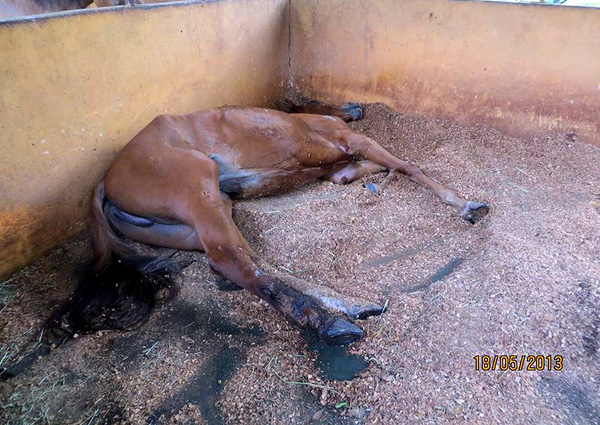
A government veterinarian who checked on a horse at a Gallop Stable’s Pasir Ris ranch three years ago saw its right hind leg severely swollen and infected, and it had flies in its eyes.

The next day, another vet who saw the thoroughbred mare taught stable staff how to wash its wounds twice a day.

But three days later, she had to use forceps to remove maggots, which had burrowed deep into a wound.

These details emerged on the first two days of Gallop Stable’s trial at the State Courts for alleged animal cruelty on Monday and Tuesday. The company, which owns three ranches here and one across the Causeway, is denying its single charge.

A district court heard that Wendy Toh was at the Pasir Ris ranch on May 15, 2013 for an unrelated visit when she saw the horse, named Sharpy, lying down.

It was bobbing its head in a bid to get rid of flies in its eyes.

Its right hind leg was about three times the size of a normal leg and it looked to be in obvious pain. There were faeces in the background.

“I really feel sorry for the horse,” said Dr Toh, who was then with the Agri-Food and Veterinary Authority.

When water was taken to it, the horse used its mouth to suck the liquid up, instead of using its tongue to lick the water like normal horses would. It also ate up the hay that was given to it.

Read also: Woman killed by horse in Singapore

The next morning, another vet went to check on the horse after being called by Gallop Stable’s director.

Phyllis Yew, who is in private practice, found it lying down, with a fever. There were numerous sores covering about 85 per cent of its right hind leg, which was very swollen and filled with pus.

In some areas, the skin had peeled away, leaving open sores. The sores would have developed up to eight days prior to her visit, said Dr Yew.

The horse also had conjunctivitis in its eyes and its eyelids were swollen. It had wounds on its face, from scraping and banging its head against the ground while trying to get up on its weak legs.

Dr Yew prescribed intravenous antibiotics and painkillers and showed the stable staff how to clean the animal’s wounds. She also instructed them not to let the horse lie down to prevent further injuries, such as nerve damage.

But when she returned three days later, she had to use forceps to dig out maggots deep inside a wound on the horse’s right elbow.

This would not have happened if the staff had cleaned the wounds twice a day with an antibacterial wash as instructed, said Dr Yew.

“It’s a very simple wiping with an antibacterial wash.”

The horse, now aged 20, is still with Gallop Stable.

If convicted of failing to provide adequate veterinary attention to its horse, thus causing unnecessary suffering to the animal, the company faces a maximum fine of $10,000.


Get MyPaper for more stories.

Image: 
Category: 
Publication Date: 
Friday, May 13, 2016 – 11:19
Send to mobile app: 
Source: 


Rotator Image: 
Story Type: 
Others

Source link

NTUC to help conserve migrant workers' space

The labour movement has pledged its support to keep a struggling migrant workers’ cultural space open after its owner said he was finding it too expensive to continue operations.

In a letter to The Straits Times forum published yesterday, Migrant Workers’ Centre chairman Yeo Guat Kwang said that Dibashram’s activities, which include poetry competitions and counselling services, are “positive efforts to help workers here integrate better”.

AKM Mohsin, who runs both Dibashram and local monthly Bengali newspaper Banglar Kantha, had been using the paper’s profits to pay for the centre’s rent and utilities of about $3,000 a month.

But advertising revenue has fallen and he can no longer afford to pay for rent and utilities at the Rowell Road shophouse where Dibashram is housed. The 600 sq ft unit on the second floor doubles as his office.

Mr Yeo, whose worker advocacy centre is backed by the National Trades Union Congress (NTUC), said he will be in touch with Mr Mohsin on how to “help the good work of the centre continue”.

“I’m grateful for the help,” said Mr Mohsin, adding that he is still considering the offer.

Besides NTUC’s support, a crowdfunding site by researchers Mohan Dutta and Manishankar Prasad has raised more than $4,800 in five days in an ongoing campaign.

Mr Mohsin said: “Although it is not a permanent solution, we are thankful for the support that locals here have shown.”

He is currently in talks with dormitories who are interested to buy copies of Banglar Kantha for their residents. A few companies have also shown interest in taking out advertisements since the report ran.

“If more people buy the paper, it will help draw advertisers and that is a more sustain- able way to support Dibashram,” said Mr Mohsin.


Get MyPaper for more stories.

Image: 
Category: 
Publication Date: 
Friday, May 13, 2016 – 11:14
Send to mobile app: 
Source: 


Story Type: 
Others

Source link

Football: No Valbuena, Ben Arfa for France as Euro countdown begins

PARIS – With just over four weeks to go until the start of Euro 2016, the build-up to the European Championship continued on Thursday as hosts France named their squad, minus Mathieu Valbuena and Hatem Ben Arfa.

Valbuena’s season has been overshadowed by the sextape blackmail affair in which he has been a victim and which has seen star striker Karim Benzema of Real Madrid dropped by his country.

The Lyon midfielder has struggled for form and has unsurprisingly been left out of the hosts’ squad for the finals.

“Mathieu has had a very difficult season with injuries and his level of performance has been below what he is capable of doing,” said coach Didier Deschamps, who announced his squad live on television station TF1’s evening news bulletin.

Valbuena, 31, reacted to his omission by admitting his “immense disappointment” in a post on his Facebook page.

“This season has been marked by events which have, evidently, had consequences for my performances and my not being selected,” he said.

Ben Arfa had been hopeful of making the squad after relaunching his career at Nice but instead has to settle for a place on the standby list of eight.

Liverpool defender Mamadou Sakho was also omitted after being suspended for 30 days by UEFA for failing a drugs test.

Despite the absence of Benzema, who has scored 27 goals in 81 caps, France have great strength in depth in attack.

Arsenal’s Olivier Giroud could lead the line while Antoine Griezmann is enjoying a superb season with Atletico Madrid.

Anthony Martial and Dimitri Payet have also enjoyed fine campaigns since moving to the English Premier League and bookmakers in the UK have made France one of the favourites to win the trophy on home soil.

Deschamps, who won the World Cup as a player when France hosted the tournament in 1998, must submit his definitive 23-man squad by the UEFA deadline of May 31.

France open Euro 2016 against Romania on June 10 before also facing Albania and Switzerland in Group A.

Belgium, another of the fancied nations to win the first 24-team Euros, also announced their provisional squad on Thursday, with coach Marc Wilmots deprived of the services of captain Vincent Kompany.

The Manchester City defender is ruled out with a groin problem.

“I’m terribly disappointed by Vincent Kompany’s absence, he’s our leader and he won’t be there,” said Wilmots.

Belgium are in the same group as Italy, Sweden and the Republic of Ireland, whose coach Martin O’Neill named a provisional list of 35 for the finals.

Record goal-scorer Robbie Keane, 35, made the list along with Everton right-back Seamus Coleman, despite the fact he has not played since last month due to a hamstring injury.

Ireland will face the Netherlands in a friendly in Dublin on May 27 as they step up preparations before their opening game against Sweden on June 13.

“Everything now is about preparing for Euro 2016 and that is why we wanted to play a team of the calibre of the Netherlands as we aim to make the most of our time ahead of the departure for France,” O’Neill told a press conference in Dublin.

Austria’s Swiss coach Marcel Koller unveiled a 24-man squad featuring Bayern Munich’s David Alaba and Christian Fuchs of English champions Leicester City.

Austria enjoyed an impressive qualifying campaign as they qualified for the first time for the tournament – in 2008 they were automatically included as co-hosts – without losing a game and even thrashing Sweden 4-1 away.

“This team is unbelievably fun. The whole picture has changed incredibly in just under four years,” said Koller, who will trim his list by one by the end of May.

Romania, Slovakia and Poland, who will be led by Bayern striker Robert Lewandowski, also announced their provisional squads on Thursday.

Other nations will announce their squads at the start of next week, with England manager Roy Hodgson naming his list on Monday and reigning champions Spain, World Cup holders Germany and Portugal due to follow on Tuesday.

Image: 
Category: 
Publication Date: 
Friday, May 13, 2016 – 11:06
Send to mobile app: 
Source: 


Story Type: 
Others

Source link

7-month-old Brunei boy with deformed skull dies

Image: 
Publication Date: 
Friday, May 13, 2016 – 11:01
Send to mobile app: 
Source: 


Rotator Headline: 
7-month-old Brunei boy with swollen skull dies
Rotator Image: 
Story Type: 
Others

Source link