Home Blog Page 3940

April's quakes cost Japan more than $6 billion

TOKYO – The economic impact of the earthquakes in southwestern Japan this April is estimated at 500 billion yen (S$6.86 billion), judging by sources including the government of hardest-hit Kumamoto Prefecture.

Saturday marks a month since the first major tremor shock. In Kumamoto and neighbouring Oita Prefecture, damage to the agricultural, forestry and fisheries sector is estimated at 135.4 billion yen. Damage to transportation infrastructure, including highways and bridges, is seen totaling 320 billion yen.

More than 80,000 buildings were damaged or destroyed, and 10,000-plus people remain in evacuation centres and other temporary housing.

Back in business

Many retailers have returned to normal operations in Kumamoto. The southwestern-Japan unit of retail giant Aeon has reopened all stores in the prefecture. Supermarket operator Izumi is eyeing reopening three severely damaged stores by the end of June. Convenience stores are mostly back to normal as well.

Prices of 2-liter plastic bottles of mineral water jumped 24 per cent from April 1 to April 18 in southwest Japan, according to Nikkei Inc. data collected from supermarket registers. But the prices have fallen in May.

Read the full article here

Image: 
Category: 
Publication Date: 
Sunday, May 15, 2016 – 17:23
Send to mobile app: 
Source: 


Story Type: 
Others

Source link

ItChangedMyLife: Navy Seals training and accident gave commando resolve to find purpose in life

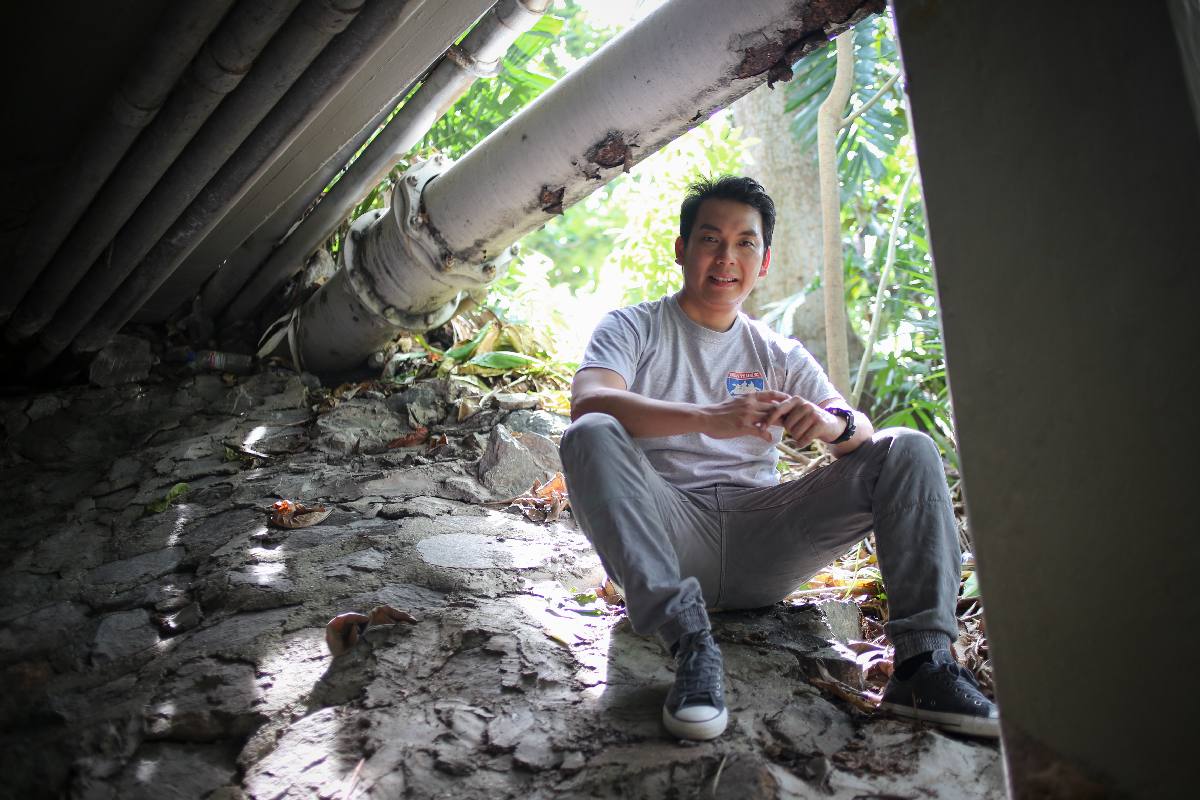
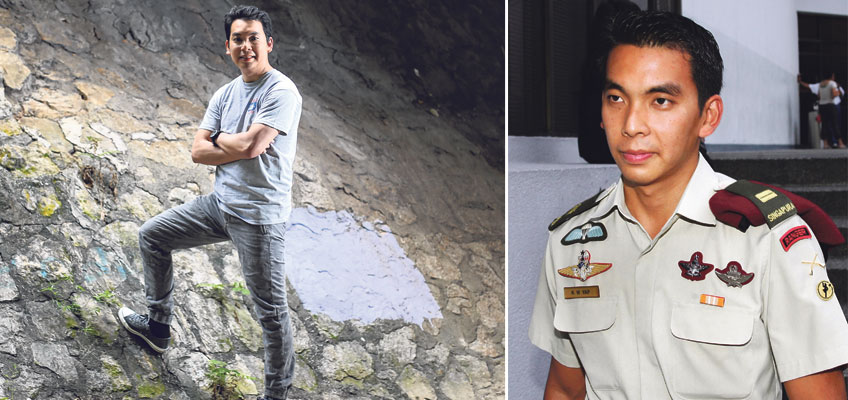
It was a clear September day in 2001, and Mr Yap Kwong Weng was sound asleep in the back seat of a red Buick making its way from San Diego to Los Angeles.

In the United States to attend its elite Navy Seals training programme, the then 23-year-old Singapore Armed Forces commando was exhausted. And understandably so, because he had just survived Hell Week, the programme’s most brutal component.

Lasting 51/2 days, it compresses sleep deprivation (recruits sleep no more than four hours during this period), near hypothermia, and other forms of unthinkably harsh mental and physical challenges to weed out all but the toughest warriors. Only 25 per cent of all candidates make it through Hell Week.

Mr Yap’s deep slumber was interrupted most dramatically. The driver had fallen asleep at the wheel; the Buick, which was going at about 130kmh, hit a kerb, flew into the air and flipped over twice before turning turtle on Highway 101.

“There were four people in the car. I was thrown out the rear window. When they found me, I was two or three metres from the car and not breathing because one of my lungs was punctured,” he says.

Rescue workers had to seal off both ends of the highway and airlift Mr Yap – who also had his collarbone and several ribs broken – to Martin Luther King Hospital in Los Angeles.

When he came to 24 hours later in the hospital’s intensive care unit, he had two things on his mind: to see his parents and to go back to his Seals course.

He demanded to speak to his commanding officer at the Naval Special Warfare Training Centre in Coronado, California.

“I said, ‘Sir, this is Lieutenant Yap from Singapore. I got myself in an accident and I am in the hospital, but you are not going to give up on me…”

Against his doctors’ orders, he went back to the course two weeks later. “I had to sign an indemnity form. Fortunately, the rest of the training was mostly skills-based, but there were still runs and timed swims. I took things step by step, day by day, month by month,” says Mr Yap, who graduated from Basic Underwater Demolition/Seal Class 237 on Feb 2, 2002.

The course and Hell Week, he says, were a big game changer in his life. Among other things, it taught him never to give up on himself and on others.

“When people fall, you have to give them the chance to pick themselves up again,” he says.

The experience probably also gave him the mental strength to reimagine a whole new future for himself and figure out his place in the world. He went back to school and got not just a degree, but also a master’s and a PhD. He also left the army to, first, blaze a corporate trail and, now, chart his own entrepreneurial journey in Myanmar.

Determined to find purpose, he has also immersed himself in various projects to fight for inclusion and improve lives, for organisations ranging from the United Nations Association to the Global Dignity Organisation.

“People ask me what I hope to achieve. I don’t know the answer yet, but I do know that every river has its end. I just don’t know where that is yet,” says Mr Yap, now 38.

Even so, he has drifted quite a distance from the source of the river which, in his case, was a two-room flat in Toa Payoh.

The only son of a shipping supervisor and a housewife, he studied at San Shan Primary School and First Toa Payoh Secondary School.

He was a mediocre student but a superb sportsman, excelling in everything from athletics to volleyball.

By the time he was 11, he already had his black belt in taekwondo. The martial arts training came in handy when seven ruffians armed with chains ganged up against him after school one day.

“They accused me of staring at them. It was seven against one and I knew I was going to lose, so I sized up the situation and decided to go for their weakest link – the shortest and fattest boy,” he says.

Mr Yap felled his target with a turning kick to the head and made his escape when the victim’s flustered accomplices attended to him.

The decisiveness is a character trait; once he knows what he wants, he will go all out to get it.

And from a very young age, he had set his sights on being a commando. It was fuelled by his stint as head of his school’s National Cadet Corps (NCC).

“I loved the rituals and the military drills. I was bent on joining the army, and the commandos were the best,” says Mr Yap, who travelled to India and took a parachuting course while he was with the NCC.

After completing his A levels at Jurong Institute, he trained hard and passed the vocational test for potential commando recruits with flying colours.

That was how he came to join the 1st Commando Battalion in 1997, where he received gruelling training before receiving his red beret – the symbol for parachute and elite forces around the world.

Because he graduated top of his platoon at Officer Cadet School, the army offered to send him to Sandhurst, the British army’s famous officer training academy in Berkshire, outside London.

He turned down the offer, he lets on sheepishly, because he did not want to be away from his childhood sweetheart for 18 months.

“I thought she was the person I would end up with,” he says, adding that the relationship eventually did not work out. “To be honest, I regretted that decision.”

Instead, the second-lieutenant went to Ranger School where, for 65 days, he underwent brutal training and learnt things – both good and bad – about himself.

“You discover your strengths, but you also find out if you will give in to greed, betrayal…”

Mr Yap was then deployed as a platoon commander with 30 experienced soldiers under his charge.

Over the next few years, he went on several overseas missions before being nominated for the renowned US Navy Seals programme, which includes rigorous training in direct action warfare, special reconnaissance and counter-terrorism.

His parents, he says, cried when he insisted on completing the programme after his accident.

“They said I was mad, especially since I had nearly died. But I could not fail my country. If I had to crawl back, I would.”

The experience changed him. Although his military career was going smoothly, he decided he needed a formal tertiary education.

Some of his friends told him not to bother, but his mother sold off some of her jewellery so that he could take a leave of absence from the army and pursue a degree in communications at the State University of New York at Buffalo .

The formal education changed his perspectives on life.

He knew he had the brawn, but he realised it was also time to develop and expand his brain.

After graduation, he took on a leadership development role at the Commando Training Institute before moving on to Mindef, where he became a senior defence analyst.

Among other things, he looked at terrorism threats and worked on counter-terrorism situations. He also wrote and edited a monograph on the special forces, and authored several papers and articles on topics ranging from battle systems to military leadership and crisis management.

Not content with his basic degree, he went on to obtain a Master of Public Administration at the Lee Kuan Yew School of Public Policy and a PhD from the University of Glasgow.

In 2012, the National University of Singapore gave him a Distinguished Leadership Award.

“Not bad, from a school which rejected me three times,” he says with a smug grin.

Mr Yap, who got married to a civil servant in 2008, says he was trying not just to make sense of life, but also to make full use of it.

“As a defence analyst, I was making sense of the world by day. At night, I would go to my classes trying to learn more about the world,” he says.

As if that was not enough, he spent his weekends on community work. He started out volunteering at welfare group AWWA, helping to distribute food to old folks’ homes and disadvantaged families in Ang Mo Kio and Choa Chu Kang.

“When you volunteer, everyone benefits,” he says simply.

Mr Wan Tapern, 38, has known Mr Yap since their NCC days.

Says the Changi Airport senior manager: “He has not changed. He does not waver, and he does not waste time. Once he has set his mind on something, he will do it.

“But his commitment to help the community is a pleasant surprise. I guess it developed along the way as he became more exposed to the world. I am very happy to see this side of

him growing.”

Mr Yap went on to become the secretary-general of the United Nations Association and Singapore’s first Rotary Peace Fellow, and was also named a Young Global Leader by the World Economic Forum (WEF).

In 2011, he went on a punishing 100km trek in China’s Taklamakan Desert to raise awareness in Singapore of the UN’s millennium goals.

The world became his oyster.

“As a WEF young global leader, I got to spend a week in Harvard learning about world issues from people like General John Allen,” he says, referring to the four-star general and former commander of the US forces in Afghanistan.

Says Mr Dan Tan, a former commando-turned-healthcare counsellor who knew Mr Yap during their training: “It is part of Kwong Weng’s DNA. He is really into upgrading skills, learning new things and taking on new challenges.”

A leap into the corporate world seemed inevitable for Mr Yap, who was a senior captain when he made the decision in 2012.

It was not easy. Over three months, he sent out nearly 60 application letters but received no replies. But just when he was starting to get discouraged, the offers came.

True to his adventurous spirit, he accepted an offer from offshore firm Jebsen & Jessen to work in Myanmar. As its deputy general manager, his job was to develop business in the country and open new markets in Laos.

Next came a stint as chief operating officer of the Parami Energy Group, where he worked to ensure transparency in the group’s policies and practices.

Last year, he struck out on his own and set up Leap, which specialises in trading , distribution and construction.

Myanmar, he says, is a country in the throes of change.

“The opportunities are there, but you have to sort out a lot of obstacles. There are those who choose the easy way out, but I believe in getting a competitive edge in the right ways,” says Mr Yap, whose company has won several tenders to build living quarters for civil servants.

“It can be done. The Singapore brand is strong; we are known for our efficiency and credibility.”

His latest baby is a book, also called Leap, about his life and his experiences, published by Marshall Cavendish .

“I want Singaporeans to know that no path is too difficult and that the world is waiting for us to explore,” he says. “Singapore is a good place, but we need more innovation, entrepreneurial spirit and the derring-do to try new things. You will fail at times, but you will stand up and go again.”

Just like he did.

kimhoh@sph.com.sg


This article was first published on May 15, 2016.
Get a copy of The Straits Times or go to straitstimes.com for more stories.

Image: 
Category: 
Publication Date: 
Sunday, May 15, 2016 – 16:28
Send to mobile app: 
Source: 


Rotator Image: 
Story Type: 
Others

Source link

Indonesia reviewing cooperation with Singapore in environment, forestry matters: Report

All procedures concerning planned bilateral collaborations in environment and forestry matters with Singapore have reportedly been put on hold.

Source link

Now open: A garden to uplift the senses

Image: 
Publication Date: 
Sunday, May 15, 2016 – 17:00
Send to mobile app: 
Source: 


Story Type: 
Others

Source link

Migrant workers cheated out of a job in S'pore

Two Singapore companies are being probed by the authorities for allegedly scamming foreign workers out of thousands of dollars in payment for non-existent jobs overseas.

The police are investigating Global Catering and Management for allegedly cheating three Bangladeshis who paid the catering company about $5,000 for jobs in Canada.

They are also investigating Amacre Associates, an employment agency licensed by the Ministry of Manpower (MOM), for possible criminal offences related to offering non-existent jobs to foreign workers. The company has since changed its name to Amaicre in December last year.

The ministry is investigating Global for operating as an employment agency without a valid licence, and Amacre for possible breaches of its employment agency licence.

Both cases came to light after seven foreign workers made police reports. These workers had turned to Humanitarian Organisation for Migration Economics (Home) for help last year.

“The cases involved low-wage migrant workers who were deceived about job opportunities overseas,” said Ms Tam Peck Hoon, who heads the team of volunteers that handled the complaints at Home, a group that helps migrant workers.

Both companies are not believed to be related but they follow a similar pattern of operation, she added.

They would hand out fliers at places where foreign workers gather, like Little India, promising jobs in Canada, Australia or New Zealand that pay more than $3,000 a month.

But the workers are required to pay more than $5,000 for visa applications, plane tickets and placement fees. The workers paid up, but the jobs did not materialise.

For example, in September last year, Amacre Associates allegedly gave three Bangladeshi workers employment contracts for housekeeping jobs purportedly offered by Buhler Industries, a company based in Winnipeg, Canada.

But when Home checked with the company directly, it replied that it had not offered the jobs. “This is a scam,” said a senior executive of the company in an e-mail to Home seen by The Sunday Times.

In all the cases, the agents who attended to the workers disappeared.

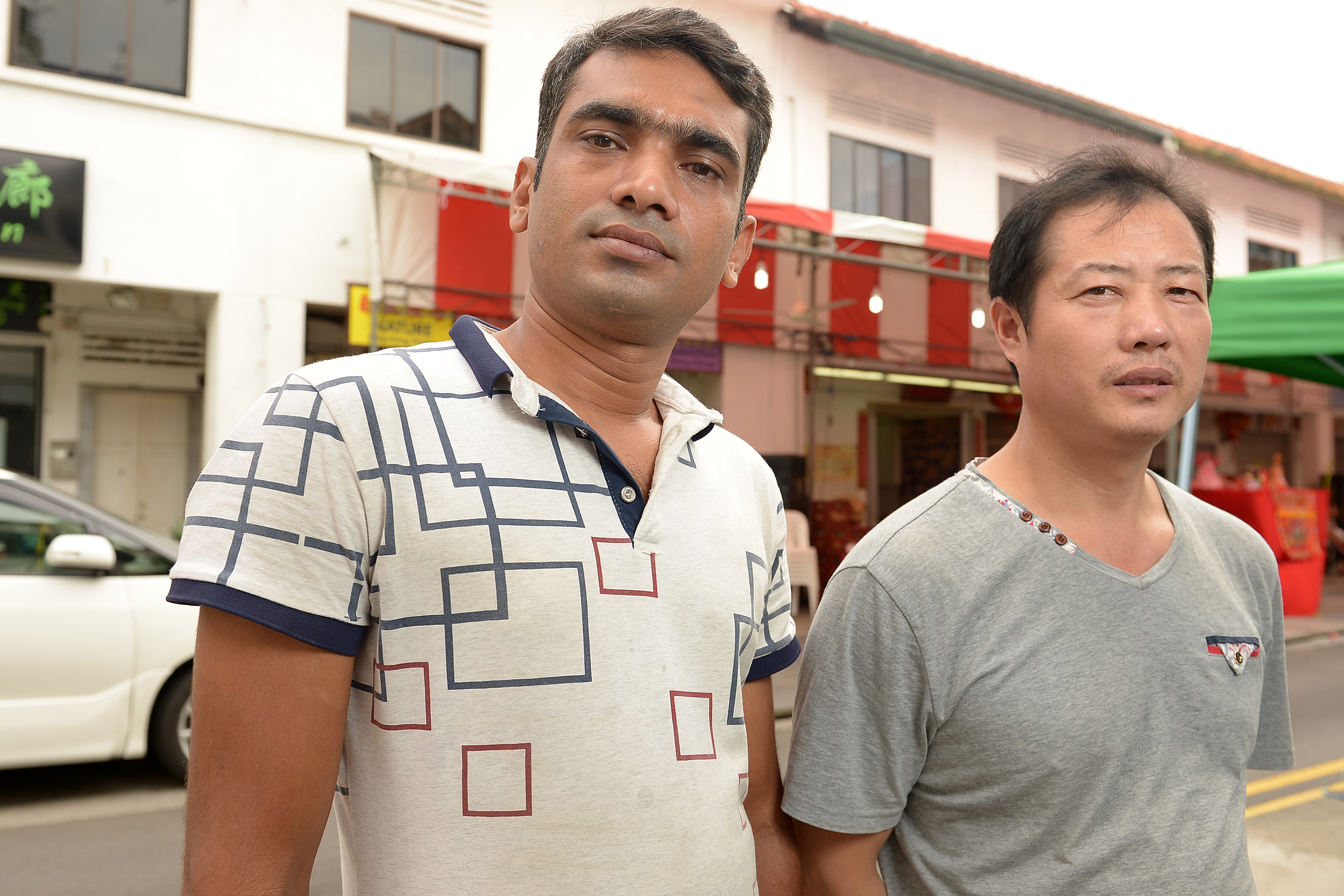
All the victims are work permit holders in Singapore. Most declined to be named because they did not want their bosses to know they were looking for jobs while they were still employed here.

A Sunday Times check found that both companies have either shut down or are operating from shell addresses that are similar to a numbered box in a post office.

Company records show that Global Catering and Management is owned by Mr Bharat Singh, an Indian national based in Britain, and Mr Ravichandran Krishnasamy, a Singaporean in his 40s. The company is registered to a shell address on the second storey of Textile Centre in Jalan Sultan.

Mr Ravichandran does not live at the address he gave to the Accounting and Corporate Regulatory Authority. When The Sunday Times visited the sixth-storey flat in Kitchener Road last week, an Indian woman said before closing the door: “He does not live here. He comes here once in a while to collect letters. He is my husband’s friend.”

Mr Ravichandran runs another company – Global Migration Administration – from another shell address on the 19th storey of Fortune Centre in Waterloo Street.

Amacre Associates, which is owned by Malaysian Kalai Chelvan and Filipino Venus Emperado Apas, moved out of its second-floor office in Lucky Plaza last year. The office is now occupied by a travel agency representing Philippine Airlines. “They left behind a photocopier that is spoilt,” said a staff member at the agency.

MOM’s website showed the agency brought 27 foreign workers into Singapore in the past one year and was slapped with six demerit points. According to the website, the company received the demerit points for misrepresenting MOM fees to work pass applicants.

Foreign worker advocacy groups say cases involving luring foreign workers with better-paying jobs overseas are common. Healthserve has handled about 20 cases in the last six months involving workers from China who paid between $500 and $1,000 each to two companies that promised them jobs in Australia.

None of the jobs materialised. Some of the workers have made reports with the police and MOM, said Healthserve case manager Jeffrey Chua. “All they are hoping for is to get back the money they paid,” he said.

‘Canadian dream’ turned nightmare 

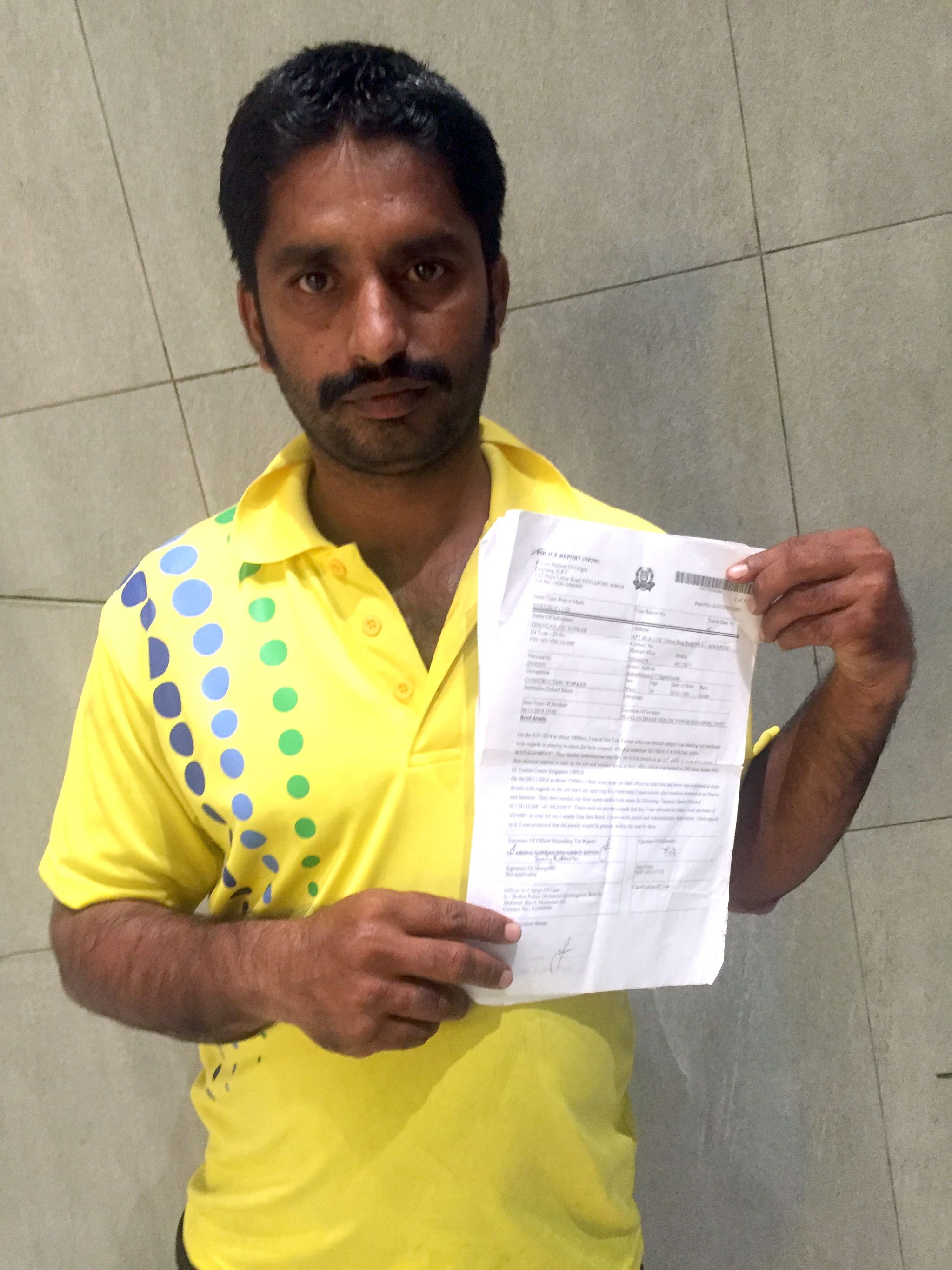
Grasscutter Thangarasu Sankar was looking to improve his family’s life when he decided to pay a company here $5,000 to help him get a job in Canada.

He was walking around Sim Lim Square with two friends in November two years ago when a woman approached him to ask if he was interested in working overseas.

She said she represented a catering firm looking for foreign workers, and that a job was guaranteed.

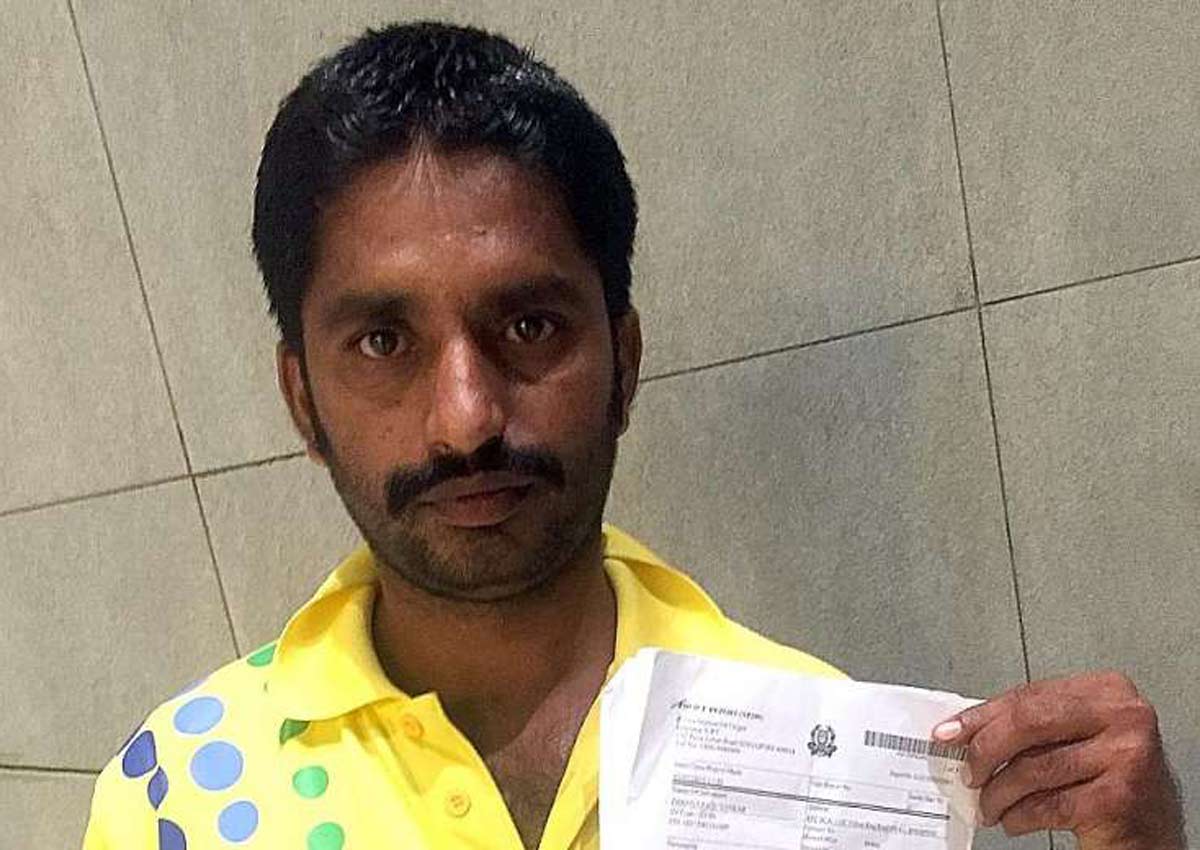
“I wanted to give my family a better life,” said Mr Thangarasu, 35, adding that his basic pay has been about $750 since he started working here in 2007. “She promised me that I would get at least C$2,500 ($2,635) every month and I can bring my family over.”

The woman told Mr Thangarasu and his friends to go to the office of Global Catering and Management in Jalan Sultan for an interview, which they did. Said Mr Thangarasu: “The company told us everything okay, guaranteed got job, but have to pay $5,000 to apply for three-year work permit. After working for two years, we can apply for Canadian citizenship and bring our family over.”

Mr Thangarasu was anxious to get the process started because he was planning to start a family. His daughter turned one last year.

Shawn, the firm’s employee who met them, also said they had to pay a deposit of $500. “I still have the receipt,” said Mr Thangarasu. But it is now a reminder of a tragedy that plunged his family deeper into debt. “The company said I cannot stay in Singapore when they applied for my visa, so I went home to India in December,” he said.

Back home, he took loans from the bank and his sisters to raise $4,500. He also sold his wife’s jewellery, and remitted the money to Global Catering and Management. “I received SMS from Shawn that my permit will be okay in 45 days and maybe the Canadian embassy will call me for interview,” he said. But the days came and went, without any word from either Shawn or the embassy.

Mr Thangarasu panicked. “I tried to SMS Shawn and call him, but he ignored me or sent me (vulgarities),” he said. He returned to Singapore last July, after paying an Indian agent $2,000 for a job here. He met Shawn in December, and the latter brought two men with him to the meeting at Woodlands Checkpoint.

“Shawn said he will cancel my work permit, and get gangsters to beat me up if I call him again. Now I’m scared, I think I will go back to India, be a farmer. But I owe so many people money,” said Mr Thangarasu.

Lured here by promise of jobs that do not exist

When construction worker Rasel J. M. dropped a drill on his leg and fell off a ladder in January, he was not taken to hospital. Instead, the Bangladeshi was told to stay in his hostel and take painkillers. Two days later, his employer confiscated his work permit and told him to go home.

It dawned on him that he could be working illegally as his permit stated he was working for his employer but in reality, he had been working for another company. “In that moment, I understood there was nothing I could do,” he told The Sunday Times through a translator. His father had sold his land to raise more than $9,000 to send him here to work. “I felt hopeless and afraid,” he said. “I had sacrificed so much.”

Mr Rasel, 32, is among a growing pool of foreign workers luredto Singapore by the promise of jobs which do not exist.

In the last five years, the Ministry of Manpower (MOM) has taken enforcement action against an average of 20 employers each year for such illegal importation of labour. It is currently investigating 23 employers for the offence.

Often, such employers would set up a shell company, in whose name they would apply online, with all the required papers, for foreign workers. But when they arrive, the workers are usually left on their own to find work or released to other companies who have reached their quota. Many are unaware they are breaking the law by working for an employer not stated on their permit.

In the latest case last month, company director Lim Kien Peng, 46, was jailed for two years and three months for bringing in 30 China nationals under MNF Investments and Holdings, a shell company he registered in 2008. Last July, MOM arrested 41 members of a syndicate that set up shell companies to bring in foreign workers for kickbacks. In 2014, it smashed three syndicates and arrested 19 people for setting up seven firms that brought in 500 workers for illegal employment.

Said an MOM spokesman: “We take a serious view of companies and individuals who commit such offences and will not hesitate to take strong action against them.”

Offenders could be jailed for six months or more and fined up to $6,000 for each illegal worker. If convicted of six or more charges, they are liable for caning.

Foreign worker advocacy groups say the problem has worsened. Operations manager Luke Tan of the Humanitarian Organisation for Migration Economics (Home) said: “Such cases are on the rise, compared to five years ago.” Home sees five to six cases every month.

Healthserve, a community clinic for foreign workers, dealt with 35 cases last year, and is now working on 10. Said its spokesman: “Most were caught with expired work permits which they say were cancelled without their knowledge.”

Mr Tan said the employers, after collecting recruitment fees, would terminate the work passes after a few months, freeing them to bring in new workers. Foreigners who work without valid passes face a fine of up to $20,000 or up to two years in jail or both, unless MOM determines they were victims.

Metalworker Yang Wei Xin, 44, from China paid an agent $14,500 to find him work here. He found his pass had been cancelled during a raid on his dormitory last August. He stayed on for eight months in Singapore to help with investigations, during which time he could not work. He returned home last week with a $9,000 debt and in despair: “How do good men make a living here?”

Boss demanded $14k, threatened to deport him

Frantic that his work permit had suddenly been cancelled five months after he arrived here, construction worker Gu Sheng Zhou called his employer repeatedly one day to demand why.

He got no answers. Instead, the 43-year-old’s employer picked him up in his car and dropped him off at a police station.

All had seemed rosy when Mr Gu first arrived from China in July 2014 for a job that promised up to $8 per hour. But when he arrived, his employer demanded $14,000 from him, threatening to deport him if he did not hand over the money.

He only worked for a total of 10 days at the company. The rest of the time, he was told to find his own work and lodging. The worst part, he said, was telling his family about his plight. “What would they think if I didn’t even give a reason for not sending money home?”

He has a wife and three children, who are still in school, back home.

After the police referred Mr Gu to the Manpower Ministry, he managed to find a job with another construction firm. But he still shudders when he thinks back on his last employer. “I don’t hate him. Hatred can’t resolve the problem, but I want him to return the money,” he said.


This article was first published on May 15, 2016.
Get a copy of The Straits Times or go to straitstimes.com for more stories.

Image: 
Category: 
Publication Date: 
Sunday, May 15, 2016 – 15:04
Send to mobile app: 
Source: 


Rotator Headline: 
Grasscutter from India was scammed out of $5,000 after being promised job in Canada
Rotator Image: 
Story Type: 
Others

Source link

Weekly mambo at Jalan Bumbong: Social entrepreneur invites foreign workers for weekly parties

Every Saturday, Singaporean Suraj Prakash Upadhiah welcomes migrant workers into his two-storey semi-detached house in Jalan Bumbong in Woodlands.

There, between 3pm and 7.30pm, they dance, cook and party.

The 28-year-old social entrepreneur, who co-founded social enterprise Air Amber, has been doing this for nearly a month with the help of friends, family and volunteers.

He even calls his home Bumbong Sunset.

His aim: To build bridges between Singaporeans and migrant workers.

The New Paper on Sunday joined one such session last weekend, along with more than 70 foreign domestic workers from Humanitarian Organisation for Migration Economics’ (Home) shelter.

We saw the workers having a ball of a time, singing and dancing.

Mr Suraj, who lives with his father, tells TNPS: “We are opening our doors, rather than shutting them to transient workers.”

Bumbong Sunset is part of his company’s book project titled The Invisible Visible – Conversations Inspiring Hope, which features interviews with abused and marginalised migrant workers.

The book will be launched in December this year.

But Mr Suraj admits that Bumbong Sunset has also taken on a life of its own, as its core message of building friendships with migrant workers has resonated well with the volunteers, who are from several secondary schools and tertiary institutions.

He recalls how one of his relatives drastically changed her perception of migrant workers when she felt “the love and joy” that migrant workers bring to these parties.

Mr Suraj says: “Many volunteers came with the idea that they should pity these folk. But they soon realised that they don’t need pity. They sing, they make music, they are just like us, they are people too and they can be good friends.”

He is aware that Singaporeans sometimes exhibit xenophobia towards migrant workers. He hopes this project will eventually correct that.

“It is very easy for people, myself included, to make passing remarks when you drive past Lucky Plaza, for example, and say ‘Look at all these foreigners’.

CONNECTION

“But as soon as you ask for their name and hear a little bit more about them, where they come from, what their hopes and dreams are, that is when the magic takes place because you start to have a connection,” he says.

Mr Suraj isn’t the only Singaporean trying to create a space for migrant workers.

In Little India, Mr Abdul Khaeer Mohammed Mohsin has been running Dibashram, a shelter that is also an art space and counselling centre for Bangladeshi workers, for the past five years.

The chief editor of local monthly Bengali newspaper Banglar Kantha says spaces like his are important for the workers’ well-being.

He adds: “At Dibashram, they get the opportunity to interact and exchange ideas with Singaporean cultural groups, which they relish. It would be very hard for me to invite Singaporeans over if there is no such space.”

Earlier this month, the shelter faced financial troubles and was in danger of closing down. But the Migrant Workers’ Centre (MWC) stepped forward to help. MWC said Dibashram’s services were “positive efforts to help workers here integrate better”, reported The Straits Times.

Mr Mohsin says: “You cannot simply build recreational centres near dormitories that are far away from the heartland and expect them to integrate. Forging friendships with Singaporeans is important for mutual understanding and harmony.”


This article was first published on May 15, 2016.
Get The New Paper for more stories.

Image: 
Category: 
Publication Date: 
Monday, May 16, 2016 – 06:30
Send to mobile app: 
Source: 


Story Type: 
Others

Source link

Consumers to get more protection under proposed changes to law

SINGAPORE – By the end of this year, public officers from Spring Singapore could be able to march into any store to seize evidence as part of their investigations against errant retailers, and then file a court injunction for the retailers to stop their…

Source link

Police introduce new NS vocation in support of SGSecure

The new vocation is part of the police’s support of SGSecure, a national initiative to help Singaporeans prevent, and prepare for, a terrorist attack. 

Source link

Helping women ex-offenders rebuild their lives

Ms Kathy Goh first took heroin in her 20s to challenge her then boyfriend to quit the drug, only to begin her own vicious circle of addiction and recovery.

She first went to prison when she was 29, barely four months after giving birth to her son, and has been in and out of jail thrice in around 15 years.

She struggled to stay free of drugs and alcohol, despite a stint at a halfway house, three detoxification programmes with the National Addictions Management Service (Nams) and the support of her family.

Her efforts paid off only after almost a year-long stay at transitional shelter iCare Hub, nestled in a quiet housing estate in Balestier.

It is among the first of its kind to offer a secular residential programme for former offenders who are women, supporting them as they rebuild their lives.

And there is demand for its services, said Ms Grace Wong, 54, who is the centre’s co-founder and executive director.

More than 20 women completed stays at iCare last year, Ms Wong said, but it received more than 40 referrals in the same period, and over 100 inquiries. Such referrals may come from organisations such as family service centres or the Institute of Mental Health.

In line with a rise in drug abusers nabbed last year, the number of female drug abusers arrested rose from 452 in 2012 to 524 last year, based on data from the Central Narcotics Bureau (CNB).

The increase last year was largely due to more new, young abusers. The CNB said most new drug addicts, as well as new female drug abusers, are below 30 years old.

Ms Goh, 46, quit heroin about six years ago, after her last prison stay, and has stayed clean so far – the longest stretch ever.

She stayed at iCare two years ago on the recommendation of Ms Wong, who was her counsellor.

The centre, which opened in 2013 and officially introduced a residential programme last year, can take up to 12 residents. Residents may stay for a few months to a year as they try to secure permanent housing and a stable job. Within a month, the centre helps to find employment for former inmates as well.

Many of its residents are hardcore former drug offenders who have been through at least one long-term sentence, said Ms Wong.

This means at least five years’ jail and three strokes of the cane. Close to 80 per cent are former addicts, many with multiple addictions.

Ms Wong said that while there are many drop-in centres and temporary shelters for former offenders, a residential facility with minimal supervision can be “extremely helpful” in the first six months after release from prison or a halfway house, when they may be tempted to return to their old ways.

Ms Goh resolved to start anew after her release, wanting to repay her family who raised her son while she was in jail. He is now a 17-year-old student at the Institute of Technical Education.

For almost a year, she worked from home as an events coordinator while caring for her elderly mother who has dementia.

But she soon found herself buckling under the pressure of being a caregiver while adapting to her new job and life.

She started drinking again, thinking: “I cannot take drugs, so… maybe I can drink.”

From one to two cans of beer a day, she said, she was soon finishing a six-pack every day, spending around half her monthly salary of about $1,200 on alcohol.

This added strain to her relationship at home. While she took up stay-in programmes at Nams, the three-week stints were too short for her.

She later decided to move into iCare and, after her stint there, has kicked the addiction.

“I knew that I could not break the house rules and became more self-aware,” she said.

“Some might find this restrictive, but it is to help us understand that in life, we also need to have some structure and discipline.”

Now, she visits the centre occasionally and hopes to encourage others with her story. Learning about addiction over the years has helped her realise that it can be controlled, she said.

“It is not easy, but it is a journey. Every day, every time, every minute, I have to overcome it.”


This article was first published on May 15, 2016.
Get a copy of The Straits Times or go to straitstimes.com for more stories.

Image: 
Category: 
Publication Date: 
Sunday, May 15, 2016 – 17:00
Send to mobile app: 
Source: 


Story Type: 
Others

Source link

Ramping up efforts to crack down on fare cheats

Frantic that his work permit had suddenly been cancelled five months after he arrived here, construction worker Gu Sheng Zhou called his employer repeatedly one day to demand why.

He got no answers. Instead, the 43-year-old’s employer picked him up in his car and dropped him off at a police station.

All had seemed rosy when Mr Gu first arrived from China in July 2014 for a job that promised up to $8 per hour. But when he arrived, his employer demanded $14,000 from him, threatening to deport him if he did not hand over the money.

He only worked for a total of 10 days at the company. The rest of the time, he was told to find his own work and lodging. The worst part, he said, was telling his family about his plight. “What would they think if I didn’t even give a reason for not sending money home?”

He has a wife and three children, who are still in school, back home.

After the police referred Mr Gu to the Manpower Ministry, he managed to find a job with another construction firm. But he still shudders when he thinks back on his last employer. “I don’t hate him. Hatred can’t resolve the problem, but I want him to return the money,” he said.


This article was first published on May 15, 2016.
Get a copy of The Straits Times or go to straitstimes.com for more stories.

Image: 
Category: 
Publication Date: 
Sunday, May 15, 2016 – 15:00
Keywords: 
Send to mobile app: 
Source: 


Story Type: 
Others

Source link