Home Blog Page 3941

Why migrant workers can't make S'porean friends

It is his last week in Singapore, after about eight years working in the construction sector.

Mr Mohammad Zahirul Islam’s work permit expired on Friday, and by law, he has to return to his small village home in Comilla, Bangladesh, on that day.

But ask the 38-year-old if he is willing to leave and he sighs wistfully.

His heart, Mr Zahirul Islam says, belongs in Singapore. He does not know if he will be able to come back here to work.

“The land is beautiful, I remember all the places (I have been to). The bus, the worksites, the dormitory,” he tells The New Paper on Sunday.

The aspiring poet has even penned more than 350 Bengali poems, with a majority of them written here.

Despite his ardent love for the country, Mr Zahirul Islam says he was unable to make a true Singaporean friend.

It is not for the lack of trying either.

Mr Zahirul Islam says: “I have friends, but all are Bangladeshi or foreign workers. Singaporean friends too, like colleagues and boss. But they not really friends, more like outsiders.

“When they ask us to go out, go drinking, they buy bottle, eat good food. But I don’t make money like them, my income is little.

“I am Muslim and cannot drink, so I (get) shy and ashamed. We don’t pass time with Singapore friends because they got money, we no money. My salary is not high.”

Still, he tries, sharing about his hobbies and dreams to earn a literature degree in France and become a poet, and how he put those dreams on hold to make money for his wife and two daughters.

He keeps his notes and poems in a corporate diary – a gift – and he takes it out while on public transport, during downtimes at worksites or in the workers’ dormitory, to write down his thoughts.

OTHER ARTISTS

Every weekend, he visits Dibashram, a shelter and art space for Bangladeshi workers in Little India, and meets a group of Bangladeshi artists and writers to talk about culture and poetry.

That was also where TNPS met him for the first time.

Yet, he says most locals see him as defined by his job – a construction worker – and nothing more.

He says: “When I tell some Singaporeans who are (more) educated, I am poet, they think it is very interesting.

“But most ordinary people no really understand poem. I translate to English, tell them about Bangladesh culture. But they no interested in Bangladesh. Some think it is funny. They say, ‘Oh you are writer? Then what are you doing here?'”

Mr Zahirul Islam says he is saddened whenever he hears such quick dismissals of his lofty dreams.

He adds: “I can write here too, I have space in Dibashram, I go every week. I am still writer, why they say I am construction worker only?”

Just before his flight home, Mr Zahirul Islam wrote his final poem here under the train tracks at Jurong East MRT station, which he titled Oh Singapore.

One excerpt from the poem, translated from Bengali, goes as follows:

“Oh Singapore, you will remain in my heart, in my poems forever.

If possible, let your people know that I love you so much

Yet nobody knows that I have penned my life’s diary here.”

Oh Singapore, you will remain in my heart, in my poems forever.

If possible, let your people know that I love you so much

Yet nobody knows that I have penned my life’s diary here.

Why I don’t wear my traditional clothes

He and his compatriots do not dare to don their traditional Bangladeshi tunics.

Some, says S-pass holder M. Jahangir Alam Babu, 42, have even shaved off their beards – normally a symbol of religious piety for Bangladeshi men.

It is because they are afraid of being accused as terrorists, especially in recent weeks.
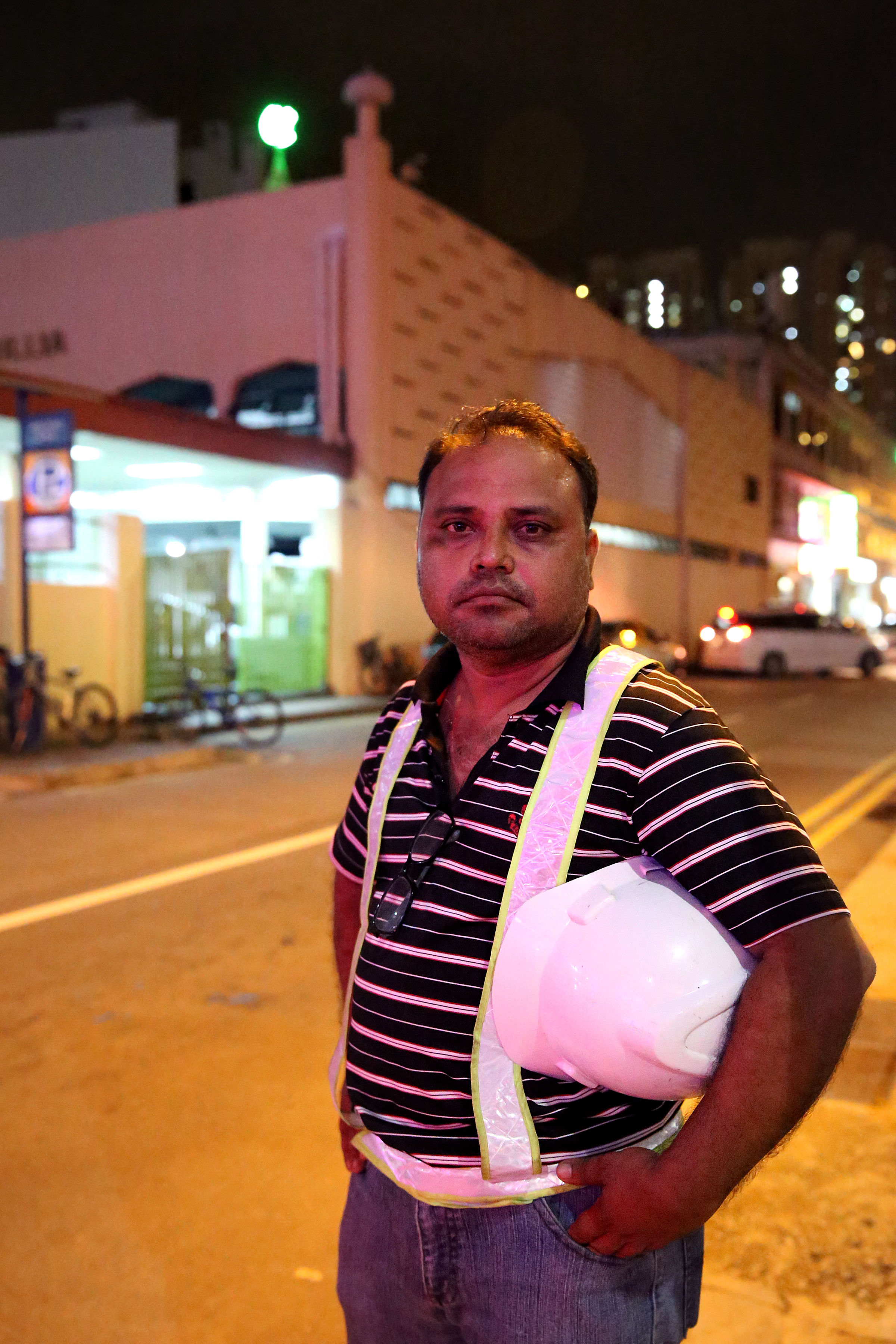
On the traditional Punjabi suits and the topi cap, Mr Jahangir says: “Yeah, nowadays if you are wearing like this, people can say you are a terrorist.

“It is a bad feeling to be accused. I feel ashamed because (the deeds) of a few others made everyone suffer.”

Last month, eight radicalised Bangladeshi workers were detained by the authorities for setting up an Islamic State of Bangladesh cell here.

Five others were deported back to Bangladesh for possessing jihad-related materials or supporting the group’s activities.

Late last year, 27 Bangladeshi construction workers were also arrested and deported for having terrorist links and possessing terrorist-related propaganda.

Mr Jahangir believes there is little he can do to change people’s perception of his community, but hopes Singapore remains open to hiring them.

LOCAL COLLEAGUES

Once, he heard his Singaporean colleagues gripe about rumours of his company’s new contract for more than 3,000 construction jobs.

They had said these jobs would go to foreigners and would not benefit Singaporeans, he says.

As he heard their comments, Mr Jahangir got worried about the anti-foreigner sentiment.

“Now we scared. What if Singapore (government) don’t let Bangladeshi work any more?” asks Mr Jahangir, who moved here in 2008.

His salary of $2,800 a month supports his family – a wife and two daughters – back home.

He claims his pay is less than those of his Singaporean colleagues with equivalent appointments.

Barely two days after news of the recent arrests broke, Mr Jahangir and his Bangladeshi peers were jeered at by migrant workers of other nationalities.

At his workplace, where he is a site engineer, he tells TNPS that many of his colleagues have been making fun of them during meal times.

“Some persons in my company say, ‘Wah, now you all Bangladeshi, so many terrorists’,” he recalls, adding that the tone used was derisive.

“I feel ashamed. We staying in a nice and peaceful country here. Something like this happen, what they think? That we are not good people.”

Why I don’t sit on the MRT

Mr Jasvir Singh is used to seeing people shun him or his Indian brethren while he is taking the MRT.

“They make a face and move away. Some people – usually old people – get up when we sit beside them,” says the 36-year-old Punjab native.

Instead of feeling offended or angry, the soft-spoken Mr Singh says he feels bad about these reactions to his presence

Says Mr Singh: “There is nothing I can do about it. I cannot be angry at them, so I just feel sad. It makes me feel small.”

To avoid scenarios like that, Mr Singh would rather not sit on the train unless it is mostly empty.

‘NO SMELL’

He does not know why some people here behave like that around migrant workers.

Despite his job as a technician at sewage cleaning firm Asia Pacz, he says he does not reek of foul smells.

“I take the train only on my day off, Sunday. I bathe and keep clean before I go out, there is no smell on me,” he says.

“Even when I work, it is not like we go into the sewage. We stand far away and use our equipment (to do the work).”

As a result, he feels more comfortable with other migrant workers, so on his day off, he goes only to Little India.

Other than for work purposes, he has never been to the Orchard Road belt or Marina Bay area, even though he has been in Singapore since 2006.

Says Mr Singh: “Mustafa (Centre) has everything. I don’t feel comfortable being in Orchard Road.”

Like many others who work here, he is happy making a living in Singapore and often extols its stability and low crime rate to his countrymen back at home.

Also, his pay of around $500 a month is more than what he can make in India, he says.

Yet, for all of Singapore’s virtues, he admits that a good working life here is determined largely by the company you work for.

In that regard, luck is a major determining factor, he says.

Mr Singh’s first work stint in Singapore in 2006 lasted only a few months as he saw his $500 monthly salary get cut by $200 for no reason, he claims.

He did not know that he could approach the authorities for help, so he left the company on his own accord.

He was left with a mountain of debt as he had to borrow around $4,000 to pay the employment agent in India.

Thankfully, he found employment here again in 2008 at Asia Pacz.

“They give me days off, allow me to go back to India to see my family. I am lucky to be working here,” he says.


This article was first published on May 15, 2016.
Get The New Paper for more stories.

Image: 
Category: 
Publication Date: 
Sunday, May 15, 2016 – 21:00
Keywords: 
Send to mobile app: 
Source: 


Rotator Headline: 
Foreign workers on why they can't make S'pore friends: 'They got money, we no money'
Rotator Image: 
Story Type: 
Others

Source link

1,500 police NSmen to form community engagement vocation under SG Secure programme

SINGAPORE – About 1,500 police national servicemen (NS) officers will form the new community engagement vocation, to be deployed in Neighbourhood Police Centres’ (NPCs) community policing units.
Full-time police national servicemen (NSF) will also join the…

Source link

Philippine communist rebels kill 3 soldiers: military

Manila – Communist guerrillas killed three Philippine soldiers in the first fatal clash since a newly-elected president offered to restart stalled peace talks, the military said Sunday.

The soldiers were on the central island of Negros on Saturday investigating reports that New People’s Army guerrillas were extorting money from villagers when they clashed with about ten rebels, leaving three soldiers dead and two wounded, a military report said.

The violence comes just days after President-elect Rodrigo Duterte said he was open to resuming peace talks aimed at ending a decades-old insurgency that has claimed tens of thousands of lives.

After his May 9 election victory, Duterte’s spokesman said the firebrand politician may release jailed communist rebels in an effort to reopen peace talks.

Incumbent leader Benigno Aquino ended talks with the Communist Party of the Philippines in 2013 over the rebels’ demand for the unconditional release of their detained comrades, which his government was unwilling to grant.

Duterte, a hardline mayor accused of running vigilante death squads that have allegedly killed more than a thousand crime suspects in the Southern city of Davao, is a friend of Netherlands-based Jose Maria Sison, who set up the communist party in 1968.

Duterte, who takes office on June 30, has previously described himself as a socialist.

Running for almost half a century, the communist insurgency has claimed 30,000 lives, according to military estimates.

The rebels’ strength has dwindled to less than 4,000 fighters from a peak of more than 26,000 in the late 1980s, according to the military.

However it retains support among the deeply poor in the rural Philippines.

Category: 
Publication Date: 
Sunday, May 15, 2016 – 14:03
Keywords: 
Send to mobile app: 
Source: 


Story Type: 
Others

Source link

With improvements, HDB Lease Buyback Scheme sees jump in take-up rate

SINGAPORE – Knowing he was going to be laid off due to his age, Mr Abdul Rahman Kemat, 68, decided to act first – sell a portion of the remaining lease on his four-room Housing and Development Board (HDB) flat to the Government, which would yield him a payout…

Source link

Annual take-up of HDB’s Lease Buyback Scheme more than doubles

Annual take-up of HDB’s Lease Buyback Scheme more than doubled compared to previous years following enhancements; more than half are 4-room flat owners. 

Source link

Woman's autistic sons were accused of being molesters

They have been accused of being Peeping Toms, child molesters and a nuisance to the public.

But brothers Andren Ma, 19, and Jason Ma, 20, are none of those. They are autistic.

Their mother, Madam Wong Ngan Yue, 52, tells The New Paper on Sunday: “Caring for two autistic children is very stressful.

“I had to quit my job (as a shipping co-ordinator) because it was too tiring juggling work and family.”

Madam Wong now spends her time at home caring for her sons.

She is married to an engineering executive and they have another son, Winston, 21, who is a chemistry student at the National University of Singapore.

Madam Wong says: “I worry (Andren and Jason) might get into trouble with the public as there is so much stigma against autistic people.”

She is among a community of parents here who struggle with the challenges of taking care of their grown-up children with autism, which is characterised by difficulties in socialisation and communication.

VIRAL

A week ago, a Facebook post by Ms Choo Kah Ying, an autism and wellness educator, went viral after she recounted an incident in which her 20-year-old autistic son was detained by the police for his behaviour.

Madam Wong says even though her middle son Jason is an adult, she is afraid to let him out alone as his behaviour might get him in trouble with strangers who are unaware of his condition.

She explains: “He gets excited when he sees young children. He likes to kiss and touch them as a way of showing affection.”

Madam Wong recounts a violent incident when he was 14 – he was at a park with his brothers when he spotted a young girl, and proceeded to touch her head.

His action enraged the girl’s father, who was beside her.

Madam Wong says: “The man yanked (Jason’s) hair and shouted at him to apologise.

“When (Winston) told me about it, I was really hurt. (Jason) knows how to behave when I am around. It worries me to know that he might get in trouble with strangers when I am not around.”

Mr Jason Ma attends Eden School, which is for students with autism. He takes a school bus and is dropped off at his void deck every day.

Madam Wong says she had previously tried letting him be independent , but things did not go smoothly.

She says: “There was a period of time where I tried letting him take the lift up by himself.

“But a few months later, a neighbour from the opposite block told me he was loitering outside her home and stealing her slippers.

“I was so afraid that he might get in more trouble that I went back to picking him up from the void deck.”

Madam Wong’s younger son Andren attends Pathlight School, another school for autistic students.

POLICE STATION

He was four when he ended up in a police station alone.

Madam Wong says: “He walked out of the playgroup centre on his own and wandered around the streets until someone took him to a nearby police station.

“That was when I knew he might be different, just like his older brother.”

When Madam Wong found out that her youngest son was autistic as well, she broke down.

“I was still learning how to care for my first autistic child, let alone a second one. Even when I think about it now, I still get teary,” she says.

A typical day now for Madam Wong involves cleaning the flat, cooking for the family and picking up her two autistic sons after the school bus drops them off.

She says: “I cannot go on holidays because I have to settle their meals. Jason is not able to buy food on his own and I try to keep a close eye on him at every moment.”

She adds: “I am used to being so busy these days.”

Once a week, she brushes Mr Jason Ma’s teeth for him.

She explains: “I am afraid he might get tooth decay because he does not brush his teeth very thoroughly.

Her eldest son Winston says he admires his mother’s strength and love for her children.

He says: “She has been through so much. If I were in her shoes, I do not think I will be able to do half the things she does.

Her son put his fingers in stranger’s mee goreng

When Madam Aw Bee Koon takes her autistic son Zachary Lim, 17, out for meals, she often keeps a close eye on him as he has a habit of staring closely at other people’s food.

Madam Aw, 51, a pharmacist, says whenever it happens, she worries that people will lash out at him.

She recalls one incident where she had to face an irate man after Zachary stuck his fingers into the man’s plate of mee goreng before walking away.

Speaking to The New Paper on Sunday, she recounts: “The man said, ‘Do you know what your son did? Buy me a new bowl, I am not going to eat this.'”

Zachary, a student at Pathlight School, was behind his mother when the drama ensued.

She says: “I apologised and explained that my son is autistic. I said I would buy him another plate of mee goreng, but he was still furious.

“It was only when I was queueing for his food that he calmed down and apologised for his outburst.”

Madam Aw is married to an information technology director, and they also have a 19-year-old daughter, who is studying at Nanyang Technological University.

She says it is challenging having Zachary out with them on family outings.

She says: “When we are at restaurants, he tends to spin around or peer closely at other people’s food.

“We get smiles from understanding people. But other times, we get disgusted looks.”

She wishes people would be more accepting of older children with autism.

She explains: “People tend to be more forgiving towards autistic children than autistic teenagers.”

UNDETERRED

Madam Aw says she will still take Zachary out to public places as it will help him adjust better to other people.

“I want him to be desensitised to public spaces so that he can learn how to behave appropriately,” says Madam Aw.

“Some families might feel ashamed for taking their children with special needs out.

“But taking them out shows people that autistic people exist, and that they should be accepted.”

When asked what she wishes for her son, she says: “My aim for him is that he will be independent one day.

“I hope he will be able to buy his own meals and go out on his own.

“In the meantime, I will love him no matter what.”

Couple misread son’s intentions

Her autistic son’s obsession with opening car doors recently landed him in trouble.

Ms Choo Kah Ying recounted in a Facebook post that she was at Bishan Park on May 7 with her son Sebastien for him to go skating.

The 20-year-old was doing laps around the park as Ms Choo waited for him.

While doing the laps, he approached parked cars and fiddled with the doors.

A couple misread his actions and contacted the police.

Ms Choo, who is in her 40s, wrote: “When the police approached to talk to him, Sebastien moved away.”

When the police reached out, he reacted aggressively.

Ms Choo said: “That was when they handcuffed him and put him in a police car.”

In her post, Ms Choo expressed her frustration at the lack of understanding of people with special needs.

“While one can just dismiss this episode as a lesson learnt and my opportunity to educate the policemen (who turned out to be nice and apologetic) and work with them to avoid future incidents, I knew we got lucky that no one got hurt, but I shudder to know when our luck would run out.”

Her post has since garnered more than 3,000 shares.

Interacting with autistic grown-ups

They are adults but with autism they may not behave like one.

Those with severe autism may not even be able to speak, and they can get aggressive and violent if put under stress.

Dr Lim Boon Leng, a psychiatrist at Gleneagles Hospital, says it is important to know how to communicate with someone with autism.

He says talking patiently to an autistic person who is acting aggressively can defuse the situation.

He tells The New Paper on Sunday: “If there is no imminent danger, do not use physical force. Instead, try talking and listening to how the person responds. It might help you get an inkling of whether the person has special needs.

“If talking one-on-one does not work, get more people to surround the person. It might calm him down and make him more self-aware of his anger.”

Ms Denise Phua, president of the Autism Resource Centre, says there is still a lot to be done when it comes to autism awareness here.

Ms Phua, who is also MP for Jalan Besar GRC, says: “I fully empathise with Kah Ying and Sebastien.”

“This incident shows there is more that can be done as a society in terms of awareness and training.

“But it will take the effort and resolve of all of us – government agencies, schools, families, voluntary welfare organisations and members of the public who will take action with us by joining awareness events such as The Purple Parade.”

Five tips for interacting with someone who has autism, according to the Autism Resource Centre:

– Visually show or write what you want to say

– Speak clearly

– Pause to allow time for response

– Remember that each individual is unique and may act differently from others

– Give praise to reinforce good actions


This article was first published on May 15, 2016.
Get The New Paper for more stories.

Image: 
Category: 
Publication Date: 
Sunday, May 15, 2016 – 21:00
Keywords: 
Send to mobile app: 
Source: 


Rotator Headline: 
Woman's autistic sons have been accused of being child molesters
Rotator Image: 
Story Type: 
Others

Source link

China’s Cultural Revolution, now highly collectible

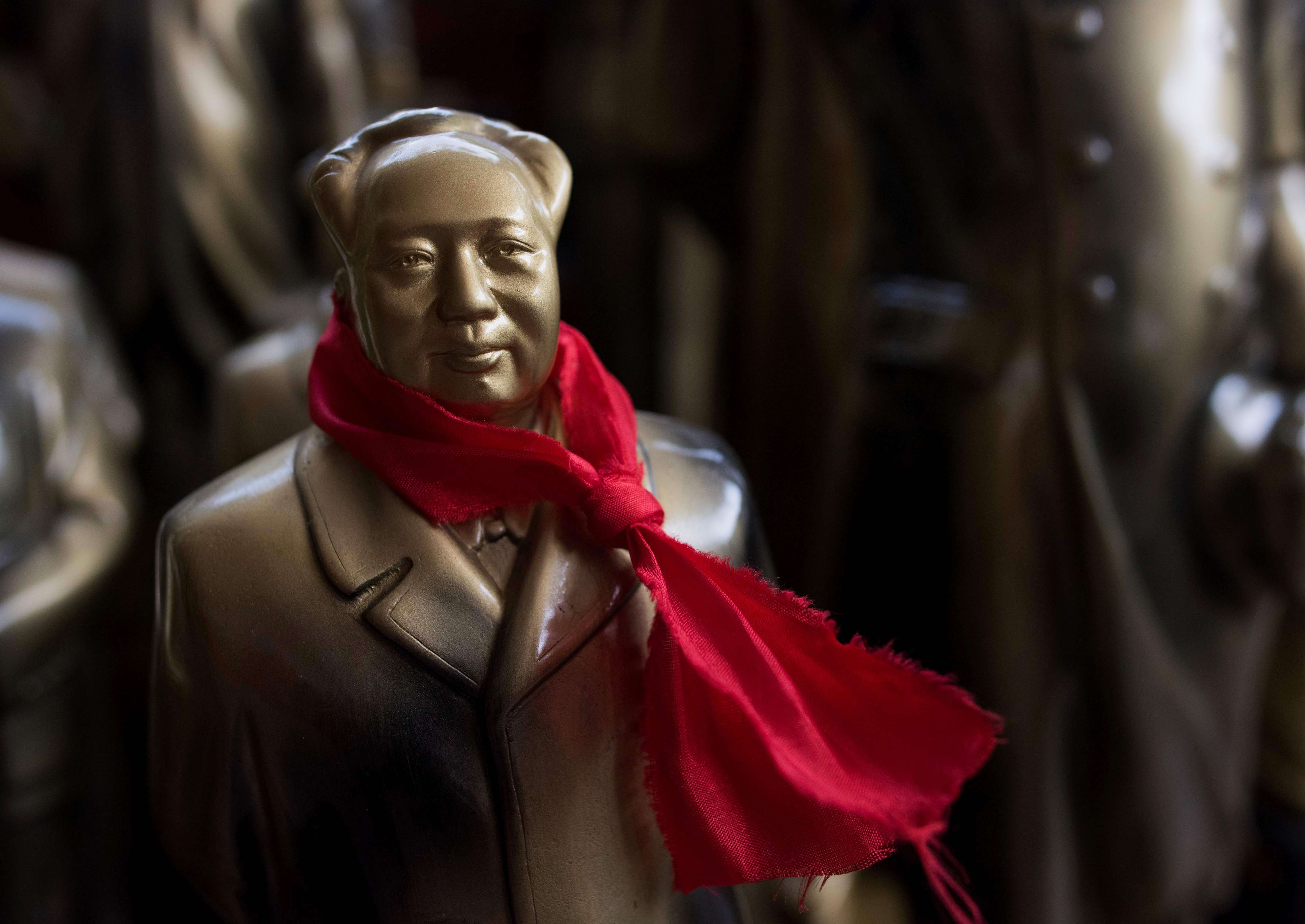
SHANGHAI – At the “East is Red” shop in Shanghai, every nook and cranny is packed with memorabilia of China’s Cultural Revolution, from small badges of Chairman Mao Zedong to gigantic posters of his iconic image.

Owner Guo Bing himself is a child of the Cultural Revolution, born in 1966, the year the chaotic and violent decade was launched on May 16. His parents named him with the Chinese character for “soldier”, a common practice at the time.

But now, Guo sees profits rather than Communist Party ideals in the relics of the past, as the market booms for collectibles from a time scarred victims would prefer to forget.

“Prices have risen because of the anniversary of the Cultural Revolution,” said Guo at one of his two shops in China’s commercial hub, whose gleaming skyscrapers epitomise the country’s economic boom after the abandonment of Maoist orthodoxy.

“People suffered during the Cultural Revolution,” Guo admitted, before quickly adding: “We are meeting demand. There is a market.” Guo was a “Little Red Guard” as a child in Jiangsu province, he said, wearing his older brother’s army uniform, pinning a Mao badge to his chest and signing patriotic songs.

One of them, “The East is Red”, gave him the name for his business, which has dealt in Cultural Revolution memorabilia for two decades.

For some buyers, such objects tap into nostalgia for a simpler time, when the state provided everything and society was more equal, despite the abuse the victims suffered.

“It was an exciting time for kids,” Guo said. “Most collectors now are old people, younger people lag behind.” The objects on offer range from an enamelled metal plate with the slogan “Chairman Mao’s revolutionary art and literature line victory forever” to a book of cartoons published in early 1977, soon after Mao’s death and the fall of his widow Jiang Qing.

Along with the three other members of the “Gang of Four”, she was officially blamed for directing the mayhem. Once a movie actress in Shanghai, she was among a cabal of radicals with links to the city who were among the driving forces behind the Cultural Revolution.

“We can remember history,” Guo said.

On a high bookshelf in the shop, a framed picture shows Mao with a mango, which became an object of veneration after the leader gifted the fruit to a group of workers in 1968.

The cult of the mango, as it is known, was even the subject of an exhibition at the Museum Rietberg in Zurich in 2013.

The reproduction sells for 50 yuan ($8), Guo says – but an original would cost hundreds of dollars.

The disparity offers a opportunity for the unscrupulous to profit, and collectors and dealers said that rampant fakes are a problem for Cultural Revolution memorabilia, like other collecting categories in China.

On Chinese website Kongfz.com, an eBay-like platform for antiquarian books and other items, a search for Cultural Revolution turns up nearly 200,000 items with the most expensive an extensive collection priced at 3.0 million yuan.

“All along, people have appreciated Cultural Revolution objects,” said long-time dealer and collector Lin Ji.

“Where there is a market, there are fakes,” he added, citing reproductions of Red Guard armbands as an example.

Mao badges and the “Little Red Book” of his thoughts and sayings were once ubiquitous in Chinese households, but collectors hope growing scarcity will increase prices over time.

“There are too many things (from the Cultural Revolution). But the good stuff is getting harder and harder to find,” said Guo, who has a prized Mao statue stored away at home, not for sale.

Despite the rampant consumerism – and Communist kitsch is also popular among some foreign buyers – the Cultural Revolution remains a sensitive topic, even 40 years after it ended.

The ruling party fears that a full historical reckoning would undermine its legitimacy, strongly opposes a revival of leftist thought and shuns comparisons between Mao’s personality cult and the strong leadership of current President Xi Jinping.

The founder of the Shanghai Propaganda Poster Art Centre, a private museum which includes several exhibits from the Cultural Revolution, declined to be interviewed by AFP in the run-up to the anniversary.

“It’s a sensitive time right now,” said Yang Peiming. “The museum is an art museum without any other meaning.”

Image: 
Category: 
Publication Date: 
Sunday, May 15, 2016 – 11:42
Keywords: 
Send to mobile app: 
Source: 


Story Type: 
Others

Source link

Fatma Samoura: FIFA's first woman secretary general is used to crises

PARIS – Fatma Samoura, FIFA’s first-ever female secretary general, may be an outsider in the football world but she is hoping her two decades of experience as a UN diplomat will help her restore the sport’s “tarnished image”.

“My goal is to support the programme of president Gianni (Infantino) and to help football restore its tarnished image,” the Senegalese UN diplomat, named Friday as the second-in-command of football’s ruling body, told AFP.

“And to those who speak of my lack of experience, I say give me the time to prove myself,” she said in a telephone interview Saturday from Nigeria’s Abuja, where she was representing the United Nations Development Programme at a summit to discuss efforts to defeat Boko Haram Islamists.

FIFA’s new second-in-command is no stranger to the kind of power struggles that brought FIFA to the brink, having served as the representative of the UN Development Programme in post-coup Madagascar from 2010 to 2015 before moving to Nigeria.

“FIFA is the United Nations of football and I bring 21 years of experience in the private sector and the UN in terms of good governance and transparency, and the obligation to make the different federations and FIFA accountable,” the 54-year-old said.

Samoura’s years with the UN, including with the World Food Programme, have taken her crisis-management skills to hotspots such as Afghanistan, Chad and Darfur.

“We must try to restore football to what it was, the most popular sport that breaches social divides,” she told AFP.

“And one of the things I am going to try to do is bring greater support to women’s football.” Samoura, who was named as the successor to disgraced Frenchman Jerome Valcke at a FIFA congress in Mexico on Friday, will take up her post by mid-June after undergoing an eligibility check administered by an independent review committee.

She said she met Infantino, who was appointed to succeed Sepp Blatter in February, for the first time in November last year.

“I was in Madagascar at the time and it was during a match between Madagascar and Senegal,” in a qualifier for the 2018 World Cup, she said.

“But we did not speak at all about the secretary general post. At the time he was not yet a candidate for the FIFA presidency and was preparing Michel Platini’s campaign.

“After dinner, somebody told me about what he had said. And Gianni Infantino had apparently said: ‘If one day I am president of FIFA this is my secretary general’.

“When he was elected it was me who went to talk to him. I sent him a mail and he called me. He then offered the post to me…

“He made me an offer and he convinced me!” A mother of three, whose husband’s dreams of becoming a football pro were shattered when he broke his leg at 20, Samoura has rubbed shoulders with footballers from an early age.

The daughter of an army colonel she went to school with Cheikh Seck, goalkeeper for the Senegalese national team in the 1980s, and befriended Cameroonian footballing legend Roger Milla during a posting in Yaounde.

“They even made out I hid him in my car with its diplomatic plates after their (Cameroon’s) defeat in the final of the 1986 African Cup of Nations” by Egypt, she recalled on Saturday.

Among her idols she lists former Bayern Munich winger and now president Karl-Heinz Rummenigge and retired Malian striker Salif Keita, who played for Marseille.

Observers said Infantino’s choice of Samoura, who speaks fluent English, Spanish, French and Italian as well as Wolof, represents an image makeover for FIFA.

“She will not be there to make him look good, she is not a gimmick. She will be loyal to Gianni Infantino but she will change things,” Francis Kpatinde, a close friend of Samoura and a former editor of the weekly Jeune Afrique, told AFP.

“This is not a puppet who has been put in there.” Tokyo Sexwale, the South African politician and tycoon who was a candidate for the FIFA presidency, said what counted most was her management expertise.

“She’s someone who has worked in the system of the United Nations and understands what is required in terms of an executive,” Sexwale told AFP.

“The fact that she is a woman is not number one for me, number one, she must be a human who can be capable.”

Image: 
Category: 
Publication Date: 
Sunday, May 15, 2016 – 11:08
Keywords: 
Send to mobile app: 
Source: 


Story Type: 
Others

Source link

Ukraine stuns Russia to win politically charged Eurovision

STOCKHOLM – Ukrainian singer Jamala snatched victory from arch-rival Russia to win the Eurovision song contest Saturday, adding a touch of political drama to the annual kitsch extravaganza.

After a tense vote count, during which it seemed Australia was going to run away with the crown until the audience votes came in, Jamala was declared the winner in Stockholm after a heart-felt performance of “1944”, a song about the deportations of Crimean Tatars during World War II.

Jamala’s entry – which stirred controversy over perceived veiled criticism of Russia’s recent annexation of Crimea – scored 534 points, closely followed by Australia’s Dami Im with 511 points, the juries’ favourite.

The hotly tipped former Russian child star Sergey Lazarev came in third with 491 points.

Germany was the worst performer of the evening, with Jamie-Lee Kriewitz’s “Ghost” scoring just 11 points, followed by the Czech Republic with 41 points.

In Moscow, public TV channel Rossiya 1’s commentators congratulated Jamala on her win, without mentioning the Crimean Tatars.

They said Jamala’s song was “about her family members”, without offering further details.

Jamala herself described the win as “amazing”.

“I was sure that if you sing, if you talk about truth it really could touch people,” the 32-year-old said at the winner’s press conference.

The stunning turnaround in the final minutes of the show capped an eventful 61st edition of the love-it-or-hate-it kitsch fest, which was expected to be the most-watched Eurovision since the event was first staged in 1956.

Scores were decided by national juries as well as viewers. In an attempt to give the outcome a more democratic feel this year, fans were given the final say – adding some last-minute suspense to the contest.

Among the evening’s other highlights was a guest appearance by US pop star Justin Timberlake, who entertained the crowd with his hit “Rock Your Body” before performing his new single, the upbeat “Can’t Stop the Feeling”, which itself wouldn’t have sounded out of place in the Eurovision line-up.

In another sign of the contest’s growing appeal, Eurovision was for the first time broadcast live in the United States on the Logo channel, which is aimed at the LGBT (lesbian, gay, bisexual and transgender) community.

The show was also live-streamed on YouTube, giving Google a piece of a pie once reserved for European public broadcasters.

“The Eurovision Song Contest is now a truly global phenomenon,” producer Jon Ola Sand said, amid expectations that the show will push last year’s record of 197 million viewers worldwide.

Characterised by critics as a potpourri of bizarre performance antics, special effects and cheese, the light-hearted contest usually tries to avoid controversy and steer clear of geopolitics but this year was always going to be different.

Political leaders in Moscow and Crimea had initially sought to get Jamala’s song disqualified, arguing that it criticised Russia’s annexation of the Black Sea peninsula in March 2014.

The jury approved the lyrics nonetheless, setting the stage for a monumental confrontation.

Inspired by Jamala’s great-grandmother’s story, “1944” recounts the deportation of the Crimean Tatars by Soviet strongman Joseph Stalin, and she sings it partly in the Tatar language, she says, because “it’s in my blood.” The song has resonance for contemporary Ukraine, where memories of that horror were revived by Russia’s seizure of Crimea, and Jamala’s poignant lyrics tell the story of a people with a history of persecution that continues to this day.

Ukrainian President Petro Poroshenko was among the first to congratulate Jamala on her victory.

“Yes!!!” Poroshenko tweeted. “An unbelievable performance and victory! All of Ukraine gives you its heartfelt thanks, Jamala.” Ahead of showtime, bookies had tipped Russia’s Lazarev and his catchy “You Are the Only One” tune to win the contest between 26 finalists – 25 Europeans and one Australian.

Lazarev, popular in his own country and eastern European nations, has built an eventful career as a singer, actor and TV host.

He has also drawn admiration from gay rights campaigners for speaking out against his country’s climate of homophobia.

Bulgaria, Sweden and France made up the competition’s top six.

Image: 
Category: 
Publication Date: 
Sunday, May 15, 2016 – 10:54
Keywords: 
Send to mobile app: 
Source: 


Story Type: 
Others

Source link

Having an affair: Who's to blame

A noticeable number of marriages in Singapore break down because of an unfaithful spouse: the wife.

Twenty veteran family lawyers and private investigators told The Sunday Times that out of every 10 cases they handle in which a spouse cheats, about half are because the wife strayed from the marriage.

A decade ago, only two to three out of the 10 unfaithful parties were the wives. And 20 or 30 years ago, an adulterous wife being cited in divorce proceedings was quite unheard of, they added.

Lawyer and former Member of Parliament Ellen Lee said that back then, divorce was not an easy option as women were financially dependent on their husbands.

Divorce was also less socially accepted. “If a woman committed adultery in the past, she would have been condemned and ostracised by society for breaking up her family and bringing shame to them. The condemnation is not as strong now,” she said.

There also appeared to be acceptance of men having a mistress and that this was something wives had to tolerate, she added.

But that has been changing, with more women becoming financially independent, educated, assertive and vocal, said lawyers, private investigators and counsellors.

Counsellor Jonathan Siew said: “In the past, women were expected to sacrifice for their families. But now, there is a greater sense of individualism. Women are less afraid and more willing to pursue their own needs, compared with their mothers’ generation.”

There are also opportunities to fall for another man at work or through social media, lawyers said of the cases they handled.

And contrary to popular perception, unfaithful wives are not only found among professionals and corporate types, or white-collar or higher-income earners. They come from all walks of life, including housewives and low-wage earners, and many have children.

Lawyer Louis Lim tells of a client, a hawker’s assistant in her 40s, who was physically abused by her husband. The mother of two teenage daughters fell for a man who delivered vegetables to her stall and filed for divorce.

While most of the women in divorce cases handled by the private investigators and lawyers were in their 30s and 40s, there were also grandmothers in their 50s who strayed. Private investigator Raymond Lim had such a case. A woman in her 50s, who runs a small shop, had an affair with a businessman. The pair would have meals and check into budget hotels almost weekly.

And there are key differences between men and women when it comes to affairs.

For one thing, an unfaithful woman is more likely than a man to end the marriage, said counsellors and lawyers.

In their opinion, this is because women do not necessarily seek an extramarital affair. They may have been unhappy in their marriage, till someone comes along and offers them the emotional intimacy they find lacking in their marriage.

Said Mr Siew: “When women cheat, they are, to some extent, already thinking of divorce. So they allow themselves to go into the affair, which they see as a long-term commitment.”

This is unlike men, who often want to keep the other woman on the side for a variety of reasons.

Lawyer Koh Tien Hua said: “Some men see sex outside of marriage as no big deal and just as a matter of sexual release. Or they may have an emotional attachment – but one that is not strong enough for them to leave their wives.”

So it is rare to see women who are “serial” adulterers, unlike some men who have one affair after another, lawyers said.

That is not to say there are no women who “go around shopping for better husbands”, lawyer Ellen Lee said.

The wife of one of her clients cheated on him repeatedly. The man forgave her time and again for the sake for their two young daughters. But after her fourth affair, he decided enough was enough and filed for a divorce.

Between 2004 and 2014, based on data from the Department of Statistics (DOS), 1.3 per cent to 2.1 per cent of those who filed for divorce under the Women’s Charter cited adultery as the main reason.

Of this group, between 27 per cent and 34 per cent were husbands who claimed their wives had been unfaithful, the DOS explained when asked about data obtained from the Statistics of Marriages and Divorces.

Lawyers said official data from the courts does not reflect the reality of what they observe – which is that between a third and half the divorces they handle involve one cheating spouse.

But few cite adultery as grounds for divorce as that requires evidence of an affair, and the third party must be named in divorce papers.

So most choose to cite unreasonable behaviour instead.

This is also because it can be costly to hire a private investigator to gather evidence. It costs between $5,000 and $8,000 for one week of surveillance.

Adultery is also seen as shameful. So the offending party tends to negotiate with the spouse not to cite adultery as the reason, said lawyer Malathi Das.

Programme helps couple to rebuild marriage

After trying to have a child for over five years and going through several rounds of fertility treatments, Carol was over the moon when she conceived naturally.

But her joy was short-lived.

When she was two months pregnant, a woman from China told Carol that she has a six-month-old son with her husband.

It was a bolt from out of the blue.

But Carol, 40, (not her real name) decided to give her marriage a second chance for the sake of their unborn child – who is now a year old. Her husband Eric (not his real name), 42, also decided to end his two-year-long affair with the woman from China.

The couple, both professionals, attended Torn Asunder, a programme that helps couples to rebuild their marriage after an affair.

Reach Counselling, a charity, started offering the programme in 2010 as it noted that a sizeable number of couples were seeking help as one spouse strayed. Touch Community Services also offers the programme.

Reach Counselling’s head Chang-Goh Song Eng said that to get on the programme, the cheating spouse must pledge, among other things, to stop the affair and the couple must want to save the marriage.

The programme helps couples address the pain of betrayal and helps them forgive and rebuild the marriage. Teaching couples to communicate and resolve differences is a key element.

After almost seven months of weekly therapy sessions, Carol and Eric realised what went wrong with their marriage.

He felt she was too preoccupied with fertility treatments and it was a blow to his ego that they could not conceive naturally.

They also had problems communicating. Eric tended to avoid problems rather than talk things through to resolve them. He said: “I found it hard to communicate with Carol. It seemed like she would shoot down whatever I said. So I sought refuge with another woman. She (the other woman) offered me a listening ear and made me feel important.”

Things came to a head when his lover gave birth. Eric was in two minds. He could not bring himself to divorce Carol as she had been his “pillar of support”, and yet he could not leave his lover and son.

He only found his resolve to end the relationship when he discovered that his wife was pregnant and was willing to give him another chance.

Through Torn Asunder, Carol realised how she had also caused their ties to sour: “I didn’t realise I put him down and didn’t give him the opportunity to talk, so much so that he felt he didn’t have a voice.”

She learnt how to listen and in turn, Eric opened up to her more.

“Have I forgiven him completely? Of course not. Forgiveness is a process,” she said.

And what of the other woman and son born out of wedlock?

“We are still dealing with that, but I set some boundaries. He has to give the other side up and I don’t let him see his son unless he is very sick,” she said. “I know it is very difficult for him but we are taking it one step at a time. I’m happy I gave him a second chance or else I would have deprived my son of a father.”

When the third party is a same-sex partner

In this day and age, the third party that causes a marriage break-up may not be the usual “other woman” or “other man”.

Family lawyers say they have been seeing more marriages unravel on account of an affair with someone of the same sex.

It is not common, but the 20 lawyers and private investigators that The Sunday Times interviewed say it is a noticeable development.

Many of the lawyers handle one or two such cases a year now. But there were hardly any such cases 10 to 15 years ago. At most, it was just one case every few years.

Lawyers and counsellors say many of the men and women involved may be gay, lesbian or bisexual, but repressed their feelings to conform to social norms or to please their parents by getting married and having children. But with society more open today, more of them are acting on their feelings.

Lawyer Tan Siew Kim said: “I think being attracted to someone of the same sex is not so taboo any more. So all these people… feel it is now more acceptable to pursue their happiness, if they meet someone of the same sex.”

Private investigators say the proliferation of social media and dating websites has made it easier to seek and establish such relationships, especially for gay men.

Lawyer Gloria James-Civetta said one of her clients was suspicious when her husband, a hair stylist in his 30s, became more conscious of his appearance and was frequently out till late. The private investigator the client hired found that her husband often patronised gay clubs. When confronted, he confessed to being gay and told her he wanted to divorce her.

Ms James-Civetta said of the couple, who have two children: “He told her he felt pressure from his parents to marry. She felt deceived, like he did not really love her at all.”

According to counsellors, when women get involved with a same-sex companion, it is usually the result of having developed a strong bond with someone who offers them the emotional intimacy they find lacking in their husbands.

Lawyers say some women even decide to end the marriage and leave the children to be with their new partners.

Lawyer Rina Kalpanath Singh, who has handled such cases, said: “They tend to shy away from fighting for custody. They may feel ashamed as same-sex relationships are not so accepted by society yet and they don’t want to put their children through living with two parents of the same sex.”

Understandably, the discovery that their husband or wife is gay or lesbian is traumatic. And many of these spouses demand a divorce, lawyers say. Ms Singh said: “The betrayal cuts even deeper when they find out the third party is someone of the same sex as their spouse.”

Lawyers say adultery is not cited as grounds for divorce in cases of infidelity involving same-sex partners. This is because adultery is legally defined as a sexual relationship between a man and a woman who are not married to each other, but to other people. So these individuals file for divorce citing “unreasonable behaviour”.

Lawyer Helen Chia said: “I’m certain this has been going on for some time. It is just that no one talks about it. The world we live in is more accepting, so people now dare to come out and talk about it.”

More people asking for prenatal DNA testing

Pregnant women who are uncertain if the husband or a lover is the father of the unborn child are using prenatal paternity testing to help them decide on their next course of action.

A number of firms have been offering such prenatal DNA tests here for some years now.

Easy DNA Singapore, which was set up in 2012 and has offered such tests since 2013, said the number of people asking for tests has more than doubled every year. Director Sharifah Khairiyah Syed-Mohamad said: “I think the increase has to do with greater awareness of prenatal paternity testing. But it could also be because there may be more extra-marital affairs going on.”

In the first four months of this year, it conducted 12 tests – the same number as the whole of last year. Each test costs $2,350 and involves drawing blood from the pregnant woman and extracting the baby’s DNA from the blood. This is because fragments of fetal DNA can be separated from the woman’s genetic material in her blood. This is then checked against DNA material from the man, obtained with a cotton swab applied to the inside of his cheeks.

Dr Kenneth Wong of Obgyn Centre, who also performs prenatal paternity tests, says most women who ask for the test are married professionals in their 30s and 40s who have had flings or affairs. They abort if the baby is not the husband’s, he said. On average, he performs one to two prenatal tests a month. Each test costs $5,000 to $6,000.

Unlike Easy DNA’s method, Dr Wong gets tissue samples for DNA testing from the foetus through procedures known as chorionic villus sampling, or through amniocentesis. This can be done from as early as the 10th week of pregnancy. But the woman has to bring her lover for his blood sample to be taken as well. If there is a match with the baby’s tissue sample, then paternity has been established by exclusion, he said. This means that if the lover is not the father, then the child is the husband’s – who is none the wiser about the wife’s affair.

Dr Wong cited the case of a patient who had a fling with her tour guide when she went trekking. She later arranged for the guide to fly here for tests. It turned out he was not the father, so she continued with the pregnancy.

The Health Sciences Authority’s (HSA) DNA Profiling Laboratory also processes prenatal paternity tests, but handles fewer than 10 such tests a year.

Demand for conventional paternity tests after the birth of a child is also growing, according to Easy DNA and another firm, Baby DNA.

Easy DNA carried out 93 paternity tests last year – a figure which has increased by about 30 per cent a year since it was set up in 2012.

Baby DNA declined to give figures, but said demand for paternity tests has been rising each year.

A basic paternity test costs around $500 at both firms.

The HSA, which started processing paternity tests in the mid-1990s, says that in the past decade, it had handled between 180 and 220 paternity tests a year .

Lawyers say that for husbands, establishing paternity means that those who file for divorce can argue against having to provide maintenance if the child is not theirs.

Lawyer Louis Lim had a client who not only found out that his wife was unfaithful, but also discovered, through paternity tests, that both his sons were not his. He was heartbroken, Mr Lim said, adding that the man filed for divorce.


This article was first published on May 15, 2016.
Get a copy of The Straits Times or go to straitstimes.com for more stories.

Image: 
Category: 
Publication Date: 
Sunday, May 15, 2016 – 14:00
Send to mobile app: 
Source: 


Rotator Headline: 
50% of divorce cases now involve cheating wives: Family lawyers
Rotator Image: 
Story Type: 
Others

Source link