 SINGAPORE – The Republic is the fourth expensive city in the world for expatriates for the fourth year running, according to the latest Cost of Living Survey by Mercer released on Wednesday (June 22).
Hong Kong overtook Luanda in Angola to take the top spot….
Source link
Singapore is 4th most expensive city in the world for expats: Study
Cambodian firm makes custom-shaped 'clouds' with special machine
Have you ever looked up in the sky and thought you saw a face or a shape in the clouds?
Now you don’t have to wonder if you’re imagining it.
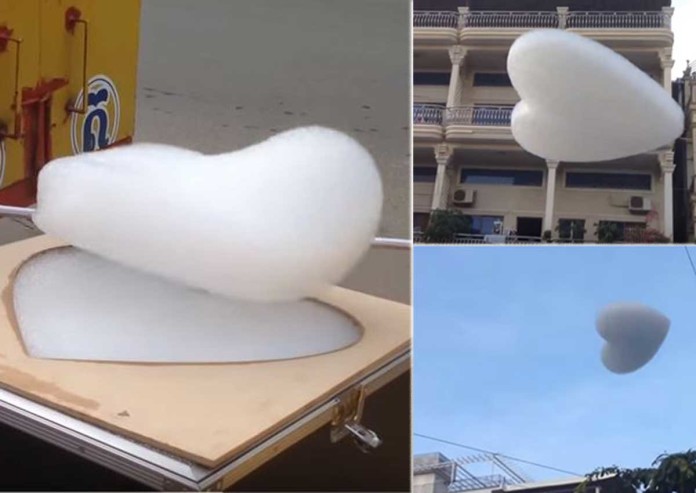
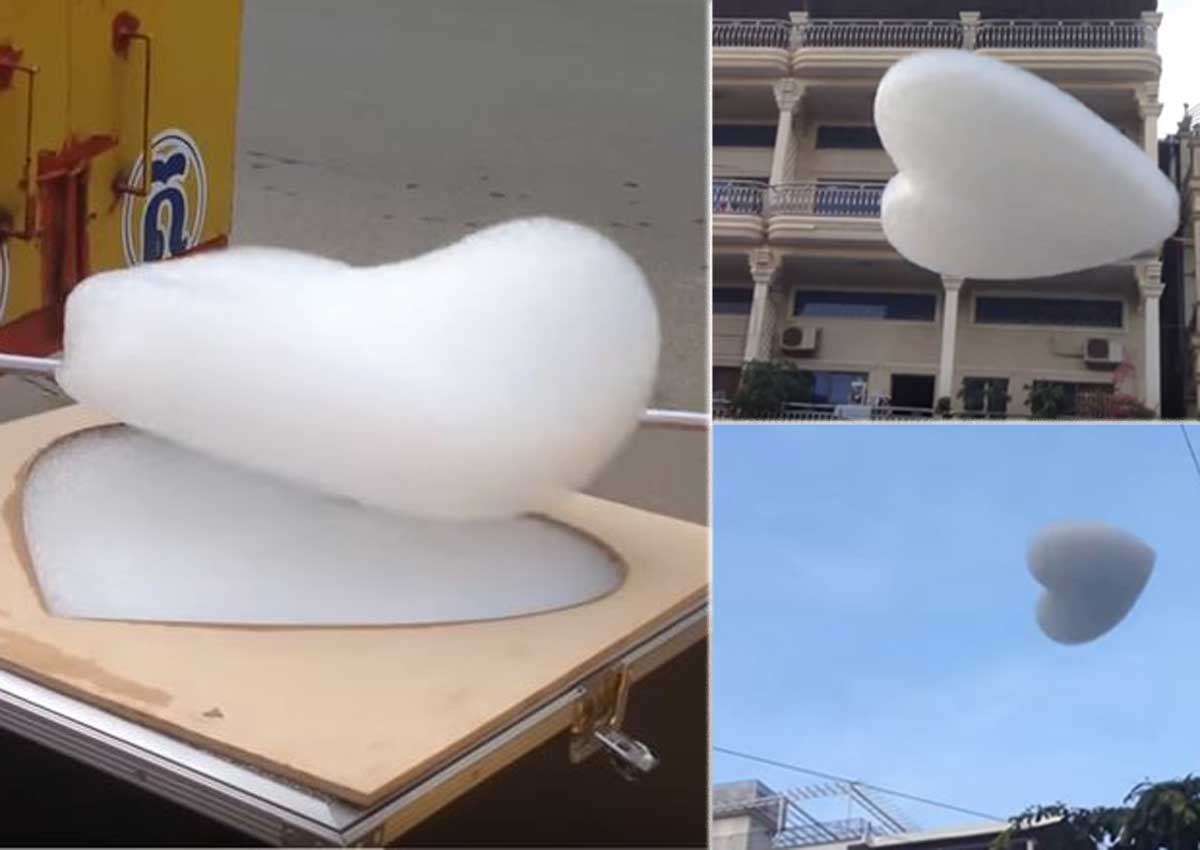
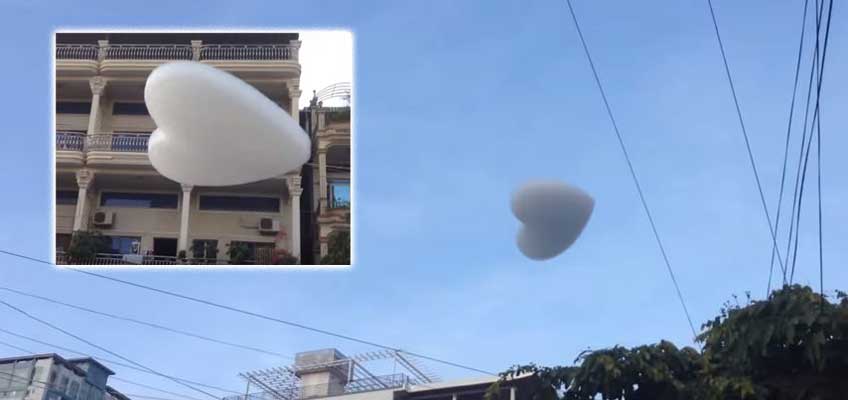
A “cloud-making” company based in Phnom Penh, Cambodia, has been filling the skies there with their custom “clouds”, in the form of hearts and other shapes.
In a video shared on Facebook by Khmer Cloud Making Service, a vendor dispenses fluffy heart-shaped “clouds” from a machine, and curious onlookers watch as the hearts waft into the sky above.
The video has chalked up more than 11 million views since it was posted on June 17.
The “clouds” are in fact, made of a soap solution and light gasses like helium. The company states on its website that its special soap is environmentally friendly.
But how does it work?
The “cloud-making” machine compresses air and mixes it with the foaming solution to form a thick mass of bubbles, which is passed through a template, creating the desired shape. When it is released from the machine, it floats up to the sky, explains the company on its website.
It also claims that the “clouds” can last from a few minutes to an hour or longer.
Other unique shapes the company has created include a silhouette of the famed Angkor Wat temple complex.
Though the company is based in Phnom Penh, it says on its website that it can “reach any sky in the world”.
It told The Huffington Post that it can ship its products internationally.
Rates on its website for the cloud-making machine start at US$999 (S$1,342).
xiuhuil@sph.com.sg
Image:
Publication Date:
Wednesday, June 22, 2016 – 11:18
Send to mobile app:
Source:
Rotator Headline:
Heart-shaped 'clouds' spotted over Phnom Penh
Rotator Image:
Story Type:
Rewritten Story
At least six dead as rains batter quake-hit southwestern Japan
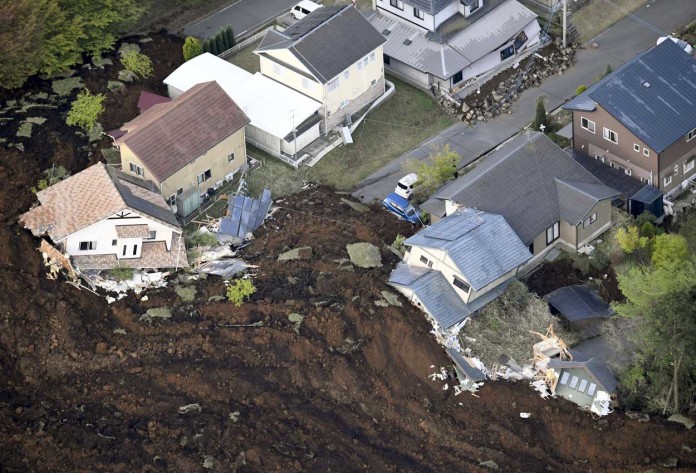
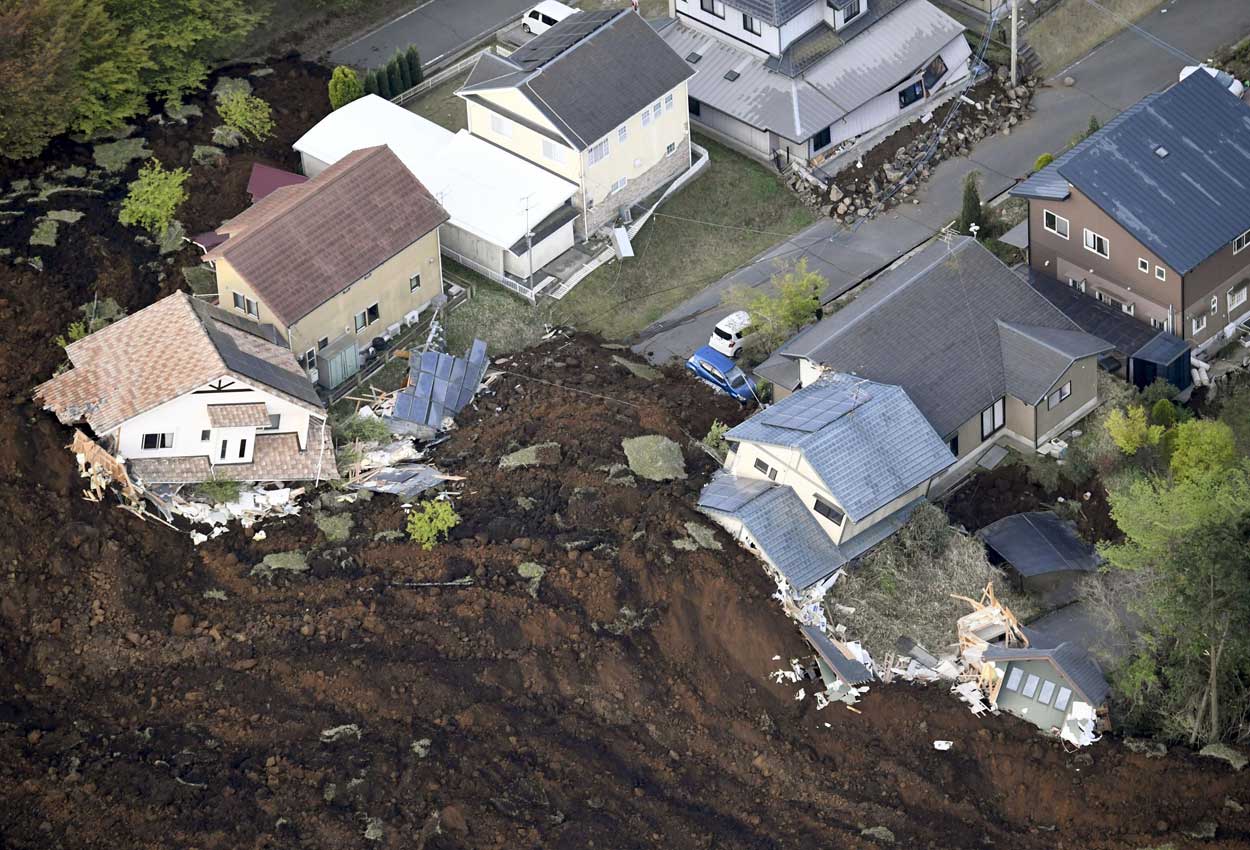
TOKYO – At least six people died and a university student was missing on Wednesday as record-breaking rains battered parts of southwestern Japan still reeling from earthquakes two months ago, setting off flooding and landslides.
Hundreds of thousands people were advised to evacuate a wide swathe of Kyushu, Japan’s southernmost main island, where 49 people died in earthquakes in April that weakened the ground and left it prone to landslides, NHK national news channel reported.
“I was in such a hurry to leave I don’t have anything more than what I’m wearing,” one elderly woman told NHK at an evacuation centre.
Among those killed were a couple in their 80s whose house in Kumamoto was engulfed by mud after some places were hit by more than 100 mm (4 inches) of rain in an hour.
Prime Minister Shinzo Abe was in Kumamoto on Wednesday to kick off campaigning for an election next month for parliament’s upper house.
Authorities warned of further landslides in areas where the ground was weakened by a 7.3 magnitude earthquake in April and several thousand people are still living in evacuation centres.
The area has been shaken by a steady series of aftershocks, including one on Wednesday morning.
Image:
Publication Date:
Wednesday, June 22, 2016 – 11:43
Send to mobile app:
Source:
Story Type:
Others
Japan confers prestigious award on S'pore diplomat
In his 40-year diplomatic career, veteran Singaporean diplomat Chew Tai Soo, 75, has served numerous roles in the Ministry of Foreign Affairs (MFA), but is best remembered in Japan as a key figure in building bilateral economic ties.
He was recognised by the current Japanese Ambassador to Singapore Kenji Shinoda as the “grandfather” of the Japan-Singapore Economic Partnership Agreement (JSEPA) on Tuesday.
The pact, signed in 2002, was Japan’s first bilateral free trade agreement (FTA) and Singa- pore’s first with a major developed nation.
Noting this year marks the 50th anniversary of Japan-Singapore diplomatic relations, Ambassador Shinoda said: “Our two countries have enjoyed friendly and superb bilateral relations and partnership for decades and a lot of the credit goes to people like ambassador Chew who set a high value on our ties and worked constantly to nourish the relations even further.”
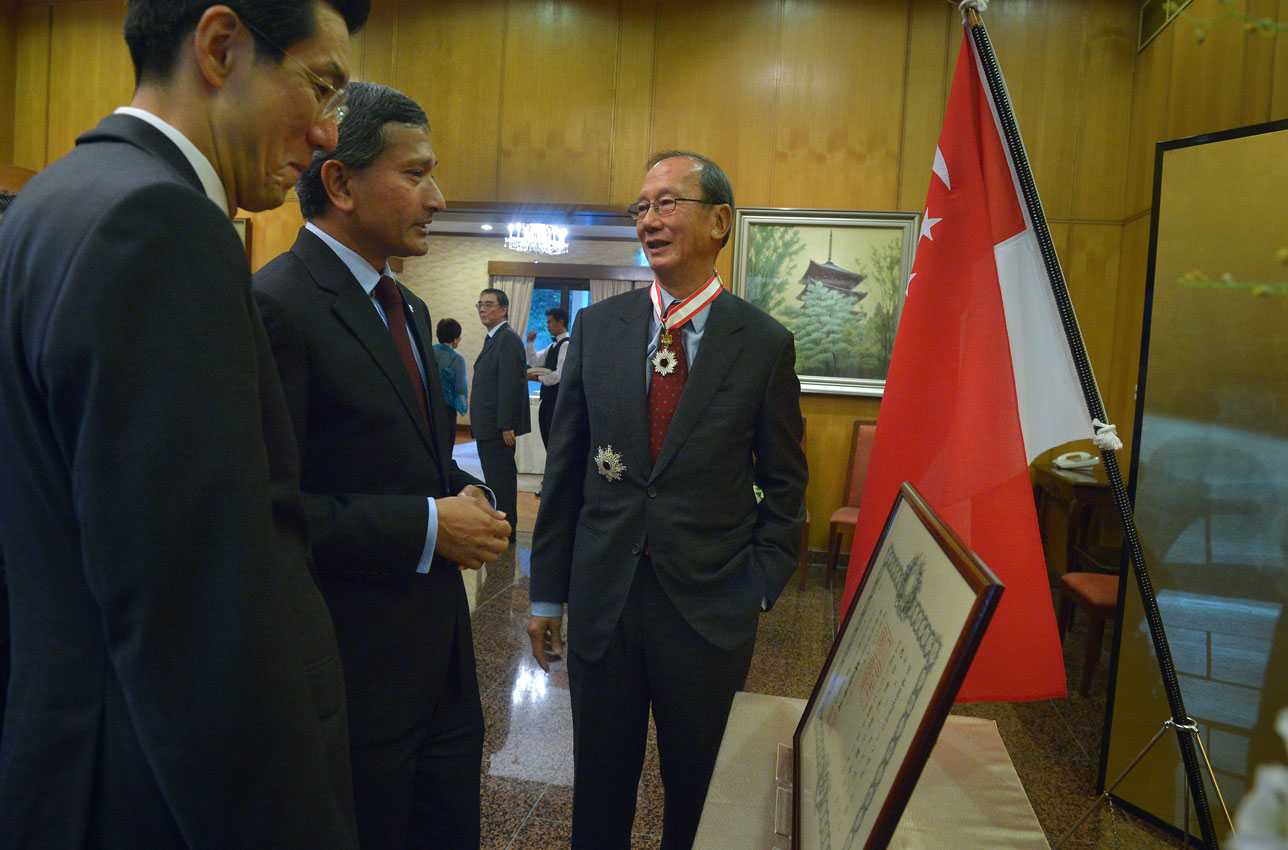
He was speaking at a ceremony in his residence to present Mr Chew with the Order of the Rising Sun, Gold and Silver Star, a prestigious national decoration conferred by the Japanese Emperor on individuals who have made outstanding contributions to Japan in areas such as politics, culture and academia.
Mr Chew was first posted to Japan as First Secretary at the Singapore Embassy in Tokyo in 1974, and was later consul-general in Osaka. He was Singapore’s ambassador to Japan from 1998 to 2004, and has cumulatively spent about 10 years in Japan.
During the 2011 Tohoku earthquake and tsunami, Mr Chew was appointed by the Singapore Government as the coordinator of Singapore’s aid and relief efforts to help the Japanese.
Under his administration, Singapore sent rescue parties and relief goods as well as over $40 million in publicly-sourced donations through the Singapore Red Cross and other organisations, one of the largest amounts ever raised by Singapore for disaster relief.
In a speech at the ceremony, Foreign Minister Vivian Balakrishnan said Mr Chew had negotiated the JSEPA in 2002, a time when bilateral FTAs were “not fashionable” and the “conventional wisdom” was to pursue multilateral agreements.
“The JSEPA, accounting for our strong trade and investment links, is the bedrock of our current close economic cooperation,” he said.
“We have ambassador Chew to thank for our strong bonds, or kizuna, that our countries now share. He is a most worthy and deserving recipient of this award.”
Mr Chew retired from the MFA last year. He has also served as MFA’s deputy secretary; permanent representative to the United Nations in Geneva and New York; and ambassador to France. Other recent recipients of notable Japanese honours include Emeritus Senior Minister Goh Chok Tong and the late Mr Lee Kuan Yew.

This article was first published on Jun 22, 2016.
Get a copy of The Straits Times or go to straitstimes.com for more stories.
Image:
Publication Date:
Wednesday, June 22, 2016 – 15:00
Send to mobile app:
Source:
Story Type:
Others
Rui En charged in court with careless driving
Actress Rui En appeared in court on Wednesday (June 22) and was charged with careless driving.
Rui En, whose real name is Lu Rui En, 35, is accused of one count of driving without due care and attention at a Clementi Avenue 2…
Source link
Choa Chu Kang Cemetery to be redeveloped again
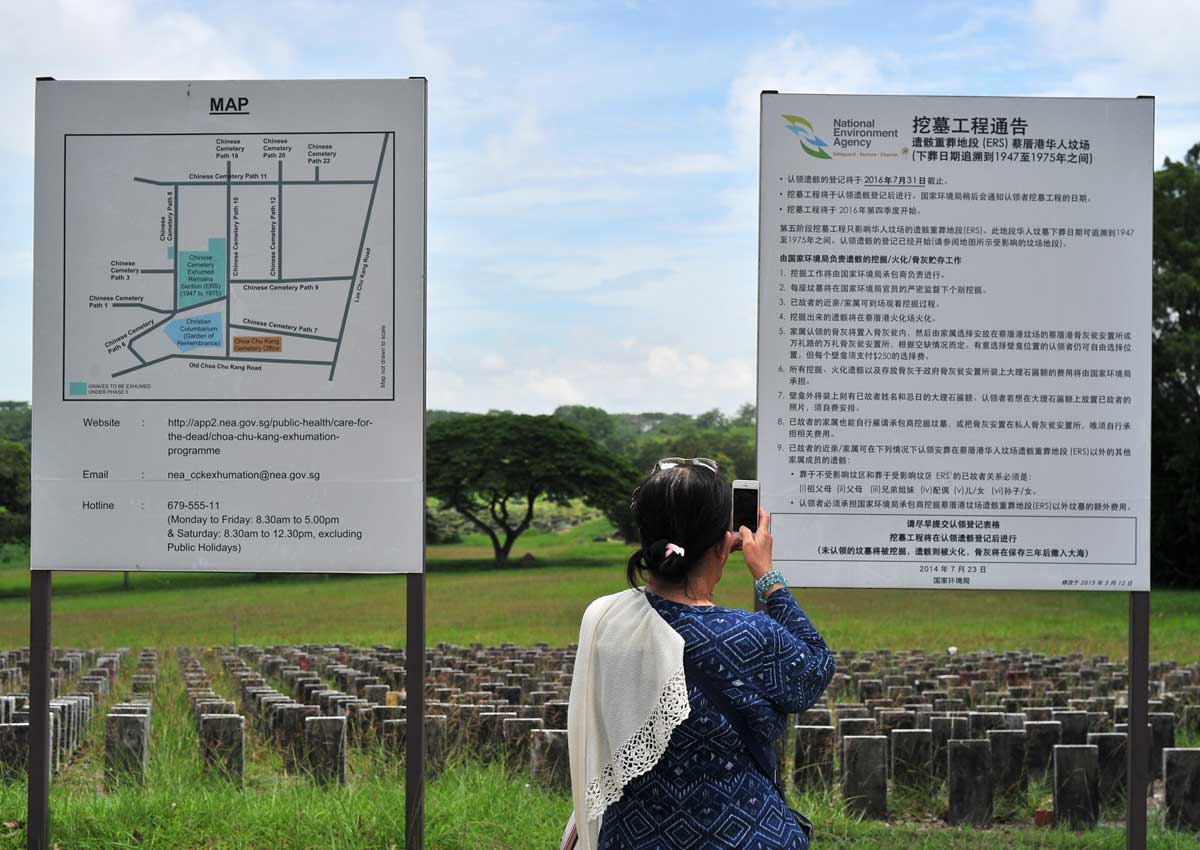
The authorities are pushing ahead with the redevelopment of the Choa Chu Kang Cemetery, Singapore’s only active burial ground.
The National Environment Agency (NEA) has called on firms to offer consultancy services for the cemetery’s third five-year redevelopment project.
This involves installing about 40,000 concrete crypts to bury the recently deceased. These concrete burial plots do not have a base, and came into use in 2007, replacing traditional earth plots. They allow bodies to be interred in a more compact way, saving space.
The project also involves installing about 5,000 crypts to bury exhumed remains, and redevelopment work relating to roads, drainage and amenities, according to the tender called by NEA in April. Consultants will also be asked to review the cemetery redevelopment masterplan.
The concrete crypts complement a burial policy introduced in 1998, which limits the burial period to 15 years. After this period, graves will be exhumed and the remains cremated or re-interred, according to religious requirements.
These measures have lengthened the life of the cemetery, which is expected to be kept open till 2130.
Under the new project, 33,684 crypts for Muslim fresh burials and 4,700 for Muslim re-interment will be built. For Chinese fresh burials, 2,847 crypts will be built. For Christian or lawn fresh burials, 1,451 will be built.
Religions such as Islam require their dead to be buried.
When The Straits Times visited the Muslim cemetery at Choa Chu Kang Cemetery in May, it found that more new crypts could be put into a given area than the older ones. Newer plots were also neater.
A 60-year-old retiree visiting the Muslim cemetery said the body of his son is buried in a concrete crypt and there are no religious issues with the crypts. Exhumation would be easier with these, too, added the man, who declined to give his name.
Madam Mastura Ahmad, 45, a cleaner, said she had no issue with the concrete crypts either. “It is okay, the block (of burial plots) is also easy to find,” she said.
She and her family were visiting her father’s grave on his first death anniversary. He was buried in a new crypt.
Feedback on the concrete crypts has been good, said Mr Sa’at Ahmad, manager at Muslim funeral service provider Setia Bakti, adding that these made burial easier in the rain.
“When we bring the body here after heavy rain, if there is some water, they do some adjustments and the water will drain out. This is not like in the past where the water would stay inside and the soil would be mushy.”
He added: “When most of my customers’ relatives from other countries come here to pay their last respects, they are impressed with our way of burying the body. It is convenient, very neat and not messy.”
The Islamic Religious Council of Singapore (Muis) said the Muslim Singaporean community “appreciated the necessity” of the new crypt system and the burial policy.
“There has been no negative feedback at all since the implementation of the (crypt) system in 2007,” it said.
In cases where burial is not compulsory, cremation has become more popular here over the years, noted an NEA spokesman.
“Where burial is non-compulsory, a combination of policy, pricing mechanism and provision of adequate infrastructure has helped shift preference towards cremation (97 per cent) over burial (3 per cent),” the spokesman said.
About seven in 10 Chinese are cremated, estimates Venerable Seck Kwang Phing, president of the Singapore Buddhist Federation, adding this was a significant increase from 2010.
About 3,700 bodies were buried in Choa Chu Kang cemetery last year, of which 87 per cent were from religious groups where burial is compulsory, said NEA.
There were 19,862 deaths in Singapore last year.
NEA did not answer queries on what percentage of Choa Chu Kang Cemetery was used for burials or reinterred remains. In 2011, The Straits Times reported that about 280ha out of 318ha of the cemetery were then used for new burials or reinterred remains.
Experts suggested ways to address burial space issues should they arise.
Singapore can turn to multi-tier burial crypts, said Mr William Lau, immediate past president, Singapore Institute of Planners. He added he was confident the NEA had correctly projected there would be sufficient burial space in the Choa Chu Kang cemetery till 2130.
To address space issues, tree burials, which require less space, can also be encouraged, said Professor Lily Kong, provost and Lee Kong Chian Chair Professor of Social Sciences at Singapore Management University. With tree burials, cremated remains of the deceased are put in containers and buried around trees in a cemetery park .
This article was first published on Jun 22, 2016.
Get a copy of The Straits Times or go to straitstimes.com for more stories.
Image:
Publication Date:
Wednesday, June 22, 2016 – 14:00
Keywords:
Send to mobile app:
Source:
Story Type:
Others
Hitch means Grab's JB run is free for now
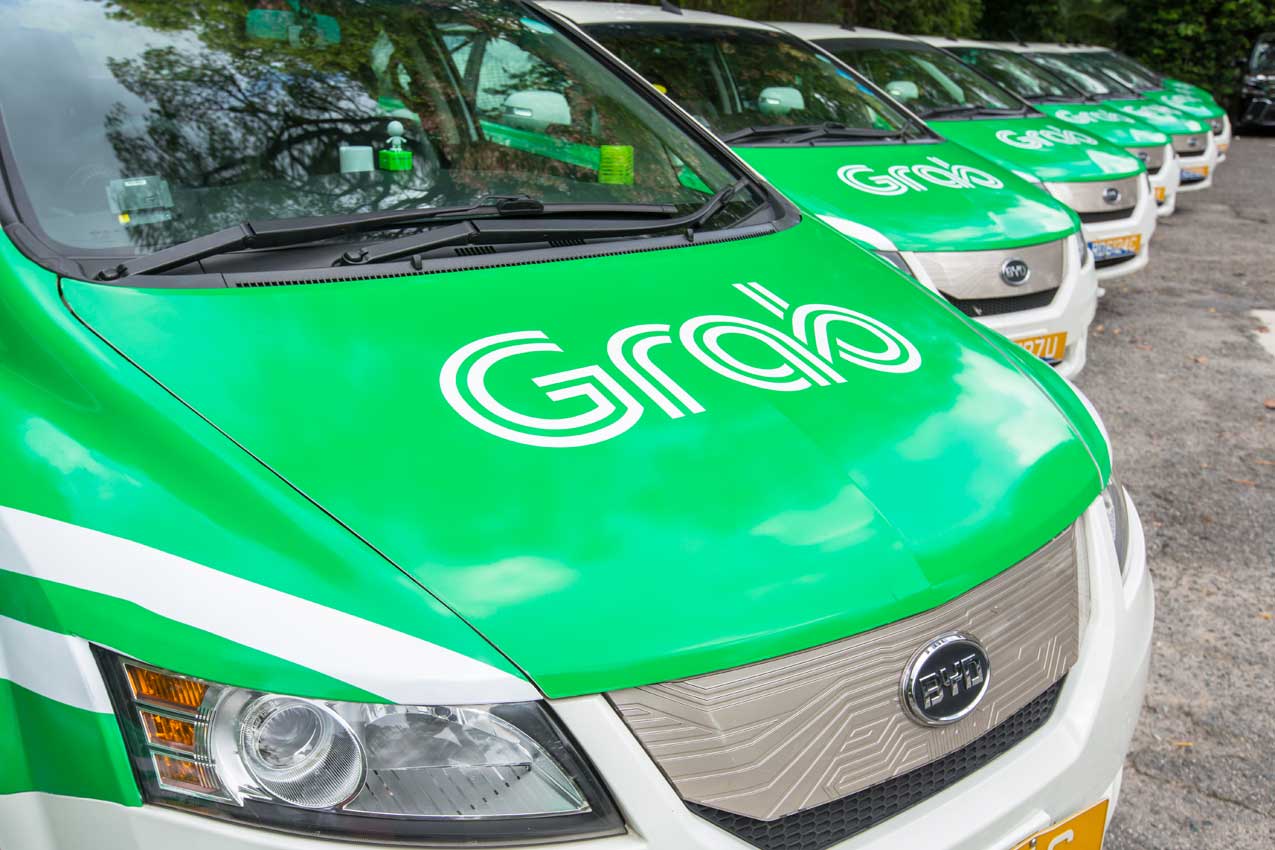
A new car ride-sharing service offering trips between Singapore and Johor Baru will now be operated as a three-week “trial” without any money changing hands.
Drivers taking part in Grab’s GrabHitch Inter-Country Service, which was launched on Monday, were to receive an average of $12 from passengers towards fuel costs.
However, the Land Transport Authority (LTA) has said a paid service would violate regulations in both Singapore and Malaysia.
“Malaysian-registered cars are not allowed to provide hire and reward services in Singapore without a public service vehicle licence,” the LTA said, adding that Singapore-registered vehicles would also need to be licensed to offer such services in Malaysia.
“Grab should ensure that any cross-border carpool service does not contravene Singaporean or Malaysian regulations,” it added.
A Grab spokesman said it is now running GrabHitch JB-SG as a “fare-free pilot programme” to test its feasibility. She said: “During this three-week fare-free pilot, we will test out the model and engage with the LTA in Singapore and regulatory authorities in Malaysia on the use of carpooling solutions to improve connectivity between Singapore and Johor Baru.”
Grab declined to comment on its plans after the three-week trial, which ends on July 8.
Desktop systems specialist Azmi Maniku will consider using the service to travel to Johor but believes the regulations are not foolproof. “Even if the service is free, drivers and riders themselves could negotiate a small token for fuel,” said the 33-year-old.
Carpooling regulations brought in last year allow drivers to be paid for offering rides within Singapore, though payment should not exceed expenses incurred.
GrabHitch, introduced last November, is a ride-sharing service allowing passengers to pay drivers based on pick-up and drop-off locations, with a trip from Jurong East to Tanjong Pagar costing $8.20, almost half the price of an equivalent taxi journey.
This article was first published on Jun 22, 2016.
Get a copy of The Straits Times or go to straitstimes.com for more stories.
Image:
Blurb:
Publication Date:
Wednesday, June 22, 2016 – 15:00
Send to mobile app:
Source:
Story Type:
Others
TRS founder Yang Kaiheng to plead guilty to sedition
In a surprise turn of events, Yang Kaiheng, founder of socio-political website, The Real Singapore (TRS), told the…
Source link
Taiwan pet groomer gets creative with haircuts
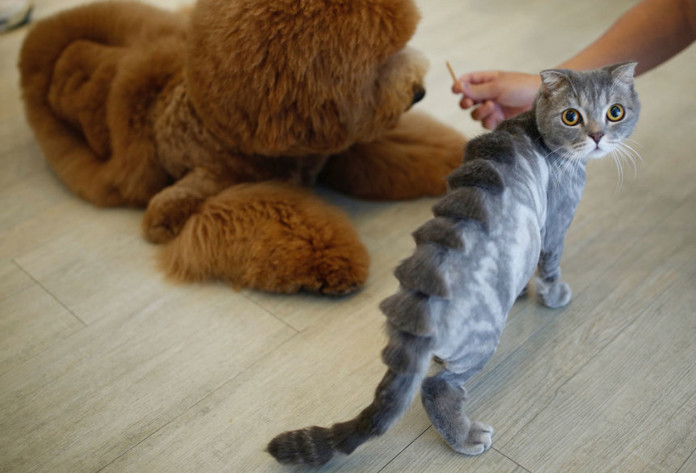
TAINAN, Taiwan – Lee Mei-chen steps back after almost three hours of cut and craft to view her work, a teddy bear trimmed into the fur of a patient dog.
The teddy bear design is one of the most complex in the furry repertoire of the 30-year-old Taiwanese hairdresser turned pet groomer. She also shaves paw prints, lion faces and characters from Japanese brand Hello Kitty on to animal backs.
Ou Shih-jou, owner of the salon where Lee works in southern Taiwan, said the quirky pet patterns came from owners wanting something different to the normal summer shave, with designs determined by the natural assets of the pets.
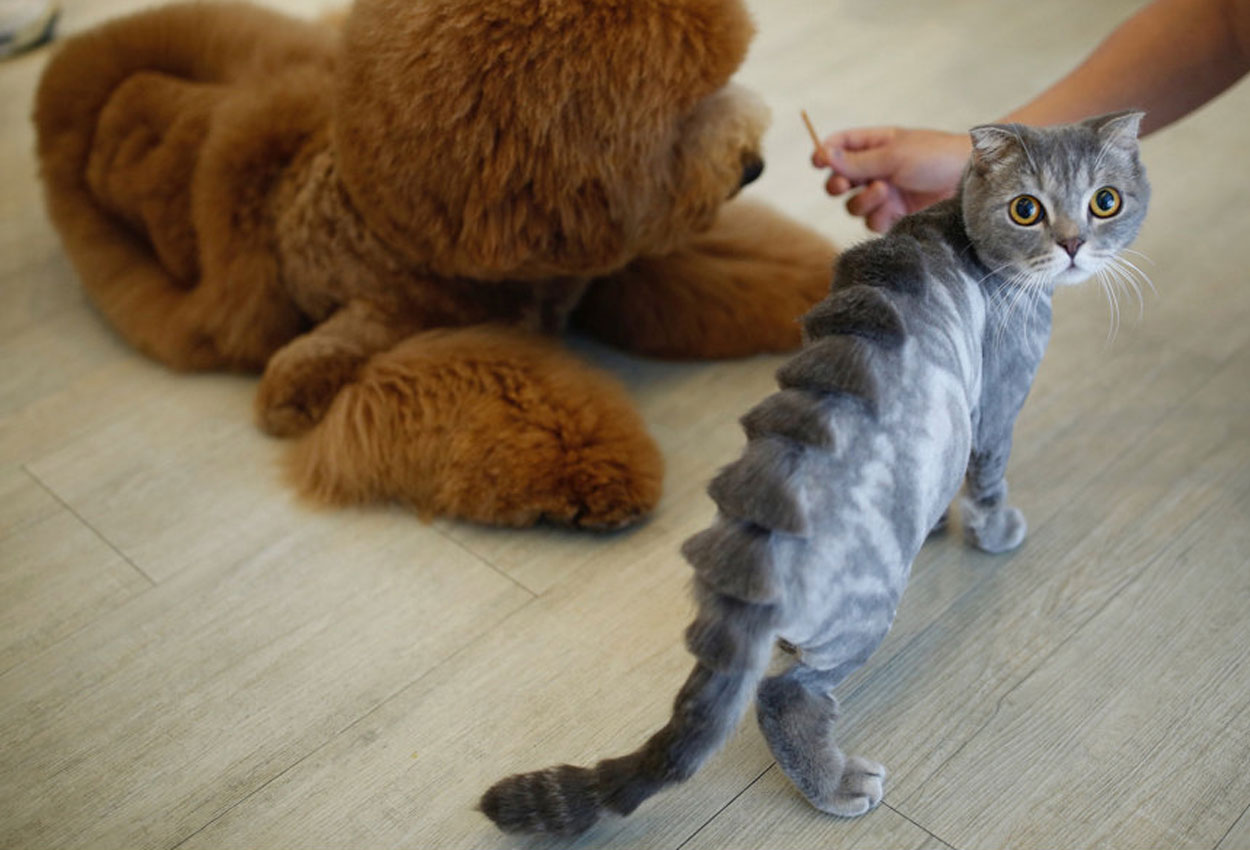
One eye-catching motif involves shaving a spiky spine into the back of a cat, leaving it looking like a stegosaurus.
“When a cat gets angry, the fur on its back erects, that made us come up with “stegosaurus design”,” Ou told Reuters.
“It (makes the cat) look like a small dinosaur. The owners were happy after they came back to see it, thinking it was quite creative.”
Ou opened the salon in September and has seen big interest from the public, with the pets posing for pictures on leaving the salon.
“When walking outside, people think it’s amazing and magical. Everyone wants to take a photograph and see what kind of styles they came up with,” pet owner Kuo Yu-lan said.
Image:
Publication Date:
Wednesday, June 22, 2016 – 11:06
Keywords:
Send to mobile app:
Source:
Story Type:
Others
Rui En charged with inconsiderate driving; intends to plead guilty

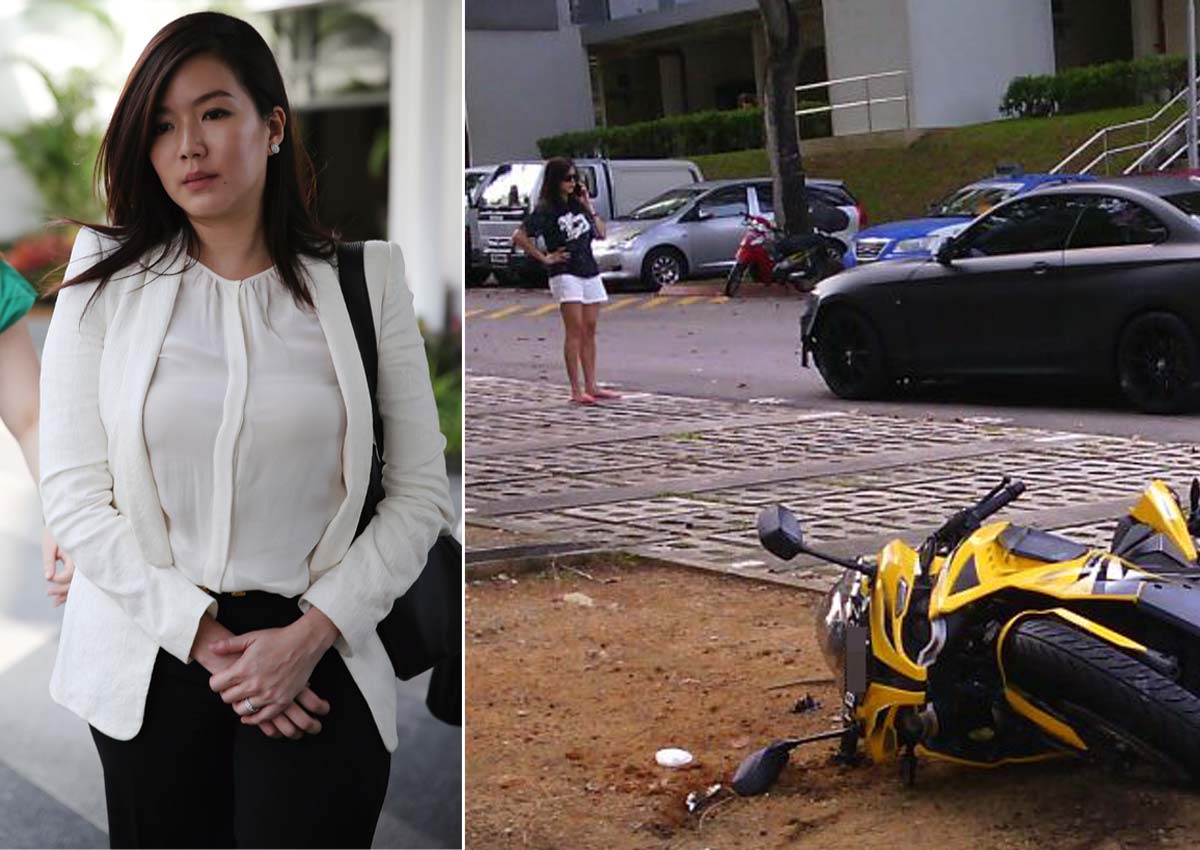
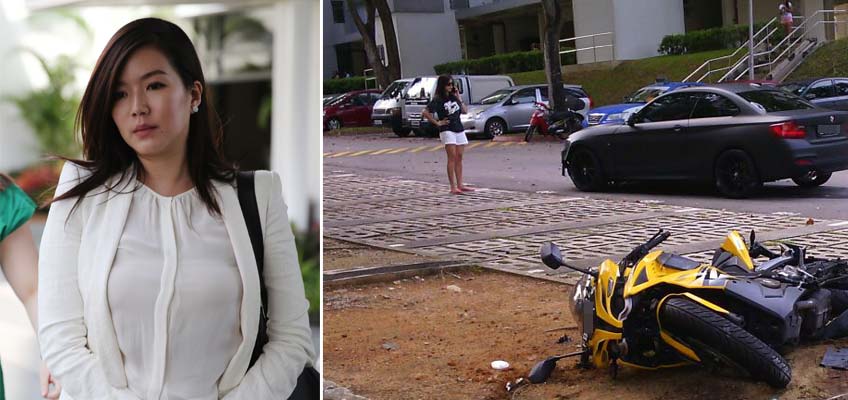
SINGAPORE – Local actress Rui En was charged with inconsiderate driving earlier today (June 22), for the well-publicised incident on April 12 this year where she had knocked down a motorcycle in a carpark.
According to The Straits Times, the 35-year-old intends to plead guilty to the charge, and has no legal representation.
The actress made headlines when she knocked over a stationary motorcycle at Block 331, Clementi Avenue 2. Mr Bahrom Sarmiten, the owner of the motorcycle, had been walking to the carpark when he saw that his motorcycle had been hit by a black BMW, understood to have been driven by Rui En.
Rui En knocks down bike in alleged drink-driving accident
Click on thumbnail to view photos. Source:
The New Paper, Lianhe Wanbao
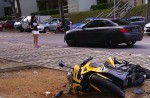

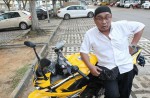
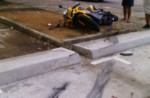
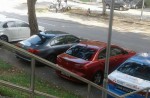
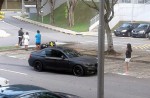
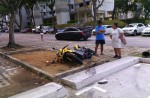






He said that Rui En subsequently attempted to drive away instead of stopping. When Mr Bahrom knocked on her car window to ask her to stop, she had allegedly stepped out of the car while wearing sunglasses and said: “Do you know who I am?”
Mr Bahrom also added that she allegedly smelled of alcohol.
The actress subsequently applogised for the incident, saying that she wanted to park her car “to avoid any congestion from oncoming traffic” before assessing the situation.
The case has been adjourned to July 1.
Rui En ‘black face’ at Star Awards draws online brickbats
Click on thumbnail to view photos. Source:
The New Paper, Twitter, SGAG, facebook, MediaCorp








prabukm@sph.com
Image:
Publication Date:
Wednesday, June 22, 2016 – 10:59
Send to mobile app:
Source:
Rotator Image:
Video Media:
Other Video Media
Story Type:
Rewritten Story


