SINGAPORE – The Progress Singapore Party (PSP) on Friday (May 1) expelled a member who made a video in the style of hacktivist group Anonymous in which he claims the party has been infiltrated and funded by foreign sources.
The video was made by Mr Daniel Teo, 36, who joined PSP last September.
He admitted this to PSP secretary-general Tan Cheng Bock.
In the video, which circulated on various messaging platforms, Mr Teo claims 10 members of PSP are working with Singapore People’s Party chairman Jose Raymond and historian Thum Ping Tjin, while “funded by Western liberal sources”.
The individuals were all named.
A voice-over was used in the clip, which features a masked individual, often seen in videos by Anonymous.
The Straits Times understands that police reports have been made by some of those named, including Mr Raymond and PSP member Ravi Philemon.
In a Facebook post on Saturday morning, Mr Philemon categorically denied the allegations.
A ward for COVID-19 patients at Ng Teng Fong General Hospital. (Photo: NTFGH)
SINGAPORE: In the initial weeks of the COVID-19 pandemic, Singapore seemed well placed to handle the situation.
Measures to limit the number of cases were seen as generally effective and the healthcare system could cope easily with the number of patients with capacity to spare.
However, things have quickly changed from when the first COVID-19 case was reported here on Jan 23.
In recent weeks, thousands of beds have found a home in buildings converted into care facilities. In order to support the bump in the number of beds, and those who may need them, professionals are being recalled, retrained and redeployed.
A man wearing a face mask walks in the Raffles Place financial business district in Singapore, Apr 14, 2020. (File photo: AFP/Roslan Rahman)
Following a huge spike in the number of cases – 16,169 cases at the end of April compared to 926 cases at the end of March, the country’s healthcare system has been pushed hard to ensure that capacity can keep up with demand.
At first, the number of infections remained low and maintained a steady pace. Until the beginning of April, new daily cases peaked at 73.
This landed Singapore international acclaim for keeping a seemingly uncontrollable virus in check. The Government repeated its warnings that numbers could rise.
Then, on Apr 5, shortly after the Government announced “circuit breaker” measures to stem the number of cases that had crept up to hit the 1,000 mark, the daily number almost doubled to 120. Clusters began to surface among foreign workers housed in cramped dormitories.
“As many have observed, Singapore’s strategies were generally very effective up until mid-March,” said Associate Professor Hsu Li Yang from the NUS Saw Swee Hock School of Public Health. “Subsequently and particularly with this explosion of cases among foreign workers, we have been playing catch up.”
When asked how prepared Singapore had been to deal with foreign workers being infected, Prof Hsu said: “It is clear on hindsight that we were unprepared despite some early warnings and caught on the back foot. However, we have since stepped up on measures to regain control of the situation.”
From an average of about 520 cases a day in the third week of April, the average increased to about 950 per day in the fourth week of April. Last week, there was a slight dip in the average number of cases to just under 700.
MAKING SPACE
The surge in cases meant that quick action was needed to expand bed capacity to deal with the number of people who had already been infected, as well as those expected in the future.
As of 2019, Singapore’s private and public hospitals had 11,321 acute care beds. On Apr 25, MOH data showed that half of the eight public hospitals were at least 75 per cent full – this included COVID-19 patients. Details released by MOH on the same day showed that of the more than 12,000 cases (as of Apr 25), just under 10 per cent of COVID-19 patients were in hospital. More than 10,000 were isolated at community facilities.
By then, wheels were in motion to ensure that there was sufficient capacity to deal with thousands of patients with mild symptoms as well as the fewer numbers who might need more intensive treatment and care.
Community facilities have played a key role in shifting the load away from hospitals, with more than 80 per cent of all patients currently located at these facilities (as of May 2). These facilities, in places like Singapore Expo, Changi Exhibition Centre and D’Resort in Pasir Ris, are for COVID-19 patients with mild symptoms and lower risk factors.
Nurses pushing additional beds into wards converted for COVID-19 patients at Alexandra Hospital. (Photo: Alexandra Hospital)
During a multi-ministry task force briefing and press conference last Tuesday (Apr 28), the authorities said there are currently 18,000 bed spaces for “isolation and care needs” available, with another 23,000 in the pipeline.
This includes a doubling of the number of spaces at community care facilities to 20,000 by end-June, increasing the spaces at community recovery facilities at Singapore Armed Forces camps within the same time frame as well as increasing bed spaces in swab isolation facilities.
Community recovery facilities are for COVID-19 patients who remain well at day 14, and do not require further medical care. These recovering patients will be isolated at these facilities before being assessed for discharge. There are about 2,000 spaces, with plans to increase this to more than 10,000 by end-June, the authorities said.
Patients waiting for results of swab tests are housed in what are known as swab isolation facilities. There are more than 4,000 bed spaces in such facilities – including hotels and hostels – that have rooms with en-suite toilets. More than 3,000 beds are in the pipeline.
“We have been building up the healthcare capacity over the last two months to cope with the rise in COVID-19 infected cases,” said an MOH spokesperson, in response to queries from CNA.
“To ensure that the acute hospitals continue to have capacity, patients who no longer require acute hospitalisation may be transferred to private or community hospitals to continue their recovery if they require some medical support, or transferred to the community isolation facilities if they are clinically well.
“Newly confirmed cases with mild symptoms who do not require extensive medical treatment may also be cared for at the community isolation facilities.”
A community isolation facility for COVID-19 patients at Singapore EXPO.
The public healthcare system is also making space.
As of the afternoon of May 3, Ng Teng Fong General Hospital had cared for 1,247 COVID-19 cases. Of them, 1,146 are foreign workers who mainly live in dormitories.
“As a number of these dormitories are in the western part of Singapore, we also saw a spike in cases presented at the emergency department of the hospital,” the hospital’s chief executive Foo Hee Jug said.
He added that he and his colleagues had to move fast to re-purpose various areas in the past week, and sometimes overnight, to meet the increasing load.
The hospital made room for 18 trolley beds and 96 chairs in the emergency department to accommodate these additional patients, he said. Part of Jurong Community Hospital nearby was also converted into a waiting area for those who have undergone testing.
This was on top of making changes to first accommodate 38 COVID-19 patients, and converting an additional six floors of wards to expand capacity for COVID-19 patients.
“Our wards were designed to have a window for every patient, and large paned windows allowing for abundant natural cross ventilation, an important consideration when dealing with infectious diseases,” said Adjunct Assistant Professor Surinder Pada, head of infectious diseases at the hospital.
Alexandra Hospital similarly received a majority of migrant workers among its COVID-19 cases. As of May 2, the hospital had cared for 327 COVID-19 patients since the start of the outbreak, a spokesperson said. Of these, 287 were migrant workers.
The hospital has taken several steps to ramp up capacity, such as increasing bed capacity by more than 30 per cent. About 100 beds have been set aside for COVID-19 patients.
Two empty wards were turned into isolation wards with negative pressure rooms, where air is allowed to flow into the room, but not escape, as part of isolation protocols. Two general wards were converted into space for patients who are positive and symptomatic, but do not require oxygen supplement.
The hospital also increased its capacity to provide intensive care from four beds to 11 beds. It is now targeting to have 20 ICU beds by this month.
SingHealth’s deputy group chief executive Fong Kok Yong said that 14 wards across four of its hospitals – Singapore General Hospital, Changi General Hospital, KK Women’s and Children’s Hospital and Sengkang General Hospital – have been converted into wards for COVID-19 patients.
“Using statistics, we projected bed occupancy rates arising from deferments (of non-urgent elective procedures and outpatient appointments) and made reference to historical data on pneumonia-related admissions, to optimise our hospitals’ capacities,” he said.
“This enabled us to make critical and timely decisions to reconfigure or convert wards to accommodate more patients with acute respiratory symptoms.”
Six general wards and two ICU wards at Tan Tock Seng Hospital have also been converted in order to care for COVID-19 patients, said a hospital spokesperson.
National University Hospital has been creating surge capacity to be able to manage COVID-19 patients since January, said Associate Professor Sophia Archuleta, head and senior consultant at the division of infectious diseases. This is in line with “national directives”, she noted.
“This includes decreasing elective workloads in order to be able to free up hospital isolation facilities and manpower to look after COVID-19 cases, as well as reconfiguring those facilities to serve the needs of our COVID-19 patients better,” Prof Archuleta said. “For example, we have created family-friendly areas where parents and children with COVID-19 can be cared for together by our adult and paediatric inpatient teams.”
The hospital also monitors its number of suspected or confirmed COVID-19 patients to activate additional manpower or surge capacity as needed, she added.
The MOH spokesperson said the ministry had been “progressively expanding healthcare capacity” to cater for COVID-19 patients, in addition to other conditions which require hospitalisation.
“This includes capacity in the wards, as well as equipment and manpower. We have sufficient supply of medical equipment for the current and projected demand of COVID-19 patients,” said the spokesperson.
MANPOWER NEEDS
Capacity and equipment aside, more professionals are also needed to take care of COVID-19 patients. And public healthcare institutions have made efforts to distribute manpower across areas of need, said MOH.
“For example, we have been progressively training more of our manpower to be able to take on additional roles, such as looking after additional patients in an intensive care unit or a critical care setting,” the spokesperson said.
Assistant director of nursing Doreen Heng at Alexandra Hospital (back facing camera) incorporates mental strength training into her ICU crash course. (Photo: Alexandra Hospital)
In addition, MOH set up the SG Healthcare Corps earlier this month. About 3,000 healthcare professionals with previous experience in the industry have signed up to join the fight against COVID-19.
This includes retired medical professionals and medical staff from the private sector.
The ministry anticipates more healthcare professionals stepping up as well as some without formal training and expertise, said MOH director of medical services Associate Professor Kenneth Mak at a press conference on Apr 28.
The authorities said training packages have been prepared to make sure that they are able to fulfil their roles, which may include swab-testing.
Hospitals have sprung into action to equip nurses with the skills needed in the current situation. At Alexandra Hospital, Ms Doreen Heng, who is assistant director of nursing at the hospital, is helping with “express course training” for former ICU nurses who need a refresher and other nurses from other multi-disciplinary backgrounds, who want to pick up ICU skills training and certification.
The situation is not without challenges. Ms Heng, who was involved in dealing with severe acute respiratory syndrome (SARS) 17 years ago, is unable to hold big group workshops and classroom teaching.
Because ICU skills training needs to be conducted on-site, she and her colleagues have been holding smaller and more frequent three-hour sessions without simulated or classroom learning.
They are assessed, and then immediately deployed to wards for on-the-job training.
To date, there are close to 30 nurses who have been assessed to be deployable in Alexandra Hospital’s ICU.
There is not just a need to impart skills but to also train the ICU nurses in mental strength.
“It is important to not buckle under the pressures of the mental and physical challenge in care delivery, but rather, to remain focused and concentrate on the task of for example on hand, and not how sick the patient was, but on the workflow instead,” Ms Heng added.
Doctors work at a triage area at HealthServe clinic, a non-governmental organisation that provides low-cost medical and dental care to migrant workers, during the COVID-19 outbreak in Singapore on Apr 8, 2020. (Photo: Reuters/Edgar Su)
With all nursing students withdrawn from clinical attachments when Singapore moved to DORSCON Orange on Feb 7, arrangements were also made at Ng Teng Fong General Hospital for practical training sessions to continue with safe distancing and precautionary measures.
Nurse educators teach in much smaller groups, and the duration of classroom training has been condensed from six to three weeks, before trainees “graduate” to the wards.
Since early April, Ng Teng Fong’s clinicians, nurses, allied health professionals, administrative and ancillary staff have moved into the dormitories, as part of a national effort to care for foreign workers and provide medical support and swabbing.
THE DENGUE THREAT
While COVID-19 has dominated the headlines, Singapore is facing a more silent, but similarly tough challenge – the traditional dengue peak season from May to September.
In late-April, the National Environment Agency (NEA) sounded the alarm on the disease, calling for Singaporeans to take immediate action.
This came on the back of bleak numbers. As of mid-April, almost 5,800 dengue cases had been reported, more than double that over the same period in 2019. NEA warned that the number for the year could surpass the 16,000 in 2019, unless immediate measures are taken to suppress the Aedes mosquito population.
The weekly figure of around 300 to 400 cases continues to be a “public health concern”, it added.
However, MOH is confident that the twin threats can be handled by the system.
“Most cases of dengue can be managed well in the primary care setting. For cases that require hospital care, there is currently sufficient capacity to manage these patients,” a spokesperson said.
A banner at a dengue cluster in Jurong West St 91. (Photo: Hanidah Amin)
Assistant Professor Ashley St John from the emerging infectious diseases programme at Duke-NUS Medical School said in the same vein that dengue is generally self-limiting. Only a few patients will need hospitalisation, “so Singapore should be prepared for this”, she added.
“Dengue is spread by mosquitoes so we need to remain vigilant about vector control in our communities, especially when we are staying home during the circuit breaker period,” she said.
Prof St John also cautioned that the high number of dengue cases this year “emphasises” the need to not forget about dengue in spite of the new threat of COVID-19.
Prof Hsu noted that a significant proportion of local hospitals’ capacities have been deployed for managing COVID-19 cases, more so perhaps than any other disease condition at present.
“That the healthcare system is stretched by COVID-19 now is very clear. We are also seeing a rise in dengue cases, with over twice the number seen to date this year compared to 2019,” said Prof Hsu.
However, he noted that the “silver lining” currently is that the bulk of the country’s COVID-19 cases are young, healthy men who do not require hospitalisation, but just isolation.
For now, the circuit breaker measures appear to be having some impact, with numbers among Singaporeans and permanent residents dipping, and numbers among foreign workers gradually declining.
And experts such as Prof Hsu and Dr Asok Kurup, an infectious diseases physician at Mount Elizabeth Hospital, believe that the country will be able to cope.
“Overall our mortality rate is among the lowest. This is a testament to our robust surveillance, contact tracing and quarantine measures, infrastructure built up over years and expertise,” said Dr Kurup.
To date, Singapore has reported 18 COVID-19-related deaths.
“There is no doubt that some people with medical conditions will find their care delayed compared to pre-COVID-19 days, but it is unlikely that our healthcare system will break down or be completely overwhelmed in the near future,” added Prof Hsu.
SINGAPORE – There will be no Great Singapore Sale (GSS) this year.
This will be the first time in the 26-year history of the event – usually held between June and August – that it will not be taking place.
The Singapore Retailers Association (SRA), which organises the GSS, told The Straits Times that it will “take a break this year in the light of the Covid-19 pandemic”.
“It will return next year to offer local and tourist shoppers the ‘Great Singapore Experience’, both offline and online,” said SRA’s executive director Rose Tong.
The annual event – where retailers traditionally serve up discounts and promotions – underwent a revamp last year amid criticism that it had lost its relevance. Its duration was cut by half and it was expanded to include festivities such as a pop-up market, fashion shows and film screenings.
The cancellation comes as little surprise as the sale – timed to coincide with the school holidays as well as peak travel season – will likely fall flat even if shops are allowed to reopen when the circuit breaker ends on June 1.
Working from home with your significant other can throw up surprises – and frustrations. (Photo: Unsplash)
SINGAPORE: It’s been over a month since my partner, who normally works full-time in a nice office in Singapore’s central business district, has started working from home.
His company began trialling WFH arrangements early on in the coronavirus pandemic and so I’ve had the pleasure of his companionship practically 24/7 for a whilwhe now, something which has barely happened in our decade together, unless we are on vacation.
In the absence of a daily commute, jam-packed social life and other work-related commitments, we’ve found ourselves with way too much quality time imposed on each other.
To make the best of this situation, we exercise together almost daily, whip up our favourite meals, drink good wine and indulge in the quiet pleasures of stay-home hobbies like reading and catching up on Netflix series.
Yes, I recognise that we have it fairly easy. We have a safe and comfortable home to live in and do not have children, so we are free from juggling home based learning activities.
We are also lucky our immediate family members are independent and in good health so we do not need to handle caregiving responsibilities.
Still, life as a couple during a circuit breaker is not always a bed of roses. There is the daily anxiety that comes from keeping track of the latest coronavirus developments as well as the stresses of work.
As a freelancer in this unstable situation, I am constantly fretting about when I will get my next paycheque while he has to deal with the pressure of maintaining a high level of productivity even as the global economy slows down.
Plus, spending this much time in such close proximity without a break from each other has made us more short-fused with seemingly trivial arguments dragging on for extended lengths of time.
Still, being mostly confined to four walls has also thrown up some interesting observations about couplehood, some funny and others bittersweet. Here’s four things I’ve learnt so far.
1. MY PARTNER IS A COMPLETELY DIFFERENT PERSON AT WORK
This conundrum will probably sound familiar to many. I think I am a fairly scintillating conversationalist, but sadly, it appears my other half doesn’t always agree.
I am convinced that whenever he mutters an “mmm-hmmm” in response to whatever I am saying, it is because he has already zoned out. Insert exasperated sigh.
Well, that space cadet magically disappears when he shifts into work mode. During the first couple weeks of WFH, we sat next to each other in our study room.
That was when I noticed how frequently he “hops” on voice and video calls with colleagues and clients. Even more enlightening to me was the intensity of his concentration while they talked – he even takes careful notes.
So, where does this incredible razor sharp attention span go after office hours? He’s thinking about solutions to work conundrums, he tells me. Well bosses, please give this MVP a promotion pronto!
Working in each other’s company started out fun. For instance, we could share snacks and take breaks together. But sadly, I soon realised the cons of being work buddies greatly outweighed the pros.
I can only get into a flow state with background music playing, while he needs complete silence. I prefer working with the windows thrown wide open for natural ventilation, while he likes sub-zero air conditioning.
And whenever he has a call, my journalist – some call it busybody – instincts cause my attention to stray, even when I have no idea what technicalities are being discussed.
For the sake of my productivity, I eventually moved my work station out to the dining table. Now, it almost feels like the good old non-coronavirus days when we spent most of our working hours apart.
I have even resorted to messaging him on WhatsApp to keep up the illusion of being in different spaces.
(Photo: Unsplash/Wes Hicks)
And while I enjoy having lunch together daily, I confess that I do sort of miss the mindless, conversation-less indulgence of my other regular mealtime companion, Netflix. Sorry, partner.
3. MY INNER NEAT FREAK FLAG IS FLYING HIGH
As an unapologetic shopaholic and maximalist who is loathe to throw anything away, I am happiest surrounded by some clutter and disorder. This has always been a small source of conflict as he tends to prefer a minimalist aesthetic.
But the pandemic has transformed me into a hand-washing and object-sanitising germaphobe and suddenly the tables have turned. No surface is too insignificant to escape the disinfectant and nothing can be tidied up and cleaned too promptly.
Now, he has become the messy one while I am the nag on his case for not bringing a used cup to the sink or for leaving a stray piece of laundry on the bathroom floor.
He is even on a roster for a variety of household chores, since home cleaning agencies have ceased services during this circuit breaker. To his credit and good sense, he has valiantly undertaken most of these tasks with minimal complaint.
I hope that when this is over, both of us will continue to treat our living space with more mindfulness because better hygiene can never hurt right?
4. WE CAN ALWAYS EXERCISE MORE EMPATHY FOR THE OTHER
This virus, imperceptible to the human eye, has thrown our most minor fault lines right into the open. Since the circuit breaker began, we have been snapping at each other over the littlest things.
For instance, he thinks I am on the wrong side of paranoid for using a piece of scrap paper to press the lift buttons while I can barely keep my anxiety at bay each time he goes out for a run (currently one of the outdoor activities still permitted) in case he unknowingly crosses paths with a COVID-19 carrier.
Things came to a head this past weekend when we began arguing over our dog’s daily walk.
He thought it was reasonable to leave our apartment at 10pm but even masked up, I felt uncomfortable passing by about five people walking back from the supermarket, three joggers and another dog walker.
When I said I felt the neighborhood was still too busy at this hour, he gave me an incredulous rejoinder: “I thought it was practically deserted!”
That was our Eureka moment. Up until then, I don’t think either of us have noticed just how differently the other can sometimes interpret the exact same situation.
Truth be told, reality was somewhere in between what both of us perceived – it certainly was not crowded by any standard but neither was it a ghost town.
It also reminded us that as long as we are in general agreement about the big, important matters (like doing our best to maintain social distancing), many conflicts (such as the exact hour to walk our dog), can be alleviated by viewing the situation from the other’s perspective.
For an opinionated duo like we are, that revelation was a timely reminder that we both need to take a step back to maintain harmony, particularly in these uncertain, worrisome times.
At least, that’s what I am telling myself now that he has embarked on a mini-project to grow out his stubble. I hate it, but if it brings him some joy, I guess I can put up with this cosmetic change for the time being.
Of course, that’s not going to stop me from making fun of his hirsute experiment, until he shaves it off.
SINGAPORE: For more than half a year, first-time food and beverage (F&B) entrepreneur Andrea Tan had been working hard to get her café, Lucid, ready for business.
But on Feb 4, a day after concluding the café’s soft launch, a Chinese health products shop located on the adjacent street was discovered as Singapore’s first local cluster of COVID-19.
Four people had caught the novel coronavirus after some had “prolonged interactions” with a Chinese tour group that visited the shop in mid-January. The number of infections linked to Yong Thai Hang, the health products shop on Cavan Road, would later grow to nine in less than a week.
For Ms Tan and her co-owners who decided to bite the bullet and open the café as planned, this was “very scary” news.
“We were very worried that people would start avoiding the area, thinking that it wasn’t safe,” she said.
By Mar 10, the cluster at Yong Thai Hang was given the all-clear but the virus outbreak in Singapore did not stop. Each spike in the number of infections and counter measures by authorities – safe distancing rules followed by a “circuit breaker” that included a ban on dining-in – dealt a blow to the newly opened café and its owners.
The “worst week” came when the circuit breaker kicked in on Apr 7. Revenue fell by a sharp 90 per cent.
Lucid cafe’s interiors are raw with clean lines. (Photo: Kelvin Chia)
“The first week of the circuit breaker was really bleak for us. We haven’t started deliveries yet so we were reliant on takeaways but no one was coming out to take away food,” said Ms Tan.
Plans that were drawn up previously like holding coffee brewing classes, had to be shelved as new ones, such as offering deliveries, were quickly added to shore up business.
Ms Tan and one of her co-owners are now doing their own deliveries, and can make up to 15 trips a day.
Speaking to CNA at 8pm on one weekday night before her final delivery for the day, the 25-year-old, who also runs a coffee consultancy and is an award-winning barista, said: “I’ve been joking with my friends that my quarter-life crisis is a virus pandemic.”
File photo of Andrea Tan. (Photo: Kelvin Chia)
NEWCOMERS FACE ROUGHER RIDE
Ms Tan’s experience is not uncommon with the F&B industry among those hardest-hit by the COVID-19 pandemic, although newcomers are likely facing a rougher ride.
“We’ve not had enough history in the F&B scene to have our own supporters so it’s a fight against time to have our brand known and remembered,” she said, while noting that Lucid, with an investment of about S$200,000, could now take longer to break even.
“This is definitely not the best time to be launching something new and hope that people will want to give you a try.”
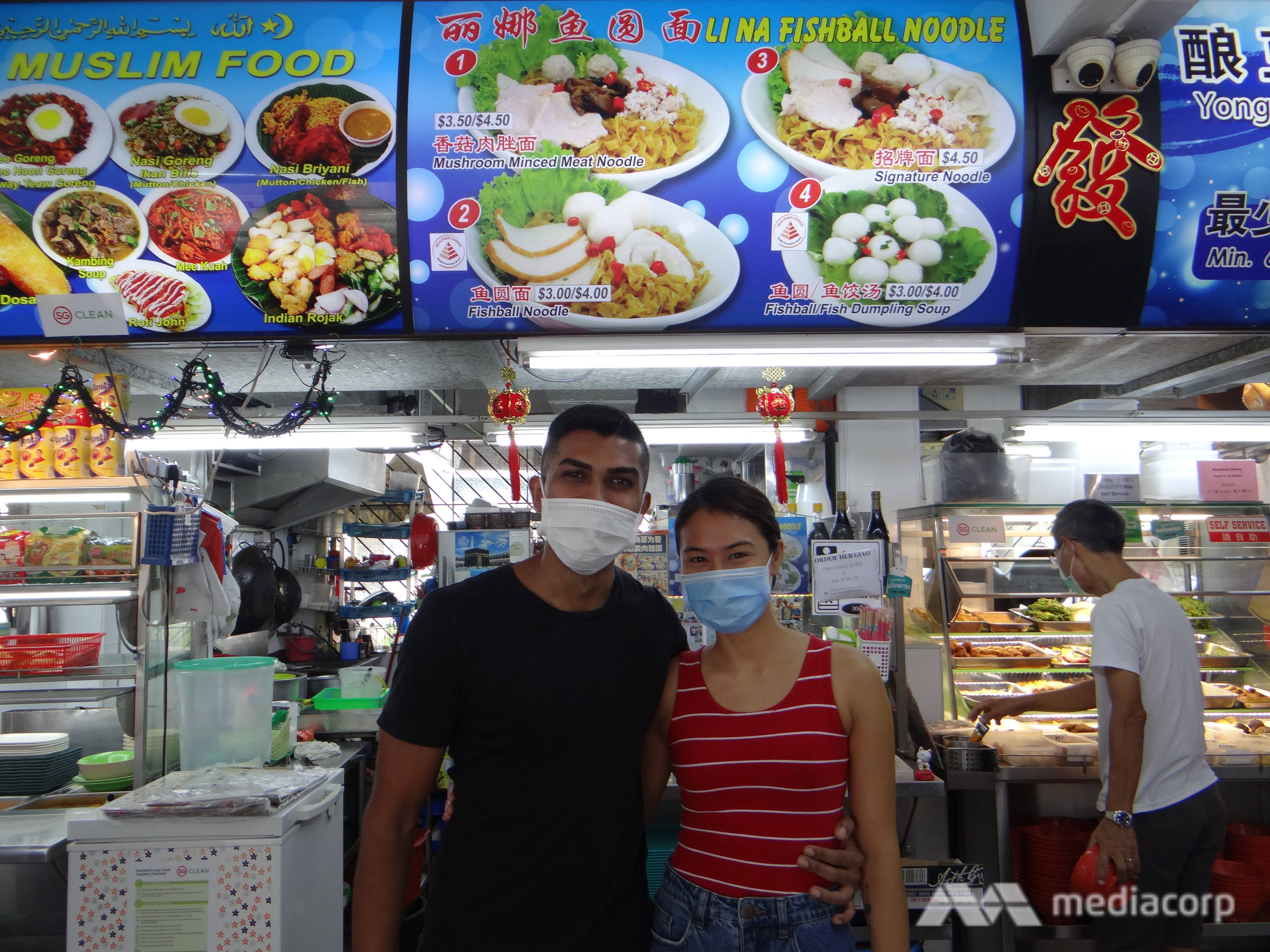
Over at a coffeeshop in Toa Payoh, an eight-month-old noodle stall is trying to stay afloat after the COVID-19 outbreak struck just as business was stabilising.
“It’s definitely been at least a 50 per cent drop in sales,” said co-owner Jeevan Ananthan who is also the main cook serving up bowls of fishball noodles and bak chor mee.
The 29-year-old ditched his investment banking job last year to join the hawker trade with former digital marketer May Leena Krishnan. But a “racial barrier” made it difficult for the couple at the start.
Said Ms Krishnan: “There was a period when every stall will be crowded except ours. People are just not used to seeing an Indian man cooking Chinese noodles.”
Some had “snarky comments”, recalled the 30-year-old. “There were people who asked the other stall owners if we are really selling bak chor mee or questioned us if we know what the ingredients are and what we are doing.”
Jeevan Ananthan and May Leena Krishnan left their office jobs last year to open who open a hawker stall selling fishball noodles and bak chor mee. (Photo: Tang See Kit)
Two months after starting up, Ms Krishnan decided to put her marketing skills to use and uploaded a video of Mr Ananthan cooking fishball noodles on Facebook. That made the rounds on the social media platform, attracting media interviews and before long, the stall was seeing customers who came from as far as Changi.
“People though we were interesting and after giving us a try, they realised that our food is actually not bad,” said Ms Krishnan, who makes the stall’s fish balls and fish dumplings from scratch.
The couple managed to breakeven by January as orders picked up steadily. However, business soon started to see a slowdown with the virus outbreak emerging later that month.
Amid the looming uncertainty, the couple is putting on hold plans for expansion.
“The only plan now is to stay put and protect what we have so carefully built,” said Mr Ananthan.
Mr Lim Wee Hsien, who co-owns Wursthans Switzerland at the new Paya Lebar Quarter shopping mall, is in a similar situation.
His 40-seater casual diner also endured a slow start after opening last October. It took three months and various adjustments to the menu before the restaurant found a following.
“We were doing very well in January and into February, so much so that we were looking for a second location,” he said. “Then COVID-19 got worse and everything has changed.”
The unexpected pandemic now threatens to take the business back to square one after revenue dropped by 90 per cent since the circuit breaker rules were enforced.
Government policies such as the Jobs Support Scheme to subsidise local employees’ salaries, have helped to alleviate cash flow concerns, said Mr Lim. He was also relieved when his landlord, Lendlease, offered to waive rental payments for April and pass on the Government-granted property tax rebates for the month of May.
But with the circuit breaker extended until Jun 1, the outlook remains “bleak”, especially for a new entrant like him, noted Mr Lim who said he has discussed the possibility of a 20 to 30 per cent pay cut with his five full-timers until the end of these measures. He has stopped employing part-timers to reduce costs.
Amid expectations of a slow recovery in footfall and consumer spending, he hopes that landlords could consider having retail rent based on gross turnover for at least six months.
“In F&B, it usually takes about 6 months to know if your concept works and we know ours is working. We just need to tide through this period,” said Mr Lim.
Despite the mounting challenges, all four entrepreneurs plan to keep operating during the circuit breaker period so as to keep their relatively new brands going and earn whatever they can.
To cope, they have adjusted operating hours, such as closing earlier as people stay home, and pivoted to takeaways and deliveries.
Apart from having their noodles available on food delivery app Deliveroo, Ms Krishnan and Mr Ananthan have engaged a driver to deliver islandwide and introduced a pre-order service for takeaways.
“We are trying to see this unexpected turn of events as a lesson for us so we want to learn and adapt. Since the launch (three weeks ago), we have seen somewhat of a pick up,” he said.
Wursthans Switzerland is also on board two of the major food delivery platforms here, with “deliveries now the only lifeline”, although Mr Lim said the restaurant hopes to get its own ordering platform up and running soon.
This is because with more F&B establishments joining the delivery platforms, new players like him are finding it increasingly tough to fight for visibility, he said. Having its own site will also help to save on the “steep” commission fees charged by delivery platforms.
Meanwhile, these new players are adding new menu items to cater to the stay-home crowd.
Ms Krishnan and Mr Ananthan have begun accepting orders for their handmade fish dumplings, as more people stay home and cook.
Over at Lucid, Ms Tan is getting ready to launch an online store selling coffee beans, drip bags, filters and other equipment for those who wish to brew their coffee at home.
“We are constantly thinking about what to do to go on,” she said. “For me and our business, it’s about trying until our last breath basically.”
SINGAPORE: For a large part of his day, Mr Sik Kim Kee, a 71-year-old retired driver, will be whiling away his time people-watching at Chong Pang City, a neighbourhood centre in Yishun.
Now that the mid-day crowds are gone since most shops have had to shutter, the environment is quiet and serene – so pleasant that it has caused him to doze off sometimes.
Except that loiterers like him are likely to run into safe distancing ambassadors tasked with persuading seniors like him to go home – and stay there – amid the COVID-19 pandemic.
After an encounter with an enforcement officer while sitting on a stray chair outside a barber’s shuttered shopfront on Monday (Apr 27) afternoon, Mr Sik said: “Call me to stay at home? It will cause me to become dumb and crazy. That’s why all the time, every day, I come out.”
Although he did not dare to break the orange nettings or red-and-white tapes that were slapped across public benches in his neighbourhood and sit on them, he was miffed about this particular circuit breaker measure.
Wagging his finger, he said: “This is too much already. Coffee shop already cannot sit … Where we want to sit is our business what!”
He then left on his bicycle, only to be spotted hanging around outside a coffee shop later.
Increasingly, senior citizens like Mr Sik are making their way back into the streets, bored and a little stir-crazy close to a month after the nation’s circuit breaker measures kicked in on Apr 7 to stem a rising tide of infections.
They remained undeterred even as the authorities announced that no more warnings will be given to those caught flouting the rules from Apr 12, and first-time offenders will be fined S$300. The restrictions include a ban on any kinds of gathering at home or in public spaces, including void decks and parks.
A senior citizens’ corner at Choa Chu Kang Street 62 was cordoned off on Apr 21, 2020. (Photo: TODAY/li Nadhirah Mansor)
Visits to three housing estates found that about three in four of those idling in the streets — both in the day and at night — are older folks, the very group that is considered to be most vulnerable to the novel coronavirus.
But conversations with several of them revealed that the problem goes beyond a wilful desire to ignore the rules. It has more to do with their sense of displacement in a pandemic-hit offline world and their inability to exploit the online world, which has helped to make the circuit breaker period more bearable for younger generations.
While the rest of the population are turning to video conferencing tools, e-commerce and other forms of online entertainment, many senior citizens are finding their world suddenly hemmed in by the four walls of their homes, especially those who are living alone.
For this group, their leisure options at home are limited to television and radio, or chatting with their friends on the phone.
With more than half of Singapore residents aged 65 and above living alone or with their spouses only, the helpless members of this demographic could do with more help from society in navigating this unprecedented crisis, said experts.
A 67-year-old woman who is living alone, and wanted to be known only as Madam Chia, said: “Every day, I face the television. Aiyo, bored until I am going to go crazy! That’s why I go out to ‘buy things’ even though I have nothing to buy since I don’t cook.”
She spoke in Mandarin at around 9.30pm on Monday, while sitting on a public bench near her Bedok flat that was blocked off with a red-and-white tape, with a takeaway cup of coffee by her side. Two other neighbours were hanging out with her, each sitting at different benches to keep 1m distance away from one another.
Mdm Chia, a food court cleaner who was told to stop work after patrons were not allowed to dine in anymore, added: “I normally just work from 7am to 3pm. Now I sit at home with not a thing to do.”
Asked if she had tried coping by speaking to her friends over the phone, she said: “People don’t really like to chat on the phone for too long. They have their kids to take care of. But older people like chit chat. Listen to the radio lor.”
As for using the internet to connect with friends, Mdm Chia said she had tried in vain to learn it many times before.
“At home I any ‘net’ also don’t have,” she said. “Those people who know how to use the internet … can listen to music, watch shows. Just that I don’t know how.”
Even if they have learnt how to use certain internet functions, there is a limit to what they would do with them, said Madam Cheong Kit Moi, 78. She started to use chat application WhatsApp late last year but can’t do much with it since she does not know how to read.
“I am scared that if I press wrongly, then everything will be gone. I have a lot of songs inside my phone,” said the live-alone elderly who used to frequent the Lions Befrienders Senior Activity Centre at Blk 32 Bendeemer Road before the circuit breaker measures were implemented.
She still mainly relies on her landline to connect with a staff member from her senior activity centre and two to three friends. But she is increasingly on her mobile phone these days, sometimes checking out the YouTube app to see what content is available since she does not really know how to do a video search.
But there are others, like Yishun resident Wong Ya Long, who lost their one and only social network with the closure of the seating areas at coffee shops.
The 77-year-old who lives alone was almost in tears when this reporter asked how the circuit breaker had been for him, as he was walking back to his flat with a takeaway packet of pig organ soup he got from Chong Pang Market and Food Centre.
“I have nobody to talk to,” he said. He used to pass the time by hanging out with four to five other friends at a coffee shop. They did not have the foresight to exchange phone numbers before the circuit breaker, he lamented.
Mr Wong Ya Long, who lives alone in Yishun, used to pass the time by hanging out with friends at the coffee shop but with the circuit breaker, he said: “I have nobody to talk to.” Photo: Wong Pei Ting/TODAY Read more at https://www.todayonline.com/big-read/big-read-digitally-estranged-seniors-struggle-sense-displacement-pandemic-hit-offline-world
Then there is Madam Koh Oh Yan who used to be occupied with activities at a Kreta Ayer Senior Activity Centre but now spends a large part of her day sitting at the footsteps of Blk 51 Chin Swee Road, with her mask strapped to her chin, instead of over her nose and mouth.
When approached, the 80-year-old who only speaks Hokkien, said she was waiting for her daughter, whom she said is in her late 50s, to pick her up after work and bring her meals.
Asked why she does not want to stay home where it is more comfortable and there is the television to keep her entertained, she said: “I don’t know how to switch on the television. I only watch when (my children) are home.”
Mdm Koh was not really sure why everybody needs to mask up and keep their distance. She appeared confused when told that the Government’s advisory is for elderly to stay home.
She could only reply: “My daughter told me to sit and wait here.”
‘DON’T MAKE SENIORS THE SCAPEGOATS’
Since the circuit breaker measures took effect, there have been viral video clips showing seniors not adhering to the rules, attracting criticism of this group as “stubborn”, “ignorant” and “socially irresponsible”.
However, interviews with the older generation showed that there could be underlying issues which require some attention.
One of the first incidents which went viral online involved a 71-year-old man who was arrested by the police for disorderly behaviour on Apr 7, after he insisted on eating at a void deck in Bendeemer.
On Apr 12, an elderly woman snapped at a man who reminded her that she needed to put on a mask at People’s Park Centre. In the video clip that was posted on Facebook, she was heard retorting: “If I die, it’s my problem.”
Then on Apr 18, an elderly woman who was confronted for eating her kway chap at Teban Gardens Road Market and Food Centre was heard exclaiming that the new measures have “gone overboard” and are “bullying people”.
When told that she could be fined S$300 for not cooperating, she replied: “Orh gong then orh gong (fine then fine), what am I scared of?”
As of Wednesday, around 2,900 people were each fined S$300 for not complying with elevated safe distancing measures, and another 800 were fined the same amount for not wearing masks when out, said the Ministry of Environment and Water Resources (MEWR) in response to queries.
More than 100 among them had repeated their offence, and were given higher fines, it added.
MEWR said it could not provide a breakdown when asked about the proportion of seniors among the offenders.
Social scientists interviewed felt that many senior citizens are not as savvy as others who make it a point to head out to a park connector or field for example, to get their dose of fresh air. Instead, they loiter around their neighbourhoods.
They are also less able to evade enforcement efforts, compared with their younger and more mobile counterparts. Singapore Management University (SMU) sociology professor Paulin Straughan said: “Unfortunately the elderly is over-emphasised in the group of those who continue to be ignorant (of the new rules). Why? Because they are so slow. They get caught.”
After coming across the video of the elderly woman who insisted on eating her kway chap, Prof Straughan wrote to Minister for Social and Family Development Desmond Lee to register her discomfort that “scapegoats” are being made out of vulnerable groups in the name of keeping the community safe.
“It’s a class differential,” she added. “You have the poorer and the working class who are all stuck in the heartlands. And those (areas) are very policeable… And then in private estates, in places where you have to drive to get there, there are the more affluent who are not caught.”
Pointing to the elderly woman’s case, Prof Straughan said the issue is rooted in how “it is harder for some to obey”.
“She is old, she has mobility issues, and she just wanted a simple meal. Is there something that we can do for older folks like them?” Prof Straughan said.
“It is not easy for an older person like her to (use food delivery services)… so the only way for them (to have) this hot meal is to walk there, and by which time the older folks believe that if your meal grows cold, you might as well not eat it because it is no longer nutritious anymore.”
For Mr Rashid Rahman, a 65-year-old rental flat resident in Bedok, it was the lack of entertainment options and the heat at home that drove him to gather with others in an open area between Blk 25 and 26 New Upper Changi Road on Monday.
“It’s super boring because there are no shows to watch… You (turn) on the television, it’s also all ‘Channel 19’ because everything is all about COVID-19,” the former seaman said.
To keep seniors such as Mr Rashid occupied, local broadcaster Mediacorp, pay-TV operators Singtel and StarHub, and other content providers have ramped up their programming during the circuit breaker period.
Mediacorp, for example, has extended its time belts for Tamil-language channel Vasantham and Malay-language channel Suria, with transmission for both channels now starting from 9am daily.
CONFUSION OVER EVOLVING RULES
Dishwasher Narayanasamy Rajasheker, 59, had been fined S$300 for gathering with three others under a block of flats at Jalan Kukoh, after social gatherings of any size were banned.
He said: “I am staying in a rental house with so many bedbugs. I’d rather run away from the bedbugs … than go back home.”
He now spends his day at a stairway close to his flat, constantly on the lookout for enforcement officers.
Mr Narayanasamy added that the rules are changing too quickly for him to keep up.
“I thought that time they say gatherings of no more than 10 people are allowed. We were four people only, but I still kena (suffer the consequences),” he said.
Mr Quek Swee Ann, a 65-year-old Chin Swee Road resident who relies on social assistance payouts to get by, also has problems keeping up with the frequently updated rules.
“If we sit 1m away from one another, why cannot?” he said. “Chairs were built for the elderly to sit. Why do they have to (cordon everything off)?”
Mr Quek was not aware that the Housing and Development Board (HDB) had worked with town councils to close public spaces, including void decks, to improve compliance to the circuit breaker measures.
He added: “Sitting at home for too long will give us dementia. It’s also an illness.”
Mr Quek, who uses a mobility scooter, now plays a cat-and-mouse game with enforcement officers. “If I see them, I will circle the area and come back,” he said.
Nevertheless, he said he had heard Prime Minister Lee Hsien Loong’s “special appeal” to older Singaporeans to stay home on Apr 10, the fourth day of the circuit breaker, which originally was set to end on May 4 but has now been extended to Jun 1.
PM Lee, who is 68, had said: “I am one of you, so I know how you feel. When we are cooped up at home, we get restless and frustrated … But please understand: We are telling you to stay at home for your own safety. Older people are more vulnerable to the virus. If we catch COVID-19, it is a serious matter. Our chances of dying are much higher.”
To date, the 16 people who have died in Singapore due to the coronavirus are above the age of 55 — the youngest being a 58-year-old woman, and the oldest a 95-year-old man.
Dr Tan Ern Ser, an associate professor of sociology at the National University of Singapore (NUS), said those like Mr Quek are a “small but highly visible minority” who view the Government’s attempt to provide some degree of normalcy — allowing people to exercise and buy groceries — as “creating grey areas” which they can exploit.
Also, since the community transmission in Singapore is not as pronounced as other countries, Nanyang Technological University (NTU) Assistant Professor Saifuddin Ahmed said these individuals may have a “false sense of optimism” that the virus is not as harmful, and they will not be affected.
“They do not want to live with a fear of the unknown which they overcompensate with optimism,” said Asst Prof Saifuddin, who is from NTU’s Wee Kim Wee School of Communication and Information (WKWSCI). “This seriously misguides their risk evaluation of the situation,” he added.
Still, Associate Professor of Law Eugene Tan from SMU recognised that these non-compliant citizens may be trying to regain some semblance of normalcy and stability in their lives that have been disrupted, without the intent of breaking the law.
“Many of us may not fully understand the depth of their sense of displacement,” he said, pointing out that the changes had been swift and significant, requiring dramatic behavioural change in a short span of time.
HELPING SENIORS COPE WITH PSYCHOLOGICAL IMPACT
Mental health practitioners noted that non-compliance by some seniors could be a result of various states of depression or anxiety, partly triggered by the one-month extension of the circuit breaker.
They noted that everyone’s resilience is being tested now but while more working adults have stepped forward to seek help, not many seniors have done so.
“This is an indication of how much our elderly need help. They don’t know where to go, and won’t step forward,” said Dr Lim Boon Leng, a psychiatrist in private practice.
Clinical psychologist Joel Yang, who runs Mind What Matters clinic, observed that some are feeling that there is “no point to living”, now that their freedom is stripped away. Some even think that “if you keep me at home, it is as good as ending my life as well”, he added.
Mr Praveen Nair, a psychologist at Raven Counselling and Consultancy, felt that the restrictions are affecting the older demographic extra hard. He also felt that the Government’s gradual stepping up of COVID-19 measures has added to frustrations and created anxiety among some people.
“When people are in times of crisis, they kind of want a directive approach … You tend to want someone to give you the answer,” he added. If that is absent, it “creates a lot of psychological issues”.
However, WKWSCI associate professor Benjamin Hill Detenber pointed out that like Singapore, most countries have also opted for a phased approach in response to the coronavirus.
“What’s different about our case is that there have been various measures in place since January, and as the situation changes, so does the strictness of the measures,” he said.
“Some may find it confusing, or hard to keep up, but that’s the nature of an adaptive response.”
A woman at the Geylang Serai market trying to buy groceries through a make-shift barrier on April 24, 2020 after she was denied entry because she did not have her identity card. (Photo: TODAY/Wong Pei Ting)
Still, the experts suggested reducing a reliance on crude instruments of legal penalties such as fines, or complementing penalties with a more nuanced monitoring of social activities in neighbourhoods.
“It would be great if the current social distancing measures are tailored for the needs of different districts in Singapore rather than that of a one-size-fits-all,” said academic researcher Liew Kai Khiun, who recently left his post as assistant professor at WKWSCI.
Prof Straughan added: “In cases where there is clearly an information gap or a knowledge gap, just throwing a book at them is not going to solve the problem. Filling the knowledge gap is important … (Likewise,) we need to exercise compassion where there are gaps.”
In fact, Mr Nair suggested that incentivising positive behaviours.
“If you really want people to follow something, it is better to give a reward,” he said. “For instance, if we come up with a national lottery system that grants people who stay at home for a certain number of hours the chance to win a S$100 prize, people will stay home.”
A COMMUNITY EFFORT
Mr Kavin Seow, senior director of the elderly group at Touch Community Services, felt that the community should view seniors with “greater understanding, patience and empathy”.
“While some seniors understand the need for strong measures, others may struggle with the increasing sense of isolation as they are cooped up in their flat,” he said. This is especially so for seniors with underlying conditions such as depression or dementia.
He suggested making more frequent phone calls to touch base with the less-connected elderly who live alone.
Lions Befrienders, which conducts outreach to lonely seniors and runs 10 senior activity centres across the island, also relies on phone calls to check on the elderly — some of whom are also calling the centre daily to ask if it has resumed operations.
“We’ll have real conversations and find out how they are doing … we will also ensure that their needs are met and find out how we can help them,” said its spokesperson.
The centre is also suggesting activities, games and handicrafts which the seniors can do by spreading the information over a number of phone calls so as not to overwhelm them with too much information at one go.
As for the seniors who are out on the streets on their own, Mr Seow said other members of the community, such as hawkers, coffee-shop workers and younger neighbours, can play the critical role of being the support groups’ “eyes and ears on the ground”.
They “can provide timely help to seniors in distress”, said Mr Seow, who noted that most of Touch’s staff are telecommuting and monitoring seniors remotely.
When asked if authorities cater its approach when engaging senior citizens on the streets, MEWR said the Government has been looking into “targeted approaches” to reach various groups in the community.
For instance, to better engage vulnerable groups, such as the elderly who may need more assistance and support, the HDB has been collaborating with social service agencies Montfort Care and Fei Yue Senior Activity Centre to advise elderly frequenting areas such as Chinatown, Redhill, Bedok and Chua Chu Kang to stay home.
Some requiring further support were also referred to the Agency for Integrated Care or Ministry of Social and Family Development, it added.
NOT JUST SENIORS BREAKING THE RULES
While the spotlight is often on seniors for not complying with the circuit breaker rules — going by the number of viral videos going around — they are definitely not the only group.
Some younger Singaporeans interviewed had little qualms in risking fines — and their health.
A 23-year-old undergraduate, who admitted to breaking the rules twice so far to meet her boyfriend, said she had sought to evade detection by dressing up “super casually”, as though she was home, when she visited his place.
Nevertheless, she has established some “ground rules” with her 25-year-old boyfriend including minimising physical proximity with their respective family members and leaving the house alone to buy meals.
A 26-year-old woman — who had driven to her 27-year-old boyfriend’s house last Saturday to bring him some cheesecake — said she would have given the excuse of delivering food to him if she had been confronted by an enforcement officer.
“I thought it wouldn’t be an issue since some food delivery people don’t wear (a uniform),” said the design firm employee, who declined to be named.
The Ministry of Health has reported 657 new coronavirus cases in Singapore today (May 3).
Out of these, there are 13 cases in the community, 18 cases involving work permit holders residing outside dormitories, and 626 cases of work permit holders residing in dormitories.
10 are Singaporeans and Permanent Residents, while three are on work passes. Six new clusters have been identified as well.
There has been another death today, MOH confirmed.
Case 14,774, an 86-year-old female Singaporean citizen, died today from complications due to Covid-19. She was diagnosed with Covid-19 on April 27 and had pre-existing medical conditions including diabetes, hypertension and hyperlipidaemia.
Khoo Teck Puat Hospital has reached out to her family and is extending assistance to them.
Separately, MOH mentioned that Case 17,410 — a 47-year-old Bangladeshi man who died on Friday (May 1) — was confirmed to have died from ischaemic heart disease.
Precautions will be taken to keep students safe as they are allowed back to school, including institutes of higher learning (IHL), from May 19 but attendance is not compulsory.
In a Facebook post on Sunday (May 3), Education Minister Ong Ye Kung also explained that schools will be inviting students in the graduating cohorts to return for coaching and consultations with teachers.
“These are not formal classes,” Mr Ong added.
Instead, the aim is to provide the support that schools usually give such cohorts of graduating students every year during the mid-year break.