Spend S$100 or more on Amazon.sg using your Visa card, and get S$20 added to your Amazon.sg Gift Card balance for use on a future purchase.
From 1st May till 31st May, if you make a purchase on Amazon.sg with an eligible card and meet the required minimum spend, S$20 will automatically be credited to your Amazon.sg Gift Card balance within 30 days after the promotion ends.
Gift is limited to the first 2,500 customers who meet the above requirements.
Terms & Conditions
This is a limited time offer. Offer expires at 23:59 SGT May 31, 2020 or when fully redeemed, whichever is earlier.
Amazon reserves the right to modify or cancel the offer at any time.
Offer only applies to customer orders on Amazon.sg (via desktop, mobile browser or the Amazon Shopping App). Products sold on Prime Now or any other Amazon website will not qualify for this offer.
Offer only applies to customer orders made using Visa Cards issued in Singapore. Any non-Singapore issued Visa Cards or any non-Visa Cards will not qualify for this offer.
Amazon.sg customer orders must be S$100 and above in order to receive a S$20 Amazon.sg Gift Card. Items must be purchased in a single order and delivered at the same speed to a single address. Delivery fees, taxes and gift wrap charges do not apply when determining minimum purchase amount.
Amazon.sg Gift Card will automatically be credited to your Amazon.sg Gift Card balance within 30 days after the offer expires. View your Amazon.sg Gift Card balance here.
Offer is not valid if the order is cancelled or any item or item(s) from the order are returned causing the total order amount to fall below the required minimum spend.
Amazon.sg Gift Cards expire 10 years from the date of issuance. Gift Card Balances are automatically applied to eligible orders upon checkout. If you would rather not use your Gift Card Balance, you can deselect it in the Payment Selection step of checkout. Gift Card Balances cannot be transferred to other accounts.
Offer limited to one per customer and account. The maximum benefit you may receive from this offer is S$20.
Delivery charges and taxes will apply to the full value of your eligible order.
Offer is non-transferable and may not be resold.
If any of the products related to an offer are returned, your refund will equal the amount you paid for the product or content, subject to applicable refund policies.
If you violate any of the offer terms, the offer will be invalid.
On Jan 23, 2020, Singapore saw its first patient with what was later to be known as the respiratory disease Covid-19, caused by a new coronavirus.
The Sunday Times interviewed Deputy Prime Minister Heng Swee Keat for a special report on the first 100 days of Singapore’s fight.
DPM Heng, who is also the Finance Minister, is an adviser to a multi-ministry taskforce set up to tackle the pandemic. It is chaired by Health Minister Gan Kim Yong and National Development Minister Lawrence Wong.
Here is a transcript of the e-mail interview with Straits Times Executive Editor Sumiko Tan. Some of the questions have been edited for length.
Q: Could you elaborate on your role as adviser to the multi-ministry task force. Do you have the final say on all the measures to be implemented? What is the role of civil servants and medical professionals in decision making?
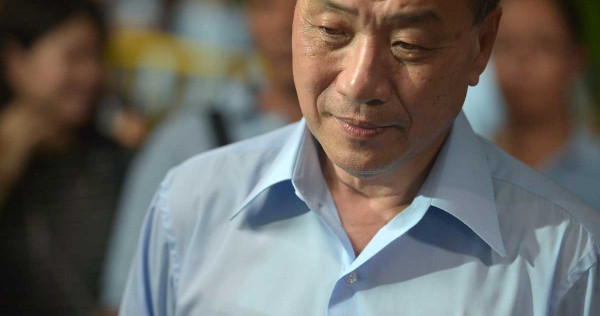
Aljunied MP Low Thia Kiang, former secretary-general of the Workers’ Party (WP), is currently in the intensive care unit of a hospital, after suffering a head injury from a fall at home on Thursday (Apr 30).
The party said in a media statement on Sunday (May 3), that he is conscious and is currently being monitored.
“He is being monitored in the Intensive Care Unit. Mr Low is conscious. Mr Low’s family has requested for privacy so he can focus on his recuperation.”
In Mr Low’s absence from work, the other Aljunied GRC MPs will cover his constituency duties, assisted by former NCMP Gerald Giam.
Aljunied GRC MP and former Workers’ Party Secretary-General Mr Low Thia Khiang suffered a head injury from a fall at…
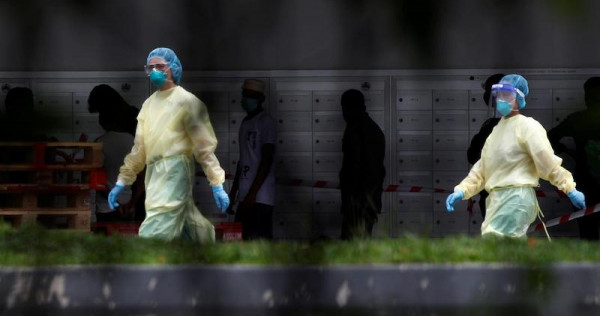
MOH noted that the number of cases among migrant workers have been fluctuating in the past few days due to clearance of backlogged cases by a laboratory, and is working to stabilise its operations.
Further details on today’s tally will be published later this evening.
This brings the total number of cases to 18,205, with 1,347 patients discharged and 17 deaths.
For the latest updates on the coronavirus, visit here
SINGAPORE: Singapore reported 657 new cases of COVID-19 as of noon on Sunday (May 3), taking the country’s total to 18,205.
“The number of cases amongst migrant workers has been fluctuating in recent days due to clearance of backlogged cases by one laboratory,” said the Ministry of Health (MOH) in its daily update of preliminary figures.
The ministry said it is working with the laboratory to stabilise its operations.
The majority of the new infections are work permit holders residing in foreign worker dormitories, MOH said. Ten cases are Singapore citizens or permanent residents.
More information on the cases will be released on Sunday night, the ministry added, saying it is still “working through the details of the cases”.
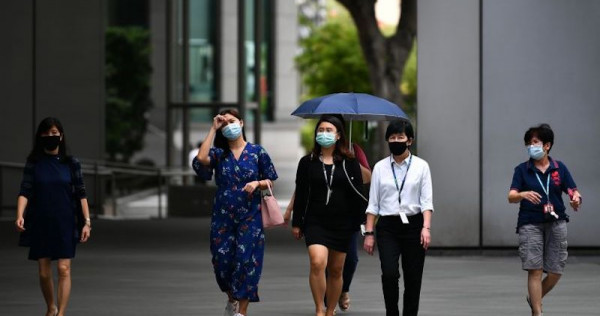
Singapore is into its fourth week of a “circuit breaker” period to curb the spread of the novel coronavirus.
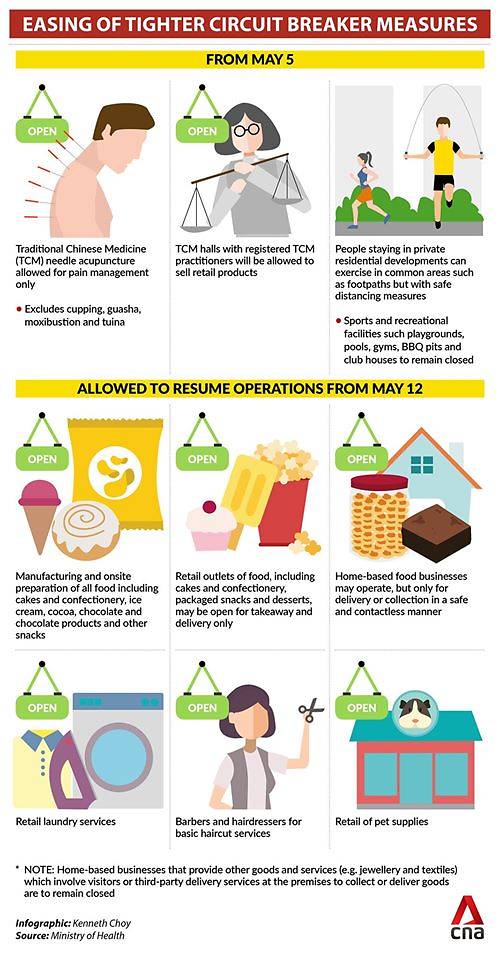
On Saturday, the multi-ministry task force dealing with the COVID-19 outbreak in Singapore announced the easing of some restrictions, with selected services and businesses allowed to resume this month.
Traditional Chinese medicine practitioners can begin to offer acupuncture services for pain management from May 5.
Home-based food businesses, selected food retail outlets and food manufacturing firms can resume operations from May 12.
Some students will be allowed to return to school from May 19 for face-to-face lessons. These will include those who are taking national exams or those in need of additional help.
“While the number of community cases has come down, we are not out of the woods yet. New clusters may form if we let our guards down,” said Health Minister Gan Kim Yong at a press conference on Saturday.
Singapore must press on with efforts to keep its numbers low, and the rest of the circuit breaker measures will remain in force until Jun 1, he said.
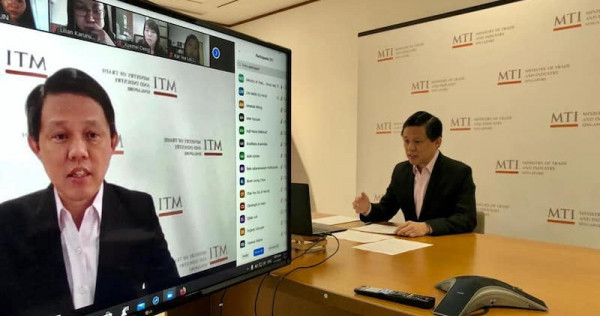
Working from home will continue to be the norm for the majority even after the circuit breaker ends on June 1, Minister for Trade and Industry Chan Chun Sing said on Sunday (May 3).
Speaking to reporters in a virtual interview, he said that on-site work activities had already been reduced to about 30 per cent prior to the circuit breaker, which began on April 7, and they will likely return to this level when it ends, he said. About 17 per cent of Singapore’s workforce currently commutes to work as they are in essential services.
“For those who are able to work from home, we expect them to continue to work from home for the foreseeable future,” said Mr Chan, who added that many have already become accustomed to using online platforms for meetings and other work activities.
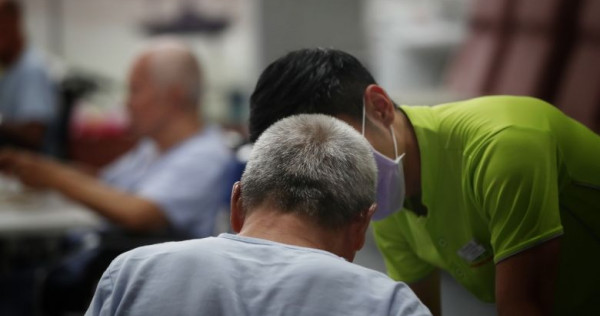
Testing for the coronavirus will be prioritised for residents and staff in all homes serving the elderly.
Staff who interact with elderly residents will also be housed on-site or in hotels to reduce the risk of Covid-19 transmission, said the Ministry of Health (MOH) and Ministry of Social and Family Development (MSF) on Saturday (May 2).
These are among additional support measures to be implemented for all homes serving the elderly, in order to protect vulnerable seniors. These include nursing homes, welfare homes, sheltered homes and adult disability homes.
Six nursing homes in Singapore, including the Lee Ah Mooi Old Age Home, have been hit by the coronavirus so far. So has Acacia Home in Admiralty, a welfare home for the destitute.
MOH began Covid-19 testing for this group from April 29 and expects to complete the tests by next week, while MSF started the tests from April 30 and will complete them on Saturday (May 2).
“Prior to this, we had been actively testing symptomatic residents and staff who developed acute respiratory infection or fever for Covid-19,” said the statement.
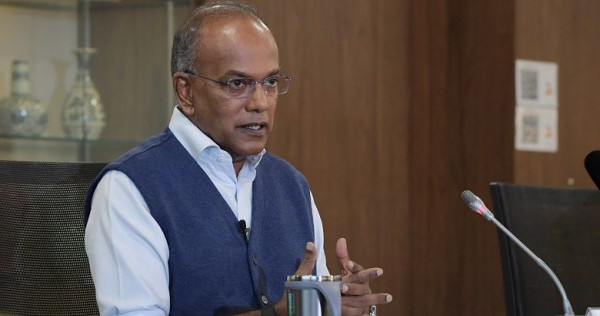
Action will be taken against a man who made insulting posts about Indians and Covid-19 on Twitter under the handle @sharonliew86 some weeks ago, said Law and Home Affairs Minister K. Shanmugam.
Mr Shanmugam said the “nasty posts” were done “deliberately to stoke anger, unhappiness (and) racial tensions”.
He also remarked in a Facebook post on Saturday (May 2) that the person behind the post was neither female nor Chinese as the name “Sharon Liew” had implied.
Bedok Police Division officers have identified the Twitter user @sharonliew86 — a 34-year-old man who is believed to have been involved in two other cases involving offensive tweets.
Promoting enmity between different groups on grounds of race can bring jail terms of up to three years and fines.
SINGAPORE: It was a Saturday evening in late February and Dr Gareth Lim was at home, scrolling YouTube mindlessly. Out of the blue, he received something on his phone that made him jolt off his couch. A text message.
“It was from one of the senior doctors who plans rosters. She was very apologetic, but she told me manpower is needed at the National Centre for Infectious Diseases (NCID). They had to activate me on quite short notice.”
He was told he could say no if he did not want to be deployed. But if he said yes, he would be on the frontlines of the fight against COVID-19 in a couple of days’ time. It would be the 29-year-old’s first experience working in an outbreak scenario.
Dr Lim is two years into his National Healthcare Group residency at Tan Tock Seng Hospital (TTSH), where doctors are rotated from one department to another every three months to gain experience. “I’m actually quite a junior doctor,” he said bashfully.
Even so, he stepped up to the plate without hesitation. “I was excited to be part of the frontline effort, it would give more meaning to what I’m doing. It’s like, this is what we are meant to do as doctors,” he said.
But as Dr Lim settled into his new role at NCID, the excitement was quickly superseded by anxiety.
“It was quite daunting at that time because everything was so new, protocols were changing every day and the turnover of instructions was so fast,” he said. He worried about his ability to perform on the job and whether he could keep up with new procedures such as putting on the personal protection equipment (PPE).
“There’s always that fear of, what if I didn’t wash enough? What if I didn’t put the PPE on properly or what if I have contact with patients unknowingly?”
Dr Gareth Lim. (Photo: Tan Tock Seng Hospital)
By mid-March, the World Health Organization (WHO) said that COVID-19 could be characterised as a pandemic – the number of countries affected had tripled and numbers were expected to climb.
Dr Lim, while coping with a high level of stress at NCID, found himself “doing little things” that he usually would not do.
“Like reading the news, checking almost two to three times a day to see the number of cases,” he said. As he read reports on the virus causing major strains on critical care facilities around the world, questions like ‘What if our ICU became like that?’ and ‘How would we cope?’ filled his head.
KEEPING FRONTLINERS HEALTHY – MENTALLY
Such apprehension and state of mind are not uncommon for healthcare workers at the frontlines, said Dr Lim Wen Phei, a consultant from TTSH’s Department of Psychiatry.
“They are exposed to a multitude of challenges in their work. Firstly, they bear the brunt of the public’s expression of fear, uncertainty and difficulties coping with change. They also have to manage their personal and very real fears of being infected in the line of work,” she explained.
“And they have to do all these while navigating the present nebulous climate.”
This is why TTSH and NCID have ramped up its efforts in preventive and early mental health interventions, to look out for staff members who “face the risk of burnout, compassion fatigue and trauma”.
“We have of course started noticing these symptoms with health care workers. But everybody has stress thumbprints – which means everybody’s stress responses will be unique,” added Dr Lim.
Employees at Singapore’s National Centre for Infectious Diseases putting on protective gear before carrying out testing for the novel coronavirus.
The earliest signs of psychological distress would include burnout, which could manifest in the form of feelings of “helplessness and low accomplishment”.
“For example, people who have worked for 10, 11 consecutive shifts – the constant changes in workflows may reduce a feeling of mastery in their work.” Other warning signs of burnout include social withdrawal, where individuals may isolate themselves from their peers or even family.
While frontliners fight to keep patients alive and physically well, the Staff Support Staff (3S) programme guards the mental health of healthcare workers. It is helmed by representatives from various departments, such as Psychology, Care & Counselling, HR Wellness and Psychiatry – and has its roots in the peer support given to frontline staff of the SARS epidemic 17 years ago.
“We learnt from SARS that healthcare workers can experience symptoms of post-traumatic stress disorder from working in the frontlines,” said Dr Lim Wen Phei.
“It was an important lesson in underscoring the need for mental health in ensuring a resilient healthcare workforce.”
PAINTING A MENTAL PICTURE OF WHAT TO EXPECT
A toolkit put together by her in 24 hours was among the initiatives that have sprung up during the COVID-19 pandemic. Based on feedback on the ground, she saw the need to psychologically prepare staff members who are newly deployed to the screening centre and outbreak wards.
“Because of the urgency of the situation and how things were moving really dynamically, we had to come up with it as soon as possible. I asked a few of our colleagues working in NCID, if you were to advise a colleague who’s going to be deployed, what would you tell them?”
To her pleasant surprise, word got around quick and “random people” contacted her to share their stories. Everyone had a valuable experience to share, she said. “It was quite touching for me to hear fellow staff saying, we were the first to be deployed, we didn’t know what we were getting into. But if you’re gonna write this up, please tell our people what to look out for.”
Dr Lim Wen Phei compiled a toolkit for fronline healthcare workers within 24 hours. (Photo: Tan Tock Seng Hospital)
The document now covers a range of topics – from what to expect when you wear your PPE, the long hours and the number of people tested, to how to manage stress. Some stories that made it to the toolkit were:
“Be prepared to get really warm in the PPE! I wore the PPE for three hours and I was soaked in sweat right down to my undergarments. But everyone understands it’s for our own protection.”
“Little pockets of time you can find, like during lull periods or when commuting to work, can be used to be with your thoughts. Be mindful of your thoughts and see what is frustrating you so that you can sit with those feelings.”
While tips like how the mask is going to hurt and the goggles will give friction injuries seem “trivial and menial”, they cannot be overlooked.
“Those are actually very real pain points, but it’s not intuitive for us to talk about it in a formal capacity. It helps people to paint a mental picture of what to expect, even if these are not really pleasant things to be expecting,” said Dr Lim.
“This helps to allay fear and anxiety in whatever capacity possible. The concept of the toolkit is to be practical and applicable.”
The toolkit came in handy for Dr Gareth Lim when he realised he was getting lost in his thoughts.
“It had tips on techniques to prevent burnout and how to practice self-care,” he said. “These were helpful reminders along the way – to take a deep breath and remember to spend time doing other things if I’m getting too stressed.”
24-HR HELPLINE AS “PSYCHOLOGICAL TRIAGE”
Another morale-booster for staff is the 3S Helpline, which exists to help them through personal crises. It was available during peacetime or before the COVID-19 outbreak during office hours, but it has since been transformed into a 24-hour helpline.
Ms Lek Jie Ying, the senior executive of TTSH’S HR Wellness department, once helmed the helpline alone, but she now works with a team of 13 medical social workers, psychiatrists and psychologists to respond to calls.
“Before the outbreak, the majority of the concerns were about their personal issues, for example sudden loss of loved ones or abusive patients,” said Ms Lek. “But in this period of time, staff’s concern mainly revolves around the uncertain situation.”
“They can be concerned over job deployment because of the nature of the crisis, it can be anxiety or frustrations over the many changes in policies.” Healthcare staff also seek advice for other challenges like childcare and eldercare arrangements.
Ms Lek added: “The helpline gives them a safe outlet to voice out their concern and seek support.”
It also functions like a psychological triage, much like in the Accident & Emergency (A&E) department, where patients are assessed by the severity of their conditions, said Ms Chai Su Wi, a medical social worker on the helpline team.
“For some of them, maybe in this period, they need a little bit more help than usual. We will then do a formal referral for them to see a psychiatrist or psychologist.”
COVID-19: A MARATHON WITH A COMMON GOAL
While Dr Gareth Lim’s one and half month long deployment at NCID’s general ward and ICU was shorter than his residency rotations, the warmth and camaraderie of his colleagues there left a lasting impression on him.
“I remember one of our department heads who spends many sleepless nights planning all the rosters, sending me text in the midst of everything to ask me how I’m doing, what I’ve learned and if I’m enjoying the experience,” he said.
“That reassured me a lot … I was very moved by that. It makes me want to do more, in spite of the tiredness and uncertainties.”
In full personal protective equipment.
In times of crisis, staff support within the hospital is important – given that many healthcare workers on the frontline are not able to be with their families, said Dr Habeebul Rahman, chairman of the 3S Executive Committee.
“They may face some degree of isolation or not be able to interact with their usual support systems.”
For Ms Lek and Ms Chai, peer support is crucial because talking to a fellow staff member is “less daunting than seeing a professional”.
Ms Lek said: “Sometimes it may be very hard to explain to our family members or friends outside the hospital. When our staff talk to someone in the hospital, they do feel that the other person can relate to a lot more.”
Since 2009, the 3S programme has held psychological first aid classes, which trains staff to “help themselves help other people”, said Ms Chai. To date, about 100 staff members in TTSH have been trained in psychological first-aid and some of them volunteer to attend to helpline cases as well.
With these psychological safety nets in place, it is with hope that frontliners would be able to regulate emotions of distress and “keep themselves well for the long haul”.
“Frontliners always try to push the limits to do more, but they are only human. They are the ones who see how patients deal with the disease and how families have to deal with their loved one being sick and that can be quite traumatising,” said Ms Chai.
“Our job is to let them know what support is available. Battling COVID-19 like running a marathon – there’s always an end point and we will move towards there together.”
LIVERPOOL: Recent lockdowns, movement control orders and circuit breakers around the world have meant that all manner of face-to-face activities are now being done remotely, or are “home-based”.
You know, all the essentials – home-based working, home-based learning, home-based-bubble-tea-bingeing (to get free delivery).
Even the military is getting in on it. In Singapore, fresh conscripts who would otherwise be confined in-camp for Basic Military Training (BMT) are getting remote instructions over the Internet.
It makes me wonder how Warrant Officer Mani would make Recruit Heng get down on the ground for some push-up punishments.
“Eh, knock it down! Are you knocking it down? I can’t see. Can you angle the webcam lower? Ah, thanks. Knock it down!”
EVERYTHING IS GOING ONLINE – WEDDINGS TOO
It’s not surprising that, where possible, the everyday activities that we do (and need to do) are the first to go online. Of course, that still masks the unequal distribution of labour and privilege in society – certain jobs will always be easily done at home, some not so.
But what about those special, one-off events? The kinds that are “once in a lifetime”?
Next week, the Singapore Parliament will discuss the possibility of allowing weddings to take place online, with caveats about ensuring both bride and groom are physically in Singapore, among other restrictions.
This has already happened elsewhere around the world, like in New York, where virtual weddings appear to be the only option for a city in lockdown. Virtual toasts and virtual guests, but all still able to share in a happy occasion.
On the face of it, streaming a wedding ceremony where a couple exchanges vows is a very good idea, especially when physical distancing rules are in place.
Such ceremonies lend themselves well to digitalising (the act of turning something physical into something virtual) because there is a particular focus (wedding couple) and the audience’s role is largely observational and passive.
Peng Jing, 24, and Yao Bin, 28, pose for their wedding photography shoot after the lockdown was lifted in Wuhan, capital of Hubei province and China’s epicentre of the COVID-19 outbreak on Apr 15, 2020. (Photo: REUTERS/Aly Song)
Just think back to attending weddings or Registry of Marriages (ROM) ceremonies. There wasn’t much for you to do as a guest, and at large events, you may not even get a chance to interact with the wedding couple.
(Unless you were that one uncle who thinks he’s a wedding photographer because he owns a camera, and proceeds to get into every. Wedding. Photograph.)
In a time when weddings are becoming increasingly commercialised, the idea of minimising the ceremony down to its bare, legal essentials is a tempting proposition.
By disregarding the bells and whistles and layers of ostentation, the virtual wedding, as it currently stands, offers us a chance to disengage from pomp and focus on people.
Virtual weddings also challenge us to question what is really necessary for a wedding to be successful and meaningful.
Whatever the circumstances that have forced us into these arrangements, it is nevertheless an opportunity to slow down the credit card spending just a little bit.
However, I am not so naïve as to believe the wedding industry would not eventually find a way to get people to spend virtually. Ultra high-definition streaming, custom emojis and multiple angles from remote mini-drones all come to mind (that last one exists somewhere in science-fiction already).
WHAT ABOUT THE OTHER CEREMONIES?
At the same time, once we start examining cultural practices, the reality is virtual weddings will struggle to mimic dearly held and longstanding rituals that have come to become an integral part of that ceremony but require multiple instances of physical interaction.
The tea ceremony is more than just a meeting with or a gesture honouring one’s elders. Just watch how eagerly the grandparents hold onto the gifts they want to give the couple. (Photo: Terence Heng)
After all, as I’ve mentioned in other commentaries, weddings are rarely just about the couple, but a conundrum of kinship, social and commercial networks assembled in a concentrated burst of activity.
Tea ceremonies in Chinese weddings are a good example of this, where a wedding couple offer cups of tea to family elders.
On the surface, they are about “paying respect”, but sociologically, they are also about constructing and affirming familial bonds. To some, this affirmation of bonds exceeds the legal ceremony in importance and legitimacy.
Some of these tangible rituals can be made symbolic. They can even be digitised. But for this to succeed, one requires the buy-in from not just the state, the celebrants and the wedding couple, but also the complex networks of individuals that make up the wedding.
This is not always so simple. And turning something that has been physical for so long into something digital means encountering resistance.
To digress, this is also why apps that purport to replace religious rituals (like burning offerings) have never really taken off, because they ignore the deep and stubborn precedents of practice.
NOT EVERY BRIDE, GROOM OR GUEST HAVE THE SAME RESOURCES
Apart from the challenges involved in digitising very physical actions, it is also important to remember that not everyone has the same access to the resources required to conduct a virtual wedding.
While the digital divide goes some way in helping us to understand unequal levels of access, I offer two more points for us to think about.
One, place both matters and does not matter. While a virtual wedding can be conducted anywhere (that’s the whole point), not everyone can stream live on a chic rooftop overlooking the city skyline. And not everyone wants extended family and friends peering into their living room.
While it could be argued virtual backgrounds could address this issue (who would not want a wedding on the bridge of an Imperial Star Destroyer?), such solutions are situational and yet again dependent on the different resources available to different people.
To this extent, town halls and marriage registries are still vital for virtual weddings to succeed, because they offer a way to level the proverbial playing field of “my virtual wedding venue is nicer than yours”.
(Photo: Unsplash/Alvaro CvG)
Two, virtual weddings run the risk of excluding entire groups of individuals who do not have the technology, which could include the networks of family and close friends that weddings comprise of.
To assume that all of one’s family and friends have laptops, smartphones and Wi-Fi to stream a 30-minute video likely assumes too much.
For any legislation of virtual weddings to succeed, it must take into account the same challenges individuals and groups face when working or studying at home. That is why support from institutions that provide spaces and the requisite tech (like ROM perhaps) is crucial.
WHERE DO WE GO FROM HERE
Technology continues to shape and influence the way we socialise, interact and ritualise.
That couples now regularly create custom hashtags for their weddings and include livestreaming even before lockdowns began suggests that society was already developing a hybrid mix of tangible and intangible wedding practices.
The question that we must now raise in a post-COVID-19 world is this: When we make deliberate and dramatic shifts to familiar ways of life, whether out of preference or necessity, we need to first think of the human before the technology.
Around the world, those who create the technology (and the rules that come with it) are often overly enamoured with the utopian possibilities and opportunities afforded to those they genuinely intend to help.
The belief that technology or technological advances are either only neutral or beneficial fails to take into account the unevenness of everyday life.
While there are many things to gain from going online, there are also many things to lose. Intimacy, closeness and shared social spaces are still fundamental to the human experience.
In other words, we should not be so quick to disregard the tangible.
Download our app or subscribe to our Telegram channel for the latest updates on the coronavirus outbreak: https://cna.asia/telegram
Terence Heng is a senior lecturer in Sociology at the University of Liverpool, UK, where he is also an associate at the Centre for Architecture and the Visual Arts.

 Spend S$100 or more on Amazon.sg using your Visa card, and get S$20 added to your Amazon.sg Gift Card balance for use on a future purchase.