Speaker of Parliament Tan Chuan-Jin is no stranger to Twitter and the local Liverpool Football Club fandom, but over the weekend, the man really let his geek flag fly with the revelation that he’s into painting miniature figurines.
It’s no coincidence too that he’s doing so during the circuit breaker. As people around the world look for diversions while adhering to social distancing measures, they’ve taken to calming housebound activities to beat cabin fever.
These days, it’s mostly Animal Crossing: New Horizons and bingeing on Netflix’s Tiger King, but for the nerdier ones — like our Speaker of Parliament, apparently — it’s stuff like painting miniatures.
Last weekend, the Government announced that they would be progressively easing some of the currently implemented circuit breaker measures in preparation for resumption of activity after June 1, starting from tomorrow (May 5).
But before you celebrate and chiong for a cup of bubble tea, here’s what you can and can’t do under these reduced CB measures.
Can:
Food and drink
1. Takeaway and delivery from shops selling the following types of food products:
Cakes and other confectionery products like donuts, waffles, cupcakes, cookies, sweet pastries and chocolate
Cheese
Ice cream and yoghurt
Desserts such as grass jelly and red or green bean soup
Packaged snacks and loose snacks like nuts, popcorn, potato chips and bak kwa
Onsite manufacturing and preparation of all food products, including cakes and confectionery products, are also allowed to resume.
Local politicians from all sides rushed to offer their well-wishes in the wake of former Workers’ Party (WP) chief Low Thia Khiang’s recent hospitalisation from a fall. But one message in particular has drawn some flak.
Netizens have accused Reform Party (RP) of “politicising” Low’s accident after the party released a statement on May 3 comparing it to the death of former Aljunied-Hougang-Punggol East Town Council (AHPETC) secretary Danny Loh.
In a statement on Facebook, the party, which is led by Kenneth Jeyaretnam, wished Low a “swift recovery”.
However, it went on to add: “This fall bears a troubling resemblance to the circumstances in which Danny Loh, who was the managing agent of Aljunied Town Council passed away. We wonder whether stress caused by Gov investigations has been a factor.”
SINGAPORE: About six years ago, Ramalingam Kulanthivel turned to driving a taxi after he was laid off from his job in the manufacturing line.
Being a cabby suits him, he said, as he appreciates the freedom that comes with being able to drive when he wanted.
“You’re like your own boss,” the 62-year-old told CNA.
But when the COVID-19 outbreak hit, Mr Ramalingam – like many other taxi drivers – had his income affected. His earnings fell more than 70 per cent.
Singapore’s taxi sector has taken a massive hit due to the COVID-19 pandemic, as more people stay home due to the “circuit breaker” period. Schools and most workplaces are closed, and there has been a steep drop in tourist numbers following travel restrictions worldwide.
About S$200 million in support – provided by both the Government as well as taxi and ride-hailing companies – has been set aside to help taxi and private-hire car drivers affected by the COVID-19 outbreak this year.
Following a recommendation from ComfortDelGro, Mr Ramalingam now splits his time between driving and being a transport ambassador at the Punggol LRT line. The light rail line is run by public transport operator SBS Transit, a subsidiary of ComfortDelGro Corp.
As a transport ambassador, Mr Ramalingam ensures that commuters maintain safe distancing, standing at least 1m away from each other. These ambassadors also take on other responsibilities like helping to sanitise train cabins and seats.
Twenty taxi drivers have joined the transport ambassador scheme, according to the Land Transport Authority.
During peak hours, Mr Ramalingam travels from station to station on the 14-station LRT line, ensuring that commuters adhere to the requirements. During off-peak hours, he is positioned outside the fare gates of a particular station to remind passengers of safe distancing.
Being a transport ambassador is not all that different from driving a taxi, Mr Ramalingam said, explaining that as a cabby, he used to be able to drive up to 25 passengers a day, sometimes having to handle those who were difficult or drunk.
“You have to be tactful, I would say. Be tactful, be nice to them. Generally people will listen,” he said.
He continues to drive a taxi although passengers are now few and far between.
“Now it’s more deliveries than passengers. You hardly get more than one passenger a day,” he said.
ALTERNATIVE JOB OPTIONS
Other cabbies have turned to making deliveries, after it was announced in March thattaxi and private-hire car drivers would be allowed to make food and grocery deliveries due to a spike in demand for such services and reduced demand for point-to-point transport.
More than 1,000 taxi drivers have taken on such jobs.
ComfortDelGro has been “working tirelessly” to offer affected cabbies alternative job options, said the company’s group chief corporate communications officer Tammy Tan.
“To date, more than 680 of our cabbies have been deployed to take on these alternative jobs, with close to 110 cabbies deployed to provide delivery services for our partners such as KFC, Pizza Hut and Foodpanda. We are still in the midst of working out operational details with other partners and will keep our cabbies posted once these have been sorted out,” she said.
Mr Tony Heng, senior vice-president of SMRT Road Holdings, which is responsible for the transport operator’s taxi business, said it currently has about 400 drivers supporting its food and beverage partners.
He noted that other eateries have also expressed interest in collaborating with the company, adding that SMRT is recruiting more drivers to take part in the initiative.
“Aside from our existing F&B partners, we are also working with community initiatives such as Project Makan to have our Strides drivers deliver food to needy families,” he added, referring to SMRT’s private-hire car rental venture.
Both SMRT and ComfortDelGro have also waived taxi rentals for their drivers during Singapore’s circuit breaker period. The two companies, which also run public buses in Singapore, have indicated that affected taxi drivers could also consider becoming bus drivers.
Taxi driver Evelyn Lam now does food deliveries in addition to picking up passengers, due to a downturn in business because of the COVID-19 pandemic. (Photo: ComfortDelGro)
Evelyn Lam, a driver with ComfortDelGro’s limousine service, now also does food deliveries for Foodpanda.
Deliveries were initially limited to three hours during the lunchtime peak period, but she is now putting in four to five hours a day during the Muslim fasting month of Ramadan to serve customers breaking fast.
Madam Lam, 61, still takes passengers, although she said she often has to wait up to two or three hours just to get a single passenger.
Food deliveries pose their own challenges compared to ferrying passengers, she noted.
“If you do food delivery, you have to find the block number, apartment number and you have to find the unit number of the food stall. It’s very time-consuming,” she said.
Both Mdm Lam and Mr Ramalingam said they look forward to going back to full-time taxi driving once the coronavirus situation improves, although Mdm Lam noted that she may continue doing food deliveries if the money is good.
For now, they are doing what they can to get by.
Even with income from both his work as a transport ambassador and a driver, Mr Ramalingam said his earnings are not as much as what they were before the COVID-19 pandemic.
“You just hope for the best to come about. (The income) is not as good but at least (you get to) keep yourself going. At least you have an excuse to get out of the house, to go and do something,” he said.
A 61-year old Singaporean man has been arrested by the police for attempted murder after he stabbed a National Parks Board (NParks) officer at Sengkang East Drive and subsequently fled the scene on bicycle.
The man was discovered cutting plants illegally at the park connector while the NParks officers were installing SafeEntry signs along Sungei Serangoon Park Connector. The man was also not wearing a mask, in violation of control orders under the Covid-19 (Temporary Measures) Act.
PHOTO: Singapore Police Force
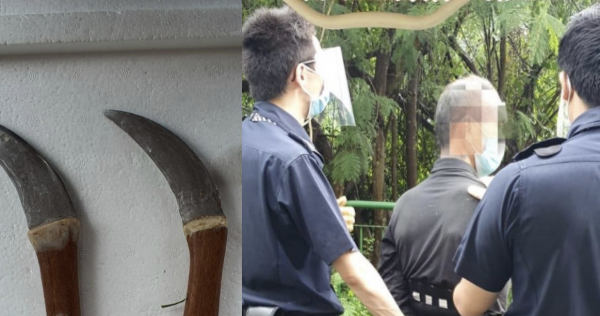
The man turned aggressive during the engagement and attacked the NParks officer with a sharp instrument, said the police in a statement on Monday (May 4). The man then fled the scene on his bicycle before the police arrived. His identity was established and he was arrested within 1.5 hours of the incident.
The victim sustained serious injuries to his chest, arm, and hand and was conscious when conveyed to Changi General Hospital.
SINGAPORE: A 61-year-old man was arrested for attempted murder on Monday (May 4) after he allegedly stabbed a National Parks Board (NParks) officer who was installing SafeEntry signs along Sungei Serangoon Park Connector.
The police said they received a call for assistance from an NParks officer at about 12.05pm on Monday. The officer said that her colleague had been stabbed by a man along Sengkang East Drive.
According to the police, the attack happened after NParks officers saw the man cutting plants illegally at the park connector. He was not wearing a mask.
“During the engagement, the man turned aggressive and attacked the victim with a sharp instrument,” said the police in a news release.
The victim sustained serious injuries to his chest, arm and hand, said the police, adding that he was conscious when taken to Changi General Hospital.
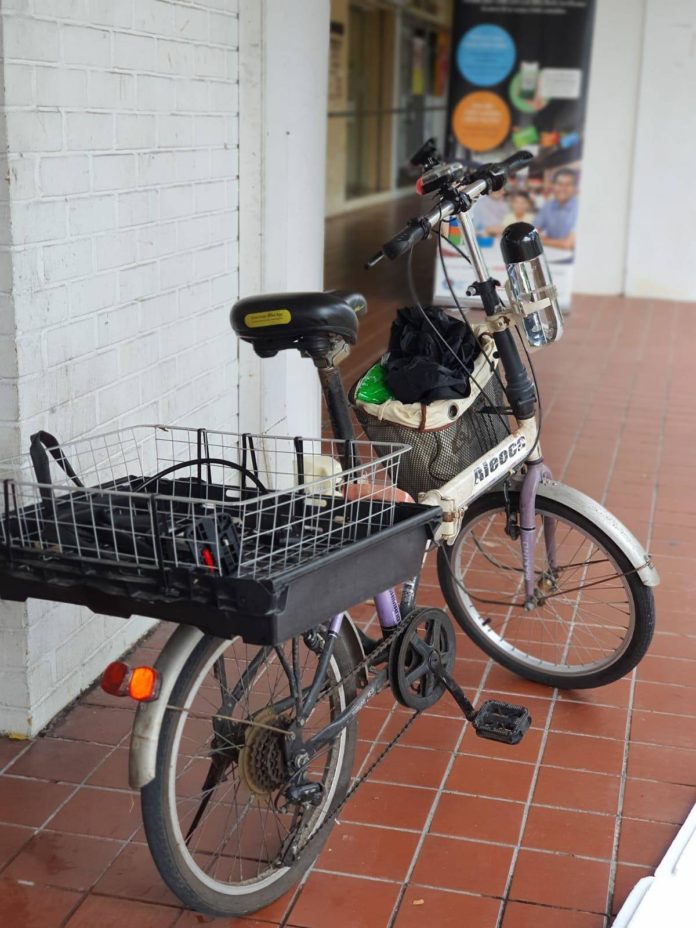
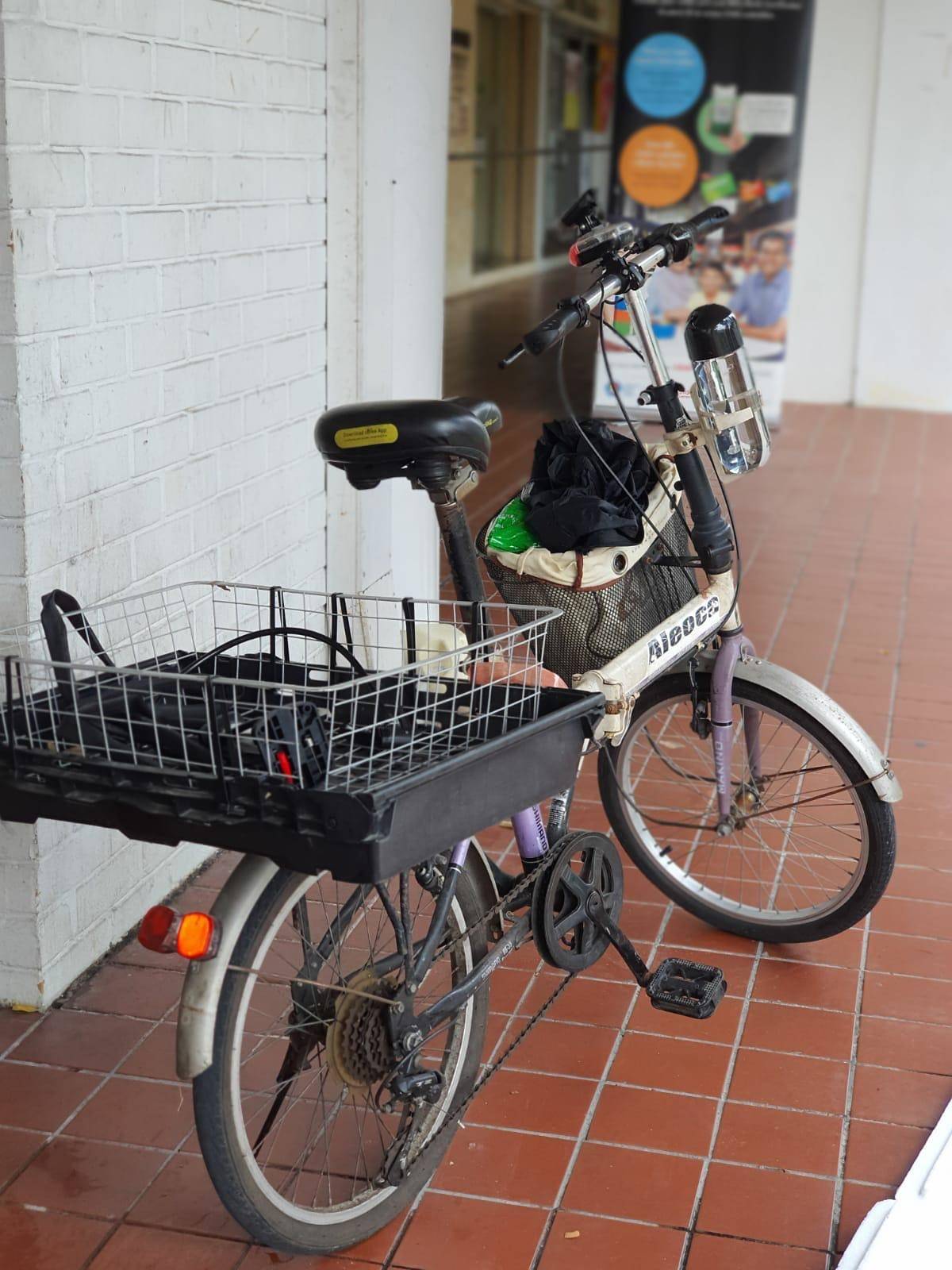
A bicycle belonging to the suspect who allegedly stabbed an NParks officer on May 4, 2020. (Photo: Singapore Police Force)
The man fled the scene on his bicycle before the police arrived, and was arrested within one-and-a-half hours.
Photographs released by the authorities showed several sharp tools that were found on him, including a fruit peeler, pliers and a knife blade.
The man will also be investigated for possession of offensive weapons in public places and breach of safe distancing measures.
He will be remanded for further investigations and the police will seek a court order to send him for psychiatric assessment.
The Ministry of the Environment and Water Resources (MEWR) and NParks said in a joint media release that they are “appalled and deeply concerned by the vicious attack”.
“We have zero tolerance towards such acts … Any form of abuse or attack on public officers constitutes a serious offence, and offenders will be prosecuted in court.”
They also called on members of the public to cooperate when approached by MEWR or NParks officers, and to abide strictly by safe distancing measures.
“Our thoughts are with the officer and his family, and we are extending our support. We wish him a complete and speedy recovery,” they said.
Minister for the Environment and Water Resources Masagos Zulkifli said that the NParks officer is currently warded for surgery.
“My thoughts are with the officer and his family. I wish him a speedy recovery,” he added.
He said that such violence and complete disregard for safe distancing was “absolutely unacceptable”.
“Since the start of the circuit breaker, our officers have worked tirelessly and made personal sacrifices to keep Singapore safe. Many of them have taken on safe distancing duties, over and above their regular, ongoing work.
“They are unarmed and performing a national duty to keep us safe from community spread of COVID-19. They deserve to be treated with respect. Their families are waiting for them to return home safely each day. It is our collective responsibility to look out for them, just as they are looking out for us,” he added.
The suspect will be charged in court for attempted murder on Wednesday. If found guilty, he faces up to 15 years’ jail and a fine. If hurt is caused to any person by such an act, he faces life imprisonment.
“This is an egregious act of violence inflicted on a public servant who was performing his duties. The man will be prosecuted to the fullest extent of the law,” the police said.
Like all good stories, this one has something to do with time: Two hours to be exact.
On March 19, Mrs Natasha Ling and her husband Pele boarded a night flight from London to Singapore, just two hours before she entered her 36th week of pregnancy when she would have been barred from flying.
“If we had missed that flight, we would now be stuck in London, and I’m not sure what would have happened,” says the 29-year-old Singaporean speech and language therapist.
As it turns out, a lot happened to her and her British church worker husband here. Barely three days after their arrival, both were diagnosed with Covid-19.
A month of fears, anxiety and uncertainty followed before their son Boaz arrived on April 26, quite possibly the first baby born in Singapore to parents who had Covid-19.
“The infectious disease doctors told us he’s a super baby, a super Singaporean baby,” says Mr Ling, 28.
SINGAPORE: Safe distancing measures on public transport will “largely remain in place” even after the COVID-19 “circuit breaker” measures are lifted and commuter traffic returns.
In a written answer on Monday (May 4), Transport Minister Khaw Boon Wan told Parliament that all commuters will still have to wear masks when using public transport after the end of the circuit breaker on Jun 1.
“Mask-wearing is also the practice in mass rapid transit systems in Taipei, Hong Kong and Seoul,” said Mr Khaw in response to a question from MP for Tampines GRC Cheng Li Hui.
Mr Khaw acknowledged that it will be “very challenging” to implement safe distancing measures on public transport once the circuit breaker period ends, especially during peak periods.
“It will therefore be very important for companies to continue to implement staggered working hours and maintain their telecommuting practices as much as possible,” Mr Khaw said.
“Commuters can also play their part to minimise discretionary travel and to travel during off-peak hours when the trains and buses are less crowded.”
Safe distancing stickers, seen on MRT seats on Apr 9, 2020. (Photo: CNA Reader)
He noted that all trains, buses, train stations, bus interchanges and bus stops have been marked with safe distancing stickers, where practical, during the circuit breaker period.
These stickers mark out seats that should be avoided and where commuters should stand on public transport.
Public transport operators’ transport ambassadors and bus captains are also working with enforcement officers from the Land Transport Authority (LTA) to help commuters maintain a safe distance from one another.
“Errant commuters may be refused entry or asked to leave. Offenders will face fines or prosecution in court,” Mr Khaw said.
A trivial kerfuffle erupted over Twitter over the long weekend, with much ado over nothing: the quality of videos put out by Singapore’s most lucrative YouTuber, Tan Jianhao.
But even Titans bleed, and all it took to puncture Tan’s exterior was a tweet that didn’t even mention his name nor his company. At most, it was a generic criticism of the local YouTuber landscape.
are singaporean youtubers not tired of the same secondary school content from 2013???????? damn