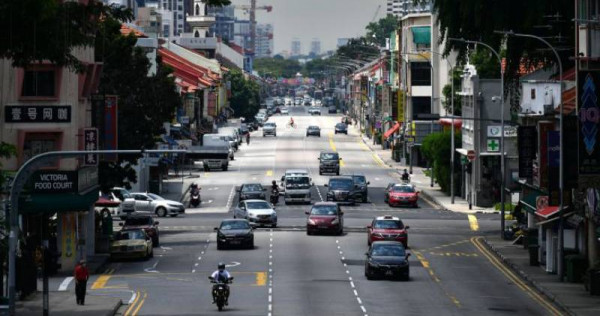
A Singaporean woman who was recorded not wearing a mask at Shunfu Market and engaging passers-by in a heated argument has been charged in court.
Paramjeet Kaur, 40, was slapped with five charges, including four counts under the Covid-19 (Temporary Measures) Act and one count of being a public nuisance.
Kaur is represented by lawyer Satwant Singh, who told the court that he wanted to advise her on the law, reported The Straits Times.
Appearing in court via video link with a mask across her chin, Kaur said: “I am a living woman and that is my only capacity in this matter. I extend my sovereign immunity to Satwant and I asked Satwant to represent me.”
On the first day of the circuit breaker period (April 7), she insisted on eating glutinous rice at a hawker centre, reports Chinese daily Lianhe Zaobao.
In the midst of a modern, very deadly pandemic, it is those who are living on the fringes of society that are hit harder than the rest. First-world problems involve how we’re trying to beat cabin fever during the circuit breaker, but a portion of the population might not even have homes in the first place.
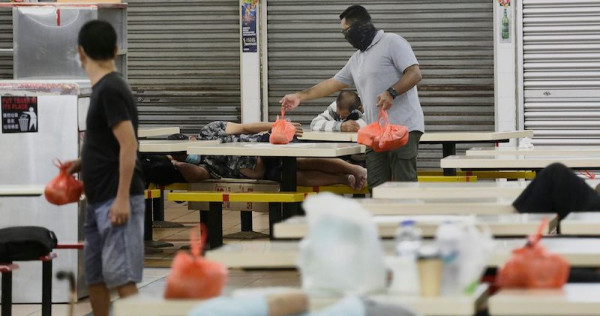
But thanks to people like Ruzaini Syazwan Amat Sanusi, there is hope yet for the underprivileged during the coronavirus outbreak. Under an initiative he dubs #UmbrellaInitiativeSG, the 29-year-old nursing student is spending his nights riding around the country to distribute food to the less fortunate.
Others are doing their part in the fight against the coronavirus by staying home during the circuit breaker and keeping their spirits up by trying out viral challenges on social media.
While many flight attendants have attempted the #dontrushchallenge (which mostly involves them taking their time to get ready for ‘work‘) in good fun, one Scoot stewardess found herself bombarded with angry comments for doing so.
An 18-second-long clip posted on Facebook page All Singapore Stuff on May 5 afternoon, started off with the flight attendant stepping out of an HDB flat with her luggage in tow.
Then, she stopped at the gate and rummaged through a bag, fishing out two passports — one from Singapore, one from Malaysia — before tossing the Singapore passport away.
SINGAPORE: A 61-year-old man was charged with attempted murder on Wednesday (May 6) after he stabbed a National Parks Board (NParks) officer at the Sungei Serangoon Park Connector earlier in the week.
During the virtual court hearing, District Judge Clement Tan noted Ahirrudin Al-Had Haji Arrifin’s medical history at the Institute of Mental Health.
Ahirrudin, who appeared via video link wearing a red shirt and sitting on a wheelchair, will be remanded at Complex Medical Centre in Changi Prison for three weeks.
The case will be mentioned next on May 27.
The police said they received a call for assistance at about 12.05pm on Monday from an NParks officer who said her colleague had been stabbed along Sengkang East Drive.
The attack happened after NParks officers saw the man illegally cutting plants at the park connector, according to the police. He was also not wearing a mask.
When approached and questioned by the NParks officers, the man turned aggressive and allegedly attacked the victim with a sharp instrument before quickly leaving the scene, the authorities said.
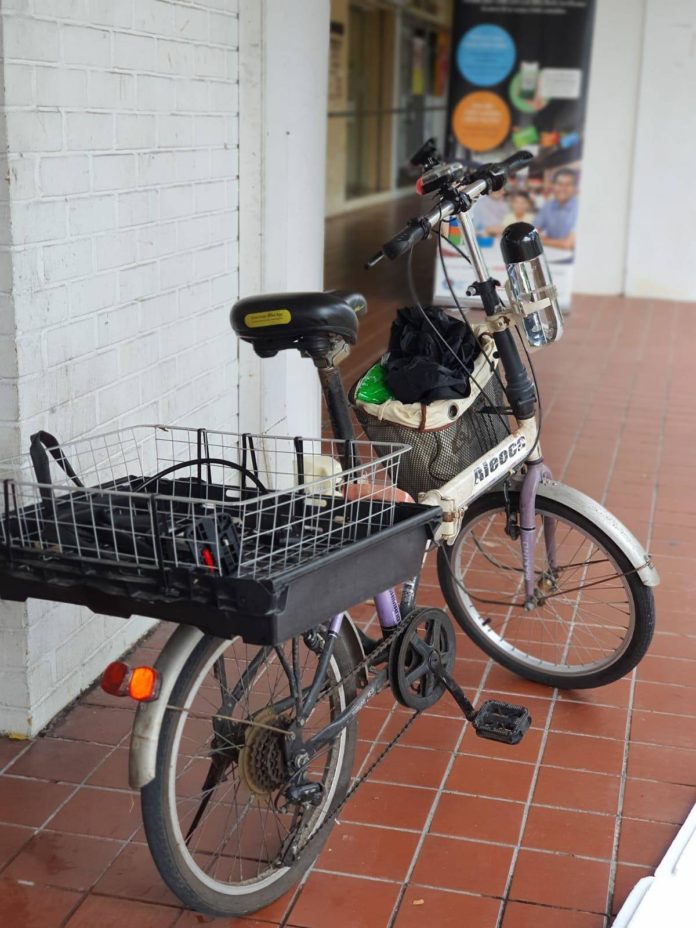
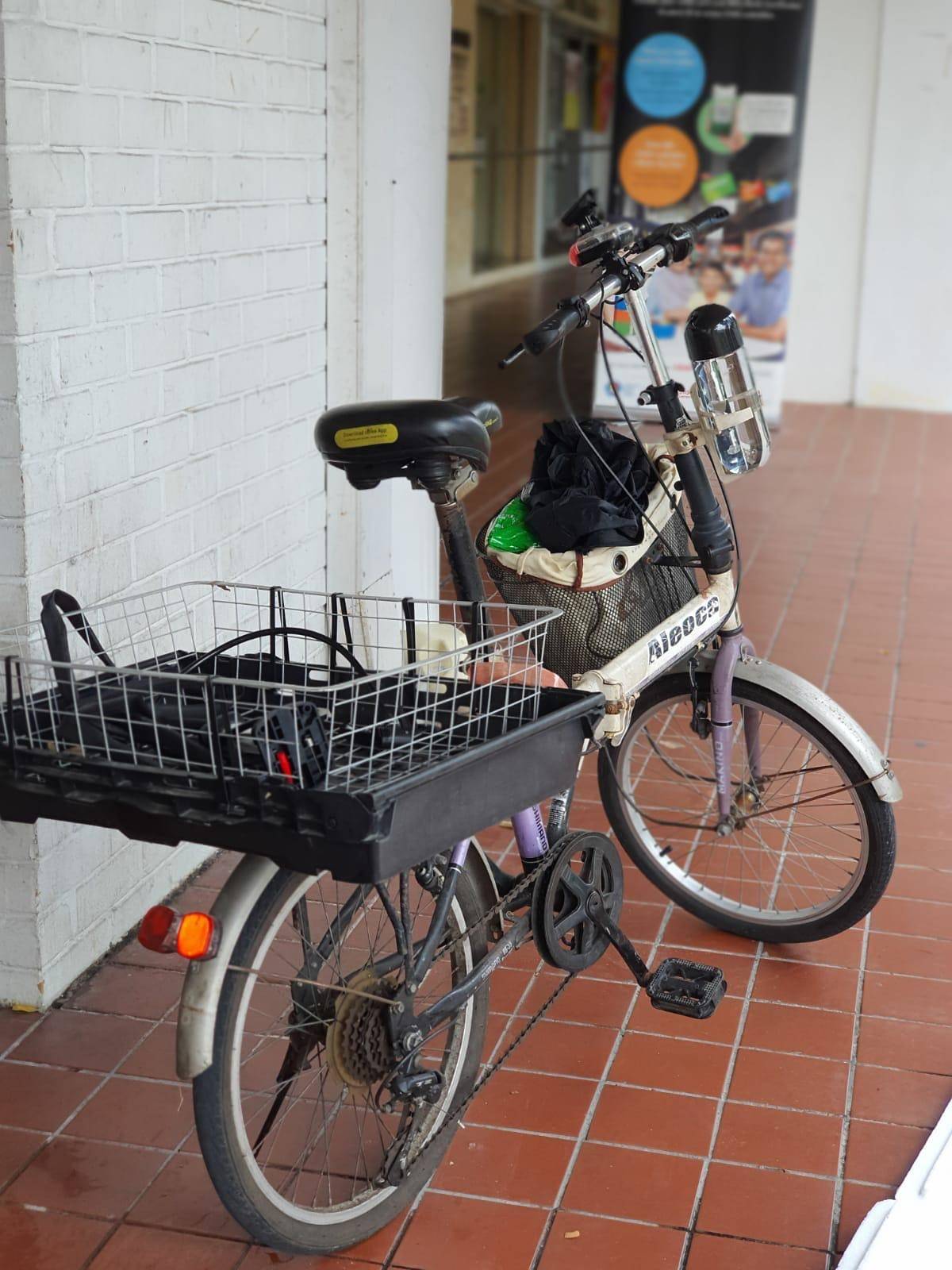
A bicycle belonging to the suspect who allegedly stabbed an NParks officer on May 4, 2020. (Photo: Singapore Police Force)
The man fled the scene on his bicycle before the police arrived and was arrested within one-and-a-half hours. Photographs released by the authorities showed several sharp tools that were found on him, including a fruit peeler, pliers and a knife blade.
Ahirrudin will also be investigated for possession of offensive weapons in public places and breach of safe distancing measures.
If convicted of attempted murder, the punishment is up to 15 years in jail and a fine, or life imprisonment if hurt is caused to any person by such an act.
The victim sustained serious injuries to his chest, arm and hand, said the police, adding that he was conscious when taken to Changi General Hospital. He is now in stable condition, after undergoing surgery.
According to Second Minister for National Development Desmond Lee in a Facebook post on Monday, around 1,000 NParks officers have been deployed to reinforce safe distancing measures in parks, gardens and nature reserves.
SINGAPORE: Authorities have warned that the use of COVID-19 test kits illegally marketed for home use could lead to the spread of the disease.
The Health Sciences Authority (HSA) is clamping down on such test kits and health products which make false claims related to the coronavirus.
Since February, more than 1,600 warning letters have been issued to sellers and companies, said HSA in a media release on Wednesday (May 6).
The agency has also removed more than 1,700 product listings. Of these, at least 40 were of COVID-19 test kits, offered for sale on e-commerce platforms.
HSA warned that such test kits have “inherent design and technology limitations” which could lead to “incorrect or misleading” results.
“Consumers should be aware that there are no HSA approved home-based test kits; no health supplements or herbal remedies, and no consumer devices approved for COVID-19 diagnosis or treatment,” said Associate Professor Chan Cheng Leng, group director of the health products regulation group, HSA.
“Not only do consumers waste money on these unproven remedies, they may put themselves and people around them at unnecessary risk due to the false sense of security.”
FRAUDULENT CLAIMS
The illegal test kits that HSA found on e-commerce platforms ranged in price from S$78 to S$290. Such listings made fraudulent claims like:
“positive results may be visible (in) as soon as 2 minutes”
“95 per cent accuracy and results within 10 minutes”
“diagnose COVID-19 within 10 minutes”
A COVID-19 test kit illegally marketed for home use. (Photo: HSA)
HSA investigations revealed that none of the sellers were found to have any stocks and that the sellers would only import them from overseas after receiving orders.
“NO SCIENTIFIC EVIDENCE”
Health products falsely claiming to fight against or prevent COVID-19 have also been targeted by HSA.
To date, more than 100 online listings have been detected and removed. Companies, which include Chinese medical halls, health supplement retailers and multi-level marketing companies, have also been warned.
In one example, HSA said a TCM clinic sold herbal fragrance pouches touted to have protective properties against COVID-19.
HSA also highlighted health supplements such as red ginseng and Hawaiian spirulina sold online that were promoted as being “good for coronavirus” – a claim which the agency said lacked scientific evidence.
A product making fraudulent COVID-19 related claims. (Photo: HSA)
“This is not only falsely misleading, it is ethically wrong,” said Dr Leong Hoe Nam, an infectious disease specialist.
“The public should be wary of these gimmicks. The more impossible the claims are, the more likely it is a dud. Don’t fall prey, don’t be a victim.”
More than 650 warning letters have also been issued to sellers and companies over hand and body sanitisers. The sellers were found to have advertised falsely claims such as “protects against coronavirus”, “kill viruses including coronavirus” and “stops coronavirus”.
Hand and body sanitisers making misleading COVID-19 related claims. (Photo: HSA)
Sellers who falsely advertise products as preventing or treating COVID-19 face up to 12 months’ jail and a fine of up to S$20,000.
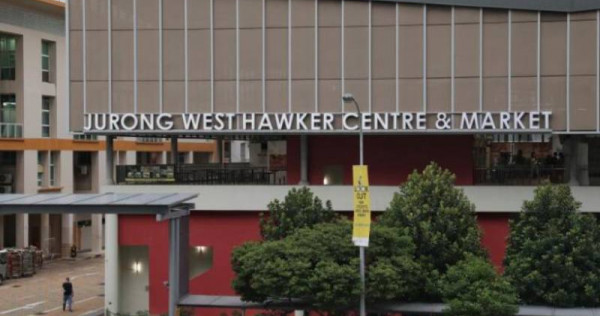
SINGAPORE – The operator of the beleaguered Jurong West Hawker Centre, which was previously reported to have just half its stalls open for business, is not renewing its contract expiring in August, citing lacklustre results.
Hawker Management, a subsidiary of Koufu Group, said in a statement on Tuesday (May 5) that the hawker centre’s results have not met its “ideal performance standards”, and that it will not stay on after its three-year contract expires on Aug 6.
“Koufu, as a public listed company, has an obligation to safeguard our shareholders’ interests, therefore we have made the difficult decision to exit upon expiry of the contract in Aug 2020 to focus efforts on other aspects of our business,” said the operator.
Hawker Management added that it had been set up to manage Jurong West Hawker Centre as part of Koufu’s corporate social responsibility efforts. With the contract’s end, Koufu will look to carry out such efforts in other ways, it said.
SINGAPORE – Private car owners will have to continue paying for Certificates of Entitlement (COEs) and their road tax plus vehicle licensing fees during the circuit breaker period, said Transport Minister Khaw Boon Wan on Tuesday (May 5),
The reason is they can still drive on the road for essential work or personal activities like buying groceries, he pointed out.
He said in a written parliamentary reply to Nominated MP Walter Theseira that his ministry has received requests to extend the validity period of COE, road tax and other relevant motor vehicle licences.
Associate Professor Theseira had raised the issue too when he asked whether such relief could be given to mitigate motor vehicle depreciation costs in view of the impact of Covid-19 measures on motor vehicle usage.
But, Mr Khaw noted, the Land Transport Authority (LTA) has already made adjustments to land transport services and charges.
He pointed to the LTA extending the inspection deadline for private car owners who were originally scheduled to have their cars inspected during the circuit breaker period.
A woman who made headlines after claiming to be a “sovereign” when she refused to wear a mask in public was apparently outed yesterday morning.
Her name, photographs and personal details were revealed on social media, prompting a string of racist and xenophobic comments against her.
But in identifying her as the chief executive officer of a tech company, the doxxers had targeted an innocent party who was not involved in the incident at Shunfu Mart on Sunday.
The New Paper is not naming the CEO to spare her from further embarrassment.
Hours later, another woman, Paramjeet Kaur, a 40-year-old physiotherapist, was charged in court with breaching safe distancing regulations and being a public nuisance.
A charge of Kaur assaulting another woman who told her to put on a mask was dropped.
Videos of the incident on Sunday show Kaur refusing to put on a mask while claiming she is a “sovereign” who is not subject to the laws here.
Soon after her arrest on Monday night, Law and Home Affairs Minister K. Shanmugam said that her claims were odd, and he had checked what she might have meant by referring to herself as a “sovereign”.
SINGAPORE: Suicide rates in Singapore were reported to be 8.36 deaths per 100,000 Singapore residents last year.
According to the Samaritans of Singapore (SOS), this is the leading cause of death for those aged between 10 to 29. This is a 10 per cent increase from 2017.
There is a high chance that the figures will continue to rise.
While the effects of COVID-19 on the collective mental health have yet to be studied systematically, psychosocial repercussions of the pandemic are already felt worldwide.
The US saw a 338 per cent increase in call volume to the Disaster Distress Helpline, a sub-network of America’s National Suicide Prevention Lifeline, in March compared to the previous month.
Researchers Lu Dong and Jennifer Bouey from the RAND Corporation found that China has reported “a heightened public mental health crisis” sparked by the outbreak despite emergency psychological crisis interventions proposed by the National Health Commission of China.
In Singapore, organisations such as SOS, the Singapore Association for Mental Health (SAMH) and Fei Yue Community Services have seen spikes in the number of people calling in the last month seeking assistance for distress.
The SOS reported that it received 3,826 calls in March, 23 per cent more than it received during the same month last year.
GAPS IN OUR MENTAL HEALTHCARE SYSTEM
And yet our response to mental health remains inadequate.
Assistant director of nursing Doreen Heng at Alexandra Hospital (back facing camera) incorporates mental strength training into her ICU crash course. (Photo: Alexandra Hospital)
Gaps in our mental healthcare system were brought up even before COVID-19 led to the circuit breaker period. Accessibility, affordability and inclusiveness of professional services were particularly highlighted during the Parliamentary debate on the Ministry of Health’s budget in March.
We also face a lack of trained professionals. The national average of 4.4 psychiatrists and 8.3 psychologists for every 100,000 people in Singapore is lower than the 15 psychiatrists per 100,000 recorded by most OECD countries.
Mental health support offered at the national level did not seem to keep up in tandem with the increasing numbers of those seeking help.
Singapore’s total expenditure on mental health made up only 3 per cent of the Ministry of Health’s operating expenditure for 2017, according to latest data shared by the Health Minister in Parliament in 2019.
The insufficient level of resources ploughed into mental health in the past could come back to haunt us.
Neither the Resilience Budget nor the Solidarity Budget allocated any resources towards mental healthcare support or research.
It also took three full weeks after the circuit breaker first started to declare allied health services – including private counselling and social work – as essential services, thus allowing them to remain open.
Even if slightly late, this move shows that the Government recognises the impact this pandemic could have on mental health, as does its establishment of the National Care Hotline. More than 6,600 people have already called the hotline within two weeks of its launch on Apr 10.
According to media reports, there were also a few callers with suicidal tendencies, with police dispatched to tend to two cases.
But the same shortage of resources can be seen with how the 24-hour hotline is currently run, with about 500 volunteers supported by a rostered pool of about 25 psychologists, counsellors, social workers and public officers ready to attend to those who may need mental health assistance.
Such a small group of trained professionals may not be able to keep up with an increasing volume of people seeking mental health assistance.
NEED FOR A COLLECTIVE RESPONSE
Perhaps, rather than point out the shortcomings of our system, we need to develop an approach where all of us can play a part in protecting the mental health of our society.
As an editor of a book consolidating perspectives from across the ground – from academics, organisational leaders and practising professionals, to individuals with lived experiences and supporting figures – I have found strong commonality in the belief that addressing mental health should go beyond the confines of the social services and government.
We have to take steps to give mental health as much priority as physical health for ourselves and those around us.
This can help shift mental healthcare into a more preventive approach, thus alleviating some of the burden on the thin level of resources we can access.
Rethinking the role of mental health in our lives will enable us to work hand-in-hand with those on the policy front to forge ways to create and maintain mental health support – similar to a community-based care for medical treatment recommended by medical journal The Lancet, with “psychosocial treatments such as talking therapies being offered not just by medical professionals but also by community health workers, peers, teachers and the clergy”.
Everyone has a stake in the state of our collective mental health.
NORMALISING MENTAL HEALTH CONVERSATIONS
For this to happen, mental health issues have to first be more normalised. For starters, we need to openly talk about the challenges we may be currently facing.
One in seven people in Singapore will be experiencing a mental health condition in their lifetimes. File photo. (Photo: TODAY/Nuria Ling)
It is a traumatic period with a protracted disruption to life for every individual. Social isolation offers no relief from uncertainty, fear and anxiety, and can in fact be a contributing factor. For some, it is a strain on family ties and relationships.
For those in abusive domestic conditions, it can be a matter of life and death. For those susceptible to mental health issues, COVID-19 can have serious effects on their health and recovery.
It is not the time to downplay feelings of fear and anxiety. It is the time to ensure you have a support system and find coping mechanisms. It is the time to reach out to others without shame when you find yourself unable to cope.
It is also not the time to call out on anyone who is experiencing mental distress or conditions in any form. Be careful about your language when speaking to others. It is easy to project personal distress upon others unconsciously, even if it is not your intention.
That is easier said than done. Despite national campaigns to create awareness, the stigma against mental health is still a large hindrance to tackling the issue.
Various studies conducted in Singapore capture a pervasive negative attitude towards mental health conditions.
One such survey by the National Council of Social Service (NCSS) in 2018 found that six in 10 people believe such conditions are caused by a lack of self-discipline and will-power, while up to 50 per cent of respondents would not give people with mental health conditions any responsibility.
There is also evidence of the impact stigma has on seeking treatment and recovery.
Statistics show a treatment gap of up to nine years for those experiencing mood disorders while 78.4 per cent choose not to even seek help for what they experience.
Reasons vary from the fear of being judged and being seen as weak, to losing autonomy and control over their lives.
Unlike physical ailments, mental health conditions are not visible. What is visible – the behavioural manifestations of disorders leaning towards severity – tend to break established social norms.
Those who do not know what is happening may then internalise the behaviour as threats.
Mental health conditions are complex, individualistic and heterogeneous in nature.
They also don’t have to be permanent.
There are actions we can take to support others. We can proactively question labels. We can have more discourse around mental health issues. We can learn to listen without putting forth our own judgements or offer solutions.
We can also remember that we are all susceptible to it, if we do not take steps towards mental resilience.
There is an urgency to start. We may not feel the strain on our already thinning mental health resources until it’s too late.
While the mental toll of COVID-19 has yet to be recorded or tracked, there is enough evidence of the profound and pervasive impact all around the world.
That includes us. If we do not step up now to take mental health seriously, we will be looking at another health crisis sooner than we expect.
Download our app or subscribe to our Telegram channel for the latest updates on the coronavirus outbreak: https://cna.asia/telegram
Xiangyun Lim is the editor of White, a book that brings together perspectives from organisational leaders, academics, practising professionals and individuals for the first time in Singapore (available August 2020). She is the founder of Klin Studio, a publisher of mental health resources.
SINGAPORE: More than a third of GCE coursework subjects will have their assessment tasks reduced, in light of the shift to full home-based learning and adjustments to school holidays amid the COVID-19 outbreak.
The Singapore Examinations and Assessment Board (SEAB) said reduction will now apply to 12 out of 34 subjects with a coursework component, including N(A)-Level Food & Nutrition, O-Level Design and Technology and A-Level H2 Theatre Studies and Drama.
Previously, only two subjects had their coursework requirements adjusted, namely N(T)-Level Music and O-Level Exercise and Sports Science.
SEAB said the move aims to “alleviate stress on students and teachers … without compromising the validity of the assessment”.
According to the exam board, the recent “circuit breaker” measures – such as bringing forward the mid-year school break – have implications on coursework with deadlines originally due in late July or early August.
Teachers will also be focusing on preparing students for preliminary exams when school reopens, SEAB said, adding that it considered if students would need access to special facilities or tools, or if they had to perform in groups, before making its decision.
The 12 GCE coursework subjects affected are:
N(T)-Level Music Syllabus T
N(T)-Level Food Studies
N(T)-Level Design & Technology (Revised)
N(A)-Level Food & Nutrition
N(A)-Level Design & Technology (Revised)
N(A)-Level Design & Technology (Legacy)
O-Level Food & Nutrition
O-Level Design & Technology (Revised)
O-Level Design & Technology (Legacy)
O-Level Exercise & Sports Science
O-Level Drama
A-Level H2 Theatre Studies & Drama
TEACHERS AND STUDENTS RELIEVED
St Margaret’s Secondary School has 12 students taking O-Level Drama this year. With the adjustments, the students will need to perform an individual piece, instead of an individual piece and a group piece.
“My students have actually finished writing their script. It’s fine, as I explained to them, the learning is not lost,” teacher Kwang Wan Yi said.
“Whatever they have created in their devised piece still helps to develop their analytical skills,” added Ms Kwang.
“The ideas of stage design, character motivation and vocal quality of characters can still be applied to other components.”
She added that she was “relieved” as the adjustments would give her students more time to focus on the written examinations, which will include an extract from a play that will be issued to them.
But she noted that her students are disappointed because they were looking forward to performing their group-devised piece.
Secondary 4 student Kwan Jia Xin said: “It was supposed to be our last piece before leaving secondary school and possibly the last time many of us would be performing.
“It saddens me that we could not perform one last time together.”
But she added that they would not have been able to put up as good a performance since they were spending a long time away from school, which has hindered their progress.
“We need to be physically present in the same place to rehearse our piece and we are unable to do that during this home-based learning period.”
Harshen Koban is one of about 360 students taking O-Level Exercise and Sports Science this year. (Photo: Tan Si Hui)
Victoria School student Harshen Koban, who is taking his O-Level Exercise and Sports Science examinations this year, needs access to facilities such as his school gym. This is so he can keep in shape for his chosen activities – cross country and hockey.
With the circuit breaker in place, he is doing simple body weight exercises at home or going for runs around the neighbourhood, but he is worried his grades will be affected.
“It may not exactly be the same environment as what we are assessed on,” said Harshen.
Harshen did simple body weight exercises at home to maintain his fitness during the circuit breaker period. (Photo: Tan Si Hui)
The SEAB adjustments mean he can now focus on one sport, with assessment tasks also being reduced.
“It’s given us more time to focus on training for that particular sport,” said Harshen. “If we have more time to train, then I think it will be an advantage for everyone.”
INITIAL CONFUSION ABOUT WEIGHTAGE
Harshen was he was “confused” about the weightage of the various components after the adjustments were announced. Among the coursework components, the two sports activities were supposed to account for 40 per cent of his grade, while a development log was to count for 20 per cent.
SEAB said that these will be “scaled appropriately”. For O-Level Exercise and Sports Science, this means the remaining practical activity will now have a weightage of 40 per cent, while the weightage for the development log remains unchanged.
His teacher Sheikha Fadzleen said one of the biggest challenges during this period is updating the development log.
Students normally have to log an eight-week to 10-week training plan, but this came to a halt during the home-based learning period as it required strict teacher supervision.
They have been given a two-week extension to their submission deadline. Mdm Sheikha said: “Even with the two weeks’ extension, to be honest, it will be really quite a rush as well.
“So our focus will be to complete the development log and at the same time ensure that the students are fairly assessed.”
She said the school is hoping to give students about three weeks to train for their sport before assessing them, since competitions such as the National School Games have been suspended.
The exam board will consider timings or footage recorded as far back as last year. (Photo: Tan Si Hui)
“It’s not about doing that 100m just one time, it’s about training for it, and then for us to be able to at least give them two to three times of assessment,” said Mdm Sheikha.
“We want to make sure that they are assessed when they are at their best physical state, because we don’t want to disadvantage them at all.”
SEAB is also allowing special provisions. The exam board will consider timings or footage recorded as far back as last year, which the school is helping students to collate.