Home Blog Page 341

Makers community comes together to 3D-print ‘ear savers’ for COVID-19 healthcare workers

SINGAPORE: Kendrick Tay had just completed his masters and was due to apply to be an airforce pilot. But his plans had to be put on hold due to the COVID-19 pandemic. 

“You know, eat already nothing to do,” the 27-year-old joked in Chinese. 

Feeling restless, the SUTD graduate was scrolling Facebook when he noticed several schoolmates 3-D printing ear guards – a plastic tension release band worn at the back of the head, designed to hold the elastic straps of surgical masks and bring relief from discomfort around the ears. 

“They were printing them in their own capacity and sending them to friends who were working in healthcare,” he said. “I thought that’s a useful product because healthcare workers who wear surgical masks the entire day will face ear abrasion, especially if the strap is too tight.”

ear guards 4

How a ear guard can be worn. (Photo: SG Makers Against COVID-19) 

However, Mr Tay felt that more could be done if the printing was done in a “coordinated fashion”. He saw this as an opportunity to bring the ‘makers’ of Singapore together – those who are interested in making their own things and have the tools to do so. 

“We are equipped with the skills and equipment, but sometimes it may not be a habit to extend help to others. But this can be a way to get the ball rolling, for this community to give back.” 

About two weeks ago, Mr Tay gathered three other SUTD alumni and started a Facebook group called SG Makers Against COVID-19. They posted in other community groups calling for makers who own 3D printers at home and would like to volunteer to produce ear guards. 

As of last weekend, the group had grown to about 100 makers – extending beyond SUTD students and graduates – ready to provide their hands and tools for service. Its motto? To produce items and solutions that will help the fight against COVID-19.

IT TAKES A VILLAGE

The process of making a ‘ear saver’ – as the group now calls it – is relatively simple. First, feed a digital file to the printer and it will melt plastic filament, which is then extruded from cartridges to form layers and layers of plastic, forming the product.

It takes about two hours to print five to eight pieces, said Mr Tay. The only challenge the group faced initially was funding materials and transporting them to the makers.

With the makers contributing their printers and time, Ms Lorraine Teo, the assistant director for Industry Development & Collaboration at SUTD, joined the group to help with procurement of filament. It was the willingness of the makers community and the kindness of others that gave her confidence in the project, said Ms Teo. 

ear guards 2

It takes about two hours to print five to eight pieces of ‘ear savers’. (Photo: SG Makers Against COVID-19) 

“One roll of filament would typically cost about S$38, but when the supplier I spoke to knew what we were doing, he reduced the price to S$19,” said Ms Teo.

The supplier, Mr Shafiq Ali, said he was already 3D printing the ear guards before the group was formed. He gave them out to his friends who are working as nurses and medical social workers.

“When the group started, I thought I could do more – I can give them the material at the best possible price, so that we can get more guards out there,” he said. The 32-year-old runs a 3D printing company, Meka 3D Printing.

Even though he saw a “50 per cent drop of business” in this circuit breaker period, Mr Shafiq felt it was important to support the project.

“The makers have always supported us in our business and what we do and a lot of these guys are our friends. We didn’t really do anything, we just provided what we could.”

Another private hire driver who learned about the project also offered to transport materials from the supplier to the makers for free. 

“I was really very touched, especially since private hire drivers are already badly affected right now,” said Ms Teo, who was prepared to pay all material and transport costs out of her own pocket. 

“It started small but everyone just kept giving.”

Meanwhile, the makers have been focusing on perfecting the design of the ear guard. Their starting point was a design that has been approved by The National Institutes of Health (NIH) of U.S. Department of Health and Human Services, but the group received feedback that it is “too large”. 

“You end up having to cut the excess off, if not it will stick out at the sides of your head,” said Mr Tay. “40 per cent of the material is wasted so we remixed the design to create a Singapore version that is smaller and uses less material.”

ear guards 3

The makers have been making modifications to the original design to ensure better fit for its users. (Photo: SG Makers Against COVID-19) 

The current design is 70 per cent of the original size, which allows printing to be quicker and more efficient.

COORDINATING WITH HOSPITALS 

While the volunteers are ready to start up their machines, the group is still reaching out to local hospitals to determine the demand for the ear guard. Ms Lee Siew Yian, who is in charge of liasing with hospitals, said that several of them have expressed interest and the group has already sent samples over. 

The samples are currently made by 25 makers but once the hospitals ascertain their need and official volume, more makers will get to work. “Everyone can’t wait to get started,” said Ms Lee. “People are really eager to do something.” 

For now, SingHealth has agreed to receive the donations after testing the samples and they are “very appreciative” of the efforts. 

“These innovative ear guards can help tighten face masks, and reduce some of the pain behind one’s ears that may arise from prolonged periods of wearing face masks,” said Mr Tan Jack Thian, Group Chief Operating Officer of SingHealth.

“As we continue in our fight against COVID-19, we hope that this will help make the long hours of mask-wearing more comfortable for our healthcare professionals.”

ear guards 4

A sample of the latest design and colours. (Photo: SG Makers Against COVID-19)

The makers will be sending about 10,000 ear guards to SingHealth for a start, but they hope to go beyond hospitals and healthcare workers. The group foresees other groups of Singaporeans, such as those in essential services, who would find the ‘ear savers’ useful as well.

“The hawker that I frequent was already wearing tissues behind his ears,” Ms Teo noticed.

The group launched a fundraiser, in hopes of raising S$35,000 to cover the materials and logistics of producing more ear guards.

“We are looking to raise $1 for each ear saver,” the group wrote on its giving.asia page. “We would like to give these ear savers to essential workers such as cleaners, drivers, delivery staff, cashiers, and food stall owners … we hope to make a total of 35,000 ear savers.” 

The makers will also continue to gather feedback to further improve the product.

Mr Tay said one feedback they got was that the ear guards are not compatible for N95 masks, as the straps go around the head.

“Especially when you are in full Personal Protective Equipment, you can’t adjust the straps of the mask after you put it on. It may shift over time and it gets uncomfortable,” he explained. “We hope to design a new product to fix that.”

“I’m not a frontline or essential worker but I think there’s so many things we can do to help them,” said Ms Lee. “We want this project to be by Singapore, for Singapore.”

BOOKMARK THIS: Our comprehensive coverage of the coronavirus outbreak and its developments

Download our app or subscribe to our Telegram channel for the latest updates on the coronavirus outbreak: https://cna.asia/telegram
Source link

Not pests, but sources of information: A mosquito analyst’s work in the fight against dengue

SINGAPORE: While most see mosquitoes as pests, 28-year-old Janet Ong views the tiny insects as sources of information.

“The two most common reactions I get when I tell people that I’m a mosquito analyst – the first is that they will think I’m an officer that goes around inspecting for mosquito breeding,” she told CNA. “The other is that they will ask: ‘Why do you analyse mosquitoes of all things? Mosquitos are so small, why is there a need to analyse them?’

“For my friends they will (eventually) understand when I have explained, but for the older generation, data analytics is quite foreign to them so they don’t really understand.”

A mosquito analyst for the National Environment Agency (NEA), Ms Ong plays an important part in Singapore’s fight against dengue. As part of a four member team, she makes use of information collected on the ground such as as the density of the local mosquito population. Such data is keyed into analytical models which helps to translate the information into insights which the NEA can act on.

These insights into dengue risk areas can provide early warnings of a potential outbreak and factors into the NEA’s updates to the public on the current dengue situation. Findings are also used to guide the NEA’s resource planning allocation, such as where it deploys dengue inspection officers. 

“We have to first identify what are the risk factors that could influence dengue, then these factors will form the building blocks for our model to predict the dengue case trend for the next few weeks,” explained Ms Ong, who works at NEA’s Environmental Health Institute. 

When it comes monitoring mosquito population, the NEA’s network of Gravitraps come in handy, said Ms Ong. Gravitraps are designed to attract and trap female Aedes mosquitoes looking for sites to lay their eggs. 

“These traps will be inspected bi-weekly and the mosquitoes trapped there will be collected and brought back to the lab for identification of species,” said Ms Ong. “With that we know, in this area, how many female aedes aegypti were caught. Then we can derive an index and compare it across the different areas so we can know which area has higher mosquito population than the others … It provides a signal to alert us of areas that are high risk.”

Weather data as well as human population statistics also factor into the NEA’s models.

A DESIRE TO MAKE A DIFFERENCE

A graduate from the National University of Singapore’s faculty of Science, Ms Ong has been in this role for close to five years.

“I majored in statistics so a career as an analyst has been my ideal choice because I wanted to utilise my knowledge and the analytical skills that I acquired to help derive insights from data, support decision making and make a difference to people’s lives,” she said. “This job is more interesting because it’s about dengue and not many people specialise in the field of dengue. 

READ: Which areas in Singapore have more Aedes mosquitoes? There’s an app for that

“So I wanted to try something new. This job could also make a positive difference because Singapore is endemic for dengue, we have dengue cases all year round.”

While Ms Ong does not have a fixed routine – her job is very much project based – she spends most of her time in the office crunching data and running statistical analysis. But she does not mind being desk-bound.

“I enjoy the steep learning curve that comes with my job, although its generally desk bound, I am constantly faced with new challenges that require me to explore and experiment with new analytical methods,” she said. 

Janet Ong 2

Ms Janet Ong is part of a team of four. (Photo: NEA)

“For example, there could be some hypothesis that we want to solve but we can’t solve it using our current analytical methods so we have to explore new ways of answering the hypothesis, to investigate whether the hypothesis is true or not.”

With dengue cases on the rise this year, Ms Ong’s work remains all the more important. 

More than 6,500 dengue cases reported so far this year, more than double that in the same period in 2019. The number of dengue cases in 2020 is projected to surpass 2019’s figure, unless “immediate measures” are taken, the NEA had said in a previous news release.

READ: Weekly dengue cases remain ‘high’; total deaths this year rise to 7: NEA

NEA added that weekly figures remain high – around 300 to 400 cases – and these continue to be a public health concern.

“With the imminent threat of another dengue outbreak this year, my output has helped NEA to facilitate appropriate and timely public health response on the ground,” said Ms Ong.

“Mosquitoes are important to me because its what I work on … They are important sources (of information) because they can help us to identify areas that are at high risk of dengue transmission.”

Source link

Commentary: Don’t stress over your kids’ education this circuit breaker. There are other ways they are learning

SINGAPORE: There is a lot of information currently available online showing the high expectations people are setting for themselves during the circuit breaker.

This can be anywhere from working longer hours because the clarity between home and work is fading and feeling that they should come through the circuit breaker with new skills or goals.

I have seen many instances where people are learning a new language, coding or pushing themselves to complete fitness challenges.

While these are great ways to improve oneself during the circuit breaker and keep occupied, they can also represent the high expectations we place on ourselves to remain productive.

Engaging in such activities allows us to feel that we are contributing somehow to our lives because we have been accustomed to the need to be constantly productive and gainfully engaged.

KEEPING KIDS ENGAGED

For parents, these expectations are heightened by the feeling that they ought to be able to support their children in their home-based learning (HBL) curriculum effortlessly.

READ: Commentary: Our approach to mental health needs to change. COVID-19 will force us to

Again, I have heard of parents feeling guilty around their difficulties in teaching their children while also engaging them through a relentless list of creative exercises – like art and craft or social media dance videos – that they receive from other well-meaning parents.

Even during the circuit breaker, the race to keep up is real.

Needless to say, this adds to the expectation that parents ought to be able to do it all. And if they can’t meet these expectations, it heightens their sense of anxiety.

For parents with school-going aged children or children who will be sitting for national examinations like the PSLE or GCE O-Levels, there is immense fear around their children’s preparedness.

Feeling the pressure, parents may also set these expectations for their children – ensuring that the kids not only keep up with their academic learning but also engage in new and creative undertakings.

PARENTS TAKE THE LEAD

The most important thing parents can do is recognise that they play a huge role in their children’s emotional and psychological well-being. Children model themselves after their parents.

Several theories in psychology, such as the social learning theory, explain that children pick up on the slightest changes in their parents’ mood and behaviour.

Some children internalise these changes and feel responsible for their parents’ well-being.

Parent child parenting (1)

(Photo: Pixabay/StockSnap)

As such, the first thing to do as a parent is to recognise times when you are placing pressure on yourself.

Consider what you’d like to achieve for yourself. What are the emotions underlying these pressures?

Apply these to your children. What are you hoping to achieve? What would you like them to gain?

STRUCTURE IS NOT ALWAYS NEEDED

Children respond well to structure and consistency. Set a routine and follow a schedule.

But children also naturally tap into their creative minds. They do not need structure or learning for that.

READ: Commentary: Four things to help bring the best out of us this circuit breaker period

Psychological approaches will tell you that it is important to allow your child the free time to play and be creative.

Playing is not a passive act. Children do not play idly. During play, children think, connect and create.

For example, by learning in school about gravity and motion, children think about those experiences, incorporate them into their play and then create new connections.

Play, in this view, is just as important as education and is also a form of education.

Play also teaches prosocial behaviour and allows the development of imagination and creativity.

ENCOURAGE PLAY, NOT DEVICES

It is also important to remove devices during this time. Children may be spending increasingly more time on devices during the circuit breaker as HBL gives them the flexibility of time to do so.

This leads to pent up frustrations and restlessness. Research has also shown that notifications on electronic devices can stimulate the release of dopamine, a brain chemical involved in cravings and desire, which can make the use of such devices addictive.

It is recommended that screen time is limited and used in moderation.

WIM elearning 6

Children may be spending increasingly more time on devices during the circuit breaker as home-based learning gives them the flexibility of time to do so.

Parents can consider creating a space to play at home; consider placing materials that tap into their kids’ creativity during this time.

You may consider leaving story books, blocks, pretend-play toys, puzzles and art supplies around so your child can explore their environment and tap into their own creativity.

Get creative together. Art can be so powerful because it makes you escape for a little bit as it puts you in that mindfulness zone.

READ: Commentary: Reading can be a useful escape from the circuit breaker in more ways than one

Artwork has been shown through years of research to promote emotional regulation as well as to facilitate the communication process. As such, it serves as an effective coping mechanism. Art can be accessed by children regardless of their age and verbal abilities.

It is also a great hack for parents looking for something to occupy their kids for a longer period of time, while giving kids a tangible outcome of their efforts to be proud of and to boost self-esteem.

They can actually reflect and say: ‘I did that and it looks good’.

LEARNING CAN COME IN MANY WAYS

As adults, if we are doing this ourselves, then we are showing good habits to our children.

Take time out of your busy, strange lives at the moment, by doing something like cooking, crochet or colouring with your children.

Doing such activities together will go a long way in teaching your children life skills and allowing you to bond as a family.

Above all, recognise that this is an unprecedented time. No one has ever had any experience to prepare for this. We are all learning and adjusting at the same time.

We are in a huge transition and it is extraordinarily difficult. Be kind to yourself and your children.

I can sense the anxiety parents might have about children falling behind, but just make sure they do a little bit, often, so that they are still engaged in the daily routine of learning. 

READ: Commentary: Parental warning – these May school holidays will be like no other

This goes back to the importance of routine and also the process of learning, which is made up of a series of building blocks – each at a time.

Know that learning is a journey – so there is no time lost. The expectation of continuous learning during times of uncertainty is hard to achieve.

A child needs to be physically and psychologically well to be ready to learn so focus on your children’s psychological wellbeing knowing that it is directly tied with yours.

When your children feel connected to you, they will feel safe and secure and ready to face the world. When their anxieties are at bay and they can make sense of their emotions, they will be ready to take on new challenges and be ready to learn.

Know that they will be able to bounce back, some requiring more help than others, when normalcy returns and when they have a perceived sense of control over their lives.

Until then, children of today are learning many lessons – the biggest lesson is that of resilience and that they can and will bounce back from life’s adversities. We just need to be kind to ourselves.

Dr Sanveen Kang is a Clinic Manager & Principal Clinical Psychologist at Psych Connect. She has more than 14 years of experience in treating mental and physical health issues for clients in hospitals, private practice, educational and corporate settings.

Source link

Commentary: This COVID-19 outbreak, corporate leaders should acknowledge they don’t have all the answers

SINGAPORE: “I’m a traditional banker. I don’t know tech. But when I landed the role, it turned out to be an enabler.” A leader who heads digital transformation at a major bank once said at a panel discussion I moderated.

Had I come from a tech background, I would have operated in the realm of the possible, she added.

“However, because I did not deep dive into the technology aspects, but looked at what customers wanted, I could focus on the desirable.”

Her embracing of an “I don’t know” mantra struck a chord. These were not words you expect to hear from a seasoned corporate leader.

This deeper lesson can be applied to many aspects of corporate life – that “I don’t know” can be powerful words that unleash focus, creativity and collaboration.

The trouble is acknowledging our limitations goes against the grain of everything we have been brought up to believe.

READ: Commentary: How to sabotage your child’s future – five dangerous notions about life, careers and education

READ: Commentary: No room for BS in the time of coronavirus

We were told to study hard to ace exams and avoid not knowing in school.

When we entered the working world, we were hired, rewarded, even promoted for our knowledge and what hints of competence knowledge provides.

Yet, when we take on the mantle of leadership, this quest to know everything can be counter-productive, even disempowering, in a world of constant change and rapid disruption, where adapting requires acknowledging we do not have ready-made solutions to fresh challenges.

Don’t get me wrong – by no means am I advocating for ignorance or excusing lazy leadership. Yet not enough has been said about what is lost when leaders try to be subject matter experts.

KNOWING CAN KILL INITIATIVE AND INNOVATION

Steve Jobs famously said: “It doesn’t make sense to hire smart people and tell them what to do; we hire smart people so they can tell us what to do.”

Yet micromanaging is everywhere. When we believe we know everything, we are unlikely to allow others to share their perspectives.

This not only prevents new innovative ideas from being surfaced, but also inhibits the professional growth of people we work with.

FILE PHOTO: Apple's Tim Cook speaks during a product launch event in Cupertino

Tim Cook, CEO of Apple, speaks as a tribute video to the late Apple co-founder Steve Jobs plays behind him during a product launch event in Cupertino, California, U.S. September 12, 2017. (Photo: REUTERS/Stephen Lam)

I once coached a leader who was so beholden to knowing everything she could even complete her staff’s sentences. Naturally, her team soon stopped speaking up and went along with whatever she said. Then she complained they were not proactive and did not offer any good suggestions.

KNOWING BREEDS CLOSED THINKING

Steve Yeggie, Head of Engineering, Ads and Monetisation at Grab once shared that the key to fast innovation is Grab’s “go to the ground” mantra.

Leaders don’t assume they know everything and so are expected to see how things work on the ground and ask questions. Grab also constantly encourages employees to get involved with Grab users, to understand customer needs amid new changes to pivot quickly, he said.

When we believe we know everything, we are less likely to ask questions. We tend to talk more and listen less.

While talking may clarify thinking, it is listening that helps us learn, discover more information and options, and allows us to cast a wider net of diverse solutions.

HAVING TO KNOW EVERYTHING GENERATES UNDUE STRESS

As an executive coach and transformation consultant, I work with many stressed-out leaders. When a digital-immigrant leader has to manage digital-native staff and steer the organisation in increasingly uncharted waters, they may inadvertently take on too much responsibility for the success of their teams instead of working in a smarter way to empower staff.

READ: Commentary: No ordinary disruption – a rising generation meets the coronavirus

LISTEN: Disruption 101: How COVID-19 is revolutionising work

As the world becomes increasingly digital, with new technologies and concepts like blockchain, artificial intelligence and cloud computing reshaping our world, leaders will lead people smarter than them, in roles that did not even exist just a few years ago.

Trying to cope with this and also aiming to be domain matter experts in a dozen different disciplines can be a futile quest.

For too long, we have bought into the narrative of the invincible, all-knowing leader. This style has its time and place, however, its vulnerabilities have been exposed as the world battles COVID-19 – the biggest disruption of this age.

There have been leaders who opted to project a veneer of absolute knowledge and control over the situation, like UK Prime Minister Boris Johnson and US President Donald Trump, who were later lambasted for bungled messaging, covering up the truth and delayed responses that cost thousands of lives as the outbreak worsened. 

In contrast, leaders like NZ Prime Minister Jacinda Ardern and Singapore Prime Minister Lee Hsien Loong, who were upfront about the unknowns, and their plans to mitigate the uncertainty, managed to restore public calm and confidence.

READ: Commentary: Jacinda Ardern, the leader our troubled times need

New Zealand Prime Minister Jacinda Ardern during a news conference in Christchurch

New Zealand Prime Minister Jacinda Ardern during a news conference prior to the anniversary of the mosque attacks that took place the prior year in Christchurch, New Zealand on March 13, 2020. (Photo: REUTERS/Martin Hunter)

READ: Commentary: Jacinda Ardern, the leader our troubled times need

Enlightened leadership is having the courage to acknowledge we do not know everything, and the clarity that we do not need to, if we have the right team with the expertise working on it and can count on them in critical areas.

PEOPLE MORE ENGAGED IF THEY CAN CONTRIBUTE

Facing the impact of COVID-19, payments firm Gravity’s CEO Dan Price faced a devastating decision in late-March: Cut 20 per cent of his people or go out of business. Torn between two very tough choices he asked his employees for help.

“I think bosses should always talk to their employees before making any big decisions,” Price tweeted. “They might surprise you with ideas you hadn’t thought of. At the least, transparency makes everyone feel like they’re in this together.”

Responding to him, Gravity employees took ownership of the decision: 90 per cent offered to take a temporary pay cut, and 13 per cent were willing to cut half their pay, enabling everyone to be employed for up to a year or more.

person, using, working, typing on a macbook, laptop

(Photo: Unsplash/Sergey Zolkin)

Strong leaders know asking for help holds the key to harnessing the combined strengths of their teams, and is not a sign of weakness.

Research published in Harvard Business Review shows how people are most engaged when they are able to contribute. Gallup’s study on employee engagement highlights people feel more engaged when they feel their opinions count and they have opportunities to learn and grow.

Yet, leaders who feel they need to have all the answers ultimately limit the contribution of the team. Instead, by asking for help, like what Price did, a leader demonstrates he values people’s expertise and creates the space for them to co-create solutions.

‘I DON’T KNOW’ BRINGS OUT CREATIVITY AND INNOVATION

When you think of the most iconic inventions, the ones that have made the biggest impact on the human race, their starting point was not to build on existing knowledge, but to re-imagine possibilities.

Life-changing inventions such as the light bulb, airplanes, even the first vaccine, were initially ridiculed. Undeterred, the inventors went against conventional knowledge.

READ: Commentary: COVID-19 vaccine – why is it taking so long to develop one?

READ: Commentary: Singaporeans more adaptable than they give themselves credit for

This is an important mindset needed to nurture innovative future-ready teams.

While past experience is invaluable, it is also the Achilles heel for most leaders, since it can quash novel ideas and innovative thinking. It may make us pre-judge ideas.

Less experienced employees are often the force behind innovation simply because they are less bogged down by what has worked.

This was the breakthrough story in self-driving cars. The US government failed to get traction in the production of autonomous military vehicles by partnering with the big three auto manufacturers for five years.

So the Defense Advanced Research Projects Agency held an open-to-all competition for a self-driving car that could complete a course in the Mojave Desert in less than 10 hours in 2004. A team of engineering students from Stanford University won the US$2 million prize and propelled the first big push into autonomous vehicles.

Optimus Ride launches a self-driving car at the Brooklyn Navy Yard in Brooklyn, New York

Optimus Ride launches a self-driving car at the Brooklyn Navy Yard on Aug 5, 2019. (File photo: REUTERS/Jeenah Moon)

BEING HONEST INSPIRES TRUST

In a world replete with information overload, authenticity is the currency of trust. Studies support this, including the Million Dollar Round Table Harmony survey which discovered that customers rank “honesty” as the most important trait for financial professionals, above “knowledge” and “delivers results”.

The power of candour is further emphasised by Jim Whitehurst, CEO of cybersecurity company Red Hat. “Being open about the things I did not know actually had the opposite effect than I would have thought. It helped me build credibility.”

It is vital, however, we understand that the opposite of knowing is not ignorance, but learning.

READ: Commentary: COVID-19 – as offices close, hackers work overtime

READ: Commentary: COVID-19’s education revolution – where going digital is just half the battle

LISTEN: How many stars will you give Singapore F&B this COVID-19 season?

Riding the “I don’t know” train can be scary. However, when we embrace our curiosity in people and things, we tap into a courage to fully unleash the power of not knowing.

This invites people to jump in with us. It enables us to fully leverage the power of the collective genius, creativity and passion of teams.

Karen Leong is author of Win People Over and director at learning and development firm Influence Solutions.

Source link

Singaporeans to be given improved reusable masks in third nationwide mask distribution exercise

[ad_1]

SINGAPORE – Singaporeans will be given improved reusable masks soon as the Government embarks on a third mask distribution exercise.

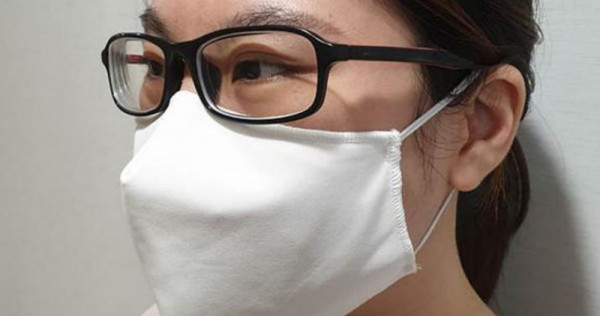
The new cloth masks will have better filtration capabilities and are more breathable, Trade and Industry Minister Chan Chun Sing told reporters in a teleconference.

As with the two previous rounds of distribution, Singaporeans will be able to collect the masks from community centres and residents’ committee centres.

This time, people will also be able to collect their masks from vending machines. He said the distribution will take place close to the end of the circuit breaker period and more details will be announced later.

Mr Chan also gave an update on Singapore’s mask production capabilities.

He said that Singapore has been ramping up its domestic production of surgical masks since February to ensure that their supply to healthcare workers here is sustainable.

The global demand for masks has risen in recent months as countries step up their fight against Covid-19. Lockdowns overseas have put the ability of countries to manufacture and export under stress.

[ad_2]

Source link

In vital jobs fighting COVID-19, Malaysians in Singapore wrestle with heartache of separation

SINGAPORE: For 10 hours a day, Priya Ramadass deep cleans floors, toilets, door handles, and sorts of high-touch areas using harsh chemical solvents to disinfect them – a job most Singaporeans shun as “dirty”.

Yet as COVID-19 infection cases continue to climb, the demand for the essential service she provides disinfecting public and private spaces has gone up. Along with the hours the 34-year-old Malaysian has to work.

“Now much work to do, very tired. Sometimes I sit down also, my manager, if he doesn’t know it’s my lunchtime, he asks: ‘Priya, please come and help clean the table.’ I must go, I cannot say no.”

She added: “Sometimes the tissue people use, I want to throw away, I think I will kenna (catch the virus). I’m scared. I think only of my family. I can only pray to God.”

But the mental stress of Priya’s work is not the only weight on her mind.

OTRD Covid Malaysians cleaner 5

Priya Ramadass

For the last two months she has not been able to hug her three daughters who are back home in Perling, Johor Bahru – nor her husband, even though he is here in Singapore as well.

He works as a logistics assistant and stays in company-arranged accommodation, while she has been put up at a hotel by her employer. Under Singapore’s circuit-breaker rules, this makes them separate households so they cannot meet, only FaceTime each other.

“My husband now is very lonely. We are in the same country, but we can’t see each other,” said Priya tearfully. “Yesterday, he cried. He said we need the money, must stay (in Singapore) for the kids.”

A LIFE-AND-DEATH SERVICE

Priya is one of 58,000 cleaners here, and she is among the many Malaysian workers who made the decision to stay in Singapore when Malaysia’s Movement Control Order (MCO) took effect on March 18. 

Like her, many of them have also been crucial to keeping essential services for Singaporeans running.

WATCH: Scared and feeling alone in Singapore (3:23)

Johari Tapri, 60, works at a medical technology company which has been scaling up its manufacturing of medical equipment. 

Since COVID-19 hit, our output has gone up by about 20 to 25 per cent because we are supporting doctors, nurses and those working in hospitals around the world,” he told the programme On The Red Dot. (Watch the episode here.)

But while Johari made the decision to leave his family in Tampoi – to be the only source of support for his five children and six grandchildren, all unable to work because of the MCO – some of his compatriots chose to stay home. As a result, the company is running on 20 per cent less manpower.

“The COVID-19 (situation) is getting worse and worse. So I think people like us, we have to sacrifice some things to come back to work,” said Johari. “We have a responsibility to the country and the company.”

OTRD Covid Malaysians johari

Johari had hoped to be home for Ramadan, but now that’s impossible with the extended MCO and quarantine period.

As for Vimalam Moorthy, an operations manager for DHL, his healthcare clients rely on his team to ensure that their medical equipment reaches them on time – and these deliveries have now become a matter of life and death.

“One of our biggest challenges is getting these goods, from the moment they are ready to go, to the customers… With COVID-19, we face a lot of flight cancellations,” the 34-year-old said.

He last saw his seven-month-old daughter, Samyukta, seven weeks ago, back home in Danga Bay.

When Vimalan and his wife, who works in a Singapore public hospital, first heard about the impending MCO, they knew they would have to cross the border and leave their baby girl behind in the good hands of her grandmothers.

The alternative was to stay home with no pay. “We thought that it was only going to be 14 days and after (that), we’d be able to see my family, my daughter again,” he said. “But then they extended (the MCO). It was very sad, very depressing.”

OTRD Covid Malaysians Vimalan

Vimalan at work.

Vimalan also has not been able to meet his wife since the circuit breaker measures kicked in; they have been put up in different hotels by their respective employers.

MISSING IMPORTANT MOMENTS

The uncertainty of the indefinite separation has been a heartache to all three families.

It’s been especially hard for Johari during the month of Ramadan, when he had expected to be back home breaking fast and performing evening prayers.

But the MCO was twice extended, most recently until May 12 – and even if he were to return home next week, he would still have to undergo 14 days in quarantine at centres provided by the state government. “I’m very sad that this year, I cannot get together with my family,” he said.

OTRD Covid Malaysians cleaner 4

Priya’s three daughters back home in JB being looked after by her mother.

Priya recounted how her youngest daughter cried over the phone, asking “when mummy come”.

“I told her I cannot. I come back now also no use. Mummy would have to stay at home, no money, no anything. If I want to buy milk and all that, better to stay here (in Singapore),” said Priya, whose mother is helping to look after the children.

As for Vimalan, he said: “I’m missing out on an important part of (Samyukta’s) life, her growth, and all her changes during this crucial time.”

But he wanted to send her a message as a father: “Why I’m here working hard is to provide a better future for us, for you.”

In the 5-part series Alone.Together, the programme On The Red Dot looks at life under lockdown for various groups. Watch this episode here.

OTRD Covid Malaysians cleaner 1

Source link

Coronavirus: Man sentenced to 7 months' jail for offences including hurling vulgarities at cop

[ad_1]

SINGAPORE – A recalcitrant offender, who hurled vulgarities at a police officer and verbally abused two public servants enforcing safe distancing measures four days later amid the coronavirus outbreak, was sentenced to seven months’ jail on Wednesday (May 6).

Singaporean Ravi Sinathamby Subramaniam, 53, pleaded guilty last month to two harassment charges and one count of threatening to cause grievous hurt to the three public servants.

The trio were then deployed as safe distancing enforcement officers.

Five other charges, including one count of failing to wear a mask over his nose and mouth, were considered during sentencing.

The court heard that Ravi had been in and out of jail for earlier offences, such as drug consumption and robbery.

He was last convicted in court in December last year for offences, including using abusive language against public servants and assault.

He was then sentenced to 16 weeks’ jail.

Ravi did not learn his lesson shortly after his release, and on April 14 this year, he left his home to meet a friend, who was not identified in court documents, near Block 74 Whampoa Drive at around 7pm.

[ad_2]

Source link

Alibaba to buy 50% stake in AXA Tower

Source image

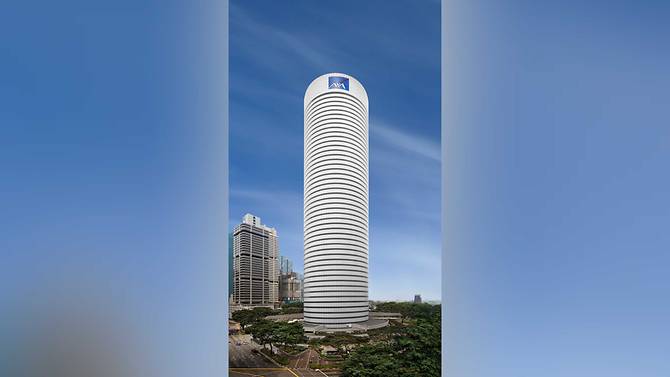
AXA Tower at 8 Shenton Way. (Photo: Perennial Real Estate Holdings)

SINGAPORE: Chinese e-commerce giant Alibaba Group has agreed to buy a 50 per cent stake in AXA Tower in a deal that values the property at S$1.68 billion, a boost of confidence to the Singapore market amid a downturn caused by the COVID-19 coronavirus pandemic.

A share purchase agreement was made between a consortium of investors led by Perennial Real Estate Holdings to sell the stake to the Singapore arm of Alibaba, said Perennial in a statement on Wednesday (May 6).

AXA Tower, located 8 Shenton Way in the Central Business District, is a 50-storey grade-A office development with a retail podium, according to Perennial.

It has an existing gross floor area of 1.05 million sq ft, and has secured regulatory approval from the Urban Renewal Authority to further increase its floor area to 1.55 million sq ft to integrate hotel and residential usage under the CBD Incentive Scheme.

AXA tower 2

Source image

AXA Tower at 8 Shenton Way. (Photo: Perennial Real Estate Holdings)

The deal is expected to be completed in June, after which Alibaba Singapore and Perennial Newco, a newly formed unit of the consortium, will form a joint venture to redevelop the building.

“Alibaba is already an anchor tenant at AXA Tower, and we are pleased to have their support in creating an iconic landmark in Singapore’s CBD,” said Perennial CEO Pua Seck Guan.

READ: Singapore’s factory activity shrinks to lowest reading since November 2008 amid COVID-19 outbreak

READ: COVID-19: Temporary relief measures for property developers affected by disruptions

The COVID-19 coronavirus pandemic has cast a dark cloud on the Singapore economy, as businesses announce wage cuts or urge employees to go on no-pay leave in the face of declining revenue. The Singapore central bank last month announced that the country will enter a recession.

Wednesday’s announcement will provide a confidence boost to the Singapore market and reaffirm investor appetite for CBD assets, said JLL, a real estate management firm engaged by Alibaba Singapore for the AXA Tower deal.

“Amid ongoing market uncertainty related to the COVID-19 pandemic, technology and e-commerce companies have become essential providers of goods and services across the region,” said Ms Regina Lim, head of Asia Pacific capital markets research at JLL.

“As a result of increased demand for their services and strong capital positions, they have remained active in their expansion and investment plans, with global gateway cities like Singapore proving an attractive destination for deployment.”

Source link

Alex Tan's Facebook pages designated DOL again after multiple falsehoods

[ad_1]

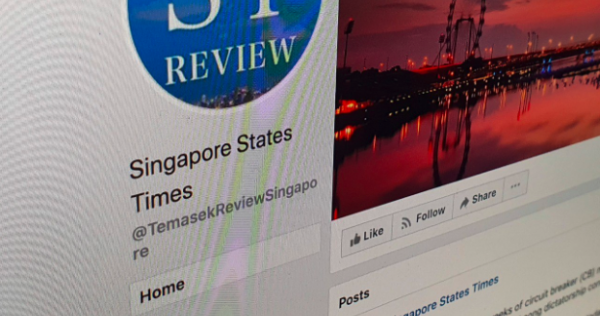
Alex Tan’s personal Facebook page as well as that of Singapore States Times, which is run by him, will become Declared Online Locations (DOL) under the Protection from Online Falsehoods and Manipulation Act (Pofma), the Ministry of Communications and Information (MCI) announced today (May 6).

A DOL can be issued when a website or webpage carries three or more different online falsehoods within six months and has been served Pofma notices.

Singapore States Times’ and Tan’s Facebook pages have repeatedly communicated falsehoods since November.

A DOL will not be allowed to profit from spreading falsehoods in Singapore. According to MCI, Tan, who contested in the 2011 General Election under the Reform Party banner, derives monetary benefits from the pages.

Under the declaration, the pages are required to warn visitors that they have a history of communicating falsehoods.

It will come into effect on May 7.

[ad_2]

Source link

2 die of complications from Covid-19 as coronavirus cases surpass 20,000 in Singapore

[ad_1]

[UPDATED, May 6, 10.59pm]:

Two Singaporeans have died due to complications from Covid-19 infection, according to the Ministry of Health (MOH) on May 6.

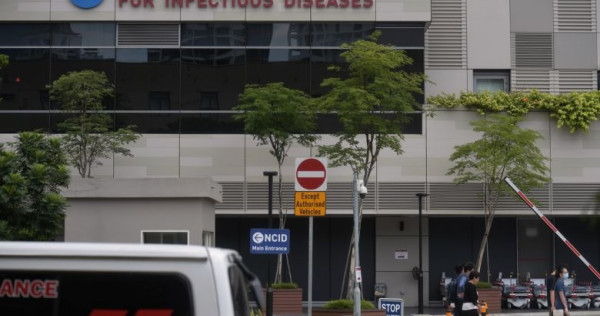
Case 1414, a 97-year-old woman, died on May 5. She was confirmed to have Covid-19 on April 7, and had a history of hypertension. The National Centre for Infectious Diseases has reached out to her family and is extending assistance to them.

Case 1528, a 73-year-old man, died from complications due to Covid-19 infection on May 6. He was confirmed to have the infection on April 7, and had a history of hypertension, hyperlipidaemia and diabetes mellitus, said MOH in its statement. Singapore General Hospital has reached out to his family and is extending assistance to them.

Additionally, MOH has reported 788 new coronavirus cases in Singapore today (May 6). 

Of these, 13 cases are from the community, with 11 Singaporeans/PRs. Two are Work Pass holders.

[ad_2]

Source link