The Ministry of Health has preliminarily confirmed 741 new coronavirus cases in Singapore today (May 7). Out of these, the vast majority are cases involving work permit holders residing in dormitories and five are Singaporeans or Permanent Residents.
This brings the total number of cases to 20,939, with 1,634 patients discharged and 20 deaths.
For the latest updates on the coronavirus, visit here.
SINGAPORE: Like many elite forces, the Singapore Armed Forces (SAF) Commandos are trained to operate in small groups behind enemy lines.
In hostile territory, they specialise in raids and reconnaissance, and can advance via the air, land or sea.
So when the COVID-19 “circuit breaker” measures infiltrated everyday life in Singapore, including training in military camps, the Commandos saw the challenge as an opportunity.
The red berets, used to training at a mass company level, now have to perform in smaller functional groups at the detachment level. Exact group sizes are not disclosed to protect operational security.
This is similar to the now-standard practice of “cohorting” in many organisations, where employees are split into smaller groups that cannot mix to minimise the risk of widespread infection.
“Ideally, we want to train at the company and battalion level,” 1st Commando Battalion commanding officer Lieutenant-Colonel (LTC) Fabian Pwi, 37, told reporters via a video conference on Wednesday (May 6).
“But part of the commandos’ mission is to operate behind enemy lines in a very decentralised fashion. This means that a lot of training must go into small-unit leadership, small-unit independence and being able to survive as a small unit.
“The smallest unit we fight in is at a detachment level, so we see it as an opportunity to build stronger detachments.”
Lieutenant-Colonel Fabian Pwi. (Photo: MINDEF)
This comes at an especially crucial time, as the battalion is manning the Army Standby Force. This force, rotated among different Army units in the SAF, is on standby 24/7 to respond to internal and external threats, including civil unrest or a flat-out attack.
The Commandos can conduct search and cordon to support homeland security, and “defend Singapore’s peace and security” against external aggressors, LTC Pwi said.
EXTRA DISCIPLINE
One benefit of training during COVID-19, LTC Pwi said, is that it has instilled more responsibility and discipline among commanders and their men.
Detachment commanders are enforcing basic measures like safe distancing and the washing of hands, encouraging charges to take these things seriously.
“It allows detachment commanders to have a lot more voice in how they govern their detachments,” LTC Pwi said.
Since briefings cannot be done at the battalion or company level, LTC Pwi said commanders must improve their communication down the chain of command so the message doesn’t get diluted.
“Our key emphasis at this time is focusing on the quality of transmission when it comes to cascading our messages down to the last man,” he said.
Commandos from 1st Commando Battalion undergoing just-in-time training. (Photo: MINDEF)
These measures also push the Commandos, so used to the concept of teamwork and tight bonds, out of their comfort zone.
“Being in 1st Commando Battalion, where it’s a lot emphasis on camaraderie, helping out one another and buddy safety, to ask us to maintain a social distance from our fellow soldiers is something very awkward,” LTC Pwi added.
“I’ve seen soldiers demonstrating some degree of maturity to not just demand this kind of awkward and uncomfortable actions from themselves, but also pick up the leadership role of highlighting if their peers are forgetful.”
Third Sergeant Carvalho Antonio Pottier Mohammad Fakhri. (Photo: MINDEF)
Detachment commander Third Sergeant (3SG) Carvalho Antonio Pottier Mohammad Fakhri, 21, said spending more time confined to the same small group has given more meaning to training.
“Training is a little bit more fulfilling because you’re with this group of people for a prolonged time, so you understand them better,” he said. “When you go through hardship with them, you really feel like a true band of brothers.”
A STICKING POINT
But it is not all rosy for the Commandos.
LTC Pwi said the battalion, largely staffed by full-time national servicemen (NSF), is concerned the ongoing suspension of Basic Military Training (BMT) could deplete its manpower as more batches hit their operationally ready date (ORD).
The SAF announced on Apr 6 that it would suspend BMT in line with the circuit breaker, concluding “there would be little impact on operations as active units would be able to provide cover”.
Recruits would continue BMT at home and be given home-based instructional material on basic skills and fitness development. The circuit breaker has since been extended to Jun 1.
LTC Pwi said the battalion, whose next BMT intake is in June or July, has not gone into home-based learning as it conducts physical training that focuses on building team coordination at detachment and company level.
While LTC Pwi said the staffing is fine for now – a new batch that turned operational three weeks ago has replaced the outgoing batch that ORD-ed on Tuesday – there remains uncertainty around when the circuit breaker could be lifted.
“With the suspension of BMT, in the long-term approach it does affect our generation,” he said.
“While there’s COVID-19, some services can come to a standstill. But my main concern is when it comes to defence, the clock doesn’t stop.
“So in terms of generation, we will need to maintain a coherent-sized force to be able to achieve the mission that is passed on to us by the Army.”
File photo of commandos from 1st Commando Battalion honing their rappelling skills. (Photo: MINDEF)
Nevertheless, LTC Pwi said the battalion will wait to see how the pandemic unfolds and take a cue from higher up the command structure.
“We have highlighted our concerns for force generation and the need to replace forces that will ORD,” he added.
“Largely we are still waiting for the higher command to balance the trade-off – whether we need to compromise a little bit about how we train BMT back at home, or go ahead with a full intake.”
LONGER TRAINING
On the ground, COVID-19 measures also mean training sessions are taking longer than usual. Briefings are done multiple times in smaller groups. Equipment needs to be cleaned before being passed on.
“After one detachment has used the obstacle course, it has to sanitise each obstacle before the next detachment can use it,” detachment commander 3SG Varatharajan Ramkumar Rohan, 22, said.
Third Sergeant Varatharajan Ramkumar Rohan. (Photo: MINDEF)
But the soldiers are taking it in stride. 3SG Carvalho said birthdays are now celebrated by shouting birthday songs from one bunk to another.
“Times have changed,” he said. “Simple things like celebrating birthdays, we usually gathered in common areas. We can’t gather in such big groups now.”
When the ORD parade was cancelled, LTC Pwi said “there was very little lamenting” even though it is a proud moment when NSFs wear their smart Number 1 uniforms in front of watching parents.
In fact, the batch that was going to ORD even volunteered to stand in for the incoming batch during the initial weeks of standby duty as the latter completed its training.
This happened two weeks before their ORD date, when servicemen would usually be clearing leave or having downtime.
3SG Varatharajan said his parents understood the need for him to continue training during the pandemic after he explained all the safety measures in place.
“Training has to go on because it contributes to Singapore’s safety,” he added. “That’s what makes my parents proud of what I’m doing.”
The Chancery of the Roman Catholic Archdiocese of Singapore said in a notice on Wednesday (May 6) that it will be unable to carry out virtual solemnisation after reviewing its understanding of the issue.
“While cognisant of the current health pandemic that is gripping the world, we also wish to affirm the importance of the physical interaction of the persons celebrating our sacraments,” it said.
“As such, while the Church appreciates the efforts by the authorities in making marriage more accessible to couples in this difficult time, the Catholic Church in Singapore will not be able to solemnise marriages via video link.”
The chancery said the Church aims to help its couples celebrate the milestone in person, while observing all health directives and social distancing measures implemented by the authorities.
As we move on from Covid-19 and stay at home notices are relaxed, governments and the World Health Organisation (WHO) have reinforced the need to maintain social distancing. In Korea where many Covid-19 restrictions have been lifted, social distancing is one of the last to be removed.
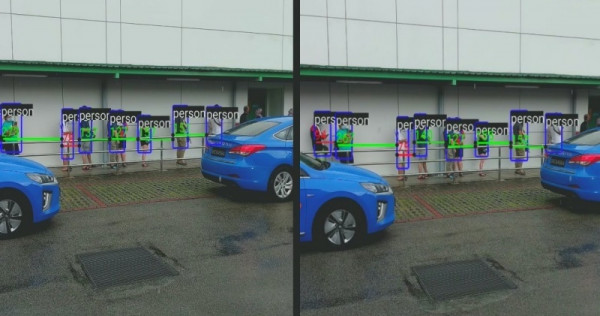
To allow more businesses and people to monitor social distancing easily, AI Hub International in Singapore has created an AI application called “SafeDistancer”, that turns a mobile phone into a social distance monitoring instrument. When stores are allowed to reopen, the app can be used to ensure that crowds maintain adequate distance from each other when waiting to enter.
The “AI at the edge” system runs advanced machine learning algorithms to detect people in an image. The results are then processed with data analytics on-device to alert when people get too near each other.
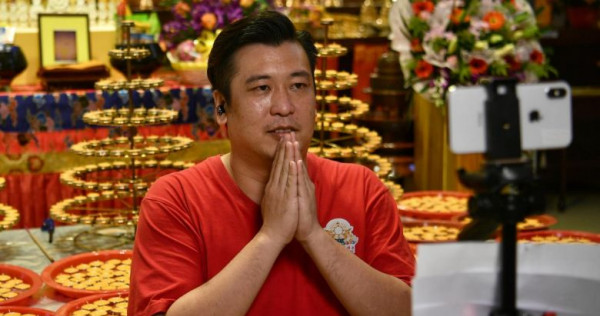
From giving offerings, hosting guided meditation sessions, chanting and observing other rituals online, the practice of Buddhism in Singapore, like other faiths, has evolved as the coronavirus pandemic has restricted religious gatherings at places of worship.
Buddhist temples and groups have found their own innovative ways to continue their spiritual practices in the days leading up to Vesak Day today, which commemorates the birth, enlightenment and death of Gautama Buddha.
Traditionally, Buddhists visit temples on Vesak Day for rituals like chanting, three-step-one-bow and bathing of the Buddha statue, or take part in retreats.
With the circuit breaker extended until June 1, temples are not able to organise their usual Vesak activities.
Devotees who wish to make offerings at Thekchen Choling, for example, can create an online account with the Tibetan Buddhist temple and pay for the items — be it incense for $18, a compassion lamp for $10 or food offering to Buddha and the temple community for $30.
Devotees make these offerings to dedicate merits to themselves or their loved ones.
Two companies have been fined for breaching Covid-19 safe distancing measures at the workplace, as the Government steps up checks in preparation for the gradual resumption of economic activity.
Enterprise Singapore (ESG) said in a statement on Wednesday (May 6) night that it fined Goodman Environmental Group and The Bakery Depot $1,000 each after finding that they had failed to enforce proper safe distancing measures.
ESG had inspected, over two days, 20 workplace premises providing essential services.
Goodman Environmental Group had failed to put in place health and temperature checks for their employees, as well as enforcement of 1m safe distancing. The firm also did not have proper tracking of employees from split teams.
The Bakery Depot, which runs the Cedele bakery and restaurant chain, was found to have cross-deployed employees to different retail outlets despite the ban on such a move.
It had also failed to enforce the wearing of masks and 1m safe distancing among employees.
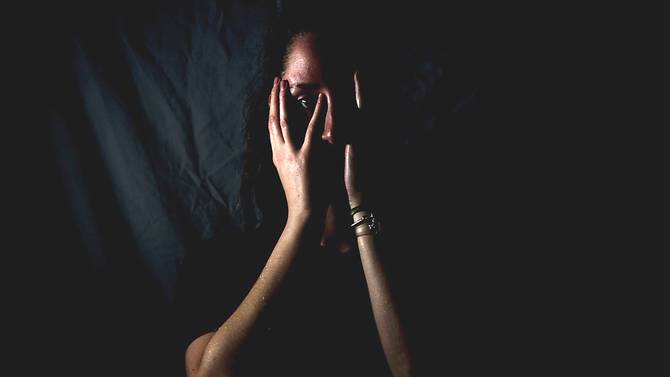
Some are feeling the impact of abuse especially keenly now. (Photo credit: Unsplash)
SINGAPORE: Imagine, if you can, waking up every day racked with fear that your spouse could lash out anytime he gets triggered by something he disagrees with, even if it has nothing to do with you.
For instance, the rising number of COVID-19 cases.
And you absorb the verbal abuse quietly, making yourself small — even though life would be easier if you could be invisible instead.
For the past 13 years, that has been Mdm Tan’s reality. And her husband’s slurs have only got worse since the “circuit breaker” kicked in on Apr 7.
At first, she worked from home before realising, after two days, she could not focus with his badgering. Despite being unemployed, he also “expected (her) to care for the children instead of working”, while he “just sat in front of the computer”.
Since then, she leaves for work every day, while he remains in their four-room flat with their two daughters, aged five and nine.
During this time, he watches “the global situation, like China, Wuhan, Hubei” and takes note of “how many people die, how they suffer”. Then he uses this information as a reason to rage at her.
Stock image. (Photo: Unsplash)
“He tells me, ‘Oh, see the kids. You don’t care. How come you’re not worried at all? If you want to die, you go and die. You don’t have any concern. You’re too complacent.’ Things like that,” said Tan over the phone.
“He’d say I want to … harm the kids, like I’m trying to die and make them die together with me by not observing strict hygiene practices.”
Tan’s husband was referring to wearing masks, which was not compulsory at the start of the circuit breaker.
Whenever he erupts into his usual “aggressive” tirade, she “keeps quiet” or “tries not to react so much”. She is used to walking on eggshells around him because she cannot predict what will trigger him or when his abuse will turn physical, as it has previously.
Like the other domestic abuse victims who spoke with CNA Insider, she requested anonymity to protect herself from her abuser’s potential wrath.
As reported on Apr 23, the Social and Family Development Ministry saw a 14 per cent increase in enquiries related to domestic conflicts and violence within the first two weeks of the circuit breaker, compared with the two weeks prior.
Family violence specialist centres and PAVE Integrated Services for Individual and Family Protection saw a 37 per cent increase.
The ministry stated that the increase could be due to “heightened vigilance and reporting”, and not necessarily incidents of violence.
But as Tan knows, violence often does not immediately begin with physical abuse.
PYSCHOLOGICAL ABUSE ‘EASIER TO ENFORCE’
The “climate” of domestic abuse has changed, according to senior social worker Yet Tun Hoong, 42, the manager of a family service centre under Viriya Community Services.
“This is no longer the era where people just use (physical) violence. They use other ways, such as financial control, psychological and emotional control, and even social control, which includes tracking who you talk to on your phone,” he said.
Tan cannot recall the precise moment her husband began his verbal abuse 13 years ago, but she believes it happened around the time he was trying to complete a thesis for his master’s.
His experiment was stuck, and he could not get the data, igniting his bad moods. He started “talking louder”, using vulgarities and calling her “hopeless” and “helpless”. As he did this, he would come “very near” to her, making her feel uncomfortable.
“He asked what would happen to our children when they grow up: They’d be like pigs, slaughtered and bullied by others — (they’d be) worse than me,” she said.
“He said he was ruined because he met me, ‘I’m rubbish’ … He can’t contribute anything constructive. He just nags and scolds.”
In addition, he tried to control her “more and more”, beginning with her dressing, and then her make-up, how she talked to people, what happened in her workplace and how she spent her money, even her supermarket purchases.
During this circuit breaker, these psychological methods of abuse are easier to enforce when victims are holed up with their abuser, usually in a “living space that’s not too big”, said Yet.
“When the abuser is angry and trying to find trouble, they don’t need to physically hurt the victim. They can smash things, hurl verbal abuse and not give (the victim) peace of mind when they’re working from home.”
Stock image. (Photo: Unsplash)
That has been the case with Tan’s husband.
“He’ll smash whatever things are available, usually from my dressing table, like cosmetic bottles or even shampoo bottles from the bathroom. He’d throw or bang (the bottle) on the table so it gets out of shape,” said Tan.
“He has also punched the computer screen and light switch.”
Moreover, the stereotype that victims are homemakers does not hold any more. And with their work-from-home arrangements, being in the same space as their abuser affects their career. The victim becomes “kan cheong” and tries to “prevent things from happening”.
“But when the victims try to protect themselves, that’s when (the abuse) escalates and it becomes physical,” said Yet.
Around 10 years ago, Tan’s husband started to kick her, punch her shoulders and arms, and use a stick to hit her back. Sometimes he raises his hand to her face. Once, he also snatched her spectacles and her phone.
He does not subject their daughters to the same abuse, although he “won’t take good care of them as well”.
For instance, he once monopolised the computer, even though they needed it to do their work. And on the first day Tan went to work, he let them eat only at night, as he “had a backache” during the day.
To protect them when she is not around, she has advised them to “stay in the room and keep quiet” if they notice their father getting angry, for example if he is “banging the table”.
WHEN MENTAL ILLNESS IS INVOLVED
Even if a family has no history of outright violence, the circuit breaker could create friction between members and cause tempers to flare.
For those diagnosed with mental disorders, their conditions could be exacerbated. This includes abusers themselves, who may act out further.
Prior to the circuit breaker, 45-year-old Catherine Chan was “mentally abused” by her brother, who is 48 and suffers from borderline personality disorder as well as antisocial personality disorder.
The siblings used to live together “in the early stages of his illness”, but when she bought her own place at 35, his “mental condition started to manifest”.
He would “ask (her) for money repeatedly” and “dial (her) handphone non-stop … threatening to self-harm, like jump from a building or commit a crime, or threaten to harm (her) or (their) parents” if she refused to comply.
Since the circuit breaker started, his threats of suicide have got more frequent, among other things.
“Lately, I think there’s this video of someone throwing things down an HDB (block). He sent me that and told me he felt like doing that,” said Chan.
“He has no contact with humans because of the isolation. His interpretation of the world is very much what he sees on TV and what you get from social media, which might not be all true.
“My (main) concern is what his mind is telling him. He expresses that he’s tired because he doesn’t know how to manage our world.”
He has begun bombarding her with calls and “10 to 20 messages” daily about the government’s “COVID-19 schemes” and “how much money he can get”.
Stock image (Photo: Unsplash)
When she tries to help him understand which criteria he does not meet, he cannot accept what she says. For example, he does not qualify for the Self-Employed Person Income Relief Scheme, as he is unemployed and receives ComCare assistance.
“I tried to explain to him that he needs to produce documents … But he just said all rules are man-made. He started yelling and cursing, so I just told him that we’d talk when he calms down,” said Chan.
“I’m used to him scolding all the ‘F’ and C’ words at me when he doesn’t get the money. Basically, he wants to hear what he wants to hear.”
In such instances, she cools off by not responding to him for a while, although he sends her his questions via WhatsApp once he knows she is ignoring him. She replies only if it is a “simple yes or no”.
When he threatens to self-harm or harm others, she gives feedback to his caseworker from the Institute of Mental Health instead.
For now, he has not physically abused her, although he has threatened to hit her. She has warned him that it would be “the end of (her) helping him” if he touches her.
SEEKING SOLACE
Chan, who became her brother’s guardian after he got divorced about four years ago, releases stress through drawing and volunteering at Hope Alliance, an organisation that empowers people with mental health issues.
By running online meetings and support groups, she finds comfort in listening to other people’s experiences, some of which are worse than hers.
On the other hand, there are victims of domestic abuse who simply need a place to stay while they figure out their next move. In this case, places like Star Shelter are a lifeline.
Lekha has been living at Star Shelter since earlier this year, while proceeding with her divorce and personal protection order against her husband with help from the Legal Aid Bureau.
She has not gone home to their four-room flat, and her husband does not know where she is.
“Since the first day” of her marriage, she has been abused. This includes getting called “derogatory names in front of his family while he laughs about it”, and “getting strangled” once, which resulted in her seeking medical attention.
“It’s worse when his family subjected me to physical violence as well, since I had to protect myself against more people. Sometimes I felt defeated because I had no way to protect myself,” she said.
Stock image. (Photo: Unsplash)
Whenever her husband’s temper exploded, she would “try to go inside the room to keep (herself) safe”, but this was futile since he often came into the room and continued the abuse.
“When he scolded me unnecessarily, I’d ask him why he did that. I felt that it was unfair … But questioning him agitated him further,” she added.
The COVID-19 situation only provided more triggers for her husband’s rage. For example, when she reminded everyone at home to be more careful, he lashed out.
At Star Shelter, Lekha was given her own room for safe distancing when the circuit breaker was implemented. She has “a sense of freedom” in the “much more relaxed environment compared to (her) husband’s house”.
“I’m not living in constant fear of not knowing what may happen to me. I have a sense of security here. Groceries are provided, and I don’t have to worry about putting food on the table,” she said.
LEAVING ABUSER NOT EASY
Aside from individual shelters where victims can seek help, the Government has established a Taskforce on Family Violence, comprising members from Government agencies, the courts, hospitals, family violence specialist centres, crisis shelters, and family service centres.
The Taskforce will work with social service agencies and non-governmental organisations with experience in family violence services to help families manage stress so that domestic conflicts don’t escalate into violence, especially during the circuit breaker.
But seeking help can be hard for victims who might not realise they’re being abused, especially if the abuse isn’t “obviously” physical or sexual.
“There are other forms of abuse, such as emotional, psychological, financial abuse, isolation and wrongful neglect. Some of these behaviours include making threats of suicide, causing fear, belittling, name-calling, humiliating, playing mind games, guilt-tripping, coercing, intimidating, and victim-blaming,” explained Lorraine Lim, the manager at Star Shelter.
Usually, a trained counsellor or social worker would be able to help victims “look out for signs of abuse” and “assess the severity of the abuse and risks of violence recurring”, before providing them information to make their own decisions.
If victims are not ready to speak with a professional, there are “campaigns targeted at victims” and “reliable websites” that explain the signs of abuse.
Often, victims also feel “helpless, alone and totally dependent on the abuser”, said Lim.
In Tan’s case, she approached the police “many times” since around 2010, but only mustered up the courage to seek help from Viriya Community Services in early March this year. They were the first – and only – organisation she sought for help.
“I wasn’t sure how to handle (my abuse), who to approach, and what’s the outcome if I reported to the police. Because verbal abuse can be subjective at the start. Not really to the extent where I must report for people scolding me. What can the police do?” she said.
“As it became worse, the physical abuse started. Then I reported to the police again. But if I don’t take further action, they also can’t do anything.”
On the afternoon that she finally decided to visit Viriya Community Services with her children, her husband “already knew” she was going somewhere and turned “more aggressive”.
“He asked me, ‘Where are you going? What are you going to do? Why do you need to bring the kids? Can you leave them at home? If you want to go, you go. You don’t bring them,” she said.
“When he began to question me, I said let’s go to the police station. The investigating officer told him to go for counselling, try to talk things through first, solve the family problem, and seek help. In front of the police officer, he agreed. But he never do anything. He won’t do.”
Since Tan still lives with her husband, she relies on her ‘tried and tested’ method to bide time: tolerance. She feels she has “no choice” and sees “no point telling friends”.
“My family knows about the abuse, but they’re in China. In the early days, my friends know too, but no one can take care or stop this kind of family issue,” she said.
“I don’t have much tactics to protect (myself). When he’s angry, he’s really angry and aggressive and violent. No matter you fight with him or don’t fight, he’ll just be violent. There’s no way to protect myself. There is no way.”
Still, Lim believes there are ways that victims can overcome their abuser’s power and control.
“They have to find a safe way to stay connected through phone calls, messaging, video calls, social media, and other platforms. For example, they can observe the daily routine of their abusers, like what time they sleep or go out to run errands, then use that time to call a friend or family member,” she advised.
Strategising their own routine around these ‘safe periods’ is pertinent, so they won’t be occupied by other duties, like caring for their children. If the abuse escalates, these ‘safe periods’ could be the only time they can escape their house or call the police.
Victims should also share a code word with a friend, who’d know to call the police immediately if the code word is used in conversation.
Having endured 13 years of abuse, Tan encourages those who are suffering in silence to “take action early”.
“If there’s any change of behaviour out of the norm, if the person becomes more aggressive, violent, and can’t control emotion properly, don’t tolerate,” she said.


.jpg "novenachurchfb-1.jpg")

 Enjoy 1-for-1 Popcorn Chicken with DBS/POSB cards
 Find your nearest KFC outlet