The casual observer impressed by Singapore’s modern architecture is very likely unaware of the influence upon it of feng shui, or the ancient Chinese art of geomancy.
Feng shui, literally meaning wind and water, is a foundation of Chinese metaphysics that examines and aligns invisible forces believed to connect the universe.
It affects the design of buildings, the materials used in their construction, and the practice of building them to face in a particular direction – thought to harness the Earth’s natural energies in ways that ensure optimum health, living and fortune.
Lawrence Chan, a self-taught feng shui master based in Singapore, concedes that success depends on hard work, good leadership and common sense, but also points to the favourable aspect of the water element in the country’s location.
“If you notice, most prosperous major cities in the world are surrounded by water – countries or capital cities surrounded by water enjoy wealth enhancement,” Chan says.
MyRepublic has just announced a new programme called Achievement Unlocked, which rewards gamers with up to $3,000 worth of prizes for playing popular games like Animal Crossing and Final Fantasy 7.
Achievement Unlocked is meant to bring the glory of esports to gamers everywhere, shining a spotlight on their achievements during gameplay. This event will unfold in seasons, with the first involving five games, both old and new:
Animal Crossing: New Horizons
Monster Hunter World: Iceborne
Legends of Runeterra
Final Fantasy 7 Remake
Mobile Legends: Bang Bang
It’s an impressively diverse set of videogames – you’ll probably have picked up at least one of these sometime in the last few months. So, how does this all work?
First off, Achievement Unlocked consists of Weekly and Season Achievements.
Five Weekly Achievements are given per week in a season, each gives gamers a specific series of challenges to complete. Once they complete a set of challenges, they earn a Weekly Achievement. Source link
SINGAPORE – The central city was transformed on Thursday (May 7) night when around 30 landmarks such as Marina Bay Sands and the Esplanade were lit up in varying shades of blue as part of the #SeeItBlue movement.
SINGAPORE – Customers are flocking back to Mustafa Centre after it was allowed to reopen partially more than a month after being identified as a Covid-19 cluster.
The Little India department store’s supermarket section got the green light on Wednesday morning (May 6).
Mr Shamim Ahmad, manager for building maintenance and fire safety, told The Straits Times that it will operate from 9.30am to 11.30pm daily, with plans to resume 24-hour opening next week.
The Mustafa Centre cluster has not yet been closed since it was identified on April 2 after 11 cases were linked to it. There were 124 cases linked to it as at May 3.
Associate Professor Kenneth Mak, the Health Ministry’s director of medical services, said on April 9 that Mustafa Centre is believed to have been the starting point for hundreds of coronavirus infections at foreign worker dormitories.
Workers were likely infected after visiting the centre, where some employees had fallen ill, and they set off a chain of infections among co-workers and dormitory mates.
SINGAPORE: When her husband contracted COVID-19 and her family was quarantined, Ms May Lim’s world was turned upside down – they lost their only source of income and her husband’s condition soon took a turn for the worse.
But two months on, she is hoping her new online business will take off and even help others who are in financial difficulty during the coronavirus outbreak.
May’s husband, Constant Chiew, was a taxi driver who had driven an Indonesian passenger from Changi Airport to a hospital in mid-March. The passenger later tested positive for COVID-19 and died due complications from the disease.
A day after that trip from Changi Airport, Mr Chiew was told by the Ministry of Health to quarantine himself. Three days later, he came down with a high fever. He was diagnosed with the coronavirus on Mar 18.
Soon after that, the 63-year-old was moved to the intensive care unit and put on a ventilator.
All this was devastating for May, 52, who told CNA that she could barely make herself get out of bed in the initial days after her husband fell ill.
“On the fourth or fifth day, he almost passed on and I was quarantined, I could not visit him at all. That was … so difficult for me,” she said, tearing whenever she spoke about her husband.
“But I forced myself to wake up. I told myself: I cannot go on like that, I need to do something.”
These events also affected her younger daughter, 13-year-old Clarabelle, who had to ask for a deferment of an online enrichment course that she was taking with All Gifted High School. And that was how the school’s founder, Ms Pamela Lim, got to know about the family’s situation.
Ms Lim, a businesswoman turned educator, had been running courses on entrepreneurship and coaching aspiring business owners for years. When the COVID-19 outbreak intensified, the 54-year-old decided to focus on helping people whose livelihoods have been hit.
Her only condition was that they have to implement the business idea that was generated during her course. Ms May Lim and her elder daughter, Claudia, joined Pamela’s class in April.
During her quarantine, May had difficulty getting fresh produce and food. She also found the offerings online inadequat, and that gave her a business idea to connect consumers with wet market stallholders who may be struggling during the “circuit breaker” period.
Pamela, whose parents ran a market stall when she was young, saw the potential and decided not just to coach them but to invest in the business as well.
Screengrab of the Claude and Clari online wet market delivery website.
A month on, their website Claude & Clari is online and has started taking orders since May 1. The hardest part was persuading the stall owners to trust her, a total stranger, May said.
“Some were very unfriendly because they didn’t know me, they thought that I was trying to cheat them, or whatever, but some were friendly,” she said.
While she had help from Pamela to set up the website, May and her daughter are currently a two-woman operation – ordering and packing vegetables, seafood, meat and dried goods to their customers. The groceries are then delivered by taxi or private-hire drivers in need of work at this time.
The fresh produce is currently from Geylang Serai Market but they plan to expand to other heritage markets such as Chinatown Market and Tekka Market, she said. While May is aware that Tekka Market has recently gone online, she said she does not see it as “competition”, but as a sign that this was a niche that has potential for growth.
With some guidance from Pamela, May said she hopes to make her first online business a success and eventually help people in a similar situation by offering them freelance jobs.
“At first I had no confidence because I have been a housewife for eight to nine years, but she encouraged me,” May said. “My vision is that this business is not just for my family. I hope I will be able to help other people too.”
The family is hoping that Mr Chiew, who is now virus-free, can recover in a few weeks’ time. He is still in intensive care due to damage to his lungs, but may be able to breathe without a ventilator soon, said May, who visits him in hospital every day.
Given his serious condition, he is unlikely to be able to return to work soon.
May added: “He said when he’s discharged, he will be a burden to us. But I said ‘no, what is a family for?’ He’s not a burden, definitely.”
SINGAPORE: Framed maps, artefacts placed in shining glass cases and a voice guiding you through the display halls.
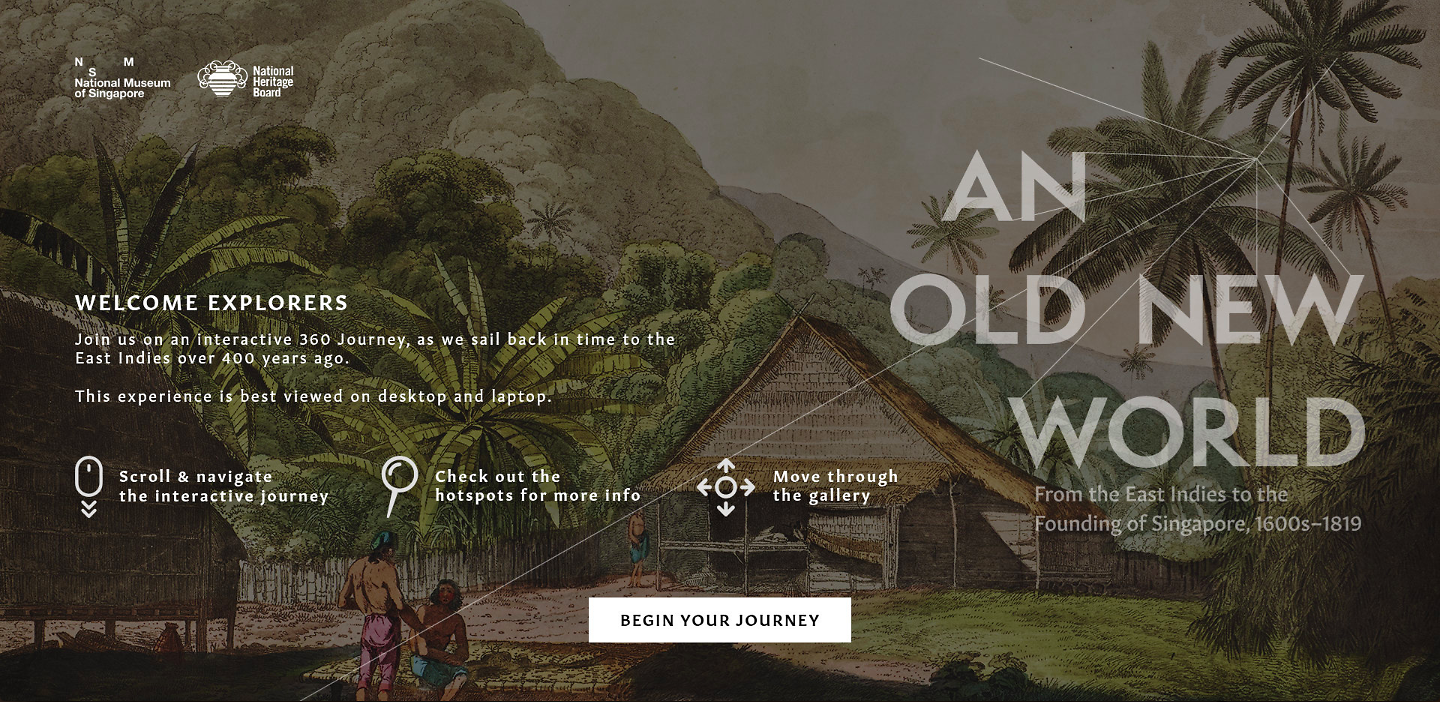
These are physical elements of the National Heritage Board’s (NHB) An Old New World exhibition, now painstakingly replicated online for anyone to enjoy.
Located on NHB’s heritage portal Roots.sg, the virtual exhibition offers a 360-degree pan of the exhibition hall and a guided tour exploring Singapore’s story up to its founding in 1819.
It is one of many activities offered by NHB under its tagline #SGCultureAnywhere on Roots.sg, NHB’s heritage resource portal, which provides people with their “heritage fix from home”.
“Digitising our heritage content so that more people can have access to it has always been one of NHB’s priorities and the public has been very receptive to such digital measures so far,” said deputy director of organisation design and innovation Jervais Choo.
“Especially during these challenging times, we hope that the digital offerings we have lined up will provide a much needed ‘culture boost’ to uplift spirits for all of us at home and allow us to take the opportunity to learn something new about the world around us.”
These activities would also give children and families a chance to explore and discover Singapore’s heritage and culture together, he added.
A screenshot of the National Heritage Board’s online exhibition An Old New World.
With almost a month left to the end of the “circuit breaker”, other family-friendly attractions including Wildlife Reserves Singapore (WRS) and KidZania Singapore have also rolled out activities for children to do at home.
“As a conservation-minded wildlife organisation, education is a key pillar for WRS and we see our zoological parks as living classrooms for early childhood and multi-disciplinary learning,” said director of education May Lok.
With its in-house education arm, WRS was able to quickly convert its resources into digital content for its online platforms.
“Our online resources include STEAM (Science, Technology, Environment, Arts, Maths) components so that children learn other disciplines while learning about wildlife,” said Ms Lok.
Some of these activities include the “Animals We Love” series, which offers online activity packs for pre-schoolers and primary school children to teach them about animals from River Safari and the Singapore Zoo.
For now, children will learn about orangutans, giant freshwater stingray and Komodo dragons, but the list will expand as WRS moves across its four zoological parks.
Children may also access ebooks on giraffes at the Singapore Zoo, with content on tigers, elephants and giant pandas Kai Kai and Jia Jia coming up. The ebooks will have a voiceover feature.
Meanwhile, indoor family entertainment centre KidZania Singapore is introducing craft activities, science experiments, stretching and breathing exercises and kid-friendly recipes on their Facebook and Instagram pages for children.
This is part of a worldwide #KidZaniaAtHome initiative, said acting general manager Wayne Lim.
Members of the public seem to have have responded well to the initiatives so far.
“Feedback has been encouraging and parents have welcomed the idea of bringing the zoo right into their homes to vary the learning experience for their children,” said Ms Lok.
Mr Lim also reported an average organic engagement rate of 2 per cent and growing for its #KidZaniaAtHome initiatives, as it introduced more interactive elements such as quizzes and contests to encourage active participation.
“Our #KidZaniaAtHome content has been performing above industry average and we are confident that it will continue to perform better,” said Mr Lim.
While most of these initiatives will last only until the end of the circuit breaker, the attractions said that digital content could become a staple after that.
KidZania Singapore will move towards using more digital content, said Mr Lim, as they have “seen a shift” in how their target audience view and access content.
“We will continue to offer engaging digital content that complements our core belief of learning through role-play,” he said.
WRS too will use online resources as part of pre- and post-park engagement for parents to prepare their children for their experience in the parks and to continue even after the visit, said Ms Lok.
There will also be autism-friendly resources like sensory maps and social scripts to help families plan ahead and have a stress-free experience in their parks.
Here are some more online initiatives offered by other attractions:
GARDENS BY THE BAY
The #StayHomeWithGB initiative offers craft activities and e-books for children. Parents can also play videos that feature Gardens by the Bay’s horticulturalists showcasing parts of the Gardens. They may also email plant questions in to the Plant Doctor and the horticulturalists will answer them.
A screenshot of some craft activities offered by Gardens by the Bay.
ESPLANADE – THEATRES ON THE BAY
The Esplanade Offstage offers free content for children, from comics and stories to videos, podcasts and quizzes. Children can sing along to songs from the Esplanade’s PLAYtime! Productions with karaoke sing-along videos. Esplanade Offstage also provides free online musical performances on their site.
Children can also access Esplanade Offstage’s “The Show Goes On…line” content, which includes dance along videos and stories, “inspired by the arts and culture of Singapore’s multicultural society”.
SINGAPORE: Global efforts to tackle the COVID-19 “infodemic” – a term coined by the World Health Organization (WHO) to describe the spread of coronavirus-related misinformation online – are speeding up in response to the sheer scale of fake news on social media and online messaging platforms.
The spread of misinformation about COVID-19 has led to confusion, fear and even violence.
As governments increasingly turn to a variety of social media platforms to communicate official information to the public, the popular application Telegram has become an important messaging tool for governments.
Originally built by founders Pavel and Nikolai Durov as a means to restrict Russian security agency access to their private communication, Telegram now has around 200 million users worldwide.
Three main features drive Telegram’s popularity – secret chats, groups and channels. Secret chats are popular for their end-to-end encryption and self-destructing messages, while groups and channels offer avenues for mass communication to large audiences.
Public groups can accommodate up to hundreds of thousands of members, allowing for two-way communication and collaboration. Group administrators can control access and privileges to new and existing members, moderate messages for prohibited content and enforce group etiquette.
Telegram channels are a powerful tool for broadcasting messages to unlimited audiences. They are advantageous for massive one-way broadcasts, similar to RSS feeds, and are commonly used by media organisations and businesses worldwide.
The urgency with which information related to COVID-19 is consumed demonstrates the need for accurate and timely news. In China, individuals use Telegram to access information pertaining to COVID-19, overcoming government firewalls with virtual private networks.
But technology platforms also enable the dissemination and amplification of misinformation. Anonymous groups and channels on Telegram are sharing unverified information linked to COVID-19, often containing hoaxes of cures for the virus.
Milo Yiannopoulos, the alt-right internet celebrity and influencer, is just one of the many personalities who have taken to Telegram to promote COVID-19 conspiracy theories.
An audio clip falsely attributed to Iranian Deputy Health Minister Iraj Harirchi and widely shared on Telegram claimed there were more than 10,000 deaths in the country on Feb 27.
To reduce the impact of misinformation, governments have turned to Telegram to nudge citizens towards more factual information. Telegram channels created by governments and health authorities have gained popularity during the COVID-19 pandemic.
India and Malaysia utilise verified Telegram channels to broadcast news updates, advice and issue warnings about compliance with lockdown and social distancing measures.
The Singapore Government also launched its official COVID-19 channel earlier this year, disseminating the same COVID-19 messages it carries on the Gov.sg WhatsApp channel.
The Gov.sg Telegram channel has over 270,000 subscribers. The channel provides the public with reliable, clear and timely information regarding COVID-19.
Notifications from Gov.sg.
Global health organisations have also hopped on the bandwagon. The WHO has over 15,000 subscribers to its channel.
A USEFUL TOOL
Aware of the propensity for misinformation to proliferate on messaging applications, Telegram recently streamlined its verification processes for official channels created by health authorities.
This enables Telegram users to better distinguish between trustworthy sources of information and groups or channels disseminating misinformation. Telegram also sends notifications to users so they can join verified channels available in their countries.
Official Telegram groups facilitate greater engagement with citizens. “COVID19 Karnataka SAHAYA” – a public group run by Karnataka state’s Department of Information and Public Relations in India – enables people to obtain updated information about COVID-19.
COVID-19 related questions can be sent by the public and are answered by a dedicated team of state administrators, public health officials and medical professionals who then direct subscribers to verified sources of public health information.
COVID-19 updates are also sent to users via a bot embedded in the group.
Transparent and accurate public health information, disseminated in a timely manner, is a powerful way to tackle the COVID-19 pandemic. Helping users access information from verified channels makes this a step easier, while also reducing the confusion and anxiety about unverified sources of information.
Telegram is a useful tool that allows governments and health authorities to cut through the noise of unverified opinions and misinformation, and in doing so, provide updated public health and safety messages to the public.
Download our app or subscribe to our Telegram channel for the latest updates on the coronavirus outbreak: https://cna.asia/telegram
Dymples Leong is a Senior Analyst with Centre of Excellence for National Security at the S Rajaratnam School of International Studies, Nanyang Technological University. This commentary first appeared on East Asia Forum.
MELBOURNE: The COVID-19 pandemic has unleashed the biggest work–life social experiment ever.
Early this year, millions of employees were suddenly told to work from home, and managers had to learn how to manage all staff members virtually for the first time.
In Australia, where we reside, a recent Gartner survey revealed 88 per cent of organisations have encouraged or required their employees to work from home due to COVID-19.
In Singapore, the Ministry of Manpower (MOM) has mandated for employers to facilitate remote working as far as possible to slow the spread of COVID-19.
Interestingly, for all the talk about remote working testing whether IT systems can keep up, the real test the pandemic has put on us is whether human beings can be kept in check. It has called into question so many managers’ preference for presenteeism.
Presenteeism generally refers to that unproductive attendance at work, when employees work long hours or show up for work despite feeling sick or distracted.
The mass transition to work-from-home has shown most firms can make the leap to remote working entirely, but seemed to have put that off until the pandemic struck. Why is that so?
The biggest worry managers have, whether they admit it or not, is that their team members might be skiving off instead of pouring every minute into work.
Managers worry that employees may not have enough self-discipline to engage in their work at home. By contrast, some feel a sense of control when they see their employees in the office. They also believe their presence would keep employees on their toes.
But that sense of control has offered nothing but false security and can even be incredibly counter-productive. Requiring employees to come to the office just to monitor them has been shown to lead to presenteeism, which will cost organisations in Singapore a whopping S$7.6 billion by 2030, according to a 2018 report by Marsh & McLennan Insights and Mercer.
An open-plan office. (Photo: Unsplash)
Further, being in the office does not necessarily translate into higher productivity. We forget employees are social beings. We all engage in some form of non-work-related activity in the office, whether browsing the news, writing private e-mails, engaging in long tête-à-têtes at the pantry, or heading out of the office multiple times a day to grab food or coffee.
An employee we interviewed for our research on work–life balance even shared how the distractions in the office were worse than those she experienced at home.
She recalled how one of her colleagues going through a break-up had spent hours talking about her relationship problems with other colleagues. Even though our interviewee was not directly involved in the conversation, she was distracted for hours and could not focus.
A 2020 Airtasker survey involving 1,004 full-time employees in the US also showed while remote workers spent more time taking breaks throughout the day, they also devoted more time on work tasks than office workers, debunking the myth that remote working leads to reduced focus and work performance.
ARE EMPLOYEES REALLY MORE COLLABORATIVE AND INNOVATIVE IN THE OFFICE?
In 2013, Yahoo’s then new CEO, Marissa Mayer, famously banned employees from working from home. She defended her decision by stressing that “people are more collaborative and innovative when they’re together face-to-face”.
Undoubtedly, there are benefits to working in the same physical location. Spontaneous personal encounters can spark ideas and brainstorming in person can lead to fresh thinking. There’s something about meeting in person since employees can read other employees’ non-verbal cues.
(Photo: Unsplash/Charles Deluvio)
Then again, with advanced communication technologies today, employees can also reach out to colleagues via a video call if they need to communicate in person and instantly.
The pandemic has also shown people can work creatively and collaboratively without any face-to-face interaction. Just think of the many singers and musicians who have banded together for performances livestreamed on various social media platforms.
The reality is, for collaboration and innovation to take place, an organisation’s culture and leaders are a lot more important.
Many studies have shown a shared vision and open learning culture fostered by visionary leaders can be highly effective in encouraging knowledge-sharing and the collective working towards common goals, regardless of where workers physically are.
FOR SOME EMPLOYEES, PRESENTEEISM SIGNALS COMMITMENT
Presenteeism has its root in cultures which endorse time spent in the office as a sign of diligence and commitment.
Nowhere is this more apparent than in Japan, where employees are often reluctant to leave the office before their colleagues or managers to show that they are hardworking and dedicated to their jobs. It is not uncommon for Japanese employees to clock in more than 80 hours of overtime each month.
Presenteeism is also more common among young employees. Many climbing the career ladder tend to link being present at work with the prospect of promotion, or to show they are busy and important.
But the bad news is they also tend to lose more productive hours due to presenteeism.
PRODUCTIVITY CAN BE ACHIEVED AT HOME
Contrary to popular belief employee productivity falls when they are away from the office, a study by a group of Stanford University and Peking University scholars found a 13 per cent increase in productivity for employees working from home, with scores given by both managers and employees.
(Photo: Unsplash/Christopher Gower)
Increased productivity and better prioritisation of work tasks are also emerging as advantages from the COVID-19 remote working arrangements, looking at how people are reacting.
A study conducted by one of us found employees overwhelmingly favour a flexible work arrangement in which they can blend their work and familial responsibilities.
Interestingly, those studied did not confine themselves to a strict 9am to 5pm office routine, but experimented with their most productive hours, and attended to their personal and family needs as and when they arose.
At the end of each work day, they also felt a sense of satisfaction as working from home enabled them to be involved parents, yet also good colleagues to their managers and colleagues.
THE POST COVID-19 NORMAL – AN END TO PRESENTEEISM?
In countries where flexible working arrangements were already prevalent before COVID-19, presenteeism will be further shaken post-COVID-19 as managers and employees find remote working desirable for all these reasons.
However, we do not expect a seismic shift where the majority of workers will start working from home entirely. There are frontline, operational essential activities (e.g. events, workshops and teaching) and services (e.g. retail, healthcare, tourism) that require on-site presence.
Where the coronavirus shift towards work-from-home has forced organisations to enhance their IT infrastructure, which will make flexible working a lot more reliable going forward, some corporations may even reduce their office footprint over the long term as fewer employees spend time in the office.
In countries where presenteeism is highly ingrained in the culture, the COVID-19 lockdown may not be strong enough to rewrite ingrained cultural norms, which can be reinforced once old working arrangements revert, and peer pressure and managers who confuse presenteeism with commitment and work performance hold sway.
Still, we expect a change in attitudes towards face time. Managers and employees who previously endorsed or engaged in presenteeism are likely to be more open to remote working.
People may also embrace the social aspects of work more – with dress-down codes throughout the week.
We urge managers to take a leap of faith and give employees the autonomy to work wherever they want. Focus not on monitoring performance but on improving task allocation and how your team can achieve their best.
(Photo: Pexels/Vlada Karpovich)
At the same time, we encourage employees to negotiate with their supervisors to see what gains remote working can be carried over. Initiating discussions with managers to adjust their tasks and responsibilities to suit new blended working arrangements could be a good start.
Lastly, we expect greater support from governments all over the world to reduce presenteeism as it will ease congestion during peak hours since fewer employees have to commute to work.
If countries and organisations around the world embark on widespread structural changes to reduce the reliance on face time at work, employees, their families and communities will reap the benefits of improved health and well-being from a happy and productive workforce.
A radiographer working at the community care facility at Singapore Expo tested positive for Covid-19 on May 7, the Ministry of Health (MOH) said in its statement the same day.
The man, who is Case 20844, is the fourth case linked to the facility.
The 43-year-old had no recent travel history to affected countries or regions and is currently warded at the National Centre for Infectious Diseases (NCID).
MOH also confirmed a second case in the public healthcare sector. Case 20737, a 33 year-old healthcare assistant at Tan Tock Seng Hospital, had gone to work for a few hours prior to hospital admission.
She was confirmed to have Covid-19 on 6 May, and is currently warded at NCID.
MOH reported 741 new coronavirus cases in Singapore today (May 7). Out of these, there are 7 cases in the community, 9 cases involving work permit holders residing outside dormitories, and 725 cases of work permit holders residing in dormitories.




.jpg "4.-PHOTO-The-Straits-Times-1.jpg")


