Home Blog Page 3386

Paid parking in private estates? Residents say it's not fair

0

Pay to park outside their landed homes? Not fair, said most of the residents who spoke to The Sunday Times.

The issue over whether landed home owners should pay for parking their cars on public streets outside their houses has come up again after it was announced last month that public car park rates were set to rise from December.

Short-term parking fees will go up from $1 to $1.20 an hour outside the restricted zone (RZ) in the city area.

Within the RZ, it will cost double that – at $2.40 an hour, up from $2. Season parking rates will go up too, from $65 to $90 a month now for a first car, to $80 to $110 – with HDB households owning more than one car being charged more.

Readers have written in asking if paid parking should also be introduced in landed estates, arguing that this group of residents are more likely to own multiple cars. Others wrote to say this “smacks of a culture of envy”.

WHAT RESIDENTS SAY

The Sunday Times visited three private housing estates last week – Simpang Bedok, Upper Thomson and Sembawang. There were cars parked along the roads, making it difficult for traffic to pass in certain areas at each place.

Dustbins and flower pots were placed outside homes to ensure no one else could park there.

Residents said they parked along the road because it was more convenient. Most were against the idea of paying for the space.

Mr Kobu Kotaraju, global head of procurement at an energy company, owns one car, which he parks outside his home near Sembawang Shopping Centre.

The 50-year-old argued that HDB housing is already subsidised for those who live there. But this is not the case for private property owners.

Mr Sebastian H, who owns three cars which he parks inside his Upper Thomson home, said he was frustrated with non-residents who park outside his home, but he did not think charging for parking was the solution.

“I think when there are facilities, then it makes sense to pay for parking but there are no parking facilities here,” said the banker, who is in his 40s.

Along Jalan Pari Burong in Simpang Bedok, residents said that many visitors to the HDB estate nearby choose to park at the private estate because it was free.

At busy times, there are cars parked on both sides of the two-lane road, making navigating the area almost impossible, said one resident, who wanted to be known as Mrs Tan.

“If they draw parking lots here, I’d pay (for season parking) if it’ll stop others from parking here,” said the 48-year-old housewife.

WHAT THE AUTHORITIES SAY

The Land Transport Authority (LTA) said a balance needed to be struck between meeting parking needs and ensuring smooth traffic flow in private estates.

“There is no one-size-fits-all solution. The LTA adopts a consultative approach by working with the Neighbourhood Committee, grassroots leaders and resident groups,” said a spokesman, adding that this included whether or not to provide for paid parking at estates.

When asked, the LTA did not provide an example where paid parking was implemented after a consensus from private estate residents.

The URA said it provides paid parking at private estates only when these are near commercial businesses such as food outlets or sports facilities. It added that its policies were not static and it was open to reviewing them in areas where parking demand needs to be managed.

Both the HDB and URA said the increase to public car park rates was to recover costs of running car parks – which have increased 40 per cent since 2002, the last time fees were raised.

Experts believe the hike also signals Singapore’s push towards a car-lite society, and to send a consistent message, private property residents should have to pay for parking too.

National University of Singapore transport researcher Lee Der Horng said: “They park on the road and the road is a public space. If we consider parking as a commodity, then it must come with a price.”

Japan does this by making on-street parking mostly illegal, said SIM University senior lecturer Park Byung Joon. Drivers also have to prove that they have a parking space at their homes when they register a car, he added. “It will mean that there will be no overnight parking on these small streets,” he said.


This article was first published on July 17, 2016.
Get a copy of The Straits Times or go to straitstimes.com for more stories.

Image: 
Category: 
Publication Date: 
Sunday, July 17, 2016 – 16:00
Send to mobile app: 
Source: 


Story Type: 
Others

Source link

Vietnam detains activists after South China Sea ruling

0

Hanoi – Scores of activists were detained in Vietnam’s capital on Sunday as they gathered to protest against China after it rejected a recent international ruling that dismissed its claims to much of the South China Sea.

Anti-Chinese sentiment runs deep in communist Vietnam but the country’s authoritarian rulers move swiftly to tamp down expressions of public anger, fearful that allowing such protests might embolden criticism of their rule.

Activists had used social media to call for protests in Hanoi on Sunday in the wake of this week’s ruling by the Permanent Court of Arbitration (PCA) in The Hague which found there was no legal basis for Beijing’s claims to vast swathes of the South China Sea.

The case was brought by the Philippines but the ruling has been a boon for other regional countries like Vietnam who also have competing claims to the strategic sea.

The authorities in the capital Hanoi were ready for protests on Sunday.

Plainclothes security forces were out in force, blanketing much of the city centre and keeping a close eye on any crowds that might be gathering, an AFP reporter on the scene said.

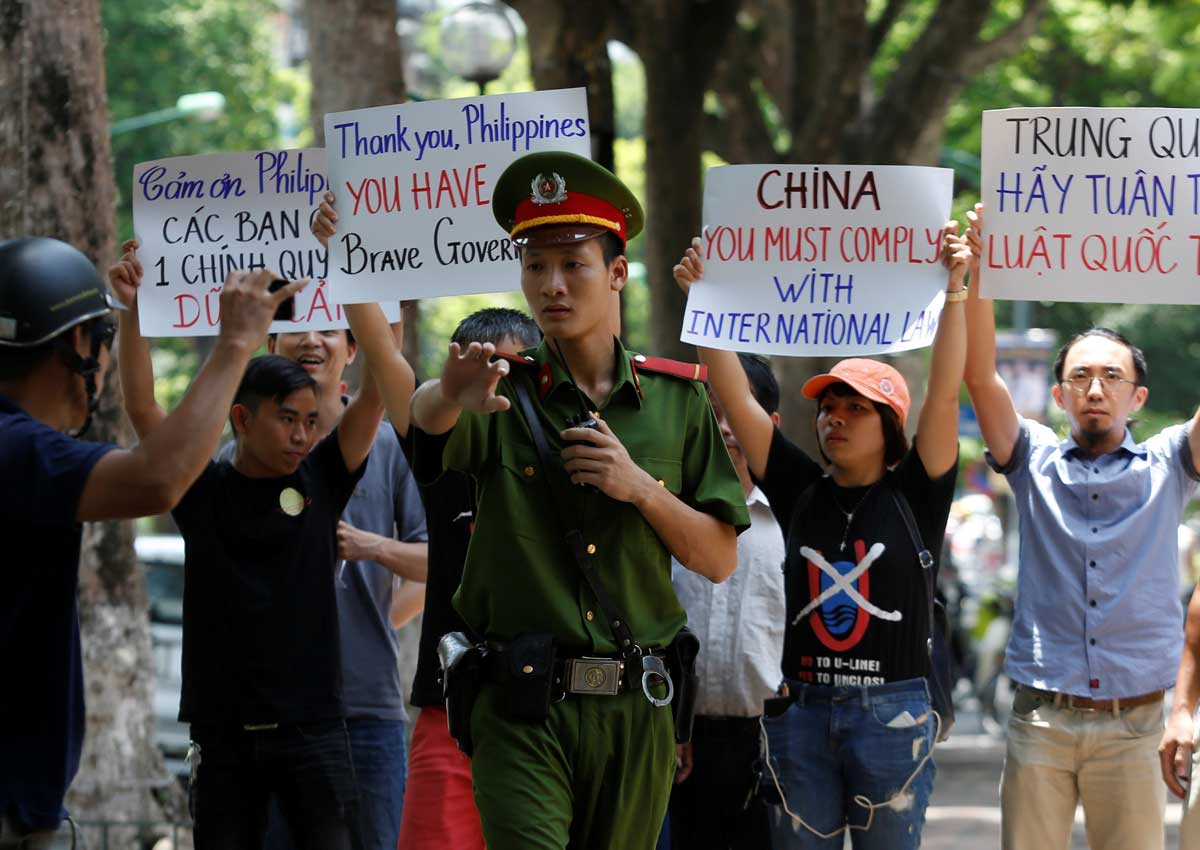
Throughout the morning around 30 activists were swiftly bundled onto waiting buses and cars by security forces after they gathered to hold a protest near the city’s famous Hoan Kiem lake, a common spot for demonstrations.

Some chanted “Down with China invasion!” as they were led away to detention.

Later in the day a group of nine activists held a brief rally outside the Philippines embassy. One held aloft a banner that read: “Thank you Philippines. You have a brave government.” The group dispersed on motorbike before security forces arrived.

Activists posted pictures on social media of similar flashmob rallies in southern Ho Chi Minh City with protesters riding around the city on motorbikes holding banners criticising China.

Beijing lays claim to virtually all of the South China Sea, putting it at odds with regional neighbours the Philippines, Vietnam, Malaysia, Brunei and Taiwan, which also have partial claims.

China boycotted the PCA hearings, saying the court had no jurisdiction, and has reacted furiously, vowing to ignore the ruling and arguing it misinterprets international law.

Vietnam and China frequently trade diplomatic barbs over the disputed Paracel island chain and waters in the South China Sea.

China has encouraged patriotic citizens to visit the contested Paracels, which are known as Xisha in Chinese.

Such acts have deepened already simmering anti-Chinese sentiment in Vietnam while domestic critics accuse Hanoi of being too meek towards its giant northern neighbour.

At least three Chinese nationals were killed in 2014 when rioting broke out in Vietnam after Beijing sent an oil rig into contested waters.

Image: 
Category: 
Publication Date: 
Sunday, July 17, 2016 – 14:19
Send to mobile app: 
Source: 


Story Type: 
Others

Source link

Singapore to supply additional potable water to Johor after urgent request made

0

SINGAPORE – Singapore will be providing an additional six million gallons of treated water per day to Johor starting Sunday (July 17) after an urgent request was made from Johor’s water regulatory body.
This additional supply will continue for the next three…

Source link

Wooing local talent to work at 'weird science'

0

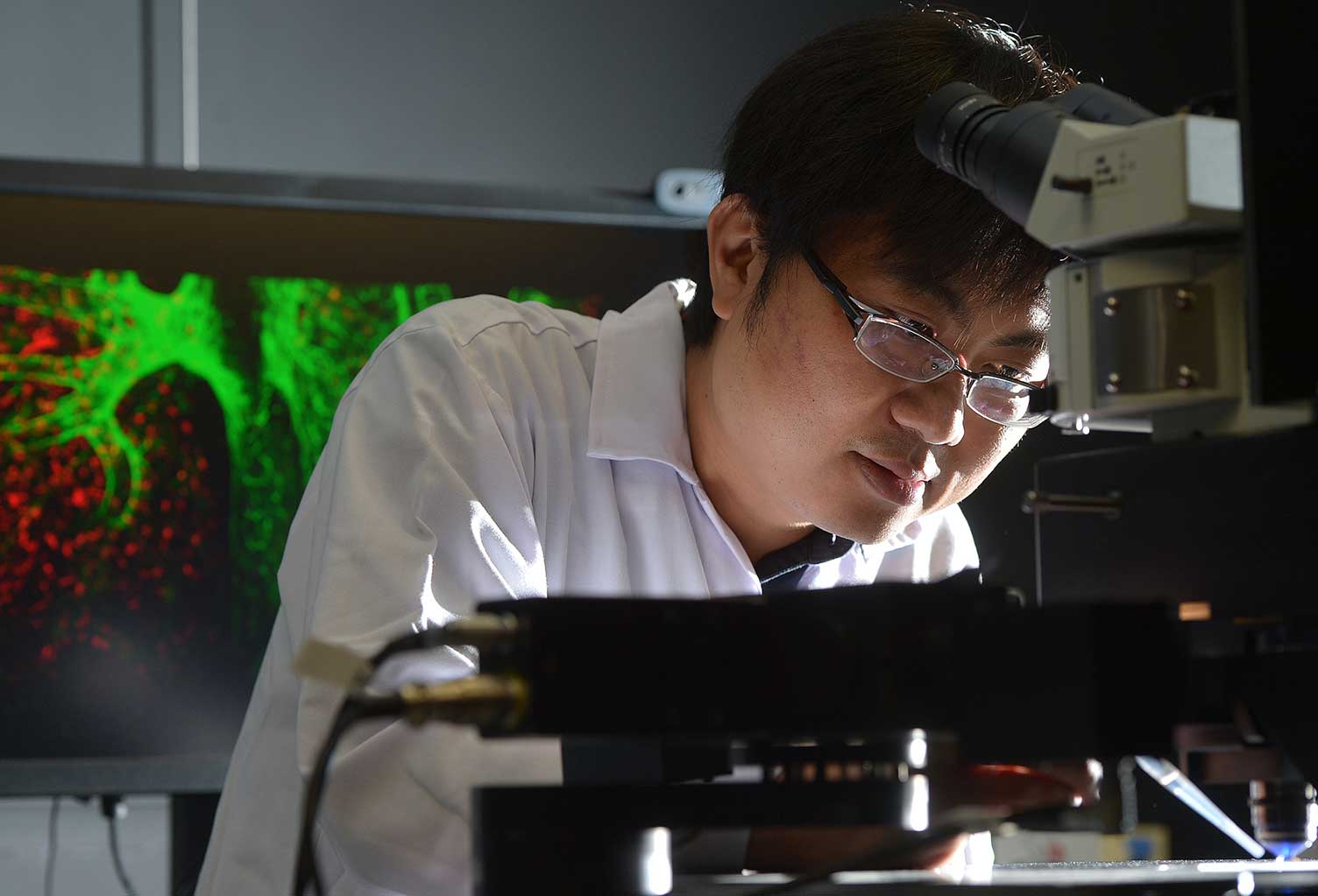
The computer screen lights up with blotches of green and red, formless shapes moving here and there.

I am watching these dancing images, ignorant and clueless, next to a man who knows exactly what is taking place.

I see meaningless colours; he sees body cells responding to an injury.

Can the gulf between two persons be so large that we see the same thing, but he everything and I nothing?

That’s how I feel, here in one of the many laboratories I am visiting at Biopolis.

This is the heart of Singapore’s multibillion-dollar biotechnology investment where hundreds of talented researchers equipped with the latest cutting edge instruments practise weird and complicated science.

I am trying to understand what is taking place, who are the people involved and how well the projects are doing.

At the Singapore Immunology Network (SIgN) which is part of A*Star, the national body spearheading scientific research, Dr Ng Lai Guan is trying his darndest to explain the what.

The video I was watching was captured by a microscope aimed at the ear of a mouse that had a part of it deliberately damaged by laser to study how the inside of the body reacts to an injury.

The magnification is so powerful it is possible to observe cells and proteins at work. This is a world of the basic building blocks of life .

But you can’t just place any old mouse under any old looking glass. This laboratory mouse has been genetically modified so that the relevant cells will show up in different colours when the action takes place. Otherwise you wouldn’t be able to tell what was taking place and interpret the subsequent action.

This is valuable science because if you can observe how actual cells behave in the body of a living animal and watch it in real time, you might begin to unravel part of the mysterious way life works, and discover new ways of fighting disease and injury.

Before this, scientists had to make do by removing the damaged or diseased part and studying the sliced and very dead specimen in a laboratory.

It’s the difference between a black and white photo and a technicolour live video recording.

It is also very complicated science because real-time imaging like this requires a combination of skills in microbiology, physiology and biophysics.

You need to clone the mouse, do surgery on it, handle the expensive microscopy (this particular one is called an intravital multiphoton microscope) and be able to analyse all that data from those dancing images.

It is why it is so expensive to do.

Singapore is committed to spending $19 billion in its latest five-year R&D budget, from 2016 to 2020, with a significant part on biomedical science which has been identified as an important sector of its future economy.

Some of the areas scientists here are hoping to make a breakthrough in include research on cancer, diabetes, cardiovascular disease, infectious diseases as well as neurological and other sense disorders.

SIgN specialises in immunology, which is a study of the immune system in living things. Its current work includes research on dengue and chikungunya.

I have also come to find out more about the people who spend their professional life studying killer diseases and peering endlessly at computer screens.

Dr Ng, 39, is one of the leading scientists on live imaging of this sort, but you wouldn’t have known it, looking at his boyish face and crumpled T-shirt.

He looked like he might have just hopped off the bus from Parit Buntar in the northern Malaysian state of Kedah where he hails from.

Like many talented Malaysians who now make Singapore their home, his was a small town to big city story: Parit Buntar to the University of New South Wales in Australia for his undergraduate degree in biomedical science; PhD from the Garvan Institute of Medical Research, Sydney; joined the Institute of Molecular and Cell Biology, Singapore, in 2004; off to Wistar Institute at the University of Pennsylvania in the US which specialises in cancer and vaccine research; and recruited by A*Star in 2009.

He tells me two stories that have influenced his research career.

While studying in Australia, he received word that his grandmother was gravely ill. He returned home and spent two months looking after her before she died. The experience made him decide to switch to medical science and he hasn’t looked back since.

He also tells me that the chair I am sitting on, across from his table in his office, was where the Nobel Prize winner Ralph Steinman sat when he visited Dr Ng six months before he died in 2011.

Dr Steinman won the Nobel Prize in medicine that year for his work on a type of cells that triggers the body’s immune system – which he named dendritic cells.

Dr Ng had published a paper on these cells during his postgraduate studies but had not continued work on it, and he remembers what Professor Steinman told him that day: Don’t give up on your study.

He hasn’t.

The facilities and equipment here, he tells me, are world class, and the support he gets from A*Star is outstanding.

The biggest challenge though is not the science, but getting good Singaporean PhD students to join the research team.

He says that, intellectually, they are as good as the best in the world but they have to be committed and dedicated to a life of research.

Not hungry enough?

It’s a problem even at the top of the scientific food chain.

I meet his boss, Professor Laurent Renia who came over from France in 2007 to start SIgN and who specialises in malaria research.

He says the scientific world is a fast-moving one and researchers here have to keep up with the best or risk being left behind.

He is proud of what SIgN has achieved and cites its success in developing a test kit to detect 26 pathogens that cause 13 tropical diseases.

But there is much more to be done.

Singapore’s multibillion-dollar R&D bet isn’t just about making a mark in the scientific world but part of a broader effort to transform itself.

It can no longer rely on being just a place where foreign companies set up their factories, but must build its own, invent new products, innovate new ways to serve its customers, and, yes, discover new cures for diseases.

Can Singapore make this leap and join the ranks of the advanced countries?

Part of the answer lies in places like SIgN where cutting edge work is being done.

Dr Ng hopes one day to make a breakthrough that might change the practice of medicine.

Singapore needs many more of these people, each working in his own area of expertise, to make a difference across the economy.

It is painstaking, demanding work with no guarantee of success.

That’s what it takes to make it to First World ranking.


This article was first published on July 17, 2016.
Get a copy of The Straits Times or go to straitstimes.com for more stories.

Image: 
Category: 
Publication Date: 
Sunday, July 17, 2016 – 16:00
Send to mobile app: 
Source: 


Story Type: 
Others

Source link

China: Bully or misunderstood new boy?

0

Imagine a boy who grows up in a sheltered environment, socialised in his isolated world among his own kind. One day he decides he wants to play with the other children in the playground nearby.

He is tall and strong, and the others eye him warily. He also doesn’t seem to understand that they must take turns and that it is not okay to shove others to get to the front of the queue.

The boy wants to make friends, and has lots of toys and sweets to give away. But he demands – not expects – gratitude and appropriate reciprocal actions in return for his gifts.

The children in the playground have devised their own set of rules and agree to refer to a council when there is conflict.

The boy says he will abide by those rules, but his actions do not fit his promises. He has noticed that other big boys sometimes ignore the rules, and get away with it. So he chooses what rules to abide by, ignores some of the council’s actions, and talks alternately sweet and tough at all times.

No wonder, after a time, that the boy has few friends in the playground.

I got to thinking up this imaginary scenario when news broke last week about a tribunal’s ruling on an arbitration case brought by the Philippines against China. The tribunal ruled overwhelmingly in favour of the Philippines, saying that China has no legal basis to claim historic rights to areas within a nine-dash map that it had used, and that none of the disputed features in the Spratly Islands is entitled to an exclusive economic zone (EEZ) of its own.

Under the United Nations Convention on the Law of the Sea (Unclos) that China ratified in 1996, countries are entitled to an EEZ of 200 nautical miles from the boundaries of their islands. In effect, the tribunal’s ruling dismissed China’s claim to sovereignty and rights over all of the maritime areas, land and waters, within the South China Sea as suggested in its nine-dash map.

Like an improperly socialised boy who joins a fraternity and then lashes out when its rules deny his claims, China reacted by dismissing the “law-abusing” tribunal that it said had no jurisdiction over the case; and described the verdict as a “farce” that was null and void.

It’s easy to paint China into the role of the neighbourhood bully, throwing its weight around – and to think of it as a hegemonic power, intent on using its economic and growing military muscleto dominate the region.

Yet, stripped of their bluster, China’s own declarations are not in accord with that picture.

President Xi Jinping declared that China’s “national sovereignty and our maritime rights and interests in the South China Sea will not be affected in any way” by the ruling.

In the next breath, its leaders frequently express China’s commitment to international law.

Its Foreign Ministry said China stood ready to “resolve the relevant disputes peacefully” through negotiation and consultation with other claimant states “on the basis of respecting historical facts and in accordance with international law”.

How can someone deny a ruling handed down by an arm of international law, and in the next breath say they are committed to international law? (The tribunal is set up under Unclos that China is a signatory to, and its decision is legally binding.)

There are four possible explanations.

WILFULNESS

The first is wilfulness: I’m big and I don’t care about your rules.

Superpowers ignore international law at will when their sovereignty or national security interests are involved, as political scientist Graham Allison noted – the way the United States did when Nicaragua sued Washington for mining its harbours and won in the International Court of Justice (ICJ). America said the court had no jurisdiction, and vetoed six United Nations Security Council resolutions ordering it to comply. Russia also ignored a tribunal ruling and refused to comply, in a case against the Netherlands.

Big powers pick and choose which rules to abide by. The US, in this respect, as a superpower is also a super hypocrite. It urges China and other parties to abide by the tribunal ruling – but it has itself not even ratified Unclos. By ignoring the ruling, China may be treated like a pariah now – but it may just be learning to behave like a superpower.

COGNITIVE DISSONANCE

The second explanation is cognitive dissonance: Lying to itself. China really believes that it is part of the global order, wants to play by its rules, and fails to see that its strident refusal to abide by the tribunal’s decision is inconsistent with its global position. It also fails to see that its actions – ramming of vessels, blocking the Philippines’ fishermen, and constructing artificial islands to house facilities – are inconsistent with its avowed proclamations of being a peaceful large neighbour committed to international law.

In other words, it is lying to itself.

However, I doubt this theory is credible. China is a very smart, very big and increasingly sophisticated power. It has millennia worth of statecraft to fall back on. If it is saying one thing and doing the opposite, it is doing so for a reason, not because it can’t see the inconsistency.

DIVIDE AND CONQUER

Which brings us to the third explanation: that saying one thing and doing another is part of China’s grand strategy. And its strategy is to divide and conquer.

It’s important to state what China’s grand strategy is likely not about. Many analysts agree with China’s self-formulation that it is not an expansionist or missionary power – it does not grab territory or set up colonies the way the British, Dutch, Spanish and Portuguese did in the late 16th to early 20th centuries; and it does not seek to impose the Chinese political model on others the way the United States wants to export and impose its version of democracy and human rights on others.

If expansion and colonisation are not its aim, what is?

Writer Sun Xi, in a commentary in The Straits Times (ST), said that while China is not a missionary power, it has a mission – the “Chinese Dream” of achieving the “great rejuvenation of the Chinese nation”, in President Xi’s words.

Mr Sun wrote: “China hopes to restore its historical position as a global leader, a dominant power in the world. To put it simply, China wants to be respected by the rest of the world again.” To realise such a mission, China needs economic rejuvenation and political, military and cultural rejuvenation as well, he added.

China’s narrative is quite clear if we take its words at face value. It seeks to establish control over what is historically China’s. During the “century of humiliation”, China had to stand by helplessly when it lost territories and was carved up like a melon (gua fen) by Western imperialist powers.

But with the establishment of the Chinese Communist Party (CCP) that brought unity and now strength to China, China wants to win back territories and regain respect. Some analysts say this is part of the CCP’s campaign to boost its own legitimacy.

In order to win back territories, China resorts to a strategy of divide and conquer. It splits ASEAN by getting countries beholden to it (such as Laos and Cambodia) to deny the organisation the unanimous consensus it needs to get anything done. It refuses to negotiate with ASEAN as a bloc, insisting on bilateral negotiations so it can deal with smaller countries one by one.

This is the pragmatic realist view.

Still, the fact that China is not a missionary power offers hope for peaceful resolution of conflict. China does not want to remake South-east Asia into its own image. It wants respect and a share of resources (albeit likely the larger share).

MISUNDERSTANDING

The fourth explanation for the disconnect between China’s words and actions is plain misunderstanding.

Perhaps China wants to abide by international law, but doesn’t understand it. Or perhaps the tribunal didn’t understand China’s claims.

After all, China ratified Unclos in 1996 and was a supporter of the EEZ regime. Why would it now go against it?

One interesting suggestion came from Yale-NUS senior lecturer Navin Rajagobal in a commentary published in ST on July 12.

Dr Rajagobal put the spotlight on a 2009 joint submission by Vietnam and Malaysia to the UN. This sought to clarify their competing claims in the southern part of the South China Sea under Unclos.

China was then forced to respond. He wrote: “On May 6, 2009, China found itself facing the stark certainty of Unclos and the prospect that the Philippines would follow the lead of Vietnam and Malaysia and bring its claim in line with Unclos…

“China, perhaps too hastily, submitted a formal rebuttal to the Malaysia-Vietnam… submission the very next day with these words: ‘China has indisputable sovereignty over the islands in the South China Sea and the adjacent waters, and enjoys sovereign rights and jurisdiction over the relevant waters as well as the seabed and subsoil thereof (see attached map).'”

It attached the now-famous nine-dash map.

The Internet age and the words “adjacent waters”, “sovereign rights” and “jurisdiction” acted like proverbial red flags to the bulls of international law experts and observers. An issue that once involved six claimants in a small sea in Asia became internationalised.

The stakes went up. Put on the defensive, China hardened its position.

It is significant that the tribunal last week stated that the root of the issue “lies in fundamentally different understandings of their respective rights under Unclos in the waters in the South China Sea, and not in any intention by one of the parties to infringe the rights of the other”, as summed up by international law expert Robert Beckman in his ST commentary “Tribunal Ruling A Game Changer”.

If China failed to understand Unclos fully, could the Unclos tribunal also have failed to understand China fully?

After all, China’s leaders speak in terms of claiming sovereignty – although over what exactly is unclear. They thus consider the tribunal “law-abusing” and out of its jurisdiction. (It is true that Unclos cannot determine territorial disputes on sovereignty. These may be referred instead to the ICJ.) From this point of view, China’s refusal to take part in the tribunal’s proceedings is less intransigence, and more a logical follow-through of its initial stance.

Yet the tribunal ruled that China’s claims did not amount to claims over historic “title” but only to “historic rights”. In international law parlance, rights refers to economic rights such as fishing rights or rights to the oil and gas and other resources within an area, while title suggests possession. China’s own statements have left ambiguous what it is claiming, and where, within the nine-dash map.

The tribunal decided that China’s claims of “historic rights” but not title meant the tribunal had jurisdiction to consider the case. And it ruled that whatever historic rights China might have claimed or enjoyed were given up once China ratified Unclos. Unclos law trumps.

With each party insisting on its own view and definition of words used, the two would always appear to be talking at cross purposes.

Of course, those who respect the rule of law know that the tribunal has the backing of international law and its words carry the weight of legal mandate. They would tend to see the ruling as legitimate, and China’s protests as unreasonable and obstructive. And yet, as the tribunal itself speculated, there was no intention of either party to infringe on the rights of the other. No hegemonic imposition. Just different interpretations of what rights one has.

If misunderstanding is the issue that drives a stake into China’s relations with South-east Asian claimants, is there hope for some bridging of the mental gap?

China’s experience in the World Trade Organisation (WTO) might be a useful indicator. After a long, 15-year process, China signed on to the WTO in 2001. It then faced the indignity of being repeatedly sued by trade partners such as America and Canada under WTO dispute rules and had to defend itself.

But after about a decade, it became more active. An analysis by Geraldo Vidigal in EJIL:Talk!, the blog of the European Journal of International Law, of 50 WTO disputes from 2012 to 2015 found that China was joint third with the US, initiating 10 disputes. The top was the European Union with 18 and Indonesia was second with 13.

Oxford professor of public international law Dapo Akande speculated on the reason in the same blog: “If it is locked into a system which is regularly being used against it, then why not use the system against others as permitted by that system.”

As a relative newcomer in the global arena, China may thus need time to get used to new rules, and to new ways of doing things. It will tend to want to interpret international law in its own national interests for as long as it can do so – learning from a few bad habits of other superpowers .

The tribunal ruling is one step along the journey to nudge China into accepting international rules. Other countries’ responses to the ruling, and the way they respond to China’s indignation now, can turn China away, or help China come to terms with the rules of the game.

That new boy at the playground?

Could be a bully.

Could be someone lying to himself about his actions.

Could be a boy who believes the playground belongs to him and wants the other smaller boys to kowtow to him before he will consent to them playing there also.

Or could be someone who is used to playing only among his own kind for years, and is just trying to get used to the new rules of the game with others. He might be rather solipsistic and sees things from his sheltered point of view. But he isn’t a bully – not in his own eyes anyway. He needs time and proper socialisation to get used to playing with others.

Or, possibly, all of the above.


This article was first published on July 17, 2016.
Get a copy of The Straits Times or go to straitstimes.com for more stories.
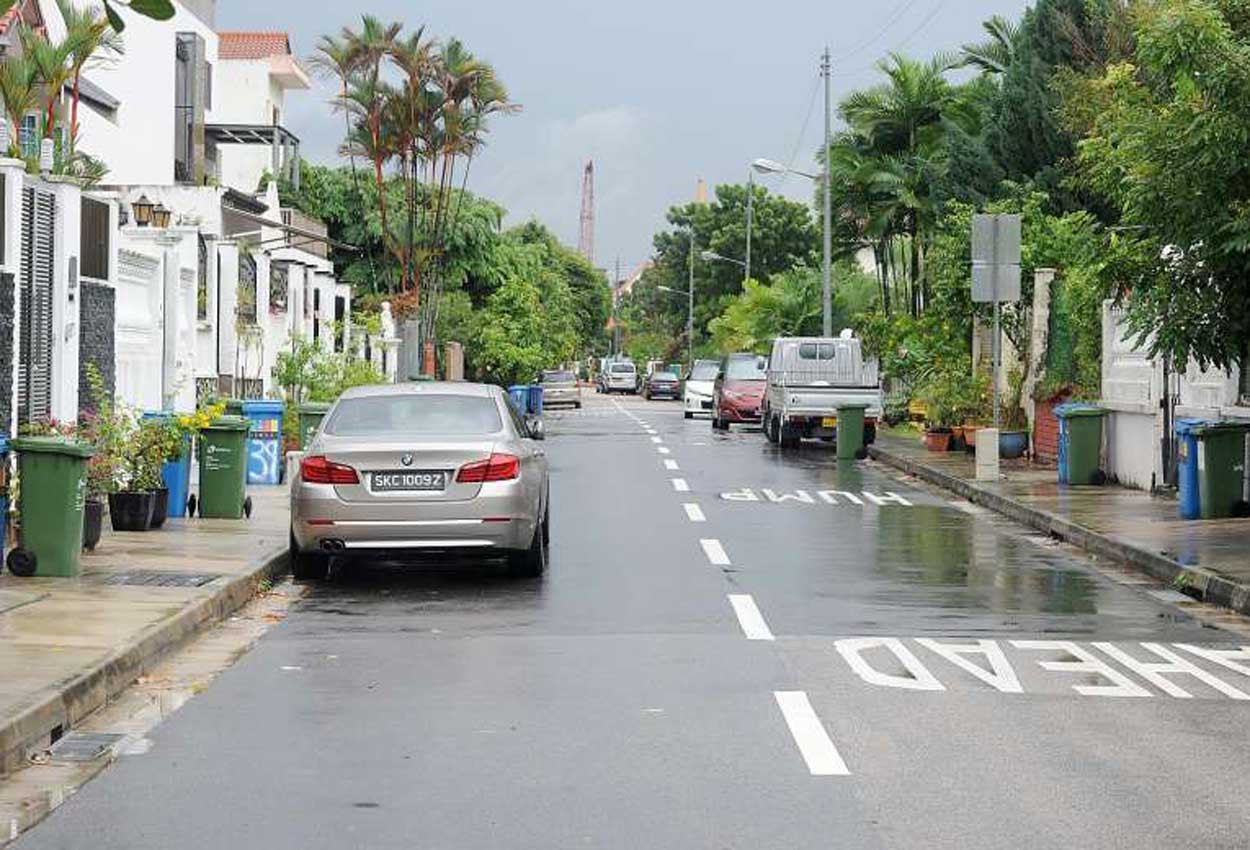

Image: 
Publication Date: 
Sunday, July 17, 2016 – 16:00
Send to mobile app: 
Source: 


Story Type: 
Others

Source link

Khaw’s statements on defective trains are ‘contradictory’: WP

0

SINGAPORE – The Workers’ Party (WP) has called Transport Minister Khaw Boon Wan out on what it described as contradictory statements about the recall of defective MRT trains for repairs in China.
In its statement issued on Sunday (July 17), the WP said: “Mr…

Source link

2nd Pow Sing eatery suspended over food poisoning

0

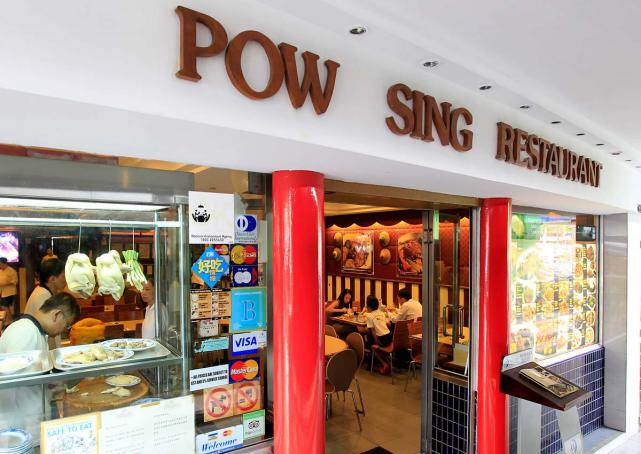
Four days after chicken rice eatery Pow Sing Restaurant was suspended after customers reported falling sick, its sister shop a few units away also suffered the same fate.

It was announced yesterday that Pow Sing Kitchen’s licence has been suspended until further notice by the National Environment Agency (NEA), after 10 suspected cases of gastroenteritis were reported by its patrons.

The Ministry of Health (MOH) also said yesterday that the problem at Pow Sing Restaurant seemed to have affected more people. It revealed that 84 verified reports of gastroenteritis were linked to consumption of food from that restaurant.

When the NEA suspended the licence of Pow Sing Restaurant on July 13, there were at least 29 reports of gastroenteritis.

When contacted, Pow Sing Kitchen’s director, Mr Lee Chin Soo, declined to comment. “I cannot answer any questions on this. You need to go and talk to the NEA,” he said.

In their statement yesterday, the NEA, MOH and Agri-Food and Veterinary Authority (AVA) said they were suspending Serangoon Gardens eatery Pow Sing Kitchen as a precautionary measure.

“Similar to the suspension of Pow Sing Restaurant, NEA has required the operator of Pow Sing Kitchen to dispose all ready-to-eat food, thawed food and perishable food items, conduct thorough cleaning and sanitising of its premises, including equipment, utensils, work surfaces and toilet, while investigations are ongoing to ascertain the cause or contributing factors to the outbreak,” said the statement.

The AVA has collected food samples from the eatery and will be conducting checks on the restaurant’s supplies. Laboratory tests are ongoing, said the statement.

Meanwhile, the MOH will collect stool samples from the affected people, and Pow Sing Kitchen’s food handlers will be sent for stool screening.

“Only food handlers who are tested to be free of food poisoning pathogens, and have re-attended and passed the Basic Food Hygiene Course will be allowed to resume work. MOH and NEA will continue to monitor the situation closely,” said the agencies.

The NEA said it would take enforcement action if any hygiene infringements are found.

“Licensed food operators have the responsibility to put in place systems and processes to ensure high hygiene standards are observed by their food handlers at all times. Food operators are also reminded to ensure that all food handlers are registered with the NEA and that they do not engage in any food preparation if they are sick,” said the agency.


This article was first published on July 17, 2016.
Get a copy of The Straits Times or go to straitstimes.com for more stories.

Image: 
Publication Date: 
Sunday, July 17, 2016 – 13:59
Send to mobile app: 
Source: 


Story Type: 
Others

Source link

Landlord repossesses California Fitness' Raffles Place premises

0

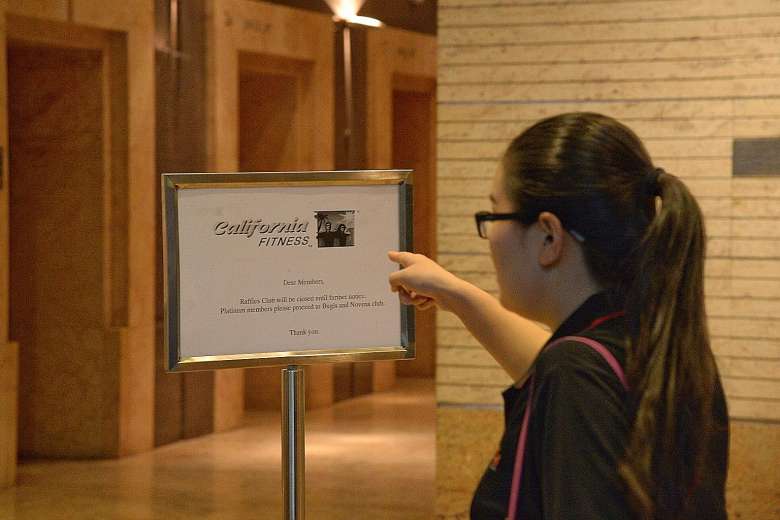
Gym chain California Fitness closed its Raffles Place outlet yesterday “until further notice”, but The Sunday Times has learnt that the unit was repossessed due to its failure to pay its rents.

This has raised the possibility that the chain, having shut all its outlets in Hong Kong last Tuesday after chalking up millions of dollars in debts, is also in financial trouble here and set to pull out from Singapore as well.

The chain, run by parent company JV Fitness, yesterday put up a notice on Facebook and at its Republic Plaza Tower 2 branch to say the outlet was “closed ” and directed members to its remaining outlets in Novena and Bugis.

Staff at the gym’s Bugis Junction Towers branch told The Sunday Times that the closure of the Raffles Place outlet was temporary, but could not say when it would reopen. When contacted by phone, the club’s general manager, Mr Paul Lim, said he was busy and hung up.

Attempts to reach JV Fitness were also unsuccessful.

A spokesman for Republic Plaza building management said it had made several attempts “to engage JV Fitness on its rental arrears”.

“Regretfully, these were not fruitful despite best efforts,” he said. “Hence, pursuant to the terms of the lease agreement between the tenant and landlord, the lease agreement has been terminated and the premises re-entered and repossessed.”

When the first California Fitness gym opened here in 1998, it was one of the first “mega-gyms”, with a floor area more than five times the size of an average gym then. By 2002, the chain had more than 15,000 members.

The Ngee Ann City outlet closed in February this year. California Fitness said it was due to “variable business strategies and decisions”.

After JV Fitness closed all its 12 gyms in Hong Kong last week, including two called mYoga and one facility known as Leap, a spokesman for California Fitness told reporters “California Fitness Hong Kong and California Fitness Singapore operate separately and independently”, and declined further comment.

An irate gym member, who wanted to be known as Ms See, was at the Bugis branch yesterday to demand a refund for a 26-month package she paid $1,700 for on July 7.

“Before I signed the contract, I added a clause to say that in the event that it closes any one of its outlets, I had the right to get a refund. But the staff just told me they could not process a refund for me,” said the 38-year-old, who works at a logistics firm.

She has informed her bank to stop further payments to the gym.

Another member, compliance officer Ms Lim, 26, who goes to the gym twice a week, said: “We already felt the impact when the Ngee Ann City branch closed as the remaining gyms were more packed. So I am worried it will be even harder to book classes now.”

Singapore’s consumer watchdog chief has urged California Fitness to be more forthright about its upcoming plans.

Mr Seah Seng Choon, executive director of the Consumers Association of Singapore, advised consumers to ask the gym about the lease of the outlet they intend to use before signing a package.


This article was first published on July 17, 2016.
Get a copy of The Straits Times or go to straitstimes.com for more stories.

Image: 
Category: 
Publication Date: 
Sunday, July 17, 2016 – 14:00
Send to mobile app: 
Source: 


Story Type: 
Others

Source link

S'pore group recounts horror; SUTD student 'doing well'

0

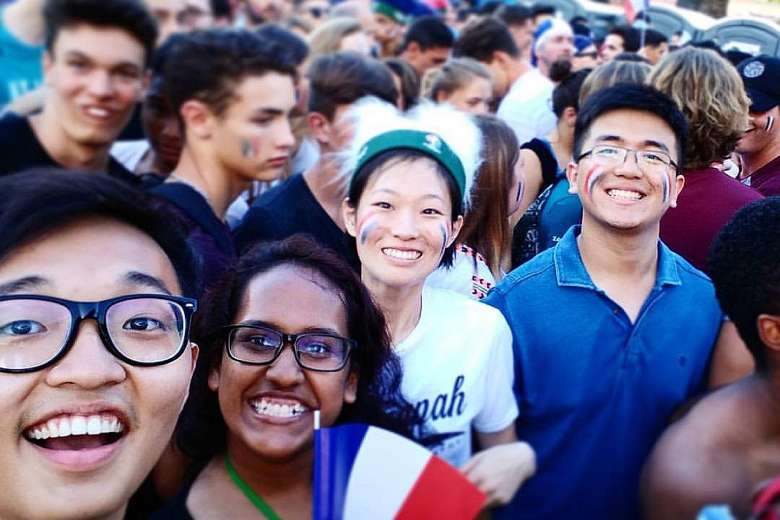
The Singapore University of Technology and Design (SUTD) student who was injured in the attack in Nice is doing well in hospital, his schoolmates said. But some of them also recounted the shock and the panic they experienced on Thursday night.

It was simply luck that took Singaporean student Huang Jing Jie away from the Promenade des Anglais in Nice, he said. Shortly after leaving, a truck ploughed into a crowd there, killing 84 people and leaving scores injured. He and the SUTD schoolmate he was with had decided to leave five minutes before fireworks ended on Bastille Day.

They wandered into a church instead. Minutes later, the doors were shut and people were crying. They thought there might be gunmen shooting outside. “We hid in the church for about 20 minutes before they opened the doors,” said the 23-year-old, part of a group of SUTD students on a summer programme in Nice. They rushed back to their hostel 30 minutes away where they found out what really happened.

Another SUTD student Monica Nathalia Haryanto, 20, had intended to see the fireworks on Bastille Day, but by the time she arrived, it had already ended. Still, the second-year computer science student, who was with two other schoolmates and an American student they had met from the exchange programme, stayed behind for a concert.

Suddenly, people around her started screaming and running, she said. “In panic, we followed them at first but stopped after a while since we didn’t know what was happening,” said Ms Haryanto. “Then police told us to run.”

She was just 2km away from where the attack began. “Everyone started running as fast as they can,” she told The Sunday Times yesterday. “We got pushed but we made it unharmed to the city.”

They eventually made it back to the hostel on foot. “People were crying. All I could think about was my family back home,” she said. “It was really confusing and scary…”

Back at the hostel, the students did a roll call. But fellow SUTD student Esmond Chuah was nowhere to be found. Mr Chuah, a 22-year-old Malaysian, had headed to the beach – further down from where Ms Haryanto was.

Mr Huang said the SUTD group, who are at the European Innovation Academy on a three-week programme that started on July 3, was worried something had happened to him. “We couldn’t contact him… Someone told us they saw him going into an ambulance,” he added.

They heard from him only the next day, when Mr Chuah contacted them using a nurse’s cellphone.

Mr Chuah had injured his back in the Bastille Day attack and remains in the hospital in a stable condition.

Students who visited Mr Chuah yesterday said he is recovering and could even joke with them.

A Singaporean man was also among those injured during the attack in Nice, according to the Ministry of Foreign Affairs (MFA).

His injuries are not life-threatening, it said in a statement on Friday. All Singaporeans in Nice who registered with the MFA are known to be safe, the ministry confirmed.

Some of the SUTD students are still recovering from the incident.

“Ambulance sirens can still be heard quite frequently even until now,” Mr Huang said. “There are a lot fewer people on the streets.”


This article was first published on July 17, 2016.
Get a copy of The Straits Times or go to straitstimes.com for more stories.

Image: 
Publication Date: 
Sunday, July 17, 2016 – 14:00
Keywords: 
Send to mobile app: 
Source: 


Story Type: 
Others

Source link

Uber's only Causasian woman driver partner makes best of bad situation after divorce

0

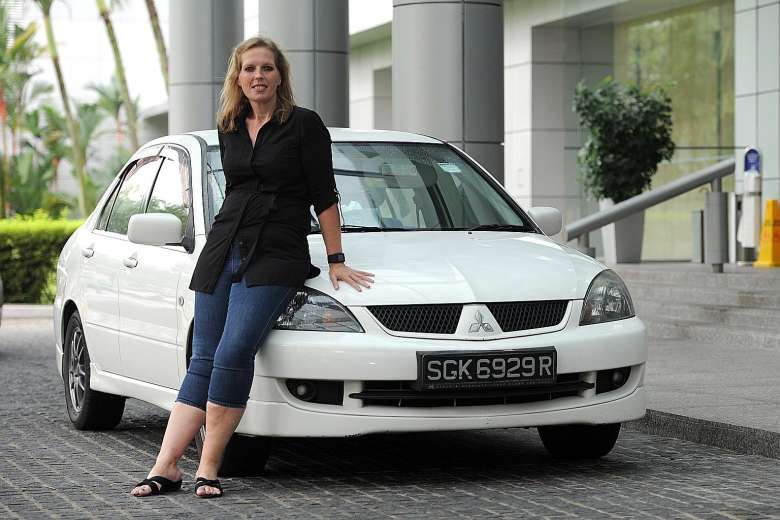
Passengers stepping into Ms Anna Gibbons’ Mitsubishi Attrage are usually surprised to find their Uber driver is a blonde, 6ft-tall woman.

The 44-year-old Briton was once told by a Malaysian man that she was the first white woman he had ever spoken to.

“I’ve also been asked by a drunk guy one night if I was a Chinese taxi driver in disguise,” she said.

Uber said she is the only Caucasian woman out of its “tens of thousands of driver partners”, over 98 per cent of whom are Singaporean.

The single mother of two leaves quite an impression on passengers, not only because of her outgoing personality, but also because of her story.

She moved to Singapore with her banker husband in 2010 and became a permanent resident in 2013. But their 13-year marriage ended last year after he had an affair. He has since remarried.

Ms Gibbons said that under the Hague Convention – which is meant to offer protection from cross-border child abductions – she cannot leave the country with her children without her former husband’s consent.

“I can’t move on with my life until he decides we can leave,” she told The Sunday Times.

She estimates there could be 200 expatriate women divorcees in Singapore, going by the number in a support group.

Although her husband pays maintenance which covers the rent for her family’s apartment in Pasir Ris, fees for the children’s local school and other living expenses, she wanted to make her children’s lives easier by having a car. She started driving with Uber in April.

Uber-owned Lion City Rental gives her a 10 per cent discount on the car rental because she is a single mum. She works an average of 30 hours a week, when the kids are in school or asleep.

It has been hard for her 10-year- old son and eight-year-old daughter to adjust to life after the divorce. “My daughter is the only white child in her year, and the only white child whose parents don’t live together,” she said. “When you’re going through a divorce with children, they need that stability… In Singapore your friends become your family, but friends aren’t the same as a granddad or an aunt and uncle.”

But the job has been like “a lifeline” for her, and she enjoys talking to her customers. She once found herself counselling a woman whose husband also had an affair. “She said it’s nice to talk to someone who has been through it and come out the other side,” she said.

Passengers have left feedback for her in the Uber app commending her for being “very strong” or thanking her for sharing her story.

Business developer Rachel Ooi, 28, who took a half-hour ride in Ms Gibbons’ car last Friday, said: “A lot of Singaporeans often see Caucasian women as tai-tais (wealthy housewives)… But if they go through a divorce and they have kids it can become very messy.”


This article was first published on July 17, 2016.
Get a copy of The Straits Times or go to straitstimes.com for more stories.

Image: 
Publication Date: 
Sunday, July 17, 2016 – 14:00
Send to mobile app: 
Source: 


Story Type: 
Others

Source link