Home Blog Page 3385

PM Lee: Singapore has to be prepared that terrorists may breach its safety net

0

The spate of terror attacks around the world – most recently in Nice, France, which left 84 dead and many more injured – underscores the severity of the terror threat, Prime Minister Lee Hsien Loong said yesterday. And Singapore cannot assume it will be spared from an attack, he added. “We know that terrorists have the intention to attack Singapore. They have not succeeded so far, but one day they may breach our safety net and enter Singapore, so we need to be prepared.”

Mr Lee was speaking to Singapore reporters on the last day of his first official visit to Mongolia, where he met the country’s leaders and attended the 11th Asia-Europe Meeting (Asem) summit.

When asked about last Thursday’s attack in Nice, in which a 31-year-old man ploughed a truck into a crowd celebrating Bastille Day, Mr Lee said the mode of attack was shocking but not surprising as terrorists have used vehicles to ram into crowds.

“You can prevent a bomber, you can prevent somebody who comes with a gun, but what do you do with somebody who takes a kitchen knife or somebody who takes a car or a truck?” he asked.

This is why it is important to combat the threat on multiple fronts – to stress the need to live in a peaceful society where people work with and trust one another, as well as to detect and do something about those who seem to be going the wrong way before they can cause harm, he said.

But recent attacks, including in Malaysia, Indonesia and the Philippines, mean Singapore also has to be prepared that “sooner or later, somebody will break through”.

“We must know these things happen, they are bad, but we have to pick ourselves up and we must continue as one nation and life must carry on,” Mr Lee said.

To this end, he added, Singapore has been working to deepen trust between different racial and religious groups, and the new SG Secure initiative seeks to rally Singaporeans to cope with an attack and stay united in its aftermath.

Such efforts began after the Sept 11, 2001, terror attacks on America, but are being renewed as the threat posed by the Islamic State in Iraq and Syria (ISIS) grows.

Mr Lee said: “The first time it happens, it will still be a shock, we must expect that. We just have to prepare as well as we can so that when it happens, we have the best chance of coming through and standing and not disintegrating.”

He also spoke on terrorism at the Asem leaders’ retreat yesterday, a day after 51 Asian and European countries issued a joint statement condemning the recent attacks.

The meeting’s chairman, Mongolian President Tsakhia Elbegdorj, reaffirmed Asem leaders’ resolve to combat terrorism financing and terror groups’ abuse of the Internet.

Mr Lee, in his remarks to fellow leaders, called on them to “fight this threat together and co-operate more”, and reiterated Singapore’s support for international initiatives to combat terrorism.

The sharing of intelligence, he said, has helped Singapore, Malaysia and Indonesia to foil terror plots and arrest numerous terrorists.

Countries have to co-operate to cut funding for groups such as ISIS, counter their radical ideology, and secure borders so terrorists and foreign fighters cannot travel, he said. Beyond this, “we have to encourage our societies to hold together and not discriminate and marginalise any community”.

Society should also not give up on those who have been radicalised, he said, and should instead help them see the error in their thinking and help them reintegrate into mainstream life.

“Then, slowly but surely, we will win the war on terrorism.”


This article was first published on July 17, 2016.
Get a copy of The Straits Times or go to straitstimes.com for more stories.

Image: 
Category: 
Publication Date: 
Sunday, July 17, 2016 – 19:30
Send to mobile app: 
Source: 


Story Type: 
Others

Source link

Newspapers here top survey in media satisfaction

0

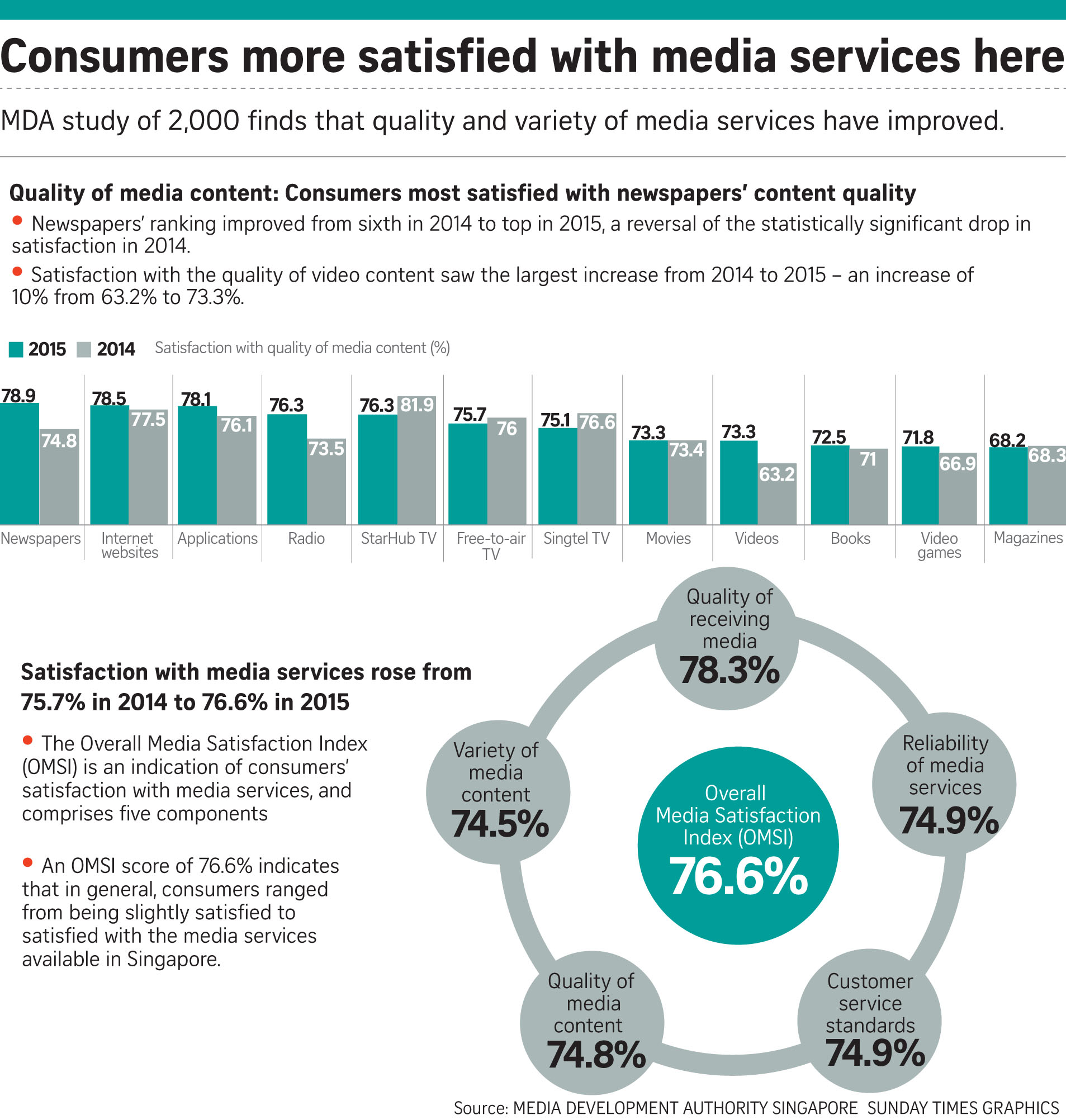
Satisfaction with mainstream media services here has been rising slowly over the last two years.

However, it is newspapers that stole a march over their digital rivals, showing the largest rise in content quality.

The latest annual media con- sumer experience study from the Media Development Authority (MDA) shows that satisfaction with media services was 76.6 per cent last year, up from 2014’s 75.7 per cent and 76.1 in 2013.

The MDA highlighted how respondents generally reported an improvement in the quality and variety of media content.

When it came to the quality of content, the ranking of newspapers jumped from sixth to first.

About 78.9 per cent of the res- pondents were satisfied with newspaper content – an increase of 4.1 percentage points from 2014.

Newspapers edged out websites, radio and free-to-air TV.

Former Nominated MP Calvin Cheng pointed out that the top three choices for consumers – newspapers, websites and apps – are all “on-demand options”, unlike scheduled news programmes.

He also said that the results are contrary to what some might think, that “people are cynical of and distrusting of media in Singapore. And that quality is going down”.

Pointing out that some websites produce content more for entertainment than for news value, he added: “I believe most people still know that only mainstream media provides accurate, factual news.”

Over the last few months, the husband-and-wife founders of now-defunct website The Real Singapore were jailed for making seditious remarks on the site. Sociopolitical website TR Emeritus last month also apologised for an online report claiming that the medical expenses of Finance Minister Heng Swee Keat, who is recovering from a stroke, are being paid by taxpayers, a claim the Government called “a blatant lie”.

Some 2,000 Singaporeans and permanent residents – aged between 15 and 65 – were surveyed between last October and December.

The MDA also released two other consumer studies on Thursday. They show that streaming movies and shows over the Internet has become a norm, with the highest viewership among people aged 15 to 34. For those under 15, watching Mediacorp channels remains the top media activity.

When it came to the quality of content, the ranking of newspapers jumped from sixth to first, a “reversal of the statistically significant drop in satisfaction”, the MDA said.


This article was first published on July 17, 2016.
Get a copy of The Straits Times or go to straitstimes.com for more stories.

Image: 
Category: 
Publication Date: 
Sunday, July 17, 2016 – 21:00
Keywords: 
Send to mobile app: 
Source: 


Story Type: 
Others

Source link

Guide, not punish, pre-schoolers, say experts

0

Punishment is not the same as discipline and it is not right to dish it out to young children, say experts.

Dr Christine Chen, president of the Association for Early Childhood Educators (Singapore), says: “Punishment is imposed on the child. The adult has the power to punish and intimidate the child into submission. The child feels powerless.”

This is not in line with the Code of Ethics that the association has drawn up for the early childhood education profession, she adds. The overarching principle of the code is that early childhood educators should ensure the safety – psychological, intellectual and physical – as well as physical health of each child in their care.

In contrast to punishment, when an adult disciplines a child, he empowers and encourages him to choose the appropriate behaviour based on consequences, and learn self-discipline in the process.

But experts The Sunday Times spoke to decline to comment directly on a recent incident at a preschool here that has drawn much interest.

A teacher reportedly made a six-year-old boy stand in front of his class and put on a girl’s hair clip for sporting long hair.

The boy later told his father that he felt like dying when the entire class laughed at him.

Amid polarised opinions on the incident – one camp says that the teacher went overboard, the other says that the boy’s parents were overprotective – it has raised the question of how best to manage what teachers think is inappropriate behaviour in younger children.

For instance, when a child grabs a colour pencil from another child, an adult can punish the child by taking away playtime from him. Or he can empower the child by giving him a choice: Return the colour pencil and continue drawing with another pencil or go to another corner to do other things.

Dr Chen says: “In disciplining the child, the adult guides the child’s behaviour by articulating the expectations and consequences so that the child can choose how he should act.”

This approach works on children and even teenagers. When the foundation is set early, the teenage years become less stressful as the teenager will be able to discipline himself, says Dr Chen.

Dr Yang Chien-Hui, a senior lecturer in Early Childhood Education Programme at the School of Human Development & Social Services at SIM University, adds that instead of punishment, teachers can use a proven technique called positive behaviour support to manage inappropriate behaviour.

“This approach considers that all inappropriate behaviour serves a purpose to the child,” she says.

Moreover, punishment does not target the cause of the problem behaviour and the purpose it serves to the child, and hence, is not effective in the long run.

Dr Yang provides an example: A child may stop grabbing a friend’s toy after the teacher scolds him, but he may later grab another friend’s hair, if the function of his grabbing behaviour is to achieve social interaction with a peer.

To stop a child’s inappropriate behaviour, she says, teachers should find out what purpose that behaviour serves the child and offer the child opportunities to meet his needs in other ways or teach him the skills he lacks.

In the case of the six-year-old boy with long hair, if he is keeping his hair because his parents want him to, the teacher needs to work with the parents to ensure that the expectations at home and in school are consistent, says Dr Yang.

She adds: “But if the child himself prefers long hair because it offers him sensory stimulation, teachers can direct his need for sensory stimuli, for example, by teaching numbers and maths using fabrics and objects that he can touch and feel.”

Experts such as Dr Yang also say that most preschool children’s misbehaviour is due to the lack of skills, for instance, the lack of language or social skills. Hence, instead of punishing a child when he grabs a friend’s toy, the teacher can teach the child language skills (get him to ask, “Can I play?”) and social skills, such as how to take turns.

At preschools under the EtonHouse International Education Group, teachers use positive guidance, which begins with a desire to understand the child.

Ms Leanne Sunarya, the group’s executive director of pedagogy, says: “If we see beyond the problem and seek to understand the child, it helps us see differently and respond in a positive way.”

She recounted an incident: When a child kept pinching her friends during storytime, her teachers told the child that that it was not appropriate and encouraged her to check on and care for her friends.

The teachers also found out why she was behaving that way. They observed that the child needed sensory stimulation and gave her a sensory ball during group time. She stopped pinching her friends after that.

At the Garden House Preschool, teachers also teach children how to manage conflicts.

Its founder Ana Peckham-Cooper says: “When a child gets hit, he is taught to say, ‘Stop, that hurts.’ And when another child does something he does not like or intrudes on his space, he is encouraged to say, ‘Stop, I don’t like it when you do this’, or ‘Stop, I don’t like it when you are in my space’.”

Teachers intervene only when children are not able to resolve a conflict themselves.

Ms Peckham-Cooper says: “We would ask the child who hit the other child if he heard what the other child just said or, if he is too young to understand, we would show him what ‘gentle hands’ are like.”

If the hitting persists and the teachers are not able to find out why, they call up the child’s parents and work together on a solution that can be practised at home and in school.

Mother of two A.T. Ng, 31, says how a school manages misbehaviour is an important criterion in her selection of preschools.

The stay-at-home mother says: “If its methods aren’t respectful to the children, it affects the children’s mindset towards school and, in turn, their self-esteem.”

Another parent, Web marketing manager Edmund Lim, 37, says he expects schools these days to use positive discipline and explain right and wrong to a child gently.

Mr Lim, who has two daughters, aged four and two, says: “Shouting at a child, punishing her by making her stand with a pencil on her head or sending her to a ‘thinking chair’ – all these are outdated ways.

“When my wife and I chose preschools for our children, we were more concerned that their programme structure should be enriching, rather than how our children will be disciplined.”


This article was first published on July 17, 2016.
Get a copy of The Straits Times or go to straitstimes.com for more stories.

Image: 
Publication Date: 
Sunday, July 17, 2016 – 18:00
Keywords: 
Send to mobile app: 
Source: 


Story Type: 
Others

Source link

Tender for Singapore-KL high speed rail project to be called within a year: Malaysia's Liow

0

The tender for the High-Speed Rail (HSR) project linking Kuala Lumpur to Singapore is expected to be called within a year, said Transport Minister Datuk Seri Liow Tiong Lai.

He said the ministry was looking forward to the signing of the memorandum of understanding for the HSR on Tuesday (July 19).

“Once the signing is done, the authorities will prepare the tender documents. The tender will be called within a year’s time.

“Many international companies have shown interest in the project and we welcome that. This is a very important and prestigious project because it is the first in ASEAN.

“We should be able to get more details on Tuesday. The Transport Ministry is giving its full support to the project,” he added.

Mr Liow, who is also MCA (Malaysian Chinese Association) president, was speaking to reporters after launching the party’s Jom Gerak, Teguh Bersama (Let’s Move: Stronger Together) Carnival at SMJK Keat Hwa on Friday.

Liow said the project would bring economic development to both Malaysia and Singapore.

Among the areas that will step up are the stops at Seremban, Ayer Keroh, Muar, Batu Pahat and Iskandar Puteri.

He said there would be a lot of transit-oriented development projects to help develop cities and towns along the rail link.

“We want them to link up with our urban transportation such as LRT and MRT as part of the transformation programme,” he said.

The proposed 350km-long double-track HSR line will also have one terminus in the new township of Bandar Malaysia, at the edge of Kuala Lumpur, with the other in Jurong East in Singapore.

The fast-speed train link will cut travelling time between Singapore and Kuala Lumpur to 90 minutes, compared with more than four hours by car.

It was previously reported that the project has been estimated to cost between RM60 billion (S$20.3 billion) and RM65 billion.

Image: 
Publication Date: 
Sunday, July 17, 2016 – 15:34
Send to mobile app: 
Source: 


Story Type: 
Others

Source link

Fish farms near Pulau Ubin raided for dealing in duty-unpaid cigarettes

0

SINGAPORE – Five people have been arrested for dealing with contraband cigarettes via fish farms off Pulau Ubin following a two-day operation.
The arrests came after customs officials intercepted a lorry in Bukit Batok Street 21 on July 13 and found 15,960…

Source link

Some millennials in Singapore eschews social media

0

The use of social media is commonly associated with younger folk.

Nine in 10 millennials here use Facebook, the most popular social media platform here. On average, they spend 2.3 hours a day on social media, according to global insight consultancy TNS.

But some millennials here – aged 16 to 34 – do not have Facebook, Twitter and Instagram accounts or have not logged on in months.

This minority – The Sunday Times found six of them – may watch the occasional YouTube video or have a LinkedIn or Google Plus account, but do not post updates.

At some point, most had a Facebook account, but quit for reasons such as wanting to protect their privacy, avoid cyber-bullying or to have more time for their interests or with their loved ones.

Part-time media student V. Ajantha, 22, who stopped logging into her Facebook account in 2011, says: “The idea of exhibiting my private life on social media never appealed to me. When my friends tagged me in photos, I would remove the tags because I didn’t want photos of myself circulating on the Internet.

“And since I never did anything with my Facebook profile, what was the point of being on Facebook?”

The fear of cyber-bullying was why undergraduate Poh Li Ting, 22, de-activated her Facebook account in 2010, three years after signing up. She had felt uneasy that her friends posted unflattering photos of her and tagged her in them.

Although she is not sure if they did so out of malice, she did not like being laughed at over those unflattering moments.

She says: “I was still a teenager then, grasping with my individuality and self-confidence. Those photos of me in the middle of a laugh or rolling my eyes were a big deal to me and they upset me.

“I soon got tired of fearing when the next photo would be uploaded and decided it would be better to be off the platform altogether.”

Most of the millennials who shy away from social media were uncomfortable with its culture, which they feel glorifies narcissism and leads users to feel inferior and inadequate.

Mr Leon Lim, 24, a cook at a hotel restaurant, last logged on to his Facebook account in 2014 and does not have a Twitter, Instagram or Snapchat account. He says: “My newsfeed was an endless stream of selfies and photos of food, holidays and relationships. It was easy to look at these photos and feel jealous or make unnecessary comparisons.”
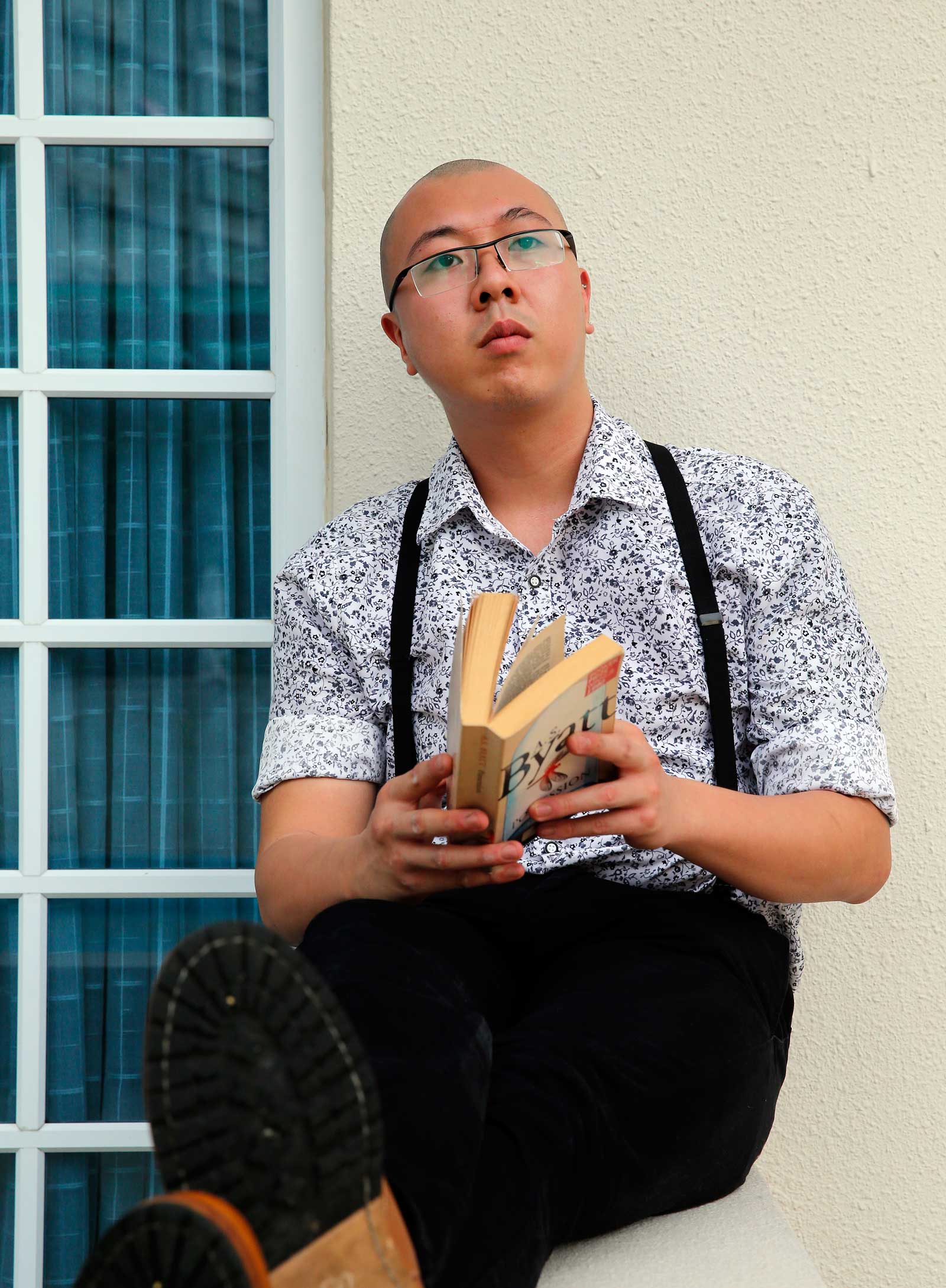
Mr Leon Lim enjoys reading books in his free time.

Singapore University of Technology and Design student Lim Huai Kang, 20, who last logged on to his Facebook, Twitter and Instagram accounts months ago, says: “Everyone on social media just wants people to ‘friend’ or ‘like’ them and make themselves appear popular. Some people also use social media to flaunt their lifestyles. This is not healthy.”

He adds: “I enjoy the way I live my life now – having my books and a group of close friends. I am not going back to social media or to start using it just because everyone else is doing so.”

Mr Marcus Ho, 31, co-founder of Social Metric, a social media marketing organisation, says he is impressed by these millennials who buck the trend. “For their generation, not being on social media is like not having an ez-link card or bank account. To make a conscious decision not to be on social media must have taken a lot of willpower.”

Dr Carol Balhetchet, clinical psychologist and senior director of youth services at the Singapore Children’s Society, feels that not being on social media would probably help one achieve a balance between time spent in the virtual world and in real life.

She says: “To the young, social media is so alluring because it is instant, free and can be accessed at any time and with little effort. That is why it is easy for young people to end up spending hours reading every post and clicking on link after link.”

But Ms Claire Lim, regional director of Social@Ogilvy, the social media division of Ogilvy & Mather, warns that those who shun social media may be at a disadvantage in the working world.

Many private organisations and government bodies, as well as public figures, use social media to make important announcements, Ms Lim, who is in her early 30s, notes.

“In this way, social media gives people the competitive advantage needed to succeed. In this day and age, social media is no longer optional, it is a necessity.”

Indeed, most other millennials were surprised to hear that some of their peers hardly use social media.

Undergraduate Kimberly Goh, 21, who is on Facebook, Instagram and Snapchat, says: “I don’t know anybody who is not on social media. Ultimately, it is their decision.

“But for me, social media has made it so easy to stay in touch with friends, current affairs and new trends. I honestly cannot imagine life without it.”

‘I can use the time better’

It’s common to see people her age glued to their phones, constantly checking their social media accounts for updates. Yet, Sarah Folk, 17, has not logged on to Facebook and Twitter in the last four years. She does not have any other social media accounts.

Her only contact with social media is watching the occasional YouTube video, such as those about mathematics and physics, as well as a Google Plus account where she checks her e-mail.

But the second-year student at St Andrew’s Junior College says she is not losing out.

She says: “I feel that instead of being on social media, I can use the time to do something better.”

The student councillor, for example, spends her time after school planning events such as orientation camps and teachers’ day celebrations. On weekends, she plays frisbee with her church friends, watches movies or plays card games with her family and friends.

From 2008 to 2011, she was active on Facebook, but says: “Whenever I spent time on social media, I felt guilty or angry at myself for letting it go to waste.”

Her newsfeed, she recalls, was usually full of strange quizzes like “Which Disney character are you?”. Messages from friends were often very superficial, such as “Had a great time”. At times, a message appeared in the form of an emoticon.

She says: “I ‘friended’ everyone I knew, however briefly or vaguely. But when I saw their posts on my feed, I often skimmed over them quickly because I was honestly not interested.”

She eventually stopped logging on in 2012. Looking back, she says that although there are advantages of using social media, some aspects of it did not sit well with her.

She says: “When we are flooded with images of perfect lives, people and food, it raises our expectations of how things should look like, and we often end up disappointed.

“Some of my peers ended up going through a lot of trouble choosing the best filters and apps to edit the perfect photo to get more ‘likes’.

“It was all to feel hip, trendy, or to be worth something and this did not feel right to me.”

Sarah Folk plays frisbee with her church friends on weekends and has not logged on to Facebook and Twitter in the last four years.

Nowadays, she keeps in touch with friends by meeting them in person and via SMSes and WhatsApp messages.

There is no Facebook to remind her of friends’ birthdays, of which she can remember only a handful.

She says: “It would be quite sad if I have to wait until my friends’ birthdays to make them feel special, right? I should make them feel special every day.”

And while social media is good for keeping in touch, it says something about friends who cannot find the time to meet, she adds.

“I believe in strong, personal relationships. I want my relationships to be close, or I would prefer no relationship at all.”

‘There is more to life than Facebook’

Despite his hectic schedule, lawyer and sometime singer Bryan Tan managed to pen three songs and perform them at two open-mic nights within the last year.

The 29-year-old even found time to train and participate in a Spartan Race Singapore event in May, where he ran more than 5km and overcame more than 20 obstacles. He also achieved his one-star kayaking certification in April from the Singapore Canoe Federation.

All this was partly possible, he says, because he stopped spending time on Facebook. For 10 years, he had spent the first 30 minutes of each day checking his newsfeed.

But after a brief stay in hospital last September, he stopped logging on because he wanted to make better use of his time. He says: “I had breathing problems in the past. After they were fixed, I had more energy and wanted to experience more of life for myself. And there is more to life than Facebook.”

Nowadays, he starts each day with one of these activities: jogging, doing push-ups and pull-ups, having a cup of coffee, playing his guitar or playing with his four cats, Simba, Miko, Minx and Luca.

Instead of getting his news from social media, he reads newspapers and listens to the BBC. He also reads books such as Resilience: Hard-Won Wisdom For Living A Better Life by American author and politician Eric Greitens.

Every weekend, he catches up with close friends over meals. He now meets them more frequently than when he was active on Facebook. Back then, he would catch up with friends only one weekend a month.

He says: “If I am going to experience things vicariously, I want to meet a friend to hear about their experiences instead of just looking at photos. Gestures make storytelling more interesting.”

He communicates with overseas friends mainly through e-mail and WhatsApp messages. Sometimes, he sends them typewritten letters and handwritten cards.

“In this technology-filled age, there is a romance to sending someone a physical message. It shows you have made an effort to create something for them, instead of just typing something on your phone.”

Is he concerned about missing out on important announcements on social media? He says: “If the news is big enough, it will make it to the radio, TV or newspapers and I will know about it.”


This article was first published on July 17, 2016.
Get a copy of The Straits Times or go to straitstimes.com for more stories.


Image: 
Publication Date: 
Sunday, July 17, 2016 – 18:00
Send to mobile app: 
Source: 


Story Type: 
Others

Source link

Some in Singapore marking milestone events with gritty, edgy photo shoots

0

The husband reaches for a bottle of whisky, his fast-food meal in front of him. His wife is feeding a baby doll. They ignore each other, focusing instead on the TV screen outside the frame.

This portrait of emotional alienation is hardly the picture of marital bliss, yet one couple commissioned it, along with five other similarly unusual concepts, to celebrate their wedding last December.

Mr David Han, 32, and Ms Fang Shihan, 30, are among those commemorating happy occasions, such as weddings and graduations, with unexpectedly gritty photos.

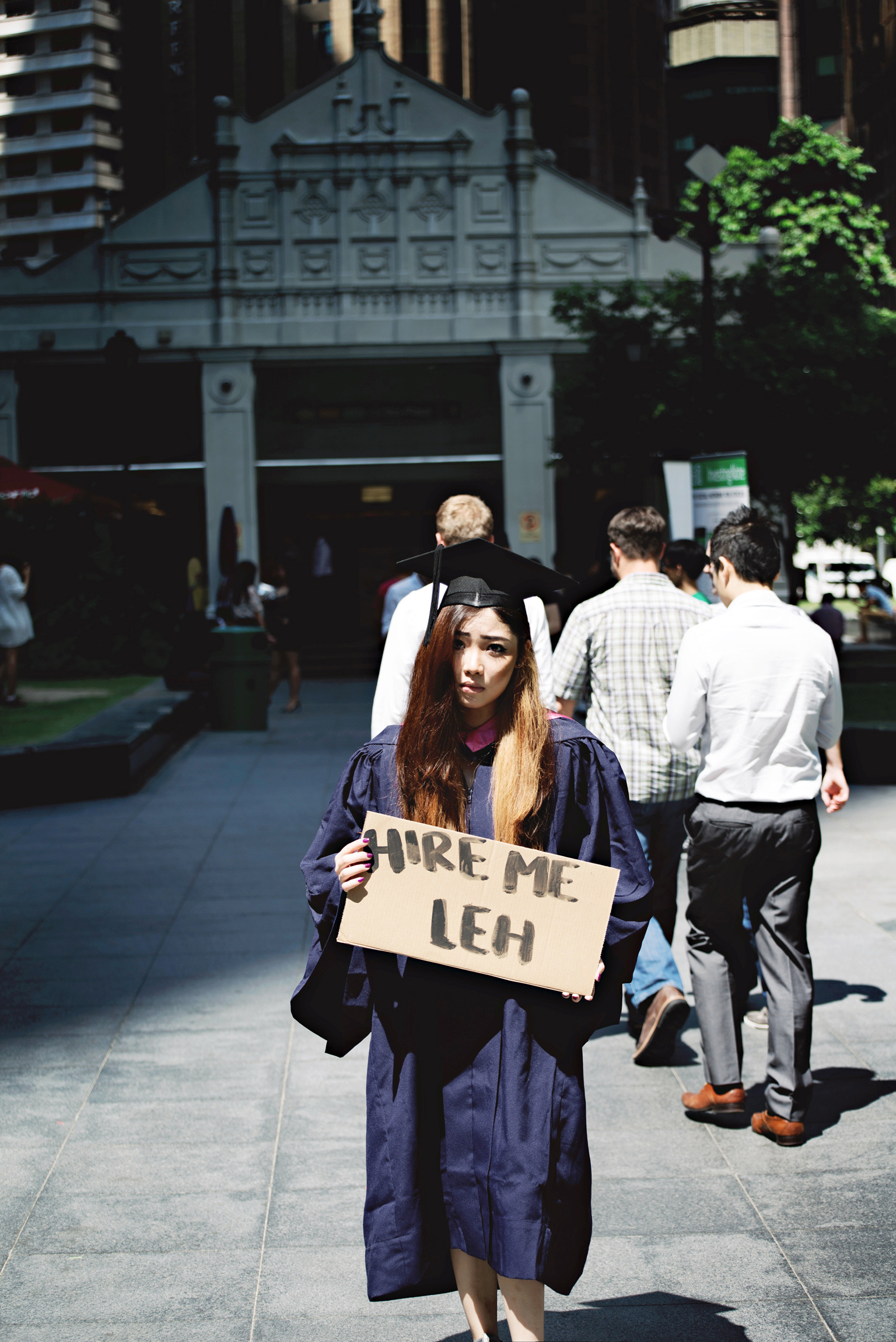
Take for instance, Ms Elizabeth Boon, 24, who attended her National University of Singapore (NUS) commencement ceremony last week. For her graduation shoot, instead of flinging her mortar board into the air or posing with her family in a studio, she conceptualised a series of images showing the harsh realities of the life of a fresh graduate.

Some pictures show her holding a placard saying “Hire me leh”. Others have her crumpled on the ground surrounded by empty alcohol bottles. Her edgy pictures smash the stereotypically celebratory style of photography for milestone events.

In the case of Mr Han and Ms Fang’s pre-wedding shoot, it was a matter of “keeping it real”, says Mr Han, a corporate sales manager in the IT industry.

“What we see is that, for marriages to work, it takes effort. A lot of Disney-like images of happy families are not true. We don’t want to hide behind what society wants us to be: an ideal family where parents have high-ranking jobs and the children have tuition, play the piano, do ballet and go to good schools,” he says.

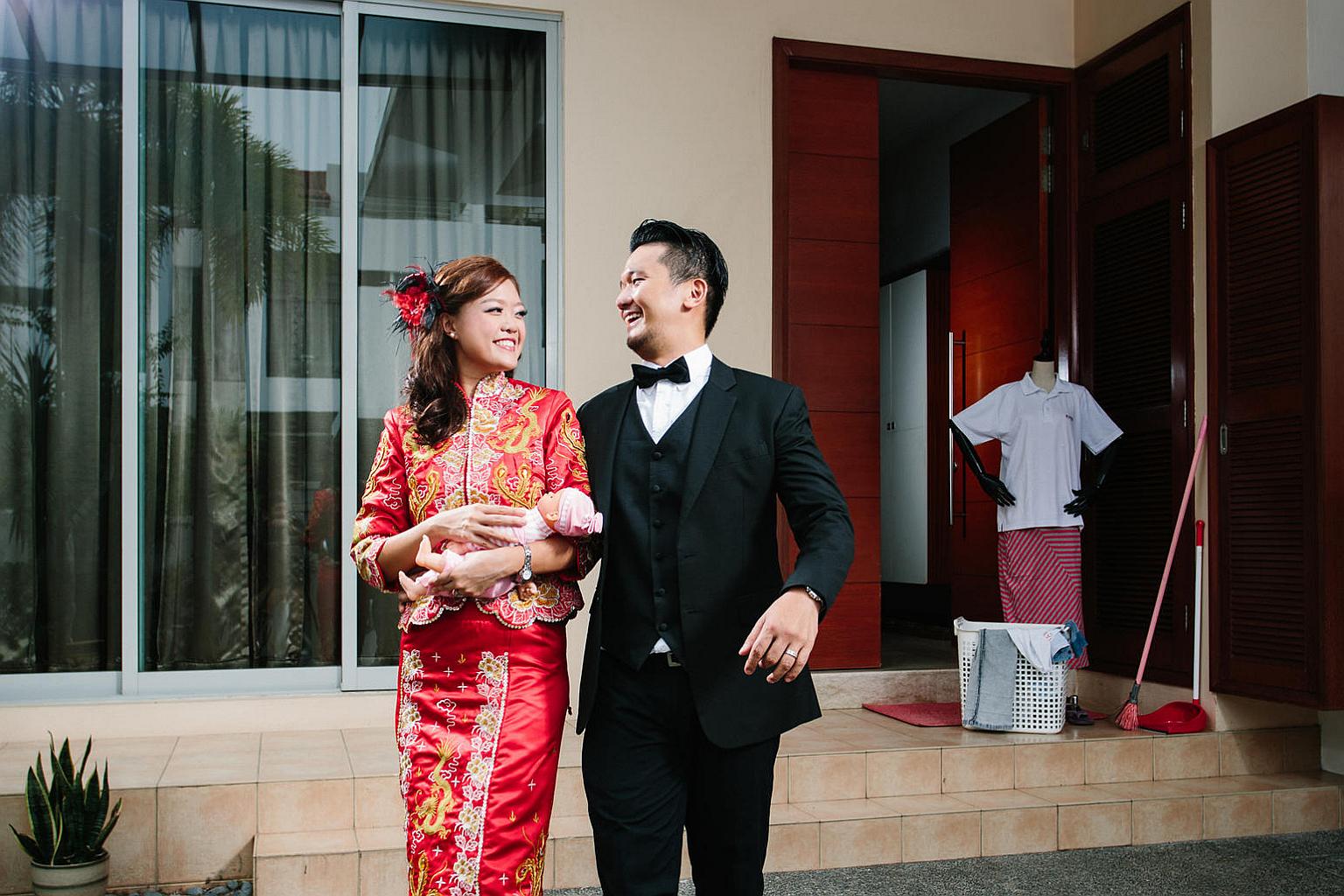
The couple, who are expecting their first child, also wanted to move away from “lallang shots” – the depictions of lovers strolling through lallang grass common in pre-wedding photo shoots.

Instead, their photos show, for example, Ms Fang, dressed in a kua, a traditional Chinese wedding dress, and Mr Han in a sharp suit, stepping out of a house. A headless mannequin in the background with a broom and laundry basket represents the “thankless” household work done behind the scenes of a perfect-looking life – a facade that the couple do not want, he says.

He says that while there were no strong objections to the photos, some family members reacted with confusion, asking, for instance: “Why is there a weird thing in the background?”

Most of the photos were not publicly displayed at their wedding dinner reception.

Ms Fang, who is a business development executive in a logistics start-up, says: “It’s difficult to get aunties and uncles to accept such scenarios.” The reaction from their friends, however, was “overwhelmingly positive”, she adds.

Mr Han and Ms Fang stepping out of a house as a headless mannequin is seen in the background. PHOTO: VAMOS PHOTOGRAPHY

For another couple, being true to themselves resulted in an edgy photo shoot when they tied the knot in May last year.

Videographer Douglas Lin, 33, and public servant Charmaine Lim, 29, wanted a concept that “reflected their personalities”, he says.

He was into car drifting, influenced by the movie, The Fast And The Furious: Tokyo Drift (2006), and she was into all-night gaming.

Their wedding photos combine their interests. In one picture, set in an abandoned warehouse, he is driving a blue Mazda RX-8, while Ms Lim, in a red gown, is gaming furiously. The shot took at least four hours to set up and the entire pre- wedding shoot cost a five-figure sum, says Mr Lin.

Such unconventional photos for important events can draw criticism, though.

Ms Boon, who graduated with a Bachelor of Arts degree in communications and new media, did not want a graduation photo shoot “focusing on that one day of joy”.

Instead, she wanted to highlight how fresh graduates can find it challenging to find a job.

Ms Elizabeth Boon’s gritty graduation photos highlight the challenges fresh graduates face in the job hunt. PHOTO: ALEXANDER IAN LOH

Posting the images on her Facebook, Instagram and blog, she received cutting comments, such as she could have spent the time doing the shoot – including posing in corporate hub Raffles Place holding a placard saying “Graduate for hire” – on applying for jobs instead.

The photos taken with empty bottles of alcohol were to depict how graduation parties do not detract from the fact that the fresh graduate still faces a daunting job hunt the day after. An online commentator told her she looked “instantly unhireable”.

In fact, the photo shoot, done by an amateur photographer friend, took only a couple of hours and there was no drinking involved. The bottles were old ones that her friend had collected over the years.

Still, criticism surrounding such social media posts may be valid, say human resource experts.

If such images circulate widely online, “it can be considered quite controversial”, says Mr Erman Tan, president of the Singapore Human Resources Institute.

When doing such projects, job seekers need to be aware of the kind of image he or she is projecting and the kind of employer he or she wants to attract.

Mr Tan adds: “Different employers have different expectations. Some are more conservative, such as those in banking, law and the public sector. But if they are in creative industries such as advertising, they may be more open.”

Ms Boon says she intends to do freelance work such as emceeing, acting and writing for the next six months. “If a prospective employer thinks I’m unemployable, I don’t think I’d like to work for him,” she says.

Social media inspired another photo shoot with an unusual concept. Pre-school teacher Aqaiyah, 25, came across a “crazy beautiful” underwater maternity photo shoot in the United States on Instagram.

When she was pregnant last year, she decided to do one as well with her actor husband Danial Ashriq, 25, who also works in his family’s kebab business.

Six months into her pregnancy, they approached photographer Andrew Lim, founder of Drewperspectives, an underwater photography firm, to discuss ideas for a set of aquatic images.

She waited until she was nearly eight months pregnant to do the shoot as she wanted her bump to be bigger. For the two-hour session, she wore a flowing gown that her mother made.

In the end, perhaps, such unusual photography is just another way of seeking an individual, unique take on life events such as marriage and pregnancy.

Ms Aqaiyah says: “I wanted to do something very different from others. It’s my first baby, so why not?”


This article was first published on July 17, 2016.
Get a copy of The Straits Times or go to straitstimes.com for more stories.

Image: 
Publication Date: 
Sunday, July 17, 2016 – 18:00
Keywords: 
Send to mobile app: 
Source: 


Story Type: 
Others

Source link

$100,000 of crowd-raised money for hit-and-run victim's family going to kids' education trust fund

0

The day before the month of Ramadan began, Madam Rohaya Zainal Abidin lost her husband Zulkefli Yusop, 47, in a hit-and-run accident in Johor Baru.

In the month that followed, the 44-year-old mother of four was the recipient of an outpouring of support and generosity from Singaporeans of all races and religions.

Well-wishers knocked on her door to give the family food or cash.

Two days before Hari Raya Aidilfitri on July 6, Johor Crown Prince Tunku Ismail Sultan Iskandar paid the family a visit at their two-room flat in Marine Terrace here to personally bring them some kueh (Malay for cakes) and gifts.

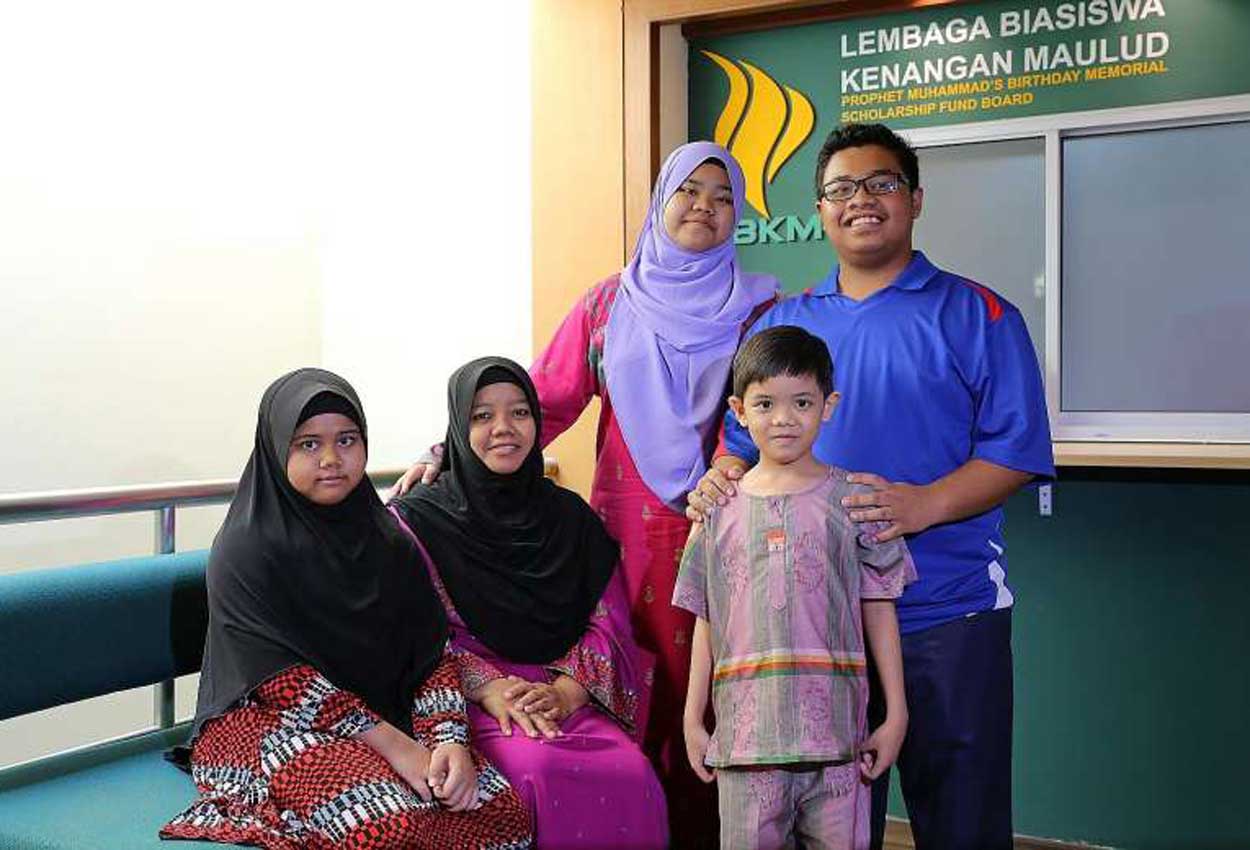
“He called an hour before coming. We were all quite shocked. Then he just sat down, talked with us and gave us support,” said Madam Rohaya’s eldest child, Muhammad Nur Fadhli, 16.

A crowdfunding drive on website GiveAsia has raised over $110,000 for the family, $100,000 of which will be placed in an education trust fund managed by the Prophet Muhammad’s Birthday Memorial Scholarship Fund Board (LBKM).

Yesterday, Madam Rohaya handed a cheque for $100,000 to LBKM. The money will be disbursed in six- month intervals to her four children, aged between seven and 16.

“My only wish is for my children to study hard and make me proud as a mother,” said Madam Rohaya, a part-time cashier who takes home $500 each month.

Mr Zulkefli, a driver and the family’s main breadwinner, was riding his motorcycle to JB to pass his mother some money when he met with the accident involving a car. He died on the spot. The car driver has since been arrested.

Madam Rohaya stressed that she wanted the money raised to go to her children’s education. It is partly why she approached LBKM.

LBKM president Suhaimi Salleh said the money would be disbursed until the trust fund runs out, or when the last child graduates from a post-secondary institution.

Fadhli, who will be taking his O levels this year, hopes to eventually use the money to study aerospace engineering at a polytechnic.


This article was first published on July 17, 2016.
Get a copy of The Straits Times or go to straitstimes.com for more stories.

Image: 
Category: 
Publication Date: 
Sunday, July 17, 2016 – 18:00
Send to mobile app: 
Source: 


Story Type: 
Others

Source link

Guard recalls day he spotted a 'female' robber's stubble

0

Eight years after a man dressed as a woman attempted to rob the bank he was guarding, Certis Cisco auxilliary police officer Rosli Mohamad Sa’ad still remembers the stubble on “her” chin which gave the robber away.

Mr Rosli, 54, was the lone security guard at the City Plaza branch of United Overseas Bank (UOB) in November 2008 during the attempted robbery – a rare crime in Singapore.

Earlier this month, a robber made off with $30,000 from a Standard Chartered Bank branch in Holland Village – thought to be only the fifth bank robbery, or attempted one, in Singapore in the last 12 years.

The suspect, Canadian David James Roach, was nabbed in Thailand after more than 72 hours on the run.

The case brought back memories for Mr Rosli who had to undergo psychiatric assessments after foiling the crime in 2008.

On Nov 10 that year, a tall “woman” dressed in black entered the UOB branch in Geylang Road. Her odd dressing – a headscarf, coat and gloves – tipped off Mr Rosli, then a 20-year Cisco veteran, that something was not quite right.

Signalling to bank staff who were replenishing an ATM to stop what they were doing, Mr Rosli turned his attention to the suspicious character.

“I was very close to him when he entered the bank, I could see his stubble,” he recalled.

The guard followed as the customer headed straight to one of the counters, placed a green paper bag on it and told the bank teller to put money into the bag.

“(The robber) threatened the bank teller and said there was a bomb inside,” said Mr Rosli. “She” also warned the guard not to be a hero.

When the robber fumbled with his mobile phone, Mr Rosli took the chance to wrestle him to the ground and, with the help of bank staff, held him down until police arrived.

The robber, Ismail Shaikh Ahmad, was sent to prison for eight years and received eight strokes of the cane.

The “bomb” in his bag turned out to be nothing more than a plastic container, paper boxes and a can of air freshener.

Mr Rosli, who was later commended by the police for his alertness and bravery in foiling the robbery, downplayed what he did as part and parcel of his job, despite the rarity of such crimes.

He added: “If you do this kind of job… you have to face these threats, but you don’t know when it’s going to happen so you have to be vigilant all the time.”


This article was first published on July 17, 2016.
Get a copy of The Straits Times or go to straitstimes.com for more stories.

Image: 
Category: 
Publication Date: 
Sunday, July 17, 2016 – 16:00
Send to mobile app: 
Source: 


Story Type: 
Others

Source link

Singapore supplies additional potable water to Johor on urgent request: PUB

0

Singapore has begun supplying Johor additional potable water following an urgent request by Badan Kawalselia Air Johor (BAKAJ), said PUB on Sunday (Jul 17).

Source link