A 13-member team of Singapore footballers from Fandi Ahmad’s F-17 Academy have been stranded at Antalya Airport in Turkey after the attempted military coup in Istanbul and Ankara.
The flight was supposed to land in Istanbul, about 675km away from Antalya yesterday.
The team – comprising 13 children, two coaches and six parents – were stuck for 15 hours at Antalya Airport after disembarking from their Turkish Airlines flight at 10am yesterday morning.
13 children from Singapore football club stranded at Turkey airport
Click on thumbnail to view photos. Source:
F-17 Football Academy
Mr Nabil Yusoff, the academy’s director, told The New Paper on Sunday (TNPS) over the phone: “Nobody seems to be attending to them there.
“It is worse because now they are trying to transfer our kids, coaches and parents to Terminal 1 because of the overcrowding, and they may have to stay there overnight.”
The team were set to take their next flight to Copenhagen after transiting in Istanbul and were scheduled to head to Gothenburg, Sweden, for the Gothia World Youth Cup 2016.
FRUSTRATION
F-17 Academy founder Fandi Ahmad said on the academy’s Facebook page at 7pm yesterday: “We are doing everything within our means to get you out of there.
“We can only imagine your frustration at being confined to the airport and having to queue for toilet, water and food.
“At the same time, we are relieved to hear that everyone is safe and well.”
It is understood that Ministry of Foreign Affairs officials are in contact with the players and are offering them consular assistance.
But two parents with the team in Antalya described the situation there as chaotic.
Madam Lee Suk Houn, who is with her son Kilgore Walter Seung-Lee, told TNPS via e-mail: “No one has said anything to us in the five hours we have been here.
“(There are) so many people here… who knows when we will be able to get out!”
Another parent, Madam Radhika Radhakrishnan, who is also in Antalya with husband Raveen Kumar Thedj and son Rayan Kumar Thedj, said: “There is no official or anyone of that sort here to give us updates.
“Neither is there a communication channel. Only loads of people from different flights sitting around everywhere.”
Chaos in Turkey as military attempts anti-Erdogan coup
Click on thumbnail to view photos. Source:
Reuters, AFP
This article was first published on July 17, 2016. Get The New Paper for more stories.
His work begins when most are leaving their offices and heading home.
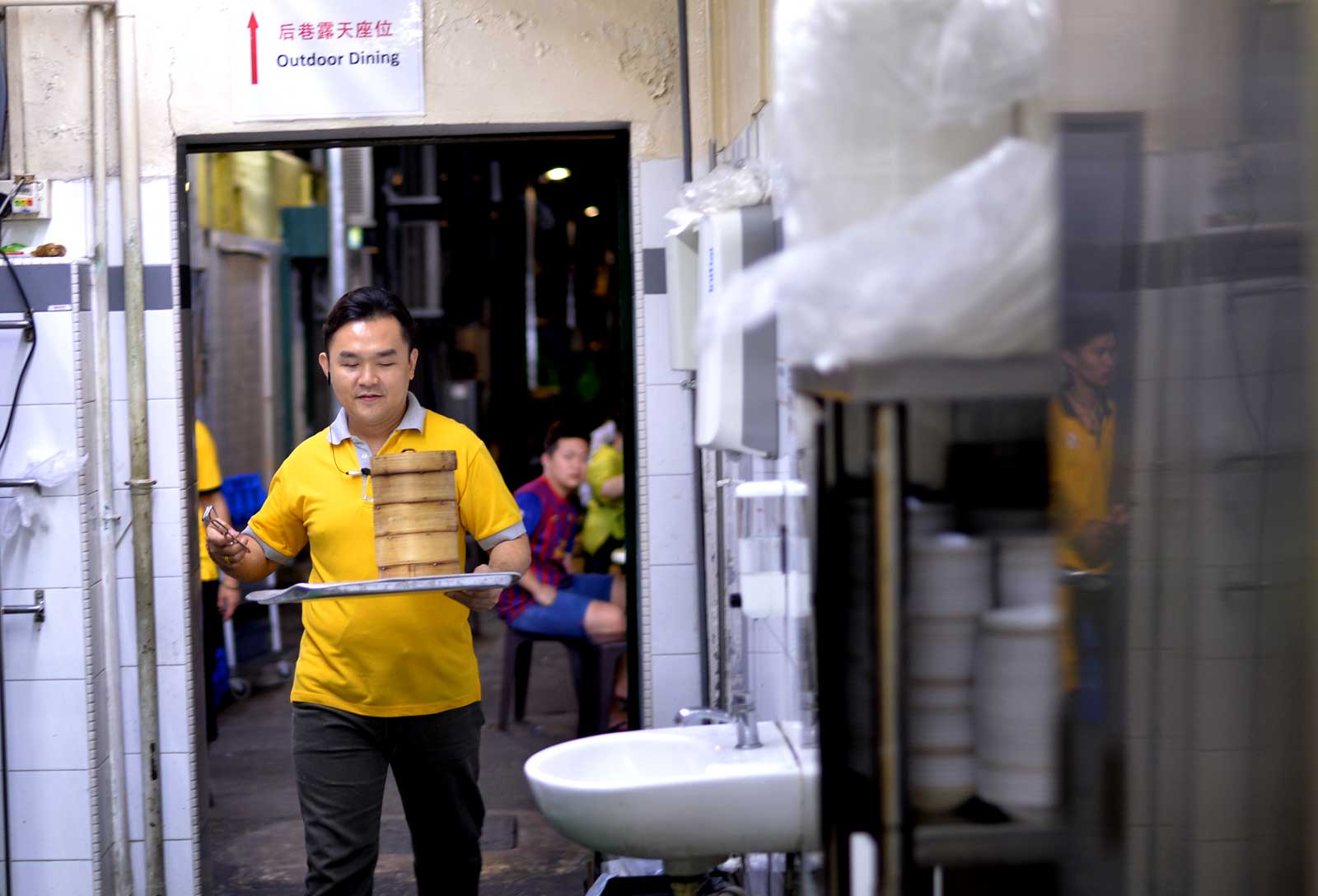
Mr Ng Chee Chong, a manager at Swee Choon Dim Sim Restaurant, starts work at around 6pm.
Despite that, it is clear the 37-year-old enjoys the nightly grind.
Speaking to The New Paper on Sunday, Mr Ng says with a hearty laugh: “It is okay, right? Working at night means I don’t have to wake up so early. Not so hot also.”
For six days a week, Mr Ng manages the serving staff at Swee Choon, a well-known eatery in Jalan Besar.
The restaurant closes at 4am, and by the time he and the staff leave work, it is almost 6am.
It is fortunate then that Mr Ng, a Malaysian, lives just above the restaurant, which is located in a shophouse.
Since he does not have a home here, the restaurant provides him with not just an income, which he declined to disclose, but also free food and lodging.
Mr Ng has got used to sleeping in the day and working at night. He returns home to Johor Baru on his motorbike once a week on his day off.
“Staying here means I don’t have to worry about transport. My commute is just a flight of stairs,” he says.
In his 14 years on the night shift, he has seen different types of people.
From 6pm to 7pm, the restaurant’s 70 tables are usually occupied by families. The crowd starts to thin after that, and those who remain are usually young adults having supper.
It is during this time that Mr Ng and his staff have dinner and take staggered breaks.
He says: “It is important to rest because working the whole night in a restaurant can get tiring. We have to take care of one another. “Besides, we need all the energy we can get from 2am onwards.”
UNRULY CUSTOMERS
That is when the restaurant starts to fill up with a different kind of crowd, mostly customers from nearby bars who stagger in hungry and ready for some dimsum.
“Many of them are our regulars, and they know (our place is open till quite late),” says Mr Ng.
In their inebriated state, they tend to order more food, which is good for business.
But there are also days when some can get unruly. That is when Mr Ng gives them “special attention”.
Such customers dislike waiting and kick up a fuss if their food does not arrive quickly.
To appease them, Mr Ng fast-tracks their orders to the kitchen so that the dishes are prepared as quickly as possible.
“These people, they’re not looking to spend two hours here to chitchat. They just want to eat, pay and go home to sleep.”
Should they become violent, Mr Ng says he will call the police. Luckily, there have been no ugly incidents.
He admits it took him a while to get used to these customers.
“They are so loud. I was new to everything, and it made me a bit nervous,” he says, recalling the days when he first started working the night shift.
But he has come to appreciate the lively atmosphere, which lasts until the restaurant closes.
Apart from his usual two cups of coffee, he says the boisterous customers help him stay awake and alert.
“I see a lot of heartwarming things at night too, like when three generations of Singaporeans have a big meal in the middle of the night, or groups of 30, 40 friends are enjoying themselves,” he says.
“Work is my home; it feels like it is their second home. It is great that I get to share that with them.”
Fewer MCs sine he switched to night shift
As a porter at Changi Airport, 69-year-old Mr Haron’s day starts at 9pm and ends 13 hours later at 10am.
Mr Haron’s story was highlighted by a group of former students from the Nanyang Technological University, who started a campaign called Strangers of the Night in appreciation of those who keep Singapore running past our bedtimes.
Says Mr Haron: “The lack of sleep is difficult, especially at my age. I can feel the tiredness and sleepiness.
“Sometimes I am so tired (after work), I would fall asleep on the train (on the way home) and miss my stop.”
He envies his younger colleagues, whom he says are “different”.
“They are energetic and active, it is hard for me to catch up with them,” he says.
NOT ALL BAD
The hours might be long, but Mr Haron, who has been working the graveyard shift for two years, says it is not all bad.
At his previous desk-bound office job, he says he fell ill frequently and would take medical leave at least twice a month.
But since he started working at the airport, he hardly falls ill.
He says: “I am happy that I can still work and don’t get sick. Actually, funny story, last time I work in the office, every month MC two, three times, but now I work at night, seldom fall sick.”
Also, working at night allows Mr Haron to observe a more diverse set of people – something he enjoys.
“There are so many passengers, so many characters,” he says.
“It is interesting to work at night because the types of people (I see) are different (than in the) daytime.”
This article was first published on July 17, 2016. Get The New Paper for more stories.
A 11-year-old girl died from breathing difficulties on Thursday (July 14), six years after a bout of fever left her bedridden.
When she was five years old, the girl developed a fever that did not subside after seeing a doctor and taking medication, Chinese evening daily Lianhe Wanbao reported.
A few days after she fell sick, her mother noticed that she had become too weak to lift her arms. The girl was later found unresponsive on the bed.
She was taken to KK Women’s and Children’s Hospital where doctors said her fever had triggered seizures that caused her to become paralysed.
The child fought for her life in the intensive care unit for eight months. Although doctors asked her parents to consider taking her off life support, they took her home and cared for her over the next six years.
Girl dies six years after being left paralysed by fever
Click on thumbnail to view photos. Source:
Lianhe Wanbao
In an interview with Lianhe Wanbao, the girl’s mother said that her daughter had a strong willpower and overcame many challenges.
She elaborated: “The doctors told us that she might never open her eyes or lift up her arms again, but she managed to do so.”
The girl was unable to speak and needed help with bathing and eating. She blinked her eyes to communicate with her family.
Her condition took a sharp turn for the worse on July 14 when her parents were returning from a trip to Bangkok to pray for her health.
They did not get the chance to say their last goodbyes as she died on the way to the hospital.
According to Lianhe Wanbao, the family spent over $300,000 on the girl’s medical expenses. Her mother had quit her job to take care of her bedridden child’s daily needs.
Fandi Ahmad’s F-17 Academy team that was stranded in the Turkish city of Antalya due to the attempted coup, is on a flight to Istanbul, according to the academy’s facebook post on Sunday (Jul 17).
It was the 1960s and the golden age of Singapore music was underway. At the centre of it all was Geylang, where music spilled from nightclubs and kampongs, and ignited a pop revolution.
Fandi Ahmad’s F-17 Academy team that was stranded in the Turkish city of Antalya due to the attempted coup, is on a flight to Istanbul, according to the academy’s facebook post on Sunday (Jul 17).
PARIS – The Olympic movement faces division in a critical week ahead of the Rio Games with a report Monday to set out whether Russia manipulated doping samples, followed quickly by a sports tribunal verdict on 68 Russian athletes demanding to compete in Rio.
A World Anti-Doping Agency (WADA) decision on whether to let the Rio doping laboratory reopen could also hamper International Olympic Committee preparations.
“It’s an incredibly important week that could crack the unity built up on doping,” an international sports federation president who is also a senior IOC member told AFP.
A report by Canadian lawyer Richard McLaren has caused divisions before it is even released in Toronto on Monday with the United States and Canada leading calls for a potential complete ban on Russia from the Rio Games which start on August 5.
McLaren has carried out an independent investigation for WADA of allegations made by former Moscow doping laboratory director Grigory Rodchenkov that even Russian secret services took part in an operation to manipulate Russian doping samples at the 2014 Sochi Winter Olympics.
The Canadian investigator said in June that the early results of his work had found “credible and verifiable” evidence to back the allegations made to the New York Times by Rodchenkov who is now in hiding in the United States. He is wanted by the Russian authorities who have strongly denied any state role in doping.
Paul Melia, president of the Canadian Centre for Ethics in Sport, which carries out anti-doping efforts in Canada, said countries must be ready to ban Russia completely from Rio if the McLaren report confirms the Rodchenkov allegations.
Melia said in a blog that the report “could paint an unprecedented picture of state-supported corruption and subversion of the anti-doping system” in Russia.
“If Monday’s report confirms the Rodchenkov allegations, then the International Olympic Committee (IOC) will have no choice but to ban all Russian athletes from this summer’s Olympic Summer Games in Rio,” Melia wrote. “And it must be the same consequence for the Russian contingent at the Paralympics in September.” European Olympic Committees president Patrick Hickey said he was “shocked”, however, by US and Canadian efforts to press for a ban before the McLaren report is even released.
Hickey said Beckie Scott, the Canadian chairman of the WADA athletes commission and an IOC member, had sent out an email appeal to back a letter from the US and Canadian anti-doping agencies to IOC president Thomas Bach.
“This letter calls upon the IOC to instigate a wholesale ban of the Russian Olympic Committee team in Rio 2016,” according to Hickey.
“My concern is that there seems to have been an attempt to agree an outcome before any evidence has been presented,” Hickey said.
“Such interference and calls ahead of the McLaren Report publication are totally against internationally recognised fair legal process and may have completely undermined the integrity and therefore the credibility of this important report.
“It is clear from the email and letter that both the independence and the confidentiality of the report have been compromised,” he said.
“Any proposal for a blanket Russian ban would cause a major split within the IOC,” the international federation president commented to AFP on condition of anonymity.
Despite Hickey’s comments, some European countries are known to support a ban. IOC president Thomas Bach only said last week that the Olympic movement would wait for the report before making a decision.
Russia is already barred from international athletics by the International Association of Athletics Federations (IAAF). But the Court of Arbitration for Sport (CAS) could rule as early as Tuesday on an appeal by 68 Russian athletes who say they should be allowed to compete in Rio.
The IAAF has said that only long jump athlete Darya Klishina could compete in Rio, and then under a neutral flag. Bach said last week that Klishina should be allowed to take part under the Russian flag.
Pole vault star Yelena Isinbayeva is among the 68 hoping for a last-minute ticket to Rio from CAS.
Whistleblower and 800 metres runner Yuliya Stepanova, who has refused to race for Russia, must wait to see if an Olympic ethics board accepts her request to take part as a neutral.
With the Rio countdown becoming more urgent, the IOC also faces having to send thousands of Games samples out of Brazil for testing unless WADA renews the licence for the Rio de Janeiro anti-doping laboratory.
The Rio lab was suspended on June 24 for not meeting international standards and a WADA commission is due to rule this week on whether to give a new permit.
Four men and a woman were arrested for dealing with duty-unpaid cigarettes in a two-day joint operation conducted by Singapore Customs and the Police Coast Guard.
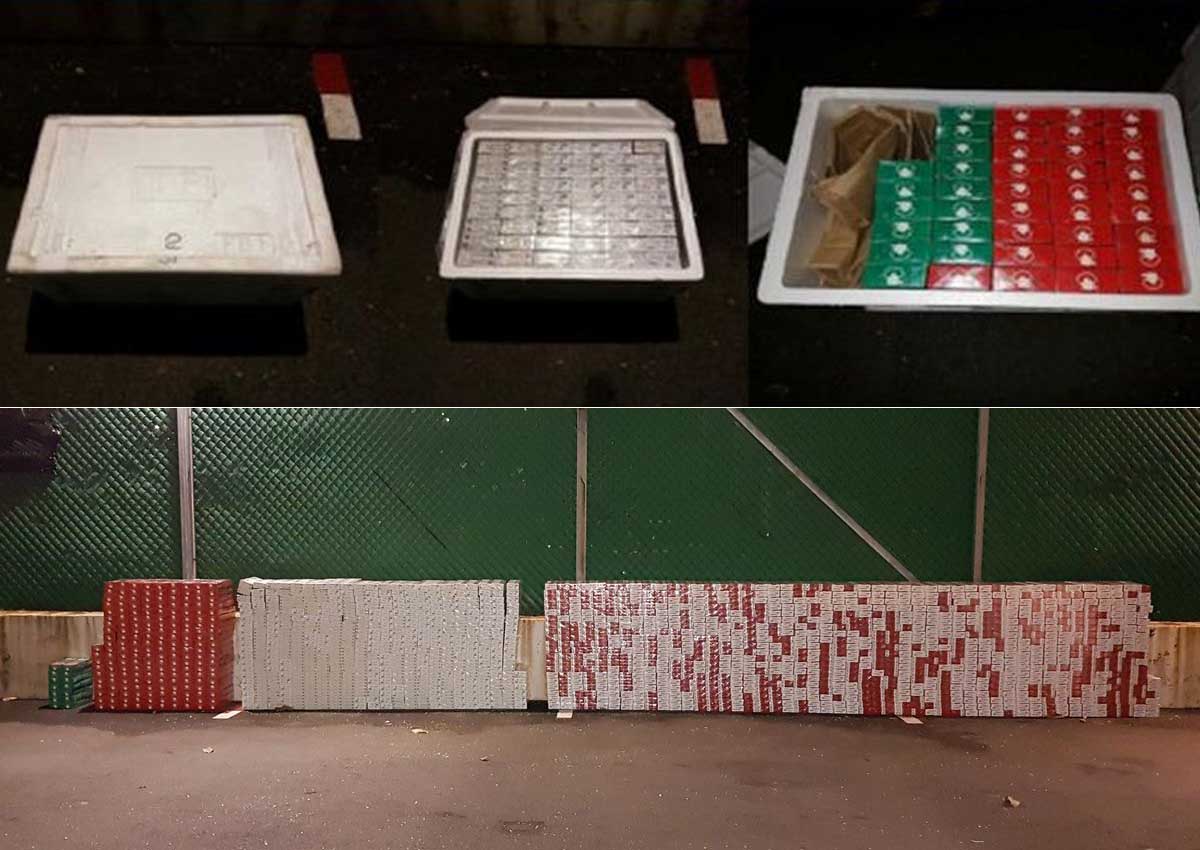
18,048 packets of cigarettes that involved a total of $154,000 in unpaid duty and Goods and Services Tax (GST) were seized, Singapore Customs and Singapore Police Force said in a joint statement on Sunday (July 17).
On July 13, Singapore Customs officers intercepted a lorry along Bukit Batok Street 21 and found 15,960 packets of duty-unpaid cigarettes stored in styrofoam boxes. They arrested the 56-year-old male driver and seized his vehicle.
Over 18,000 packets of duty-unpaid cigarettes seized
Click on thumbnail to view photos. Source:
Singapore Customs, Singapore Police Force
Further investigations traced the origins of the duty-unpaid cigarettes to a boat that was registered to a fish farm located in the waters off Pulau Ubin.
Police Coast Guard and Singapore Customs raided three fish farms on July 14 and recovered another 2,088 packets of duty-unpaid cigarettes. A 51-year-old man, two 32-year-old men, and a 50-year-old woman were arrested, and a boat was seized.
Investigations are ongoing.
Anyone found guilty of buying, selling, conveying, delivering, storing, keeping, possessing or dealing with duty-unpaid goods can be fined up to 40 times the amount of duty and GST evaded, and/or jailed for up to six years.
In his debut performance in China, homegrown singer Nathan Hartono impressed all four famous judges on Sing! China, and gained a mentor in megastar Jay Chou.
Chou is part of the judging panel of Chinese music stars for the TV singing competition, Sing! China. The other judges are Harlem Yu, Na Ying and Wang Feng.
The four judges lauded his performance and singer Na Ying asked Hartono for a hug and praised his “warm and honest” performance.
The judges hailed his golden-boy appeal and Chou said he had a lot of potential. During Hartono’s performance, Chou was seen nodding his head in appreciation. The two exchanged a fist bump and hug after Hartono chose Chou as his mentor.
Hartono said he knew he would be able to make it to this audition, but having all four judges praise his performance was “a really nice surprise”.
Local singer Nathan Hartono wows Sing! China judges
Click on thumbnail to view photos. Source:
The Straits Times, The New Paper, YouTube screengrabs, HBO Asia, Music & Movement
Hartono’s rendition of You Mei You (Have you ever?), which has bilingual lyrics, had an R&B flavour.
More than 10 years ago, Hartono won the local Teenage Icon talent contest in 2005 and he has performed at charity concert ChildAid, organised by The Straits Times and The Business Times. He had a solo concert at the Esplanade on July 9.
This article was first published on July 16, 2016. Get a copy of The Straits Times or go to straitstimes.com for more stories.
BANGKOK – Thailand’s infamous sex industry is under fire, with the tourism minister pushing to rid the country of its ubiquitous brothels and a spate of police raids in recent weeks on some of the largest establishments providing sex services in Bangkok.
Those who work in the industry say curbs on commercial sex services would hurt a flagging economy that has struggled to recover after political turmoil took the country to the brink of recession in 2014.
Thailand is predominantly Buddhist and deeply conservative, but is home to an extensive sex industry, largely catering to Thai men. Hordes of tourists also flock to the bright lights of go-go bars and massage parlours in Bangkok and main tourist towns.
Thailand’s beaches and temples have been the poster child for Asian tourism for decades and the country expects a record number of arrivals in 2016.
Tourism Minister Kobkarn Wattanavrangkul played down the role of the sex industry in drawing visitors. “Tourists don’t come to Thailand for such a thing. They come here for our beautiful culture,” Kobkarn told Reuters. “We want Thailand to be about quality tourism. We want the sex industry gone,” she said.
Prostitution is illegal in Thailand but the law is almost invariably ignored. Experts say it will be hard to rid Thailand of an industry that is so entrenched and that provides pay-offs to untold numbers of officials and policemen.
Those trying to promote the welfare of sex workers say Kobkarn’s goal is unrealistic.
Her push comes amid an attempt by the country’s tourism authorities to transform Thailand into a luxury destination to attract moneyed tourists.
The military government is in denial about the proliferation of prostitution and its contribution to the economy and tourism, said Panomporn Utaisri, country director of NightLight, a Christian non-profit group that helps women in the sex trade to find alternative work. “There’s no denying this industry generates a lot of income,” said Panomporn.
There are no government estimates of the value of Thailand’s sex industry, or how much of the income from tourism comes from sex tourists.
LURE OF MONEY
There are about 123,530 sex workers in Thailand, according to a 2014 UNAIDS report, compared with 37,000 sex workers in neighbouring Cambodia.
Last month, police raided dozens of brothels in major cities in what they said was a routine operation.
Police said they were looking to prosecute venues employing underage and illegal migrant workers, but only one of the venues raided was shut down.
There was no link between the tourism minister’s aim to rid Thailand of its sex tourism industry and the raids, a police spokesman said.
The tourism sector accounts for about 10 per cent of gross domestic product and sex worker groups said the minister’s vision of a prostitution-free Thailand would dent that.
“The police presence already drives off a number of clients who come to relax or drink at bars,” said Surang Janyam, director of Service Workers in Group (SWING), which provides sex workers with free medical care and vocational training.
“Wiping out this industry is guaranteed to make Thailand lose visitors and income.” Many sex workers come from the impoverished northeast and see selling their bodies as a way out of poverty.
One former sex worker from the northeastern province of Maha Sarakham, who declined to be identified, told Reuters she entered Bangkok’s sex trade at the age of 19 and earned up to 5,000 baht ($192.77) a night, nearly 20 times the minimum wage of 300 baht per day.
“No one wants to work in this business, but it’s fast and easy money,” she said.
NightLight and SWING said they would welcome the sex industry’s closure if the government had a plan to ensure that sex workers could support themselves without falling back into the business.
“If they want to close the sex industry, they must first have jobs ready to support sex workers,” said Surang.