The Ministry of Health (MOH) has confirmed an additional 876 cases of Covid-19 infection in Singapore on Sunday (May 10), with 860 cases among Work Permit holders residing in foreign worker dormitories. There are 11 new cases among Work Permit holders residing outside dormitories.
Two cases are Singaporeans/ Permanent Residents, another two cases among work pass holders, and one imported case who is on Stay-Home notice.
425 more cases have been discharged.There are currently 1,097 confirmed cases who are still in hospital. Of these, most are stable or improving, and 22 are in critical condition in the intensive care unit. 19,498 are isolated and cared for at community facilities.
In addition, MOH said it regularly reviews the laboratory tests and recently found that 33 cases from a laboratory were false positives, due to an apparatus calibration issue for one of its test kits. Subsequent retesting at the National Public Health Laboratory confirmed that these were negative cases.
SINGAPORE: A total of 32 companies have returned Jobs Support Scheme (JSS) payouts worth a combined S$35 million as of May 9, a Ministry of Finance (MOF) spokesperson said on Sunday (May 10).
These companies have also pledged to decline future JSS payouts from the Government, the spokesperson said in response to queries from CNA, adding that the S$35 million, which was the companies’ payout for April, will be used for future disbursements.
Furthermore, 29 other companies that received the funds for April have said that they will decline future JSS payouts.
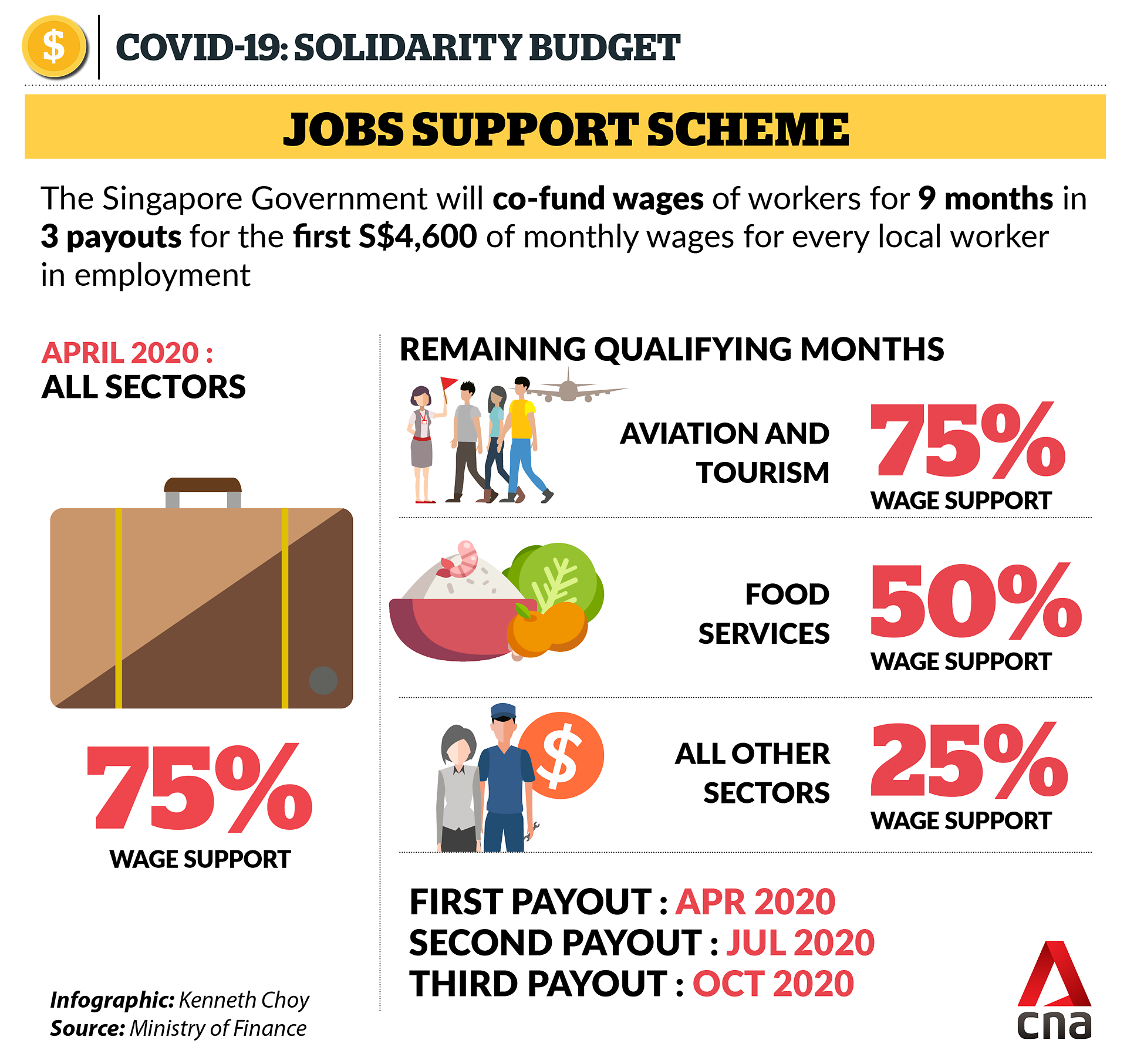
First announced by Deputy Prime Minister Heng Swee Keat in February’s Budget, the JSS is a wage subsidy programme to help companies retain and pay their workers as businesses take a hit from the impact of COVID-19.
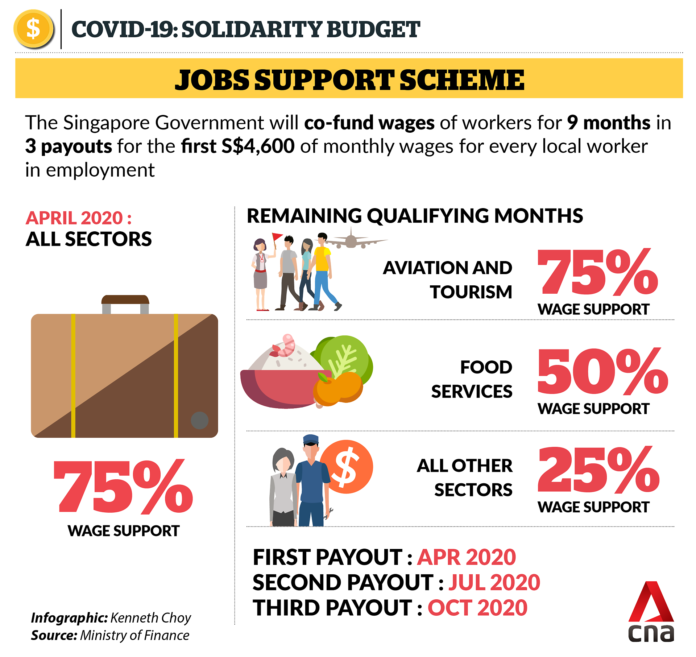
In April and May, the subsidies will cover 75 per cent of the first S$4,600 of each local employee’s salary.
April’s payouts, encompassing 140,000 employers and more than 1.9 million local employees’ wages, had originally totalled more than S$7 billion.
In a Facebook post on Sunday, Mr Heng said that those companies which have returned the first tranche of payouts and refused future payments include multi-national corporations, financial institutions and local enterprises across different sectors.
“I am very encouraged by their sense of responsibility and shared community,” he wrote, noting that some companies have coped better than others in the current situation.
“I hope their exemplary action will inspire other companies that are doing well to consider doing the same.”
He said that besides returning the JSS funds, businesses can also consider donating to charitable causes.
“I hope that you will also show recognition and appreciation for your workers who have stepped up during the circuit breaker period,” he added.
SINGAPORE: Another 12,000 pulse oximeters will be distributed to migrant workers residing in dormitories, as part of new measures tapping on technology to beef up the health monitoring of these workers.
So far, about 8,000 of such medical equipment have been given out to migrant workers who tested positive for COVID-19, said Manpower Minister Josephine Teo on Sunday (May 10).
Pulse oximeters are used to monitor oxygen levels of those infected with COVID-19 and can help to detect early signs of deterioration in health.
The provision of pulse oximeters will also allow workers to proactively monitor their own health status and reach out for medical assistance if needed, said the Ministry of Manpower (MOM) in a separate press release.
Migrant workers residing in dormitories are already given thermometers. Explaining why pulse oximeters are also being issued, Mrs Teo pointed to one “important observation” in that many migrant workers experience “very mild symptoms or even no symptoms at all” even after being infected with COVID-19.
“In other words, they themselves may not be aware that something has happened and because they don’t feel unwell, they do not seek medical attention.
“As a result, even if they have already been infected, or they are still infectious and passing the virus to somebody else, they don’t know it,” the minister said.
In total, about 20,000 pulse oximeters will be made available to migrant workers living in purpose-built dormitories, factory-converted dormitories and temporary quarters within construction sites, she added.
There are also plans to set up more tele-kiosks in “quite a large number” of dormitories, said Mrs Teo.
These kiosks facilitate video consultations with doctors and are connected to devices which can monitor vital signs, such as blood pressure, oxygen saturation and temperature.
They also ensure that migrant workers have round-the-clock access to a doctor, with medication being delivered when necessary.
Eight tele-kiosks have been installed in dormitories, said MOM in its press release.
Tele-consultations through mobile phones are also available at the migrant workers’ dormitories. Such video consultation services, which are provided by private healthcare providers listed in the Ministry of Health (MOH) regulatory sandbox, complement the on-site and mobile medical support by providing after-hours care.
Since the service started on Apr 25, about 400 of these video consultations between workers and doctors have been conducted, said MOM.
“We don’t want the workers (to) wait until they’re so unwell, to seek medical attention,” said Mrs Teo.
“We want them at the earliest sign to actually put up their hands to ask ‘Can I find out what’s happening to me?’”
Together with Singapore’s strategy in testing as part of its health surveillance, these new measures that tap on medical technologies will make up a “comprehensive health support plan”, said the minister.
“We are introducing new measures that will help us to look after the health conditions and to do the health surveillance of our migrant workers in a more comprehensive way,” said Mrs Teo.
“And we hope that by doing so, we will be able to help the individual worker prevent a recurrence if he has already been affected, or for those who have not been affected to prevent them from falling sick in the first place.”
PLAN FOR RECOVERY PHASE
The Manpower Minister was speaking to reporters after visiting JTC Space @ Tuas where a new medical post with a swab isolation facility has been set up. It also has telemedicine facilities, such as a tele-kiosk.
This new medical post – the fifth of its kind – takes up one floor of a vacant multi-storey carpark located in the industrial park. It will start operations on Monday.
Manpower Minister Josephine Teo at a tele-kiosk set up at JTC Space @ Tuas. (Photo: Singapore Ministry of Manpower)
The use of technology to monitor the health of migrant workers will be important as Singapore prepares to move into the next phase of its battle against the coronavirus outbreak in migrant worker dormitories, said Mrs Teo.
The Inter-agency Task Force had said it would focus on three phases to ensure the health and well-being of migrant workers residing in dormitories. The first included the roll-out of safe distancing measures at these dormitories and the second phase saw a medical support plan, with the necessary infrastructure and personnel, being put in place.
The third phase, dubbed the recovery phase, will see authorities working out ways to allow recovered workers to resume work safely, according to MOM’s press release.
An important aspect of this third phase will be on strengthening the health monitoring and surveillance of these workers who live in communal settings.
“That’s something we have to keep in mind that whenever you have a setting where large groups of people are living together communal style, you really have to find ways to strengthen the health monitoring and the health surveillance in order to detect infections,” said Mrs Teo.
Mrs Teo also noted various efforts being put together over the past weeks to tackle the surge in number of COVID-19 infections among the migrant worker community here.
This includes the deployment of 3,000 people from various ministries and the healthcare sector to look after the nearly 400,000 foreign workers, to help from non-governmental organisations.
Mrs Teo said she also wanted to say a “big thank you” to the migrant workers who have been “very cooperative” and “very open” in providing feedback so that improvements can be made.
“So all in all, you see that all of these efforts are coming together and over the last couple of weeks, we see that we are making steady progress,” she said.
“Having stabilised the situation as well as strengthen the medical support, we now need to plan for the next phase, which is about helping the workers to make a full recovery … and to facilitate the eventual return to work for these migrant workers.”
When that happens, the new measures tapping on medical technologies, such as tele-consultations, will be able to attend to the different needs of these workers, while ensuring that they continue to be taken care of in a sustainable manner, she added.
“Keep in mind that when the workers eventually return to work, their work hours are not likely to be the same for each and every one of them … Some of the workers may return to the dorm at a time when the medical outpost cannot remain open.
So we need to look at some of the more sustainable ways to continue to perform this health monitoring, which is a very important part of taking care of the migrant workers,” she said.
The Ministry of Health (MOH) has preliminarily confirmed an additional 876 cases of Covid-19 infection in Singapore on Sunday (May 10), with most patients Work Permit holders residing in foreign worker dormitories. Three cases are Singaporeans/ Permanent Residents.
Further updates will be shared later tonight.
The total number of cases in Singapore stands at 23,336, with 2,296 patients discharged. The local coronavirus death toll currently stands at 20.
kwokkarpeng@asiaone.com
For the latest updates on the coronavirus, visit here.
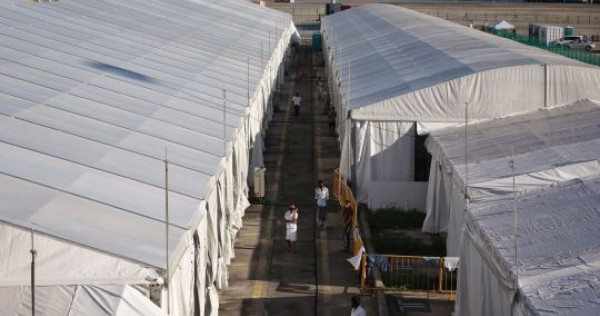
SINGAPORE – A facility built at Tanjong Pagar Terminal to house patients or foreign workers with the coronavirus started receiving workers on Tuesday (May 5).
When The Straits Times visited the site on Saturday, workers could be seen donning masks and settling in.
The Ministry of National Development said the partially completed tentage at the terminal can house up to 3,500 people.
In a Facebook post on Saturday, Senior Minister Teo Chee Hean shared pictures of the facility which he said is being prepared to house patients who are currently recovering or who have recovered from Covid-19.
The facility at the terminal includes tentage with beds and floating workers’ accommodation facilities, going by photos posted by Mr Teo, who is also Coordinating Minister for National Security. He also noted that the tents have coolers in every room and a fan for every patient.
The tentage and floating accommodations are for step-down care facilities, with proper social distancing in place, he said.
New schemes have been launched and existing ones enhanced to help lower-income families affected by Covid-19. Here are some key highlights. More details are available here.
Covid-19 Support Grant
Who is it for?
Singaporeans or permanent residents aged 16 years and above who were retrenched or had their contracts terminated due to the pandemic; were made to take no-pay leave for at least three consecutive months; or had their salaries reduced by at least 30 per cent for three consecutive months.
What will I get?
Those who have lost their jobs can get up to $800 a month for three months, as well as employment and training support from Workforce Singapore and the Employment and Employability Institute. Those who are on no-pay leave will be able to access courses subsidised by SkillsFuture Singapore. Those who had their salaries reduced can get monthly cash grants of up to $500 for three months.
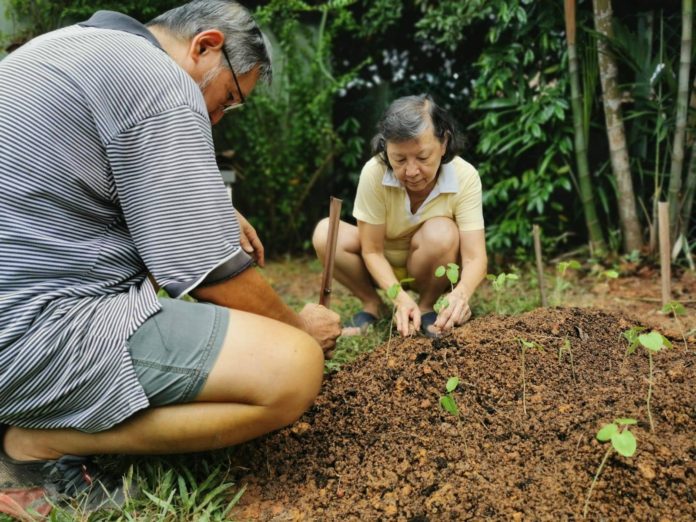
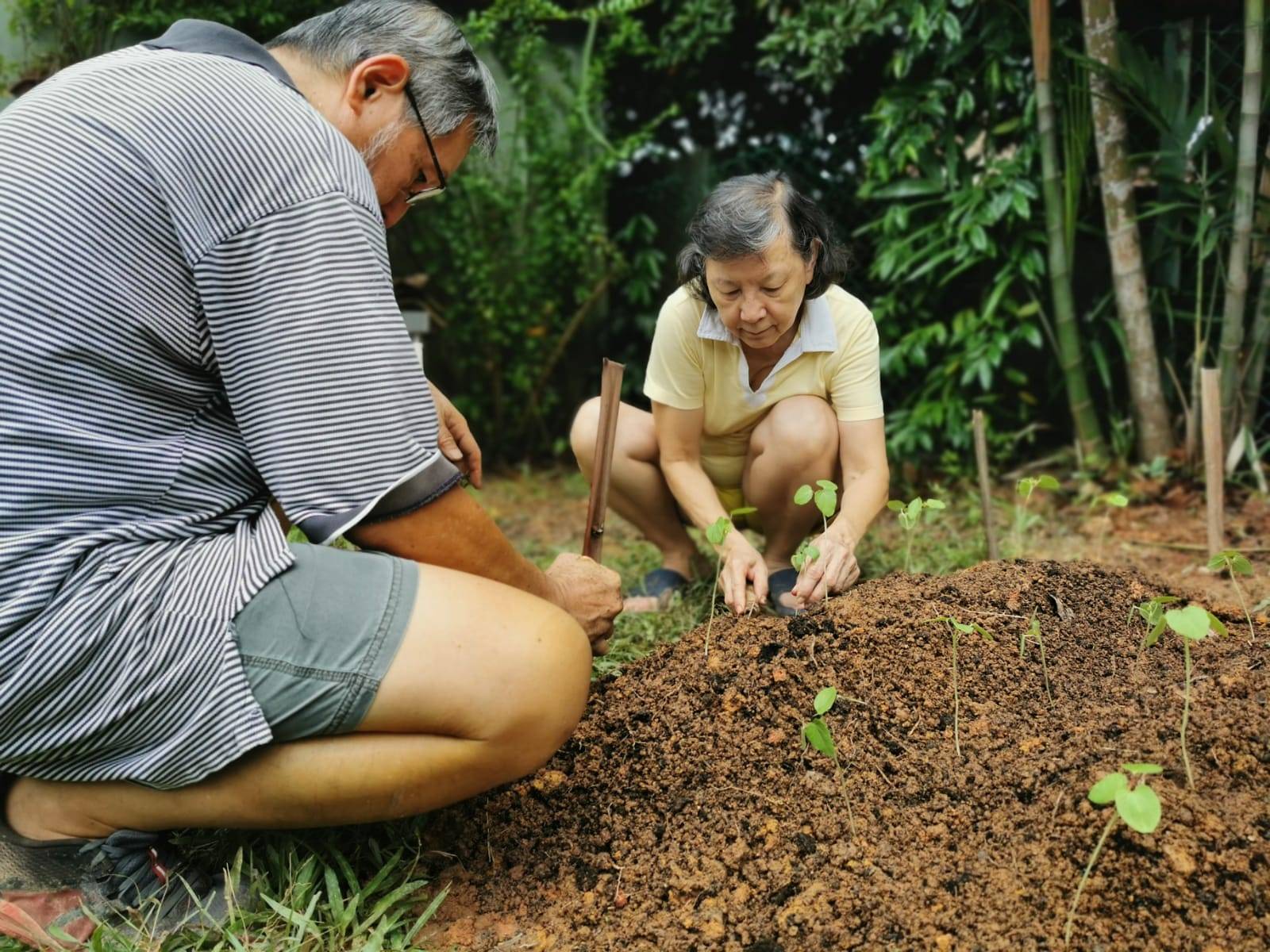
SINGAPORE: After Madam Tan Swee Jee’s husband failed to find okra on a recent trip to the market, she revived her interest in farming and began planting again.
The retiree in her 60s had started organic farming a few years ago but grandchildren and other activities left her little time to tend to her garden. As Singapore hunkered down for the “circuit breaker” period, she found time and reason to grow not just okra, but tapioca, papaya, herbs and other vegetables.
“We rely on other (countries) for our food, if they don’t sell to us we have nothing to eat,” she said in Mandarin. “This way, at least I can still have lady’s fingers.”
Madam Tan Swee Jee and her husband planting peanuts and sweet potatoes in their garden. (Photo courtesy of Tan Swee Jee)
Farm supply shops and companies that run urban farming workshops told CNA that there has been more interest in home farming since around February or March.
Singapore raised its Disease Outbreak Response System Condition (DORSCON) level to Orange on Feb 7 after some locally transmitted cases of COVID-19 were detected, sparking a brief spate of panic buying.
In mid-March, Malaysia imposed a movement control order which raised concerns that food supplies from the country, including vegetables, eggs and fruit, might be affected. Authorities came out swiftly to say that food and essentials from Malaysia will continue to flow during the lockdown.
But Trade and Industry Minister Chan Chun Sing has warned that Singapore would have to be ready for disruptions to its supply of food and other essentials as lockdowns in various countries have diminished global production capacities and disrupted global supply chains. About 90 per cent of Singapore’s food currently comes from overseas.
As the pandemic spread around the world and worsened here, Singapore announced on Apr 3 that most work places and schools would close in a circuit breaker period that started from Apr 7, and that people were to leave their homes only for essential activities such as buying food and groceries.
GROWTH IN INTEREST, SALES
Vegetable plots at Farm 85 in Lim Chu Kang. (Photo: Zach Tan)
Farm 85 Trading, a vegetable farm which also sells seedlings and farm supplies, said thatits sales wentup by five times right after the circuit breaker was announced, with customers buying a range of items from soil and seedlings to compost.
“Most of the customers we have seen are people who were new to farming or gardening … Almost all customers were determined to try and grow edibles in their own homes,” said Mr Zach Tan, the farm’s manager.
Demand for farming supplies has gone up at Farm 85 Trading amid the COVID-19 outbreak. (Photo: Zach Tan)
Mr Kevin Tan, director of Ban Lee Huat Seed said they saw a 50 per cent increase in sales of seeds since the start of the outbreak, along with more interest in Asian leafy greens like bak choy and kang kong.
Urban farming social enterprise Edible Garden City has seen an uptick of interest in home gardening, a spokesperson said. Enquiries for their edible landscaping service increased by 40 per cent, but they could not follow up with these requests after circuit breaker measures kicked in.
“Many of those who enquired about garden builds cited COVID-19 as just one amongst a host of reasons why they wanted to have a home garden … Many also added that they now see that food security is an important issue in Singapore,” said the spokesperson.
Two centres that run organic farming courses, Gardens with Purpose and The Living Centre, also said that demand for their courses are at a high.
Ms Joanne Ng, founder of Gardens with Purpose, said that she was slated to have a large class just before the circuit breaker but she had to suspend it as measures restricting gatherings were tightened.
She is now considering selling the vegetables she grows on her 2,000 sq ft farm as she has been getting more queries from consumers.
Microgreens that can be grown at home. (Photo: National Parks Board)
The National Parks Board’s (NParks) said that as the interest in gardening increases, more people are growing their own microgreens, herbs and other edibles at home.
“Given the amount of time we are spending at home, it is a good opportunity for more people to learn to garden at home,” said Mr Ng Cheow Kheng, group director for Horticulture & Community Gardening at the agency.
GREENHORNS & BEAN SPROUTS
Mr Jack Yam holding a pot of kailan at his corridor farm. (Photo: Jayna Yam)
Rock climbing instructor and gardening enthusiast Jack Yam told CNA that substantially more people have been asking to join the Facebook interest group he runs – Urban Farmers (Singapore).
Some have also been posting questions on how to start their own home gardens or farms, which prompted him to post tutorials on the Facebook page for their reference.
“There were quite a number of posts in the group, new members actually saying that hey, I’m totally new. I have no idea of how to start. What are the things that are needed?” he said.
One of them was engineer Ong Chee Lam, who said that he has an interest in growing edibles but has yet to start a proper farm at home. He has begun experimenting with bean sprouts and some herbs.
“The reason why I wanted to start was because of how the COVID-19 situation unfolds, it made us realise that the food security is a real issue so went to read up and see how we can do something in urban Singapore,” he said.
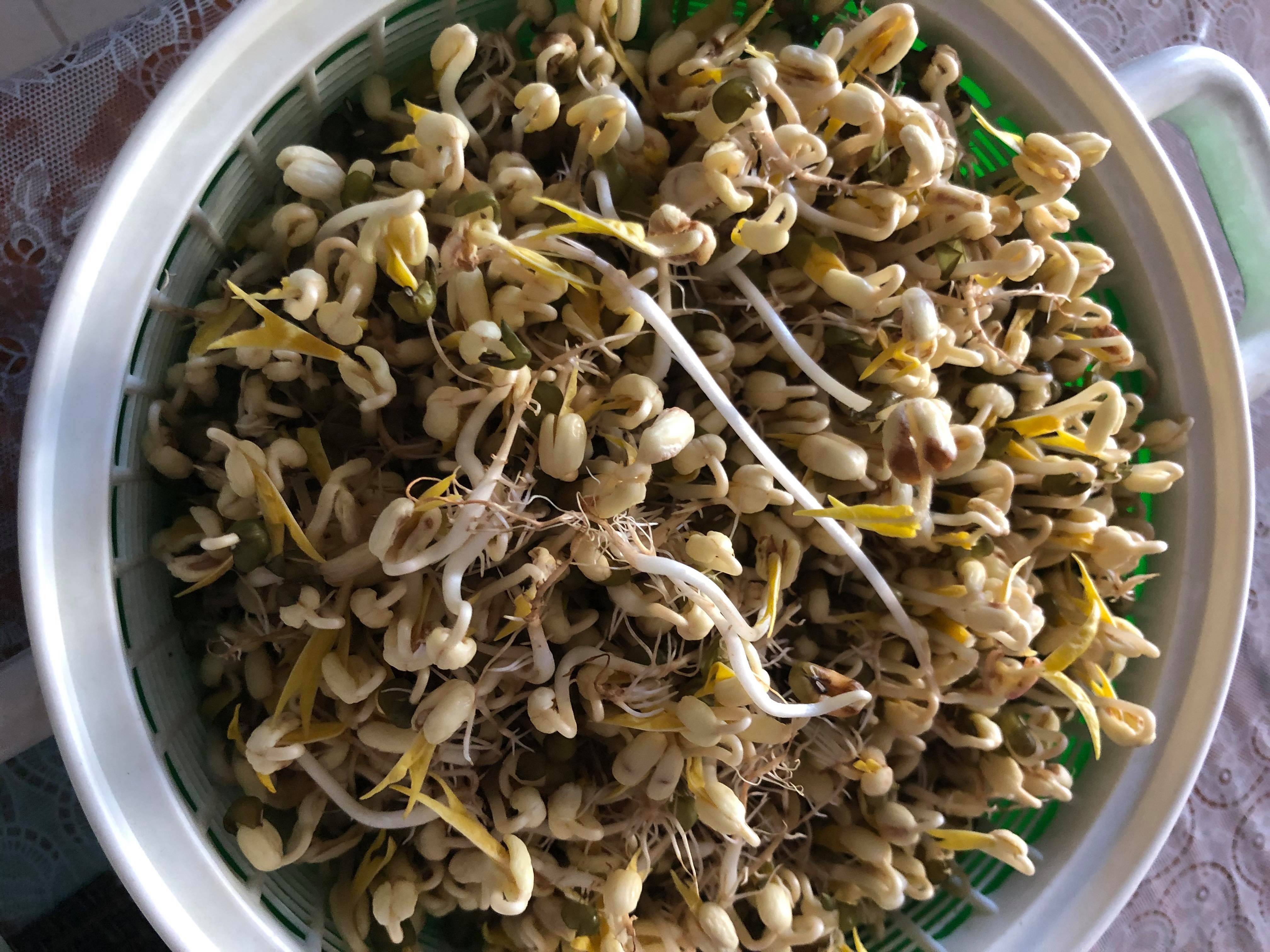
Bean sprouts grown by Mr Ong Chee Lam. (Photo: Ong Chee Lam)
His first haul was 400g of bean sprouts which added some crunch to his mee rebus, and he will continue, he said.
“I suspect the new normal will not be the same … (I) will definitely continue to research and take action to keep this as a sustainable hobby,” he added.
FLOURISHING FARMS
Meanwhile, some experienced growers CNA spoke to are growing more edibles rather than ornamental plants.
Ms Mandisa Jacquelin Toh said that her family was working towards self-sufficiency when it comes to vegetables and fruit.
“It’s truly a right direction when we are hit by COVID-19 and the circuit breaker period … we don’t have to risk ourselves going to wet market and supermarket unnecessarily,” she said.
The IT professional, who is in her 40s, said she has set up a rotating system which allows her to harvest some produce every day from her rooftop garden, which she said is a third the size of a football field.
A basket of vegetables harvested from Ms Mandisa Jacquelin Toh’s rooftop farm. (Photo: Facebook/Mandisa Jacquelin Toh)
The list of edible plants she grows rivals a supermarket’s selection, including long beans, figs, mulberries, herbs, corn, tomatoes, chilli, lime, okra and bittergourd. She even has muskmelons, watermelons, guava, custard apples, starfruit, kedongdong, mangoes and cempedek.
“We regretted not starting even earlier when COVID-19 started,” said the long-time gardener, who started seriously growing edibles about 10 months ago.
Mr Yam, who grows his plants along the corridor and common spaces outside his Housing Board flat, also made the switch months earlier and said he was glad he did. Now, vegetables including xiao bai cai, kalian and kale make up 80 per cent of his urban garden.
“Because of my space constraints, it’s not fully sustainable, but at least it supplements the food that we are eating,” he said. “Seeing the sudden surge in interest, I’m actually quite excited and happy about it.”
But he found that many people who wanted to start their home gardens or farms were “caught off-guard” and once the circuit breaker started, it was hard for them to get supplies. This was why he also put up a tutorial on growing bean sprouts, and he has seen quite a few people posting their attempts online.
“Green beans are easy to get hold off, and then within three to four days you can get the harvest. As a parent, you could occupy your kids with this particular activity, yet at the same time grow something that your family can eat,” he said.
NParks has also put up a series of tutorials on home gardening on social media, including DIY gardening videos, information on plants that can be easily grown at home and simple recipes for produce from home gardens.
Some simple plants to start with are microgreens, Brazilian spinach, Indian borage and herbs like mints and basils, Mr Ng suggested.
GREEN THERAPY
Beyond sustenance, the home farmers said that caring for their plants has been good exercise and a source of joy in an anxious time for many.
Halfway house The Helping Hand happened to start their urban farm this month, and tending to the vegetables has replaced some of the carpentry and furniture delivery activities residents did before the circuit breaker period.
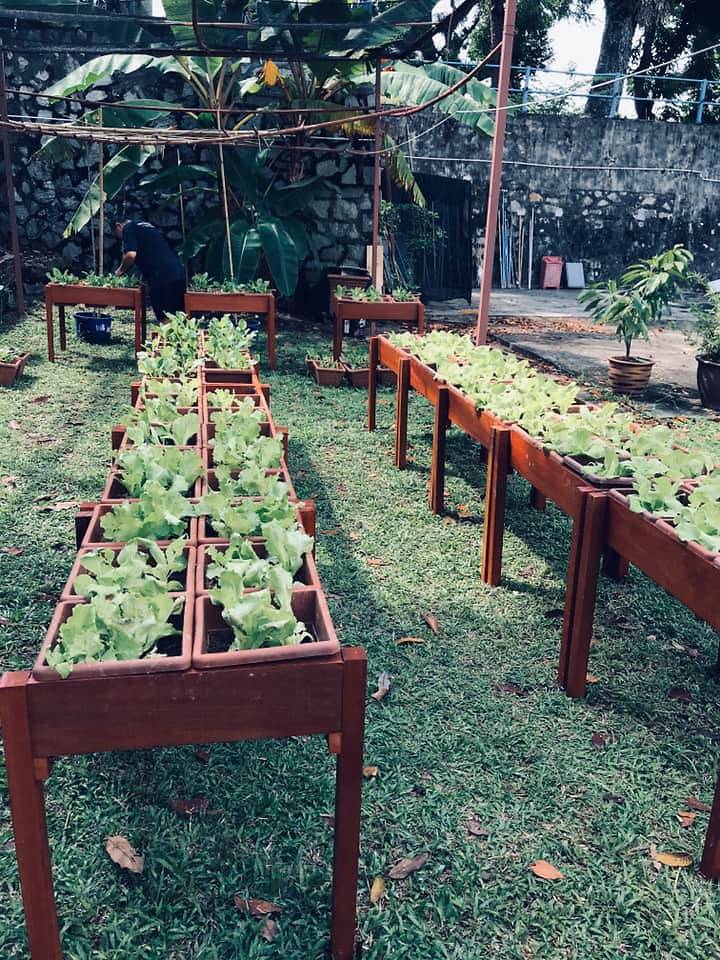
An underused grass patch at the home now has 20 raised vegetable beds that is providing both food and therapy of sorts.
“It teaches our residents some very important skills and values, which helps us in some ways as emotional regulator. It teaches them patience, and also introduces the green concept,” CEO Mervyn Lim told CNA.
For now, the vegetables will be cooked and consumed by the residents but they will look into turning the farm into a social enterprise, and may even open a café, he added.
Resident Toh Chiang Hee, who is in his early 60s, told CNA that seeing the plants grow has given him a lot of joy.
“I talk to the seedlings and tell them to grow bigger and taller,” he said in Mandarin.
Vegetable beds at halfway house The Helping Hand’s urban farm. (Photo: The Helping Hand)
FOOD SECURITY
These shoots of growing interest come as Singapore aims to produce 30 per cent of its food supply locally by 2030. A new S$30 million grant was announced in April for the agri-food industry to help commercial farms speed up the production of commonly consumed food like eggs, vegetables and fish.
And the spurt of enthusiasm for home farming springs from a gradual burgeoning of interest in recent years, said both Ms Ng of Gardens with Purpose and Ms Faith Foo from The Living Centre.
“We have been advocating for urban farming through a wide range of urban farming courses since the establishment of our centre the last five years, and thus have also seen a progressive trend of people interested in urban farming,” said Ms Foo, who has moved all their courses online for the circuit breaker period.
Ms Ng said that she has noticed more young people and families sign up for her organic farming courses before the COVID-19 outbreak and hopes that schools can be next. Before this, many Singaporeans still felt that it was easier to import vegetables from other countries, and the toil for “a few vegetables” was not worth it, she added.
“Toxic chemicals are everywhere, be it food or the environment, so I started to prepare this 10 years ago … now the time is right, Singaporeans didn’t expect the food supply chain can be disrupted,” she said. “I didn’t see COVID-19 coming but I knew there would be a demand for clean food.”
SINGAPORE: I was invited to no less than six weddings in the first quarter of 2020. Clearly it was a good time to get hitched.
The January weddings were still fairly straightforward as Singapore weddings go: in-person solemnisation for the bridal party followed by a celebratory meal with friends and family.
One of the weddings I attended, with the groom being a public servant, came with a COVID-19 advisory for under-the-weather guests to leave their FOMO at the door, stay home and rest.
By the time the February weddings rolled around, wedding guests were told to arrive early for temperature taking and travel declarations. No full-blown safe distancing measures yet, but that was to come by March and April.
I watched my niece get married in early April on Instagram Live, with the bridal party itself numbering 10.
It didn’t matter that I was half a Singapore away, and that her original plans for a full-on wedding got tapered down to a simple ceremony.
Her father walked her down a small corridor instead of a church aisle. I teared up—while riding shotgun in the car no less, then sent her an e-hongbao.
Ironic for someone who, no less than three months ago, in another commentary, wrote about my slight disdain for digital red packets.
I suppose new times call for new ways of being.
CIRCUIT BREAKER WEDDINGS
As Singapore moved into circuit breaker mode, getting married was deemed a non-essential service and couples who had planned to get married in the weeks and months ahead had to unceremoniously figure things out alongside government officials who were trying to pivot hard as well.
My youngest sister was due to get married in the middle of April.
At DORSCON yellow, she culled her guest list viciously. By DORSCON orange, she cancelled her wedding dinner, opted for a home-based ceremony with us siblings videoing in to adhere to the 10-person rule.
When the circuit breaker was announced, she postponed her wedding till the end of May.
Now with the extension of the circuit breaker announced until June, date-wise, all bets are off.
On May 5, Singapore parliament passed a bill that allowed couples the option to get married during the pandemic virtually via live video links.
And both the bride and groom need not even be in the same location to do so, as long as they are both physically in the country. The solemnisation will be conducted in the virtual presence of their witnesses.
VIRTUAL SOLEMNISATIONS – AN ECONOMIC CHOICE
I am a traditionalist at heart, but there is a growing part of me that feels that virtual solemnisations and wedding celebrations are a much needed option we never knew we desired.
And maybe it could continue to stay relevant in a post-COVID-19 world as well. After all, experts expect it could be a while before a vaccine materialises.
With the coronavirus-hit economy expected to see a long recovery period, it is wise for all of us to also be more financially-prudent, including when it comes to organising weddings.
Do you really need that hand-embossed, gold-foiled, heavy art-card wedding invitation?
The Wedding Vow, an online industry publication, estimates that on average, weddings in Singapore cost between S$30,000 to S$50,000 and can skyrocket up to S$100,000 and beyond, depending on how lavish one wants it to be.
That’s a hefty outlay for a single event.
Media reports state that in 2018, over 50 per cent of couples interviewed either didn’t think they would incur any debt in organising weddings or thought that their nett outlay would be less than S$10,000.
American survey-house Student Loan Hero found that a third of couples planning to getting married whom they had surveyed in the US had plans to borrow up to US$10,000 (S$14,138) to finance their wedding, with another 16 per cent taking on US$10,000 to US$19,999 in debt, while 11 per cent are expecting to borrow US$50,000 or more.
Following the cancellation of their wedding reception due to COVID-19 movement restrictions, Siti Jaslin Johari (seated, centre) and Muhammad Ameer Ashraf (on the television screen, centre) found a way to get married through an online solemnisation ceremony. (Photo: theghrack/Twitter)
The reality is, however, over three-quarters of engaged couples invariably find themselves starting their new lives in the red trying to cover their wedding bills.
COSTS OF ATTENDING
Singapore weddings breed a sort of a vicious spending cycle: The couple picks a fancy wedding package which they assume their red-packet takings will help cover. The guests, conversely, knows that and feels partly obliged to gift, at least, the bare minimum to cover the cost of their meal.
It’s a bad habit that people seem to gripe about behind closed doors, in the backseat of taxis or in tongue-in-cheek opinion pieces that decry: Congrats on your six-star hotel wedding, but please don’t expect a 6-star hongbao from me.
It does not help that bridal magazines publish recommended red-packet rates for guests “so you’ll never have to ask yourself how much you should give or question whether you are giving the ‘right’ amount or not.”
Because, clearly, there is a right and wrong amount to give.
Going to a wedding at the Grand Hyatt? That will set you back between S$180 to S$230 depending on whether you are invited for lunch or dinner, weekday or weekend.
Going to one at the Capella? Your wallet might feel a bigger pinch; you should be gifting between S$190 and S$320, day and meal depending.
To make matters worse, each red-packet is named and labelled so that post-dinner, the couple can record for posterity how much—or little—you gave.
Perhaps, virtual weddings will finally offer some sort of panacea for us all.
A PRAGMATIC OPTION FOR ALL
Imagine this: Couple opts to get hitched virtually with a small wedding celebration where they can live-stream the events of the day.
Family members and close relatives are, perhaps, bound by familial expectations to give large hongbaos but the rest of their friends get to gift as they wish while showering the couples with oodles of likes and happy comments without guests needing to go too far out-of-pocket.
And if you don’t quite fancy sitting through a long wedding that not only started late but also ends way past your bedtime, virtual weddings allow you to politely leave when it best suits you. Or leave for that business call or putting the young one to bed and come back after.
And for those that still need some pizzazz, don’t despair.
Media reports state that in India, couples have begun experimenting with online wedding celebrations with some couples opting to do so over Zoom. Shaadi.com, a popular online matrimonial service, has helped coordinate several digital weddings.
Guests, dressed to the nines, log-in from their homes, bear witness to the marriage and then dine on the same food thanks to a well-coordinated food delivery service.
Friends and relatives of one couple took part in wedding celebrations online due to the coronavirus lockdown. (Photo: AFP/Handout)
Feedback has clearly been positive. The site now plans to build a separate resource for digital nuptials.
And why stop there? In the name of smart tech, venture into the realm of augmented reality, virtual reality or mixed reality for a real futuristic wedding.
You can be sitting in your flat in Hougang but getting married in front of the majestic Niagara Falls, on a beach in Bali or in New York’s Central Park.
It seems like COVID-19 is not going away any time soon.
Safe distancing measures, even if whittled down, might be in place for a while more. There may still be caps on big-group events that will hugely impact how we conceptualise large events like weddings.
This period gives us pause, amid the inconveniences and disappointments of not having that fairly-tale wedding, to refocus on what matters in a marriage.
I guarantee you, when you strip it down; the choice of flowers, or whether you need sharks fin served at your wedding for face sake (you don’t, really) or if you get to take destination wedding photos, will not matter.
There will be time, yet, for the nice-to-haves.
But there should also always be that option for those who want to only have the essentials. That will be both an economic and pragmatic choice.
SINGAPORE: I’m having a phone conversation with a senior colleague about a fairly sensitive matter, when we’re abruptly interrupted by my three-year old son, who proudly exclaims that he’s dropped the TV remote into the toilet.
The seriousness of the call is immediately washed away (thankfully the remote was spared) and is replaced with laughter.
Normally, I’d be horrified if my home and work lives intruded on each other like this. But with the majority of Singapore now working from home, we’ve entered a weird parallel universe where this – or talking to my CEO about Paw Patrol – is completely normal.
These unique circumstances are raising all kinds of interesting questions around the blurring of home and work, and how we work.
It is also presenting an opportunity for working parents, particularly men, to be more involved at home.
Previously perceived as an avenue for return-to-work mothers, COVID-19 has catapulted flexible work from the “nice-to-have” category into “business critical” for all.
This has fostered a change in corporate mindsets, with companies like Mastercard and Nielson publicly stating they see this as structural, rather than transitory.
It seems the environment is also prompting a shift at home, with kids’ duties being more equally shared, particularly if both parents are working.
This is certainly the case in my household where we have three kids under the age of five. The only way we can manage is if my wife and I take 1.5 hour shifts, alternating between kids and our work.
This change is not just about being physically present to mind the kids, but also sharing the mental load in planning what the kids are actually going to do. For my ‘kid shifts”, I’ve started working out activity plans the night before.
For example, my five-year old loves “word treasure hunt” which involves me hiding word cards and, once found, sticking them on the wall in order to practise reading them,
I know I’m not alone in being an involved dad. When in virtual classes, there’s an equal mix of mums and dads accompanying their kids on the chat.
I’m also seeing many of my mates, who have kids of a similar age, proudly sharing pictures of arts and crafts they’ve arranged for their kids.
Not by any stretch is this a rosy picture. At the end of every day, my wife and I often shake our heads and wonder how long can we survive like this.
In this circuit breaker environment, I’m not really doing either my job or looking after the kids especially well. This hit me the other day during an executive committee call, when I found myself holding both my sons’ consoles as they tried to play Nintendo Wii tennis!
To make up for this, my wife and I often work late into the night after the kids are in bed.
But I’ve come to accept that these extraordinary times won’t last forever. Yet I want to continue to spend more time with my kids, and the past few months have taught me how to do so in more normal times.
(Photo: Unsplash/picsea)
For instance, juggling work and child responsibilities between two working parents requires a lot of planning and communication. A friend of mine has set up a whiteboard where he and his wife write up their scheduled meetings for the week.
It also requires flexibility in case either of us has a work emergency. Again, that comes down to communication and negotiation; “If you do this for me now, I will make it up to you later,” is how my wife and I barter.
We’ve by no means nailed this arrangement, and it’s led to heated discussions over who has the more pressing work matter, but we’re slowly working out a system.
I’ve also become more comfortable with the dissolving of boundaries between work and home, having seen that it doesn’t impinge on professionalism.
Why should I feel coy speaking about my life – including Paw Patrol episodes – with other parents at work, even my boss? After all, it’s a shared experience and allows me to engage with my colleagues and get to know them as people beyond their professional roles.
Working from home also requires planning, communication and trust with colleagues as well as having understanding bosses.
In my case, I let my colleagues know when my “black-out periods” are – that is, when I won’t respond to emails or phone calls immediately. I’m upfront that I need time off to go on kid duty.
This means we’re learning to be more reasonable with deadlines. My colleagues and I have begun to shift our expectations, and build mutual trust that the work may get delivered later tonight, rather than in the next hour. But it will get done.
(Photo: Unsplash/Priscilla Du Preez)
I now have no qualms about telling colleagues this – and I hope this mutual understanding continues beyond COVID-19.
UNDERCURRENTS OF CHANGE BUT WILL THEY LAST?
COVID-19 may not be the magic wand enabling both men and women to feel they can contribute at work and home equally, but there are undercurrents of change.
Rather than this being a structural societal shift of men being more involved in home life, I think change will happen at an individual level, and at different speeds and degrees.
One thing that has become clear to me is that not everyone is chomping at the bit to work flexibly.
Some friends and colleagues I know are happy to work from home and see more of their children; others are really struggling and can’t wait to get back to the office environment. This is true of both men and women.
But I think it’s important not to view working or parenting as a zero-sum game where you have to choose one or the other. What the current situation should tell us is that there can be choice.
Smart companies will be enabling this choice by creating an environment that allows both men and women to set up arrangements that work best for them. That way, employees can provide their best for their companies and for their families.
Likewise, many working parents will be assessing how they can incorporate work-from-home into their post COVID-19 life.
At a time when so much choice has been taken away, it is never more important to understand the choices that we can and should make about the way we live and work.