Picka.treatsg, an online business operating out of a Singapore public flat, saw an increase in orders of its cakes late last month, after the authorities announced commercial snack and drinks outlets would have to temporarily stop operating.
This came amid tighter restrictions during Singapore’s circuit breaker or partial lockdown period, and just before the start of the Muslim fasting month of Ramadan.
With orders growing from three a week to three a day, Picka.treatsg owner Nur Syafiqah Suhaimi sprang into action, renting a car from a rental service to make deliveries from her four-room flat in Ang Mo Kio and ordering more ingredients and packaging.
She spent more than $400. So when the 23-year-old learned four days later that home-based businesses were not spared from stricter rules to limit the coronavirus outbreak, she was devastated.
“I sell my bakes and cakes in boxes and I just bought ingredients, like cream cheese which was quite expensive. So when this happened, I didn’t know what to do and was at a complete loss.”
SINGAPORE: Not adding COVID-19 patients who died of heart issues instead of the coronavirus to the official death toll is “consistent with international practice”, the Ministry of Health (MOH) said.
Three confirmed cases have died of heart issues and not of COVID-19 since the start of April. Their causes of death include ischaemic heart disease and heart attack, and their deaths were not included in the official death toll of 20.
There have been medical reports linking COVID-19 with heart issues.
MOH said in response to CNA’s queries that it reports all deaths in patients infected with COVID-19.
“However, we add to the COVID-19 death count the cases where the attending doctor or pathologist attribute the primary or underlying cause of death as due to COVID-19 infection,” the health ministry said.
“This has been our consistent practice, applied for both Singaporeans and foreigners in Singapore. It is consistent with international practice for classifying deaths.”
MOH’s director of medical services Kenneth Mak told reporters on Friday (May 8) that the ministry’s approach is to ask if the deaths are “directly attributable to COVID-19 infection or complications related to COVID-19 infection”.
The ministry would report them as such if their deaths were related to the coronavirus, he said.
“In fact, we are quite transparent in announcing and reporting all the deaths that we have,” Assoc Prof Mak added.
“Even if they were not due to COVID-19 infection then they would be reported still, but we will not necessarily ascribe them to COVID-19 unless we have been informed by the medical authorities, whether the doctors attending to the patient or the coroner, if these were made coroners’ cases.
“If they were telling us directly that these were deaths attributable to ‘COVID-19 infection’, then we will be reporting them as such.”
MOH told CNA that 86 male foreign workers aged 25 to 59 died in 2018 in Singapore due to heart disease.
Three deaths among COVID-19 cases are not included in the official death toll because they died of heart issues.
A 32-year-old Indian national, case 1604, died at his place of residence on Apr 8. The long-term pass holder was tested for COVID-19 on Apr 7 and advised to stay home, pending results. His X-ray results showed he did not have pneumonia.
He was confirmed to have the disease after his demise, with MOH saying a day later that the cause of death was ischaemic heart disease and “is not due to complications from COVID-19 infection”.
A 47-year-old Bangladeshi national, Case 17410, died on May 1. He was also confirmed to have COVID-19 after his demise, MOH reported on May 2.
On May 5, a 44-year-old Bangladeshi national – Case 16370 – died of acute myocardial infarction. He was admitted to Khoo Teck Puat Hospital on Apr 29 and treated for a heart attack, MOH said.
He tested positive for the coronavirus on the same day he was admitted to hospital.
Ischaemic heart disease, also known as coronary artery disease, is when the coronary arteries are narrowed. This can cause chest discomfort, breathlessness and tiredness because of inadequate blood flow to the heart.
These narrowings happen when cholesterol and fat in layers accumulate along the lining of the coronary vessels.
When any of the three arteries gets suddenly blocked, a heart attack occurs. According to the SingHealth website, this may happen because a blood clot suddenly forms over the narrowed portion, or a fat-filled plaque bursts or ruptures.
Acute myocardial infarction is the medical term for heart attack.
SARS-CoV-2, the virus that causes COVID-19, isolated from a patient in the US, as virus particles are shown emerging from the surface of cells cultured in the laboratory. (Handout/National Institutes of Health/AFP)
CLOTTING, HEART ATTACKS LINKED TO COVID-19
Reports from doctors in China, Europe and the US have noted a dangerous complication of COVID-19 – blood clotting.
These “thrombotic events” occur for a variety of reasons among intensive care patients, but the rates among COVID-19 patients are far higher than would be otherwise expected, AFP reported.
A recent paper from the Netherlands in the journal Thrombosis Research found that 31 per cent of 184 patients suffered thrombotic complications, a figure that the researchers called “remarkably high” – even if extreme consequences like amputation are rare.
Another team of researchers from the New York University Grossman School of Medicine found that 18 patients with severe COVID-19 showed signs of a heart attack on their electrocardiograms, medical news outlets reported.
But more than half of these patients did not have a blockage in any major artery, the team’s studies found. These findings were published in the New England Journal of Medicine on Apr 17.
This was followed by reports on Apr 25 that the first coronavirus victim in the US, California woman Patricia Dowd, was thought to have died of a heart attack while suffering from flu-like symptoms.
Officials confirmed months after her death that she had the coronavirus, making her the US’ first COVID-19 fatality, US news reports indicate.
The Santa Clara County medical examiner wrote in the official autopsy that the Sars-CoV-2 infection, which causes COVID-19, was detected in the woman’s heart, trachea, lung and intestines, the San Francisco Chronicle reported.
She appeared to recover from her flu-like symptoms before dying of what was thought to be a heart attack, but the autopsy found she died after a valve in her heart ruptured, it was reported.
SINGAPORE: Walking about the park without a leash, the five creatures run up and down playground slides, curiously sniffing at bushes and wagging their tails at leaf piles.
While everyone is staying home amid the “circuit breaker” measures, the ring-tailed coatimundis at the Singapore Zoo are getting a chance to explore the park freely.
With the circuit breaker in place until Jun 1, there are no guests visiting the Singapore Zoo, and zookeepers are free to engage the animals in creative ways.
For Ms Nurfarehan Khair, an assistant supervisor in animal presentation, this means taking her charge of five male coatimundis out for walks and preparing for new presentation routines with them.
“They are very curious animals, they behave just like dogs,” Ms Nurfarehan told CNA over a video call.
The keeper, who has been with the zoo for 16 years, said the coatimundis are “pretty much unaffected” by the lack of visitors, and have gone through training to be handled easily in open areas or uncontrolled environments, making them very suitable for walks around the park.
“They just love venturing, so working with them is very, very interesting and it keeps you on your toes because they get bored very, very fast,” she said.
Coatimundis, commonly known as coatis, are native to Central and South America. The ring-tailed coatis, or South American coatis, usually move around in big groups and females are the dominant species, Ms Nurfarehan explained.
“Normally the boys are solitary. So our boys are kept together in a social setting because of how we need them to work together for shows.”
According to their keeper, coatis are closely related to racoons, and with their long tails and banded markings, many people confuse the two. The mammals, which are “very sweet” and “extremely agile”, are commonly kept as pets in the US but are rare in Asia.
Coatimundis are curious and agile, making them suitable for walks around the zoo. (Photo: Wildlife Reserves Singapore)
As part of the animal presentation team, Ms Nurfarehan’s duties cover the shows presented at the zoo, and training the animals for husbandry or show behaviour purposes.
“And then apart from that, what we do most of the time, which a lot of people seem to not know, is we do husbandry for our animals, and that would of course include cleaning up after them, feeding them and providing enrichment for them.”
Before the circuit breaker, the keeper and her team of five coatis usually put on four shows a day, which adds up to two hours of work. But now, she can use the two hours to play with the coatis, let them explore the park or work on husbandry training, which refers to behaviours that would make it easier for the vet to carry out checks without sedation.
Aside from the coatis, Ms Nurfarehan also looks after otters, primates and the Patagonian maras. With social distancing measures in place across all of Wildlife Reserves Singapore’s (WRS) parks, she rarely sees her fellow zookeepers and other colleagues.
“I think for me it gets lonely sometimes, because now for the team I’m working with, there’s only five of us and we’re so used to working seven or more,” she said, adding that there are about 120 people still going to work across the four WRS parks.
“We have to practice social distancing, meaning that we don’t bump into each other. So I might be working with a crew of five, but I don’t really see them. Or if we do see each other, we keep a distance.”
Although the animals are still brought out to “brush up” on their presentations once in a while, she misses getting to conduct the animal presentations to a live audience.
“You miss the hype of having people in the crowd. That, for now, would have to be on hold, hopefully for not much longer,” she added.
The 36-year-old started working on animal presentations and coatimundi training about one-and-a-half years ago.
“I love presenting. I love the mic work. And then one day it just happened by accident. I was training, or maybe just trying out training with a primate,” she said.
“And I had fun, surprisingly, and then the bug just caught on, and now it’s coatis and otters and maras. And I thoroughly enjoy it.”
Different animals take different amounts of time to master different behaviours, Ms Nurfarehan added, and this could vary between one or two days and one month.
“It’s very, very difficult to gauge (how long it will take), but every time we train an animal, we make sure they are set up for success, meaning we don’t make them feel like it’s not achievable,
“The planning for every animal is different. You might want to just make the objective a little bit more achievable for some, meaning we break it up into much smaller steps. And then for others, they can just get it at one go.”
With no guests at the zoo, all of Ms Nurfarehan’s time at work is now focused on the animals, which she considers an opportunity to explore new things with them.
“And I’m very sure if COVID gets cleared, we are never going to get the same opportunity to be with our animals at this magnitude.
“We’re just making full use of the time that we have, and then when the zoo reopens, and when the guests come in, they would be in for a nice experience with our animals.”
Companies are trying to hold on to their foreign workforce despite cost pressures from the circuit breaker, but if push comes to shove, this group could be the first to go, say employers and human resource experts.
Such workers are a mainstay of the economy, with around 1.15 million employed here, including those on employment passes, S passes and work permits. The number excludes foreign domestic workers.
There have been reports of cost cutting and retrenchments amid the uncertainty of the pandemic, and, typically, the first of such cuts would land on the foreign workforce, said Mr David Leong, managing director of human resources firm PeopleWorldwide Consulting.
While the Government has implemented foreign worker levy rebates and waivers to help companies retain these workers, the key Jobs Support Scheme (JSS) of wage subsidies covers only local employees.
Mr Lee Quane, regional director for Asia at human resources consultancy ECA International, said foreigners employed in the tourism, food and beverage, and transportation industries will very much be at risk of retrenchment.
One woman claimed to be above the law as “sovereign” and allegedly hit a person, another is accused of assaulting a police officer, and a man is facing an attempted murder rap over a stabbing incident.
They are among several recent violent cases linked to the current need to wear a face mask in public.
Why do some people object to the simple task of putting on a mask to protect themselves and others, and then turn violent when asked to do so?
Experts The New Paper spoke to were concerned and also somewhat perplexed.
To infectious diseases expert Leong Hoe Nam, there will always be some black sheep who refuse to follow the rules despite the advisories to do so and penalties for not doing so.
While he was unsure why some might become violent, he noted that such people are putting the larger public at unnecessary risk.
SINGAPORE: According to the joint guidance issued by the International Federation of Red Cross and Red Crescent Societies (IFRC), the United Nations Children’s Fund (UNICEF) and the World Health Organization (WHO), schools in countries that have confirmed transmission of the novel coronavirus have been urged to support students holistically and through strategies such as remote learning as the world copes with this emerging health crisis.
As of Apr 26, 189 countries across Asia, Europe, the Middle East, North America, and South America have implemented school and university closures. Singapore is one of them.
Schools and colleges have been rolling out virtual instruction and online learning, allowing students to continue their studies without interruption.
Naturally, there is a surge in the demand for high-quality and effective learning solutions to bridge the transition into home-based learning.
Some of the leading institutes of higher learning in our country like the Singapore Management University and Singapore Institute of Technology have been ahead of the curve in embracing technology and integrating online learning in their curriculum.
However, for most other institutions, this is all a bit sudden and they have minimal experience in online learning solutions. Before the pandemic, online learning solutions were considered as a “nice to have” option but now they have become a necessity.
PRIVACY AND SECURITY
The Edutech industry is set to be worth in excess of US$252 billion (S$357 billion) by the end of 2020.
With an estimated future market value of US$5 trillion, it is easy to see the scale of the opportunities at hand.
However, with its current value sitting at only 5.4 per cent of the entire education sector, Edutech is still far from reaching its full potential.
No wonder then that there is a lack of adoption of education technology solutions in schools in Singapore – a gap that has been highlighted by COVID-19.
Right now, educational institutions in Singapore are forced to adopt the quickest and most easily available online learning solutions at hand. And, there is no doubt that apps like Zoom and Hangouts are helping the world survive.
From home-based learning to parent-teacher-meets – everything is easily possible on these platforms.
The thing is parents will be more receptive to Edutech only if they are sure that it is a safe space with one of the biggest challenges with online learning solutions is ensuring privacy and security.
Unfortunately, hackers are already taking advantage of the pandemic to prey on unsuspecting online learners.
Earlier this month, there were hacking incidents reported by the Ministry of Education (MOE) in Singapore when some classes on video-conferencing platform Zoom were hijacked mid-stream, with pornography shown.
For a brief period, the MOE banned the use of Zoom apps in Singapore schools after this incident.
However, MOE has progressively allowed schools to resume the use of Zoom after introducing three additional layers of defence.
They include an all-encompassing “security button” which consolidates the conferencing platform’s security features.
Singapore teachers stopped using Zoom for online teaching after intruders gatecrashed a class. (Photo: AFP/Olivier DOULIERY)
The lesson here is that if an incident of this magnitude can happen on a global video-conferencing app like Zoom, one can only imagine the limitations of unverified small organisations.
Security is one of the most important concerns when it comes to online learning solutions, however, it is not the only concern when it comes to online education.
GOING BEYOND VIRTUAL CLASSROOMS
Education is not just about imparting the syllabus in whatever means possible – it entails tracking progress, sharing feedback, interacting with students and helping them learn in a holistic manner.
With artificial intelligence (AI) and machine learning, technology today provides the tools to take education to an altogether different level.
Then, why are we limiting it to virtual classrooms?
As the education sector embraces digital transformation as a necessity, amidst this pandemic, it is barely scratching the surface.
With the current means being used, education has almost been reduced to content dissemination.
Eventually, the priority needs to shift from finding the quickest option at hand that broadcasts information to finding solutions that capitalise on the relationship between students and teachers to augment teaching and create learning personalisation and independence.
HOLISTIC ONLINE LEARNING WITH LMS
As students’ expectations around technology-enabled learning rise, now that they have had a taste of it, they will seek flexible alternatives to traditional on-campus learning models even after the pandemic.
Educational institutions need to move beyond Zoom classes and embrace online learning holistically.
One way to do that is via the Learning Management System (LMS) – an online platform where you can develop, administer and track educational programmes and courses.
LMSs are used to create and deliver curriculums that students can follow both online and offline. You can provide all types of content that include videos, courses and documents while managing and tracking everything online.
LMSs include features such as rubrics, discussion boards, a syllabus and teacher-led learning.
SIM University is one of those that have successfully integrated a Learning Management System into their students’ learning experiences.
It is secure, easily accessible and allows for student-teacher interaction. Additionally, an LMS is far more secure than live streaming online platforms that are free to the public.
For starters, all users are authenticated before they are granted access. A reliable LMS uses cryptographic protocols and encryption to ensure the confidentiality and security of user data.
Plus, there is an asynchronous encrypted data transfer to off-site storage to ensure that client services can be restored in the event of a disaster.
With standard compliance regulations for data integrity and confidentiality in place, institutions can opt for certified LMS service providers for maximum security.
Some LMSs integrate live streaming capability in a seamless manner, like the one deployed by SIM Global Education, which can deliver a virtual classroom experience while allowing users to access related learning content, all done within a secured environment.
The LMS market is already booming.
According to a report by Market Research, the Asia-Pacific region is expected to be the fastest-growing LMS market in the coming years, with the highest compound annual growth rate of over 19.75 per cent during the years 2019 to 2027.
Several countries in the region, including Singapore, China, Japan and South Korea have adopted LMS solutions in their educational institutes owing to the growing Edutech industry and ever-increasing mobile usage and internet penetration.
Key industry stakeholders have realised the significance of effective integration between connected devices in the eLearning process. Students are increasingly accessing online learning on mobile devices.
Increasing computing power and rich features on these devices make for a dynamic and holistic learning experience. Institutions offering post-secondary education need to embrace mobile learning to engage students and provide them with better accessibility.
The one size fits all approach that has dominated education for so long does not work anymore. Using an LMS allows teachers to identify areas of weakness and assign work to help each individual student improve. Custom made study plans in this manner are the future of education.
IMMERSIVE LEARNING FOR BETTER ENGAGEMENT
Immersive learning or blended learning is yet another way in which technology can make education more holistic, interactive and insightful.
With immersive learning, students can be engaged through an artificial environment that simulates situations, in which the information could be applied. Traditional immersive learning approaches involve field trips or adaptive learning in the classroom.
A focused example of this could be flight simulator training for pilot-learning schools or virtual dissections during biology classes.
An added benefit to the online simulations is that students can practice repeatedly with no time limitations or peer pressure giving them better opportunities for success.
Simulations like this are great homework assignments or practice assessments to support face-to-face instruction. Immersive learning is a great way to create competency-based programmes and is also an authentic assessment tool.
And, with the ever-increasing growth of augmented reality, virtual reality, mixed reality and extended reality, immersive learning experiences can be richer and more effective now.
ACTIVE LEARNING WITH VIRTUAL WHITEBOARDS
Research shows that one-third of instructors who try online teaching eventually end up with passive classes. Perhaps a key reason is that some fail to exploit the full potential of web conferencing tools to overcome passivity.
The Singapore Student Learning Space (SLS) was piloted at 62 primary and secondary schools in August 2017. (Photo: Tan Si Hui)
This is where virtual whiteboards can be used to influence student motivation levels by creating an active learning environment.
First, it is important to understand that a virtual whiteboard is different from an interactive whiteboard.
A virtual whiteboard is basically a software solution that includes white-boarding functions like writing, drawing, and annotating.
Virtual or digital whiteboards often exist as part of a software suite, online, or both for easy sharing and collaboration.
These online whiteboards are versatile teaching tools that allow screen recording, screen sharing, virtually infinite board space, multimedia options, multi-device integration as well as remote input.
Virtual whiteboards not only work as a means of delivering content but they allow collaborations within lessons and saving results for review or re-use.
The rush of rolling out online learning may leave a sour taste about home-based learning and this could impact the decision of whether schools are revolutionised by the experience or will revert to what they know.
However, to be ready for a better, more holistic online education system, schools need to embrace technology in the form of more holistic solutions like the LMS and move beyond content dissemination eventually.
Nick Hutton is the Regional Director of Asia at D2L.
SINGAPORE: There is one thing Joan Hung has longed to do since Singapore’s “circuit breaker” began: Go for a run. But that is not something she can do with things the way they are.
She would need someone to go with her and run close by her side — less than a metre apart — to guide her. To run outside, the visually impaired 24-year-old would need to disregard safe distancing rules in the process.
There is one place she could run alone, where there are no traffic lights and roads to beware. But the stadiums are all closed.
So this para-athlete who plays goalball, a team sport designed for the visually impaired, makes do with workouts at home. “Everything has stopped suddenly,” she said. “I’m still not fully used to it.”
Joan Hung on Zoom.
For the visually impaired, getting used to the COVID-19 situation means having to overcome more than the usual challenges. And some of these issues began even before the circuit breaker.
For example, the safe distancing stickers on the floor used in queues are not something Hung can really see. “You don’t know if you’re (standing) in the right place or not,” she said.
That has been a common experience among those who spoke to CNA Insider. But their circumstances have also differed in several ways, underlining generally how the pandemic has caused difficulties for some and less so for others.
DELIVERY PROBLEMS
One who has had to face the impact of the outbreak largely on his own is Bernard Chew. The 49-year-old has been blind in both eyes since 2017 and lives by himself in Toa Payoh.
Bernard Chew on Zoom.
During this circuit breaker, he has been doing the cooking and cleaning at home — “independent living”, said the waiter at NOX – Dine In The Dark.
For convenience, there are times when he orders from GrabFood, now that it has more options. But that is when he occasionally runs into food problems.
“Sometimes when they knock on the door, and by the time I … open the door, they’ve left the food hanging (on my gate),” he said. “The first time, I didn’t realise the food was there.”
Another time, when he opened his gate, the food fell to the floor from the handle and his drink spilled. So he must “fumble a bit” and find his food carefully when the delivery riders take off quickly.
“That’s the difficult part,” he said, although he added that, most of the time, they do wait to pass him the food.
Chew does less ironing now because there is “no need to go out to work”.
But the bigger delivery problem has to do with online groceries, especially after Malaysia imposed its movement control order on its citizens.
Chew, who shops online with RedMart and FairPrice, could not get any available delivery slots then and had to depend on his friends who are sighted to take him grocery shopping.
He was not the only one. Norliana Mohamed Ajam, who is blind in one eye and has partial, blurred vision in the other, had to wait three weeks for her delivery slot.
In the meantime, the 37-year-old had her mother to thank for getting groceries from the supermarket.
Screen shot of RedMart notice.
It was the same with Hung, whose parents have gone grocery shopping when she could not get delivery slots or there were items unavailable, although “it’s a bit harder” for them because both her parents are completely blind.
“It’s also very crowded, and it’s very hard to keep a safe distance when you’re buying stuff,” she said.
So they have had to go when the supermarket is emptier and the staff have time to help — even as late as 11pm.
Sometimes their relatives and friends living nearby lend a hand. “If they’re going to get something, then they’d do a grocery run for us too,” said Hung.
Wet markets can get crowded too.
SAFE DISTANCING NOT SO EASY
There are a number of settings where safe distancing has been a challenge for the visually impaired. Lunchtime is one of them.
Wesley Seah, who lost his sight in one eye and has pinhole vision in the other, used to go out and buy food at 11.55am, five minutes before his lunch break, to avoid the crowd even before there was COVID-19.
But because it is “very tough” for him to observe a safe distance from others, he decided to buy lunch at 11.30am and have it in his office on the Ngee Ann Polytechnic campus once the outbreak began in Singapore.
On the train, before the circuit breaker, the 52-year-old often had to say “I’m sorry” as he moved inside, not knowing if anybody was near him.
Commuters wearing face masks on an MRT train in Singapore, March 18, 2020. (Photo: AFP/Catherine Lai)
Those are words that masseur Tan Chiew Song finds himself having to utter, too, when he happens to go near others while walking. He gets mixed reactions.
“Some are very unfriendly because I don’t look like I’m blind. I also walk very steadily … because I exercise often,” said the 59-year-old. “Those understanding ones will know that white cane means blind.”
With safe distancing measures in place, there are also fewer people offering the visually impaired their elbows to guide them. Instead, some members of the public use verbal instructions.
“There was one incident when I went to the coffee shop. The lady told me, ‘Okay, walk three steps ahead of you.’ Normally, she’d hold my hand,” recounted Chew.
He is still thankful for any help he gets. In fact, he counts himself “lucky” that people continue to step forward. And when they do not, he understands why.
Chew said he “wouldn’t get hurt” if people prefer not to guide him during this pandemic.
“Because of social distancing, I can’t blame them if they aren’t willing to approach,” he said. “Because of this law, who wants to get fined, right?”
There was even a “very funny occasion” when he was in a lift and an old lady pushed him away with a plastic bag covering her hand, “to make sure I’m standing one metre away”.
“I just laughed it off, just took it as a joke,” he said.
NAVIGATING A NEW LANDSCAPE
The circuit breaker has now corralled most people in their homes. But when eateries were open for dine-in, finding seats that were not marked out with stickers proved to be another challenge for the visually impaired.
They had to depend on others to inform them, feel for the stickers with their hands or peer very closely at the seats if they had any vision.
“It was kind of irritating because we spent more time looking for seats,” said Hung, who has glaucoma and aniridia, a rare disorder that affects the iris.
Finding their way around in general has been tougher because of the changes wrought by the COVID-19 situation.
Entrances and exits of places, from supermarkets to shopping centres, have been blocked off or switched as part of crowd management measures, which is no biggie for the sighted but has implications for the visually impaired.
Barriers up before the “circuit breaker”.
“So my walking memory is no longer of use because I can’t go by certain routes any more,” explained Hung.
The first time it happened, she was going for a class at *Scape and was taking the usual way from the nearby MRT station towards 313 @ Somerset when she walked into a barricade.
She tried feeling her way around the barricade and found a gap to enter. But it was a designated exit instead. “The people who were stationed there … were nice enough to help me. So they brought me (through),” she recounted.
Polytechnic student Neo Kah Wee, who estimates that he has 10 to 20 per cent vision, did not get similar help when he tried crossing through 313 @ Somerset to get to *Scape.
Neo Kah Wee on Zoom.
There was a queue to enter the shopping centre, so he ended up walking outside.
For some of the visually impaired, even trips within their neighbourhood have been affected, as wearing a mask — cloth masks in particular — has hampered their sense of smell, which helps them to navigate.
“For example, I know there’s this Chinese medical shop. Previously without the mask, I could smell … those medicinal drinks, like chrysanthemum tea,” said Chew, who also works part-time as a sensory panellist to assess fragrances for the company Firmenich.
“Because of the face mask, I actually walked past it … I had to make a U-turn, and slowly find my way around.”
Chew relies on his sense of smell to assess fragrances in his job, and to navigate his routes.
He also relies on his hearing, which is another problem because it has been “too quiet” during the circuit breaker.
“With a lot of shop closures, it’s quite difficult to (create a) mind map in my head,” he said. “I tend to slow down because … I have to make sure that I’m going on the right track.”
It now takes him four minutes, instead of two, to reach Braddell MRT station.
DISPELLING CIRCUIT-BREAKER BLUES
When the circuit breaker was extended to June 1, it came as a blow especially to Tan the masseur, not because of any mobility issues but because he is struggling with boredom.
“(Sighted people) can still watch TV and read the newspapers and books at home,” he said. “I’m usually a very busy working person. So I don’t know how to pass the time with nothing to do.”
Tan Chiew Song listening to the radio at home.
He lost his sight in 1994 to a viral infection to his optic nerves and now sees only a bit of shadow. He went from working in the construction industry to running a small massage salon with one other person.
Business started dropping in March, but the loss of income has not been as hard for him to take as the impact on his daily routine, especially as he is not tech-savvy enough to turn to audiobooks and online entertainment.
Norliana is another who feels restless at home. The part-time guide with the Dialogue in the Dark Singapore stopped going out in March, after tours in the exhibition venue as well as her goalball training were halted.
Her eye medication lowers her immunity level, so her parents are relieved to have her staying at home, especially since she had previously contracted H1N1. But like any person, blind or sighted, she “misses going out with (her) friends”.
Norliana Mohamed Ajam on Zoom.
For others who can work from home, there has been some sense of normality.
Neo’s internship with Care Community Services Society has continued throughout the circuit breaker, although the 21-year-old laments that by the end of it all, he would have spent only two and a half weeks in the office with his colleagues.
Seah, a service-learning catalyst for Dialogue in the Dark, is another who continues to draw the same salary while working from home, using screen reader software.
Not only that, he is taking a course on increasing personal productivity from online learning platform Udemy and may take another course, on sales negotiation, after that.
Wesley Seah on Zoom.
“I’m preparing myself for (the) moment when the circuit breaker is over,” he said.
As far as the novel coronavirus (Sars-CoV-2) is concerned, he is thinking more of his parents, who are in their 70s, than himself. He calls himself their “hygiene officer” and uses Google Sheets to manually track all their movements.
This time spent together has spawned valuable conversation with them, he added. It is an aspect of the circuit breaker that Chew has come to appreciate too.
“This COVID-19 … is a lot of inconvenience (and costly) for everybody, but let’s look at the other side of the coin: You have more free time with your family members,” said the father of two boys in their 20s.
“At least now my boys have time to call me more often on WhatsApp.”
Chew with one of his sons.
Despite the additional challenges, it has also been a character-building opportunity for many, including Hung, a facilitator at social enterprise Athlete Development. She is creating workout videos along with her sister and a friend, and posting them on YouTube.
“We’re doing a video dairy of our workouts, basically every day,” she said. “We were kind of bored. I guess it also keeps us motivated … because we made a commitment to ourselves to do stuff.”
SINGAPORE: Mr Syedur Rahman Liton, 34, pines for his wife back home in Dhaka, Bangladesh, as he tries to put on a brave front about possibly contracting COVID-19.
For the past month or so, the lifting supervisor has been isolating himself along with 100 other company workers at a factory-converted dormitory in Senoko Loop, part of a precautionary move to socially distance migrant workers living in similar accommodation from the community at large to prevent the further spread of the novel coronavirus.
It is a sacrifice that these foreign workers are making for the rest of Singapore society, experts say. As a result, the country owes migrant workers a debt of gratitude, and possibly, a concrete commitment to change when the pandemic is over.
The number of COVID-19 cases has risen sharply from the first four infections detected at a foreign worker dormitory (S11 Dormitory at Seletar North Link) on Mar 30 which were part of 879 cases in total at that point in time, to 22,460 as of Saturday (May 9).
Mr Liton has reason to be worried – two of his friends, Asit and Zakir, who live in the larger purpose-built dormitories, have been diagnosed with the disease and hospitalised.
“We all want to go home in good health … My wife miss(es) me more and more,” he said.
When asked about his prospects of remaining in Singapore in the foreseeable future amid the pandemic, Mr Liton said: “I don’t think (I worry) about the future, because I understand the situation.”
But for the 400,000 migrant workers living in Singapore, their future could remain shrouded in uncertainty for some time. Their livelihoods here will hang in the balance even after COVID-19 has been eradicated in the Republic, experts said.
Amid the crushing impact of the circuit breaker measures and the drastic blow to the construction industry, will Mr Liton’s employer survive the economic drought that has already started? Will he still have a job in post-pandemic Singapore?
Medical workers attend to a migrant worker outside a factory-converted dormitory in Sungei Kadut, April 28, 2020. (Photo: TODAY / Raj Nadarajan)
While Mr Liton ponders over the future, his host country – Singapore – will also have to reassess its whole relationship with migrant workers like him, especially its “addiction” to cheap migrant labour, and examine whether the lessons learnt from the explosion of COVID-19 cases in the workers’ dormitories could be used to implement meaningful changes.
In the near- to medium-term, at least, what is likely to happen will be a reduction of migrant workers here as economic conditions worsen, said labour economist Walter Theseira.
“At the same time, having fewer migrant workers means more room to make changes,” said the associate professor at the Singapore University of Social Sciences.
With the renewed national attention on migrant workers, the Government has pledged to raise living standards in dormitories when the battle against COVID-19 is over.
Already, there are some suggestions on what these changes can be, from having more living space per worker, more dormitories to house them, and tightening state regulations.
Over the years, Singapore’s history with migrant worker accommodation has seen a general apprehension towards housing migrant workers in the residential community.
In 2008, more than 1,400 Serangoon Gardens residents signed a petition against a dormitory situated in their neighbourhood, which they handed to then National Development Minister Mah Bow Tan.
But beyond the dormitories, there are also wider questions to consider, said the experts.
Should society start questioning its reliance on low-cost foreign workers? Will the economy be able to cope with increased costs of raised standards? Can people accept migrant workers living in their midst?
For some insights into these issues, we reached out to various stakeholders in the industry of migrant labour, such as dormitory operators, construction firms, non-governmental organisations (NGOs), as well as labour academics and policy researchers.
Ultimately, nearly all those interviewed said a significant relook at how Singapore accommodates its migrant workforce, both in the literal and figurative sense, is overdue.
Mr Christopher Gee, senior research fellow at the Institute of Policy Studies (IPS), said: “We can’t go back to the status quo … We have ridden on our luck for so long and now it has come home to roost.”
THE STATUS QUO
There are about 200,000 migrant workers housed in 43 purpose-built dormitories around Singapore.
These are licensed dormitories housing more than 1,000 workers each and are required to comply with the requirements under the Foreign Employee Dormitory Act (FEDA), such as providing facilities that include sick bays and isolation rooms.
Dormitory operators are also required to draw contingency plans in case of a pandemic, such as providing arrangements for quarantine.
Despite this, around 20 of the purpose-built dormitories – nearly half – flout the FEDA licensing requirement on average each year, Manpower Minister Josephine Teo revealed in Parliament on Monday (May 4). Operators face fines of up to S$50,000 and up to a year in jail for Feda offences.
Another 95,000 workers are housed in the 1,200 factory-converted dormitories; 20,000 in construction temporary quarters; and 85,000 work permit and S Pass holders in the construction sector housed in Housing and Development Board (HDB) flats, private residential premises and others.
These are not covered under the FEDA due to their smaller size, though they have to comply with other regulations such as the building and fire safety codes.
Each purpose-built dormitory house anywhere between 1,500 and 25,000 workers.
By law, the Urban Redevelopment Authority (URA) prescribes a minimum of 4.5 sq m per dorm resident for living space, which includes the sleeping quarters, kitchen, dining and toilet areas.
Operators have largely kept to these minimum standards, as well as other environmental health guidelines by the National Environment Agency that states that there should be one toilet facility for every 15 residents.
Each room can house between 12 and 20 workers, and the beds are often double-decked.
OPERATORS: DORMS NOT BUILT FOR A PANDEMIC
While the purpose-built dormitories have met the needs of the workers during “normal times”, dorm operators said these large facilities were not built nor regulated to cater for a pandemic of such a scale.
A spokesperson from Mini Environment Service (MES), which oversees operations at Jurong Penjuru Dorm 1, Jurong Penjuru Dorm 2, Blue Stars Dorm and The Leo, added that a dormitory “by nature is dense”.
“The older specifications and designs of a dormitory were based on a functional approach and pandemic management was not a consideration in the design and use,” the spokesperson added.
Managing Director of S11 Dormitories Johnathan Cheah said that the dormitories under his charge – S11 Dormitory @ Punggol and Changi Lodge II – are organised to accommodate residents who fall ill with infectious diseases such as chicken pox, measles and mumps.
“(The dormitories) were not designed to accommodate the large number (of infected cases) expected during a pandemic,” he said.
As of Friday, S11 Dormitory @ Punggol is Singapore’s biggest infection cluster, with 2,535 cases.
When asked how the living space each worker has is allotted, the dorm operators said that this is largely up to the specifications of the authorities.
Mr Cheah said that S11 Dormitory @ Punggol was “built to the authorities’ specifications for dormitories” when constructed in 2015.
Agreeing, the MES spokesperson said: “We don’t get to decide on the living space. This is set by the authorities and the dormitories are built to specifications.”
HELP FROM AUTHORITIES
As infections in dorm clusters began to rise early last month, an inter-agency task force was set up on Apr 7 to provide support to foreign workers and dormitory employers.
With help from the authorities, operators have been able to lower occupancy rates within the dormitories.
Mr Kong Chee Min, the chief executive officer of Centurion Corporation, who is in charge of ASPRI-Westlite Papan, Westlite Juniper, Westlite Mandai, Westlite Toh Guan and Westlite Woodlands, said that the leased tenancy of these dorms averaged 95 per cent or higher, while the actual residency was around 85 per cent.
General view of Westlite Dormitory in Toh Guan, April 30, 2020. (Photo: TODAY / Raj Nadarajan)
Thanks to the “concerted decamping efforts supported by multiple parties nationally” in the wake of the pandemic, occupancy has been brought down to about 65 to 70 per cent on average.
“On average, there are now about five or six persons living in an eight-bed apartment, and eight to nine persons in a 12-bed apartment,” said Mr Kong.
Likewise, the operator at S11 Dormitory @ Punggol has been “working very closely” with the authorities to curb the spread of the virus.
For example, the residents are required to stay in their assigned rooms and cannot come into contact with the other residents in different levels and blocks.
This measure is part of a three-pronged strategy announced by Manpower Minister Teo on Apr 14.
FUTURE HOPES FOR DORMS
The operators hope that the next couple of years will bring improvements to the conditions and living standards within the dormitories.
“A review of standards for dormitory operations can only be good for the foreign worker community as it will help to raise quality levels across the industry,” said Mr Kong.
Agreeing, the MES spokesperson said that the ability to “tear down” the dormitories with older specifications and update them will “benefit all stakeholders”.
The issues which the operators would like to address include the long-standing conundrum of safe distancing.
“If we are to prepare for future pandemic situations, the density of the dorm population needs to be addressed and employers need to set aside higher budgets for rentals, for instance,” said Mr Cheah of S11 Dormitories.
Beyond deciding where to house the workers, employers also play a “major role” in regulating the way employees use the premises, operators say.
Mr Kong said: “We do see employers who rent 12-bed apartment units, then choose to house only 10 or less workers in the apartment.”
EMPLOYERS: “OUR HANDS ARE TIED”
While migrant workers are covered by Singapore’s main labour law, the Employment Act, employers of migrant workers also generally assume a greater responsibility for their welfare, including food accommodation and healthcare, than if they had hired a local resident to do the same job.
But while employers in the construction sector agree that changes to how migrant workers are housed are needed, several said the influence they have on their workers’ living conditions is limited.
It is largely not up to the employers to dictate the density or the living conditions within the dormitories, but for the operators to decide and the authorities to regulate, they claimed.
Mr Johnny Lim, executive director of Teambuild Engineering & Construction, noted that purpose-built dormitories are often densely populated due to the shortage of land and “concerns that these dormitories are in too close proximity to residential areas”.
Mr Chew Char Choon, senior project manager of a real estate construction firm, said: “As a contractor or dorm operator, we just take instructions from (the authorities) … It is up to the Government, how they would like to control.”
While maximum room capacity and space for each worker may be set by the operators with prevailing regulations in mind, some employers may choose to house their workers in more spacious environs – but at a cost.
Mr Nelson Tee, managing director of CHH Construction System, has been housing his 39 workers in three dormitory rooms that can hold a total of 48 workers.
He pays S$369 per worker monthly for their accommodation when he could have been paying S$300 had he housed them to full capacity, and has been doing so before the pandemic.
“I book them for three rooms so I can spread them out,” he said.
MORE SPACE WILL COME AT A COST
Should new guidelines cause housing to be more costly, not all contractors may be able to stomach this, the employers said. This is especially if they have long-term projects underway, some of which can last four to five years.
Mr Chew said that should dormitories charge higher rates per worker, it would “not be fair to ongoing contracts, which are tendered based on old pricing”.
“When the new guidelines come in… it will affect (employers’) cashflow.”
At the end of the day, some employers think it boils down to who would be willing to shoulder and split the extra costs.
Mr Akbar Kader, managing director of Nan Guan Construction, said that he would like to see a “symbiotic arrangement” between the employer, dormitory operators, and the authorities, such that the extra costs are fairly distributed among them.
He added that a maximum rental charge would also make future operators more mindful during the tendering process – when they bid for the price of land on which to build their dormitories.
Exorbitant bids will be fewer if operators “know that they would have to provide specified facilities and meet operational requirements, and charge no more than what has been stipulated as the (maximum) price for rental of a bed space”, he said.
If all the above is carried out, “the increment in cost (to the consumers) over the time they own the property will be very minute”, said Mr Akbar.
Some employers think that consumers should also see beyond the economic cost of the product and be mindful of the workers’ efforts that go behind it.
Mr Kenneth Loo, executive director of Straits Construction Singapore, said that most Singaporeans are not aware of the workers’ hard work, and the tough living conditions they have to put up with.
“How much people are willing to pay depends on the economy (rather than the workers’ living conditions),” he said. “For example, when you buy a piece of clothing, do you think of where it comes from? No, right?”
An empty room at Westlite Papan dormitory on Apr 21, 2020, after workers in essential services were moved out. (Photo: TODAY / Nuria Ling)
A PUSH TOWARDS AUTOMATION
Over the years, some employers have also turned to technology to help reduce their reliance on foreign labour.
For example, Mr Lim from Teambuild Engineering & Construction said the firm focuses on prefabricated prefinished volumetric construction (PPVC), whereby entire rooms are first prefinished and fitted out in factories with the use of automation and machinery, before being transported on-site for assembly.
These new construction methods “effectively transferred major portions of the work previously carried out on the construction sites into the factories”, he said.
However, there is a limit to automation. Unless technological advancement allows machines to “function like tradesmen” and be available, accessible and affordable, “construction will remain a labour-intensive industry”, Mr Lim said.
While both dorm operators and employers say their hands are tied when it comes to housing, commentaries over the past several weeks have jointly blamed the inadequacies by both parties for the outbreak.
Experts say the time will come for a review to identify where the lapses are.
Assoc Prof Theseira said: “Employers and operators are quite a diverse group. Some appear to have neglected their responsibilities, others have simply been overwhelmed, and others still have discharged their responsibilities well. We really need some time to identify who did well and who didn’t, and hold those who failed to account.”
GOVERNMENT: ROLE AS REGULATOR
As the authorities hunker down to mitigate the viral spread, the Government is also looking into new housing arrangements for migrant workers who have recovered from COVID-19 through a pipeline of short, medium and long-term plans, said National Development Minister Lawrence Wong.
Mr Wong co-chairs the multi-ministry task force leading Singapore’s response to the COVID-19 outbreak.
While details of these plans are not yet known, several suggestions have been raised, most notably, to increase the minimum standard for living space specified in FEDA.
After all, it is too much to expect private operators and employers to do so on their own, said Mr Alex Au, vice-president of migrant worker rights group Transient Workers Count Too (TWC2).
“Employers and dorm operators have to watch their bottom lines. They are not welfare services. If the legal standards are low – which we feel they are currently – they would be foolish as profit-making enterprises to over-provide and drive up their own costs.
“That’s what the Government is for – to ensure socially-conscious minimum standards, but to do so in an across-the-board way so that a level-playing field for all businesses is maintained,” he said.
Mr Au called for a doubling of the living space per occupant to 9 square metres – equivalent to 10 workers living in a four-room HDB flat.
Assoc Prof Theseira, a Nominated Member of Parliament (NMP), said a proper study is needed to determine what construes a reasonable standard for living space.
“If we come up with one set of standards for living for Singaporeans in a similar situation, for example, a long-term hostel, dormitory, or army camp residents, it would be quite unjust to apply a lower standard to migrant workers just because they are migrant workers,” he said.
The Migrant Workers’ Centre (MWC) also urged for changes to the FEDA to include all migrant worker housing facilities regardless of their size or type, stripping away the 1,000-bed threshold which allows the law to kick in.
Said MWC chairman and former Member of Parliament Yeo Guat Kwang: “This is something MWC has been calling for since the enactment of FEDA, on the evidence that the majority of the sub-par housing facilities we see and investigate in the course of work continue to come from factory-converted, or smaller dormitory facilities.”
Other suggestions from MWC include a minimum dormitory staff to residents ratio, so as to ensure that operators have sufficient manpower to carry out crucial work such as cleaning, operations support and security.
More open green space should also be part of the dormitory requirements, which would allow for recreation and communal activities.
Labour economist Kelvin Seah from the National University of Singapore’s (NUS) Faculty of Arts and Social Sciences said that these plans should include strategies to raise the hygiene standard in dormitories.
“For instance, the plan may want to prescribe the regularity in which toilets, kitchens, and rooms would be cleaned, and the sanctions which dorm operators or employers may face if they fail to comply,” said the senior lecturer.
But these suggestions would likely lead to substantially higher costs of housing migrant workers, added Dr Seah.
DBS bank analyst Ling Lee Keng, who frequently reports on the commercial performance of the purpose-built workers accommodation sector, said that a more stringent law could result in a cutback in the supply of beds.
“That could benefit the dormitory operators that are able to meet the higher operating requirements – bigger rooms and better facilities would naturally lead to higher cost per bed,” said the analyst, who had previously predicted that raised standards could lead to a consolidation in the industry.
A MORE DIRECT ROLE FOR THE GOVERNMENT
Aside from regulations, could the Government also play a more active role in dormitory management?
Speaking at an IPS webinar on Wednesday, Associate Professor Jeremy Lim, who is the co-director of Global Health at the Saw Swee Hock School of Public Health, NUS, noted the existence of two separate “mental models” that the authorities had for migrant workers and for the larger Singapore community.
The policy response was guided by these mental models, that although migrant workers are part of the community, there are separate paradigms for the two groups, he said.
Employers of migrant workers assume the responsibility for the workers’ welfare, including healthcare, accommodation and food. Assoc Prof Lim said this is evident from the onset of the pandemic when the MOM asked dormitory operators to step up hygiene measures and issued advisories to employers.
“As it became clear that employers were overwhelmed in terms of safe distancing and (providing) face masks, everything fell apart and the Government had to step in. To their credit, the Government mentally pivoted away from this mental model … quickly,” he said, noting the speedy establishment of community care and recovery facilities to house affected workers.
Several observers had mixed feelings about the Government playing a more direct role in day-to-day dormitory management. Such services are best provided by the private market, said Dr Seah.
But the Government could also take a leaf from the book for public transport operators which do not own the buses and trains, or from how the management of state-owned buildings are tendered out to commercial service providers.
Assoc Prof Theseira said: “Having dormitories owned by the Government, and then managed on a competitive basis by private companies accountable both to workers and the Government, may be an interesting model to consider.”
TWEAKING SINGAPORE’S ECONOMIC MODEL
A more fundamental question would be whether Singapore should continue to rely heavily on low-cost migrant workers, said experts.
In Singapore, past crises have historically led to a rethinking of the Republic’s social compact – the combined series of unprecedented crises such as the 9/11 terrorist attacks in the United States in 2001, the SARS outbreak in 2003 and the global financial crisis of 2008 required national responses that “threw our planning out of gear” and necessitated the 2013 Population White Paper, said then Deputy Prime Minister Teo Chee Hean.
With Singapore now facing what has been touted as “a crisis of a generation”, some, like Assoc Prof Theseira and fellow NMP Anthea Ong, have called for a committee of inquiry into the foreign worker dormitory outbreak to work out the structural changes that Singapore sorely needs.
In his reply to the NMPs’ call, Minister Wong told Parliament on Monday that the Government will review its overall response to the pandemic comprehensively in order to learn and improve.
Deputy Prime Minister Heng Swee Keat has also set up an Emerging Stronger Task Force, which is tasked with making recommendations on how to reimagine Singapore’s economic strategies.
One silver lining, from a policymaking perspective, is that the current worries about Singapore’s overreliance on migrant workers are aligned with the Government’s goal of raising the productivity of the resident workforce.
This dates back to 2012, when then Finance Minister Tharman Shanmugaratnam said the easy availability of foreign labour will reduce the incentives for companies to raise productivity.
Since then, Singapore has taken steps to progressively reduce this reliance, such as tightening the foreign worker dependency ratio ceilings, said Dr Seah.
“There is scope to reduce this reliance even further. By encouraging companies to rely less on foreign labour in their production processes, we can in fact nudge them to adopt smarter and less costly methods of production,” he added.
Associate Professor Kenneth Paul Tan, from the Lee Kuan Yew School of Public Policy, said he hopes the review on dormitories, when it comes, will take in diverse voices from civil society in policy discussions.
“And I hope, most of all, that we have deeper discussions with a view to minimising our dependency on low-waged migrant workers, investing in productivity-enhancing technology, redesigning essential jobs to overcome unnecessary stigma, and designing more generous social safety nets for the many who will have difficulty integrating into a new and more resilient economic society.”
PEOPLE: SOCIETY’S APPETITE FOR CHANGE
IPS’ Mr Gee said that this traditional mindset of relying on lower-skilled and low-wage labour has created a “category of residents who have limited rights as a non-permanent resident foreigner and are treated differently”.
If Singapore decides that in a post-pandemic world, it needs to elevate their living standards to a decent level that Singaporeans can accept for themselves, then another question will be what level would Singaporeans be comfortable with, said Mr Gee.
“The same level as the lowest-paid Singaporean household? Or lesser? We have to negotiate and discuss this,” he said.
And then, there is also the matter of cost that society needs to bear.
Last month, amid the outbreak in the dormitories, Mrs Teo said that each time MOM attempts to raise the standard of living in these premises, it would face objections from employers due to the added costs that come with the move.
“Nevertheless, I hope the COVID-19 episode demonstrates to the employers and wider public that raising standards at worker dormitories is not only the right thing to do but also in our own interests. We should be willing to accept the higher costs that come with higher standards,” she said.
In this fundamental re-think of the role migrant workers play in Singapore’s prosperity, TWC2’s Mr Au urged the authorities to also look beyond living standards in dormitories, such as long-standing issues on the recruitment fees that migrant workers bear and the non-payment of salaries.
Assoc Prof Theseira said: “Fundamentally, the current structure is low-cost, and as a result, generally Singaporeans benefit in the narrow sense that we pay lower prices for anything produced by foreign workers.”
“Either our costs would go up, meaning more taxation, or standards would fall, meaning more potholes, uncleared fallen trees, et cetera, without so many low-cost workers.
“That means that we have collectively contributed to current conditions for foreign workers, because we have found these low costs and high standards of service too compelling to raise too many questions about their treatment and the market structure,” he added.
SINGAPORE ATTITUDES TOWARDS MIGRANT WORKERS
So, are Singaporeans willing to pay for the higher costs that will inevitably arise from offering migrant workers a better deal? The jury is still out, based on past experience, according to the experts interviewed.
The empirical evidence suggests that the mindset of Singaporeans towards migrant workers has not changed, despite an outpouring of sympathy whenever a major incident occurred.
At the IPS webinar, MWC executive director Bernard Menon lamented that despite past events such as the SMRT bus driver strike in 2012 and the Little India riot the following year, the momentum arising from the online discourses on worker welfare would eventually peter out.
“We have a lot of people coming up and saying ‘you should improve this, you should improve that’,” said Mr Menon.
“But unfortunately, though you can obviously tell that there’s been a gradual increase over time of interest and concern … this has lagged behind the expectations I’ve had during these crises.”
Most recently, in December last year, the International Labour Organization and the United Nations Entity for Gender Equality and the Empowerment of Women jointly published a detailed study into society attitudes towards migrant labour in Japan, Singapore, Malaysia and Thailand.
The study included both work permit holders working in the construction industry and foreign domestic workers as part of their report.
It found that overall support for migrant workers had decreased in the past nine years, when a similar study was conducted in 2010.
“Knowledge regarding migrant workers across the four countries remains low, and discriminatory attitudes prevail with significant numbers of members of the public in migrant destination countries stating that migrant workers should not enjoy equal working conditions with nationals,” the report stated.
The study found that 36 per cent of the 1,005 Singapore respondents believed migrant workers should not receive the same work conditions as local workers, or be entitled to join a union.
Around 40 per cent said migrant workers who end up exploited only have themselves to blame, a majority – 60 per cent – disagree that migrant workers should receive the same pay and benefits as nationals, and 53 per cent said migrant workers threaten the country’s culture and heritage.
Nevertheless, a majority of the Singaporean respondents (58 per cent) recognised that migrant workers had a net positive effect on Singapore’s national economy.
A ROUND OF SOUL-SEARCHING
With the pandemic forcing Singapore – as a collective – to pay the price for years of apparent neglect, commentators said that after COVID-19 is eliminated, Singapore needs to openly embark on some serious soul-searching.
For a start, the society’s mindset and attitude towards migrant workers need to “undergo a sea change”, said Associate Professor Eugene Tan from the Singapore Management University.
“SG United must include migrant workers from the get-go … We cannot, as a society, seek to harness the benefits of their being here and yet not prepare to bear the costs of their being in our midst. We cannot continue to have the gains privatised but the costs socialised in our migrant worker policy,” the law don said.
As Singapore figures out its next steps for migrant workers, the workers are also trying to figure out theirs as they mill around in their rooms within the various dormitories dotting Singapore keeping a distance from everyone else.
Mr Syedur Rahman Liton and his friend Asit at a poetry event in Singapore in 2017. Photo: Syedur Rahman Liton.
Having spent more than a decade working in Singapore, Mr Liton is keenly aware of the value of social inclusion. Like his friends Asit and Zakir, Mr Liton is a poet, who often pens his thoughts about crises and conflicts around the world, and attends poetry events with Singaporeans such as those organised by Sing Lit Station and local Bengali publication Bangla Kanthar.
Isolated in his company dormitory now, he spends the idle days reading the news online, watching movies, and making video calls to his wife and family back home, he said.
On Apr 17, he wrote in Bengali: “The whole world drowned in darkness today / Every person surrounded by death, disorder and the virus / Humanity is counting down the hours of waiting / For when the end comes – A new dawn.”
SINGAPORE: Although the COVID-19 pandemic had affected their initial plans, two Singapore-based start-ups are still set on revving up efforts to produce their own electric motorbikes.
The coronavirus outbreak has caused “little hiccups” in its supply chain, said Scorpio Electric’s acting head of operations Muhammad Taureza.
But the brand remains on track to roll out its zero-emission, fully electric smart motorcycles, with no “appreciable delay”, he said, adding that it aims to do so by the middle of this year, or as soon as the COVID-19 situation stabilises.
Scorpio Electric is a brand under Singapore-based EuroSports Technologies, which is backed by SGX-listed EuroSports Global.
Since March, Scorpio Electric has expanded its premises at Teban Gardens to 7,000 sq m. The space includes offices and showrooms, as well as 4,000 sq m dedicated to a factory and warehouse.
This facility is expected to produce about 8,000 electric motorcycles a year, said Dr Taureza.
Although the components will be manufactured elsewhere, Scorpio Electric’s bikes will be assembled at its Singapore location, he added.
Scorpio Electric chief technology officer Tham Kwang Sheun noted that making its motorcycles “smart”, with the use of artificial intelligence and data analytics, will allow them to be even more energy efficient.
“That means that when you get on, the bike will actually have the intelligence to tell you how can you better plan your trips, and how much fuel consumption you’re going to use, accounting for operating conditions,” he explained.
The aim is also for Scorpio Electric to extend this environmental sustainability to its production line, said Mr Tham, noting some of the materials used in the making of motorcycles can be substituted by “bio-derived” materials with “some recyclability”.
The switch to electric motorcycles is “very promising” in terms of reducing carbon emissions in the region, said Mr Tham, who was previously with the Land Transport Authority as the head of its autonomous vehicle programme office.
Singapore Prime Minister Lee Hsien Loong with a scale model of a Scorpio Electric’s smart electric motorcycle at the Singapore Week of Innovation and Technology event in November 2019. (Photo: Facebook/Lee Hsien Loong)
BIG ROLE IN REDUCING EMISSIONS
Motorcycles in Southeast Asia are “typically lagging behind the curve in emissions standards”, said James Chan, co-founder and chief executive of Ion Mobility, which is headquartered in Singapore.
The firm’s other co-founder, Joel Chang, was previously with Scorpio Electric as its chief operating officer before he formed Ion Mobility last year.
“In Singapore, ICE (internal combustion engine) motorcycles are on Euro 4 standards, while Indonesia is still on Euro 3,” noted Mr Chan, referring to the emissions standard introduced by the European Union. The latest standard for motorcycles in Europe is Euro 5, which came into effect this year.
Motorcycles may seem to have better fuel efficiency, but on average, they produce twice as much carbon dioxide per passenger-kilometre over their life cycles when compared to cars, said Mr Chan.
In addition, particulate matter (PM2.5) from motorcycle emissions is taken into consideration due to the sheer number of motorcycles on the roads in the region, he explained, noting that PM2.5 is one of the largest “air pollution culprits” to health costs and premature deaths in Southeast Asia.
Ion Mobility’s electric motorcycles would produce zero tailpipe emissions and play “a big part” in reducing PM2.5 and greenhouse gas emissions produced, added Mr Chan.
Southeast Asia is the world’s third largest market for motorcycles after India and China, he noted, adding that there are currently more than 200 million ICE motorcycles across Southeast Asia.
The company had originally aimed to offer test rides and launch pre-orders for its Model 1 electric motorcycles in Jakarta by the third quarter of 2020, although it had to go back to the drawing board because of COVID-19.
“We aim to launch our Model 1 in Indonesia by early 2021 or sooner, COVID-19 permitting,” said Mr Chan.
Apart from its headquarters here – which will serve as a regional centre for design as well as research and development – Ion Mobility also has offices in Jakarta and Guangzhou. Mr Chan said the company is focused on becoming the top electric motorcycle company in Southeast Asia.
It aims to begin with Indonesia, where 6.5 million new ICE motorcycles were sold in 2019, aiming to claim 1 per cent of the Indonesian market within its first two years of sales.
Scorpio Electric’s facility at Teban Gardens. (Photo: Scorpio Electric)
Scorpio Electric, meanwhile, aims to be a “global brand”, said Dr Taureza.
“We want to be in the same ranks as Apple and Tesla,” he said, although he noted that this needs to be done one step at a time.
As a “homegrown Singapore brand”, Scorpio Electric’s first priority is the Southeast Asian market, primarily Vietnam, Indonesia and Singapore, he said.
MORE TO BE DONE TO ATTRACT CUSTOMERS
Although sales of electric vehicles (EVs) have been increasing in recent years, they are still in the minority, making up just 2 per cent of the total vehicle population worldwide.
“The reason why the uptake of EVs generally, whether cars or motorcycles, is low is because the price is expensive, let’s not beat around the bush,” said Dr Taureza, noting that the main reason for this has been battery prices.
However, with battery prices declining in recent years, it is only a matter of time before price parity is reached, he added.
To attract consumers, Mr Chan said the onus is on companies like Ion Mobility to “up our game and offer a compelling product that provides price- and performance-superiority over ICE equivalents without relying on subsidies”.
While both firms welcomed Singapore’s recent measures to accept electric motorcycles here, Mr Chan believes more can be done.
“Certain categories of electric motorcycles should be permitted to charge from normal wall sockets provided they are UL2272-certified,” he said, referring to the fire-safety standard used in Singapore for personal mobility devices such as e-scooters.
“Singapore’s touted network of EV charging stations are also all zoned for EV cars, not EV motorcycles. There is a need to consider the zoning and charging sockets for EV motorcycles too,” he added.
More refinement is also needed in the categorising of electric motorcycles, which do not neatly fit in with existing categories of conventional motorbikes, he said.
“Horsepower and kilowatt power output is not a one-is-to-one relationship,” he explained, adding a more “engineer-centric approach” is needed.
Mr Tham said the firm aims to close another round of funding in the coming months, although he declined to provide figures.
“We started our fund-raise in January this year, and in spite of COVID-19, have been able to secure healthy investor demand amidst these tumultuous times,” said Ion Mobility’s Mr Chan.
He declined to provide figures at this time, but Mr Chan noted that it would be able to launch its motorcycle without raising more funds.
When asked how Ion Mobility would fare against other players in the electric motorcycle market, he said such discussions were “premature”.
“There is plenty of room for all of us to coexist, with each player going after different market segments,” he said.
“The real competition, the elephant in the room if you must, is consumer preferences, which have been honed by what Japanese incumbents have offered to them in terms of design, price and performance over the years,” he added.
Scorpio Electric welcomed competition, said Dr Taureza, adding that competition helps the company to “grow and continue to improve”.
He noted that apart from the two new players, established traditional motorcycle manufacturers have also entered the market.
“I think there will be tremendous growth in the EV motorcycle segment next year,” he said.
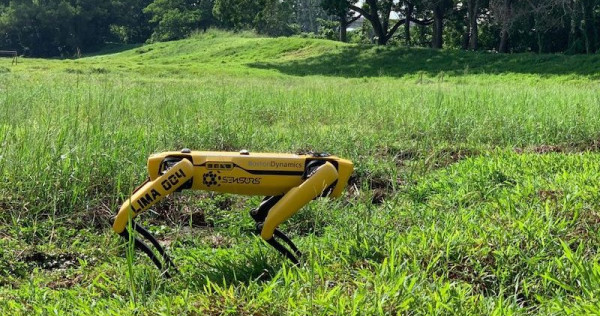
In another universe, robot surveillance would mean that androids are in power, leading to the extermination of rebellious, non-compliant human subjects. Fortunately, the real world isn’t half as terrifying, making use of robot technology to help out with safe-distancing measures amid the Covid-19 outbreak, and reducing the need for manpower in Singapore.
Called Spot, the four-limbed innovation will be undergoing a two-week trial at Bishan-Ang Mo Kio Park from May 8 onwards along the 3km path at the River Plains section during peak hours.
PHOTO: GovTech
A recorded message is set to be broadcasted during that time, reminding visitors to observe safe distancing while exercising. Spot will also be equipped with cameras to keep track of the visiting numbers, but the authorities assured that there’ll be no Orwellian supervision happening – the technology doesn’t allow for facial recognition and personal data collection.