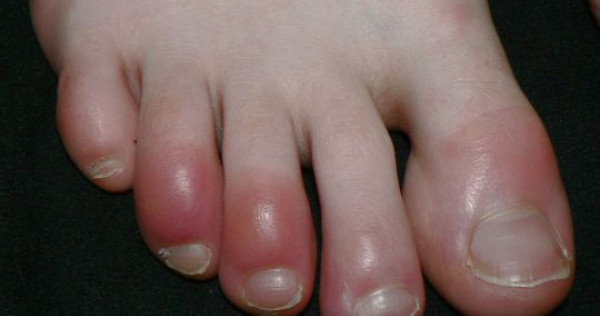
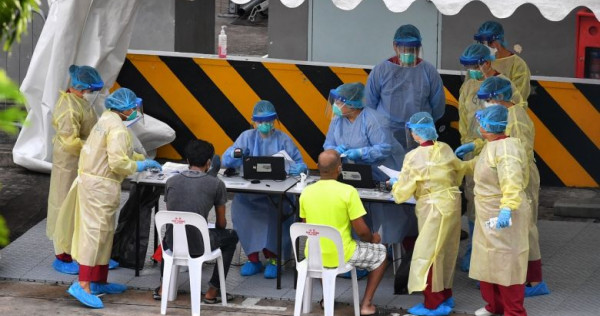
The deadly coronavirus can cause a victim’s blood to curdle, a surprise complication that has disturbed experts studying the killer virus, Wired reported on Thursday.
The formation of these blood clots can be dangerous, as seen in autopsies where some people’s lungs were found to be full of hundreds of microclots, The Washington Post reported last month.
These errant blood clots of a larger size could also travel to the brain or heart, causing a stroke or heart attack, the report added.
The report in Wired said researchers have long known about the link between infectious diseases and blood clotting.
It said there is also data to indicate a heightened risk of fatal heart attacks among those who get plain old influenza.
Agence France-Presse reported in late March that Broadway and TV actor Nick Cordero’s doctors were forced to amputate his right leg after he had spent nearly three weeks in an intensive care unit being treated for Covid-19.
The Singaporean woman allegedly also insulted mall staff and hurled vulgarities at a security officer who was trying to get her to put on her mask correctly, said the police in a release to the media on Friday.
A widely shared video of the incident also showed the woman taunting a mall employee, asking him to remove his face mask to speak to her.
Mall staff called the police for help at about 2.10pm, but when law enforcement arrived and requested to see her identity, she allegedly started peeling off the address sticker on her identity card.
“When one of the police officers tried to stop her, the woman assaulted the police officer and remained uncooperative,” said the police, noting that the woman had previously been fined $300 on April 29 for not wearing a mask at the same mall in Sembawang.
SINGAPORE: As families were urged to stay home in order to contain the spread of COVID-19, some people have taken to borrowing e-books online, with an increase in the number of cookbooks and juvenile fiction being loaned.
Making the top 10 most-borrowed lists across categories since the start of the “circuit breaker” are cookbooks on hawker dishes, cakes and desserts, home cooking and nyonya treats.
Children’s books like Harry Potter and the Dog Man series, a comedic graphic novel by American cartoonist Dav Pilkey, also fill the charts of most loaned eBooks, the National Library Board (NLB) told CNA.
This trend was in line with publishers offering unlimited checkouts of titles on Singapore’s hawker classics and Harry Potter, said NLB’s assistant chief executive of public library services Catherine Lau.
The top borrowed e-book across categories since the circuit breaker started is Harry Potter and the Philosopher’s Stone, but it also occupied top spot in the month before that.
However, it has been borrowed more than 3,200 times since the circuit breaker started, almost four times the figure it yielded in the month before.
With the additions to the digital offerings, more than 800,000 e-books and audiobooks can now be borrowed online via the NLB mobile app, as well as more than 7,000 e-magazines and e-newspapers.
This is less than a fifth of the 5 million physical books across all public libraries in Singapore, but as the libraries were ordered closed as part of COVID-19 containment measures, readers turned online.
eBooks available on NLB’s app. (Photos: NLB)
NLB introduced new initiatives for readers during the circuit breaker period, adding more online resources during school holidays and providing unlimited checkouts for all 104 children’s titles from Epigram Books.
The board announced on May 1 that it had added more popular children’s books including titles like Captain Underpants, while 10 new international magazine titles were added including Billboard, Marie Claire, Rolling Stone, The Economist, The Hollywood Reporter, The New Yorker and Wired.
These e-magazines can be borrowed for up to 21 days and there is no limit to the number of readers who can browse them at any time.
Anyone with a myLibrary ID can borrow up to 16 eBooks via the app for up to 21 days. A SingPass, NRIC or FIN number is required for free membership.
More than 3,000 e-books and magazines can be read by any number of readers at the same time.
The top five borrowed e-books between Apr 7 and May 3 are: 1. Harry Potter and the Philosopher’s Stone 2. Lee Kuan Yew: The Man and His Ideas 3. Dr. Seuss and Philosophy: Oh, the Thinks You Can Think! 4. Singapore Hawker Classics Unveiled: Decoding 25 Favourite Dishes 5. Horrid Henry’s Joke Book
The first title was checked out more than 3,200 times, double the 1,605 times that the tome on Lee Kuan Yew was borrowed.
Making up the rest of the top 10 are children’s books and a volume on Japanese cake and dessert making.
In specific categories, Harry Potter again topped the list of juvenile fiction borrowed during the circuit breaker period, while the top 10 fiction titles include Crazy Rich Asians at number 6 and The Handmaid’s Tale at number 7.
The top borrowed business title was: Atomic Habits: Tiny Changes, Remarkable Results: An Easy & Proven Way to Build Good Habits & Break Bad Ones by James Clear.
A storytelling session by the National Library Board. (Photo: NLB)
Other than books, NLB has also introduced activities for parents and their children, such as weekly storytelling sessions and craft instructions under their Discovereads programme.
Other free upcoming activities with online instructions include a live-streamed workshop on digital card-making this Mother’s Day on May 10 and a project management workshop for adults via Microsoft Teams on May 14.
WHAT PEOPLE ARE READING DURING THE CIRCUIT BREAKER
Here are the full top 10 most-borrowed e-books between Apr 7 and May 3.
TOP 10 ACROSS CATEGORIES
1. Harry Potter and the Philosopher’s Stone: Harry Potter Series, Book 1 2. Lee Kuan Yew: The Man and His Ideas 3. Dr. Seuss and Philosophy: Oh, the Thinks You Can Think 4. Singapore Hawker Classics Unveiled: Decoding 25 Favourite Dishes 5. Horrid Henry’s Joke Book 6. Becoming 7. Tanoshii: Joy of Making Japanese-Style Cakes & Desserts 8. Fetch-22: Dog Man Series, Book 8 9. For Whom the Ball Rolls: Dog Man Series, Book 7 10. Too Many Carrots
TOP 10 NON-FICTION
1. Lee Kuan Yew: The Man and His Ideas 2. Dr. Seuss and Philosophy: Oh, the Thinks You Can Think! 3. Singapore Hawker Classics Unveiled: Decoding 25 Favourite Dishes 4. Becoming 5. Tanoshii: Joy of Making Japanese-Style Cakes & Desserts 6. Home Cooking with Sam and Forest 7. The Singapore Story: Memoirs of Lee Kuan Yew, Volume 1 8. When Breath Becomes Air 9. Educated: A Memoir 10. Delightful Nyonya Treats
TOP 10 JUVENILE FICTION
1. Harry Potter and the Philosopher’s Stone: Harry Potter Series, Book 1 2. Fetch-22: Dog Man Series, Book 8 3. For Whom the Ball Rolls: Dog Man Series, Book 7 4. Too Many Carrots 5. Lord of the Fleas: Dog Man Series, Book 5 6. Dog Man Unleashed: Dog Man Series, Book 2 7. Brawl of the Wild: Dog Man Series, Book 6 8. Horrid Henry Robs the Bank 9. Dog Man: Dog Man Series, Book 1 10. A Tale of Two Kitties: Dog Man Series, Book 3
TOP 10 FICTION
1. The Silent Patient 2. Chasing Cassandra: The Ravenels Series, Book 6 3. Eleanor Oliphant Is Completely Fine: A Novel 4. The Life-Changing Manga of Tidying Up: A Magical Story 5. Normal People 6. Crazy Rich Asians: Crazy Rich Asians Series, Book 1 7. The Handmaid’s Tale (Graphic Novel): A Novel 8. The Guardians: A Novel 9. Pachinko 10. Blue Moon: Jack Reacher Series, Book 24
TOP 10 BUSINESS TITLES
1. Atomic Habits: Tiny Changes, Remarkable Results: An Easy & Proven Way to Build Good Habits & Break Bad Ones 2. Never Split the Difference: Negotiating As If Your Life Depended On It 3. 13 Things Mentally Strong People Don’t Do: Take Back Your Power, Embrace Change, Face Your Fears, and Train Your Brain for Happiness and Success 4. Irrational Exuberance: Revised and Expanded 5. The Intelligent Investor, Revised Edition 6. The Power of Habit: Why We Do What We Do in Life and Business 7. Start with Why: How Great Leaders Inspire Everyone to Take Action 8. Principles: Life and Work 9. How to Win Friends and Influence People 10. Billion Dollar Whale: The Man Who Fooled Wall Street, Hollywood, and the World
SINGAPORE: Life changed for Ahmed Sumon on Jan 20 last year. He had been dismantling a structure at a construction site in Tampines when he was suddenly pinned to the ground with a metal bar on his back.
He was unconscious as he was moved out of the worksite. His company sent him to a clinic at first, where he was prescribed painkillers, he said.
But after a few days, the pain was still unbearable. He got himself admitted to hospital, where an MRI scan showed he had fractured his spine.
The 30-year-old was unable to work for the rest of his time in Singapore. He returned to Bangladesh in February this year.
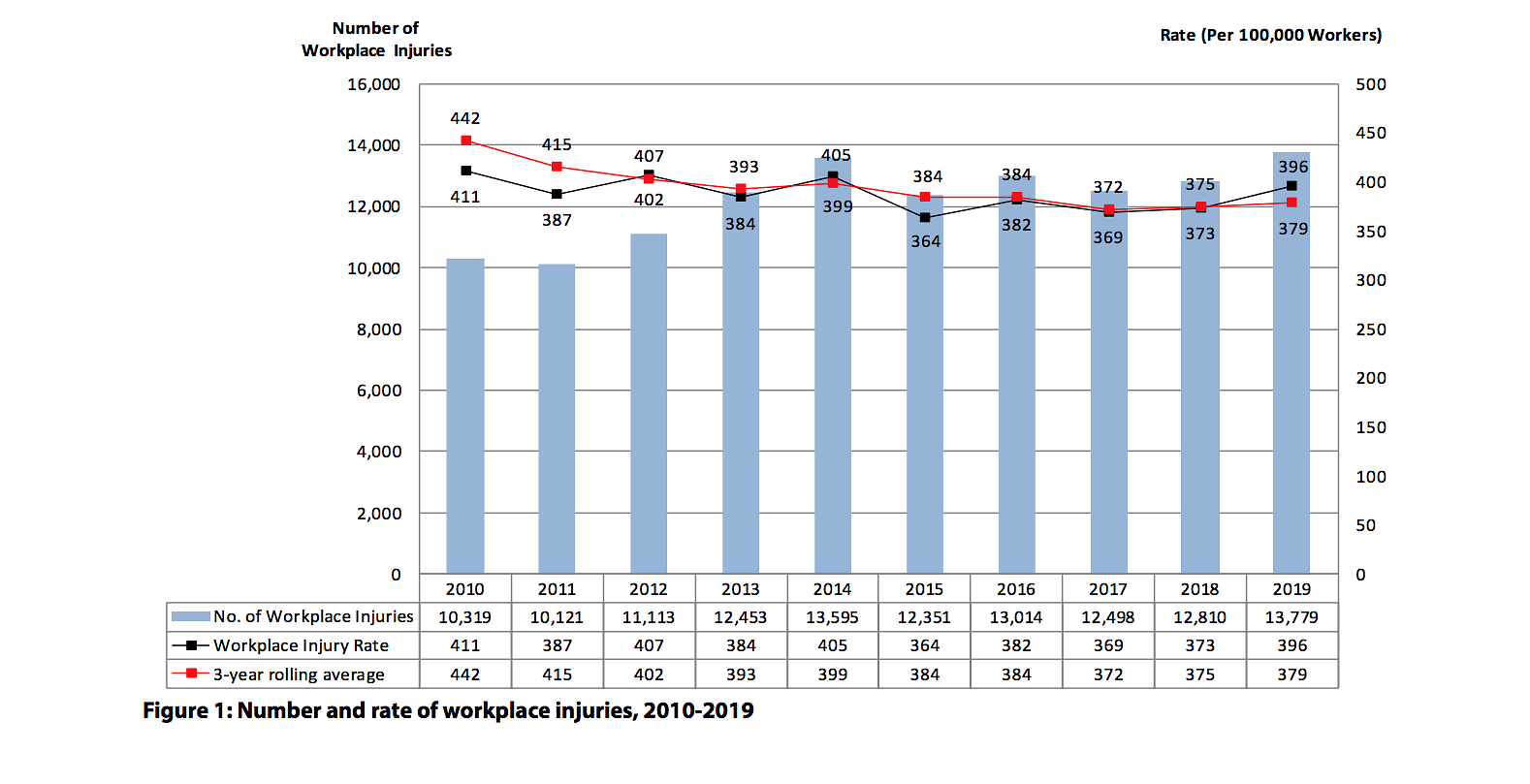
Mr Sumon is one of the 13,779 people who were injured on the job last year, according to the Workplace Safety and Health (WSH) 2019 report.
Last year’s rate of injuries was at a five-year high, with an injury – fatal and non-fatal – rate of 396 per 100,000 workers. The construction and manufacturing industries were its top two contributors.
“This is a cause for concern as every worker deserves to work in a safe and protected environment, and every worker should have the right to return home safely,” said Melvin Yong, assistant secretary-general at the National Trades Union Congress (NTUC) – a sentiment shared by construction and manufacturing industry firms and observers.
And though 2019’s workplace death rate was at its lowest since 2004, the trend seems to have reversed in the first few months of this year.
Last month, Minister of State for Manpower Zaqy Mohamad revealed that more people had lost their lives through workplace accidents so far this year compared with the same period in 2019, despite the ongoing “circuit breaker” meaning that most workplaces are closed.
There were 14 fatalities recorded from Jan 1 to Apr 17 this year compared to nine within that period in 2019.
Mr Zaqy called it a “worrying trend” that reinforced the need for employers and workers to press on with efforts to improve workplace safety and health.
Injured workers could experience a loss of future earnings, Mr Yong said, as well as having to bear additional costs of treatment and rehabilitation beyond what their workplace injury compensation can cover.
Among foreign workers, there is also the issue of debt.
Before coming to Singapore, most of these job seekers pay a recruitment fee to brokers in their home countries. While authorities in Singapore place strict controls over how much local employment agencies can charge the worker, the Ministry of Manpower (MOM) has said that it has no jurisdiction over the fees charged by agencies in the sending countries.
Becoming incapacitated causes “immense distress and anxiety” among workers who feel helpless about no longer being able to earn money for their families back home, said Desiree Leong, a case worker at Humanitarian Organization for Migration Economics (HOME).
In addition, there are worries over how they are going to repay their outstanding recruitment fee debts, and injuries that might worsen if their employers delay treatment, Ms Leong said. Most of the workers that the non-profit sees – usually just under 150 cases a year – sustain back injuries, while others have lost fingers or their limbs crushed.
Some of the ducks that Mr Sumon bought to start his duck farm. (Photo: Ahmed Sumon)
Overseas job brokers usually collect a few thousand Singapore dollars from each worker, said HealthServe case worker Yvonne Loo, although she has met some charged a fee as high as S$10,000.
In Singapore, there are nearly a million work permit holders, as of December 2019’s official figures. Aside from the quarter of a million foreign domestic workers, the rest are typically foreigners working low-wage jobs in construction, manufacturing and shipyards.
They earn about S$600 to S$700 each month, said Ms Loo, with about 20 per cent of that amount going to pay for lodging and food.
By working overtime, Mr Sumon earned a bit more – S$1,200 a month, most of it remitted home to his wife, his unemployed father and a mum paralysed by stroke.
But having came in and out of Singapore four times since 2012, Mr Sumon said that he had racked up a debt of S$20,000 in total owed to various employment agencies in Bangladesh, which he coughed up through loans from banks and friends, and by selling his father’s farmland and cows.
Mr Sumon chose to start a duck rearing business with whatever compensation money he had left as job prospects are low in his village and ducks cost less than other poultry animals. (Photo: Ahmed Sumon).
He has managed to settle the debt, half of which came from his S$16,000 work injury compensation. Left with S$6,000, he used S$5,000 to start a duck farm business – job prospects in his village are low, especially during this COVID-19 situation, he pointed out – and the rest to look after his family of five.
DOESN’T PAY TO CUT COSTS
Workplace injuries bear heavy costs not just on a worker’s life, but on a company’s bottomline too, construction and manufacturing industry players noted.
The more the number of injured workers, the higher the costs as companies accrue stop-work orders and medical expenses, said Dr Goh Yang Miang, a former chairman of The Institution of Engineers, Singapore’s health and safety engineering technical committee.
Employers also have to bear the costs of training new workers who replace the injured party, increased insurance premiums after every injury, productivity downtime with each injury and legal fees should the worker decide to take legal action in lieu of file for workplace injury compensation, said Mr Yong.
To better protect construction workers, MOM is planning to improve the mandatory construction safety course by including experiential elements in it by 2022.
The course, which is called ‘Apply WSH in Construction Sites’, is available abroad as well.
However, the Tripartite Alliance said in response to CNA’s queries there are “currently no plans for the AWSHCS course to be conducted overseas”.
Some developers, like JTC and the Land Transport Authority, have already made it compulsory for workers to undergo a safety course that has experiential components in it before they work on their projects.
At the JTC-initiated Construction Safety School, which is operated by the SCAL (Singapore Contractors’ Association Limited) Academy, workers undergo an eight-hour class that includes two hours of simulations, which includes the experience of falling into a pit and getting electrocuted.
The participants are tested after the class on their ability to spot safety hazards and protect themselves.
Since it opened last June, 120 companies – or 2,400 supervisors and workers – have gone through the course, an academy’s spokesperson said.
“We believe that the workers are better able to retain whatever they’ve learnt when they experience what it feels like to get injured on the job,” he said.
SAFETY IS PARAMOUNT, BUT ALSO HARD TO ENSURE
Businesses acknowledged the importance of protecting their workers, but they pointed out some of the challenges in doing so.
Most times, contractors are up against tight timelines, with financial penalties imposed for late delivery, said Peter Soh of EPRO Engineering.
Schedules are often accelerated to avoid delays, while overtime is unavoidable in many projects, the electrical engineering contractor’s managing director said. This time pressure ends up potentially affecting safety performance.
Mr Soh added that because contracts are typically awarded based on price, some contractors will try to cut cost, which translate to fewer safety supervisors on site, and cheaper materials and equipment.
The suspension trauma simulator, which allows workers to feel whats it is like to fall with a harness strapped on. (Photo: Corine Tiah)
Dr Goh added that more recent construction projects are closer to other buildings and facilities in the vicinity, so there is less space at the worksite for workers to manoeuvre around equipment and machines.
Even if the company conducts multiple safety briefings, the employees also bear responsibility to be on guard at work, said Mr Soh, who has 13 employees. Less experienced workers may still lack safety judgment that is developed on the job.
Manufacturers operate in a “highly dynamic environment”, noted Singapore Manufacturing Federation’s president Douglas Foo. Employees, raw materials and completed goods are moving around production lines all the time.
“Workers themselves cannot be complacent, thinking that they are experienced in any one area and therefore cut corners which may then compromise their own safety,” he said.
Rajan Rajgopal, the chief executive of Denselight Semiconductors, said that the firm has spent more than S$100,000 on alarms and sensors that alerts workers when there is a chemical leak – the main safety risk among semiconductor manufacturers. Maintenance cost about S$20,000 a year.
The company has to install multiple systems around the fabrication plant, since one sensor only detects one type of gas at one time, he said, and semiconductor producers use several different gases in their manufacturing process.
While expensive, “it is a one-time initial cost that is worth it, as even one safety incident is more than what you want,” Mr Rajgopal said.
For Mr Sumon, one accident was all it took to change the course of his life.
He started raising ducks because as much as he wants to come back to Singapore, he is unlikely to do so as he is still unable to do any heavy lifting. He also has other concerns.
Mr Sumon outside his fledging duck farm back in his hometown in Bangladesh. (Photo: Ahmed Sumon).
“If I come to Singapore, I have to borrow money again. I’m scared (to do so),” he said.
Yet, he said, “I miss going to many places, meeting my friends.”
SINGAPORE: Living in densely populated Singapore, one might imagine that calls to practice social distancing might be much welcomed for a community that has complained perpetually about overcrowding on our small city-state.
Yet, this has been a challenging demand for many, so much so that COVID-19 ambassadors have to be appointed to assist law enforcement agents to police the community.
The circuit breaker demands of us social behaviour that is so contrary to what Singaporeans are used to.
We have promoted social integration as a panacea to many of our social challenges – race relations, intergenerational gaps, as well as addressing inequality. Thus, the concept of social distancing is a construct that requires re-socialising entrenched norms and behaviours.
Difficult as it may be, we find that over time, we are indeed an adaptable lot.
Instead of face-to-face meetings, once we get the hang of using the various virtual platforms, we find that meetings can still be conducted – perhaps even more efficiently.
Voice and video calls replace physical social visits, and we no longer need an excuse to be glued to our personal computers and noise-cancelling earpieces.
We are living in the midst of unprecedented global crisis, reeling from the outbreak of one of the most infectious diseases that has brought the entire world to a standstill.
Even after the circuit breaker is lifted and the last infected person is identified and treated, we may not be able to return to the old norm.
What will change?
FLEXIWORK IS HERE TO STAY
Now that most of us are working from home, an important barrier is broken.
For those with child and parent care responsibilities, this is an important exercise to demonstrate that work can be done anywhere and anytime. Will employers in Singapore be willing to embrace this mindset change? I believe so.
(Photo: Unsplash/Priscilla Du Preez)
The businesses which are able to survive this pandemic crisis are the ones who were able to shift operations from the office to homes overnight.
The benefits of having employees attend to work requirements under circuit breaker conditions will be noted and acted upon by savvy entrepreneurs.
However, we also realise that we need to be resource-rich to make working from home (WFH) successful. In terms of infrastructure, a good Wi-Fi connection, home-based office set-up and up-to-date technical tools are essential.
In addition, the support for domestic responsibilities like childcare, household chores and meals preparation, are also luxuries that make for a successful WFH experience.
Further, many also realise that working from home often resulted in working much longer hours as the separation of office and home space dissipates.
So it might not be the case that there will be an exodus of employees who would opt for work from home.
For most, I suspect they would look forward to going back to the office, and to reclaiming their private personal time and space when they exit the office each work day.
TRANSFORMATION OF SOCIAL INTERACTIONS
We have already seen this emerging – commuters glued to their handsets, oblivious to the flow of social life around them; family dinners with members sitting around the same table but communicating through WhatsApp instead of normal conversations. The list goes on.
This circuit breaker has certainly short-circuited our face-to-face engagements.
One lingering effect post-COVID-19 will certainly be the proliferation of communication via social media platforms.
The restrictions of the circuit breaker compelled novices to technology to learn to use the smart phone, tablets and video conferencing platforms so that they can stay socially connected.
Will this render us more adverse to face-to-face interactions? Perhaps.
We may now find it easier to communicate via text, WhatsApp or over Zoom rather than travel out for a real chat over coffee. But we should also note that modes of communication change over time.
Long before computers and telephones became norm, we wrote letters. When land lines and mobiles were more accessible, we used the telephone.
Now that Internet connectivity and smart phones are prevalent, we text, post on Facebook and send emojis.
Though we argue that nothing can replace face-to-face interactions, I am mindful that any communication is better than no communication, regardless of the quality of it.
University of California, Los Angeles (UCLA) professor of psychology and biobehavioural science Matthew Liebermann, one of the founders of social cognitive neuroscience, argued in his book, which cites more than 1,000 studies, that the need to connect socially with others is as basic as our need for food, water and shelter.
“Being socially connected is our brain’s lifelong passion,” said Lieberman.
A man on a smartphone wearing a face mask walks past a safe distancing awareness notice in the Chinatown district of Singapore, Apr 13, 2020. (Photo: AFP/Roslan Rahman)
So as long as we continue to satisfy our desire for socially connection with each other, we are good.
HUMAN INTERACTIONS ARE STILL IMPORTANT
Some might argue that this period of forced confinement may release the hidden introvert in some of us. Perhaps.
That also depends if the home environment is a quiet and conducive one for the introvert to thrive in.
In the busyness of everyday life, we often yearn for that moment of solitude where we can be by ourselves to ponder on our musings.
Under circuit breaker conditions, those who live alone or in small families would have extended periods of such solitude – which may have been valued at the beginning.
But when Prime Minister Lee Hsien Loong announced the extension of the circuit breaker for another month, there was a collective groan.
Immediately, sad-faced and crying emojis were exchanged over messaging platforms as many wondered how we would manage the next six weeks.
We are, by and large, social beings who yield for human interaction. I doubt very much that this circuit breaker will change that inert need in us for external engagement.
SINGAPORE: In this time of COVID-19, one topic of conversation has been television: What people are watching and how much they are watching.
It begs the question of whether our isolation is changing the way we consume television.
While streaming services are reporting universal booms in their subscription rates, one is rising heads and shoulders above the rest – namely Netfix with almost 16 million more subscribers since lockdowns began all around the world.
Netflix has made US$709 million profit on their US$5.8 billion revenue. Their stock prices have soared since COVID-19 morphed into a global pandemic, as people turned to their televisions for comfort.
While the firm pioneered the subscription video streaming model and has seen a steady climb in recent years with more original content and a migration of notable television series to the platform, no would could have predicted this freak surge in demand.
While many original productions have been put on hold as safe distancing and movement restrictions curbed filming, Netflix’s massive repository of old favourites and more contemporary films has been a treasure trove viewers are tapping on in this global crisis.
All around the world, living through this outbreak, we all have one thing in common: We have been banished to our homes with no recourse to our usual forms of entertainment – like visiting the cinema, watching sports or heading to a restaurant.
So we turn to the Internet and streaming services for respite.
WE ARE CONSUMING MORE NEWS
This is true in Singapore and around the world. News consumption jumped by 32 per cent in February alone in Singapore according to media analytics firm Comscore.
(Photo: Unsplash/Charles Deluvio)
In Asia, an end-March Nielsen whitepaper on media consumption habits suggests television consumption has risen by 60 per cent and may shape programming decisions from a media business and advertising perspective, as consumers continue to spend more time at home even after lockdowns are lifted.
During the first three weeks of February, for example, Taiwan’s TV audience grew by 1 million viewers.
This tidal wave in media consumption probably began with a thirst for knowledge regarding the coronavirus situation, where the gravitation to TV has been generated by interest in the news.
Both daytime free-to-air and peak periods reported at least modest increases, especially in Hong Kong, with a massive 121 per cent increase in news watching and 19.7 per cent non-news informational programmes.
This hunger for information has spillovers. More are consuming entertainment to escape the doldrums of the outbreak. In South Korea, television viewing increased in alignment with the spike in coronavirus infections during the last week of February.
South Korea, China and Hong Kong repeated another interesting trend – first the news feeds then children’s programmes – which is revealing of how parents are coping under the added stress of working from home and home-schooling.
Much has been said about the collapse of the global economy as lockdowns and restrictions have created ghost towns of cities, airports and malls.
A car drives along an otherwise empty road in the financial district of Singapore on Apr 24, 2020. (Photo: Roslan RAHMAN/AFP)
But in the land of television, things are thriving. Research also suggests these habit-forming, binge-watching behaviors may outlast the pandemic.
The transformation is not just about TV consumption. Social media, app downloads and e-commerce such as online shopping are increasing, but in Asia, increased TV watching has seen the biggest jump.
With so much spare time, we’re starved for new activities to turn to. News reports show how some Australians are turning away from streaming services altogether and listening to more vinyl again.
Other networks are striving to keep up with Netflix. Locally, MeWatch is offering a steady stream of local shows.
HBO, AMC Networks and Apple TV are all announcing campaigns to air classic programmes for free in a bid to ensnare some audiences.
With figures like these it is clear that Netflix has serendipitously found itself in a position to supply much needed relief from the realities of our world: Entertainment –– and good quality entertainment at that.
Under such unprecedented circumstances, will Netflix profits continue to rise or will they fall once countries lift lockdowns and ease movement restrictions?
Nielsen predicts those figures may slow down in the coming months, as if remote working and home-schooling our children on iPads everyday isn’t enough screen time for us all.
Three factors will the outlook for Netflix, streaming services and the television industry.
First, while television has been deemed the poorer sibling of cinema, the silver screen’s shutdown has pushed cinema-goers to the smaller screen.
Analysts say Netflix’s scale, in terms of its sheer number of ongoing productions and global presence, make it best-placed to weather the pandemic storm. (Photo: AFP/Olivier DOULIERY)
Second, as unemployment ripples through economies, the loss of wages for consumers whose only recourse to entertainment is television may have knock-on impact for subscriptions that can be cancelled at any time.
A third complication arises when considering how long the Netflix backlog of productions will last.
Despite a global cessation on film production impacting production crews the world over, Netflix claims they have a plethora of productions already “in the can” and waiting for release but if this pandemic drags on, will their vaults run out?
Will we be huddling around our Netflix window to a world where only animation films are feasible?
Or where cinemas have to postpone releases for months, will the big studios decide to release their movies on streaming platforms like Netflix or Apple TV?
French cineaste André Bazin depicted television as a “window to the world”. In a time where most of us are cooped up at home, that can’t be more true.
Ian Dixon is an associate professor at Nanyang Technological University’s Wee Kim Wee School of Communication and Information, whose research focuses on film theory, celebrity and cultural studies. Ian is also a professional screenwriter and published novelist.
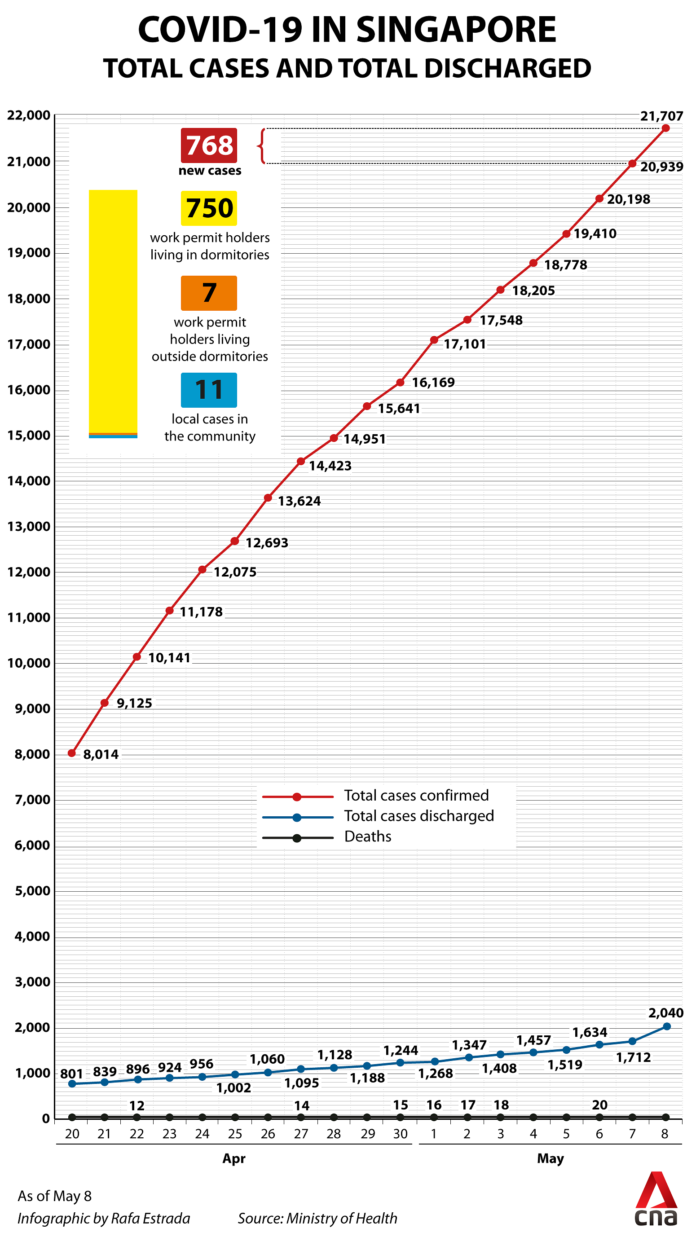
SINGAPORE: Singapore on Friday (May 8) recorded its highest number of recovered COVID-19 cases in a single day, with 328 patients discharged from hospitals and community care facilities.
This is nearly twice the previous high of 115 recovered cases reported on Wednesday.
Singapore reported 768 new cases on Friday, taking its total number of coronavirus cases to 21,707.
Friday’s discharged cases bring the total number of recovered COVID-19 cases in Singapore to 2,040.
There are currently 1,245 patients still in hospital, of whom 22 are in critical condition.
A total of 18,402 patients are in isolation at community care facilities. These are patients who have mild symptoms, or are clinically well but still test positive for COVID-19.
A 102-year-old patient, identified by Lee Ah Mooi Old Age Home as Mdm Yap, was discharged on May 1 after spending one month in hospital with COVID-19.
After a drop in COVID-19 cases in the local community, Singapore eased some restrictions from May 5, including allowing residents to exercise in the common areas of strata-titled residential buildings such as private condominiums. Traditional Chinese medicine acupuncture was also allowed to resume for pain management.
Some businesses, including hairdressers and home-based food businesses, will also be allowed to resume operations from May 12, with a gradual resumption of selected activities and services over a few weeks.
As part of the gradual easing of circuit breaker measures, schools will start to bring back students in small groups for face-to-face lessons from May 19, with priority given to graduating cohorts.
Minister for National Development Lawrence Wong cautioned in a press conference on Friday that Singaporeans should not rush to go out when businesses reopen on May 12.
“I know some people may not have had a haircut for some time, but there is no need to rush to go out to have a haircut on May 12. There will be time to do so,” said Mr Wong, speaking at a COVID-19 multi-ministry task force press conference.
“We are making progress because of the circuit breaker and we should continue to do our part to comply with the measures for the rest of the circuit breaker period. We should remain vigilant and not take any chances,” he said.
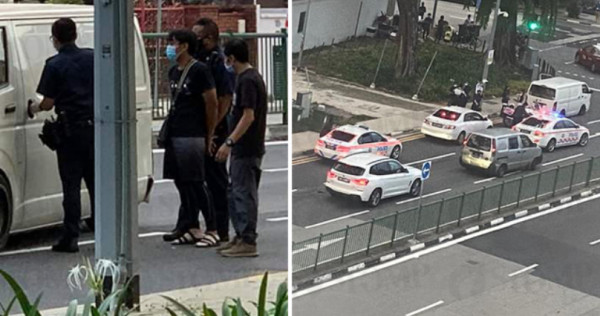
Several Stompers shared photos and videos showing a white van at the scene, surrounded by numerous police vehicles.
A traffic police (TP) officer had noticed the van driver using his handphone while driving along Sims Way towards Mountbatten Road at 4.57pm, said the authorities.
“The TP officer signalled for the driver to stop his van but he refused to comply with the officer’s instruction and sped off instead,” the police told Stomp in response to queries.
“In the ensuing pursuit, an accident involving the van and a lorry occurred at the junction of Guillemard Road and Lorong 22 Geylang.”
NEW DELHI: Doctors in hazmat suits ran temperature checks on passengers at Delhi airport and bags were disinfected as the first group of Indians returned home on special flights from Singapore and the Gulf on Friday (May 8) since a sweeping lockdown was imposed in March.
Around 400,000 Indians were expected to be brought back from the United States and the United Kingdom, besides southeast Asia and the Gulf, in a mammoth airlift mounted by state carrier Air India.
Indian nationals, who were stranded in Singapore due to the coronavirus disease (COVID-19) outbreak, leave the airport to board a bus that will take them to a quarantine facility, upon their arrival in New Delhi, India, May 8, 2020. (Photo: Reuters/Anushree Fadnavis)
Separately, the Indian navy sent warships to the island nation of Maldives for citizens stranded there since the government cut off all travel and ordered its 1.3 billion people to stay indoors to prevent a surge in COVID-19 infections.
“The process for return of Indian nationals stranded abroad via non-scheduled commercial flights and Indian navy ships has begun,” home ministry joint secretary Punya Salila Srivastava told a news conference.
Local TV networks showed Air India crew dressed in light blue overalls, masks and protective plastic face shields inside the plane waiting to receive passengers in Abu Dhabi.
“Long live India,” they said, raising their hands.
Indian nationals, who were stranded in Singapore due to the coronavirus disease (COVID-19) outbreak, are screened by medics wearing personal protective equipment (PPE) at the airport upon their arrival in New Delhi, India, May 8, 2020. (Photo: Reuters/Anushree Fadnavis)
India has 56,342 cases of the novel coronavirus, rising by 3,390 over the previous day and showing no sign of abating, despite the lockdown which has battered the economy and left millions without work. At least 1,886 people have died.
Distress had also been mounting among the vast Indian diaspora unable to return home.
There have been numerous tales of hardship, both financial and emotional, from people desperate to see sick relatives, attend funerals or births, while others have simply lost their jobs and are running out of money stranded abroad.
The first round of evacuations would bring back around 200,000 people by the middle of May and then by mid-June a total of 350,000-400,00 would be flown back, the government said.
In Delhi, around 250 people got off the plane from Singapore and were screened for symptoms of COVID-19, the respiratory disease caused by the novel coronavirus.
Indian nationals, who were stranded in Singapore due to the coronavirus disease (COVID-19) outbreak, are seen along with medics wearing personal protective equipment (PPE) at the airport, upon their arrival in New Delhi, India, May 8, 2020. (Photo: Reuters/Anushree Fadnavis)
They stood far apart from each other in a spotlessly clean terminal building, wearing masks and waiting to be cleared for entry.
Srivastava said if any traveller is found symptomatic upon arrival, they will be taken to hospital while others will be placed under a 14-day quarantine in a government facility.
There were some concerns that the influx of people from overseas could lead to a further spike in infections.
Lav Agarwal, joint secretary in the health ministry, said the federal government had asked state authorities to make sure hotels, college hostels and empty houses that had been converted into quarantine centres for those returning be closely supervised by health workers.