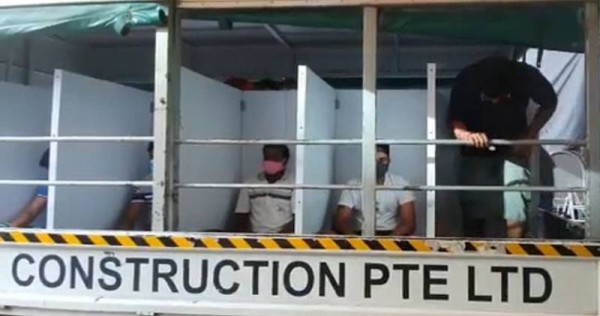
SINGAPORE – A plan by a company to install partitions in the back of a lorry to ensure safe distancing while workers are being transported during the Covid-19 outbreak has not been given the green light by the authorities, even as a video of the vehicle made the rounds online.
The authorities explained that the set-up was not secure and asked the company to review its plan.
The clip was part of a demonstration video and proposal sent by a local construction firm to the Ministry of Manpower (MOM) for consultation on Tuesday (May 12), MOM and the Land Transport Authority (LTA) told The Straits Times in a joint statement on Thursday (May 14).
It is understood that the clip was taken in the workshop of the company, Shin Khai Construction, and shows a lorry’s rear carriage with dividers to separate seated workers. The set-up has not been put to use.
After the video was posted online, it drew criticism from some netizens, who said that the way the workers had to sit in compartments was undignified. Some added that the workers could be at a higher risk of injury should an accident occur.
SINGAPORE: Typically around June and December every year, social media is awash with spectacular posts of far-flung places – stunning seascapes, mountains that look like they were painted and of course, copious amounts of delicious food. #Bucketlist was not an uncommon hashtag that accompanied these visuals.
For many years now, travel was a bug that scores of Singaporeans caught. With cheaper airfares, unbeatable two-for-one promotions and the incredible ability to be just about anywhere in the world in 36 hours was just too good to pass up.
What’s not to love about travelling? It is an escape from the grind, for just a week or two, to forget we live dreary lives filled with work, children, bills and boredom.
The most dexterous among us could haul everyone from teenagers to toddlers and old folk and still have a blast. It was almost routine for families to go on at least two trips a year, if not more and these were highlights on the family calendar.
I totally understand the lure of going away, it is a much needed mental break that everyone who can afford it, needs. But to be quite honest, I don’t really fancy travel as much as some of my friends do.
I understand there are sacrifices to be made before we can marvel at stunning sunsets or witness the jaw-dropping beauty of the Northern Lights.
Except, the sacrifices were not pleasant: Sitting in a cramped, dirty seat next to strangers who snore, being exhausted from not being able to sleep on a long haul flight (good luck if you had a screaming baby in your sector) and awful airline food.
I can never get over the general ridiculousness of the size of an airplane toilet and avoid going unless absolutely necessary. And that’s just surviving the flight.
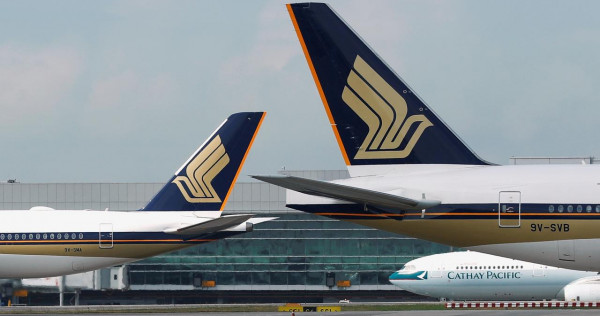
(Photo: Reuters)
There’s the mind-numbing wait at immigration and jumping the hoop on security clearances.
As if this post-9/11 travel wasn’t bad enough, we are now confronted with a new beast – a post-COVID-19 travel world. Are the glory days of our footloose and fancy free flight days well and truly over?
POST-PANDEMIC TRAVEL
Read any story on aviation and there’s no good news to be had. The forecast is dismal – The International Air Transport Association (IATA) has said loss of revenue for airlines will amount to hundreds of billions of dollars in 2020.
With borders closed and fleets grounded, airlines are struggling to keep afloat with some small players already going under.
We assembled three capable, articulate experts in a (digital) room and put these pressing questions about the future of air travel to them in an episode of The Heart of the Matter podcast.
We dove in with the big question – when can we set foot on a plane again?
IATA Regional Vice President for Asia Pacific Conrad Clifford says the best case scenario is July this year if and when travel restrictions are lifted.
That’s pretty optimistic because the pandemic is still raging and no one really knows if a second or third wave is right around the corner. A more likely timeline is 2021.
“Brave people might start next year, a few more will start after a vaccine is found but volumes will not come back, at least for two to three years,’’ says Nitin Pangarkar, Professor at the National University of Singapore’s Business School.
The men also highlighted fear as a huge factor underpinning the lack of demand, aside from forced closures. As long as people believe flying will put them at risk of being infected, many will stay away for the foreseeable future.
FILE PHOTO: EasyJet airplanes are pictured at Tegel airport in Berlin, Germany, November 14, 2019. REUTERS/Fabrizio Bensch/File Photo
“There is a lot of fear right now that’s why people are saying middle seats should be empty but in that scenario, it is going to be very difficult (for airlines) to survive,’’ says Nitin echoing the sentiment of our other guest Endau Analytics founder, Shukor Yusof.
Conrad revealed that IATA had been working on the numbers and they are predicting that 90 per cent of carriers will run a loss if they have to keep to this “artificial seat cap.”
Besides killing commercial viability, he adds that the science hasn’t been conclusive – there is no substantial data to suggest passenger-to-passenger transmission of the virus because planes have sophisticated air-filtration systems.
Should social distancing be mandatory on a plane, the bottom line is an inevitable rise in ticket prices – by as much as 40 to 50 per cent, he adds.
Aside from these pressing business challenges, everyone agrees that the way we travel will change. It simply has to. Electronic check-ins will have to grow so we meet as little people as we can on the way to the aerobridge.
There will be increased health checks in addition to security ones and the wearing of masks on flights will be compulsory – seeing as how the virus can spread when a person is asymptomatic. All this means getting to our destination is going to be one heck of a tedious journey.
For many Singaporeans, 2020 will likely to be the first time in a long time they did not travel. Already, countless trips have been cancelled or postponed indefinitely.
A friend has been planning a big trip with her family and they’ve been saving for it. Now it’s on hold.
Others have had to ditch the idea of travelling with their elderly parents before they get too frail in the hope they can have one last window to see a world outside and make a memory that will last a lifetime.
With many customers putting their travel plans on hold, hotels and airlines are updating their cancellation policies. (Photo: Unsplash/JE Shoots)
I try to do a long trip once every two years and we had planned for such a trip in September this year, to coincide with our older boy starting university. I had visions of visiting museums, going to see some of my favourite musicals and walking around the markets in cool weather.
But now, that sepia-tinted idea of a lovely family trip seems less of a dream holiday and more of a downright hassle.
I was already dreading the fact that I had to wear a mask throughout the duration of my flight, not to mention the social distancing that would need to take place. What if my sinuses act up and I am booted off the plane for sneezing twice?
Carriers like Singapore Airlines and Scoot have announced quite drastic changes to the way they will operate – safe distancing for boarding, disembarking, for going to the toilet.
No meals on short-haul flights, no magazines and menu cards (which I suspect no one will miss anyway) and cabin crew who will look like nurses with their masks, gloves and face visors.
The time it will take to clear both health and security checks will add more hours to the whole process of getting in and out of countries too. And we can’t even take a holiday to recover from a holiday, not with ticket prices set to increase.
Like Professor Nitin says, only the brave will go on a journey in this transformed world.
If things do go according to plan – although it does seem foolish to make plans in 2020 – then I will have to pray very hard there will be no viruses lurking near me. And if I can’t even get on a plane, well, it wouldn’t be the worse thing in the world.
Singapore – South-east Asia’s largest lender DBS on Thursday said it is committed to hiring more than 2,000 people in Singapore this year, notwithstanding the current economic downturn caused by the Covid-19 pandemic.
More than 1,000 of these job openings are new roles which are a mix of openings for fresh graduates to apply as trainees, as well as more specialised roles for seasoned professionals.
There will also be no change to DBS’s annual internship programmes which are expected to offer some 400 roles in 2020, the lender said in a press statement, adding that these internships give students the opportunity to “put their academic skills to the test in a real-world work environment”.
The bank has some 12,000 staff in Singapore, and said it has reassured staff that there will be no layoffs amid the tepid job landscape. It did not disclose how many people it usually hires in a year for comparison.
In line with DBS’s ongoing digitalisation efforts, over a third – or more than 360 – of the new permanent roles being created this year are for seasoned professionals in growth technology areas.
SINGAPORE: It was with mixed feelings when I sent my son to infant care more than three years ago. My four months maternity leave was ending, and I was about to head back to work.
My parents and in-laws were getting on in their years. My husband and I were uncomfortable to leave our baby with a domestic helper, so the infant care centre was our next best bet.
When I explained this decision to relatives, friends and colleagues, they too, had mixed responses. Fellow working mothers understood where I was coming from, but others (I could tell from the way their faces scrunched up, however slightly) felt much pity for my baby son.
They were well-meaning, but their reactions made me doubt the soundness of my decision. Was I being a bad mother by choosing work over caring for my baby? And worse, sending my boy to infant care instead of arranging for a one-on-one care, preferably by grandparents?
How would this impact my son’s development? These questions that once weighed heavily on my mind are probably still common conundrums that working mothers with young children face.
More than a decade ago, the Singapore Children’s Society began a collaboration with the KK Women’s and Children’s Hospital to conduct a longitudinal research study on infant attachment, the first done locally.
The goal was to understand caregiving arrangements among families with young children in Singapore, and if children’s temperament and developmental outcomes would be affected by these.
A total of 439 first-time mothers participated, with most working full-time, lived in 4-or 5-room HDB flats, and had completed diplomas or degrees.
The study found that children’s primary caregivers changed over time. At four months, mothers were the primary caregivers for most of the children. At 18 months, grandmothers were the primary caregivers for most, and by three years of age, most children were in the care of a grandparent or were enrolled in a child care centre.
On average, children in the study had two changes in caregivers by age three.
(Photo: Unsplash/Artem Bali)
These changes in caregivers can be largely attributed to our parenthood policies.
Mothers tended to be their baby’s main caregiver in the first four months of maternity leave. When they returned to work, mothers sought a trustworthy figure to care for their baby. Oftentimes, this person was the baby’s grandmother, if she was available to help.
As the child grew older, many mothers placed their child in childcare centres, recognising the need for him to be socially and cognitively stimulated.
Overall, mothers’ caregiving choices appeared to be guided by both practical considerations and perceptions of their child’s evolving needs.
The study also found children’s developmental outcomes were not directly associated with the type of caregiver they had. In other words, there is no one “best” caregiving type.
However, babies with a closer bond with their mothers tended to manage their feelings better and had better social-emotional skills.
What this means is it is more important to forge a strong mother-child bond rather than worry about mothers themselves not being the main caregivers, or how the caregiving arrangement affects child outcomes.
As all the participants in this study were mothers, only the mother-child bond was measured. Nevertheless, this does not undermine the effects of a strong father-child relationship, which has proven to be beneficial to children in other studies.
Interestingly, this study also found children whose mothers worked full-time in the first three years of their lives had better social-emotional skills than their peers whose mothers were not.
Such advantages might have stemmed from these children interacting with more people, as they had a variety of caregivers or were placed in childcare, while their mothers worked. Previous studies have also found that social interactions helped infants understand their social environment and guide their responses.
(Photo: Unsplash/The Honest Company)
In contrast, a handful of the non-working mothers in this study performed their caregiving role all by themselves throughout their child’s first three years.
It is possible they lacked the social support or help from another caregiver, and they might not have any time off at all. These could have potentially impacted their children’s social-emotional development.
It is not rocket science that the well-being of mothers is extremely important to children’s development. As research studies continue to inform us about the nuances of child development and parent-child relationship, we must periodically challenge our long-held assumptions, for example, that parental care leads to better developmental outcomes.
With new knowledge and understanding, we should also consider what changes can be made to better support mothers to make the best out of the choices they make given their unique family circumstances.
For working mothers, such support can come in the form of increased parental care leave and more flexible workplace arrangements that enable them to better juggle their careers and maternal role.
As we see more fathers playing an active part in childrearing, allowing fathers some access to more of such schemes can lift part of the caregiving burden off mothers.
We also must not neglect mothers who are single-handedly caring for their children as it had been shown that there could be possible repercussions on the child’s outcomes when these mothers do not have adequate support.
The late Dr John Elliott, an academic with a deep interest in the social and cognitive development of young children, made the point that there is no single best or only way to rear children at the 13th Singapore Children’s Society Lecture.
(Photo: Unsplash/Jerry Wang)
He reiterated that Singaporean parents need a bit more confidence that they are the best judges of what is best in their own families. He also pointed to research studies suggesting working mothers are not risk factors for problems with children:
Happy mothers who are happy because they are working and pursuing their careers are better mothers than unhappy mothers who have given up their careers to spend all their time with their children.
To all working mothers who had chosen your career over the main caregiving of your babies, take heart that so long as you spend time to build a relationship and bond with your children, they will grow up fine.
There’s no need for mum guilt.
Lin Xiaoling is Group Lead, Advocacy and Research at Singapore Children’s Society.
SINGAPORE – Passengers will have to adapt to a different travel experience when air travel picks up again, as regulators and airlines look into how to make flying safer, said Singapore Airlines (SIA).
While the specifics of how the aviation sector will evolve post Covid-19 is still unclear, SIA has created four working groups to prepare for potential scenarios, it said during a briefing on its financial results on Friday (May 15).
Mr Mak Swee Wah, executive vice president of operations, said: “Obviously, the concern now is on safety and health. There are a few themes out there, for example, wearing masks, social distancing and contactless services.
“All these issues are now being examined to see how practical they are both on the ground and in the air… so safe to say it will not be the same as the pre-Covid situation.”
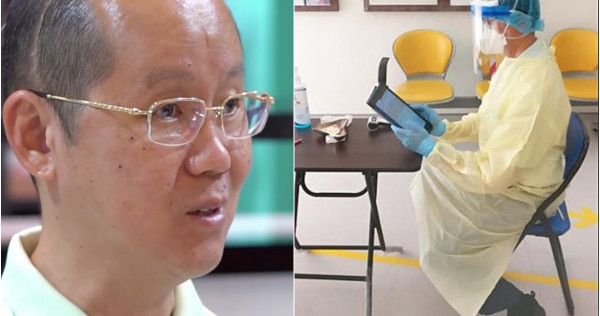
Despite his brush with death years ago, “fear” is not a word traumatic brain injury survivor Takalah Tan would use to describe his feelings towards it.
“I’m not afraid of experiencing death again. In life, there’s plenty of things that are not certain,” he told Shin Min Daily in a recent interview.
He said this in relation to his new role as a frontline worker at the Tzu Chi Lakeside Family Medicine Clinic where he is helping to attend to patients.
The 51-year-old had been working as a physiotherapy assistant at Tzu Chi’s senior day activity centre before activities were suspended due to the circuit breaker.
During the course of the ongoing global pandemic, everyone’s suffering one way or another. Be it a food delivery worker getting treated badly; the homeless without a roof to stay safe under; or medical practitioners risking their lives in the frontlines of the outbreak.
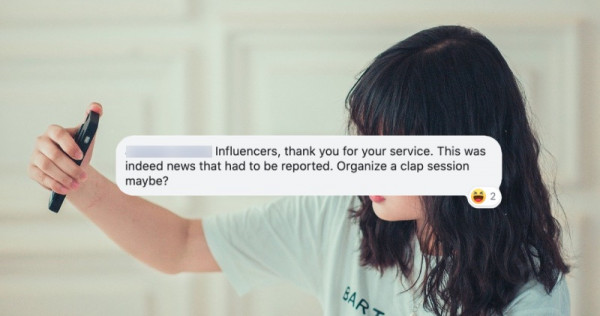
Spare a tear as well for our local social media influencers straining themselves to wander outside their comfort zones to get onto TikTok.
The pains of being pure at heart are what CNA Lifestyle discovered in a recent feature on Singapore’s social media personalities, many of whom have had their important work disrupted by Covid-19.
It’s no question that all frontliners play an important role in the fight against Covid-19. But are some getting the short end of the stick compared to the others?
A recent Facebook post from a user claiming to be a nurse had Singaporeans talking after she griped about the $3,400 to $3,800 salary offered to swabbers, contrasting it to her own starting pay and calling for a review of all healthcare workers’ salaries.
The post, which has since been removed, was triggered by a job posting in which the Health Promotion board said it was seeking swabbers and swab assistants to provide support in Covid-19 operations and in community care.
Successful applicants will be hired as swab assistants, earning $3,400 a month.
Those who progress to become swabbers after training and assessment will earn $3,800 a month.
Taking her frustrations to Facebook, the woman, who said she’s a nurse with 11 years of experience, wrote that she was “appalled” at how much was being offered to “people with no healthcare background”.
SINGAPORE: After both his parents died in the 1970s, self-employed TV repairman Ho Kian Joo faced the problem of there being nobody at home to answer the phone when he went out.
For someone who relies on word of mouth for customers, the phone was his source of livelihood. He knew he couldn’t miss a call, so he needed to find a solution.
Automatic voice recorders were not a thing back then, much less mobile phones. Mr Ho looked at an open-reel tape recorder and saw that it used magnets instead of mechanical circuits for its moving parts.
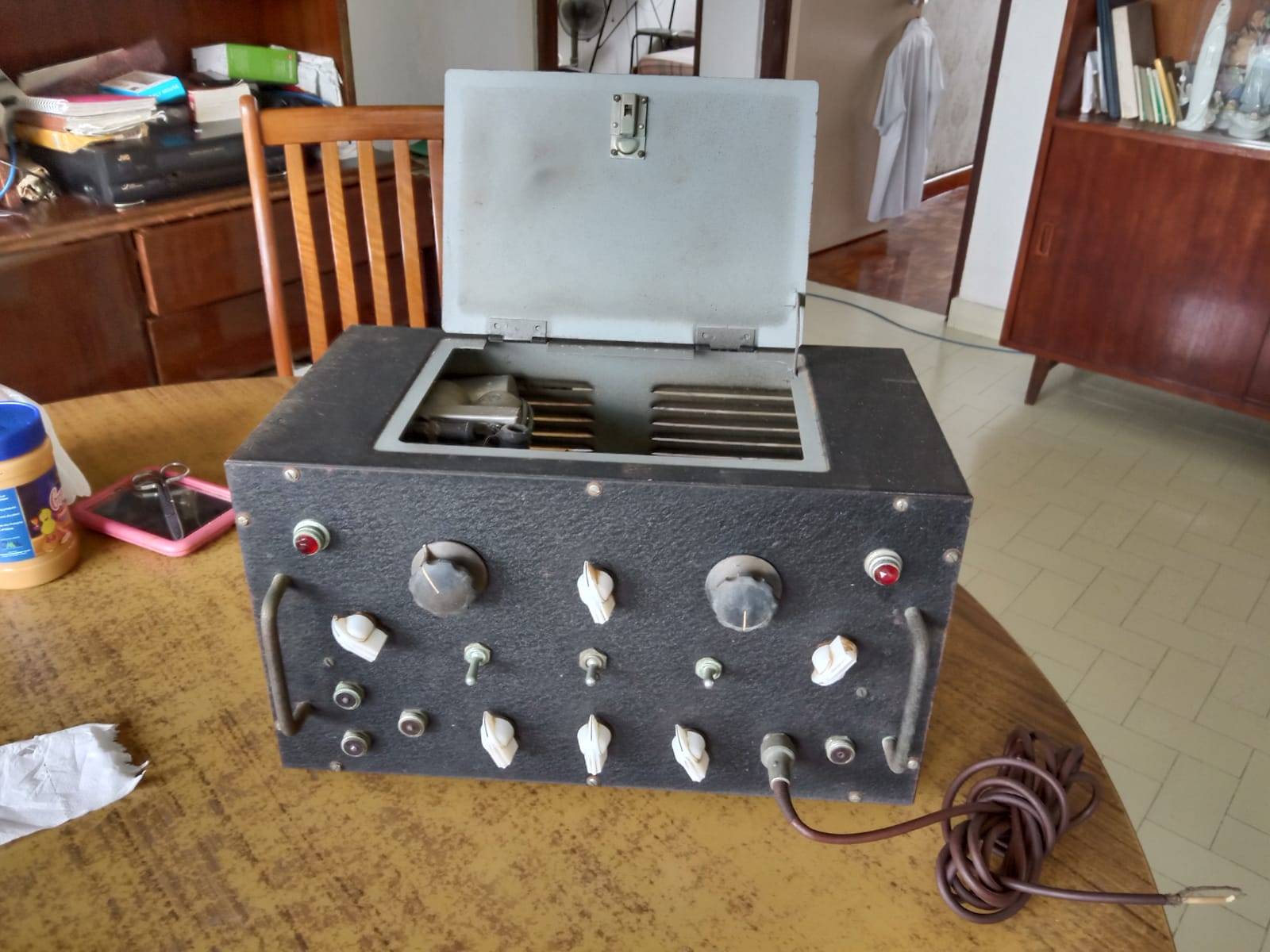
Mr Ho used this concept to build a mechanism that lifted the handset of his phone when a call came in. He paired it with a voice player and recorder that automatically asked the caller to leave a message, and built the circuits so everything returned to standby after the call.
The improvised automatic voice recorder that Mr Ho built. (Photo: Ho Kian Joo)
The now 75-year-old looks back at that moment proudly.
“My customer called the telephone board to ask how come my phone could do this,” he told CNA in a phone interview. “In this line, I’ve come across so many electronics you can use to improvise.”
Mr Ho’s journey to becoming a skillful and determined repairman started when he was only 14.
The year was 1959, times were tough and good jobs were hard to come by. Mr Ho’s father, who worked as a photographer earning what was in those days a sizeable S$300 a month, tried to find him some work. They looked at apprenticeships and positions in banks. Nothing worked out.
“My parents said I’d better go and learn something,” he recalled. “So they told me to learn radio repair. I just listened to what my parents said.”
Mr Ho remembers radios being popular those days. Radio shops were everywhere, as were the schools that taught how to fix them. Mr Ho’s dad paid a month of his salary to put him through a four-month beginner’s course.
“At that time, I told myself I must succeed in this line because my parents gave me the money to learn it,” he said. “I cannot fail.”
This mantra, something Mr Ho repeated throughout the interview, would define him as a person who kept going no matter the odds.
In the day, he worked for an agent that repaired radios from big Japanese and American brands. At night, he moonlighted as a repairman to earn more money. When televisions became popular in Singapore in the 1970s, he taught himself how to fix them too.
Two of the books Mr Ho has kept over the years. (Photo: Ho Kian Joo)
Gramophones, tape recorders and portable record players were not spared. Mr Ho studied them all. He bought weekly and monthly subscriptions for technical manuals and magazines on these electronics, flipping through them for hours each day.
Whenever he couldn’t fix something, he pored through these books until he found an answer. This was also how he kept up with new models.
“If something new comes out, I have to look for it in the books,” he said, adding that he has amassed more than 300 such books over the years. “They gave me a lot of knowledge.”
Mr Ho stuck to this practice as he worked for three different agents for about 30 years, becoming increasingly skilled with his hands.
When he realised he could only fix TVs for the few hours each day when programmes were being broadcast, he decided he had to take matters into his own hands. He built a pattern generator from scratch so he could project an image on the TV to see if the fault had been rectified, rather than having to wait for a TV show to be on air.
“I copied the design from Phillips,” he said. “I can say I’m very stingy. I don’t want to buy instruments, so if there’s something I can copy, I will.”
Mr Ho keeps the pattern generator to this day, saying he spent hours building it. (Photo: Ho Kian Joo)
Mr Ho dabbled in other do-it-yourself activities too.
He disassembled his toolbox, filled with suckers, solder pumps and screwdrivers, and put it together it again just for kicks. When his kitchen counter surface came off, he visited a hardware store to buy tools and materials to fix it.
“I like all kinds of repair jobs,” he said.
For Mr Ho, what started as a job he didn’t want to fail in has become a passion.“I find that electronics can help me,” he added, again going back to his automatic voice recorder. “It’s very interesting, really.”
SURGERY AND MORE PAIN
Then in 1989, Mr Ho ran into a roadblock that would forever change his life.
When he was fixing a TV, he started having double vision. Soon he felt intense pain in different parts of his body. He described how he was unable to eat and pass motion, that his tongue would turn black and his toilet bowl red filled with blood.
“It was really scary,” he said.
Mr Ho decided to go ahead with an operation to remove a tooth that had grown in his sinus, close to his name. It was risky but it seemed to have worked. Months passed without issue, then Mr Ho said the problems returned and got worse.
Mr Ho repairing TVs and all sorts of electronics as a young man. (Photo: Ho Kian Joo)
On some days, his hands or legs would swell painfully. Sometimes, he felt warm from his head to his stomach but cold from the stomach downwards.”
Mr Ho was admitted to the hospital where he remembers being seen by multiple doctors. It turns out his nerves had been damaged during the surgery, and none of them knew how to cure it. “The pain was terrible,” he said.
Mr Ho went to different hospitals, visited a renowned traditional Chinese medicine practitioner and contemplated going overseas for treatment. Nothing helped.
Ever the fixer, Mr Ho gradually found out that he could not be fixed.
Doctors said taking any kind of medication would make the problem worse, but Mr Ho didn’t give up and kept thinking what he could do.
“I liked exercising as a kid, so why don’t I try it?” he thought to himself. Every morning and evening, he climbed the stairs, also doing it when he went to fix TVs. The pain started to subside. “I was very lucky,” he said.
Mr Ho discovered that he couldn’t miss the daily exercise or have coffee or tea in the afternoon. This would make pain, like an excruciating muscle pull, return.
“If I stop for one day, a lot of things will come out. I cannot even get up from bed,” he said. “The exercise is like injecting something into the nerve to make it forget pain.”
PUSHING ON
Mr Ho was still getting used to his new routine when another setback hit.
In the 1990s, many electronics giants decided to move their operations in-house, making agents like the one Mr Ho worked for irrelevant. As these firms folded, huge numbers of technicians were forced to find other jobs. Mr Ho managed to hang on to his freelance business.
“I had a friend with a shop selling TVs and records in Chinatown who introduced a lot of customers to me,” he said. “I was very lucky.”
Mr Ho is keen to emphasise that luck has always been on his side most of his life. Through the years, he has earned about S$2,000 a month repairing TVs, an amount he said was enough to sustain his lifestyle. “I’m a simple man,” he said.
Mr Ho examining a circuit board closely. (Photo: Aqil Haziq Mahmud)
He got about four customers a day on average, but never thought about creating a website or going on social media to advertise his services. When a friend talked about starting a business, he said he was afraid of losing money.
“I have no business mind, I can just do something that’s easy for me,” he said, referring to the technical side of things. “Some people like doing business, I don’t.”
Mr Ho said the customers he has had have treated him well. One family wished him a long life after he successfully repaired their TV. A few years back, a customer was so satisfied that he wrote glowingly of Mr Ho online.
“That was really lucky,” he said again. “From there, I got a lot of customers.”
Mr Ho operates via word of mouth to this day, relying on positive reviews in forums like HardwareZone. “He is a nice uncle and really experienced,” one comment read. “Seems like Mr Ho is a gem,” said another.
These netizens would only leave Mr Ho’s landline number. Up until recently, Mr Ho’s handphone was too old to even operate WhatsApp.
Mr Ho dismantling my TV. (Photo: Aqil Haziq Mahmud)
NOT STOPPING
Mr Ho charges all his customers a flat rate of S$90, unless there is a need to buy spare parts. However, he said customers would rather buy a new TV than wait a few days. He used to charge about S$100 for his repairs, but said customers found it too steep.
“When I found a repair difficult last time, I could bring the TV back and slowly check everything out,” he said. “Now it is different. They want it to be fast.”
Mr Ho checking if his repairs worked. (Photo: Aqil Haziq Mahmud)
Mr Ho said spare parts have also changed over the years. Previously, he could drop by Sim Lim Tower to buy generic parts for use across many TVs. Now, he said even the same type of chips are programmed differently for different TVs.
This is why spare parts shops have struggled to stay open, Mr Ho said, recalling an occasion many years ago when the shop owners warned him to find another job as they predicted the industry’s demise.
“When I go to Sim Lim now, the shop owners who are still there say wow, you are still in this line,” he said. “It’s been 60 years. I feel great because I can still survive.”
Mr Ho, who is not married and lives with his sister, is still exercising twice a day. The only difference is that he continues to learn about TVs through the Internet and YouTube videos. “There’s a lot of things on the Internet,” he said.
It’s no surprise then that he doesn’t have plans to stop repairing TVs. “I will continue in this job as long as I can walk,” he stated.
The Ministry of Health (MOH) reported 793 new coronavirus cases in Singapore today (May 15) and a new daily high of 1,275 patients discharged.
This is the third day in a row that Singapore recorded more discharged Covid-19 patients than new cases.
Out of the new cases, 791 are cases of work permit holders residing in dormitories, one is a work permit holder residing outside dormitories and one is a Singaporean or Permanent Resident in the community.

.jpg "nursecomments1-2.jpg")