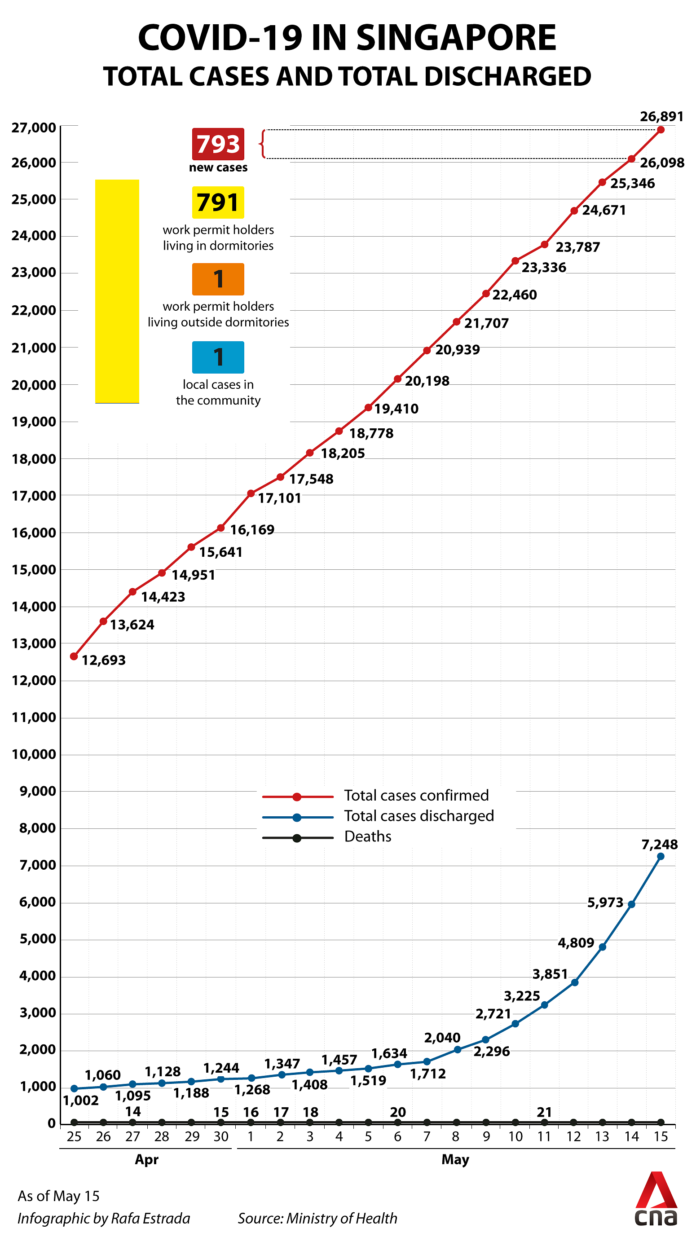
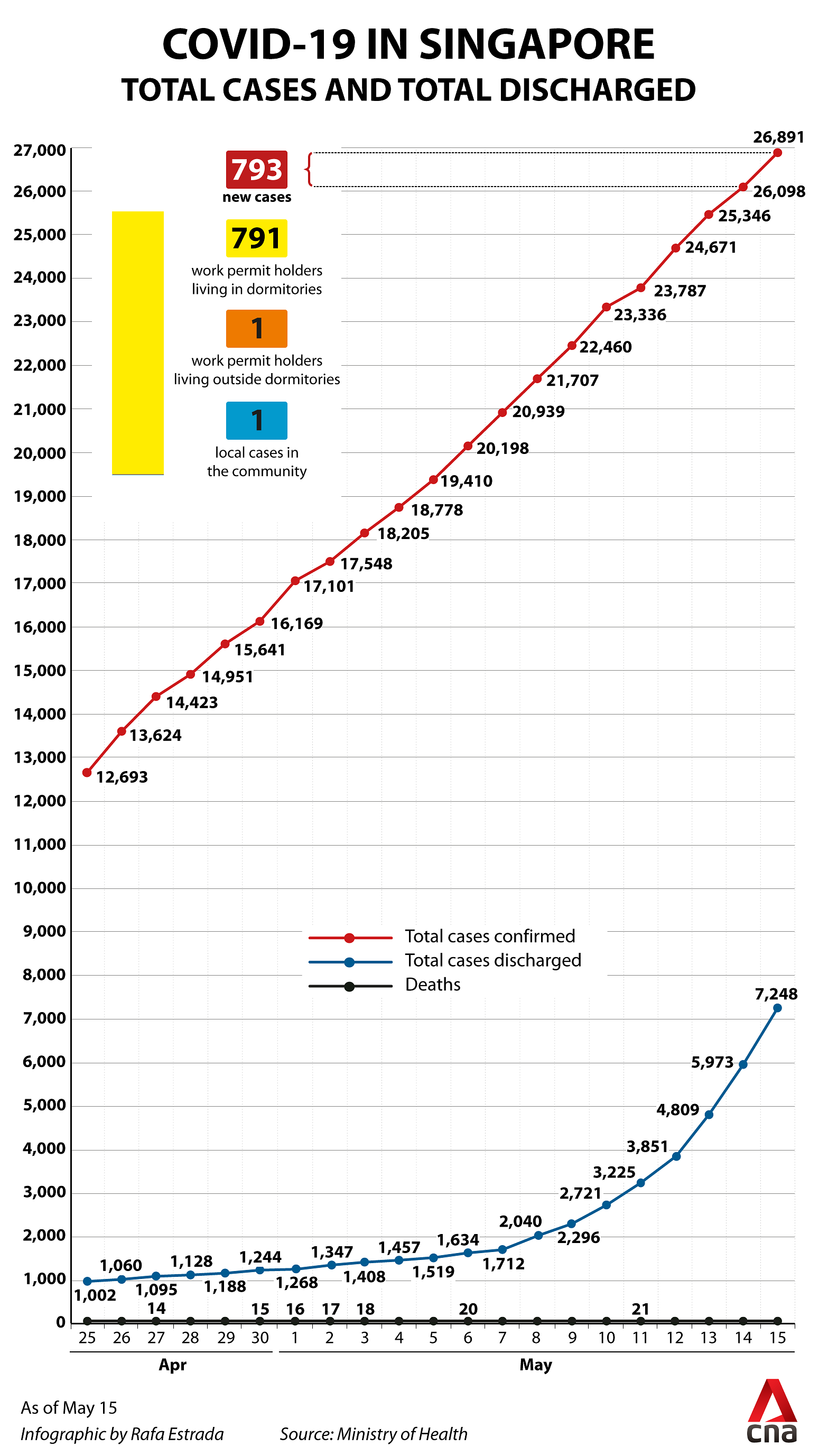
SINGAPORE: Singapore reported 793 new COVID-19 cases as of noon on Friday (May 15), taking the country’s total to 26,891.
A total of 1,275 more patients have also been discharged – a new daily high. In all, 7,248 have fully recovered from the infection and have been discharged from hospitals or community care facilities.
The Ministry of Health (MOH) said in its daily update that 791 of the new cases are work permit holders residing in foreign worker dormitories.
MOH said it continues to pick up many more cases among work permit holders residing in dormitories, including in factory-converted dormitories, because of extensive testing in these premises.
The ministry also reported one new case among work permit holders residing outside dormitories. MOH said such cases have decreased from an average of six cases per day in the week before to an average of two per day in the past week.
The only new community case is a 53-year-old Singaporean man, who reported onset of symptoms on Tuesday and tested positive for COVID-19 on Thursday. He is currently an unlinked case.
“The number of new cases in the community has decreased, from an average of eight cases per day in the week before, to an average of four per day in the past week.
“The number of unlinked cases in the community has also decreased, from an average of three cases per day in the week before, to an average of one per day in the past week,” the ministry said.
Of the new cases, 99 per cent are linked to known clusters while the rest are pending contact tracing. Further details can be found in MOH’s daily situation report.
Five new clusters have been identified: 80 Kaki Bukit Industrial Terrace, 48 Toh Guan Road East, 55 Tuas South Avenue 1, 119 Tuas South View Walk and 33 Tuas View Walk 1.
MOH said it has also been monitoring existing clusters for any further transmission.
As there have been no more cases linked to McDonald’s and the renovation sites at the National University Hospital (5 Lower Kent Ridge Road) for the past two incubation periods, the clusters have now been closed.
There are currently 1,124 confirmed cases who are still in hospital. Of these, most are stable or improving while 18 are in a critical condition in the intensive care unit.
Another 18,498 patients are isolated and cared for at community facilities. These are those who have mild symptoms, or are clinically well but still test positive for COVID-19. In all, 21 have died from complications due to COVID-19 infection.
On Thursday, a leading infectious diseases specialist warned that COVID-19 might be “with us for a long time”.
But Professor Leo Yee Sin, executive director of the National Centre for Infectious Diseases (NCID), also said the coronavirus can be contained.
Referring to the current “circuit breaker” as a “hammer”, Prof Leo said a system following the lifting of restrictions would need to be developed in which containment of the virus would essentially follow the “dance steps” of the virus.
Echoing an assessment by the World Health Organization (WHO) that the coronavirus might never go away, Prof Leo said that with the suppression of the virus, Singapore can reduce the rate of infection and the death toll while buying time until vaccines become available.
SINGAPORE: Scammers have been sending fake emails with the name and logo of the Monetary Authority of Singapore (MAS), the authority said on Friday (May 15), cheating nine victims out of more than S$50,000 since last month.
MAS’s statement comes after the Singapore Police Force (SPF) on Friday issued an advisory about bogus websites impersonating licensed moneylenders.
The police reported that it was investigating seven people for their suspected involvement in a case of loan scam, after their bank accounts were used to receive money from a victim.
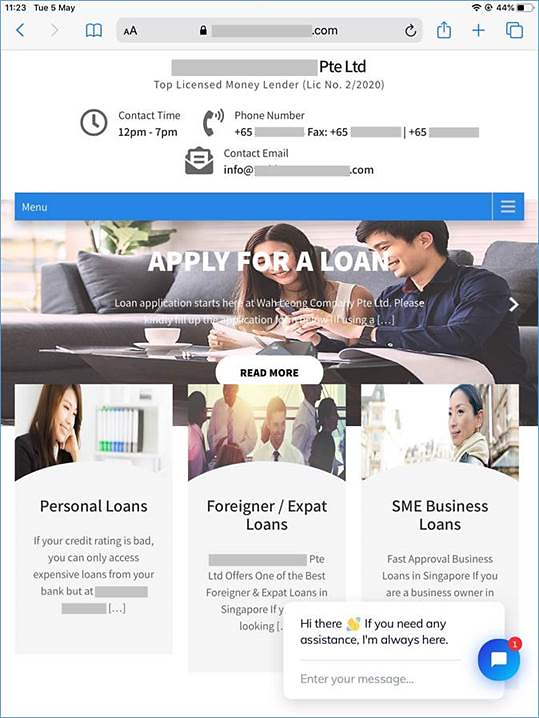
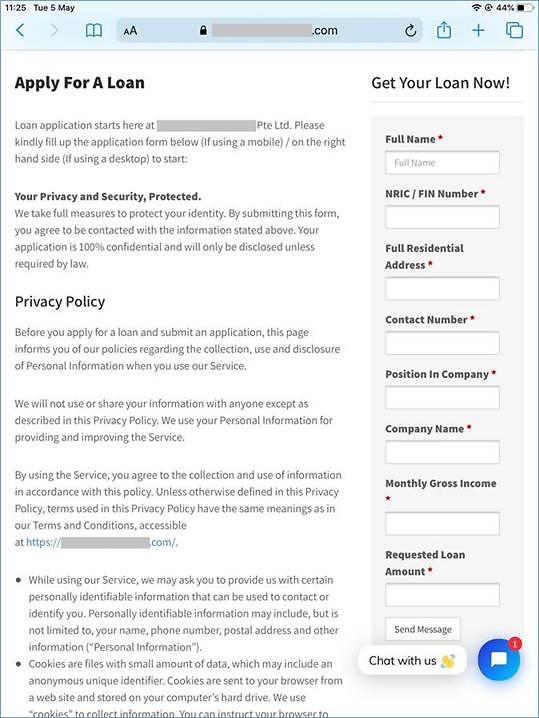
Initial investigations showed that the victim had visited a bogus moneylender’s website and was scammed into making numerous payments in order for his loan application to be approved.
A screengrab of a bogus website impersonating a licensed moneylender. (Photo: Singapore Police Force)
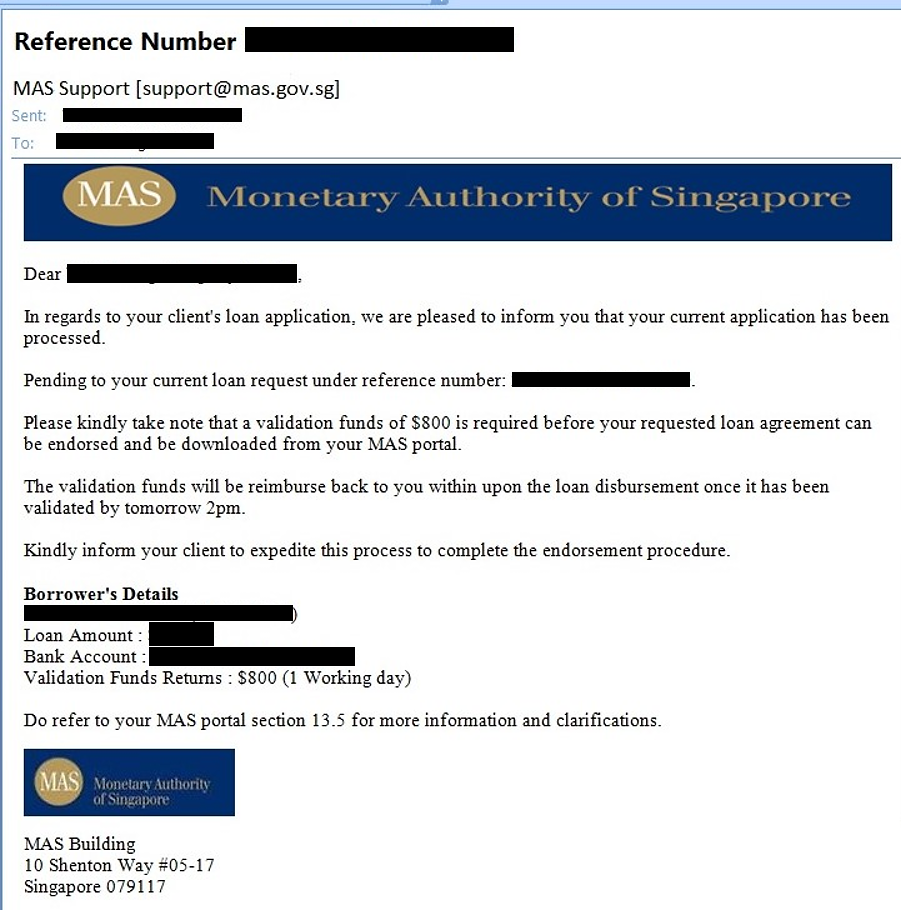
“The Monetary Authority of Singapore has also received reports that fake emails misusing the MAS name and logo were used to perpetuate some of these scams,” said an MAS spokesperson.
“These scam emails may ask loan applicants to pay ‘validation fees’ before the requested loan agreements can be endorsed and downloaded from an ‘MAS portal’.”
A screenshot of a scam email using MAS’ name and logo. (Photo: Monetary Authority of Singapore)
MAS said 16 people have reported receiving the fake MAS emails since April, with nine of them being scammed into making payments totalling more than S$50,000.
“MAS does not handle any loan applications nor require any validation fees,” it said. “MAS also does not collect fees of any nature from members of the public. Individuals are advised to be wary of emails that involve fund transfers to third parties.”
The police warned that bogus moneylending websites would solicit victims’ personal information such as their NRIC number, address and contact number, which can then be used by loansharks and scammers to harass or further scam their victims.
A screengrab of a bogus website impersonating a licensed moneylender. (Photo: Singapore Police Force)
Licensed moneylenders are not allowed to make cold calls or send unsolicited text messages, said the police.
Licensed moneylenders are required to meet loan applicants in person at an approved place of business before granting a loan. They will not ask applicants to make any payment, such as GST, admin fee or processing fee, before disbursing the loan.
Any administrative fee a licensed moneylender charges will be made after the loan is granted, and is usually deducted from the loan principal.
SINGAPORE – There should not be Hari Raya visits or gatherings during the circuit breaker period this year, and Singaporean pilgrims will have to defer the annual haj pilgrimage to Mecca to 2021, in light of the Covid-19 pandemic, the Islamic Religious Council of Singapore (Muis) announced on Friday (May 15).
Muslims will celebrate Hari Raya Aidilfitri, which marks the end of the fasting month of Ramadan, next Sunday (May 24).
On the eve of Hari Raya, the community can recite the takbir – or communal prayer calls – in their own homes together with family members, led by the Mufti and various asatizah via YouTube Live on SalamSG TV, and Facebook Live on the pages of Muis and mosques.
Mufti Nazirudin Mohd Nasir will then address the community on SalamSG TV on fulfilling its religious duties during Hari Raya amidst Covid-19. He will be joined by former Mufti Fatris Bakaram, and President Halimah Yacob will be a special guest.
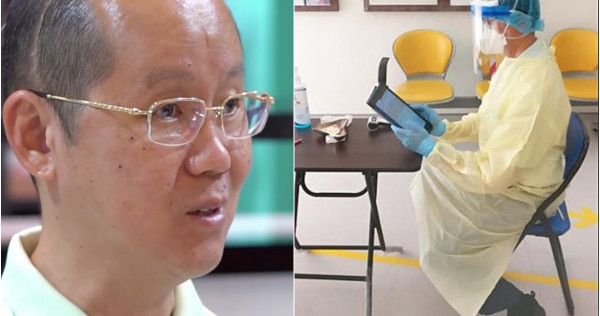
Despite his brush with death years ago, “fear” is not a word traumatic brain injury survivor Takalah Tan would use to describe his feelings towards it.
He said this in relation to his new role as a frontline worker at the Tzu Chi free clinic where he is helping to attend to patients.
The 51-year-old had been working as a physiotherapy assistant at Tzu Chi’s senior day activity centre before activities were suspended due to the circuit breaker.
We are a generation used to getting everything done on our mobile phones. So, why not add consulting the doctor to this list?
From general practitioners (GP) to specialists and even Traditional Chinese Medicine (TCM) herbalists, We’ve scoured out 7 telemedicine apps and services that let you consult with medical professionals from the comfort of your own bed.
What is telemedicine?
Simply put, telemedicine is a service that lets you see a doctor for selected medical conditions without the need to leave your home or step foot inside a clinic. It’s clearly a godsend in the age of Covid-19, as it eliminates the need to sit next to wheezing patients while waiting your turn to see the doctor.
How does telemedicine work?
The service uses your mobile phone, tablet or laptop to connect with your doctor or specialist via text chat, voice call or video call. Once connected, you’re free to consult your medical practitioner and ask them questions, discuss your symptoms, show them that weird rash, and so on.
Are 5G networks the solution for faster download speeds on your smartphone? Apparently, proper mobile data network implementation still counts for something.
Singapore has the 6th fastest download speed on mobile data in the world, and that’s considering how Singapore’s 4G mobile data speed is ahead of several countries with 5G networks .
According to OpenSignal ‘s latest mobile experience report, Singapore’s current mobile network download speed (ranked 6th) is ahead of several countries with 5G networks, such as Australia (ranked 7th), Switzerland (ranked 8th), Germany (ranked 23rd), and the United Kingdom (ranked 36th).
PHOTO: OpenSignal
Although, we’re pretty sure UK’s ranking isn’t helped by how conspiracy theorists are running amok to burn down their 5G cell towers and base stations – our condolences.
SINGAPORE – A man who was caught on video “skiing” on the road – using two ski poles to propel himself while on skates – is being investigated by police.
A video posted on Facebook on May 5 shows the man, 28, making his way in the second lane of the road from the left on the unusual mode of transport in Raffles Quay, near Lau Pa Sat Food Court.
Netizens have raised questions about whether this is allowed on the roads.
The police said on Thursday (May 14) that the man could have committed a traffic offence as those who travel on roller skates, in-line skates, or any other similar device on roads in a way that interferes with the lawful movement of traffic are flouting road rules.
“It is dangerous for pedestrians to use in-line or roller skates on the road amid vehicular traffic. The Traffic Police would like to remind all road users to adopt good road sense and to look out for one another when sharing the roads,” they added.
Still, it has not stopped some netizens from observing in jest that the man was just satisfying his thirst for skiing, with overseas travel for such activities disrupted by the coronavirus.
SINGAPORE: With fewer customers at Geylang Serai Market and restaurants cutting back orders by as much as 90 per cent almost immediately after the “circuit breaker” rules kicked in, business slowed so much that Mr Alfred Goh and his father found themselves with more than 100kg of shellfish left unsold one day.
Feeling anxious about the leftovers which would have to be discarded by the end of the day, the younger Goh went on Facebook to ask if there were any takers.
The response was unexpected – 500 orders and more than 3,000 shares for his Facebook post in a matter of hours. As he worked through the orders, Mr Goh began wondering if he should take his father’s 40-year-old wet market business online.
“That was the most surprising thing and it hit me that there’s a huge demand for home delivery of fresh products,” he told CNA.
Mr Goh, whose own debate coaching business has also been disrupted by COVID-19 with schools closed for now, decided to give it a shot.
One month on, Guang’s Fresh Mart has its own website and Facebook page, and fulfils about 30 to 40 online orders a day.
WET MARKET TO WEB MARKET
The Gohs are among the many business owners who have had to start selling online and offer deliveries to keep operating amid the circuit breaker period.
Many in the traditional wet markets have done so with help from the younger, tech-savvy generation in the family. Facebook is usually the first port of call. Apart from creating individual pages to take orders, there is also a Facebook group called the Pasar United –Dabao 2020, which allows stall owners to promote their products and delivery services for free.
Authorities have also organised live-streaming sessions for those from Tekka Market to venture online. The first run held last week saw almost all of the participating stalls selling out their items.
Way before the virus outbreak, there were wet market stalls that took the leap to go online. And these early movers have since seen a surge in orders as consumers staying home seek alternatives to stock up on their daily essentials.
Orders on Tankfully Fresh, the online arm of wet market seafood stall Sin Chwee Mini Market in Bukit Batok, jumped by more than 80 per cent “instantly” after the circuit breaker was announced.
The spike in orders began even earlier for MarketFresh, which was launched in 2017 and sources wet market produce from 14 stalls at Tiong Bahru Market.
“The surge started from when the Government announced DORSCON Orange. We are handling triple the volume that we used to handle daily,” its founder Khor Chin Puang told CNA.
CHALLENGES COPING WITH DEMAND
This surge in demand can be overwhelming.
“Every facet of our fulfilment process has bucketed under the initial explosion in demand,” said Mr Khor, who added that the platform’s sorting, packing and delivery processes were not designed for such high volumes.
To cope, MarketFresh has outsourced most deliveries to third-party couriers, temporarily reduced its offerings to streamline packing and put a daily cap on orders.
It has, however, opened up additional delivery slots to those who “really require” its services, said Mr Khor. These include families serving quarantine orders or stay-home notices, as well as people who live overseas but want to order for their elderly parents in Singapore.
Mr Jimmy Goh, owner of Tankfully Fresh, cited a manpower shortage as its main challenge. The platform taps third-party couriers for deliveries but has been “slowly” recruiting its own deliverymen.
Mr and Mrs Tan have been running Swee Seng Fruits & Veggies stall at Yishun Avenue 11 for the past 17 years. (Photo: Tan Cheng Hwee)
For smaller new entrants, the move online can often be a one-man-show.
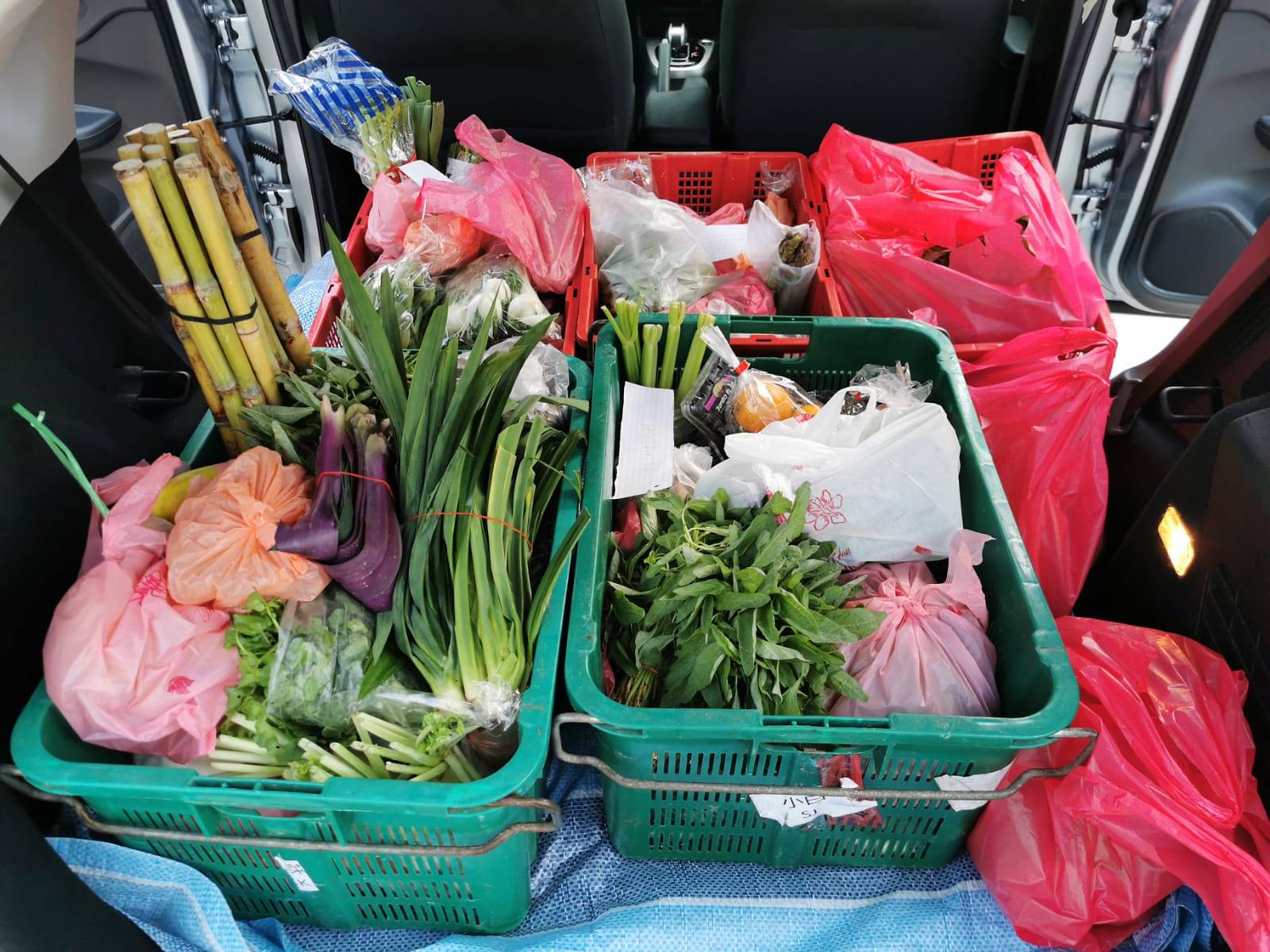
Ms Tan Cheng Hwee has been taking orders through a Google spreadsheet, packing them, planning delivery routes and making the deliveries all by herself since taking to Facebook to promote her family’s wet market stall, Swee Seng Fruits & Veggies, three weeks ago.
The online orders, which ranged from S$30 to S$80, have helped to reduce leftovers at the stall.
Ms Tan said her father had always wanted to offer home deliveries, but the plan never materialised as Ms Tan and her brother were busy with their job and studies. There were also doubts about going up against major supermarket chains and RedMart in the grocery delivery space.
It was only after COVID-19 disrupted the family business and her own freelance work in the film and television industry that the 27-year-old, with encouragement from her cousins, set the wheels in motion.
There have been challenges, such as how to take orders more efficiently. Ms Tan started off by accepting orders via WhatsApp until one of her cousins did up an online spreadsheet.
There is also a limit in terms of how many orders she can deliver a day. For efficiency, online orders are now grouped according to locations, which means she has had to turn down those that are out of the way.
“Given that we just started, I have to say that if we get more (orders), I might get quite swamped but I’m learning how to manage and get better,” said Ms Tan.
For the past three weeks or so, Ms Tan Cheng Hwee has been collating online orders, packing and delivering fresh vegetables to customers’ homes every morning. (Photo: Tan Cheng Hwee)
STOP-GAP MOVE OR HERE TO STAY?
Wet market stallholders believe that their competitive edge lies in offering fresher produce. While COVID-19 has given them a push to go online, the new entrants said they have not decided if this is for the long run.
Several issues remain. For instance, will the current surge in demand be sustained?
Mr Goh reckons that demand could drop between 50 and 70 per cent once the circuit breaker ends. “But some friends and family are optimistic that people will still appreciate fresh seafood delivered to their homes so we have to monitor, and just try to see if and how the business can remain sustainable,” he added.
Both Mr Goh and Ms Tan also have plans to return to their jobs eventually, so manpower could be an additional cost to consider should their parents decide to keep accepting orders online.
As MarketFresh’s Mr Khor pointed out: “The biggest challenge I feel is not technical, but economical. How do we deliver our produce to customers but still do it at a profit after considering fulfilment and delivery costs?”
But that should not stop traditional businesses from digitising, and Mr Khor suggested tapping existing online platforms as a starting point. MarketFresh, for example, used e-commerce platform Shopify to set up its online store.
“Nothing we build ourselves can come close to the functionality that established platforms can offer,” he said.
“If you want to simplify the process even further, you can make use of platforms like Facebook Live. There is little to no programming required, though the downside is scalability as most of the fulfilment processes like order taking and payment are still done manually.”
In Mr Goh’s case, he had tapped local start-up Ezqr at the start before recently moving on to Shopify. To see how he can further develop his father’s business, he is mulling signing up with Grab’s grocery delivery service, GrabMart.
Grab has approached many wet market stall owners in recent weeks, said Mr Goh who noted that the tech firm offers access to new customers and ease of delivery. The only drawback is the steep commission fees, which range from 15 per cent per order if merchants do their own deliveries and 30 per cent otherwise.
“Fresh grocery is not something you can mark up (prices) and given that we are not a high-margin business, even 15 per cent can be insane,” he said.
“But reach is also important and if I can acquire more customers than I could have otherwise, then it may not be a bad thing.”
A spokesperson from Grab said there are currently “a few hundred” merchants on board GrabMart, offering fresh produce, health and wellness products, flowers and gifts, as well as snacks.
The grocery delivery service started last October with “a small range” of convenience and wellness brands, such as Cheers and FairPrice Xpress. To meet changing needs brought about by COVID-19, it has been expanding its assortment, merchant selection and coverage.
“Now more than ever, we are seeing a strong demand for fresh produce, especially fruits and vegetables. We are already working with a number of merchants to meet this demand – these could include provision shops as well as vendors located in wet markets,” said the spokesperson, who added that “a small number of stalls from wet markets” have since joined the platform.
Grab declined to reveal its commission rates but said these vary based on the type of collaboration it has with its merchants.
“We are constantly listening to the merchants’ feedback, and will continue to explore more ways to create value for them as well as the customers,” the spokesperson said.
SINGAPORE: For many women, the news you are expecting can be one of the most thrilling announcements you can make in your lifetime.
Yet for some working mothers-to-be, the occasion may not be such a pleasant one.
Retrenchment, forced dismissal and lack of reasonable accommodations: These are some of the injustices mums in Singapore say they face at work.
UNNECESSARY WORRIES
Pregnancy and new motherhood come with a host of difficulties for women, from medical complications that necessitate time away from the office to an inability to carry out physically laborious tasks. This may require colleagues to pick up the slack for their pregnant or nursing teammate.
Many mothers themselves worry this imposes unfair costs on others. We forget that in bearing children, mothers are performing important, socially productive work that also contributes to economic growth by producing workers and citizens.
Employers themselves could embrace working mothers as valuable employees to acknowledge and compensate the employees who provide coverage for colleagues while they are on maternity leave. But they do not, leaving mums to shoulder guilt and their co-workers to bear the workload by themselves
In fact, international labour standards have since 1919 accorded special status to expectant and nursing mums via maternity protection.
(Photo: Unsplash)
These protections include legislating paid maternity leave and sick leave, a daily reduction of hours of work to accommodate breastfeeding, allowing women to return to the same position after becoming mothers, and prohibiting employers to terminate a mother’s employment for a certain period following her return.
These ensure work does not pose a risk to the health of either mother or child, and that women’s reproductive roles do not compromise their employment and economic security.
In Singapore, some of these labour standards are enshrined in policy, even law. Yet they do not often bear out in practice.
Seventy per cent of the 27 workplace discrimination cases seen by AWARE’s Workplace Harassment and Discrimination Advisory (WHDA) since its launch in September 2019 relate to pregnancy discrimination.
We have heard horror stories of employers who try to get their pregnant employees to leave the company, ostensibly in anticipation of them receiving maternity leave or becoming poor performers once they have a child.
These deep-seated prejudices are problematic where they reduce mothers to stereotypes to justify discrimination. Studies show that compared to other workers, mothers are viewed as less competent and committed to their work, regardless of actual performance.
WHDA has seen clients who have been told their job no longer exists while on maternity leave, or when they come back from leave.
A mother carrying her son. (Photo: Unsplash/Dakota Corbin)
Their productivity is suddenly questioned, even when up until a month before their pregnancy, they received pay raises and contract extensions.
Apart from redundancy, returning mothers also face grossly inconsiderate acts. Nalini* was still nursing when she returned to work and had to pump milk during office hours.
On more than a couple of occasions, the breast milk she had carefully stored in the office fridge had either been spilled or thrown away.
WORKING MUMS HAVE FEW EFFECTIVE REMEDIES
Singapore has made significant progress in protecting workers against discrimination at work, most recently via the Tripartite Guidelines on Wrongful Dismissals, which make any dismissals without a just cause – i.e. misconduct, poor performance or redundancy – wrongful. The Tripartite Guidelines also cover constructive dismissal, i.e. being forced to quit a job.
Four in 10 of the pregnancy-related wrongful dismissal clients we have seen took their cases to the Tripartite Alliance for Dispute Management, which has jurisdiction to mediate claims between employees and employers in accordance with these guidelines.
A successful mediation can result in reinstatement or compensation in lieu of maternity benefits or lost wages.
Reinstatement is an unattractive option. Employees hardly want to go back to an employer who has disrespected them and questioned their worth as a worker.
The compensation option, capped at three months of pay, does not take into account that a pregnant worker tends to be stranded without employment once wrongfully dismissed, something vulnerable groups of workers, including seniors and low-wage workers, say they experience too.
WHDA’s clients have tried to look for new jobs after being wrongfully dismissed, but rare is the employer who wants to hire a pregnant woman or a mum with a newborn, in our experience.
In calculating compensation, it would make more sense to take into account the number of months a pregnant employee is likely to be out of a job because of wrongful dismissal, which would probably exceed three months.
For discrimination cases that do not amount to dismissal, employees can file a complaint with the Tripartite Alliance for Fair and Progressive Employment Practices. The complaint triggers an investigation which involves speaking to the employer. First-time violators may only end up with a light slap on the wrist.
Some pregnant women are discouraged from taking this route. They are afraid their employers would retaliate against them, with knock-on effects for them when it comes to compensation, benefits or progression.
PREGNANCY DISCRIMINATION DURING COVID-19
COVID-19 has fundamentally changed how we work, largely for the better. Jobs we had been told could not be performed remotely are now being done from homes.
(Photo: Unsplash/Martin Castro)
Unfortunately, pregnancy discrimination has persisted into this new world of greater accommodation and flexibility.
Soon after she told her boss she was pregnant, Noor Siti* was told her position had been made redundant due to COVID-19.
She thinks she was unfairly targeted because she had received a salary increase on the basis of good performance barely a month before. Yet two male employees at the same position as her, who did not perform well, were not let go.
When asked if she could be assigned duties that did not involve interactions with clients, Sheila*, another pregnant client of ours, was told she had to continue managing the front desk.
Her fears of contracting the coronavirus and compromising the health of her unborn child were dismissed, even though other countries, such as the UK, have classified pregnant women as a vulnerable demographic when it comes to contracting the coronavirus.
Many penalties mothers face at work may not be unique to them. We have all heard anecdotes of colleagues stealing from the shared office fridge, or being penalised for absenteeism.
However, what’s at stake for working mothers is equity, not equality.
Making paid leave policies more inclusive and available to all employees when it comes to caregiving and healthcare needs, which everybody surely will have at some point, would not only be equitable, but could also reduce resentment. Covering for each other in our hour of need would become part of a workplace culture.
We have all just celebrated Mother’s Day. Yet for mothers to have it easier working in Singapore, we still have some way to go.
This would take a whole-of-society approach. Fathers would need to pick up their share of household and caregiving responsibilities so that mothers can no longer be penalised at work for being caregivers.
Flexible work arrangements would be mainstream so we can balance work and caregiving responsibilities.
In policy terms, this would mean extending maternity protection to a set period of months even after maternity leave. It would mean protecting pregnant employees’ rights to continue working at the same position and rate of pay after taking sick or hospitalisation leave.
Unfairly dismissed mothers would be awarded fairer compensation. These would deter such cases in the first place.
Until these measures are put in place, any celebration of motherhood in the workplace will continue to ring hollow.
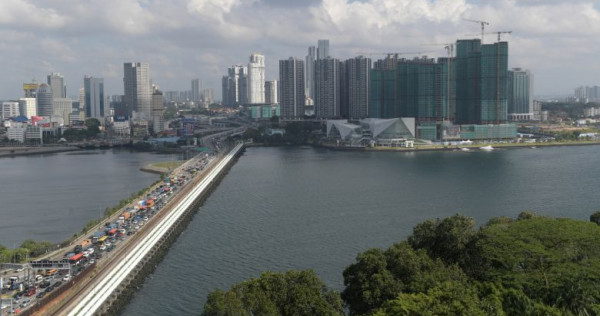
ISKANDAR PUTERI – The Johor state government is planning to set up the Johor Investment Company (Jico) in Singapore soon in an effort to boost bilateral relationships with its neighbour across the Causeway.
Menteri Besar Hasni Mohammad said that Jico’s main function was to improve and ease trade between Johor and Singapore.
“We have brought forward our intention in setting up Jico in Singapore to Wisma Putra, the International Trade and Industry Ministry (Miti) and to the Malaysian high commissioner there.
“Jico will be headed by state civil servants, and this would be a good opportunity for them to gain experience working within an international area,” he told reporters after the opening of Johor state assembly on Thursday (May 14).
On the state government’s plan to review and strengthen the Singapore-Johor-Indonesia (Sijori) growth triangle, Datuk Hasni said he has already informed Prime Minister Tan Sri Muhyiddin Yassin, whom he said supported the idea.
“We will be having our first discussion on the matter after Hari Raya Aidilfitri, which would involve representatives from these two countries, ” he added.