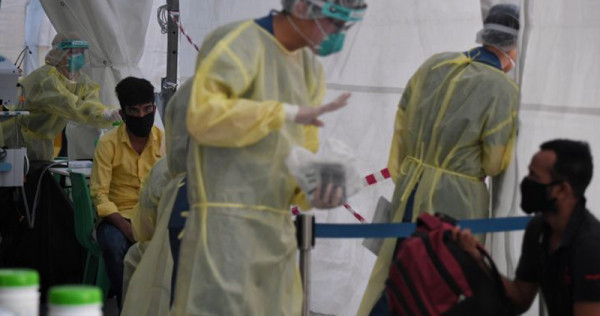
The Ministry of Health has preliminarily confirmed 305 new coronavirus cases in Singapore today (May 18), a drop from yesterday’s 682. Most of the new cases are Work Permit holders residing in foreign worker dormitories.
Two of the cases are Singaporeans/Permanent Residents.
Further details will be provided later tonight.
A total of 28,343 cases have been reported in Singapore so far, with 9,340 cases discharged and 22 deaths.
For the latest updates on the coronavirus, visit here.
National water agency PUB has lodged a police report after youths were found to have trespassed into MacRitchie Reservoir, where they swam and rode a bicycle into the water.
Stomp contributor Joe alerted Stomp to a ten-second video of the May 8 incident that was posted on Instagram Stories.
Joe said: “I saw this Instagram Story of three youths at MacRitchie Reservoir in the night, with one of them daring another to ride a bicycle into the reservoir.
“They have no sense of law.”
In the video, which tagged MacRitchie Reservoir as the location, a youth can be seen posing for the camera before riding a bicycle into the waters of the reservoir.
Another youth can be seen already in the water, while a third person is recording the incident.
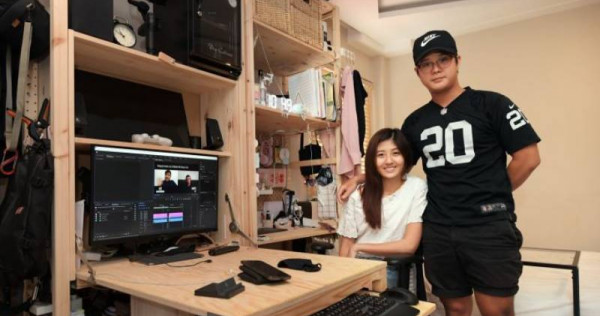
Even before reciting her wedding vows in an hour-long ceremony before some 100 guests at the Aliwal Arts Centre on March 7, Ms Claudia Chen knew what it meant to love in sickness and in health.
Just two weeks earlier, her husband-to-be – Mr Christopher Neo – was in an isolation ward at the National Centre for Infectious Diseases (NCID). The 27-year-old had tested positive for Covid-19 on Feb 13, the day before their Valentine’s Day dinner.
They were already in the midst of wedding preparations but Ms Chen focused on supporting him in his fight against the virus.
“I was ready to be by his side no matter what,” said the 27-year-old freelance music teacher.
“I couldn’t really help, except to talk to him through text and video calls. Maybe I gave him hope for a new day.”
Fortunately his symptoms were mild, and Mr Neo, who was Case 57, was discharged on Feb 21 after two negative swab tests.
The couple, who have been together for five years, had to scale down and re-plan their wedding in just two weeks.
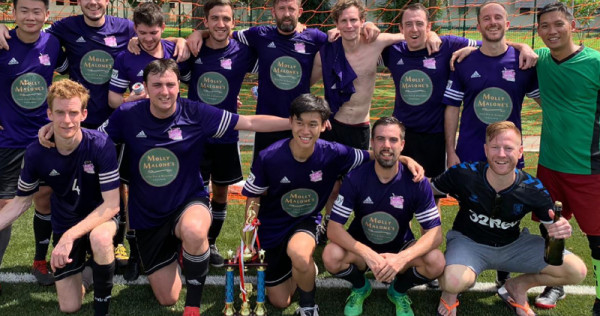
In the case of amateur football club Purple Monkeys, the answer is 4,107km – or the distance between Singapore and Bangladesh capital Dhaka.
With group activities paused due to Covid-19, the 40-member team, who used to play every weekend, has come up with an efficient way to stay fit and do good at the same time.
They’ve pledged to cover the equivalent of the route within a month in an attempt to raise $20,000 for migrant workers in Singapore, via daily individual runs in their neighbourhoods.
“The distance caused a few eye bulges at first, and then we just kind of went, f*ck it,” says team member and Run to Dhaka co-organiser Jonathan Gerard.
“The more we saw in the news how the number of Covid-19 cases within the migrant worker dormitories was rising, the more we wanted to do something to help.”
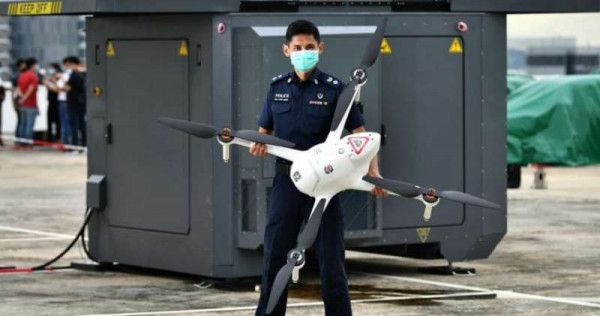
SINGAPORE – A self-operating system which lets a drone take off and land and even recharge its batteries on its own is being tested by the Singapore Police Force (SPF).
The drone sits in a 2.2m-tall box that can be moved to wherever it needs to be deployed.
The box’s robotic automation system ensures that the 10 batteries are fully charged and ready to be installed, and also equips the drone with tools such as cameras before it is launched.
Details of its operations, such as flight paths, can be configured and monitored remotely by an operator in an off-site command centre so no pilot has to be on site as is usual with drones.
The two drone boxes have been on trial at an industrial estate in the western part of the island since the end of April.
Deputy Superintendent of Police (DSP) Elvis Chong said industrial estates are relatively deserted during the circuit breaker period but the police have to stay vigilant.
Such areas are susceptible to crimes such as housebreaking and theft.
All sexually active women are at risk of being exposed to a high-risk Human Papillomavirus (HPV) strain that may lead to cervical cancer. While the exposure is transient 95 per cent of the time, and the immune system will get rid of the HPV infection, not everyone is that fortunate.
Cervical cancer is the 10th most common cancer among Singaporean women — over 200 people are diagnosed with it annually. Caused by a long-lasting HPV infection, this disease kills more than 70 people locally a year.
Scary? True. There is nothing you can do? False. Cervical cancer is highly preventable.
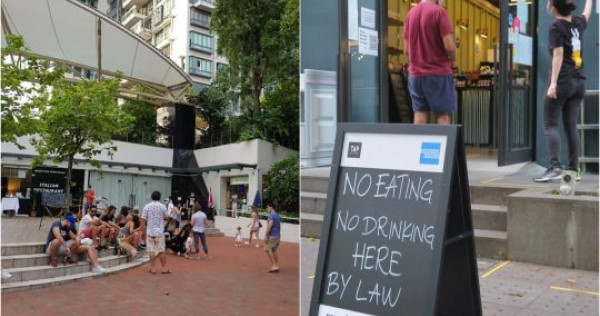
SINGAPORE – Some restaurants at Robertson Quay have been barred from selling alcohol for takeaway, after people were found socialising and flouting safe distancing measures at the riverside dining enclave.
The Urban Redevelopment Authority (URA) told The Straits Times on Sunday (May 17) that these restaurants had been selling takeaway alcohol to patrons, “which had contributed to more individuals gathering around these premises”.
“To prevent such gatherings from taking place, we have issued a written direction to these restaurants to cease the sale of takeaway alcohol with immediate effect,” said an URA spokesman.
“Any contravention of such directions is an offence and we will not hesitate to take such parties to task.”
The directive comes a day after a Facebook post showing several photos of people failing to stay at least 1m from one another in the waterfront neighbourhood went viral, having been shared more than 1,700 times since Saturday (May 16) evening.
Most of the people pictured were not wearing masks, while some had their masks lowered as they spoke to one another.
SINGAPORE: On my first day at work at CNA on Apr 1, I went to the office to set up my work laptop, attended an hour-long HR orientation via video conference, and then promptly went home to begin my work from home (WFH) arrangement.
In the following two days, I met two teammates to familiarise myself with some work processes.
Our brief meetings happened prior to the circuit breakers kicking in. If I had known these instances would be the only physical interaction I’d get with my team in the weeks, even months, ahead, I would have overstayed my welcome to make tedious small talk until they begged me to leave.
None of the restrictive measures surprised me – the COVID-19 situation had been gradually worsening in Singapore.
What did throw me off, however, was the weird and disorienting uncertainty of starting a new job in these times.
(Photo: Unsplash/Annie Spratt)
RECOGNISING MY PRIVILEGE
The COVID-19 pandemic will cause Singapore to enter a recession this year, resulting in job losses and lower wages, noted the Monetary Authority of Singapore’s (MAS) latest half-yearly macroeconomic review released on Apr 28.
In my personal network, a friend was unexpectedly retrenched from her travel company, while several more in the arts and entertainment industries turned to food delivery jobs as their primary means of income vanished.
Witnessing them suffer severe losses induced survivor’s guilt. After all, at least I had a job. Then again, neither guilt nor forced gratitude is productive.
These are unprecedented times. No one has any blueprint of what to expect or how to regain some semblance of control over their lives. The only thing that’s more certain is the importance of kindness and empathy towards each other – even if you might not understand someone’s struggles.
LACK OF PHYSICAL INTERACTION
I had to fundamentally adjust my expectations of a new workplace.
I quickly realised that seemingly inconsequential aspects of work, such as an office to get to every day or the standard morning routine of boarding public transport by a specific time, gave me a sense of certainty I’d taken for granted.
I still get the fresh slate that a new job heralds. This includes getting acquainted with the rules and routines of a new team and figuring out what I add to their culture. But getting your bearings right can be a weird experience without physical contact.
A woman uses her Apple iPhone and laptop in a cafe in lower Manhattan in New York City, U.S., May 8, 2019. (File photo: REUTERS/Mike Segar)
I was introduced to my team via our weekly meeting on Zoom – a platform now synonymous with work discussions or catch-ups with good friends. But there is no in-between, such as a virtual equivalent of catching your colleague’s eye when you meet them along the corridor or making coffee with them in the office pantry while discussing our weekend.
As someone who relies heavily on non-verbal cues to get a sense of someone’s personality in professional interviews and personal relationships, I have an unusually deep appreciation for small talk.
With an office, returning to the same physical environment every day cultivates a sense of security and certainty, and a known space to get to know new colleagues over time.
Getting thrown into a WFH arrangement from day one removed the gradual intimacy a newbie gets to establish as they find their bearings, making me feel like I had to immediately perform like a seasoned employee in all aspects.
When you’re working remotely, the absence of visual cues that indicate you’re a new hire, such as looking clueless or being more guarded, might result in unrealistic expectations to meet certain standards from the get-go.
People probably understand that subconsciously. But as newbies, we tend to get into mechanical action to try to impress.
(Photo: Pixabay)
One friend who joined a tech company attended all her hiring interviews and HR orientation online. When she first got on a Zoom call with her boss, she immediately launched into work so much so that her boss had to ask her to slow down and talk about herself first.
Another friend, who took on a corporate communications role in the public sector, didn’t meet her team either, and felt less comfortable with asking for help frequently, as a new employee would.
In person, it would be easier to gather if she was bothering her colleagues by observing their tics, such as whether they break their gaze before answering a difficult question.
Moreover, conversation with someone new might be stilted. While silence creates a “natural rhythm in real-life conversation”, it “makes people uncomfortable” when it happens over video call, said Gianpiero Petriglieri, an associate professor at INSEAD, who explores sustainable learning and development in the workplace, in a BBC article.
These issues probably wouldn’t matter as much if you’ve interacted with your colleagues in person. You’d have an existing understanding of their character and behaviours.
OPTIMISTIC SOLUTIONS
The standard teething pains of beginning a new job might be reinforced by the uncertainty of living through a global crisis.
Yet, we can still control how we respond, such as helping newbies settle in better or existing employees cope with the newfound disorientation that comes with a lack of physical contact.
Perhaps an upside to these circumstances is a greater focus on mental health in the workplace.
Empty offices are seen at a federal building in Washington during the government shutdown. (Photo: AFP/Andrew CABALLERO-REYNOLDS)
A friend’s boss and other leaders in her company have begun signing off emails with hotlines for mental health organisations that they tie-up with, which employees can call anonymously if they need help. The simple practice reassures employees that their company cares for them.
Another way to prioritise mental well-being is to draw firm boundaries around working hours. As Sean Scott, a new software engineer at Duolingo, writes in Fast Company: “(Their) employee experience team did their best (to establish boundaries) … by sending out helpful tips, such as setting an alarm at the end of the work day.”
At the same time, new hires might be driven to prove themselves to make an impression. Like myself, Scott admits feeling “less productive” and “worried constantly about not meeting (his) team’s expectations”.
Thankfully, even though Scott “couldn’t stop the nagging feeling that he wasn’t keeping up”, his manager reassured him he was “doing great”.
Finally, perhaps COVID-19 provides us a chance to embrace vulnerability in the workplace.
One way is to emphasise transparent leadership, according to Sally Stetson, principal and co-founder of executive search firm Salveson Stetson Group.
“Leaders need to communicate on a regular basis to both reassure employees and provide them with ongoing updates that may change the way the employee and the company operates,” she said in an interview with HR Dive.
Knowing that even our bosses are grappling with constantly evolving situations comforts new hires like myself. Their vulnerability makes us feel safe to make mistakes which help us grow.
(Photo: Unsplash/Brooke Lark)
This is where new employees like myself could also seize this opportunity to address our insecurities and weaknesses, and find ways to build rapport with bosses and colleagues.
I learnt that a couple of weeks ago, while speaking with my boss on a story outline. I felt strangely uncomfortable. After we hung up, I realised that discomfort was vulnerability. I often struggle with asking for help, and this period of working remotely has only made me extra cautious about coming across as needy.
But having a team that doesn’t laud excessive independence made it easier for me to seek help and have the occasional check-in with a boss or colleague. This slowly eased me out of my stubbornly self-sufficient bubble.
Still, the minute I get to return to the office, I am going to relish every moment of having to pack myself onto an MRT train by a certain time so I won’t be late for work.
SINGAPORE: It first started with a ban on travellers coming in from China. Within weeks, Singapore closed its borders and imposed stay-home or quarantine orders on all residents returning to the country.
Amid all these, the risk assessment level known as Disease Outbreak Response System Condition (DORSCON) was raised from yellow to orange, religious services were suspended and mass entertainment events were banned.
Then came the circuit breaker on Apr 7, which practically brought almost the entire country to a standstill, as schools, offices and non-essential businesses were closed, and restrictions placed on residents’ movements around the island.
Daily life was upended, with people not being allowed to dine-in at food establishments or meet up with friends or family members from different households, and having to study and work from home.
Such disruptive changes have been a constant in Singapore, as in other countries, since COVID-19 first surfaced here on Jan 23.
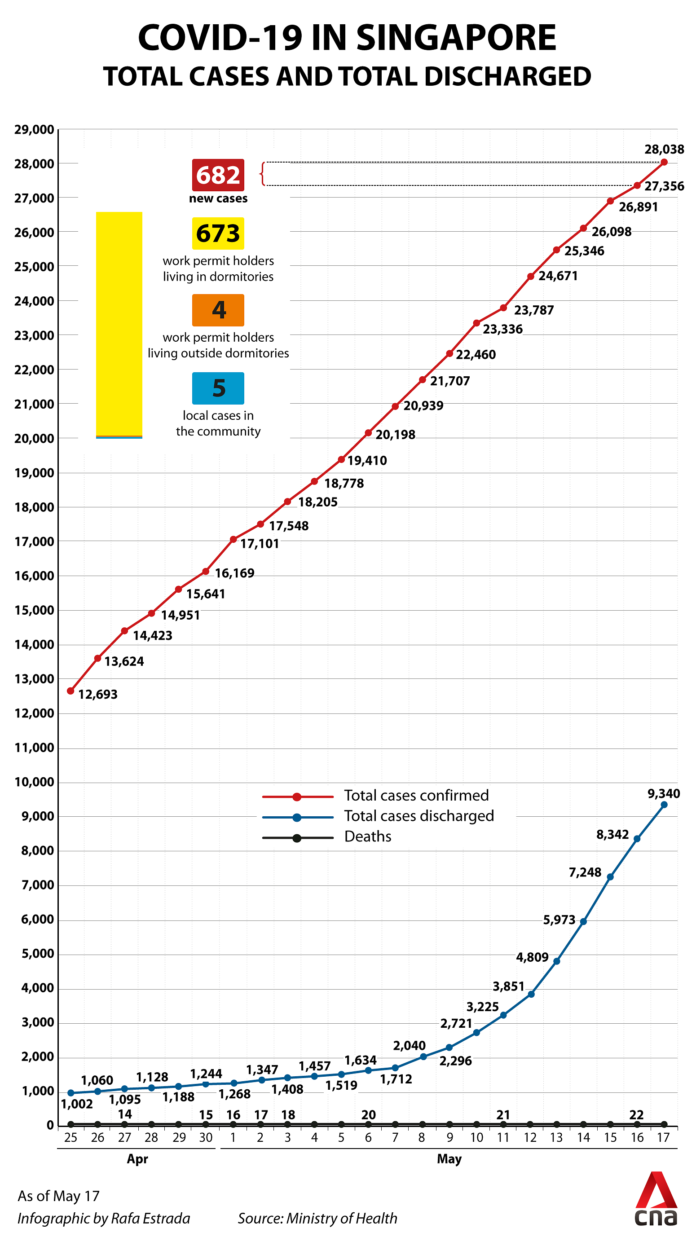
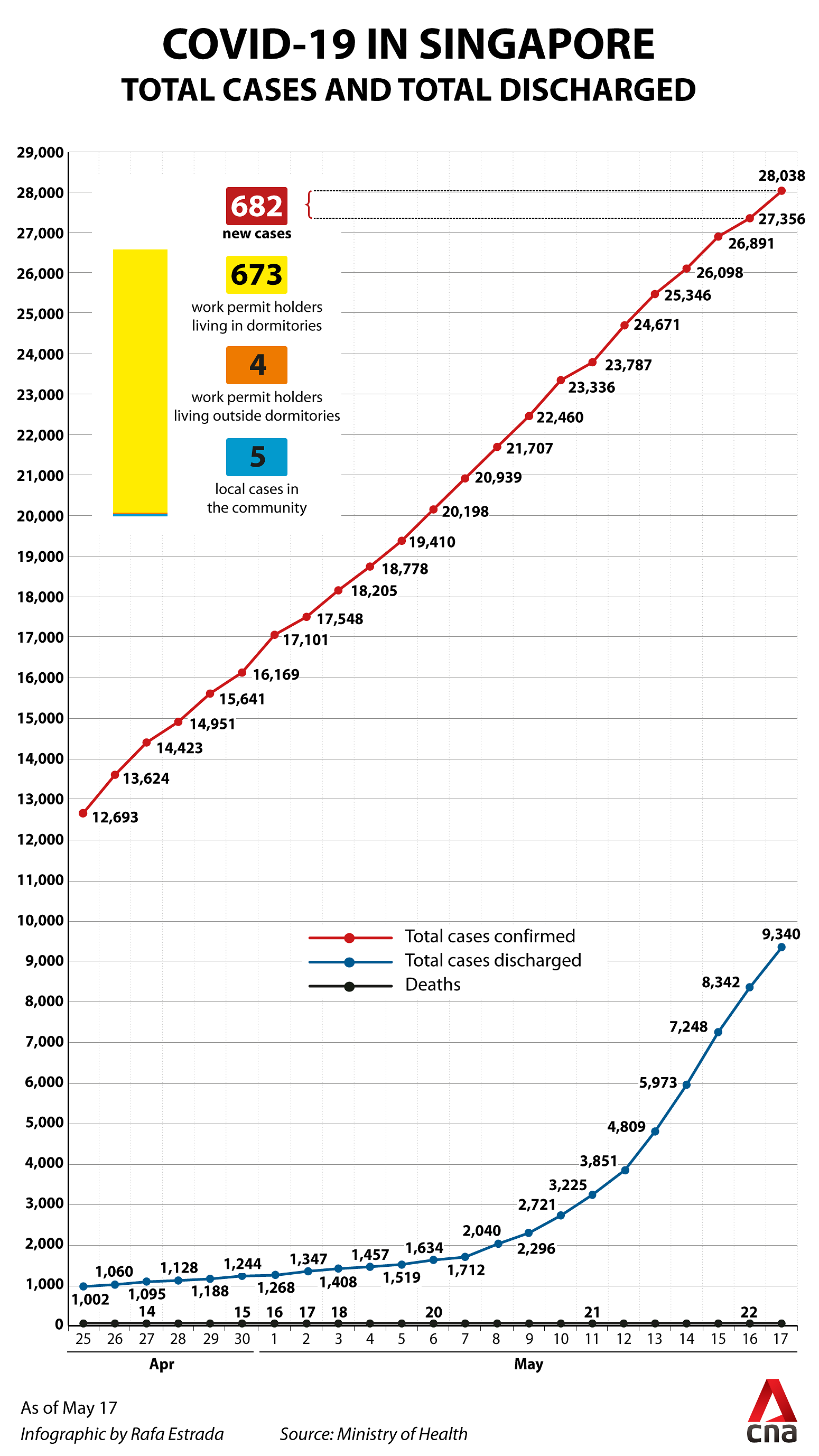
Less than four months later, there are now 28,038 confirmed COVID-19 cases in Singapore as of Sunday (May 17).
The majority of cases in Singapore are foreign workers who have been living in dormitories, whose crowded conditions are now under the spotlight as these have been blamed for causing the high number of infections among the migrant worker community.
But with the number of cases among the local community on a downward trend, the authorities here say that the circuit breaker measures are working. And since earlier this week, they have started to ease some restrictions, allowing some businesses to reopen, such as traditional Chinese medicinal halls.
Singaporeans are keeping their fingers crossed that some semblance of normalcy will return soon, with the circuit breaker slated to be eased further on Jun 1.
But for some individuals here, COVID-19 has been much more than an inconvenience and a matter of adjustment to their daily routines.
It has taken away the lives of their loved ones who were infected, caused mental anguish for those who survived, and robbed many others of their livelihoods.
We spoke with several of them who have had to wrestle with the coronavirus’ deleterious impact, and emerge from it with their lives drastically altered.
Some of them, in fact, told this reporter that they were prompted by the easing of the circuit breaker to accept media interview requests – they want to caution Singaporeans against being complacent in the long drawn-out fight against COVID-19.
Mother’s Day would usually be a grand family affair for Ms Siti Noraisah Ali’s family every year.
Her mother would whip up plenty of dishes for the whole extended family as they get together to observe that special day, as it is also the day they celebrate the “birthday” of her grandmother – who is 82 this year – since she has no records of the date when she was born.
Unfortunately, when Mother’s Day on May 10 came and went this year, all they felt was the huge void left behind with the passing of Ms Noraisah’s mother.
Madam Salha Mesbee, 58, died due to complications from the coronavirus on Apr 30. She is the youngest COVID-19 fatality in Singapore to date. While she was declared free of the virus which she had contracted during a trip to Turkey, her vital organs took such a beating from it that her body was not able to hold out any longer.
Ms Salha Mesbee and her husband. (Photo: Siti Noraisah Ali)
“That sense of loss is irreplaceable. To think she won the battle against COVID-19, but she still passed away. We still cannot accept that,” said Ms Noraisah, who runs a home-based business.
Adding to the pain is the fact that they were not able to have the usual funeral and burial arrangements due to safe-distancing requirements.
“It’s not like a normal funeral, where you are allowed to talk about the deceased and reminisce … It was very much touch and go,” said the 37-year old.
With the Ministry of Health advising funerals and wakes to be limited to 10 people or fewer, Ms Noraisah was not able to see her mother off on her final journey to the cemetery.
But she was thankful that she could watch the proceedings via live streaming, a service provided by the funeral company.
“It eased the worry and the sadness of not being able to follow your mum to the grave,” said the eldest of three children.
Another source of comfort for Ms Noraisah was the fact that she was able to perform the last religious rites for her mother, as the latter was free of the virus and her body could be returned to the family.
Even then, she had to bathe her mother for the last time while donned in full personal protective equipment (PPE).
“I had three layers of gloves on me. I had the PPE, I had the face guard. It’s not the norm … but you know you have to do (it) because (the virus) is not something you can play with,” she said.
The one-month period where her family members were in hospital also left a psychological imprint on Ms Noraisah.
Her father and two younger brothers were also infected with COVID-19, but they had all recovered before her mother died.
She would be receiving calls from the doctors daily to get updates on the health conditions of her family members, and later her mother. Until today, she still gets the shivers when her phone rings at night.
“Because of that one month, you are anticipating calls, waiting anxiously, wondering if the call is going to be good or… bad. Everytime my phone rings now, I’m like, ‘What’s happening?’” Ms Noraisah said.
“When people call me after 8pm now, I get really scared. It reminds me of that day.”
Ms Noraisah was referring to Apr 29, the day doctors called her around 8pm to notify her that things were not looking well for her mother. The next day, her father made the decision to pull the plug on the life support machine which Mdm Salha was on.
Ms Noraisah recalled that when her mother’s body was brought home, her father lay down beside her, knowing it would be their last time together.
To see her 61-year-old father, Mr Ali Buang – who had always been the strong figure in her family -break down has been heart-wrenching for Ms Noraisah. She is now seeing his fragile side, having caught him staring into space at times.
Two weeks since her mother’s death, Ms Noraisah said her father has been focused on trying to take over some of her mother’s yearly practices during the Islamic fasting month of Ramadan, such as giving away food hampers to other families and regularly checking in on his wife’s mother and sister.
As for Ms Noraisah, she has taken on the role which her mother used to play – as the glue that holds the extended family together.
In the absence of her mother, Ms Noraisah said she sent Mother’s Day gifts to her aunt and grandmother.
She cooks the pre-dawn meals before the day’s fasting begins for her father and youngest brother, and has the food delivered to their flat.
She also plans to be the main chef on Hari Raya Puasa, which falls on May 24 this year and marks the end of the fasting month, by cooking the dishes which her mother used to make, such as nasi briyani and ayam merah.
“I have to be strong, like how my mother had been strong for everybody. Once I break, I think (my family) will break,” Ms Noraisah said.
While she continues to find strength and comfort from her husband and four children to come to terms with her mother’s death, Ms Noraisah knows it will be tough to do so.
“I have not had the chance to grieve properly. It’s been a whirlwind situation, a flurry of events.”
COVID-19 SURVIVORS: LIVING WITH EMOTIONAL, MENTAL SCARS
A consistently high fever of above 39 degrees Celsius, hallucinations of loved ones who had died, and having four litres of oxygen pumped into his body through a nasal cannula.
These were far from the experience of some COVID-19 patients that Mr Bambang Sugeng Kajairi had read about, but it was what he went through when he was hospitalised at the National Centre for Infectious Diseases (NCID) after testing positive for the virus at the end of March.
“I had the full-blown version. That caused me to question a lot, ‘Why me?’” said the 55-year-old business owner.
For Mr Simon Neo, who was hospitalised at NCID in mid-March after testing positive, it was the chills he felt at his fingertips and toes that were the “most terrifying”.
At one point, the 50-year-old psychotherapist had four blankets piled on him as nothing could be done about it.
“I never want to go through that again… It made you feel so helpless,” said Mr Neo.
Mr Bambang Sugeng Kajairi, 55, tested positive for COVID-19 but recovered after 16 days. His wife also tested positive for the virus and has been in hospital for more than 40 days.
Apart from the physical pain, COVID-19 patients also have to go through the mental anguish of struggling with their mortality. And this is true even for those who have mild symptoms.
Mr Bambang Sugeng Kajairi, 55, tested positive for COVID-19 but recovered after 16 days. His wife also tested positive for the virus and has been in hospital for more than 40 days. (Photo: TODAY/Nuria Ling)
When Mr Andrew Phay was hospitalised at Changi General Hospital for the virus in mid-March, the 56-year-old retiree was not too concerned initially.
Despite the lack of severe symptoms during his initial stay in hospital, apart from having an adverse reaction to a malaria drug he was taking, he was told by the doctor on the 15th day that his lungs were not showing any signs of improvement and he might have to be put on the ventilator in the intensive care unit.
“She asked, ‘Is there anybody in your family you would like me to call?’ … That’s when you realise that things might not turn out well,” recounted Mr Phay.
While he got emotional after hearing that from the doctor, Mr Phay composed himself and phoned his wife.
Since both are Roman Catholics, his wife offered him encouragement by sending him a sermon delivered by Archbishop William Goh.
“After I heard about it and I read about it, I prayed. I never prayed as hard before in my life,” said Mr Phay.
His personal brush with COVID-19 led him to believe that public messaging about the disease needs to be done in a more personal way, instead of focusing on the statistics.
“When we’re talking about your death or my death, all of a sudden the numbers don’t matter anymore. When everybody sees that they can die, it becomes real,” he said.
Mr Andrew Phay was hospitalised at Changi General Hospital for the virus in mid-March. Photo: TODAY/Nuria Ling)
Thankfully for all three patients, their conditions improved soon after.
While Mr Bambang was discharged upon testing negative twice over two consecutive days after 16 days in NCID, both Mr Neo and Mr Phay were sent to community isolation facilities as they were certified to be clinically well but not yet cleared of the virus.
But even after the battle for their physical health was more or less won, they soon found that they had to grapple with continuing mental and emotional strain.
For Mr Bambang, there are feelings of guilt towards his wife, as she had also tested positive. While she only has mild symptoms, his wife has not received the all-clear after more than 40 days from her first positive reading, and remains in a community isolation facility at the time of his interview on Tuesday.
“Sixteen days in the hospital alone was a killer for me. I had only a small window to look out of. It was tough. I can’t imagine (how things must be like for her),” he said.
His wife’s absence and his son being put on a stay-home notice in a hotel also meant that Mr Bambang’s homecoming was bittersweet at best.
“For me emotionally it’s the toughest. I miss her a lot. Since I came out, I haven’t had a chance to share the moment of me coming out of it (hospital) with her,” he added.
For Mr Neo, besides struggling with feelings of guilt for having to be away from his wife and mother, his 32-day stay in NCID and the community isolation facility was a “roller-coaster ride”.
Seeing two older roommates getting discharged earlier even led him to wonder about his self-worth.
“I began to question myself, ‘Have I not been taking care of myself? What’s wrong with me? Maybe I’m not a good person that’s why all this is happening,’” he said.
Adding to the mental struggle was the fact that Mr Neo had a false negative test three times, where a negative test result was followed by a positive outcome the next day, hence failing to meet the criteria before one could get discharged.
“At first when they tell you it’s negative, you get your hopes up. The thought is ‘I’m going to be discharged’. Then after they tell you it’s positive, so it (hope) goes down again,” he said.
“When I got the false negative test the third time, I was thinking, ‘Is the virus coming back stronger than before?’ It’s very cruel for anyone to go through this.”
During her 25-day stay at Tan Tock Seng Hospital from Apr 2, Dr Teresita Cruz del Rosario said she did a total of 11 swab tests before finally getting her double-negative results.
When she kept getting tested positive despite feeling physically better into the third week of her hospital stay, the 67-year-old independent scholar started to question whether she was indeed recovering.
The wait between the first and second negative test result was very agonising, with some survivors sharing it was the longest 24 hours they ever had.
“You want it (a negative outcome) very badly but there is that helplessness. All you can do is wait,” said Mr Phay, who was warded for a total of 23 days.
Dr Teresita Cruz del Rosario said she did a total of 11 swab tests before finally getting her double-negative results. (Photo: TODAY/Nuria Ling)
Both Mr Neo and Dr Cruz del Rosario said they had difficulty sleeping at night as they waited for the results to arrive the next day.
“Either I was going to be home or we have to start all over again. It was bad. That was more agonising than recovering from COVID-19 itself,” said Dr Cruz del Rosario, who is affiliated with the Asia Research Institute’s Inter-Asia Engagements Cluster at the National University of Singapore.
Some COVID-19 survivors said they are still feeling the lingering effects of the disease despite being given the all-clear.
Mr Bambang said he still experiences breathlessness at times, while Dr Cruz del Rosario said she often felt tired and feverish the first week after she was discharged, the same symptoms she had when she first entered the hospital.
As someone who has a history of asthma, Dr Cruz del Rosario now has to use her inhaler daily, unlike before when she did not have to use it as often.
“You wonder whether you will ever go back to normal … Will I go back to a time when I recognise my body and how it’s behaving? Or are these changes going to just continue?” she said.
Beyond the physical after-effects, Mr Neo admitted that he gets emotional when recounting his battle with COVID-19, something which he believes will stay with him for a while.
“There were days I woke up crying. The tears, the hopes, and the despair as well. Looking at the entire situation, it encapsulates everything including the joy of being discharged,” he said.
Survivor’s guilt was something that Dr Cruz del Rosario had to deal with as well, as she found herself experiencing sudden crying bouts for a few days last week.
Two of her colleagues from the Philippines died after contracting the virus.
“Why did I survive and others didn’t? Why did I have far less severe symptoms and others worse?” she asked.
Dr Joel Yang, a clinical psychologist from Mind What Matters Psychological Consultancy, said that one way for affected individuals to get through this difficult period – whether they are grieving or reliving the trauma of fighting the disease – is to spend 10 minutes every morning writing about anything.
It may help them to process their feelings at a deeper level and reflect on their values and on what matters.
Learning to embrace uncertainty, while a difficult thing to do, would also help them accept their sadness or anger over their circumstances, he added.
“Acceptance is about being okay with not being okay,” said Dr Yang.
He also emphasised that there is no right way of overcoming loss or trauma as people often go through the various phases in a non-linear way.
For example, one can be in denial in one moment, sad at the next and then angry after.
“People do cycle back and forth. It’s a completely normal reaction to an abnormal situation,” he added.
Mr Derrick Yip, 30, had clearly laid out his plans for 2020.
He was planning to expand his events company, which he had officially set up last year after spending a decade in the industry, and was due to marry his fiancee.
But the COVID-19 outbreak threw everything into disarray in just two months.
The former emcee was forced to close his company and scrap his wedding plans, as the economic fallout from the pandemic depleted his savings and robbed him of the only livelihood he had known.
“That final moment when I closed the doors to my company, it felt as if all the passion and the dreams I had, everything (was) just shattered,” said Mr Yip, who is now temporarily making ends meet as a safe-distancing ambassador.
Alongside tourism and aviation, the events industry is one of the most severely affected sectors as it was among the first few economic activities ordered to shut in Singapore as the authorities began imposing safe-distancing measures.
Even after the circuit breaker is eased, Mr Yip said he does not expect the events industry to recover, at least not until the end of next year.
It is a sentiment shared by Mr Laurence Wong, also an emcee whose source of income has been obliterated.
With COVID-19 forcing everyone to digitalise, Mr Wong said that individuals and firms have gotten used to the idea that events companies and emcees are redundant.
Using video conferencing tools such as Google Meet or Zoom to carry out team-bonding events would be cheaper, more convenient, and require less resources, he pointed out.
The 48-year-old said he has “one leg out” of the industry which he has been in for the past three decades and is now focusing on how he can contribute to society by working as a safe-distancing ambassador and being a full-time father to his seven-year-old son.
“I work so hard all these years to achieve something. COVID-19 has levelled everything to the ground. I have to start all over again … But it has given me an opportunity to be who I have always wanted to be,” he said.
If the industry does eventually recover, Mr Wong said he would still take up job offers even though they would not be as lucrative as before.
Mr Yip, however, doubts that he will return to the industry on a full-time basis even if things return to normal eventually.
“(The events industry is) not sustainable when a situation like (a pandemic) hits. We are the first to go. What can I do so that I do not have to go through this again? The answer is to get a corporate job,” he said.
But even as Mr Yip set his new plans into motion after feeling lost for a few months, he discovered that he had no transferable skills suitable for the corporate world.
“When I was crafting my resume to send it to the corporate world, it was very difficult. As an emcee, what skills do I have? I can speak well, but that’s just one thing. I can get people’s hands up in the air. But that is not a skillset you can put on (professional networking site) Linkedin,” he said.
He hopes that he would be able to work for as long as possible as a safe-distancing ambassador, while completing a programme under the Workforce Skills Qualifications – a national education and training system for working adults – to eventually become a qualified trainer.
Making future plans in case another COVID-19-like pandemic strikes is also in the works for Mr Edward Malcolm, a director of an events company whose operations have been suspended.
While he believes that the industry will eventually recover, he is planning to take up a security guard licence through a SkillsFuture course, in case he needs to look for another job.
The 50-year-old emcee, who has been running his business since 1995, admitted that he was initially complacent when the first few cases of COVID-19 surfaced in Singapore, believing it will soon pass.
But when it did not, he was at first embarrassed at having to find new employment with what he considered “lowly” jobs.
Nevertheless, he decided to bite the bullet and began applying for a myriad of jobs, including as a temperature screener, but was largely rejected.
He finally found a job as a safe-distancing ambassador.
“Last time, I was very lazy, a relaxed kind of person. Now I’m a go-getter already. Everything must chiong (strive),” he said.
For these three individuals whose main source of income has been decimated, COVID-19 has also forced them to change their lifestyle and spending habits: They now think twice about buying a cup of coffee from a cafe, or turning on the air-conditioner instead of the fan, for example.
Although the world they had known for so long had vanished in no time, their can-do spirit came through in the interviews, with some saying that they were thankful for the experience and perspective shift that the pandemic has given them, even though it was not something they had wished for.
“When the tough gets going, you just got to go with it. I’m not going to be shy anymore. You need to survive man. That’s the main thing, it’s about survival and nothing else,” said Mr Malcolm.
SINGAPORE: Singapore reported 682 new COVID-19 cases as of noon on Sunday (May 17), taking the country’s total to 28,038.
A further 998 cases have been discharged from hospitals or community isolation facilities. In all, 9,340 have fully recovered from the infection, the Ministry of Health (MOH) said in its daily update.
There were a total of five community cases: Four Singaporeans and a work pass holder.
One of the Singaporeans, a 24-year-old man, is linked to the CDPL Tuas Dormitory. MOH said 21 additional cases have been linked to the cluster at 6 Tuas South Street 15, which now has a total of 452 confirmed infections.
The other three Singaporean cases are currently unlinked.
MOH said the number of new cases in the community has decreased, from an average of eight cases per day in the week before to an average of three per day in the past week.
The number of unlinked cases in the community has also decreased, from an average of three cases per day in the week before, to an average of two per day in the past week.
A total of 673 of the new casesare work permit holders residing in foreign worker dormitories, MOH added.
The ministry said it continues to pick up many more cases among work permit holders residing in dormitories, including in factory-converted dormitories, because of extensive testing in these premises, as part of its process to verify and test the status of all workers.
Thirteen earlier confirmed cases have also been linked to form a new cluster at 9 Sungei Kadut Avenue.
Four cases were detected among work permit holders residing outside dormitories.
“Of the four cases, two are flatmates who had been identified as contacts of an earlier confirmed case, and had been placed on quarantine from Apr 29. They were subsequently tested at the end of their quarantine, and were found to be positive for COVID-19.
“Epidemiological investigations are ongoing for the other two cases,” the ministry said.
MOH added that the number of new cases among work permit holders residing outside dormitories has decreased, from an average of five cases per day in the week before to an average of two per day in the past week.
MOH said 99 per cent of the new cases are linked to known clusters while the rest are pending contact tracing. Further details can be found in its daily situation report.
There are currently 1,210 confirmed COVID-19 cases who are still in hospital. Of these, MOH said most are stable or improving while 16 are in critical condition in the intensive care unit.
A total of 17,466 are isolated and cared for at community facilities. These are those who have mild symptoms, or are clinically well but still test positive for COVID-19.
As previously reported, 22 people have died from complications due to COVID-19 infection.
As the number of community cases goes down to single digits, authorities have been easing some “circuit breaker” restrictions, such as allowing more businesses to reopen.
However, Health Minister Gan Kim Yong cautioned on Friday that the measures need to be lifted “carefully and slowly”, as the number of COVID-19 community cases was “likely” to increase as some of the measures are rolled back.
“Because if we are not careful, the number of cases will spike up, and you may have big clusters forming again,” he said.