No Botox procedures will be allowed, but ayurvedic, chiropractic and osteopathic treatments will resume from June 2.
Details on the gradual resumption of healthcare services were released by the Ministry of Health (MOH) on Friday (May 22).
The ministry said the services will gradually resume in phases after the end of the circuit breaker period, in line with the reopening of the economy.
The current restrictions on hospital visitors will be slightly eased.
From June 2, visitors from up to two households will be allowed to visit loved ones in hospital.
However, a maximum of five visitors will be allowed to pre-register and only one person will be able to visit at a time.
Hospitals may introduce further measures to space out visits and avoid crowding, said the ministry.
In its statement, MOH listed the various services that will resume from June 2, but noted that services which alter appearances but do not cure or ameliorate diseases or illnesses will continue to be deferred.
This means no Botox treatments, fillers or thread-lifts.
The Ministry of Health (MOH) has preliminarily confirmed 642 new coronavirus cases in Singapore today (May 23). Out of these, the vast majority are cases involving work permit holders residing in dormitories and six are Singaporeans or Permanent Residents.
This brings the total number of cases to 31,068, with 12,955 patients discharged and 23 deaths.
MOH will share more details in its update later tonight.
For the latest updates on the coronavirus, visit here.
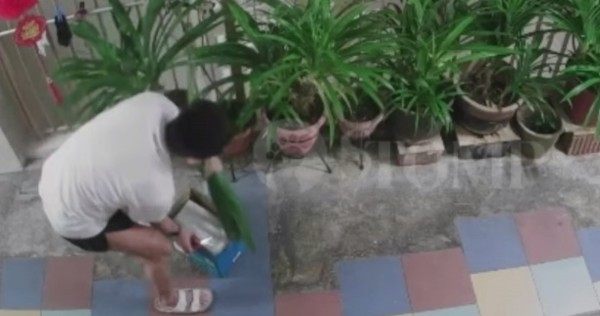
The police are looking into an incident where a man was caught on video cutting leaves from a potted pandan plant and walking away with them at Block 655B Jurong West Street 61 on May 17.
Stomp contributor Anonymous alerted Stomp to the incident and shared footage from his family’s CCTV camera that caught the man in the act.
“A few of our pandan leaves had previously been cut off and stolen so my family decided to install a CCTV camera in hopes of capturing the culprit,” he said.
“On May 17, our camera managed to record footage of a culprit in action.”
In the video, the man wearing a white T-shirt with the words “Above All” on it, black shorts and a pair of white sandals was seen approaching the plants in front of the Stomp contributor’s home with a box and a pair of scissors.
He then proceeds to cut some leaves from the pandan plant and walks away with them.
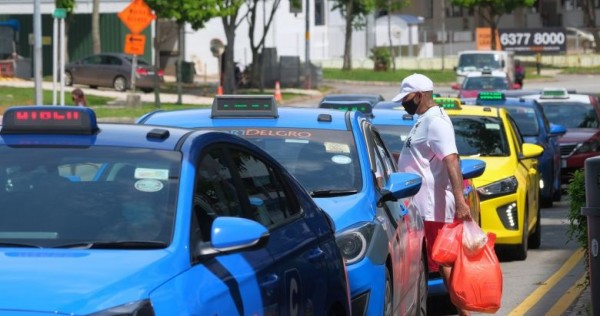
Taxi and private-hire car drivers can continue to deliver food and groceries till the end of September, said Transport Minister Khaw Boon Wan on Saturday (May 23).
This is because demand for home deliveries is expected to remain high even as circuit breaker measures are gradually eased from next month, he said.
Previously, drivers could only make deliveries till the end of June, under the temporary relaxation of point-to-point regulations announced by the Land Transport Authority (LTA) in March. The regulations place multiple restrictions on drivers using their vehicles to make deliveries.
Mr Khaw said in a Facebook post that during this period, there has been a rise in demand for food deliveries, groceries and parcels as Singaporeans stay home and shop online.
With continuing high demand for such services expected, LTA has extended the temporary liberalisation of regulations by another three months, he said.
“This means taxi and PHC drivers can continue to supplement their incomes, as well as meet the needs of merchants and residents. It is win-win all round,” he added.
When Nur Iviana Tham got married to Hazre Salim seven years ago, Ramadan and Hari Raya took on a different meaning for the pre-school teacher, who’s Chinese and converted to the Islamic faith before their wedding in 2013.
This year, however, the holy month presents a different experience yet again, but not just for Nur Iviana and her husband.
Thanks to the virus pandemic, it been quite a strange past month for Muslims in Singapore and beyond.
We’ve observed Ramadan quite differently this year with variations of lockdowns in place and enhanced safety measures.
The typical elements and customs of the holy month are either gone or diminished — no gatherings at mosques, no Iftar meals with friends and extended family members, and definitely no house visits while sheltering in place.
A group of youths were spotted gathering in an apartment after posting a video on Instagram Stories.
A Stomp contributor alerted Stomp to the series of videos that showed the youths hanging out and drinking.
There was also a snapshot of a bathtub full of Moët & Chandon champagne. PHOTO: StompThe last post included an “open invitation” for a secret “massive” party that will allegedly be held on Saturday (May 23).
According to the caption, the party will include DJs, catered food and drinks.
It also said attendees have a chance of winning a five-pack of RELX Pods which are used for e-cigarettes.
This is not the first time youths have been caught gathering during circuit breaker measures.
Stomp earlier reported on youths who posted an Instagram Story of themselves gathering at an HDB staircase while smoking and another group congregated in an apartment.
With the circuit breaker period coming to an end, more facilities and activities for seniors will resume on June 2 to cater to their psycho-social well-being, the Health Ministry said on Friday (May 22).
However, as seniors are especially vulnerable to the coronavirus, most precautionary measures affecting them will remain in the initial stage of Singapore’s reopening. For example, interest group activities and face-to-face visits in residential care homes will still be suspended.
“In Phase 1, with more activities and interactions, there will likely be a higher risk of community transmission. Therefore seniors should continue to stay at home as much as possible. We will continue with most circuit breaker measures for seniors in Phase 1 to ensure that they stay safe,” the Ministry of Health (MOH) said in a press release.
As the prolonged suspension of services may cause seniors with little or no social support to feel isolated, MOH said senior activity centres (SACs) and Community Resource, Engagement and Support Team (Crest) providers will gradually resume some activities, to address their psycho-social well-being.
Some of these ads lead to webpages masquerading as the CNA website and have links leading to online gambling sites.
The scam ads that appear on users’ Facebook news feeds would lead them to sites like these emulating the look and feel of a CNA news article, complete with an author’s byline and picture.
(Updated: )
Bookmark
SINGAPORE: Facebook has removed ads for webpages falsely masquerading as CNA news articles and taken down Facebook pages linked to these fake sites.
In response to CNA queries, a Facebook spokesperson said the social media platform has “taken action” against these ads and accounts in question. It has disabled ad accounts associated with these fake webpages, as well as unpublished Facebook pages pointing to them. However, it did not reveal how many ads or pages were removed or disabled.
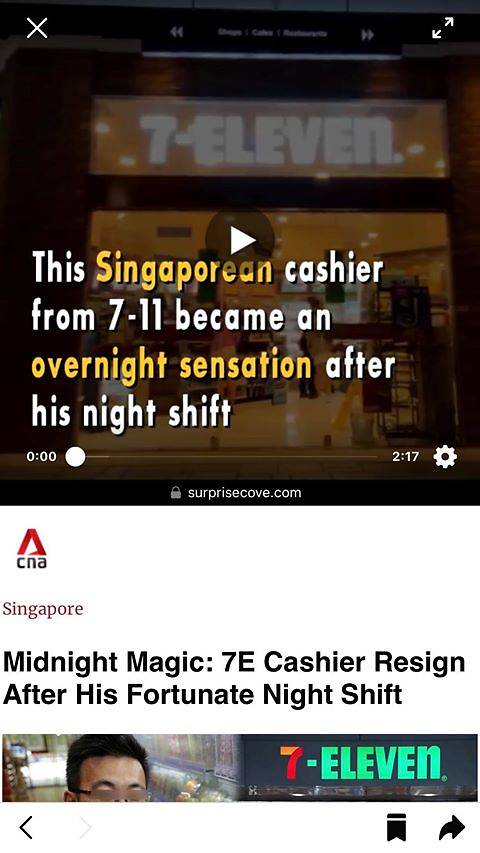
In recent weeks, several readers have notified CNA of Facebook ads that led to scam websites emulating the look of its news articles, including using its journalists’ bylines and photos. One reader said the ads were “shown multiple times via different accounts” on Facebook mobile, and they led to a fake news article headlined “Midnight Magic: 7E Cashier Resign After His Fortunate Night Shift”.
One of CNA’s readers said a scam ad led the person to this webpage, and the ad was reported to Facebook in early May.
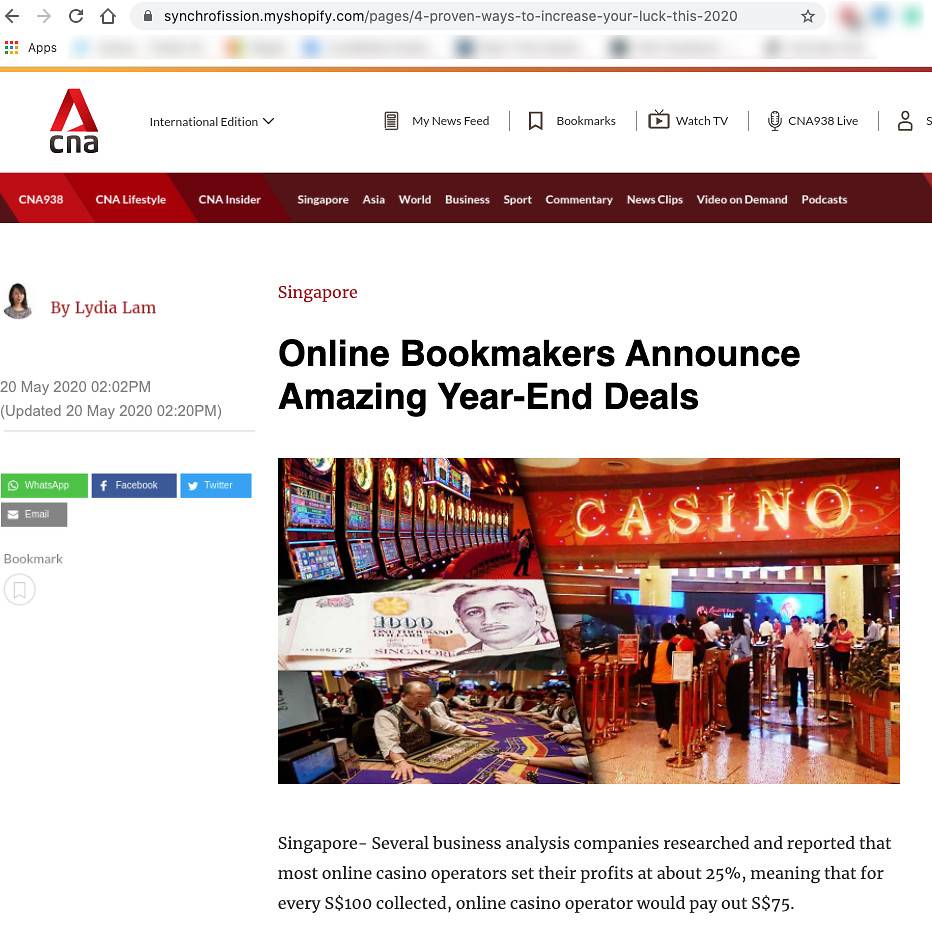
Another reported seeing a sponsored post for what seemed to be a news article by CNA with the headline “Online Bookmakers Announce Amazing Year-End Deals”.
CNA did not publish any of these articles.
“Our advertising policies prohibit advertisements that are misleading or false, and we have taken action against the ads and accounts in question,” the Facebook spokesperson said, adding that users should report such content immediately by tapping the three dots in the top right corner of the ads.
Some of the scam webpages were hosted on Shopify, a company which provides tools to build e-commerce websites. When contacted, a company spokesperson said that two sites flagged by CNA have been taken down. It did not respond to a query on whether there were similar sites impersonating CNA on its platform.
The spokesperson added that Shopify “constantly” monitors its platform and takes down sites that are suspicious in nature or breach its Acceptable Use policy.
“We deploy internal tools to monitor for fraudulent activity across the entire platform and we take action to investigate and close shops when necessary, as was the case with this matter,” the spokesperson said, adding more than 4,500 online stores were closed in March this year due to breaching of its Acceptable Use policy.
The following is a guide to identifying suspicious and possibly fraudulent sites which use doctored CNA articles:
The Facebook ads led CNA readers to websites like these.
Look at the URL on the top of the web page. The URL of a legitimate news article from CNA will start with channelnewsasia.com or cna.asia. In the example above, the URL starts with synchrofission.myshopify.com which is not linked to CNA.
Go to the CNA website at cna.asia or channelnewsasia.com and click on the search icon. If you are unable to find the article on our website, it was not published by CNA.
Click on the author’s name. On CNA’s webpage, doing so will lead you to the journalist’s profile and a list of stories published by the person. In this example, you will not be able to click out to a different webpage.
Click on the share icons. You should be able to share the CNA article via the icons indicating the various social media platforms such as WhatsApp, Facebook, Twitter and LinkedIn. Here, only WhatsApp, Facebook and Twitter are available. Another giveaway: The design of the share icons are from a template no longer used by CNA.
Check the embedded links. CNA usually includes Web links to other relevant stories it has published or to the authoritative source of the news. In this example, all the embedded URLs lead to https://facket-openting.com/click and, when clicked, redirects to the IBC9 online gambling site. Without clicking through, you can put your mouse cursor over the link to see where it will direct you to; if you are using a mobile device, you can do a long press on the highlighted text to surface the URL.
Compare the webpage to articles on CNA’s official site. CNA does not have a feature for Facebook users to leave comments at the end of the article. In the example above, the fake website includes Facebook user comments, and when you click on the user’s profile, it redirects to the IBC9 website.
SINGAPORE: One of the very specific feelings I miss about pre-COVID-19 life is the comforting chaos of having a drink in a bar.
On a regular day before circuit breaker measures kicked in, the gamut of hawker centres and restaurants sufficiently piqued my palette. But an outing to the bar holds a special place in my heart that goes beyond what you put in your mouth.
Those days of “let’s get drinks”, once a weekly ritual, now feel like the fleeting dream of a sweet confection.
Unfortunately, no one knows when we can “do drinks” again. Even though restrictions in Singapore will gradually begin to ease on Jun 2, social gatherings are still prohibited — at least until Phase 2 kicks in.
“LET’S GET DRINKS” IS DIFFERENT OVER ZOOM
Wanting this badly to wine and dine with my friends might seem inconsequential or churlish when you think about the massive upheaval COVID-19 has wrecked on F&B outlets.
Moreover, bars are potential hotbeds of transmission for the virus, as the cluster at Hero’s Bar at Circular Road reminds us.
While I’m not advocating for bars to resume business anytime soon, at least not without stringent safe distancing protocols, interestingly, even the biggest introverts I know yearn to dine out again.
Could this nostalgia for communal dining hold the key to saving our favourite places and revitalising the industry?
After all, whether you ordered food delivery from a five-star restaurant or your favourite hawker stall, the novelty of eating at home quickly fades.
Hero’s bar at 69 Circular Road Singapore. (Image: Google Maps)
Even a drinking session with a group of friends over Zoom doesn’t quite hit the spot, when people get cut off by several other voices chiming in at once and awkward pauses make such sessions exasperating.
I long for the day when I can finally raise my voice above the din in a noisy bar and have to lean closer into the other person just so they can hear what I’m saying.
I crave the day when I can see my friends again and we can spill secrets, nursing that one happy hour drink in the corner of a beat-up neighbourhood dive bar while listening to 80’s ballads blaring through cheap speakers.
I even miss the bits I hated about these evenings, like hailing a ride that costs as much as a drink at the end of the evening, wondering why I put my body and wallet through the wringer time and again.
But I know why. Whether my friends and I bought overpriced cocktails or substandard beers, slipped into speakeasies or splurged on fancy hotel bars, all those outings gave us the one thing our technology-driven, fast-paced lives and demanding jobs have eroded: Intimacy.
In that sense, the longing for a drink in a bar is less about the specific bar or drink, but about what these places represent: Small pockets of uninhibited, permissive camaraderie and that escape from life we badly need.
A REFLECTION OF WHAT WE TRULY MISS
“Bars are a kind of confessional place, oddly public and private at once,” reveals an essay in Good Beer Hunting, an American website dedicated to stories about beer culture.
Yet what is it about bars that cultivates the essence of human connection and drives this wish of mine for the F&B industry to return to life pre-circuit breaker?
(Photo: Adam Jaime/Unsplash)
For one, bars are governed by tacit rules, making it feel like you’ve entered another world. Everyone is somehow bound to each other, simply by craving a similar atmosphere for drinking.
It is odd that waiting for a friend alone in a bar after work doesn’t ignite self-consciousness, but provides that buzz of sweet anticipation. I often contemplate getting a pint before they arrive, using the opportunity to ask the bartender for their beer recommendations. These transactional half-friendships propped up by organic small talk give me a sense of belonging, even if it’s my first visit.
The relaxed ambience kills all your inhibitions and creates rare opportunities for conversations unlikely to happen in any other scenario.
You might, for instance, exchange a knowing glance with a stranger after witnessing someone’s drunken behaviour that made you chuckle at the same time, or dive into philosophical banter with a coworker while waiting for your drinks.
The right amount of alcohol helps people open up. I often find myself having gotten closer with acquaintances or casual friends at the end of the night.
Importantly, the confessional nature of a bar encourages little bursts of spontaneity that feel devoid in life under the circuit breaker, from throwing out a business idea with one friend to booking air tickets with another.
As uncertain as our future feels in a world of COVID-19, it’s the inevitability of everyday life that cuts deeper. There’s ironically nothing more brutally certain than already knowing the exact tedium of the following day.
WHAT GOOD IS NOSTALGIA?
The truth is many of our bars and restaurants are hanging by a thread. Today’s it’s Jekyll and Hyde closing shop. Who will be on tomorrow’s chopping board?
Mr Chua Ee Chien, the owner of Jekyll & Hyde, said he decided to close the bar after failed negotiations with his landlord and the uncertain economic conditions. (Photo: Rachel Phua).
Many F&B businesses might reach the end of the road if landlords refuse to relieve them of their rent during the circuit breaker, a CNA Lifestyle report reveals.
The report adds, “The diversity that makes our culinary scene so exciting relies heavily on imported produce, but with airlines grounding and supply chains affected by lockdowns across the world, food prices have gotten significantly higher and deliveries irregular.”
On top of exorbitant rent bleeding F&B outlets, these factors might be the final nail in the coffin, since “restaurants generally operate on two months of cash flow”. Even if they survive, it might take some of them “five to six years” to recover.
But what of the smaller bars? Will they still be left standing when rules finally allow them to open?
Will I still get to squeeze past tables of sweaty young adults on a Friday night just to get to my friend’s table at the corner of Stärker Signature in Holland Village?
Will I still get to drink one pint of draft beer at Bojangles Pub & Diner, while watching sports on their old TV and observing a group of polytechnic students learn how to play pool? Or will I need to buy more pints and several platters of oily finger food, in order to keep them afloat for a few more weeks?
Will I still fail to catch my friend, who owns The Tuckshop Assembly, as he busily attends to throngs of customers, who spill out from his cozy bar onto Guillemard Road on a crowded weekend night?
Will I still be able to sit in the dingy Countryside Café in Little India, sharing a bucket of ice cold beer with a friend, without worrying that the place might fold the next day?
(Photo: Unsplash)
I don’t have the answers — and I might not have them even if my favourite bars are there to reopen for business in the months ahead. Many will not be.
We’re barely out of the COVID-19 woods, so our struggling F&B industry will be part of the new normal for some time. Our sheer nostalgia for the good old days will have to take a backseat to rules, caution and common sense when the time comes in resuming social gatherings.
There are many things I don’t miss about going to bars pre-circuit breaker: The overpriced mediocre food, the buyer’s remorse after splurging on a trendy cocktail, the long queue for the single toilet when people are getting ready to head home.
But like everyone who took for granted the simple joy of having a drink in a bar, I will miss the sum of it.
SINGAPORE: Eight years ago when Subramaniam Pugalandi arrived in Singapore to help build homes, he could not have predicted that he’d be staying in a Housing Board flat as part of his recovery from the virus causing a global pandemic.
For the past week, he has been housed in a vacant one-room flat in Bedok, having recovered from COVID-19. He’s ecstatic, after fearing at one point whether “my life would continue”.
But he still hankers to get back to his dormitory. “The (flat’s) facilities are better than the dormitory, but no freedom here. It seems like zoo life because I cannot go outside for walking or jogging.
“If I am in the dorm, I can do what I like” while taking mandated precautions, said the 35-year-old safety supervisor from India, who last saw his dormitory mates in early April.
Pugal first gained the sympathy of CNA Insider’s viewers when he spoke emotionally of his fears of watching roommates fall ill “one by one”. Then he, too, caught the coronavirus.
He further captured hearts by letting viewers into his life in isolation first in the hospital ward, and then in the Singapore Expo community care facility.
WATCH: Part 1: Inside Singapore’s foreign worker dormitories during COVID-19 (7:18)
Now, Pugal can only hope that the Bedok flat is the final leg in his lengthy COVID-19 journey.
On Apr 2, he was moved from his original residence at S11 Dormitory @ Punggol to an isolation area in Tuas for quarantine, where he developed symptoms of the virus.
After testing positive at the National Centre for Infectious Diseases (NCID) on Apr 13, he was shifted to the Singapore Expo two days later. On Apr 30, he moved to Guillemard Camp, where he stayed till May 11.
A map of Pugal’s COVID-19 journey from one end of Singapore to another. (Map: Jonathan Yeo)
Even though Pugal wasn’t explicitly informed of his test results, “when we were transferred to the HDB flat, we were told that anybody discharged (from the camp) was negative. No problem, the body everything okay.
“So, everybody happy,” he recounted to CNA Insider. “My wife (is) also very happy,”
WATCH: Part 2: When a migrant worker gets COVID-19 in Singapore (4:00)
For now, he’s sharing the flat with another Indian resident from S11 Dormitory. Every day, Pugal logs his temperature twice on the Building and Construction Authority website. His daily breakfast, lunch and dinner meals are delivered by “the security guys”.
He can’t leave his floor, so his only pockets of freedom involve roaming the corridor for fresh air and exercise. That is, when he’s not practising yoga, which he only just picked up.
He sorely looks forward to getting a haircut at the barber’s once he can leave – and he doesn’t know when that will be – but even more, he misses his “freedom place” and his friends back at S11 Dormitory “so much”.
“I miss a lot of things. I go there, I can play games. I can do whatever things, no problem. Here, I don’t know the road outside. How do I go out?”
Pugal today, in need of a haircut.
MONOTONOUS DAYS ON A CRUISE SHIP
Quarantined aboard a cruise ship, 29-year-old Tanjir Rahman’s future seems murky too, after a multi-stop journey of recovery from COVID-19.
On Apr 14, the Bangladeshi resident of S11 Dormitory took a swab test, then waited for his results at Cherryloft Resorts. Three days later, his test came back positive, so he was hospitalised.
He was transferred to the Singapore Expo on Apr 25, then to the Lim Chu Kang army camp on May 2. Finally, on May 12, he was moved to the SuperStar Gemini docked at the Marina Bay Cruise Centre.
Superstar Gemini berthed at Marina Bay Cruise Centre on April 17. (REUTERS/Edgar Su)
Tanjir is presumably negative for COVID-19, since the cruise ships are used for recovered migrant workers, according to the Singapore Tourism Board. “I don’t know (if) I am okay or not, because no swab test (since Apr 14),” he told CNA Insider on May 19.
Tanjir admits he was scared, after knowing that many people in other pandemic-ravaged countries had “suddenly died”. He had been ready for “big problems” to come after four to five days of being in quarantine.
But it has been a month now, so his worries have abated – though not entirely.
He’s frustrated over being in limbo, and not being able to put his mind 100-per-cent at rest with test results. “We’re agitated. If we were told a date to do our next swab test, or how long more we’ll be here, we’d probably feel better and more hopeful,” he said.
For Tanjir, cabin fever is setting, in his shared room.
While waiting, Tanjir shares his cabin with another Bangladeshi. On a typical day, he exercises, sleeps, does his prayers, talks to his new friend, and gets his temperature taken thrice a day. Meals, collected from the restaurant, can only be eaten in the room.
The most thrilling part of his otherwise monotonous days involves getting sunlight and fresh air on the deck for around 40 minutes once every three to four days, around 10am or 7pm.
He misses his close friend back at his dorm. “He sometimes calls to ask what’s happening, is my body okay or not. Much, much miss him,” said Tanjir. The first thing he will do once he leaves the cruise ship is to “enjoy the many, many places” with his brothers.
Getting some sunlight on deck makes Tanjir feel better.
EMPLOYER SEEKING UPDATES TOO
Pugal and Tanjir aren’t the only ones in limbo.
Besides the occasional Ministry of Manpower email detailing the workers being transferred to certain government facilities, Pugal and Tanjir’s employer, Jerevin Industrial, seems to be grappling with uncertainty too.
“Sometimes (my workers) can be transferred twice in two or three days, so I don’t know what’s the meaning of the transfers,” said its human resource manager, Tabitha Lim.
“Even with workers who have tested positive, we don’t have any updates.” She doesn’t know for sure if they’ve been deemed to have recovered. “The updates usually just come from the workers or the dormitories. So we don’t have any clear instructions.”
A map showing the various places where Tanjir was transferred after he fell ill. (Map: Jonathan Yeo)
What has been said is that some recovered workers will be returned to their dormitories and housed in designated blocks; while workers who are well and in essential services will be housed in temporary facilities such as former schools, military camps and vacant HDB blocks.
As for Jerevin Industrial’s workers who have recovered, the company has been encouraged to loan them to other companies providing essential services, as these firms are short on workers.
Tabitha and company managing director Jeremiah Tan are agreeable so long as the other company “returns (the workers) when the circuit breaker is over”. Indeed, construction projects will soon be allowed to gradually resume.
Said Tabitha: “My first worker who was tested positive was Pugal’s roommate. He told me that he only wished to come back and work for us at our site. I told him not to worry, we’d definitely take him back.
“We are still paying our workers as per normal, so it’s not much difference to the workers themselves.”
Subramaniam Pugalandi with his wife and son. (Photo: Subramaniam Pugalandi)
KEEPING SPIRITS UP
In these trying times, Tabitha chooses to see the upside: Technology.
“If it were the olden days, I think the workers would just be looking at the walls and ceilings now. Jeremiah has also encouraged them to attend free online courses,” she said.
They also send their workers care packages comprising snacks, drinks, soap, a toothbrush and toothpaste to help them stay positive.
“Their snacks can be a little bit difficult to find. The Bangladeshi ones are some kind of Mumbai mixed tidbit,” she explained. “But I managed to find the Indian snacks because there’s a minimart near my place. Some of them also asked for Coca-Cola.”
Sustenance aside, almost all their workers asked for a kettle – the hot water dispenser in the Expo is unable to cater to everyone’s needs. But the request had to be denied for good reason.
“Pugal was one of the understanding ones,” she said. “He told me, ‘Ma’am, this place is so small. If everybody brings a kettle, the whole place is going to black out.’”
Read the first two parts of the migrant worker journey during COVID-19:
_0.jpg "4.-PHOTO-The-Straits-Times-1_0.jpg")

.jpg "party-1.jpg")