Home Blog Page 309

Now conscious in ICU, dad of 7 with COVID-19 reunites with family over video call in time for Hari Raya

SINGAPORE: The eve of Hari Raya Puasa is a day usually spent with family, breaking fast for the final time at the end of Ramadan, and preparing for a day filled with festive cheer.

On Saturday afternoon (May 23) in Ng Teng Fong General Hospital’s intensive care unit (ICU), Mr Efendi Abdul Rahman, 43, had something to cheer about too.

Sixteen days ago, he was wheeled into the ICU with a breathing tube inserted into his mouth. COVID-19 had ravaged his lungs so much that he was barely getting any oxygen. He was eventually put into an induced coma and on a ventilator.

Now, Mr Efendi’s condition had drastically improved. He still had a tube in him, this time through his neck, so he couldn’t talk. But he was conscious and communicating, by using a black marker on a little whiteboard.

It was a high point in a battle that has taken Mr Efendi to the edge of death and back, and his wife and seven children through sadness, anxiety, relief and happiness.

Last week, CNA reported how his wife Mrs Sharifah Radiah Ameer, 42, and the children were coping with the ordeal while being quarantined at home. With her permission, CNA spoke to Mr Efendi’s doctors on Saturday regarding his condition.

READ: For mum of 7 with husband fighting COVID-19 in ICU, home quarantine is an anxious but tight-knit affair

That day, the hospital team thought Mr Efendi had some cause for celebration, especially with Hari Raya just around the corner.

So the evening before, Dr Shanaz Matthew Sajeed, the intensive care medicine consultant who was on the night shift at the ICU, dropped by Mr Efendi’s home on the way to work. It was a five-minute drive from the hospital anyway.

The doctor picked up two pieces of clothing: A batik shirt he often wore, and a blue baju kurung made of cotton. Mr Efendi would put the batik shirt on during a video call with the family the next day.

“It was my head of department who mooted this idea to consider getting some kind of clothing for him for his Hari Raya celebration,” said Dr Shanaz, who did not enter the home, wore a mask and kept a safe distance when he picked up the items.

During the WhatsApp video call the next day, Mrs Sharifah said her husband was in “better spirits”.

They talked about celebrating Hari Raya, and he wrote that he would very much like to be back with them. He did a little jig with hands that his son loved to see him do. He curled his fingers into the shape of a heart for his children.

“He was smiling today, and while communicating to his family we could see there were a lot of emotional moments,” said intensive care medicine consultant Dr Monika Gulati, who is also on Mr Efendi’s ICU team.

“His family was obviously very happy to see him alert and awake, and he’s looking quite motivated. So we all hope Efendi continues on the path of recovery.”

ON THE EDGE

But as with many critical medical conditions, things hadn’t always run smoothly.

Just a few days back on Wednesday, Mr Efendi’s heart had simply stopped beating. As the virus attacked his lungs, air built up around them and pushed against them, so doctors needed to put a drain in to relieve the pressure and let them expand.

“His lungs are infected with the virus,” Dr Monika said. “This complication which happened in this state of fragility probably tipped him over.”

READ: ‘We didn’t know there was a virus inside of us’: A young couple’s fight against COVID-19

Like clockwork, the team did cardiopulmonary resuscitation and pumped in the necessary drugs, getting a heartbeat back within minutes.

“This is something that we are trained for, it didn’t catch us by surprise,” said Dr Shanaz, who had put the drain in.

“We were very well-prepared for it, and because of the quick thinking of all the members of the team in the room and outside of the room, we managed to secure his airway and bring back his circulation within minutes, with no damage whatsoever to his brain that we could observe.”

Efendi Abdul Rahman COVID-19 video call ICU

Mr Efendi’s wife and seven children were present for the call. (Photo: Ng Teng Fong General Hospital)

While emotions were ice-cool in the ICU, Mrs Sharifah reacted differently after getting a call from the team that morning.

“I had a late night, so I was drowsy,” she said. “And when they said that, my heart stopped. I just went numb. He may have died, and I wondered if I had been too happy the day before.”

Mrs Sharifah had video called her husband the day before. It was the first time she had seen him conscious since he was admitted.

“He was very drowsy, but still he managed to ask for the sixth one, my eight-year-old,” she said of that call. “I cried tears of joy.”

So it was tough on Mrs Sharifah that her world came crashing down again the next day, as she recalled feeling “empty”.

“I was moody; I forced myself into conversations,” she said. “My kids hid their feelings well, but I knew it affected them too. It was more helpless as we were still in quarantine.”

Still, Mrs Sharifah was relieved that her husband survived the incident: “I felt that God had answered my prayers.”

ROAD TO RECOVERY

Dr Shanaz believes this episode occurred as Mr Efendi’s condition had been improving since his early days in the ICU, when he arrived “critically ill”.

The first five to seven days were “quite an intense period” where his life was in danger, Dr Shanaz said, noting that he also needed dialysis for his kidneys and support for his blood pressure.
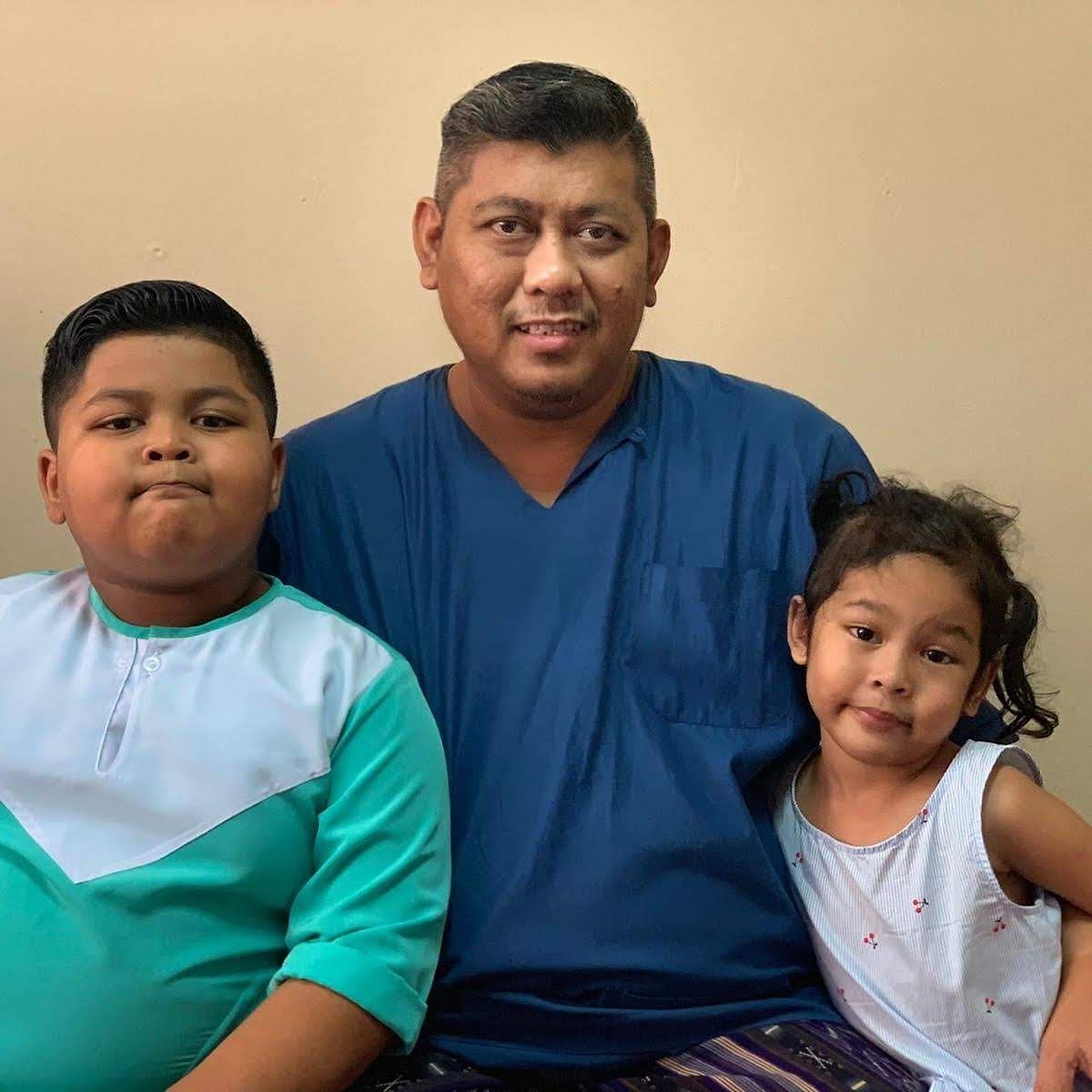
Efendi Abdul Rahman COVID-19 husband ICU quarantine

Mr Efendi Abdul Rahman with the youngest two of his children. (Photo: Sharifah Radiah Ameer)

“The moment that patient is on a ventilator and requiring support for his organs and blood pressure, we are concerned for the patient’s life,” he added.

Roughly a week into his stay in the hospital, Mr Efendi’s oxygen levels remained critically low, as doctors considered using an urgent but riskier form of ventilation known as extracorporeal membrane oxygenation (ECMO).

This involves pushing a patient’s blood through a machine that adds oxygen and removes carbon dioxide before pumping it back into the body. But because this procedure requires blood thinning, it carries a significant risk of bleeding.

“The fact that he was considered for ECMO itself, marks him as a patient who would be considered at very high risk,” Dr Monika said.

READ: ‘The hardest thing I’ve been through’: Hallucinations, fever, pneumonia – but finally victory for this COVID-19 patient

However, Dr Shanaz said the team eventually decided on a “more unconventional ventilation strategy” for Mr Efendi that led to significant improvements.

“At that point, we were sort of cautiously optimistic,” he added. “He was improving and he got to a point where his oxygen requirements had dropped significantly, they were much lower than what he initially started off with.”

Mrs Sharifah shares this cautious optimism, saying there’s no rush and that she just wants to see him get better. 

“We’re all doing okay,” she said. “There is enough to keep us going for now. When he gets better and decides to retire or whatever, he has our support. Things will never be the same, but it’s a fresh start. That’s good enough for me.”

She said the kids are happier too. “Maybe when he was in a coma, they were thinking about a bleak future,” she added. 

“Seeing their father now that way, they seem to have their own perseverance to want to succeed and help him.”

“IT VALIDATES WHAT WE DO”

While Mr Efendi is now on the slow road to recovery, Dr Shanaz stressed he isn’t completely out of the woods.

“For the next stage of recovery, we want to see that he has good physiotherapy, we want to get him strong again,” he said.

“We want to make sure that he is able to take good breaths, is able to cough well, regain his strength and then take it from there.”

READ: Inside Singapore’s COVID-19 screening centre, on the front line against the disease

To leave the ICU, Dr Monika said Mr Efendi must first be taken off breathing support. Still, he has been getting back some strength, enough to write, and is “heading in the right direction”.

It is a huge change in fortunes considering both doctors agreed Mr Efendi was one of the most severe cases of COVID-19 they had attended to.

“Both of us would say that it’s hugely satisfactory to see a patient, that is on the verge of dying, being brought back to life and then recovering and then eventually thriving,” Dr Monika said.

“He hasn’t got to the thriving stage yet, but that’s what we hope to see for him, and that is of course, hugely satisfying. It validates what we do on a day-to-day basis. It makes the long nights and the long hours worthwhile.”

Mrs Sharifah said the team at the hospital has been “amazing and I am forever grateful for their efforts”.

“They did a great job,” she added. “I mean, it’s not easy to meet people’s expectations, to keep him alive and not disappoint his family.”

On Saturday, Mr Efendi scribbled a message on the whiteboard for the team that has been caring for him. “Thank you all,” it said.

STAYING STRONG

For Mrs Sharifah, it was a different experience seeing her husband in traditional Malay garb lying in a hospital bed surrounded by tubes and wires.

“He looked different in every way, his face and eyes,” she said. “Maybe it was an effect from the meds. I’m sure once everything is sorted out he will be okay.”

Sharifah Radiah Ameer COVID-19 husband ICU quarantine

Mrs Sharifah Radiah Ameer (in purple) with her dad, husband and children during Hari Raya in 2019. (Photo: Sharifah Radiah Ameer)

Ms Ong Mei Yan, a medical social worker at the hospital who has constantly been in touch with Mrs Sharifah, said the family has supported each other well.

“Being stressed and having anxiety is actually very normal during a crisis situation, especially in such a difficult time,” she said. “But she has personally displayed resiliency, as well as optimism with Mr Efendi’s situation.”

Ms Ong said the pandemic has forced hospital staff to find creative ways to connect patients with their loved ones, including setting up video calls and this mini Hari Raya celebration.

For obvious reasons, Mrs Sharifah said Hari Raya for her this year won’t be especially festive, although she acknowledged that life has to go on.

Mr Efendi is certainly looking forward to resuming life with his family. “I want to go home tomorrow,” he wrote on the whiteboard.

BOOKMARK THIS: Our comprehensive coverage of the coronavirus outbreak and its developments

Download our app or subscribe to our Telegram channel for the latest updates on the coronavirus outbreak: https://cna.asia/telegram
Source link

9 in 10 here want to continue working from home: Survey

[ad_1]

University administrator Suzanne Lim has been starting her mornings with an hour-long fitness routine which includes a run and some static exercises, before settling into working from home.

Before Singapore entered its circuit breaker mode, the 46-year-old had to spend the same amount of time getting ready for work before making her way to the office by 8.30am.

She is among the nine in 10 employees in Singapore who want to continue working from home in some capacity, according to a survey of 9,000 respondents from almost 90 companies.

Of these, only 15 per cent said they wanted to continue working from home all the time, while the rest preferred varying amounts of time working from home.

[ad_2]

Source link

Commentary: COVID-19 is the perfect time to play video games

SINGAPORE: Two conversations stood out for us this week, now seven weeks into the circuit breaker period.

The first was when Andrew’s 4-year-old son, Noah, told his cousin – a 9-year-old boy he has not seen in person for more than a month – to “meet him at the playground”.

The second was when Noah took the other one of us, Jeremy, on a “tour” of his family’s Island, asking if we would like to head to the local museum to check out a new species of beetle recently added to the collection.

These are some ways those playing the Nintendo Switch game, Animal Crossing: New Horizons, hang out.

READ: Commentary: Worried your child might be addicted to video games? What the warning signs are

RISING POPULARITY OF VIDEO GAMES THIS CORONAVIRUS OUTBREAK

Animal Crossing:  New Horizons was launched on Mar 20 amid the COVID-19 pandemic and became one of the top-selling video games in the Nintendo Switch library.

The premise of the game is simple, and anyone can play: You move to a deserted island after purchasing a holiday package from a Japanese raccoon dog.

On this island, you can purchase, renovate, and upgrade your home, fish, catch bugs, contribute to an art and natural history museum, shop, and customise your island in any way imaginable.

A photo taken in-game between a family member and her friend playing Animal Crossing.

A photo taken in-game between a family member and her friend while they were playing Animal Crossing with each other. (Photo: Andrew Yee)

You can also invite friends to your island to hang out or visit their islands by booking a flight out of yours.

Video games like Animal Crossing have become incredibly popular during the pandemic. In Singapore, Carousell and Lazada have reported a surge in searches or transactions involving consoles and other gaming products.

PC game platform Steam, video streaming services used by gamers Twitch and more have seen record-breaking numbers in players and usage around the world.

Even the World Health Organisation, which warned of the risks of too much gaming just last May, has thrown its weight behind video games. Director-General Tedros Adhanom Ghebreyesu lauded the organisation’s partnership with gaming sites and launch of the #PlayApartTogether campaign to encourage people to stay home.

READ: Commentary: Pokemon Go is still alive and changing lives

BEING SOCIAL IN THE TIME OF COVID-19

Research shows video games offer a way for people to fulfill psychological needs without venturing out of the home.

While television has been a passive form of solo entertainment, multiplayer video games in particular allow people to cope with isolation and connect amid mandatory safe distancing.

In one Animal Crossing session between Noah and his cousin, they sat outside his virtual home doing silly emotes with their avatars and laughing hysterically, similar to how they would have acted if they were physically present in the same room.

Researchers have labeled this social presence: The feeling of being there in the game with someone else. Experiencing the presence of loved ones can offer reassurance and comfort when feelings of loneliness set in, facilitated by shared experiences and common activities in video games.

Video games can also expand one’s social network among like-minded individuals and establish deep friendships.

The game currently lasts only around 10 minutes, and has been offered to Itch where it will be

A person plays game at home. (File photo: AFP/Anthony WALLACE)

Many online Animal Crossing-related interest groups are buzzing with activity. Players have connected on platforms such as Discord (a chat application used by many gamers), Reddit, and Facebook to talk about visiting new islands and trade customisation tips.

REGAINING CONTROL

Besides fostering social interaction, video games also offer a sense of control and competency, critical when COVID-19 has perpetuated a loss of autonomy en masse, with stringent regulations imposed on once taken-for-granted activities such as visiting the supermarket or exercising at the park.

With daily routines disrupted, people may feel helpless and defenseless against a virus we know little about. Yet life simulation games like Animal Crossing can ease your stress, provide feelings of autonomy and reinstate a sense of normalcy.

READ: Commentary: Hong Kong will keep its chin up this COVID-19 outbreak and enjoy the small things

READ: Commentary: Airlines have it bad with COVID-19 but airports have it worse

In Animal Crossing, we are free to make our own decisions: Dress ourselves as we wish, decorate our homes as we want, and explore any lands we like. The array of customisation choices available allows players to truly make the islands their own.

Players have designed their islands in a wide range of different ways, from luxurious beach and mountain escapades to complete replicas of fantasy worlds.

They also complete quests, with achievements in-game giving them a sense of accomplishment and competency, providing welcome relief from the uncertainty plaguing the world.

NO MORE THIRD PLACES

In the social sciences, the “third place” refers to a social space that is neither home (first place) nor workplace (second place).

lau pa sat during singapore's circuit breaker period (1)

Lau Pa Sat hawker stall operators waiting for customers. (Photo: Jeremy Long)

People can relax, interact with friends, and make new acquaintances in these third places – which include hawker centres, cafes, pubs and parks.

Some researchers have argued third places are crucial to the health of individuals within a community, in which frequent participation can contribute to stronger connections, a sense of togetherness and overall, better mental well-being.

READ: Commentary: COVID-19 reveals how low-tech Japan actually is – and has chosen to be

READ: Commentary: Putting in 50 hours while WFH, it’s a struggle to draw the line between work and home

Yet one of the aims of the circuit breaker measures is precisely to prevent this sort of congregation and dissuade people altogether from heading to many third places.

So it’s no surprise some are coping by turning to virtual spaces – like Animal Crossing – for comfort and connection.

PLAYING SAFELY

While the proportion of players diagnosed with clinical addiction to video games is very low, it can be easy to get swept up and become over-dependent on video games.

Such over-dependence, or problematic video game-use, can manifest for instance, when players start to spend excessive amounts of money for in-game purchases and other add-ons, or if they replace other important life activities with gaming.

Adults should be cognisant of when we might be giving up other important activities like work for gaming.

Parents should pay attention to their children and be willing to negotiate and set rules together about video game use. Restrictions on video gaming during bedtime and when schoolwork is due can help.

READ: Commentary: Limits on video gaming the heart of a growing controversy in Japan

READ: Commentary: Why excessive gaming is a mental health condition

They should also guide their kids and watch their use of online communication platforms used by gamers, which can be exploited for grooming.

Frequent and open discussions between parents and children about their online activities will help, but more important is an open line of communication.

BOOSTING WELL-BEING IN THE TIME OF COVID-19

While games like Animal Crossing provide a convenient form of escape, more importantly, they can be critical platforms keeping us sane and allowing us to connect in new ways where safe distancing and circuit breakers may be the norm for a while.

Even after COVID-19, there are and will be individuals who, at certain points in their lives, feel a loss of autonomy, competence, and relatedness due to a variety of reasons.

People wearing protective masks

People seen wearing masks at Chinatown, Singapore on Mar 11, 2020. (Photo: Gaya Chandramohan)

For these people and those who are unable to venture to physical hangouts, video games like Animal Crossing can offer solace and a virtual third place to meet old friends and make new ones.

So if you do find yourself playing more video games like Animal Crossing during this coronavirus outbreak, enjoy the experience!

LISTEN: Why lifting lockdowns and easing restrictions may be the biggest COVID-19 test facing countries

BOOKMARK THIS: Our comprehensive coverage of the coronavirus outbreak and its developments

Download our app or subscribe to our Telegram channel for the latest updates on the coronavirus outbreak: https://cna.asia/telegram
Dr Andrew Yee is Faculty Early Career Award Fellow at the Singapore University of Technology and Design. His research aims to understand how different strains of media use affect children and young people’s learning, well-being, and health.

Jeremy Sng is a PhD candidate at the Wee Kim Wee School of Communication and Information. His research examines how digital media such as video games influence our perceptions and behaviors.

Source link

More time with the fish: Behind the scenes at the SEA Aquarium during the circuit breaker

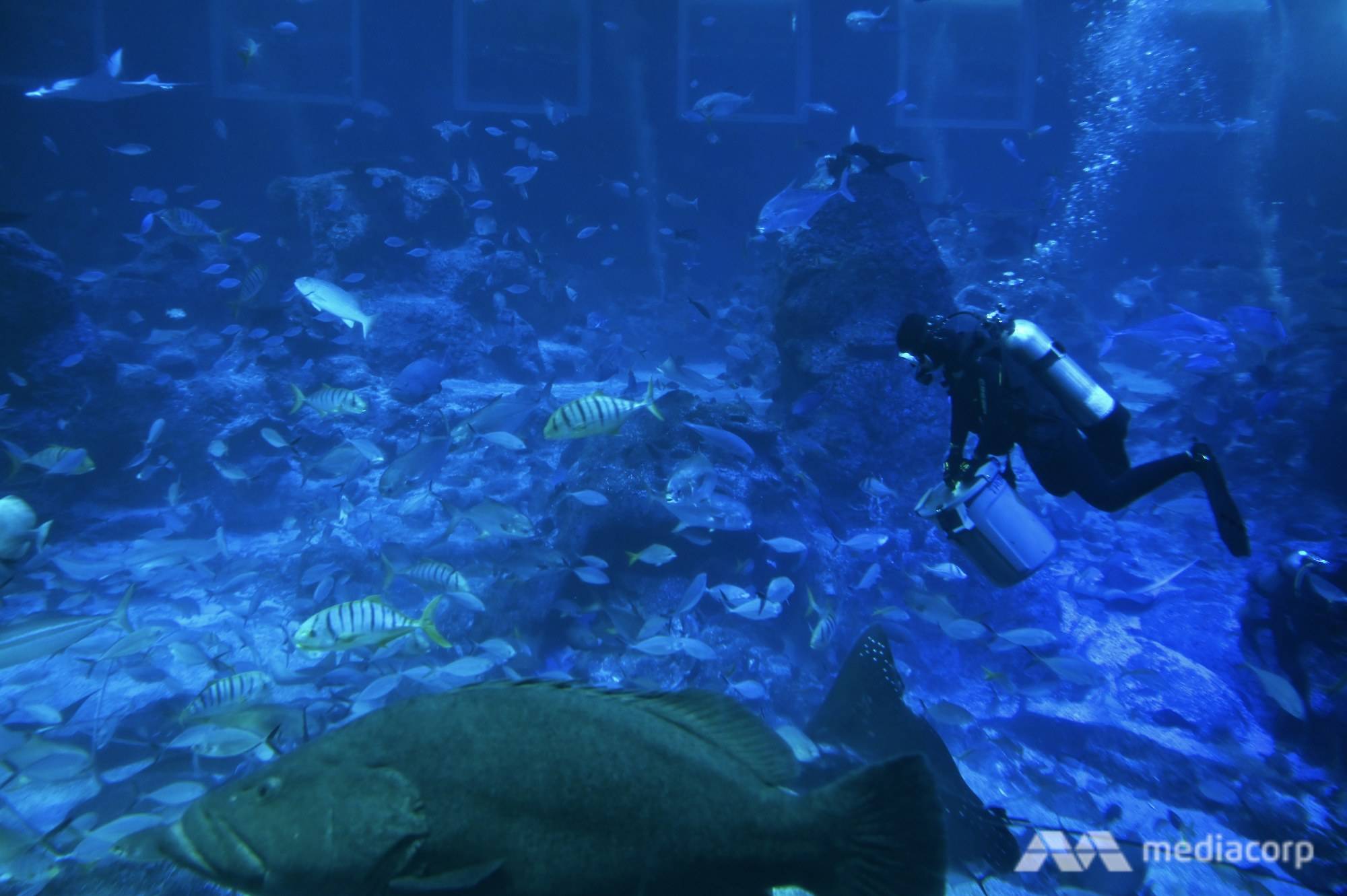
SINGAPORE: The halls are dark and the viewing gallery silent, but in the blue of the Open Ocean Habitat, the rays are in a fever, unconcerned that the crowds and flashing cameras are currently not part of their daily routine.

Stingrays the size of dinner tables crowd around aquarist Wendy Yam. Smaller cownose rays nuzzle her hopefully as she hand-feeds them fish and squid from a tub full of sashimi-grade seafood.

On a normal day, the smushed faces of children and a thicket of selfie sticks would line the tank’s glass panel, but today, one camera – a video journalist’s – captures the feeding frenzy. 

In the midst of Singapore’s “circuit breaker”, the SEA Aquarium at Resorts World Sentosa has been closed to the public since Apr 7, but aquarists such as Wendy are still working and diving. They’re not your typical essential worker, but to the marine creatures, they’re indispensable.

Wendy target feeding

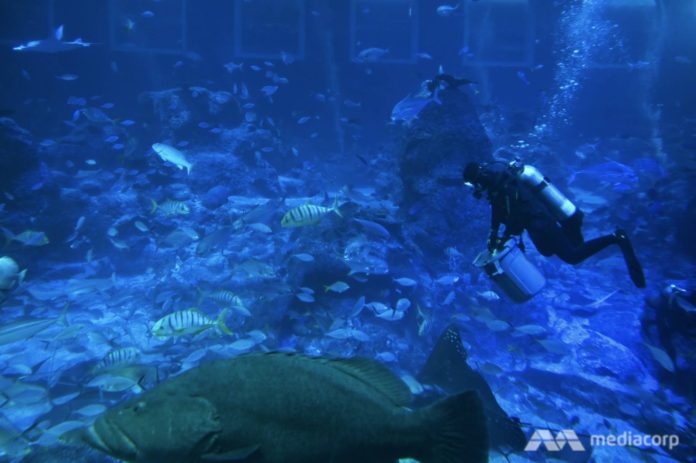
Aquarist Wendy Yam during a dive feed in the Open Ocean Habitat at the SEA Aquarium on May 20, 2020. (Photo: Marcus Ramos)

“Sometimes when we dive in the exhibits and you look through the acrylic panels it looks quite sad and it’s very quiet (as) you don’t have guests waving at you or asking you to take pictures,” Wendy mused.

“One thing that I miss are the kids … they get very fascinated when they see the animals. When they see the divers they get even more excited.”

But with no guest engagements, the aquarists are spending more time and energy on the marine animals.

“We get to spend more time with the animals, get a little more personal with them,” Wendy said, who reeled off anecdotes about the animals and shared their quirks in spontaneous bursts throughout the day that CNA spent with her.

Wendy feeding fish

Aquarist Wendy Yam feeding porcupine fish at one of the exhibits in the SEA Aquarium. (Photo: Marcus Ramos)

The tasselled wobbegong shark pups wag their tails whenever they see food coming their way. The divers all need to wear hoods because the curious bowmouth guitar shark might, when the mood strikes, nibble at their heads. The bonnethead sharks – which look like miniature hammerheads – are smaller and are target-fed using a stick to make sure they get their share.

“During our dive feeds, because it is no longer a show feeding, we can target some of the smaller rays that are at the bottom of the exhibit,” she said. “Maybe they get so-called bullied by some of the larger rays, so we spend more time feeding them to ensure that all of them get food.”

FISH ARE FRIENDS, AND FOOD

Wendy portrait

Aquarist Wendy Yam (right-most) preparing food for the marine animals on May 20, 2020. (Photo: Marcus Ramos)

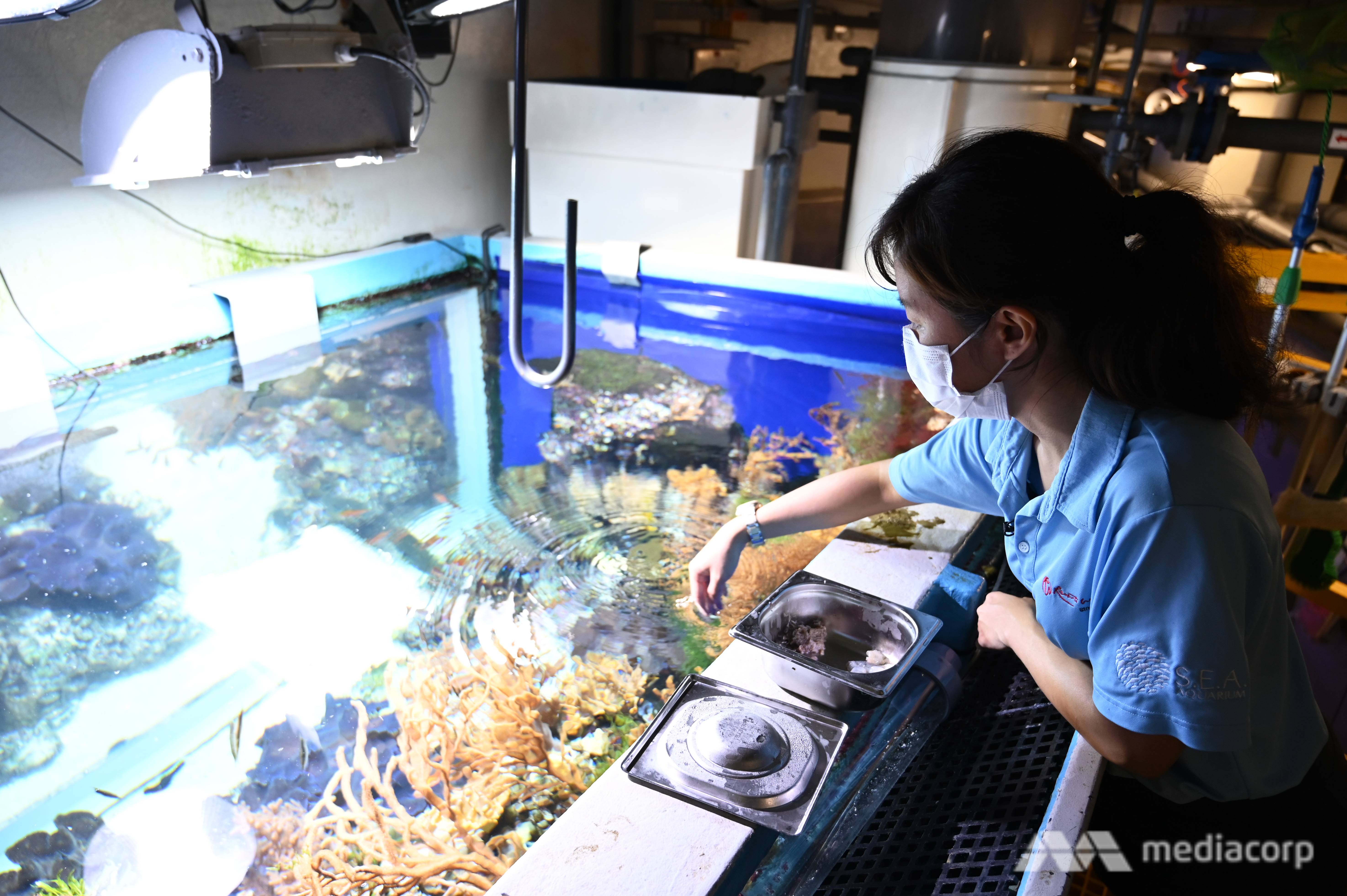
The evening feed comes near the end of a full day that started at 8am when Wendy and her team diced and minced seafood in the kitchen for the over 100,000 creatures in the aquarium.

They sneak in some goodies as well – vitamin powder and garlic – which help boost their immunity. 

“It makes our fish stronger,” the 26-year-old yelled over the steady drumbeat of chopping cleavers and slippery slop of fish bits being portioned out for the different species.

Fish feed

400kg of seafood is prepared each day to be fed to the more than 100,000 marine creatures at SEA Aquarium. (Photo: Marcus Ramos)

In an hour or so, trundling carts carrying about 400kg of feed are pushed out – yes, that’s just for one day. Then it’s off the feed the fish. 

Some of the food is scattered from the surface, and some is used for the dive feeds, but the three reef manta rays in the Open Ocean Habitat get a special meal in the morning.

When Mako, Mika and Manja hear the sharp pop of the feeding scoop hit the water surface, they know it’s time for breakfast krill. 

Manta rays scoop feeding

Reef manta rays at the SEA Aquarium are fed krill every morning. (Photo: Marcus Ramos)

Circling the tank, they swooped in with their maws wide open and scooped up the tiny, pink shrimp – fortified with vitamins and minerals.

Post-feed, Mika spread her wings, slapping the water playfully in a little dance in front of the aquarists. 

“IT’S LIKE VACUUMING YOUR HOUSE”

Cleaning the largest tank in the aquarium – which holds more than 42 million litres of water (equivalent to 17 Olympic sized swimming pools) – is like vacuuming your house, Wendy says.

I couldn’t just take her word for it, so this journalist, who shadowed her for most of the day (at a safe distance, of course), gave vacuuming a giant fish tank a go.

Wendy vacuuming tank

Aquarist Wendy Yam uses a siphoning bell to vacuum the Open Ocean Habitat at the SEA Aquarium. (Photo: Chew Hui Min)

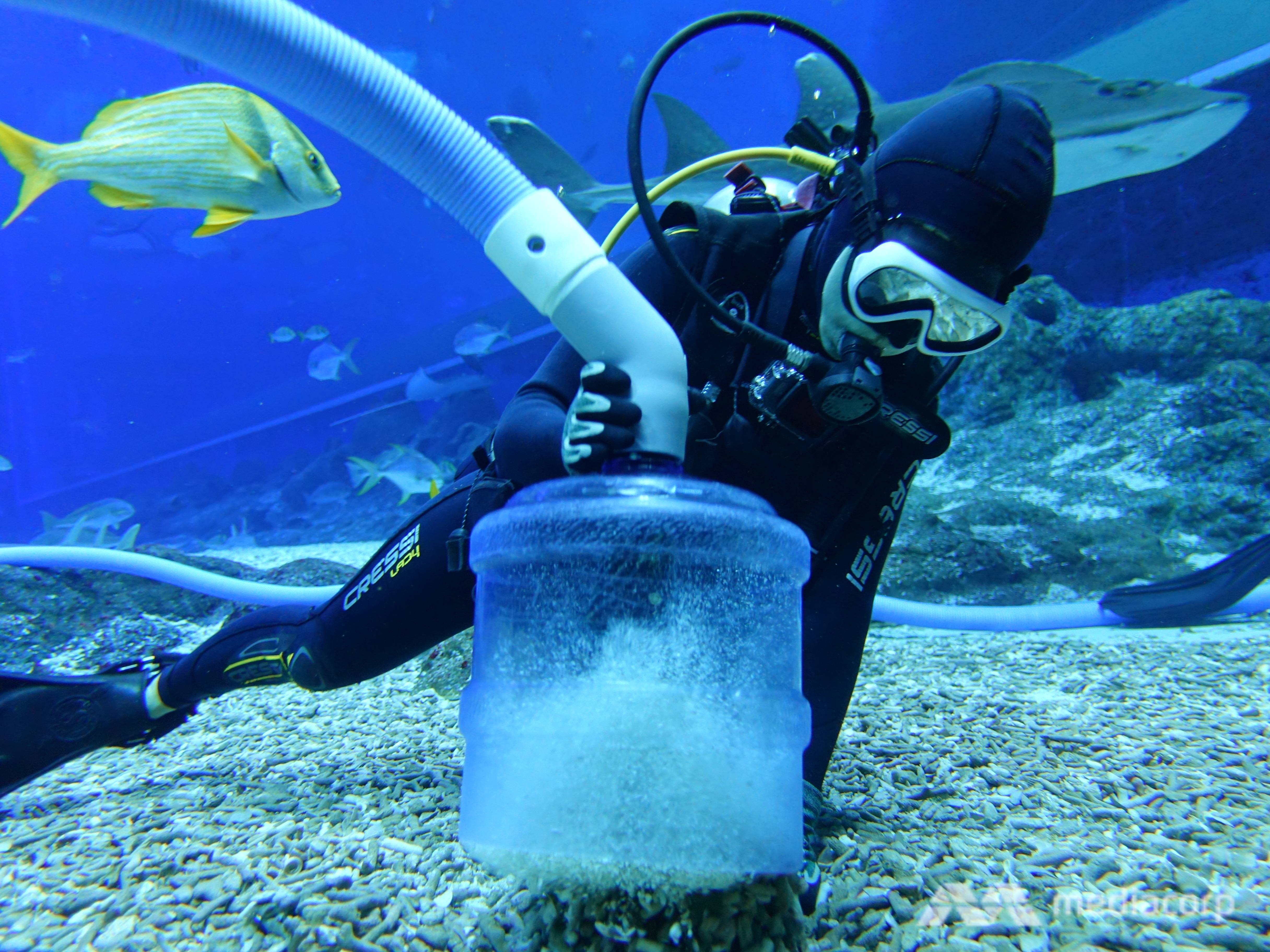
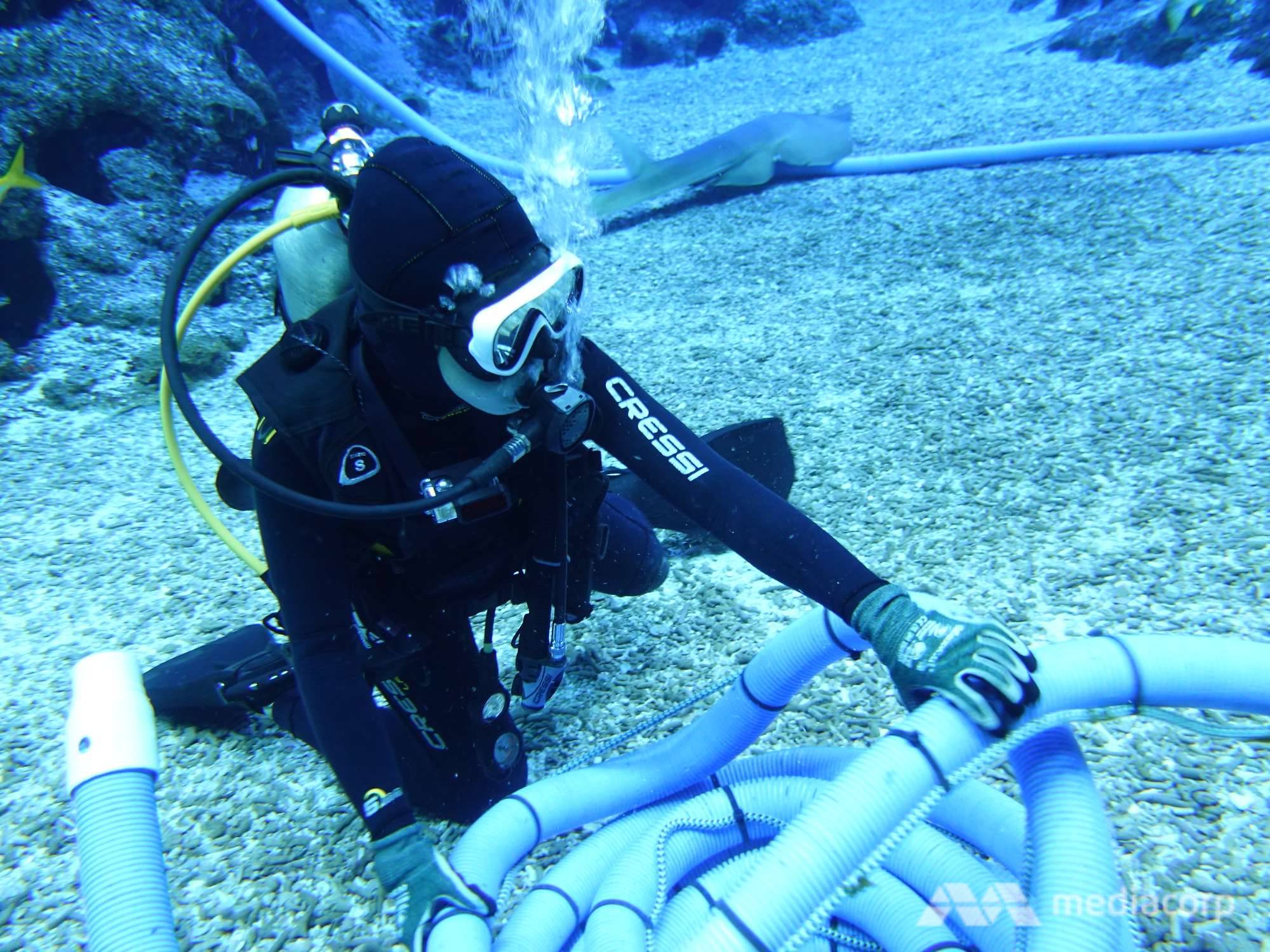
When you vacuum your house, there’s no need to strap an air supply to your back, don a wetsuit and fins, and dive to the bottom of a 12m-deep tank. Once we reached the bottom, hoses hidden in the rocks were unrolled and siphoning bells attached to them. 

Moving methodically, divers placed the siphoning bells flush against the floor of the tank, “vacuuming” the substrate, which is made up of broken coral and sand. 

The suction stirs up the sand, which settles to the bottom again after the dirt, which floats up, is sucked from it. That goes through a biofilter and into the water system, before the cleaned water is pumped back to the tank. 

In an hour, two divers went through a section of the tank about the size of a studio apartment. Then they needed to take a surface interval before the next dive, to avoid getting decompression sickness.

Vacuum OOH Wendy

The siphoning hoses are coiled and hidden behind rocks in the aquarium. (Photo: Chew Hui Min)

It takes 10 hours of diving to complete the Open Ocean Habitat, so rather than vaccuming a house, it is more like vacuuming 10 small houses, over a week or so.

Besides keeping the substrate clean, the aquarists sometimes mop the acrylic panels to keep them clear of algae. We circled the tank, observing the marine animals to check their condition.

Wendy peeped into the nooks and crannies, pointing out to me a bamboo shark sleeping under a coral. As we swam, eagle rays swept past, tuna swooshed by in silvery streaks, and a curious batfish pecked at my fingers.

SEA Aquarium Wendy holding a mermaid's purse

Aquarist Wendy Yam holds up a “mermaid’s purse” or shark egg case. These are usually unfertilised. (Photo: Chew Hui Min)

“It’s a good time for the divers to go down and get a more up-close view of the animals to see if they’re sick or if they’re healthy – whether they have any health issues, whether they are pregnant,” said Wendy. 

“We might notice that maybe one of them is swimming a little slower – these are things we have to flag.”

Before returning to land, we paused in the shallows to watch Mako, Mika and Manja glide and swoop through the tank. 

“WHEN YOU’RE WORKING YOU DON’T FEEL TIRED”

After shadowing Wendy for most of the day, and doing just one dive, this journalist was exhausted but Wendy looked as sprightly as she did in the morning. 

“When you’re working you don’t feel tired,” she said. “(But) I can go home and eat dinner and just fall asleep after that.”

Wendy tube

Wendy Yam, 26, an aquarist at the SEA Aquarium. (Photo: Marcus Ramos)

It’s a physically demanding job, and the pint-sized Wendy straps on up to 15kg of gear each time she dives – about one-third of her weight. The aquarists can do from two to four dives a day, she said.

It’s also a job where you start the day as a sashimi chef, double up as underwater housekeeper while being responsible for more than 1,000 species with different needs, diets and habitats.

But it’s these creatures that keep her going, she said.

“I used to think that fish were just fish … but actually they each have their own character,” she said.  

“Like our different rays – maybe black blotch rays would tend to be more docile  – they tend to just rest at your feet, whereas leopard rays, during feeding, they are the ones that get more excited they’re climbing all over you.

“Maybe it’s just me, but that’s one thing that I really like, working with them and learning something new every day from them.”

Source link

Make-believe outings and virtual pet therapy: Hospices get creative to bring patients joy during circuit breaker

SINGAPORE: Going out for trips to Haw Par Villa or Little India were long the norm for patients of HCA Hospice Care.

But with COVID-19 “circuit breaker” restrictions in place, Polly Lim needed to use a little more imagination if she wanted to keep her patients’ spirits up. 

After hearing some of them complain about not being able to go out, she thought – if they cannot venture out, why not bring the world in?

Ms Lim decided to organise a retro-themed party because the patients often reminisce about the past.

So on Apr 17, the hospice’s day care team took them on an “excursion” to the past. Old-school printouts of bus tickets were issued, which the patients used to enter the day care centre. The place was decorated with black-and-white posters of celebrities from the 30s and 40s. 

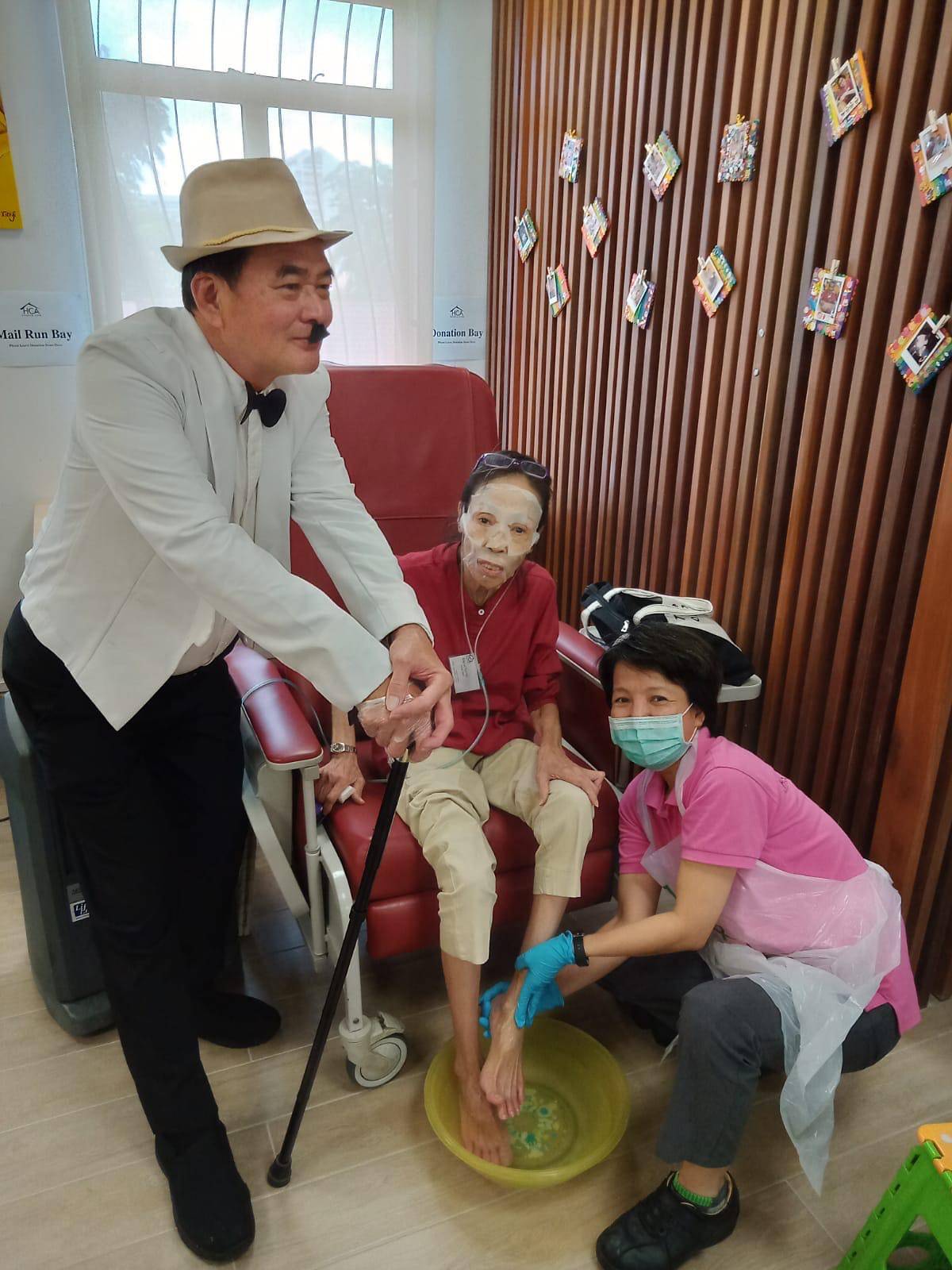
(rp) HCA beauty parlour

At the party, hospice team gave patients manicures, foot spas, facial, and a shave for the men. (Photo: HCA Hospice Care). 

Employees put up a show on the seven steps of hand washing, performed to the tune of Saturday Night Fever. A few patients later joined them on the dance floor.

Lunch was dim sum – served to them in pushcarts. 

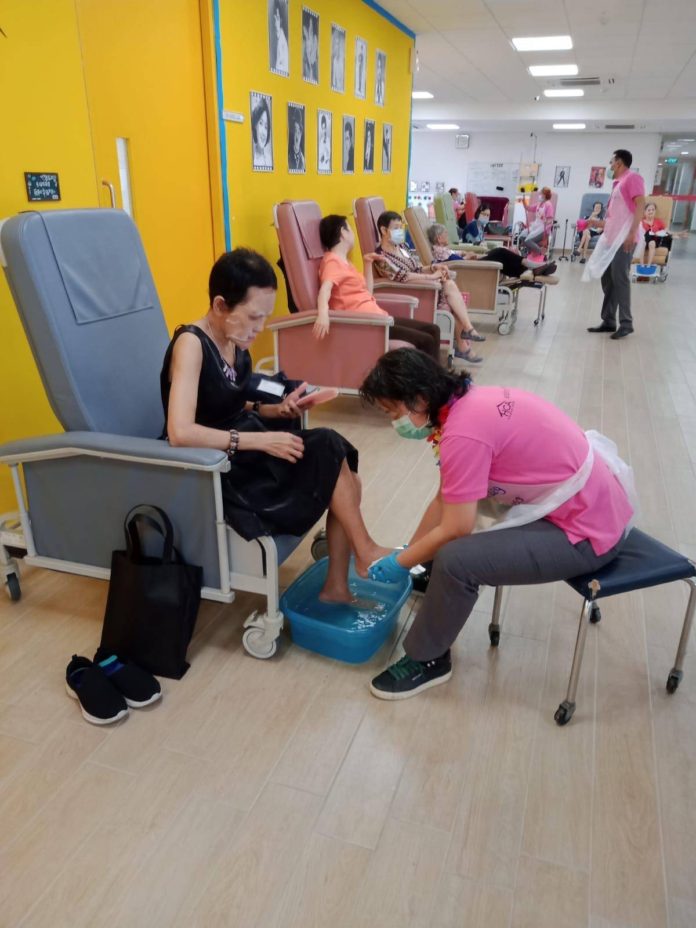
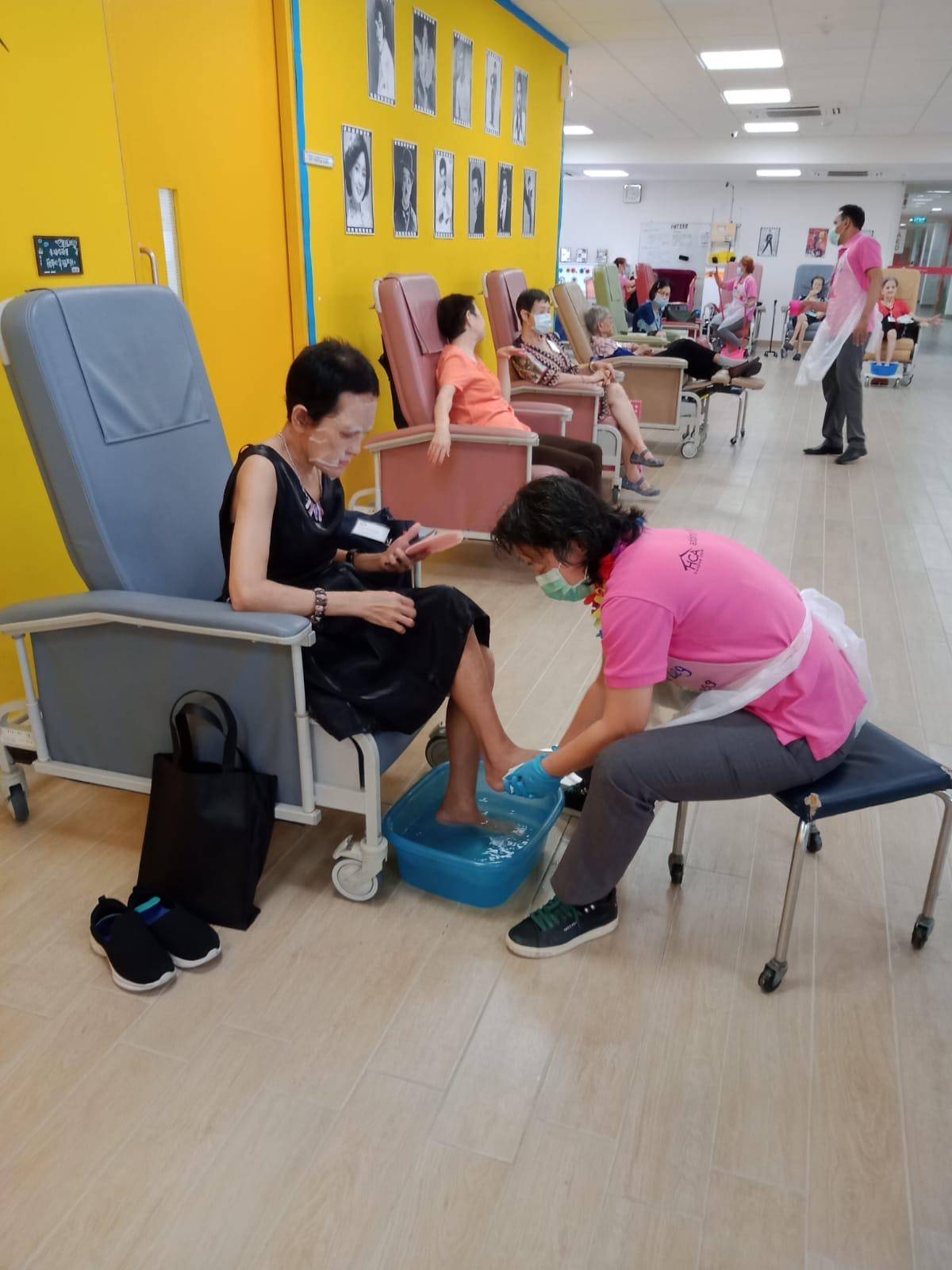
The rest of the afternoon was spent lounging in an area that had been converted into a “beauty parlour”. The hospice team gave them manicures, foot spas, facial, and a shave for the men. A colleague, dressed up as Charlie Chaplin, made an appearance to hand out some snacks. 

(rp) HCA Charlie Chaplin

A HCA employee made an appearance as Charlie Chaplin during the party. (Photo: HCA Hospice Care). 

“There was a lot of laughter, a lot of smiles. Some of them are still talking about it today,” said Ms Lim, HCA’s day hospice assistant supervisor. “I know they miss our outings a lot. My team and I just wanted to do our best to add (life) to their days.”

These were just some of the ideas hospices have come up with to bring cheer to terminally ill patients, to help them cope amid circuit breaker measures such as restrictions on group activities and the number of visitors allowed. 

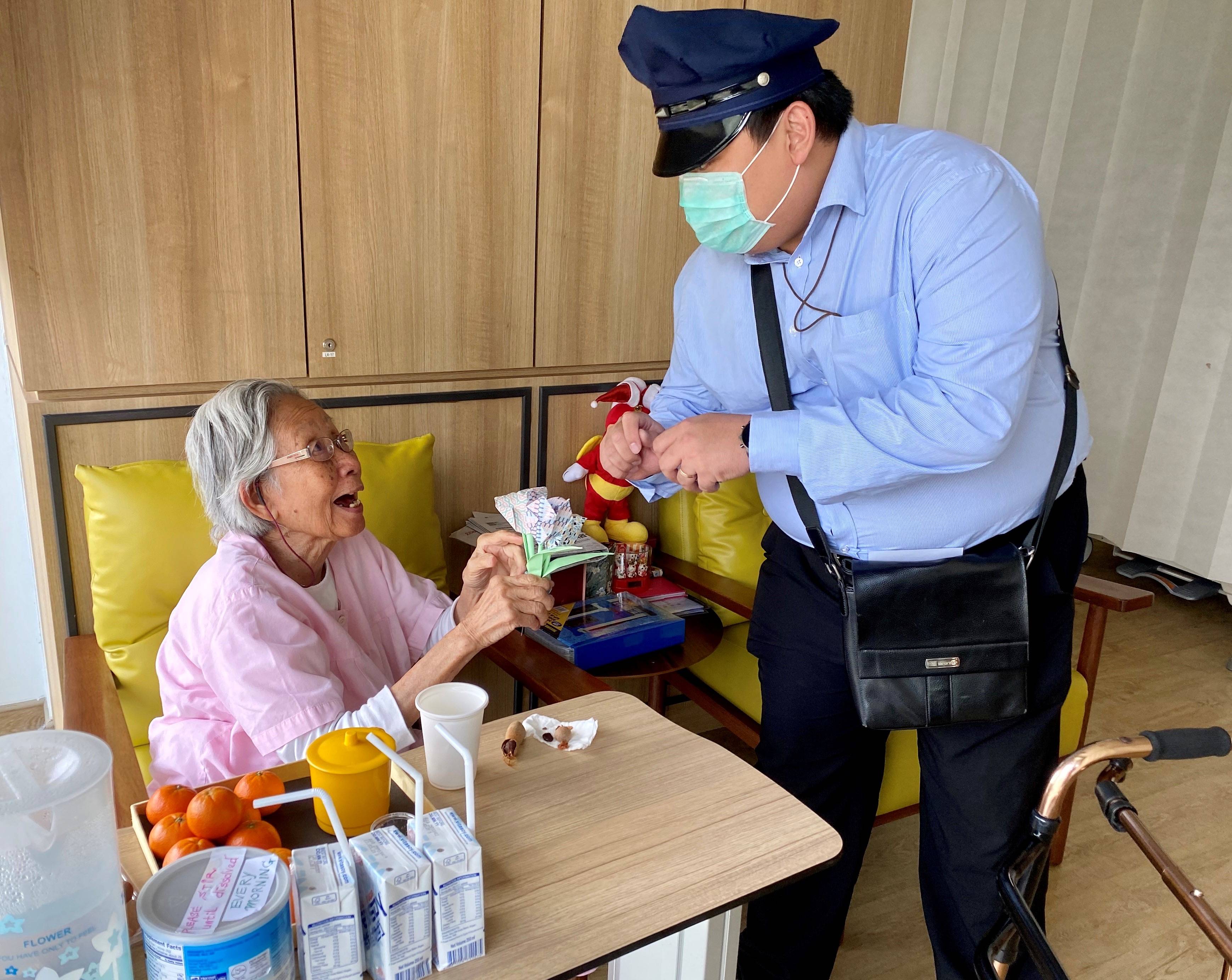
At Assisi Hospice, an employee dresses up every Tuesday as a postman delivering origami flowers and cards with well-wishes from volunteers.  

(rp) Assisi Hospice Mr Postman

Every Tuesday, a volunteer management executive dresses up as a postman and goes around each ward to deliver origami flowers and well-wishes from volunteers printed on cards. (Photo: Assisi Hospice). 

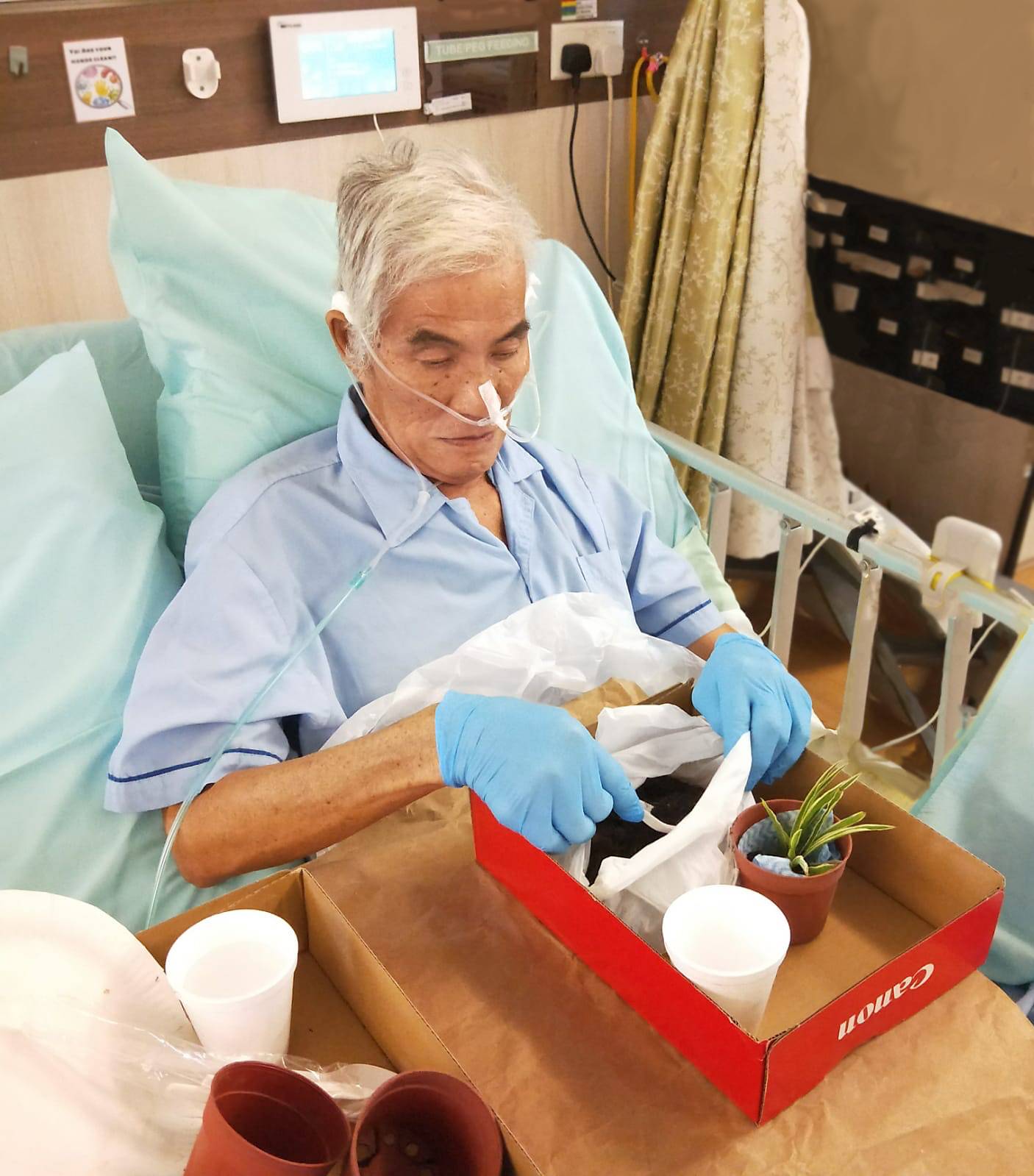
At Dover Park Hospice, occupational therapists sometimes offer gardening tools or dry herbs to patients who miss the outdoors. Two weeks ago, an elderly man who loves gardening received a bag of soil and some pots.

“The patient transformed. He was no longer his tired, lethargic self,” said Ms Grace Sim, a senior principal occupational therapist at Dover Park.

“There are limitations to what we can do to enhance patients’ quality of life, but we’re still trying our best to bring a sense of normalcy and help them live their last days to the fullest.”

(rp) Dover Park Hospice Gardening

62-year-old Kua Thuan Hock got to do some of his beloved gardening work at his bed two weeks ago when an occupational therapist brought up some soil, pots and plant to him. (Photo: Dover Park Hospice). 

Giving patients therapeutic objects is something staff members had been doing for those who are bed bound. But they are now also doing so more frequently for other patients, since they are not allowed to stroll around the grounds of the hospice as part of circuit breaker measures.

THERAPY THROUGH TECHNOLOGY 

With the circuit breaker in play, hospices have had to quickly embrace technology.

Staff members at all three hospices have been kept busy setting up video calls between patients and loved ones who are unable to visit, as well as with volunteers who are now not allowed to go to the hospices. This means employees at end-of-life facilities have also had to take over roles that were performed by volunteers. 

Dover Park’s Ms Sim recently set up an online file sharing system for volunteers to send resources they think will keep the patients busy, such as soft copies of sudoku puzzles and videos of dialect songs.

This saves the therapists a lot of time, she said. “I can’t imagine my staff trying to sit and Google (for these materials).”

At Assisi, pet therapy has gone online. Their therapy dog, which used to stop by the hospice once a week, now makes an appearance through a tablet from its home with its owner.

Although none of these virtual initiatives can match up to the connection physical companionship provides, hospice representatives said patients have mostly been appreciative of their efforts.

(rp) HCA Hospice Care staff dance

HCA Hospice Care staff members put up a performance during a retro-themed party the hospice threw for its day care patients in April. (Photo: HCA Hospice Care). 


Hospices provide mainly three types of services – in-patient care, home care which involves healthcare workers visiting the patients at their houses, as well as day care where the patients drop by the hospice.

With hospitals trying to free up more beds for COVID-19 cases, hospices have had to take in more of their terminally ill patients, tapping telemedicine in the meantime to cope with the higher workload – albeit cautiously. 

Since the coronavirus outbreak, HCA has more than doubled it home hospice care cases from 150 in February to more than 300 in April, said Ms Ng Wan Ru, a home hospice nurse.

Most of them are hospital referrals, while the rest are former day hospice patients who had to be transferred out when HCA reduced its day hospice intake from 60 to 25 to comply with safe distancing rules.

“If we did do video consults, it used to be unofficial – the patient just wants to check on a pain point or issue briefly, and we can ascertain whether we need to be there physically,” said Ms Ng.

But several weeks ago, her hospice formally introduced a telemedicine system pilot, she said, putting willing and non-urgent cases on their video consultation list. 

READ: COVID-19: Support staff at Singapore hospitals work quietly behind the scenes as cases increase

These are Internet-savvy patients they must have seen before whose conditions are identified as stable enough to warrant less frequent home visits. 

“We have (a) strict criteria,” she stressed. “They mustn’t be in a lot of pain, and they don’t need a physical examination for us to be confident to identify what the causes of their discomfort are.”

Like Ms Ng, Dover Park’s chief executive Timothy Liu was quick to emphasise that there is an official guideline hospices follow when it comes to telemedicine. His organisation, which also provides home hospice care, employs standards similar to HCA’s.

Video consultations can never replace face to face visits, said Ms Ng, who also explained that some patents clam up during video calls. “As a healthcare professional, you need to see and feel for yourself at some point what the patient is going through to make a serious judgment call.” 

WATCH: COVID-19: Telemedicine firms offering more language options, getting more doctors onboard

At the end of the day, relying on technology is a balancing act in an industry that is as much about emotional care as it is about physical health. 

“When a patient or caregiver cries over the phone or the screen, you are not able to give them a tissue, hold their hand, give them a pat on their back,” said Ms Koh Yuqi, a social worker who supports HCA’s home hospice patients.

“All these are very small but significant acts.”

SAYING GOODBYE HAS BECOME A DIFFICULT ISSUE 

In palliative care, treating the dying is not just about managing their pain or making a last-ditch attempt to get them well again, said hospice professionals.

“We are looking at what we call a good death,” said Mr Liu. “How a person and their family members are able to resolve many of the worldly conflicts and tensions (and) have some closure.”

In a world of COVID-19, fulfilling some of the patients’ last wishes has become tougher. Some want to seek forgiveness, others just want to spend as much time with as many family members as they can. 

But with both home and hospice visits limited by safe distancing rules, hospice employees have had to help them make do with the present circumstances. 

“They would ask: ‘Am I breaking the law if my daughter visits?’,” said HCA’s Ms Koh. “And you know this is so important to them because time is very precious.”

“They want to see their loved ones for the final time, share their last words, express words of gratitude and appreciation, seek forgiveness, and say goodbye to the people that meant the world to them.”

“It is a challenge with all this going on,” she said. She would encourage those whose loved ones are unable or afraid to visit to drop a video or phone call, pen a letter or make a piece of artwork to express their feelings.

Most are open to it, but some insist that reconciliation and closeness can only be forged through physical contact, she said. 

Family members have also shared their personal regrets with hospice workers. 

“What has been difficult has been the conversations with the family members,” said Cheong Ee May, the head of social work and psychosocial services at Dover Park, which like Assisi, has required its live-in patients to nominate four designated visitors during the circuit breaker. At any time, only two can drop by.

“If they are part of a big family, some of them may never get to say goodbye physically because they are not on the list of designated visitors,” she said.

“They can’t touch him for the last time, give him the last hug, or tell him face to face how much I love him. If the patient’s in a blurry state, they may not recognise the person on the phone.”

Funeral rites have also become another issue, they said, given the limit of 10 attendees in a room at any time. “The family members lament about the coldness of the send-off ritual,” said Ms Koh. 

“I have seen big families who are very close-knit, it’s very painful for them because they have to select who can come, and who can’t.” 

READ: Wakes allowed, measures to handle COVID-19 bodies in place: NEA

PHYSICAL, MENTAL TOLL ON HOSPICE EMPLOYEES 

The circuit breaker and the growing number of patients have also taken a toll on hospice employees.

Assisi’s in-patient admissions, for instance, have increased by 25 per cent between January and April this year, compared to the same period in 2019, said Juliet Ng, the hospice’s communications and community engagement head.

The hospice has been forced to recall some of their nurses on their days off or who are on their annual leave.

HCA’s Ms Ng said she has had to pack more calls and visits within her eight-hour shifts. 

Wearing protective gear the entire day in Singapore’s weather is also no fun for home care aides, who are drenched in sweat after the first hour of work. Neither is eating lunch at a corner of a staircase landing at an HDB block, or skipping lunch altogether. 

READ: ‘I’m losing money, might as well do good’: The hawkers helping the helpless

Most of all, it is the mental and emotional drain that has grown during this period, the hospices’ representative said. 

Colleagues can no longer sit down and talk to one another in person to decompress after a hard day’s work. When they get home, they minimise contact with family members to reduce the potential risk – should they get COVID-19 – of passing on the virus to their vulnerable patients.

Every day, they face the task of reminding patients that the circuit breaker has not ended.

“The elderly (patients) ask you everyday: ‘Have they changed the restriction?’ And you have to explain to them ‘not yet’,” said Assisi’s Ms Ng.

“It really bothers us, that’s why we have to constantly come up with ways to (create some form of human connection) for our patients. Technology helps, but its never enough,” she added. 

“You feel very bad. You feel their yearning to see their loved ones. (But there’s just) no choice.”

If there is one silver lining for these healthcare staff, it is the opportunity to meet more of their home care patients’ family members, given that most people are home during the circuit breaker period.

READ: COVID-19: Family members with loved ones in nursing homes endure time apart

“The beautiful part about the COVID (period) is that we have a lot of families around (and) we get to see a lot of families whom we have never met before,” said HCA’s Ms Ng.

“We witness a lot of pain and suffering … but at the same time we are so privileged because we (get to) witness so much love, strength and patience, learn so much about resilience from our patients and families,” she said. 

Some patients also appreciate being in the presence of family more often.

“I had one patient who told me she now she gets to enjoy having her grandkids around her all the time, watching them run around, play with their pet turtle,” Ms Ng said.

She recalled another patient whose words have stayed with her since. “(It) was something so simple: ‘I’m happier during this COVID period’,” she said. 

“It’s simple, it’s direct, but it just show that what we cherish most is that human connectedness.”

BOOKMARK THIS: Our comprehensive coverage of the coronavirus outbreak and its developments

Download our app or subscribe to our Telegram channel for the latest updates on the coronavirus outbreak: https://cna.asia/telegram
Source link

Commentary: The wonder of clear skies and returning wildlife is our new climate problem

SINGAPORE: During this current pandemic, reports of environmental recovery arising from lockdowns on economic activities and social movement have circulated widely.

The images of clear skies in Delhi, Nairobi, and Los Angeles, or wildlife returning to unpolluted canals of Venice are striking, and indicate how significant humanity’s environmental footprint is.

READ: Commentary: The strange, lovely sight of clear skies in India amid COVID-19 gloom

Yet, these pictures – and the funny memes that creative people have made from them – would do wrong if they imply Mother Earth is recovering due to humanity’s enforced lockdown or  suggest that staying indoors is enough to reverse climate change.

The reality is more complicated than that. In the context of climate change, the COVID-19 pandemic can exacerbate risks already present within vulnerable communities in the short-term.

But it also presents an opportunity for governments and policymakers to implement sustainable long-term policies aligned to the Paris Agreement.

READ: India’s COVID-19 lockdown gives world’s most polluted capital clear skies, clean air

THE MYTH OF ‘NATURE IS RECOVERING’

The “Nature-is-recovering” images circulating over the past month may have been a welcome change from pictures of devastating Australian wildfires or cities choking under polluted skies. But they are misleading given the stark reality of ongoing climate impact.

Episodic falls in carbon emissions and air pollutants aren’t enough to permanently move the needle on climate change. 

Even as lockdowns brought factories to a grinding halt worldwide, the US National Oceanic and Atmospheric Administration forecast in March that 2020 would be a hot year – with a 75 per cent chance of overtaking 2016 as the hottest year on record.

This would result in extensive climate hazards. The earlier Australian wildfires, and ongoing ones in Northern Thailand and Siberia, all arose from very warm and dry local conditions likely compounded by climate change.

Dead trees mark the scorched landscape surrounding the Kangaroo Valley Bush Retreat after a wildfir

FILE PHOTO: Dead trees mark the scorched landscape surrounding the Kangaroo Valley Bush Retreat after a wildfire in Kangaroo Valley, New South Wales, Australia, January 23, 2020. REUTERS/Thomas Peter/File photo

The impact from this increased warmth can be deadly to vulnerable communities in lockdown. Two relevant examples illustrate the immediate climate-COVID policy challenges.

First, parts of India this March experienced heatwave conditions typically occurring later in summer. The India Meteorological Department has predicted that these heatwave conditions will likely continue for the next few months.

Heatwaves are becoming more frequent and intense because of climate change. Sheltering in place to prevent COVID-19 transmission may instead expose communities to lethal heat stress, especially without air conditioning or other means to adapt.

READ: Commentary: Rising temperatures, fires and floods highlight importance of understanding weather extremes

READ: Bangkok breathes cleaner air during COVID-19 pandemic and experts want it to last

Second, weather forecasters predict a very active hurricane season from June in the North Atlantic due to warmer-than-normal sea surface temperatures. This has potentially deadly consequences for people sheltering-in-place in the Caribbean, US Eastern Seaboard and Gulf States if a major hurricane makes landfall.

Will these vulnerable coastal communities still subject to stay-at-home notices be forced to evacuate to large shelters, where extended close contact is inevitable? Can hospitals in these areas, already dealing with a prolonged influx of COVID-19 cases, cope with hurricane-related injuries and power outages from storms?

We are already seeing this in real time not in the Atlantic, but in the Bay of Bengal with Tropical Cyclone Amphan.

Ignoring these immediate compound climate-COVID risks is folly. Specific policies reducing these climate risks in these areas exist, and governments will have to plan for undesirable contingencies later this year, albeit with less resources because of the ongoing pandemic.

READ: Commentary: The biggest question about lifting COVID-19 lockdowns is generating huge debate

AN UNEXPECTED BENEFIT OF LOCKDOWNS

A common long-term goal of fighting COVID-19 and climate change is that both “curves” – currently depicting inexorable increases in global rates of infection and global greenhouse gas (GHG) emissions respectively – must bend towards zero.

While global COVID-19 infections have yet to fully peak, an unexpected benefit is that lockdowns worldwide have significantly reduced GHG emissions from last year’s record.

READ: Commentary: Reaching net-zero emissions will be ‘very challenging’. But watch Singapore try anyway

carbon emissions

(Photo: Unsplash/veeterzy)

The International Energy Association recently announced that the world is on course to reduce close to 8 per cent (or about 2.6 billion tonnes) of current GHG emissions by the end of this year.

This is a considerable amount. It is 50 times the amount of Singapore’s total estimated emissions in 2019, and more than six times the amount compared to reductions during the 2008 to 2009 global financial crisis.

More encouragingly, the 8 per cent cut is roughly equivalent to the annual emissions reductions needed from this year onwards to limit warming to the Paris Agreement 1.5 degrees Celsius limit.

READ: Commentary: Why Singapore’s new ‘absolute’ climate mitigation targets could be an absolute game changer

But does that mean global lockdowns are the path to stopping climate change? Far from it. We may have bent the curve, but the opportunistic emissions decrease can’t be sustained year-on-year with lockdowns.

Yet a return to “normal” development and resumption of economic activity will lead to emissions rebounding sharply, as was the case immediately after the financial crisis, when a 1.8 per cent decrease in carbon emissions in 2009 was offset by a 6 per cent increase in 2010.

THE SUSTAINABLE WAY FORWARD

What we need to do is to sustain the decreases in order to get GHG emissions to net-zero, which occurs when human-caused emissions are balanced out by either natural or artificial removal of GHGs from the atmosphere.

Our leaders need a coherent, fair, and long-term developmental vision towards net-zero GHG emissions and the political will to sustain it.

Swedish climate activist Greta Thunberg gives a speech during at the COP25 climate change conference

Swedish climate activist Greta Thunberg gives a speech during at the COP25 climate change conference in Madrid where some say the struggle to protect nature needs to get more attention AFP/CRISTINA QUICLER

A pathway for governments to follow was suggested in a recent study co-authored by prominent economists Lord Nicholas Stern and the Nobel Prize winner Joseph Stiglitz.

They surveyed 230 finance and economic experts from G20 countries to assess the costs and benefits of government spending on different post-COVID recovery policies.

The respondents gave highest ratings to “green” investments in clean energy technology, retrofits to improve energy efficiency, and the restoration of carbon-rich habitats.

Another highly ranked measure is the educating and training of workers in carbon-intensive industries affected by COVID-19. This policy is topical for the oil industry, which has seen record price drops due to substantial oversupply and demand loss from decimated land transport and aviation sectors.

READ: Commentary: Low oil prices gives Asia the chance to steer Middle East geopolitics

READ: Commentary: Airlines have it bad with COVID-19 but airports have it worse

Prospects for long-term recovery in this sector were unclear even before COVID-19. Financial investors already had little appetite to continue bankrolling oil producers after years of sub-par returns from a combination of geopolitical and climate factors.

Instead, the industry relied on government financial packages to offset considerable economic losses.

Rather than unconditional financial bailouts and subsidies which largely benefit executives over vulnerable workers, a more sensible investment policy is in retraining and redeploying this sector’s highly-skilled workforce towards future low-carbon industries, including carbon capture and storage.

Such policies enabling a just transition for affected workers would enable resilient economic growth while lowering carbon emissions, especially when also applied to other carbon-intensive industries.

READ: Commentary: That low-carbon future for Singapore isn’t so far-fetched

Carbon dioxide storage tanks are seen at a cement plant and carbon capture facility in Wuhu

Carbon dioxide storage tanks are seen at a cement plant and carbon capture facility in Anhui province, China on Sep 11, 2019.  (Photo: REUTERS/David Stanway)

A well-planned and managed green stimulus can drive a superior economic recovery in the long-term while consistently lowering climate emissions towards the Paris 1.5 degrees Celsius goal.

THE CLIMATE OPPORTUNITY OF COVID-19

The magnitude of COVID-19 infections and deaths worldwide is staggering, and the pandemic has revealed the scale of the response needed for effective short- and long-term climate action.

Regrettably, neither crisis is being addressed properly with desired outcomes. Both require urgent, sensible science-based policies that redirect our resources and political will to prevent unneeded suffering and death worldwide.

READ: Commentary: The coronavirus could take climate action with it

READ: Climate change supercharging extreme events, scientists say, as ‘super cyclone’ Amphan hits Bangladesh and India

That said, the famous saying goes that “in every crisis, there lies opportunity.”

The real silver lining of COVID-19 is the opportunity to collectively bend the climate curve sustainably through our own actions, rather than inadvertently doing so because of the pandemic.

Let’s hope that as the pandemic ends sometime in the future, this climate opportunity is grasped fully.

LISTEN: Repairing and recycling to reduce e-waste: A pipe dream in Singapore?

BOOKMARK THIS: Our comprehensive coverage of the coronavirus outbreak and its developments

Download our app or subscribe to our Telegram channel for the latest updates on the coronavirus outbreak: https://cna.asia/telegram
Winston Chow is an Associate Professor of Science, Technology, and Society based at Singapore Management University’s School of Social Sciences and Office of Core Curriculum.

Source link

From Baha’i to Zoroastrians: How communities are keeping the faith amid COVID-19

SINGAPORE: For the first time, Muslims in Singapore have, instead of going to mosques for prayers to mark the end of Ramadan, commemorated it online with live-streamed prayer calls and sermons.

They are not the only ones who have had to mark dates of religious significance differently this year, as a result of the COVID-19 circuit breaker measures from Apr 7 to Jun 1.

These are snapshots of how some folks of 12 faiths have adapted the commemoration of key festivals or dates – and how devotees and religious leaders, in finding innovative ways to modify their practices and rituals, have reinforced their faith and family bonds. In alphabetical order:

Baha_i follower Katyana Melic on a video call with others in her community. (Photo_ Katyana Melic)

Baha’i follower Katyana Melic and her child on a video call with others in her community. (Photo: Katyana Melic)

BAHA’I – RIDVAN (APR 21–MAY 2), DECLARATION OF THE BAB (MAY 22-23)

This year, instead of gathering in homes and community spaces for meals, praying and story sharing during the 12 days of Ridvan, the Baha’i of Singapore marked their most important festival remotely.

“We tried to carry on in the same spirit, though we could only see each other via video,” said Baha’i follower Katyana Melic “I think everyone still tries to maintain the dignity and spiritual sanctity of these holy celebrations, even though we can’t physically group together.”

The Bahai faith is one of Singapore’s official religions, and followers believe in the essential unity of all religions and humanity, and in the divine plan for the advancement of civilisation. Ridvan marks when the prophet Baha’u’llah, founder of the faith, declared his mission to the world.

On Friday and Saturday, adherents also marked the event when Bab, forerunner of Baha’u’llah, announced his mission to prepare people for the coming of Baha’u’llah. 

COVID faith Baha_i Hand Sanitiser distribution (Photo_ Katyana Melic)

 Baha’i Hand Sanitiser distribution (Photo_ Katyana Melic)

Katyana said the community came up with a quiz challenge – Amazing Race style, but entirely online – to engage people. Families had to search for anecdotes and stories about the Baha’i community online.

Being confined at home has not just made Katyana more aware of the importance of daily prayer. A key tenet of Baha’i teachings is the recognition that everything is interdependent – so she has made it a point to reach out more and connect with people virtually.

This period “has helped me reflect on this essential concept of how tests help us to grow,” she said. “And that a human being needs to go through these tests in order to know what our true capacity is.”

 The e-Vesak countdown organised by the Buddhist Youth Network. (Photo_ Buddhist Youth Network)

The e-Vesak countdown organised by the Buddhist Youth Network. (Photo: Buddhist Youth Network)

BUDDHISTS – VESAK DAY (MAY 9)

Vesak Day, which celebrates the birth, enlightenment and passing of the Buddha, usually sees huge crowds flocking to temples to partake in rituals. Nearly 20,000 turned up in past years at the Singapore Buddhist Federation’s celebrations at Ngee Ann City’s Civic Plaza, according to its president, Venerable Seck Kwang Phing.

But this year, everything had to go online. “They could still listen to the talks by various monks, participate in the offering of lamps to the Buddha, and post questions,” he said.

Instead of volunteering at temples for the occasion, as they usually do, Danry Lim, 23, and Michelle Trisno, 22 – co-founders of memor.co, a group which aims to make Buddhist practices more applicable to young people –  this year helped plan an online countdown to Vesak Day. It featured collective prayers and sharing sessions from frontline healthcare workers, for instance.

Danry Lim leading a trivia session as part of online Vesak Day celebration

Danry Lim leading a trivia session as part of the Buddhist Youth Network’s online Vesak Day celebrations (Photo: Buddhist Youth Network)

“It feels strange because we’re not able to do our usual practices,” said Michelle. “But it’s really a perfect opportunity for us to look inwards, and also, to package Vesak in a different way. So it’s weird, but exciting too.”

With added time and solitude for reflection, Danry said the COVID-19 situation has strengthened his faith. “I have realised that the things taught in Buddhism, such as impermanence, the need for kindness, peace and to be settled, are directly applicable in the real world,” he said.

Buddhism, in general, is independent of things like physical temples, The real practice is when we are with ourselves.

The Buddhist Thai and Burmese communities in Singapore also celebrated their new year in mid-April. But instead of the usual live performances at the Burmese Buddhist Temple, said Mi Mi Thein from Myanmar, home-based performances by artistes were live-streamed online instead.

Adrian Tee_s family celebrating Easter at home. Photo_ Adrian Tee

Adrian Tee’s family celebrating Easter at home. Photo: Adrian Tee

CATHOLICS – HOLY WEEK, GOOD FRIDAY AND EASTER (APR 6 -12)

Parishioner Adrian Tee remembers being “very sad” the day the Catholic churches decided to stop all services. It was just at the start of Holy Week – a week of prayer, church services, and most key of all, an Easter vigil marked with a candlelight service.

“The Catholic faith is a very tangible faith,” he explained. “So being physically present in church, being together with our community, is important for us – we cannot just live our faith at the spiritual level.”

He realised how much he had taken Mass for granted. “I attend every day, but is my mind always present?” he said.

The silver lining, however, has been that people who could previously never go for Mass due to age or ailments could now live-stream the process. Adrian himself has been attending Mass virtually in various parts of the world. “This is an excellent opportunity I would not get otherwise,” he said. 

 Father Joe Lopez conducting an online philosophy class. Photo courtesy Joe Lopez

Father Joe Lopez conducting an online philosophy class. Photo: Joe Lopez

Indeed, with everything moved online, Father Joe Lopez said this year’s commemoration of Holy Week “may have been the most meaningful ever”. The incoming rector of St Joseph’s Church has been celebrating Mass online.

Being able to see the faces of his parishioners up close through Zoom has helped him “break the ice”, he said. Some reached out to him to have conversations.

Many people have told me that our prayers have become more genuine.

“Even in this situation, we stay faithful… That’s why for me, this has been more meaningful than ever.”

Pastor Keith Lai and wife celebrating Easter last year. Photo: Covenant Presbyterian Church

Pastor Keith Lai and his wife Mui Fong celebrating Easter in church last year. Photo courtesy of Covenant Presbyterian Church

CHRISTIANS – HOLY WEEK, GOOD FRIDAY AND EASTER (APR 6 -12)

In the Presbyterian church, Holy Week is usually commemorated by coming together for worship, said Pastor Keith Lai from Covenant Presbyterian Church, and culminates in a huge Good Friday service held at the Singapore Expo.

At his own church Easter Sunday involves a special service followed by a buffet lunch. Members are encouraged to invite their friends to the service, which is evangelical in nature, he said.

Having to take the commemorations online this year was a major shift, he said – but it was also an opportunity to introduce new practices to make the online gatherings and services more meaningful.

One example, said his wife Lai Mui Fong, was getting families and small groups to cook a meal with food that is white in colour – to symbolise the ascension of Jesus to heaven after resurrection.

The Lai family_s Easter mee sua and hot cross buns Photo courtesy Keith Lai

The Lai family’s Easter mee sua and hot cross buns. Photo courtesy Keith Lai

“Some people cooked a lamb because the lamb of God took away our sins, but most of us voted to do a bowl of mee sua with an egg in it,” she said.

Pastor Lai also noted that cell groups, where members gather to study the Bible, have seen increased attendance of their online meetings; and the church has started conducting online guided spiritual retreats.

The circuit breaker is a good time to take stock of one’s life, he said. 

It is a time of stripping away, decluttering … and asking ourselves, what is essential and what is not?

“This is a time of self-examination, removing things that are unnecessary, and basically, slowing down.”

COVID faith Michael Ang and his family on Easter Sunday. Photo_ Michael Ang

Michael Ang and his family studying the scriptures on Easter Sunday. Photo courtesy of Michael Ang

CHURCH OF JESUS CHRIST OF LATTER-DAY SAINTS – EASTER (APR 12)

Instead of attending church services, Michael Ang spent this Easter studying the scriptures with his family at home and discussing the day’s significance. 

While he admits to missing the fellowship and warmth of a church gathering, he said the time at home has strengthened his relationship with his family, as well as his own faith.

“We spent a lot of time studying the gospel together,” he said. “As a father, I’ve had the chance to share with them my testimony and what I’ve experienced, and I felt very happy and blessed to be able to do something.”

“I’ve had the chance to reflect a lot more, and realise that we can plan for a lot of things in life but we still need the tender mercies of someone mighty to help us,” he added. 

“I felt like I became more humble, more aware, and more willing to exercise faith.”

Many in his church community have stepped forward to volunteer during this pandemic, for instance by sewing masks for migrant workers, “We always remind ourselves of this saying, that if you are in the service of your fellow men, you are also in the service of God,” he said.

COVID faith Shima at a temple earlier this year. Photo courtesy of Shima Arivalakan

Shima (fourth from left) and her family at a temple earlier this year. Photo courtesy of Shima Arivalakan

HINDUS –TAMIL NEW YEAR (APR 14)

The Tamil New Year might not be as widely celebrated as Deepavali in October, but to Shima Arivalakan, it is equally important.

She, her husband and child usually mark the occasion with a visit to the temple for prayers, then to their parents’ and siblings’ places for a meal. “We couldn’t do all that this year,” she said, so instead they prayed at their own altar at home, and enjoyed a vegetarian meal followed by a video call to their parents.

“It was a bit hard because as grandparents, the only thing they wanted to do was to visit their grandson,” she said. “But I guess we just have to wait it out.”

 Shima_s young son praying at their family_s altar for Tamil New Year. Photo_ Shima Arivalakan

Shima’s son praying at their family altar for Tamil New Year. Photo: Shima Arivalakan

Shima also misses visiting the temple at least once a week to pray and get some peace of mind, and “to just think about my faith”.

But she added that with a hyperactive toddler at home, it is still important for her to “have some faith”. “There are times when I get very stressed and I try to calm down,” she said. “So, I still pray at home…  We believe that our altar is also our temple, so we’ll use that to pray and keep our faith as much as we can.”

Jain followers gathered at the Singapore Jain Religious Society premises (Photo: Hitesh Shah)

Jain followers gathered at the Singapore Jain Religious Society premises (Photo: Hitesh Shah)

JAINS – AYAMBIL OLI (MAR 31-APR 8), MAHAVIR JAYANTI (APR 6)

During the nine-day abstinence period of Ayambir Oli, devotees usually gather at the Singapore Jain Religious Society’s premises every day to break their fast with meals cooked by volunteers. ‘

This is partly due to the difficulty of preparing the meal, which must be made without certain ingredients, according to the society’s secretary, Hitesh Shah. “We’d usually prepare 20 to 30 types of food, and when you have 50 to 60 people gathering, it’s a different ambience,” he said. 

But as it’s impossible this year, the society had to tell followers to stay home and prepare their own food.

A Jain praying at home (Photo_ HItesh Shah)

A Jain praying at home (Photo: HItesh Shah)

The festival of Mahavir Jayanti, on the other hand, usually commemorates the birth of the 24th Tirthankar, founder of modern Jainism, with a gathering for singing, dancing and religious skits.

This year, it was brought online, with society members singing and celebrating on Microsoft Teams. Like the fasting, it felt different. “There is a kind of real energy that is a little bit missing when you’re at home just listening to somebody singing,” Hitesh said.

But, he said, being at home has given devotees the opportunity to revisit the three basic tenets of their faith: Non-violence, non-attachment to worldly things, and respecting other beings’ perspectives.

“Many of the things we have been doing in our daily lives are actually not required,” Hitesh said. And lately, “we’ve been living simpler lives, staying at home, not looking at what others are doing – so that kind of jealousness is not there anymore.”

COVID faith Rabbi Mordechai Abergel giving a Passover speech over Zoom (Photo_ need to check)

 Rabbi Mordechai Abergel giving a Passover speech over Zoom. 

JEWS– PASSOVER (APR 8-16)

Jews in general thrive on community life, with the synagogue “always full”, said the chief rabbi of Singapore’s Jewish community Mordechai Abdergel – which was why having to celebrate Passover in isolation was “difficult to stomach”.

The bulk of the Jewish community here are expats, separated from family, he noted. “When you’re disconnected, there’s even more of a need to come together.”

The eight-day festival, which marks the Israelites’ exodus from ancient Egypt, is one of the main festivals in the Jewish calendar. Traditionally, it is marked with large family gatherings; and on the first two nights in particular, called Passover Seder, hundreds of people would throng Singapore’s two synagogues. 

WATCH: Living as an orthodox Jew in Singapore (3:49)

This year’s edition of Passover, which featured an online session to train parents how to lead the Passover Seder, was “beyond subdued” in comparison, the rabbi said. “We had to rethink how we go about observing something like this, and make it meaningful even though you’re in isolation.”

On the upside, retelling the story of the exodus has spurred parents to take on the role as educators of their children. “Part of the Jewish tradition is to fulfil the biblical command of ‘You shall tell it to your children’,” he said.

So while in isolation, the advantage is that we can invest time in our children… You can no longer subcontract this to somebody else.

Deputy Mufti Mohammad Hannan Hassan doing takbir with his family. Photo Mohammad Hannan Hassan

Deputy Mufti Mohammad Hannan Hassan doing takbir with his family. Photo: Mohammad Hannan Hassan

MUSLIMS – RAMADAN (APR 22–MAY 23), HARI RAYA PUASA (MAY 24) 

Over the past month, Rasimah Riduan has been trying to explain to her elderly mother, who lives with her, why her other children no longer visit.

“She accepts it in the moment, but will ask again in a few days,” said Rasimah. “Then we have to talk to her nicely and explain again that it’s the COVID-19 situation.”

This year’s fasting month of Ramadan and preparations for Hari Raya have been “very different”, she said. The family would usually gather for a reunion meal on the eve of Hari Raya. This year, they are relying on video calls.

In recent years the breaking of fast, or Iftar, during Ramadan has become “more than just a Malay community activity”, noted Deputy Mufti of Singapore Mohammad Hannan Hassan. “People of different faiths come to the mosque and break fast with us. That, people miss so much now.”

 Deputy Mufti Mohammad Hannan Hassan on a call with his extended family.

Deputy Mufti Mohammad Hannan Hassan on a call with his extended family. (Photo:Mohammad Hannan Hassan)

But he stressed that the “fundamental, ethnical foundation” of Islam was avoidance of harm, and protection of public interest. “Avoidance of harm means that we may not be able to visit our loved ones during Hari Raya,” he said.

“And then we want to protect public interest, not to further viralise this contagious virus.”

He is also heartened to how people have adapted to making their Zakat contributions. While online payment has been available for several years, there have also been other new initiatives springing up – such as the ground-up community effort #SGUnited Buka Puasa, which aims to feed people during Ramadan. 

“Necessity is the mother of creativity,” he said. “So you have this necessary situation, and we see all these creative ways … people are coming forward fast and furious.” 

A virtual Vesakhi greeting from Sarabjeet and his family. (Photo_ Sarabjeet Singh)

A virtual Vesakhi greeting from Sarabjeet and his family. (Photo: Sarabjeet Singh)

SIKHS – VAISAKHI (APR 13)

The Sikh community usually celebrates Vaisakhi – which marks the formalisation and founding of the faith – by gathering at the Gurdwara, their place of worship, for prayers and activities like volunteering.

To Young Sikh Association Singapore president Sarabjeet Singh, it is also a chance to bump into “childhood friends I went to Punjabi school with”, he said. “There’s usually a lot that goes on that day.”

He remembers feeling a sense of loss and sadness upon learning that the festivities would have to be cancelled this year. But Sarabjeet, 36, has been heartened by the ground-up initiatives that sprang up online.

“Typically if you go to Gurdwara, it would be a day, or maybe a week of events. But the online situation has enabled a bit of an extension to the celebrations,” he said.

Sikhs celebrating Vesakhi at a Gurdwara (Photo_ Sarabjeet Singh)

 Sikhs celebrating Vesakhi at a Gurdwara (Photo: Sarabjeet Singh)

“Folks came together and recorded greetings for each other, and there was this family that launched a fun challenge to call at least five people in the community.”

The value of service is a core tenet of the Sikh faith, and Gurdwaras typically offer free meals to visitors as well as have meals delivered to the underprivileged. Since the start of the circuit breaker, Sarabjeet says the number of meals given out has significantly increased to more than 1,000 a day.

For Sarabjeet personally, the disruption of the circuit breaker has underlined another core tent of his faith – the idea of remaining in chardi kala, which means to always have a positive outlook regardless of the challenges.

“It has definitely reinforced the spirit of chardi kala for me and for the many others I know in the Sikh community,” he said. 

No challenges are insurmountable, and we will overcome this together.

COVID faith President of the Singapore Taoist Federation Tan Thiam Lye (screengrab from call)

President of the Singapore Taoist Federation Tan Thiam Lye

TAOISTS – QING MING FESTIVAL (APR 4)

The Qing Ming festival is one of the most important events in the Taoist calendar. Filial piety is a key tenet of the faith, and this is the period when people head to cemeteries and columbaria to pay their respects to their ancestors.

“Sons, grandsons, everyone in the family will go together and it is always very crowded,” said Singapore Taoist Federation president Tan Thiam Lye in Mandarin.

This year’s Qing Ming fell just before the start of the circuit breaker, so devotees were still allowed to gather at cemeteries and columbaria. But they were subject to safe distancing measures and limited numbers, so it was a more subdued affair than previous years.

The impact was even more visible at temples where, usually, large crowds would continue to gather for 10 days after the Qing Ming, with “lots of festivities”, Mr Tan said. This could no longer happen when circuit breaker measures kicked in.

Daily live stream of the Taoist temple for devotees. (Photo_ Lorong Koo Chye Sheng Hong Temple)

Daily live stream of the Taoist temple’s premises for devotees to worship. (Photo: Lorong Koo Chye Sheng Hong Temple)

But the temples have been adapting to the new normal. At Lorong Koo Chye Sheng Hong temple, a camera was set up facing the deities and turned on every day from 10.30am to 12.30pm, allowing devotees who wished to pray to view them on a live Facebook feed.

“You can see the deity, and the deity can also see you,” he quipped. A system was also set up to accept online donations.

It is important in this time, when people cannot come to the temple, to be flexible.

Zoroastrian Priest Percy Khambatta praying at home (Photo_ Percy Khambatta)

 Zoroastrian Priest Percy Khambatta praying at home (Photo: Percy Khambatta)

ZOROASTRIANS – COMMEMORATION PRAYER (MAY 1)

Zoroastrianism is the faith of the small Parsi community, which numbers about 500, in Singapore. The basis of the religion, according to Zoroastrian priest Percy Khambatta, is the importance of good words, good thoughts and good deeds.

In the past two months, the community has had no major events on the scale of a festival coming up in August celebrating Nowruz, their new year. But there were originally plans to gather at the Parsi cemetery to offer prayers on May 1, the anniversary of a Parsi man’s huge donation to the Parsi Association almost a century ago.

The new restrictions prevented the gathering, so for the first time, the community brought their prayers online. The community responded positively, Percy said – and the association then decided to bring the weekly Sunday prayers, suspended since March, online as well.

“A lot of people worldwide also joined in,” he added.

WATCH: Zoroastrians In Singapore: 5 Things To Know (3:54)

Being confined to his home, which he shares with members of his extended family, has meant time to think about life and the people around him.

“It is a time to reflect that what we took for granted can be taken away at any time,” he said. “So we should be happy and grateful for all the things we have in our lives.”

He also has more time with grand-daugher, he added: “When she sees me pray once she gets up in the morning, she will run to the prayer place. So that’s a good thing too – she’s starting to understand that if I see Grandpa, I have to go and pray.”

Source link

Covid-19: 2 more pre-school staff test positive; 642 new cases on Saturday

[ad_1]

[UPDATE: 10:48PM]

The Ministry of Health (MOH) confirmed 642 new coronavirus cases in Singapore today (May 23). Out of these, 631 are cases involving work permit holders residing in dormitories.

There are 11 new cases in the community: five Singaporeans, one Permanent Resident, three Work Pass holders and two Work Permit holders.

The number of new cases in the community has increased from an average of five cases per day in the week before to an average of seven per day in the past week.

The number of unlinked cases in the community has also increased from an average of one case per day in the week before to an average of two per day in the past week.

This is partly due to the active surveillance and screening of nursing home residents and pre-school staff, which have picked up more cases in the past week, MOH said.

One of the new cases is a 24-year-old Filipino woman who went to work at PCF Sparkletots @ Gambas after the onset of symptoms.

Another new case is a 54-year-old Singaporean woman who went to work at Shaws Preschool @ Lorong Chuan after the onset of symptoms.

[ad_2]

Source link

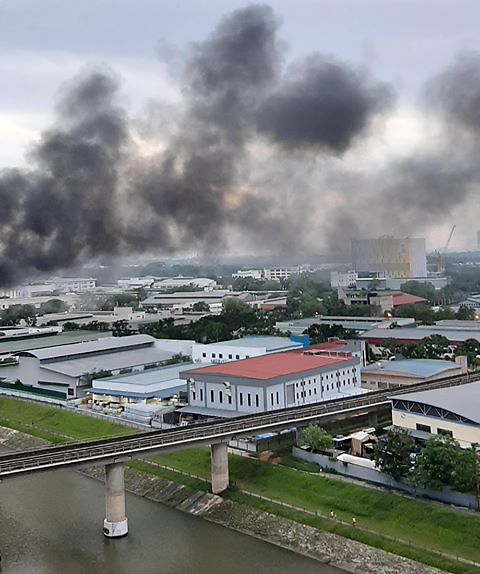
Fire breaks out at Sungei Kadut warehouse, 2 workers sustain ‘minor’ injuries

SINGAPORE: About 100 firefighters were deployed after a fire broke out at a warehouse at Sungei Kadut Way on Saturday (May 23), leaving two workers with “minor injuries”.

The Singapore Civil Defence Force (SCDF) said they were alerted to the fire at about 7pm. 

“Upon SCDF’s arrival, the fire was raging from within the two-storey warehouse. SCDF quickly deployed its resources to surround and contain the fire,” it said in a Facebook post.

According to SCDF, the fire involved vehicles, including scrap vehicles, within the warehouse.

Two of the warehouse workers who had sustained “minor injuries” were attended to by SCDF paramedics. They refused to be taken to the hospital, the authority said.

Images and videos sent to CNA showed plumes of black smoke billowing into the sky on Saturday evening.

Architect Mark Bagunas, 38, who stays near the scene, reported seeing thick smoke coming from the general vicinity of the fire at about 7pm.

Mr Bagunas said he heard what seemed to be multiple explosions, adding that smoke could still be seen about an hour later.

CCK Sungei Kadut fire

A fire at Sungei Kadut Way on May 23, 2020.(Photo: Xie You Wen)

A total of 19 emergency vehicles were deployed in the operations.

Authorities were seen along Sungei Kadut Way when CNA got to the scene at about 8.20pm. 

The fire was still raging at the time, with SCDF personnel attempting to put it out. Both entrances to the warehouse were sealed off.

“At the height of operations, seven water and foam jets as well as an unmanned firefighting machine were used to mitigate the fire,” said SCDF.

The fire was extinguished at 9.15pm.

SCDF is investigating the cause of the fire.

CCK Sungei Kadut fire (1)

A fire at Sungei Kadut Way on May 23, 2020. (Photo: Alan Charles Yap)

CCK Sungei Kadut fire

(Photo: Mark Bagunas)

This story came from a reader tip-off. If you would like to send in photos or videos of something newsworthy, WhatsApp our Mediacorp news hotline at +65 8218 8281 or message us on Facebook.

Source link

Inside the SuperStar Gemini cruise ship for foreign workers who’ve recovered from COVID-19

SINGAPORE: It is a cruise to nowhere with a difference. Luxury cruise liner SuperStar Gemini has been repurposed to house hundreds of migrant workers who have recovered from COVID-19.

Docked at the Marina Bay Cruise Centre (MBCC), the cruise ship welcomed its first batch of guests on Apr 29. Currently, 1,500 migrant workers are on board the ship.

On the opposite side of the cruise centre, a second cruise ship, the SuperStar Aquarius, is also berthed with another 1,500 workers on board.

SuperStar Gemini cruise ship recovered COVID-19 foreign workers (5)

The SuperStar Gemini cruise ship is able to accommodate 1,500 workers. (Photo: Gaya Chandramohan)

Both cruise ships were given the green light by the authorities last month to serve as alternative accommodation for migrant workers in bid to limit COVID-19 transmission within foreign worker dormitories.

The number of COVID-19 cases among migrant workers living in dormitories has surged in recent weeks, and now make up about 90 per cent of Singapore’s 31,068 cases.

Among the workers being housed on the SuperStar Gemini is 42-year-old Indian national Rajagopal Sathiyavasan, who tested positive for the coronavirus in March after complaining of pain in his throat. 

superstar gemini cruise recovered covid-19 foreign workers

Rajagopal had felt seasick on the first day he boarded the cruise, but has since gotten used to it. (Photo: Gaya Chandramohan)

After a five-day stay at Tan Tock Seng hospital, the safety supervisor who works in plumbing and sanitation was moved to Bright Vision Hospital and later a hotel before being sent to live on board the cruise ship.

Rajagopal had watched as three other roommates in his dormitory contracted COVID-19 before he fell ill himself. For the father of a girl and boy aged 7 and 3, it was a terrifying experience.

“I was very scared because I didn’t know what the coronavirus could do. I couldn’t understand what was going on,” he said. “I didn’t inform my family during that period because I didn’t want to worry them.”

Two months on, Rajagopal is glad to have recovered and counts himself “lucky” to be able to experience staying in a ship like this. The Chennai native who has worked in Singapore for the past eight years said that he has spent his 10 days on board the ship mostly video calling his family.

“In the morning, I exercise and do yoga in my room, then I watch movies and programmes on my phone or the television,” he added.

Organisers say the cruise ships were chosen as their infrastructure allows fresh air to be filtered and supplied to the cabins and other common areas, ensuring minimal recirculation of air within the vessel. 

They also have readily available rooms and en-suite toilets to minimise person-to-person contact. 

The recovered migrant workers come from various community care facilities and community recovery facilities, and are only allowed to embark the ship when they are assessed to be well and no longer infectious. 

SuperStar Gemini cruise ship recovered COVID-19 foreign workers (6)

All workers will undergo a medical screening when they arrive at the Marina Bay Cruise Centre. (Photo: Gaya Chandramohan)

When workers first arrive at the MBCC, they are subject to a medical screening in batches of 10. If they are found to still be in recovery, they are immediately sent back to the facilities they had come from. 

Those who are not feeling well are sent to the sick bay or isolation area where a doctor will tend to them.

SuperStar Gemini cruise ship recovered COVID-19 foreign workers (4)

Inside the sick bay at the Marina Bay Cruise Centre. (Photo: Gaya Chandramohan)

Next, they go through a security screening in batches of 10 as well. Before they board the cruise ship, workers are seated at a briefing area that is sanitised five times a day. 

SuperStar Gemini cruise ship recovered COVID-19 foreign workers

Workers are shown a welcome video and briefed on the dos and don’ts before embarking. (Photo: Gaya Chandramohan)

Here, they are briefed about the rules, meal times, recreational facilities, as well as the dos and don’ts on board the cruise. An introduction video explaining how to use certain features in their cabins is also played for the workers.

On board the ship, safe-distancing protocol, where people have to stand 1 metre apart and infection control measures such as the wearing of protective face masks, are strictly enforced. 

Other measures taken include staircases being sectioned to allow only one way of movement and the frequent cleaning and sanitisation of commonly touched surfaces. 

SuperStar Gemini cruise ship recovered COVID-19 foreign workers (20)

Reminders for safe distancing on board the SuperStar Gemini. (Photo: Gaya Chandramohan)

A maximum of two workers are allocated to cabins that are about 14.7 sq m to 20 sq m in size.

As workers are mostly confined to their rooms throughout the day, a mix of Tamil and English channels are available on their in-room televisions.

SuperStar Gemini cruise ship recovered COVID-19 foreign workers (19)

Up to two people are allowed to live in one cabin. (Photo: Gaya Chandramohan)

SuperStar Gemini cruise ship recovered COVID-19 foreign workers (18)

Housekeeping and sanitisation are done daily for the cabins in the SuperStar Gemini. (Photo: Gaya Chandramohan)

Laundry services and housekeeping services are also provided daily. During these periods, workers are allowed staggered recreational time outside of their rooms. While they are not allowed to walk around the ship, there are designated areas where they can sit and enjoy the ocean breeze for about 45 minutes.

SuperStar Gemini cruise ship recovered COVID-19 foreign workers (1)

A worker jogging around his seat during his recreational time. (Photo: Gaya Chandramohan)

SuperStar Gemini cruise ship recovered COVID-19 foreign workers (15)

Workers are allowed 45 minutes of recreational time daily – the only instance when they are allowed to go on deck. (Photo: Gaya Chandramohan)

Migrant workers are also been provided with Wi-Fi access and given SIM cards to help maintain social interaction. 

A few decks above, a spacious restaurant has been converted into a cafeteria for the workers. A choice of Indian, vegetarian, and oriental bento boxes are available.

SuperStar Gemini cruise ship recovered COVID-19 foreign workers (22)

A restaurant on board the ship has been converted into a cafeteria. (Photo: Gaya Chandramohan)

SuperStar Gemini cruise ship recovered COVID-19 foreign workers (23)

Migrant workers on board the SuperStar Gemini get a choice of Indian, vegetarian or oriental cuisine. (Photo: Gaya Chandramohan)

During these meal times, workers have to sit with others who are bunking in the same zone.

In an effort to keep the environment shared by 1,500 people as safe as possible, occupants are subject to daily temperature checks and will have their cabins cleaned and sanitised daily.

Migrant workers who are unwell have to disembark from the ship immediately for medical attention at the dedicated medical facility at the MBCC. 

The end-goal is to house workers till the situation in the dormitories stabilises. About 200 foreign workers have disembarked from the cruise since the middle of May.

“IT WAS QUITE A FEAT FOR ALL OF US”

Mr Lionel Wong, CEO of SATS-Creuers Cruise Services and Mr Michael Goh, president of Dream Cruises, and head of International Sales for Genting Cruise Lines said they only had a matter of days to set everything in motion, once they received the go-ahead from the Government. This included “learning to understand the full role of medical dormitory management” to ironing out the kinks related to coordinating the logistics and welfare for the workers.

SuperStar Gemini cruise ship recovered COVID-19 foreign workers (14)

Workers wave from their designated areas during their recreational time. (Photo: Gaya Chandramohan)

“There was a lot of preparation done for this. It was not just a case whereby someone said ‘Let’s bring in a ship because we want to convert it into a dorm.’ In the first place, none of us … have ever run a dorm before,” said Mr Wong.

“None of us have ever provided the sort of attention and care to these workers like we are doing now. There has been a great learning curve for everybody.”

The learning curve included the setting up of a medical centre at MBCC.

“We had three days to set up a medical centre. It was quite a feat for all of us,” he said.

“The teams have been working tirelessly throughout the whole period. I know for a fact that both ships’ Genting hotel managers sleep with the ear-piece and walkie-talkie next to their pillows every night. This is the kind of dedication you have from people on this project.”

For Mr Goh, the training process proved to be “really very complex”, because ultimately, they want the crew on board the ship as well as the migrant workers to be well-looked-after.

SuperStar Gemini cruise ship recovered COVID-19 foreign workers (17)

All migrant workers get a 45-minute recreational slot to get some time outside their rooms. (Photo: Gaya Chandramohan)

“(Elsewhere) in the world, there is no such arrangement to use a ship for recovered COVID-19 patients – this is a first. The process – whether land logistics, coordination, ship captain, hotel manager and the crew – there was a lot of training provided by the Ministry of Health to educate and teach our crew how to look after themselves and look after the migrant workers on board the ship,” he said.

SuperStar Gemini cruise ship recovered COVID-19 foreign workers (9)

A worker waves from the deck on board the SuperStar Gemini cruise ship. (Photo: Gaya Chandramohan)

“I FOUGHT THE COVID-19. I WON ALREADY”

Rajagopal’s experience could be testament to what organisers had worked hard for. He said he was “very happy” to be on the ship, much like how he had felt when he found out that he tested negative for COVID-19 in April.

“I fought the COVID-19 – I won already,” he said smiling behind his mask.

“I have no worries for now because everything is being taken care of for us. The food is also very nice,” said the safety supervisor who had worked at the Project Glory construction site.

“But I’m excited to go back to work because I need to earn money. It’s very boring in the room, I want to see my friends and relatives. I want to go outside and feel free.”

Source link