Home Blog Page 308

Goodbye office: Is the future of work in our homes?

SINGAPORE: Wanting to create a parent-friendly workplace, Ms Joerin Yao, managing director of human resource consultancy Enable Group, has been allowing employees to work from home since the business started seven years ago.

But telecommuting was largely unheard of back in 2013 and some likened the idea to “giving people time off for no reason”, Ms Yao recalled.

Fast forward to 2020 with the world in the midst of a global pandemic, and working from home is no longer an alien concept.

In Singapore, many companies and workers have done so for nearly two months since a “circuit breaker” shut down non-essential workplaces. For most, the experience is a first and consultants like Ms Yao have been busy helping firms to navigate the shift.

Through the process, some are seeing proof that the idea of working from home may not necessarily mean time off or less work done.

“This pandemic has accelerated a change in perception in employers,” said JLL Asia Pacific’s chief research officer Roddy Allan. “Some have become more accepting of remote working.”

A growing list of major firms, such as Facebook, Google, Twitter, Mastercard and Shopify, are now planning a permanent shift to remote working even after dangers of COVID-19 fade and cities lift shutdowns. For instance, Twitter has given the go-ahead for its employees to work from home “forever” if they wish and Shopify’s CEO said “office centricity is over”.

Does this mean that work from home is here to stay?

Working home bed

Don’t get too comfortable when working from home. (Photo: Unsplash/Designecologist)

GOODBYE OFFICE, FOR NOW?

The answer seems to be yes, at least in the near term.

Apart from changes in some employers’ attitudes, there are more practical reasons.

For one, authorities have signalled that work-from-home arrangements must continue even if Singapore exits the circuit breaker as planned on Jun 1, so as to minimise the risk of community spread.

“We expect the vast majority of the workforce to continue to work from home,” National Development Minister Lawrence Wong said in a Facebook post on May 23, while urging employers to adjust their mindsets and embrace telecommuting as the “new normal”.

If not, employers must ensure safety measures such as good ventilation and hygiene standards, as well as having workers seated apart, are put in place.

READ: Employers must adjust mindsets, embrace working from home as new normal: Lawrence Wong

Complying with these norms will incur costs – a move that most firms will want to avoid in anticipation of a prolonged economic slump, experts said.

“For companies that want to have all staff physically present at work, they will need to weigh the costs and benefits as they will have to increase office area or location to comply with safe distancing measures,” said Ms Linda Teo, the country manager of ManpowerGroup in Singapore.

“But this may not be prudent as most employers are trying to contain costs and drive revenue now.”

“The expected cost pressures that organisations will be under post-COVID-19 may increase the appeal of maintaining an element of remote working,” echoed CBRE Singapore’s managing director Moray Armstrong.

Global technology firm HP said it sees the benefits of flexible work and had, even prior to the pandemic, rolled out work-from-home policies at its Singapore office. In fact, “most” of its staff were already based at home before the circuit breaker, said Ms Vivian Chua, HP’s managing director in Singapore.

The firm, which employs more than 3,000 people in Singapore, does not expect a return to the traditional way of doing things immediately after the circuit breaker.

“As we make plans to eventually return to work, we anticipate this will be a gradual process as we prioritise the well-being of our people and the communities that we serve,” Ms Chua said.

READ: Commentary: COVID-19 is reshaping what work looks like

It is a similar strategy over at confectionery giant Mondelez International, which has an office in Harbourfront and a technical centre in Jurong.

Almost all of its office-based staff have been working from home since March, while a “small team” involved in laboratory work and the running of its cocoa processing plant is allowed to return to the centre in Jurong with the recent easing in restrictions.

“As we plan our return, we won’t go to having 100 per cent of our colleagues in the offices and technical centre straight away but will use a phased approach developed to safeguard our colleagues’ health,” said executive vice-president and president of Asia, Middle East and Africa (AMEA) Maurizio Brusadelli.

IT’S NOT FOR EVERYONE?

But in the long run, firms and employees might prefer being back in the office, according to the experts that CNA spoke to for this article.

“Although the pandemic has shifted perceptions around the effectiveness of remote working, it is not for everyone,” said Mr Allan.

“Working from home has worked to a large extent during the pandemic, because it has had to work. That does not mean it presents a sustainable and optimum long-term solution for all corporates.”

Ms Yao, an early advocator of working from home, shares the same view. Not all jobs can be done from home, she explained, citing her clients in industries such as retail, food services and transportation.

She also reckons that small and medium-sized enterprises (SMEs) will find it hard to embrace telecommuting, with reasons ranging from a lack of infrastructure to “multi-dimensional” job roles.

An accountant in a typical SME, for example, may also be overseeing facilities management which can only be done on site. “When the role is broader than what it’s supposed to be, SMEs may not know how to scope it for a home-based environment,” said Ms Yao. 

An office culture that prefers “more direct interaction and line of sight” could also stand in the way, and changes will take time.

“If I have to speak from the perspective of the SMEs, two months won’t be enough to change their mindsets,” said the human resource consultant, adding that while SMEs may be open to staggered work hours or split teams, they are unlikely to fully embrace work from home.

FILE PHOTO: Spread of coronavirus disease (COVID-19) in Singapore

An office worker wearing a face mask in Singapore on Apr 7, 2020. (Photo: Reuters/Edgar Su)

Meanwhile, offices are more than just a place for work. They fulfill human needs for social interactions and for some, serve as “a badge of honour” that provides purpose, according to experts.

Dr Sam Yam, assistant professor of management and organisation at the National University of Singapore (NUS) Business School, said: “People who say offices are no longer important are coming from a business operation perspective. From a psychological perspective, the social interaction you get from going to an office is what humans require to be functional and psychologically well.”

Firms like HP have rolled out initiatives to help employees stay connected.

It had a “HP Print, Play and Learn” initiative for employees to download craft projects to work on with their children or with other employees. HP also partnered DreamWorks Animation to roll out movie nights and held a dance party for its offices around the world last month.

But experts like Dr Yam do not think that technology can fully replace face-to-face interaction.

Various surveys thus far have showed different perspectives towards working from home.

While a joint study last month by EngageRocket, the Institute for Human Resources Professionals and the Singapore Human Resources Institute found eight in 10 employees here wanting to continue working from home after the circuit breaker, another recent survey by research firm Forrester threw up some mixed feelings.

Forty-six per cent of those polled by Forrester in late-April said they prefer telecommuting, a drop from 60 per cent in an earlier survey done a month ago. On the other hand, more people said they could not wait to go back to the office, an increase from 34 per cent to 50 per cent.

READ: Commentary: Do you really want to work from home forever like some Twitter employees can? 

Some reasons for the change in sentiment include difficulties in managing work and family, especially parents who have to supervise their children’s learning, as well as a lack of proper workspaces at home.

Work from home also works better for some personalities, observed human resource experts who noted feedback from some people about better work-life balance. Yet, there are others who have clocked longer working hours as the lines between work and home become blurred.

SO WHAT’S THE FUTURE OF WORK LIKE?

As companies attempt to strike a balance between well-being and work productivity, there seems to be no one way out and the future is shaping up to be a “hybrid” model, experts said.

Mr Armstrong thinks companies will likely have split teams – one working remotely and the other being based in the office, or in some cases a hybrid group that will split time between the office and home. This could mean two trends in terms of office strategies, with one being a “hub-and-spoke” model.

“This is where the company will have a client-facing office and another office in, most likely, suburban areas, where the support departments would operate from,” said Mr Armstrong, noting that this is already being adopted by big firms to “equalise rents”.

Otherwise, firms could opt for a “core-and-flex” model where the main team heads to a permanent office and teams that are more mobile, such as sales, report to co-working spaces when required.

READ: Commentary: COVID-19 has stripped work to bare bones – was all that excess needed anyway?

Mr Allan said the way people view and use corporate real estate will change. 

“CEOs will rightly re-examine business models. They will also be discussing the level to which they may consider recalibrating the amount of space dedicated to traditional leased office space upon lease expiry, or even before.” 

Apart from the amount of space or office locations, companies will also be looking at re-designing or re-purposing office spaces. This could include taking away desks to space out work areas, or converting them into wellness spaces or collaborative areas with tele-conferencing facilities so as to enable collaboration.

IMPLICATIONS ON RENTS, PEOPLE

Against the backdrop of a weak economy, demand for office space will remain subdued which means that office rents are set to face downward pressure for this year.

Mr Armstrong from CBRE expects Grade A office rents in the Central Business District (CBD) to decline by up to 13 per cent this year, given the confluence of negative factors such as a recession, corrections in the stock market and job losses.

Will this also mean changes afoot in the CBD? Associate Professor Sing Tien Foo, director of the NUS Institute of Real Estate, said if businesses adjust their office space footprint after the COVID-19 outbreak blows over, landlords may be pressed to act.

“We may see the transformation of the CBD from a single-use district dominated by office use to a more diversified and mixed-use district,” he wrote in a commentary.

READ: Commentary: COVID-19 will reshape the Singapore office property market outlook

Human resource experts like Ms Teo said firms will also have to revise their staff engagement policies if any form of remote working is to be continued. They can, for instance, consider issuing a “work-from-home allowance” to help workers with higher electricity and mobile bills due to telecommuting.

How employees are assessed will also have to be reviewed. Dr Yam said managers will have to be conscious of the bias that working from home means less productivity, while Ms Yao said trust between employers and employees is key.

HP said its managers have had regular check-ins with their teams to talk about work goals and challenges. Focus groups are also organised for employees to share their thoughts on how to improve work-from-home environments and kickstart thought processes around returning to the office in the immediate future, said the company’s head of human resources in Singapore Shelly Rajpal.

Over at DBS, its managers have received guidance on how to better engage their teams remotely, including actionable tips on building team morale.

Mondelez International is closely monitoring global trends and will make adjustments when necessary.

Its CEO Dirk Van de Put said recently that the company is looking for efficiencies, after the COVID-19 crisis showed different ways of work. “Maybe we don’t need all the offices that we currently have around the world,” he had said.

Asked what that means for the company’s plans in Singapore, Mr Brusadelli said early feedback from its employees about work location preferences have been “varied”.

“But it’s a conversation that we want to explore further … What’s the level of interest? Does the legislation allow for it? What people processes do we need to have in place and how do we keep engaged and connected when we aren’t face to face?

“Any changes to how we work would influence what our office of the future might look like.”

BOOKMARK THIS: Our comprehensive coverage of the coronavirus outbreak and its developments

Download our app or subscribe to our Telegram channel for the latest updates on the coronavirus outbreak: https://cna.asia/telegram
Source link

Commentary: Don’t expect your kids to return to school seamlessly

SINGAPORE: The start of a new school term is a popular parenting meme.

Amidst a giddy mix of sweat and sun-drenched holiday memories, children say “goodbye” to freedom, stay-at-home mums say “hello” to peace and quiet, and everyone generally braces themselves for pre-dawn alarms and homework. We all know the drill.

The upcoming new school term, however, feels like nothing before it. Set to begin on Jun 2, it will be displacing the June holidays – a cherished fixture for many generations.

It also follows on the heels of one of the longest school breaks in Singapore’s education history. As part of the COVID-19 circuit breaker measures, schools across the island would have been closed for nearly two months by Jun 2.

READ: Commentary: Parental warning – these May school holidays will be like no other

LISTEN: Home-based learning: Good, bad, terrible … but mostly good?

If that wasn’t complicated enough for students and their families, the month preceding the school reopening has been the most un-holiday-like school-break ever, with a nation of children stuck at home and literally bouncing off the walls.

Even short jaunts outdoors have been somewhat unsettling, as children emerge into eerily quiet streets, armed with hand sanitisers and a listicle of rules.

Old haunts such as playgrounds, open fields and garden benches suddenly scream danger with a barricade of red barrier tape. Familiar neighbourhood faces are now to be warily avoided. And a sea of masks hides our children’s smiles and muffles their carefree laughter.

Indeed, the May holidays was a disorientating time of inactivity and de-socialisation.

WIM elearning 2

As of Apr 26, 189 countries across Asia, Europe, the Middle East, North America, and South America have implemented school and university closures. Singapore is one of them. 

And while we look forward to school reopening, it may be good to note that we cannot expect life to instantly snap back to normal. Some children will understandably find it more difficult to assimilate to school life.

HOW Social Distancing AFFECTS OUR CHILDREN

In fact, as schools gradually gear up to reopen around the world, one of the things that educators have been forced to reconsider is the socialisation of children during this great pandemic.

READ: Commentary: Don’t stress over your kids’ education this circuit breaker. There are other ways they are learning

Last month, a primary school in Zhejiang, China, came up with the idea of asking their pupils to wear self-designed social distancing hats. 

Made with wooden sticks and colourful cardboard, these hats measure out the one-metre safe distance recommended. This multi-hued dystopian image reminds us of how COVID-19 has invaded and reshaped our children’s world. 

While this headgear will not be sported in Singapore, on May 19, the Ministry of Education (MOE) announced new measures for the reopening of schools in Singapore.

In primary and secondary schools across the nation, only graduating cohorts in Primary 6 and Secondary 4 and 5 will attend school on weekdays. Other cohorts will rotate weekly between classroom-based and home-based learning.

Students from Assumption Pathway School (APS) and North Light School (NLS), as well as preschools will have their return staggered over a period of approximately a week.

Students and staff will also be required to wear masks or face shields, and be vigilant about hand-washing and social distancing.

On a deeper psychological and social level, the new school term and these new rules may cause general anxiety associated with social relationships and physical contact.

Generic preschool image. Photo: TODAY (1)

An early childhood educator with her students. (File Photo: TODAY)

For very young children who are learning the basics of socialising, this experience can be disruptive, alienating and stressful.

As a mother of a toddler, I find myself struggling to explain to my daughter why it is now bad to stand close to people she likes or spend time chatting with them when we cross paths.

This is gradually affecting my daughter’s social experience. When she bumps into her favourite classmate in the park, she seems uncertain about how to spontaneously interact with her friend.

READ: Commentary: COVID-19 is giving dads more opportunities to be involved at home

Shy and introverted children of all ages will find it even more difficult to adjust to school reopening. Separated from their peer groups and having socialisation replaced by screens for an extended period, they may find their social anxiety exacerbated.  

With parents spending more time with their children during this period, returning to school breaks the comforting routine and will be stressful for kids who may suffer from separation anxiety, according to Stony Brook University’s child and adolescent psychologists Jennifer Keluskar and Debra Reicher and psychiatrist Judith Crowell.

Parents of younger children may expect some crying, screaming or feet-dragging – in many ways, a replay of the first day of school in the middle of the year.

Helping Our Children With Anxiety

Social and separation anxiety are not the only feelings our young ones struggle with.

secondary school file singapore students

File photo of secondary school students in Singapore.

Having lost vital contact with important attachment figures such as grandparents, relatives and friends for a period of time, they may also feel a heightened sense of fear, instability and loneliness.

While adults may be able to rationalise this as a temporary change, albeit without a clear end in sight, children may find it harder to understand or process.

For some, it can feel like the world as they knew it and their entire social support system has been threatened or razed to ground overnight.

Glimpses of news coverage, snippets of adult conversation and the shift in their parents’ mood and behaviour may also affect them on a subconscious level.

READ: Commentary: Reading can be a useful escape from the circuit breaker in more ways than one

These stressors will be magnified for families facing job insecurity, financial difficulties or increased domestic conflict and abuse.

In fact, studies by humanitarian organisation Save the Children suggest that close to one in four children living under lockdowns, social restrictions and school closures are dealing with feelings of anxiety.

Another study conducted in Hubei province, China, where the virus was first reported, found that close to one in five students reported depressive or anxiety symptoms.

Some of this stress and anxiety may manifest or become more apparent when children return to school. Psychologists suggest that some may be more sensitive or clingy, throw tantrums or cry for no clear reason, appear more withdrawn, or suffer from poor concentration.

After the two-month break in routine, sleep-ins and extended screen-time, they may also take a longer time to adjust to the pace and structure of school.

READ: Commentary: It is time to rethink how we do online education

Having said that, parents may celebrate the reopening of school as the return to normalcy but instead of rushing to catch up on lost time, perhaps it will help if they instead focused on the emotional needs of their children during this period of transition.

In fact, experts from the National Association of School Psychologists (NASP) in the United States recommend talking to children about their fears, empowering them by answering their questions honestly, and showing them lots of love and affection to help them cope with anxiety throughout the pandemic.

It also helps to give children time to ease back into the routine of school, and break unwanted habits acquired during the circuit breaker such as extended screen time.

Accept that some regression such as separation anxiety, social anxiety or discipline issues is understandable. After all, like us, our children have been thrown into the deep end of one of the most surreal and scary global disruptions of our time.

Over the past few months, many of them have subconsciously carried more worries and anxiety than they may have words for. Armoured with their little masks, they continue to confront a new school term in a socially-distanced world with rules they may not fully understand.

They are little heroes in their own right.

If we validate their feelings, commend their courage, trust in their resilience and support them through this confusing period of transition, our children, and our bond with them, may yet be strengthened by this trial.

LISTEN: Why lifting lockdowns and easing restrictions may be the biggest COVID-19 test facing countries

BOOKMARK THIS: Our comprehensive coverage of the coronavirus outbreak and its developments

Download our app or subscribe to our Telegram channel for the latest updates on the coronavirus outbreak: https://cna.asia/telegram
Annie Tan is a freelance writer.

Source link

Commentary: The biggest restructuring exercise facing Singapore businesses has just begun

SINGAPORE: After hunkering down under circuit breaker conditions for two months amid a relentless COVID-19 crisis, businesses already grappling with a collapse in demand must now shift gears.

While many had hoped for a reversion to normalcy after Jun 2, the Government’s three-phase approach to reach a “new normal” announced this week signalled a vastly different outlook for the foreseeable future.

Waiting out the coronavirus can no longer be strategy. For businesses that can restart more operations, things will not be the same. Those good old days are gone.

Physical interaction has traditionally underpinned economic activity, but that assumption has all but vanished with safe physical distancing needed among customers and employees. Even in phase 3, new ways of doing business and fresh revenue sources must be sought.

So how should businesses adapt, and more importantly, how can they continue to win in this grim setting?

READ: Commentary: Malaysia succeeded in suppressing COVID-19 but here comes the harder part

READ: Commentary: New Singapore Government measures must be more targeted than previous three Budgets

Leaders in three high-profile human-centric Singapore sectors – retail, food and beverages, and fitness – show how business models must change to find winning formulas.

RETAIL: FOCUS ON THE SERVICES, LESS THE GOODS

Even before circuit breakers kicked in, the retail sector in Singapore was already seeing declines in shop occupancy rates. Vacancies rose to 8 per cent in the first quarter, up from 7.5 per cent in the previous quarter.

In March, Singapore’s retail sales suffered the biggest plunge in 22 years, with key items like clothes and footwear taking the most severe hit.

Yet, today, some bright spots have emerged. Mothercare, a specialised British retailer catering to expectant mothers, babies and young children, has bucked the trend in Singapore.

Social Distancing 17

Public benches at Orchard Gateway mall marked for safe distancing on Thursday (March 26) (Photo: Jeremy Long)

While overall revenue has declined some 70 per cent since the beginning of the circuit-breaker, its online sales have more than quadrupled compared year-on-year.

The retailer, with 11 outlets here, also made an interesting transition from a purely brick-and-mortar shop to an online entity.

Beyond having a website, Mothercare Singapore has a digital nursery advisory that provides expert help on various aspects of being motherhood – from maternity to birth and after – and the relevant range of products that aid that journey. Customers can book an appointment online and ask about coaching, consultation and perks.

Notably, the average shopping basket size of those using the advisory service is thrice that of a regular online order. If anything, the innovative online retail experience alleviates one of the greatest headaches of shopping: Decision-making.

READ: Commentary: Has COVID-19 made e-commerce and online shopping the new normal?

More fundamentally, in moving into services with the nursery advisor idea, Mothercare is changing the idea of what is expected of a retailer.

The Singapore chain is now thinking of scaling up. It has partnered Lazada, a dominant e-commerce platform, to have a strong presence on LazMall.

Furniture store Scanteak also moved strongly into online sales during the circuit breaker. Riding on its projection that people will need fit-for-purpose furniture when mandated to work from home, it saw payoffs in doubling down on digitalisation

While creating a dedicated platform may seem like a less attractive option for smaller, less recognisable retailers, riding on established e-commerce platforms can be a quick way to make that digital leap.

Retailers can tap on Amazon, Lazada, Qoo10 or Shopee to reach customers in existing and new markets. Enterprise Singapore ‘s E-commerce Booster Package already provides subsidies on up to 90 per cent of related costs.

Online shopping Asian flush products

(Photo: Unsplash)

The sum difference lies, however, in complementing that with customer engagement to provide a winning experience.

EATING: FIND YOUR FANBASE, CREATE A RALLY PONT

F&B outlets probably face the greatest challenge as the economy restarts. Dining-in and safe distancing are not natural companions. Eating in will probably take a prolonged hit.

Even in March, before circuit breaker measures kicked in, F&B sales plunged 23.7 per cent year-on-year. Chope reported that 42 per cent of restaurants would not survive beyond two months and 81 per cent will not last beyond six.

Many F&B joints are closing down, almost like falling dominoes – from Italian bar-restaurant Jekyll and Hyde to Japanese joint Hashida Sushi. This growing list includes hawkers.

READ: Commentary: I miss my regular bar – but I accept I might never get to return, even after circuit breakers are lifted

READ: Commentary: We are becoming a ‘dabao nation’ – why does it feel like a bad thing?

Where many refuse to go quietly into the night, some are banking on a strategy of engaging their most ardent supporters. Mr Melvin Chew, a duck rice seller at Chinatown Complex Food Centre, started a Facebook group to promote fellow hawkers online. Called the Hawkers United – Dabao 2020, this platform currently has 265,000 members comprising hawkers, customers and delivery providers.

This simple hawker alliance is a win-win. It cuts through delivery apps’ high commission rates as hawkers can connect directly to the customers.

More than a “super app”, it is a fantastic idea for hawker fans wanting something different every now and then, where recommendations posted each day push new options so customers do not have to search.

And it is not just hawkers. On the other end of the spectrum is FOODHOOD which plays to hipsters and younger customers who frequent the Jalan Besar area for popular eateries like Chai Seng Huat Hardware and The Refinery.

Foodhood

Foodhood. (Screengrab: FOODHOOD website)

The big take-away is this: Know your fanbase and create a rally point for them. This one-stop concept for organising and pooling is a winning formula – involving restructuring at the product distribution level.

FITNESS: CREATE COMPELLING CONTENT, BUILD A COMMUNITY

More people aim to get the perfect circuit breaker body but the fitness sector, gyms and studios, may not be the same again.

During the circuit breaker period, fitness providers can no longer provide physical sessions or locations for exercise.

But Boom Singapore, a boxing exercise provider, was quick to adapt. It put up live Zoom packages and a subscription to archived classes with a few membership tiers. Sign-up has been made easier with a walkthrough video on Instagram.

These cater to the growing demand for home workouts during the circuit breaker.

READ: Commentary: You can enjoy jogging even by yourself

READ: Commentary: Evidence obesity a risk factor for serious illness with coronavirus is mounting

Lululemon, a yoga apparel company, similarly shifted towards partnerships with ambassadors and fitness professionals to provide digital classes in yoga, pilates, dance and more – with offerings listed on Eventbrite.

These efforts are aimed at churning out sufficiently engaging content, so customers return each day online and see themselves as part of a specific group.  The hope is once circuit breaker fully lifts, these fitness firms would have built robust, loyal relationships that encourage customers to go to their gyms or buy their products.

Boom Singapore

(Screengrab: Instagram/Boom Singapore)

The fitness sector has been forced to adopt a new business function out of sheer necessity: The creation of compelling content that provides a value proposition to customers and builds community.

RESTRUCTURING FOR THE FUTURE

The possibilities are unlimited as seen in these three sectors, each of which have identified new growth opportunities, retooled themselves and reorientated their people to take up new tasks.

There is one commonality across them: Digitalisation that allows them to reach customers instead of expecting them to come to you.

As Deputy Prime Minister Heng Swee Keat prepares to unveil a fourth package of support for businesses on Tuesday (May 26), firms should take draw inspiration from these stories to reimagine, restructure and ready themselves for a post-pandemic future.

LISTEN: Disruption 101: How COVID-19 is revolutionising work

BOOKMARK THIS: Our comprehensive coverage of the coronavirus outbreak and its developments

Download our app or subscribe to our Telegram channel for the latest updates on the COVID-19 outbreak: https://cna.asia/telegram

Lawrence Loh is director of Centre for Governance, Institutions and Organisations at NUS Business School where he is also associate professor of strategy and policy

Source link

Singapore reports 548 new COVID-19 cases, 994 more patients discharged

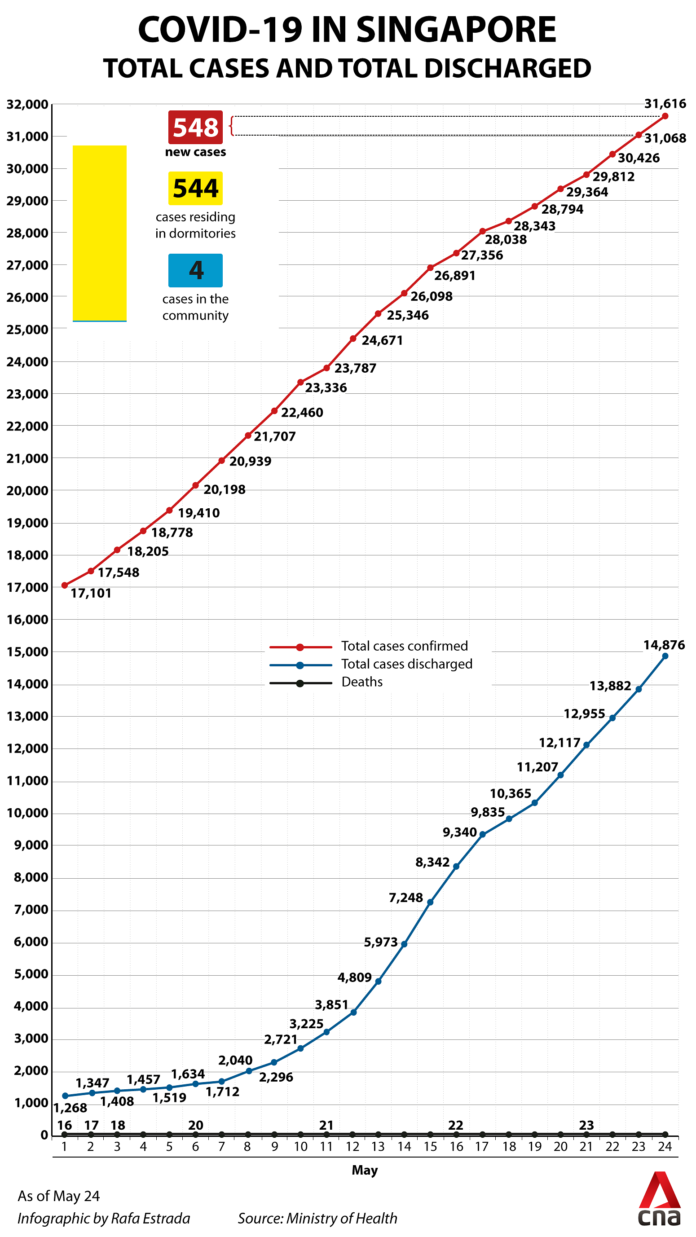
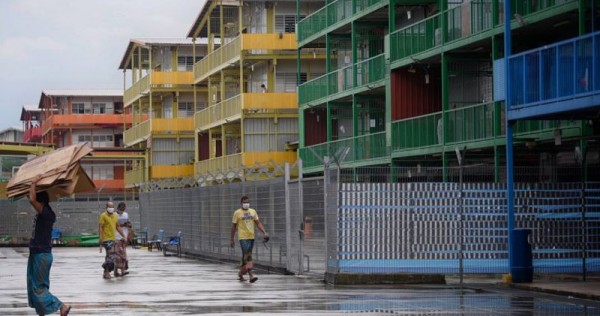
SINGAPORE: Singapore reported 548 new COVID-19 cases as of noon on Sunday (May 24), taking its total number of coronavirus infections to 31,616.  

Of the new cases, 544 cases were foreign workers residing in dormitories, the Ministry of Health (MOH) said. It added that many cases are still being picked up in dormitories due to extensive testing.

Four cases were from the community, comprising three Singaporeans and one work permit holder. 

One of the Singaporean cases is a 33-year-old woman who went to work at Iman Childcare at Tampines. This makes her the eighth pre-school staff member to be diagnosed with COVID-19 due to proactive testing.

Another Singaporean is a 55-year-old man who went to work at SSKBJV dormitory.

The third Singaporean is a 35-year-old woman linked to the cluster at CDPL Tuas Dormitory. She is a household contact of Case 30,385, a 37-year-old man who is linked to Case 24,831, the man who was deployed for operation duties at CDPL Tuas dormitory.

The one work permit holder case is a 30-year-old Bangladeshi man, who is currently unlinked.

The number of new cases in the community has increased from an average of five per day in the week before to an average of six per day in the past week.

“This is partly due to our active surveillance and screening of nursing home residents and pre-school staff, which have picked up more cases in the past week,” it said.

Of the new cases, 99 per cent are linked to known clusters, while the rest are pending contact tracing.

The number of unlinked cases in the community has remained stable at an average of 2 per day in the past two weeks.

No new clusters were reported on Sunday.

MOH has closed the cluster at Strand Hotel as there have been no more cases for two incubation periods.

On Sunday, MOH also said that 994 more patients have been discharged. In all, 14,876 have fully recovered from the infection and have been discharged from hospitals or community care facilities.

At the moment, 690 COVID-19 patients are still in the hospital. Most are stable and improving, with eight in critical condition in the intensive care unit, and 16,027 isolated and cared for at community facilities.

Twenty-three have passed away from complications due to COVID-19 infection.

READ: Inside the SuperStar Gemini cruise ship for foreign workers who’ve recovered from COVID-19

MORE PRE-SCHOOL STAFF MEMBERS TEST POSITIVE

On Saturday, two pre-school staff members were among the 11 community cases reported.

One of them, a 24-year-old Filipino woman, works at PCF Sparkletots @ Gambas and the other is a 54-year-old Singaporean woman who works at Shaws Preschool @ Lorong Chuan.

As of Sunday 12pm, seven pre-school staff members have tested positive for COVID-19, less than one per cent of the 15,300 who have been swabbed so far.   

The mass testing exercise, ahead of pre-schools reopening on Jun 2, is now at the halfway mark, said the Early Childhood Development Agency (ECDA) on Saturday.

BOOKMARK THIS: Our comprehensive coverage of the coronavirus outbreak and its developments

Download our app or subscribe to our Telegram channel for the latest updates on the coronavirus outbreak: https://cna.asia/telegram
moh covid update graphic

Source link

200,000 foreign workers treated to special Hari Raya lunch: MOM

SINGAPORE: Two hundred thousand foreign workers living in purpose-built dormitories were treated to a special lunch to celebrate Hari Raya Aidilfitri on Sunday (May 24), said the Ministry of Manpower on Sunday.

The initiative was organised by the Inter-agency Task Force, the Islamic Religious Council of Singapore (MUIS) and the Singapore Malay Chamber of Commerce & Industry “to bring festive cheer to our migrant workers”, said MOM in a press release.

Workers in 58 locations – including purpose-built dormitories, factory-converted dormitories and construction temporary quarters – were also given Hari Raya cookies.

The cookies were prepared by five central kitchens, with the help of 15 home-based bakers.

hari raya lunch mom

About 200,000 workers living in purpose-built dormitories were treated to a special lunch menu, such as mutton biryani or chicken chop rice. (Photo: Singapore Ministry of Manpower)

hari raya cookies mom

Workers in 58 locations – including purpose-built dormitories, factory-converted dormitories and construction temporary quarters – were also gifted with Hari Raya cookies. (Photo: Singapore Ministry of Manpower)

“In addition to bringing some festive cheer, the initiative also helped support our home-based bakers during this period,” said MOM.

The initiative was partially funded by donations from the community through the mosques as well as 16 organisations.

READ: The Big Read – Solving Singapore’s foreign workers problem requires serious soul searching, from top to bottom

Minister of State for Manpower Zaqy Mohamad, who visited Woodlands Dormitory to distribute the special meals and festive cookies, said he was “heartened” to see how the foreign workers in Singapore have “adapted and adjusted to how they can practise their religious duties in a different form” during the COVID-19 outbreak.

Singapore has reported 31,616 COVID-19 cases to date, with the majority linked to migrant worker dormitories. Twenty-three patients have died from complications arising from COVID-19 infection.

READ: Employers must pay foreign workers isolated in dormitories even if work passes are cancelled: MOM

Singapore has been in a “circuit breaker” mode since Apr 7 to stem the spread of the outbreak.

Measures have been taken to control the situation at the dormitories, including extensive testing and limiting foreign workers’ movements to within the dormitories.

The foreign workers have had a challanging Ramadan in the dorms over the last month, said MUIS CEO Esa Masood.

“We hope that this brings a little bit of joy to them and an important signal that Singapore did not forget them during this celebration,” he added.

BOOKMARK THIS: Our comprehensive coverage of the coronavirus outbreak and its developments

Download our app or subscribe to our Telegram channel for the latest updates on the coronavirus outbreak: https://cna.asia/telegram

Source link

Covid-19: Singapore reports 548 cases on Sunday

[ad_1]

The Ministry of Health has preliminarily confirmed 548 new coronavirus cases in Singapore today (May 24). Most of the new cases are foreign workers living in the dormitories, while three are community cases.

Further details will be provided later tonight.

A total of 31,616 cases have been reported in Singapore so far, with 13,882 cases discharged and 23 deaths.

For the latest updates on the coronavirus, visit here.

bryanlim@asiaone.com

[ad_2]

Source link

Bangladeshi worker who is Singapore's case 42 hopes to return home soon to be with wife and baby

[ad_1]

SINGAPORE – Much has happened since Mr Raju Sarker, 39, was infected with Covid-19.

For one thing, the number of coronavirus infections has shot up to more than 30,000 since Mr Raju, Singapore’s case 42, was hospitalised in early February.

The Bangladeshi national, the first foreign worker in Singapore to contract the virus, has also become a father. His son was born on March 30.

Before he came down with Covid-19, he had worked in Singapore for close to a decade. But he hopes to return to Bangladesh soon to be with his family.

Mr Raju spent nearly three months in hospital, with the bulk of his time spent sedated and needing the help of a ventilator to breathe.

He saw his son for the first time over video chat in mid-April, a week after his condition improved and he was transferred out of the intensive care unit to a general ward in Tan Tock Seng Hospital.

In an e-mail interview facilitated by the Migrant Workers’ Centre (MWC) on Saturday (May 23), Mr Raju said: ” I felt good seeing them. I asked them how are they doing?”

[ad_2]

Source link

Covid-19 patients no longer infectious 11 days after getting sick, research shows

[ad_1]

SINGAPORE – After 11 days of getting sick, Covid-19 patients no longer pose a risk of spreading the disease – which means they can be safely discharged.

Singapore now discharges patients only after two swab tests are negative for the virus. But a local study has shown that while the patients might test positive, it “does not equate to infectiousness or viable virus”.

That’s because the test detects parts of the virus’ genome, but is unable to show if they are just fragments of the virus, or if an intact virus is no longer viable and can’t infect anyone.

The position paper from Singapore’s infectious diseases experts say these new findings allow for revised discharge criteria.

[ad_2]

Source link

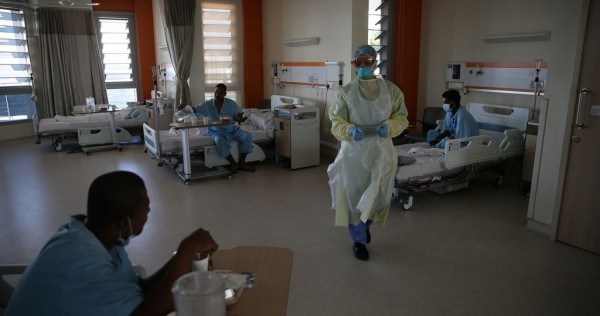
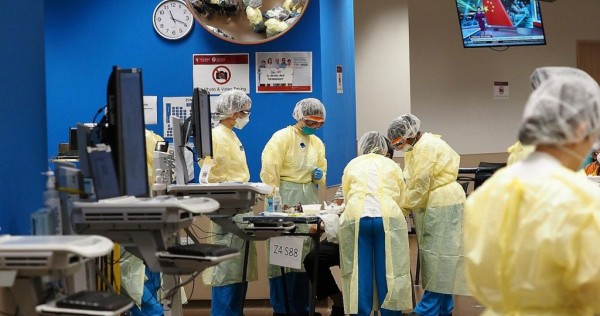
At ground zero: First-line defenders at TTSH-NCID's Covid-19 screening centre

[ad_1]

On the first day of Chinese New Year in January, Dr Ang Hou cooked, as he usually did, for his extended family who came to visit.

But his mind was not on the claypot rice he was making – his attention distracted by the constant WhatsApp messages coming through on his phone.

“I’d usually cook more, and make sio bak,” he says, referring to Chinese roast pork. “But I was in no mood; in fact, I was a bit antisocial that day,” says the head of the emergency department (ED) at Tan Tock Seng Hospital (TTSH).

And understandably so, because he knew he had a big battle on his hands, with a coronavirus causing a disease which the world now knows as Covid-19. The enemy had, at that time, already pummelled Wuhan, bringing the Chinese city to its knees, and was starting to assault other parts of China and the rest of the world.

[ad_2]

Source link

Coronavirus: Yoga, sea air and safe distancing on board cruise ships for 3,000 recovered migrant workers

[ad_1]

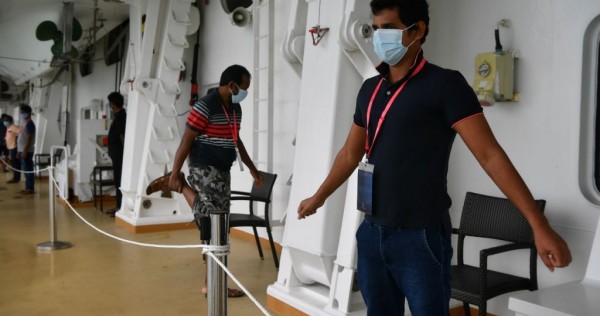
SINGAPORE – Every day, Mr Rajagopal Sathiyavasan, 42, starts his morning with a session of yoga and takes in a scenic view of the Singapore Strait.

The Indian national is one of about 3,000 migrant workers staying on board two mid-sized cruise ships, the SuperStar Gemini and the SuperStar Aquarius, which serve as temporary accommodation for workers who have recovered from Covid-19.

Both cruise ships, which are docked at the Marina Bay Cruise Centre and are run by Genting Cruise Lines, house non-essential workers.

The cruise company is prepared to have these workers on board until the end of July, said Mr Michael Goh, head of international sales at Genting and president of Dream Cruises, during a media tour of the SuperStar Gemini on Saturday (May 23). 

The company is, however, ready to extend the arrangement if necessary, he added.

There are about 200 crew members on each ship to support operations.

These temporary arrangements are part of the Government’s plans to reduce the number of people living in the existing foreign worker dorms, which have recently become the main source of Covid-19 infections here.

[ad_2]

Source link