Home Blog Page 2895

Bangladesh struggles to search factory after deadly fire

0

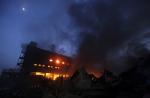
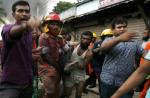
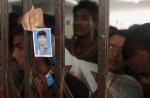
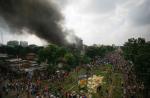
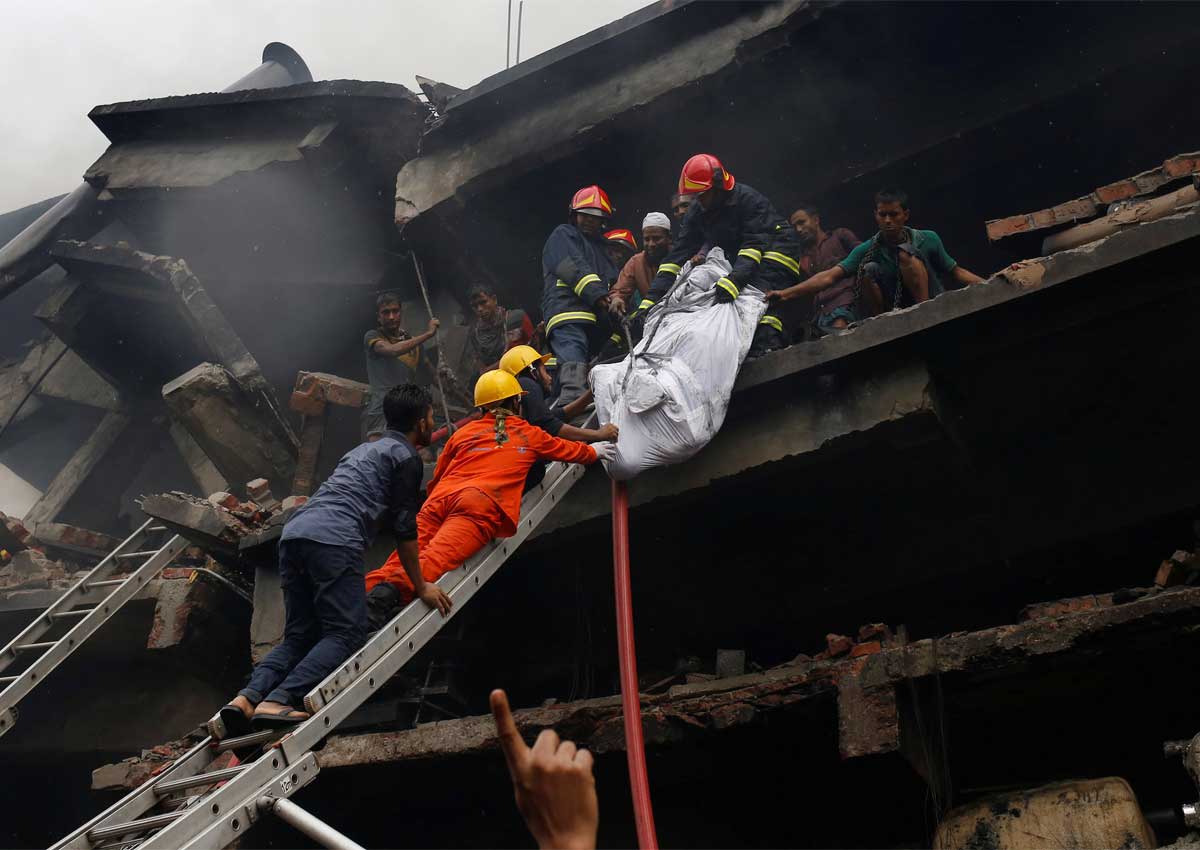
DHAKA – Bangladesh firefighters were struggling Sunday to search a packaging factory following a major blaze that killed 25 people amid fears more bodies could still be inside the destroyed building.

Around 100 people were working at the factory on Saturday when the fire caused by an explosion in the boiler room tore through the four-storey structure on the outskirts on the capital Dhaka.

Senior firefighting official Anis Mahmud said his workers toiled through the night to douse the blaze but the structure was still too dangerous to enter properly to search through the debris.

“The building is still standing on its skeleton but most of the walls have collapsed. There are small pits of fire inside therefore we have not managed to go in,” Mahmud told AFP.

Some 70 people were also injured, some critically, in the blaze at the Tampaco Foils Limited factory, which packages food and cigarette products for local and foreign brands.

Another firefighter said he feared more bodies were still inside the factory in the industrial town of Tongi.

“There might be more bodies underneath the rubble as many people were working inside during the accident,” he told AFP on condition of anonymity.

The blaze is the latest in a series of deadly accidents to hit impoverished Bangladesh, whose $27-billion garment industry is the world’s second largest behind China’s.

The accident is the worst since the collapse of the Rana Plaza garment complex in 2013 that killed more than 1,100 people in one of the world’s worst industrial disasters.

That tragedy triggered international outrage and successfully put pressure on US and European clothing brands to improve deplorable safety conditions at the factories that supply them.

Bangladesh factory inspector general Syed Ahmed said an investigation would occur into the cause of Saturday’s accident.

“We will find out the responsible people behind this disaster and will take all necessary and legal actions,” Ahmed told AFP.

According to the company’s website, the packaging factory supplies multinational and domestic brands including British-American Tobacco Bangladesh Limited and Nestle Bangladesh Limited.

Labour rights groups urged the Bangladesh government and Western companies to work harder to protect the safety of workers in their supply chains.

“The boiler explosion and resulting fire … demonstrates the ongoing dangers to industrial workers in that country,” a statement from a consortium of groups, including the International Labor Rights Forum, said.


Image: 
Category: 
Publication Date: 
Sunday, September 11, 2016 – 15:49
Send to mobile app: 
Source: 


Rotator Headline: 
Bangladesh factory fire: 25 dead, firefighters struggling in search for more bodies
Story Type: 
Others

Source link

Race: Will reserved elections have desired effect?

0

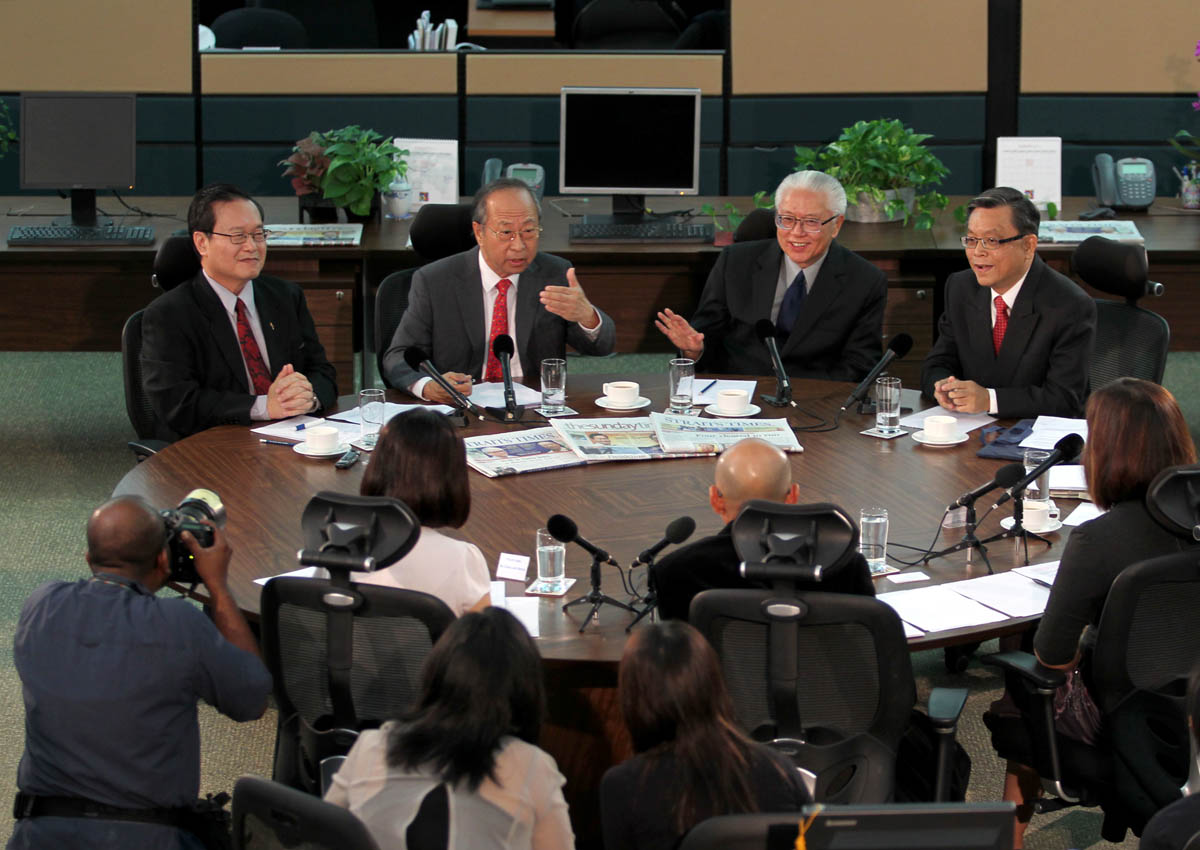
At a dialogue last Thursday on the proposed changes to the elected presidency, a man in his mid-60s who gave his name as Mr Ng said he was hesitant about the idea to reserve elections for minority races.

If presidential candidates are not of a voter’s race, they might feel indifferent to the outcome, and not bother to vote properly, he suggested at the session held in Mandarin.

He continued: “If there are two Malay candidates, and we don’t know them very well… what if people would rather spoil their votes?” A quick show of hands showed, however, that no one in the audience was willing to throw away his vote in this manner.

But the man’s query reflects one particular concern that was also raised by observers about the Constitutional Commission’s proposal to reserve a presidential election for a particular race if there has been no president from that race for five terms in a row.

The idea of a reserved election was born out of a concern to ensure minorities are not – and do not feel – shut out of the highest office in the land.

The commission added its proposal has a “natural sunset”, saying: “If free and unregulated elections produce presidents from a varied distribution of ethnicities, the requirement of a reserved election will never be triggered.”

But might people, knowing that elections may be reserved periodically for particular races, change their voting behaviour?

In particular, might voters then take into consideration the race of candidates more than they otherwise would?

Institute of Policy Studies deputy director Gillian Koh and Singapore Management University law don Eugene Tan think there could be a risk, if it is not guarded against.

Says Dr Tan: “The practice of having a reserved election could very well result in voters exhibiting a stronger tendency to vote along racial lines during an open election.”

Take for instance, an open election pitting a Chinese candidate against a minority-race candidate.

What the analysts’ argument suggests is that in such an election, a Chinese Singaporean might choose to vote for the candidate of his own race since other races have their turn at the presidency in a reserved election.

What could also be of concern is that minority candidates might not even come forward to contest when an open election is held. They would, instead, wait for a reserved election where they stand a higher chance as they are not competing against someone who is Chinese.

If this then results in open elections becoming the domain of candidates who are Chinese, minority voters could become disillusioned.

But as voting is compulsory in Singapore, they could cast their vote arbitrarily without care or consideration for the attributes and merits of the candidates.

However, other observers say that this is an extreme and pessimistic reading of proposals that are designed to ensure minority representation. There are two broad reasons for thinking this way.

One is that race already plays a part in the way people vote.

Two, the system is likely to be designed in such a way that reserved elections will be held only if needed, and will not be a regular routine.

Observers and MPs such as Pasir Ris-Punggol GRC’s Sun Xueling, say that the feedback they have received so far gives them hope.

Says Ms Sun: “The Chinese community prides itself on a spirit of fairness and inclusivity. Based on the people I have spoken with, they support the need for a mechanism that safeguards the interests of the minorities.”

Sociologist Tan Ern Ser says Singapore can have a system that presumes race neutrality. But that means ignoring the reality of race as an issue, and hoping that the race factor will somehow decline in significance.

“That could have disastrous consequences because we cannot simply sweep it under the carpet,” he says.

The better option is to recognise the significance of race and “do all we can to level the playing field” – as the minority provision attempts to do.

While this may reinforce racial identity and differences, at least in the short term, this is not necessarily harmful, he argues.

“What is harmful is racial inequality, not racial diversity. By not levelling the playing field, we are perpetuating racial inequality.”

Institute of Policy Studies senior research fellow Mathew Mathews, who specialises in race issues, is also more optimistic. He says that restricted elections will be the exception and not the rule – exercised when years have passed without a minority president.

“People might view that particular election differently, but hopefully they can see the bigger picture of wanting to have a presidency which is served by presidents of different races,” says Dr Mathews.

Additional reporting by Olivia Ho


This article was first published on September 11, 2016.
Get a copy of The Straits Times or go to straitstimes.com for more stories.

Image: 
Category: 
Publication Date: 
Sunday, September 11, 2016 – 18:00
Send to mobile app: 
Source: 


Story Type: 
Others

Source link

Election: How to iron out potential problems?

0

In many ways, the report of the Constitutional Commission after its review of the elected presidency did not come as a surprise.

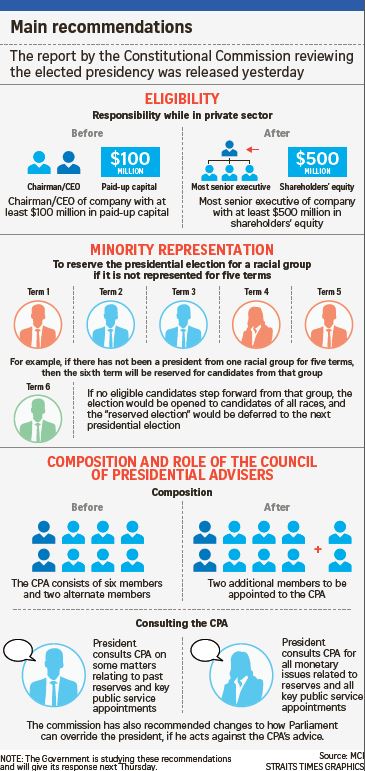
As expected, the panel covered areas outlined in its terms of reference: updating eligibility criteria for candidates, strengthening the role of the Council of Presidential Advisers (CPA) and ensuring minority representation periodically.

Then came Chapter Seven, titled “Other Matters” – and there, the commission acknowledged that it went beyond its remit, but explored matters it considered significant enough to warrant discussion.

Chief among these issues was the commission’s worry over the inherent, “unavoidable tensions between the president’s historical and custodial roles” which emerged in the office’s 25 years of existence.

The fundamental justification for making the presidency an elected one is so that he has a mandate from the people to exercise his powers of safeguarding the reserves and integrity of the public service.

But this part of his job description can potentially come into conflict with another: being a symbol that unifies the nation. This is why, the panel said, the Government may wish to consider the proposal some had made – fundamentally overhaul the office and split the roles at some point in the future.

In response, the Government has reiterated the need for an elected president.

Since Singapore is continuing down the path of electing the president, at least for now, what future concerns might it have to mitigate?

The commission hinted there are three trends to watch out for, if Singapore is to elect the president instead of appointing him or her.

First, the president’s task of potentially having to confront the government of the day is somewhat at odds with his role as a unifier. So far, no elected president has had to act as a check on a profligate government with plans to dip into the reserves that it cannot robustly justify.

But should that happen in Singapore’s future – and there is no guarantee that it will not – will a president who values his role as a unifying force find it hard to say no?

Raffles Medical Group executive chairman Loo Choon Yong raised this point during the public hearings on the review, saying of the elected president: “You want this guy to be the nice guy, unifier, and then you want him to have what it takes to tell a roguish prime minister, ‘Hey, leave our assets alone.’

“I think these (requirements) call for different chemistries.”

Second, to be elected, a presidential hopeful has to go through the rough and tumble of a national election, which can be heated, divisive and politicised. It is hard to see how a candidate will not be seriously embarrassed or suffer a dip in prestige even if elected.

Worse, the panel noted that because the president’s role is partially to check the Government, it gives candidates an incentive to campaign on an anti-government platform. If such candidates win, they might clash further with the Government over hard choices that have political costs, the report noted.

As political observer Derek da Cunha sees it: “Voters in Singapore, like voters everywhere else, tend to look at elections where no real change in the power structure takes place, as simply occasions to cast a protest vote.”

“Most voters want to have their cake and eat it too: to largely retain the status quo but to bring the ruling elite down a peg or two,” he says, adding that this occurred in the 2011 Presidential Election.

If elections in the future continue to be viewed by voters through this partisan lens, things might become harder for any elected president.

While the commission has proposed enacting laws to make it an offence for candidates to make promises or take positions beyond the ambit of the presidency, it remains to be seen whether this will come to pass or be effective.

The third concern flagged by the commission was the anticipated difficulty of finding a single man or woman with the qualities to be both a custodian and a unifying figure.

The panel said that these were “competing qualities”. It noted that to be a symbol of unity, a president needs the ability to connect with and represent the general populace.

But these “may not always, or even usually”, be found in individuals who also possess the financial qualifications and technical competencies the president needs to exercise his custodial powers.

Several observers, such as retired PAP MP Inderjit Singh, suggested returning to the system of an appointed president.

“If the Constitution is amended to give more powers to the CPA and limiting the president’s role to focus on unity and ceremonial duties, then I don’t see the need for an elected president,” he says.

“We can go back to an appointed president and this will eliminate the need to reserve elections for certain races when the need arises.”

In any case, whether these differences are irreconcilable or not, the Government should keep its eye closely on these potential contradictions, and perhaps revisit the issue in a future review.


This article was first published on September 11, 2016.
Get a copy of The Straits Times or go to straitstimes.com for more stories.

Image: 
Category: 
Publication Date: 
Sunday, September 11, 2016 – 18:00
Send to mobile app: 
Source: 


Story Type: 
Others

Source link

Campaign: Legislate against pitching false promises?

0

Erroneous claims pitched to voters by some candidates during the hotly contested 2011 Presidential Election campaign prompted the Constitutional Commission to go beyond its terms of reference.

To prevent misinformation being bandied about by those in the running at the next presidential election, the panel took the step of proposing that it be an offence for candidates to misinform voters during the campaign.

Apart from requiring candidates to declare explicitly that they understand the constitutional role of the president before they are issued with a certificate of eligibility, the panel wants sanctions to be imposed for breaching election rules.

These should include criminal sanctions, said the commission, without going into specifics. In extreme cases, a candidate’s certificate of eligibility could be revoked.

In 2001, some candidates made promises to Singaporeans that went beyond the constitutional functions of a president.

The commission did not name any particular candidate. However, former civil servant Tan Jee Say pitched a $60 billion “national regeneration plan” to build more hospitals and schools, among other things, while former NTUC Income chief executive Tan Kin Lian said he would introduce state pensions for the elderly.

One needs only to look to Britain’s Brexit referendum in June to see the dangers of misinformation by campaigners.

A total of 52 per cent of the electorate successfully voted for Britain to leave the European Union, but afterwards some expressed regret. They were bitterly disappointed when “Leave” campaigner Nigel Farage admitted that his camp’s pledge to redirect the £350 million (S$629 million) sent weekly to the EU to the National Health Service instead could not be guaranteed.

Especially in a close fight, some candidates may try to “buy” votes predicated on lies or promises that are impossible to fulfil. This is a great disservice to voters, observers tell The Sunday Times.

Most nations or states do not legislate against misinformation during campaigns, but a number do have ground-up initiatives to combat political distortions and lies.

In the United States, for example, independent sites such as FactCheck.org and PolitiFact.com are run by the Annenberg Public Policy Centre and the Tampa Bay Times respectively.

One location that has criminalised misinformation in political campaigns is the state of British Columbia in Canada. Candidates who are found to have made false or misleading statements can be liable to a fine of not more than C$20,000 (S$20,900), imprisonment for a term not longer than two years, or both.

Lawyer Rey Foo, who was among those who gave submissions to the Constitutional Commission, said that establishing rules to prevent misinformation during campaigning “should in fact strengthen the democratic process by ensuring that all candidates campaign on a level playing field”.

He added: “Voters are then clear about the views and position of each candidate and will not be misled by empty promises. In any event, the campaign process for an elected presidency should be different from that of a parliamentary one.”

But are criminal sanctions really necessary? Some analysts do not think so.

While Sembawang GRC MP and lawyer Vikram Nair welcomes the idea of more “dignified” elections, he thinks it would be hard to enforce sanctions, given the short campaign period of nine days.

For one thing, whether a candidate’s statement is considered misinformation has to be determined quickly and punishments meted out soon after. He explained: “If the candidate has already been elected and he’s found to have breached some of these rules later, it could be very awkward.”

Singapore Management University (SMU) law don Eugene Tan said such sanctions, though made with good intentions, could lead to unintended consequences.

“Would applying the rule book be seen as a heavy- handed method to deal with a person who may not be the government’s presumptive choice to be president?” he asked.

“Any attempt to regulate what amounts to misinformation would also be seen as an attempt to interfere with the electoral process.”

Others were also not convinced that sanctions were needed, and said that lawmakers ought to have more faith in the electorate.

“What happened during the 2011 Presidential Election was a sufficient way of dealing with the matter – the Government perceived that some candidates had misunderstood the role of the elected president, so the minister for law pointed this out,” said SMU assistant law professor Jack Lee.

“We need to trust that voters will assess the matter for themselves and decide whether they trust particular candidates or not, based on the statements that they make.”


This article was first published on September 11, 2016.
Get a copy of The Straits Times or go to straitstimes.com for more stories.

Image: 
Category: 
Publication Date: 
Sunday, September 11, 2016 – 18:00
Send to mobile app: 
Source: 


Story Type: 
Others

Source link

Singaporean man dies in Johor car crash

0

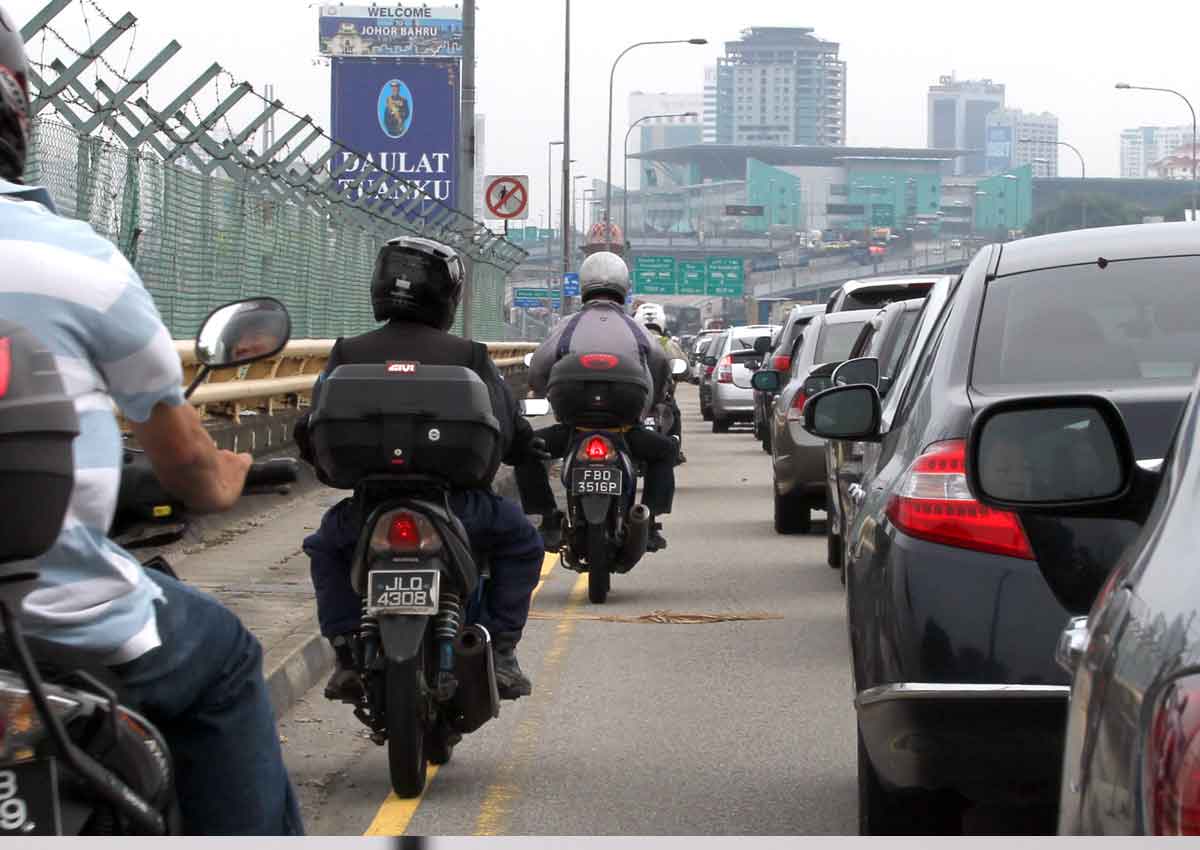
A Singaporean man has died after his car, carrying two other passengers, hit the back of a lorry in Johor, Malaysia on Saturday (Sep 10).

Mr Ng Kai Jie, 21, suffered serious head injuries and died on the spot as the impact of the crash was on the driver’s side, reported local media.

Mr Ng was en route to Malacca when the accident happened. His car hit the rear-left side of the lorry, said Batu Pahat district police.

The impact of the crash sent both vehicles veering off the road.

However, the lorry driver, a 43-year-old known as Baharom Ibrahim, suffered only minor injuries.

One of the car’s passengers, Mr Ngian Zhi How, 23, also suffered minor injuries, reported The Straits Times.

Mr Ng’s body was sent to Sultanah Nora Ismail Hospital for post-mortem.

Mr Ibrahim was also sent to the same hospital for treatment.

maryanns@sph.com.sg

Image: 
Publication Date: 
Sunday, September 11, 2016 – 15:26
Send to mobile app: 
Source: 


Story Type: 
Rewritten Story

Source link

Timing: When should the proposals kick in?

0

People may not have enough time to understand and support the recommended changes to the elected presidency if the proposals take effect at the next presidential election, say three political watchers.

Indications are strong that the changes are being timed for the next presidential election, which must be called by August next year.

Prime Minister Lee Hsien Loong had said in a Mediacorp interview last week the changes should be put in place by then.

The Government will release a White Paper in response to the recommendations on Thursday.

The changes are set to be debated and passed by Parliament in November.

This means a period of just under a year from January this year, when the idea was first floated, to the changes being conceived and written into law.

The process included groups and individuals airing their views at public hearings in April and May, and the release of a report last week by the panel reviewing the presidency.

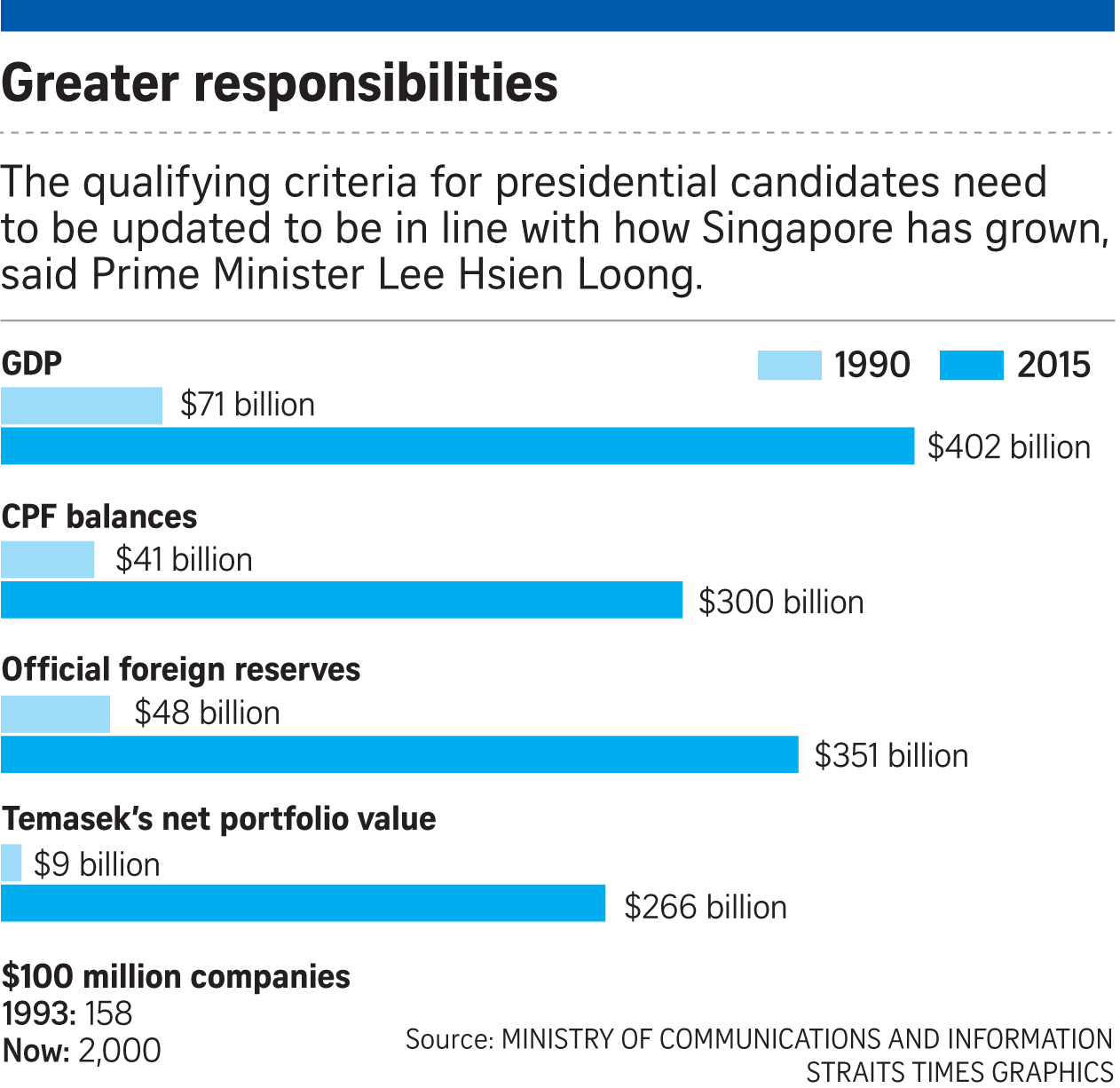
Observers agree on the rationale for the changes, which include updating the eligibility criteria for candidates and reserving elections for specified races.

But the question is when to carry out the changes, they say.

Some prefer to wait and change the law only after the next presidential election, due next year.

Pushing the changes till then will give people time “to debate and discuss such an important change in the way our country will be governed”, says retired People’s Action Party MP Inderjit Singh.

The observers point out that the elected presidency was seven years in the making. Then prime minister Lee Kuan Yew mooted the idea in 1984 and it took effect in 1991, after two White Papers were debated in Parliament from 1988 to 1990.

Law don Eugene Tan notes that with the current review, “we are barely nine months in the process”.

“Why the haste? We have time; perhaps not seven years but certainly not less than a year, as seems to be the Government’s timeline,” he says.

Political scientist Bilveer Singh agrees, saying that “slow and steady incrementalism” is prudent.

They give two more reasons for calling for more time.

One, it avoids the perception that the Government is “railroading” the changes through. And two, they are not convinced there is an urgent need to carry out the changes swiftly.

Mr Inderjit Singh says that “no matter who is elected as president next year”, Singapore is in no immediate danger that its national interests, say, its reserves, are being threatened.

“The current processes are robust enough for Parliament to override the president and the Council of Presidential Advisers if there are major disagreements,” he adds.

But Pasir Ris-Punggol GRC MP Zainal Sapari says it would be too long a wait if changes are implemented at the presidential election after next year’s, which would be in 2023.

The point of making the eligibility criteria more strict is to ensure that presidential hopefuls are properly qualified for the job, he notes.

“If we delay it, we send the message that there may be candidates at the (coming) presidential election who do not meet the stricter criteria, but we’re letting them run anyway.

“As a voter I do not feel comfortable with this,” says Mr Zainal.

Delaying the implementation of the provision to reserve elections for particular races would also be a bad idea, he says.

Should the changes take effect before the next election, many observers then reckon that that poll will likely be reserved for Malay candidates. This is because there has not been a Malay president since Mr Yusof Ishak died in office in 1970.

“If you postpone the changes further, it’ll be more than the five terms recommended by the commission,” he says.

Mr Zainal’s sentiments are largely in line with what the Constitutional Commission says in its report.

The panel said that while the question of timing was to be left to Parliament, it would be better to introduce changes sooner rather than later.

But it added: “It would be incongruous… to conclude that changes are called for to safeguard the nation’s vital interests, but then also to propose… that these be deferred for at least seven years”.


This article was first published on September 11, 2016.
Get a copy of The Straits Times or go to straitstimes.com for more stories.

Image: 
Category: 
Publication Date: 
Sunday, September 11, 2016 – 18:00
Send to mobile app: 
Source: 


Story Type: 
Others

Source link

This was a gold medal that Pin Xiu was determined to win: Coach

0

RIO DE JANEIRO – Team Singapore para-swimming coach Mick Massey has hailed newly-crowned Paralympic champion Yip Pin Xiu as a “fantastic athlete” following her sensational win in the women’s 100m backstroke S3 final, and revealed that the gold medal was one…

Source link

Call-a-lawyer web services target small businesses, individuals seeking quick legal aid

0

SINGAPORE – When a clause on an employment contract befuddled him, Mr Adrian Tan decided to seek legal advice. He turned to social media for recommendations, and ended up at a legal aid website, which touted a 15-minute phone consultation with a lawyer for a…

Source link

Once a refugee, now a man of the world

0

Earlier this year, Mr Julien La Chon bought a country house in the south of France.

Knowing how much his father loves playing handyman, he invited the 71-year-old to fix a couple of things on the property.

Over the three days they spent together, father and son did something that they rarely did: Talk about the past. Mr La Chon, 44 – a Cambodian refugee who resettled in France – for the first time asked about his mother who died when he was four years old.

A seamstress from Phnom Penh, she was sent by the Khmer Rouge to the countryside to become a rural peasant. She died after stepping on a landmine and was buried in a mass grave in the country’s notorious Killing Fields.

It took a while for the news to reach her husband, who was banished to work in another farm.

“He could only go to where she was buried a month after she died. The Khmer Rouge gave him only a couple of her belongings, they kept the more valuable ones,” says Mr La Chon.

The three days they spent together deepened his understanding and respect for his father, a hard-working but reserved man not given to open displays of affection.

“What I have is made possible because my father provided me with what he could,” he says quietly.

And what Mr La Chon has is a gloriously uplifting success story, one in which he lifts himself out of a quagmire through hope, will and diligence. He is the Singapore-based head of development in Asia for Gunvor, one of the world’s major independent oil and petroleum trading companies.

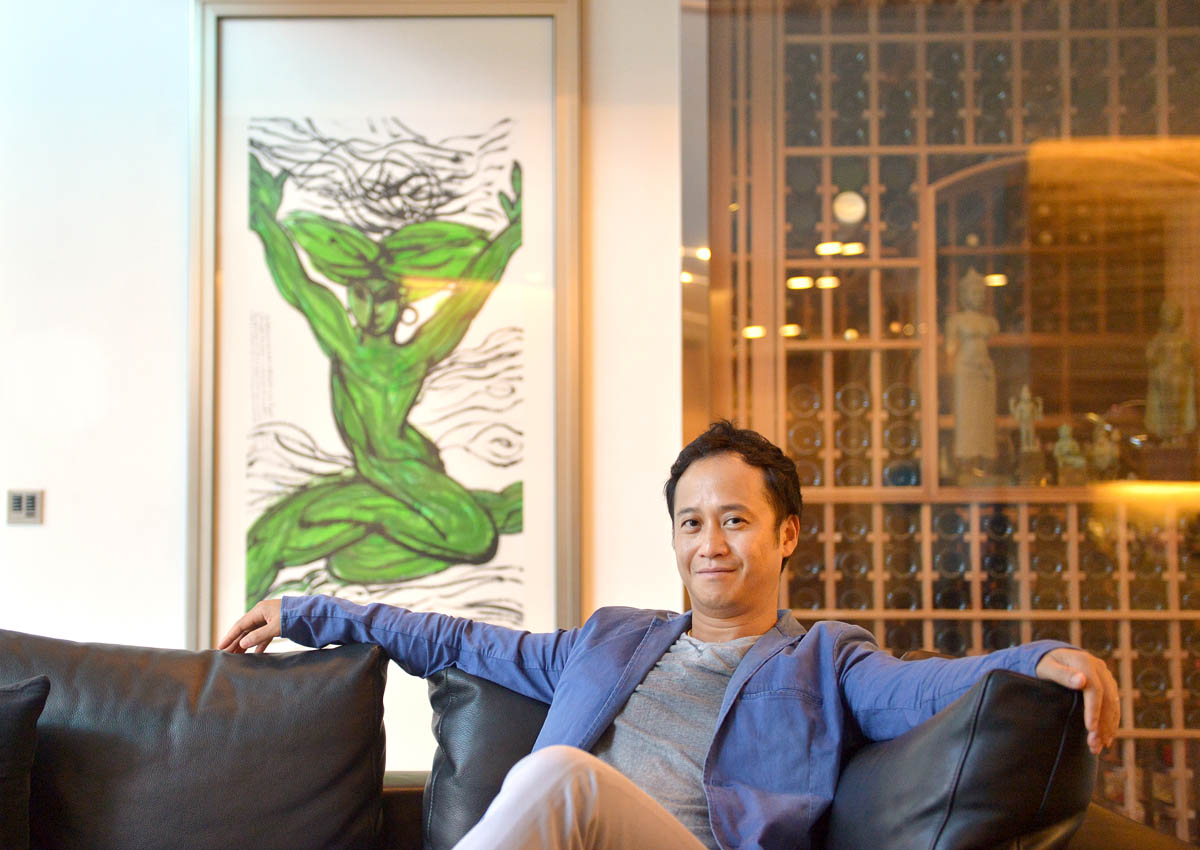
Well-groomed, mild-mannered and cultured, he is stylishly decked out in a grey T-shirt, cobalt blue jacket and beige jeans. He speaks several languages, including French, English and Mandarin, owns several properties and has an eye-popping art collection. He can more than hold his own on topics ranging from wine to politics and cultural identity.

The diminutive man was born in Phnom Penh and has a brother who is three years older.

Before war turned Cambodia into a land of suffering and misery, his father worked in the Phnom Penh airport. Both his father and mother were among the two million Cambodians sent from urban areas to the countryside when the Khmer Rouge came into power in 1975.

“She died on June 24, 1976. She was only 26,” Mr La Chon says.

“I have no recollection of her. All I have is an audio tape of her voice. I had an aunt who lived in Bangkok, and in those days, she and my mother would record greetings which they would send to each other.”

He escaped Cambodia by boat with his paternal grandparents, immigrants from Swatow in Guangdong.

“My grandparents took those who ate but could not work: me, my brother and some of my younger aunts and uncles,” he says.

They ended up in a refugee camp in Thailand, where they lived from 1977 to 1979. He remembers it as a big playground.

“I chased geese and people would dig holes during the monsoon season and when the rivers overflowed, catfish and frogs would jump in and we would jump in to catch them.

“I remember we had to queue for our rations and to wash up. We stayed in huts with curtains to keep out mosquitoes and other families.”

He and his loved ones were granted asylum in France and went to the country in batches.

In 1979, he and his grandparents landed in a transit centre for refugees in Amiens, outside Paris.

“I had clothes and toys provided by the Red Cross and stayed there for about six months,” he says.

One day, when he was about seven, his grandmother took him to see a man.

“She told me, ‘This is your father. Call him Dad.'”

His father, it turned out, had escaped from the Killing Fields and undertaken a perilous journey crossing several countries, including Vietnam and Malaysia, to look for his family in France.

“I only found out when we were together in the south of France earlier this year that he didn’t see the family immediately when he arrived in the country. He had no money, nothing. But he could speak French so he went out to work and got some money first,” he says.

His family – about a dozen people including his grandparents and several aunts and uncles – began their new life in a dingy one-room flat in Bondy, a suburb about 11km away from central Paris.

His father worked at a variety of jobs – from clerk to despatch rider – to keep the family afloat.

“In the mornings, I had to tiptoe over a row of bodies sleeping in the living room,” he says.

When he started primary school, he spoke no French and was the only Asian child.

“Maybe because of that, I got the teachers’ attention, they took care of me,” he says, adding that he topped his class every year.

Petty crime was rife in his neighbourhood. Although his brother Roland was protective and took good care of him, Mr La Chon did not shy away from trading blows with bad boys if he had to. It was one way of earning their respect, he says.

Many became friends.

“I got along well with them but I never joined them. I studied first and when I was done, I would go out and play with the thugs,” he says with a laugh.

Unfortunately, many of them fell foul of the law and landed in jail.

“One of them stole a motorbike, was chased by the cops and died when he had an accident. In those days, they ended up as thieves and gangsters. But today, they have another platform: terrorism,” he says.

Late last year, a group of gunmen and suicide bombers carried out a series of attacks in Paris which killed 130 people and injured nearly 400 others. An associate of the ringleader was a Syria-based Islamic State in Iraq and Syria (ISIS) member who was born in Bondy.

“When you grow up in such a neighbourhood, you see both the positive and the negative… I always tell myself I have choices. I just have to make the right ones,” Mr La Chon says.

Thankfully, his interests were more healthy. He and his brother loved going to small art-house Parisian cinemas to get their fill of Hollywood classics.

“Humphrey Bogart, Marlon Brando… I loved them. It was also a way for me to learn English.”

Life slowly got better. His father remarried, and started a restaurant with his wife in a town quite a distance away.

“I saw him only once a week, mostly on Mondays. I would blame my father for not being present in my youth, but after you grow older and have your own kids, you come to realise that for parents it is as hard, if not even more heartbreaking, to leave kids behind, to go out, earn money and provide for them,” says Mr La Chon, who is married to a musician with whom he has two children, aged four and six. His wife is from China.

Roland went on to read engineering, while he got himself a scholarship and read business at the ESLSCA Business School.

Upon his graduation, his brother – by then an executive at insurance company AXA in Singapore – advised him to take a year off to travel.

“My first stop was Taiwan; my father wanted me to improve my Chinese,” says Mr La Chon, who enrolled for Mandarin classes at National Taiwan Normal University. “He was also hoping that I would get myself an Asian girlfriend.”

Then it was to Singapore, Malaysia, Indonesia and Hong Kong. Since then, he has traversed the globe. In 2003, he went to Cambodia for the first time.

“I met my cousins from my mother’s side. My dad also wanted me to visit our home. It was quite emotional,” he says.

Back home in Paris in 1997, he was hired as an oil trader by French oil company Elf Trading. After a year’s training in Geneva, he was posted to the Singapore office the following year. His career took off. After a stint at another company, Addax, he was tasked with setting up Gunvor Singapore in 2007.

In less than a decade, the company – which has an office at the Marina Bay Financial Centre – grew from a staff of two to about 130. Mr La Chon was the managing director until 2012, when he became head of development for Asia.

More than just a head for corporate strategy, Mr La Chon also has a keen eye for art.

His collection includes pieces by masters such as Zhang Daqian, Xu Beihong and Wu Guanzhong.

In May this year, he paid $630,000 for Singapore artist Tan Swie Hian’s The Nelson Mandela Unity series.

Sold through a Bonhams auction in Hong Kong, the set of six images of the hands and arms of Mr Mandela breaking free from manacles are signed by the late iconic freedom fighter and Mr Tan.

A man who enjoys a good tipple, Mr La Chon started wine company Aethers with a couple of partners last year. Among other spirits, Aethers is the sole importer in Singapore of the famous Armand de Brignac – also known as Ace of Spades. It is a champagne range which costs upwards of $500 a bottle.

Earlier this year, the company organised its inaugural Bourgogne Wine and Charity Dinner where it introduced Hospices de Beaune to Singapore. Famous for its hospital-turned-museum as well as its 60ha of vineyards, it holds an annual charity auction of the barrels of wines produced on its expansive grounds.

Because of what he has gone through, Mr La Chon has a soft spot for children and education and donates generously to these causes. France, he says, changed his life.

“I’m a self-made man but I was also a refugee. The French government gave me a chance to start life again. Everyone deserves a second chance.”

Asked how his experiences have shaped his life, he says: “In my young life, the black star took my mother away from me. The void left by mother was filled up with the love of my grandparents.”

He and and his brother, he says, did not fall by the wayside because they clung to traditional family values and were determined to get a better life.

“Being street-smart is to feed on the tricks of a street life and not fall into it,” says Mr La Chon, whose brother runs a reinsurance broking firm in Hong Kong.

Life, he says, need not be intimidating.

“Fate can knock you down. How you stand up tall and fight back really carves your destiny.”

kimhoh@sph.com.sg


This article was first published on September 11, 2016.
Get a copy of The Straits Times or go to straitstimes.com for more stories.

Image: 
Category: 
Publication Date: 
Sunday, September 11, 2016 – 17:00
Keywords: 
Send to mobile app: 
Source: 


Story Type: 
Others

Source link

Malaysia bans school trips to S'pore, Philippines

0

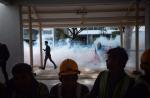
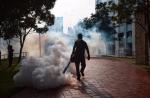
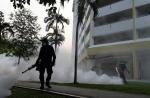
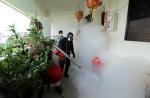
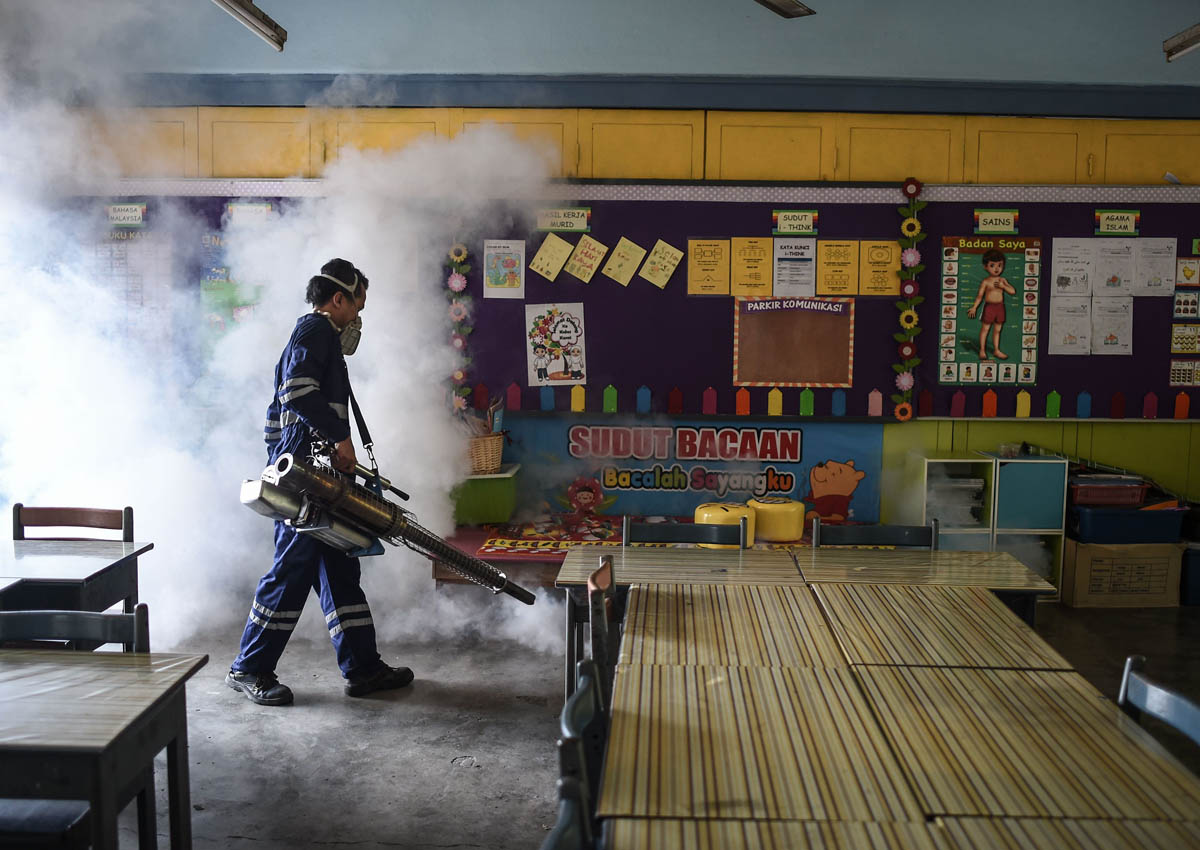
KOTA TINGGI – Malaysia’s Education Ministry has imposed a temporary ban on school trips and other education-related visits to Singapore and the Philippines to prevent the spread of the Zika virus, according to Malaysian media reports.

The ministry issued a nationwide circular to all state and district-level education authorities announcing the temporary ban on Sept 1 after a high-level ministry meeting, Education Minister Mahdzir Khalid said yesterday.

“A circular was issued to all district education offices, state education departments and schools for all trips to Singapore and the Philippines to be postponed for the time being because of the cases of Zika in those countries,” the New Straits Times quoted Datuk Seri Mahdzir as saying.

Malaysia on Sept 1 reported its first case of Zika in a 58-year-old woman who had visited Singapore.

The Malaysian Education Ministry’s directive will remain in place until the country’s Health Ministry issues an update on the Zika situation in Singapore and the Philippines.

Meanwhile, the husband of a pregnant woman in Johor Baru, who was found to be infected with Zika, has also tested positive for the virus, Malaysia’s Health Ministry said yesterday.

Other than a rash since Sept 2, the 25-year-old shows no other symptoms of infection, said the director-general of health, Datuk Dr Noor Hisham Abdullah. The man lives in Johor Baru but commutes daily to Singapore for work. He has been warded at a public hospital in Johor for further checks and treatment, Dr Hisham said.

Separately, Taiwan yesterday confirmed its seventh Zika case involving a 20-year-old woman from Singapore. According to a Taiwan Centres for Disease Control press release, the woman lived in Aljunied. She had travelled with friends to Japan from Aug 26 to Sept 3 and started developing a rash, joint pain and headaches on Sept 1.

She was admitted to hospital when she travelled to Taiwan last Sunday as the symptoms persisted and was tested positive for Zika a day later. It was determined that she was infected in Singapore. She currently has no symptoms, but will be quarantined till tomorrow.

None of her close contacts has shown symptoms of Zika infection.


This article was first published on September 11, 2016.
Get a copy of The Straits Times or go to straitstimes.com for more stories.

Image: 
Publication Date: 
Sunday, September 11, 2016 – 16:00
Keywords: 
Send to mobile app: 
Source: 


Story Type: 
Others

Source link