Home Blog Page 2788

Thailand bans tourism video for showing masked demons doing 'frivolous' things

0

The Culture Ministry has shown the red flag to a viral music video that promotes Thai tourism through Khon characters.

Scenes showing the Ramakien epic character Thotsakan (Ravana) on horseback, a jet ski, a go-kart, and a tuk-tuk in the music video will be banned. Also facing the axe are scenes showing the imaginary king of giants cooking Thai sweetmeat.

“The Culture Ministry says such scenes are inappropriate. It says Thotsakan should be riding an elephant,” Bandit Thongdee, president of the Thai Film Director Association, said in his capacity as the director of the music video.

Bandit said the Culture Ministry seemed to want about 40 per cent of the music video content removed.

“I will try to oblige. But such editing would also mean that some tourist places that were promoted may not have a presence,” he said.

He lamented the ministry’s action, saying it was not his intention to hurt the grandeur of Khon culture – traditional Thai mask dance – but he just wanted to add a contemporary touch.

Bandit said he would submit the re-edited music video to the Culture Surveillance Bureau for scrutiny next Tuesday.

“If they are still unhappy, we will scrap this music video,” Bandit said. “I won’t be able re-edit again and again because we have limited footage,” he added. Bandit said V Bangkok had hired him to produce this music video to promote domestic tourism.

The Culture Ministry’s move has caused an uproar in social media, with many netizens seeing nothing wrong in using Khon to promote tourism.

Yesterday, social media like Facebook was swamped with a drawing showing the back of a sad-looking Thotsakan with a message reading, “I can’t do this. I can’t do that. I can’t even cook sweetmeat … Oh, I am not a minor anymore.”

The music video was first unveiled on September 12.

Culture Ministry permanent secretary Apinan Poshyananda tried to play down the uproar, suggesting that the re-edited version could be even better.

Apinan said he was among those who had enjoyed the original version of the video but experts later pointed out to him that some scenes were inappropriate.

“Thotsakan is the king of giants. He is a grand, formidable character. So, he is not supposed to engage in things like sweetmeat cooking,” he said, backing the experts’ opinion. “We have resolved that all parties concerned should meet half-way.”

Apinan said experts had also explained that Khon was a form of high art and people should have respect for it and not treat it frivolously. He was speaking after a meeting with the Bunditpatanasilpa Institute and other relevant agencies.

Apinan said his ministry would consider releasing a manual to guide people on how to apply Thai arts and culture to their work.

“In future, advertising agencies or any other agencies may consult our experts so that we can promote Thai culture together in a proper way,” he said.

Apinan dismissed criticism that the Culture Ministry’s conservative stance on Khon could make it impossible for the common man to relate to cultural art.

“We will work with the new generation and creative minds. We hope to keep Khon alive. We hope it won’t die,” he said.

Assistant president of Bunditpatanasilpa Institute, Teeraphat Thongnim, said he was concerned that the use of Khon costumes for things beyond Khon traditions would finally kill this art. “If we allow this to happen, people will conclude that Khon characters can do anything and Khon traditions will fade away,” he said.

Image: 
Category: 
Publication Date: 
Friday, September 23, 2016 – 10:57
Send to mobile app: 
Source: 


Story Type: 
Others

Source link

Cathay Cineplexes: 1-for-1 Movie Tickets with MasterCard via Samsung Pay from 22 Sep 2016

0

CATHAY CINEPLEXES: 1-for-1 movie tickets with MasterCard payments via Samsung Pay

Cathay Cineplexes: 1-for-1 Movie Tickets with MasterCard via Samsung Pay from 22 Sep 2016

Enjoy 1-for-1 movie tickets at any Cathay Cineplex cinema with Samsung Pay via MasterCard for a limited time, while stocks last

Source

Bangladesh buries cafe attackers after months

0

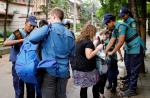
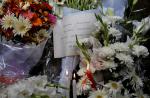
DHAKA – A Bangladeshi charity on Thursday (Sep 22) buried the five extremists behind July’s devastating attack on a Dhaka cafe after their families refused to take the bodies, police said.

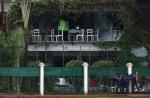
The five shot and hacked to death 20 foreign hostages at the Holey Artisan Bakery on Jul 1 in Dhaka’s Gulshan neighbourhood – an attack claimed by Islamic State.

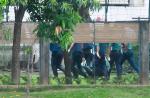
Military commandos brought the hostage crisis to a bloody end the next morning after they stormed the compound and gunned down the extremists.

The military handed over the bodies of the five attackers and their alleged associate to the police on Thursday after no relatives came to claim the bodies for nearly three months.

“We gave the six bodies to Dhaka Metropolitan Police. Since their death no one came to us to take the bodies,” military spokesman Colonel Rashidul Hasan told AFP.

Dhaka police spokesman Masudur Rahman said they handed over the bodies to the Anjuman-e-Mufidul Islam, a Muslim charity which collects and buries unidentified bodies according to their religious rites.

“They buried the bodies in a Dhaka graveyard,” he told AFP. “How long can we keep the bodies in the mortuary?”

The father of one of the attackers told AFP he had disowned his son after he learnt about the attack. He said he was too “ashamed” to be the father of an extremist.

Local media reported that other families were reluctant to take the bodies as they did not want to be seen as sympathic towards their children.

Since the attack Bangladeshi security forces have shot dead at least 28 suspected extremists in a massive crackdown.

Police have said a local extremist outfit, led by a Canadian citizen of Bangladesh origin, was responsible for the cafe carnage, rejecting IS’ claim that its fighters carried out the attack.


Image: 
Category: 
Publication Date: 
Friday, September 23, 2016 – 10:34
Send to mobile app: 
Source: 


Story Type: 
Others

Source link

Football: Argentina boss blasts Barca over Messi injury

0

BUENOS AIRES – Argentina coach Edgardo Bauza launched a stinging attack on Barcelona on Thursday after losing star forward Lionel Messi for vital World Cup qualifiers against Peru and Paraguay next month.

Messi will be sidelined for the next three weeks due to a groin strain suffered in Barca’s 1-1 draw with Atletico Madrid on Wednesday night.

And that brought a furious rebuke of the Catalans from Bauza.

“They send us messages to look after Messi but they don’t protect him. He plays every match,” Bauza, who said his team would nevertheless cope, told Fox Sports.

“We’ve already played without Messi. Having him is an advantage for the problems he creates (for opponents).

“But for me as coach and for the team it’s a challenge if we have to play without him.” Argentina are third in the South American World Cup qualifying group, one point behind leaders Uruguay.

They play Peru in Lima on October 6 before hosting Paraguay on October 11 in Cordoba.

Only the top four teams in CONMEBOL qualifying earn an automatic place at the 2018 World Cup in Russia.

Image: 
Category: 
Publication Date: 
Friday, September 23, 2016 – 10:34
Keywords: 
Send to mobile app: 
Source: 


Story Type: 
Others

Source link

nuTonomy partners Grab to expand self-driving car trial in Singapore

0

From Friday (Sep 23), selected Grab customers can use the company’s app to book a ride in nuTonomy’s self-driving vehicle to travel within the one-north business district and adjacent neighbourhoods. 

Source link

At least 14 punished over NUS orientation activities

0

Action has been taken against at least 14 undergraduates from the National University of Singapore (NUS) for their role in inappropriate orientation activities, in July, The Straits Times learnt.

Sources said the punishment included warnings without record and mandatory community service.

It is understood that the students were involved in organising or facilitating orientation camps, including the Faculty of Arts and Social Sciences and the Students’ Union.

It is understood that the undergraduates can appeal against the decisions.

When contacted, NUS declined to give details, citing a need to maintain privacy and fairness of the proceedings.

In July, The New Paper reported on the risque orientation games that freshmen were asked to play, including one that simulated rape.

Student-organised orientation activities were suspended on July 29, except some such as the NUS Student Union’s Rag and Flag activities.

The suspension was gradually lifted from Aug 8.

According to sources, the university’s investigation began at the start of August.

Sources say orientation group leaders and student camp councillors were summoned to the session facilitated by staff from the university’s Office of Student Affairs and the Office of the Provost.

They were given questionnaires which asked about the sexualised games, whether the student did anything to stop it and who led the activities.

Staff then went through the questionnaires with each student individually.

A disciplinary board was convened and at least 14 students – including orientation camp leaders, orientation group leaders and student camp councillors – appeared before a panel of faculty members and student representatives.

The university found that some students contravened rules. Some examples include using unapproved items during orientation activities, consumption of alcohol beyond university-designated premises and events and providing false information during investigations.

Help from the NUS law faculty’s pro-bono group was offered to the undergraduates to help them understand legal terms used in the process.

Delane Lim, chief executive of international youth development firm FutuReady Asia, said the university’s administration should be held accountable for a “lack of supervision by the management”.

“Right now, it is telling the public that it is entirely the fault of the students.”

Meanwhile, the university has convened a 14-member Orientation Review Committee to review and make recommendations for improvement.

Professor Tan Eng Chye, NUS’ deputy president (academic affairs) and provost, said the committee has been asked to “consider new approaches to freshman orientation” and look at current practices that should be extended and preserved.

fabkoh@sph.com.sg


Get MyPaper for more stories.

Image: 
Category: 
Publication Date: 
Friday, September 23, 2016 – 10:11
Send to mobile app: 
Source: 


Rotator Image: 
Story Type: 
Others

Source link

Japanese PM in Cuba to 'open new page' in ties

0

HAVANA – Prime Minister Shinzo Abe arrived in Cuba on Thursday for the first-ever visit to the country by a Japanese premier, saying he wants to “open a new page” in relations.

Abe is due to meet Cuban President Raul Castro on Friday morning, in a visit that comes after Tokyo’s close ally Washington restored ties with the communist island last year.

“I sincerely hope my stay here becomes an opportunity to open a new page in the relationship of friendship between both nations,” Abe said in an interview published in the Cuban communist party’s official newspaper, Granma.

He called for “open dialogue” to stimulate trade and investment, development co-operation and tourism.

Trade between the two countries has been on a long decline since 1985. It totalled about $35 million (S$47 billion) in 2014.

Abe said he also wanted to discuss nuclear disarmament.

Cuba is one of the few countries that maintains relationships with North Korea, whose nuclear weapons are considered one of Japan’s biggest security threats.

Image: 
Category: 
Publication Date: 
Friday, September 23, 2016 – 10:02
Keywords: 
Send to mobile app: 
Source: 


Story Type: 
Others

Source link

Uber rival Grab partners with driverless car firm nuTonomy in Singapore

0

Users of ride-hailing firm Grab will be able to book driverless cars from Friday as it partners with a start-up testing the technology in Singapore, just days after rival Uber debuted its self-driving vehicles in the United States.

The move comes as technology companies and automakers race to build autonomous vehicles and develop new business plans for what is expected to be a long-term makeover of personal transportation.

Southeast Asia’s Grab said its app will allow select commuters to book and ride start-up nuTonomy’s driverless vehicles within a western Singapore district, where the vehicles are being tested, and adjacent neighbourhoods.

A safety driver and support engineer will ride in each nuTonomy car, the two companies said in a statement.

nuTonomy, which started a limited public trial of the first driverless taxi in August in Singapore, has said it hopes to have 100 taxis working commercially in the city-state by 2018.

Countries around the world are encouraging the development of autonomous technologies, and Singapore, with its limited land and workforce, is hoping driverless vehicles will encourage its residents to use more shared vehicles and public transport.

Grab said its data showed drivers in Singapore are less likely to accept a passenger booking request originating from or destined for remote locations, highlighting the need for “robo-cars” that can meet transportation needs in far-flung areas.

If a trip requires travel on roads outside of Singapore’s one-north district, the safety driver will take control of the vehicle for that portion of the trip.

The public trial will run for the next two months, and may be extended by the companies for as long as it continues to yield valuable feedback and data, they said.

“There is no direct monetary funding (in nuTonomy),” a Grab representative said. “At this point, the partnership is focused on Singapore – though there may be other potential synergies between nuTonomy and Grab that we could decide to explore in the future.”

The partnership ups the ante in the competition between Uber and Grab, which just raised $750 million in a funding roundthat gives it more ammunition to take on the US firm in southeast Asia.

Last month, Uber bought self-driving trucks startup Otto and formed a $300 million alliance with Volvo Car Group to develop self-driving cars.

It launched its self-driving pilot programme this month, marking the public unveiling of its secretive work in autonomous vehicles.

Image: 
Category: 
Publication Date: 
Friday, September 23, 2016 – 09:55
Keywords: 
Send to mobile app: 
Source: 


Story Type: 
Others

Source link

China removes 13-year-old ban on some US beef products

0

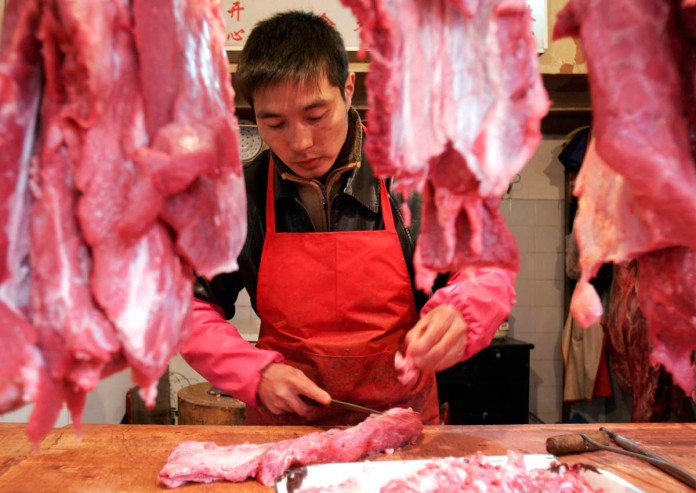
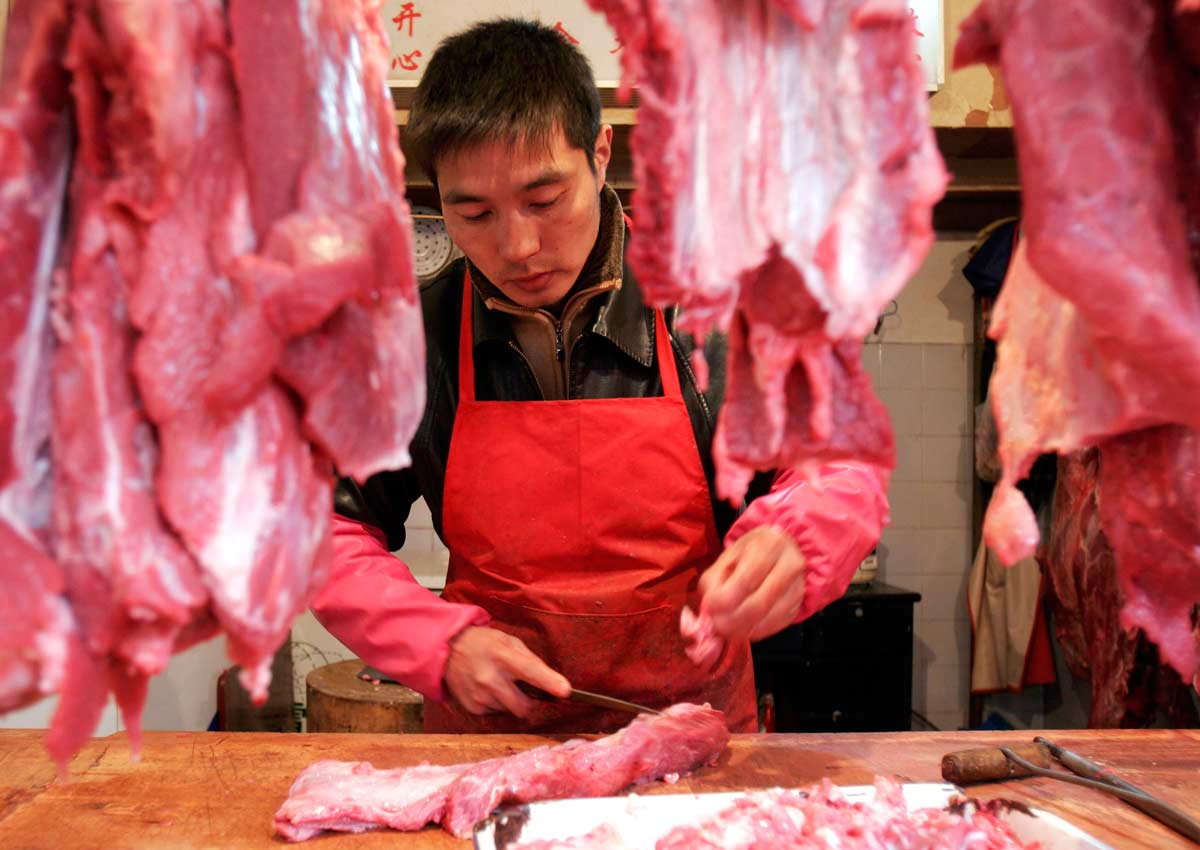
BEIJING – China has removed an almost 13-year-old ban on some US beef products, its quality inspection regulator said Thursday.

A ban on imports of “American bone-in beef and boneless beef for cattle under 30 months” has been lifted effective immediately, the General Administration of Quality Supervision, Inspection and Quarantine said, according to a document posted on its official website.

The Asian giant stopped most beef imports from the US over a decade ago after mad cow disease was found in Washington state in December 2003.

In a statement from Washington, the office of US Trade Representative Michael Froman called the move a “critical first step” to restoring US access to Chinese beef markets but said more remained to be done.

The announcement comes after years of delays in which US producers and trade officials expected restrictions to be lifted, and years after China said in 2006 that imports of some beef products would resume, though this never occurred.

Chinese Premier Li Keqiang said the decision signalled Beijing’s desire to improve commercial ties with the US, the Wall Street Journal reported, and it coincided with the announcement that a Chinese bank had been approved to clear transactions in the yuan currency in New York.

Speaking with US business groups in New York on Tuesday, Li had implied that the ban would soon be lifted, the Wall Street Journal reported, saying: “We also recognise that the United States has very good beef, so why should we deny Chinese customers this choice?”

China is already the world’s largest consumer of pork, and demand for beef is surging as its burgeoning middle class adds more meat to its diet.

Before the ban was lifted many Chinese shoppers bought smuggled US beef on online portals, state media reported last year, with a US official saying a “huge amount” evaded import restrictions.

US producers had long complained of the restrictions, which were in place while China’s cattle herds grew over the last decade.

Beijing has also kept in place bans on imports from the European Union due to mad cow disease concerns 16 years ago, but is reportedly in talks with Ireland to lift restrictions sometime this year.

The US Trade Representative said it and the US Department of Agriculture looked forward to talks on restarting the beef trade following a Chinese audit report.

“True access to China’s beef market – consistent with science-based, international standards for trade – remains a top priority for the United States,” the statement said.

Annual beef consumption in China has risen to 3.8kg per capita in 2015, according to OECD data, up from less than 3kg in 2005.

By 2025, an additional 2.2 million tonnes will be needed to satisfy booming Chinese domestic demand, according to research by Netherlands-based Rabobank, with importers supplying 20 per cent of the meat.

“Beef prices in China have been increasing and are now more than four times higher than in 2000,” it said, noting that Chinese consumers have a “higher tolerance” for soaring beef prices.

China was the second-largest importer of American agricultural products in the world in 2015, according to the US Department of Agriculture, having grown more than 200 per cent in the past decade to total more than $20 billion (S$27 billion).

Image: 
Category: 
Publication Date: 
Friday, September 23, 2016 – 09:36
Keywords: 
Send to mobile app: 
Source: 


Story Type: 
Others

Source link

Drive to help foreign workers on 2G phones

0

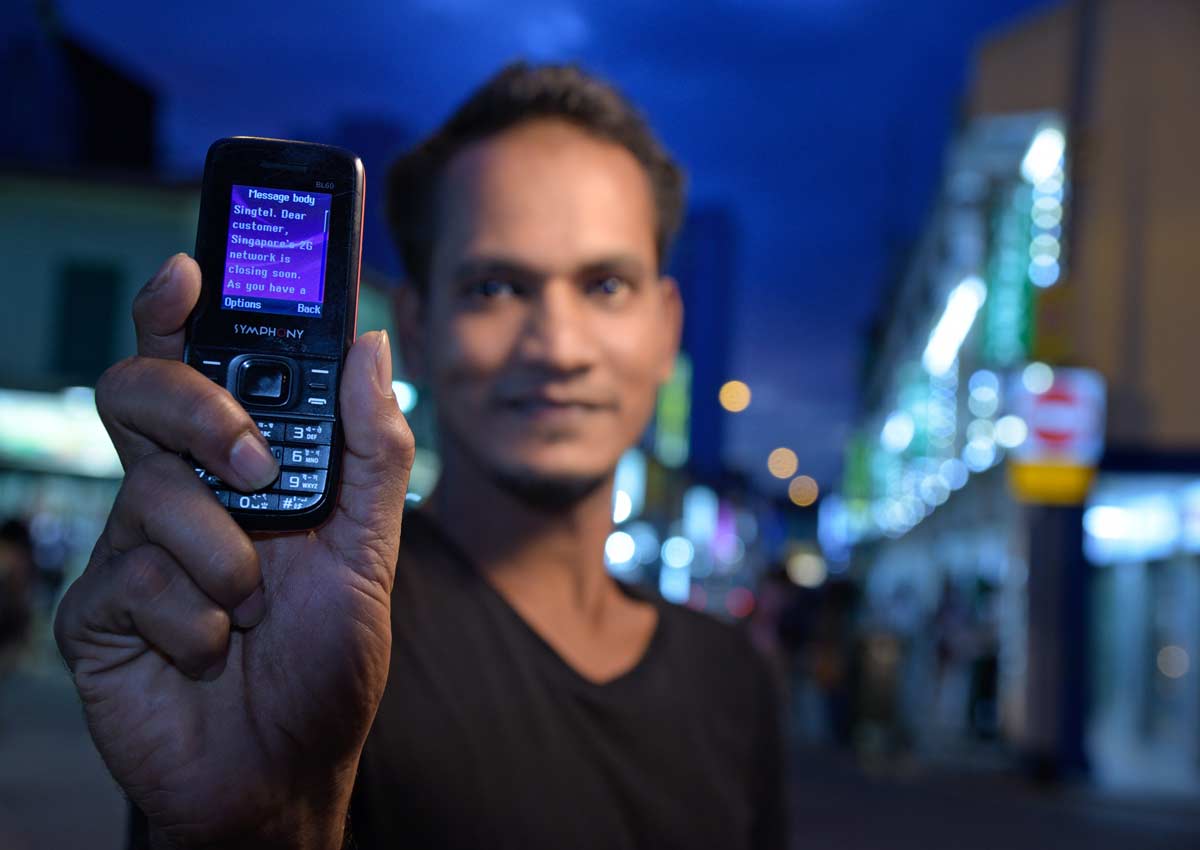
The humble 2G phone, which provides only basic Internet access on top of voice calls and SMS, is an entry-level phone used by many foreign workers here to keep in touch with their loved ones back home.


For those involved in workplace disputes, it is even more essential as they need to be contactable.

But these phones are slated to become obsolete here next April, when local telcos pull the plug on the 2G or second-generation network. It was reported last year that 2G services were used by only 3 per cent of mobile users here.

A foreign workers’ advocacy group is now trying to help needy workers upgrade to the more advanced 3G phones.

Alex Au, treasurer of Transient Workers Count Too (TWC2), said 20 per cent to 25 per cent of around 2,000 migrant workers whom it helps probably do not have 3G phones. Even if they do, the phones could be very old.

TWC2 helps workers, including maids and construction workers, who face problems such as injury, illness, salary issues and deportation.

Phones allow them to call for help. While those who are better off may buy a 3G phone when 2G services end, that might not be the case for those stranded without a job.

“Typically, a worker with a complaint over unpaid or short-paid salaries will need to stay about two to three months for case resolution,” Mr Au said, adding that a worker with an injury often stays longer.

While most cases are closed within nine months, a small number can stretch beyond a year and up to two years.

For example, Mr Rajib, a shipyard worker who goes by one name, had a workplace injury last month and relies on TWC2 for help with meals.

The 30-year-old uses his 2G phone to keep in touch with his mother in Bangladesh, who worries about his health. Not knowing when his case will be settled, he said: “I don’t have money (for a new phone).”

TWC2 hopes to get at least 100 phones. “Hopefully, we will get enough donations to give every TWC2 client who needs a replacement phone one,” said Mr Au.

The group is calling for donations of money or used 3G phones. The cash will be used to buy second-hand phones, which could cost around $50 each, or chargers.

Its campaign, which started on Sunday, is expected to run for six months. As of yesterday, the group had raised over $1,100 on crowdsourcing platform Giving.sg.

byseow@sph.com.sg


Get MyPaper for more stories.

Image: 
Publication Date: 
Friday, September 23, 2016 – 09:29
Send to mobile app: 
Source: 


Story Type: 
Others

Source link