KARACHI – Pew survey aims to shed light on what Indians think about their country, their government and potential for the future.
A Pew survey published recently on Indian attitudes shows that nearly half of respondents across the border do not approve of Indian Prime Minister Narendra Modi’s policies concerning Pakistan.
The survey aims to shed light on what Indians think about their country, their government and potential for the future.
Unfavourable View of Pakistan
Although 73 per cent of respondents appear to have “uniformly negative” view of Pakistan, around 55 per cent of Indians polled go a step further with a ‘very unfavourable’ opinion towards Pakistan.
The Pew survey says negative Indian sentiment towards Pakistan has risen 9 points since 2015.
The second ‘least popular’ country appears to be China, with 36 per cent of respondents holding an ‘unfavourable’ opinion of the People’s Republic.
Disapproval of Modi’s Policies
About half of Indians surveyed take a disapproving stance on Indian Prime Minister Narendra Modi’s Pakistan policies.
22 per cent of respondents, however, approve of his handling of Pakistan-India ties.
Support for Defence Spending
More than 60 per cent of respondents think India should continue increasing defence expenditure, 20 per cent want to keep it at current levels, whereas just 6 per cent believe it should be decreased.
“Notably, Indians who see China’s growing military power as a very serious problem are more likely than those who see China’s growing military power as a less serious threat to favour increased military spending,” the Pew report said.
Around 62 per cent of respondents believe that ‘overwhelming military force’ is the best way to defeat terrorism, whereas only 21 per cent feel that relying on force creates hatred and more terrorism.
China Greatest Threat
About 31 per cent of those surveyed had a favourable opinion of India’s emerging Asian rival, compared to 36 per cent who had an unfavourable opinion.
Positive views towards China have dropped 10 percentage points compared to the previous year.
China’s growing military power is a problem for 69 per cent of respondents, 46 per cent of whom believe it is a very serious issue.
Beijing’s ties with Islamabad are also a serious matter of concern for nearly half of all respondents.
Another 21 per cent see Pak-China friendship as a ‘somewhat serious challenge’.
China’s economic impact on India is a ‘serious problem’ for about seven-in-ten of those surveyed, which include 45 per cent who believe it is ‘very serious’.
“Notably, with regard to problems posed by China, Bharatiya Janata Party adherents are more intensely worried than Congress backers,” the survey said.
IS, Climate Change Top Worry
Despite Indians’ ‘serious concerns’ about China and Pakistan, climate change and the militant Islamic State (IS) group are at the top of a list of international threats named by over half of all respondents.
“Few Indians (6 per cent) dismiss IS outright as a threat, while 13 per cent see it as a minor challenge for their country and more than twice that number make no judgement,” Pew said.
Also on the list are cyber attacks from other countries, Iraqi and Syrian refugees, tensions with Russia and growing US influence.
Research Methodology
The survey was conducted through face-to-face interviews with about 2,464 people in the Union Territory of Delhi and in 15 of the 17 most populous states, Kerala and Assam excluded.
The research focuses on answering three main questions ─ How India is doing, how Modi is performing, and how Indians see their place in the world.
There were 42 workplace fatal injuries in the first half of 2016, compared to 30 for the same period in 2015, according to figures by the Workplace Safety and Health (WSH) Institute.
On the morning of June 3, 2015, Kim Ji-hyung was on his way to work. The 31-year-old Seoulite overslept and was running late.
Instead of taking his usual 35-minute morning commute — he would travel from Dangsan Station to Yeoksam Station taking Seoul Subway Line No. 2 — he decided to take a short cut by taking the express train on Line No. 9. By taking the route, he would reach Sinnonhyeon Station in about 18 minutes and be able to arrive at work on time.
But Kim said that turned out to be one of the worst decisions he’s made in his life.
When he got off at the Sinnonhyeon Station at about 8:45 a.m. after a suffocating subway ride — Seoul Metro Line 9 has been infamous for its overcrowding — he said he was approached by a woman in civilian clothes.
She showed him her police ID, and told him she had been filming him throughout the ride. Then he was told he was being immediately arrested on charges of sexual assault.
“She told me she had video footage of me assaulting one of the female passengers,” he told The Korea Herald. “I told her I had no idea what she was talking about, and I was texting my girlfriend throughout the subway ride.” According to Kim, she replied: “I saw you touching that woman’s buttocks.”
“When I told her I wanted to see the footage, she said I was not allowed to see it,” he added.
That day, Kim said he was forced to write what he claims was a false written statement. The police forcefully made him write that “he pressed his erection against the woman on a crowded subway train,” he said.
“It was my first time experiencing anything like this, and I didn’t know I had the option of refusing to write the statement,” he said.
Instead of paying 3 million won (S$3,700) requested by the victim as a settlement money, Kim decided to plead not guilty. In May, he was sentenced guilty for the first trial. He is appealing the verdict. “I’m willing to go to the highest court (to prove my innocence),” he said.
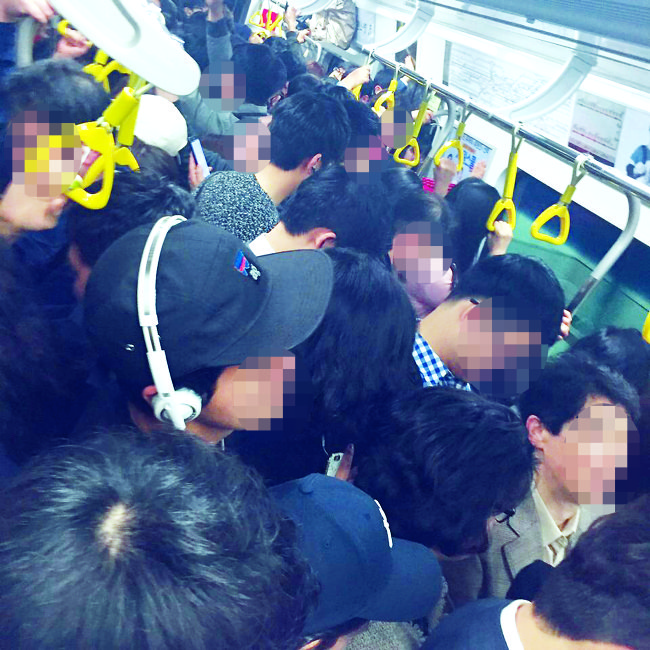
Commuters stand packed inside a Seoul Metro Line 9 train during peak morning hours. Photo: The Korea Herald
“The train of hell”
Seoul Subway Line 9, which quickly connects western Seoul to southern Seoul, has been notorious for its overcrowding since its launch in 2009.
Infamously dubbed the “train of hell,” the specific line had been running with only four subway cars until recently, whereas other lines in Seoul normally operate with eight to 10 cars per train. It was only last month the Seoul Metropolitan Government announced it was introducing an extra express train during rush hours to tackle overcrowding.
Experts have said the builder of the line miscalculated demand when establishing the subway line. It connects Seoul’s major corporate areas, including southern Seoul and Yeouido, and it is often the fastest way for those who live in Seoul’s western regions to get to work near Sinnonhyeon Station or the National Assembly.
As of last year, the degree of congestion of a Line 9 express train from Gayang Station to Yeouidio Station was 234 per cent, according to the Seoul Metropolitan Government. A subway car’s degree of congestion reaches 100 per cent if it houses 160 passengers, while about 53 of them are sitting down. Congestion of 234 per cent means about 370 passengers are housed in a single subway car, 320 of them standing squeezed in next to each other.
“It’s a living hell, literally,” said Kim Seo-eun, a 29-year-old Seoul resident who has taken the specific line during rush hour in the past. “You can’t breathe. I once felt like someone could die from suffocation or being squeezed to death.”
The Seoul Metropolitan Police Agency has been saying such congestion makes female passengers on Line 9 vulnerable to sexual offences, such as unwanted touching and grabbing. According to a report last year the agency submitted to the National Assembly, the number of reported sexual assault cases that occurred on Line 9 trains increased dramatically from 2014-2015, from 41 to 161.
Yet Kim Ji-hyung argued the Seoul police may be taking advantage of the overcrowding of the subway line in order to obtain high performance marks.
While overcrowded trains may make it easier for potential perpetrators to commit sex offences, they also make it difficult for those who are falsely accused to prove their innocence, he said.
After being charged with sexual assault by prosecutors, he was finally able to access the video footage made by the police officer through his lawyer. Turns out, the officer had been following and secretly filming Kim using a smartphone from the platform of Dangsan Station. The footage did not start from a scene inside the congested train.
“I still have no idea why they targeted me from the very beginning,” he said. “I was walking back and forth on the platform (before taking the train) to find the subway car that would be closest to the exit. The police later said this behaviour of mine looked ‘suspicious.'”
In 1999, the Supreme Court of Korea stated that in order for a state-run investigative agency to legally create and use video footage as evidence, it should be filmed from “during or after (when) the criminal activity takes place” in a ruling of a case involving a group of North Korean sympathizers who police claimed had violated South Korea’s National Security Law.
The Korea Herald had access to the footage through Kim and was able to confirm that it indeed started from a scene on the platform. However, as the train was extremely overcrowded, and the footage was poorly shot, it was hard to discern from an unprofessional point of view what actually happened.
The money issue
Moon Jung-won, a 34-year-old Seoulite, experienced something similar last year. It was on the morning of Nov. 28, and as usual he took a Line 9 train from Yeomchang Station to get to his work near Samseong Station in southern Seoul. He was wearing a long coat and had his backpack across his chest. Like Kim’s, the ride was an extremely congested one. He was standing along with many passengers crammed in the train.
When the train had nearly reached Yeouido Station, a person in civilian clothes approached him and showed him a police ID. He was asked to get off the train and was told that he was being arrested for a sexual offence. He was told that the officer had film footage of him committing the crime. He was later indicted. His charge, too, said he was “pressing his genitals against the woman on a crowded subway train.”
“The officer told me I harassed the woman who was standing in front of me,” he told The Korea Herald. “There were two women who were standing in front of me. I didn’t even know which woman the officer was talking about.”
After deciding to plead not guilty, Moon said he faced a major predicament: He felt he couldn’t afford to go through the trial. Most of attorneys he contacted said he’d need to pay about 6 million won to 9 million won if Moon wanted to be represented by them. “And this price was to get my indictment suspended,” Moon said. “They said if I want to get a not guilty verdict, I’d have to pay more.”
According to the law, sex offences in public place can be fined up to 3 million won. “Once you pay the fine, you become an ex-convict,” he said. “But still, paying the fine was much cheaper than hiring a lawyer. And trials can last for years. Most ordinary working people (in Korea) can’t afford such time and money. I heard that in most cases (like mine), the accused just offer to pay 3 million won to the victim and try to settle the case.”
Unlike Kim, Moon said his case ended rather abruptly as his victim told prosecutors she was unsure if she was indeed assaulted by Moon. She also told them she didn’t want Moon punished. The woman never reported Moon, and didn’t think she was harassed until after police approached and told her they saw her being assaulted on the train. Prosecutors eventually suspended Moon’s indictment.
“I still had to write a statement saying I regret my ‘wrongdoings,'” Moon said. “I told people in the prosecutors’ office that I’m innocent, but I was told that I should be ‘grateful’ that my indictment was suspended.”
In the end, Moon said, he just wanted to get over with the case as soon as possible. He said people around him, even some of his best friends, didn’t believe him when he told him he did not commit the crime.
“One of them told me, ‘if you end up getting a lawyer, at least tell him or her everything honestly,'” he said. “And this is what I heard from my friends. I didn’t even want to think about how my work colleagues would react if they heard what happened. My professional career could’ve been seriously ruined.”
Moon said he is still deeply hurt by the experience. “I no longer take Line 9,” he said.
Debate on over-policing
South Korea posted its first tax revenue surplus in four years last year, ending its third straight year of tax revenue deficits through 2012-2014. The Finance Ministry in February said a rise in property transactions, caused by eased regulations on mortgage financing, resulted in higher transfer tax income.
Yet in June, Rep. Park Ju-min of The Minjoo Party of Korea said the current administration has collected almost 5 trillion won more worth of tax money from just fines and penalties since President Park Geun-hye took office in 2013, citing a report submitted to his office by the Finance Ministry.
The lawmaker’s office showed that, since 2013, the annual average increase of revenue from penalties and fines was 7 per cent, higher than the 3 per cent rise in gross domestic product in the same period.
Rep. Park stressed that Korea had been suffering from a tax revenue shortage throughout this period, to the degree that supplementary budgets had to be enacted to make up for it.
“It is likely that over-policing or over-fining may have taken place to make up for shortage of tax revenue,” Park said in a statement. “There should be other ways to increase tax revenue, such as increasing corporate tax levels.”
A university law professor, on condition of anonymity, said it was possible both Moon and Kim were targeted by police because of over-policing.
“Over-policing is hard to tackle as it is difficult for the victims to prove that they were unjustly treated,” he said. “It’s hard because for them, the perpetrators are not fellow civilians, but authorities who have the power to arrest you and punish you.”
Right of the accused
In 2012, the Assembly revised its Criminal Act to better combat sex crimes by making the specific crime an “offence that is not subject to complaint.” Before the revision, no sex offence was punishable without a legal complaint from the victim.
“This gives the authorities the ultimate right to decide and punish the offenders — regardless of the victims’ opinions on the case,” said Seo Bo-hak, a professor of criminal law at Kyung Hee University Law School. “As long as the officer had the valid proof and gave the Miranda warning, I don’t think the police did anything that was against the law (in Kim’s case). Until he is given a not guilty verdict, I don’t think it’s appropriate to comment on the issue.”
However, Choung Wan, another law professor at Kyung Hee University, said Kim should’ve been allowed to see the video footage, even without a lawyer, the day he was arrested.
“Korea still has a long way to go when it comes to protecting rights of victims of sex crimes,” he said.
“But there are also existing problems when it comes to protecting the rights of the accused. Most people who get arrested for the first time aren’t aware of what the Miranda warning is and don’t know how to contact a lawyer at a police station.”
Moon’s victim, in spite of the notification she received from the police, didn’t want Moon to be punished as she never felt she was harassed. The victim in Kim’s case, who eventually said she wanted him to face legal consequences, also did not directly make a report, according to court documents. When asked by authorities why she never voluntarily filed complaints against Kim, she said she was unsure whether Kim indeed harassed her until the police officer approached her at the station and informed her she was assaulted.
“I think most people can tell the difference between inevitable body contact in a crowded subway train and a deliberate sexual assault,” said Kim Ji-young, a 28-year-woman who said she has been sexually harassed on public transport in Seoul. A man had touched her breasts and run away, she said.
“But I guess it would be hard not to believe when a police officer comes to you and tells you were harassed while you weren’t noticing. While I personally would not ask for punishment if I wasn’t aware myself, those who do it should be respected. There are many women who don’t file complaints even if they know they were assaulted. Many are afraid of victim blaming and social stigma against victims of sexual harassment.”
‘Why I am appealing’
Like Moon, Kim Ji-hyung struggled to make a decision when he learned the expense required to hire a lawyer. He said the turning point was meeting his current attorney, who offered to represent him at a reasonable cost. He could’ve tried to settle the case with funds he paid his lawyer — this way he wouldn’t risk being an ex-convict — but decided to plead not guilty.
He argued that what police have done to him is a “crime that has been legalized,” and he assumes there are many people who are or have been in the same situation.
“Being involved in a sex crime (case), even if you are innocent, can be critical to your personal relationships and professional career,” he said.
“That’s why most people just pay the settlement funds or fines and keep the experience a secret. But I think this should stop. The authorities shouldn’t take advantage of overcrowded public transportation and the justice system where in a number of cases, fines are cheaper than hiring an attorney.”
Above all, he said he’s going through the trial for himself.
The day he was arrested, he broke down into tears in front of the officers, as he felt humiliated by the accusations. The officers allegedly used sexually explicit and violent language when they described what they thought he did in the subway.
“I’m going to the highest court if that’s necessary,” he said. “I want to be able to tell myself that I’ve done everything that I could to prove my innocence.”
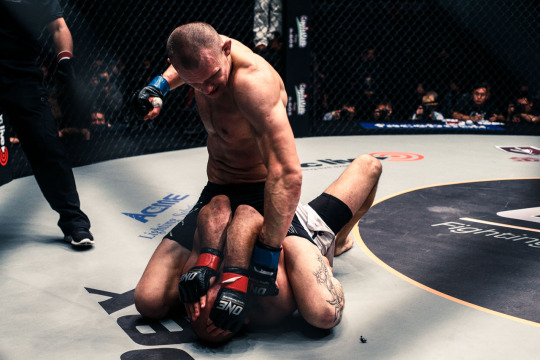
After suffering the first setback of his professional career this past May, Poland’s Michal Pasternak is looking to get himself back into the win column when he battles Myanmar’s very own Aung La N Sang. The bout will take place on Friday, 7 October. at ONE: STATE OF WARRIORS in Yangon’s Thuwunna Indoor Stadium.
“I am very motivated to win this fight and that’s why I am here,” the 32-year-old says.
Not only is he motivated, but he is also confident. “Every fighter likes to visualize his fights some way,” he adds. “I thought about a few scenarios and I won in every one.”
Pasternak, a Polish ADCC Champion who trains at Okninski MMA in Poland, is quite arguably the most focused he has ever been.
He first took the MMA scene by storm, quickly accumulating a spotless 11-0 record. This included a unanimous decision victory over Rafael Silva at ONE: DYNASTY OF CHAMPIONS (BEIJING) in his promotional debut back in December 2014.
During the fight, Pasternak showed that he was made of sterner stuff by grinding out the victory despite suffering a serious knee injury mid-way through the bout, leaving him at a severe disadvantage. That injury would subsequently cause him to be out of action for over a year.
In his return bout, he fought a very dangerous opponent in Roger Gracie at ONE: ASCENT TO POWER for the organization’s inaugural Light Heavyweight World Championship back in May. The match didn’t go his way, however, as the Brazilian jiu-jitsu ace choked him out, took the title, and put a lone blemish on his record sheet.
“Fights after injury are very tough ones,” the Polish warrior explains. “I lost over a year due to the injury. In some way, it is a life lesson. You’re coming back and you need to go through something you’ve already been through, but it can only make you stronger.”
Pasternak realized he made a few errors in that fight against Gracie, but those errors have been taken care of prior to his local main event tilt against Aung La N Sang.
“The opponent took advantage of my mistake in my last fight,” Pasternak says. “My coach is working with me to avoid that in the future. I need to use my best weapons, not adjust to his game. But it was a one-time flop against Roger Gracie.”
Not only will he have a solid game plan in place for Aung La N Sang, but he will also be mentally sound. He’ll need to be particularly sharp in all areas because he is stepping into enemy territory, where Aung La N Sang is considered not only the hometown hero by the Myanmar audience, but a local celebrity as well.
“He is the host, so I think that he has a lot of fans there,” Pasternak admits. “But in fact, for me, it is more positive than negative. It gives me extra fuel. I think that after the fight, most of his fans will be my fans as well.”
A fighter’s mentality can weigh heavily on them, especially when entering the stadium in front of their opponent’s hometown crowd, and it can affect their whole preparation as they enter the cage. Luckily for Pasternak, he doesn’t deal with that. Instead, he is focused on himself and the task at hand. He tunes out everything around him and doesn’t let the crowd disrupt his vibe.
“During my walkout, when I am going through the arena, I do not focus on what surrounds me,” Pasternak says. “I do not think that it affects me in any way that my opponent has a lot of fans. I am going there to get my job done, and that’s the only thing I am focused on. I do not think about the lights, music, et cetera.”
“My biggest strength is for sure my mental state, and I think I have everything sorted out,” he continues. “Also, my coaching team. I am going for training and I know that I have good sparring partners and a good coaching team to work with for every fight.”
The Okninski MMA product has fought at a number of weight classes, including heavyweight and most recently light heavyweight. However this will be his first outing at middleweight. Being that this is his first contest at 84kg doesn’t mean it is any more or any less important for Pasternak.
“Every fight is important to me,” he says. “Every single fight I had was very important to me and for every fight, I always gave 100%. There isn’t a ‘more important’ or ‘less important’ fight. Every time, I need to do my best in the fight and prepare the best I can so I can’t blame myself after the fight.”
Still, he is beaming with confidence for his match in Yangon. “I will win.”
MANILA – According to a survey by British banking giant HSBC, the Philippines is among the world’s most attractive destination for expatriates seeking a healthier love life and social life.
It’s the best place to find a match made in heaven, get closer to the one you love or create a cosy love nest.
The Philippines is among the world’s most attractive destination for expatriates seeking a healthier love life and social life even though many other countries offer much more in earning opportunity, career challenges or quality of life.
According to the 2016 Expat Explorer survey commissioned by British banking giant HSBC, which compared 45 destinations around the world, the Philippines ranks No. 1 overall for expats as a destination conducive to feel closer to their partners.
The country ranks fifth in offering social life for expats and eighth in ease of integrating with the locals.
Overall, the Philippines ranked only 37th out of 45 destinations. Singapore topped the list, with expats citing the city-state lucrative in seeking new challenge, improving earnings or achieving better quality of life.
In the case of the Philippines, expats pointed to benefits ranging from easing the problem of finding good accommodation, forming new friendships and embracing diversity.
Once in the country, expats don’t feel like strangers, as it is natural for Filipinos to be more than willing and happy to assist them in adjusting to the country’s culture and environment, the survey said.
Closer Together
Be it around fostering relationships, providing good and affordable education/child care, creating a good environment for raising children or bringing partners closer together, the survey showed that the Philippines was a good place for expats bringing their families along.
The Philippines is the top country in the world cited by expats who said that their relocation had brought them closer to their partners (59 per cent).
The cost of education and child care are typically more expensive abroad but the majority (57 per cent) of expats in the Philippines found the overall cost of raising children less expensive in this country.
An additional benefit of raising a family in the Philippines is how smoothly the family members are able to socially adapt and “feel at home.”
For 45 per cent of surveyed expats, the Philippines felt like home in less than six months.
A respondent said: “The Philippines is a family-based culture. As soon as you enter a house the host/hostess will offer you the best chair plus food and drink. People want you to be comfortable and at home.”
Wick Veloso, HSBC Philippines president and chief executive officer, said: “Expats in the Philippines value their social life- how they and their families are able to ‘feel at home.'”
“With good accommodations, access to more affordable education for their children and warm Filipino hospitality, expats in the Philippines are able to further their career progression while boosting network connections and enjoying a culture that make them feel they are family,” he said.
“It is vital that financial services are easily accessible for expats to access personal funds, insurance and investments while living abroad. It is even more crucial that they are able to discuss their needs with financial advisers with ease, confident that the unique needs and requirements of an expat living overseas are fully understood,” he said.
Views, Experiences
The 2016 Expat Explorer survey covered 27,000 expats from 190 countries and territories who shared their views and experiences. Other key findings of the survey are as follows:
More than three in five expats in Singapore said it’s a good place to progress their career, with the same proportion seeing their earnings rise after moving to the country.
Nearly a quarter (22 per cent) of expats aged 18-34 – the so-called millennials – moved abroad to find more purpose in their career.
Around two in five expats said that moving abroad had accelerated their progress toward saving for retirement (40 per cent) or toward buying a property (41 per cent), compared to around one in five (20 per cent and 19 per cent, respectively) whose move abroad had slowed their progress toward these financial goals.
For the second year in a row, Switzerland topped the roster as far as offering financial well-being and a strong economy for expats are concerned.
New Zealand leads the way for an “unrivaled” expat experience, with a vast majority (83 per cent) of expats praising the country’s environment (air pollution, water quality) as better than in their home countries and nearly three-quarters (73 per cent) said their quality of life had improved.
Sweden was deemed offering an excellent environment for expat families, with around 75 per cent of expat parents rating their children’s quality of life as better than back home.
A German-owned restaurant in Shanghai was ordered to close just one day after winning a Michelin star because it did not have a business license, the city’s market watchdog said.
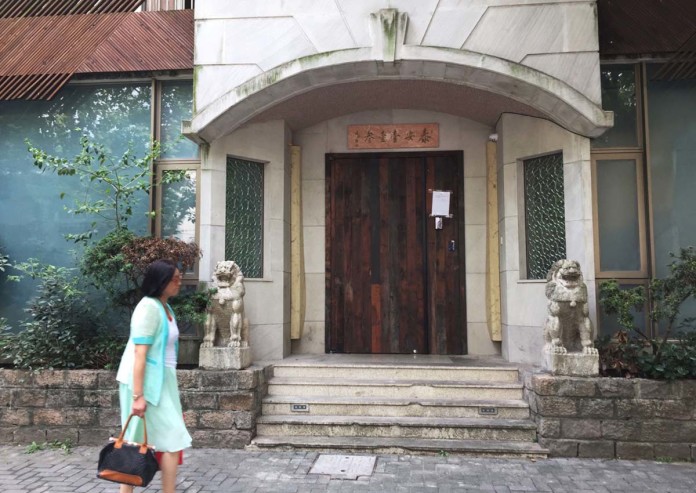
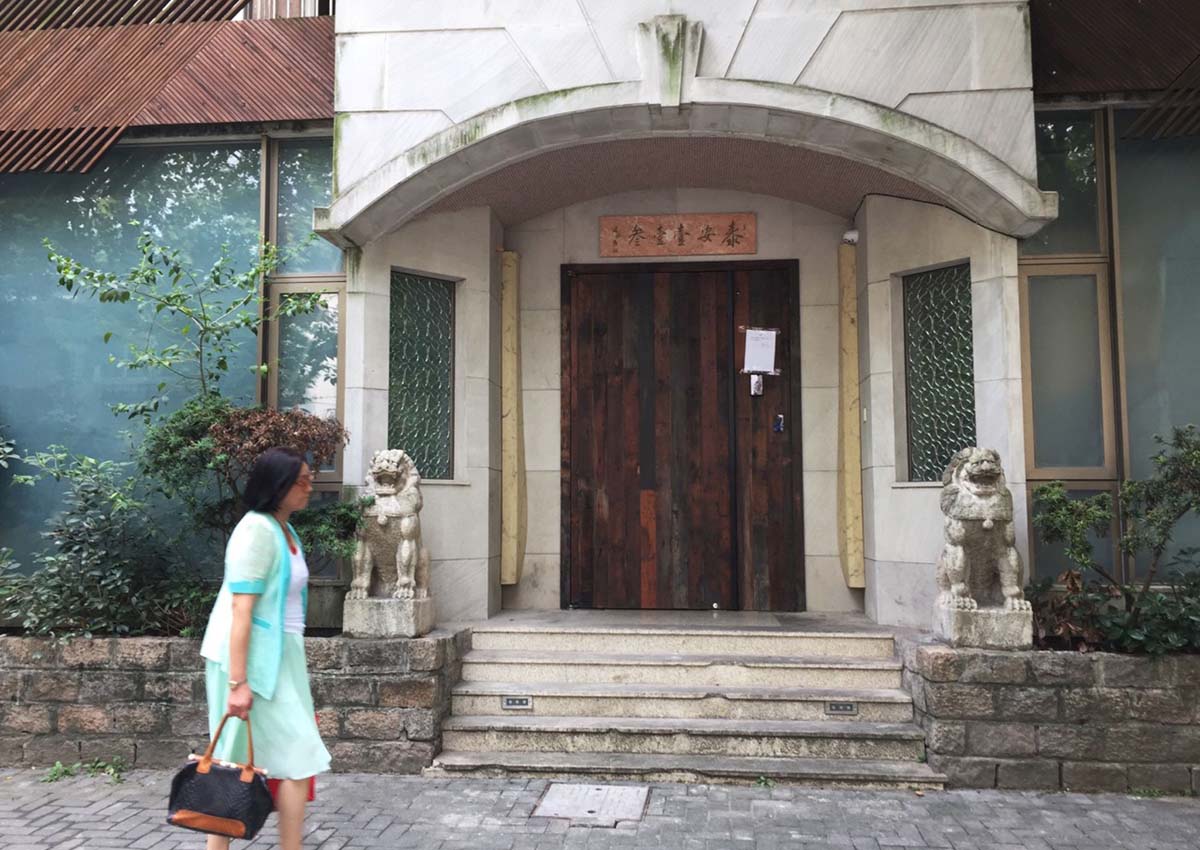
Tai’an Table, on the first floor of a garden villa in Changning district, was among 26 restaurants listed in the Michelin Guide Shanghai 2017, released on Wednesday.
The next day, the restaurant received an order from the district’s commercial administration department to close its doors.
“The restaurant applied for a license in April, but it failed because it was in a residential building, which is against the rules,” said an official who gave his surname as Xia. “We’ve since learned the restaurant has found a location where it can legally register. We’ve ordered the restaurant to announce its relocation and to deal with any problems that may arise.”
The Michelin Guide is the first produced for the Chinese mainland. Michelin has emphasised that its assessment criteria, which focus on food quality, do not relate to restaurant operations, according to a Shanghai Observer report.
Stefan Stiller opened Tai’an Table in April. Over the WeChat messaging app, he told China Daily the closure was because he had not predicted the popularity of his venture.
“Our concept was to build a small place to entertain friends … to make new, creative dishes,” said the German chef, who has lived in Shanghai since 2004.
“Several months ago, after noticing the demand for our concept, we decided to relocate the restaurant to a larger space where we can apply for all the required licenses. … Renovations are in progress.”
He said he hadn’t meant to violate the rules.
According to the Michelin Guide, the restaurant changes its menu monthly, with set meals costing from 988 to 1,288 yuan (S$201.80 to S$263.10).
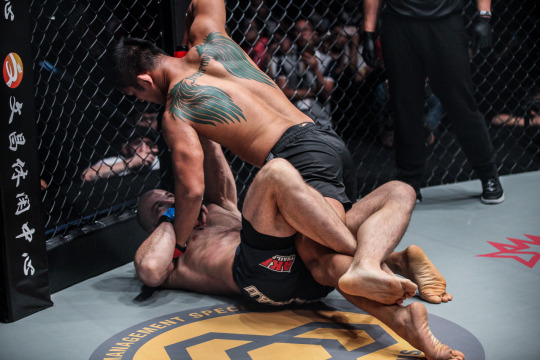
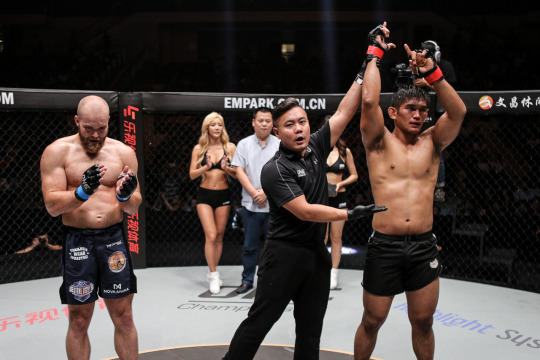
Aung La N Sang is coming home. Fans in his home country of Myanmar are clamoring for his return, and they won’t have to wait much longer as the “Burmese Python” is about to step back into the cage to face Michal Pasternak on 7 October.
The bout will be contested in the middleweight division at ONE: STATE OF WARRIORS in Yangon’s Thuwunna Indoor Stadium, and could go a long way in deciding the next 84kg title challenger.
“The fans should be excited about this fight because we’re both really tough fighters and we both look for the finish,” the hometown hero says. “It’s going to be a great match.”
One quick glance at Aung La N Sang’s history shows a respectable 18-9 record with seven of those victories coming by knockout and the other 11 wins via submission. That one hundred percent finishing rate is a feat few mixed martial artists in any organization around the world can match. Also, the Myanmar-born middleweight is undefeated in his ONE Championship run, going a perfect 3-0 to date, most recently against top contender Aleksei Butorin.
The “Burmese Python,” who currently trains out of Crazy 88 MMA in Baltimore, Maryland, choked out his last two foes and is up for the challenge ahead of him, although his next potential victim Pasternak shows only a single loss on his professional record.
That loss was suffered in Pasternak’s last fight against Roger Gracie at ONE: ASCENT TO POWER back in May, when the BJJ legend submitted him with a textbook arm triangle in the first round to win the inaugural ONE Light Heavyweight World Championship.
Aung La N Sang has kept an eye on Pasternak, a Polish ADCC Champion who has now dropped to middleweight, and knows his game very well. “He’s a fighter, he’s game to fight,” the 29-year-old says. “He’s a grappler. That’s his strong suit. When you compare that to him losing to Roger Gracie, it’s not a big deal.
“I’m sure he’s going to come back trying to avenge his loss. He’s tough. It’s going to be a tough fight, it’s going to be a good fight. He’s 11-1, his only loss is to Roger Gracie, the best BJJ fighter in the world.”
While he has a great deal of respect for his opponent’s ground game and toughness, Aung La N Sang feels that his own growing skill set will be too much for his Polish opponent to handle. After all, he possesses an outstanding Muay Thai striking game, along with an impressive ground prowess of his own that earned him the nickname of “Burmese Python”.
“His greatest strengths are his jiujitsu and his grappling. He’s pretty big for the weight class. He’s long and he has a lot of reach,” the Myanmar fighter explains, dissecting his opponent. “I don’t feel like he has power. I don’t feel like he has that explosiveness.
“My strengths are that I can box, I can grapple, and I can finish fights with all that,” he continues. “I think I can match his strength and I can overpower him with his weaknesses. It’s a good matchup, but I’m way more experienced than he is and I’m going to be too powerful for him.”
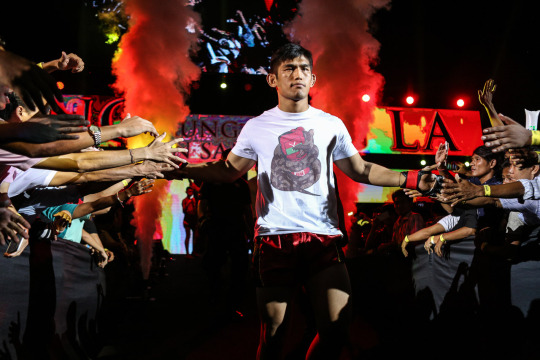
There is no denying Aung La N Sang is a hometown hero on the verge of becoming a true breakout star throughout Myanmar. He senses the opportunity and appreciates all of the love and support from his loyal family, friends, and fans. Beyond the admiration, he wants to be a key figure and pioneer his birth nation’s evolution and progression in relation to combat sports. He is confident and excited, as he already feels Myanmar is moving in the right direction.
“It’s an honor for me to be able to do this, and at the same time, be able to do what I love. To be able to be a pioneer in MMA for Myanmar is an honor,” the middleweight says.
“It makes me feel very good. I think they deserve it. The people in Myanmar are genuinely good people. This positive change is going to positively affect the next generation. I feel like it’s something that the people deserve, and good people will shine when the country opens up and gets more progressive.”
Whether it is inside or outside of the cage, Aung La N Sang has a multitude of traits that are worthy of admiration. He looks to give the crowd even more reason to cheer when he steps back into the cage on 7 October, and he predicts the presence and passion of the fans will only add fuel to his already-blazing fire.
“I’m excited about this fight because I love fighting.” N Sang said. “I get to do it in front of my fans. The buzz this time is going to be electric. It’s an honor for me to be able to represent my country and I’m sure my country is going to bring it too.
“When the crowd cheers for me, it gives me a little more push and drive. It’s going to be just as crazy, if not crazier. It’s going to be a bigger crowd. I’m ready for it. I’m excited to put on a good show.”
Enjoy discounts you can take advantage of as a member of IKEA Family (membership is free). If you are not a member, sign-up for free as an IKEA FAMILY member in the store to get your Temporary Card before making your purchase.