Home Blog Page 2767

Grannies stay young with cheerleading

0

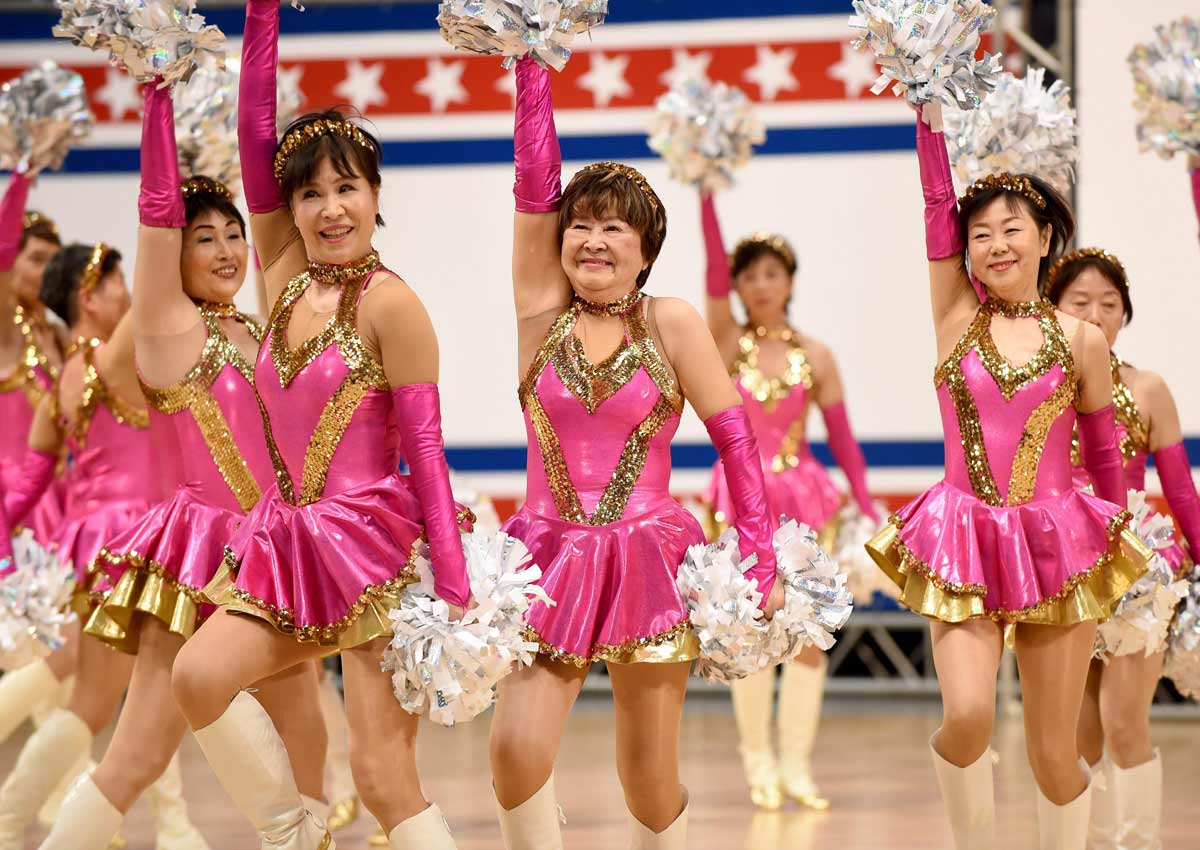
CHIBA, Japan – Strutting her stuff in a gold-hemmed mini-skirt, white leather boots and shaking silver pom-poms, octogenarian Fumie Takino has discovered her elixir of youth-cheerleading.

She and her troupe of spirited grannies tweak the nose of old age, even if their routine to the song Dreamgirls leaves them out of breath and their tank tops dripping with sweat.

Ms Takino, 84, has spearheaded the group of more than 20 bubbly seniors for some two decades, founding the “Japan Pom-Pom” squad after being bitten by the cheerleading bug in her 60s.

“You have to be 55 or older,” she told AFP, referring to the qualification for joining her team, the average age of which is 70.

Ms Takino notes that her hobby has helped mitigate the effects of ageing.

She took up the activity when her relationship with her husband began to falter.

She explained: “I put up with it until my children got married.”

Ms Takino added that she became emboldened by changes she made in middle age.

The first came at 53, when she flew to Texas to study.

After completing a master’s degree in gerontology at the University of North Texas and a work placement in New York, she returned home with a new-found sense of freedom.

But it was actually in Japan that she encountered the quintessentially American activity of cheerleading.

“It blew my mind,” said Ms Takino, who immediately rounded up five friends to start her own troupe after first hearing about cheerleading.

Two decades later, the grannies gather each week for intense training.

This year, the team celebrated its 20th anniversary by performing as guests at Japan’s annual United Spirit Association (USA) Nationals competition, where mostly high school and university teams compete.

Image: 
Category: 
Publication Date: 
Monday, September 26, 2016 – 09:40
Send to mobile app: 
Source: 


Story Type: 
Others

Source link

Golf legend Arnold Palmer dies; aged 87

0

Golf legend Arnold Palmer died on Sunday (Sept 25) evening in Pittsburgh where he had been since Thursday undergoing heart tests, according to news reports. He was 87.

The cause of his death was not immediately known, reported Daily Mail.

Palmer was a seven-time major winner – only six players in history won more – who brought golf to the masses and became the most beloved figure in the game. He drew legions of fans known as “Arnie’s Army” and helped propel the sport just as television was gaining in popularity.

He won the first of his five West Penn Amateur titles in 1947 as a senior at Latrobe High School in Pennsylvania, and went on to win the US Amateur (1954) and 62 times on the PGA Tour, reported the Pittsburgh Post-Gazette.

He had suffered from failing health since 2015 and made his last public appearance on the first tee of the 2016 Masters.

Palmer was born in 1929 in Pennsylvania where his father was a groundskeeper in a country club. He attended Wake Forest University on a golf scholarship and later did a three-year stint in the US Coast Guard, reported Golfweek.

on Twitter

sujint@sph.com.sg

Image: 
Category: 
Publication Date: 
Monday, September 26, 2016 – 09:08
Send to mobile app: 
Source: 


Story Type: 
Rewritten Story

Source link

Cathay Pacific: Fares fr $178 (all-in return) for Citibank Cardmembers from 26 Sep – 11 Oct 2016

0

JUST IN: Early Bird, Two-to-Go & Special Economy class Cathay Pacific promo fares for Citibank cardmembers fr $178 (till 11 Oct)

Cathay Pacific: Fares fr $178 (all-in return) for Citibank Cardmembers from 26 Sep – 11 Oct 2016

From short getaway to long vacation, Cathay Pacific has got you covered with special offers from fares as low as $178 for Eonomy class all-in per person

Source

Going to Malaysia? It's vital to know your rights

0

You wake up, read the latest news updates on your mobile phone, retweet some interesting comments, and post your own reactions. Just another ordinary day, right?

Wrong. If you are not careful, that retweet or comment might land you in legal hot water.

Former journalist Sidek Kamiso found himself in that predicament early last week when a band of plain-clothed policemen banged on his door at 4.40am to arrest him for an alleged Twitter insult. They had not only come for him at an ungodly hour but also reportedly jumped over the fence to forcefully nab him.

After checking their identification, Sidek had let them in, although they did not produce an arrest warrant. The police officers then searched the house, confiscating his phone and laptop before dragging him away in handcuffs to the police station.

The conduct of the police and the nature of that alleged offence notwithstanding, how many of us would have just opened the door when the intruders commanded, “We are the Police! Open the door!” and let them in?

Confirming the police officers’ identity first is extremely important, stresses Sevan Doraisamy, executive director of human rights advocate group Suara Rakyat Malaysia (Suaram).

Many Malaysians are too quick to obey whatever the police tell them to do without first confirming the officers’ identity, says Sevan.

“We always advise the public to ask the police to identify themselves and show their identity card when they are stopped on the street by someone who claims to be the police or when the police go to their house,” he adds, highlighting the public workshops on human rights and the police that Suaram has been holding for more than a decade.

It is normal for policemen on duty on the ground to be in plain clothes, which is why it is crucial to establish their identity.

Senior level police officers, from the rank of Inspector and above, carry blue IDs, while constables and below carry yellow cards. Reserve police carry white IDs while red is for suspended policemen.

According to Suaram, when making arrests, conducting raids, roadblocks or body searches, a police officer of at least the rank of Inspector (with a blue ID) must be present.

“You can also ask them which police station they are from and call it to verify the officers’ identity,” says Sevan.

Another safeguard against unlawful arrests or violations of a person’s civil rights is the police warrant.

The Inspector-General of Police (IGP) Tan Sri Khalid Abu Bakar has asserted that an arrest warrant was not necessary when the police arrested Sidek at his home in Petaling Jaya, as the alleged offence, over a tweet on the death of PAS spiritual leader Datuk Dr Haron Din, fell under the Communications and Multimedia Act (CMA) 1998.

“For this offence, a warrant is not needed. For offences under the (CMA) Act, there is no need for warrants. There is no need for a warrant to detain and no need for a warrant to search homes,” he reportedly said.

The local legal fraternity was quick to refute him.

According to lawyer Siti Kasim, who represented Sidek’s family, a warrant was necessary in his case as arrests made under the CMA generally requires a warrant.

Lawyer Syahredzan Johan concurred, explaining that although the police have general powers to make arrests without warrants, they can only do so for offences that are listed as seizable offences under the Criminal Procedure Code (CPC), namely those carrying the maximum jail sentence of three years and above.

But for offences under the CMA which carry a maximum jail term of one year, the police would need a warrant when making arrests, he reportedly said.

Conceding that the details of the law might be beyond a layman’s grasp, Sevan advises members of the public to always demand for a warrant when they are being arrested.

What is important, he adds, is that any arrest can only be made after adequate investigation has been conducted on a case.

“You cannot be arrested if you are a witness or just to assist the police in an investigation.

“Always ask if you are being arrested, and for what charge or under what Act. There is no harm in also asking for the warrant,” he notes, adding that in any CMA case, the investigation should first be conducted by the country’s Internet regulator, the Malaysian Communications and Multimedia Commission (MCMC), before any police arrest.

And just like in the American cop movies and television series, when we are arrested in Malaysia, our fundamental rights are guaranteed, as stipulated under the Federal Constitution, the amended CPC and the IGP’s Standing Order on Arrest, says Sevan.

Just don’t expect to be read the Miranda Rights, those words many of us have grown up hearing on the telly: “You have the right to remain silent. Anything you say can and will be used against you in a court of law. You have the right to an attorney. If you cannot afford an attorney, one will be provided for you.”

Still, as stated on the Malaysian Bar website, our right to remain silent and refuse to answer any questions when arrested is guaranteed by the Federal Constitution.

Under the Constitution, a person also has a fundamental right to be informed of the grounds of his arrest as soon as possible, as well as a right to consult and be defended by a legal practitioner of his choice.

These rights are clearly spelt out and reiterated under Section 28A of the CPC which came into force in September 2007: An arrested person has the right to be informed as soon as may be the grounds for this arrest; to contact a legal practitioner of his choice within 24 hours from the time of his arrest; to communicate with a relative or friend of his with regards to his whereabouts within 24 hours from the time of his arrest; and the right to consult with his lawyer and the lawyer is allowed to be present and to meet the arrested person at the place of detention before the police commences any form of questioning or recording of any statement from the person arrested.

“We always advise those arrested to remain silent in order not to unknowingly incriminate themselves or be forced to make a confession. You can also say, ‘Saya jawab di mahkamah.’ (I’ll answer or say it in court),” Sevan notes.

As for family members, he advises them to get the name of the police station that the arresting police officers are from and are taking their loved one to.

At the police station, he adds, they need to get the name of the Investigating Officer (IO) of the case and his or her contact details.

“The good thing now is that the police’ public communications have greatly improved, and the IO will usually give out their handphone numbers to the family members,” he says, commending Sidek and his wife, Norlin Wan Musa, who is also a former journalist, for knowing and exercising their rights when the police took Sidek to the Johor Baru police station without informing her, and when they allegedly intimidated her and tried to harass their children.

Unfortunately, says Sevan, many Malaysians don’t know their rights when they get arrested, making it easy for errant police officers to intimidate them or abuse their rights.

Lawyers for Liberty executive director Eric Paulsen concurs, stressing that the police also need to act responsibly and reasonably, in accordance to their Standard Operating Procedure when conducting an arrest.

“The laws like the CPC and IGP’s Standing Order clearly protects a person’s fundamental liberties, but they are also general, especially in their wording.

“They were drafted with the expectation that the police would act reasonably and without bias in accordance to their SOP,” he says, describing the police conduct in the arrest of Sidek and two others in relation to the “Twitter insult” as excessive and an abuse of police powers.

Human Rights Commission of Malaysia (Suhakam) chief Tan Sri Razali Ismail urges the police to defend civil liberties in Malaysia rather than repress the exercise of human rights.

“In essence, the police should be the face of human rights, and not a face of intimidation, even as the police needs to be the bulwark of the country’s security. Regulations are being promulgated in a sweeping fashion that will have the effect of threatening democratic practice and undermine the fundamental liberties enshrined in the Federal Constitution,” he had reiterated in his speech at the Malaysian Bar’s International Law Conference in Kuala Lumpur last week.

Khalid has given assurances that the police are subject to the laws and regulations enshrined in the Constitution.

“If we flout the laws, action will be taken against us. We are also subjected to the laws and regulations under the Constitution. So are the Members of Parliament,” he told a press conference after a dialogue with Universiti Utara Malaysia students in Sintok, Kedah, on the role of undergraduates in overcoming national security threats.

Universiti Sains Malaysia criminologist, Assoc Prof Dr P. Sundramoorthy agrees that nobody should be above the law, especially the police.

“Police personnel who violate criminal laws and other regulations will have to face the consequences. Everyone who gets arrested has equal rights under the Federal Constitution and the CPC, irrespective of the nature of the case, so the police and the prosecution need to adhere to the law without bias. If they did not follow the SOP that is clearly spelt out then they should have to face the legal consequences, “he says.

Critically, he adds, it is important for the general public to be aware of the laws of the land and their rights.

“Especially now that social media is an integral and pervasive part of our day-to-day lives. People need to be aware of the law – you make choices in life and you need to face their consequences.

“Similarly, you make your choice of tweeting and retweeting something or posting anything and making comments on social media, so you will have to bear the consequences.”

And as Dr Sundramoorthy puts it bluntly, “If you are so good at using social media, you should also be able to source the relevant information on the law and your civil rights online.

“If you are an expert on social media, you should be able to Google the dos and don’ts of when you are arrested, from the Malaysia Bar website and other civil society groups.”

Image: 
Publication Date: 
Monday, September 26, 2016 – 09:08
Send to mobile app: 
Source: 


Story Type: 
Others

Source link

Singapore startup BandLab to take 49% stake in Rolling Stone

0

BandLab Technologies, led and co-founded by Kuok Meng Ru, will focus on expanding Rolling Stone’s business in new markets such as Asia.

Source link

SMRT submits bid for Bandung public rail project

0

If awarded the tender, the public transport operator said it does not expect it to have a material impact on its net tangible assets per share or earnings per share for the current financial year. 

Source link

HDB laundry drying racks to get new look?

0

The familiar laundry drying racks that dot Singapore’s public housing landscape may look different in time to come, as the Housing Board is considering some new designs.

The HDB is reviewing its external clothes drying rack system, which can be found outside the windows of most flats here, The Straits Times has learnt.

It put up two tenders at the end of June this year, calling for 11 types of drying systems to be made and put through wind tests.

Of these, three are designs already used by households: pipe sockets into which laundry poles are slotted; galvanised steel racks with grooves that support both sides of the pole; and similar racks with an additional metal plate with holes.

Six of the new designs feature stainless steel drying racks with grooves of different shapes.

The remaining two will be revealed only after the tender is awarded.

Responding to queries, an HDB spokesman said the tests are part of a regular review “to assess how we can further enhance the clothes drying rack system, taking into consideration factors such as weather conditions, and the type of laundry poles used”.

She added that no other details are available as the review is still at a preliminary stage.

Clothes drying racks in HDB blocks have evolved over the years. From the 1960s to early 1990s, they came as pipe socket holders. Racks with two plates that support both ends of the laundry pole were introduced from 1995. Some of these racks were later fitted with an additional metal plate with holes to stop poles from dislodging.

From 2002, new flats come with fixed metal racks that did away with bamboo poles.

When shown the latest proposed designs, experts and residents said they prefer some of the new designs over the existing ones, citing factors such as safety and user-friendliness.

Fong Kim Choy, deputy president of the National Safety Council of Singapore, said design 3A, which comes with jagged-shaped pole slots instead of straight ones, would be “most effective” in preventing dislodgement.

“The addition of the third plate closest to the window would also help retain the pole in the event of strong winds,” said Mr Fong, 65.

But John Heng, senior lecturer at Nanyang Technological University’s School of Mechanical and Aerospace Engineering, noted that the designs with jagged slots could “hinder the smooth removal” of poles.

“The sharp protrusions will cause the scoring of the surface on the poles and damage the poles,” added Dr Heng, 50.

He noted, however, that the use of stainless steel would make the new designs more weather resistant as opposed to galvanised steel, which can rust when the coating material is damaged.

But noting that there is still a risk of users falling from leaning too far forward when using the racks, Associate Professor Chui Yoon Ping, head of the human factors in safety programme at UniSIM, said: “We really need to remove the use of poles altogether and think of a much safer way of drying our clothes.”

yeosamjo@sph.com.sg


Get MyPaper for more stories.

Image: 
Category: 
Publication Date: 
Monday, September 26, 2016 – 08:23
Keywords: 
Send to mobile app: 
Source: 


Rotator Image: 
Story Type: 
Others

Source link

Singapore firm buys 49% of Rolling Stone

0

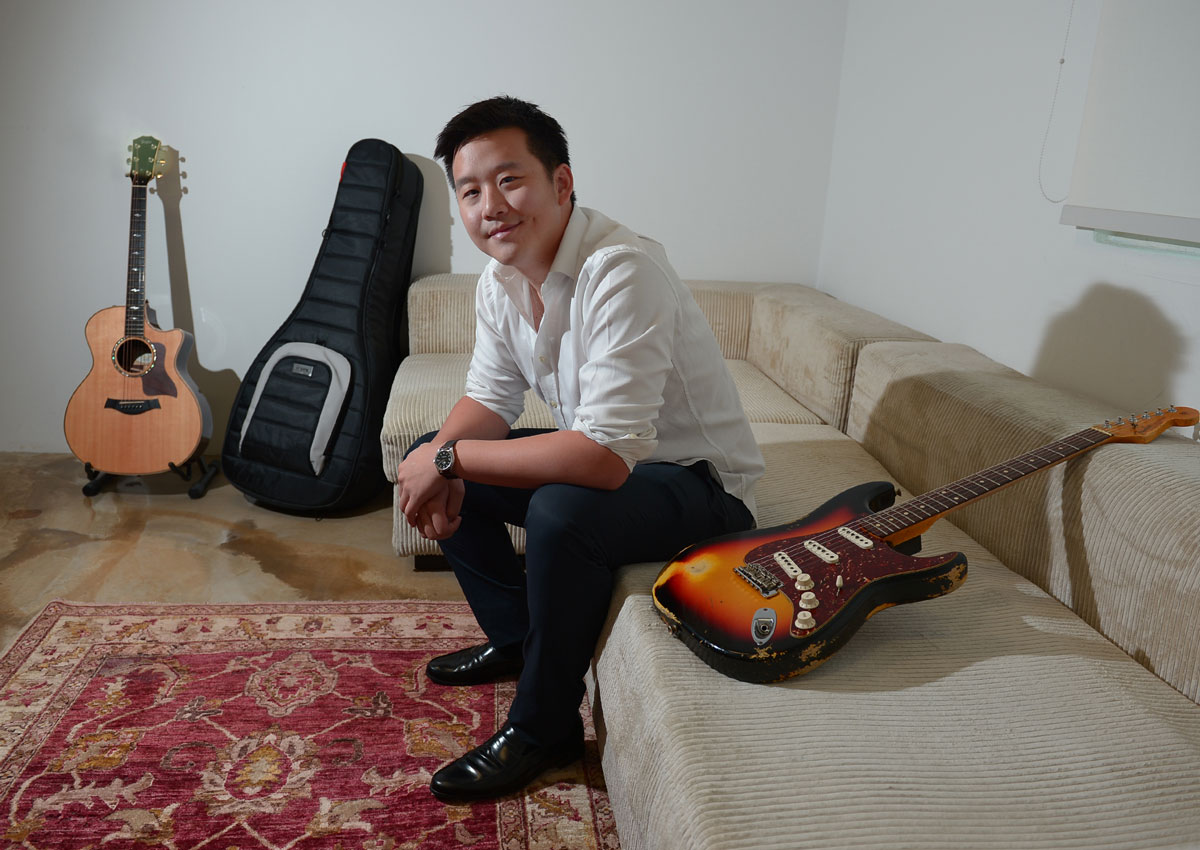
Singapore-based social music start-up BandLab Technologies has acquired a 49 per cent stake in Rolling Stone, which publishes the eponymous magazine.

The size of the deal was not disclosed, but this is the first time Rolling Stone is taking on an outside shareholder since it was founded 49 years ago by American Jann Wenner.

BandLab chief executive Kuok Meng Ru is no complete unknown.

Backed by his father and palm oil tycoon Kuok Khoon Hong, the 28-year-old Cambridge graduate has been building a smaller empire of his own in the music world.

In 2012, he acquired Swee Lee Music, a guitar and audio equipment distributor which he expanded online.

BandLab, the group’s flagship app, debuted last August as a platform for musicians to find collaborators.

Earlier this month, the group acquired Mono, which designs accessories for musicians.

The Rolling Stone deal was first tabled about 15 months ago, after Mr Kuok was introduced to Mr Wenner by the Forbes family.

Mr Kuok told The Straits Times: “We initially started talking about a possible joint venture for Asia. Jann introduced me to Gus, his son, who is head of digital and our business partner in this deal, and we had a wonderful dinner in New York about 12 months ago from which everything escalated to the partnership we have today.”

Together, Mr Kuok and the younger Mr Wenner, who is 26, will set the pace at Rolling Stone for the next 50 years and beyond.

Mr Kuok said: “A 49 per cent partnership, it’s like a marriage right? And to us, it’s the best kind because that means the both of us together will work on this for the long term.”

While editorial decisions will continue to be made from the New York office, Mr Kuok will lead a new unit called Rolling Stone International, to be headquartered here.

His task is to take the brand into new markets and work on brand extensions.

Rolling Stone already publishes 12 international editions, so Mr Kuok will spend the next six to nine months getting to know the licensees and learning what support they need.

For Mr Kuok, who is Malaysian but lives here and is in a serious relationship, music magazines were a part of how he grew up. “Whenever we were able to get our hands on a copy – it was always something quite special,” he recalled.

marilee@sph.com.sg

Image: 
Category: 
Publication Date: 
Monday, September 26, 2016 – 08:07
Send to mobile app: 
Source: 


Rotator Image: 
Story Type: 
Others

Source link

Myanmar’s fighting art of Lethwei

0

In the old days, droves of spectators gathered in communal theatres around rural Myanmar to witness just one thing – Lethwei, the nation’s bareknuckle combat sport.

A martial art that welcomes headbutts, chokes, and raking knuckle strikes, Lethwei is classified together with the grappling art of Naban, the counterattacking martial art of Bando, and the weapon-wielding sport of Banshay under the banner of Thaing – Myanmar’s sacred martial arts.

Although the sport’s fearless fighters would do battle, akin to Muay Thai kickboxers, to the tempo of traditional Myanmar music, Lethwei differentiates itself from similar martial arts from around the region such as Muay Lao from Laos, Tomoi from Malaysia, and Pradal Serey from Cambodia, simply by its raw nature that lacks gloves, headgear, and other protective equipment.

image

Lethwei exponents too perform a ritual dance, known as the lat kha maung, before the violence. At the signal of the referee, opponents with their fists wrapped in nothing but cloth go at it until one person is knocked out or unable to continue fighting – Lethwei has no points system.

“One of my favourite techniques is where I push a guy to the ropes and head butt him as he returns. You can also knock your opponent out by slamming him to the ground or throwing him off the ropes,” shares Lethwei practitioner Sam Htut.

“In the clinch when the guy falls to the ground, you can bury your head under his chin and knee him in the stomach, which is also a legitimate technique,” he adds.

The sport also teaches charging combinations including a knee with a simultaneous punch, or a rising knee that forces its recipient to receive a downward elbow too, which make its practice and exhibition quite the spectacle.

Sometimes, a competitor cannot continue because of blood that blinds his eyes. Some Lethwei organisations stipulate that a competitor can only wipe the blood from his eyes three times before the fight has to be stopped.

This brand of entertainment brings together Myanmar of various classes and communities. Its fights are open to all, from teachers to street brawlers. Traditionally, its champions would issue open challenges, welcoming anyone to have a go at them at these boisterous affairs.

image

“Lethwei is an ancient martial art and is the legacy of our ancestors,” remarks Win Zin Oo, one of Myanmar’s most prominent Lethwei teachers from the famed Thut-Ti Lethwei gym. “Lethwei is part of the culture and lifestyle of Myanmar’s rural people, especially those from the Kayin and Mon states.”

In the 1950s, the unification of Lethwei across Myanmar began. Fighters were then encouraged to compete under rules that highlighted safety, as well as necessitated protective gear and a modern boxing ring – an obvious effort to render Lethwei more palatable to a new generation of audiences.

“Lethwei today is in essence the same. Before, the boxers had to fight till there was a winner and a loser. It sometimes took hours to see a result. Nowadays, professional fighters fight only five rounds. If there is no KO, TKO, or retirement, the result is proclaimed a draw. Basically, this new system is aimed at reducing permanent injury,” says Win Zin Oo.

The recent lifting of international trade sanctions previously imposed on Myanmar was a pivotal moment in Lethwei and martial arts history, which saw the world exposed and oddly enchanted by this brutal and simultaneously graceful martial art.

Despite its harsh nature, Lethwei values humility and respect above all, and Lethwei gyms have begun spreading all over the world, with foreign practitioners embracing it as an effective fighting skill and an homage to the wisdoms of traditional martial arts.

“One of the most effective and exciting standing fight systems which is not that known to the world, the philosophy of Lethwei is to be humble like a lamb in normal life, but to be brave like a lion in the ring,” says Win Zin Oo.

image

Sam Htut adds that “Lethwei fighters are some of the toughest and kindest fighters I have ever seen. In Lethwei, you will never see the kind of trash talking that the UFC has.”

Speaking of the UFC, another fast-growing sport that has also exhibited an undeniable ability to attract large audiences is mixed martial arts (MMA), which has crossed paths with Lethwei in recent times through ONE Championship, Asia’s largest MMA promotion.

In fact, this March ONE Championship will be returning to Yangon to hold a large-scale event named ONE: Union of Warriors, which will feature Myanmar’s very own “Burmese Python” Aung La N Sang and Lethwei fighters making the transition to MMA.

image

However, with ONE’s very different ruleset and strict safety regulations, the challenge would be for these Lethwei fighters to adapt this brutal art they’ve been watching and practicing for decades to modern MMA and a global audience.

While Myanmar martial artists are proud that Lethwei is now appreciated by a larger global audience, they also look forward to how the sport would evolve in the presence of global forces such as MMA.

An inevitable evolution of every martial art, the metamorphosis of Lethwei could also be seen to reflect the former military junta’s advancement and gradual acceptance of the ways of the outside world.

Photos: Thut Ti Lethwei, Zarni Phyo, ONE Championship

Image: 
Myanmar’s fighting art of Lethwei
Category: 
Publication Date: 
Monday, September 26, 2016 – 08:04
Send to mobile app: 
Source: 


Story Type: 
Others

Source link

30-ha forest to be cleared for new neighbourhood at Teacher's Estate

0

Bound by Tagore Road, Upper Thomson Road, Munshi Abdullah Avenue and Yio Chu Kang Road, land preparation work will take about five years.

Source link