Home Blog Page 2765

Most parents no longer focus only on grades: Poll

0

About four in five parents here believe career success is no longer driven just by academic achievements, a recent survey has found.

Instead, they recognise the importance of discovering their children’s passions and talents early on. But only half are familiar with their children’s talents. In addition, nearly one in five parents is unsure how to tap his child’s potential.

The survey, conducted by the United Overseas Bank (UOB) in May, gathered responses from 447 parents with children aged 12 and below, on their attitudes towards their children’s future success.

This comes as the Republic’s education system moves away from academics, and towards broadening opportunities for students to discover their aptitudes and interests, and develop a love for learning.

Mr Dennis Khoo, UOB’s Singapore head of personal financial services, said: “For their children to have an edge in the future economy, parents will need to reassess their traditional notions of what defines career success.

“It is fair to say children who pursue what they are naturally good at are more likely to cultivate an interest in what they do and therefore excel in their chosen career.”

In response to the findings, UOB last Thursday introduced a programme to help parents discover and nurture a child’s potential early. The KidSmart programme utilises an assessment tool to identify a child’s aptitude.

Mr Khoo said the programme’s launch is timely, because with increasing globalisation and rapid technological change, jobs of the future will require a different set of skills such as creativity and the ability to think critically.

“Just getting the best grades doesn’t mean that you will be successful tomorrow,” he said.

Parents contacted agreed, saying the focus on grades alone takes the joy of learning away from children.

Ms Emily Mathews, a mother of two boys aged 10 and 12, said: “When parents realise that grades are not everything, kids are hopefully more exposed and encouraged to follow their interests, and not necessarily take the conventional routes.”

The 38-year-old risk manager said her sons have a flair for sports. She has been investing time and money to get them involved in sports such as rugby and mixed martial arts, and will continue to encourage them to pursue these interests.

National University of Singapore sociologist Tan Ern Ser said the findings resonate with the shift towards celebrating a holistic set of achievements, including in non-academic areas such as sports and the arts.

“Singaporean parents recognise that there are alternative pathways to success for their children,” he added.

“They are aware that for their children to harness their inherent talents successfully, they need to encourage and invest in the development of their talents from the outset, while being careful not to undermine their motivation.”


This article was first published on September 26, 2016.
Get a copy of The Straits Times or go to straitstimes.com for more stories.

Image: 
Category: 
Publication Date: 
Monday, September 26, 2016 – 17:00
Send to mobile app: 
Source: 


Story Type: 
Others

Source link

Fewer Singaporean babies born out of wedlock

0

Fewer babies have been born out of wedlock to Singaporean mothers in the past decade, from 1,152 in 2006 to 863 last year – a 25 per cent drop.

While there were two years within the decade that had a slight increase in the numbers – 2007 and 2012 – the rest of the decade registered a general downward trend.

The data was released last month by Minister for Social and Family Development Tan Chuan-Jin, in response to a parliamentary question by Nominated MP Kok Heng Leun.

The Straits Times understands that this is the first time the Government has made public the number of Singaporean babies born out of wedlock, as it is extending some of the benefits enjoyed by only married mothers to unwed mothers.

Singaporean children born to unwed parents from Sept 1 can get the Child Development Account (CDA), a savings account that can be used for childcare fees and medical expenses.

The children will receive the CDA First Step Grant of $3,000 and the Government will also match dollar for dollar the amount their parents put in, up to a cap.

From early next year, unwed mothers will get 16 weeks of paid maternity leave, up from the current eight weeks.

According to Ministry of Social and Family Development data, children born out of wedlock comprise those who do not have a father’s name in the birth certificate, or those whose parents are not married when the birth is registered, even if the father’s name is listed.

Social workers say greater use of contraceptives has led to a fall in unplanned pregnancies and babies born out of wedlock.

The number of teen births has fallen as today’s wired teens are more savvy about contraception, said the Association of Women for Action and Research’s (Aware) head of advocacy and research Jolene Tan.

Last year, 341 babies were born to teens aged 19 and below – fewer than half of the 838 babies born to teen mums in 2006.

Dr Yap Mui Teng of the Institute of Policy Studies said, by and large, Singaporeans still frown on having children out of wedlock.

In 2013, it polled 2,000 singles and most said they would not want to have children if they are not married.

Social workers say unwed mothers range from teens to women in their 30s and span all socio-economic groups.

They do not marry the baby’s father for various reasons.

A common scenario: The father does not want the baby and the mother refuses to abort it, so they break up.

Or the man disappears after learning of the pregnancy, said Ms Mary John, a pregnancy crisis case worker at the Family Life Society. In some cases, the man is already married.

Ms Jennifer Heng, founder of DaySpring New Life Centre, which helps pregnant women in need, said: “For many of those who omit the father’s name from the birth certificate, they don’t want to have anything to do with the man any more.”

Social workers say unmarried mothers face a host of struggles, from making ends meet to finding a roof over their heads, if they are unable to live with their families.

They also have to deal with the stigma of being unwed mothers.

Aware’s Ms Tan pointed out that unwed parents still do not get the Baby Bonus cash gift and tax reliefs that married mothers enjoy.

theresat@sph.com.sg


This article was first published on September 26, 2016.
Get a copy of The Straits Times or go to straitstimes.com for more stories.

Image: 
Category: 
Publication Date: 
Monday, September 26, 2016 – 14:00
Keywords: 
Send to mobile app: 
Source: 


Rotator Image: 
Story Type: 
Others

Source link

Scope to upgrade Singapore-Japan air services agreement: Josephine Teo

0

Singapore’s Senior Minister of State for Transport says one reason for this is because slot capacity at Japan’s airports, such as Narita, have improved. 

Source link

Building's structural integrity not affected, says BCA

0

Tampines resident Choo Keat Thin was watching television at 10am yesterday when he felt the floor shake and heard a loud “boom”.

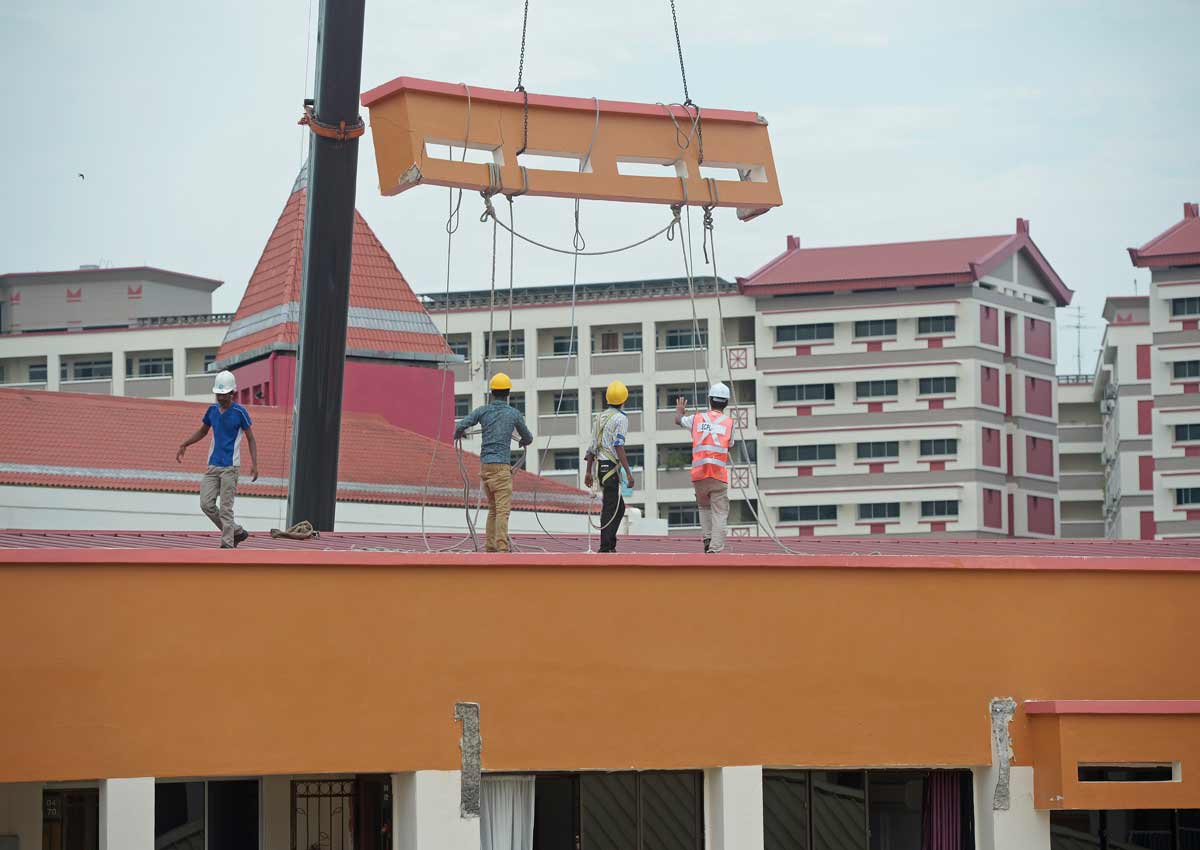
He found out that an exterior concrete sunshade above the window of his fourth-floor flat had partially dislodged and landed on the sunshade below.

The dislodged sunshade – about 5m long – was left balancing on the sunshade on the third floor. The other end of the dislodged sunshade was left hanging above Mr Choo’s window.

“I was shocked to see such a big external structure fall off and my first thought was to call the police,” said the 59-year-old car workshop owner. “There were many people walking below to go to the market and it could have killed someone.”

A piece from the sunshade on the third floor chipped off, but no one was hurt in the incident at Block 201E, Tampines Street 23. Mr Choo said: “I hope they do a thorough check as there are similar structures around.”

Ms Ling He, a cashier at a food stall opposite the block, said: “I saw the whole structure fall and a smaller piece coming down. Immediately, many of our customers dispersed and left.

“If that one small chunk could damage the ledge, imagine what would have happened if the whole thing had come crashing down?”

When Ms Cheng Li Hui, an MP for Tampines GRC, was alerted to the incident at 10.25am, she told grassroots leaders to get the police to cordon off the area and contact the relevant agencies.

“For safety reasons, I told the shop owners to bring in their products from the corridor, and many of them decided to close their businesses since the area was being blocked off ,” she said.

The dislodged sunshade was later safely removed by a crane, with a professional engineer on site to oversee the operation, said Tampines Town Council.

The Building and Construction Authority (BCA) said the incident did not affect the structural integrity of the building. The dislodged structure is part of the building’s exterior architectural facade.

“BCA has directed the building owner – Tampines Town Council – to engage a professional engineer (PE) to… carry out a detailed investigation and recommend permanent rectification works,” a spokesman said in a statement.

“As an added safety precaution, the building owner’s PE is also required to inspect all the other HDB blocks in the area with a similar architectural facade.”

The Housing Board said its engineers are investigating the cause of the incident.

Tampines Town Council recently conducted painting and upgrading works in the precinct.

It said last night that it will work closely with BCA and HDB in the investigation. It added that the area will be closed off until further notice.

“Town council officers will be conducting a visual inspection of blocks in the area over the next few days,” it said. “We would also like to appeal to residents to inform the town council if they notice any cracks.”

jantai@sph.com.sg

Additional reporting by Annabeth Leow and Marcus Tan


This article was first published on September 26, 2016.
Get a copy of The Straits Times or go to straitstimes.com for more stories.

Image: 
Category: 
Publication Date: 
Monday, September 26, 2016 – 14:00
Send to mobile app: 
Source: 


Rotator Headline: 
Concrete sunshade collapses at Tampines HDB block: Building's structural integrity not affected, says BCA
Story Type: 
Others

Source link

Brad Pitt 'beside himself and crying'

0

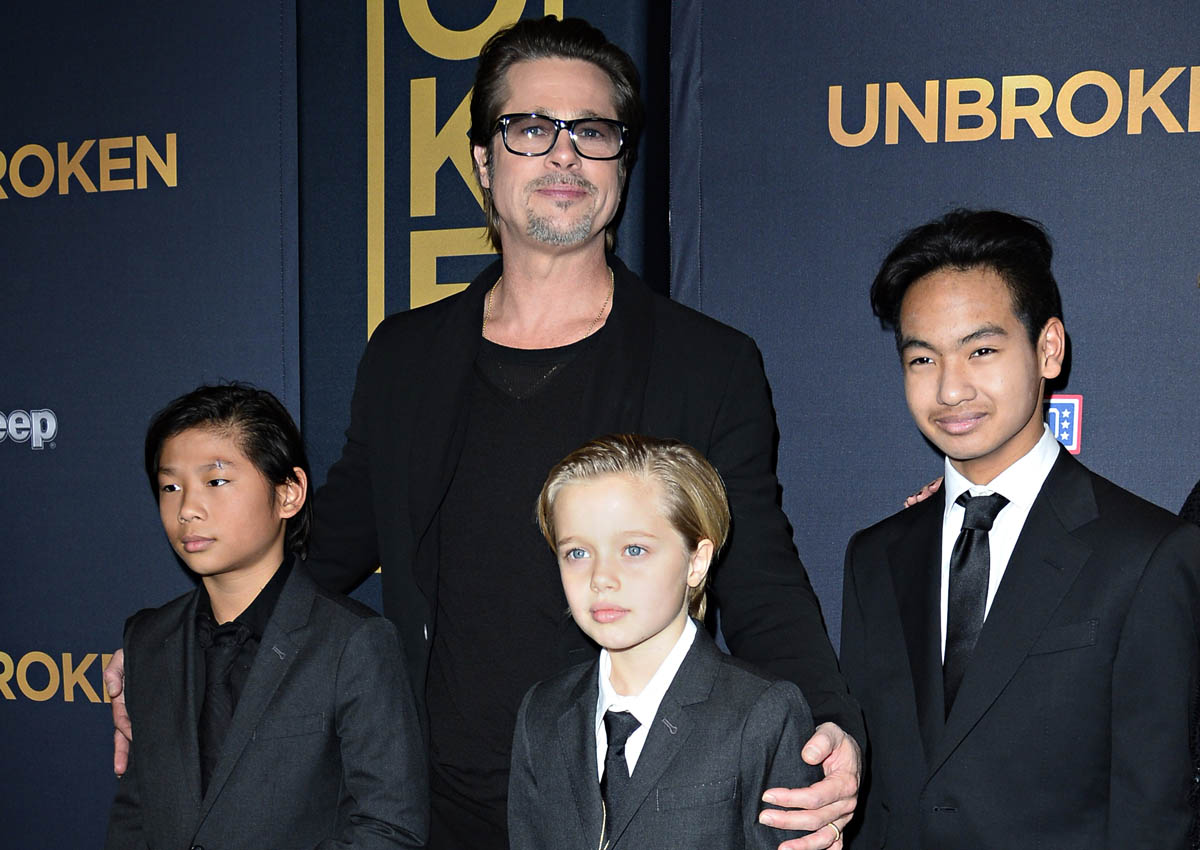
NEW YORK – Actor Brad Pitt “is beside himself and has been crying” over actress Angelina Jolie’s sudden divorce filing, says Us Weekly.

His sources tell the magazine that his estranged wife has taken the extreme measure of blocking all his calls and texts, after springing the divorce on him last Monday.

Pitt, 52, “was completely caught off guard”, a source says. Jolie, 41, “filed the court papers a minute before the courts closed on Monday night”.

Pitt “didn’t have a lawyer or anything. She had threatened divorce in the past, but he did not think she would file this time”, the source adds.

There was an alleged incident involving Pitt and his children aboard a private plane on Sept 14 – the day before Sept 15, which Jolie listed as the date of the couple’s separation.

The FBI has confirmed that it is gathering information surrounding the incident, but People magazine, citing a source, says an investigation is unlikely to proceed.

A source tells the magazine Pitt did not strike his son Maddox, but rather “made contact” with him “in the shoulder area”.

Read also: Laura Wasser: Hollywood divorce lawyer you want on your side

Pitt “got drunk and was fighting with Angie”, another source tells Us Weekly. “Maddox stepped in to defend Angie and got in Brad’s face.”

In her divorce filing, Jolie is seeking sole physical custody and joint legal custody of the couple’s six children: Maddox, Pax, Zahara, Shiloh and twins Knox and Vivienne.

Jolie and Pitt, who first became a couple in 2005, married at a French chateau in 2014. This was her third marriage and his second.

The estranged couple are said to have “always had disagreements when it came to disciplining the kids”, according to People magazine. “Brad has always been stricter. Brad will get frustrated sometimes and yell at the kids,” a source tells the magazine. But he “never used any kind of physical discipline”, the source adds. “Angelina always had a more relaxed attitude when it came to the kids.”

Read also: Brangelina’s assets: What Angelina Jolie and Brad Pitt may divvy up in divorce

A Pitt source tells the magazine the actor knew the marriage was troubled and had been in counselling for the children’s sake.

“He was willing to do anything, change any habit, change any lifestyle, to do what had to be done to make this work. And by ‘make this work’, that means doing what has to be done to make even a split one that is amicable and in the best interests of the children.”


This article was first published on September 26, 2016.
Get a copy of The Straits Times or go to straitstimes.com for more stories.

Image: 
Category: 
Publication Date: 
Monday, September 26, 2016 – 12:36
Send to mobile app: 
Source: 


Rotator Image: 
Story Type: 
Others

Source link

Wang Lee Hom announces he'll be taking 2 months of paternity leave

0

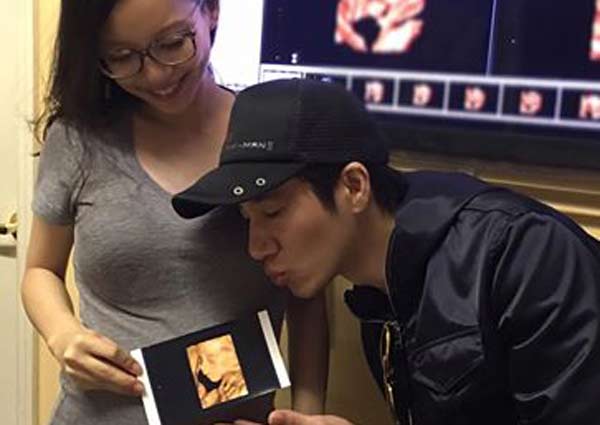
Looks like we won’t be seeing Taiwanese-American singer-songwriter Wang Lee Hom for a while.

After launching his ‘Open Fire’ concert film at the Toronoto International Film Festival, the 40-year-old artiste is ready to take a break and put his family first.

Wang announced in February this year that his wife, Li Jinglei, 30, is expecting their second child.

In a Facebook post on Sunday (Sept 25) Wang said that he will be taking two months of paternity leave when his baby is born.

He wrote that it was ‘an idea I got from my friend Mark Zuckerberg’.

on Facebook

兩個月的陪產假其實是我的好朋友扎克伯格以身作則的主意。想想看,如果一個這麼忙的人可以這樣做,我又有什麼原因做不到?確實很多的研究證明對未來家庭的建立有好處,孩子和父母之間的互動,還能減輕母親產後憂鬱的程度,等優點。宏聲員工們也一樣有兩個月的…

Posted by 王力宏 Wang Leehom on Saturday, 24 September 2016

‘If someone that busy can do it, why can’t I?’ said Wang, adding, ‘having been through it once before guys, my two cents is, it’s just an awesome time to bond.’

Facebook CEO Zuckerberg brought workplace policies to the fore the world over when his decision to take two months of paid paternity leave was made public. Facebook also offers its US employees up to four months of paid maternity or paternity leave which they can take throughout the year.

Taking Zuckerberg’s cue, Wang stated that his employees will also ‘have the same two months paid maternity/paternity leave when their turn comes’.

In his post however, Wang did not address when Li is due to give birth.

on Facebook

在家中, 我排行老二。大家也都叫我二哥。剛好,今天星期二,碰巧是八月二號! 在這個充滿二的日子裡的 22:22分,當然也少不了二嫂,和肚中懷的老二!!✌️✌️#超級二日
I’m the 2nd child, everyone calls…

Posted by 王力宏 Wang Leehom on Tuesday, 2 August 2016

candicec@sph.com.sg

Image: 
Category: 
Publication Date: 
Monday, September 26, 2016 – 12:14
Send to mobile app: 
Source: 


Rotator Image: 
Story Type: 
Others

Source link

More family-friendly features mooted for Singapore's transport system

0

A design to allow open prams on buses, nursing rooms at bus interchanges and integrated transport hubs as well as dual-speed escalators and travellators among features being considered by LTA. 

Source link

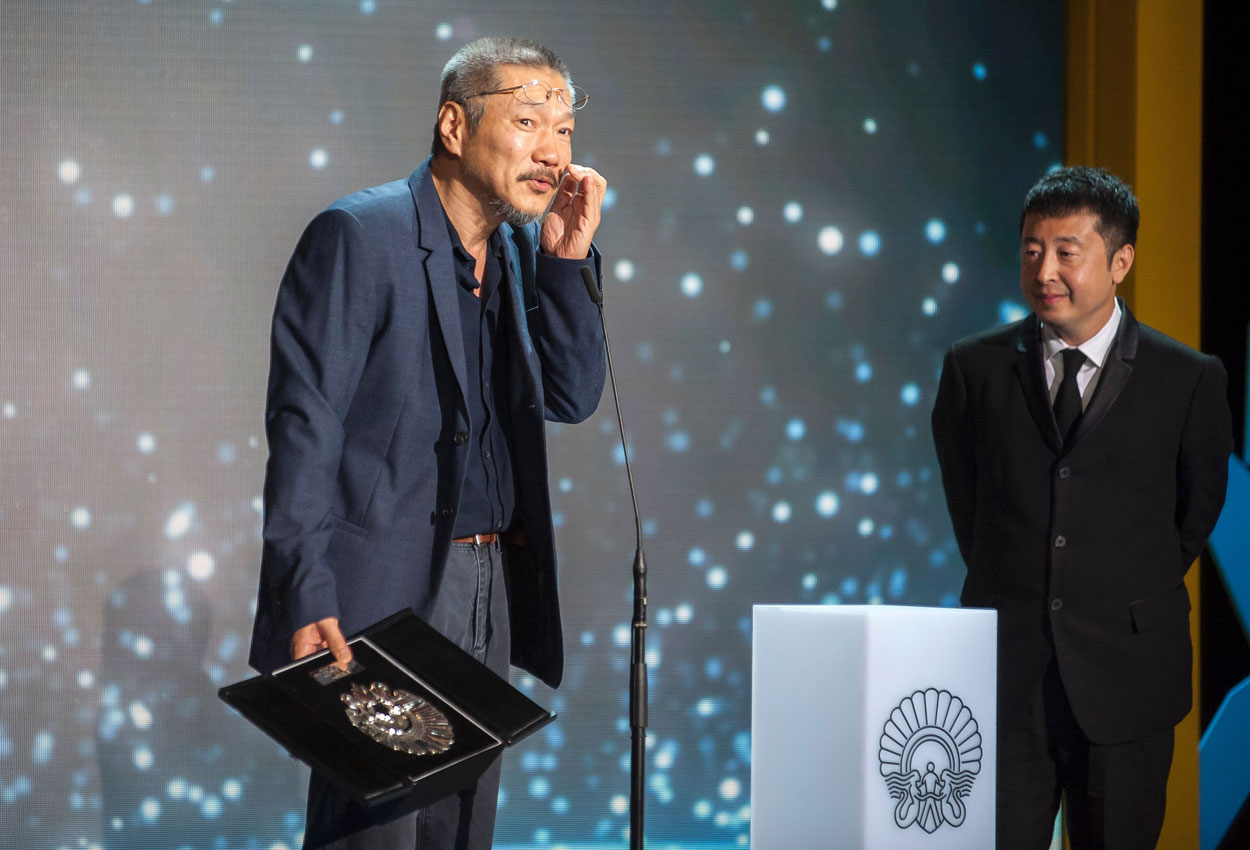
Korea's Hong Sang-soo wins best director at San Sebastian film fest

0

Korean film director Hong Sang-soo has taken home the Silver Shell award for best directing for his new film “Yourself and Yours” at this year’s 64th annual San Sebastian Film Festival in Spain, which ran from Sept. 16 to 24.

Best known for his films “Hahaha” and “Right Now, Wrong Then,” Hong’s latest feature film stars actors Kim Joo-hyuck and Lee You-young in a movie that chronicles one man’s desperate search for his girlfriend, who had gone missing after a serious spat between the two.

The win marks the 54-year-old director’s first win at the San Sebastian Film Fest. The event’s Golden Shell top prize winner went to the Chinese film “I Am Not Madame Bovary,” by Xiaogang Feng.

“Yourself and Yours” was invited to three major international film festivals, including the 41st Toronto International Film Festival, which concluded earlier this month, where it was one of 24 global productions highlighted at the festival’s Masters Program.

The film will soon head off to compete at the 54th New York Film Festival, which is scheduled to kick off Friday. Hong’s film is slated to compete in the competition’s Main Slate category, where the director’s “Right Now, Wrong Then” award-winning film was screened last year.

“Yourself and Yours” is scheduled to open in local theatres sometime in November.

Image: 
Category: 
Publication Date: 
Monday, September 26, 2016 – 12:00
Send to mobile app: 
Source: 


Story Type: 
Others

Source link

The writing on the Great Wall is grief

0

I read it as an April Fools’ Day joke in September, but it turned out to be true.

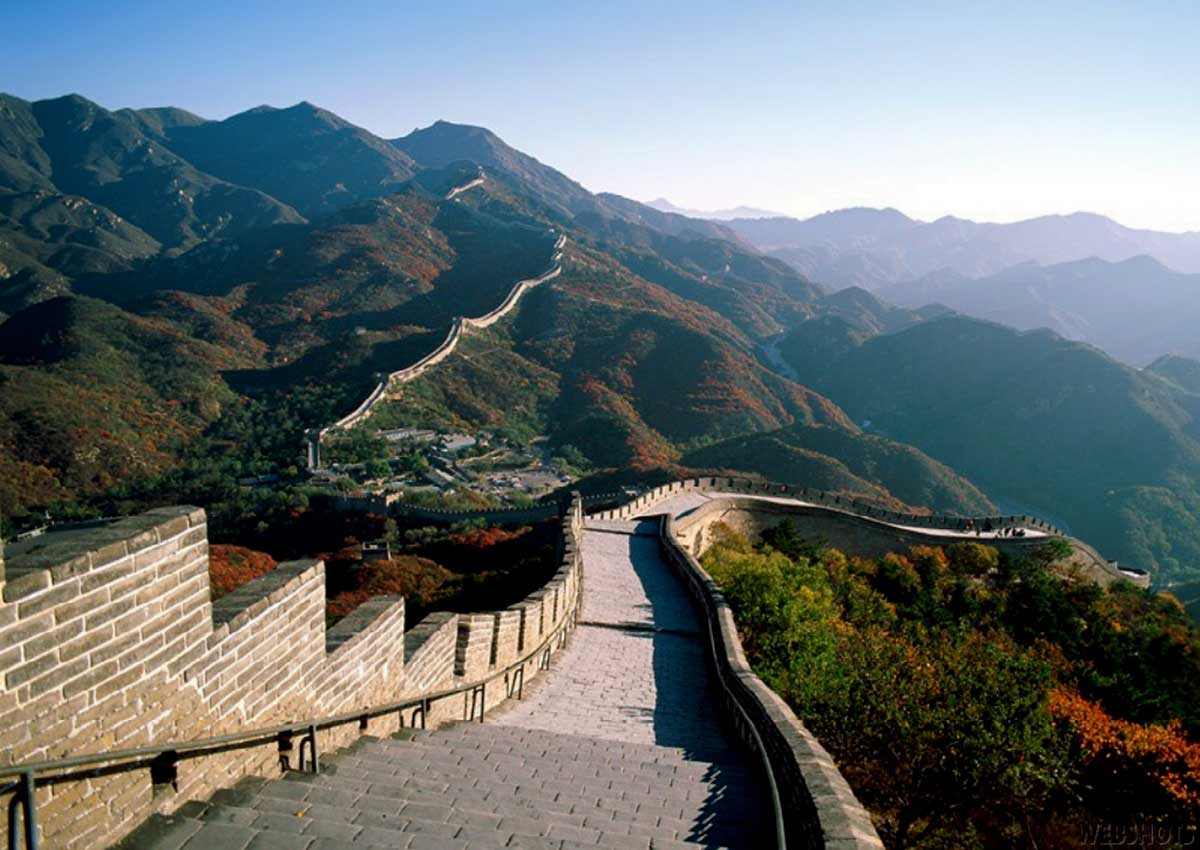
A stretch of the Great Wall in Liaoning province, built during the Ming Dynasty (1368-1644), has indeed been turned into a smooth, white trail of cement in the name of restoration.

To say the irreversible damage caused to the UNESCO World Heritage Site, the pride of the nation, is outrageous would be an understatement.

The Great Wall with a cemented trail is like the Taj Mahal adorned with glitzy modern tiles or the statue of Venus de Milo with restored arms.

Architecture and aesthetics aside, the damage to the Great Wall is also a crime against history.

What makes it more deplorable is that, instead of feeling remorse, officials of Suizhong county’s cultural relics bureau, who were in charge of the project, insisted they had done nothing wrong, claiming the repair work that started in 2013 and ended in 2014 followed the regulations and laws on the protection of the Great Wall.

One official even said netizens who have raised a storm over the “destructive nature of the repair work” do not fully understand how the national treasure is protected.

The depth of folly, as well as the ignorance of law displayed by the officials are shocking.

Any sane person can tell that by pouring cement over the ruins of the wall, they have basically erased whatever features were still left of this man-made wonder.

The 8,800-kilometer-long Great Wall is in a perilous state, with more than 30 per cent of it having already disappeared, either due to natural erosion or unchecked human activity.

Yet preservation work lags behind, with only 10 per cent of the Great Wall under some sort of State protection.

China is yet to work out a unified set of standards for repair and restoration work on the wall.

But experts agree that “minimum intervention” should serve as a guideline for preservation, a principle that has been violated by Liaoning officials.

The Great Wall is protected under Chinese laws, and even theft of its bricks is a criminal offence.

Since an investigation by provincial cultural heritage authorities is still going on, we cannot say for certain who or what is to blame for ruining the wall.

But those people who are responsible for disfiguring the wall, either because of lax supervision, dereliction of duty or corruption, must be brought to book.

To me, the so-called restored stretch of the Great Wall in Suizhong is no different from the theme park in Beijing’s southern suburbs where you can see all the wonders of the world in miniatures. Around the world in a day.

The Great Wall has always been on top of the list of must-see sights for visitors to Beijing.

As the saying goes, “he who has not climbed the Great Wall is not a true hero”.

But normally I don’t accompany friends or relatives to the Badaling section of the wall, a hot tourist site, unless they insist. The restored section of the wall in Badaling, in my view, has lost its historical glow.

If at all I accompany friends or relatives to the Great Wall, I prefer taking them to the “wild” sections, the real wall, at Jinshanling or Simatai, where its original beauty survives.

Those sections give you a sense of history, remind you of the transient nature of time and tell you how human endeavour eventually succumbs to natural forces.

“The wall has life.” I still remember a tour guide told me during a trip to the Great Wall as she pointed to the bricks, each carved with the name of its maker hundreds of years ago, a tracking method used in the days of yore to ensure quality.

It is the sacred duty of us all and of the generations to come to keep the Great Wall alive, instead of stifling it to death by pouring cement mixture on it.

Image: 
Publication Date: 
Monday, September 26, 2016 – 11:58
Send to mobile app: 
Source: 


Regions: 
Country: 
Interest: 
Story Type: 
Others

Source link

Nagasaki atom bomb survivor urges denuclearization of world

0

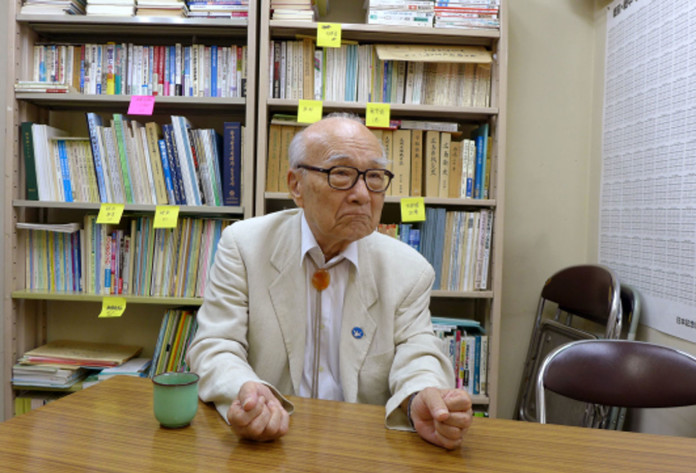
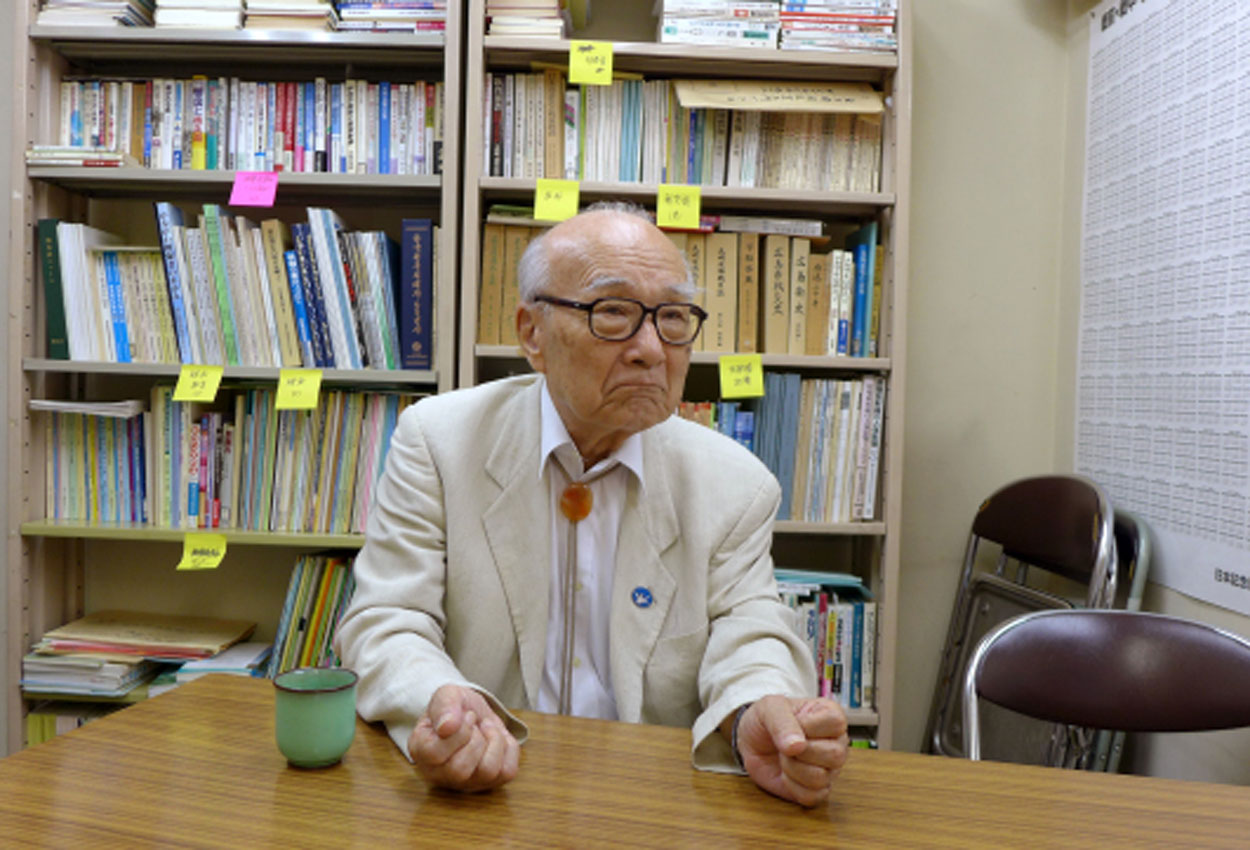
TOKYO – More than 70 years later, Terumi Tanaka can still relive the havoc wrought on his hometown Nagasaki, which was flattened by a plutonium bomb unleashed from a United States Army Air Forces plane.

At around 11 a.m. on Aug. 9, 1945, Tanaka was at his home some 3.2 kilometers away from the hypocenter of the atomic blast, when he heard a “loud bang” and immediately fell unconscious.

“Everything was instantly blown away in a storm,” the 84-year-old Japanese man told The Korea Herald in Tokyo last week. “I survived because I was lying down on the floor. However, five out of my six relatives died, some instantaneously from the raging inferno, some slowly from putrefying burns.”

Ahead of the international day for the total elimination of nuclear weapons on Sept. 26, designated by the United Nations in 2014, the secretary-general of the Japan Confederation of Atomic and Hydrogen Bomb Sufferers’ Organisation, also known as Nihon Hidankyo, warned of the indelible consequences of pursuing nuclear arms and energy.

There are more than 15,000 nuclear weapons in the world, with the US and Russia possessing 93 per cent of them, according to anti-nuclear organisation the Ploughshares Fund. The arsenals are a thousand times more destructive than the bombs dropped on Hiroshima and Nagasaki.

The bombshell dropped on Nagasaki, dubbed “Fat Man,” killed 74,000 people, roughly half the number that had perished from Hiroshima three days earlier. There are currently over 174,000 survivors — called “hibakusha” in Japanese — of the apocalyptic events in Japan and several thousands more worldwide.

Along with civic organisations such as Japan NGO Network for Nuclear Weapons Abolition and Peace Boat, Nihon Hidankyo has shepherded anti-nuclear calls around the world since it was established in 1956. It has participated in international conferences, street rallies and speaking tours, urging the total abolition of nuclear weapons, state compensation for their injuries, enhancement of government policies and relief measures, and solidarity with nuclear victims around the globe.

“Japan practically became a colony of the US since the war ended,” Tanaka said. “The US government forbade discussion or research of the bombing for seven years after 1945, and the Japanese government followed suit for an additional three years, thereby doing nothing for 10 years.”

As part of the San Francisco Peace Treaty in 1951, Tokyo renounced its right to claim damages from the nuclear bombardments from Washington. The hibakushas were deprived of their health, disadvantaged in employment and discriminated against by society, according to Nihon Hidankyo.

However, the legacy of Hiroshima and Nagasaki became the subject of national discourse following the radiation exposure and death of Japanese fishermen who were affected by America’s nuclear weapons testing in the Pacific Ocean.

“Life was very tough before 1956, when our government started legislating laws and providing health care to the victims,” Tanaka recalled. “Before that, the sick and dying had to pay for medical expenses out of their own pockets, and many poor people died from malnutrition.”

Tanaka, who lived with a mother and three siblings, had to scrape by working odd jobs and saving pennies for the family as well as schooling. He called it an “unspeakable hardship.”

“We couldn’t eat for days on end. Everyone was poor, and even with little money there was practically nothing we could buy,” he said. “In spite of all our misery, we hoped that things would get better. We survived by shoving whatever was edible into our mouths.”

In the tragedy’s aftermath, Tanaka noted he did not experience particular health problems, but one of his sisters died from cancer 10 years ago, and several of his acquaintances contracted leukemia and other malignancies. Particularly, many children around age 10 and younger developed cancerous tumours, he pointed out, surmising the bombing was to blame.

While Hiroshima has since become a universal symbol of mass destruction, Nagasaki on Japan’s southwestern island of Kyushu has largely been relegated to the larger city’s shadow. Nagasaki was bombed after Hiroshima, though it was less devastating due to the mountains and valleys of the city.

According to analysts, some 50,000 Koreans are thought to have lived in Hiroshima and 20,000 in Nagasaki during the attack, out of which roughly 30,000 and 10,000 are estimated to have died.

Most of Nagasaki’s Korean victims, who came from Hapcheon County in South Gyeongsang Province, were forcibly conscripted for backbreaking labour in wartime factories. The survivors returned home after the war to establish an organisation similar to Nihon Hidankyo, with which the Japanese side maintains close contact.

“Japan believed peaceful use of nuclear energy was possible and should be welcomed,” Tanaka said, referring to the country’s postwar embrace of civilian atomic energy, which was birthed in 1954 as a government programme.

“We were worried about accidents such as the Chernobyl nuclear disaster in 1986, but thought they would not be repeated in our country, which prided itself on technological precision.”

Following the Fukushima Dai-ichi nuclear catastrophe in 2011, he stressed, anti-nuclear voices have grown stronger based on recognition that Japan — as a country located on an earthquake fault line and in a volcanic zone — cannot guarantee the absolute safety of its nuclear power.

“The destruction from a nuclear disaster is not limited to one country, but affects the whole world,” Tanaka emphasised. “Residents near the Fukushima Dai-ichi nuclear power plant are following a similar course as Hiroshima and Nagasaki victims. It is critical to probe and minimise their sufferings.”

Regarding North Korea’s nuclear tests and missile provocations, the elderly man underlined that his organisation had firmly opposed them. Nihon Hidankyo has expressed support for the six-party talks for the denuclearization of North Korea and made efforts to establish a nuclear-free zone in East Asia, he added.

“But Tokyo has actively inflamed public fears of Pyongyang’s threats and forged ahead with policies strengthening security ties with Washington,” he claimed, noting the Japanese people have felt “emotionally frightened” by the government’s approach.

“I believe Japan must also consider peaceful diplomacy with North Korea,” Tanaka argued. “As a personal opinion, a peace treaty between Pyongyang and Washington could stabilize the situation.”

On relations with South Korea, he asserted that Japan — both a casualty of history as well as aggressor — has the moral responsibility to offer the olive branch.

“Colonial Japan had caused great harm and suffering on the peoples of Asia throughout the first part of the 20th century,” he contended. “We should never forget this part of our history. However, the younger generations aren’t well aware of the past due to our government’s lukewarm attitude and our education’s passive, pacifist curriculum.”

Highlighting the importance of contrition through education, the secretary-general also advised Korea not to perceive the whole of Japan in a negative light.

“The government or policy could be overly nationalistic, but this doesn’t mean that all Japanese people are on board with it,” he said.

‘Civil-military nuclear industrial complex’

In an email interview with The Korea Herald from Hiroshima, professor Robert Jacobs of the Hiroshima Peace Institute at the Hiroshima City University said that “civil nuclear energy and military-security interests are inseparable.”

“Nuclear power plants were initially invented to produce plutonium for nuclear weapons,” he said, adding that 12 years passed before they started generating electricity.

In Japan, operating them has enabled stockpiling large quantities of plutonium, which can be used for military purposes. Japan is the only nonnuclear weapons state out of the six countries capable of producing plutonium from uranium.

Jacobs said that Tokyo has clung to nuclear energy to sell its atomic technologies abroad and to prop up the value of utility companies that have invested heavily in the industry.

“A clear majority of the Japanese public opposes the continued use of nuclear power in the country,” he stressed, citing people’s concerns following Fukushima.

All 53 nuclear power plants in Japan were closed down after the 2011 debacle, but they are resuming operations. Jacobs argued that this was being done little by little to “dilute” nationwide public outcry.

They are also turned on “as far from Tokyo as possible” to keep the protests away from the capital, he said.

Currently, three nuclear reactors at Sendai 1, Sendai 2 and Ikata 3 are running, and an application to reactivate 22 additional reactors has been filed.

The post-disaster management of Fukushima — in terms of environmental cleanup, health care provision, reparations for and relocation of displaced persons and decontamination of affected areas — has been “very poor,” Jacobs argued.

The government has focused on minimizing the cost of damage control and managing public opinion, he alleged, adding that people have been allowed to re-enter contaminated areas.

“This is done primarily to terminate payment to them for their forced evacuation,” the professor asserted. “Many people lost the vitality of their businesses and property values. They will receive no compensation for such losses.”

Of grave concern, children have been diagnosed with thyroid cancer at rates higher than before the calamity, he pointed out. “Trust in the government is very low.”

Regarding the radioactive contamination, Jacobs said that radioactive particles — including cesium 137, strontium 90 and tritium that were released from three of the exploded reactors and are harmful to biological life — will long remain in the ecosystem. Out of these, cesium 137 is the most hazardous and longest lasting, according to experts.

There has been a widespread contamination of forests and mountains surrounding the plant, the scholar said. Despite the removal of polluted topsoil across vast areas, wind and rain will spread and trickle radionuclides down to the towns, he projected. He also said the removed soil that has been collected in plastic bags will eventually re-enter the ecosystem, as the radioactivity will outlast the plastic bags.

“It is highly irresponsible to use nuclear energy in a country with frequent earthquakes,” the professor contended. “As we have witnessed in Fukushima, it is impossible to perfectly engineer for all possible disasters. In the event of a meltdown, the financial gains accrued from operating a power plant can be wiped out in repairing the damage.”

Mentioning that the toxic nuclear waste must be sealed off underground for over 100,000 years, Jacobs emphasised that “nuclear energy is unfeasible with peaceful, equitable and sustainable development.”

“No society can confidently claim it is protecting its future generations from the danger of nuclear power,” he said. “Nuclear energy creates liabilities that last for thousands of generations. Spent nuclear fuel will remain poisonous for hundreds of thousands of years.”

Pointing to renewable energy as an “inevitable solution,” he added that “Japan is in a very good position to be a leader in this essential technology.”


Image: 
Category: 
Publication Date: 
Monday, September 26, 2016 – 11:47
Send to mobile app: 
Source: 


Story Type: 
Others

Source link