Home Blog Page 2714

840,000 HDB households to receive GST Voucher U-Save rebate in October

0

SINGAPORE – About 840,000 Singaporean HDB households will receive the next instalment of the GST Voucher – Utilities-Save (U-Save) rebate in October 2016, the Ministry of Finance announced on Sunday (Oct 2). 

Annually, those living in one and two room flats are able to offset about three to four months of utilities bills on average with their regular GST Voucher – U-Save.

Those living in three and four-room flats are able to offset about one to two months of utilities bills on average. l The GST Voucher – U-Save rebate forms one of three components under the permanent GST Voucher scheme.

The U-Save rebate help HDB households offset part of their utilities bills. It is distributed every quarter and expected to cost $190 million annually.

In October 2016, eligible Singaporean households will each receive a GST Voucher – U-Save of up to $65, depending on their HDB flat type.

Photo: Ministry of Finance

debwong@sph.com.sg

Image: 
Publication Date: 
Sunday, October 2, 2016 – 16:59
Keywords: 
Send to mobile app: 
Source: 


Story Type: 
Rewritten Story

Source link

Pakistan impregnable, military insists after Kashmir 'raid'

0

PAKISTAN- Pakistani military officials point to an Indian army post high on a forested ridge along the Line of Control dividing Kashmir, insisting any incursions are impossible, after skirmishes ignited dangerous tensions between the nuclear rivals.

The army took the rare step of flying international media to the de facto border to make its case in a battle of competing narratives, after India said its commandos penetrated up to three kilometres into Pakistan on anti-militant raids.

The presence of Indian forces so far across the Line of Control (LoC) would be a stinging blow to Pakistan, particularly after the 2011 US raid that killed Osama bin Laden which took place on its territory without its consent.

The media visit came Saturday as India’s army chief Dalbir Singh congratulated commandos involved in what New Delhi has described as “surgical strikes” to take out terrorist launchpads after a deadly attack on an Indian army base last month.

Pakistan has flatly denied the claim, saying two of its soldiers were killed but only in cross-border fire of the kind that commonly violates a 2003 ceasefire on the LoC.

The helicopter tour took journalists to sectors just two kilometres from the dividing line, and near the locations India said it targeted in assaults on four militant camps.

On hand were senior local commanders as well as army spokesman Lieutenant General Asim Bajwa – an omnipresent media personality who has taken centre stage on Pakistani television since the tensions erupted.

In villages like Mandhole, daily life was going on largely as normal despite the tensions, with shops and businesses open and children in pressed white uniforms walking to school.

“You have seen the lay of the land,” said Bajwa, speaking from a command post overlooking the lush green Bandala Valley, with Pakistani and Indian fortifications visible on the opposite hill.

“You can see the way the fortifications are built and the way Pakistan has layers of defence and they have layers of defence… the LoC cannot be violated,” he said.

“If they’ve caused that damage to us, we don’t know any has been caused to us! You can go and meet the civilian population. Our side is open: to the UN mission, to the media, to the general public,” he said.

It was not possible to verify the general’s claims, though villagers who spoke with a second AFP reporter in the area independent of the military-guided trip were also incredulous.

Sardar Javed, a 37-year-old journalist for Kashmiri newspapers and a resident of Tatta Pani sector, which lies just west of India-controlled Poonch sector where one of the strikes was said to have been carried out, said he had seen no evidence of a raid.

“I’m not saying it’s not true because that’s the army line. It’s because I’m from the LoC and I’m a local journalist. News spreads fast around here and people get to know whatever happens,” he said.

Mountainous Kashmir is seen as one of the world’s most dangerous flashpoints, where Indian and Pakistani soldiers watch one another across valleys divided by barbed wire and land mines.

The bitter neighbours agreed on the de facto border in 1972, but both claim the territory in full. Two of their three wars have been fought over the Himalayan region.

Areas close to the 720 kilometre (450 mile) LoC are normally off-bounds even for Pakistani nationals, and the past three years have seen a surge in cross-border shelling.

Tensions have been simmering for months over unrest on the Indian side, where more than 80 civilians have been killed, mostly in clashes with security forces, during protests linked to the killing of a charismatic young separatist in July.

Some Pakistani observers say the vaunted raids are an attempt to shift the focus and allow India to escape scrutiny over its actions in Kashmir.

Pakistan-backed militants were blamed for the attack on an Indian army base last month in which 19 soldiers were killed, prompting angry calls for action from the Indian public ahead of Thursday’s action.

UN Secretary-General Ban Ki-moon has offered to mediate in the dispute as the international community urged restraint.

Pakistan is eager to dispel to the world the notion it harbours terrorists; and to its own citizens vanish the idea it can be pushed around by its bigger neighbour, with whom it has long attempted to maintain a semblance of military parity.

India, for its part, seeks to diplomatically isolate Pakistan following a series of attacks that it blames on Islamist militants backed by its western neighbour.

Leaning on a walking stick in the pristine hillside village of Baghsar Saturday, 76-year-old local councillor Mirza Abdul Ghani told visiting journalists that the Indian claims were “a big lie”.

“I myself am ready to fight if they dare – I have my weapon in my house,” he said.

Image: 
Category: 
Publication Date: 
Sunday, October 2, 2016 – 16:43
Keywords: 
Send to mobile app: 
Source: 


Hermes ID: 
2 639 115
Hermes ID String: 
VLPAIN2
Hermes Author: 
GRONGLOH
Story Type: 
Others

Source link

Duterte's Hitler remark 'misinterpreted'

0

Philippine President Rodrigo Duterte yesterday sought to douse global anger over his remarks likening his brutal anti-crime war to Adolf Hitler’s massacre of over six million Jews.

“We do not wish to diminish the profound loss of six million Jews in the Holocaust,” Mr Duterte’s spokesman Ernesto Abella said in a statement.

In what has become an all-too-familiar clarification, Cabinet Secretary Leoncio Evasco, one of Mr Duterte’s most trusted allies, told reporters: “He was just joking.”

On Friday, Mr Duterte drew a parallel between his bloody war on narcotics and the Holocaust.

“Hitler massacred three million Jews… Now there are three million drug addicts… I’d be happy to slaughter them,” he said, understating the toll cited by historians, which is six million.

“If Germany had Hitler, the Philippines would have…” he said, pausing and pointing to himself.

Those remarks have drawn sharp rebukes from Western governments and human rights advocates.

United States Defence Secretary Ash Carter described Mr Duterte’s comments as “deeply troubling”.

Germany’s Foreign Ministry said “any comparison of the singular atrocities of the Holocaust with anything else is totally unacceptable”.

United Nations special adviser on the prevention of genocide Adama Dieng urged Mr Duterte to exercise restraint in his use of language.

Mr Josef Benedict, deputy director-general of Amnesty International, said Mr Duterte “has sunk to new depths”.

Jewish groups earlier condemned Mr Duterte’s remarks. Rabbi Abraham Cooper, head of the Simon Wiesenthal Centre’s Digital Terrorism and Hate project, called them “outrageous”.

“Duterte owes the victims (of the Holocaust) an apology for his disgusting rhetoric,” he said.

Mr Abella did not offer any apology in his statement, insisting Mr Duterte has again been misinterpreted.

“Mr Duterte’s reference to the slaughter was an oblique deflection of the way he has been pictured – as a mass murderer, a Hitler – a label he rejects.”

He said Mr Duterte was simply trying to “draw an oblique conclusion that, while the Holocaust was an attempt to exterminate the future generation of Jews, the so-called extrajudicial killings, wrongly attributed to him, will nevertheless result in the salvation of the next generation of Filipinos”.

Since Mr Duterte took office in June promising a grisly campaign against crime and drugs, the Philippines has seen a surge in killings of drug suspects. Philippine officials have counted about 3,000 deaths during the crackdown, about a third at the hands of the police.

Mr Duterte has reacted defiantly, and often with abusive language, to all criticism of his bloody war on crime.

On Friday, he attacked the US and the European Union again for their alleged inaction on the migrant crisis emanating from the Middle East.

“You – US, EU, you can call me anything. But I was never into or I am never into hypocrisy like you,” he said. “There are migrants escaping from the Middle East. You allow them to rot and then you’re worried about the death of about 1,000, 2,000, 3,000?”

rdancel@sph.com.sg


This article was first published on October 02, 2016.
Get a copy of The Straits Times or go to straitstimes.com for more stories.

Image: 
Category: 
Publication Date: 
Sunday, October 2, 2016 – 18:00
Keywords: 
Send to mobile app: 
Source: 


Story Type: 
Others

Source link

A life saved, a favour returned

0

Mr Nigel Kow had a bad scare on a mountain in Nepal two years ago.

“Part of my rope slipped off a rock and I swung away from the cliff face, and then crashed back into it,” said Mr Kow, who suffered a slipped disc as a result.

A National University of Singapore student at that time, he was attending a mountaineering course in Langtang, Nepal, with the NUS mountaineering club.

He continued with the climb and made it to the peak. But the next day, when he woke up, he was unable to move his lower back and had to be airlifted to a hospital.

“Our three Nepal mountain guides dug out a helicopter landing pad by clearing the rocks and evening out the snow,” said Mr Kow. “Without them, my life would have been in grave danger.”

When Mr Kow, now 26 and a statistical analysis engineer, heard of the death of one of these guides in the 7.8-magnitude earthquake that struck Nepal on April 25 last year, he was seized with a desire to repay his benefactors.

This led him to start a non-governmental organisation (NGO), named Manaslu Foundation after the mountain range at the epicentre of the earthquake, to help Nepalis affected by the disaster.

The guide who died, Mr Ash Bahadur Gurung, 35, was leading a trek in the Gorkha region – the epicentre of the earthquake – when an avalanche struck.

The guides are from Laprak, a village of 6,000 people, 2,100m above sea level.

The quake toppled buildings in the village and paths were blocked by boulders and rocks.

More than 90 per cent of the villagers lost their homes and 24 of them died.

Mr Kow raised $8,000 for tarpaulin, rice and food items and 1km of water piping and flew to Gorka about two weeks after the quake.

“The stuff was transported by porters or donkeys, and we set up a new village higher up the mountain, 2,700m above ground,” he said.

Solar-powered generators and water pipes were also set up. Mr Kow got the local guides to trek into the mountains and identify which villages needed help most urgently.

Back in Singapore, he secured another $30,000, which was sent to Nepal to procure about 90,000kg of rice and basic foodstuffs such as oil, salt and sugar.

These were sent to three villages, Khorla Besi, Khani Gaun and Kerauja, which required a five-day trek to reach.

During the monsoon season last year, Mr Kow flew to Nepal again, this time with $4,000 to get medicine for Laprak’s health centre, solar-powered lamps and electric mosquito repellents.

He approached the Singapore Red Cross (SRC) for financial aid for the remote villages. “They said they would like to help, but couldn’t transfer funds to me as I was just an individual. So I had to either join a Nepal NGO or start my own. I decided to start my own,” he said.

He did so with two mountain guides – Mr Tul Singh Gurung, 33, the foundation’s president, and his cousin, Mr Pur Bahadur Gurung, 28, the project manager.

“We signed a memorandum of understanding with them on Sept 29 last year for about $1 million to build three schools and a healthcare centre,” Mr Kow said.

The money was from the $11 million in public donations that the SRC had collected after the earthquake to help in the recovery of the affected communities.

SRC secretary-general Benjamin William said Mr Kow had an intimate knowledge of the local community and understood its needs.

The foundation also showed “a high standard of governance, financial management and accountability”.

Work on the schools and healthcare centre began in December.

The locals had to break rocks along the mountains to form bricks. They also had to flatten the ground to prepare for construction, without tractors or excavators.

“From December to June, we completed almost 99 per cent of the project. We are only left with electrical wiring and painting. The buildings are earthquake-proof and can sustain up to 8.5-magnitude (quakes),” Mr Kow said.

Mr Kishore Dev Pant, former president of the Nepalese Society Singapore, said he was very impressed with Mr Kow and his team.

“They have been able to complete the tasks that even some big organisations can’t. Furthermore, they utilised the local resources,” he said.

But Mr Kow said their work is not finished. For example, the schools need to have resources to function properly in the long term.

“The village elders told us to prioritise schools for the children. They can work a few extra years to afford their own houses, but they wanted education for the children,” he said.

For Mr Kow, his efforts are worth it. “These people saved my life. Nothing I do for them will ever be enough to repay this debt.”


This article was first published on October 02, 2016.
Get a copy of The Straits Times or go to straitstimes.com for more stories.

Image: 
Category: 
Publication Date: 
Sunday, October 2, 2016 – 17:00
Send to mobile app: 
Source: 


Story Type: 
Others

Source link

Dad feared she would be 'Steve Job-less'

0

Most school-leavers would be happy with one top university offer. Nineteen-year-old Gabrielle Ong has four – and all of them to study that university course most beloved of the digital native, millennial generation – computing.

But the true millennial that she is, Gabrielle is not just a fast learner and innovative; she also wants meaning in her life.

She is taking the road less-travelled and putting on hold the offers from the National University of Singapore (NUS), Nanyang Technological University (NTU), Singapore University of Technology and Design (SUTD) and Singapore Management University (SMU).

Instead of signing up for the paper chase, she is following her passion for computer coding and looking for a job in order to hone her skills in that area – in a market where unemployment rates are rising. And, with only the A levels under her belt. The idealistic former Raffles Institution (RI) student also hopes to eventually combine her two passions of computer coding and community work.

Unsurprisingly, her father, Mr Benjamin Ong, 60, himself an NUS graduate, is apprehensive about her decision.

This is particularly as the family’s two other children – Gabrielle’s older brothers – have graduated from university, one with an engineering degree and the other with a degree in computing.

Mr Ong, a professional engineer who runs a consultancy firm, says: “I am an employer myself and I am well aware of how firms, and even the Government, look for qualifications when hiring people.”

It is not the first time that Gabrielle has surprised him with an unconventional notion for her life’s pathway. At the end of Secondary 4, after watching a documentary on Apple’s founder Steve Jobs, Gabrielle told him that she wanted to drop out of school.

Gabrielle, who by that time was already beginning her love affair with coding, recalls: “I told him that I wanted to quit school and be like Steve Jobs. And he told me, ‘You will be Steve Job-less’.”

She explains: “It was a throwaway remark. School was interesting, but I wasn’t getting as much as I wanted out of it. But thankfully my dad pointed out that I did not have the skills, so I went to JC.”

Today, however, with Gabrielle completing junior college and with decent A-level scores, her dad is open to what young people want to pursue in this fast-changing world. He has come around to accepting Gabrielle’s decision not to go the university route for now. In fact, he says: “I also see the value of work and the skills one can pick up from working.”

Her mother, Madam Ng Kwee Heong, a teacher-turned-homemaker, says it has helped that Gabrielle took pains to explain her decision to go to work. “I would ask her one question after another. But she will always take the time to answer my questions. I realised from her answers that this was not a frivolous decision. She had thought this through.”

WHY A JOB INSTEAD OF SWOT?

Gabrielle’s decision to look for a job instead of going to university came after she got a first-hand experience of being employed.

This came while undertaking a three-month boot camp, or crash course, earlier this year on Web development at General Assembly (GA), a New York-headquartered education company that expanded to Singapore last year.

Despite being the youngest in her class of 22, she impressed her instructors so much that they offered her a paid stint as an instructional assistant at the end of the boot camp in May. Gabrielle says that working over the last three months at the school taught her more about designing and building websites. But more importantly, it taught her the value of work.

She says: “Teaching the course forced me to delve deeper, to understand the concepts better and, in the process, I learnt even more about programming websites.

“But I also learnt other things – I would say, the more important things. The working environment is not as structured as school. So you have to pick things up quickly and learn as you go along. And be able to handle the everyday challenges and stresses of working life.

“That’s when I realised that university can wait. I can learn so much more by going to work first. In fact, I will probably gain more from a university education after a few years of working because I will be able to appreciate the relevance of what I am studying.”

THE ROAD TO SELF-DISCOVERY

Although Gabrielle attended top schools – Tao Nan Primary, Raffles Girls’ School and Raffles Institution, where students are known for their academic prowess – she says she learns best by doing things.

She explains: “Reading up on something is fine, but it is when I try to put it into practice that it all falls into place for me.

“I understand the topic deeply and then I will try and see how it can be applied to solve different problems.”

Indeed, studies show that there are different types of learners – visual, auditory learners, and kinesthetic ones, who learn best through activity and exploration. Experts say kinesthetic learners make up just 5 per cent to 10 per cent of a population and include scientists and inventors.

Gabrielle’s interest in coding started in secondary school when she had to set up websites for school projects.

She says: “Like everyone else, I used the templates available online. I thought that was the only way you could create websites. I didn’t know you could create it from scratch. I always found myself wondering, ‘Oh man, if only I could add a feature to this. If only I could modify the software to allow me to do something I wanted to do’.”

In junior college, after hearing about some of her classmates taking up coding lessons, she decided to enrol. She completed her A levels in December last year and early this year signed up for the boot camp at GA.

She admits that the boot camp was a very intense three months, and she often had to stay up into the early hours of the morning to practise what she had learnt during the day. “But then, being able to build the stuff that I envisioned in my head and seeing it come to life really excited me and kept me going,” she says. “I fell in love with coding, or rather, what I can do with coding.”

She agrees that designing and building websites from scratch is a useful skill to have, but adds that for her, coding is a means to an end – to help people in need.

Like many millennials, Gabrielle wants to make a difference in the world and, for her, it’s in community service.

It is not just a “millennial thing”, though – her father has served for years at Care Corner, a voluntary organisation that runs a range of services for the needy.

Gabrielle says her own desire to help goes back to her early childhood days when she was close to a family friend who had special needs. “I saw how people treated him unfairly and thought how lucky I was. It grew my resolve to help the less fortunate among us.”

It was in her junior college years at RI that she involved herself more deeply in community work, despite demands on her time such as serving as vice-captain of the track-and-field team.

She was part of a group of students who provided weekly tuition classes at a children’s home. She even brushed up on her Malay language skills so that she could interact with the children better.

But she is most proud of a project she led with a schoolmate to get RI students involved in cleaning up the homes of needy residents living in some HDB estates. For the project done in collaboration with the Central Community Development Council, she and her schoolmates had to deal with problems of pest infestation and hoarding, but by the end of the year, they had helped to clean about 100 homes.

She says it is hard to explain what she gets out of helping others: “After helping to clean someone’s home, I don’t go home thinking, ‘Yay, I feel good’. It’s more of a deep sense of compassion and wanting to help them even more.”

CHALLENGING JOB HUNT

Gabrielle’s job search has made her realise that some companies here still hire based on qualifications, not skills.

Over the last two months, she applied for 20 jobs, and heard back from only about half.

Still, that has resulted in a handful of job offers, and she is close to choosing one as a junior software developer in a start-up.

She hopes that universities will be more flexible in allowing students to defer their studies if they want to gain some work experience first, before embarking on their studies.

She is heartened, though, by the Government encouraging young people to explore their interests and aspirations at an early age. Schools are offering education and career counselling and polytechnics are giving more weight to students’ aptitudes when admitting them.

The teenager is also grateful that her parents support her plan of heading to work before university, despite their apprehensions.

Madam Ng is confident her daughter will succeed in her own way, noting that Gabrielle has always been determined and hardworking.

She says: “Having seen how hard Gabrielle has worked over the last nine months and how she has taken charge of her own learning, we are more assured.”

Gabrielle calls her plan to work before studying “reverse engineering” and said she does not know how long it will be before she heads to university.

“I am going to take it one step at a time. For now, I see it as learning from the university of life. It’s a different kind of education, but I’m taking charge of my own learning.”


This article was first published on October 02, 2016.
Get a copy of The Straits Times or go to straitstimes.com for more stories.
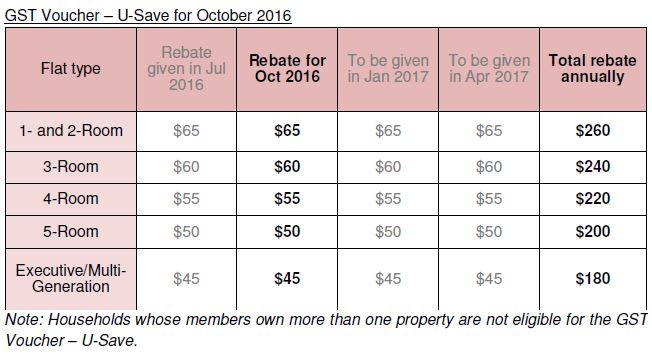

Image: 
Publication Date: 
Sunday, October 2, 2016 – 17:00
Send to mobile app: 
Source: 


Story Type: 
Others

Source link

Southern Philippines rebels free 3 Indonesian hostages

0

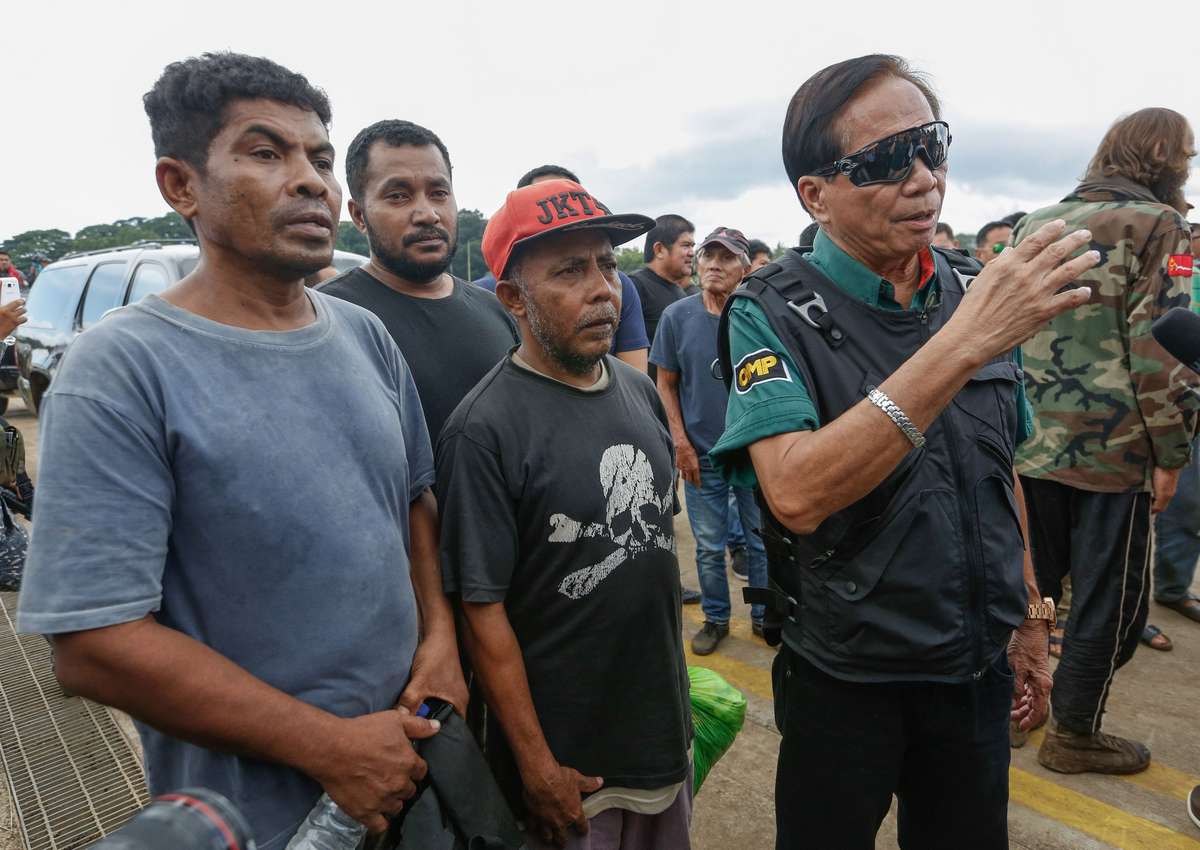
MANILA – Abu Sayyaf rebels linked to Islamic State freed three more Indonesian captives on Sunday after a three-month ordeal, the Philippine government said, taking the number of hostages released to nine in the past two weeks.

They were handed over in Sulu to Nur Misuari, founder of the Moro National Liberation Front (MNLF), a Muslim rebel group that has signed a peace deal with the government. It was not clear whether a ransom was paid.

During the past two weeks Abu Sayyaf, an Islamist group that has made vast sums of money from the kidnap business, had freed three Indonesians, two Filipinos and a Norwegian man snatched from a resort last year alongside two Canadians who were later beheaded.

The releases come as the Armed Forces of the Philippines (AFP) steps up offensives to flush out the rebels from their island strongholds of Sulu and Basilan.

President Rodrigo Duterte has made destruction of the Abu Sayyaf the top security priority of the military, and has ruled out including it in a nationwide peace process because of its brutality and criminal activities. “These recent breakthroughs were a convergence of efforts that President Duterte initiated, getting the cooperation of the MNLF, the local governments, the stakeholders and the AFP through their ongoing military operations in the area,” Jesus Dureza, Duterte’s peace negotiator, said in a statement.

Though originally formed with secessionist goals, Abu Sayyaf, which means “bearer of the sword”, is seen by security experts more as a group of bandits than separatists.

The group, which has entrenched its network in the impoverished communities of the deep south, is still holding five Malaysians, four Filipinos, two Indonesians and one Netherlands national.

Image: 
Category: 
Publication Date: 
Sunday, October 2, 2016 – 15:31
Send to mobile app: 
Source: 


Hermes ID: 
2 638 823
Hermes ID String: 
VLPHILPS2
Hermes Author: 
GRONGLOH
Story Type: 
Others

Source link

Hong Kong police fire shots in knife attack, three injured

0

HONG KONG – Three people were injured Sunday after Hong Kong police fired shots to stop a knife attack on a man, in a rare case of violent street crime in one of Asia’s safest cities.

Police said those wounded were two assailants and the man being attacked, and that all three were of “South Asian” origin.

“Five to six…men, with some carrying knives, were attacking another man,” police officer Ma Wai-hing told reporters at the scene of the incident in the city’s commercial district of Yau Ma Tei.

No further details were given about the attack.

“After verbal warnings were ignored, four shots were fired. Two men were shot,” he said. The pair were arrested and hospitalised with wounds to the forearm and waist. They, along with the knife attack victim, are in a stable condition, Ma said.

Footage uploaded to the website of Chinese language newspaper Apple Daily showed a uniformed officer pointing a gun at a group of men – some of whom were wielding knives over a man on the ground – before shots were fired. The officer can be heard yelling “put down your weapon” in Cantonese.

Police said four shots were fired as the first shot was “ineffective” in stopping the attack.

An AFP reporter at the scene said a road intersection was cordoned off around noon, with detectives gathering evidence and two fillet knives lying on the ground.

Image: 
Category: 
Publication Date: 
Sunday, October 2, 2016 – 15:29
Keywords: 
Send to mobile app: 
Source: 


Hermes ID: 
2 638 812
Hermes ID String: 
VLHK2
Hermes Author: 
GRONGLOH
Story Type: 
Others

Source link

Thousands protest steel plant over Vietnam fish deaths

0

HANOI – Thousands of Vietnamese protesters surrounded a Taiwanese steel plant Sunday, some scaling walls and holding signs demanding its closure, as anger flares against the firm for dumping toxic waste into the ocean killing tonnes of fish.

Huge crowds on motorbike and foot gathered at the Formosa plant in central Ha Tinh province, with some holding signs saying: “Authorities, please close Formosa plant for the future of the nation” as others chanted angrily.

Dead fish and other marine life began washing ashore in central Vietnam in April, the country’s worst ecological disaster in decades that devastated livelihoods in coastal towns where fishing is the main source of income.

Taiwan’s Formosa, which is building a multi-billion dollar steel plant in the area, was blamed for the disaster and fined $500 million.

The government said it would start paying affected fishermen in October and confirmed last week that payouts would range from $130 to $1,600 per person depending on losses calculated between April and September.

Sunday’s demonstrators demanded additional compensation.

“The protestors, who were directly hit by the Formosa scandal, asked for compensation and required the plant to close,” witness Hoang Sy Son told AFP.

Photos and video on social media showed protesters, led by a Catholic priest, surrounding the steel plant in Ky Anh township and chanting bible passages.

“A lot of security people and vehicles were deployed here, but no clashes were seen,” Son added, speaking from the rally.

AFP could not reach authorities for comment Sunday.

The rallies came days after fishermen in the area filed more than 500 lawsuits demanding additional compensation from the government over the disaster.

Demonstrators have held rare protests in several cities across the authoritarian country after the mass fish deaths, with police breaking up some rallies and jailing scores.

Protesters blamed officials for dragging their feet on investigations into the scandal.

Formosa is no stranger to controversy in Vietnam. In 2014, three people were killed when anti-China riots took place at the same Ha Tinh steel plant, where a scaffolding collapse also killed 14 last year.

The conglomerate has paid millions of dollars in fines over environmental mishaps elsewhere.

Image: 
Category: 
Publication Date: 
Sunday, October 2, 2016 – 15:25
Keywords: 
Send to mobile app: 
Source: 


Hermes ID: 
2 638 797
Hermes ID String: 
VLVIETNAM2
Hermes Author: 
GRONGLOH
Story Type: 
Others

Source link

Maid lauded for helping employer in cancer fight

0

Domestic helper Erlinda Melchor breaks into tears when she recounts how her employer Clem Cull was diagnosed with stage four cancer in April.

“I’ve been worried about him… It’s very hard for us,” Ms Melchor, 42, who has been working for the Culls for nearly four years, told The Sunday Times.

Mr Cull’s cancer has relapsed. Ms Melchor had been working for the family for just two months when Mr Cull, a headhunter, was first diagnosed with stage three head and neck cancer in 2013.

Yet Ms Melchor, who is from the Philippines, stayed on to help. Not only did she take care of Mr Cull’s young daughter Annabel when he went for treatment, but she also read up on cancer and prepared nutritious foods such as smoothies for him.

Yesterday, her contributions were recognised when she was named Helper of the Year at the Sassy Mama Helper Awards, held for the first time by parenting website Sassy Mama Singapore.

Mr Cull, 42, who hails from New Zealand and moved to Singapore for work six years ago with his banker wife Amy, 39, describes Ms Melchor as “awesome”.

“When you get diagnosed, everyone’s like ‘Oh my God, what do you do?’ So we were really lucky to have Erlinda,” he said.

“We had lots of family coming over… The house was kind of like a train station. But she was just so good at organising everything – cooking the meals and making sure I was eating healthily.”

Things settled down when Mr Cull’s cancer went into remission. Now that the cancer has returned and spread, Ms Melchor has been busy bringing the family’s visiting relatives to visit Mr Cull when he was hospitalised, accompanying him to chemotherapy, and helping to take care of the latest addition to the family, five-month old Daniel.

“Of all the employers I’ve worked for, they are the nicest… There is no reason to leave,” said Ms Melchor, who has worked as a domestic helper here for more than 10 years.

She has a 17-year-old daughter and a 10-year-old son, who are being looked after by her parents in the Philippines. Her husband died in a car accident in 2006.

At the event held at The Pantry in Loewen Road near Dempsey Hill yesterday, nine other domestic helpers received awards in the categories of Special Recognition, Childcare, Master Chef and Pet Lover.

Winners walked away with prizes which included food and beauty vouchers, as well as headphones.


This article was first published on October 02, 2016.
Get a copy of The Straits Times or go to straitstimes.com for more stories.
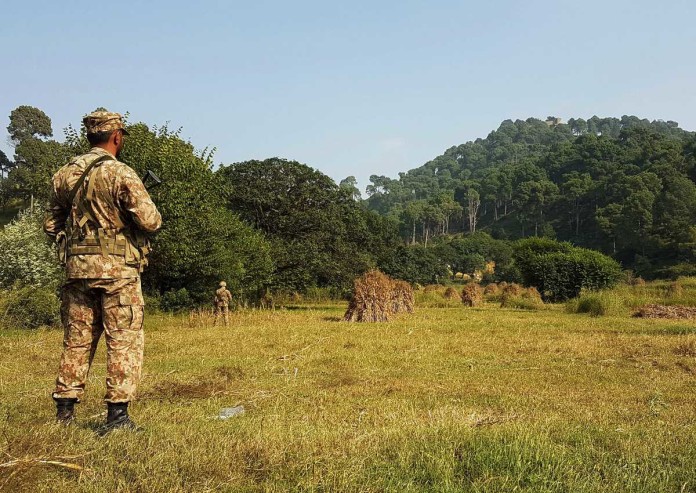
Image: 
Publication Date: 
Sunday, October 2, 2016 – 16:00
Keywords: 
Send to mobile app: 
Source: 


Story Type: 
Others

Source link

ANZ: Apply for Switch Card & Get 28″ Luggage + Up to $168 Cash Rebate (NO Annual Fees)

0

ANZ: Apply for the Switch card & get a free* 28″ luggage (NO annual fees!). T&C applies

ANZ: Apply for Switch Card & Get 28″ Luggage + Up to $168 Cash Rebate (NO Annual Fees)

Enjoy NO annual fees (even for supplementary cards!) plus up to 20.3% savings on petrol at Caltex and many more. Apply now & get up to $168 CASH Rebate + 28″ LUGGAGE

Source