The Football Association of Singapore (FAS) has promised to take “stern action” against the players who were involved in an alleged ugly brawl during a Singapore FA Cup match at Bukit Gombak Stadium on Saturday night (Oct1).
840,000 HDB Households to Receive GST Voucher (U-Save Rebate) in Oct 2016

840,000 HDB Households to receive GST Voucher – Utilities-Save Rebate in Oct 2016
840,000 HDB Households to Receive GST Voucher (U-Save Rebate) in Oct 2016
About 840,000 Singaporean HDB households will receive the next instalment of the GST Voucher – Utilities-Save (U-Save) rebate in October 2016.
Philippines' Duterte apologises to Jews, but defiant

Philippine President Rodrigo Duterte on Sunday apologised to Jews for comparing himself with Adolf Hitler but said he did nothing wrong and reiterated his desire to kill millions of drug addicts.
Duterte, whose bloody war on crime had already drawn international condemnation, sparked fresh outrage on Friday when he likened his deadly crime war with Hitler’s efforts to exterminate Jews.
Duterte said he was merely reacting to critics who drew comparisons between him and the Nazi leader.
“So I said, ‘sure I am Hitler, but the ones I will kill are these (drug addicts)’,” Duterte said in a speech broadcast on national television.
“But it is not really that I said something wrong. But rather they do not really want to tinker with the memory so I apologise profoundly and deeply to the Jewish (people).
“It was never my intention but the problem was I was criticised using Hitler, comparing to me. But I was very emphatic. I will kill the three million.” Duterte, 71, won elections in May in a landslide after a campaign dominated by his pledge to eradicate drugs in society by killing tens of thousands of people.
AFP, Reuters

























Since taking office on June 30, police have killed more than 1,200 people and about 1,800 others have died in unexplained circumstances, according to official figures.
While issuing his qualified apology on Friday, Duterte continued to lash out at Western critics and warned he was willing to kick all American troops out of the Philippines.
“The Americans, I don’t like them…. they are reprimanding me in public. So I say: ‘Screw you, f*** you, everything else. You are stupid’,” he said.
Duterte threatened to cancel a defence accord with the United States, the Enhanced Defence Cooperation Agreement (EDCA), that went into force in January.
That agreement, sealed under the administration of Duterte’s predecessor, Benigno Aquino, allows US forces access to five Philippine bases to help counterbalance a growing Chinese presence in the South China Sea.
“This EDCA is an official document… but it does not bear the signature of the president of the republic,” Duterte said.
“Better think twice now because I will be asking you to leave the Philippines altogether.” The United States and the Philippines are longtime allies bound by a mutual defence pact.
However Duterte has repeatedly threatened to move away from the United States and forge closer ties China and Russia.
Duterte last month branded US President Barack Obama a “son of a whore”.
Duterte on Sunday also hit out at the Europeans saying: “These stupid lawyers in the EU… well, screw you. I will kick you.”

Formula One: Why always me? Hamilton fury at engine failures

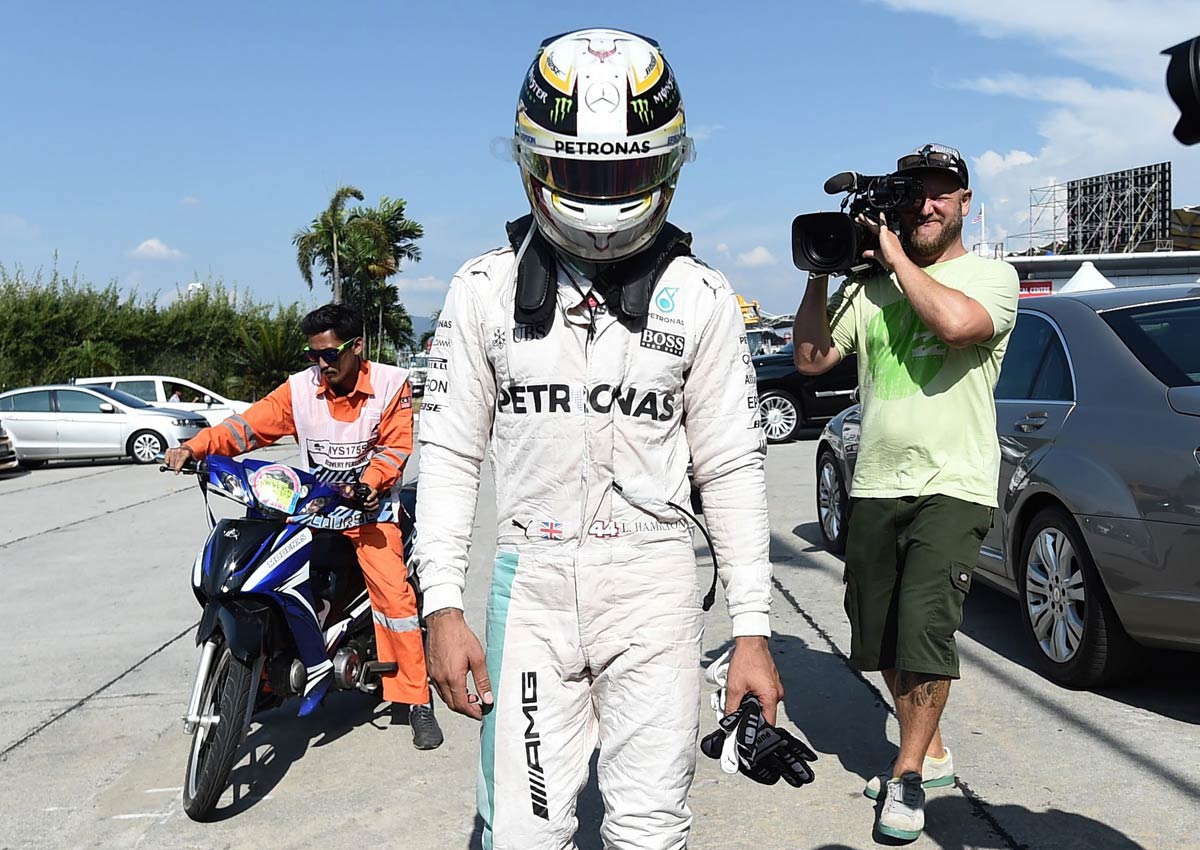
A furious Lewis Hamilton lashed out at his Mercedes team Sunday, saying “someone doesn’t want me to win” after his engine exploded into flames during the Malaysian Grand Prix.
“No, no,” cried the Englishman as flames appeared at the back of his car when leading on lap 41 of the 56-lap race at Sepang International Circuit.
He had looked certain to leapfrog Nico Rosberg at the top of the standings when his power unit – the eighth he has used this season – let go in the most spectacular fashion.
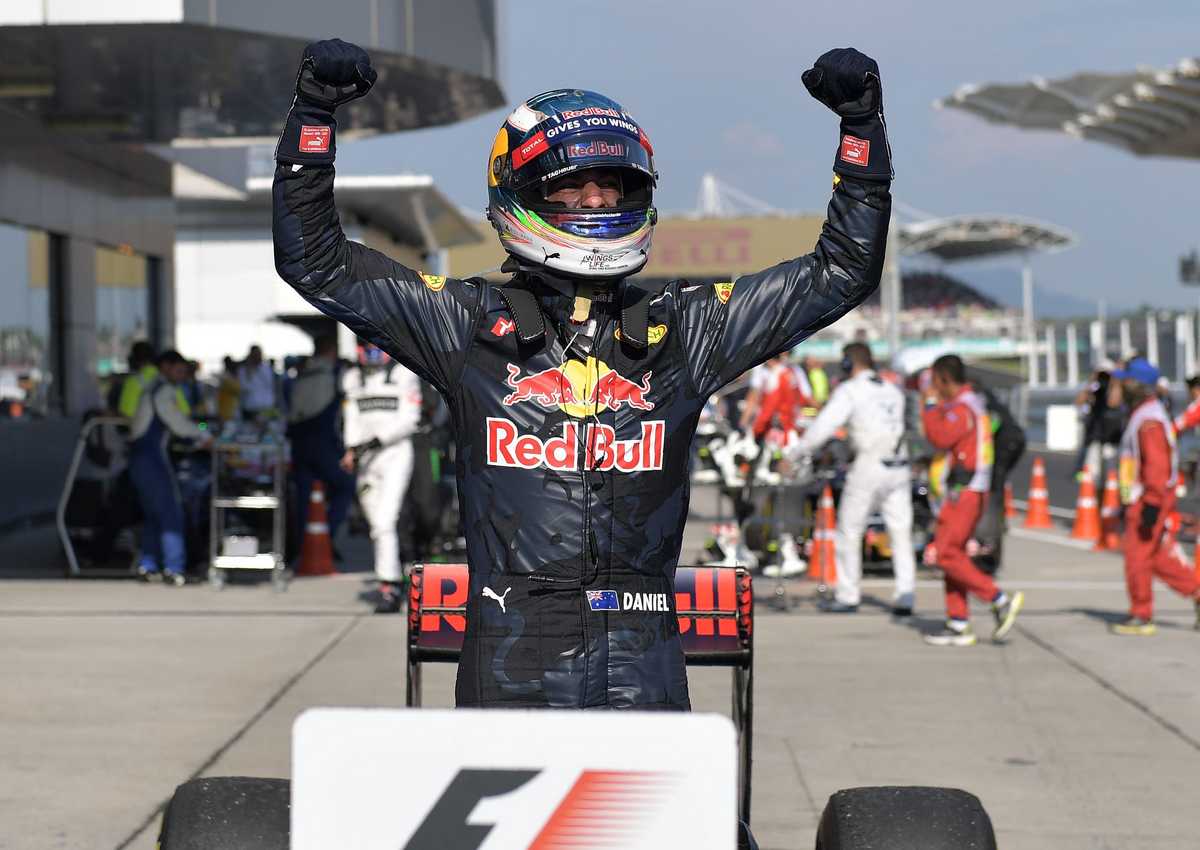
Instead, Daniel Ricciardo and Max Verstappen enjoyed a one-two for Red Bull and Rosberg took the third podium place to increase his lead in the standings from eight to 23 points with five races remaining.
A highly emotional Hamilton, who has suffered numerous mechanical failures this season as he attempts to secure a third drivers title in a row, implied that Mercedes were favouring their German driver Rosberg.


“My question is to Mercedes: we have so many engines made for drivers, but mine are the only ones failing this year,” Hamilton told BBC radio.
“Someone needs to give me some answers because this is not acceptable. We are fighting for the championship and only my engines are failing.
“There are many decisive races but this is one of those. Someone doesn’t want me to win this year, but I won’t give up. I will keep pushing.” Mercedes executive director Paddy Lowe defended the team, saying there was “no pattern” as to why Hamilton’s engines kept failing and Rosberg’s did not.
“It is difficult. No failure is planned,” said Lowe on Sky Sports television.
“We work as hard as we can to increase reliability. We have eight Mercedes power units in the field and there is no pattern for why it should fall on Lewis Hamilton’s car.” Mercedes non-executive chairman, and former multiple world champion, Niki Lauda said the team had “let down” Hamilton.
“I am really upset. We should not let him down with an engine failure. It was a fairly new engine, it was not old in the car,” Lauda told Sky.
“What went wrong I do not know and we will work to correct it.” The Austrian motor racing legend admitted he needed to put an arm round Hamilton and lift his spirits, afer a weekend where the three-time world champion had dominated until just 15 laps from the end of Sunday’s race.
“I am taking him to Japan tomorrow in my plane. I hope I can (cheer) him up,” said Lauda.
“The championship is over when the last race is over, 23 points is a lot but you never know.”
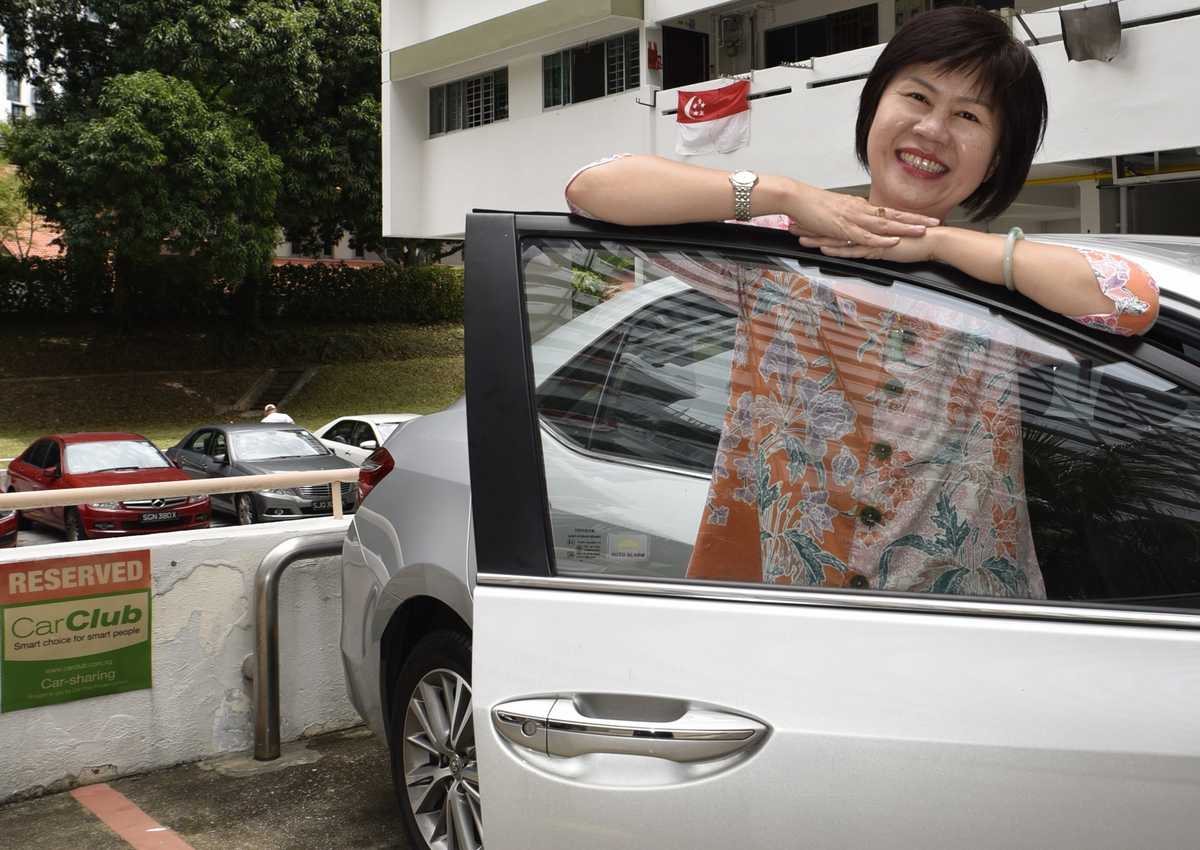
Who needs to buy a car when you can hire one?
As Singaporeans warm to the idea of not owning a car, car-sharing companies look set to ramp up their fleet. Still, there is lingering scepticism that the car-sharing concept would be embraced as part of the wheel-loving Singapore lifestyle.
Car-sharing is a pay-as-you-drive transportation service. It differs from conventional car rental as it offers greater flexibility to access and use. The hirer also pays only for the time and mileage incurred.
For instance, car rental companies typically do not allow their cars to be used for very short durations such as an hour, but car-sharing services generally do.
Said to have started in Europe in the 1970s, the concept first surfaced in Singapore in 1997, when a pilot car-sharing scheme with four cars was launched by NTUC Income Car Cooperative.
Since then, the car-sharing scene has seen mixed fortunes. A few car-sharing services have come and gone, while some services have been absorbed by others.
For example, Honda Diracc was a car-sharing service formed by the Japanese manufacturer in 2002 using a fleet of petrol-electric Civic Hybrids. But Honda gave up the business in 2008.
CitySpeed Car Sharing, part of the rental car division of land transport giant ComfortDelGro, also closed shop in 2007, reasoning that new cars were becoming more affordable. There are now three main car-sharing operators here with their own fleets: Car Club, WhizzCar and Smove.
Car Club – which started in 2009 and used to be NTUC Income’s Car Co-op business – has about 230 cars now and plans to increase its fleet to 300 by April next year.
WhizzCar, started in 2003, now has about 130 cars, and wants to increase this to 150 by the end of the year.
Smove, which was launched in 2012, has 230 cars and lets customers use them to run trips for Uber, a ride-sharing service.
A nation-wide electric vehicle car-sharing programme called BlueSG will also be launched in the middle of next year, starting with 125 cars.
These companies say they see much promise in the future of car-sharing here.
Mr Ho Kok Kee, 54, WhizzCar’s managing director, says: “We have seen interest grow progressively, and we expect the demand for car-sharing to increase as we make it more accessible.”
Mr Gary Ong, 38, managing director of Car Club, says: “From experience and the research worldwide, the demand for car-sharing will continue to increase.
“More people are finding that it may not be sensible to own a car when various alternatives are becoming more efficient.”
While Professor Lee Der Horng, 48, a transport researcher from the National University of Singapore, feels there is space for the car-sharing industry to grow in the next five years, he is not optimistic that the concept may be much more enticing beyond that.
“I don’t think car-sharing will be a game-changer in the local transportation landscape,” he says.
“As public transport becomes more accessible and convenient, people will generally give up car ownership and take public transport because of the obvious cost savings.
“In my opinion, engaging a car-sharing service is still more expensive than travelling via public transport.
“Car-sharing comes in only when non-car owners need to get to places not well-served by public transport networks.”
Citing Marine Parade, he says: “If I want to get there now, I might probably use a car-sharing service if I did not own a car.
“But when the Thomson-East Coast Line – expected to open in stages from 2019 to 2024 – is operational, would I need a car to get there quickly? I doubt so.”
While Mr Lai Meng, 57, president of the Car-sharing Association of Singapore, remains optimistic, he acknowledges that there are many infrastructure obstacles to the service’s growth here.
For example, he says, if a car-sharing operator wishes to set up a station at an HDB carpark, it needs to apply to the local grassroots organisation for approval. “This can take six to 18 months.”
Many grassroots leaders also give car-owning residents priority over car-sharing residents, he adds.
“Parking spots in popular carparks near town centres or MRT stations, in particular, are almost impossible to obtain. The carpark demands from car owners there are overwhelming.”
These obstacles, however, are not insurmountable, he adds.
“Since the time car-sharing came to Singapore, the experts have said it won’t work. But we have managed to be commercially sustainable for so long. Looking ahead, if we can overcome the infrastructure challenges here, I am confident car-sharing can really take off here.”
YouTube screengrabs






















CHEAPER THAN CALLING FOR CABS
Property agent Ng Leng Leng is a loyal user of car-sharing services.
The 51-year-old managing director of real estate agency Starts Singapore has been using Car Club’s service for the last five years.
Nine of her company’s 12 employees – mostly property agents – are also active members of Car Club. They use it almost every day to meet clients and conduct viewings.
Although some employees own their cars, the company encourages them to use the service during work and pays for their membership and usage costs.
She says: “Using the service is definitely cheaper than calling a cab and paying the extra peak hour surcharge.
“We use the service for four to five hours each time. Sometimes, five employees can use the service at the same time, using five different cars.”
On average, her employees can use three cars a day.
She adds: “If we were to rent a car for a whole month, it would cost us $1,500, excluding petrol, insurance and parking.
“By car-sharing, we can allow nine people to use cars and it costs us about $3,000 a month. Through car-sharing, we save at least $1,500 a month.”
Another benefit of car-sharing is that she can collect the cars from stations located throughout the island.
She says: “This allows our staff to collect the car from the stations nearest to their home to go to work.”
Being able to use the service has encouraged her colleague Patrik Tam to sell his car two years ago.
Says the 39-year-old property agent: “Having a car in Singapore is expensive. The upkeep of my previous car cost about $1,500 a month, which just was not worth it.
“Knowing I already had access to a car through car-sharing empowered me to finally let go of owning a car.”
FLEXIBILITY OF CHOOSING A SUITABLE CAR
Technical consultant Nasri Najib, 34, does not own a car.
But that does not stop him from taking his entire family on trips to Malaysia at least once a month to buy groceries, get haircuts and shop for clothes, or to transport furniture to his new home. He has been using car-sharing service WhizzCar since 2008.
He says: “For me, car-sharing is the cheapest, most flexible option. I need to pay only for the period that I use the car. The car is easy to pick up. And the price is reasonable.”
He pays about $70 for an extra- value plan every month – including membership – and this allows him to use the service more cheaply than a standard plan.
Whenever he wants to head north, he books a Mazda 5 2.0A MPV which can fit his whole family, including his wife, 32; son, two; and parents, both 59.
He typically uses the car for 24 to 30 hours and this usually costs him $200 to $300, including petrol and insurance.
He says: “If I rent a car for the same purpose, it would cost me more than $400. I would also have to go through the trouble of collecting the car from a rental company, which can be in a remote location like the airport.”
He appreciates the flexibility of car-sharing, he adds.
“Every month, I get some free kilometres which I can use for the service and I am thankful that I can accumulate these free kilometres if I can’t use them during certain periods.”
Mr Nasri, who is preparing to move into his new BTO four-room HDB flat in Buangkok, has also been using the service to transport furniture to his new place.
He typically buys the furniture – sofas, shelves, children’s playhouses – on online marketplace Carousell and collects the items using a Nissan NV200 1.5M van which he also hires through WhizzCar.
“I like how the service lets me choose different types of vehicles. When transporting items, I need a larger vehicle.”
Most days, he and his family move around on public transport.
“We decided very early on not to buy a car because owning one in Singapore is very expensive.
“Having to deal with COE payments is not a fun thing.”

This article was first published on Oct 2, 2016.
Get a copy of The Straits Times or go to straitstimes.com for more stories.
840,000 HDB households to receive U-Save rebate GST voucher in October
Eligible Singaporean households will each receive a rebate voucher of up to S$65, depending on their HDB flat type.
Source link
A yen for Japanese food


Double happiness for Sufie Rashid

On Friday, he capped his first year in the industry with the two biggest local awards – Singapore’s Most Popular Artist and Singapore’s Most Popular Song – at the Anugerah Planet Muzik (APM) 2016.
“I’m extremely grateful (for the awards),” the 24-year-old Kisah Dua Muka singer told The New Paper on Sunday.
“I went with no expectations and I told myself before the show that if (the awards) are fated for me, then great but if it isn’t, then it just isn’t.”
Sufie rose to fame last October after he won the 12th season of Malaysia reality TV singing competition Akademi Fantasia.
He garnered 41.3 per cent of the votes cast online and through SMS. He is the first Singaporean to win the title since the show first aired in 2003.
For the APM, Sufie was nominated in six categories.
In the Most Popular Artist category, he was up against award-winning singer-songwriter Taufik Batisah.
Sufie said: “Taufik is and has always been my mentor and I look up to him.
“Just to be nominate alongside such a phenomenal artist is a great privilege but to win an award that he has so often taken… I’m deeply humbled.”
Sufie wasn’t the only newcomer to bag awards at the 15th edition of the annual award show.
Singer Haikal Ali, who recently signed up with Malaysian record label Paranormal Group Malaysia, bagged the award for Singapore’s Best Song for Bertemu Kembali.
He beat four other local contenders including bands Forty 7 and Klutz.
“I went with no expectations (of winning),” Haikal said on stage after receiving the award.
“But I am very thankful and I’ll continue to work hard.”
The biggest winner of the night was Malaysian singer-actress, Ayda Jebat.
The 24-year-old, who shares the same recording label as Singapore’s Haikal, won the biggest awards of the night – Most Popular APM Artist, Most Popular APM Song and Social Media Icon.
“I cannot believe this is happening but I’m ever so grateful for my fans not only from Malaysia but everywhere because they are the ones that made this happen for me,” said the singer.
Another big winner was Indonesian singer Raisa who took home awards for Best Female Artist and Best Duo for her song with fellow Indonesian singer-actor Afgan, Percayalah.
When asked about Afgan being absent from the awards, she said he is in “the midst of his Sides Tour”.
Afgan performed in the Indonesian city of Balikpapan on Friday night. Raisa, who won her first APM award in 2012 for Best New Female Artist and has been Best Female Artist two years in a row, added: “I’ve known Afgan since high school, he was my senior and I’m sure he will be ecstatic about our win because we worked hard on this track.
“I’m just very happy and grateful that I’m able to bring back an award this year.”
This article was first published on October 02, 2016.
Get The New Paper for more stories.

Formula One: Ricciardo wins drama-filled Malaysian GP
SEPANG, Malaysia – Daniel Ricciardo led a Red Bull one-two as Lewis Hamilton’s championship hopes went up in smoke at a dramatic, action-packed Malaysian Grand Prix on Sunday.
Hamilton was leading with 15 laps to go when his engine exploded. “No, no,” cried the Englishman as flames appeared at the back of his car, leaving Ricciardo leading teammate Max Verstappen.
Championship leader Nico Rosberg survived a first-bend spin involving Sebastian Vettel and a 10-second penalty to take third place and extend the gap over Mercedes teammate Hamilton to 23 points.
New dialysis centre at Toa Payoh West CC by 2020
The establishment will mark the first time patients will get to receive dialysis at a community centre.
Source link


