30.2 C
Singapore, SG
Saturday, September 26, 2026
Home Blog Page 2593

No flat, no baby? Having child while living with parents has its benefits but…

0

It requires some effort, but having babies while living with their parents is not entirely impossible, said young couples who did not wait for their own homes before trying to have children.

The need for space to have babies has been hotly discussed the past week, after a candid comment made earlier this month by Senior Minister of State Josephine Teo while suggesting that couples do not have to wait to live on their own to start a family.

While answering an interview question on whether couples could be deterred from having children earlier because they do not yet have their Housing Board flats, she had said: “You need a very small space to have sex.”

However, many Singaporeans equate flat ownership with starting a family. A Straits Times online poll on Wednesday found that of the 16,880 responses, 93 per cent said a flat should come first.

Mrs Teo, who oversees the National Population and Talent Division, added in a Facebook post on Wednesday that it is a “matter of time” before Singaporeans will own homes because of the country’s public housing programme.

“But if a married couple waits too long to start a family, we could end up with a house with no children to share it with,” she said.

Many young couples told The Sunday Times that they preferred to live on their own before starting a family, but did not mind if happy “accidents” happened slightly earlier while they were still living with their parents. And there are benefits to this arrangement, they added.

Mrs Sophia Liew, 26, who tied the knot in May, said: “The best-case scenario is if our place is ready soon, but I also think everything in life won’t just follow a plan.”

The part-time private enrichment teacher, whose Build-To- Order (BTO) flat in Boon Keng will be ready only in 2019, said it “might be good” to live with her parents during the baby’s first year. “They can help to take care of the baby, and we can manage the renovations for the new home, so that it won’t be so much to handle at one time,” she said.

See also: You don’t need much space to have sex: Josephine Teo on ‘no flat, no child’ belief

Mr Reuben Tan, 28, whose wife gave birth to their son last month, said his parents have been a source of help as the young couple learn to be new parents. “It’s not just extra hands on board for physical needs but, emotionally, they stabilise us,” said the executive in a multinational firm, of his parents. “Sometimes, they can get a bit naggy, but we do learn from their advice.”

Some couples also did not want to delay parenthood for too long, acknowledging the higher risks of complications in later pregnancies.

Said Mr Tan, who hopes to have at least three children: “We are aware of the health complications that come with conceiving at an older age. As we get older, we also might not have as much energy to multitask, and taking care of young children can be very taxing.”

Still, some couples have reservations about living with their parents for more than one or two years after getting married, citing space considerations and the need for personal space. Mrs Liew and her husband, who are living in her parents’ flat in Toh Yi, have put off plans to have children until nearer their flat’s completion date.

“Staying together in my room really made us realise there might not be space for a third person,” she said. “My husband couldn’t bring over all his belongings… so I don’t think there’ll be space for a baby cot or shelves for diapers.”

Mrs Quah Hui Ning, 30, who has a four-year-old daughter and a two-year-old son, said: “We wanted our own place to bring up our children, and also grow closer to each other as a couple.”

The financial planner and her husband bought a resale flat in Queenstown to be near her in-laws.

“Everyone plays a part in the children’s lives, but the (kids’) parents should be the ones making the main decisions for them,” she added.

Read also: Ideal to have flat first and then baby, say couples


This article was first published on Oct 16, 2016.
Get a copy of The Straits Times or go to straitstimes.com for more stories.
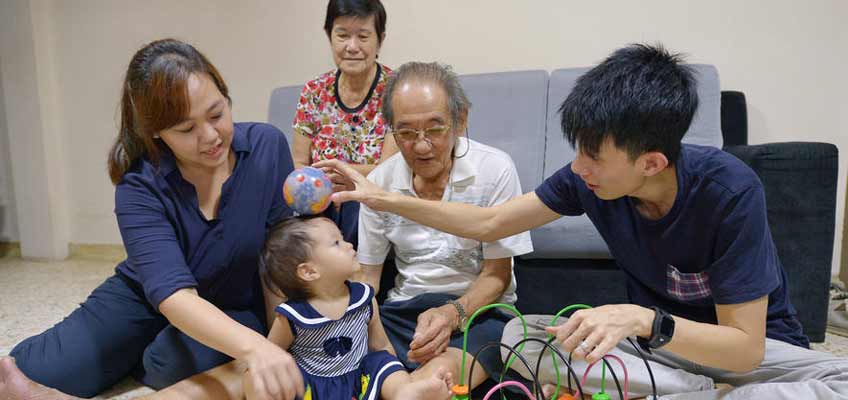
Image: 
Category: 
Publication Date: 
Sunday, October 16, 2016 – 14:00
Send to mobile app: 
Source: 


Rotator Image: 
Story Type: 
Others

Source link

Book reveals truth about King Bhumibol, but mystery of brother's death remains

0

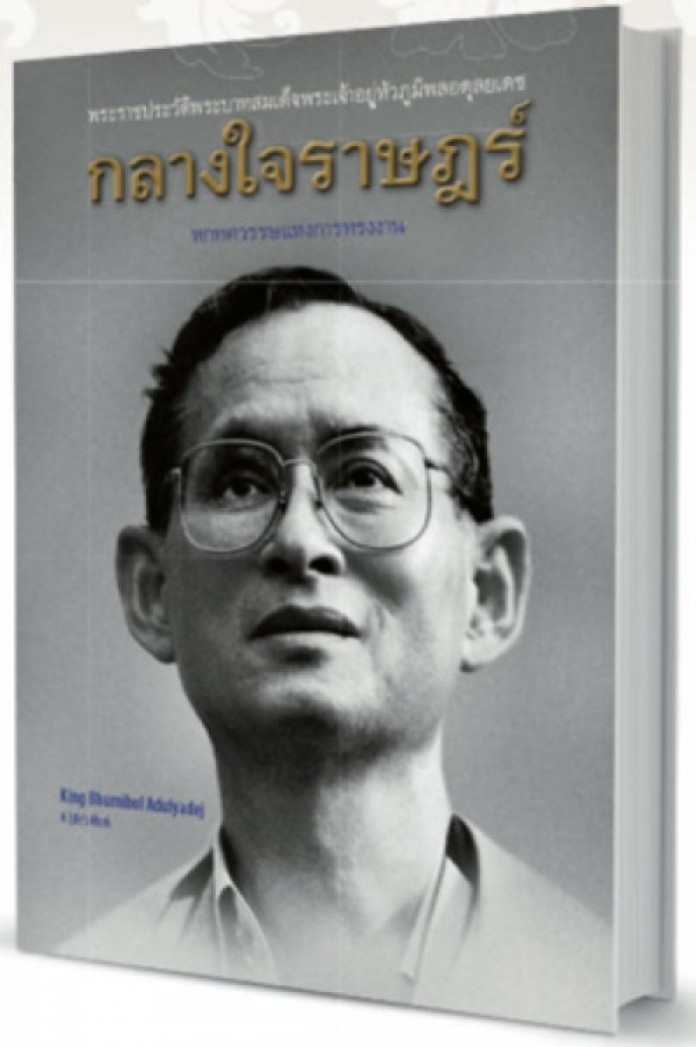
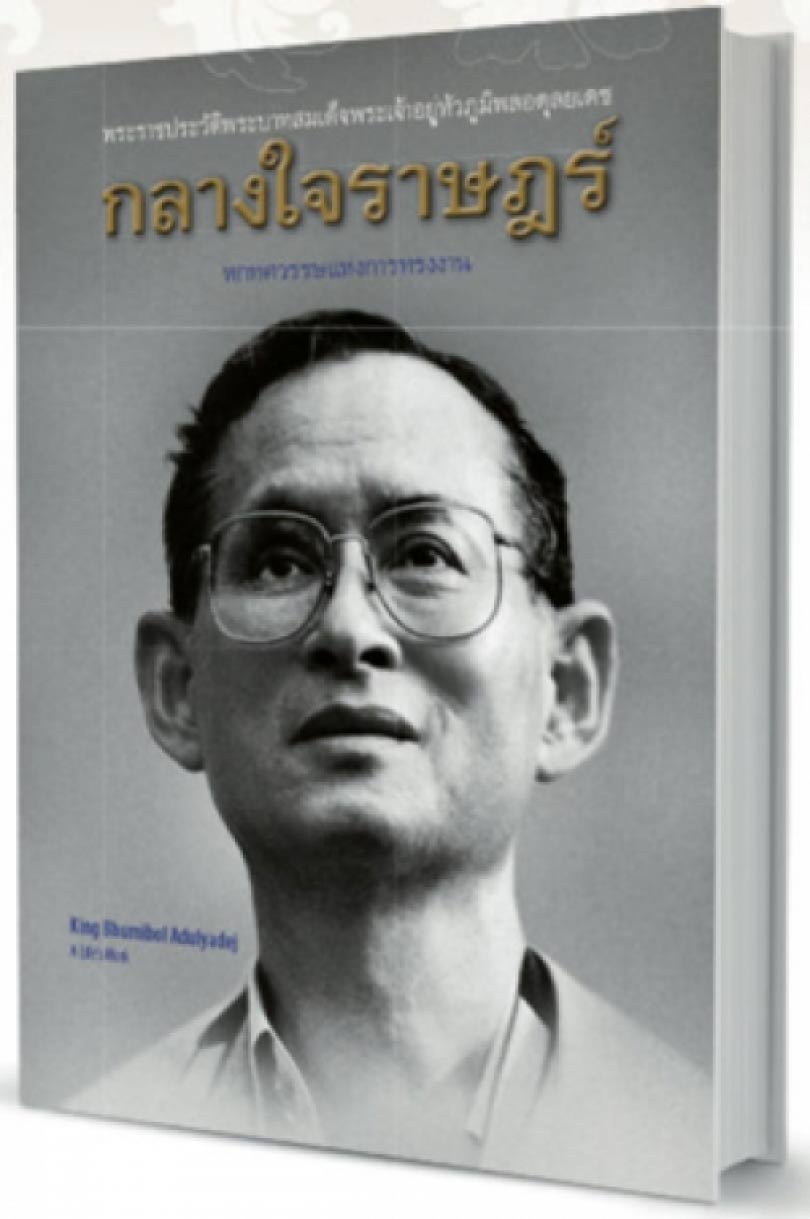
‘A Life’s Work’, released at the end of 2011, remains the most frank assessment of His Majesty King Bhumibol Adulyadej – and thus the most endearing.

This review, by The Nation’s Manote Tripathi, first appeared on January 16, 2012. It is reprinted here in full:


IN QUIET MOMENTS in the days and weeks that follow, His Majesty King Bhumibol’s legions of admirers will be turning to their personal memories of him and reaching out for whatever might be at hand to hold his spirit closer.

Those who have collected writings about Bhumibol the Great will likely have the remarkable and revealing “A Life’s Work” from 2011, possibly the best book about him ever published.

“King Bhumibol Adulyadej: A Life’s Work”, issued by Editions Didier Millet, is the most authoritative treatise to date about His Majesty and Thailand’s 750-year-old monarchy.

Former prime minister Anand Panyarachun, who chaired the book project’s editorial advisory board, has stressed the team’s commitment to presenting fact and shedding light on key issues regarding the monarchy.

“This book speaks the truth about every story, our beloved monarchy and other things,” Anand said when the book was launched. “This book will fill the void of ignorance … Readers will learn many things they never knew. They will know our King much better.”

For the most part a thorough study of the royal institution and of the King and his views on the world and Thai society, the book also addresses the controversies. It looks at the Constitution, lese majeste, water management and politics – including the red-yellow divide.

Much that is already well known about King Bhumibol is amply covered, and yet there are also stunning descriptions of people, places and events we knew little about and even hesitate to discuss in public. Anand wants us to know the facts of these matters, not grasp at straws and rumours.

Nicholas Grossman served as editor-in-chief, Dominic Faulder senior editor and Grissarin Chungsiriwat deputy editor, and contributions came from, among others, David Streckfuss, Chris Baker, Porphant Ouyyanont, Julian Gearing and Joe Cummings.

Thanks to the material’s unmatched sources, this book is an eye-opener even for veteran Thai journalists.

There are three sections: The Life, The Work and The Crown.

Though the book essentially begins in 1927, the year the King was born, it harks back to old Sukhothai, whose rulers pioneered the concept of kingship as paternalistic and righteous in the Buddhist sense. Every monarch since then has adhered to this moral template.

“A good king who fulfils the expectations of the Buddhist ideal can command enormous reverence and authority. A bad king rules weakly,” writes one contributor. In the Buddhist perspective, the ruler is accorded tremendous respect and power and titles such as God upon Our Heads and Dhammaraja.

Extensive descriptions of Thai kings going to war to protect sovereignty and independence, from Sukhothai to the founding of the Chakri Dynasty and Bangkok in 1782, remind us of the inseparable link between the monarchy and the land and its people. So readers will come across titles like “Lord of Life”, “Lord of the Land” and “Great Warrior”.

There are some interesting epochs discussed in detail, with the end of absolute monarchy in 1932 warranting special attention. King Rama VII’s abdication statement is displayed:

“I feel that the government and its party employ methods of administration incompatible with individual freedoms and the princes of justice,” he wrote. “I’m willing to surrender the powers I formerly exercised to the people as a whole, but I am not willing to turn them over to any individual or any group to use in an autocratic manner without heeding the voice of the people.”

Within days, Siam had a draft of its first constitution.

An article titled “Tragedy Strikes” offers a scene-by-scene analysis of the death of King Ananda, Rama VIII, elder brother of King Bhumipol. Most Thais know only that Ananda was shot at 9.20am on June 9, 1946. Who pulled the trigger has never been satisfactorily established.

“The events that followed have never been clearly explained,” the article acknowledges. We read about the Colt pistol, the gunshot overheard, the bullet that was found, and the confusion in the palace and among political leaders, about the panel of physicians summoned and even about a 1979 BBC television documentary on the subject.

Yet the tragedy remains “the mysterious death”, as one contributor puts it, and it seems we will never know more. Many theories arose. One that’s mentioned in this book involved Colonel Tsuji Masanobu, a Japanese spy who disappeared into Laos and died in 1968.

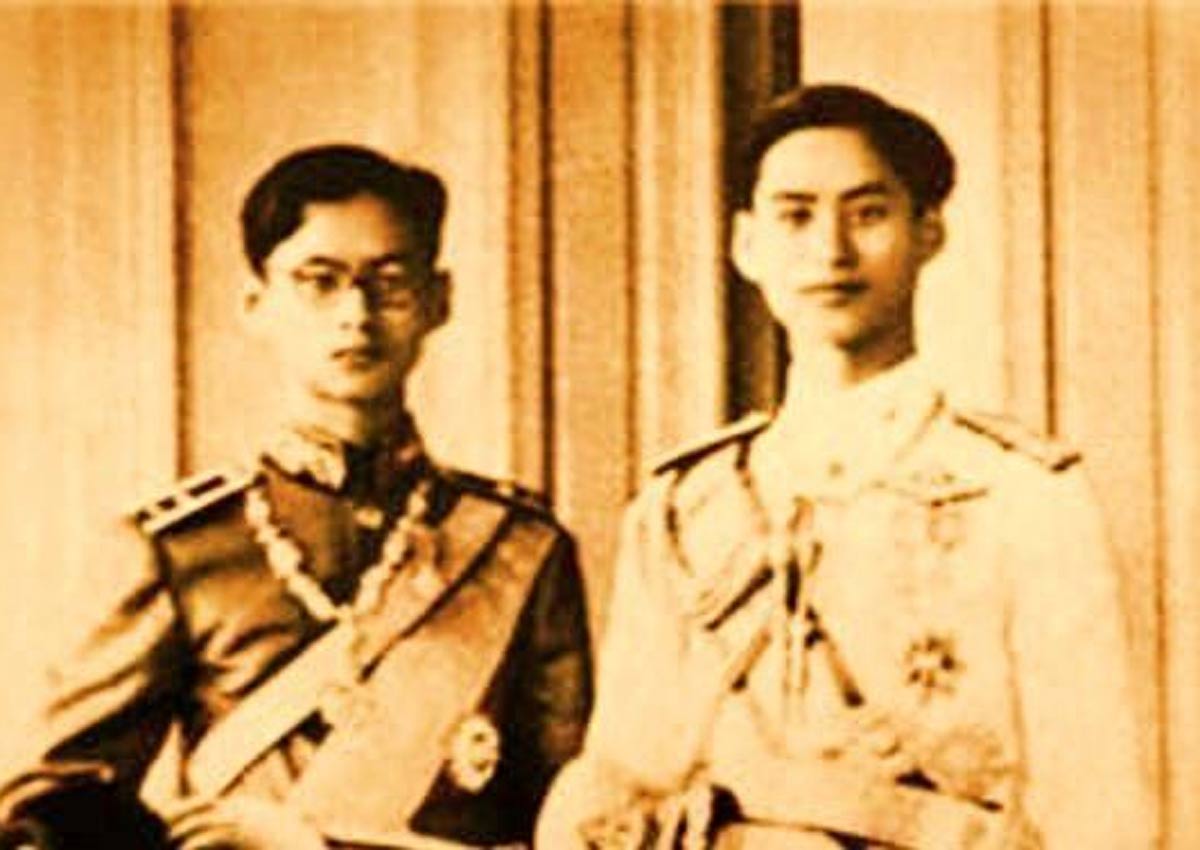
The brothers who became Kings Rama VIII and Rama IX were constant companions. They were “look-alikes”. But Prince Bhumibol was clearly in King Ananda’s shadow on a visit to Sampheng Lane in Bangkok’s Chinatown, in fact serving as the official photographer for the outing.

But this was how Bhumibol learned to be a king – by observing his brother through the camera lens. He discovered much about the world through photography.

When it comes to the jagged issues of our times, the lese majeste law is heavily discussed from a range of perspectives. The most compelling view is that of the King himself, who said during his televised address marking his birthday in 2005 that he was a human being and as such could be subject to criticism.

The contributors try their best to clarify such issues, and Anand stressed their commitment to surveying the full scope of opinions. “We debate issues in Thai society with this book,” he said. “Differences of opinion should be heard so that we learn from facts, not rumours.”

Image: 
Category: 
Publication Date: 
Sunday, October 16, 2016 – 13:17
Send to mobile app: 
Source: 


Story Type: 
Others

Source link

Amid fried chicken craze, foreign firms ruffle Korean feathers

0

SEOUL – Don’t count your chickens before they hatch.

Global poultry producers hoping to cash in on South Korea’s craze for fried chicken and beer face a market crowded with local birds that have clipped prices and profits for Korean growers.

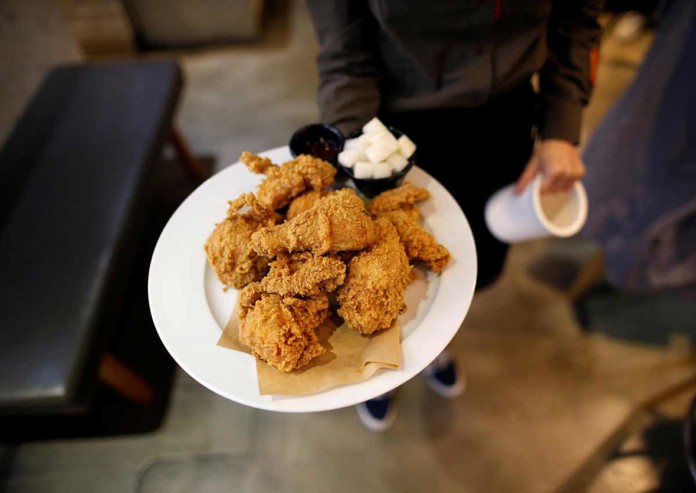
The popularity of the combination, known as “chimaek”, has boomed in recent years, fuelled by its appearance in a hit South Korean television drama and an explosion of restaurant chains.

Chimaek stores now dot Korea and their ubiquitous delivery services shuttle freshly fried chicken and beer to homes, offices and picnics.

At a Seoul outlet of the popular BBQ chain recently, Kim Chang hoo said he and his colleagues had planned to go to a sushi restaurant for a company dinner, but decided instead on chimaek – a mashup of chicken and maekju, the Korean word for beer. “I cannot help think of chicken, even when I’m eating sushi,” Kim, 24, said.

“I don’t know if it’s just me, but chicken always comes to my mind and is always delicious.” The craze has pitted domestic chicken producers in an increasingly tough battle for market share, prompting an over-supply and a drop in farm prices.

Now imports are set to rise as South Korea lifts bans on overseas suppliers who are attracted by still low per capita consumption rates.

South Koreans ate 14.2 kg (31 pounds) of poultry meat each in 2015, a near three-fold increase since 1990 according to OECD data, but only half the global average of 28.6 kg per person.

South Korea’s market for chicken is expected to grow 5 percent to 1.01 million tonnes this year and a further 3 percent in 2017, according to the U.S. Department of Agriculture (USDA), boosted by the chimaek craze.

GAME OF CHICKEN

Supply is currently dominated by the country’s three biggest producers – Harim Co Ltd, Dongwoo Co Ltd and Maniker Co Ltd.

All have seen their earnings hit in the first half of this year as they ramp up production to secure market share.

Park Ju-No, the managing director at Harim, acknowledged producers were engaged in a “game of chicken”, each holding a potentially dangerous course in the hope their rivals flinch first. “We think it’s more crucial to focus on quality differentiation to survive instead of adjusting production, even though it contributes to a glut,” said Park.

Park expects the imbalance to ease in the second half as the number of slaughtered chickens drops in summer, but sees the market over-supplied again next year as imports from the United States and Thailand resume.

In July, Asia’s fourth-largest economy lifted ban on chicken imports from the United States, imposed due to a bird flu outbreak in 2015.

It is likely to resume imports in November from Thailand, banned since a 2004 bird flu outbreak, according to Korea’s Animal and Plant Quarantine Agency.

FLY ABROAD

Overall South Korean chicken imports are expected to rise 9 percent to 130,000 tonnes this year, and a further 8 percent in 2017, due to the resumption of U.S. chicken imports, the USDA report showed.

Analysts said the increase in chicken imports could squeeze domestic producers with lower prices. U.S. suppliers might also find conditions challenging. “It’s going to be a tougher market because the U.S. only had to compete against Brazil before, but now there are more competitors like Denmark and sooner or later Thailand,” said Jenis Bae, manager at KTSC, who has imported U.S. chickens for almost 20 years.

Still, the competition is good for consumers and restaurants drawn to the chimaek boom.

Even global giant KFC recently opened its first “KFC Chimaek” outlets in South Korea, offering set menus such as two pieces of fried chicken, cheese fries and a glass of draft beer for 7,500 won (around S$9.10).

Major Korean franchises are now expanding their overseas stores, particularly in China where the TV show “My Love from the Stars” is wildly popular and its heroine’s chimaek cravings strike a chord with viewers. “We learned the food culture of South Korea from Korean soaps,” Gu Chenghu said at a chimaek outlet in Shanghai. “Also many young people are willing to try something fresh. So it’s very popular.”

Genesis BBQ, Korea’s top fried chicken franchise now has 350 stores abroad in 30 countries including China and the United States. It wants to grow to 50,000 stores by 2020, company director Kwak Sung-kwon said. “Our aim is to having more stores globally than McDonald’s ,” he said.

Image: 
Category: 
Publication Date: 
Sunday, October 16, 2016 – 13:15
Send to mobile app: 
Source: 


Hermes ID: 
2 671 797
Hermes ID String: 
SY_SKOREAFRIEDCHICKEN_1016
Hermes Author: 
SEANYAP
Story Type: 
Others

Source link

Bhutan king and queen in Thailand to pay respects to King Bhumibol

0

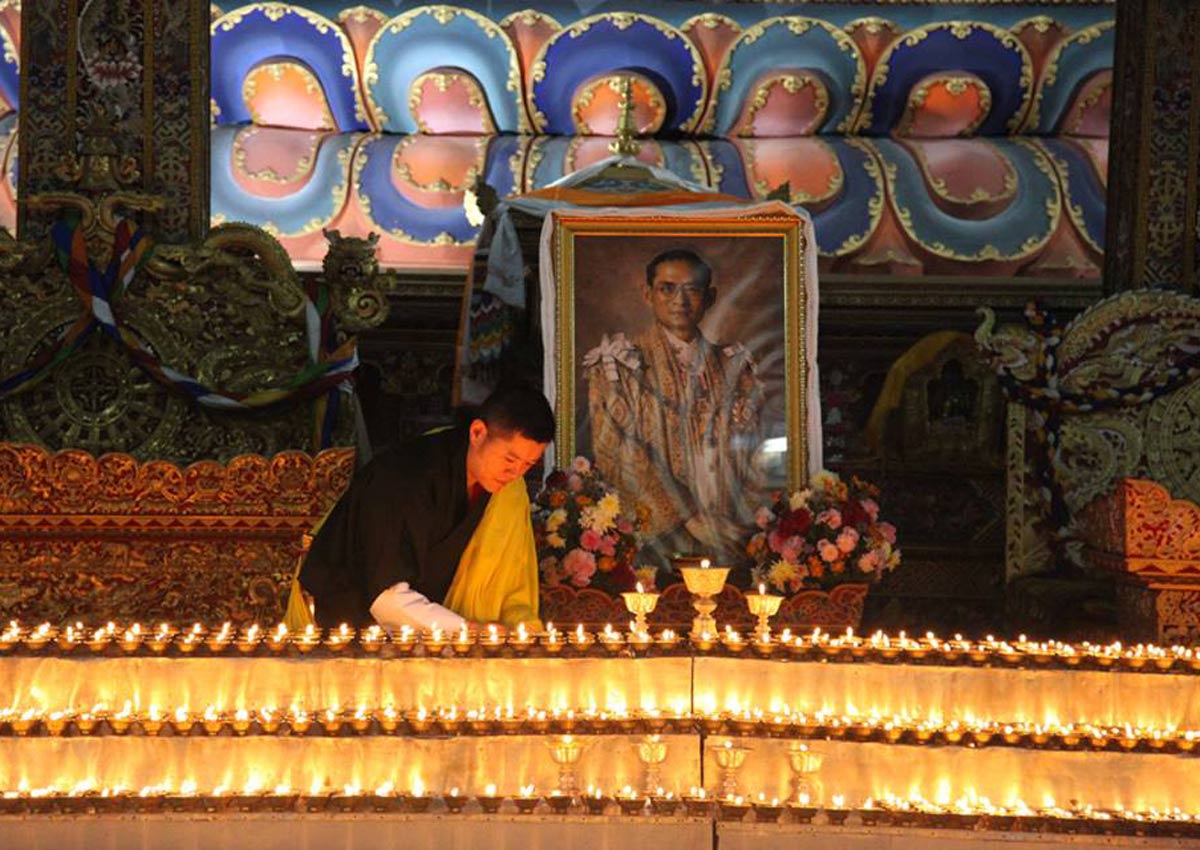
Update: His Majesty King Jigme Khesar Namgyel Wangchuck of Bhutan came to the Grand Palace to pay personal respect to His Majesty King Bhumibol Adulyadej in front of his royal urn Sunday morning.

The Bhutanese monarch arrived at the Grand Palace at 09.50am and left at 10:18 am.

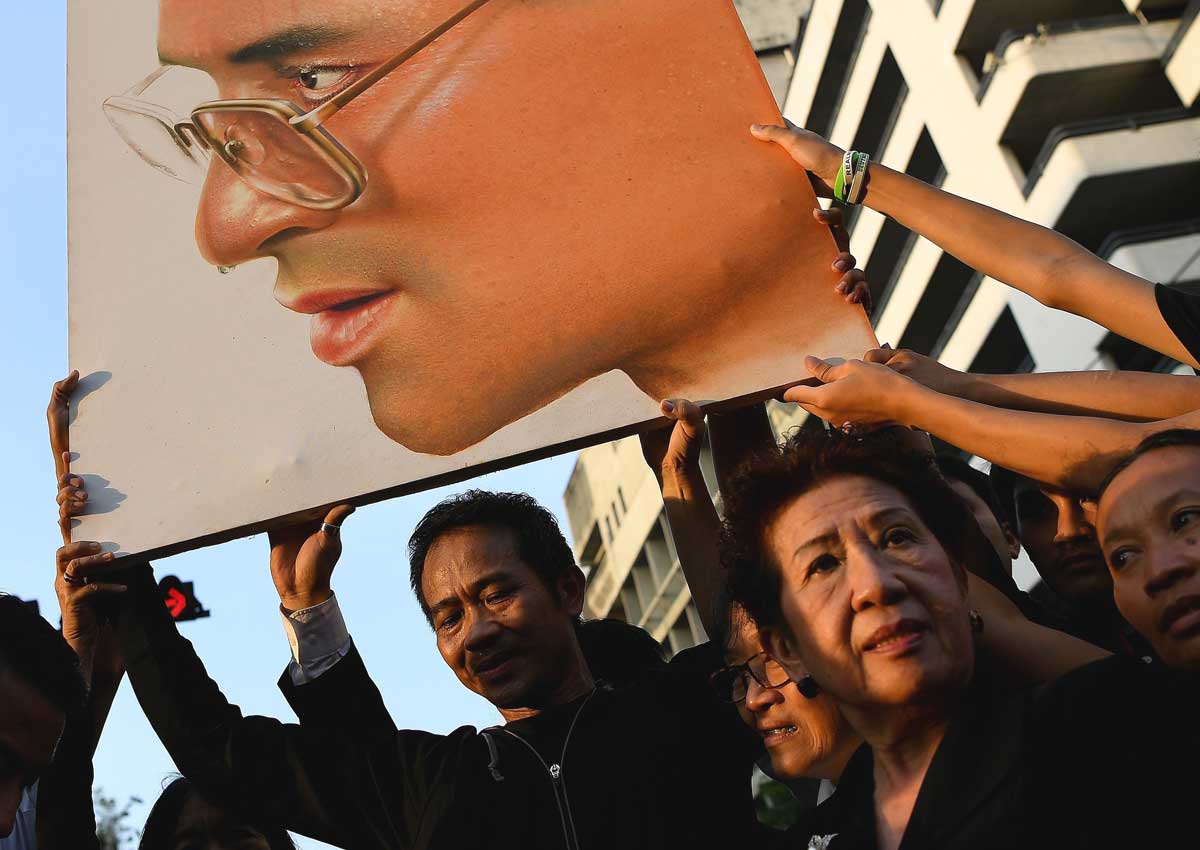
While leaving the Grand Palace, the King of Bhutan waved his hands to greet the black-clad mourners who were queuing in front of the Grand Palace’s Viset Chaisri Gate to enter Sala Sahathai Samakhom Pavilion inside the compound to sign a book of condolence.

The crowds shouted “Love Live the King” to the Bhutan King when his motorcade was passing by.

Bhutan’s royal couple arrived in Bangkok

Their majesties the King and Queen of Bhutan arrived in Bangkok yesterday to pay personal respects to His Majesty King Bhumibol Adulyadej.

Bhutanese King Jigme Khesar Namgyel Wangchuck and Queen Jetsun Pema were welcomed at the Suvarnabhumi Airport by Deputy Prime Minister Dr Somkid Jatusripitak.

The Bhutanese royal couple led prayers for Thailand’s late King at the Thimphu National Memorial Chorten in Bhutan on Friday. Bhutan’s national flags are flying at half-mast for three days as a mark of respect.


The royal families of Thailand and Bhutan share strong bonds.

Upon hearing of HM King Bhumibol’s death on Thursday, King Khesar led the royal family, clergy, government officials and members of the Thai community in Bhutan in a candlelight prayer vigil at the royal palace in Thimphu, Deutsche Presse-Agentur reported.

The Bhutanese king on Friday also declared a public holiday, in conjunction with Thailand’s observance. Vigils with butter lamps will continue to be held at temples across Bhutan, local media reported.

“His Majesty the late King Bhumibol has been an exceptional leader, a comforting presence in the lives of every Thai citizen,” King Khesar wrote on Facebook.

“His Majesty’s enduring service for the welfare and well-being of his people will be remembered with honour and respect,” he added.

The Bhutanese king was among several royal family members from across the world to attend the celebration of the late King’s 60th anniversary of his accession to the Thai throne in 2006.

Image: 
Category: 
Publication Date: 
Sunday, October 16, 2016 – 12:47
Send to mobile app: 
Source: 


Story Type: 
Others

Source link

Prem began temporary reign as Regent on day Thai King died

0

Deputy Prime Minister Wissanu Krea-ngam has clarified the role of the ‘Regent pro tempore’ during the accession to the throne after confusion and doubt about the process spread on social media since His Majesty the King’s passing.

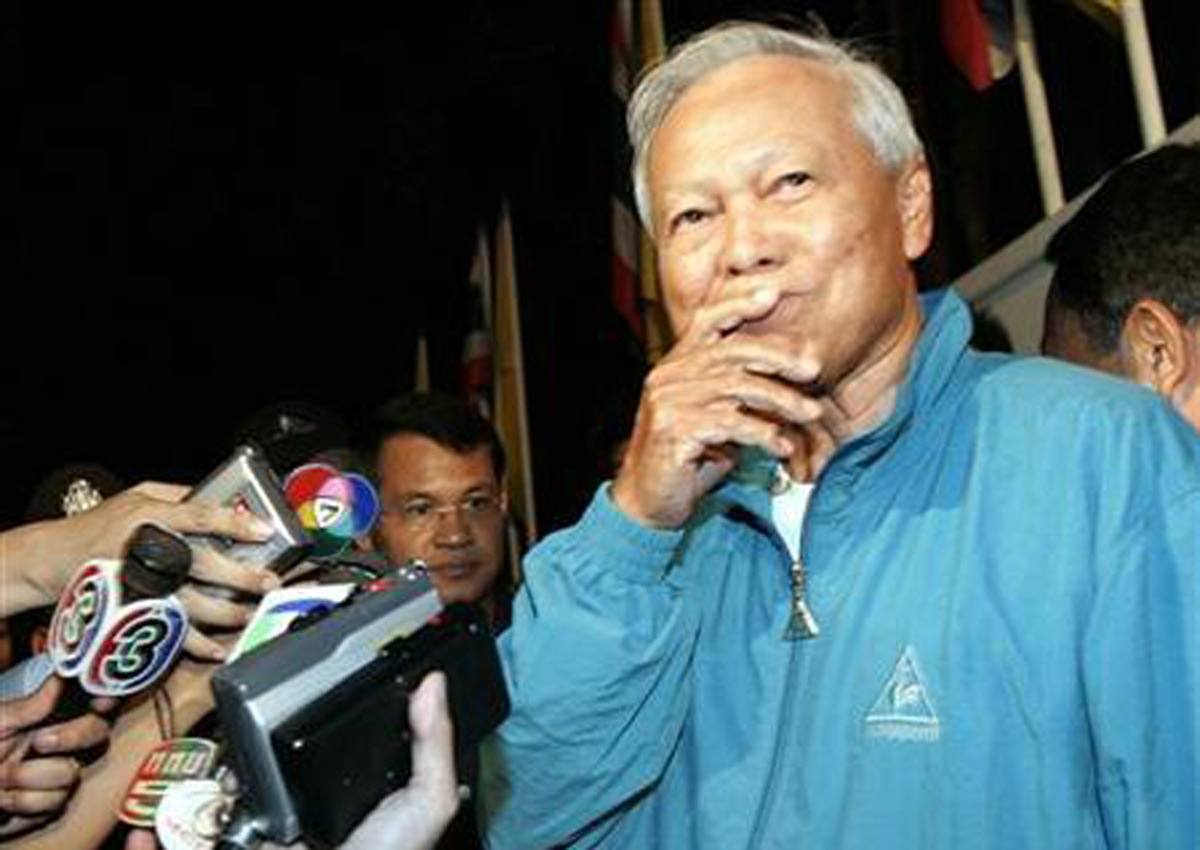
At this moment, His Royal Highness Crown Prince Maha Vajiralongkorn is the heir to the throne and elderly statesman General Prem Tinsulanonda is the Regent pro tempore.

The Regent acts on behalf of the King while the heir to the throne functions at royal ceremonies, Wissanu explained yesterday.

He also noted that the new royal reign began on Thursday, the day His Majesty King Bhumibol Adulyadej passed away.

According to Wissanu, it is not necessary to announce that the Privy Council president, Prem, is the Regent pro tempore since the constitution makes it clear that the president of the Privy Council becomes Regent pro tempore, pending the proclamation of the name of the royal heir.

“In this case, there will be neither an official announcement nor a parliamentarian process of endorsement. Anybody in the position of Privy Council president is obligated to take the job,” he told a special TV programme on Friday night.

His Majesty the King appointed his son heir to the throne in 1972 in accordance with the law of succession.

Article 23 of the 2007 Constitution, which is referred to in this case by the current draft charter, states: “In the case where the Throne becomes vacant and the King has already appointed His Heir to the Throne under the Palace Law on Succession, BE 2467, the Council of Ministers shall notify the President of the National Assembly. The President of the National Assembly shall then convoke the National Assembly for the acknowledgement thereof and shall invite such Heir to ascend the Throne and proclaim such Heir King.”

However, the National Legislative Assembly did not do that during a session on Thursday night because the Crown Prince preferred to join people in grieving for his father before he will make a final decision on the succession ceremony, Wissanu said.

Therefore, according to Article 24 of the 2007 Constitution, the president of the Privy Council became the Regent pro tempore and functions in that capacity until the Crown Prince is ready to take the throne, which might take one year, he said.

As Prem became the Regent pro tempore, the Privy Council, an advisory body for the King, has to select its new president to replace him as he cannot have dual roles at the same time, according to Wissanu.

Prem, 96, became a member of the Privy Council after stepping down as prime minister in 1988 and was appointed chief of the council in 1998.

Prem, as the Regent pro tempore, is authorised to function on behalf of the King. He will endorse the new charter, Wissanu said, adding that many constitutions in history were signed by regents.

The heir to the throne has no authority to endorse a constitution.

The Crown Prince would preside over royal ceremonies such as the royal procession of His Majesty’s body on Friday, he said.

“It is untrue that the Regent is authorised to propose the new King. It is the role of the Cabinet to inform the chief of Parliament [of the new King] and the Parliament will hold a meeting to acknowledge [that fact] and the head of Parliament will invite the heir to become the King,” he said.

Wissanu said that by doing so the process of proposing the new King would be done “perfectly”.

“The throne will never be empty. Indeed, the new reign began since October 13,” he said.

Wissanu said it was the intention of the government, in accordance with the wish of the Crown Prince, to do it this way. “As it was the royal desire, there was no reason to do it another way. The late King is in our mind. Please think about the feelings of the Crown Prince. He is the son. So he needs times to prepare for everything,” he said.

The deputy prime minister, who is the top legal expert of the government, urged Thais to trust and listen to official statements from authorised officials, rather than taking their lead from social media and rumours. The government wants the nation to be as stable as possible during this period, he said.

“HRH Crown Prince told the prime minister that he wanted to see everything remain the same as if His Majesty the King still existed,” Wissanu told reporters.

“Don’t make our land be empty, don’t spend everything to the past so fast. Let it be at the present time. We are children, grandsons, granddaughters, nieces, nephews and relatives – we will do what we do for our parents,” Wissanu said.

Image: 
Category: 
Publication Date: 
Sunday, October 16, 2016 – 12:37
Send to mobile app: 
Source: 


Story Type: 
Others

Source link

Grab: $5 Off GrabTaxi Fares Promo Code for All Users from 15 – 21 Oct 2016

0

GRAB: $5 off taxi fares promo code – limited redemptions (till 21 Oct)

Grab: $5 Off GrabTaxi Fares Promo Code for All Users from 15 – 21 Oct 2016

Get around town, meet friends and family, or simply chillax at your favourite café with this $5 off promo code. Get $5 off discount for one standard Grabtaxi ride from 15 October to 21 October.

Source

Do's and don'ts for tourists during mourning period for Thai King

0

An official period of mourning following the passing of His Majesty King Bhumibol Adulyadej has been planned for Thailand.

The Tourism Authority of Thailand (TAT) would like all visitors to Thailand to continue with their travel plans as normal and kindly be advised of the following:

• Many Thai people will be wearing black or white clothing as a sign of mourning. This is not required of visitors but if possible, they should wear sombre and respectful clothing when in public.

• Visitors should refrain from any inappropriate or disrespectful behaviour.

• Tourist attractions will be open as usual with the exception of Wat Phra Kaeo (Temple of the Emerald Buddha) and the Grand Palace, as they will be the venue of the Royal Funeral Rites.

• The Government has asked for the co-operation from the entertainment venues; such as, bars and nightclubs to consider the opening of their business operations during this time. The decision will be made by the individual owners.

• Most of the traditional and cultural events will be taking place as usual, although the celebrations may be changed for appropriateness as a mark of respect, or the events may be dedicated to the memory of His Majesty King Bhumibol Adulyadej.

• All transport, banks, hospitals and other public services will be operating as usual.

• The related authorities have stepped up safety and security measures for all Thais and visitors to facilitate their travelling around the country.

• For any enquiries, please contact TAT domestic offices or tel.: 1672 in Thailand.

Image: 
Category: 
Publication Date: 
Sunday, October 16, 2016 – 12:21
Send to mobile app: 
Source: 


video embed code: 
<div style="display: block; position: relative; max-width: 100%;"><div
style="padding-top: 56.25%;"><iframe
src="//players.brightcove.net/4802324435001/default_default/index.html?videoId=5171621909001"
allowfullscreen
webkitallowfullscreen
mozallowfullscreen
style="width: 100%; height: 100%; position: absolute; top: 0px;
bottom: 0px; right: 0px; left: 0px;"></iframe></div></div>
Video Media: 
Other Video Media
Story Type: 
Others

Source link

KKH sets Guinness world record for largest reunion of people born at same hospital

0

A total of 2,241 people gathered at Bishan Stadium on Sunday to take part in the attempt to break the record.

Source link

Urn containing Thai King's body for public homage from Oct 28

0

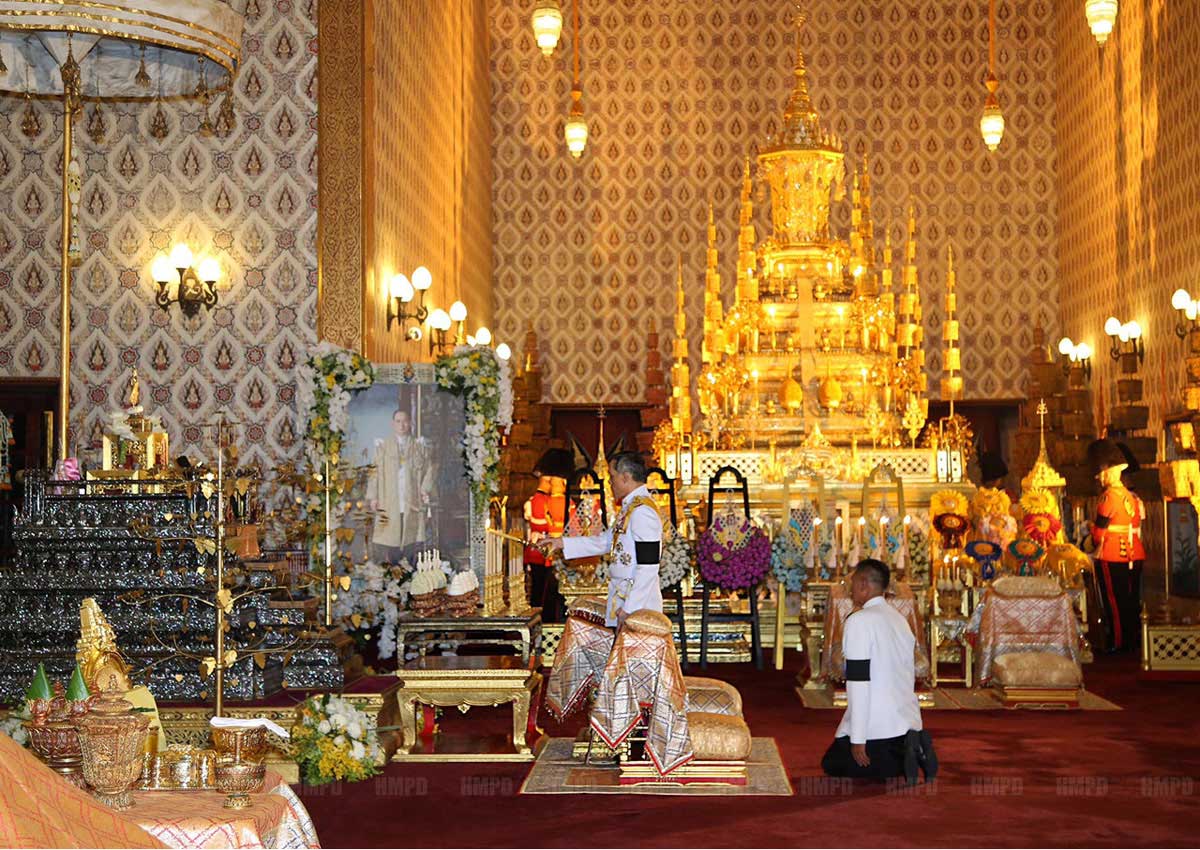
Public members will be allowed to pay respects to His Majesty the King in front of his royal urn inside the Grand Palace’s Dusit Maha Prasat Throne Hall from October 28, the Royal Household Bureau announced Saturday.

The Throne Hall will be opened for public from 9am to 4pm, but on October 28 the public will be allowed to pay respects from to 1pm-4pm.

Prime Minister Prayut Chan-o-cha on Saturday night asked authorities to facilitate all convenience, security and foods for public travelling to pay the respects at the Grand Palace.

The premier also thanked motorcycle taxis who provided free rides to the people to follow the royal procession of HM King Bhumibol Adulyadej’s body being moved from Siriraj Hospital to the Grand Palace on Friday.

As from Saturday, people will also be able to pay homage to His Majesty King Bhumibol Adulyadej before his portrait at the Sahathai Samakhom Hall between 8.30am and 4pm.

People can also bring wreaths after the royal prayer ritual is concluded, while the rest of the Palace and Emerald Buddha Temple will remain closed until October 20.

Image: 
Category: 
Publication Date: 
Sunday, October 16, 2016 – 11:48
Send to mobile app: 
Source: 


video embed code: 
<div style="display: block; position: relative; max-width: 100%;"><div
style="padding-top: 56.25%;"><iframe
src="//players.brightcove.net/4802324435001/default_default/index.html?videoId=5171621909001"
allowfullscreen
webkitallowfullscreen
mozallowfullscreen
style="width: 100%; height: 100%; position: absolute; top: 0px;
bottom: 0px; right: 0px; left: 0px;"></iframe></div></div>
Video Media: 
Other Video Media
Story Type: 
Others

Source link

Craze for hornbill 'ivory' pushes Borneo icon to the brink

0

Pontianak, Indonesia – A striking bird with monochrome plumage and a formidable “beak”, the helmeted hornbill is being hunted to extinction, one of the latest victims of a thriving global trade in exotic wildlife.

For decades poachers in Borneo’s western forests focused on capturing orangutans and sun bears, but in the past few years a surge in demand for hornbill “ivory” has pushed the avian species to the brink.

The product has become so popular in China, where wealthy collectors are keen to show off their status by acquiring rare or unusual animals, that it is fetching up to five times the price of elephant tusk on the black market.

“The demand for these luxury items is just going through the roof,” Chris Shepherd, from wildlife trade watchdog TRAFFIC, told AFP.

“In Asia, it’s really at a scale where species like the helmeted hornbill are just being completely decimated.” Poachers aren’t interested in their brilliant plumage or large bills, but a helmet-like block of reddish-gold keratin at the front of the skulls known as a casque.

It’s this soft, ivory-like substance that’s carved by craftsmen in China into luxury ornaments, statues and jewellery – trendy top-shelf trinkets that have soared in value as so-called “red ivory” has grown more prestigious.

Experts say a single casque can fetch up to $1000, eclipsing the average black market price of traditional “white” ivory sourced from elephant tusk several times over.

Researchers say thousands of these majestic birds have been killed in half a decade alone as demand for red ivory has taken off.

Yokyok Hadiprakarsa, a leading expert in helmeted hornbills, estimates as many as 500 were killed every month in 2013 – or 6,000 annually – just in West Kalimantan, a jungle-clad province in Indonesia’s half of Borneo.

Helmeted hornbills had been traditionally hunted in the past by Borneo’s indigenous tribes, but never at levels that posed any conservation risk.

This “complete, systematic slaughter of the species” came virtually out of nowhere, Shepherd said. It wasn’t until 2011 that red ivory first began showing up on websites catering to Chinese buyers and at high-end wildlife markets along the country’s borders, such as in Myanmar and Laos.

Hunting rapidly intensified, especially among trafficking networks already well entrenched in West Kalimantan, a key wildlife smuggling hub with an international airport in the capital Pontianak.

By the close of 2015, the species had progressed from vulnerable to critically endangered – leapfrogging two threat levels to the highest possible risk category on the International Union for Conservation of Nature’s “red list”.

Now the elite rangers of the government’s Forest Police Rapid Reaction Unit (SPORC) rarely spot these distinctive birds during jungle patrols, SPORC commander David Muhammad told AFP in Pontianak.

Instead, they’re uncovering just the skulls during raids on smuggler hideouts, the decapitated corpses dumped unceremoniously elsewhere.

“There is a high value placed on the heads by hunters and collectors,” said Muhammad.

“That’s the only thing they want. The rest has no value.” The commercial trade of helmeted hornbills is prohibited by law in China and across its habitat zones in Southeast Asia: Thailand and Myanmar, as well as Malaysia, Brunei and Indonesia – the three countries that share Borneo island.

But the rate of seizures – a “tip of the iceberg” indicator of the trade, said Shepherd – suggests business is booming. In the 18 months to August 2014, nearly 2,200 casques were confiscated by law enforcement in China and Indonesia, around a third just in West Kalimantan.

In one case, SPORC units intercepted four Chinese nationals at Pontianak’s international airport with nearly 250 casques stashed in their luggage.

Adam Miller, of Pontianak-based conservation group Planet Indonesia, said the smuggling of hornbill ivory bore many similarities to the elephant ivory trade in its scale, criminality and sophistication.

“There’s a lot less people doing it just to survive. It’s very much a gangster activity,” he told AFP.

Many traffickers are caught not just with hornbill ivory but a host of other exotic specimens. A man arrested in Hong Kong in May was carrying more than $1 million worth of ivory and hornbill casques, while two Malaysians detained in the United States in December were smuggling both hornbill and orangutan skulls.

Shepherd said this reflected a growing trend as collectors seek ever-rarer and more exotic wildlife not for use in traditional medicine but purely as status symbols.

“People want to have illegal animals, people want to have rare animals, people want to have expensive animals, just to show off their status and their wealth,” he said.

There was a glimmer of hope for the hornbill this month when governments vowed to step up protection efforts during a meeting of The Convention on International Trade in Endangered Species (CITES), the global conference that governs wildlife trade.

In West Kalimantan, the extinction of this iconic bird would also have far-reaching cultural ramifications. The helmeted hornbill is revered by ancient forest-dwelling Dayak communities, and its image adorns flags and sigils across the province.

“It’s a symbol of our customs, and we must protect it,” Sustiyo Iriono, the head of the government’s conservation agency in Pontianak, told AFP.

Image: 
Category: 
Publication Date: 
Sunday, October 16, 2016 – 11:50
Keywords: 
Send to mobile app: 
Source: 


Hermes ID: 
2 671 721
Hermes ID String: 
SY_HORNBILL_1016
Hermes Author: 
SEANYAP
Story Type: 
Others

Source link