 SINGAPORE – The Housing and Development Board (HDB) has called a second tender to consolidate nine government agencies’ demand for solar panels. Solar photovoltaic systems will be installed at 636 HDB blocks and 31 government sites island-wide, including…
Source link
HDB looks to expand solar energy use

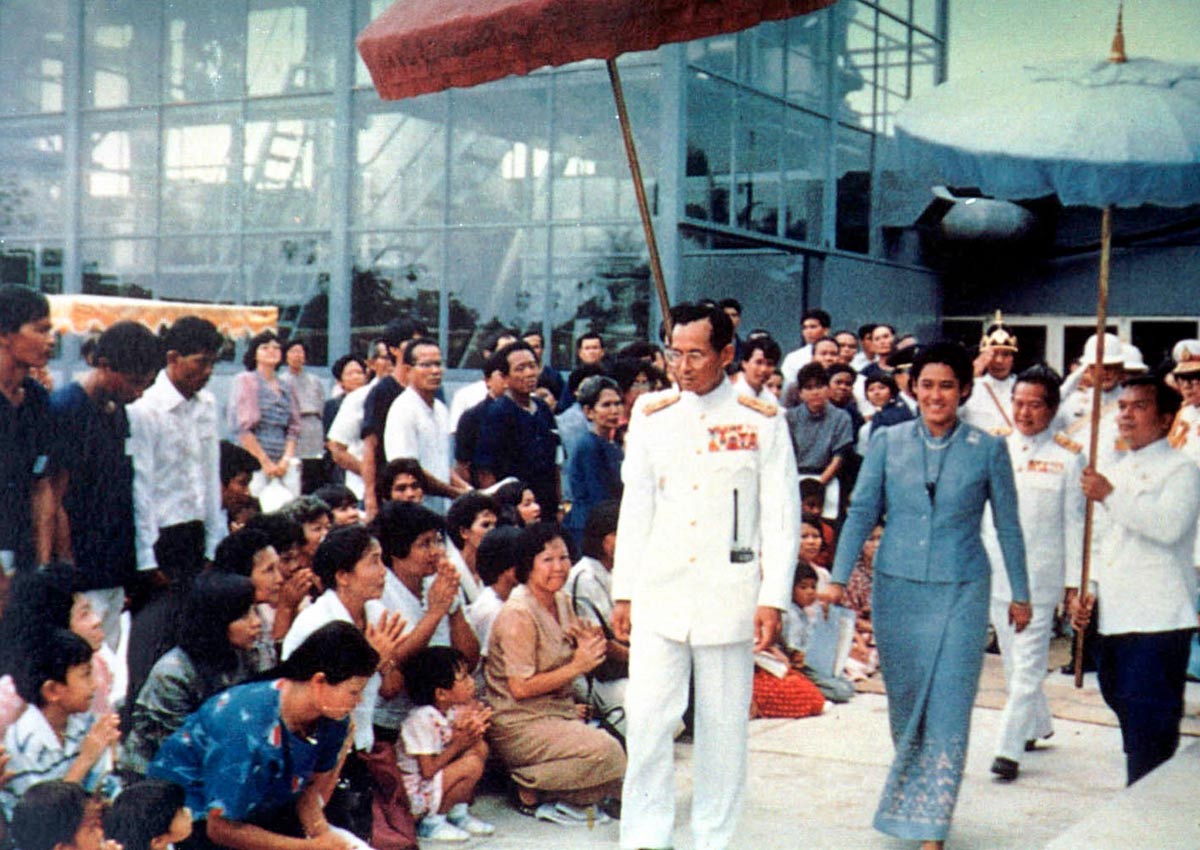
King Bhumibol's farming experiments at his residences benefit millions

His Majesty the King’s experiments with sustainable agriculture at his residences have benefited millions
BEFORE THE FIRST RAYS of dawn appear in the skies over Dusit Palace, the team at the Royal Chitralada Dairy Farm is hard at work most days, transporting the fresh milk from the cows to an adjacent plant where it’s pasteurised and put into cartons.
It’s a routine that’s been in place since 1962, when His Majesty the King was presented with several head of cattle. Always interested in agriculture, the King invested his personal funds into establishing a dairy herd of some 40 cows for demonstration purposes.
Today the herd produces between 200 and 300 litres of milk a day, and while some of the milk and milk products are sold to create a revolving fund, much of it is delivered to schools, where it nourishes thousands of children.
Throughout his reign, His Majesty dedicated his efforts to accumulating knowledge, committing personal resources to advance the wellbeing of the people of Thailand.
The transformation of his private residence, Chitralada Villa, which is part of Dusit Palace, into experimental plots began in 1961 and has helped the King find solutions to a variety of problems affecting farmers.
A recent talk organised by the Office of His Majesty’s Principal Private Secretary and the Pid Thong Lang Phra Foundation at Chitralada Villa’s Sala Mahamongkol focused on His Majesty’s lifelong journey to help his subjects develop the skills and know-how to combat health problems and poverty and become self-reliant.
“As a building, His Majesty’s home is smaller than those of many of our richest men,” said Thanpuying Putrie Viravaidya, the King’s deputy principal private secretary.
“Chitralada Villa has just two floors, and the main hall is where His Majesty welcomes guests and sometime dines. Otherwise there are just bedrooms and a study, like in any regular house. The compound of the palace is large and houses many departments that work for the King, including the kitchen, the pages, the security guards and physicians.
“When they were on their own Their Majesties used to run at least three kilometres around Dusit Dalai pavilion in the grounds,” Thanpuying Putrie recalled. “His Majesty always said he had to be strong in order to help others.
“Local folk knew when Their Majesties would be visiting their palaces upcountry. I remember people queuing in front of the palace from very early in the morning to see the doctors. When I asked them why they didn’t go to the nearby hospitals, they told me they wanted the medicinal envelope that featured the royal emblem.
“The homes of His Majesty – here at Chitralada Villa, Klai Kangwon Palace in Hua Hin, Bhuping Palace in Chiang Mai, Thaksin Ratchaniwet Palace in Narathiwat and Phu Phan Palace in Sakhon Nakhon – all house development projects designed to help the people,” she said.
Each May at the Royal Ploughing Ceremony, the rice seeds cultivated on experimental plots at the Royal Chitralada Projects are brought to Sanam Luang and sown into a furrow ploughed by two oxen. Farmers attend the ceremony and go to great lengths to obtain samples of the rice seeds, which they consider the best available. Right now 49 different varieties of rice are being grown for experimental |purposes.
Chitralada Villa is currently home to 36 projects, both non-commercial (geared towards long-term improvements) and semi-commercial. All surplus funds from sales are invested in further development.
In addition to the agricultural experimental plots and milk production, the Royal Chitralada Projects team carries out energy conservation, |alternative-fuel production and fish farming.
The most spectacular of the projects is the Demonstration Forest, which His Majesty set up to study tree species after observing a large number of dipterocarp trees being felled for timber.
Aware of the ecological need to preserve a rainforest, the King planted dipterocarp seeds at Klai Kangwon Palace and later had saplings transferred to Chitralada Villa, as well as other species from different parts of the country.
In 2011 this demonstration forest – with more than 1,000 saplings – marked 55 years as a thriving forest, with its own localised climate that induces rainfall over the villa.
A fundamental part of the King’s vision was for each of the royal development study centres (RDSCs) to become “models of success” where farmers and others could learn through example and guidance.
Officials who have served His Majesty on different occasions proudly shared their memories during the talk.
Songsak Wongpumiwat, chairman of the Office of the Public Sector Development Commission, recalls the numerous visits by the King while he was working for the Royal Initiative in Prachuap Khiri Khan’s Nong Phlap sub-district.
“The area was suffering from extreme drought, and every time we saw clouds of dust rising through the air, we knew right away it was a big caravan of vehicles and His Majesty was coming to inspect the soil survey,” he said.
In the North, a large number of Royal Initiative Projects have been introduced, one of them focusing on nature’s own defensive barrier to soil erosion – vetiver grass.
“His Majesty recommended to his mother, Her Royal Highness the Princess Mother, that she cultivate vetiver grass to conserve soil and thereby water on the steep slopes of Doi Tung, Chiang Rai province,” said forestry specialist Pinit Sornlamp.
“Later, when the Royal Family was together, the Princess Mother said her vetiver grass grew better than that of the King, developing roots more than three metres long in just nine months. The trick, she noted, was to plant the grass with a tilt of three degrees.”
Another useful initiative in the North, the Huai Hong Khrai RDSC, was established in Chiang Mai’s Doi Saket district in 1982 at the King’s initiative, as a result of droughts and forest fires caused by extensive tree-felling.
“His Majesty told me I should look forward, not just five years but 50 years,” recalled Viriya Chuaybamrung, a specialist in natural resources and the environment.
“He told me, ‘When the land leeches come, you’ll know your work has succeeded.’ Now, 33 years later, we have land leeches. I’m so proud!”
Chaiwat Sitthibus, a land-development specialist, remembered the King’s visits to Thaksin Ratchaniwet Palace in Narathiwat between 1973 and 1996.
“His Majesty would stay at his southern palace for one to two months. One rainy day, without any advance notice, he visited the Pikun Thong RDSC, which was in charge of the Klaeng Din project to study the natural acidification caused by deep layers of pyrite in peat swamps. I’m a specialist in soil, and yet I’d never thought of monitoring the research during the rainy season before. It made a lot of sense. His Majesty wanted to see how vetiver grass works in the rain,” Chaiwat said.
Today, His Majesty’s selfless efforts can be measured in more than 4,000 royal development projects undertaken for the benefit and happiness of the Thai people.
“I’ve been serving His Majesty for more than four decades and I’ll turn 75 soon,” Thanpuying Putrie said.
“His Majesty used to say that his work would never come to an end, that it was a ‘work in progress’. The more the development, the more benefit, and the greater the sustainability for the future.
“You do what you can, for the individual, family, society and the nation. With a good foundation, the prosperity from development will benefit future generations, and we should do it with unity and generosity.”
331856
Photo GalleryA look back at Thailand’s King Bhumibol Adulyadej’s life
-

<!–
-

<!–
-

<!–
-

<!–
-

<!–
-

<!–
-

<!–
-

<!–
-

<!–
-

<!–
-

<!–
-

<!–
-

<!–
-

<!–
-

<!–
-

<!–
-

<!–
-

<!–
-

<!–
-

<!–
-

<!–
-

<!–
-

<!–
-

<!–
-

<!–
-

<!–
-

<!–
-

<!–
-

<!–
-

<!–
-

<!–
-

<!–
-

<!–
-

<!–
-

<!–
-

<!–
-

<!–
-

<!–
-

<!–
-

<!–
-

<!–
Image:
Publication Date:
Sunday, October 16, 2016 – 15:08
Send to mobile app:
Source:
Story Type:
Others
$22.5m in SkillsFuture Credit tapped
From providing advice on wine to developing mobile apps, there is a wide range of courses that Singaporeans can sign up for under a government scheme to encourage them to pick up skills.
For the first eight months of this year, more than 80,000 people have signed up for the initiative, which gives Singaporeans aged 25 and older an initial $500 credit to pay for skills courses.
In all, they have used about $22.5 million under the SkillsFuture Credit scheme introduced in January for more than two million people.
While most Singaporeans have yet to use their credits, SkillsFuture Singapore (SSG) told The Sunday Times this is “an encouraging number for a start”.
“We encourage Singaporeans not to rush as it is important for them to understand and learn about their skills and training needs and use their credit to achieve their skills training and career goals,” it said. About 62 per cent of those who have used their credits are 40 and older.
The five popular areas of training are information and communications, security and investigation, personal development, food and beverage, and language skills.
The credits do not expire and will be topped up at various intervals, so they can be accumulated for more expensive courses.
SSG said “no decisions have been made yet on the timing and quantum of the next top-up”.
Nonetheless, the SkillsFuture Credit scheme’s uptake has grown in the past few months.
In Parliament in April, Acting Education Minister (Higher Education and Skills) Ong Ye Kung said over 18,000 people had utilised the credit in the first three months of this year, using about $5.2 million. Experts said the latest figure, while modest, is promising.
National University of Singapore economics lecturer Kelvin Seah said only a small proportion of Singaporeans have tapped the scheme, as the credits have no expiry date. “There is, therefore, no urgency to use them. People might be taking a wait-and-see attitude, anticipating that the list of courses offered will only increase with time,” he added.
The list of courses eligible for SkillsFuture Credit has expanded at a staggering pace. Today, there are over 16,000 courses, about 6,000 more than in January. They range from floral arrangement to business analytics.
Dr Seah said Singaporeans may be waiting for the right time – when they go through “a change in employment or a change in job scope” – before using their credits for courses. “This way, the skills they acquire can be more targeted.”
The SkillsFuture Credit scheme is only one part of the Government’s plan to get Singaporeans to think about lifelong learning. There is a plethora of initiatives under the SkillsFuture umbrella. These include the Earn and Learn scheme for fresh polytechnic and Institute of Technical Education (ITE) graduates to work and gain qualifications at the same time, and the SkillsFuture Study Awards for early and mid-career workers.
Dr Timothy Chan, director of SIM Global Education’s academic division, said: “For an employee, his investment of time and effort in training will enhance his employability and lower the risk of job displacement due to obsolete skills. It is really up to the individual to see it as a necessity, and his own responsibility to ensure that his skills are still relevant to his job and to keep him employable.”

This article was first published on Oct 16, 2016.
Get a copy of The Straits Times or go to straitstimes.com for more stories.
Image:

Publication Date:
Sunday, October 16, 2016 – 13:00
Keywords:
Send to mobile app:
Source:
Story Type:
Others
Duo arrested for armed robbery

 SINGAPORE – The Singapore Police have arrested two men, aged 18 and 24, for their suspected involvement in a case of armed robbery with hurt, the police said in a statement on Sunday (Oct 16).
On Oct 14, at about 8 am, a 54-year-old man had reported to the…
Source link
Samsung’s fire-prone Galaxy Note 7 officially banned from planes
SINGAPORE, Hong Long and Australia have joined a growing list of countries to issue a blanket ban on the fire-prone Samsung Galaxy Note 7 phone from all flights, even if they are switched off or checked in with luggage.
Media reports and announcements on social media confirmed directives issued by carriers like Singapore Airlines (SIA), Tigerair, Scoot, Qantas, Jetstar, Virgin Australia, Hong Kong Airlines, Cathay Pacific Airways, Dragonair and HK Express, among others.
The ban follows in the footsteps of the emergency order issued Saturday by the U.S. Transportation Department, which prohibits owners from carrying the devices with them into flights or stowing them in with their checked baggage. Previously, regulators had only warned passengers against packing the phones into their luggage and urged them to power the devices off when on board any aircraft.
“We recognize that banning these phones from airlines will inconvenience some passengers, but the safety of all those aboard an aircraft must take priority,” Transportation Secretary Anthony Foxx was quoted in Reuters as saying in the latest order.
“We are taking this additional step because even one fire incident inflight poses a high risk of severe personal injury and puts many lives at risk.”
BREAKING: @USDOT bans all Samsung Galaxy Note7 phones from airplanes https://t.co/60e7RdaBpK pic.twitter.com/41WJTqZTai
— TransportationGov (@USDOT) October 14, 2016
Those found in violation of the U.S. order will face criminal prosecution in addition to fines.
Hours after the announcement, SIA announced its ban. A notice on its Facebook page says: “In view of the ban of the Galaxy Note 7 device by the US Department of Transportation, Singapore Airlines wishes to inform customers that the Galaxy Note 7 smartphone will be prohibited from being brought on board all our flights on person, in carry-on baggage or checked-in baggage with effect from 16 October, 0000hrs (Singapore Time).”
It adds: “The smartphone also cannot be shipped as air cargo. Anyone found in possession of the device will be denied boarding. We seek our customers’ kind understanding on this matter. Thank you.”
Reports by South China Morning Post and Channel News Asia said airlines in Australia and Hong Kong issued similar directives. Around the world, other airlines such as those in Canada and Germany have done the same.
SEE ALSO: South Korea: ‘Stop using Galaxy Note 7’ warns Samsung after battery explosions
SCMP quoted HK Express as saying, “The safety of our guests and crew is our top priority. All Samsung Note7 mobile devices are prohibited on all HK Express flights effective immediately. Guests may not carry on or check-in these devices.”
Samsung Electronics Co Ltd, the world’s largest phone maker, on Tuesday scrapped its flagship Galaxy Note 7 smartphone following numerous reports of the device catching fire and smoking. The decision, made less than two months after the phone’s August release, deals a huge blow to the firm’s reputation and its profit numbers.
The firm expect to chalk total losses of up to US$5.3 billion from the Galaxy Note 7 episode, according to reports.
The post Samsung’s fire-prone Galaxy Note 7 officially banned from planes appeared first on Asian Correspondent.
1 in 4 married couples in Singapore are thinking of divorce
Survey shows 1 in 4 married couples here are thinking of divorce. Chai Hung Yin speaks to counsellors to find out why amount of time spent on the phone.
Singapore often scores poorly in surveys on marriages and relationships.
A 2016 Prudential Relationship Index, based on an online survey of 500 Singaporeans, shows about a quarter of married people are thinking of divorce.
Also sobering for couples are divorce statistics from last year.
In 2015, there were 7,522 divorces and annulments, the third highest annual figure on record, according to a report by the Department of Statistics released in July.
In the Prudential survey, couples say what they argue over include children and money.
But here’s a startling statistic for those glued to their mobile devices. One in four couples fight over the
Their partners prefer spending time with their mobile phones and not them, said 32 per cent of respondents.
These complaints are all too common to counsellors who spoke to The New Paper on Sunday.
More women in their 50s and 60s get divorced
Click on thumbnail to view photos. Source:
The Straits Times





ObSESSION
Senior manager and principal consultant with Fei Yue Community Services, Ms Evelyn Khong, shared an example of how a couple in their early 30s witnessed their relationship deteriorate because of the husband’s obsession with computer games.
The husband would insist that the family eat together, but would hurry his seven-year-old child through dinner so that he could get to his computer games. And he would be at it until 3am.
If the child ate too slowly, he would even resort to slapping the child. The wife was so upset, she sought help.
Says Ms Khong: “Couples should also focus on managing the (technology) that we have subtly allowed into our lives, letting it pull our relationships apart.”
Families in this era face a lot of challenges, more so than before, says Mr Willy Ho, the lead counsellor with The Counselling Paradigm.
He says: “If you go back 20 years, you wouldn’t have parents who needed to play games on the computer.”
He too has seen cases of husbands complaining about the wife who is always always on the mobile phone and vice versa.
He says: “If you have your phone all the time, that behaviour can be very suspicious.
“The spouse may suspect that there is a third party involved.
“You need to (make it clear) why you need to have the phone with you. It could be work-related.”
Mr Jason Wong, chairman of Focus on the Family Singapore and founder of the Dads For Life movement, says technology can be a tool to build relationships.
For instance, he uses it to keep in touch with his daughter who is studying overseas.
He says: “I have a personal philosophy: If I am physically connected, I should be digitally disconnected.”
Let’s face it, couples fight
But quit on the relationship?
In any given week, 24 per cent of married people in Singapore who were surveyed think seriously about leaving their spouse.
One in three (34 per cent) feel their partners upset them at least once a week.
The same proportion also say they argue with their partners quite often, including 20 per cent who say these arguments lead to verbal abuse.
What do they fight about?
– Children (46 per cent)
– Money (41 per cent)
– Housework (29 per cent)
– Spending too much time on the computer or phone (28 per cent)
– Being inattentive (27 per cent)
Why do they fight?
Counsellors say that the different backgrounds, cultures and upbringing of couples can cause tension in a relationship.
Different parenting styles and knowledge can also lead to problems, says Mr Willy Ho, a counsellor. He is not surprised that couple fight about housework.
He says: “If I don’t want to do the laundry, you don’t want to do the laundry, who is going to do the laundry? Having a helper is a way to solve the issue but helpers do require days off, you cannot rely on them all the time. You still need to do some basic things.”
Mr Ho says that couples should seek help immediately when there is a communication breakdown. “Charged up emotions are disruptive to communication patterns,” he says.
Chairman of Focus on the Family Singapore, Mr James Wong, says couples should spend more time nurturing their relationships.
He says: “Currency for the economy is money. The currency for a relationship is time.”
About the 2016 Prudential Relationship Index
More than 5,000 adults aged between 25 and 55 were surveyed from July 13 to July 31 this year to develop the 2016 Prudential Relationship Index, that was revealed on Thursday.
The index aims to understand the state of personal relationships in Asia. People from 10 countries and territories – Cambodia, China, Hong Kong, Indonesia, Malaysia, the Philippines, Singapore, South Korea, Thailand and Vietnam – were interviewed.
SINGAPORE FINDINGS
The online survey involved 500 residents with household incomes of at least $4,000 a month.
Seventy-seven per cent are in a relationship with a partner, including 59 per cent who are married. Half of them are parents.
What is valued
Partners who:
– are easy to get along with
– are comfortable in each other’s silence
– enjoy doing things together
– respect individuality
– have honesty
More men than women in Singapore feel that close bonding is one of the most important aspects in a partnership and want their ideal partner to express their love for them.
Other results
– 15 per cent think that an ideal partner would provide financial support.
– Singapore has the most number of singles in Asia at 23 per cent.
– Of those aged 40 or above, 17 per cent are single, have never married and are without a partner.
chaihyn@sph.com.sg

This article was first published on October 16, 2016.
Get The New Paper for more stories.
Image:

Publication Date:
Sunday, October 16, 2016 – 14:35
Keywords:
Send to mobile app:
Source:
Rotator Image:

Story Type:
Others
SIA, Tigerair, Jetstar join list of airlines banning Samsung Note 7
An increasing number of airlines, including Singapore Airlines, Jetstar, Cathay Pacific and Qantas, have banned the device from their flights.
Source link
You can make it anywhere if you do well in S'pore, says Hartono
You can make it anywhere as a musician if you can make it in Singapore. That was the advice local singer Nathan Hartono gave to hundreds of fans at a meet-and-greet session yesterday at Bugis+ shopping mall.
The crooner, who came in second in the latest season of reality singing competition Sing! China in Beijing on Oct 7, was there to mingle with fans.
“I’ve been performing in shopping malls like this for a long time,” he told the crowd, as he reminisced about his first performance on stage at Bishan’s Junction 8 mall in 2005 when he was just 14 years old.
“The music performer I am today is moulded from being in Singapore. If you can make it in Singapore as a musician, you can make it anywhere. It’s a tough crowd here.”
Hartono was also at Bugis+ to fulfil a Milo promise in person.
332543
Photo GalleryHundreds show up for Nathan Hartono and free Milo ‘peng’
Source:
-

<!–
-

<!–
-

<!–
-

<!–
-

<!–
-

<!–
-

<!–
-

<!–
-

<!–
-

<!–
-

<!–
-

<!–
-

<!–
-

<!–
-

<!–
-

<!–
-

<!–
In an earlier interview with The Straits Times, Hartono had said that if he won the contest, he would “rent a fleet of Milo vans and treat everybody to Milo peng (iced Milo)”.
He may not have won, but Nestle Singapore, which manufactures the chocolate malt beverage, went ahead to deploy the green vans thrice to give out free iced Milo drinks – once at Plaza Singapura on Oct 7, a few hours before the competition final; another time at Bedok Mall on Friday; and once more at Bugis+ yesterday.
Hartono, who returned to Singapore from China last Sunday, was his jovial self yesterday as he went on stage to answer questions in front of screaming fans.
“The last few months were very rewarding, but Singapore is still home,” the 25-year-old said, adding that he is glad to be back here. “The weather is a welcome warmth. I miss the humidity.”
Referring to his Milo promise, Hartono confessed it began as a joke. He said: “I didn’t think this was gonna be a thing. The Straits Times asked me what I would do if I won. I made a joke because I didn’t want to be boring.”
And he was anything but boring to his swooning supporters who showed up with cameras and gifts.
Some, like Ngee Ann Polytechnic student Zhang Yue, 20, were there from as early as 10am, even though Hartono was due to appear only at 3pm. The Beijing native, who was there with three other schoolmates, said: “We came early because we were too excited. We were afraid we couldn’t get close to him.”
But get close to him she did. Ms Zhang was one of 100 fans who got to take photos with Hartono on stage. “My heart kept racing. He sings well and he’s very handsome,” said Ms Zhang, giggling.
For nearly two hours, Hartono crooned, signed autographs, handed out cups of Milo to the crowd and played stage games with fans.
The performer almost won a game of musical chairs, but lost the final chair to a woman from Beijing.
“Second place again,” he said as the crowd roared with laughter.
Singaporean Charmaine Yeo, 14, a School of the Arts Singapore student, was there with her sister and father. She was also at Plaza Singapura on Oct 7 for Milo drinks.
“I’ve been a very big fan since he joined the competition. He has this charisma, a very nice voice and very good stage presence.”
Fans both at home and abroad can expect to hear more of his music soon, as Hartono said he feels a self-imposed pressure to ride on the wave of his success at the Sing! China competition. “The pressure right now is all my own pressure on myself. I want to go forward and not waste this opportunity. I want to keep making music in Singapore and outside Singapore.”
Local singer Nathan Hartono wows Sing! China judges
Click on thumbnail to view photos. Source:
The Straits Times, The New Paper, YouTube screengrabs, HBO Asia, Music & Movement

















This article was first published on Oct 16, 2016.
Get a copy of The Straits Times or go to straitstimes.com for more stories.
Image:

Blurb:
<p>You can make it anywhere as a musician if you can make it in Singapore. That was the advice local singer Nathan Hartono gave to hundreds of fans at a meet-and-greet session yesterday at Bugis+ shopping mall.</p>
Publication Date:
Sunday, October 16, 2016 – 13:00
Keywords:
Send to mobile app:
Source:
Rotator Image:

Story Type:
Others
More interaction needed between Singaporeans, new citizens: Zaqy Mohamed
There is room to increase interaction between Singaporeans and new citizens to help them understand each other better, says Chua Chu Kang MP Zaqy Mohamed.
Source link
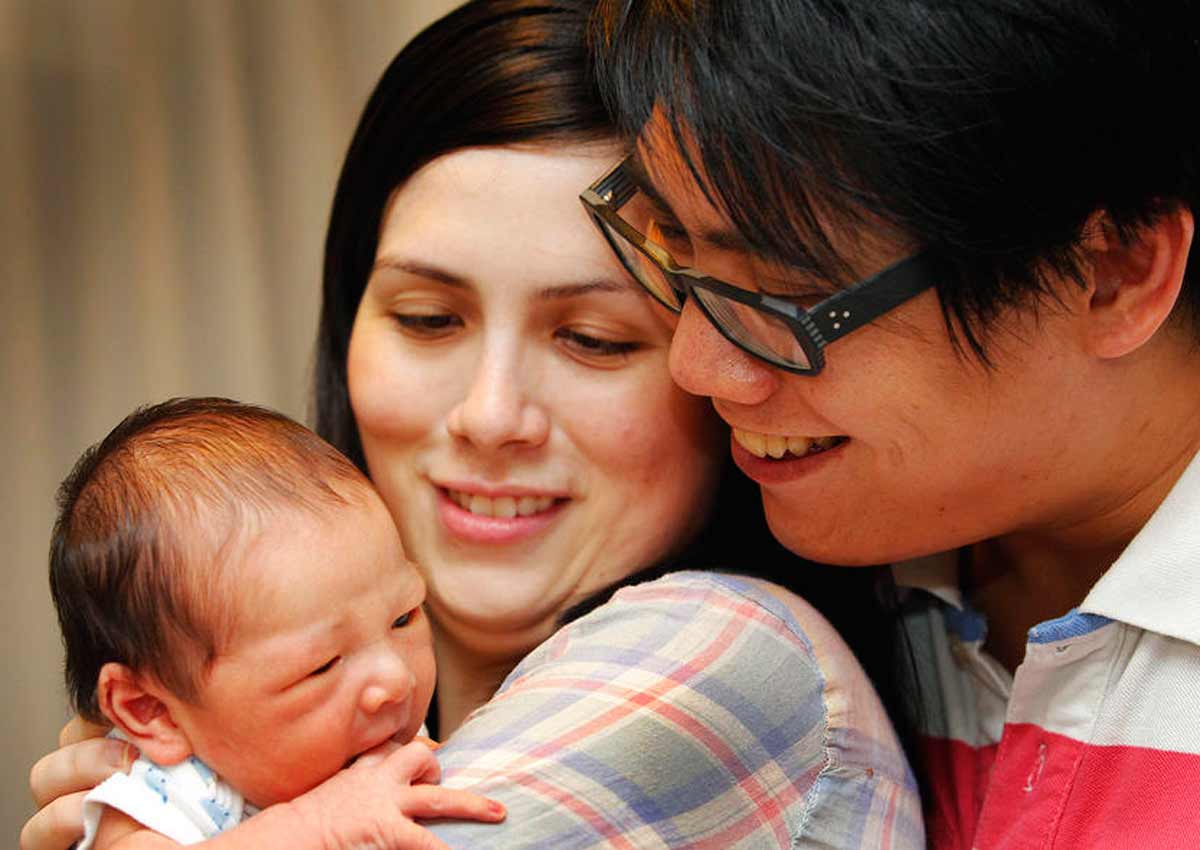
No flat, no baby? Financial stability and a home first for some
Young people today may not hold the same views of marriage as their parents, said family and marriage counsellors.
FaithActs senior social worker Michael Tiew noted that some of them – in their 20s and early 30s – see the union as a step to companionship rather than having children.
“They want to build their own sense of identity and family culture first,” said Mr Tiew, who conducts marriage preparation and parenting talks. “In the past, you get married to have children, to pass on the family name. But today, women are more independent. Having children is a personal choice and responsibility.”
Ms Jessie Koh, head of Reach Counselling, added that most young people want to complete their tertiary education first before marriage. “By the time they finish a degree, they are older,” she said. “While they do want to start a family, they also want to be financially stable in their careers first so that they can provide for their children.”
Read also: You don’t need much space to have sex: Josephine Teo on ‘no flat, no child’ belief
Some couples said they want time to build a stable home of their own even before thinking about babies.
Ms Eunice Chew, who is engaged and whose Build-To-Order (BTO) flat in Telok Blangah will be ready next year, said: “Having kids isn’t on our radar yet… The home is the first thing we wanted to settle even before getting married.”
The 28-year-old, who works in the aviation industry, added: “It’s difficult to settle down without a private space. And we want to be more emotionally and financially stable so that it will be better for our family in the future.”
Ms Hazel Tan, 28, who got married in 2013, said: “Bringing up a child is an immense task and I want to make sure that I can be a good parent first.”
The housewife and her husband lived with her father before moving to their own flat last year. “Many young Singaporeans live with their parents all the way until marriage and they don’t do housework growing up,” she said. “We are learning to take care of household chores, pets and paying the bills.”
Counsellors said medical advances in fertility have also given hope to couples who want to wait to have children. Said Reach Counselling’s Ms Koh: “Progress in technology and methods like in-vitro fertilisation gives some reassurance and makes (young couples) not so fearful of having children later.”
Some couples agreed, saying that they are not overly concerned about the complications that might come with conceiving later.
“Science is quite advanced now, and I know colleagues in their late 30s who have been able to get pregnant… So, it doesn’t seem to be a problem,” said Ms Chew.
This article was first published on Oct 16, 2016.
Get a copy of The Straits Times or go to straitstimes.com for more stories.
Image:
Blurb:
Publication Date:
Sunday, October 16, 2016 – 14:00
Send to mobile app:
Source:
Story Type:
Others


