 SINGAPORE – And the ban goes on: On Sunday (Oct 16), Scoot and Tigerair also banned Samsung’s Galaxy Note7 mobile device from all flights. “The device cannot be carried on guests’ persons or in their hand-carry baggage, nor can it be checked in or shipped as…
Source link
Airlines that have banned Samsung’s Galaxy Note7

Laws governing drones should be reviewed more frequently, say industry players

 SINGAPORE – Some can hit speeds of 80km per hour and stay aloft for 45 minutes. Others are small enough to fit into the palm of your hand with a camera attached; and some can even pelt small projectiles.
With drone technology heating up and becoming more…
Source link
Artificially raising cost of owning a car not the way to go
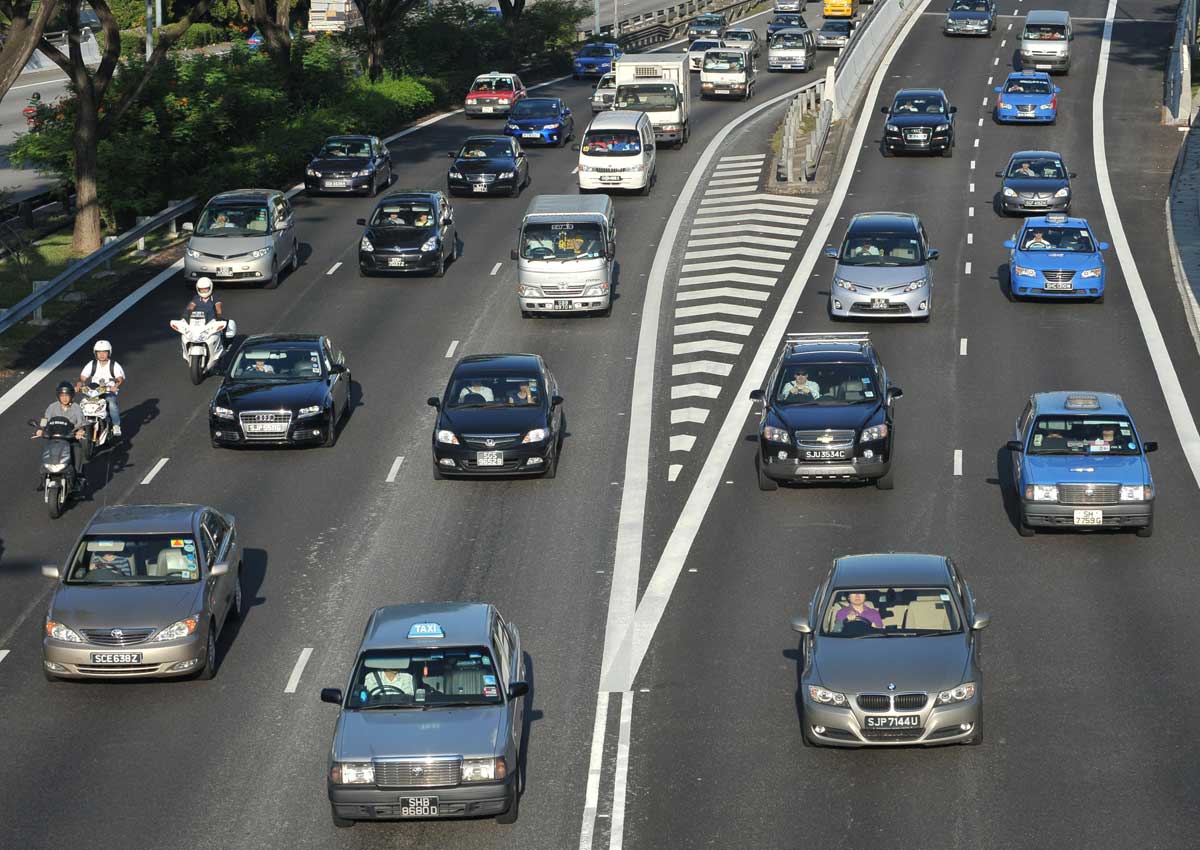
The Government should be cautious in approaching a plan to make it challenging to own a car, such as raising the cost of parking and reducing the availability of parking spaces (“Make it inconvenient to drive a car” by Mr Abdul Malek Mohamed Ali; last Sunday).
We must be careful about the effect such policies can have on society’s standard of living, societal satisfaction and happiness.
In Hong Kong, there are surcharges for all revenue-generating tolls, including cross-harbour tunnels and parking spaces.
But this has led to unintended outcomes, such as the purchase of parking spaces as investments.
This will only lead to higher prices that hurt those who are less wealthy but need private transport.
There could also be more stress if the alternative – public transport – is unable to provide a satisfactory experience.
We should not artificially raise the cost of owning a car.
Rather, the Government should focus on providing more alternatives and making these alternatives viable and attractive.
At the same time, society should be provided with information about the true costs of car ownership, so a more balanced decision can be reached.
In the final analysis, we should let the individual exercise greater autonomy and allow the logic of informed rationality to prevail.
Tan Aik Seng
Image:
Publication Date:
Sunday, October 16, 2016 – 16:57
Send to mobile app:
Source:
Story Type:
Others
How to rejuvenate the pasar malam
Same old, same old is a common quibble about pasar malam, or night markets, here.
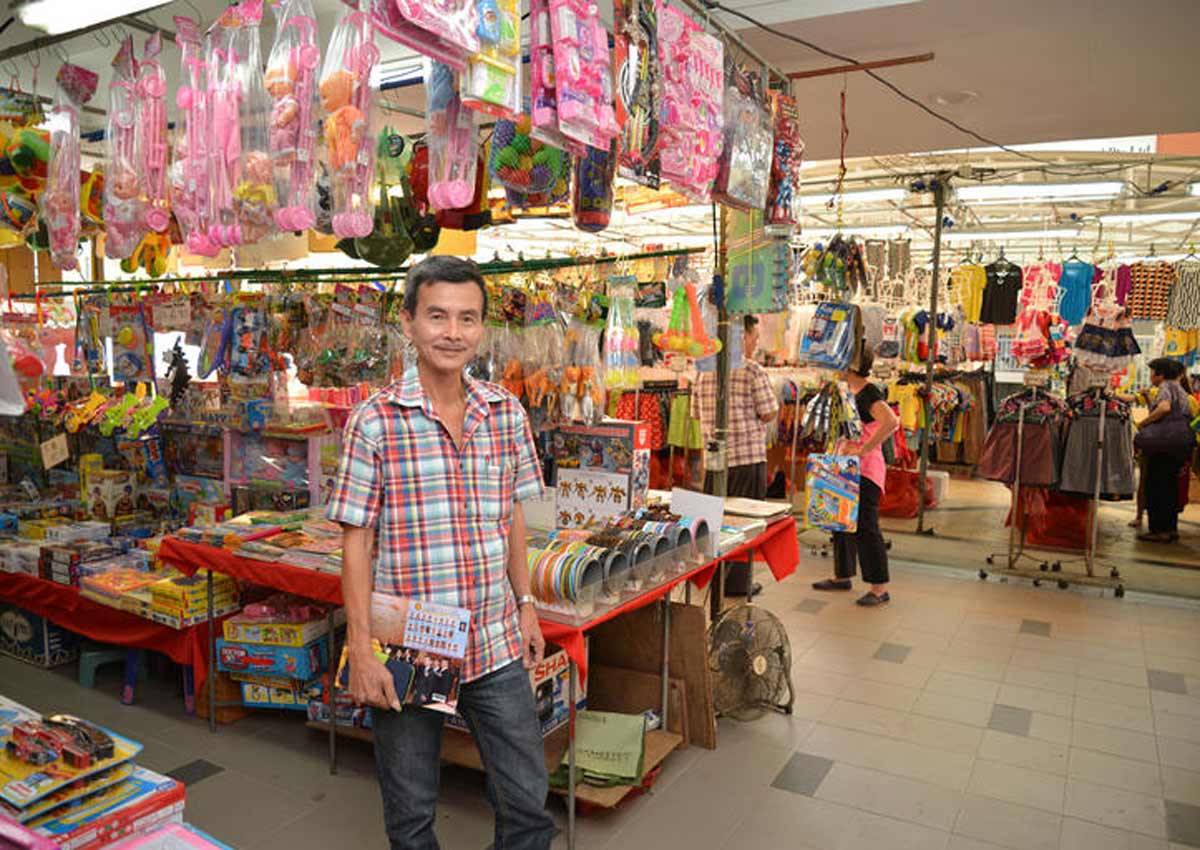
This could be one reason why, these days, only 10 to 12 are organised here a month, down from 20 to 30 five years ago, according to the Trade Fair Merchants’ Association of Singapore, comprising 150 pasar malam stall owners and operators.
But the association hopes to turn the industry’s fate around.
Its proposal: A permanent mega night market carnival park with amusement park games and rides, and getai.
The idea is bold and ambitious. But experts wonder if it is economically viable.
After all, as the association’s president Alan Toh detailed in a recent interview with The Sunday Times, the new park will ideally be 150,000 sq m – larger than the size of the Downtown East entertainment hub in Pasir Ris – and within walking distance of an MRT station.
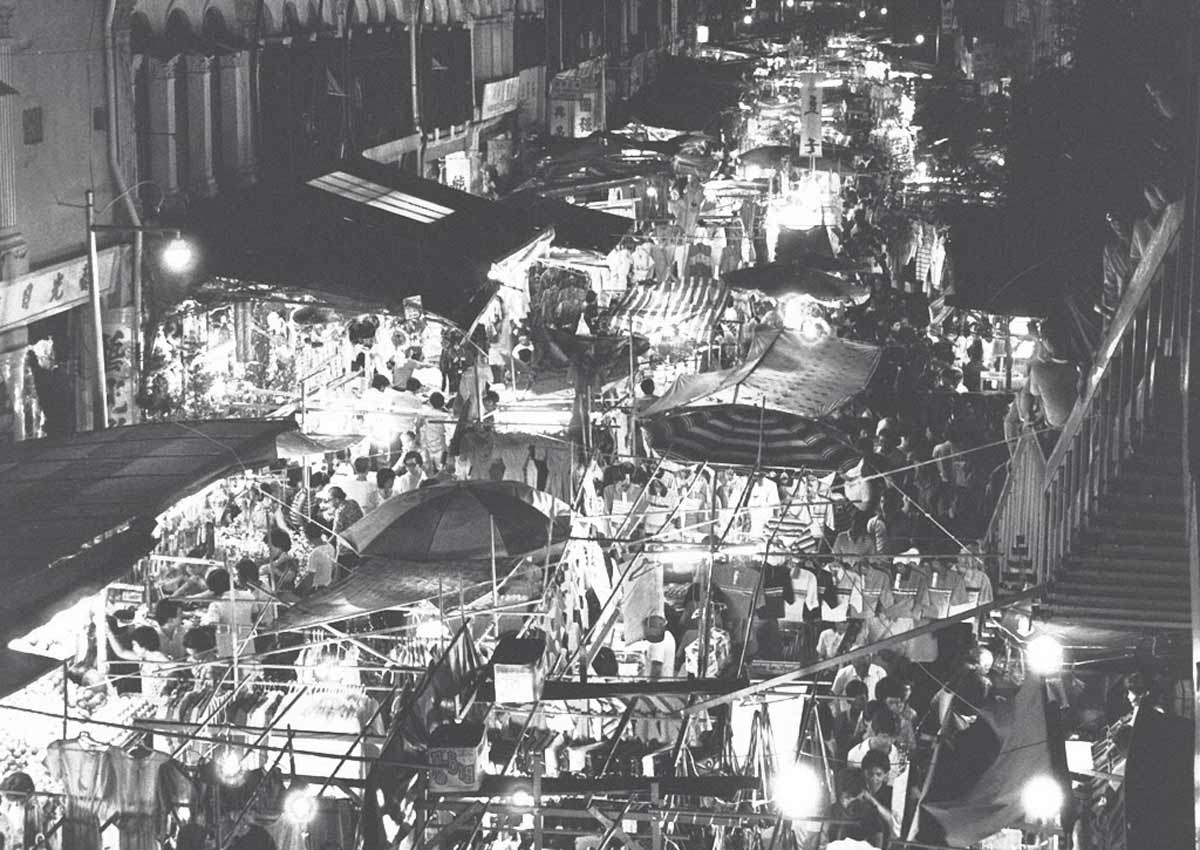
It should also have at least 1,000 stalls – half selling merchandise, half selling food, including local fare such as tutu cake and kacang putih, as well as items from other countries.
There will also be an entrepreneur zone, for newcomers to operate a stall for a month rent-free, as well as 20 amusement park attractions such as a ghost house, carousel, ferris wheel and bumper cars.
This is not all. The plan includes a 200-seat open-air cinema for the screening of old movies, such as those by late Malaysian film icon P. Ramlee. Guests can also relax at a bistro serving local beers. A stage will be set up for shows including getai performances.
The association is drafting an official proposal, but wrote a letter to the Government about two weeks ago to ask it to “allocate the time to discuss” this park.
In the letter, Mr Toh, 60, touted it as “Singapore’s next tourist attraction” and suggested Jurong East – which is along the proposed highspeed rail project linking Kuala Lumpur to Singapore – as an “ideal location”.
Among the park’s aims, he says, is to provide a secure livelihood for stall operators.
The association’s honorary adviser, Member of Parliament Charles Chong, is facilitating the discussions.
The 63-year-old says: “When the association approached me with the idea, I thought it was interesting. Pasar malam are part of our culture and there is value in keeping them alive.”
While he is unsure if the plan is financially viable, he says: “Even if it doesn’t succeed, you can adapt it. Discard what doesn’t work and keep what does.”
The Singapore Tourism Board says it is open to such proposals and will discuss it with the association and other industry stakeholders.
Experts contacted say they are impressed with the detailed plan, but have doubts about its feasibility.
Associate professor of marketing Leonard Lee, 44, from the National University of Singapore Business School, says: “I think it’s a brilliant idea which can help preserve and showcase an important aspect of our unique local heritage, as well as facilitate cultural exchange and social cohesion in Singapore.
“But a feasibility study would be necessary and I think a lot will depend on the implementation of this plan.”
The 300-member Federation of Trade Fair Merchants’ Association, responsible for about 70 per cent of trade fairs here, was less kind.
Describing the plan as unrealistic, its general affairs director Ho Chee Eng, 60, says it may take more than five years to realise such a plan. In a letter to The Straits Times Forum page last week, he adds that is not a timely solution to the problems the industry faces.
Instead, he suggests helping stall owners to transform their businesses, for instance, by consolidating the supply chain to help them cut costs, or through coaching and offering discounted rents to rookie stall owners, especially those who bring in novel products, such as unconventional snacks.
In any case, if the plan for a permanent pasar malam goes ahead, experts suggest learning from successful versions overseas, such as Hong Kong’s Temple Street Night Market and Taiwan’s Shilin Night Market.
Ms Alicia Seah, 51, director of public relations and communications at Dynasty Travel, notes that the Temple Street Night Market has fortune tellers, tarot card readers, Cantonese opera singers and shops selling trendy clothes and accessories as well as local food such as Hong Kong-style claypot rice.
“Nowhere else do you find such a mix of culture, cuisine and entertainment. It is accessible, the goods are affordable and the food delicious.”
Others suggest taking a leaf from successful local fairs and weekend markets, such as the annual Hari Raya Bazaar in Geylang Serai, which is known to attract large crowds.
Dr Michael Chiam, 55, a senior tourism lecturer at Ngee Ann Polytechnic, says: “One possible way is to organise pasar malam based on the local festivals.
“The festive events are successful because they are usually located in areas where there is a high concentration of people who go for the festive mood.”
While the association’s plan calls for a fixed location for the pasar malam, some suggest a mobile one might work better.
Mr Gevin Png, 42, course manager of Temasek Polytechnic’s diploma in hospitality and tourism management, says: “Pasar malam are by nature mobile, with an element of chaos, hence their novelty. A permanent one running throughout the day would contradict the meaning of ‘night market’.”
Assistant professor of marketing Hannah Chang, 35, from Singapore Management University, is quick to point out that pasar malam face strong competition from malls, hawker centres, coffee shops and online shopping.
To survive, the night markets must offer something not found elsewhere.
Prof Lee from NUS suggests having stalls that sell crafts, antiques and artefacts to cater to tourists.
“There could also be rotating attractions, such as bazaars or auctions, to encourage repeat visits.”
A strong and unique theme would be crucial, says Ms Jane Chang, 34, head of marketing communications at Chan Brothers Travel.
“The park would have to select its tenants very carefully to get the right mix to maximise income.”
When presented with these suggestions, Mr Toh tells The Sunday Times that he will consider them.
He says that his association will raise $5 million on its own – through its members and contacts – to fund his plan and hopes the authorities can help make it a reality.
“Pasar malam are an important part of Singapore identity and something my association very much wants to preserve.”

This article was first published on Oct 16, 2016.
Get a copy of The Straits Times or go to straitstimes.com for more stories.
Image:
Blurb:
Publication Date:
Sunday, October 16, 2016 – 13:00
Keywords:
Send to mobile app:
Source:
Story Type:
Others
Singapore takes aim at microbeads in products
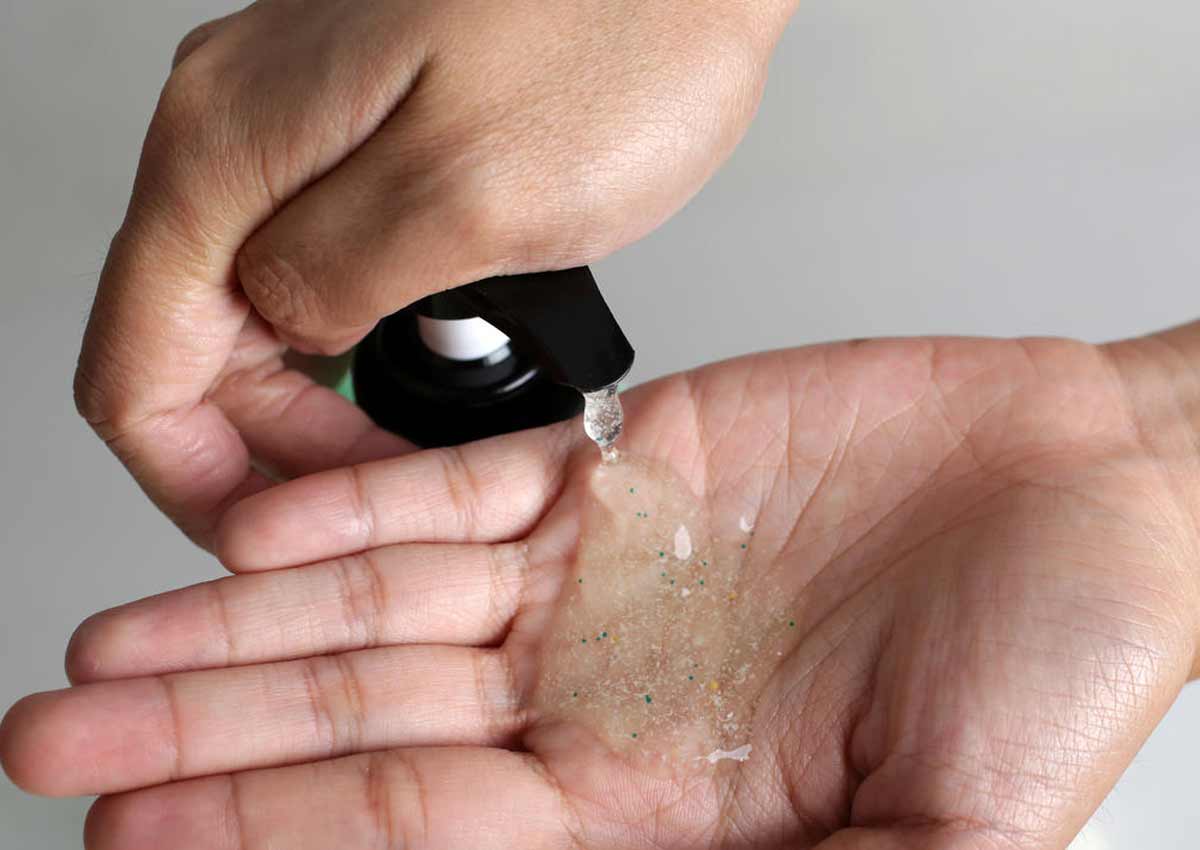
The exfoliating facial wash that makes your skin feel smooth can cause a host of problems down the food chain. They contain tiny balls of plastic, called microbeads, which can kill marine life and may even pass toxic chemicals to humans.
Several countries have vowed to ban products like facial washes, toothpaste and cosmetics that contain them. Now, the authorities here are studying their environmental threat and ways to prevent them from entering surrounding waters.
The National Parks Board told The Sunday Times it is “currently looking into assessing the status and impact of marine debris and microplastics on Singapore’s marine environment”. The National Environment Agency is monitoring international developments in legislation and domestic research on microplastics.
Last December, a law was passed in the United States to ban the production of personal care products and cosmetics containing plastic microbeads from 2017. Last month, Britain said it would follow suit.
Microbeads typically range in size from 1mm – about the size of a pinhead – to 1 micron or 100 times thinner than a strand of human hair. They are able to evade wastewater treatment filters and end up in rivers, seas and oceans. There, they are eaten by marine organisms, including fish and seabirds, blocking or damaging feeding appendages and digestive tracts.
See also: Tiny bits of plastic pose big threat
Microbeads can also absorb and concentrate harmful compounds, said Associate Professor He Jianzhong from the National University of Singapore’s Department of Civil and Environmental Engineering. The compounds include organic pollutants that can cause conditions like cancer. When eaten by fish, the toxins remain in them and can later be passed to humans.
But there are few large-scale studies with concrete findings on how chemicals in microplastics affect human health. A United Nations Environment Programme Frontiers 2016 Report said, for now, “the risk to human health appears to be no more significant than via other exposure routes”. Still, it said harmful and persistent substances can amplify as predators eat prey.
Singapore’s Agri-Food and Veterinary Authority said its food safety tests include chemical contaminants found in microplastics. It said it will keep a close watch on the microplastics issue and “will enhance or implement appropriate food safety programmes” if necessary.
According to Dr Jeffrey Obbard, who published a study on microplastics in Singapore’s coastal marine environment in 2014, tiny plastic fragments including microbeads can be found in beach sand, seawater and drainage canals.
National water agency PUB gave the assurance that no microplastics are in Singapore’s drinking water as any collected in reservoirs will be clumped with other impurities, which will sink and get filtered out.
But it said a small amount may enter the marine system when excess treated used water is discharged into the sea. It is looking into upgrading its water reclamation plants to filter out particles as small as 0.1 to 0.4 micron in diameter.
Singaporeans should be worried about plastics seeping into surrounding waters. “The microplastic might shift to Malaysia or Indonesia waters where people do fish and where we might get our fish too,” Prof He said.
This article was first published on October 16, 2016.
Get a copy of The Straits Times or go to straitstimes.com for more stories.
Image:
Blurb:
Authorities studying their environmental impact and how to stop them entering waters. -ST
Publication Date:
Sunday, October 16, 2016 – 16:45
Keywords:
Send to mobile app:
Source:
Story Type:
Others
HDB calls tender for solar panel installation across government agencies
The tender will aggregate demand for the installation of solar panels across nine governmental organisations including Ministry of Home Affairs, Ministry of Education and the National Environment Agency.
Source link
Singapore's view of the world: How do we respond to rising uncertainty?
The United States is in the middle of a divisive election in which both candidates have campaigned on a platform that spells a shrinking global footprint for the superpower.
It is not the only major country in the process of losing its appetite for free trade and flirting with the idea of turning insular.
This rising tide of isolationism fuelled by domestic pressures manifested itself dramatically in June with Brexit – Britons voting to leave the European Union.
Closer to home, a rising China appears to be increasingly flexing its muscles. Most recently, it has taken to pressuring smaller countries behind the scenes to adopt its stance on its territorial claims in the South China Sea.
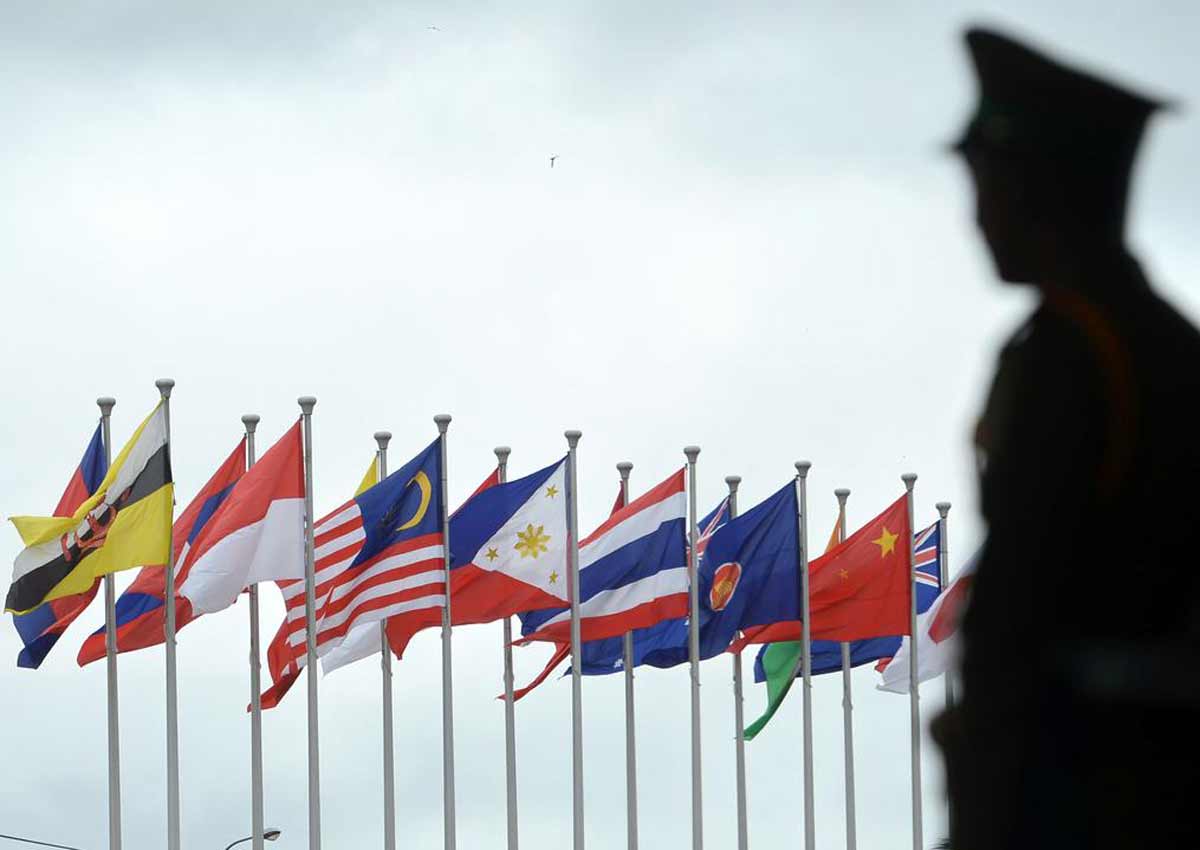
Worse, this may completely cripple Asean if China is able to sway one or more member countries to take its side, causing the grouping to fail to come to a consensus on issues.
None of these trends is favourable for Singapore which, as a small country, benefits from globalisation and banding together with neighbours and therefore champions both of those things.
Yet it is not inconceivable that Asean could splinter, or that the US withdraws from the region, or that China grows so strong that it becomes the dominant player in the region. In such a world order, how would Singapore respond, and what are some alternative paths open to a small island nation?
OLD PRINCIPLES, NEW STRATEGIES
Diplomats and observers The Sunday Times spoke to say that Singapore has anticipated some of these global developments.
Ambassador Ong Keng Yong, executive deputy chairman of the S. Rajaratnam School of International Studies, says: “We take the world as it is and have no illusion about international politics.”
But some constants remain.
As Ambassador Chan Heng Chee, chairman of the Lee Kuan Yew Centre for Innovative Cities, notes: “We believe in the rule of law and abiding by international law and the peaceful settlement of disputes. Small countries need international law, otherwise might becomes right.”
While Singapore might not change its principles, it is likely to adapt them to the changing world.
Amid the rebalance, for instance, it is all the more going to stick to its principles of championing international order and the rule of law.
And although the 12-nation Trans-Pacific Partnership (TPP) trade pact may be stalled, Singapore will continue to seek strong trading partners elsewhere – for instance, India – or sign bilateral trade treaties of its own.
In India earlier this month, when Prime Minister Lee Hsien Loong was asked if he was hedging his bets against false dawns, he replied: “I am trying to bet on all the good horses.”
India, he added, has had fits and starts, but has made a lot of progress since 1990.
Singapore and India upgraded their bilateral relationship to that of a strategic partnership last November, and Singapore is also in a Comprehensive Strategic Partnership with Australia.
Such ties would be useful should Asean experience a slowdown in growth. Singapore is also reaching out to establish and strengthen partnerships elsewhere, in continents where it has not had a strong presence till recently.
In fact, it is already making inroads in parts of the world previously less explored and seeking new opportunities for growth there.
As senior fellow William Choong of the International Institute for Strategic Studies puts it: “In finance, you don’t only invest in stocks, you invest in bonds and mutual funds and other structured instruments. Likewise, Asean is not the only basket we’ve invested in.
“Singapore has very cleverly over the years – although you wouldn’t hear it from a diplomat – cultivated not only its linkages to Asean but also to other parts of the world.”
For instance, President Tony Tan Keng Yam made a state visit halfway across the world to Mexico in June, the first by a Singapore head of state to a Latin American country. While there, he called Mexico a good gateway for Singapore to grow its presence in Latin America, and pitched Singapore as a springboard for Mexico to enter Asia.
Taking presidential trips as a proxy of Singapore’s foreign policy agenda, it shows that Singapore is keeping an eye on the Latin America region even though it is far away.
Mexico may also be a kindred spirit in that it is one of the 12 countries that are part of the ambitious TPP Singapore has been championing.
Singapore has also been maintaining its ties to the Nordic countries, finding common ground in preventing the melting of polar ice caps and understanding the implications that new trade routes opening up would have on Singapore’s status as a sea port.
All this fits Singapore’s strategy of diversification, which could well be extended in the future.
“We want to be friendly to everyone who is friendly to us,” says Dr Choong. “We don’t lash ourselves to the mast of any one power, but to all the ones that matter.”
Singapore can also beef up its ties with partners such as Russia and the Middle East, building on PM Lee’s trips to Russia for the Asean-Russia summit in May, and to Jordan, Israel and the Palestinian Territories in April.
ASEAN REMAINS A CORNERSTONE OF FOREIGN POLICY
That said, Singapore – a tiny island in a tough neighbourhood – will still prioritise Asean.
Even though the regional grouping has come under pressure and criticism from outsiders for internal disagreements when it comes to issues such as the South China Sea, the grouping has much to celebrate when it turns 50 next year.
For one thing, South-east Asia has remained relatively peaceful since the end of the Cold War. Asean members have also remained largely in control when it comes to major issues in the region, and established the Asean Community last year.
Mr Ong, who was Asean secretary-general from 2003 to 2008, notes that Singapore has worked with other Asean states to position the grouping as a neutral regional body engaging all major powers interested in South-east Asia.
“Asean also avoids taking sides in any disagreement among the major powers and upholds the principle of not being a proxy of any external power,” he says.
Significantly, with hundreds of meetings yearly at various levels – from youth exchanges to ministerial conferences – Asean has engendered a deep layer of cooperation that cuts across multiple fields, from agricultural and environmental partnerships to cooperation in financial services and cyber security.
Adds Mr Ong: “Of course, there will be bumps on this journey of regional camaraderie, but staying together will provide the ballast.”
He reckons a strong Asean is key to maintaining the growth trajectory of South-east Asia, which will motivate American enterprises, and by extension the US, to stay in the region despite growing domestic pressures.
“The challenge is to develop good reasons and strategic gains for the US to continue in South-east Asia and grow with Asean,” he says.
But some observers wondered about the relevance of the grouping, after its members were unable to reach agreement on a united or strong position at some meetings on the South China Sea.
Dr Choong suggests that instead of clinging tightly to the criterion of consensus, for instance, Asean could evolve the “Asean minus X” principle, where a decision can still be made even where one or two members opt out. He points out that some scholars are already talking about such a move.
“The general principle of this proposal is that Asean shouldn’t be held hostage by one or two members. A position can be that of not all 10 members, but of the majority.
“Asean is mature enough to acknowledge its differences, rather than having debacle after debacle of not releasing a statement at all because of internal divisions,” he says.
Dr Choong thinks that if anything, Singapore is the only country that can suggest historic reform when it comes to decision-making within Asean.
Some might caution against such moves, as the principle of consensus remains the foundation for equality among the 10 member states. But Dr Choong feels they may be worth considering at a time when the external environment becomes more uncertain.
For now, though, with China and India continuing to grow, there is a growing incentive for member states to stay in Asean, which straddles both Asian powers, says Mr Ong.
Hopefully, Singapore’s diplomats will be able to strengthen the grouping further in the face of a more challenging future when it takes over the rotating chairmanship in little over a year, in 2018.
As PM Lee put it in Japan last month: “We hope for the best but we prepare for all eventualities.”
This article was first published on Oct 16, 2016.
Get a copy of The Straits Times or go to straitstimes.com for more stories.
Image:
Category:
Publication Date:
Sunday, October 16, 2016 – 13:00
Keywords:
Send to mobile app:
Source:
Story Type:
Others
Raising fees for foreign students is being 'fair'
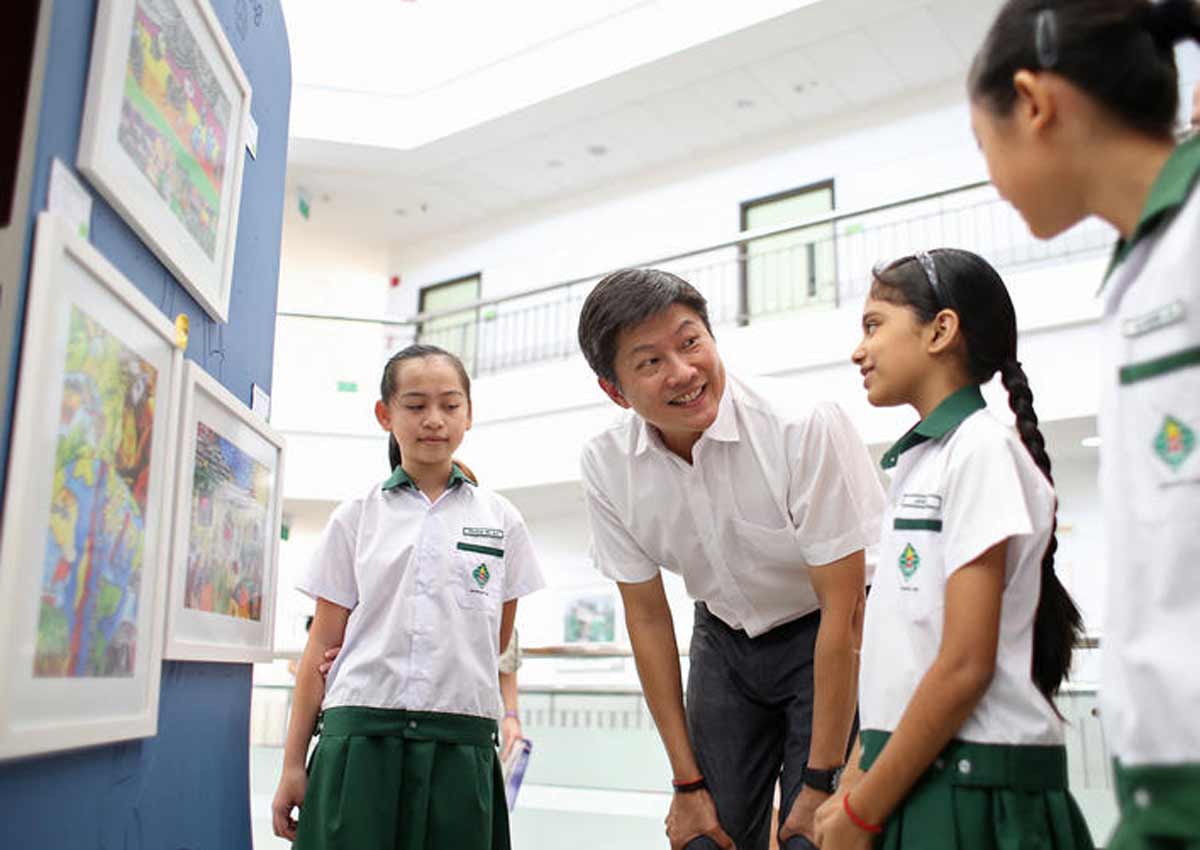
Singapore schools are primarily for Singaporean children, and some costs have to be recovered from non-Singaporean students to be “fair” to taxpayers, said Acting Education Minister (Schools) Ng Chee Meng yesterday at a dialogue.
He was commenting on fee hikes, which were announced last week, for non-Singaporean students in local schools.
The increases, which take effect next year, range from $20 to $60 a month for permanent residents (PRs), and $20 to $150 a month for international students at primary and secondary schools and pre-universities. For instance, international students not from Asean countries will have to pay $1,300 a month next year to attend junior colleges and centralised institutes, up from $1,150 currently.
“Our schools are basically set up to run for Singaporean children,” said Mr Ng. “For permanent residents and international students, we do differentiate our school fees.
“We do have to make sure that we are fair to the rest of Singaporeans who are taxpayers,” he said, adding that some of the costs would have to be recovered from PR and international students.
Mr Ng, who was on his first ministerial community visit to Nanyang division yesterday, was speaking at a dialogue with about 250 residents and students at the Nanyang Community Club in Jurong West.
At the event, he called on students to study hard and play hard but, above all, to retain the joy of learning in all that they do.
The Education Ministry and the schools are taking “first steps” to reduce the overemphasis on academic results, said Mr Ng, in response to a question from a student about the importance of academics.
“Academics remain important… because they develop the mind,” he said. “But studying hard does not mean you need to overemphasise on results. The learning journey, in my view, is equally important.”
He added that other aspects of education, including values learning, are important too.
Mr Ng also touched on the revamped Primary School Leaving Examination scoring system, which will no longer be based on how pupils perform relative to their peers. He said one reason for the revamp is that pupils can have more time to explore other interests.
He hopes children can help one another and celebrate successes together. “We also want to promote a more collaborative learning where you and your friends can study together, hold hands together, play together and succeed together.”
Housewife Serene Phua, 45, who has two daughters aged 16 and 18, said: “It was good to find out from the minister himself what he thinks of the education system. I am glad that the system is moving away from results to focus on other areas such as values.”
This article was first published on Oct 16, 2016.
Get a copy of The Straits Times or go to straitstimes.com for more stories.
Image:
Blurb:
Publication Date:
Sunday, October 16, 2016 – 13:00
Keywords:
Send to mobile app:
Source:
Story Type:
Others
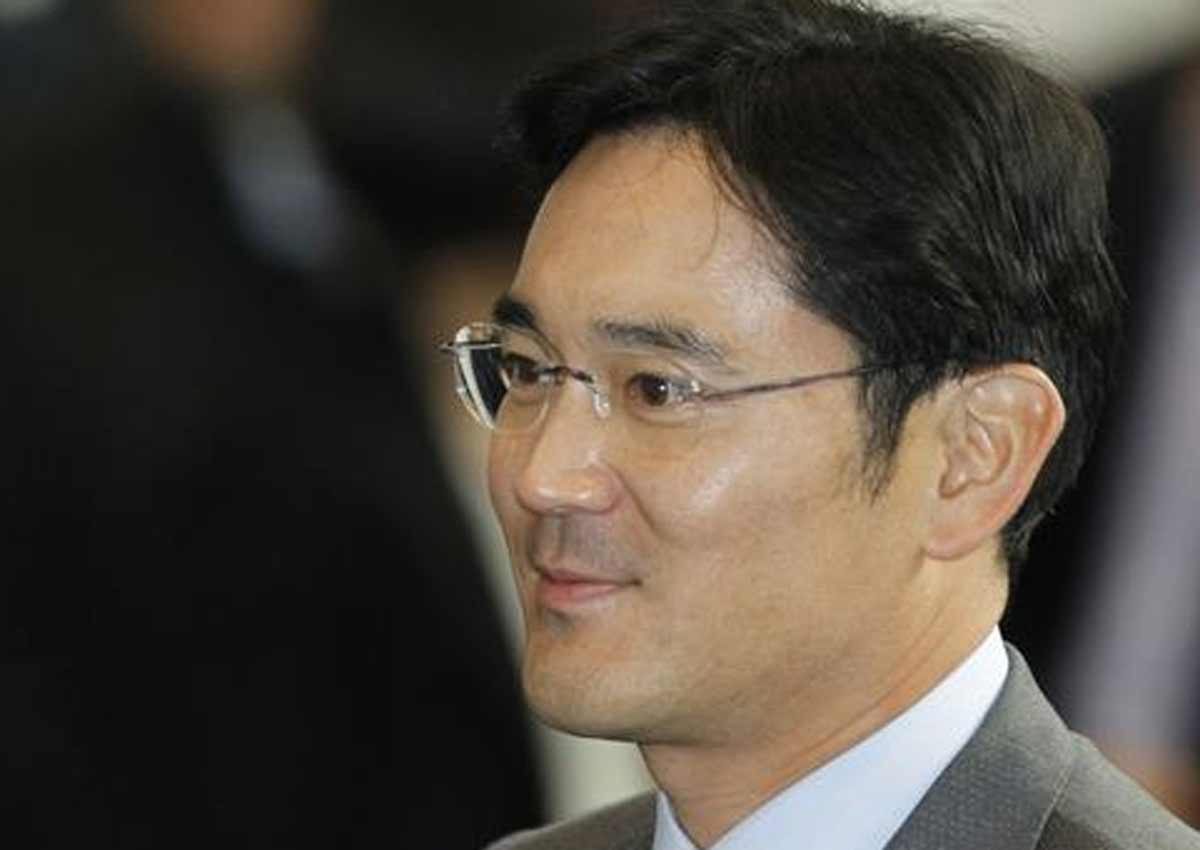
Samsung heir seeking to consolidate power
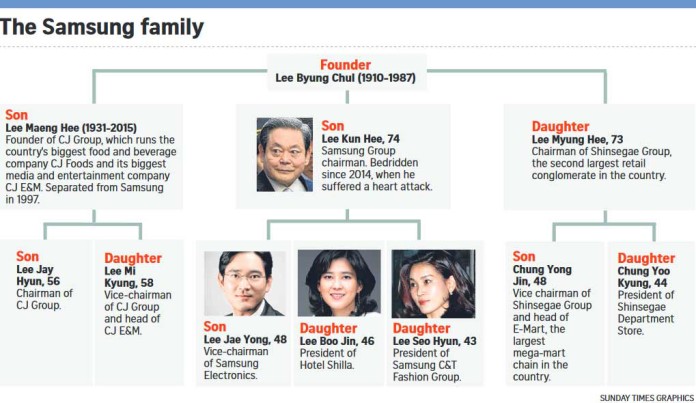
Since his father Lee Kun Hee collapsed from a heart attack in 2014, Samsung heir Lee Jae Yong has been slowly but surely consolidating his power and preparing to take over South Korea’s biggest family-owned conglomerate when the time comes.
The 48-year-old Harvard graduate is vice-chairman of the group’s crown jewel Samsung Electronics. He also owns a 17.1 per cent stake in Samsung C&T, a construction and trading company.
To streamline the group’s operations and increase his stake in key businesses, he reportedly pushed for a series of bold restructuring moves, such as a US$8 billion (S$11 billion) merger last year between two key affiliates – Samsung C&T and Cheil Industries, Samsung’s de facto holding company.
Analysts say he will need to secure more control of Samsung Electronics – one of the group’s most profitable businesses – to ensure a smooth succession. But it will not be easy as 50.6 per cent of the listed company lies in the hands of foreign investors.
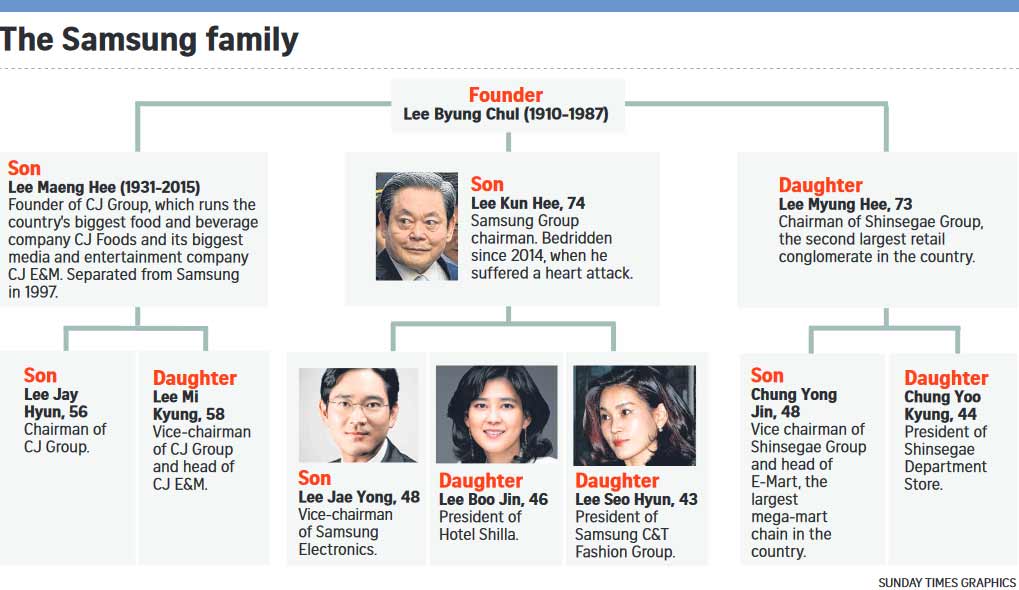
Meanwhile, his two younger sisters have also risen to key leadership roles in Samsung affiliates.
Ms Lee Boo Jin, 46, heads the luxury Hotel Shilla chain. She is known to resemble her father in personality and strong leadership style, and has often been described as “Little Lee Kun Hee”. She expanded the hotel’s operations and increased revenue from 430 billion won (S$526 million) when she took over in 2001 to a high of 2.9 trillion won in 2014.
Ms Lee Seo Hyun, 43, helms Samsung C&T’s fashion division. She has been tasked with growing the business amid intense competition from fast-growing brands like Uniqlo and H&M.
A third sister, Ms Lee Yoon Hyung, committed suicide at the age of 26 while pursuing post-graduate studies in New York in 2005, reportedly over relationship problems.
Samsung launches its Galaxy Note7 phablet
Click on thumbnail to view photos. Source:
AFP, The Straits Times












This article was first published on October 16, 2016.
Get a copy of The Straits Times or go to straitstimes.com for more stories.
Image:
Publication Date:
Sunday, October 16, 2016 – 16:05
Keywords:
Send to mobile app:
Source:
Story Type:
Others
KK Women’s and Children’s Hospital sets new world record

 SINGAPORE – A new world record was set on Sunday (Oct 16) at the Bishan Stadium when 2,241 people who were born in KK Women’s and Children’s Hospital (KKH) set a new Guinness World Records title for the “Largest Reunion of People Born at the Same Hospital”….
Source link


