The Workers’ Party-run town council has agreed to appoint a third party to recover improper payments it made between 2011 to 2015.
The Sunday Times understands that the Aljunied-Hougang Town Council (AHTC) had, on Friday, replied to the Housing Board’s letter asking the town council to appoint a suitable third party “to recover the monies which have been lost”.
The HDB letter was sent to AHTC on Nov 4 after accounting firm KPMG determined that payments totalling $6.9 million were overpayments, payments for work or services without proof that they were performed, or payments in breach of the law or the town council’s policies.
This included $1.5 million which AHTC paid to its then managing agent FM Solutions and Services (FMSS) and service provider FM Solutions and Integrated Services. The payments were approved by six of AHTC’s key officers who were also shareholders of FMSS.
HDB and the Ministry of National Development (MND) had asked AHTC to take steps to recover the money, including taking legal action where necessary.
KPMG, hired by AHTC to review its accounts, had also said that if the payments were made intentionally, it could amount to criminal wrongdoing. The MND had said that given these concerns raised by KPMG, the Government is considering what other steps are necessary.
Pearl Lee
This article was first published on Nov 13, 2016. Get a copy of The Straits Times or go to straitstimes.com for more stories.
The police have identified three groups of home owners who are vulnerable to burglaries.
They are: flat-dwellers who share a common corridor from which arms can easily snake into homes through windows; owners of new Build-To-Order flats who leave their doors unlocked for contractors; and landlords subletting their homes.
The Singapore Police Force raised the alarm yesterday, as it launched an islandwide initiative to raise awareness among home owners to secure their flats against burglary and theft.
Specifically, it called on the public to keep valuables away from windows, lock the doors to their flats, and for landlords to keep their money out of sight from tenants.
Though the number of housebreaking and theft cases has decreased over the past three years, the police said there is still a need for vigilance.
Cases of housebreaking and theft and other related crimes – such as the possession of weapons for housebreaking – fell from 543 in 2013, to 360 in 2014 and 333 last year.
Deputy Commander of Jurong Police Division, Deputy Assistant Commissioner Julian Chee, said: “There are still cases around. We want to heighten awareness that even though the crime rate is falling, we still have to be on our guard.”
Two new posters advising residents not to leave their valuables in the open and to keep doors locked during home renovation will be put up islandwide. They will complement existing posters reminding residents not to leave valuables near doors and windows that face a common corridor, and to install strong grilles, locks and surveillance cameras in their homes.
The G.U.A.R.D It initiative was launched by the Jurong Police Division during a carnival in Bukit Panjang, which has a number of new Build-To-Order flats.
More than 600 residents attended the event.
Minister for Foreign Affairs and MP for Holland-Bukit Timah GRC Vivian Balakrishnan told residents to be careful of what they leave near their windows and common corridors.
“We (should) use some common sense and take some precautions to look out for each other,” he added.
This article was first published on Nov 13, 2016. Get a copy of The Straits Times or go to straitstimes.com for more stories.
Andy (not his real name) felt that his former wife, a Chinese national five years his senior, married him only to become a Singapore permanent resident (PR).
A 31-year-old engineer, he met her through friends. She, a teacher, was sweet and loving during their year-long courtship.
But things changed the minute they registered their marriage two years ago. She did not show up for their wedding reception that night, saying she had to rush back to China as there was an accident at home.
When she returned two months later, she gave excuses not to consummate the marriage and would often not be home for days on end.
After she became a Singapore PR, she told Andy that she would not sleep with him as he was “fat and smelly”.
Now, he has had enough.
He told The Sunday Times: “When I decided to divorce her, she told me that if I can apply for citizenship for her, she would not ask me for alimony.”
Such horror tales of foreign brides with apparent ulterior motives are making some men think twice before jumping into matrimony with a foreigner they hardly know, said marriage solemnisers and counsellors.
Last year, 4,828 Singaporean men wed a non-resident bride – the lowest number of such pairings in the past decade. It is 14 per cent lower than the peak of 5,611 in 2005. These marriages comprised 17 per cent of all marriages last year, down from 24 per cent in 2005.
Last year, over nine in 10 of these non-citizen brides were from Asia.
Those interviewed said most of the brides are from developing countries in the region such as China, Malaysia, Indonesia, Thailand and Vietnam.
These women, usually in their 20s and 30s, are often introduced to their Singapore husbands – who tend to be older, more blue-collar and may have had difficulty finding love at home – through friends or matchmaking agencies. Others met when one partner worked abroad or in Singapore.
But the trend for such unions started to wane last year. Those interviewed offer varying reasons.
Besides the less-than-idyllic experiences of some couples, another factor is the measures taken by the Government. Two years ago, it introduced marriage preparation classes for those entering transnational marriages.
Marriage counsellors said that though few in number, they have seen couples who did not go ahead with their wedding after attending the classes.
Ms Eileen Su, head of the Care Corner Family Journey programme that helps transnational couples, said: “Some people realised they should not jump into marriage and expect to live happily ever after.”
Last year, the Immigration and Checkpoints Authority (ICA) also introduced the pre-marriage long-term visit pass assessment .
Through this, couples have a clearer picture of their partners’ backgrounds, such as details of their marital histories, incomes and health records which they have to declare.
It also gives them a better idea, even before the wedding, as to whether the foreign spouse can qualify for permanent residency or even a long-term visit pass in Singapore.
This “reality check” has put some marriage plans on the back burner, those interviewed said.
Added Mr Francis Toh, boss of First Overseas International Matchmaker: “News of some Vietnamese wives running away shortly after marriage also does not help.”
The ICA crackdown on sham marriages in the past few years could also have deterred some foreigners from entering into marriages of convenience, where they pay a Singaporean man to marry them so that they can stay here, said criminal lawyer Jennifer Lim, who volunteers as a marriage solemniser.
In the past three years, more than 500 people have been convicted for entering into a sham marriage.
Despite all that, counsellors point out, many men are still happily married to their foreign brides.
Take, for example, Singaporean Ken Lai, 49, who wed Chinese national Xu Xueling, 26, two years ago. The couple met when Ms Xu was working here as a sales promoter. They dated for about three years.
Singaporean Ken Lai, 49, and his China-born wife Xu Xueling, 26. Photo: The Straits Times
Mr Lai, an Uber driver, said they get along well and make it a point to go on dates, although obtaining PR status for his wife, a work permit holder, remains a worry. Her first application was rejected.
“My wife is still young, so I give in to her quite a bit. When she does something wrong, I will explain to her what I am unhappy about as well,” he said.
This article was first published on Nov 13, 2016. Get a copy of The Straits Times or go to straitstimes.com for more stories.
Days after the election that propelled tycoon Donald Trump to the most powerful perch in the world, an American expatriate enclave in Woodlands remains in shock.
Residents of Woodgrove, a landed estate near Singapore American School, are not in the mood to talk.
Housewife Laura Zubrod, 45, says the community is just relieved that the election is over.
“Actually, it hasn’t come up in any conversations. I think we are all tired of the topic.”
It is a far cry from the days prior to last Wednesday, when the election was a hot subject of discussion in the community.
The residents – mainly highly mobile talent living and working in Asia – are by and large beneficiaries of the same globalisation forces that have been blamed by some back home for taking away their jobs.
Angry voters – older, poorer and generally white – in middle America chose Mr Trump, who had threatened to scupper a free trade pact and trigger a trade war with China.
Unsurprisingly, many of the Woodgrove residents interviewed voted for Mrs Hillary Clinton, who was viewed as someone who would maintain the status quo. No one expected her to lose, even the few who did choose Mr Trump.
Some fear Mr Trump would lead the United States into an unclear and worrying future.
At least one has contemplated staying in Singapore for the long term to escape the uncertainty back home. The housewife, who did not give her name, suggested that her family may take up permanent residency here.
351788
2016-11-10 18:04:09
Photo Gallery
Thousands of anti-Trump protests take to streets in US
“I was in tears when he won,” she said. “My initial thoughts were, what have we done? How do I explain to my kids that we have elected a bigot and a racist as our president?”
Others acknowledge that it is an awkward situation.
When asked what can be done to mitigate the anger of fellow Americans who feel they are the losers in the current economic order, a few said they are not comfortable talking about it.
Many just want to move on.
Said private chef Felicia Janecek, 47: “All we can do now is to rally together and give him a chance to move our country forward.
“Four years goes by quickly, so if he doesn’t make a big impact, he will be out of there.”
One resident voted for Mr Trump, despite being a minority voter. The South Indian immigrant, who got his US citizenship after 23 years, is a silent supporter of the Republican.
The 40-year-old, who would not give his name for “fear of being ostracised and socially bullied”, did so for reasons like rising healthcare costs and falling education levels.
“Friends assumed I voted Democrat, so they reached out to me with an outpouring of grief after the results,” he said. “Some were US citizens scared they were going to be deported. Some had gotten their Canadian passports out.”
When he told them who he voted for, “their wrath poured out on me”. “They wouldn’t return my calls; they ‘unfriended’ me on Facebook,” he added.
The senior executive at a multinational corporation admitted Mr Trump is not an ideal president and has much to learn. “I deplore his arrogance, many of his past actions, and many things he has said.
“But because this is America, there are checks and balances. There is a method to the madness.”
Some residents remain quietly optimistic. Housewife Monica Moritz, 47, who voted for Mrs Clinton, said the people have exercised the right to vote and have to accept the results. “Once his administration takes over, America will settle and business will start booming again.
“Don’t forget, Americans only play to win.”
This article was first published on Nov 13, 2016. Get a copy of The Straits Times or go to straitstimes.com for more stories.
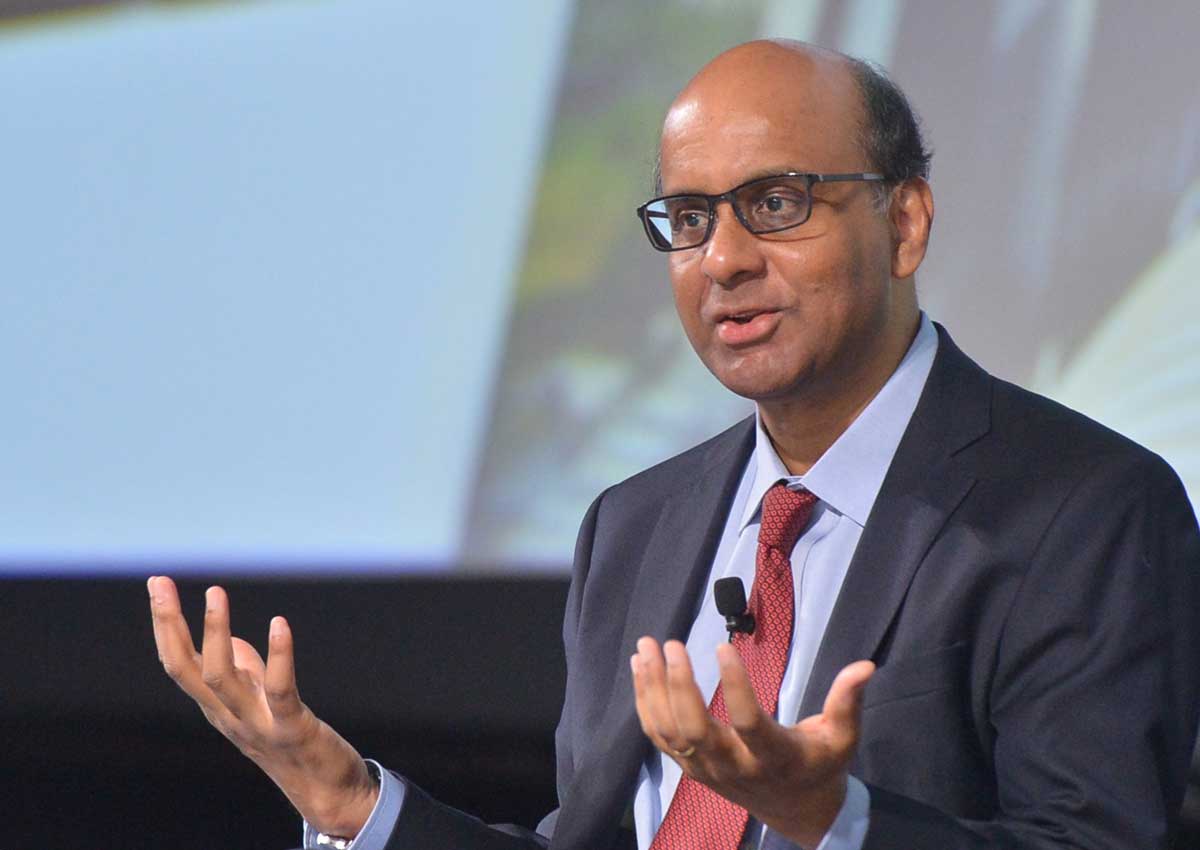
Deputy Prime Minister Tharman Shanmugaratnam gives his take on whether governments in Asia are now more sceptical about democracy. In an interview with the Financial Times on Oct 17, Deputy Prime Minister Tharman Shanmugaratnam was asked by correspondent Jeevan Vasagar about democracy and developments around the world that have given it a bad name. Here is an excerpt.
Q As you would have seen through a year of populism around the world – Brexit, Trump – do you think it’s made governments here in Asia more sceptical about just the whole idea of democracy and about involving the people in decision-making? I imagine there’s some conversation with people saying: “Look what happens when you ask people to decide on matters of great national significance and put it to a referendum.”
A Democracy is not having a great run, but we’ve got to avoid too simple a conclusion. It’s not that democracy is a bad system. But we’ve got to focus on quality – quality of debate, quality of the electoral process, quality of accountability on the part of the elected government. And it’s not just the democracies in the West that are running into trouble.
So we’ve got to keep moving in the right direction. The essential question is: Are you able to preserve trust in leadership and in the institutions that govern society? Are you able to unify people whilst respecting differences – and at the very least not ripping them apart the way it’s happening in some countries? Are you able to hold government accountable for enabling broad prosperity, and not getting captured by vested interests?
These are the essential objectives of any political system. Democracies do a better job at it than others. I think the long wash of history does show that. But amongst democracies, it has to be a constant journey of improving the quality of democracy.
And even the most mature democracies can lapse, they can get tired, and what stood for decades after the war when living standards were going up for everyone, starts evaporating when people don’t sense that they are moving up and their lives get stagnant.
So there are new challenges that do come about because of this economic reality. But it doesn’t mean that everything is determined by the economy. Political leadership is important. Holding the centre together in politics is critical in order to achieve economic revitalisation.
Q Can you give us a flavour of the conversation we are having about democracy this year because it has been such an extraordinary year for the democratic process. Is there a sense that democracy itself is brought into disrepute?
A I would avoid going so far. We have to look at things in perspective. It’s been a real achievement how for the first 50 years after the war, you’ve had peace in Europe, you’ve had advancement in living standards, and you’ve had – whether it’s (government by the) centre-left or centre-right – a certain stability in society. Now that’s coming apart. The centre is getting weaker. The populism of the left and right is getting stronger, and most dangerously, the parties of the middle are chasing the shadows of the populist extremes, talking the language of the extremes in order to get re-elected.
I think, and I hope that I’m not being too hopeful here, this is part of a long cycle. It’s not part of a secular decline in democracy. In Europe, I think it’s possible to bring back faith in values of the centre – whether it’s the social-democratic ideals of the centre-left or the social-market economy ideals of the centre-right. They were actually very similar in their basic values – thrift, hard work, but collective responsibility to protect individuals from the vagaries of the market.
But Europe has to tackle its problems of immigration and cultural identity. The US also has issues of cultural identity – both within the US itself, independent of immigration, and then accentuated by immigration. But the US also exemplifies the way in which economics shapes politics, when you have long-term income stagnation of the middle class and a good part of the lower-income group.
There’s been less than active effort to help those who have been left behind by new technologies or global competition. It’s not that it was inherent in globalisation or technological change that you get towns and cities left depressed decade after decade. But it happened, and the efforts weren’t aggressive enough to help them get back in the game, grow new industries, help individuals who have been displaced in the workforce to come back in with some retraining.
It was assumed that the market would do this. But we’ve learnt that even in the US, which has a more flexible labour market than most mature economies, the market doesn’t do it quickly enough or sometimes doesn’t do it at all. People stay displaced for a long time. And as the economists would put it, “hysteresis” sets in – you lose your skills, employers lose interest in you, and you become long-term unemployed.
So, helping those who lose to get back into the market, and helping towns and cities that are left behind to regenerate themselves, is a key priority of public policy. It’s not just economic, it’s a social priority.
What we are seeing today is the lesson of not having done that well enough, or assuming that the market will do it for us.
This article was first published on Nov 13, 2016. Get a copy of The Straits Times or go to straitstimes.com for more stories.
Sign up for a HSBC Revolution Platinum Credit Card and receive a Samsonite Black Label Plutus 68cm Luggage worth S$950 plus $20 cash rebate and 2 years annual fee waiver
Rodrigo Duterte, Brexit and now Donald Trump. The recent American presidential election is but the latest example of the politics of disruption, or populist politics fuelled by anger against the establishment and a rejection of an economic system that has left many behind.
The wave has played out in elections with a majority of voters defying expectations of the elite by voting for political outsiders as in the United States and the Philippines, or going for previously unthinkable options, as in the British referendum that led to voters backing their country exiting the European Union.
The shock events have prompted soul-searching among many, but as Deputy Prime Minister Tharman Shanmugaratnam put it in an interview with the Financial Times last month: “It’s not that democracy is a bad system.
But we’ve got to focus on quality – quality of debate, quality of the electoral process and quality of accountability on the part of the elected government.” Insight looks at the lessons that Singapore can draw for its own democracy and political institutions.
The debate was prompted by an online petition that called his comments about Muslims hate speech. It led to lawmakers using a lexicon of insults to describe Mr Trump, who was then the front runner in the Republican primaries.
While some MPs cautioned restraint and called the motion an embarrassment for the UK, others eagerly allowed their righteous anger to show in their choice of words.
From “buffoon” and “idiot” to the very-British “wazzock” and the bombastic “orange prince of American self-publicity”, there was no lack of indignant anger directed at Mr Trump over his comments that Muslims should be banned from entering the United States.
“Britain is pretty good at roasting beef, do you not think it’s better that we just roast Trump?” one asked.
Such criticisms now seem woefully premature, given the real estate mogul’s triumph in the American elections. Commentators now worry that the spectacle may have hurt US-Britain relations.
While Mr Trump had put in phone calls to leaders of nine countries including Australia and Ireland within 24 hours of his victory, he left out the UK despite Prime Minister Theresa May’s prompt congratulations that highlighted the “enduring and special relationship” between the two countries.
“What special relationship?” The Telegraph asked, noting that Mrs May had described comments Mr Trump made about Muslims as “divisive, unhelpful and wrong” last December, and that his delay in calling Mrs May could represent a diplomatic snub.
Mr Trump did eventually call Mrs May, stressing the importance of UK-US relations, and inviting her to visit him.
Takeaways for Singapore
The UK is just one of a long string of countries whose leaders have made pronouncements about Mr Trump that they have had to swallow after his shock win.
The rise to power of populist leaders who include Mr Rodrigo Duterte, the President of the Philippines, has already forced countries to rethink the way they conduct international relations and has shaken up the norms of diplomacy.
Mr Trump’s win further underscores a lesson for Singapore and other countries on the vagaries of foreign elections, and the importance of not assuming that they will pan out in expected ways.
In many ways, Singaporeans have become used to a high degree of predictability, including in politics, says Lee Kuan Yew School of Public Policy dean Kishore Mahbubani. But the Brexit referendum and the US election have shown that the world is becoming less predictable.
“The main lesson for Singaporeans is, don’t take the world for granted – be ready for greater unpredictability,” he says.
“Singaporeans are used to living in a comfortable cocoon, and don’t have the instincts to deal with chaos and an unpredictable world.”
Mr Trump’s win is also a reminder that Singapore has to keep an open mind always and be prepared to work with whoever another country chooses as its leader, says Professor Tommy Koh, rector of Tembusu College at the National University of Singapore.
333063
2016-10-20 11:39:05
Photo Gallery
Trump and Clinton face off in final US presidential debate
“We in Singapore and in Asia have no alternative but to work with whoever the American people elect as their president,” says Prof Koh, who used to be Singapore’s ambassador to the United Nations and the US.
“We must therefore work with Mr Donald Trump as their 45th president, and I hope he will realise the important responsibility that the United States has in the world at large – and in the Asia-Pacific in particular – in maintaining peace and security, promoting economic growth, and promoting a sense of comity and cooperation, and I hope he will continue along this trajectory.”
And even as a deeply divided America struggles to redefine its identity and priorities under a maverick president, Singapore should work to maintain its close relations with the world’s superpower, says Prof Mahbubani.
“It is a divided America, but there are many Americans who are open, globalised, and who want to deal more with the rest of the world,” he says.
“We should maintain our links with Harvard, Yale, and so on, and we should not assume that Donald Trump represents the full spirit of America.”
The degree of surprise and shock that greeted Mr Trump’s victory has also turned conventional wisdom and analysis of the political process on its head, says Professor Chan Heng Chee, who chairs the Lee Kuan Yew Centre for Innovative Cities.
Like many, the former ambassador to the US had expected Mrs Hillary Clinton to prevail based on projections and data collected by pollsters, many of which predicted a comfortable win by Mrs Clinton even until the final day of the race.
“Perhaps for the educated watcher, pollster, and analyst, we don’t understand those who have been excluded, and we should have some humility about that,” she says.
“Certainly the analysts, and many of these polling places, were not able to poll properly, and haven’t polled well for Brexit too.”
2. GOVT POLICIES MUST NOT LEAVE ANYONE BEHIND
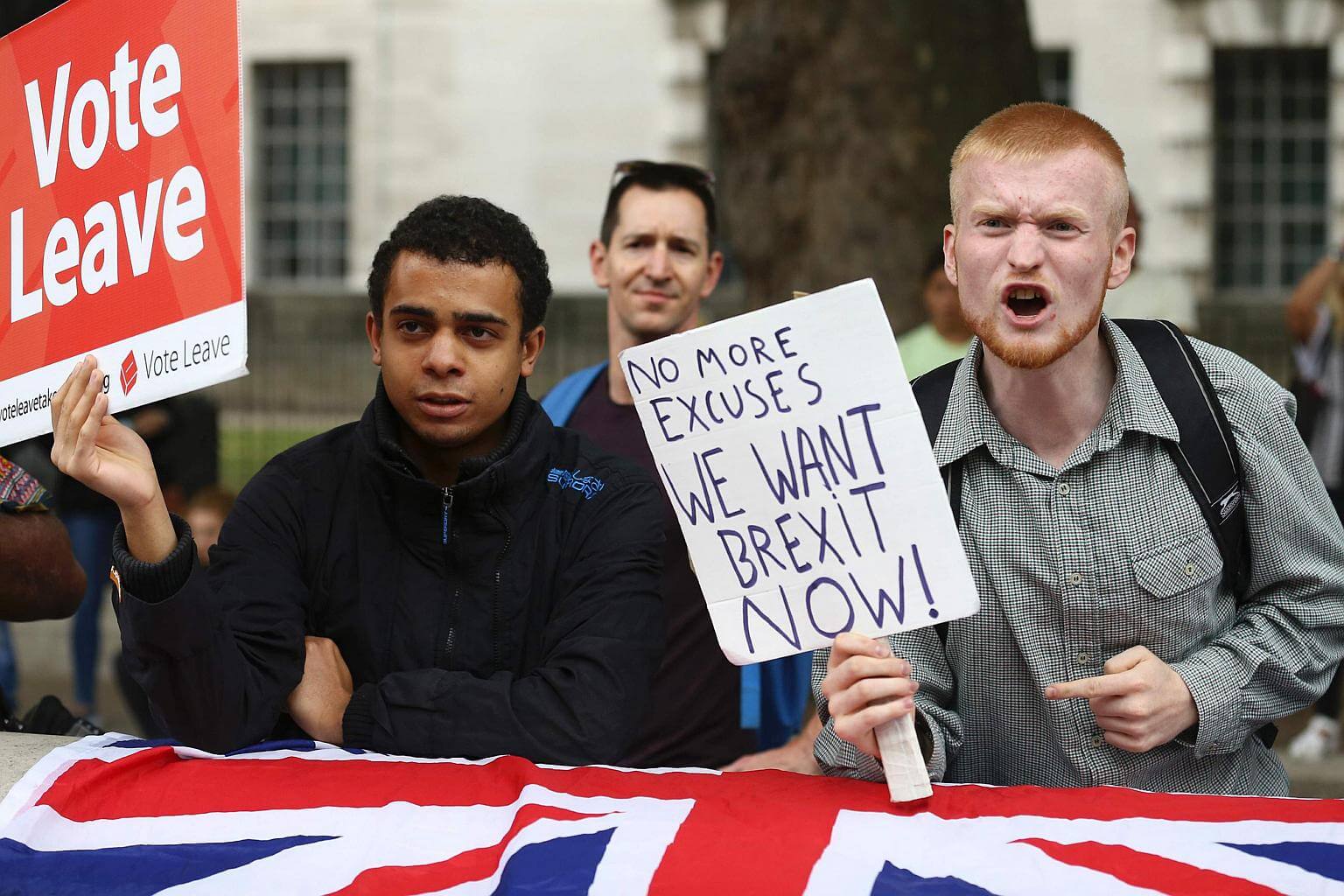
A man carrying a pro-Brexit placard takes parts in a protest against pro-Europe marchers at Parliament Square in London on Sept 3, 2016. Photo: AFP
Call it the unintended consequence of free market economics: a backlash against globalisation.
From Britons exiting the common market of the European Union, to last week’s election of avowed trade protectionist Donald Trump, voters are declaring they have had enough of worrying about jobs going abroad or to lower-paid migrant workers. This latest groundswell of protest by those left behind by globalisation has ripples even here: The Trans-Pacific Partnership involving 12 Asia-Pacific countries, including Singapore, now faces the prospect of indefinite suspension under Mr Trump.
And it comes even as Asia looks increasingly outwards. Take trade agreements such as the Asean Economic Community which came into effect last December, and aims to integrate South-east Asia’s diverse economies into a single market.
The United States may be at the vanguard of economic interchange, but Mrs Hillary Clinton’s campaign made the mistake of overlooking working-class voters’ worries about globalisation and growing inequality arising from that new order.
In thinking that she had demographics on her side – that Mr Trump could not gain as many white voters as the minority voters that he was bleeding from his campaign rhetoric – Mrs Clinton made the mistake of focusing her last-lap efforts on battleground states such as Florida, taking for granted that middle America would stay blue. But states such as Iowa, Wisconsin, Michigan, Ohio and Pennsylvania that had been expected to vote Democratf lipped for Mr Trump.
Why? These states represent the old America: solidly middle-class because of once-powerful industries such as car manufacturing and coal extraction, but whose towns are now hollowed out because jobs in these industries have gone overseas or disappeared entirely.
“In the last 30 years, many good, hard-working Americans have lost their jobs, whether in the lumber industry, paper mills or steel industry,” says Professor Tommy Koh. “And the tragedy in America is that in many of these small towns, they have not been replaced with sunrise industries.
“One problem leads to another: unemployment leads to poor schools, which leads to truancy, and truancy leads to drugs. So many of these small towns are under multiple distress.”
Disillusioned, angry and desperate, many of these voters saw in Mr Trump a way to reset the political system that seemed to have forgotten them. One stark statistic from exit polls shows the effectiveness of this message: Mr Trump won 67 per cent of the non-college-educated white vote compared with 28 per cent for Mrs Clinton.
“Some elections are all about identity, and some elections are all about the economy,” says Professor Kishore Mahbubani.
“And this was clearly an election about the economy.”
Takeaways for Singapore
Experts say the election result hammers home the importance of ensuring that a country’s policies, no matter how well-intentioned, leave no one behind.
“The most fundamental lesson is that the disconnect between the elites in America and the people of America is actually very sharp and profound,” says Prof Mahbubani. “We should ask ourselves whether there’s a similar disconnect in Singapore too.”
While globalisation and the embrace of free trade have long been seen by the world’s elite as a necessity for countries to keep growing, the quest for economic efficiency has claimed many casualties, says Prof Koh.
“At a high level, you can say correctly that free trade is good for everybody, and that for every job that America loses, it gains two in return. That’s true, but the same people don’t get the new jobs, and unlike Singapore, there has been no attempt by government to offer them help in the transition, no attempt to help reskill and re-educate them.”
Singapore’s rocky road to independence and geographic realities have meant that the People’s Action Party (PAP) government has become good at “the politics of anticipation”, says Professor Chan Heng Chee. “Our government leaders go all over the world to talk to people, to know what are the major trends in the world with technology, shifts in the economy, shifts in patterns of globalisation and in the supply chain,” she says.
“My sense is the Government is really looking at Brexit, and has looked at what has happened in the rise of Mr Trump, and understood that people should not be left behind, because when there is anger in that way, it’s very uncontrollable.
“All the policies of the PAP government in the last few years have really stressed inclusion and inclusiveness.”
Singapore may yet forestall the problems of populism and protectionism if the Government keeps a finger on the pulse of the nation, says Iseas – Yusof Ishak Institute fellow Norshahril Saat.
He points to how the PAP government responded to its lacklustre performance in the 2011 General Election, undertaking efforts to engage the public through Singapore conversations.
“But meeting them alone is not sufficient without crafting policies to meet their needs – this also means fundamentally changing or rethinking important tenets of society,” he says. While welfarism was a taboo in Singapore in the past, “there is an element of welfarism after 2011, and this proved the Government is in touch with the needs of society”, he adds.
“Being in touch with the electorate is key to winning elections. That is probably what the Trump camp did in the US.”
– Lim Yan Liang
3. STEER CLEAR OF RACIST POLITICS AND RHETORIC
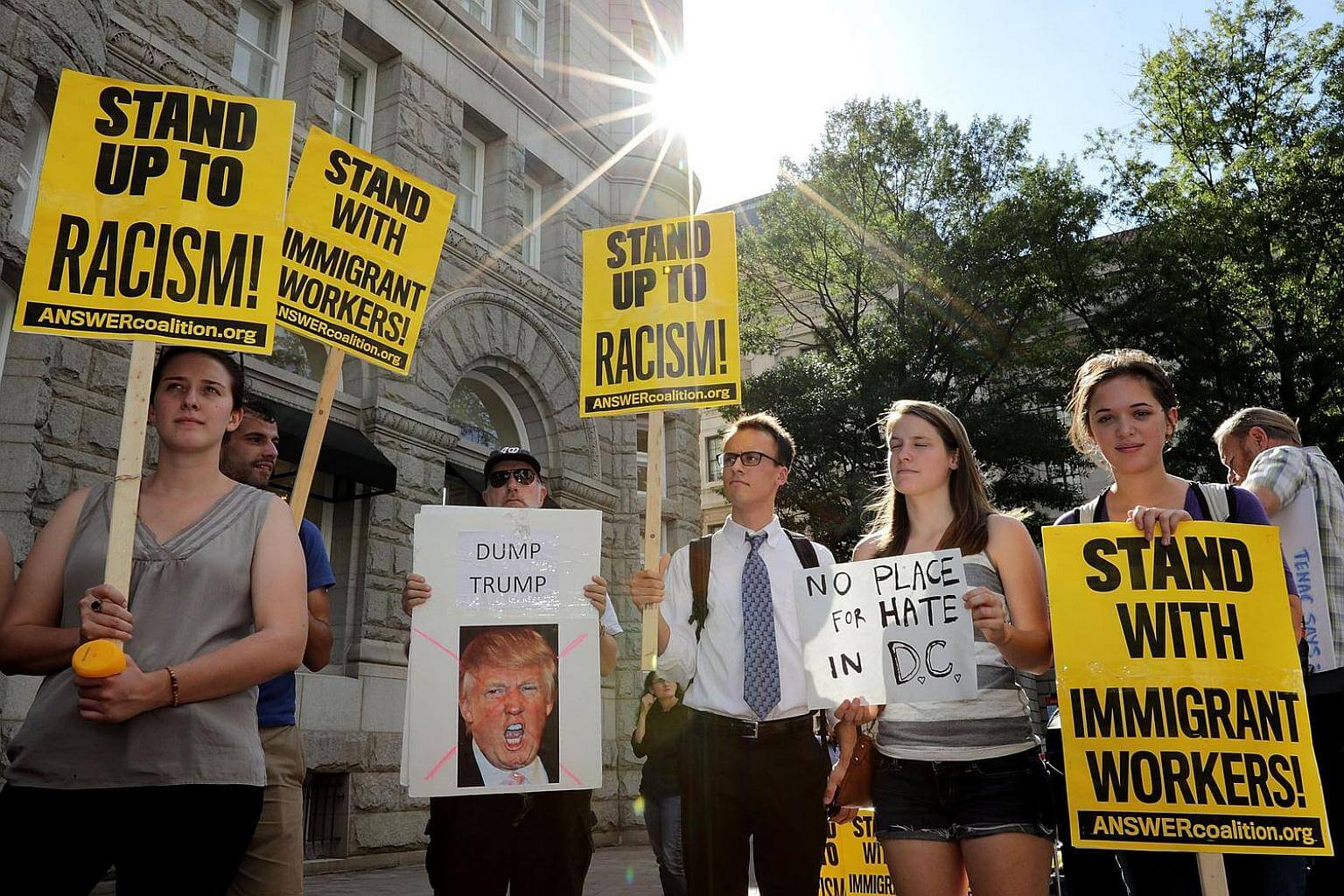
Demonstrators gather in front of the Trump International Hotel to protest against Donald Trump’s supposedly racist, sexist and anti-immigration positions on Sept 12, 2016. Photo: AFP
In the end, race mattered in the American elections, which saw white voters sending Mr Donald Trump to the White House.
They weren’t only angry white men, as some had predicted.
The Republican candidate, far from being backed by only poor and disenfranchised white voters, was buoyed by a broad range of white people cutting across gender, age and education levels.
Exit polls by CNN showed that 63 per cent of white men and 53 per cent of white women voted Trump.
CNN political commentator Van Jones called this a “whitelash” – that is, a backlash from white Americans against minority races.
Prime Minister Lee Hsien Loong put it similarly in Parliament hours before America headed to the polls: “They feel threatened by the demographic changes happening in America. Theirs is a white protest vote.”
The undercurrent of divides along racial lines was also seen in other national votes this year, particularly the Brexit vote in June in which Britain chose to leave the European Union.
Ambassador-at-Large Chan Heng Chee observes that the sentiment among some Trump voters of wanting to “make America white again” was the same one that drove the Brexit vote.
She says: “I think the British voter was looking to see the old Britain re-established, with a British core as they understood it: the old British core, which was really the English, Welsh, Scottish core. And in America, there is that yearning.”
Last week, in America, the relative unity of white voters was remarkable for two reasons.
One, it stood in stark contrast to the minority vote. The same exit poll showed that on the whole, 58 per cent of white voters backed Mr Trump – compared with the 88 per cent of black voters and 65 per cent of Latino and Asian voters who chose Democrat Hillary Clinton.
Two, whites chose Mr Trump despite his racist remarks against blacks, Latinos and Muslims – not least of which was his calling Mexicans rapists and proposing a ban on Muslims entering the United States.
The voting patterns revealed a serious divide between the US’ majority race and its minorities, as well as the lack of empathy some segments of white voters had for fellow citizens of different races.
It didn’t stop there. In the aftermath of the result, networks and newspapers reported a rise in racist incidents, and that minority communities felt anxious and unwelcome in their own country.
The Singapore Takeaway
Obviously, Singapore does not have the same level of baggage and the deep-seated divide between its major ethnic groups that the US, with its history of white enslavement of blacks, does.
But given how much Singapore values multiracialism, and that it has experienced race riots in the past, it might be instructive to look at how to avoid the US’ experience of race in politics.
On one level, the answer is institutions and policy fixes.
Observers cite the group representation constituency scheme, which requires would-be politicians to run in teams that must comprise at least one minority candidate. This decreases the likelihood of racist rhetoric in elections, because politicians must appeal to all races.
It also guarantees minorities a minimum level of representation in Parliament and lessens any resentment or fear they might feel from majority-race politicians.
On another level, politicians and policymakers also should watch out that they do not give racism fertile ground on which to foment dissent.
Iseas – Yusof Ishak Institute fellow Norshahril Saat notes that in the heated US election campaign, candidates played with the emotions of white voters, particularly the middle class.
“Questions that voters normally ask in elections are: Have our lives improved? The white voters must have felt they are deprived in their homeland,” he tells Insight.
“It does not help that candidates took advantage of these grievances and blew them out of proportion, making big promises that they can be solved overnight, even though in reality, there can be no quick fix.”
This inflamed the tendency to blame immigrants, or people who appear to be outsiders, when grievances are not addressed.
In the Brexit campaign, some politicians used racist and bigoted rhetoric to shore up their arguments for Leave – preying, for instance, on the fears of voters that Turkey could join the EU bloc.
Far-right parties such as the UK Independence Party (Ukip) and Britain First did very well this way.
The lesson here for Singapore is to ensure that citizens do not feel alienated in their own country.
“They must always feel important in their own country and the Government must address their concerns,” adds Dr Norshahril.
Electoral dynamics aside, what Singapore can also do is strengthen race relations from the ground up.
In midwestern America, where swathes of working-class voters feel short-changed by globalisation, this coincides with a lack of exposure to non-white cultures.
Here, Singapore does better due to its ethnic integration policy of racial quotas in public housing.
But it doesn’t mean Singapore should rest on its laurels, as Nominated MP Kok Heng Leun pointed out in last week’s debate on changes to the elected presidency.
In particular, the onus may be on the Chinese majority to engage other races, he said. Because the population is predominantly Chinese, how Chinese Singaporeans vote will have an undeniable influence on the final results.
In a passionate speech, Mr Kok argued that the fact that Singapore needed to amend the presidency to ensure minorities are elected from time to time “says a lot about how far the majority is from real engagement with minority races”.
He said: “Can we Chinese Singaporeans look beyond race to make an informed choice for our vote? Do we know enough about what happens in communities other than our own… or do we keep to our own?”
He added: “As a society we need to consider and care for people of other races and religious beliefs, people who speak a different language from us, perhaps more so than our own races, languages and beliefs.”
If Singapore can achieve this, should it have a candidate who makes racist statements, voters would not back him or her – even if they are aligned on other fronts.
That would be a triumph of multiracialism.
– Charissa Yong
4. BEWARE THE DANGERS OF POPULISM
Duterte sworn in as Philippines’ 16th president
Click on thumbnail to view photos. Source:
AFP, Reuters
This year saw the rise of the anti-establishment, populist figure in national elections around the world – from the surprising popularity of far-right party leaders like Nigel Farage in Britain, to Philippine President Rodrigo Duterte.
The latest: Mr Donald Trump, the incoming 45th president of America.
One common thread is that these politicians pandered to people’s anxieties and prejudices, universal feelings that cut across party loyalties and ideologies.
Mr Trump, for instance, during his campaigns declared that he would build a wall to keep Latinos out, or repatriate all undocumented immigrants – sweeping statements that could not actually translate into reality without significant cost and details to be ironed out.
But it connected with the visceral fears people had about immigrants “stealing” their jobs, which were also being eaten away by globalisation.
A similar trend was seen in June in the Brexit vote, where Leave campaigners likewise won over the disenchanted groups who felt threatened by immigrants and competition by cheaper manufacturing hubs overseas.
In contrast, the Remain campaign, as well as the Democrats in the US elections, failed in the eyes of ordinary people on the ground to critique and demolish their opponents’ arguments.
This goes some way in explaining how Mr Trump was able to pick up votes off Democrats who had voted for Mr Barack Obama in 2008 and 2012, scoring a series of victories in swing states like Florida that pollsters had thought would be Democrat.
But there is a danger in this phenomenon of populism, as Prime Minister Lee Hsien Loong noted in a dialogue with Singapore Institute of Technology students last month.
PM Lee’s take on Mr Trump was that he had less of a focus on providing an analytical solution to a complicated problem, and more on “making a simple message that will resonate with the ground who are already very angry and work them up so they vote for him and hopefully he becomes president”.
This may result in leaders elected this way potentially not having a solution to the problems their country face, he added.
The Singapore Takeaway
The big lesson for Singapore is to not underestimate the danger of a populist politician emerging here, says Professor Kishore Mahbubani, dean of the Lee Kuan Yew School of Public Policy.
“Even here it can happen, yes. I would say beware of the dangers of populism,” he adds.
Iseas – Yusof Ishak Institute fellow Norshahril Saat reckons that what can be done during election time is a greater focus on policies, rather than personalities.
“Candidates have to deliberate how the promises can be carried out so that they are not empty promises. The government has to raise the bar on politics of decency,” he says.
He says of the recent US elections: “I find in this election, discussion of policies was not very substantive. A greater debate on policies and how they will be implemented could prevent populism.”
Observers, however, note that there is a limit to the effectiveness of logic to address what are essentially existential fears.
Dr Norshahril points out that during the live election debates, Mrs Hillary Clinton always emphasised fact checks on the statements Mr Trump made.
“Even this strategy, which could be a product of her legal training, does not work. It seems the art of communication is key to a candidate’s victory,” he adds.
Instead, what Mr Trump did was speak to a target audience of groups that feel deprived due to the Obama government’s neo-liberal policies.
The ability of populist rhetoric to catch fire is in part due to angst over losing jobs, and it is important for major parties to attend to that problem with policies or proposals.
Observers also warn that it is important not to dismiss voters’ concerns and deride them as being susceptible to demagoguery – the surest way to drive them into the arms of populists.
That would be unfair to the people who voted for Mr Trump, for instance, says Ambassador-at-Large Tommy Koh.
“We must not make the mistake that Hillary Clinton made during the campaign of describing his supporters as a ‘basket of deplorables’. This was a tragic mistake that Hillary made, and she paid a price for it,” he adds.
In short, it is vital to demolish such populist arguments in a way that connects with voters by engaging their rational side.
But perhaps another lesson here is for the political establishment not to let the situation get to a stage where populist rhetoric can be effective, in the first place.
Charissa Yong
This article was first published on Nov 13, 2016. Get a copy of The Straits Times or go to straitstimes.com for more stories.
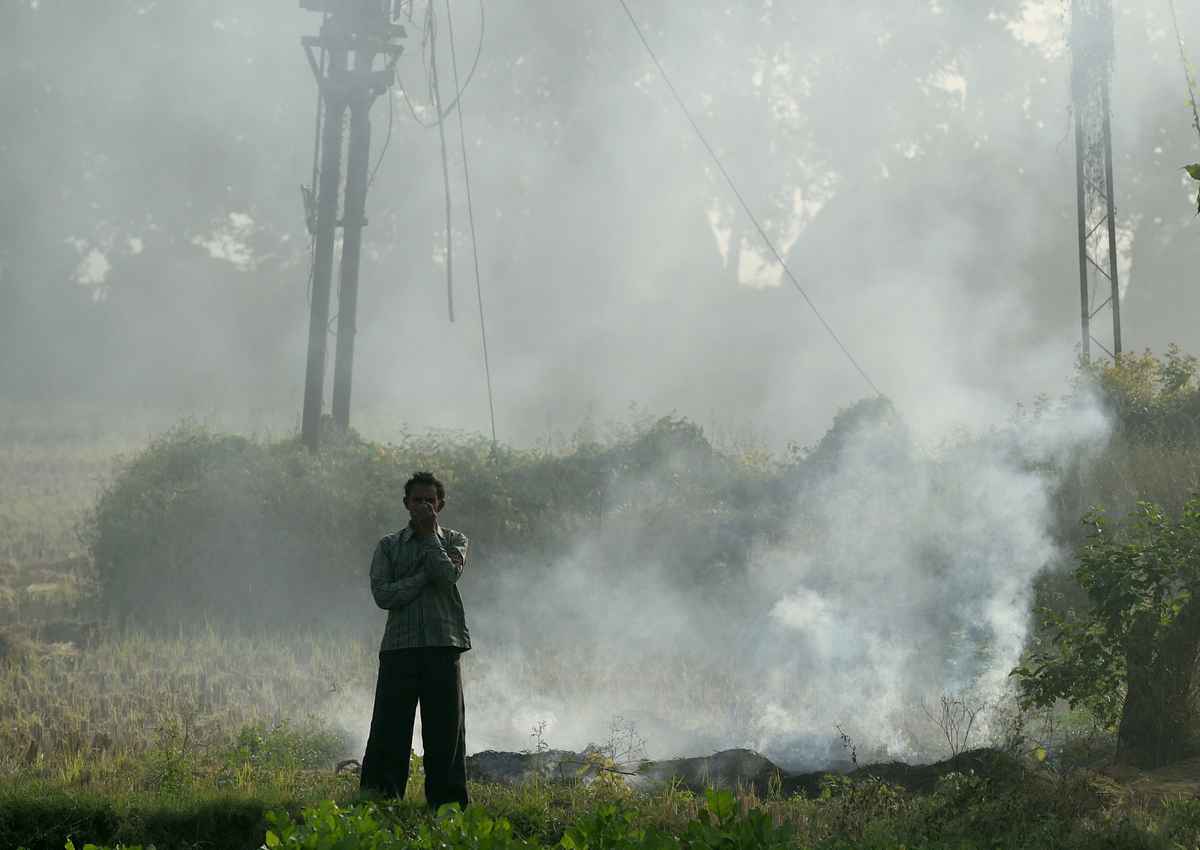
KARNAL, India – As he surveys his acres of charred farmland outside New Delhi, Ishwar Singh has little sympathy for people choking in India’s capital or any reason to stop the fires that are fuelling pollution.
“Everyone does it and we’ve got no option as we can’t afford to waste time or money clearing our land in other ways,” says Singh.
“All those complaining about what we’re doing to our fields don’t know a thing about farming and what people like me have to do to grow potatoes or onions and other vegetables.
“If we didn’t do it, then what would they eat? What prices would they have to pay? Everything would become massively expensive.” While there are multiple factors behind New Delhi’s status as the world’s most polluted capital, much of the latest bout of smog has been blamed on the illegal but widespread practice among farmers of burning crop stubble.
Attempts to tackle the problem have amounted to little more than hot air as India’s federal system of government makes enforcement a challenge.
Regional-rival Beijing, on the other hand, which competes with Delhi on poor air quality, has managed to stem the tide of pollution by ordering factory shutdowns and cars off the road with ad hoc edicts issued by the ruling Communist Party.
Back in the Indian capital, the city’s government admitted it was struggling to halt the crisis as Delhi Chief Minister Arvind Kejriwal claimed last week that between 15 million to 20 million tonnes of stubble had been burnt in neighbouring states.
Kejriwal appealed to the central government, headed by his arch rival Prime Minister Narendra Modi, to intervene with the state governments to find a resolution to the practice of crop burning.
Hundreds of thousands of farmers who mainly cultivate rice and wheat set fire to their fields after harvest to clear the residue of their primary crops so they can grow vegetables over the autumn on the same land.
The practice is particularly intense in the states of Punjab, Haryana and Uttar Pradesh, which serve as Delhi’s breadbaskets.
While Singh’s farm in Haryana is around two hours drive from downtown Delhi, the smoke blown from fields such as his is a primary cause for the toxic smog which has shrouded the city.
Levels of PM2.5 – the fine particles linked to higher rates of chronic bronchitis, lung cancer and heart disease – have breached the “hazardous” upper limit of 500 several times in Delhi this month.
Stubble burning is technically illegal, but it’s rare for farmers to face more than a token fine.
Singh was recently fined 2,500 rupees (around $35) but he said the local officials who sanctioned him were apologetic and it was a small price to pay for rotating his crops.
Another small farmer, speaking on condition of anonymity as some of his land was still smouldering, said the alternatives were not viable.
“I can’t afford machines and if I hired people to clear all the residue, I would have to pay them and lose a week of growing time.
Caste protests severely hit water supplies to Delhi
Click on thumbnail to view photos. Source:
AFP, Reuters
“Besides, no one does a thing about these big businessmen,” he added, pointing to a nearby processing plant belching out fumes.
The impact of factory pollution and crop burning goes far beyond state boundaries, but authorities are reluctant to take action which might alienate vote banks such as farmers and business leaders.
Both Punjab and Uttar Pradesh hold state elections next year.
The ban on crop burning is rarely enforced and successive court judgements ordering ageing vehicles off Delhi’s roads are also routinely flouted, leading to more unwelcome comparisons with China’s track record.
“We have repeatedly failed to implement the laws in India,” said Mahesh Palawat, chief meteorologist at private weather forecaster Skymet.
“There is hardly any control on emissions. The number of vehicles is going up and construction still continues across the region.” “China is using technology and strict implementation because the authorities recognise air pollution as a health emergency and are doing everything to control it.
“But here in India, there is no political will and laws are never implemented on ground, mostly because no one takes pollution seriously.” Avin Sharma, who works in Delhi for a multinational corporation, questioned whether authorities really had the stomach to take on the range of vested interests that contribute to the pollution.
“There are plenty of laws to deal with violators but they are wasting time by blaming each other,” said Sharma.
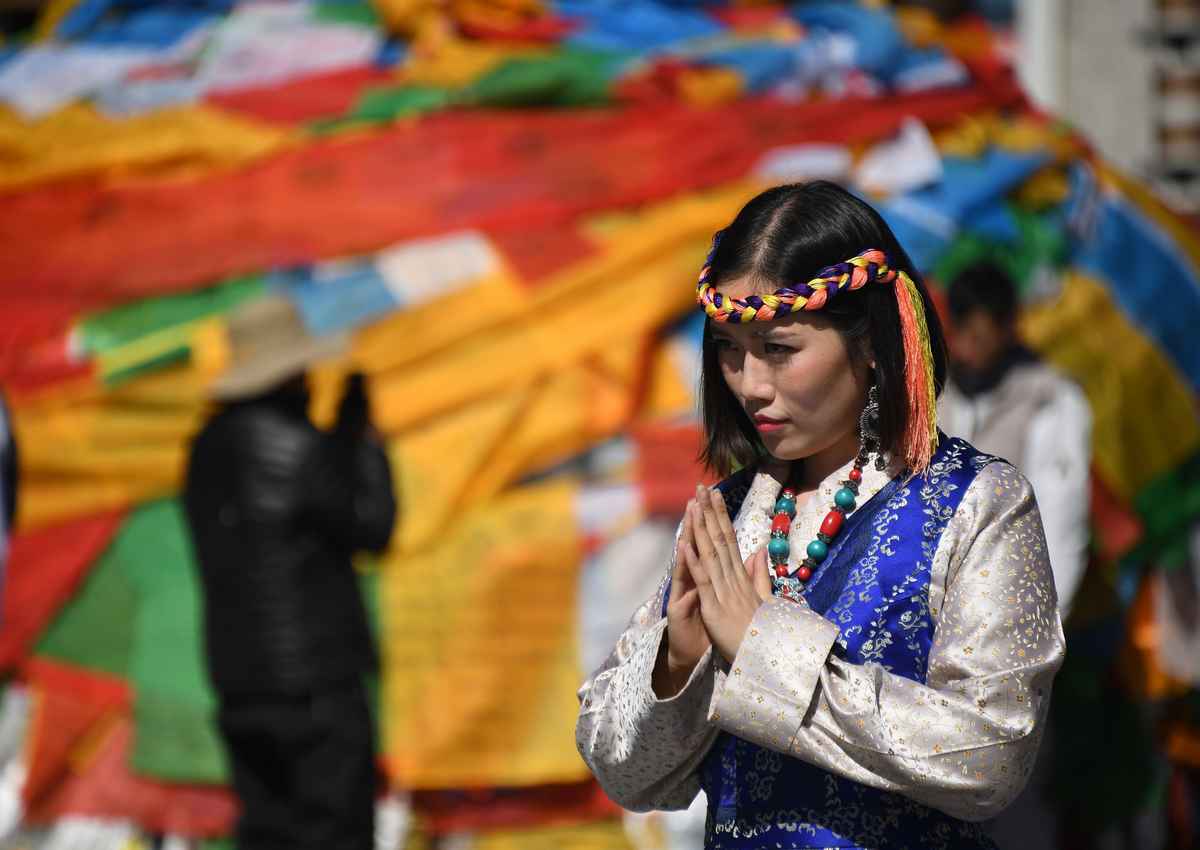
LHASA – Traditional teahouses and fashion boutiques have sprung up in Bayi, one of the liveliest district of Lhasa, and are owned and patronised by both Tibetans and Han Chinese. But some say increasing prosperity is just Beijing buying peace.
Tibet was China’s fastest-growing region last year with expansion of 11.0 per cent – albeit from a low base – boosted by government subsidies and investment.
“I don’t care about politics,” said Gesan, a Tibetan tucking into a bowl of chilli fries in a Bayi tavern.
The 22-year-old spent two years in the Chinese army and now works for an insurance company. “My life’s not so bad,” he added, playing with his smartphone.
Chinese forces arrived on the “roof of the world” nearly seven decades ago, followed by waves of immigrants from China’s Han majority.
More recently there have been financial inflows in the form of huge funding for roads, railways and hydropower.
“These investments are positive,” another young Lhasa resident told AFP on condition of anonymity. “But it’s also a way of buying social harmony, so that people don’t rebel.” Beijing says its troops “peacefully liberated” Tibet in 1951 and that it has dramatically raised living standards – life expectancy jumped from 35.5 years to 68.2 between 1951 and 2013, according to official figures, although the increase is smaller than the average for China as a whole.
But many of the profits from the region’s natural resources go to companies from China’s heartland, who bring in Han workers, and the Tibetan government-in-exile accuses Beijing of repressing Tibet’s religion and eroding its culture.
“Lhasa jumped from the Middle Age into modernity” says Jens-Uwe Hartmann, a Tibet expert at the Ludwig Maximilian University of Munich.
Tibetans’ viral wedding photos contrasts city and country life
Click on thumbnail to view photos. Source:
Sina Weibo, NetEase
“The point is the way to modernity was not decided by the Tibetans themselves.” .
In Bayi, several kilometres west of the Potala Palace, the former residence of the Dalai Lama, a tearoom manager praised economic development, before declining to talk about politics to avoid “trouble”.
Nearby, 18-year-old Niqu, who comes from Shigatse more than 200 kilometres away, shopped for dresses with her friends.
“I’m at university in Lhasa, it’s cool,” she said in perfect Chinese, learned at school along with her native Tibetan.
Linguistics are a crucial issue, say analysts.
Talk of cultural genocide is no longer appropriate, says Amy Heller, a Swiss-based Tibetologist and art historian, but added: “The threat today is rather to the language: university courses are generally taught in Chinese and Tibetan, while taught, is less valued in the labour market.” Mandarin is often indispensable for a civil service or teaching job, or simply to be able to do business with Han Chinese.
“Tibetans are aware of living in a Chinese colony,” according to Katia Buffetrille, an ethnologist at the Ecole Pratique des Hautes Etudes in Paris.
Five Lessons I Learned During My Trip To Tibet
Click on thumbnail to view photos. Source:
pixabay, Go Away
Young people have been the main beneficiaries of economic development but “are still very aware” of Beijing’s political clout, she said.
Grievances she cited include the forced settlement of nomads, natural resources exploitation, the emphasis on Chinese-language education, and bans on photos of the Dalai Lama – who fled to India after a failed uprising in 1959 but is still deeply revered by many Tibetans.
More than 140 Tibetans have set themselves on fire since 2009 in protest against Beijing’s rule, according to tallies from rights groups. Most have died.
But not all Tibetans resent Chinese rule. In a Bayi restaurant, Luosang, 67, wore a badge emblazoned with the image of Mao Zedong, who first sent troops into Tibet.
“My parents were serfs. Without this man, who abolished serfdom in 1959 in Tibet, we wouldn’t be living as well as we are today,” he explained.
According to Hartmann, before Communism Tibetans “belonged to their master and couldn’t decide anything freely”.
Today Tibet is officially an “autonomous region”, but the Communist party retains an iron grip on power and its top official in the area is always a Han Chinese, with a Tibetan number-two.
Tibetans retain “a strong sense of identity” says ethnologist Buffetrille. “They show extraordinary resilience. And keep hoping that things will change one day.” In Bayi’s main street, a well-dressed woman complained: “Tibetans can’t obtain a passport, but Han can. Why this difference?”
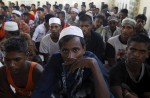
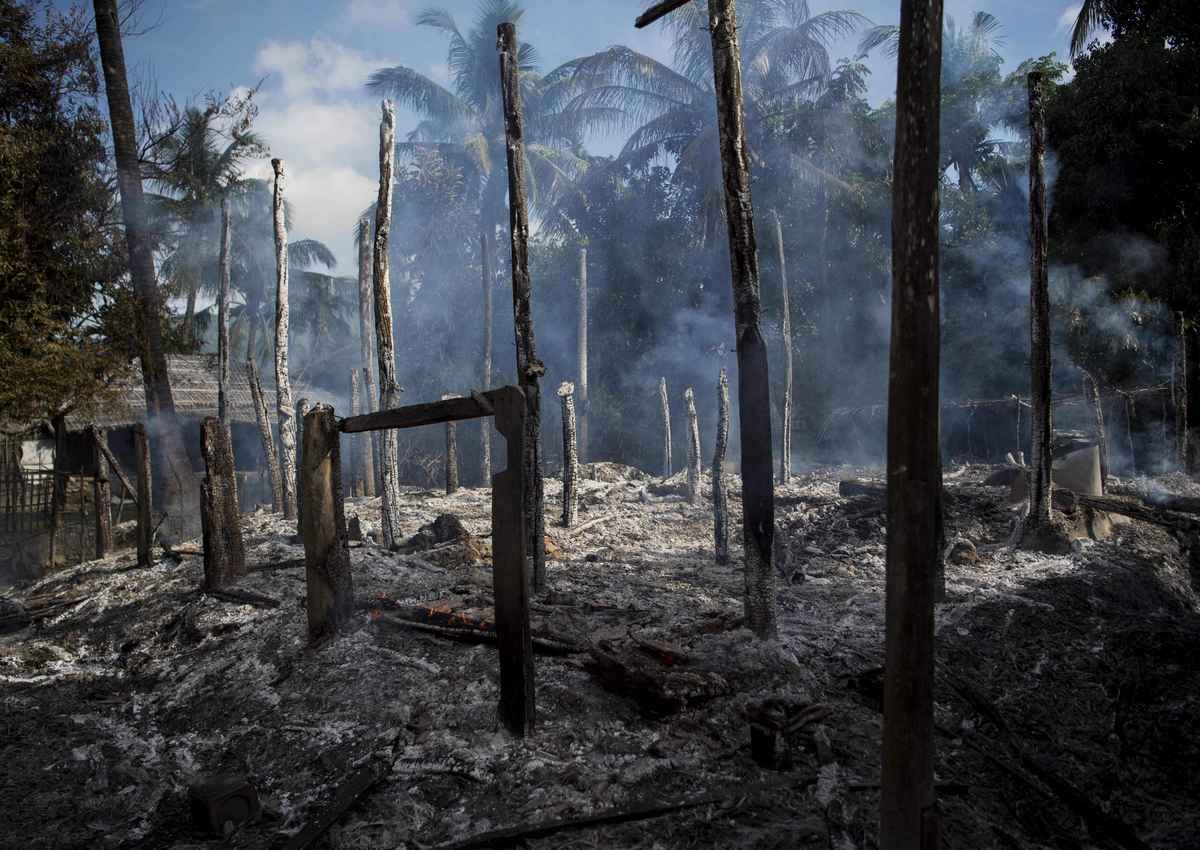
YANGON – Hundreds of buildings in Rohingya villages in western Myanmar have been torched, according to new satellite images released on Sunday as fresh fighting flared in the strife-torn region.
Northern Rakhine, which is home to the Muslim Rohingya minority and borders Bangladesh, has been under military lockdown ever since surprise raids on border posts left nine police dead last month.
Soldiers have killed several dozen people and arrested scores in their hunt for the attackers, who the government says are radicalised Rohingya militants with links to overseas Islamists.
Fresh fighting flared on Saturday with two soldiers and six attackers killed, according to the military who said they brought in helicopter gunships to repel an ambush.
The crisis and reports of grave rights abuses being carried out in tandem with the security crackdown have piled international pressure on Myanmar’s new civilian government and raised questions about its ability to control its military.
Authorities have heavily restricted access to the area, making it difficult to independently verify government reports or accusations of army abuse.
334244
2016-10-29 16:11:13
Photo Gallery
Pressure on Myanmar over abuses of Rohingya minority in Rakhine
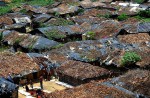
New satellite images released by Human Rights Watch show what the group said was evidence of mass arson attacks against Rohingya villages.
Their analysis showed more than 400 buildings torched in three Rohingya villages where the fighting has been taking place.
The group said active fires and burn scars showed that most of the destruction was caused by arson. The latest images were taken on 10 November.
Brad Adams, the group’s Asia director, said the new photos showed “widespread destruction” that was “greater than we first thought”.
“Burmese authorities should promptly establish a UN-assisted investigation as a first step toward ensuring justice and security for the victims,” he said in a statement.
Rohingya, victims of human trafficking
Click on thumbnail to view photos. Source:
Reuters, The Nation/ANN, The Daily Star/ANN, The Star/ANN, Vice News, AFP
The resurgence of violence in western Rakhine has deepened and complicated a crisis that already posed a critical challenge to the new administration led by democracy activist Aung San Suu Kyi.
The state has sizzled with religious tension ever since waves of violence between the majority Buddhist population and the Muslim Rohingya left more than 200 dead in 2012.
More than 100,000 people, mostly Rohingya, were pushed into displacement camps by the bloodshed and have languished there ever since.
Rights groups say they face apartheid-like restrictions on movement and have repeatedly called on Suu Kyi to carve out a solution.
But Buddhist nationalists at home viciously oppose any move to grant them citizenship, claiming the Rohingya are illegal immigrants from Bangladesh despite their long roots in the country.
The military and government have rejected allegations that troops have burned Rohingya villages, accusing insurgents of lighting the fires.

 Photo Gallery