Home Blog Page 2374

Samsung, Hyundai bosses quizzed in S. Korea scandal probe

0


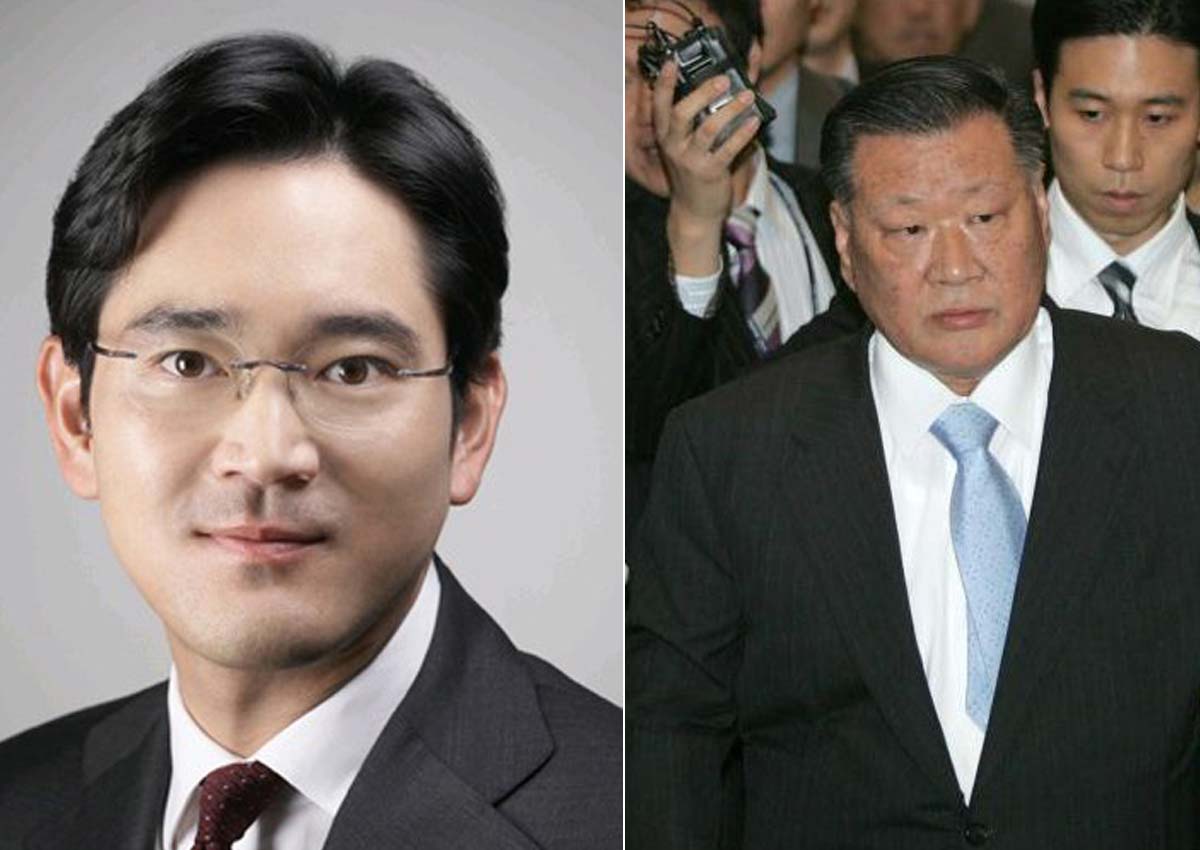
South Korean prosecutors investigating a corruption scandal engulfing President Park-Geun Hye have quizzed Samsung group scion and the chairman of Hyundai Motor, a report said Sunday.

Lee Jae-Yong, vice chairman of Samsung Electronics and the heir-apparent of the Samsung group, was being questioned by prosecutors, Yonhap news agency said.

It cited an official at the Seoul prosecutors’ office, which is probing whether Park pressured the firms to donate millions of dollars to dubious foundations controlled by her longtime confidant, Choi Soon-Sil.

Samsung made the largest donation of more than US$15 million (S$21 million) and is accused of separately offering 2.8 million euros (S$4.38 million) to Choi to bankroll her daughter’s equestrian training in Germany.

Hyundai Motor chairman Chung Mong-Koo was also quizzed along with the bosses of other powerful conglomerates, Yonhap said.

The president reportedly had a meeting last July with the top businessmen at her office and urged them to donate money to the two cultural foundations that Choi used for personal gain.

Prosecutors also announced Sunday a plan to quiz Park this week. If this happens she will be the first South Korean president to be questioned by prosecutors while in office.

The “donations” from the firms amounted to nearly US$70 million, including 20 billion won (S$24.7 million) from Samsung and 12.8 billion won from Hyundai.

Choi was arrested recently for allegedly using her ties with Park to coerce donations from the firms and meddling in a wide range of state affairs although she holds no official position.

The scandal has sparked nationwide fury and massive protests calling for Park to resign.

Image:
Category:
Publication Date:
Sunday, November 13, 2016 – 16:58
Keywords:
Send to mobile app:
Source:

Story Type:
Others

Source link

Here’s IKEA’s upcoming monthly promo offers valid from 28 Nov 2016 – 1 Jan 2017

0

IKEA’s upcoming offers features the HEMNES chest of 8 drawers at $299 (U.P. $469) & more. Valid from 28 Nov

Here’s IKEA’s upcoming monthly promo offers valid from 28 Nov 2016 – 1 Jan 2017

Enjoy discounts you can take advantage of as a member of IKEA Family (membership is free). The HEMNES chest of 8 drawers will be going at $299 (U.P. $469). Solid pine, stain, clear acrylic

Source

Nat Geo explorer finds rare and mysterious beetle in Singapore

0

Australia may be known for its poisonous and weird insects, but Singapore has it claim to fame with the rare trilobite beetle.

The bizarre-looking beetle is so rare – researchers have only observed them mating twice, in 1924 and 1993, National Geographic reported.

According to the magazine of the National Geographic Society, the “ancient-looking insect that has kept scientists baffled for nearly two centuries”.

A video of the beetle, contributed by a National Geographic Young Explorer Mark Wong, was posted on its Facebook page on Sunday (Nov 13), garnering over two million views in eight hours with over 20,000 shares.

Named after an extinct group of marine arthropods due to their similar features, it is only the female trilobite beetles that share the looks. Like many insects in the animal kingdom, the male beetles look like your everyday bug – and a tenth of the female’s size.

The first sighting was by Swedish zoologist Eric Mjoberg, who landed in Borneo in 1922 with a singular focus to find a male trilobite beetle. That endeavour took his two years, after he dangled a monetary reward and enlisted local people to spot the elusive male beetles.

These insects are so rare that much of its characteristics and diet remain a mystery.

grongloh@sph.com.sg

 
Category: 
Publication Date: 
Sunday, November 13, 2016 – 15:47
Keywords: 
Send to mobile app: 
Source: 


video embed code: 
<iframe allowfullscreen="" frameborder="0" height="400px" scrolling="no" seamless="seamless" src="//assets.nationalgeographic.com/modules-video/assets/ngsEmbeddedVideo.html?guid=00000158-02d9-da9a-a5fb-12d9918d0000" width="100%"></iframe>
Video Media: 
Other Video Media
Story Type: 
Rewritten Story

Source link

Few companies aware of environmental conservation's importance

0

Only less than 20 per cent of some 200 companies in an industrial park in Gunung Putri district, Bogor regency, West Java, have awareness on environmental protection and conservation, a local official has said.

Gunung Putri district head Budi Lukmanul Hakim said poor waste disposal in the industrial zone had often led to conflict between the companies and local residents.

He said according to existing regulations issued by the Bogor regency administration, 40 per cent of total areas in the Gunung Putri industrial zone had to be utilized as green space. However, almost all land in the industrial zone had been developed into buildings or asphalt roads, leaving no space for water catchment areas.

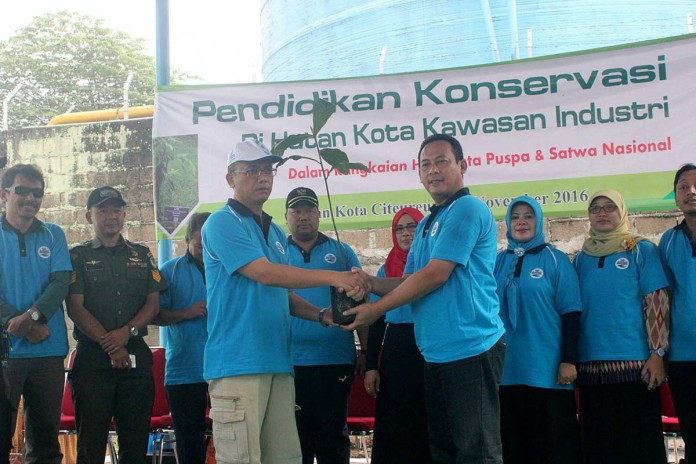
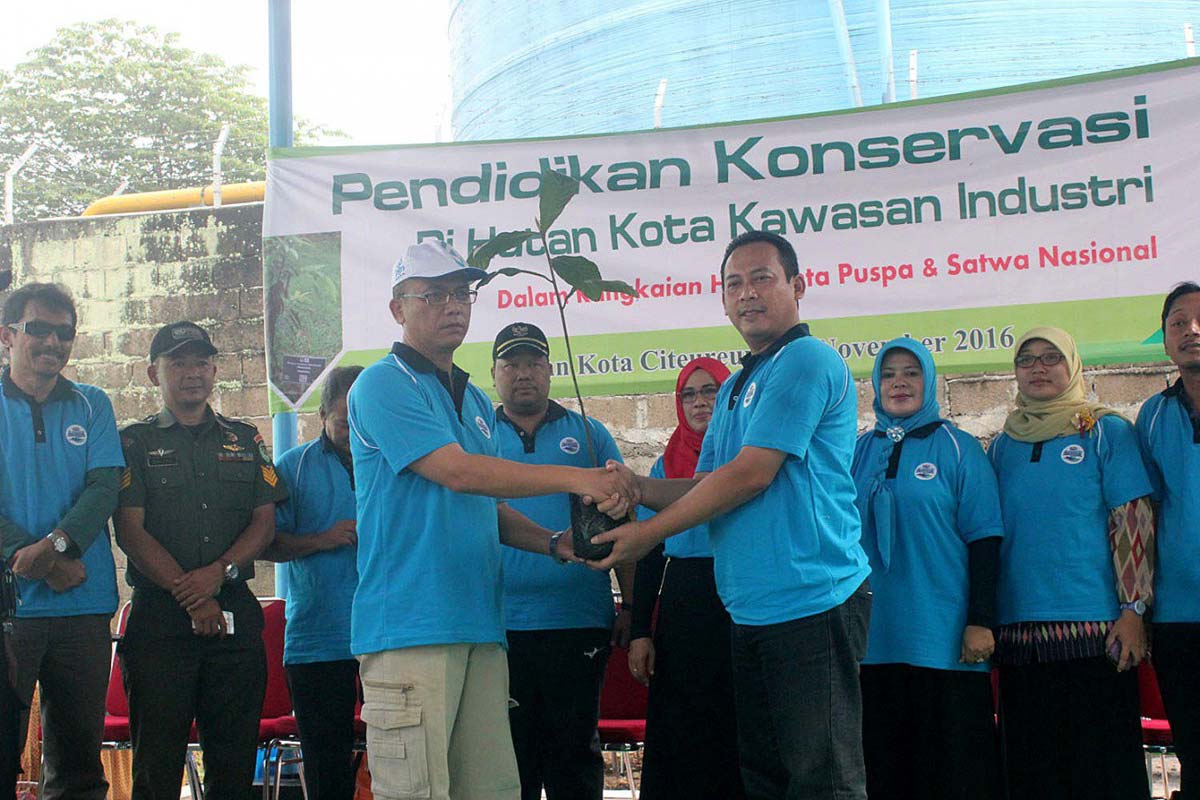
“I’ve repeatedly talked with representatives of companies here on the importance of green spaces to provide oxygen and reduce pollution. But only a few of them have responded my calls to participate more actively in tree-planting activities,” said Budi on the sidelines of a tree-planting event on a land plot owned by bottled-drinking water company PT Aqua Golden Mississippi in Citeureup, Bogor, on Friday.

Planting trees is one environment-related programme, alongside educational conservation activities and the development of biophore absorption holes and water absorption wells, the company has initiated under its corporate social responsibility scheme. Some of the programs involve schools around Gunung Putri.

“These activities are part of our ways to help conserve water and the environment,” said Tatang, the company’s planning director.

Image: 
Category: 
Publication Date: 
Sunday, November 13, 2016 – 15:10
Send to mobile app: 
Source: 


Story Type: 
Others

Source link

Mixed Martial Arts-McGregor knocks out Alvarez to make UFC history

0

NEW YORK – Featherweight champion Conor McGregor capped the UFC’s triumphant return to New York by knocking out Eddie Alvarez to claim the lightweight crown and become the first fighter in the history of the promotion to hold two UFC belts simultaneously.

Southpaw McGregor downed Alvarez three times in the opening round, leaving the champion stunned and on the back foot for the entire five minutes, and it didn’t get any better for the Philadelphia native.

Alvarez’s attempts to take the fight to the mat were thwarted by the 28-year-old, who continued to dictate the pace in the second in front of a packed house, most of whom were cheering for the Irishman.

Midway through the second round McGregor unleashed another combbination and this time there was no way back for Alvarez as McGregor pounced to finish the fight. “Eddie is a warrior but he shouldn’t be in here with me. You’ve got to have size, reach, length, you’ve got to have attributes,” he told ring announcer Joe Rogan following the bout. “I’d lake to take this chance to apologise … to absolutely nobody,” he roared before taking his two belts and scaling the side of the octagon to celebrate.

The 32-year-old Alvarez had won the title from Rafael Dos Anjos back in July and after McGregor was done avenging his only UFC defeat to Nate Diaz, he immediately set his sights on taking that second belt.

With the ban on mixed martial arts in the state lifted in March of this year, the UFC returned to New York after an absence of over two decades, staging a card stacked with fights and backed up by a ton of hype.

While others on the bill failed to live up to it, McGregor once again proved his value to the UFC by putting on a spectacular show with another superb knockout win to go with his 13-second defeat of Jose Aldo for the featherweight crown.

Earlier in the evening women’s strawweight champion Joanna Jedrzejczyk weathered a late storm from her Polish compatriot Karolina Kowalkiewicz, holding on to win a unanimous decision after an epic five-round battle.

In the other title fight on the card, welterweight champ Tyrone Woodley thought he had seen off the challenge of Stephen “Wonderboy” Thompson to claim a narrow split decision, but the result initially announced in the octagon was corrected after several minutes and changed to a majority draw.

Image: 
Category: 
Publication Date: 
Sunday, November 13, 2016 – 15:30
Keywords: 
Send to mobile app: 
Source: 


Story Type: 
Others

Source link

South Korean prosecutors to question president this week over political scandal: Yonhap

0

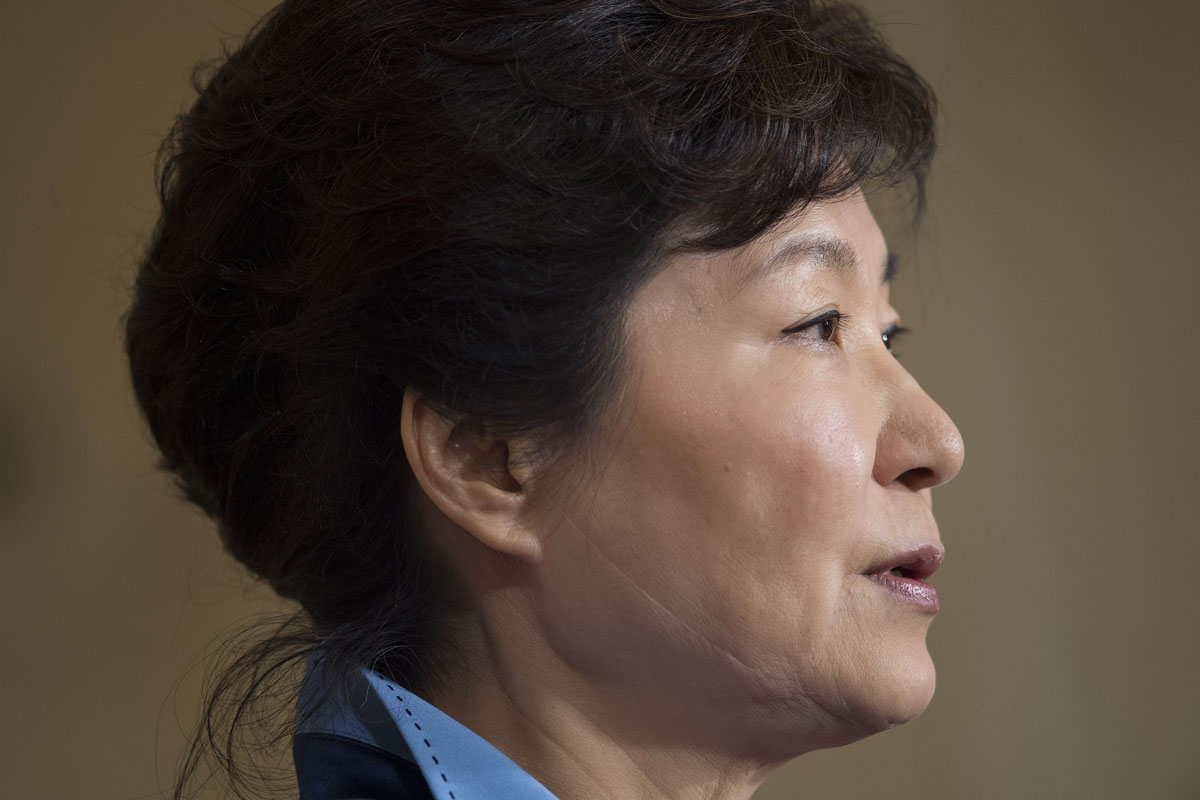
SEOUL – South Korean prosecutors are seeking to question President Park Geun-hye this week over a political scandal which has engulfed her presidency, Yonhap reported on Sunday.

Prosecutors are investigating whether Park exerted improper pressure on “chaebol” conglomerate bosses to raise funds for two foundations at the centre of an influence-peddling scandal involving a friend of hers.

Prosecutors have already questioned the chairmen of Hyundai Motor and Korean Air Lines and plan to question the de factor head of Samsung Group and other conglomerate chiefs over the political scandal, media reports said on Sunday.

Hundreds of thousands marched in the capital Seoul on Saturday demanding her resignation. Many of them said Park was unfit to rule.

Image: 
Category: 
Publication Date: 
Sunday, November 13, 2016 – 15:12
Keywords: 
Send to mobile app: 
Source: 


Story Type: 
Others

Source link

Duterte firm on Marcos burial: 'The law is the law'

0

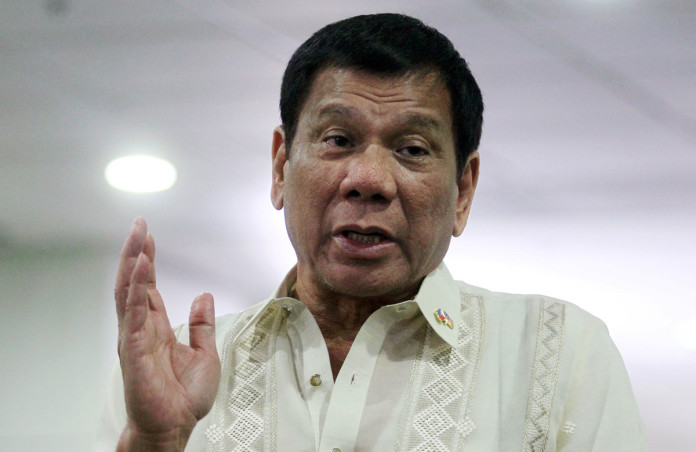
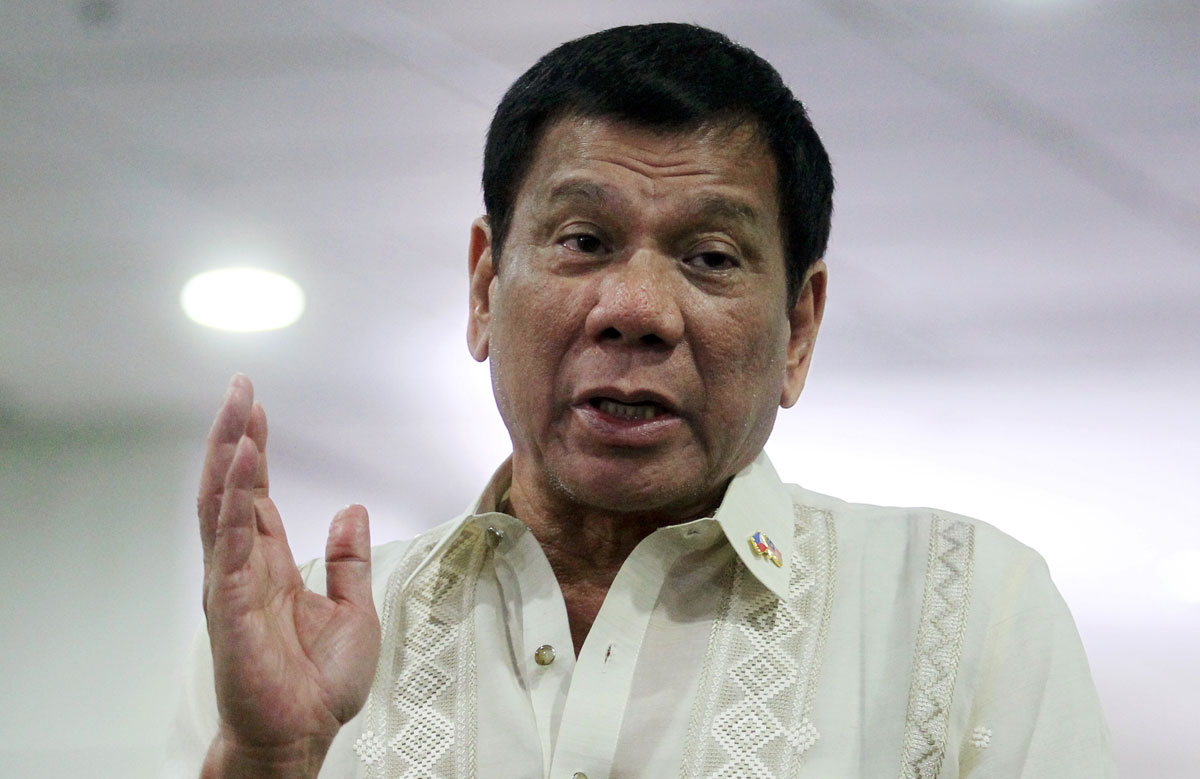
President Duterte is standing firm on his decision to allow the burial of dictator Ferdinand Marcos at the Philippine Heroes’ Cemetery, officially known as Libingan ng mga Bayani, saying he was just strictly following the law, unaffected by any emotions.

Duterte said the law allows a former president or a soldier to be buried at Libingan and does not impose any other conditions. His position has been echoed in the ruling by the Supreme Court, which voted 9-5 on Tuesday to clear the legal obstacles to the burial.

“The law is the law. It has no emotions at all. It says that if you are a President (you can be buried there). It does not say you have a record of a dictatorship or what not, or being a gentle despot. It does not say anything like that,” Duterte said in a speech late on Friday at an event to recognise the humanitarian deeds of his late mother, Soledad Duterte.

Insult, desecration

The President’s decision to allow the former dictator a hero’s burial has outraged martial law victims and their families, who view the move as an insult and a desecration of the spirit of people power that ousted Marcos 30 years ago.

The opposition to a hero’s burial for Marcos has broadened after the Communist Party of the Philippines (CPP), one of the country’s top historians and a Catholic Church group joined calls on the President to reverse his decision.

“President Duterte must be advised against proceeding with such a plan,” the CPP said in a statement on Saturday. “Such payment of political debt to the Marcoses will undoubtedly be regarded as an act of contempt against the Filipino people’s historic judgement against the Marcos dictatorship.”

The CPP, which resumed peace talks under the Duterte administration, said burying Marcos at Libingan will be “the ultimate act of rehabilitation” of the Marcoses after their downfall.

Heed history’s demands

In a letter to the President on Friday, National Historical Commission (NHC) chair Maria Serena Diokno said Duterte had the “unique opportunity and obligation to heed the demands of the justice of history” that will lead to “true healing.”

Diokno said there were also “historical grounds” to stop Marcos’ burial at Libingan based on a recent study of the late president’s war record, citing the “highly questionable” medals the dictator claimed to have received from the US government.

“The justice of history, anchored on historical truth, is far greater than that which any court, including the highest court of the land, can render (or in this case, fail to render),” she said.

The Council of the Laity of the Philippines called the high court’s decision “a barefaced disrespect to the victims of one of the darkest moments in the history of our people and our country in general.”

“Marcos may have been a President but he ended up a dictator; he may have been a soldier but his grave abuse of power and systemic violence undermines his well-flaunted valour,” the group said. “There can never be peace without truth and justice.”


Image: 
Category: 
Publication Date: 
Sunday, November 13, 2016 – 15:06
Send to mobile app: 
Source: 


Story Type: 
Others

Source link

Saving more than nine lives

0

SPCA executive director heads new initiative to reduce cases of euthanasia on healthy animals

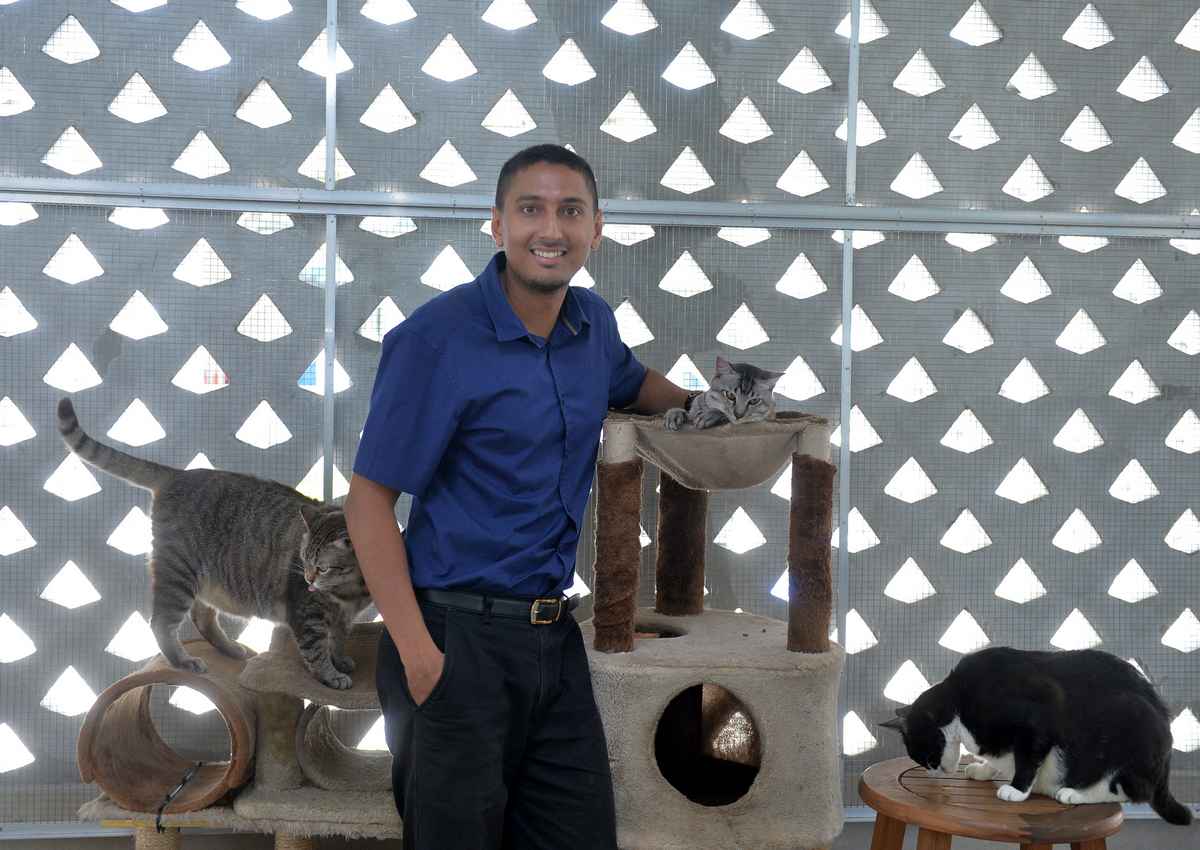
Dog person. Cat person. Mr Jaipal Singh Gill does not care which way you swing.

Even if you are neither, the 33-year-old acting executive director of the Society for the Prevention of Cruelty to Animals (SPCA) feels it should not stop you from caring about the welfare of animals, from preventing abuse of domestic pets to cruel practices in livestock or chicken farms.

Mr Gill comes to SPCA at a time of greater awareness of animal abuse and a growing number of organisations devoted to saving and rehoming stray dogs and cats.

Their emphasis on rehoming flies in the face of SPCA’s age-old euthanasia policy, which is what Mr Gill hopes to change during his tenure – to move towards a no-kill directive not just for the association but nationwide.

How did you become interested in animal welfare?

I’ve had pets since I was seven. Guinea pigs, terrapins, dogs and fish. Except cats. My mother didn’t like them and said I had to choose between her and a cat. I chose the cat but that didn’t work.

But like I said, having pets isn’t the same as looking after their welfare.

You see, I grew up in a loving middle-income family and my grandmother lived with us. I thought everyone lived the same way until my mother took me on one of her home nursing visits when I was 11.

It was an eye-opening experience to see how not everyone had the same life as I did. It awakened my interest in social work.

When I was 14, my older brother returned from his studies in Australia and lent me some literature on the treatment of factory animals. I realised there was a world of suffering out there I never knew about, and I wanted to do something about it.

Why SPCA, with its kill-policy, when you could have joined or started any other organisation that doesn’t euthanise pets?

That’s a good question.

This is my fourth year with SPCA. In the first couple of years, I was quite affected by our euthanasia policy. I still am now, but I realised that running away from the problem is not going to solve it.

Euthanasia isn’t an SPCA problem – we didn’t create it. We’re shouldering the burden that’s been placed on us to deal with the problem, which is pet overpopulation.

It’s very easy to go no-kill overnight. We just say: “Sorry, we’re at capacity and we can’t take any more animals, you can do whatever you want with it.”

But that’s not the stance we’re taking. That’s why I’m here – because I can see the potential of us being able to tackle the problem at its root and reduce euthanasia to zero.

In fact, we’ve just launched “Getting to Zero”, whose aim is to get to zero euthanasia of healthy animals in Singapore.

It’s a bold goal, but one that we believe in very strongly because a healthy animal that’s euthanised is one too many. That’s something we want to see capped to zero.

What’s the plan for Getting to Zero?

It’ll come into effect in 2017. Because it’s such a big and complex problem, the solutions will be spread out over the year in four phases.

The first is promoting adoption, because the more people adopt, the more lives will be saved. The next phase will be promoting responsible pet ownership.

Third is to get people to be more accepting of street dogs and cats to reduce culling, and the last is to deal with the pet industry, especially breeding.

What are the chances of success?

In the last five to 10 years, animal welfare in Singapore has come a long way. The landscape has changed entirely. I think that’s very positive.

I’m seeing a lot more people, youths especially, stepping forward and wanting to be a part of this movement. So I see a bright future for animal welfare and I’m really glad to be a small part of that process.


This article was first published on Nov 12, 2016.
Get The Business Times for more stories.

Image: 
Category: 
Publication Date: 
Sunday, November 13, 2016 – 14:43
Send to mobile app: 
Source: 


Story Type: 
Others
W.T.M. (Why This Matters): 
SPCA executive director heads new initiative to reduce cases of euthanasia on healthy animals

Source link

Eight dead in clashes between Myanmar army and militants in Rakhine

0

YANGON – Eight people died and 36 were arrested in clashes between the Myanmar army and what the government believes are Rohingya Muslim militants in northern Rakhine State, state media said on Sunday, in the largest escalation of the month-old conflict yet.

Skirmishes took place throughout Saturday in villages in the north of Rakhine, leaving one officer and one soldier dead. Six bodies of attackers were recovered in the aftermath, while 36 other people believed to be involved were arrested.

About 60 attackers armed with guns, knives and spears ambushed government troops on Saturday morning, the state-owned Global New Light of Myanmar said. The army returned fire, but at one point asked for army choppers to reinforce because its troops were outnumbered, the paper said.

Soldiers have poured into northern Rakhine, close to the border with Bangladesh, since Oct. 9, after an insurgent group of Rohingyas that the government believes has links to Islamists overseas launched coordinated attacks on several border posts.

The military has blocked access to the area for journalists and aid workers. Residents and human rights advocates have accused security forces of summary executions, rapes and setting fire to homes.

The government and the army have rejected the accusations, saying they were conducting the “clearance operation” in the villages in accordance with the rule of law.

The troops at one point were shot at by about 500 men, state media said. Ye Naing, director of the Ministry of Information, contacted by Reuters on Sunday, said the insurgents were hiding among the villagers and not all of the 500 people were militants.

Security forces recovered a weapon and ammunition similar to arms taken away by the attackers on Oct. 9, state media reported.

The violence in recent weeks is the most serious to hit Rakhine since hundreds were killed in communal clashes in 2012.

Myanmar’s 1.1 million Rohingya Muslims are the majority in northern Rakhine but they are denied citizenship, with many majority Buddhists regarding them as illegal immigrants from neighbouring Bangladesh. They face severe travel restrictions.

Image: 
Category: 
Publication Date: 
Sunday, November 13, 2016 – 14:45
Send to mobile app: 
Source: 


Story Type: 
Others

Source link

Like him or not, Philip Yeo does not care

0

Mr Philip Yeo grabs a piece of paper on his table and starts doodling furiously.

“Life,” he proclaims, right hand deftly executing a series of lines and dots, “is a series of points”.

How a person’s life pans out, he says, depends on who he meets, and when.

If he had not secured a Colombo Plan scholarship – which came with a five-year government bond – after his A levels, he would not have graduated with a degree in industrial engineering from the University of Toronto.

“If I had not been bonded, I would not have gone to Mindef,” says Mr Yeo, who held various appointments in the Ministry of Defence between 1970 and 1999.

And he would not have met the likes of the late founding Prime Minister Lee Kuan Yew, deputy prime minister Goh Keng Swee and minister for defence Howe Yoon Chong, three men who had a profound impact on his 50-year career as a civil servant.

“I never considered myself a career officer or a civil servant. If not for the bond, LKY, Dr Goh and Howe Yong Chong, I would have gone (into the private sector),” says Mr Yeo, who turned 70 last month. “I tried many times to leave. I stayed on because of the nature of the work.”

If he had left, the Economic Development Board – which he steered in the 1980s from traditional industries to new high-tech clusters such as semiconductors, aerospace and chemicals – might have been a different kettle of fish.

And there would have been no A*Star (Agency for Science, Technology and Research), the agency synonymous with his name, or Bio- polis or Fusionopolis, the hubs which helped to put Singapore at the forefront of biomedical research. Ditto no Jurong Island, the petrochemical complex, or Batam the industrial park.

“A lot of things,” he says, finishing his drawing with a dramatic dot, “would not have happened”.

Indeed, Mr Yeo has left quite a mark on Singapore.

One of the country’s most colourful, accomplished and controversial bureaucrats, his life has just been chronicled in a book, Neither Civil Nor Servant, written by Peh Shing Huei, a former China bureau chief and news editor of The Straits Times.

Published by Straits Times Press, the volume details a career which is as long as it is diverse, and achievements which are nonpareil in the Singapore civil service.

Holding court in his cavernous office-cum-library at Economic Development Innovations Singapore (EDIS) – the international development company he set up in 2013 – in Fusionopolis, Mr Yeo is wearing a blue shirt, black slacks and a pair of black Nike sneakers.

The choice of footwear is fitting for a septuagenarian on steroids, one who moves as fast as he talks, a Type A personality so full of beans and ideas that if he were a character in a comic strip, he would have too many thought balloons over his head.

Indeed, holding down a conversation with him is a challenge. In the course of conversation lasting more than two hours, he lunges from topics as diverse as electric cars and American politics to stem cells and Battlestar Galactica.

Many adjectives have been used to describe Mr Yeo: visionary, egotistic, trendsetting, maverick, megalomaniac, arrogant, fatherly… They do not bother him.

“Every time I do a job, I focus on the job. I don’t look at the personal implications,” he says.

“I don’t care what people say. Why should I care? People ask me, ‘What do people think of you?’ Who cares? It’s not my problem.”

His self-starting instincts kicked in early.

His father – who worked with the Red Cross – died when he was a toddler. The second of three children, he followed his late mother who worked as a live-in domestic helper while his siblings were raised by their grandmother.

He knew his ticket out of poverty and to an overseas education was a scholarship, so he made sure he got good grades in school.

Since there were no scholarships then for aeronautical engineering – his first choice – he opted to read mechanical engineering at the University of Toronto in 1966. But true to his propensity to “do my own thing”, he switched to industrial engineering in his second year.

“When I changed, the PSC (Public Service Commission) didn’t know what was going on. The PSC were all run by clerks then,” he says with a chortle.

Upon his return in 1970, he agitated for an engineering position after a short spell doing government budgets in the Ministry of Finance.

Serendipity smiled on the brash young man; he was made branch head of the logistics division in Mindef. His job? Come up with systems to equip, feed and clothe the armed forces Singapore was building in the light of the country’s independence and the withdrawal of British military forces.

It was, he says, the perfect job fit because his degree schooled him in areas ranging from accounting and organisational psychology to business studies and engineering.

“Logistics to me is problem solving, it’s about supply and demand and maintenance. Any war, without logistics, is gone. Guy without bullet, no use. Cannon without shell, no use. Soldier without food, die,” he says.

He more than made his mark and was famous for bulldozing through if rules stood in the way of a solution.

“I took a lot of risks because I didn’t have patience. My rule was simple: What could they do to me? If they fired me, I would have been happier.”

That did not happen. In fact, he vaulted up the ranks.

“I was head of branch in 1970, head of department in 1971, director of finance in 1972 doing the whole defence budget,” he says.

It helped that he had a mentor and champion in Dr Goh, then the Minister for Defence, who admired his derring-do and ability to get things done.

Mr Yeo remembers going to Dr Goh, requesting to sign cheques for up to a million dollars, something unheard of in the civil service then.

“I was just 26 or 27 then. I told him the guys who suffered the most were the local contractors because we took months to pay them. Dr Goh said, ‘What do you want?’ I said, ‘I want to sign cheques.'”

Those, he says, were heady times for a self-starter and go-getter like him.

“Dr Goh and LKY and their generation, they got people to do the work and they focused on politics. In that era, there was a lot of delegation and the Government was more preoccupied with policies,” he says.

“They left it to us,” says Mr Yeo, who helped to build his mentor’s vision of developing defence-related companies such as Chartered Industries of Singapore (CIS), which would support the military while being commercially viable. As chairman of CIS between 1979 and 1992, Mr Yeo also pushed for these companies – now known as ST Engineering – to diversify.

Asked if he looked up to Dr Goh as a father figure, he laughs and says: “No lah, he was a slave driver.”

But he also admits that if not for the late politician and Mr Lee, he would have long left the civil service.

In fact, Mr Lee – whom he refers to as LKY – stopped him from leaving on a couple of occasions.

In 1999, the founding Prime Minister persuaded Mr Yeo not to accept a $28 million offer from Richard Li – son of Hong Kong billionaire Li Ka Shing – to be executive chairman of his Singapore-based fund management vehicle Pacific Century.

The deal included a $10 million sign-on bonus, $10 million as salary for three years and $8 million in shares and options.

“My wife said we could have bought a big house,” he says, mock lament in his voice.

“But LKY called me up and said, ‘We depend on you.’ The old man kacau’d,” he says, using the Malay word for “interfere”. “He put psychological pressure on me to stay. LKY was very persuasive.”

And so he stayed, became chairman of A*Star until 2007 and beavered away at his plan to turn Singapore into a leading centre for biomedical research.

There were detractors but his initiatives have started bearing fruit. Output from Singapore’s biomedical science industry leapt from $6.3 billion in 2000 to $21.5 billion in 2014.

“If I didn’t stay, there’d be no biomed, none of this. That’s why LKY was appreciative. He once told me, ‘The trouble with you is only the older generation appreciates you but the younger does not.'”

Ironically in 2007, he had a public squabble with Mr Lee’s daughter, neurologist Lee Wei Ling, over his biomedical research directions.

She said that he did not know what was important because he was not a doctor.

“I didn’t need to be a doctor. I was doing science. I’m an engineer and I look at things as a public problem,” he says.

Saying that he has made peace with her, he adds: “She has a similar character. She’s very direct and blunt, she’s just principled.”

Asked if he has ever felt that he had bitten off more than he could chew, the man credited with creating billions of dollars of investments and hundreds of thousands of jobs for Singapore says: “No, I always find people to help me. I find slaves. It’s very important; it’s like contractors and subcontractors.”

“I subcontract. I delegate and make sure that things are running but I don’t leave them totally unsupervised,” adds Mr Yeo, who has spotted and groomed numerous talents including former foreign minister George Yeo and current Manpower Minister Lim Swee Say.

Married in 1971, he and his wife Jane have two children: Eugene, 39, is a professor at the University of California, San Diego, while Elaine, 30, is a psychologist.

The hard-nosed commander gives way to indulgent father when he talks about their achievements. One also discerns the same pride in his voice when he talks about his A*Star scholars: He knows exactly who went to Harvard or the University of Illinois, whose husband is German, and how many of them are parents.

“I always invest in young people. I believe they will take over, they are our future.”

He may have slipped out of the public eye but he has not slowed down.

Since setting up EDIS, he has been spending a lot of time giving strategic advice to countries such as Azerbaijan, Kazakhstan and Colombia.

He sleeps just five hours a day and spends a lot of time reading. He has a one-terabyte Dropbox which he likens to a “40-ft kelong” filled with reading materials: “science, medicine, ageing, archaeology, immunology, transplantation, robots and drones …”

It took a long time before he came around to the idea of a biography, one which will no doubt reignite debate about his legacy.

But Mr Richard Sykes, the former head honcho of GlaxoSmithKline and rector of Imperial College, believes Singapore would have been different without his imprint.

In Neither Civil Nor Servant, he describes Mr Yeo as one of the great developers of the country.

“You can have a visionary like Lee Kuan Yew but somebody has to put it into practice. Philip puts things into practice. Philip was a doer and you needed doers, particularly in developing economies.”


This article was first published on Nov 13, 2016.
Get a copy of The Straits Times or go to straitstimes.com for more stories.
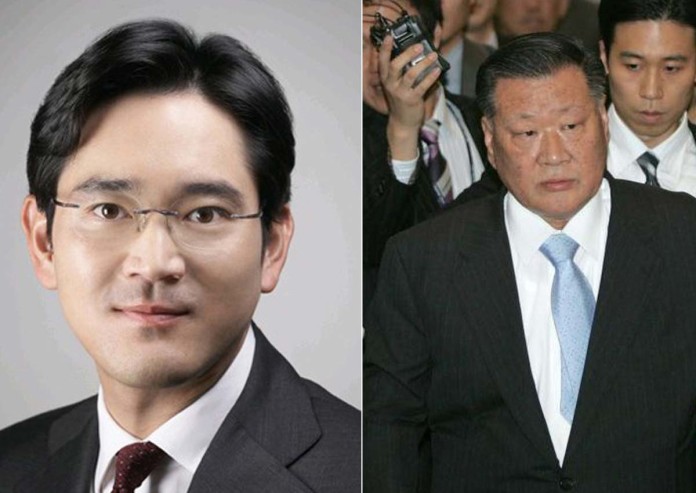
Image: 
Blurb: 
<p>Mr Philip Yeo grabs a piece of paper on his table and starts doodling furiously.</p>
Publication Date: 
Sunday, November 13, 2016 – 17:00
Keywords: 
Send to mobile app: 
Source: 


Story Type: 

Others

Source link