Home Blog Page 2369

Help schemes for at-risk youth to be centralised

0

The youth sector is getting a shake-up. About 10 key organisations here will take over the state’s existing programmes to guide and rehabilitate young people under 21 who get into trouble, The Straits Times understands.

With the main youth programmes to be centralised through these organisations – called Integrated Service Providers (ISPs) – the quality of the programmes will hopefully be made consistent.

There are currently more than 20 organisations in charge of such activities, and the Ministry of Social and Family Development (MSF) said standards vary.

The reorganisation comes at a time when youth arrests are climbing. Last year, 3,265 young people aged from seven to 19 were arrested, up from 3,120 in 2014 and 3,031 in 2013.

A spokesman for MSF told The Straits Times that it has appointed two ISPs as of last month. The rest will follow in the next two years.

She said: “MSF will fine-tune the concept, monitor case referrals, as well as conduct necessary training to prepare the sector expansion across the island in 2018, to ensure that services are accessible to youth.”

In the meantime, existing voluntary welfare organisations will continue to deliver MSF-funded youth programmes, she added.

The three programmes the ISPs will run are “Guidance”, “Enhanced Step-Up”, and “Triage”. They arecurrently run by charities and youth organisations that target teens who have committed petty offences for the first time, those who have dropped out of school and young offenders.

With the change, smaller agencies will stop running them. The Children-At-Risk Empowerment (Care) Association, for instance, will not offerEnhanced Step-Up from next year onwards.

MSF said: “Currently, there are many service providers with differing standards delivering the three MSF-funded programmes for youth at risk.”

Through the ISP initiative, the programmes will deliver “better outcomes” for the young people, MSF hopes. Some youth service providers welcome the changes.

Dr Carol Balhetchet of the Singapore Children Society said her organisation is considering applying to become an ISP. It has been running the Guidance programme for delinquents since 1998.

She said: “The ISPs will act as the powerhouse, the nucleus, or the main station.

“Currently, it is hard to track and check what the agencies are doing. With the ISP structure in place, you will know that each youth will be ensured a standard, uniform and qualified package of services. There is a form of control and peace of mind.”

Care’s executive director, Dr John Tan, said staff will be “creatively redeployed” to do other things.

The Pasir Ris-based organisation will focus instead on upstream preventive programmes for young people, and look at adding more programmes to prevent youth delinquency.

Some social workers, however, have lamented that the move squeezes out smaller organisations, and note that there is a downside to standardisation and uniformity.

Said Boys’ Town executive director Irene Loi: “Yes, there will be advantages such as economies of scale and quality control, but youth are – by nature – individualistic, and respond best to a variety of approaches.”

Boys’ Town will not be tendering to be an ISP, as it prefers to retain its niche of reaching out to young people in the streets. “We prefer to focus on what we have been doing all along,” said Ms Loi.

“It’s a question of choosing between being a general practitioner or specialist.”


This article was first published on November 14, 2016.
Get a copy of The Straits Times or go to straitstimes.com for more stories.

Image: 
Category: 
Publication Date: 
Monday, November 14, 2016 – 16:00
Keywords: 
Send to mobile app: 
Source: 


Story Type: 
Others

Source link

Youth, foreign workers hang out at Coney Island

0

Bangladeshi worker Mr Depu, 27, has been in Singapore for five months but had yet to speak to any Singaporean teenager, until yesterday.

“I work most of the time and on rest days, I go out as a group with my Bangladeshi friends to eat or walk around so I don’t talk to other people,” said Mr Depu, who does maintenance and construction work at Jurong Island.

He works six days a week but chose to spend his only day off yesterday going for a walk with 50 young people at Coney Island.

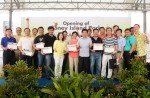
The walk and a subsequent carnival of food and games were organised by some young people from Outward Bound Singapore for their peers to get to know migrant workers better, appreciate their contributions to Singapore and raise awareness about environmental conservation.

It is supported by a grant from the National Youth Council.

Along the way, Mr Depu, who goes by one name, and 100 other workers talked to the youth and made new friends. One of them is student Eugene Yap, 16.

The teen asked questions, from why Mr Depu wanted to come to Singapore to work to whether he is enjoying his time here as well as how to translate certain English words to Bengali.

Before the walk, foreign workers were an unknown entity to Eugene and his friends.

“They just come here to work and are gone after a few years. So I wanted to find out more about them,” said Eugene, who found out about the event through Facebook and signed up for it. He usually spends his Sundays either sleeping in or working part-time as a waiter in a restaurant.

Eugene found out that Mr Depu came here to work to support his family, wife and seven-year-old son back home. They chatted about how the scenery on Coney Island was similar to that of the countryside in Bangladesh. He discovered that Mr Depu “dressed nicely” and spoke good English.

Said Eugene: “I gained new perspectives and hope that I will be able to meet him again in future.”


This article was first published on November 14, 2016.
Get a copy of The Straits Times or go to straitstimes.com for more stories.

Image: 
Category: 
Publication Date: 
Monday, November 14, 2016 – 16:00
Send to mobile app: 
Source: 


Story Type: 
Others

Source link

Jokowi, PM Lee meet in Semarang for leaders’ retreat

0


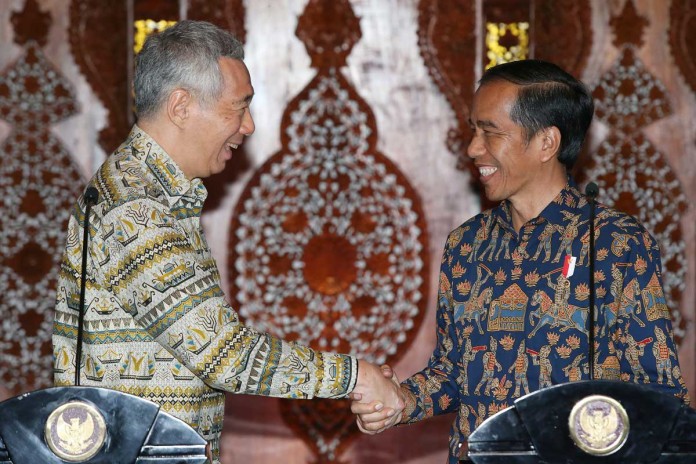
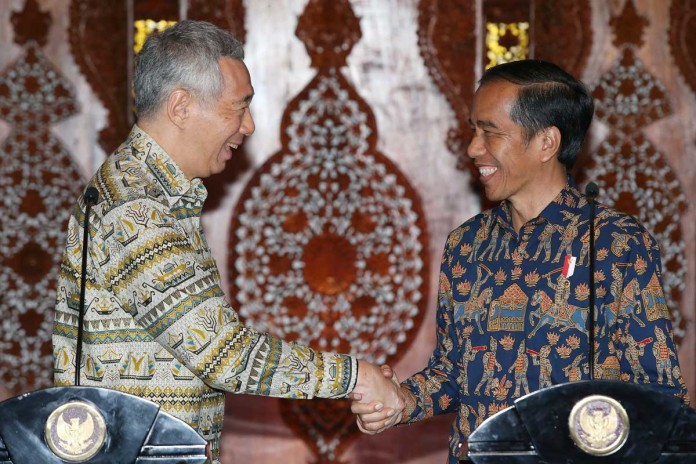
President Joko “Jokowi” Widodo will meet his Singaporean counterpart Prime Minister Lee Hsien Loong on Monday in Semarang, Central Java, for a leaders’ retreat, during which they will discuss efforts to further enhance the economic relationship between the neighbouring countries.

President Jokowi and his entourage left Jakarta on Monday morning on the presidential aircraft and were later scheduled to meet Lee for a tête-à-tête at the Wisma Perdamaian building in Semarang, located some 450 kilometers east of the capital.

The leaders, accompanied by their spouses, are also scheduled to witness the signing of several memorandums of understanding (MoU) to mark various cooperations initiated by their governments.

After lunch, President Jokowi and Prime Minister Lee will move to the neighbouring Kendal regency to inaugurate the Kendal Industrial Park, an industrial complex equipped with real estate facilities developed by a joint venture between Jakarta-listed industrial estate developer Jababeka and Singapore-based Sembcorp Development.

The integrated township, known by its commercial name “Park by the Bay”, will accommodate manufacturing companies in industries such as furniture, food, bicycles and building materials on a plot of 2,700 hectares, equivalent to more than 4,000 football fields.

“President Jokowi and PM Lee Hsien Loong are also scheduled to inspect [the facility] before returning to Semarang,” Presidential Press Bureau chief Bey Machmudin said on Monday.

President Jokowi and his entourage, which includes Coordinating Maritime Affairs Minister Luhut Pandjaitan, Tourism Minister Arief Yahya and Investment Coordinating Board (BKPM) head Thomas Lembong, will fly back to Jakarta in the evening.

Image:
Category:
Publication Date:
Monday, November 14, 2016 – 14:41
Send to mobile app:
Source:

Story Type:
Others

Source link

Jokowi, PM Lee meet in Semarang for leaders' retreat Ina Parlina

0

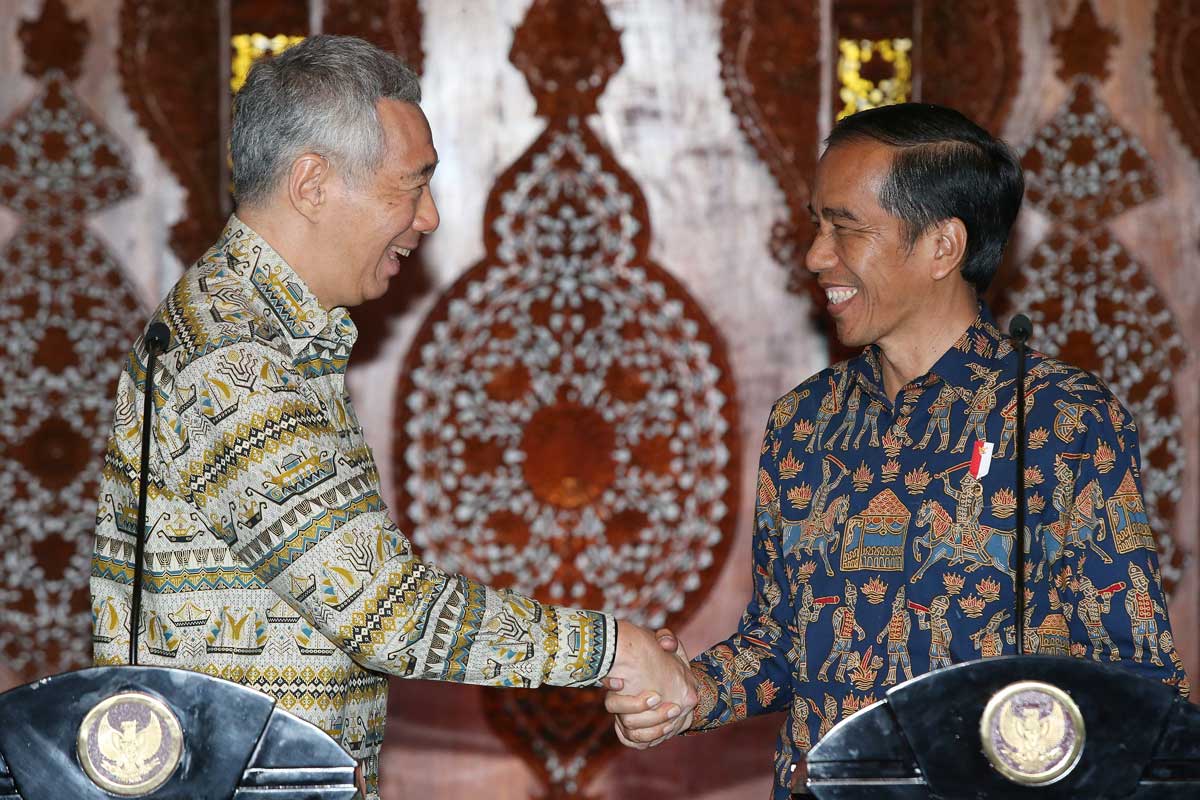
President Joko “Jokowi” Widodo will meet his Singaporean counterpart Prime Minister Lee Hsien Loong on Monday in Semarang, Central Java, for a leaders’ retreat, during which they will discuss efforts to further enhance the economic relationship between the neighbouring countries.

President Jokowi and his entourage left Jakarta on Monday morning on the presidential aircraft and were later scheduled to meet Lee for a tête-à-tête at the Wisma Perdamaian building in Semarang, located some 450 kilometers east of the capital.

The leaders, accompanied by their spouses, are also scheduled to witness the signing of several memorandums of understanding (MoU) to mark various cooperations initiated by their governments.

After lunch, President Jokowi and Prime Minister Lee will move to the neighbouring Kendal regency to inaugurate the Kendal Industrial Park, an industrial complex equipped with real estate facilities developed by a joint venture between Jakarta-listed industrial estate developer Jababeka and Singapore-based Sembcorp Development.

The integrated township, known by its commercial name “Park by the Bay”, will accommodate manufacturing companies in industries such as furniture, food, bicycles and building materials on a plot of 2,700 hectares, equivalent to more than 4,000 football fields.

“President Jokowi and PM Lee Hsien Loong are also scheduled to inspect [the facility] before returning to Semarang,” Presidential Press Bureau chief Bey Machmudin said on Monday.

President Jokowi and his entourage, which includes Coordinating Maritime Affairs Minister Luhut Pandjaitan, Tourism Minister Arief Yahya and Investment Coordinating Board (BKPM) head Thomas Lembong, will fly back to Jakarta in the evening.

Image: 
Category: 
Publication Date: 
Monday, November 14, 2016 – 14:41
Send to mobile app: 
Source: 


Story Type: 
Others

Source link

Road turned into runway for Singapore fighter jets

0

Fighter jets roared down Lim Chu Kang Road and into the skies yesterday morning as part of the Republic of Singapore Air Force’s (RSAF) Exercise Torrent.

The road had been converted into a runway in 48 hours, for the exercise, which demonstrated the RSAF’s capability to swiftly assemble air power to counter any threat.

“Because Singapore is a small country, we must always protect our airspace,” said Defence Minister Ng Eng Hen, who spoke to reporters after the event. “It shows that we can convert a highway to an airstrip and it gives us a lot of confidence that we’ll be able to protect our skies under all conditions.”

The exercise saw 12 fighter jets taking off and landing across four runways – Lim Chu Kang Road and three others in Tengah Airbase – in quick succession.

In the days leading up to the exercise, the road’s bus stops and lamp posts were temporarily removed to make way for portable airfield lights and a mobile air control tower.

Specialised road sweepers combed the 2.5km stretch to pick up debris left by the heavy vehicles that normally ply the road, and loud flares were fired to scare away birds that could pose a hazard to the aircraft.

Yesterday was the seventh time that Exercise Torrent has been held since 1986, but it was the first time that the new F-15SG fighters have taken part. These aircraft go up to 2.5 times the speed of sound, and are among the world’s most advanced. In total, the effort involved around 1,000 regulars, operationally ready national servicemen and full-time national servicemen.
 

Observers at yesterday’s event – including MPs and officers from defence agencies around the world – were also given a demonstration of how an aircraft experiencing brake failure might land.

Mr Vikram Nair, who chairs the Government Parliamentary Committee for Defence and Foreign Affairs, said that Exercise Torrent showed how quickly Singapore is able to convert a road into an alternative runway.

“It’s important because it allows more aircraft to take off and land as the situation calls for,” he said.

“The air force is a very important part of force projection if ever the need arises, so I think it’s important for Singapore to always be ready to rise to the occasion if ever called to do so.”

Yesterday also marked the end of Exercise Semangat Bersatu, a joint military exercise between Singapore and Malaysia.

The exercise, which was first conducted in 1989, was held in Kluang, Johor, this year. It involved around 980 soldiers from both sides.

The closing ceremony was presided over by Brigadier-General Desmond Tan, Chief of Staff-General Staff of the Singapore Army, and Lieutenant-General Ahmad Hasbullah Mohd Nawawi, Deputy Chief of Army of the Malaysian Armed Forces.

Read also: Planes taking over Lim Chu Kang Road


This article was first published on Nov 14, 2016.
Get a copy of The Straits Times or go to straitstimes.com for more stories.

Image: 
Category: 
Blurb: 
Publication Date: 
Monday, November 14, 2016 – 15:00
Keywords: 
Send to mobile app: 
Source: 


Story Type: 
Others

Source link

Move to save Singapore's endangered sea turtles

0

The gentle sea turtle has long fuelled the imagination, and Singaporeans flock to turtle sanctuaries elsewhere to catch sight of them.

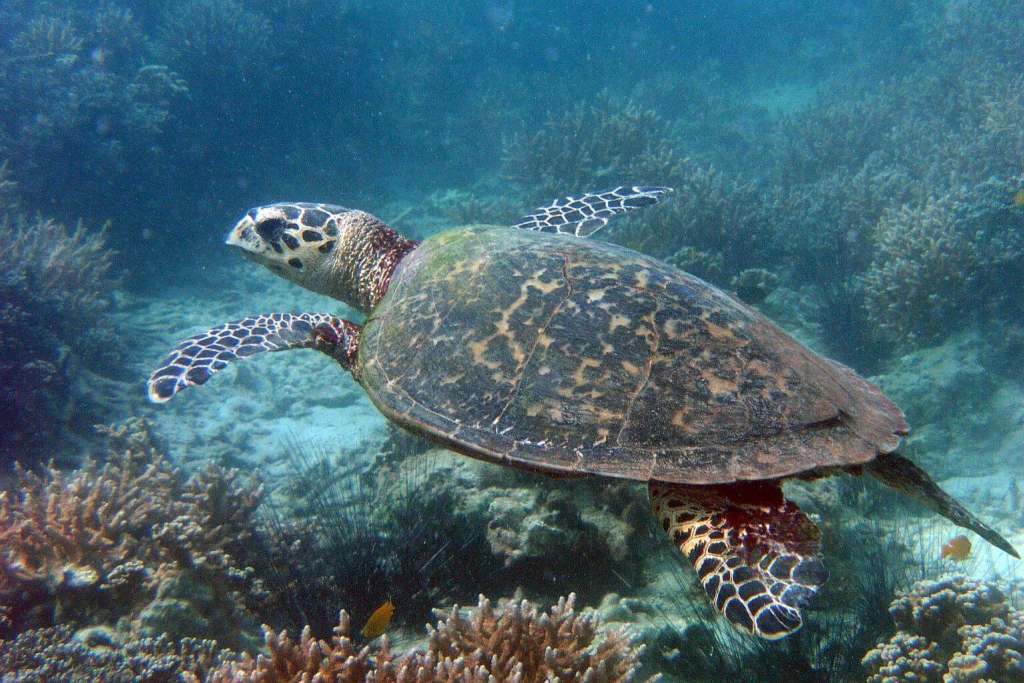
But sea turtles also live and nest right here, unknown to many. Unfortunately, the two species of sea turtles most commonly found here – the hawksbill turtle and the green turtle – are considered critically endangered.

While there has been no formal population count, more is being done to study the elusive creatures.

The Straits Times has learnt that a Marine Turtle Working Group – comprising staff from the National Parks Board (NParks), academics from institutions such as the National University of Singapore, and interest groups and individuals – is being formalised.

Such collaborative work has been ongoing since 2006, but the formalisation of the working group will better tap the expertise of the group to look into a wider range of issues, such as the development of turtle hatchery procedures.

Earlier this year, HSBC Singapore donated $500,000 to build the country’s first sea turtle hatchery, to be set up at the southern lagoon on Small Sisters’ Island by the end of next year. It will form an integral part of Singapore’s first marine park.

Experts in the working group will also continue to monitor beaches for egg-laying turtles and conduct research on turtle movements in waters here. There have been 10 reported turtle sightings at East Coast Park and Changi Beach since 2012.

It is possible that there have been more visits that were not observed or reported, said Dr Lena Chan, group director of NParks’ National Biodiversity Centre.

“Hence, NParks felt it was timely to expand the current turtle management procedure, which focuses on reporting of incidents, to include a wider range of activities… in partnership with various academic and interest groups who have indicated interest in marine turtle issues.”

Mr Stephen Beng, chairman of the marine conservation group of the Nature Society (Singapore) and a member of the working group, said sea turtles depend on many habitats – they nest on sandy beaches, forage for food in mangroves and seagrasses, and find shelter in coral reefs. All of these habitats can be found in Singapore.

He added: “As integral parts of the marine ecosystem, sea turtles are also useful indicators of the vitality of our overall marine environment.

“Singapore is also unique as our shores are more urbanised compared with our neighbours’, and the working group will work on recommendations to balance maintaining shoreline integrity and biodiversity survival.”

Science-backed strategies to conserve wildlife

Not much is known about the critically endangered sea turtles of Singapore. But a marine turtle working group hopes to change that with research.

At least nine groups are studying how to conserve local wildlife with science-backed strategies.

Animals such as pangolins, otters and both species of monkeys in Singapore – long-tailed macaques and Raffles’ banded langurs – have already benefited.

The working group for the shy langur was set up in August to map out an action plan for the conservation of this species in the coming years.

In May, members of the otter working group leapt into action to rescue and rehabilitate a six-week-old smooth-coated otter pup which almost died when its family did not return for it.

Dr Lena Chan, group director of the National Parks Board’s National Biodiversity Centre, said working groups focus on animals at most immediate risk of local extinction, as well as those associated with issues that affect a range of stakeholders.

She said: “Working groups for otters, macaques and pythons were formed to better understand and address issues such as human-wildlife interaction and conservation, to minimise negative impact on stakeholders while also achieving conservation aims.”

For Ms Sabrina Jabbar of the macaque working group, a milestone was a “monkey-herding” process some members developed that kept animals away from homes in Bukit Timah and reduced instances of human-animal conflict. This involved a trained guard at a hot spot shooing monkeys from residential areas by tapping a stick or umbrella on the ground, or telling the monkeys to go away.


This article was first published on Nov 14, 2016.
Get a copy of The Straits Times or go to straitstimes.com for more stories.

Image: 
Category: 
Publication Date: 
Monday, November 14, 2016 – 15:00
Send to mobile app: 
Source: 


Story Type: 
Others

Source link

PM plants mangrove saplings in water at Punggol Reservoir

0

The time-honoured tradition of Tree Planting Day treaded new ground – or rather, water – yesterday, with Prime Minister Lee Hsien Loong planting mangrove tree saplings at Punggol Reservoir.

Mr Lee and his fellow MPs for Ang Mo Kio GRC and Sengkang West planted tropical mangrove trees on specially designed floating turfs of soil, the first time trees are being planted in Singapore using this method.

The Avicennia alba trees, commonly known as api-api putih, will have roots suspended in the water to help absorb nutrients that algae depend upon, thereby reducing the algae and improving water quality in the reservoir.

“This is the first time I’ve planted a tree in the water!” Mr Lee said later in a Facebook post.

“The mangrove plant absorbs pollutants and will hopefully make the area greener and more scenic for residents,” he added.

Minister of State for Health Lam Pin Min, who is the MP for Sengkang West, told reporters after the event that he had read about an installation of floating trees in Rotterdam, Holland, and decided to try it out here.

Besides, the constituency is next to Punggol Reservoir, which already houses the Sengkang Floating Wetland, he said.

“We are discussing with (national water agency) PUB to see whether we can locate it near to the floating wetland where people can view it when they walk across the bridge,” he added.

Residents from both constituencies attended the event, which also featured a carnival with booths on protecting and safeguarding the environment.

Many also participated in games that challenged players to clean up the surrounding areas.

As part of the day’s activities, Secondary 3 student Syabil Qusyairi, 15, and his Bartley Secondary schoolmates rowed kayaks for half an hour, looking for litter on the surface of the reservoir.

Before setting off, they were given a quick lesson on why throwing trash into bodies of water is harmful. He said: “I learnt that rubbish thrown into the water may be eaten by fishes and they, in turn, are eaten by bigger fishes that may eventually be caught for human consumption.”

The tree-planting effort comes on the back of recent initiatives to improve the living environment in one of Singapore’s newest estates. Last month, an 8.8km cycling network in Punggol linking homes to train stations, schools and other amenities was unveiled.

Mr Lee said the Sengkang-Punggol region has flourished over the past 10 years, and is home to many young families, with ample outdoor recreational options.

The tree-planting campaign was launched in 1963 by first prime minister Lee Kuan Yew and has become an annual nationwide affair to highlight the importance of greening the city.

Tree-planting activities have been held across the island this month, including in Sembawang GRC yesterday which Coordinating Minister for Infrastructure and Minister for Transport Khaw Boon Wan attended.


This article was first published on Nov 14, 2016.
Get a copy of The Straits Times or go to straitstimes.com for more stories.

Image: 
Category: 
Blurb: 
<p>The time-honoured tradition of Tree Planting Day treaded new ground – or rather, water – yesterday, with Prime Minister Lee Hsien Loong planting mangrove tree saplings at Punggol Reservoir.</p>
Publication Date: 
Monday, November 14, 2016 – 15:00
Send to mobile app: 
Source: 


Story Type: 
Others

Source link

Philippines police boss says US guns deal on after Duterte U-turn

0

MANILA – The Philippines police will push ahead with the purchase of 26,000 assault rifles from a US supplier, the police chief said on Monday, following an about-face by President Rodrigo Duterte, who previously said the deal would be scrapped.

Duterte had a week ago expressed anger at “fools” and”monkeys” in Washington seeking to block the deal and said he would cancel it himself. But Duterte’s police chief said he revoked that decision, apparently after Republican Donald Trump’s surprise win in the US presidential election. “(The president) told me to continue the deal,” Philippine National Police (PNP) chief Dela Rosa, told a news conference.

“The processing of documents are going on smoothly … we have the blessing of the president to continue the transaction.” Dela Rosa did not say why Duterte had changed his mind, but he said there would be a new president in Washington and “he and Donald Trump are friends”.

Aides to Ben Cardin, who sits on the US Senate Foreign Relations Committee, last month said the State Department had been informed Cardin would oppose the deal during the prenotification process, effectively putting the brakes on it.

Cardin was reluctant for the United States to provide weapons to the police given concern about alleged human rights violations in Duterte’s war on drugs, which killed 2,300 people in its first four months.

The tough-talking Duterte has been incensed by US concerns about a drugs crackdown he says is needed to save his country from ruin.

He has regularly berated the Obama administration but has expressed a desire to work with Trump.

Dela Rosa said it was possible the president would scrap the guns deal if there were an intervention in Washington. “If they will block it, I’m sure the president will again tell me to stop it. We’re paying for it, we’re not begging for it,” he said.

Image: 
Category: 
Publication Date: 
Monday, November 14, 2016 – 13:38
Keywords: 
Send to mobile app: 
Source: 


Story Type: 
Others

Source link

China's Xi tells Trump co-operation is only choice

0

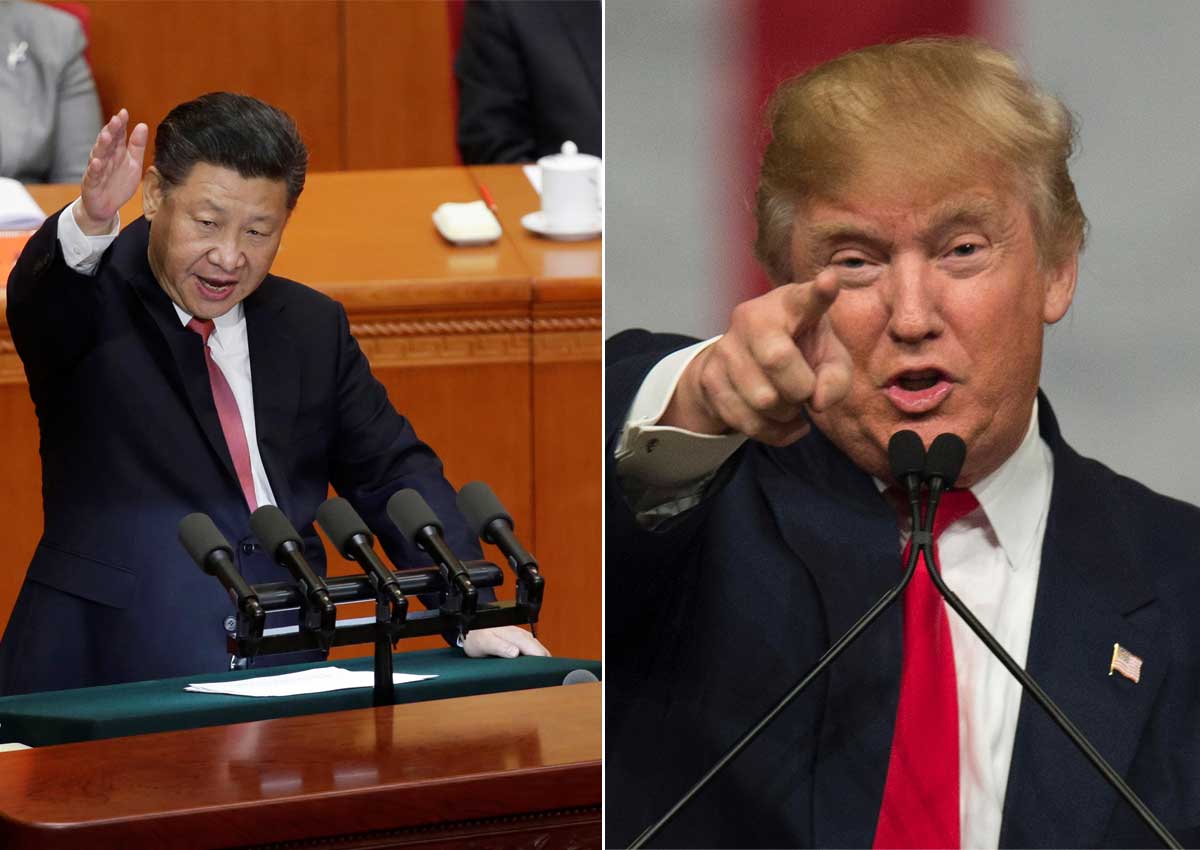
BEIJING – Chinese President Xi Jinping told US President-elect Donald Trump in a telephone call that co-operation was the only choice for relations between the two countries, Chinese state media said, in their first interaction since the US election.

Trump had lambasted China throughout the US election campaign, drumming up headlines with his pledges to slap 45 per cent tariffs on imported Chinese goods and to label the country a currency manipulator on his first day in office.

His election has injected uncertainty into bilateral relations at a time when Beijing hopes for stability as it faces daunting reform challenges at home, a slowing economy, and a leadership reshuffle of its own that will put a new party elite around Xi in late 2017. “The facts prove that co-operation is the only correct choice for China and the United States,” China Central Television (CCTV) cited Xi as telling Trump in the call that occurred on Monday in China.

“The two sides must strengthen coordination, promote the two countries’ economic development and global economic growth, expand all areas of exchange and co-operation, ensure the two countries’ people obtain more tangible benefits, and push for better development going forward in China-US relations,” Xi said.

CCTV said Trump told Xi he was willing to work with China to strengthen co-operation and that he believed US-China relations can “definitely achieve greater development”.

The two agreed to maintain close communication and meet soon, CCTV said. Xi had congratulated Trump in a message delivered shortly after his surprise election victory last week.

There is intense speculation over the impact of Trump’s win on issues facing the world’s two largest economies, from climate change and global trade to the security balance in the Asia-Pacific.

And his criticism of US allies, including Japan, for free-riding on US security guarantees, has deepened anxiety among Washington’s allies about its commitment to post-war security arrangements in the face of a rising China and volatile North Korea.

Trump appears to be seeking quick ways to withdraw the United States from a global accord to combat climate change, billed by China and US President Barack Obama as a key area for co-operation.

China has also signalled it will promote plans for regional trade integration, vowing to seek support for a Beijing-backed Asia-Pacific free trade area at a summit in Peru later this month, after Trump’s win dashed hopes for the US-led Trans-Pacific Partnership (TPP).

Image: 
Category: 
Publication Date: 
Monday, November 14, 2016 – 13:24
Send to mobile app: 
Source: 


Story Type: 
Others

Source link

Man builds special wheelchair to take wife on walks

0

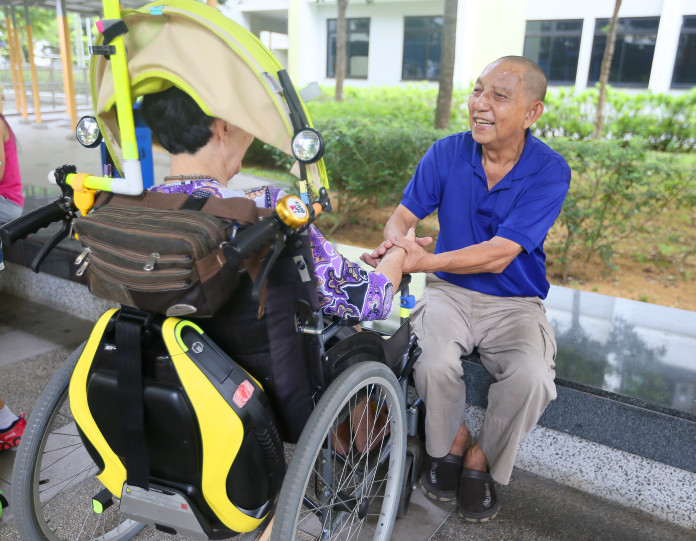
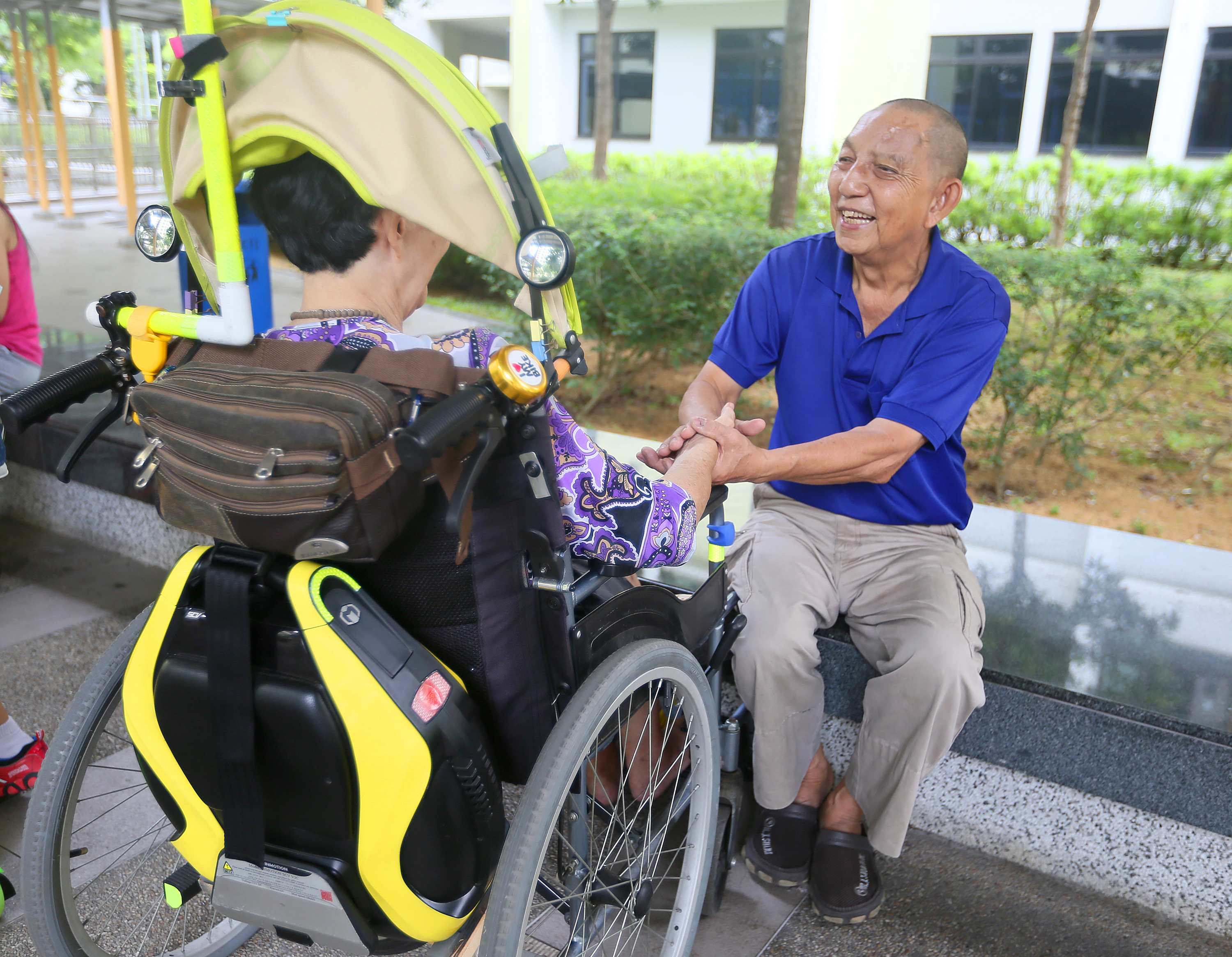
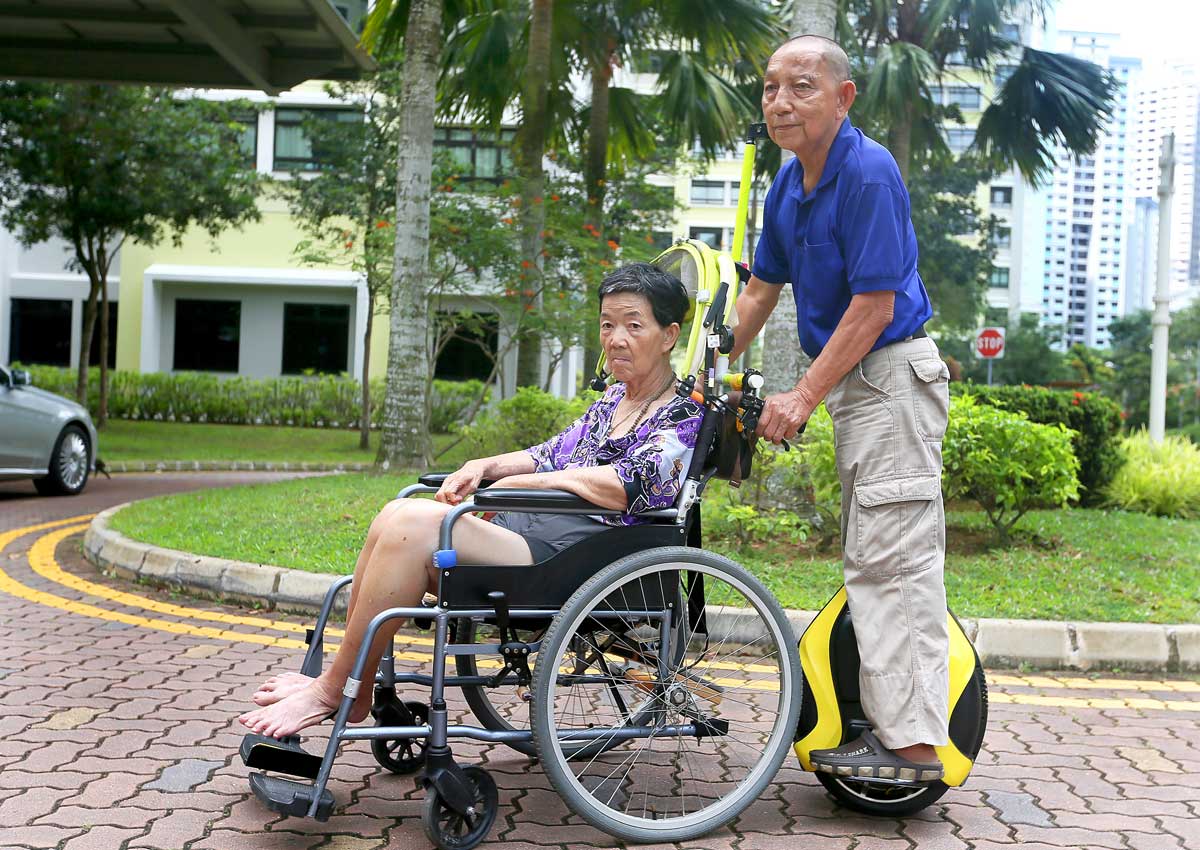
He takes his wife, who has dementia, on outings using a wheelchair built for two.

Mr Tan Ban Ho, a 72-year-old retiree, came up with his unique contraption after discovering that going out helps to calm his wife, Madam Loh Yock Yeng, 71.

Two months ago, to make it easier for him to push the wheelchair at his age, he attached an electric unicycle, which he bought for $600, to the rear of the wheelchair.

This enables him to ride the unicycle when pushing his wife.

Armed with technical knowledge from his years as an ITE lecturer teaching electronics, Mr Tan put the contraption together himself. He installed a shade for his wife and a polyvinyl chloride pipe to hold an umbrella over his head.

He also made a metal and wooden ramp to hold the unicycle upright when it is not in use.

He told The New Paper last Wednesday that Madam Loh had been diagnosed with dementia in 2006.

“At first, I didn’t understand what she meant when she said she wanted to go out, and she would throw tantrums at home,” he said.

“A few months after her diagnosis, when I finally took her out on a wheelchair, we walked on a park connector for about 5km.

“She became very calm and happy, but the skin on my soles tore.

Photo: The New Paper

“Earlier this year, I thought of riding an electric unicycle behind the wheelchair so it would be faster and more efficient.”

The couple now go out every morning after breakfast to places such as Marina Barrage, Japanese Garden and VivoCity.

Mr Tan’s innovation and devotion to his wife caught the attention of the Ministry of Health’s Successful Ageing Singapore Facebook page.

The Facebook post said: “We came across Mr Tan riding his unicycle and pushing his wife on her wheelchair while driving one day.

“This is not something you’ll usually see in Singapore, and we thought it would be interesting to share his story on Facebook.

“Society tends to perceive seniors as more archaic in their methods, but Mr Tan has proven otherwise.

“He has shown us that seniors have the creativity and ingenuity to tackle problems, and he is a good example of how we have so much more to learn from the seniors around us.”

Mr Tan told TNP that Madam Loh used to be active and would go to the residents’ corner in their neighbourhood regularly to exercise and sing karaoke.

One day, when she was cooking vegetables, she kept asking him if she had added salt and Mr Tan suspected the worst.

“When I found out she had dementia, I was devastated and heartbroken. My wife was so healthy and rarely fell sick, so why did this happen to her?” he said.

ROMANCE

Their romance began during their St John Ambulance Brigade co-curricular activities.

“I was from Whampoa Secondary School and she was from Chung Hwa Girls’ High School, and we would meet once a week for the activities.

“We got to know each other after a while and I thought she was a lovely and responsible person,” he said.

They got married in late 1970, and have a son, 43, and a daughter, 40.

The four of them live in a four-room flat in Dover Crescent.

He recalled the early months of his wife’s illness as being very difficult.

“Her dementia caused her to act like a two-year-old child, so I couldn’t comprehend what she was trying to say.

“Sometimes, she would stand next to me at 3am while I’m asleep and I would get a shock. But that’s when I knew that she had soiled herself.

“She can’t control her bowel movements and would smear faeces on the walls with her hands…” he said.

“If I don’t take her out, she gets agitated and would shake doors and throw things.

“She also turns on the taps and gas stove, which was terrifying.”

Once, someone made a police report after she threw a porcelain cup out of the window.

Every day, Mr Tan feeds and bathes his wife and changes the four layers of soiled towels on the bed and wheelchair without fail. When her hair gets too long, he cuts it for her.

Mr Tan said: “The doctor said her dementia is incurable, even with medication. The medical bills were $200 a month, so I stopped giving her the medication in the middle of this year.”

Madam Loh no longer remembers her name and who her children are and even mistakes Mr Tan for her father.

When TNP asked Mr Tan what he would like her to remember most, he said: “I want her to know that I still love her, and I don’t want her to worry so much and go through such hardships any more.

“I’m afraid of what might happen to her if I pass away first, but for now, I’ll continue to push her wheelchair every step of the way.”

shiyunc@sph.com.sg


This article was first published on Nov 14, 2016.
Get The New Paper for more stories.

Image: 
Category: 
Publication Date: 
Monday, November 14, 2016 – 14:00
Keywords: 
Send to mobile app: 
Source: 


Story Type: 
Others

Source link