Home Blog Page 2368

Trump’s presence towers over final weekend of Singapore Writers Festival

0

SINGAPORE: What could a Trump presidency mean for the arts?

At the recently-concluded Singapore Writers Festival (SWF), prominent American writers weighed in with responses that ranged from optimism to a sense of confusion after Donald Trump triumphed over Hillary Clinton in the race to the White House. 

“The one upside is that we are going to see a flourishing of art, literature, TV and movies in the next four years,” said American novelist Hanya Yanagihara, during her talk on Friday evening at The Arts House, who added that “dictatorships have given us some of the greatest pieces of contemporary art that have endured as documents of their time.”

In contrast, Pulitzer Prize-winning poet Vijay Seshadri admitted to being confused about the immediate role of the arts during a pivotal moment in the history of the US.

Citing issues such as climate change during his own talk on Sunday night, he said: “Certainly, art can raise consciousness… (but) I think we have gone beyond the point of considering this generally, that in fact there are specific disasters that are going to occur if we don’t do something, and global warming is on top of the list for me. The guy heading (Trump’s) transition team for the Environmental Protection Agency is a climate change denier. We’re in these tipping points and I’m very confused as to what can art do at this point.”

The two writers weren’t the only ones at the festival who grappled with the outcome of last week’s US presidential election.

The second and final weekend of the festival also featured the likes of Indonesian author Eka Kurniawan and popular Detective Conan manga artist Gosho Aoyama, and even an impromptu tribute to the late legendary singer-songwriter Leonard Cohen.

But for other journalists, authors, and even a YouTube star, there was no escaping the President-elect.  

At her full-house SWF lecture on Sunday morning at the National Gallery Singapore auditorium, acclaimed author Lionel Shriver said that she had found out about Trump’s victory immediately upon landing at Changi Airport. “I just stared (at the news) and said ‘What?’ at the top of my lungs and everyone looked over. I don’t think you’re supposed to do that at the airport.”

Author Lionel Shriver talks about her latest novel (and how she found out about Trump’s victory at Changi Airport). (Photo: Singapore Writers Festival)

Making it even more significant for the author of the novel-turned-movie We Need To Talk About Kevin was that her latest dystopian novel, The Mandibles: A Family, 2029-2047, takes place in a near-future where America is a “pariah nation”, the economy has collapsed, and there’s a wall between the US and Mexico – built by the latter to keep Americans out.

“One of the things that makes this weird for me is that… it’s about the United States falling apart – and it’s gotten ahead of me. So this has become historical fiction,” she said.

Meanwhile, YouTube star The Nerdwriter, whose real name is Evan Puschak, described Trump as “a kind of trauma to the American national consciousness” during his jam-packed Saturday night session titled Unravelling The US Presidential Election.

Joking that he had to tweak his pre-planned presentation after being “fully, fully confident” of a Clinton win, Puschak pointed out how a Trump victory “(also) encourages us to see things that were previously invisible and inaudible. It’s a phenomena that has to be explained.”

Puschak went on to discuss how the two major American parties had neglected the white working class and how Trump had unsettled the media.

“He’s so good at talking you into pure confusion, to make you not remember what you were trying to pin him down on one thing – and that’s tough on journalists. There’s no Donald Trump course in journalism,” he said.

For journalist and author Nisid Hajari, the divisive online environment meant it was time for online companies to rethink their role. “The idea that the Internet would allow good things to come out and people would access it is not necessarily turning out to be true. If you’re Facebook, Yahoo, Google, do you have a responsibility to police what’s on your site? I think you do,” he told Channel NewsAsia.

“I think the media plays a big role right now,” he added. “There are a lot of ugliness that has been dredged up by this campaign. The degree of hate crimes and bigotry had been rising over the last eight years and that now it’s being legitimised is somewhat frightening. And the only way to push back is to expose it.”

Festival director Yeow Kai Chai said he was not surprised at how hot the topic of the US presidential elections was.

“It happened smack in the middle of the festival, so a lot of American authors who arrived had just found out about the results and it obviously affected them. And the audiences also want to know how Americans could have voted for Donald Trump,” he said, adding that they had to move the scheduled talk by The Nerdwriter to a bigger venue because of the interest.

Yeow also said that he is currently looking at making the festival even more topical, pointing out that this year’s lineup also included talks on Europe’s migrant crisis and terrorism. One of the festival’s anticipated guests, German investigative journalist Frederik Obermaier, was also scheduled to talk about the Panama Papers before cancelling his trip for health reasons.

Source link

Fly fr $79 all-in to 20 destinations with Scoot’s Take Off Tuesday promo (7am to 9am) on 15 Nov 2016

0

Scoot’s 2hr Take-Off Tuesday promotion tomorrow, 15 Nov 7am to 9am. Fares start fr $79 to 20 destinations!

Fly fr $79 all-in to 20 destinations with Scoot’s Take Off Tuesday promo (7am to 9am) on 15 Nov 2016

Escape the ordinary with Super Scootee. Check out fares at Scott’s Take Off Tuesday sale featuring all-in fares $79 to 20 destinations

Source

Fire breaks out at Little India shophouse

0

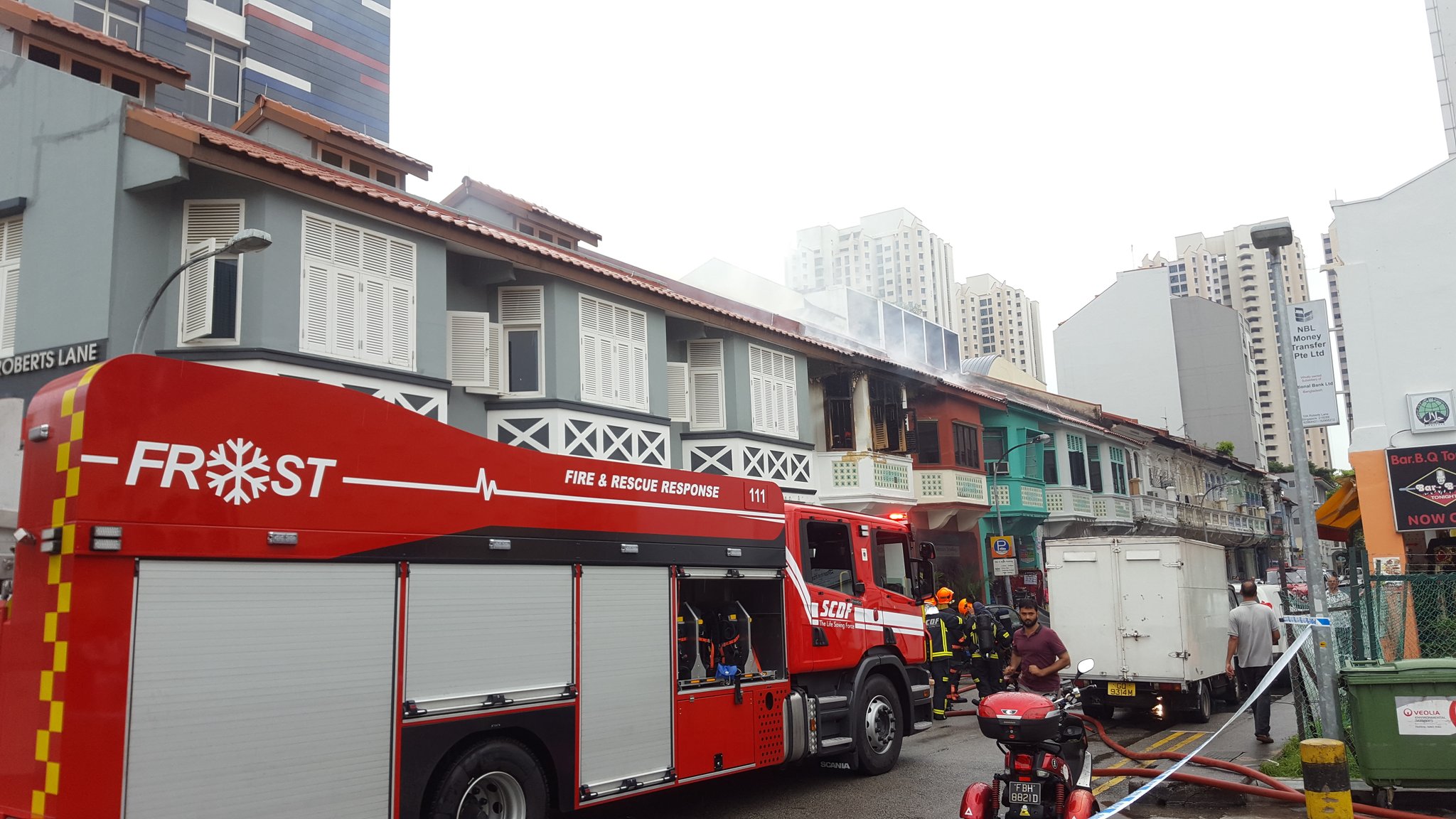
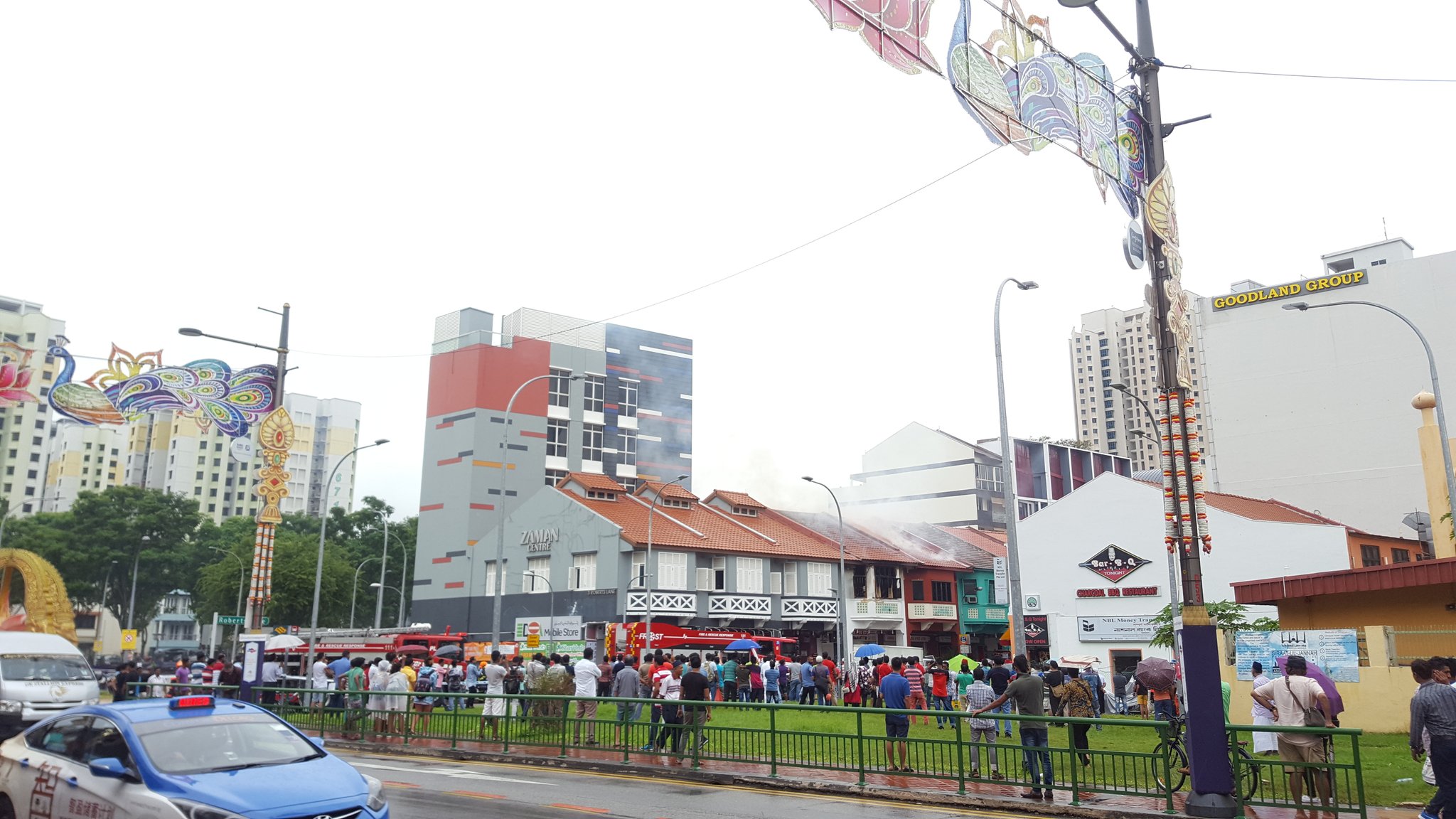
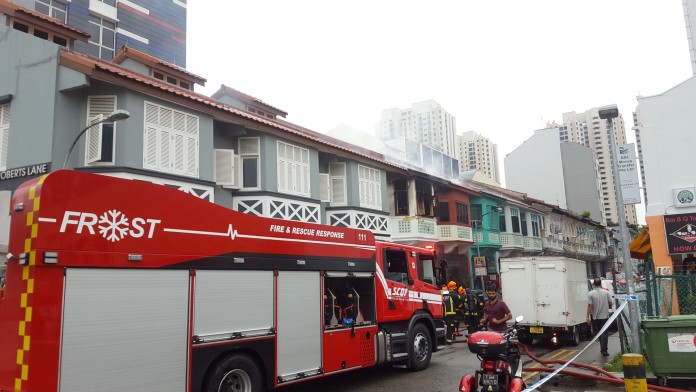
SINGAPORE: A fire broke out at a shophouse in Little India on Monday (Nov 14). 

According to the Singapore Civil Defence Force (SCDF), the fire at 7 Roberts Lane also “slightly affected” the shop’s neighbouring unit.

SCDF said they were alerted to the incident at 3.20pm. When they arrived, three people had self-evacuated from the unit. There were no reported injuries.

(Photo: Calvin Hui)

Using two water jets, SCDF extinguished the fire in about 30 minutes. A fire engine, three red rhinos and three support vehicles were dispatched to the scene.

The cause of the fire is under investigation, SCDF added. 

(Photo: Calvin Hui)

Source link

Director Paul Verhoeven bemoans Hollywood's lack of sex

0

“Basic Instinct” director Paul Verhoeven complained on Sunday that Hollywood had stopped making “challenging” movies featuring provocative sex as it clamored to cash in on mainstream audiences.

The Dutch filmmaker, famous for a slew of films that shocked audiences with their sex and violence, said studios chasing ratings were now mainly interested in the lucrative “PG-13” market.

“If you say it has to be PG-13, there are a lot of things you cannot do. You cannot be provocative, you cannot be controversial, you cannot be sexual, erotic, in a direct way,” he told AFP.

“It all has to be suggestive, elliptic and whatever. And so then the movies become neutral and the movies are not challenging you in any way.” The legendary filmmaker was behind ultraviolent 1980s and 1990s classics “RoboCop,” “Total Recall” and “Starship Troopers,” as well as erotic films like “Showgirls” and “Basic Instinct.”

He spoke out on the red carpet for the Los Angeles-based AFI Fest screening of his latest controversial film “Elle,” a twisted cocktail of sex, violence and dark comedy that is France’s pick to compete for the best foreign film Oscar.

With its radical take on the aftermath of a brutal sex crime, the movie garnered rave reviews when it debuted at the Cannes Film Festival and drew plenty of dark laughs from the audience on Sunday.

It tells the story of a powerful woman played by iconic French actress Isabelle Huppert, who is violently raped and embarks on a dangerous game with her attacker.

In the United States, the rating of movies is a voluntary system managed by the Motion Picture Association of America and the National Association of Theatre Owners.

A film runs the risk of being R-rated for use of the “f-word” as a verb, a graphic depiction of hard drug use, full male nudity, sex or extreme and graphic violence.

Verhoeven revealed how he had originally intended to make the movie in Hollywood before numerous American actresses turned down the lead role – fearing it too controversial – forcing him to relocate to France.

“There’s no problem in France. As a director you can do what you want,” he told AFP.

“I escaped to France because I couldn’t find anything that was for me challenging. Why bother, you know?” Huppert, 63, who some critics say has delivered the performance of her career in “Elle,” was being honored as part of the screening for a glittering career that has seen her appear in more than 100 movies and television productions.

Verhoeven described Huppert as “the most fantastic actor I’ve ever worked with, on a level that I did not know existed.”

Michael Barker, co-founder of Sony Pictures Classics, which is distributing the movie, said Huppert “has made films in so many countries around the world and her talent as an actress has grown and I’d say there’s pretty much nothing she is afraid of.”

Huppert said she felt “grateful” to be honored, adding: “Each time something like this happens to me I still feel a little bit surprised.”

Image: 
Category: 
Publication Date: 
Monday, November 14, 2016 – 17:43
Keywords: 
Send to mobile app: 
Source: 


Story Type: 
Others

Source link

Taiwan museum removes defaced statues given by Jackie Chan amid strained China ties

0

Statues donated by pro-Beijing actor Jackie Chan to a top Taiwanese museum and later defaced by anti-China protesters have been removed from display, officials said Monday, in a further sign of ties between the neighbours deteriorating.

Workers began to move the set of 12 zodiac animal sculptures from the garden of the National Palace Museum’s southern branch in the presence of several lawmakers from the ruling Beijing-sceptic Democratic Progressive Party (DPP), who had backed their removal.

The sculptures are copies of high-profile historic artefacts from China’s Qing Dynasty and are seen on the mainland as emblematic of the country’s suffering under foreign invaders.

The originals of the statues were looted from Beijing’s Summer Palace in 1860 by British and French troops.

Hong Kong action star Chan, an honorary Oscar recipient, is a member of the Chinese People’s Political Consultative Conference, a key political advisory body, and has drawn criticism in Taiwan for his pro-Beijing remarks.

Beijing still sees self-ruling Taiwan as part of its territory to be reunified, by force if necessary, and many on the island are fiercely opposed to any sign of increasing Chinese influence.”Jackie Chan himself signifies unification propaganda and we do not wish to see such politically charged (statues) in the southern branch (of the museum),” said DPP lawmaker Tsai Yi-yu.

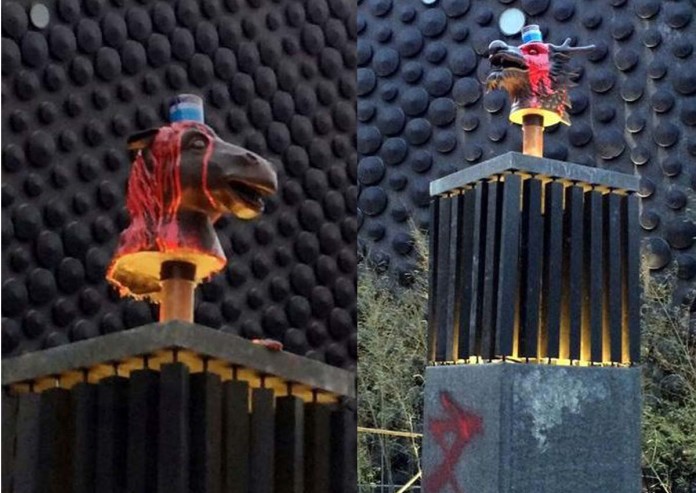
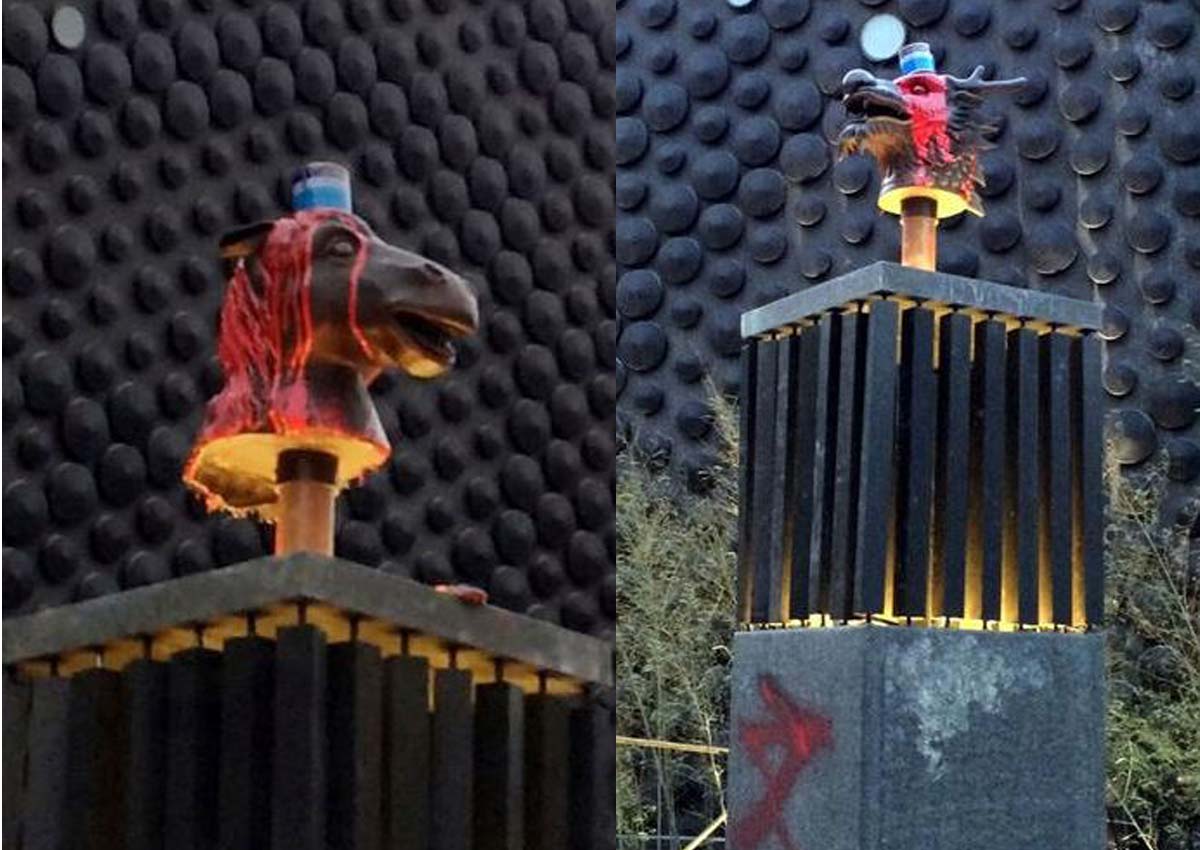
Two of the bronze statues were defaced with red paint and daubed with anti-China slogans last December, days after the museum opened in Chiayi county.

The attack came ahead of presidential elections in January, which saw Tsai Ing-wen of the DPP sweep to power, ending eight years of rapprochement with China under the Kuomintang (KMT) government.

Relations with China have deteriorated since Tsai’s election, and Beijing suspended official contacts with Taipei after her government took office in May.

Wang Shih-sheng, head of the museum’s Chiayi county branch, said the statues were removed in favour of “displaying more original artworks”.

She said the statues would be kept in storage until the museum has decided what to do with them.

Reactions were mixed on social media, with some accusing the museum of succumbing to political ideology and others urging the return of all the museum’s artworks to China.”We should get rid of another unification propoganda symbol – the giant pandas gifted by China,” read one post on the Facebook page of the Liberty Times.

The main branch of the museum in the capital Taipei boasts more than 655,000 Chinese artefacts.

They were transported to Taiwan after nationalist KMT troops were defeated by the communists in the Chinese civil war and fled to the island in 1949 to set up a separate government.


Image: 
Category: 
Publication Date: 
Monday, November 14, 2016 – 17:33
Keywords: 
Send to mobile app: 
Source: 


Story Type: 
Others

Source link

Duterte says if IS comes to Philippines, forget human rights

0

Philippine President Rodrigo Duterte warned on Monday that Islamic State militants driven out of Syria and Iraq could set up in his country, and if that happened he would forego human rights obligations to keep his people safe.

Mr Duterte said the southern Philippine province of Mindanao was already a hotbed of rebellion and banditry and he was worried about “looming terrorism” and an influx of extremists who could exploit the insecurity.

“Once the terrorists of the Middle East are deprived of the land area, the real estate area where they can sleep … they will wander to other places and they will come here and we have to prepare for that,” he said during a speech at a law enforcement agency.

“Remember, these guys, they do not have an iota of what is human rights, believe me. I will not just simply allow my people to be slaughtered for the sake of human rights, that’s bulls**t.”

Human rights have been a touchy subject for Mr Duterte, who has vented daily fury at activists and Western governments that have shown concerns about his war on drugs and the high death toll.

A native of Mindanao and mayor of Davao City for 22 years, Mr Duterte said there was a “very strong” Islamist rebellion there and Abu Sayyaf rebels were taking hostages almost every day.

Abu Sayyaf is holding 21 captives, most of them foreign, and despite an ongoing military offensive to wipe them out, its piracy and kidnappings continue unabated. Mr Duterte said the Philippines, Indonesia and Malaysia were working closely to keep foreign extremists at bay.

On Friday, he warned that he may use his executive power to tackle lawlessness in the Philippines by suspending habeas corpus, a legal safeguard against arbitrary arrest and detention.

The constitution allows 60-day suspensions “in case of invasion or rebellion, when the public safety requires it” and would permit arrests without warrant and detention without charge for three days.

Mr Duterte mentioned habeas corpus on Friday in the context of both the southern unrest and his war on drugs and said building cases for arresting suspects took too much time and resources.

The president’s office on Monday issued a statement saying Mr Duterte was giving a stern warning to those behind violent acts that he could take “more drastic action” to stop them

Image: 
Category: 
Publication Date: 
Monday, November 14, 2016 – 17:03
Keywords: 
Send to mobile app: 
Source: 


Story Type: 
Others

Source link

Up in the sky, it's… supermoon

0

The last time the moon was like this was almost 70 years ago.

The moon turns into a supermoon and will appear to be bigger and brighter than usual, and clear skies permitting, you do not need any fancy equipment to see it.

So, what exactly is a supermoon?

The technical name for it is a perigee-syzygy and it appears bigger because it much closer to the Earth than usual.

Mr Albert Ho, president of The Astronomical Society of Singapore, says: “A supermoon is any full moon that is within 360,000km from Earth. As the moon’s in an elliptical orbit, the moon will sometimes be closer or further away from earth.”

“When it is closer to us, it will appear bigger and brighter than usual.”

He adds that in clear weather, it will appear “10 to 13 per cent larger than the normal”.

This supermoon is a special one.

It will be the closest full moon to the Earth since 1948. There will not be another like it until 2034.

Dr Cindy Ng, a senior lecturer in the department of physics at the National University of Singapore, says: “The supermoon can be seen from when the moon rises, at 6.47pm, until when it sets, at 6.18am.

Dr Tan Ei-Leen, deputy director, physical sciences, Science Centre Singapore says light pollution won’t affect your view: “You can view it from anywhere that gives you a good view of the sky. You definitely don’t need dark skies to view something as bright as the moon.”

For Mr Ho, he suggests catching it as it rises or sets.

“When the moon rises and sets, and there are objects in the horizon to compare its size to, and it will create an optical illusion. This will make the moon look even bigger than when it is in the sky and there is nothing to compare its size to.”

However, you may have to pray for the weather to clear.

Says Mr Ho: “Under ideal conditions, with no cloud and rain, the moon will be very bright. Otherwise, it will look diffused.”

If tonight proves too diffused, do not worry, the supermoon is not a one-night-only-deal.

Mr Ho says: “If you miss the supermoon on November 14, you can still catch it until November 16.”

He says that the moon will be 98.6 per cent full on Nov 14, 99.8 per cent full on Tuesday and 97.7 per cent full on November 16.

However, these fractional differences cannot be detected with the naked eye, so the moon will look equally super for all three nights.

supermoon, cable car, perigee-syzygy


Tips on shooting the supermoon

Location

Find a high altitude location, preferably somewhere dark and with minimal light pollution.

Play with perspectives

If you want to show how big the moon is, try including an object in your shot. 
A lamppost or a block of flats for example would show just how big the supermoon is.

Framing

Remember the poster for E.T. the Extra-Terrestrial with the bicycle in front of the moon? Try something fun . Maybe include your other half silhouetted by the moon.

Equipment

If you are shooting with a DSLR, bring along a tripod and the longest lens you have. 

As for smartphone users, if you don’t have a gorilla pod, remember to hold still. Try to find somewhere to rest your phone and only use an optical zoom (if that’s an option). Digital zooms don’t produce the best images.

– Ariffin Jamar

Source link

Dog seen limping among wolves in Shandong Zoo

0

Animal lovers were enraged when a video posted on Weibo showed a dog limping in a wolf enclosure in a Shandong zoo.

Netizens were quick to associate this incident with China’s infamous Yulin Dog Meat Festival, where dogs are caught and butchered for food.

Others called the zoo out for animal cruelty and argued that dogs and wolves should not be placed together.

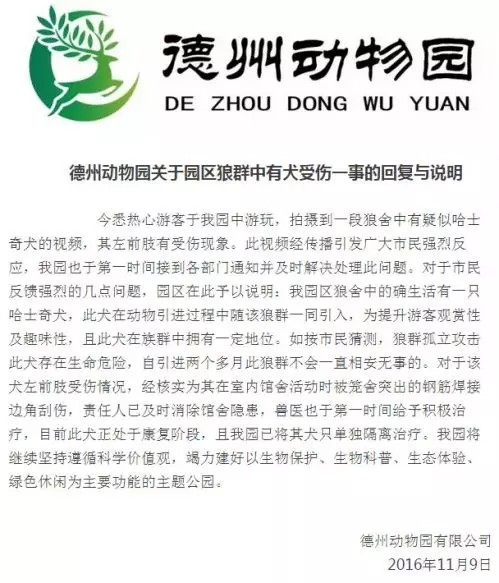
Following public backlash, the zoo released a statement, explaining that the dog and the wolves were imported together.

They have lived in the same enclosure for more than two months and are getting along well, said the statement.

According to the zoo, the dog’s injury was not caused by wolves but by a scratch from an exposed metal bar in the enclosure.

Zoo officials also revealed that the dog is a husky-wolf hybrid. The dog is currently receiving medical attention and has been removed from the wolf enclosure.

See the zoo’s full statement below: 

debwong@sph.com.sg

Image: 
Category: 
Publication Date: 
Monday, November 14, 2016 – 15:57
Send to mobile app: 
Source: 


Story Type: 
Others

Source link

A tale of two retailers

0

Retailers here have taken a beating in recent years, with some closing for good or shutting down outlets. Yet, some are expanding. Why are they succeeding when others have failed? The New Paper’s JUDITH TAN reports.


One-stop shops are out. Experiential shopping is in.

Because of advanced technology, online shopping and changing tastes, shops must now create an environment that gets shoppers excited, say experts.

This, coupled with keen competition from pop-up stores and boutiques, seems to be why department stores have lost the plot.

Dr Lynda Wee, an adjunct associate professor in retail at Nanyang Technological University’s business school, told The New Paper that department stores are no longer the one-stop shops they used to be.

“Many have lost sight of their core customers’ wants and needs and have stopped being relevant to them,” she said.

That was probably why John Little, Singapore’s oldest department store, is closing its last outlet at Plaza Singapura by year end. The store has been operating since 1842.

At its peak in 2003, it had eight branches, including its flagship store in Specialists’ Shopping Centre. But that store closed in 2007 after more than 20 years.

Its pull-out comes amid a challenging retail environment. Estimated retail sales in August, excluding cars, dropped 6.5 per cent compared with the same period last year, with declines in most segments, including 3.9 per cent for department stores.

Singapore Polytechnic marketing and retail lecturer Amos Tan said: “Shopping today is no longer about the goods. It is about selling an experience. Retailers need to be very targeted about who they are serving.”

Dr Wee said that traditional bricks-and-mortar retailers are having trouble with the new tricks of e-commerce.

She said: “Online retailing… is accessible any time, anywhere.

“So what a clever retailer does is make shopping an emotional experience for the customers.”

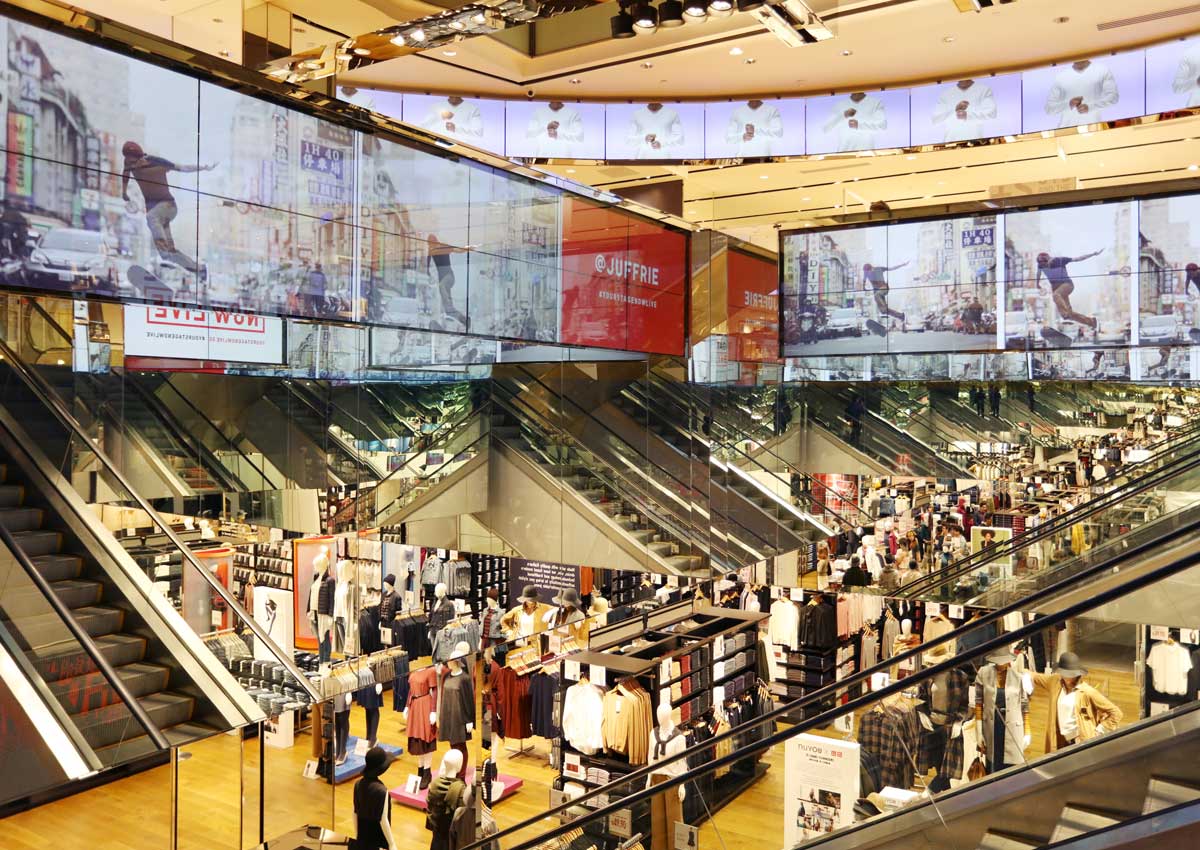
Citing the examples of Uniqlo, Muji and Sephora, she said: “You do not go to the Uniqlo flagship just to buy clothes, you go to be excited. That is how Uniqlo brings customers back to its bricks-and-mortar shops.

“The enhancement of its shopping experience and the constant updating of unique product offerings are key to its success.”

Uniqlo recently opened its South-east Asian flagship in Orchard Road amid a retail slump.

The store is the casual clothing chain’s largest in the region as the brand looks for growth outside Japan to revive flagging profits at its parent company.

Highlighting Uniqlo, Muji, H&M and Zara as success stories, Dr Wee added: “These brands have also managed to engage social media and the Internet.”

Muji Singapore general manager Jasmine Sng said that with the rapid changes of the Internet environment, Muji is always finding ways to engage the customer.

“Muji started its e-commerce platform last March and has seen a healthy increase in sales over last year,” she said.

“We use Facebook and Instagram to keep customers informed of each product function, the campaign and promotions we have, and from time to time, change the posting style, or posting of videos.

“We sometimes introduce online-exclusive offers, pre-launch items and also, a fashion look book.”

The Japanese lifestyle brand has planned a new flagship store in Singapore, estimated to be around 3,300 sg m, that will have more lifestyle concepts.

Ms Sng said that Muji, unlike departmental stores, produces its own goods, and added: “We are in control of product design, quality and price. We then inform customers the reason and story behind each product.”

She said that since last year, Muji has introduced interior and styling adviser services to customers in the hope of getting closer to customers.

PARADISE NO MORE

Dr Wee said that in the 1980s and 1990s, when Singapore was deemed a shoppers’ paradise, department stores thrived because people did not travel as much and these one-stop shops reshaped shopping habits.

“Tourists flocked here to experience shopping in department stores.

“Singapore was the only place with large one-stop shops, where everything you wanted was under one roof,” she said.

“But today, there are department stores everywhere – in Bangkok, Jakarta and Kuala Lumpur. The tourists are not coming and even Singaporeans are travelling to shop,” she said.

Despite the challenges, Dr Wee said it is not true that the big boys will shut down when the economy is soft.

“Those who do not keep up with the times are gone. Others who continue to embrace change and make sure they stay relevant continue to flourish,” she said.

Mr Tan Kee Yong, managing director of AsiaMalls Management, which manages malls such as Tampines 1, Tiong Bahru Plaza and Liang Court, agreed.

“Ultimately, the brands…need to evolve to be relevant to the profile of shoppers they serve. (In a survey we did), it seemed that millennials prefer speciality stores like what we have at Tampines 1, whereas the older generation still likes to have anchor tenants, so that the whole family can find things they want,” he said.

Mr Tan said the function of malls is also changing, beyond just a place for shopping. “With more community events, malls have become a gathering place for friends and family.”

In that vein, John Little will not be a name of the past. Robinsons Group, which manages John Little, said the brand may live on as a pop-up store.

Mr Amos Tan said this might be the right move in the present climate.

“This would mean better targeting, especially at young consumers who are spoilt for choice… It makes perfect competition sense.”

You do not go to the Uniqlo flagship just to buy clothes, you go to be excited. That is how Uniqlo brings customers back to its bricks-and-mortar shops.

Growing despite retail slump

The soft economy has not dampened the expansion plans into Singapore of several retailers.

Japanese casual clothing chain Uniqlo, for example, opened its South-east Asian flagship in Orchard Road in September amid a retail slump.

Mr Taku Morikawa, chief executive of Uniqlo South-east Asia, said the 2,700 sq m store will make the retail scene here “more competitive”.

Uniqlo is owned by Fast Retailing, which reported $18.95 billion in sales last year.

Since opening here eight years ago, Uniqlo has set up 25 stores. Worldwide, it has more than 1,700 stores.

Japanese lifestyle brand Muji is also planning a new flagship store here.

Mr Masaaki Kanai, chairman of its parent company Ryohin Keikaku, said in March that the new store is estimated to be around 3,300 sq m, but he declined to reveal a specific timeline for the opening.

Apart from these Japanese stores, French beauty emporium Sephora opened its new local flagship store at Ion Orchard to much fanfare in July.

The store sprawls across more than 900 sq m and features a refreshed store concept, incorporating a boutique-within-a-boutique concept and better lighting.

Mr Mathieu Sidokpohou, Sephora’s managing director for South-east Asia, said then that he wanted the flagship store to provide a more vibrant retail experience.

DEPARTMENT STORES OF YESTERYEAR

1. SINGAPORE SHUI HING

Opened in August 1980, the Hong Kong-owned store promised a taste of New York, but failed to attract crowds. It closed in 1983.

2. YAOHAN

This was Singapore’s biggest supermarket and department store. It opened in 1974 in Plaza Singapura and, by 1983, had five branches, including in Jurong and Bukit Timah.

In 1997, its parent company in Japan went bust and its last branch in Thomson closed.

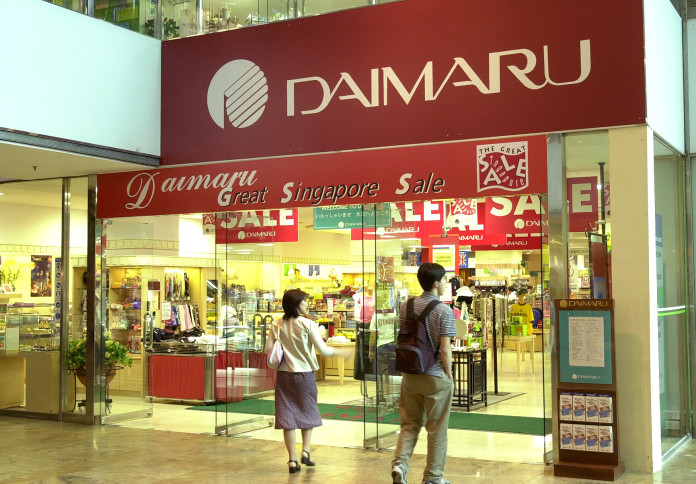
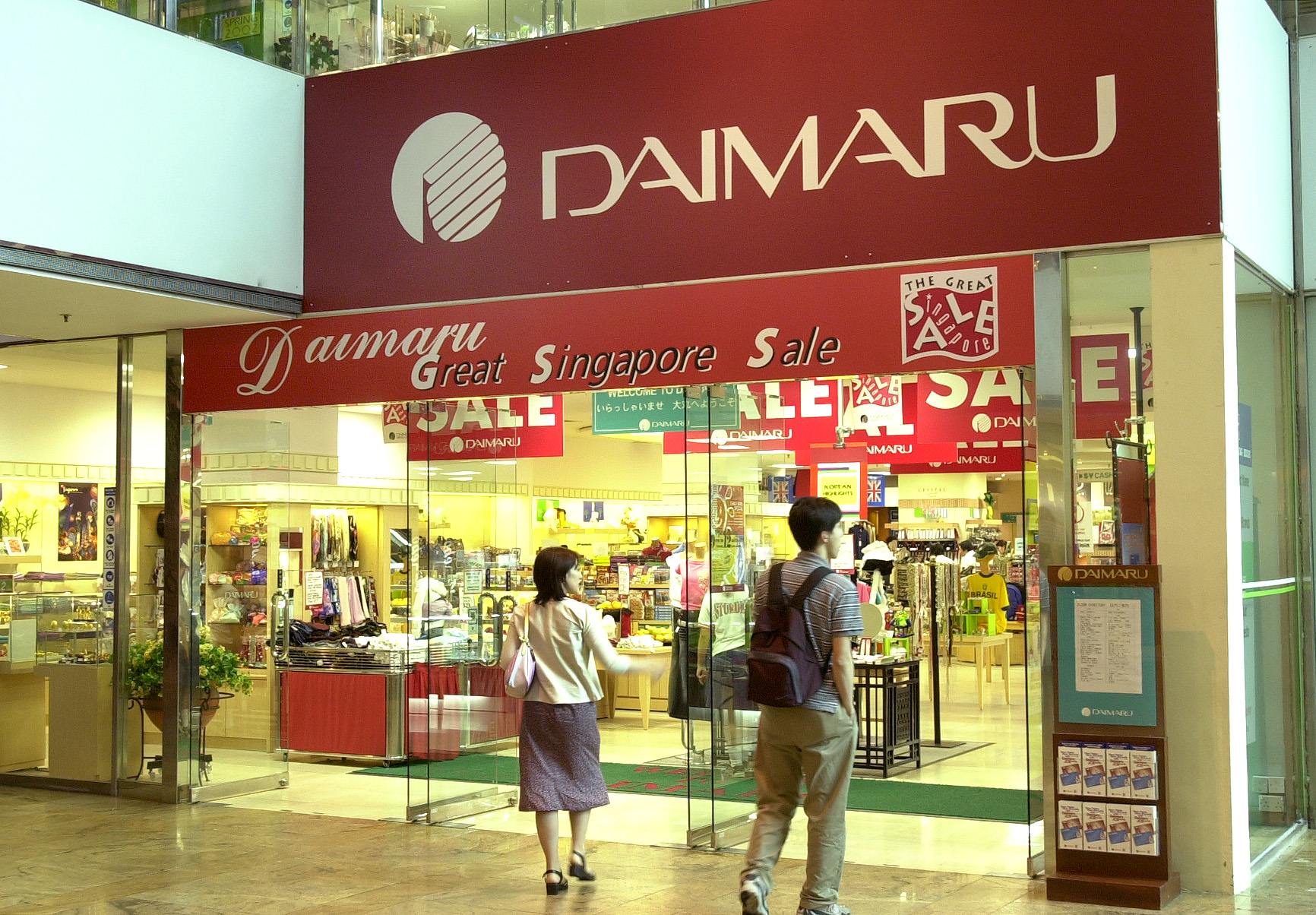
3. DAIMARU

When Daimaru opened in 1983 as the anchor tenant of Liang Court, it catered mainly to Japanese tourists and expatriates, a good strategy then as the yen was strong and the number of Japanese tourists was on the rise.

Photo: The Straits Times

Since 1998, Daimaru has been scaling down its overseas businesses to focus more on businesses back home. It closed its doors in Singapore in 2003 after nearly a decade of low profits.

4. TOKYU

It opened its first outlet at Marina Square in 1987 and its selling points included being the sole agent of Jim Thompson Thai silk goods.

It also ran the popular Cafe Saint Germain Japanese coffee shop.

Its store in Marina Square closed after six years, and it closed Tokyu Scene at Funan Centre in 1998 after its head office went under.

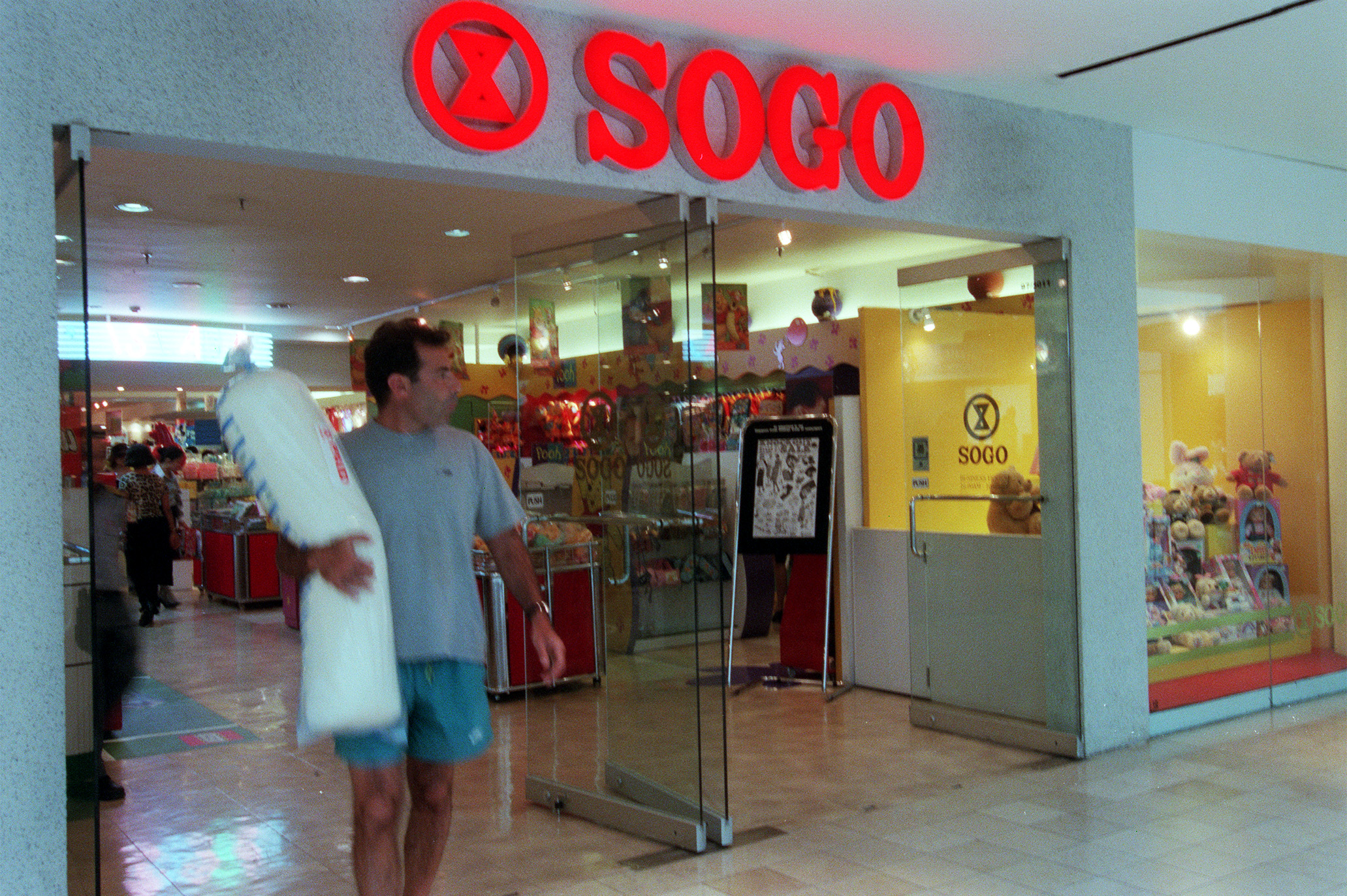
5. SOGO

Photo: The Straits Times

In 1986, it opened its first store at Raffles City, one of the busiest malls here. It also expanded to Tampines and Paragon. In 2000, it went into judicial management and closed due to the bankruptcy of Sogo Japan.

This article was first published on Nov 14, 2016.
Get The New Paper for more stories.

Image: 
Publication Date: 
Monday, November 14, 2016 – 21:00
Send to mobile app: 
Source: 


Rotator Headline: 
Why have some retailers succeeded while others fail?
Story Type: 
Others

Source link

NKF extends reach beyond kidney cases

0

The National Kidney Foundation (NKF) is synonymous with kidney disease and dialysis treatment in Singapore.

But the largest kidney foundation here, which has been around since 1969, intends to break new ground .

It will join in the country’s war on chronic diseases such as diabetes and high blood pressure by setting up a chronic disease management unit in its upcoming $12 million mega complex in Jurong.

The new clinic will offer care management services for people with hypertension and diabetes-related ailments such as foot and eye problems. It will be open to the public.

Explaining the reason NKF is extending its focus to include care for other medical conditions, chief executive Edmund Kwok said: “Diabetes and hypertension are two leading causes of kidney failure.

“If we can manage and control these two chronic diseases, we are one step closer to curbing the onset of kidney failure.”

Today, countries commemorate World Diabetes Day.

Of the more than 400,000 diabetics in Singapore today, one third do not even know they have the disease. And, of those who do know, one in three has poor control.

If nothing is done, things will just get worse, with one out of every three people here – more than a million – getting diabetes.

Down the line, five more people every day find out that their kidneys have failed. In 2014, there were 1,730 new kidney-failure cases.

“We are still in the stage of developing a comprehensive care model. Local hospitals perform roughly 1,500 diabetes-related amputations a year, or about four a day. It’s crucial to look into various complications caused by diabetes,” said Mr Kwok.

The chronic disease management unit will be within NKF’s new Jurong facility, which is 10 times the size of regular centres. It will be ready late next year.

NKF is the main dialysis provider here, and nearly all of its 4,000 or so patients have high blood pressure, while three-quarters have diabetes. More than seven in 10 of its patients who were admitted in the last financial year had kidney failure because of either of these conditions.

1/3 rise in patients on subsidised dialysis

Currently, NKF refers its patients to agencies such as the Diabetic Society of Singapore and SATA CommHealth for annual eye, foot and X-ray screenings.
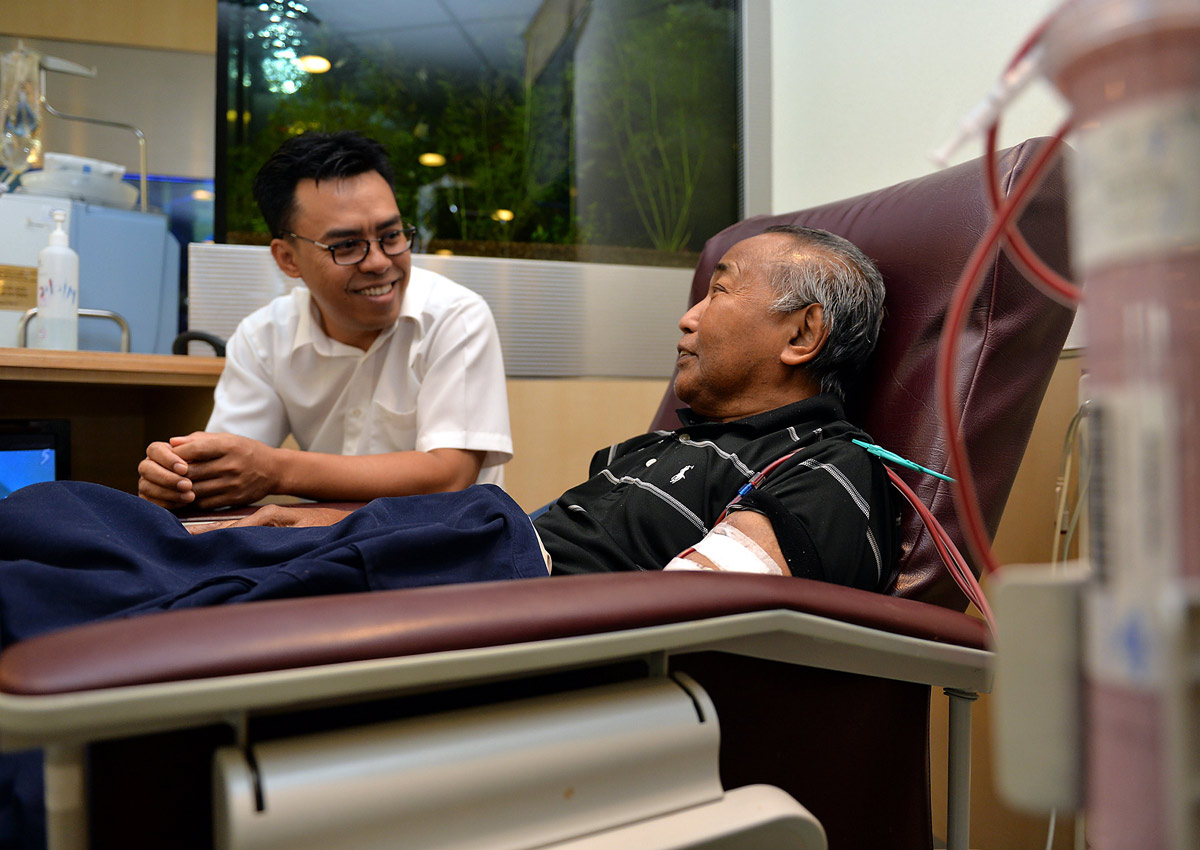
The new unit is meant to be a one-stop centre where people get help in detecting and managing chronic diseases, which may or may not lead to other illnesses including kidney failure.

In the past three years, the number of patients getting subsidised dialysis treatment from NKF has jumped by one third.

One of them is Mr S. Shanmuganathan, 52, who is single and lives alone.

Though he was diagnosed with diabetes in 1997 when he was 33 years old, he did not change his lifestyle and diet as he thought he was still young and fit. At times, he skipped his medication.

Four years ago, he started to take his condition seriously when his left leg had to be amputated due to an infected wound. He began running with the help of a prosthetic leg, and swimming.

But his kidneys were already losing their function and he had to be hooked up to a dialysis machine three times a week, from last year.

Said Mr Shanmuganathan, a part-time trainer at the National Cadet Corps: “When I was young, I did not know how serious diabetes can be and I got a shock only when my leg had to be cut off. By then, it was too late, so more awareness and support to manage such diseases is very important.”


This article was first published on November 14, 2016.
Get a copy of The Straits Times or go to straitstimes.com for more stories.

Image: 
Publication Date: 
Monday, November 14, 2016 – 16:00
Send to mobile app: 
Source: 


Story Type: 
Others

Source link