High speed rail agreement expected to be signed next month
SINGAPORE – An agreement on the upcoming High Speed Rail (HSR) project linking Singapore and Kuala Lumpur will probably be signed next month.
The Ministry of Transport said in a statement on Monday (Nov 14) that “Singapore and Malaysia are working towards signing the bilateral agreement” on the project at the Leaders’ Retreat on Dec 5.
Malaysian daily The New Straits Times reported on the same day that the signing would be witnessed by Prime Minister Lee Hsien Loong and Malaysian Prime Minister Najib Razak at the retreat, to be held in Johor.
The Straits Times
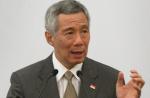
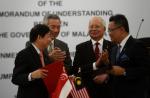
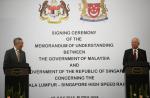
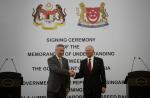
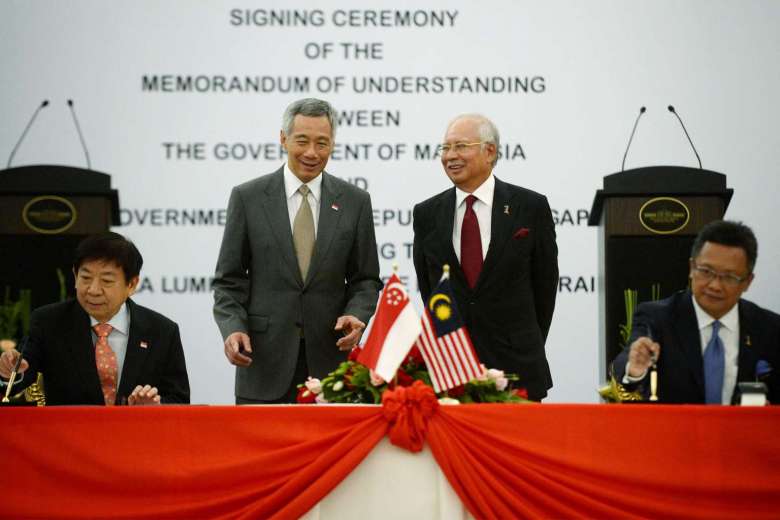
A memorandum of understanding for the HSR project was signed in July by Coordinating Minister for Infrastructure and Transport Minister Khaw Boon Wan and Malaysia’s Minister in the Prime Minister’s Department Abdul Rahman Dahlan. It was witnessed by the prime ministers of the two countries.
The project, targeted to be completed by 2026, is expected to cut travelling time between Singapore and Kuala Lumpur to 90 minutes.

This article was first published on Nov 14, 2016.
Get a copy of The Straits Times or go to straitstimes.com for more stories.
Indonesia-Singapore business council will open up more investment opportunities: PM Lee
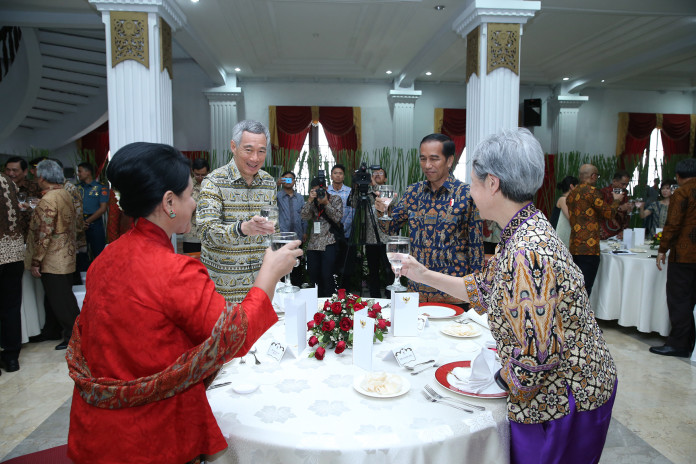
SEMARANG, Indonesia: The Indonesia-Singapore Business Council will provide a framework for companies to look for more investment opportunities, said Prime Minister Lee Hsien Loong in his wrap-up interview with Singapore media after the leaders’ retreat on Monday (Nov 14).
The setting up of the business council was announced by Mr Lee during the leaders’ retreat at a joint press conference with President Joko Widodo. Mr Lee said the council, which will allow businesses from both countries to network and understand opportunities on both sides, would get the private sector to look and assess the viability investment projects.
“It’s the government that provides the framework, but the private sector must make them work and assess where it is viable, where it is attractive, what is the best way to proceed with it,” he said.
He added that having the business council is timely as Singapore already has a similar structure with other countries. “We think that the best way to do that is for our business people to get together and meet one another regularly, and a business council, I think, is well-justified.”
Both countries inked several agreements on Monday to expand collaboration in the tourism sector. Mr Lee said he hopes that the recent delay in Singapore Airlines’ (SIA) plans to launch a new route linking Singapore, Jakarta and Sydney “will be resolved soon”.
SIA said it put a hold on plans to launch the thrice-weekly Singapore-Jakarta-Sydney route after being told by the Indonesian authorities that Jakarta’s Soekarno-Hatta International Airport had to undergo runway maintenance work.
“The explanation given has been that it has to do with maintenance of the runway at Soekarno-Hatta and we hope that will be completed expeditiously and furthermore, if there is any impact on the airlines, they will be fairly distributed,” said Mr Lee.
He added: “I told the president that if we are going to pursue tourism cooperation, aviation is an important part of this. You must have the aviation links so as to have the tourist numbers, and the volume.”
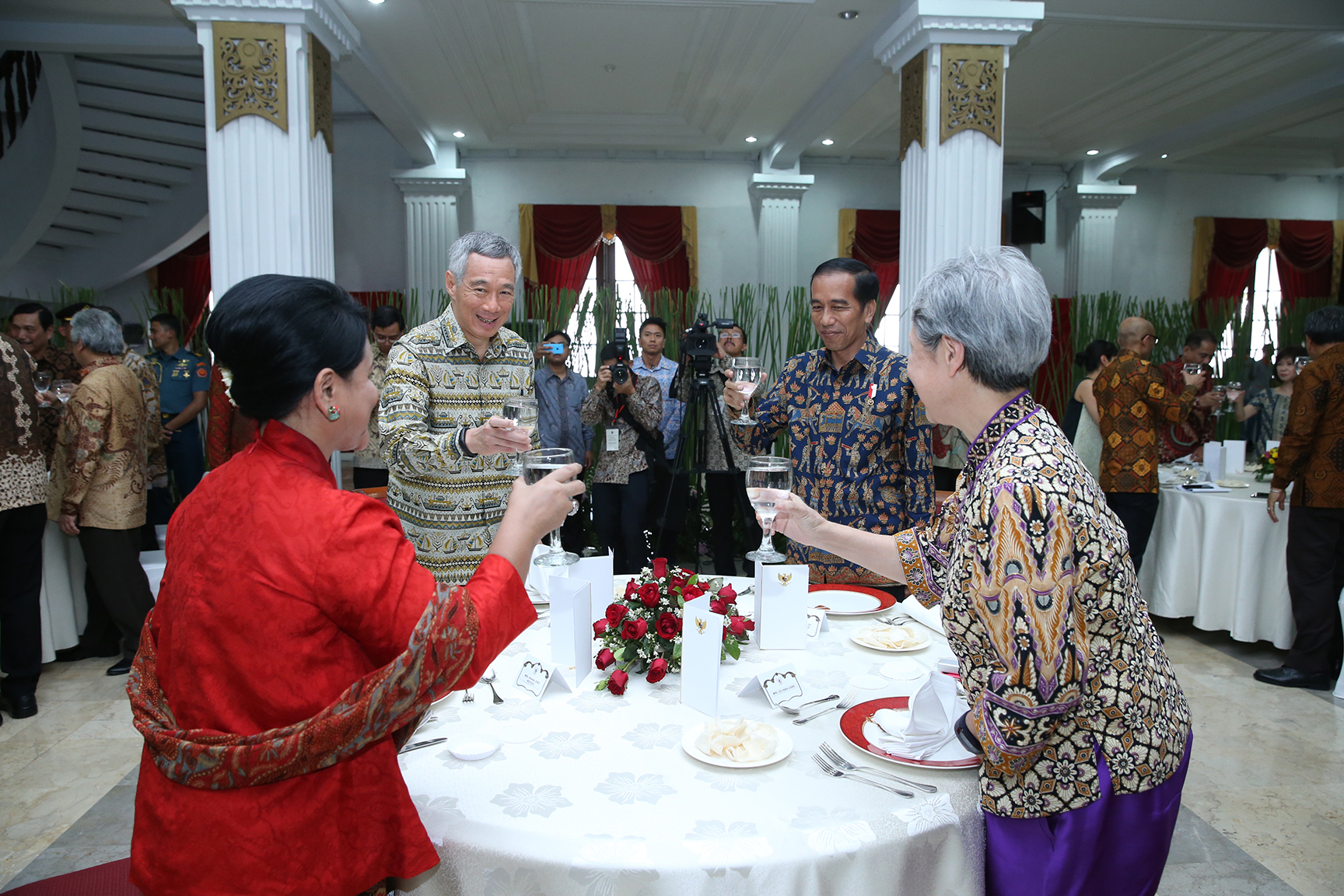
PM Lee Hsien Loong and Mrs Lee at lunch hosted by President Joko Widodo and Mrs Iriana at Wisma Perdamaian in Semarang, Indonesia on Nov 14, 2016 (Photo: MCI)
BILATERAL RELATIONS ARE GOOD AND PROGRESSING WELL
But overall, the bilateral relations between both countries are good and progressing well, said Mr Lee. He said investments for both countries are growing and they are also looking at new areas of cooperation, including tourism and the digital sector.
Mr Lee said both countries are in discussions on common issues such as the recurrent haze and the threat of terrorism. “There are issues to deal with. Overall I think there is a willingness and desire on both sides to take the relationship forward,” he said.
Tackling the haze is “one of the items high on the president’s agenda”, Mr Lee said, adding that Singapore has offered to help Indonesia deal with the problem.
“President Jokowi explained to me what he was trying to tighten up within Indonesia – tighten up the enforcement, tighten up the laws; make sure that they are operating in a sustainable way. I said: ‘Yes, we’re very grateful. We understand. We can see that you are working at this and it is making a difference.’ And we offered our help to cooperate with them to help them where we can work with the provinces or the regencies.”
Mr Lee cited Singapore’s efforts in Jambi which helps farmers to look for sustainable practices.
On terrorism, Mr Lee said both leaders recognised that it is an issue of concern. “They are concerned because they have fighters in ISIS and now that ISIS is in difficulty in the Middle East, the fighters may come back to Indonesia, more of them. That would cause them quite some problems,” said Mr Lee.
But Mr Lee pointed out that there are also other terror groups and it requires both countries to work together to overcome the threats. He added that Singapore had encouraged Indonesia to take the lead and work together with other countries.
“We have encouraged Indonesia to take the lead on this and work together with the other countries so they can share intel and best practices, not just fighting the terrorists, but also dealing with this at the ideological level,” said Mr Lee.
Singapore disappointed TPP is unlikely to be passed under Donald Trump: PM Lee

SEMARANG, Central Java – Prime Minister Lee Hsien Loong has expressed his disappointment that the Trans-Pacific Partnership (TPP) is now unlikely to be passed under US President-elect Donald Trump, whose opposition to it was a key part of his election campaign.
“Well, we feel disappointed that the TPP looks very unlikely, or will not be passed, or ratified now”, before the new president is sworn in on Jan 20, said PM Lee.
Mr Lee was speaking on the sidelines of his first Leaders’ Retreat with President Joko Widodo in Indonesia on Monday (Nov 14).
PM Lee said that Mr Trump’s opposition to the free trade deal when he was campaigning to be US president, “was quite well-known”.
“He had no sympathy for the TPP at all and I think that’s a disappointment to all of us who worked so hard to negotiate the TPP,” he added. “But that’s where it stands, we will be meeting in Apec in Peru later this week and the TPP members, including President (Barack) Obama, will be meeting to exchange notes to see what we can do in this situation.”
Photo GalleryPM Lee and Jokowi meet in Semarang for leaders’ retreat
-

<!–
-

<!–
-

<!–
-

<!–
-

<!–
-

<!–
-

<!–
-

<!–
The TPP is a landmark trade deal that the US signed with 11 Pacific Rim nations, including Singapore. However, the US has not ratified the pact.
The pact’s 12 signatories account for 40 per cent of global trade. With the TPP, Singapore would have been able to enjoy lower tariff and non-tariff barriers for both goods and services, but observers say it will probably not be pushed through in a Trump administration.
PM Lee had said previously that the US risks injuring its standing and credibility with countries around the world if the TPP is rejected by its lawmakers.
When asked it the TPP could be salvaged if its terms are reviewed or possibly changed to include countries like Russia or China, PM Lee said that would be “a completely new animal”.
“It’s not so easy to say we change the terms, what are you going to change?… And if you bring in a new country, it would be a completely new deal altogether because a new country, particularly if it’s a big one, is not going to sign on to everything which has already been agreed before they were participants.
“They will want to re-open everything, so effectively you’ll be talking about a new exercise but I think it’s premature to pursue very definite alternative possibilities for now. Let’s first assess how everybody feels and what they think could be done as a practical second best or solution for the time being.”
This article was first published on Nov 14, 2016.
Get a copy of The Straits Times or go to straitstimes.com for more stories.
Alibaba's founder to support 'mini Jack Ma' until university graduation

A young Jack Ma look-alike has won the heart of the founder of Alibaba Group, the real Jack Ma.
Fan Xiaoqin or “mini Jack Ma” is 8-years-old and lives in Yongfeng County, east China’s Jiangxi Province. His family circumstances are unfortunate as his mother has poliomyelitis, his father a missing leg and his grandma, Alzheimer’s disease, reported jxnews.com.cn on November 13.
“Mini Jack Ma” came to fame after a villager posted a video of him online in 2015. The internet exploded in remarks over how similar the boy looked to Jack Ma. Once again, with the coming of double-eleven “mini Jack Ma” won the hearts of internet once again, and netizens urged that Jack Ma should act as a beneficiary to Fan Xiaoqin, given his family circumstances.
The attention and buzz caught Jack Ma’s attention and he saw the similarities between himself and the boy. Just last week, he announced he would financially support Fan Xiaoqin until he graduates from university.
Lager than life
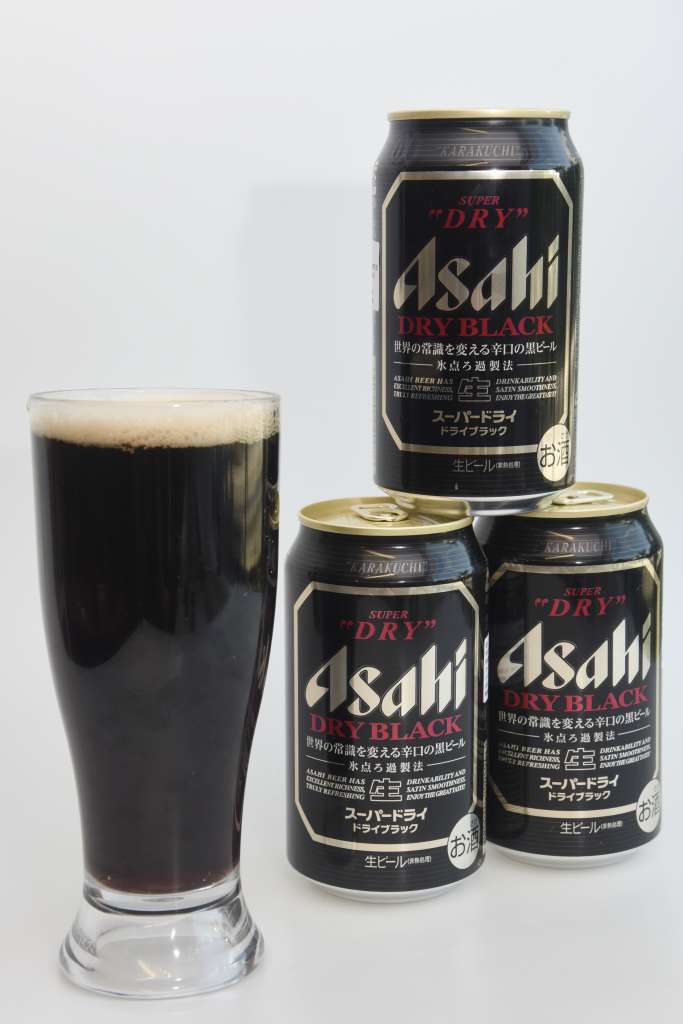
It looks like stout – jet-black and topped with a white foamy head.
But this is where the similarities between black lager and stout end.
Stout, a dark ale, is known for its full-bodied and pronounced roast notes with a bitter aftertaste.
On the other hand, black lager has a crisp and light-bodied taste with a mild finish.
Black lagers are not an entirely new product here – restaurants such as The Boiler in the Tai Seng area offer Coedo Shikkoku by Coedo Brewery in Japan. It is a German- style Schwarzbier, known for its smooth flavours with notes of cocoa, liquorice and coffee.
The latest brewery to join the fray is Japanese brewery Asahi, which introduced the Asahi Super Dry Black Lager here on tap in restaurants and bars in February last year.
According to Carlsberg Singapore, the exclusive distributor of Asahi here, distribution for the black lager has since quadrupled.
Its sales have also gained traction in the past year, with about 100 eateries and bars serving it.
They include Loof in Odeon Towers, No. 5 Emerald Hill Cocktail Bar in Emerald Hill Road and the District 10 Bar&Restaurant chain. The beer has also been made available in pint bottles in bars and restaurants from April last year.
Spurred on by the burgeoning demand, Asahi started selling the black lager in 350ml cans at 7-Eleven stores here in September.
The Asahi Super Dry Black Lager is the ebony-hued sibling of the popular Asahi Super Dry Lager, which has been available here for the past three decades.
The black lager is said to have the best of both worlds, combining the roasted malt flavours of a stout and the soft, elegant flavours of a lager.
The aromatic beer has a sweet, nut-like flavour with mild vanilla notes and does not leave a bitter aftertaste.
It also has the brewery’s trademark “karakuchi” taste. Karakuchi is a Japanese term that is used to describe the dry and light characteristics of sake.
To achieve it, Asahi developed a lager yeast, called No. 318 yeast, which converts sugar in the wort (a sweetened liquid made from water and barley) into alcohol and carbon dioxide effectively during the fermentation process.
With sugar content kept to a minimum, the beer develops a clear and crisp taste. Rice and corn are also added to the brew to smoothen the lager.
Stout gets a bitter aftertaste from a more robust roast of the malt and from the types of hops used.
Mr Jimmy Toh, 40, general manager of Carlsberg Singapore, says that black lagers have piqued the curiosity of consumers here.
He says: “Consumers today are adventurous with a more sophisticated palate and willing to try something new and different from regular lagers.”
This article was first published on Nov 13, 2016.
Get a copy of The Straits Times or go to straitstimes.com for more stories.

Truffle stout, anyone?
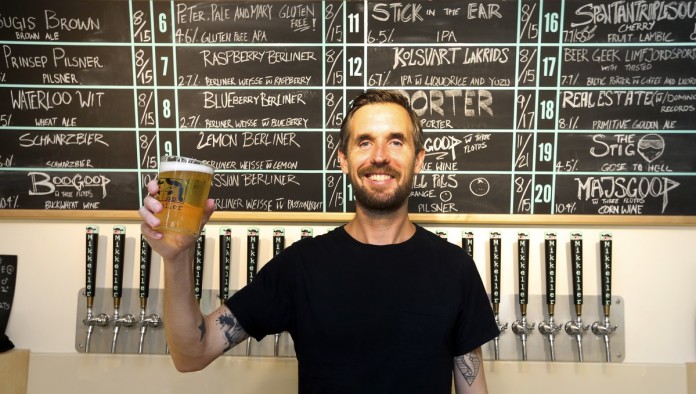
Danish gypsy brewer Mikkeller, headed by owner and brewer Mikkel Borg Bjergso, is not afraid to experiment with unusual flavours in its beers.
The company has tried everything from a Vietnamese Kopi Luwak stout (made with coffee beans excreted by civet cats) to another stout variation called The Forager, made with US$10,000 (S$14,100) worth of black truffles.
Even its Berliner Weisse – a light, refreshing sour wheat beer – is brewed with fruit flavours such as lemon, blueberry and passionfruit.
Gypsy brewers do not have their own breweries and, instead, produce experimental beers around the world in breweries owned by other brands.
Unlike commercial beers, their unique brews are made in smaller quantities and challenge tried-and- tested flavours and methods.
Mikkeller uses five breweries, two in the United States and three in Europe.
Mr Bjergso, 41, sends extremely detailed recipes with the ingredients, temperature and water treatment specifications off to the brewers he works with, and they take it from there.
“My strength is in creating an idea and then the recipe, but I don’t always know how to make an idea a reality,” he says in an interview with The Sunday Times.
He was at the Mikkeller Bar in Prinsep Street recently for a quick pit stop and a Meet The Brewer session with his fans here.
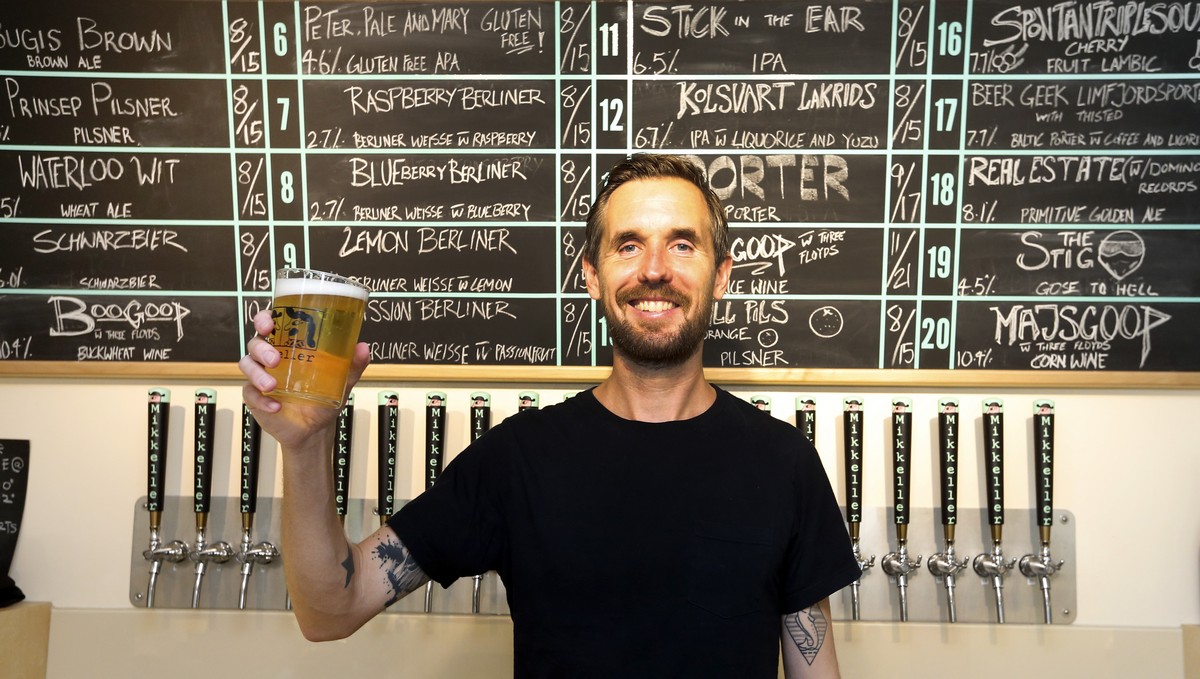
“I don’t want it to sound wrong because I respect brewers a lot and they’re skilled at what they do, but I say you can train a monkey to brew beer because it’s pretty much just following a recipe.”
Focusing on the recipes allows him to continue pushing the envelope with flavours.
Recreating a beer that has already been done no longer excites him, as “the second time you do the same beer, you already know what it’s going to be like”.
So last year, he created more than 200 flavours of beers in various styles, adding that since the company started, it has made “more than 1,000 beers”.
But just 10 years ago, he was a high-school mathematics and physics teacher experimenting with hops, malt and yeast in his kitchen in Copenhagen.
Now, he is exploring low-alcohol and non-alcoholic beers, which have less than 0.5 per cent alcohol.
While the big brands do non-alcoholic beers, he says they “taste really bad”. Such beers are also something new that has not been explored among his counterparts.
“We’re pretty much the first brewery to do non-alcoholic beers that actually taste like beer,” he says.
He adds: “Sometimes I drink beer to get drunk, like everybody else, but for me, drinking beer is more about flavour. So if I can drink a good beer that has less alcohol, then I can drink more of it.”
Mikkeller Bar Singapore, which opened last year, is the second in South-east Asia. The first opened in Bangkok in 2014.
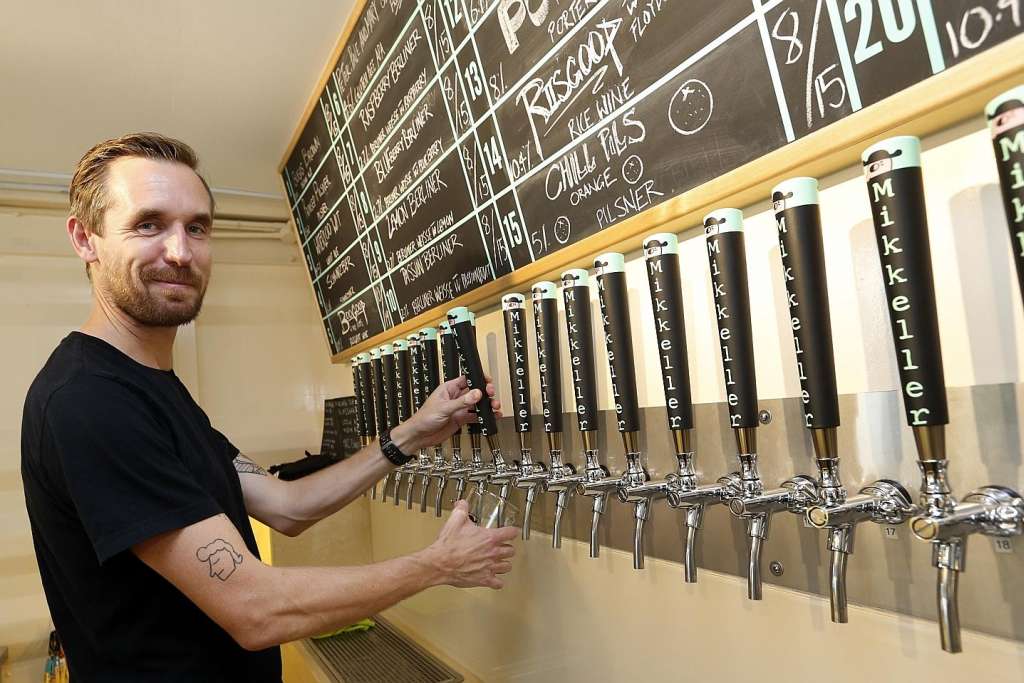
Its 20 taps rotate frequently, with core and seasonal Mikkeller beers, although beers such as the Bugis Brown, Prinsep Pilsner and Waterloo Wit are staples.
While a customer can walk in on any day and find a new beer, Mr Bjergso understands that others just want something familiar.
Even then, he relishes being able to shape the craft beer scene in Asia, unlike in the US, where he says “there’s already a lot of craft beer and a lot of hype”.
“In Asia, we can be involved in defining the whole craft beer scene,” he adds.
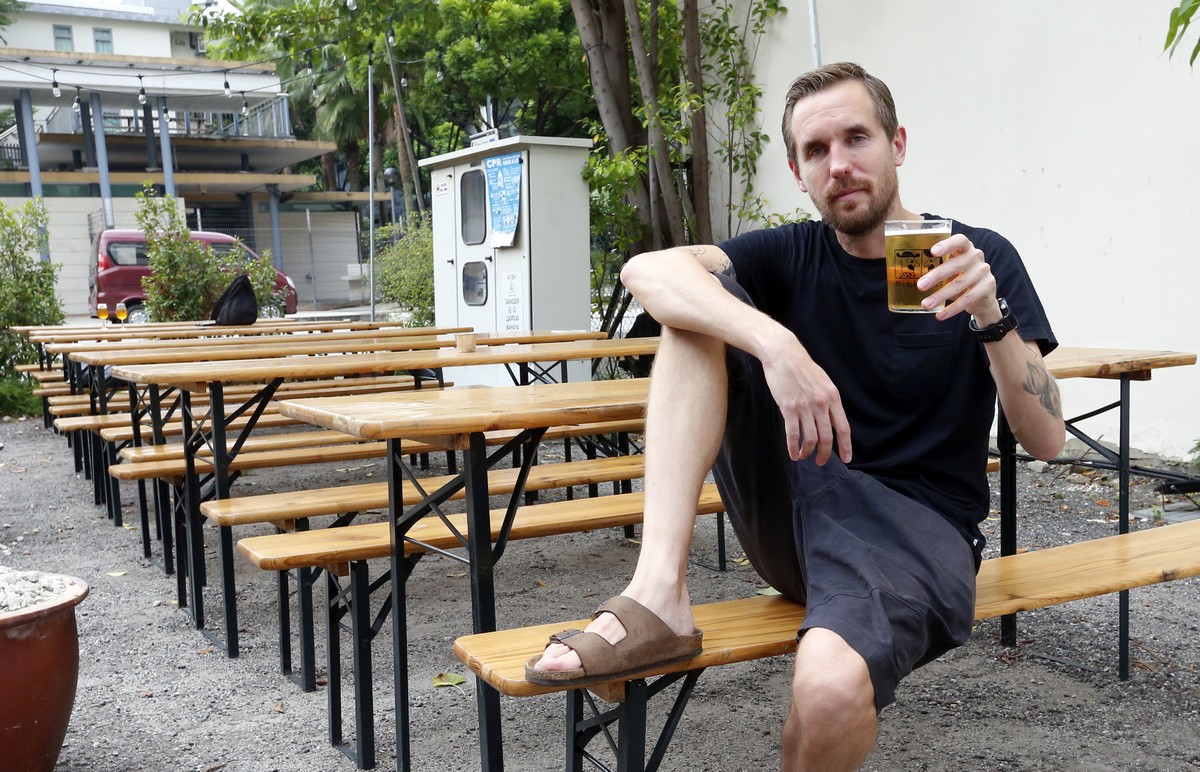
Then there are the naysayers of the global craft beer movement such as travel and food show host Anthony Bourdain. He has likened craft beer enthusiasts to zombies that over-analyse beers rather than enjoy them.
In response, Mr Bjergso says: “I don’t think Anthony Bourdain is the right person to judge. Instead, he should admit that he has no clue about craft beer and therefore should not talk about it. I don’t talk about handcrafted carpets, for example, as I don’t know anything about them.
“One of the things (Bourdain) says, that ‘the entire point of a bar is to get a little bit buzzed and not sit there f***ing analysing beer’, proves my point.
“So that’s like saying that the entire point of a restaurant is to ‘get full’ and not to enjoy food?”
While there are doubters, he is continuing with his expansion plans, even entering the restaurant world. He now has two ramen restaurants in Copenhagen, alongside a Texas-style barbecue joint that seats 400 people.
Still on the cards is a massive Mikkeller bar that will open in Los Angeles later this year.
He even intends to open one on the secluded Faroe Islands, located halfway between Norway and Iceland.
He acknowledges that it is probably not the best business decision.
“It’s a very small country with 50,000 people in total and there’s obviously no business case to do a bar, but it’s pretty much the most beautiful place in the world.”
It fits in with his company’s ethos of projects that are based on his personal interests, rather than the interests of the business.
“It’s just fun to do something new that people don’t expect,” he says with a nonchalant shrug.
He is modest about the empire he has created and admits that he never imagined it would become as far-reaching as it has.
“I started it because I wanted to make good beer – and that’s pretty much still what I want,” he says.
“I want to make good beers that I want to drink and good bars and restaurants that I want to go to.”
• Swig is a new weekly page dedicated to all drinks distilled, brewed, fermented and aged.
This article was first published on Nov 13, 2016.
Get a copy of The Straits Times or go to straitstimes.com for more stories.
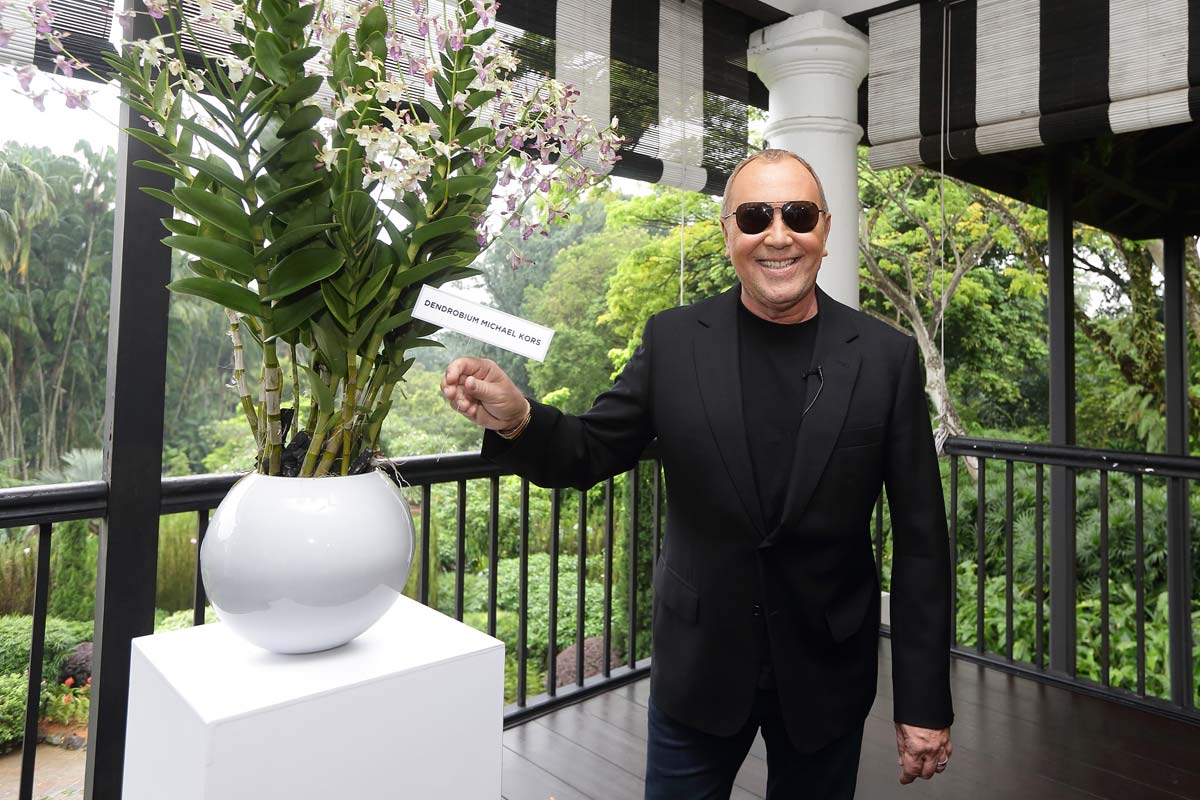
Michael Kors gets orchid named after him
SINGAPORE – A unique species of orchid has been named after New York fashion designer Michael Kors on Monday (Nov 14).
The designer was honoured with a dendrobium orchid genus by Kirk Wagar, the US Ambassador to Singapore, and Serene Tan, a member of the Singapore Tourism Board.
Photo GalleryMichael Kors gets orchid named after him
-

<!–
-

<!–
-

<!–
-

<!–
-

<!–
-

<!–
-

<!–
-

<!–
-

<!–
-

<!–
-

<!–
-

<!–
-

<!–
-

<!–
-

<!–
-

<!–
This is in commemoration of Mr Kors’ trip to Singapore and the opening of his brand’s Mandarin Gallery flagship store.
Past honorees include The Duke and Duchess of Cambridge, Elton John, Andrea Bocelli, and Jane Goodall, amongst others.
debwong@sph.com.sg
Enjoy 1-for-1 soft serve ice cream at Tsujiri Centrepoint from 15 – 21 Nov 2016

STARTS TOMORROW: Buy-one-get-one-free (1-for-1) soft serve ice cream at Tsujiri Centrepoint (15 – 21 Nov)
Enjoy 1-for-1 soft serve ice cream at Tsujiri Centrepoint from 15 – 21 Nov 2016
Tsujiri is a Japanese Green Tea Drinks and Desserts green tea house with 150 years heritage, originally starting off in Kyoto Japan. They will be opening their newest outlet at Centrepoint from tomorrow, 15th November
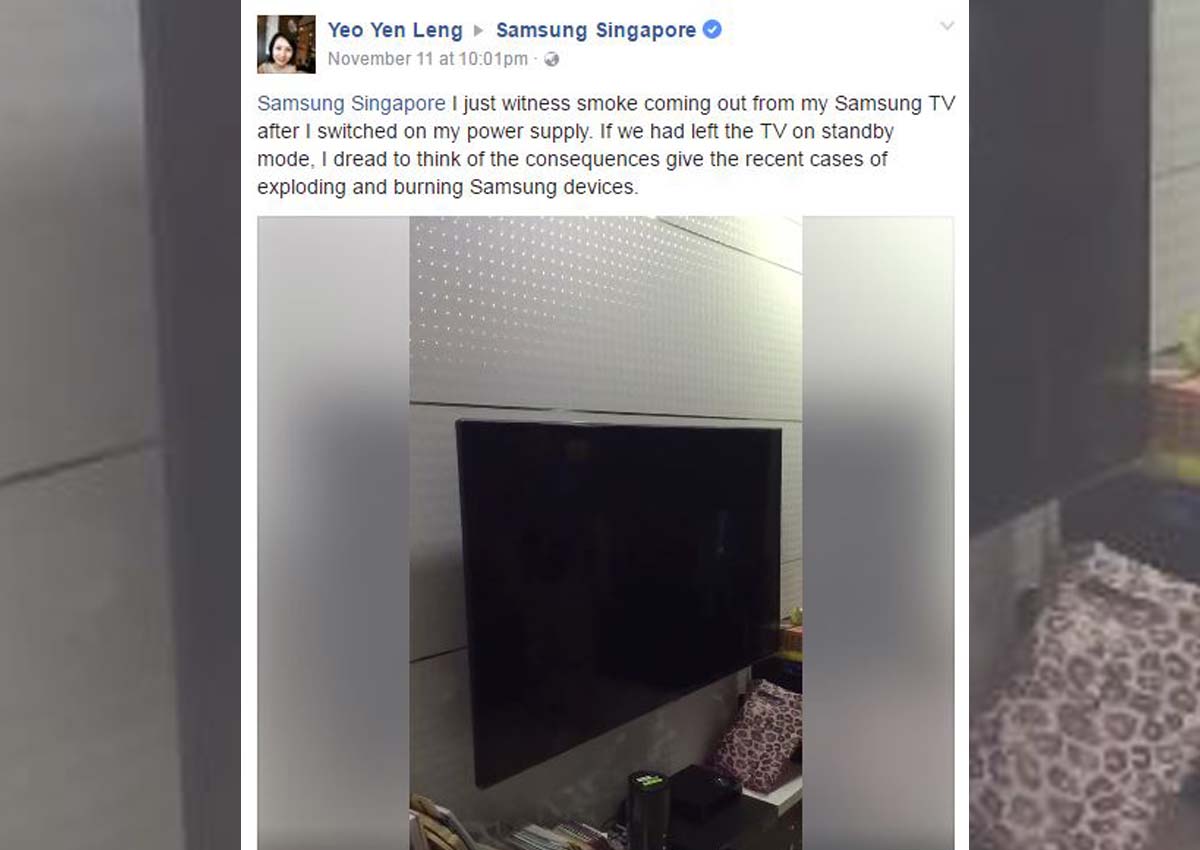
Fresh from exploding incidents, Samsung responds swiftly to smoking TV

SINGAPORE – Samsung may have made the news recently for all the wrong reasons with its exploding smartphones and washing machines.
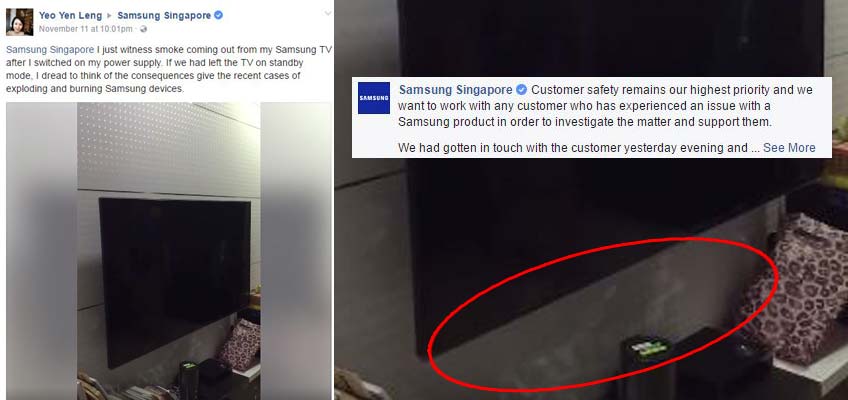
Which is why it seemed like deja vu when a video clip of a Samsung TV set emitting smoke in a Singapore household was posted on the Samsung Singapore’s Facebook page last Friday (Nov 11) night.
According to Facebook user Yeo Yen Leng, smoke was wafting from her Samsung TV after the main power supply was switched on.
“If we had left the TV on standby mode, I dread to think of the consequences give the recent cases of exploding and burning Samsung devices,” Ms Yeo posted on the page.
A representative from the company responded to the post in 15 minutes, and within an hour, a team from Samsung Singapore was at her house to investigate the incident.
AFP, The Straits Times











The South Korean electronics giant later followed up with a comment on the post on Nov 13, explaining that the TV was bought four years ago. It said that the incident was likely to be caused by “a worn component due to regular wear and tear.”
“Special thanks to Mr Low and his team for rushing over to my place in less than an hour’s time to investigate the matter,” Ms Yeo later posted.
However, the video prompted many Samsung electronics appliance owners to voice concerns about leaving their devices on standby mode.
Emphasising that it is a matter of preference for users to shut down their devices or to leave it in standby mode, Samsung reminded users not to overload their power outlets to prevent power surges.
grongloh@sph.com.sg