Home Blog Page 2229

Netizens Destroy LTA's Good Christmas Intentions with Plenty Of "Holiday Cheer"

0

It’s Christmas season and once again we are starting to hear the woeful cries of Singaporeans who long to feel the cold air and snowy chill on our skin. But alas, this is equatorial Singapore, and the closest thing we’ll ever get to a snowy Christmas night are the fake white stuff you get at the Super Tree Dome at Gardens by the Bay.

So LTA has taken things into their own hands and given NEL commuters a white Christmas, all from the comfort of a train near you.

Photo: The Straits Times Facebook

In all honesty, the decorations are quite marvellous to behold.

Unfortunately it hasn’t been enough to appease all the commuters LTA has pissed off in the recent few months, when breakdown after breakdown had people bonding over a shared love of our failing MRT system.

And their latest attempt to redirect our attention away the perpetual problems has had people bonding again, only this time in the spirit of Christmas jingles.

Photo: The Straits Times Facebook

But while some people are celebrating LTA’s honest effort with some good ol’ snarkiness, others are just straight out calling LTA out for wasting money on yet more meaningless decorations. Money can be spent on stickers, but not on fixing the train breakdown issue?

Photo: The Straits Times Facebook

And sorry LTA, I am going to have to go with these Facebook whistleblowers here.

Instead of spending money to create designs and hire people to paste up these stickers, we’d really rather you spend more time dealing with the non-stop breakdowns that plague us at peak hour rushes. We are not that difficult to please, we just like our trains to be functional and on time.

Image: 
Category: 
Publication Date: 
Saturday, December 10, 2016 – 16:39
Keywords: 
Send to mobile app: 
Source: 


Story Type: 
Others

Source link

45,000 left homeless after Indonesia quake

0
People survey the damage after dozens of buildings collapsed following a 6.4 magnitude earthquake in Ule Glee, Pidie Jaya in the northern province of Aceh, Indonesia December 7, 2016. REUTERS/Nunu Husien FOR EDITORIAL USE ONLY. NO RESALES. NO ARCHIVES


Tens of thousands of people have been displaced after a devastating earthquake in Indonesia killed more than 100 people, an official said Saturday, leaving communities in ruins as aid trickled into the disaster-stricken province.

“We have 45,300 people evacuating in several places as of Saturday morning,” national disaster agency spokesman Sutopo Purwo Nugroho told AFP, adding that the number of displaced had almost doubled since Friday due to an influx of new data.

The shallow 6.5-magnitude quake earlier this week levelled hundreds of homes, mosques and businesses across Aceh province, one of the areas worst affected by the devastating 2004 tsunami.

Read more about the Aceh earthquake here

More than 700 people were injured in the quake, many seriously, according to the country’s disaster agency.

Most of the displaced spent the night outdoors in tents near their ruined homes as hundreds refused to move into shelters fearing aftershocks, Nugroho added.

The army has established kitchens, shelters and a field hospital in the hard-hit town of Meureudu to help the region’s overwhelmed health facilities.

Indonesian President Joko Widodo visited Meureudu Friday, pledging to rebuild the area’s devastated communities as he called on Indonesians to pray for their countrymen.

The archipelago nation experiences frequent seismic and volcanic activity due to its position on the Pacific “Ring of Fire”, where tectonic plates collide.

A huge undersea earthquake in 2004 triggered a tsunami that engulfed several countries around the Indian Ocean, killing more than 170,000 people in Indonesia alone, the vast majority in Aceh.

The province lies on the northern tip of Sumatra island, which is particularly prone to quakes.

In June a 6.5-magnitude quake struck off the west of Sumatra, damaging scores of buildings and injuring eight people.

Image:
Category:
Publication Date:
Saturday, December 10, 2016 – 16:05
Send to mobile app:
Source:

Story Type:
Others

Source link

Enjoy $25 worth of taxi rides for free when you sign-up for Comfort Delgro’s CabRewards from 10 – 18 Dec 2016

0

Sign-up for Comfort Delgro’s CabRewards programme & get $25 worth of taxi rides! Membership is free

Enjoy $25 worth of taxi rides for free when you sign-up for Comfort Delgro’s CabRewards from 10 – 18 Dec 2016

Sign up with ComfortDelGro CabRewards programme (free membership) and receive $25 in taxi rides! Simply follow the steps below to sign-up and redeem the code. Here’s how it works:

Source

Indonesian footballers ready to take on Thailand in AFF Cup finals

0

Two key players in the Indonesian national team, Stefano Lilipaly and Evan Dimas, said their squad was ready to play much-favoured Thailand in the finals of the ASEAN Football Federation Suzuki Cup 2016 football championship.

Lilipaly, who scored a goal during the semifinal match with Vietnam on Wednesday, said they would be playing all out, while admitting that Thailand’s was a tough team to beat.

Read Also: Football: Indonesia advance to Suzuki final after Vietnam draw

“[The Thai players] will surely do their best to defend their title, but we hope we can play without much burden, so that we can beat them,” Lilipaly was quoted as saying by Tempo.co.

Recalling an earlier match when Indonesia lost 2-4 to Thailand, Lilipaly said the Red and White squad could exploit weaknesses in Thailand’s defence.

Evan Dimas said Thailand’s defence players were not quick to respond to wing attacks.

Read Also: Football: Late goal gives Thailand 1-0 win over Singapore, sends them to semis

“We will exploit [that weakness] to beat Thailand,” Evan said.

The two nations will face off in Bogor, West Java, on Dec. 14, before heading to Bangkok for the second leg of the finals on Dec. 17.

Image: 
Category: 
Publication Date: 
Saturday, December 10, 2016 – 14:32
Keywords: 
Send to mobile app: 
Source: 


Story Type: 
Others

Source link

Stop complaining and compete, says businessman Asad Jumabhoy

0

SINGAPORE: Entrepreneur Asad Jumabhoy is a member of the once-powerful Jumabhoy family whose name is synonymous with Scotts Holdings, one of Singapore’s pioneer property giants. Years of family feuds including one between Asad’s brothers weakened the family business and by the late 1990s, Asad decided to go his own way.

One of the first things he started as CEO of his Scotts Group was Asia Tax Free Shopping, a GST tax refund platform. Over the years, he’s been able to adapt and zero in on opportunities. 

His latest project is UTU, a cross-border loyalty and reward points platform for consumers – a project he is working on with his son.

He goes “On the Record” with Bharati Jagdish about this, about staying competitive, and how he feels about the problems that plagued the Jumabhoy family business. But first, whether he felt a sense of apprehension in stepping out of his family business to go his own way.  

Asad Jumabhoy: I come from a long line of entrepreneurs going back several hundred years, so my ancestors started out by taking sailing ships across from India to the Middle East. My grandfather came to Singapore and started with nothing. My dad started his business with his brothers with nothing. So, it was kind of par for the course really. I didn’t think twice about going out to start on my own because we’ve been doing this for a long, long time. 

Bharati: We’ll talk more about the issues that plagued your family later, but first, you’ve said in a previous interview that your wife lent you S$250,000 to start up. Why was it that you had not a dime in your pocket and she had to step in here? 

Jumabhoy: Well, it wasn’t “stepping in”. It was the way our families are structured. You work for the family and the family saved for you. I stepped out and I wanted to go my own way, so I kind of took the “go your own way” direction.

I really started bootstrapping the operation. It was kind of a good strategy. Well, it wasn’t really a strategy. It was more of a coincidence as well, but on the one hand it makes you accountable to somebody as opposed to pulling it out of your piggy bank and blowing it and have nobody to answer to.

So I had this family I had to answer to. I had my wife, my kids to support, so you’re very focused and you think, “Okay, how best do I use this opportunity?” 

Bharati: Did you always know that this was what you wanted to do – go into business? 

Jumabhoy: Oh, from a very young age. I think I remember talking to one of my siblings as we went to pick up my mom. I must have been about nine or 10. And I said even if I have a newspaper shop, I want it to be my newspaper shop. And it wasn’t a question of making money or not making money. It was having the freedom to choose, to paint the picture the way you wanted to paint it, to do the things you wanted to do. 

ATTRACTING AND RETAINING TALENT IN A FAMILY BUSINESS  

Bharati: What or who has shaped your business philosophy over the years? 

Jumabhoy: Lots of things. You start with your parents. My mother prepared us to pick up the skills we needed to deal with life. My father taught me that no hill was too big to climb and to try. And between those two big guiding lights, I studied in the US and I kind of got adopted by an American family.

He was a businessman who started with absolutely nothing as an insurance salesman and ended up a huge owner of insurance companies and I learnt a lot from him. I used to go with him to the office when I was in the States, so I learnt a lot about corporatised businesses and then I came in to my own family business and I started to understand how you deal with relationships that were close to you and how you had to understand how to attract talent and retain talent. Because you’re family business, you have as good or an even better chance at attracting better talent.

A lot of people turn around and say, “Sorry there’s a glass ceiling. There’s this and there’s that.” It’s really a question of attitude because take this business we’re running right now: there’s an Asian angle. There’s a European angle. There’s an angle in the US. Maybe I would really look forward to having some of the junior people go out to Europe from Singapore and run the business there and I don’t mean my young son. I’ve got other young people working in the group that are very talented. 

Bharati: But one might say there’s a glass ceiling for outsiders in a family business. How do you ensure that people get the message that is not the way you work? 

Jumabhoy: Look at some of the large companies in the world. IBM was a family business. Coca Cola was a family business. Mars was a family business. Cargill is still a family business. All these businesses have demonstrated that there are ways in which you can cross from small businesses to big businesses, how you cross from startups to professionalisation and I think professionalisation is really a frame of mind as opposed to a degree that you earn somewhere.

If you’re mentally organized to understand and respect other people’s contribution to the firm, why should there be any difference? I’m also a firm believer in paying for talent and paying for performance. So whether that person is your family member or not, frankly speaking, is irrelevant. 

Bharati: So aside from paying for talent and performance, what are the other strategies you use to attract and retain the best from outside your family? 

Jumabhoy: Well, at this stage, there are different things you need at different stages. At this stage, we’ve just commenced our business after a couple of years of R&D. So it’s really finding people with high energy, high integrity, the ability to be flexible, etc. Having knowledge in areas that you need and also people who know they don’t know everything and where to go to get what they don’t know.

And as the company matures as I’ve seen my other past businesses mature, you start bringing in the specialists because you can then afford to bring them on board today full-time because there’s just that much more to do.

For me, I’m looking to provide people with opportunity, help people develop themselves, people who enjoy teamwork, collaboration. I think these are very important ingredients in the mix that you put to attract and retain talent. They’re not the only ingredients but these are some of the things that come to the top of my mind.  

SPORT TEACHES YOU INNOVATION

Bharati: Tell me more about your latest project – UTU. Describe the genesis of the idea. 

Jumabhoy: When I was in the tax refund business, I presented a paper about 20 years ago in Morocco to an entire management group. So there must have been about 50-60 people there if my memory serves me right. And it was really about engaging your customer and being a part of their lives and in the tax refund business, you pretty much have a touch point with your customer when they’re traveling on a business trip or vacation or shopping overseas or whatever.

But it’s always for that finite period of time and I’ve always had the belief that every tourist is actually a local and every local is actually a tourist. It’s just a question of where they are and when they are there and what they’re doing. So if you take a look at our rewards and loyalty platform, it follows the tourist or the local from the time they wake up to the time they sleep. So you’re a part of their lives all the time if they want you to be and we’re completely non-intrusive.

We’re very much user-centric so you can redeem your rewards from a retailer anywhere, in any country and there are no limitations. So if we go back to where this all started, it was 10 years ago when I wrote that paper about engaging customers, and frankly speaking there were two things that were missing in 2006.

Firstly, electronics, computers and W-Fi as we know it today. The tools that we have today were not there. No smartphones. So that was one missing ingredient. The second missing ingredient was that I was in the VAT refund business and we went through a series of private equity investors.

And the lesson I learnt was that they had a finite time horizon. They all say there is no finite time horizon, but there is one – preferably between 3-5 years because if you start looking at internal rates of return and duration, it starts falling off a cliff after a certain time unless you have those exceptional supernova opportunities that you can count on that. So the desire to actually create, I found, was not there.

We launched another product which is prevalent today called the dynamic currency converter where you use your credit card overseas and you pay in your home currency. When I tried to introduce that, I remember going to my board in 2000. To get investment funds, I had to make 12-15 presentations, the same presentations mind you.

Every time we went with an update, we had to repeat it three times over. It was the same guy. At first I thought he didn’t get it, but he got it all right. The problem was he was trying to evaluate if he wanted to deviate from the plot at all. His idea was, let’s harvest this business and then get out of here. So the long-term component was missing. 

Bharati: Because you were introducing ideas that were ahead of their time?  

Jumabhoy: No, I just think that they’re different and business as usual is business as usual. That’s why you see so many companies that have come up and have taken the space of companies that were in the market. It’s kind of difficult to change.

I mean if you’ve been doing the same thing so well for 40 years… go back to rubber tyre, wagon wheel concept. “Rubber tyre? No way. That’s not going to survive!” And of course everyone moved away from wagon wheel. I think history is littered with those stories. So I’m thinking that’s just part of the evolution. 

Bharati: While you encounter individuals like these who’ve done things a certain way for 40 years and don’t want to change, where do you get that desire or the guts to change, to come up with new ideas that might be difficult for others to accept? 

Jumabhoy: I think there are several stages. I think one is that you want to be relevant and markets change, people change, demands change, needs change. So to be relevant, you have to innovate. 

Bharati: Conceptually, we all know this but some people take the steps to change and others don’t. So, what makes you? 

Jumabhoy: I innovate because I have to feed my family. I don’t want to lose my job! I’ve got kids to feed so I’ve got to innovate and change. I think we should just look at things as they are and think about what you can contribute today? You woke up today. What are you going to do with the day? Do something useful.

It is all mindset because age helps in the fact that you’ve got experience and you know some of the things not to walk away from. It helps you that way. So the experience does help. But I just feel, I woke up this morning and what am I going to do today that is useful? And when I go home every night, before I go to bed I ask myself, “What did I actually do today? Pass? Fail?” 

Bharati: What is your measure of “pass”? 

Jumabhoy: I’ve never been asked that before. Well, my measure of “pass”, on a daily basis is: Did I get closer to the objective that we wanted to go? Did I put another brick in the wall? If I did, it means I’m building towards the strategy and then the other one is how did I relate to people today? Each of us has our pressures in the day and the idea is that I just want to be remembered as somebody who listened to somebody else. 

Bharati: You might have the mindset to innovate, but how do you mobilise others to do the same? 

Jumabhoy: Play more sport. 

Bharati: Polo is your favourite 

Jumabhoy: I think through sport, you learn so much. The biggest one is team sport. So whether you talk about polo or football, the thing about playing with another person is I hit the ball from here to there and I may have not have kicked it just right and you might not have been in the right spot. So you’re adjusting and I’ve got to adjust.

And if I see a space I pass it there and the competitor can see the same spot. So, I’ve got to put it in a spot where I think you can get to it before your competitor. So I’ve got to know something about you as well as the teammate. And then we’ve got to adjust.

We’ve got to read each other’s mind and that’s the whole thing about starting a business and innovating and all that. It’s the same thing. It’s a question of adjusting and adjusting, getting your plan right, testing, being rigorous, training, preparing. All those things are common with sport. So I think sports is a great way to get into innovation for the younger folk.

I guess everybody has eureka moments when it comes to innovation and they’re working on a problem and you say, “Wait a minute. I think I’ve found a solution. But when you’re looking for big moves, for me at least, it comes out of having done a lot of research in the area, then looking around and seeing what tools are available, what talents are available, how can we pull this together, what ingredients do we need to bake this one? 

SINGAPORE NEEDS FOREIGN LABOUR

Bharati: Retailers today are facing a lot of difficulties, especially brick-and-mortar businesses in Singapore. What’s your advice for them, or some strategies that you think could work sector-wide? 

Jumabhoy: If you look at retail, I ran stores for many years so I know a fair bit. A lot of it has to do with pricing policy around the world. You find different brands priced differently across the world, so that’s one big thing. And then there are component costs as well.

So whether you look at manpower, rentals, utilities and cost of goods. And the biggest item normally is cost of goods. Retailers promote, STB promotes and those are all good things but maybe some of the structural issues need to be looked at such as labour and the quality of service.

I go to restaurants in Singapore and when I say that I’m talking as a local but also taking into account the fact that I travel a lot, and there’s just not the body count in the restaurant to cover the level of service. These kids are working hard and they’re knocking themselves out and they’re trying to serve so many people. There’s just not the body count so it’s difficult. 

Bharati: That’s why now there’s a lot of talk about automation. But do you think that truly is the way to go? 

Jumabhoy: How are you going to automate serving a plate on my table? 

Bharati: Well that might be possible with robotics and self-service and now, we’re even seeing food vending machines. 

Jumabhoy: So now you’re starting to say, “Okay I’ll accept a different quality of service.”

Bharati: If not that, then what do you think the solution is? 

Jumabhoy: There’s the question about how you do part-time, full-time crossovers in the management of staff. If you go to a lot of American restaurants, there’s a culture of university students who would be serving at restaurants, making extra pocket money. 

Bharati: Of course one of the biggest issues is that there are not enough Singaporeans who want to do the job because it’s not prestigious and there’s not enough money in it. The government has also put curbs on foreign labour, so that’s causing things to get even worse.

Jumabhoy: Well, I’d say the macro picture, I’m trusting in my leaders to take care of for me. But I think looking at the micro issues, automation is only one part of the story and there are lots of great tools that have come in today like restaurant booking tools and things like that.

But I went to a local noodle restaurant that tried to automate the ordering process and it just became like factory-produced. And I’ve stopped going there because the experience was gone and restaurants are very experiential.

Shopping also, because it’s not a question of shopping online or shopping in brick-and-mortar set-ups. I will do both if there’s value in each. So I think they’ve got to look at the structure of industry. I think we’ve got to look at quality of service. 

Bharati: Of course many retailers would say, these are things beyond our control as there are curbs on foreign labour, rentals are high and so on. How to work within those constraints

Jumabhoy: I went to Dubai and, there’s no shortage of labour there. But it’s not immigration. It’s people who come and work for a few years and then go home. What’s wrong with that? So it’s not an immigration issue. It’s saying, okay, let’s have some diversity and pull people from all over the world. Similarly, we need foreign labour. 

Bharati: So you think that our government should loosen curbs on foreign manpower? 

Jumabhoy: I think the government sees a lot more factors than we do. I’ve sat on both sides of the fence because I did a lot of work at Ministry of Health Holdings. I sat on the board there and I sat on the board of IDA, and you see a lot of problems from different perspectives and the government’s perspective is equally valid except that you don’t see it when you’re running a shop day-to-day. They are addressing many different agendas which are equally valid.

The question is, you’ve got to make a call to say what kind of experience we want to deliver? As a country, as a people, as a service culture, as a retail culture, as a tourist culture, what is it we want to deliver and is that what the market wants to buy? And I think by going through these areas, policies, it’s a question of trying to triangulate and finding a way forward.

As a country, we, the government and the people, should ask ourselves what is the image we want to portray to the world. Do we want to portray high-touch, high-quality service delivery levels?

We’re going to need help because we don’t have enough people. We’re also telling our people to go get an education and uplift your skills level. That’s great. But you still got to have somebody clean the bathroom.  

Bharati: Of course if there weren’t a lot of political pressure, or at least if infrastructure had been built ahead of time to accommodate a larger number of people in Singapore, there wouldn’t have been such a rejection of an increase in foreign labour to begin with.

So it’s a lot of factors that have led to this policy including the birth rate etc. and a lot of factors that have led to the rejection of the policy as well including the fact that Singaporeans perceived foreigners as taking away white-collar jobs, jobs that we actually want to do. We should note the government is taking steps to address this. 


STOP COMPLAINING ABOUT FOREIGNERS AND COMPETE 

Jumabhoy: I think it has to do with education and skills level. If you turn around and say, “I’m as good as the foreigner that comes in. I’m probably better-educated. I’m happy to compete.” it’s fine.

It’s a question of getting our local men and women to say the same thing. You’re good enough to compete, so compete. Stop complaining. Let anybody come. You want to work or you don’t want to work? You want to work hard or you don’t want to work hard? You want to get somewhere in this world or you don’t? It’s up to you.

Don’t come and tell me foreign guys came in and took my job. Improve your skills. I see so many kids today come from every kind of background, well-of backgrounds and not well-off backgrounds. They’re knocking themselves out learning. It’s really a question on how much you’re willing to put out and how hard you’re willing to work. 

Bharati: Of course some might say no matter how hard I work, I’ll never really be able to compete because the foreigner doesn’t have to deal with the high cost of living that I do and therefore is willing to accept a lower salary than me, so he becomes a more attractive employee.  

Jumabhoy: That’s market practice. Every time you interfere with market pricing, you end up in a mess. It’s not just Singapore, every country. If you put currency controls for example, you’ll get a problem somewhere else. All these things are interconnected. It’s been proven and it’s very painful to prove, but the market economy is a good allocator of resources. 

If you have a feeling that your talent is worth more than what you’re being paid, go do something else. Go start your own business. If the market is saying, “Asad, I’m not willing to pay you so much for this job.” then I have two choices: either I change my job and change my focus or I stick with this and accept my position. 

FAMILY FEUDS AND LESSONS LEARNT

Bharati: Over the years, I’m sure you’ve made mistakes. What are the ones that stand out for you and the lessons you learnt from them? 

Jumabhoy: Well, it was probably over 20 years ago in my original family business where I learnt the pitfalls of family businesses. As a result, I’m very careful now about how I structure my businesses because of my past family history.

I make sure I structure my businesses to be as fair as possible to as many people as possible.  In traditional Asian families where it is the question of “because you are younger than me, you have to listen to me.” Okay fine, so I’ll listen to you out of respect and love, but when it comes to business judgement etc. you’ve got to take the business issue and that wasn’t always the case. 

Bharati: You are doing your current business with your son actually? 

Jumabhoy: Yes, he joined me. 

Bharati: How do you apply what you’ve learnt to how you manage him? 

Jumabhoy: The same plus can be a minus as well. So we can solve a lot of issues around the dinner table but you also get put on the spot around the dinner table. The issues tend to be how people perceive you and how people try to make things different. All I’m asking for is to be treated the same as anybody else and that’s all my son is asking for as well.

So, it’s really more people’s perception of you as opposed to your perception of yourself or your relationship with your son. As management science itself has progressed, as people like me went to management school, today my son’s in management school, my other son is learning to become a lawyer, you start to pick up a certain sense of corporate professionalism so you can take the best of that.

And then you can take the best out of entrepreneurship and you can blend it. So you have all the governance and the right structures and the right ways of doing things and at the same time, you’re not over- bureaucratic whereas at the same time, you’re also infuse a spark of entrepreneurship into the mix. 

Bharati: So in a nutshell, the lessons learnt that you apply in business today? 

Jumabhoy: Everything I learnt in the sandbox: don’t throw sand in people’s face, wash your hands before you eat – all those good behaviors that any corporation would have. I think the biggest lesson I’ve taken is that when you’re dealing or working with family and you feel you can actually lean on them because you have a second relationship – don’t do that.

Treat them with the same respect and care as you would treat any professional working in the firm because they are professionals and they deserve that. 

Bharati: The disputes in your family’s past business were a very public issue in the 90s. How did you feel when all of that was happening? 

Jumabhoy: Even today, if I’m faced with a situation where people want to fight, I’ll say, “You wanna fight? Great. You two guys fight. I’m gone.” I’ll try to help you sort your problem out, but don’t expect me to get drawn in. 

There are only 24 hours in a day. I don’t like to fight. I don’t fight with anybody. That’s a better way to live life. I find a way around to avoid conflict and if people are entrenched in conflict situations, try and help them out if you can but if you can’t, move on.  

Bharati: What do you regret the most in your life so far?  

Jumabhoy: It’s a journey and I wish I could be working with my brothers again because I love working with my sons. 

Bharati: What do you miss the most about working with your brothers? 

Jumabhoy: Just the camaraderie, and just sort of the hanging out.  

Bharati: It wasn’t all rosy though.  

Jumabhoy: Well, I tend not to remember the pain points so much. My wife tells me I’m the eternal optimist and maybe I am. I don’t remember the pain. I don’t remember the time when I entered the army and I was paralyzed for three months because I had a slipped disc in my neck.

I don’t remember things like that. I remember it as what wonderful discipline that I, an undisciplined person, received when I went to the army. At least for me, take the best of what you can and leave the rest behind.  

In terms of regrets on the professional side, I’m wondering had I worked outside of my family business for a period of 4-5 years, whether that would have helped me or not. I’m not sure. I ended up picking up a lot of those skills by building a large business with partners. So I learnt from doing in my own shop, rather than picking it up outside.

I also miss working with my dad but now he’s 90 so he doesn’t work anymore. 

Bharati: He inspired you a great deal. 

Jumabhoy: My dad did and my late mother did, as I mentioned earlier. 

NEVER STOP LEARNING AND TRYING 

Bharati: What’s the most important lesson you think you learnt from your dad?

Jumabhoy: Try. 

Bharati: And if you fail? 

Jumabhoy: Try again. And from my mother, it was: if you’re going to try, at least use your brain and get yourself ready. Have what it takes to take the next step. But sure, you’re going to succeed at some things and fail at others. 

Bharati: Do you think we, in Singapore, need to improve our culture when it comes to accepting failure? 

Jumabhoy: I would say we need to change our attitude towards success and failure.If people fail, it’s not because they’re not doing the right thing. I hired a guy in our technology team who actually tried to build a loyalty system in his country and failed. In his case, it was that the business strategy was not robust.

So we felt that we had the business strategy but then he had certain customer-facing technological know-how which I thought would be useful to our business and it’s proved correct. It may not have worked for him in his case, but with a little bit of shaping, a larger team and having a more rounded approach with different skill-sets etc. the gentleman is a success. 

Bharati: So how do you think we can develop a culture here of being more accepting of failure? 

Jumabhoy: Start with bankruptcy laws and work your way from there.  The US has a very good approach to it. From my understanding, if your company goes into chapter 11, you either reorganize and start again or the individual can go start again. If it’s a failed effort, it’s a failed effort, move on. If the guy stole the money it’s a different issue altogether but if it’s a business issue and it didn’t work out, it didn’t work out. But never stop learning and trying. Try, try, try again. 

Source link

ComCare aid to needy hit record $130 million last year

0

Social assistance payments to the poor hit a record $130 million in the last financial year that ended in March.

This is 10 per cent higher than the year before and triple the amount of money given out a decade ago.

The money was distributed to some 40,000 households.

The money came from the Community Care (ComCare) Endowment Fund, set up by the Government in 2005 to help needy families get back on their feet.

ComCare is a key social safety net for low-income Singaporeans and provides three broad types of assistance: Long-term help, largely for the elderly poor; interim as well as short- to medium-term help for those facing crises, such as illness or retrenchment; and student care subsidies for children.

The Ministry of Social and Family Development (MSF) said the increase in the number of beneficiaries over the years can be attributed to “policy enhancements, greater accessibility to help and the economy slowdown in recent years”.

Observers put the rising amount of aid paid out to a growing number of people down to several factors.

“At first blush, the increasing numbers might seem to suggest a deteriorating social situation,” said former Nominated MP and Singapore Management University law don Eugene Tan.

“But it is more likely a combination of factors ranging from our social welfare policy being less tight-fisted, changing demographics and a more welfare-oriented approach in which short-term assistance is more readily advanced than before,” he added.

A portion of the money – $68.4 million – came from interest generated by the ComCare Endowment Fund. The rest came from the MSF’s budget.

  • Who received assistance

  • ComCare short- to medium-term assistance

    • 35 per cent were aged 55 and above

    • 40 per cent were married; 32 per cent were divorced, widowed or separated

    • 41 per cent had primary-level education or below

    • Close to half (47 per cent) lived in one- or two-room flats

    • 59 per cent had households with young and/or elderly beneficiaries

    ComCare long-term assistance

    • 12 per cent were aged 55 to 64; 78 per cent were aged 65 and above

    • 70 per cent were single; 23 per cent were divorced, widowed or separated

    • 74 per cent had primary- level education or below

    • 68 per cent lived in one- or two-room flats

    • 63 per cent were aged 65 and above and living alone

The biggest jump last year was in short- to medium-term payouts, which rose from $68.7 million in 2014 to $87.9 million last year.

One reason could be the rise in the number of elderly people who need help (see other report).

“One trend that caught my attention is that we are seeing more households with older persons or retirees requiring social assistance. This could be due to smaller families and an ageing population,” Minister for Social and Family Development Tan Chuan-Jin wrote on Facebook yesterday.

Spending on long-term help grew to $22.7 million last year, up from $18.7 million the year before.

Associate Professor Tan said the amount of money disbursed via ComCare is likely to rise, given economic restructuring and demographic changes, with the rate of increase stabilising in the years ahead.

Some observers have described this as a government “shifting to the left”.

Associate Professor Irene Ng from the department of social work at the National University of Singapore thinks that the country’s social welfare policy is heading in the right direction.

EROSION OF SELF-RELIANCE

We do have to give more. However, it is true that the erosion of self-reliance is currently a real problem in the design of our schemes.

ASSOCIATE PROFESSOR IRENE NG from the department of social work at the National University of Singapore. She is also director of the Social Service Research Centre.

HELP FAMILIES MOVE UP

The key is to ensure that ComCare-type schemes do the best possible job of helping families ‘graduate’ from them by finding meaningful work if the recipients can work.

SIM UNIVERSITY SENIOR LECTURER WALTER THESEIRA

“We do have to give more. However, it is true that the erosion of self-reliance is currently a real problem in the design of our schemes,” said Prof Ng, who is also director of the Social Service Research Centre.

As more types of help are offered, she said, beneficiaries start to have knowledge about the schemes and some change their behaviours in order to qualify for the schemes.

Dr Mathew Mathews, senior research fellow at the Institute of Policy Studies, does not think that the increase in aid suggests that the long-held Singaporean ethos of self-reliance is waning.

“Today, there is more recognition that providing some shortterm help when a family might be facing financial difficulty, coupled with other measures such as providing retraining and childcare support, can potentially prevent the family from going on a downward spiral,” he said.

Observers said it was important to work towards helping aid recipients move out of the schemes.

“The key is to ensure that ComCare-type schemes do the best possible job of helping families ‘graduate’ from them by finding meaningful work if the recipients can work,” said senior lecturer Walter Theseira of the School of Business at SIM University.

However, he noted that families who deserve and need the help should receive it readily because it can be more harmful in the long run if the families make poor decisions about medical treatment or education because of a lack of funds.

“That is penny-wise and pound- foolish for society,” he said.


This article was first published on Dec 10, 2016.
Get a copy of The Straits Times or go to straitstimes.com for more stories.

Image: 
Category: 
Blurb: 
<p>Social assistance payments to the poor hit a record $130 million in the last financial year that ended in March.</p>
Publication Date: 
Saturday, December 10, 2016 – 15:00
Send to mobile app: 
Source: 


Story Type: 
Others

Source link

Causes Week 2016: They walk the talk to nurture a green future

0

“In the end we will conserve only what we love, we will love only what we understand, and we will understand only what we are taught.” That line was written by a Senegalese poet in the 1960s, but it is a philosophy nature conservation volunteers share – that to get people to appreciate their environment, they first have to be taught to fall in love with it.

Volunteers from various environmental groups have been conducting free guided walks to nature areas here to raise awareness about the last few wild spaces in built-up Singapore, and the need to protect them.

The guides are from groups such as Naked Hermit Crabs and Herpetological Society of Singapore. They take interested members of the public out to various habitats in and around Singapore – from the Pasir Ris Mangroves to the forested trails of the Central Catchment Nature Reserve, and even the wetlands of offshore Pulau Ubin.

They do so in the hope of making Singaporeans aware of the rich biodiversity in their own backyard.

“Bringing people to appreciate the forest first-hand will give them a better idea of what is at stake,” said Mr Tan Hang Chong, 43, who is head of education and research at Better Trails, an environmental and outdoor education company.

Free guided walks

Herpetological Society of Singapore

This nature group wants to raise awareness of reptiles and amphibians – that may not immediately appeal to everyone.

Volunteers have started Herp Walks to places such as the Bukit Timah Nature Reserve and MacRitchie to educate people that reptiles and amphibians are important to the ecosystem and are not scary.

For more information on the guided walks, visit www.herpsocsg.wordpress.com

Naked Hermit Crabs

Despite the level of sediment, life thrives in Singapore’s waters. Learn more about the creatures that live underwater with volunteers from the Naked Hermit Crabs, who organise walks at places such as the Pasir Ris Mangroves and the Chek Jawa wetlands on Pulau Ubin. Details can be found at www.nakedhermitcrabs.blogspot.sg

Jane Goodall Institute (Singapore)

There are two species of monkeys found in Singapore, although you are more likely to encounter the cheeky long-tailed macaque. The other species, the Raffles’ banded langur, is reclusive and tends to stay out of the way of humans.

Learn more about these primates with the experts at the Jane Goodall Institute on their Monkey Walks held twice monthly at the MacRitchie Reservoir Park and Bukit Timah Nature Reserve. Visit www.janegoodall.org.sg for more information.

BES Drongos

The students from the National University of Singapore’s Bachelor of Environmental Studies (BES) programme are spreading their love for nature by conducting guided walks on the Petai Trail at MacRitchie Reservoir Park. To sign up, visit www.besdrongos.wordpress.com

Audrey Tan

“It also gives us the opportunity to share how every small action, such as going off trail, could have an impact on the environment.”

When people go off trail, they trample on sensitive vegetation and disturb wildlife.

On Nov 19, a group of volunteers put together a concert at MacRitchie Reservoir Park, a gateway to the Central Catchment Nature Reserve, to raise awareness of the potential impact of the 5km Cross Island Line, which could cut through primary and secondary forests in the reserve.

Ms Rani Singam, a jazz singer who helped organise The Future of MacRitchie Concert, said: “I thought we should do something to bring people together to discuss the issue in a positive way, not just through protesting or rebelling. And music is a way to do that.”

Local musicians such as singer-songwriter Farisha Ishak and musical duo Jack and Rai performed at the concert, which was attended by about 100 people.

The other concert organisers included actress Debra Teng, who is in her 40s; risk analyst Jaclyn Yeo, 31; sustainability manager Chen Dexiang, 31; and publisher Kannan Chandran, 57.

Ms Singam said she never identified herself as an environmentalist.

But after reading about the potential for the line to cause harm to native biodiversity, raised by groups such as the Nature Society (Singapore), Ms Singam found herself drawn to the issue.

The 45-year-old said she decided to act as she believes that a protected nature reserve “should not be violated”.

The organisers of the concert also roped in volunteers, including Mr Tan and his colleague Ding Kian Seng, 33, who each took a group of 15 on a guided walk on the trails of MacRitchie.

They pointed out the forest denizens, including the greater racket-tailed drongo, a bird with flowing tail feathers that resemble stilts.

The organisers said that they worked for about eight months, securing permits and lining up programmes, in order to pull off the Nov 19 event.

Said Ms Teng: “This nature reserve, and all the green spaces in Singapore, belong to us Singaporeans, and I think it is important that Singaporeans have a say as to how and what we want to protect.

“This is just an opportunity to spread the message and let people know that… hey, we own it.”

For more information, go to www.lovemacritchie.wordpress.com

In our annual Causes Week, back for its fifth year, we spotlight individuals and groups that are making a difference in the community, and look at how others might pitch in too.

READ MORE

More stories at str.sg/causes2016


This article was first published on Dec 10, 2016.
Get a copy of The Straits Times or go to straitstimes.com for more stories.

Image: 
Category: 
Blurb: 
<p>"In the end we will conserve only what we love, we will love only what we understand, and we will understand only what we are taught." That line was written by a Senegalese poet in the 1960s, but it is a philosophy nature conservation volunteers share – that to get people to appreciate their environment, they first have to be taught to fall in love with it.</p>
Publication Date: 
Saturday, December 10, 2016 – 17:00
Send to mobile app: 
Source: 


Story Type: 
Others

Source link

Teochew festival targets the young

0

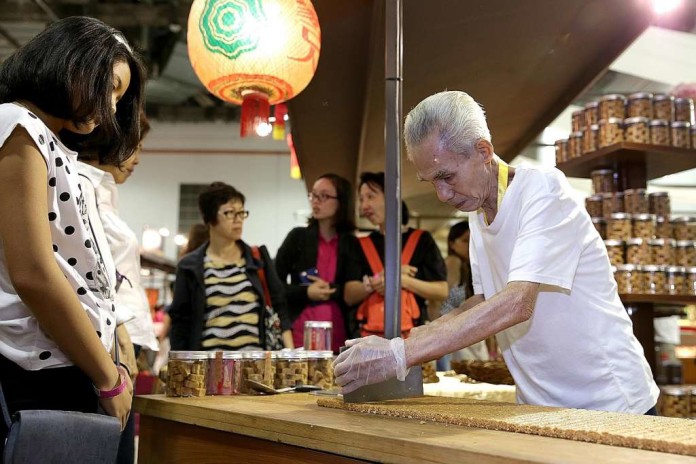
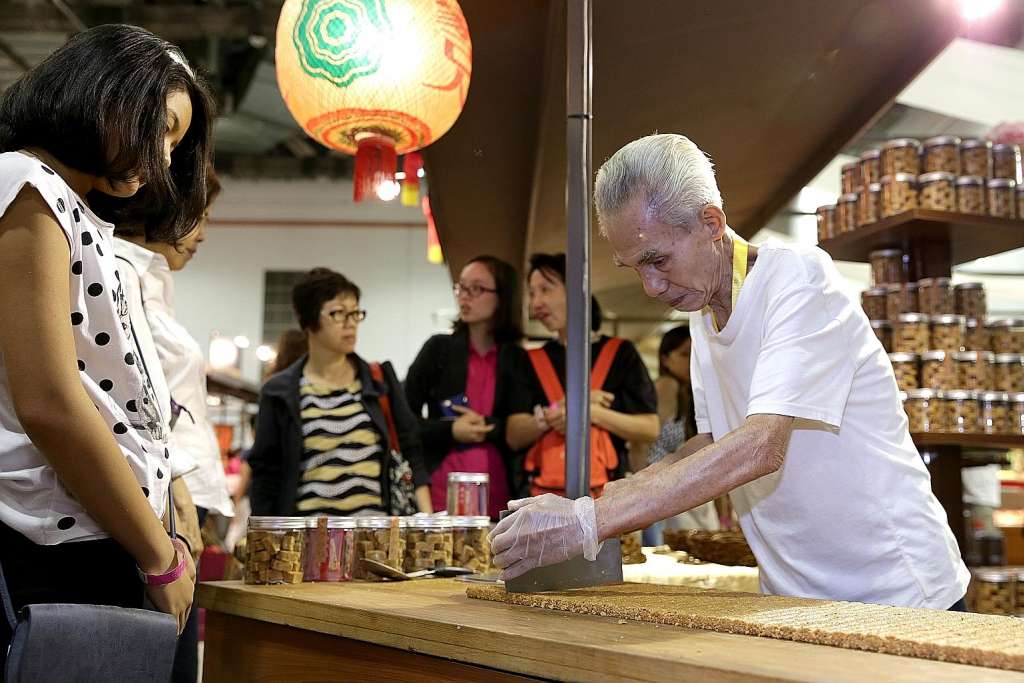
Jay Kok is not your usual 12 year old. Unlike most kids, he has a passion for dialects, specifically Teochew, the first language he was taught at home.

Jay, who was helping his aunt at her Thye Moh Chan baked goods stall yesterday at the Teochew Festival at the Marina Bay Sands Expo and Convention Centre Hall A, thinks it is important to “pass on the Teochew heritage, or no one would speak Teochew (any more)”.

Jay, who will enter secondary school next year, is the kind of young person festival organiser Teochew Poit Ip Huay Kuan probably hopes to see more of.

With the youth in mind, the organiser has introduced several initiatives to make the 10-day festival appealing to a younger audience.

Efforts to woo younger Teochews include a Teochew-rapping hip-hop group from Shantou and the Heng Heng app which aims to teach the correct pronunciations of traditional Teochew kueh. These are part of a larger effort to promote Teochew culture and heritage.

There are an estimated 500,000 Teochews in Singapore, the second-largest Chinese sub-group, after the Hokkiens. The Teochews, originally from eight counties in China’s southern Chaoshan region, first arrived in Singapore in the early 1800s.

The festival, which is into its second edition, was officially opened by Minister for Health Gan Kim Yong yesterday. It aims to attract more than 150,000 visitors this year, up from 100,000 in 2014.

Teochew Poit Ip Huay Kuan president George Quek, 61, better known as the founder of the BreadTalk group chain, said that the Teochew clan association has nearly 5,000 members. This includes more than 400 young people – up from 200 in 2013.

Dr Peter Lim, the association’s vice-president, youth committee chairman and the festival’s organising chairman, attributes the increase to events such as singing contests, sports events and reading groups that attract younger people. Sharing sessions, during which young people could learn from older Teochews, have also helped – with many appreciating the chance to meet and network, sometimes with successful, prominent members of the community.

He said: “We need to ask… what can we do for younger people… If we give them networking opportunities, or give them valuable life experiences, or learning or art programmes, we will attract them.”

He added that events like the festival provide a platform for which Teochew culture can be on display.He said: “We want younger generations to think that learning Teochew is cool. It is an ancient language. It’s a beautiful language, and sounds melodious and gentle. Many people think Teochew stage shows are things only grandparents watch. But actually the performance skills are brilliant.”

He added that Teochews throughout history have been known to be able to “take hardship, persevere, study hard and value education”. He hopes that the festival will “inspire the younger generation to learn from their elders’ enterprising initiative”.

From vendors selling bak kut teh to opera performances, Teochew culture and way of life is on show. To capture authentic Teochew food, some vendors flew in ingredients from China to make specific kueh and oyster omelette.

Other highlights include daily performances by the award-winning Xiao Mei Hua Opera Troupe from Jieyang, China, and a cultural zone displaying artefacts from Teochew immigrants here in the 1800s and 1900s.

For many seniors, the festival was a chance to walk down memory lane. One of them was Madam Tan Chang Hua, 65, a Teochew Singaporean whose ancestors were from Swatow. Pointing to the food stalls and stage where the opera troupe had performed just minutes earlier, she said: “I get to reminisce about my childhood, when I used to watch Teochew stage shows.”

The Teochew clan association is optimistic there will be enough demand for the festival to run a third time. Said the deputy chairman of its youth committee, Mr Huang Liang, 33: “I think Singapore’s Teochew festival is very suited to young people’s tastes. And we want to have more young people, so the festival becomes more current and youthful.”

• Teochew Festival 2016 runs at the Sands Expo and Convention Centre till Dec 18. Tickets cost $10 per day. For more information, visit www.teochewfestival.com


This article was first published on Dec 10, 2016.
Get a copy of The Straits Times or go to straitstimes.com for more stories.

Image: 
Category: 
Blurb: 
<p>Jay Kok is not your usual 12 year old. Unlike most kids, he has a passion for dialects, specifically Teochew, the first language he was taught at home.</p>
Publication Date: 
Saturday, December 10, 2016 – 17:00
Send to mobile app: 
Source: 


Story Type: 
Others

Source link

Singaporean singer shed 20kg to sing better

0

Singaporean singer Jeremy Teng is now 20kg lighter than when he won the Japanese TV singing contest Nodojiman The World in 2014.

He was comfortable with his 120kg frame, but he decided to shed the pounds when the weight started to take a toll on his vocals and health earlier this year.

“I felt I was not performing as well as before. I was not as energetic. I felt that my vocals lacked the power they used to have,” says Teng, who weighed more than 138kg at his heaviest.

The 22-year-old recently returned to the competition, where foreigners belt out Japanese tunes. His performance on the show, which has been renamed I Can Sing In Japanese!, will air on Monday on cable TV channel GEM.

The show is also holding an Asia- wide audition for the first time.

Previously, contestants were invited by the show’s producers, who scouted Teng after seeing his videos on YouTube.


Weighing 120kg when he was participating in Nodojiman The World in 2014, Jeremy Teng hopes to hit the 80kg mark down from his present 99kg. Photo: Lau Fook Kong, GEM, Nippon TV 

He is ready to dive back into singing after completing his national service last month.

He has regular singing gigs at Japanese restaurants Tomo Izakaya at Clarke Quay and Enbu at Suntec City.

Both food establishments had approached him after watching his impressive performance on Nodojiman The World two years ago.

The Ngee Ann Polytechnic mass communication graduate is hoping for more.

“A recording contract is something that I have been dreaming of, but I will take one step at a time,” he says.

One step he has taken is to lose weight for improved vocal performance.His weight-loss plan involved curbing his appetite and upping his exercise regimen.

Jeremy Teng singing Only Human, theme song of Japanese drama One Litre of Tears

He would brisk walk on the treadmill for 40 minutes twice a day, as well as eat in moderation, consuming more vegetables and less junk food.

“I brought down the volume of food that I would usually consume. I used to be able to eat two bowls of rice. I would eat whenever I felt hungry. I would eat my family’s leftovers,” says Teng, who is hoping to hit the 80kg mark from his current weight of 99kg.

His love of singing is partly influenced by his father, 58, who is an engineering executive and a part-time karaoke instructor. Teng, an only child, recalls watching him sing with his students at gatherings.

On the urging of friends, he started uploading song covers on his own YouTube channel in 2008.

He has joined more than 20 singing contests so far, including Campus Superstar (2009) in Singapore, Chinese show The Voice Of China (2014) and Taiwan’s Super Idol (2014).

Teng, who speaks Japanese, advises those who hope to compete on I Can Sing In Japanese!: Take note of the pronunciation and understand the meaning behind the Japanese lyrics.

Beyond the techniques, he says: “You have to start with the right mentality. You cannot think that only people with the right privileges will succeed. If people see the passion in you, it will touch their hearts.”

I Can Sing In Japanese! airs on Monday at 10.10pm on GEM (Singtel TV Channel 519). For a chance to compete on the show, go to www.GEMtvasia.com/ICanSing.


This article was first published on Dec 10, 2016.
Get a copy of The Straits Times or go to straitstimes.com for more stories.

Image: 
Category: 
Blurb: 
<p>Singaporean singer Jeremy Teng is now 20kg lighter than when he won the Japanese TV singing contest Nodojiman The World in 2014.</p>
Publication Date: 
Saturday, December 10, 2016 – 17:00
Keywords: 
Send to mobile app: 
Source: 


Story Type: 
Others

Source link

Singaporeans' lives improved amid challenges, says report

0

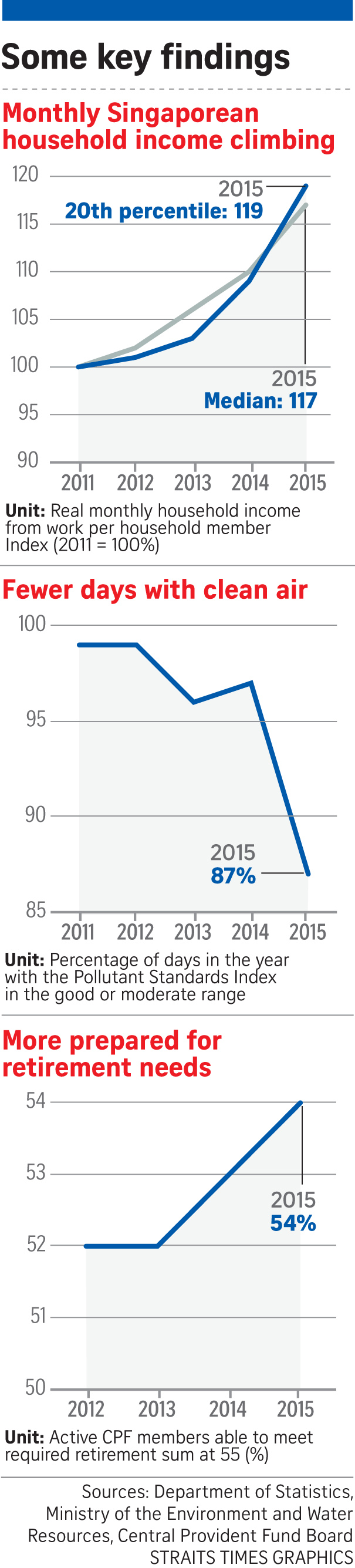
Singaporeans earned higher incomes last year and unemployment was kept low, despite the economic slowdown.

But productivity growth remained low, especially in domestically oriented sectors such as construction, retail and food services.

This was the picture painted in the Singapore Public Sector Outcomes Review that takes stock of how Singapore has fared in key areas of national interest, such as the economy, housing and healthcare.

The biennial report, released by the Ministry of Finance (MOF) yesterday, said that the lives of Singaporeans have improved amid the challenging environment.

It added that a key focus of the Government in the last two years has been to “provide opportunities for all by renewing the economy, transforming industries and enhancing lifelong employability”.

On this front, the incomes of Singaporeans went up, with those in the 20th percentile and median income levels seeing their wages grow by 3 per cent per year since 2010.

The unemployment rate has also remained stable at 3 per cent or lower in the last five years, making it among the lowest in the world, said the 66-page report.

But productivity, which is key to maintaining sustainable growth, has been almost flat and grew by 1.3 per cent per year between 2010 and last year. This was due to the uncertain and sluggish global economic environment and domestically oriented sectors being less productive, said the report.

Spring Singapore deputy chief executive Ted Tan, in an MOF statement yesterday, said innovation and productivity will be key for Singapore’s future economic growth and competitiveness.

Last year, Spring supported 22,000 projects by small and medium-sized enterprises to innovate, double the number of companies it supported the year before.

These efforts are expected to create about 19,000 new jobs and $6.9 billion of added value over the next three years.

In the area of housing, there are also signs that public flats have become more affordable for first-time home buyers, the report said.

It cited the fall in the debt-servicing ratio of new four-room Housing Board flats in non-mature estates to 22 per cent last year, from 25 per cent in 2014.

It added that this was due to the recent policy changes, such as the raising of the income ceilings for those who want to buy resale and new HDB flats, allowing more to qualify for grants.

On healthcare, the report said it has remained affordable for the elderly with schemes such as the Pioneer Generation Package (PGP). Nine in 10 pioneers received PGP subsidies at subsidised specialist outpatient clinics, polyclinics or Community Health Assist Scheme clinics between September 2014 and December last year.

Meanwhile, the report also noted the progress made on some of the pressing issues in the public transportation system, but said there was “room for improvement” in boosting rail reliability.

MRT trains are travelling longer distances before encountering delays. Last year, trains clocked 133,000 train-km between disruptions – delays of more than five minutes. This was up from 93,000 train-km in 2014.

But the number of train delays lasting more than 30 minutes doubled to 14 last year, compared with seven in 2013.

While the overall law and order situation remained under control, there was an increase of about 3 per cent in the overall crime rate per 100,000 people last year, compared with the year before.

This was largely due to the rising number of online commercial crimes, said the report.

Head of the civil service Peter Ong said the report was a good opportunity for the public service to “look back on our performance… as we chart our directions for the future”.

He added: “In the next chapter of our Singapore story, we will work towards building a future-ready public service that will partner each and every Singaporean to build a better home for all.”


This article was first published on Dec 10, 2016.
Get a copy of The Straits Times or go to straitstimes.com for more stories.

Image: 
Category: 
Blurb: 
<p>Singaporeans earned higher incomes last year and unemployment was kept low, despite the economic slowdown.</p>
Publication Date: 
Saturday, December 10, 2016 – 15:00
Send to mobile app: 
Source: 


Story Type: 
Others

Source link