Home Blog Page 2228

Chinese man slips in shower, gets tap lodged in back

0

A man slipped in the shower and got a tap lodged in his back in a freak accident in China’s southern Guangdong province on Friday.

The incident, which happened in Zhuhai city, left the man with a tap lodged 5cm in his back, Lianhe Wanbao reported on Saturday.

The man, identified only by his surname Li, had fallen against the wall and slid down, Chinese news site Southern Metropolis Daily said in a report on Friday.

He hit a tap mounted on the wall, which lodged into his flesh upon impact and was pulled off the wall.

Li was taken to hospital, where a surgeon extracted the tap.

He is currently recovering.


This article was first published on December 11, 2016.
Get a copy of The Straits Times or go to straitstimes.com for more stories.

Image: 
Category: 
Publication Date: 
Sunday, December 11, 2016 – 09:42
Send to mobile app: 
Source: 


Story Type: 
Others

Source link

Anti-China protesters rally in Hong Kong as vote looms

0

HONG KONG – Around a thousand protesters rallied in Hong Kong on Saturday (Dec 10) against a crackdown on pro-democracy lawmakers and an electoral system skewed towards Beijing ahead of elections for a new city leader.

It comes a day after unpopular chief executive Leung Chun-Ying said he would not run for office again in the March vote.

While jubilant at his announcement, Leung’s critics fear another hardline Beijing-backed leader will take his place.

There are increasing fears that China is tightening its grip on the semi-autonomous city, particularly after two pro-independence lawmakers advocating a complete split from Beijing were barred from taking up their seats.

The Hong Kong government is also taking four other pro-democracy legislators to court on Thursday in a bid to unseat them after an intervention from Beijing.

“The direct message we hope to send to Beijing is we will not forgive and we will fight for democracy and freedom,” said Joshua Wong, who led mass pro-democracy rallies in 2014.

“We will not allow Beijing to disqualify one more legislator, because they are democratically elected,” Wong, 20, told AFP at the rally, which took place in gardens in the Central commercial district.

The city’s youngest lawmaker Nathan Law, 23, who is one of the four the government are seeking to unseat, addressed the crowd saying: “We need to use our legs, our bodies, to tell the regime they can’t oppress us.

“They might be taking away my seat, but they are (also) imprisoning the people’s minds.”

Protest leaders also slammed the electoral system in which the chief executive is chosen by a committee of 1,200 representatives from various special interest groups weighted towards the pro-establishment camp.

In 2014, Beijing said Hong Kong residents could elect their own leader but that candidates would be vetted. That decision sparked the massive 2014 rallies, which failed to win any concessions on reform.

Veteran pro-democracy lawmaker Leung Kwok-hung, also among the four legislators the government are trying to unseat, told reporters the leadership system was a “tragedy”.

Protesters of all ages gathered for the rally chanting for Leung to “go to jail” over controversial payments from an Australian engineering firm before he took office. Leung has defended the payments saying he did nothing wrong, but it put another dent in his public image.

However, protester Jack Chan, 18, said Leung was not the root of the problem. “It’s China interfering with Hong Kong’s development,” Chan told AFP.

Another protester at the rally, Mary Lam, who is in her 40s, said Hong Kong was being “mainlandised” by China.

“The pro-establishment camp is hurting Hong Kong, so we need to come out,” she said.

A small group of protesters later went to Leung’s residence at Government House and popped champagne to celebrate his decision to step down.

Leung cited family reasons for his decision and denied it was due to his performance.

But observers said he was simply too unpopular for Beijing to endorse again.

Image: 
Category: 
Publication Date: 
Sunday, December 11, 2016 – 09:06
Send to mobile app: 
Source: 


Story Type: 
Others

Source link

143kg boy with insatiable appetite finds relief using TCM

0


A boy in China has been getting fatter since he was diagnosed with the Prader-Willi Syndrome at three years old.

Now 11, Li Hang weighs 143kg after shedding some kilos recently. Earlier this year, the 1.5m tall boy tipped the scales at 167kg.

Li suffers from the Prader-Willi Syndrome, a genetic disorder that involves an abnormality with chromosome No 15 and occurs once in every 15,000 births.

When he was born, Li weighed 2.7 kg and his mother thought that he was malnourished.

However, the boy developed an insatiable appetite from the age of three and weighed 43kg by the time he turned four years old.

As he grew up, his weight rose, but his mental development stalled. He is emotionally unstable and has poor numeracy skills.

Although this disease cannot be cured, early detection and treatment can greatly improve a patient’s quality of life.

After failing to benefit from various weight loss regimes, Li underwent partial gastrectomy – a surgical procedure where a part of his stomach was removed – in March this year.

Meanwhile, obesity has impacted his life severely.

The boy has high blood pressure, a fatty liver, hyperuricemia, and eight other diseases.

To find relief, Li resorted to Chinese medicine. Through fire treatment, cupping therapy, and acupuncture, he has lost 16 kg in two months.

He is determined to lose more weight.

Also read: Study in China helps kids with obesity gene lose weight

Image:
Publication Date:
Saturday, December 10, 2016 – 22:53
Send to mobile app:
Source:

Rotator Image:
Story Type:
Others

Source link

Eye docs take to the skies to help prevent blindness

0


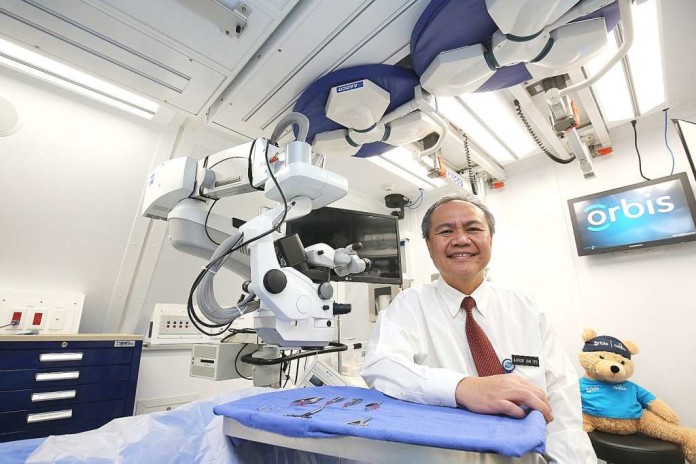
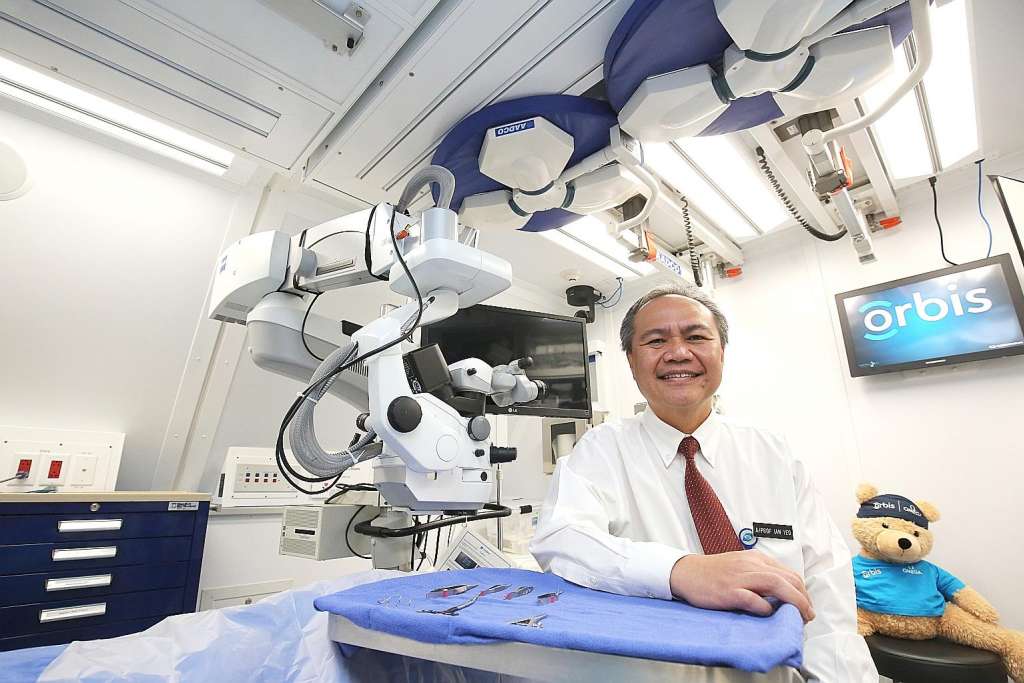
A number of Singapore’s top eye specialists owe their rise in part to a “Flying Eye Hospital” which has been making stops in the Republic since the 1980s.

Today, Singapore physicians are paying it forward by volunteering with Orbis, the international non-profit organisation which provided them a chance to learn from some of the best in the field.

The charity organisation, which was founded by an American ophthalmologist in 1982, aims to fight blindness by training healthcare professionals from developing countries in the area of eye care. It does so through its Flying Eye Hospital, which has state-of-the-art healthcare equipment on board as well as a classroom, and has travelled to 92 countries worldwide.

Among the eight eye specialists who have volunteered with Orbis is Associate Professor Ian Yeo, Deputy Medical Director (Education) at the Singapore National Eye Centre. In 1996, he was a trainee who spent some time on board Orbis and learnt from renowned ophthalmologists Steve Charles and Richard Spaide.

In September, Prof Yeo went to Shenyang, China, to teach doctors there how to treat eye conditions such as age-related macular degeneration and diabetic retinopathy – the most common cause of vision loss among people with diabetes.

“(In) Shenyang, the hospitals are there but the services and equipment they have in the hospitals are very rudimentary. The doctors are very eager to learn… By training and teaching them, they can go back and continue to improve,” said Prof Yeo.

The plane acts like a “one-stop service” for patients who live in developing countries, he added.

Each trip lasts about three weeks and during the trip, healthcare professionals are invited on board to learn, while those who cannot afford treatment are able to get the operations they need.

Orbis has a team of 22 staff who fly with the Flying Eye Hospital. They comprise nurses and biomedical engineers, among others, who are also certified flight attendants. The plane makes about six to eight trips a year.

According to the World Health Organisation, 285 million people in the word are visually impaired. Yet, about 80 per cent of these cases can be prevented or cured.

The charity focuses on training medical professionals from developing nations in the area of eye care, and surgical procedures are conducted with that aim in mind, said director of Orbis Singapore, Ms Amy Tan.

Last year alone, Orbis trained over 1,000 doctors and 28,000 others in related fields, such as nurses and biomedical engineers, through its programmes.

It has also carried out over two million eye screenings and examinations for adults on the Flying Eye Hospital and at partner institutions.

Its latest third-generation plane – an MD-10 donated by FedEx – boasts a 46-seat classroom, an operating room as well as a patient care and laser treatment room, among other features.

The new plane also has live broadcast capabilities that will better train doctors and nurses with live footage in 3D. An average of five eye procedures are conducted each day, with each of them meant to be a case study for healthcare professionals on board.

Said Orbis International’s chief development officer Paul Forrest: “Our launch of this new third-generation Flying Eye Hospital not only marks a new chapter in our shared sight-saving journey, but also brings us a significant step closer to our dream of eliminating avoidable blindness forever.”

  • 285m

    Number of people in the world who are visually impaired, according to WHO. Yet, 80 per cent of these cases can be prevented or cured.

    1,000

    Number of doctors Orbis trained last year.


This article was first published on Dec 10, 2016.
Get a copy of The Straits Times or go to straitstimes.com for more stories.

Image:
Blurb:
<p>A number of Singapore’s top eye specialists owe their rise in part to a “Flying Eye Hospital” which has been making stops in the Republic since the 1980s.</p>
Publication Date:
Saturday, December 10, 2016 – 13:00
Keywords:
Send to mobile app:
Source:

Story Type:
Others

Source link

More than S$154,000 raised for people with disabilities at philanthropy event

0

SINGAPORE: Microsoft Singapore has raised more than S$154,000 for people with disabilities in its flagship philanthropy event held on Saturday (Dec 10). 

The funds will be channelled to help people with disabilities pursue tertiary education in information technology-related fields and pick up vocational IT skills training. 

The cheque was presented to President’s Challenge beneficiary SPD on Saturday at the event, We Tech Care. It was held at the Enabling Village in Lengkok Bahru, a community space focused on the training and employment of people with disabilities. 

The funds will go towards supporting SPD’s vocational training programmes, as well as the Microsoft YouthSpark Scholarship.

Through these programmes, 32 scholarships have been awarded to 29 students. Meanwhile, more than 68 people with disabilities have been trained and 30 have found jobs.

“Technology empowers people with disabilities and unlocks their potential,” said SPD’s president Chia Yong Yong. “Microsoft’s donation will go towards supporting students with disabilities pursuing a tertiary education in information technology, and providing vocational and work skills training to help increase the employability of people with disabilities.”

As part of the event, more than 600 volunteers and members of the public also got to experience technology-related activities such as coding workshops and demonstrations on how assistive technologies can help people with disabilities lead more independent lives.

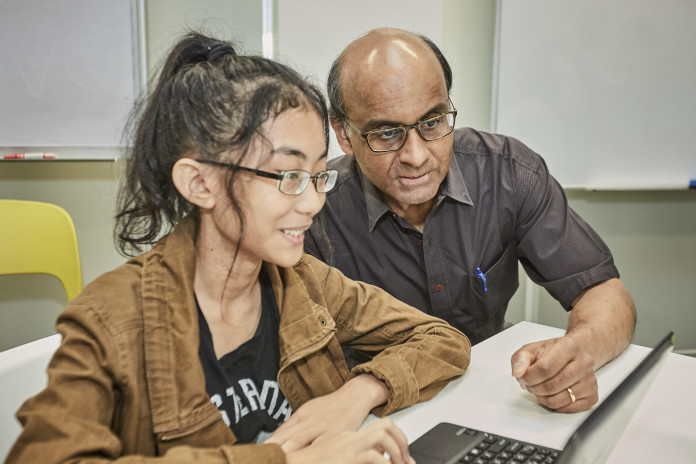
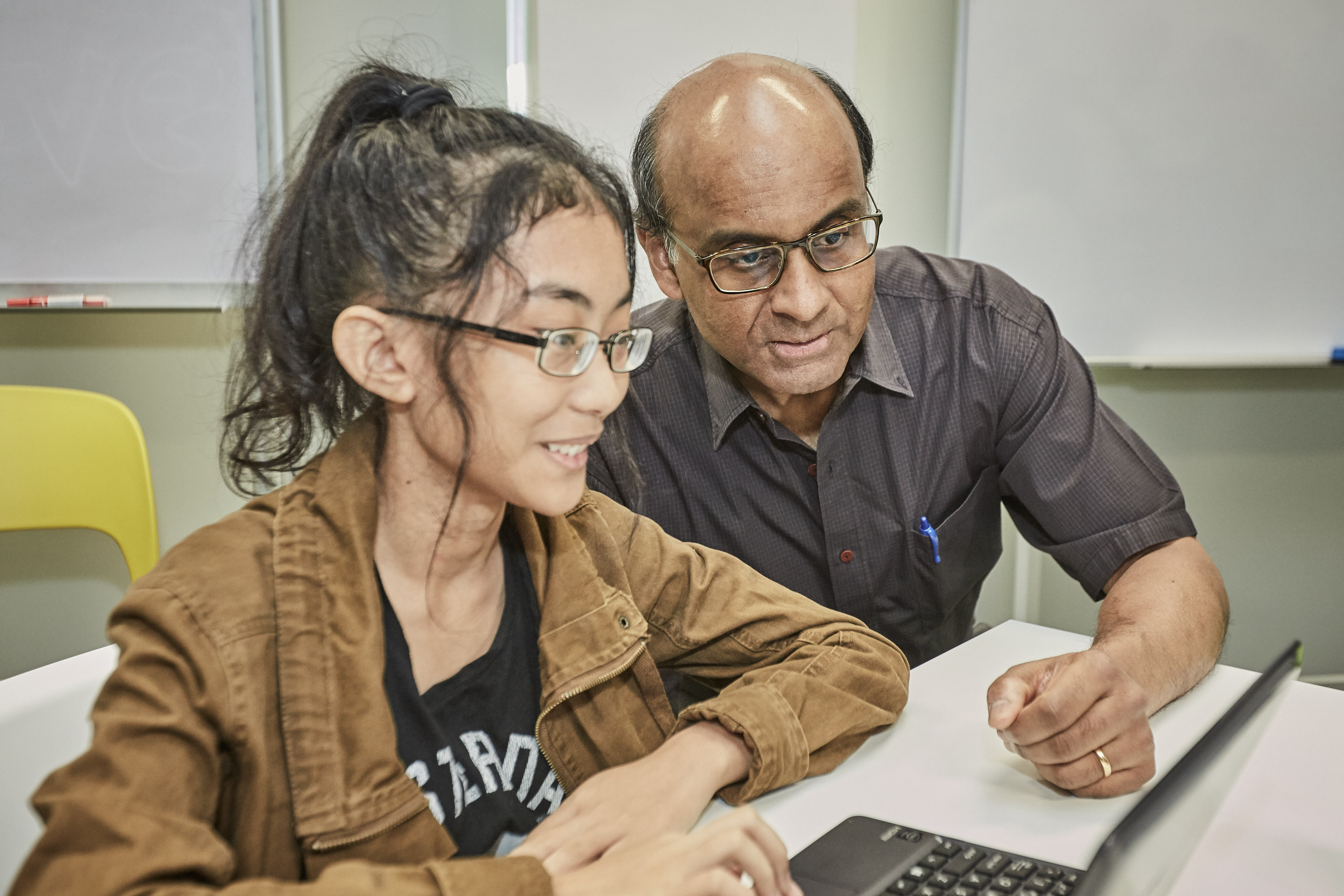
Deputy Prime Minister Tharman Shanmugaratnam interacting with a participant at one of the coding workshops during We Tech Care 2016. (Photo: Microsoft)

Deputy Prime Minister Tharman Shanmugaratnam said such initiatives help to create the future that people want in Singapore.

“It involves not just assisting people and enabling people, but about helping everyone to contribute to that future because the future that we want is a future that will be made by all of us – made by people of every ability,” said Mr Tharman, who is also Coordinating Minister for Economic and Social Policies.

“In fact, everyone has something hindered in them that can be unlocked, and everyone learns and grows by having relationships with people of different abilities,” he added.

However, Mr Tharman noted that there is still a lot more Singapore can do in this aspect. “I think it’s still a journey and there’s a lot more we can do for each individual… and develop this society where you’ve got thicker relationships between people of different abilities.”

Source link

M1 customers enjoy 1-for-1 Shaw Theatres movie tickets on Sunday, 11 Dec 2016

0

TOMORROW: 1-for-1 Shaw Theatres movie tickets for M1 customers (11 Dec)

M1 customers enjoy 1-for-1 Shaw Theatres movie tickets on Sunday, 11 Dec 2016

With M1 Movie Sundays, treat a friend to catch the latest blockbuster or cuddle up with your loved one over a romantic comedy. Just present your latest M1 bill or show the M1 logo to get the second ticket FREE.

Source

South Korea PM seeks to calm anxiety over national security, financial markets after president’s impeachment

0


South Korea’s prime minister sought to calm anxiety over national security and to reassure financial markets on Saturday, a day after parliament voted to impeach President Park Geun Hye, making him acting leader.

Prime Minister Hwang Kyo Ahn, who assumed presidential authority late on Friday after the overwhelming impeachment vote, and with more protests against Park due later on Saturday, called on authorities to ensure that rallies are peaceful.

“So far, financial and foreign exchange markets have been relatively stable and there are no signs of unusual movements by the North, but all public servants should bear vigilance in mind as they conduct their duties,” Hwang told a meeting.

He said national security was the priority and reiterated that the military should be on high alert for any provocation by old rival North Korea, including the possibility of cyber attacks aimed at sowing confusion in the South.

Park’s powers were suspended after 234 of parliament’s 300 members voted to impeach her, meaning more than 60 members of her own party backed the motion against her.

The impeachment, which has to be reviewed and approved by a nine-judge Constitutional Court within 180 days to remove Park from office, sets the stage for her to become the country’s first elected leader to be ousted in disgrace.

Park, 64, the daughter of a former military ruler, is accused of colluding with a friend and a former aide, both of whom prosecutors have indicted, to pressure big businesses to donate to foundations set up to back her policy initiatives.

Park, who is serving a single five-year term ending in February 2018, has denied wrongdoing but apologised for carelessness in her ties with her friend, Choi Soon-sil.

For six consecutive Saturdays, huge crowds have gathered in central Seoul in peaceful demonstrations calling for Park to step down, with another planned for Saturday.

“The candle-lit rallies we have been holding and the weekend rally in Kwanghwamun will go on,” organisers said in a statement, referring to an imposing gate that opens to an imperial palace in front of the presidential Blue House, where Park remains despite losing her powers.

“The impeachment is the start, not the end,” they said.

If Park leaves office early, an election must be held within 60 days. She would also lose presidential immunity from prosecution. Prosecutors have named Park as an accomplice in their investigation.

Earlier, the Bank of Korea said the financial market impact of the impeachment appeared to be limited after a meeting to review policy measures that it may take. Governor Lee Ju-yeol asked for close monitoring of the markets.

The United States, which has about 28,500 troops stationed in South Korea, was in close contact with South Korea and remained a strong ally, the White House said late on Friday.

Image:
Category:
Publication Date:
Saturday, December 10, 2016 – 18:56
Send to mobile app:
Source:

Story Type:
Others

Source link

More than 5,200 households apply for HDB's Proximity Housing Grant

0

SINGAPORE – When housewife Jennyfer Aw Young and her husband Wang Dewei, both 34, wanted to buy their first home in 2008, they went for a four-room Build-To-Order flat in Punggol as it was readily available.

But the couple longed to return to Jurong where they grew up and where their parents still live.

They eventually bought a resale executive flat in Jurong West Street 65 and moved in this October.

After receiving a Proximity Housing Grant (PHG) of $20,000, the 125 sqm unit cost them $525,000.

“It’s like homecoming for us,” said Madam Aw Young, a mother of three. “It’s so much easier to visit our parents now. We don’t need to wait for the weekend to have dinner together.”

She added: “The grant definitely helped us financially because we can save the money for our kids’ education.”

Madam Aw Young’s family is among the 5,217 Singaporean households that applied for the PHG within a year of its introduction, said the Housing Board (HDB).

The households comprise 4,860 families and 357 singles.

Some $82.6 million in grants have been disbursed to 4,315 of these households. Another $18.2 million will be released to the remaining applicants when their resale transactions are completed.

The scheme, which was rolled out last August (2015), helps families live closer together when they buy resale HDB flats. Families who buy a resale flat to live with or near their parents or married child receive the $20,000 grant.

Eligible singles get $10,000 if they buy a resale flat with their parents.

All Singaporeans are eligible for the grant once, regardless of their income level and whether they have received housing subsidies before.

This includes private property owners. They have to sell their property within six months of buying the resale flat.

HDB said those who applied for the PHG made up about a quarter of all the resale applications registered between Aug 24 last year – when the scheme kicked in – and Aug 31 this year.

Just over half, or 56 per cent of the applicants, would not have qualified for any housing grant before PHG was introduced.

Mature and non-mature estates were almost equally popular among applicants.

A bulk of the applicants – 95 per cent of them – were married children, while the rest were parents.

Most of them, or 83 per cent, opted for flats within the same town or a 2km radius of their parents or married child. The others chose to live in the same flat or same block.

These numbers echo the feedback received in 2014, when the National Development Ministry organised a series of Housing Conversations to engage Singaporeans.

Many young participants said they preferred to live separately from their parents but near them, citing independence and privacy as chief reasons.

Mr Mohammad Azrul Ab Aziz, 28, is happy to live near his parents. The marine company supervisor and his 26-year-old wife recently bought a four-room resale flat in Woodlands Street 13 for $345,000. Of this sum, $60,000 was covered by grants, including the $20,000 PHG.

“My property agent told me about this grant,” said Mr Azrul, whose retired parents live a few blocks away on the same street. “It’s convenient because my mother can help us collect any delivered items when we are not at home.”

“When we have kids next time, I can also take them to my parents’ flat so they’ll be closer to their grandparents.”

In a Facebook post on Saturday (Dec 10), National Development Minister Lawrence Wong said the majority of beneficiaries are families and children buying flats to live close to, or with their parents.

“Many would not have been eligible for any housing grant if not for the PHG,” he wrote.

“We recognise the desire shared by many Singaporeans to live closer to their families. At the Ministry of National Development, we will continue to support this aspiration and help strengthen family bonds in Singapore.”

on Facebook

Last August, we introduced the Proximity Housing Grant (PHG) of $20,000 to help families who want to buy a resale flat…

Posted by Lawrence Wong on Friday, 9 December 2016


This article was first published on Dec 10, 2016.
Get a copy of The Straits Times or go to straitstimes.com for more stories.

Image: 
Category: 
Publication Date: 
Sunday, December 11, 2016 – 09:00
Send to mobile app: 
Source: 


Story Type: 
Others

Source link

Sting Singapore

0

Sting Singapore
Sunday, May 28, 2017 at 8:00 PM

Singapore Indoor Stadium

2 Stadium Walk, Singapore, Singapore

Source link

Angelababy might have plans to give birth in Hong Kong

0


After confirming her pregnancy in October, Angelababy has taken a hiatus from her work to prepare for the baby’s arrival in February next year.

Therefore, when Huang Xiaoming’s seven-month pregnant wife was seen flying to Taiwan with him for an event, suspicions were aroused.

When asked about why Angelababy was accompanying him, Xiaoming explained that she wanted to go to Taiwan to taste the local dishes.

However, another reason for her to be there surfaced when Xiaoming’s assistants were seen bringing documents to a local Taiwan hospital.

Tabloids immediately suspected that Angelababy was planning to give birth there, but subsequent reports are now claiming that she wants to have her baby in Hong Kong instead.

Go to herworldPLUS for more stories.

Image:
Publication Date:
Saturday, December 10, 2016 – 17:02
Keywords:
Send to mobile app:
Source:

Story Type:
Others

Source link