28.7 C
Singapore, SG
Wednesday, September 23, 2026
Home Blog Page 2194

Swimmers swap legs for a tail at mermaid classes in China

0


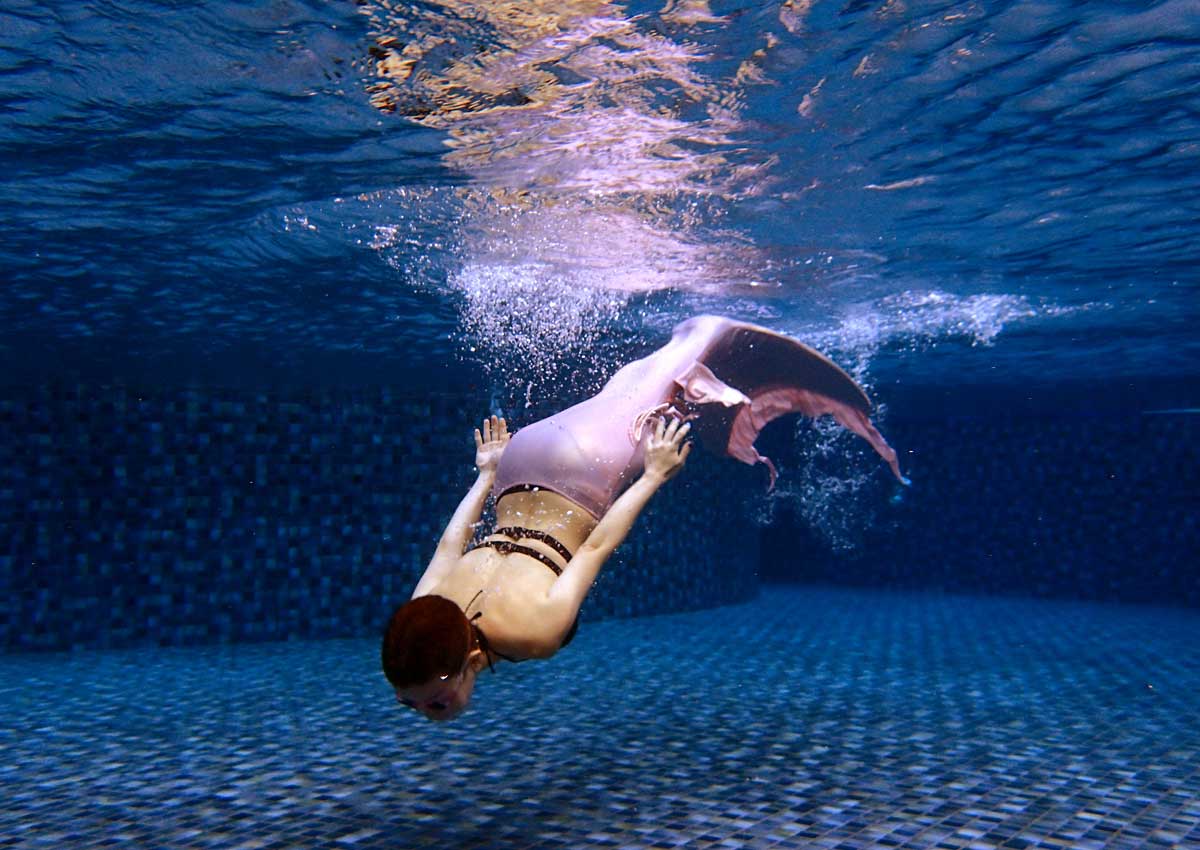
GUANGZHOU, China – Chinese mermaid fans are getting a chance to live out their dream of swimming underwater like the mythical aquatic creature.

Dada Li, a professional diver in the southern city of Guangzhou, teaches more than 100 adults and children how to wear a colourful monofin tail, hold their breath and dive underwater like a mermaid.

“I love being a mermaid, so I was sure that there were other little girls who had dreams of being one,” said Li, who began offering lessons a year ago after joining a mermaid troupe at one of China’s largest indoor aquariums.

Interest in mermaids has grown since Hong Kong director Stephen Chow’s comedy “The Mermaid” hit movie screens earlier this year, said Li.

The odd-ball romantic comedy about a businessman property developer who falls in love with a mermaid sent to assassinate him has broken Chinese box office records in 2016. “The Mermaid has definitely made many people realise the concept of a mermaid and people can dress up as mermaids. After the movie’s success I heavily promoted my courses,” said Li.

Li, a former logistics worker who turned to diving in 2012, said she offers wannabe mermaids and mermen a one-to-three day course costing between 1,400 yuan (S$290) and 4,000 yuan in the cities of Guangzhou and Shenzhen.

Huang Xiaying, 24, who was one of Li’s first students, is now a regular mermaid performer at an aquarium. “When I’m in the water I feel at peace and when I’m with animals I’m very happy,” she said. “Being able to swim with so many different types of sea-creatures, it makes me feel relaxed and very comfortable.”

Image:
Publication Date:
Saturday, December 17, 2016 – 18:45
Keywords:
Send to mobile app:
Source:

Story Type:
Others

Source link

Muji Singapore removes conger eel rice kit from its shelves

0

SINGAPORE – Muji Singapore has removed a food product from its shelves here, after concerns that they may have come from areas affected by the Fukushima nuclear disaster in 2011.

Singapore carries the conger eel rice kit, one of the two types of Muji ready meals containing ingredients produced in Tochigi Prefecture in Japan. The other affected Muji product is the crab rice kit.

In a statement on Friday, Muji Singapore said it was recalling the food product and apologised for the inconvenience caused.

It also advised customers not to consume the product, but to bring itto a Muji outlet or contact its customer service department for refund.

Muji Singapore has submitted the product for inspection by the Agri-Food and Veterinary Authority (AVA), and will update again when further information is confirmed.

Elsewhere in Taiwan and Hong Kong, the Japanese lifestyle store has also removed the related products from the sales floor and is recalling these products.

Muji Singapore’s customer service department can be contacted at 6346-4123 or customerservice@muji.com.sg.


This article was first published on Dec 16, 2016.
Get a copy of The Straits Times or go to straitstimes.com for more stories.

Image: 
Publication Date: 
Saturday, December 17, 2016 – 18:29
Keywords: 
Send to mobile app: 
Source: 


Story Type: 
Others

Source link

Man dies after being trapped under taxi at Ang Mo Kio carpark, cabby arrested

0

SINGAPORE – A 36-year-old man trapped under a taxi at a carpark in Ang Mo Kio died on Friday (Dec 16) night.

The police told The Straits Times on Friday that they were alerted at 8.49pm to an accident involving a taxi and a 36-year-old pedestrian at the carpark at Block 475, Ang Mo Kio Avenue 10.

The Singapore Civil Defence Force (SCDF) said it dispatched five vehicles including an ambulance and a red rhino.

SCDF officers used a hydraulic spreader and an airbag to free the man, but he was pronounced dead by paramedics on the spot.

The male taxi driver was arrested for causing death by a negligent act.

The Straits Times understands that the accident occurred as the taxi driver allegedly did not notice the man.

Police investigations are ongoing.


This article was first published on Dec 16, 2016.
Get a copy of The Straits Times or go to straitstimes.com for more stories.

Category: 
Publication Date: 
Saturday, December 17, 2016 – 18:27
Send to mobile app: 
Source: 


Story Type: 
Others

Source link

New Sanrio Mini Alphabet Cube Plushies will be progressively available at Cheers & Fairprice Xpress from 17 Dec 2016

0

New Sanrio Mini Alphabet Cube Plushies will be progressively available at Cheers & Fairprice Xpress

New Sanrio Mini Alphabet Cube Plushies will be progressively available at Cheers & Fairprice Xpress from 17 Dec 2016

Sanrio fans, look out for the new Sanrio Mini Alphabet Cube Plushies coming to a Cheers / Fairprice Xpress store near you! The cube plush comes in eight Sanrio characters: Hello Kitty, My Melody, Gudetama, Pompompurin & many more

Source

She is said to have psychic abilities

0

A man is told to stop looking for his cow, as it is no longer in this world. A woman is consoled that her estrangement from her husband was destined. A goat herd wakes up after being unconscious for a day. A baby is cured of fits and breaks into a smile.

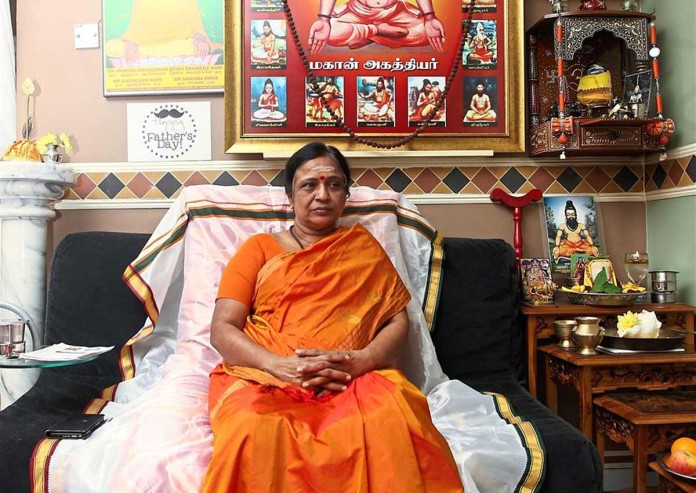
These are some of the “miracles” performed by Rajathi Ammal, 57. She is the sixth generation caretaker of famous Hindu temple Pandi Kovil in Madurai in Tamil Nadu, India. The Hindu temple – believed to be over 300 years old – is run by generations in her family.

Fondly known as Ammal, she is believed to have psychic abilities, although she herself does not make such claims. People call her the oracle.

A popular figure in her temple, she dispenses advice to people who come to see her. They need not tell her anything. She already knows their problems.

Sometimes, she goes into a trance involuntarily and transmits messages which people believe are from deities or spiritual beings. This is according to V. Rammachandher, who hosted Ammal during her recent visit to Malaysia for a holiday. He acted as interpreter as Ammal could only speak in Tamil.

Ammal was born 13 years after her parents’ marriage and after her father had “a vision”. Her father was 21 and her mother, 18, when they wed.

“The Hindu god Lord Muneshwara appeared in father’s dream, instructing him to go to Rameswaram, a holy town in Tamil Nadu, to bathe in the sea. He then asked my father whether he wanted a boy or girl. His wish was granted,” she says.

The family considers Ammal “a gift from god”. She married at 15 and has four children.

As an only child, she inherited extraordinary spiritual abilities from her late father, a Hindu priest, after his death in July 1991. A diabetic, he became blind in 1980 and had his right leg amputated from the knee. During the last 11 years of his life, he became “a recluse” in his quarters in the temple grounds but continued to meet those who wanted to consult him.

Grief-stricken when her father died, she fell ill and had bouts of fits.

Five days after his demise, family members helped the weakened Ammal to perform prayers. When the camphor was lit, she wailed at the sight of her father’s portrait. Then, all of a sudden, she had an immense boost of energy.

She went into a trance and seemed to assume the tone of her father. At that moment, she is believed to have received “divine powers” enabling her to take care of people.

A month after her father’s death, Ammal woke up and walked a distance of 2km from her home to the temple. She then took her place in her late father’s quarters. Three devotees came to see her. Before they told her anything, she spoke with authority.

To the first man, she told him to forget about his missing cow. It was gone for good.

She chided the second man: “You want good news but you’re doing nonsensical things when you come to the temple. Change yourself.” To the third person, a woman, she advised: “Your separation with your hubby was for the better. You don’t get along.”

Towards the end of the interview, soon after a question was fielded, Ammal suddenly broke into a trance. The living room fell into a dead silence – except for the clicking of The Star photographer’s camera.

Her voice changed and took on a gruff and authoritative tone. Her eyes rolled and her tongue stuck out for a split second.

I was momentarily frozen when I saw Ammal in that state. Earlier, I wondered if Ammal would give me a hug and blessing.

When the interview ended, I took a photograph with Ammal. Soon after, she turned to me for a hug. Later, Rajaletchumy said Ammal asked if she could bless me and apply ash on my forehead. I nodded with delight.

I told them that Ammal had read my thoughts. She must, indeed, be psychic.
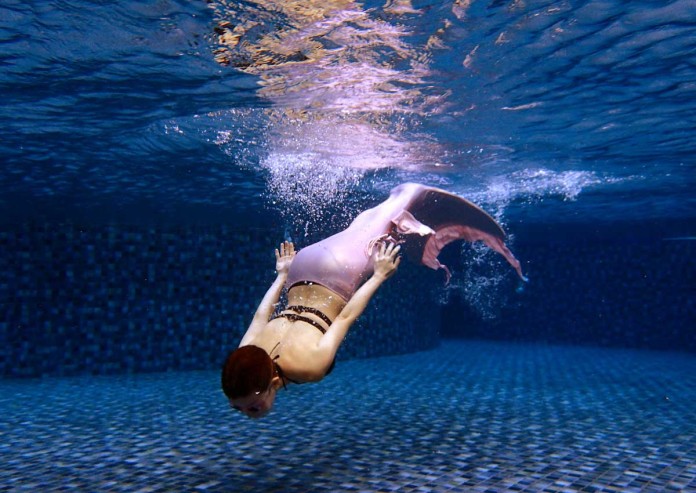
Image: 
Category: 
Publication Date: 
Saturday, December 17, 2016 – 15:23
Keywords: 
Send to mobile app: 
Source: 


Story Type: 
Others

Source link

The Wonderful World of Disney on Ice

0

The Wonderful World of Disney on Ice
Wednesday, March 15, 2017 at 6:30 PM

Singapore Indoor Stadium

2 Stadium Walk, Singapore, Singapore

Source link

Last ruler of remote Buddhist kingdom dies in Nepal

0

Kathmandu – The last king of the isolated Himalayan region of Upper Mustang died Friday in Kathmandu, eight years after he lost his royal title when the centuries-old Buddhist monarchy was abolished.

Jigme Dorje Palbar Bista, who was 86, reigned over the arid kingdom high on the Tibetan plateau for more than half a century before stepping down in 2008 when Nepal abolished its own monarchy.

“He passed away at 1 am at the hospital this morning. He was admitted three days ago. He had not been well on and off since about a year. But was having more difficulty recently because of the cold,” the former king’s nephew Tsewang Bista told AFP.

“We will have rituals until Sunday and the final rites will be performed on Monday in Kathmandu,” he said.

Nepal annexed the former kingdom of Lo in the 18th century, but allowed the king to retain his title.

Bista succeeded his father Angun Tenzing Tandul in 1964, continuing a family line that could trace its lineage back to Ame Pal, the warrior who founded the kingdom in 1380.

He supported a CIA-funded guerrilla campaign to oust Chinese forces from Tibet after a failed uprising in 1959, allowing Upper Mustang to be used as a base.

Bista had lived most of his life in the medieval walled capital of Lo Manthang, but moved to Kathmandu over a year ago after he became ill, suffering from heart and kidney problems.

He acted as a spiritual leader to the local Loba community, who speak a variant of Tibetan and are culturally and linguistically closer to Tibet than Nepal.

Ringed by vast canyons and imposing red mountains, the remote kingdom has only recently begun to see glimmers of modernity after a new road connecting Upper Mustang to China and India was completed in 2014.

The region was closed to visitors until 1992 and numbers are still strictly regulated.


Image: 
Category: 
Publication Date: 
Saturday, December 17, 2016 – 14:58
Keywords: 
Send to mobile app: 
Source: 


Story Type: 
Others

Source link

S. Korea protests switch focus to impeachment court

0

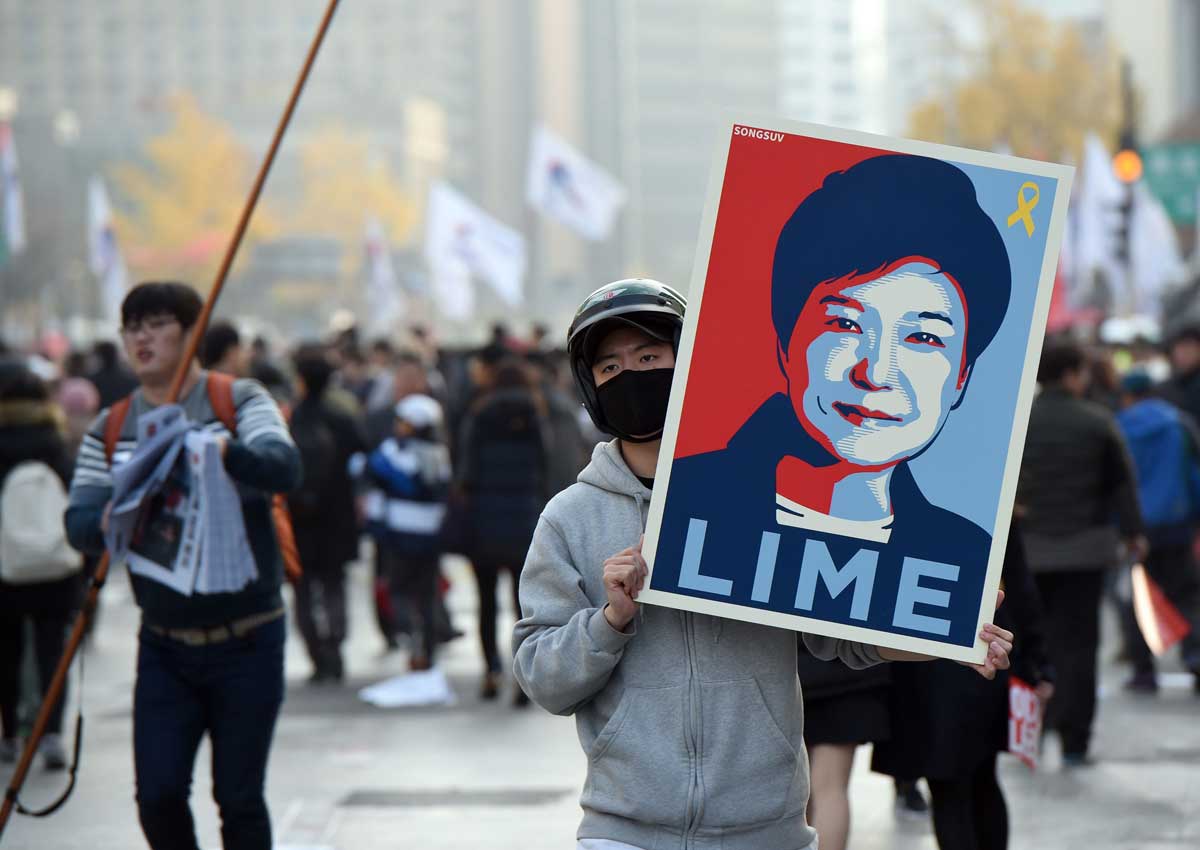
Seoul – Protesters began gathering in the streets of Seoul for the eighth straight week Saturday, pushing their demands for the swift and permanent removal of impeached South Korean President Park Geun-Hye.

Organisers said the mass rally would march on the Constitutional Court whose nine justices are considering the validity of the impeachment bill passed by the national assembly more than a week ago.

The court has 180 days to make a ruling, but the protesters are pressing for a swift judgement.

Although Park has been stripped of her substantial executive powers, she is allowed to retain the title of president and continue to live in the presidential Blue House while the court deliberates.

The protesters are adamant that she should resign immediately and face criminal prosecution.

A banner bearing images of South Korean President Park Geun-hye and her father, the late South Korean former military dictator Park Chung-hee, is seen as they attend a protest opposing her impeachment near the constitutional court in Seoul. Photo: Reuters

But Park still has her supporters, many of them elderly voters who remain steadfast admirers of her father, the late military dictator Park Chung-Hee – credited as the architect of the South’s economic transformation but vilified as an authoritarian rights abuser.

Several thousand Park loyalists attended their own rally near the court earlier in the day to demand the impeachment bill be thrown out.

Waving national flags and clutching red roses they carried banners denouncing the anti-Park protests as a leftist conspiracy.

On Friday, Park’s legal team formally submitted a 24-page rebuttal of the impeachment charges to the court, arguing that they had no legal basis.

“We can’t accept that there was any violation of the constitution by the president… the impeachment motion should be rejected,” one of her lawyers, Lee Joong-Hwan, told reporters.

Park was impeached on numerous counts of constitutional and criminal violations ranging from a failure to protect people’s lives to bribery and abuse of power.

Most of the charges stemmed from an investigation into a scandal involving the president’s long-time friend, Choi Soon-Sil, who is currently awaiting trial for fraud and embezzlement.

Prosecutors named Park a suspect in the case – a first for a sitting president – saying she colluded in Choi’s efforts to strong-arm donations from large companies worth tens of millions of dollars.

The impeachment process was ignited and fuelled by public outrage at Park’s behaviour, with the weekly mass demonstrations demanding that politicians take a proactive role in removing her from the presidential Blue House.

The National Assembly has played its part, but the country now faces a lengthy period of uncertainty at a time of slowing economic growth and elevated military tensions with nuclear-armed North Korea.

The man charged with steering the country through these dangerous waters is a former prosecutor who has never held elected office.

As Park’s prime minister, Hwang Kyo-Ahn became the temporary guardian of her sweeping executive powers the moment after she was impeached.

The protesters have called on him to resign as well, arguing that he is too tainted by his association with the president to wield her authority.

The mass rallies, some of which drew crowds of more than one million people, have been passionate but good-natured so far, with no clashes despite a heavy police presence

Image: 
Category: 
Publication Date: 
Saturday, December 17, 2016 – 14:12
Send to mobile app: 
Source: 


Story Type: 
Others

Source link

Four lapses in fatal worksite accident at Fusionoplis

0

Investigations by the Ministry of Manpower (MOM) revealed that four main lapses had led to an accident at a Fusionoplis worksite in 2014 that resulted in the deaths of two workers.

The findings were released by the ministry yesterday, after contractor GS Engineering & Construction Corp was handed a record $250,000 fine for failing in its duty to take adequate measures to ensure the safety and health of its employees at work.

The maximum prescribed fine under the Workplace Safety and Health Act is $500,000.

GS was engaged to build an 11-storey tower and an 18-storey tower with three basements at the worksite. The project started in November 2011 and was scheduled for completion by March 2014.

On Jan 22, 2014, five construction workers were instructed to load an air compressor onto a platform suspended by a tower crane at the edge of the seventh floor of the 11-storey tower, in order to move it up to the eighth floor.

When the air compressor was loaded, it rolled away from the edge of the building, causing the loading platform to tilt.

Two workers could not move away in time and fell out of the loading platform together with the air compressor.

Bangladeshi nationals Rajib Md Abdul Hannan, 24, and Ratan Roy Abinash Roy, 28, fell to the ground and died from multiple injuries.

Investigations by MOM’s Occupational Safety and Health Division found four lapses.

First, it found that GS had failed to ensure that all workers were trained to use the loading platform.

Only one of the two workers had attended training conducted by a supplier of the lifting platform; there were no records to show that the other man was trained to install and dismantle the platform.

Second, MOM found that GS had failed to implement a safe system of work.

The company had a safety management system at the worksite, including a “permit to work” system for high-risk activities such as lifting operations.

However, there was no application for a permit for the lifting of the loading platform. There was also no lifting plan implemented for the safe lifting of the platform.

In addition, contrary to safe work procedures, no qualified lifting supervisor was present to supervise the lifting of the loading platform.

Third, MOM found that GS had failed to ensure that no loose objects were on the loading platform.

Fourth, GS had failed to ensure that the workers wore safety harnesses that were anchored securely to effectively arrest falls.

In any event, GS did not provide a lifeline, so the team would not have been able to anchor their harnesses, even if they had worn them.


This article was first published on Dec 17, 2016.
Get a copy of The Straits Times or go to straitstimes.com for more stories.

Image: 
Blurb: 
<p>Investigations by the Ministry of Manpower (MOM) revealed that four main lapses had led to an accident at a Fusionoplis worksite in 2014 that resulted in the deaths of two workers.</p>
Publication Date: 
Saturday, December 17, 2016 – 16:45
Send to mobile app: 
Source: 


Story Type: 
Others

Source link

KL, Singapore to do more to ensure water supply from Johor River

0

Malaysia and Singapore will take further steps to guarantee the crucial supply of water from the stressed Johor River, said Singapore’s Minister for the Environment and Water Resources Masagos Zulkifli.

He said the prime ministers of both countries had resolved on Tuesday, at a Leaders’ Retreat, to take “timely and appropriate measures” to augment the supply of natural water to the Johor River.

While he did not reveal what measures would be taken, he said Malaysia and Singapore will look at “many schemes that have already been proposed”, and decide based on technical feasibility, cost and speed of implementation.

Mr Masagos made the comments after an annual meeting here with his Malaysian counterpart, Natural Resources and Environment Minister Wan Junaidi Jaafar.

The Straits Times reported in May that Johor is studying plans to divert water from two rivers to the Linggiu Reservoir located upstream of the Johor River to ease water shortages that have hit the state in the past few years. The reservoir collects and releases rainwater, pushing seawater back into the sea to ensure the river water is not too salty to be treated.

One of Singapore’s four taps besides reclaimed water (Newater), desalinated water and local catchment water, the Johor River supplies nearly 60 per cent of the Republic’s current water needs.

But dry weather this year has raised fears over whether Singapore can continue to rely on Malaysia for the 250 million gallons per day of raw water under a water agreement which runs until 2061.

Yesterday, Mr Masagos noted that despite installing a barrage over the river mouth to prevent the intrusion of salt water, fresh water levels were still precariously low.

The Linggiu Reservoir was currently at 26 per cent of its capacity, he said. The reservoir was at 80 per cent at the beginning of last year, and 35 per cent in April this year.

“On the back of the dry monsoon season next year, it is probably not going to recover very quickly,” he told reporters. The dry monsoon season usually runs from May to September, but has been affected by climate change. This year, for example, the reservoir started to dry up around March.

Mr Masagos said the barrage is now fully operational mechanically – automatic deployment will begin only in March – increasing the yield of treated water as plants no longer need to be shut down when the river gets too salty.

“What that means is that salinity intrusion has been resolved. I have been monitoring, and it has been very effective. But the natural flow of the Johor River is not enough to meet the needs currently of the Johor population as well as the Singapore population should Linggiu dam fail,” he said.

Under the two countries’ water agreement, Singapore is obliged to sell 5 million gallons of treated water to Johor each day. But PUB this year provided Johor with up to 16 million gallons of water a day as it was forced to undergo rationing.

Yesterday, delegations from the two countries discussed issues such as land reclamation works in the Strait of Johor and efforts in combating haze.

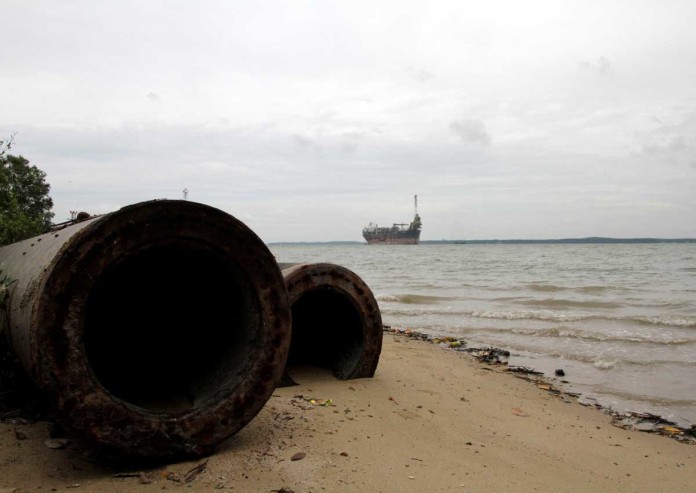
Both Mr Masagos and Datuk Seri Wan Junaidi told reporters that all stakeholders need to recognise that the ecology of the waterway is linked to the value of developments along the shared strait, and it is in everyone’s interest to take environmental concerns seriously.

On the haze, Mr Masagos said he was confident the Asean road map on transboundary haze would lead to a “haze-free Asean” by 2020.


This article was first published on Dec 17, 2016.
Get a copy of The Straits Times or go to straitstimes.com for more stories.

Image: 
Blurb: 
<p>Malaysia and Singapore will take further steps to guarantee the crucial supply of water from the stressed Johor River, said Singapore's Minister for the Environment and Water Resources Masagos Zulkifli.</p>
Publication Date: 
Saturday, December 17, 2016 – 18:00
Send to mobile app: 
Source: 


Story Type: 
Others

Source link