28.7 C
Singapore, SG
Wednesday, September 23, 2026
Home Blog Page 2193

Zouk opens doors at new home in Clarke Quay

0

SINGAPORE – Popular nightclub Zouk opened its doors to partygoers at its new Clarke Quay premises on Saturday (Dec 17).

Queues started to form as early as 9pm with about 200 partygoers gathering outside the club by 11pm.

Doors opened at 9.45pm.

One of them was student Denise Sim, 19, who was in the line with her other friends at 10pm.

Commenting on the new Zouk, she said: “I like the interior. The lights look grand and elegant.”

“I’m looking forward to a full house tonight. Zouk always provides good music, I’ve no doubt about that.”

Club representatives said about 2,000 club-goers were in Zouk and Phuture by 11pm.

Phuture is part of Zouk.

It plays hip-hop music and can hold 700 people.

Zouk, one of Singapore’s oldest clubs, moved from its iconic 25-year-old home at Jiak Kim Street.

The club was bought over by conglomerate Genting Hong Kong late last year(2015).

Said ITE student Ng Hong Wei, 18: “I was quite sad when I heard that Zouk would be moving to Clarke Quay. But I’m looking forward to tonight.”

“We’ll see how it goes,” added Mr Ng, who goes to Zouk almost every weekend.

The new award-winning club, at 898 sq m, is located in The Cannery, a space previously occupied by Ministry of Sound and Zirca.

Among other new features, the new club boasts live-streaming screens and a main dance floor that can hold 1,900 partygoers.


This article was first published on December 18, 2016.
Get a copy of The Straits Times or go to straitstimes.com for more stories.

Image: 
Category: 
Publication Date: 
Sunday, December 18, 2016 – 10:34
Keywords: 
Send to mobile app: 
Source: 


video embed code: 
<iframe width="100%" height="355" src="https://www.youtube.com/embed/9PO7RS_0AB8" frameborder="0" allowfullscreen></iframe>
Video Media: 
Other Video Media
Story Type: 
Others

Source link

Look out if you're buying spectacles online

0

As more Singaporeans buy their spectacles – sight unseen – on the Internet, the Government has issued tighter rules on who can do so.

Only those aged 16 and above can make the purchase, and they must have a valid prescription from an optometrist registered with the Optometrists and Opticians Board.

The new guidelines for online sales of prescription glasses, announced on the board’s website on Tuesday, are to “ensure that proper assessment and management are in place to safeguard the interest of the public against dubious sources of sales”. Previously, there were no restrictions.

The board, an official governing body in the Ministry of Health, also issued advisories for optical practitioners, retailers and consumers.

To get a prescription that will allow one to buy glasses online, a consumer has to be aged 16 and above, with myopia of below 600 degrees and astigmatism below 200 degrees.

A valid prescription has to include, among other conditions, the consumer’s date of birth and identity card number, the date the prescription expires – usually not longer than two years – and a written assessment that the consumer does not have any existing organic eye disease or systemic medical condition that will affect vision.

Online retailers must be a business registered in Singapore, with a physical outlet that provides after-sales services such as adjustment of spectacles.

Practitioners who do not follow these guidelines may be subject to disciplinary action, as it may be regarded as professional misconduct, said the board.

The Singapore Optometric Association, an industry body of optometrists, said it had raised concerns to the board over the growing trend of consumers purchasing spectacles and contact lenses online.

These carry risks such as the absence of appropriate eye exams and reviews, and the lack of after-sales care, said one of the association’s councillors, Ms Chui Wen Juan.

A comprehensive eye exam can determine if visual and eye health problems exist due to refractive error – blurred vision due to light not being focused correctly on the eye – or because of eye disease or developmental issues, said Ms Chui.

Retailers said the guidelines may not be practical. “Some optometrists might not be too keen to issue patients with their prescriptions, especially if they know the patients are going to make their spectacles with other companies,” said Mr Edwin Tay, business manager of Mimeo The Optical Shop.

Online optical shops may also have difficulties validating the authenticity and accuracy of the prescription provided by the patients, he said. “At the moment, information sharing among different optical shops may not be liberal due to business interests,” he added.

Optical chain Owndays, which does not sell spectacles online, said it is exploring how it can do so while keeping to the guidelines.

“The guidelines help to uphold the standard and professionalism of the optical industry,” said its managing director, Mr Umiyama Takeshi.

A report by Euromonitor International found that last year, only 2 per cent of spectacles sold here were bought online. But this is expected to grow as people seek novelty and competitive prices, it added.

Mr Bernard Yang, managing director of Nanyang Optical, said a bigger problem is the sale of contact lenses online. “The sale of contact lenses is more of a real problem since they are placed directly onto the eye,” he said.

Also read: 10 things every contact lens user should know

To buy and sell online…

A consumer has to be aged 16 and above, with myopia of below 600 degrees and astigmatism below 200 degrees. He or she will need a valid prescription from an optometrist registered with the Optometrists and Opticians Board. The prescription must include:

• the date of birth and identity card number of the consumer

• the date the prescription expires – usually not longer than two years

• a written assessment that the consumer does not have any existing organic eye disease or systemic medical condition that will affect vision.

Online retailers must be a business registered in Singapore, with a physical outlet that provides after-sales services such as adjustment of spectacles.


This article was first published on Dec 16, 2016.
Get a copy of The Straits Times or go to straitstimes.com for more stories.

Image: 
Publication Date: 
Sunday, December 18, 2016 – 10:18
Send to mobile app: 
Source: 


Rotator Headline: 
Buying your spectacles online? Here's what you should know
Rotator Image: 
Story Type: 
Others

Source link

2 men in Orchard Road altercation, police looking into case of voluntarily causing hurt

0

SINGAPORE – A 34-year-old man is assisting with police investigations after being involved in an altercation along busy Orchard Road on Friday night (Dec 16).

Police told The Straits Times they are looking into a case of voluntarily causing hurt.

Videos of the incident, which took place near The Centrepoint mall was sent to Mandarin television news station Channel 8, and also posted on road safety community page Roads.sg.

It shows two men trading blows as other motorists slowed down and passers-by stopped to look.

on Facebook

New level of road rage with weapon in hand.

News report here: http://bit.ly/2hFAuP9

Credit: Channel 8 news

Posted by Roads.sg on Saturday, 17 December 2016

Police said they were alerted to the incident at about 10pm.

An eyewitness, quoted in an online media report, said the incident started after a man, standing by the side of the road, used his bag to hit a sport utility vehicle (SUV).

After the SUV driver got out of his car, both men started a shoving match.

In an account posted on Roads.sg, a man claiming to be the SUV driver said he had to get out of his car after the man hit the windows.

The writer, identifying himself as Kevin, said the man then hit him with the bag he was carrying which caused Kevin’s spectacles to fall.

“I retrieved a stick from the boot of my car to fend him off,” Kevin added. The video shows him hitting the other party with the stick.

Kevin said he told the police he did not want to pursue the matter, as he was not hurt.

“My car sustained some scratches and dents, some deep enough to expose the bare metal, but I felt that claiming damages would be more (of a) headache than what the repair was worth,” he wrote on Roads.sg.

on Facebook

Part 2 of Orchard Road drama. This is the driver’s account.

I was in the right most lane in heavy traffic, my lane was…

Posted by Roads.sg on Saturday, 17 December 2016


This article was first published on December 17, 2016.
Get a copy of The Straits Times or go to straitstimes.com for more stories.

Image: 
Category: 
Publication Date: 
Sunday, December 18, 2016 – 10:02
Send to mobile app: 
Source: 


Story Type: 
Others

Source link

Rising demand for coconuts in Asia driving prices up

0

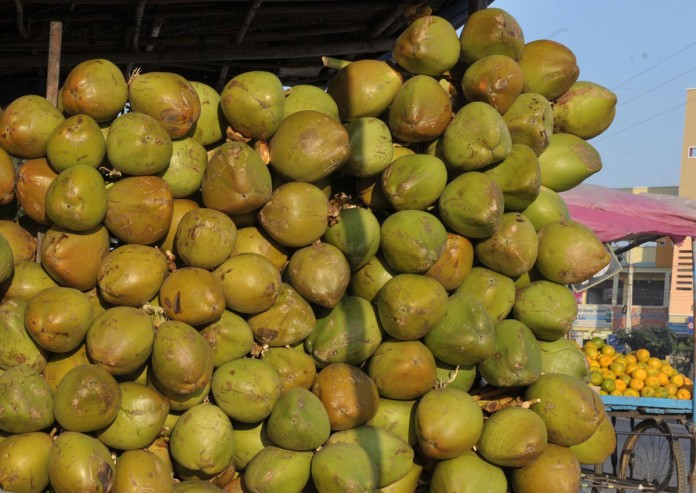
PETALING JAYA – The price rise of coconuts in the country is partially due to an increase in demand within the Asian region.

Malaysian Agricultural and Development Institute (Mardi) Genebank and Seed Centre deputy director Mohd Rashid Rabu said the increased demand was from China and Thailand.

“Increasing demand results in a drop in supplies, which leads to higher prices of imported coconuts from Indonesia.

“Malaysia does not produce sufficient coconuts, especially for processing into other goods like kaya and coconut milk,” Rashid said, adding that Indonesia was the commodity’s highest exporter in Asia.

He said there were many industries and products in the country that required coconuts.

He added that Malaysia imports nearly 800 million coconuts an­­nually­, of which 90 per cent comes from Indonesia and the rest from the Philippines, the second highest producer in the continent.

“Currency rates also play a role in affecting the price.

“There has also been an increase in the public’s demand for coconut water.” said Rashid.

He said many efforts by the Government to increase the local supply of coconuts included replanting coconut trees and increasing the varieties.

“The Government is also pushing the Matag variety to make it sufficient for the demand of the local market.”

Muslim Consumers Assosciation of Malaysia (PPIM) chief Datuk Nadzim Johan said his members had also noted a price increase of between 50 sen and RM1 for a coconut in several areas in Kuala Lumpur over the last two weeks.

He said the increase in prices were seen in markets in Taman Tun, Gombak and Ampang among other places.

He believes the increase is due to profiteering by middle men.

“Those selling coconuts think they might as well make more money, because people will still buy them at whatever the price.

“And if consumers are not careful and proper enforcement is not taken, this will become a culture very soon,” he added.

He said the Government must enforce the laws and charge those who are profiteering, while Malaysians must keep vigilant of such profiteers.

On Thursday, Domestic Trade, Cooperatives and Consumerism Minister Datuk Seri Hamzah Zainudin warned traders against jacking up the prices of coconuts and coconut milk.

He said there was enough supply of coconut to meet the demand.

Image: 
Category: 
Publication Date: 
Sunday, December 18, 2016 – 10:09
Send to mobile app: 
Source: 


Story Type: 
Others

Source link

Rochor Centre: Living on borrowed time

0

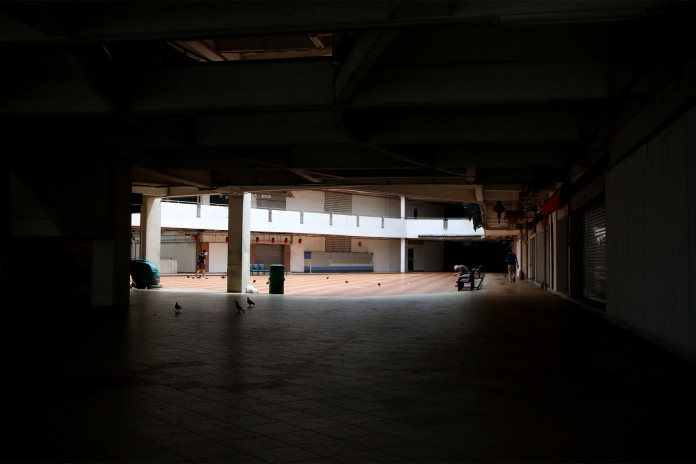
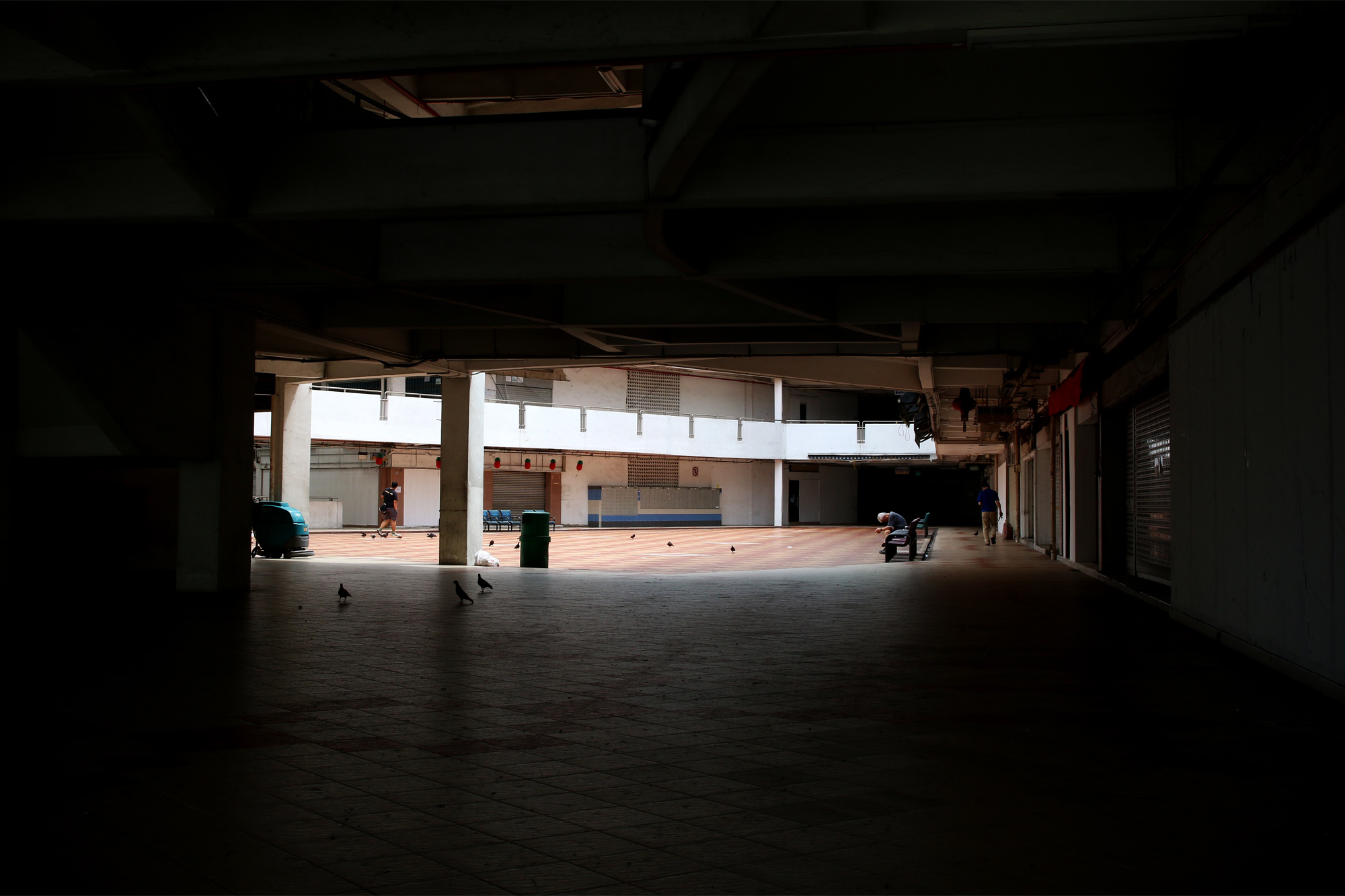
SINGAPORE: “There’s nothing much to say,” 80-year-old Mdm Lee said, when asked about the looming demolition of Rochor Centre – her home for the past 40 years. “I’m very sad.”

Authorities have yet to announce the exact date the wrecking crew turns up, but have previously said the iconic, rainbow-coloured estate would be torn down at end-2016.

Mdm Lee remembers the day the Government said it would acquire the four blocks of Housing and Development Board (HDB) flats to make way for the 21.5km long North-South Expressway.

While the initial announcement back in November 2011 caught many by surprise, Mdm Lee said she had already been tipped off by her nephew a few years prior. “My nephew works at HDB and he told me one day: ‘Auntie, your HDB is going to be acquired.’ And then I told my neighbours about it but they didn’t believe me,” she recounted. 
Despite getting the early heads-up, she still recalls receiving with a heavy heart, the official letter notifying Rochor Centre residents that they would have to move.

“It has a good location, very centralised,” Mdm Lee said as she peeled an orange outside her unit. “There’s shopping too, like the (nearby) OG shopping centre. This is a very nice place – it’s such a waste.”

As Mdm Lee sauntered to the stairwell, she caught sight of a 17-year-old neighbour climbing the stairs. “Why are you so tanned nowadays?” Mdm Lee called out, her brows slightly furrowed.

The boy, Outram Secondary School student Yong Wen Qing, later told Channel NewsAsia that Mdm Lee has been a familiar face growing up.

The teen’s family moved to Rochor Centre in 1999 but was due to move out a day after he spoke to this reporter. 

“It’s very sad that they’re tearing this place down. If you go elsewhere, the HDB flats are mostly white, so to me, these are the most colourful HDB flats,” he said.

This is where his love for freestyle football began, he shared. Over the last five years, he has been honing his skills every evening at open areas of the estate with fellow residents. He also holds memories of block parties at open-roof areas, close to his heart. “Sometimes people gather here and have barbecues. For instance during birthday parties, we invite our kindergarten, primary school friends to come over,” he said, pointing to the playground.

“KAMPONG-LIKE”

MP for Jalan Besar GRC Denise Phua and her grassroots volunteers have held many activities at the estate since she started representing the constituency in 2006, including National Day parties.

“Rochor Centre is uniquely constructed,” she said. “There is a common courtyard-like space which is right in the middle of the centre towered by a few housing blocks. Although in the city district, Rochor Centre is one of the oldest public housing estates there.

“It is kampong-like. Most residents are elderly and do not speak English or aren’t computer literate. However, many of them are nice and gracious people. They often ask if I have eaten or rested enough when I visit,” she said. “The shops were also reminiscent of the earlier days of Singapore – old coffeeshops, shops selling pots, pans, plates and other knick-knacks. As the location is very near to Albert Mall which sits the popular Kwan Im Temple, many shops were also selling joss sticks and items for Chinese prayers.”
NINE OUT OF 10 HOUSEHOLDS MOVING TO KALLANG TRIVISTA

To make way for Singapore’s eleventh expressway, residents at Rochor Centre will be offered relocation benefits similar to those offered under the Selective En Bloc Redevelopment Scheme (SERS). They will have the opportunity to move to a new, 99-year lease home and will be given a package comprising compensation and rehousing benefits.

A spokesperson for HDB also told Channel NewsAsia that Rochor residents must move out of their flats by the end of this year. As part of the acquisition package, they are assured of a replacement flat in Kallang Trivista.

Of the 567 households in Blocks 1 to 4 Rochor Road, nine out of 10 households will be moving to a replacement at Kallang Trivista, said the spokesperson. Almost all the households have collected their keys, she added.
One resident, Mr Pang Siew Seng, tried in vain to appeal to authorities not to tear down the flats. “I asked HDB if there were other options other than to acquire the flats, but I was told ‘no’, as they have to build the roads,” he said, recalling a trip to HDB Hub in Toa Payoh.

He has been living at Rochor Centre since 1977 and was offered S$470,000 for his 3-room unit.

HDB said an appointed private valuer had physically inspected all the units in Rochor Centre to derive a fair market value for compensation. “The valuation varies from flat to flat, taking into account the individual flat attributes such as the internal layout of the flat, floor area, condition of renovations, state of maintenance, the location and orientation of the flats,” said the spokesperson.

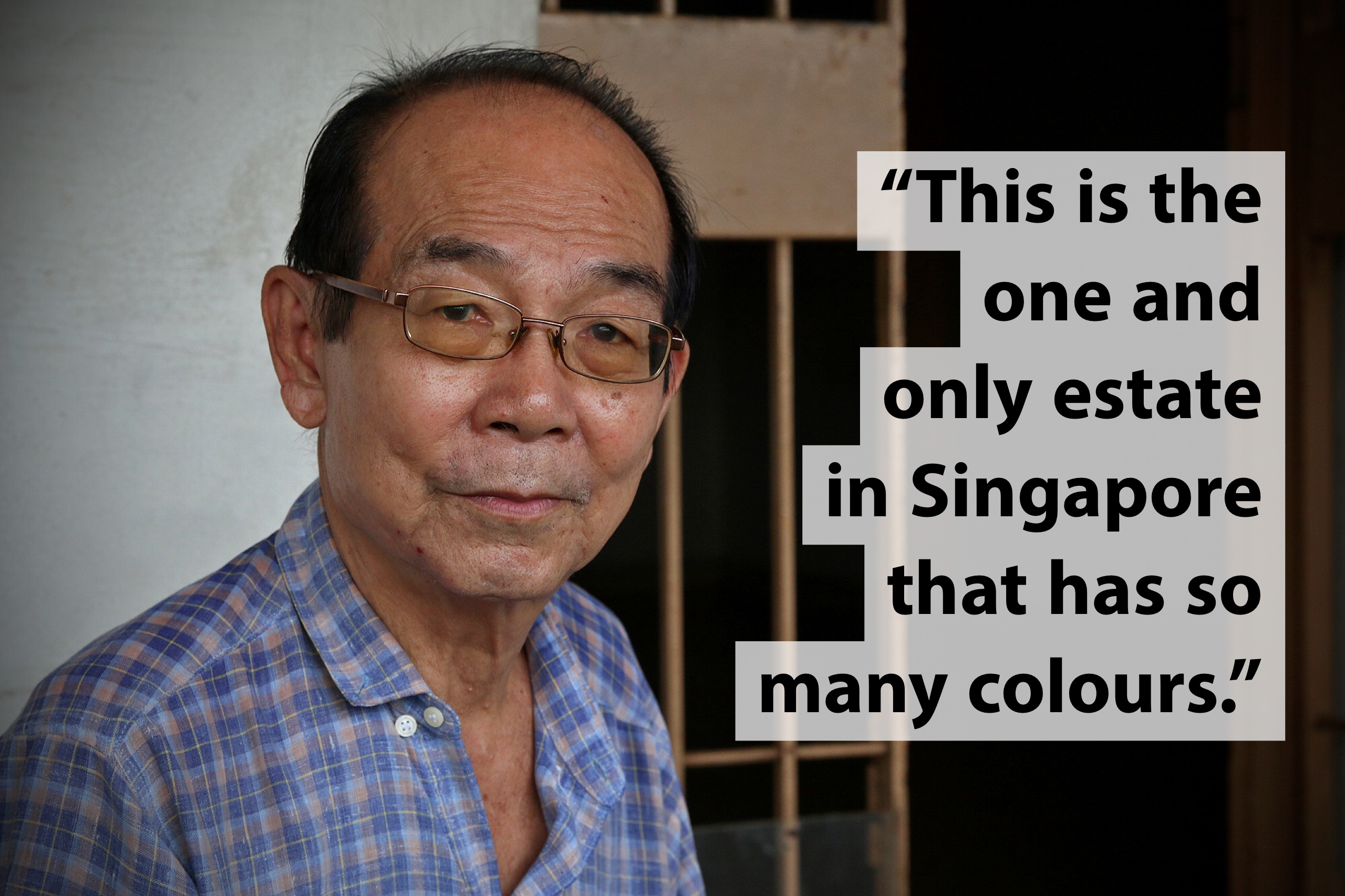
Mr Pang said he feels extra sentimental about the flat, as this is the first home he bought. “I will miss this place for its convenience,” the 78-year-old said in Mandarin. “There are shops everywhere, including a FairPrice supermarket, four coffeeshops and a pawn shop.

“When I first moved here, I found the sound of the traffic can be boisterous but I’ve gotten used to it,” Mr Pang said. “This is the one and only estate in Singapore that has so many colours.

“This is a good location and I can see fireworks from here during every National Day Parade.”
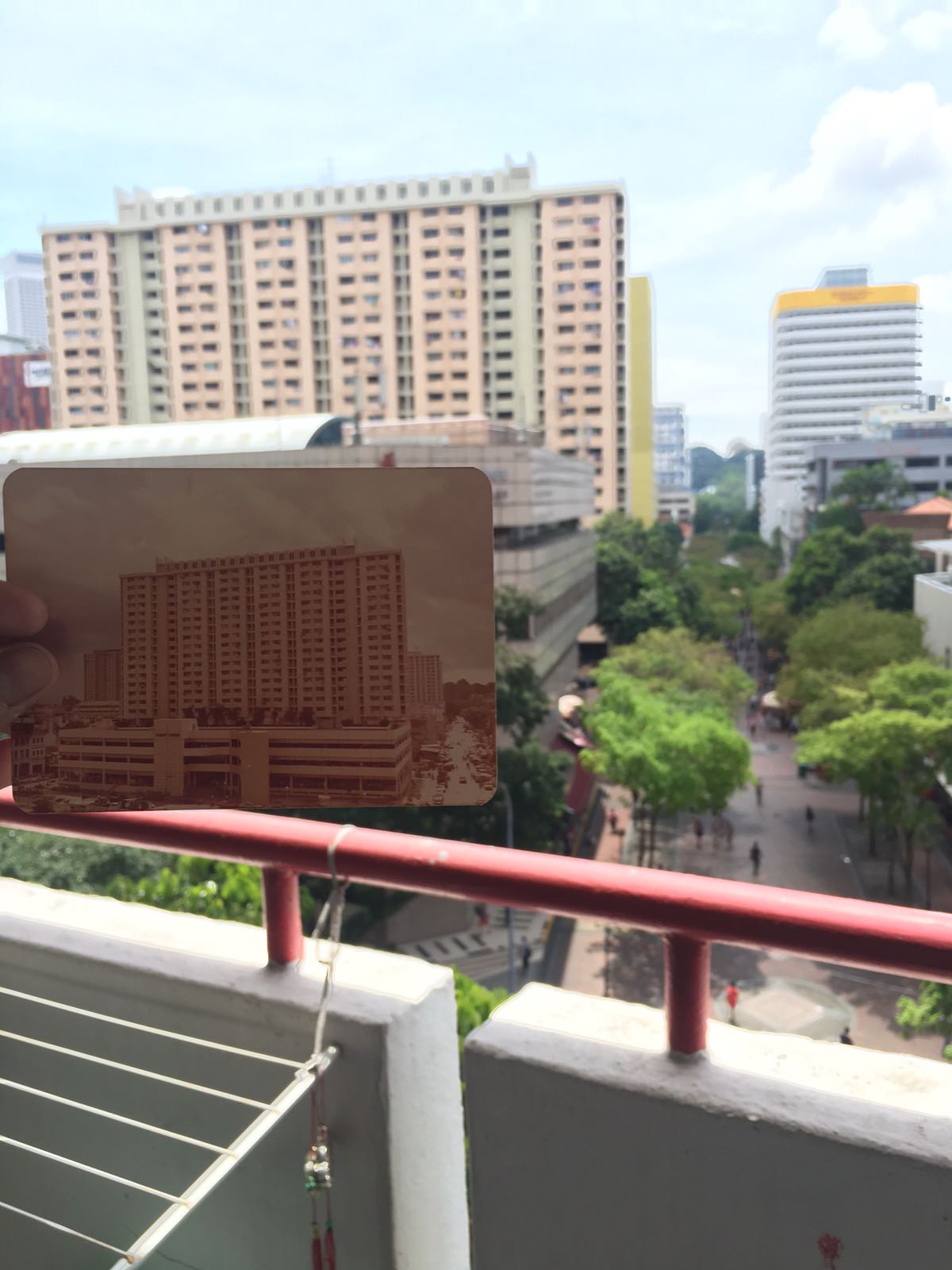
(Photo courtesy of Mr Yong Wen Qing)
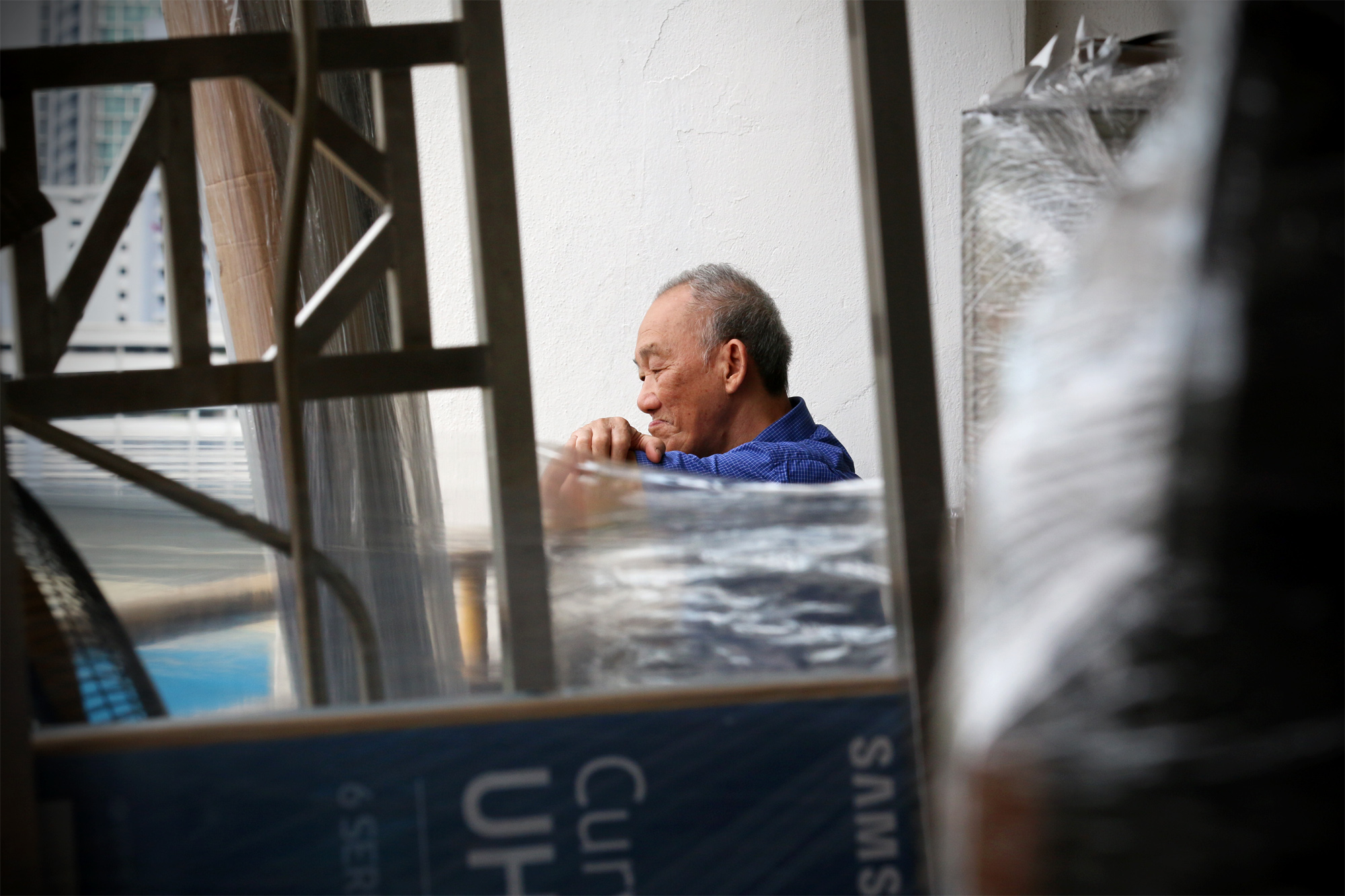
Mr Chan Mun Ban Norman was seen taking in the view outside his Rochor apartment for the very last time when Channel NewsAsia visited the estate. Flanking him were large piles of cardboard boxes, as he and his family were all packed up and ready to go. Resting his arms on the parapet, Mr Chan stared hard at the bustling, traffic-filled roads. “I haven’t admired this view for so long,” the 78-year-old said in Mandarin. “It feels very nice.”

Mr Chan added: “In the past, there were no trees and flowers – just a canal which was very smelly, especially when the wind blows. So much has changed now. The road conditions have improved so much.”

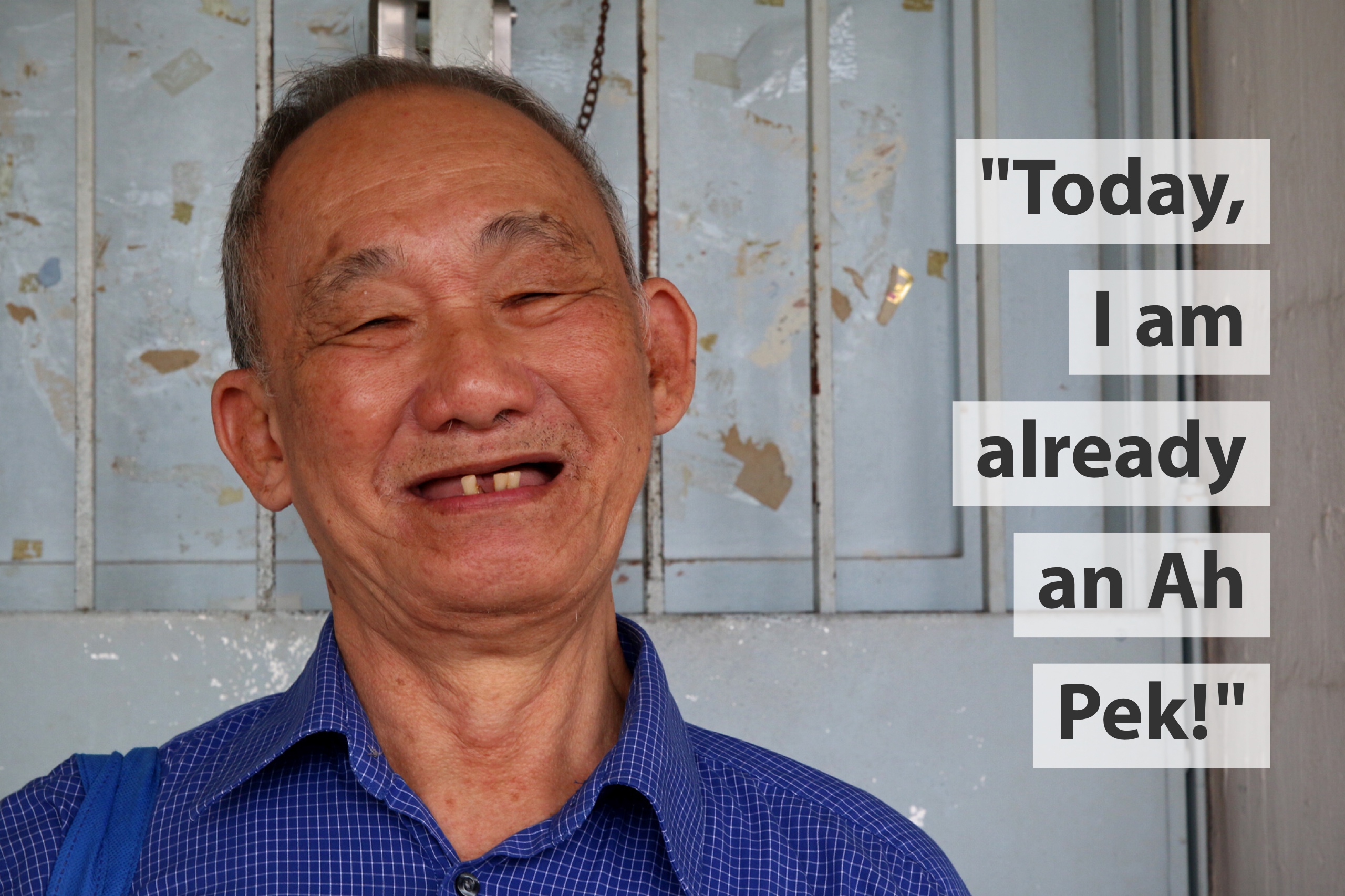
Like Mr Pang, Mr Chan moved to Rochor Centre 39 years ago and has called this place home till now. “Today, I am already an Ah Pek (old man)!” he said, flashing a toothless grin.
When news of the acquisition first broke, it did not go down well with Mr Chan. He could not fathom the need for the North-South Expressway. “Even if there are no tunnels, cars can still move,” he said. “It has been like that for many years. The vehicles still go by and the traffic lights still work.”

But he was quick to add: “I believe the houses here are too old, so maybe if the authorities were to build a tunnel, the flats situated above it may collapse.”

MP Denise Phua, who said some residents have become “good friends” with her over the years, said it was “understandable” that many found it hard to accept the notice to relocate. “We have many elderly residents who have lived in Rochor for decades. It is understandable that they felt a loss, unsettling and at times upset about having to move.”

“I had many sessions with residents and the HDB to provide more information and to be the conduit to express their concerns to HDB. It was a very busy season,” she said.

Where she could, she gave voice to their concerns in Parliament as well. “Many of the SERS regulations and practices, back when the Rochor SERS was announced, were fairly old,” she said. “For example, the ‘ancient’ practice of sticking a notice on the door of the flat, although done for decades, were offensive to the residents. This was soon changed.”
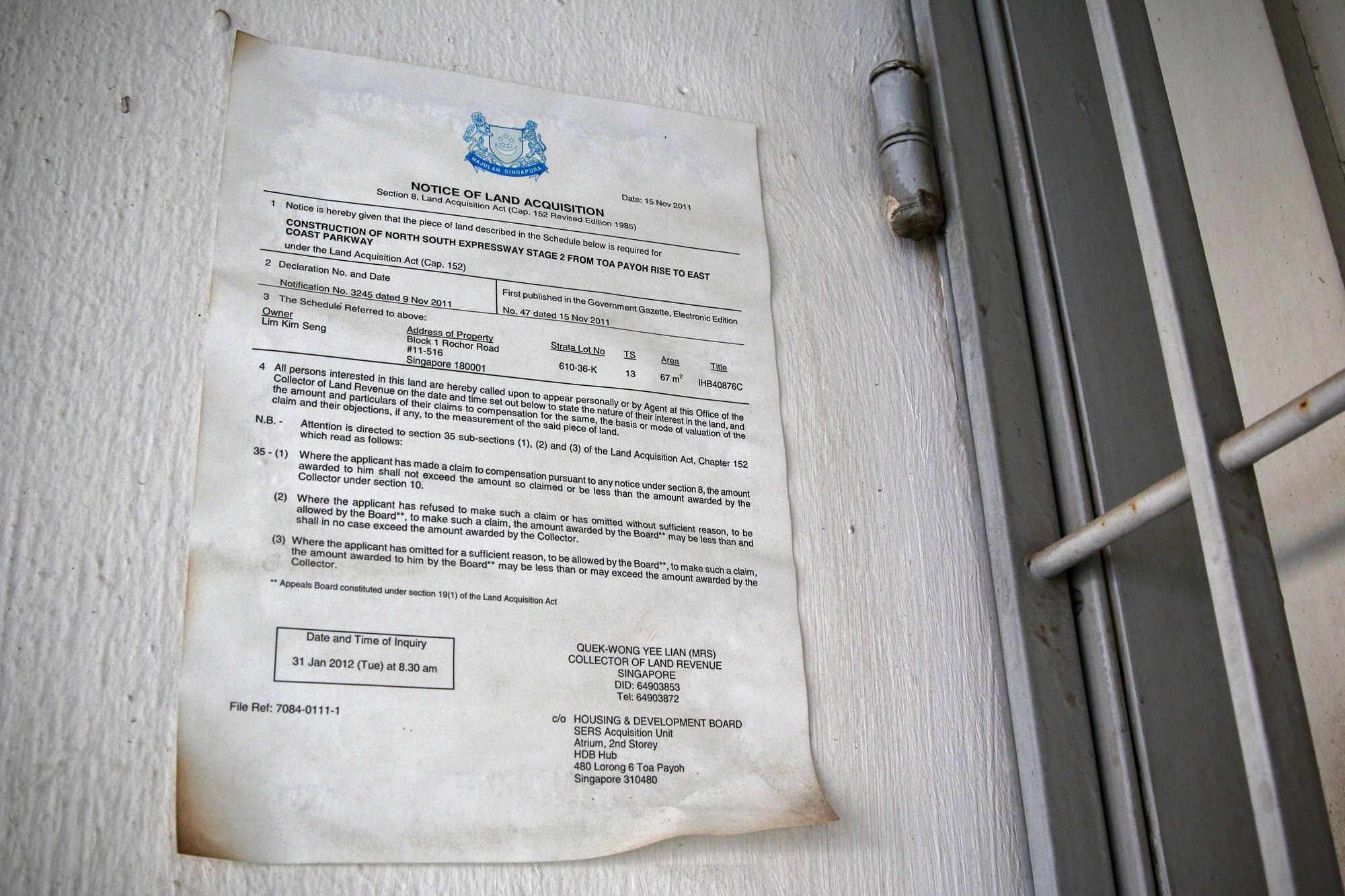
Affected residents were only presented with one relocation option early on – Kallang Trivista. “I thought that was not right since the call to relocate is not the residents’,” Ms Phua recalled. “Some of them may have children living elsewhere and wish to reside near them. Some may not wish to move to the designated one-choice new estate. Thankfully, (then Minister for National Development) Khaw Boon Wan agreed with me and soon, a major policy shift to allow the affected residents to select BTOs or other new flats in other housing estates.”

In 2012, Minister Khaw announced that Rochor Centre residents would still enjoy the same relocation benefits – including the price discount – even if they choose not to relocate to the new flats in Kallang.

“Since then, all residents affected in other SERS projects could enjoy these new provisions. I am very grateful to Minister Khaw and his team,” Ms Phua added.

She also gave special mention to NTUC FairPrice for keeping its outlet at Rochor open till end-November despite seeing dwindling business. “They were losing money, even with some support from HDB, (but) continued to stay on to serve my residents due to my appeal and (NTUC FairPrice CEO) Seah Kian Peng’s graciousness.”

(All photos: Xabryna Kek)

HIPSTER HANGOUT

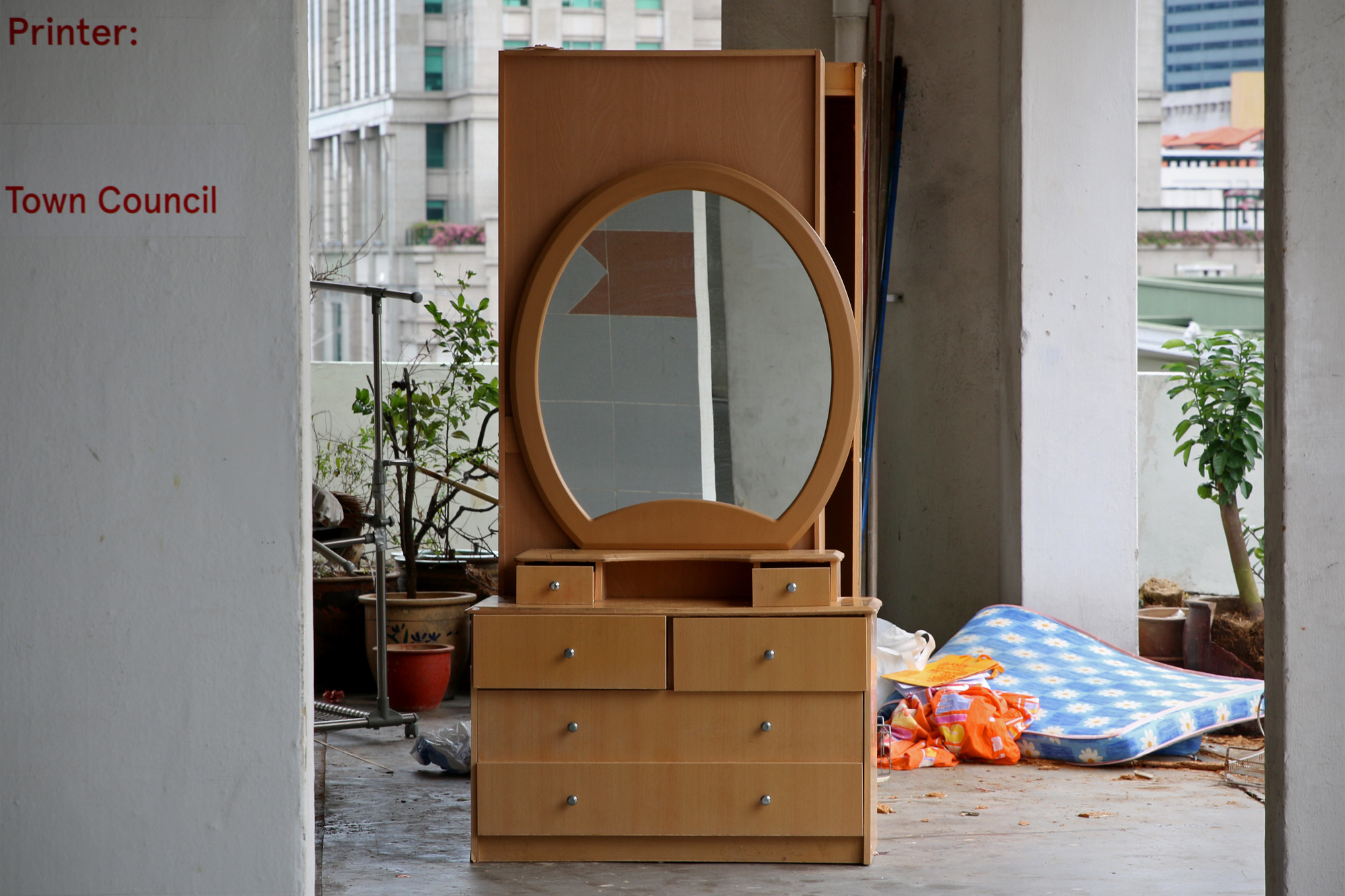
Even as residents pack up, leaving a trail of unwanted belongings and worn-out furniture in their wake, several members of the public have flocked to Rochor to snap photographs for posterity.

“During the weekends or on public holidays, I’d look out of my window and think ‘Oh, there are people here again’,” said Wen Qing, adding that he makes the effort to chat with visitors and share memories of the estate.
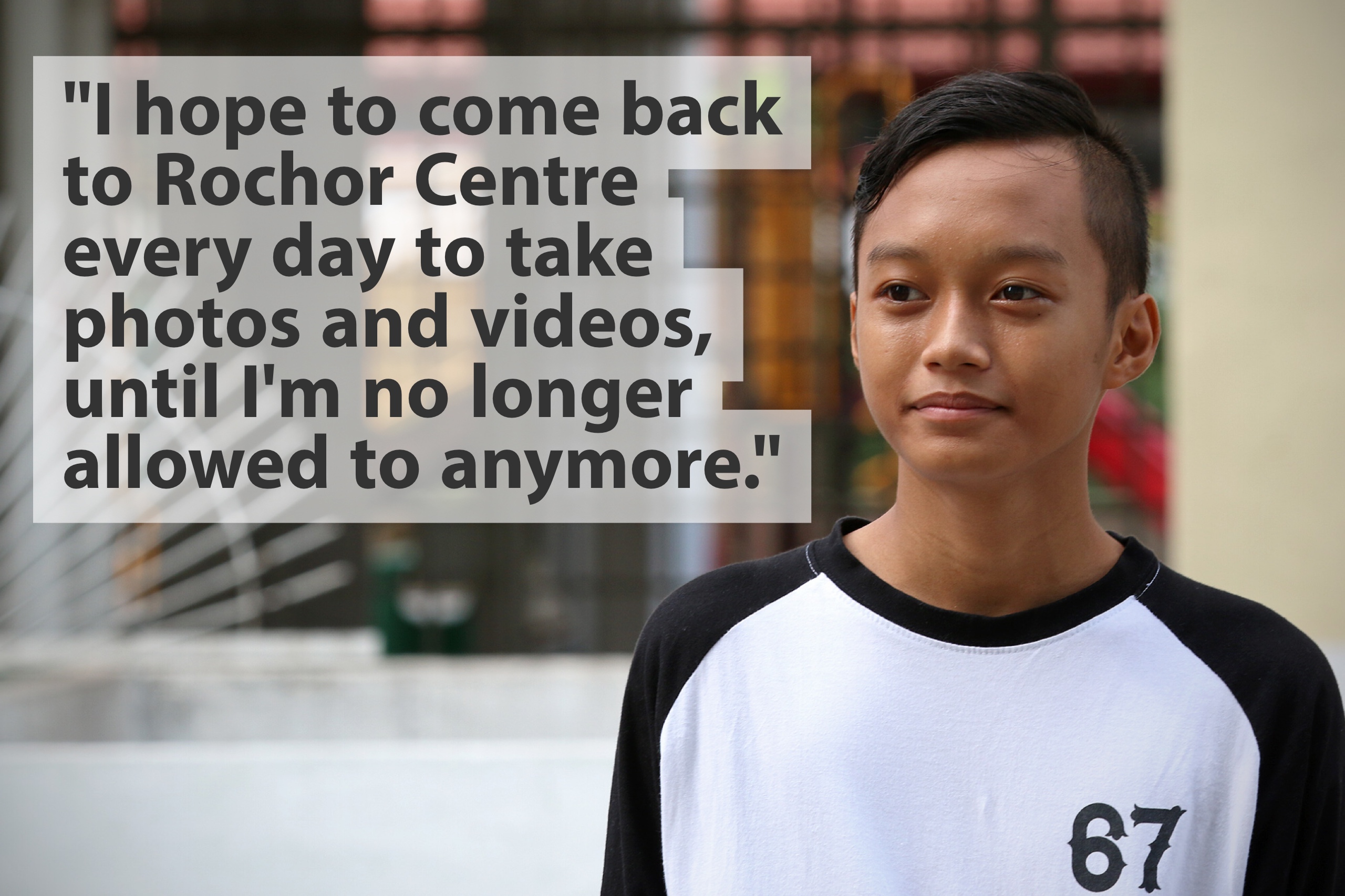
Even after he moves out, he plans to visit his old neighbourhood for as long as he can, until the area gets barricaded, and is no longer safe to access. “I hope to come back to Rochor Centre every day to take photos and videos, until I’m no longer allowed to anymore. Then, I will stop visiting this place.”


Source link

ISIS may set up terror base in South-east Asia, Malaysian defence minister warns

0

KUALA LUMPUR – The Islamic State (IS) is now “desperate” and may be looking to the ASEAN region as its next terror base instead of the Middle East, says Defence Minister Datuk Seri Hishammuddin Hussein.

“The Abu Sayyaf and other terrorist groups have stated their support for the Islamic State.

“If they (IS fighters) flee from Iraq and Syria as what is happening now in Aleppo, Mosul and Raqqa, I hope the co-operation between ASEAN countries can be increased as there is a possibility that they might create an Islamic Caliphate in our region,” he told reporters after attending the 2016 graduation ceremony of offi­cers at the Royal Military College (RMC) here yesterday.

“That is why a strong regional co-operation among ASEAN countries is vital to prevent this from happening. We have to co-operate closely to make sure these worries do not become a reality.

“They (IS) are quite desperate. If they have already gained a foothold in the region, by then it will be too late.”

Hishammuddin said one example of ASEAN co-operation on the issue was the trilateral agreement between Malaysia, Indonesia and the Philippines, where they would conduct coordinated patrols, joint patrolling and hot pursuits.

“These three SOPs (standard operating procedures) have been agreed upon and is now at a level that we have never seen before,” he added.

On news reports that China is placing military assets on islands in the South China Sea, Hishammuddin said his letters to his China counterpart, Minister of Defence and State Councillor Gen Chang Wanquan, and US Secretary of Defence Ashton Carter would be referred to the Foreign Ministry.

He added that the South China Sea dispute on the overlapping claims on the islands fell under the purview of the Foreign Ministry.

“But our navy will work to ensure that there are no untoward incidents in the South China Sea,” he said.

It was reported that Malaysia would seek clarification from China on claims it was placing military assets on disputed islands in the South China Sea.

Reuters reported on Wednesday that China appeared to have installed weapons on the seven artificial islands in the South China Sea.

Image: 
Category: 
Publication Date: 
Sunday, December 18, 2016 – 09:45
Keywords: 
Send to mobile app: 
Source: 


video embed code: 
<iframe width="100%" height="355" src="https://www.youtube.com/embed/auetoNXoQM8" frameborder="0" allowfullscreen></iframe>
Video Media: 
Other Video Media
Story Type: 
Others

Source link

Indonesian representatives mull premarital sex ban

0

Jakarta – Should Indonesia outlaw sexual relationships between unmarried couples? Should the state punish those who engage in promiscuity?

Members of the House of Representatives, many of whom have themselves been embroiled in sex scandals, will decide the answers to these questions having begun deliberation on “morality” articles in the Criminal Code (KUHP) bill on Wednesday.

With the country turning more conservative, the majority of political factions at the House said they favoured the idea of expanding the current legal definition of zina (adultery) to include sex between unmarried couples.

In the current KUHP, the term zina only covers sex between a married person and another person who is not their legal spouse.

Six political parties – the Prosperous Justice Party (PKS), the National Awakening Party (PKB), the National Mandate Party (PAN), the United Development Party (PPP), the NasDem Party and the Hanura Party representing more than 50 per cent of seats at the House – said they supported the government’s proposal to protect morality by outlawing sex before marriage.

Article 484 paragraph 1E of the KUHP bill, which is being drafted by the government, stipulates that men or women who engage in sexual intercourse outside of a legal marriage can be jailed for up to five years.

“We know that we live in a plural society. Some people don’t have problems with sex outside marriage, but some others just can’t accept it because of religious considerations.

“The legal basis of the Criminal Code will prevent them from taking violent action, like arbitrarily arresting or burning those unmarried couples,” lawmaker Arsul Sani from the Islamic-based PPP said on Wednesday.

“Moreover, I’m sure that all people know that having sex outside legitimate marriage is immoral and the law should reflect morality and social beliefs,” he added.

The government said the article would not violate civil liberties, as such a crime would only be investigated if there was a formal complaint filed by a third party, such as family members or local residents who felt “disturbed and threatened” by it as it was against “social norms”.

Muladi, a former law and human rights minister who is acting as a government representative in the deliberation of the bill, claimed that Indonesia, located in Asia, could not accept the western concept that sex outside marriage was fine.

“Here in Indonesia, we should also recognise social victims, the people in the surroundings that feel uncomfortable with it, particularly if there are children and teenagers,” Muladi said.

Image: 
Category: 
Publication Date: 
Sunday, December 18, 2016 – 09:33
Send to mobile app: 
Source: 


Rotator Image: 
Story Type: 
Others

Source link

LTA removes requirement for taxi drivers to clock a daily minimum mileage

0

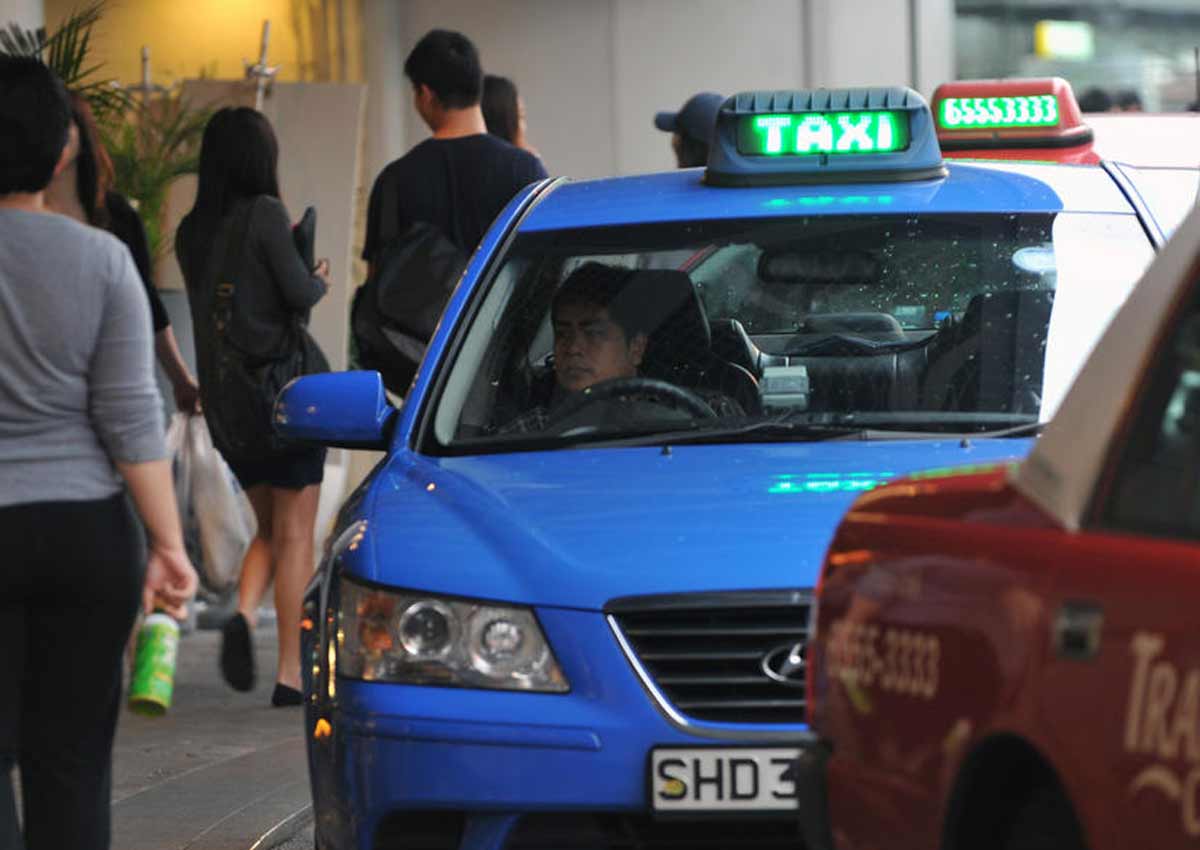
SINGAPORE – Taxi drivers will not be required to clock a minimum daily mileage starting from next year (2017).

The Land Transport Authority (LTA) said on Saturday (Dec 17) that it will be simplifying its Taxi Availability (TA) framework and scrapping the requirement for cabbies to ply at least 250km every day.

The authority explained that in recent years, taxi booking apps have enabled a better matching between cabs and commuters.

There are also more options for commuters such as private-hire car services the likes of Uber and Grab, the LTA added.

While the daily minimum mileage requirement will be scrapped, the LTA said it will maintain regulations requiring the bulk of a taxi operator’s fleet to be on the roads during peak hours.

It will, however, simplify this by removing the requirement for what is called the “shoulder peak”, of between 6am and 7am, and 11pm and midnight.

Between the peak periods of 7am to 11am, and 5pm to 11pm, taxi operators have to continue to ensure than 85 per cent of its fleets are on the roads.

The TA framework was introduced back in 2013 to help commuters get a taxi.

The LTA said that with TA, the percentage of taxis on the road during peak hours has increased from 82 per cent in 2012, to 93 per cent in the first nine months of this year.

The move was welcomed by the National Taxi Association (NTA), which said that the revisions will help cabbies to minimise empty cruising.


This article was first published on December 17, 2016.
Get a copy of The Straits Times or go to straitstimes.com for more stories.

Image: 
Category: 
Publication Date: 
Sunday, December 18, 2016 – 09:12
Keywords: 
Send to mobile app: 
Source: 


Story Type: 
Others

Source link

WATCH: Bruno Mars Straight Funking It Out In Carpool Karaoke With James Corden

0

Bruno Mars brings the popular Carpool Karaoke with James Corden to another level.
Bruno Mars with his charming and sexy tunes singing beats

  • 24K Magic
  • Locked Out Of Heaven
  • Grenade
  • Versace On The Floor
  • If I Knew
  • Uptown Funk
  • Perm

    Can not wait to see the actual 15 mins of video? Check out the YouTube link.

    https://youtu.be/AFxCO_DyzYM

Health Hacks: Using Hydrogen Peroxide to remove harden Ear Wax

0

logo
Earwax, also known as cerumen, is a yellowish waxy substance secreted in the ear canal of humans and other mammals. It protects the skin of the human ear canal, assists in cleaning and lubrication, and also provides some protection against bacteria, fungi, insects and water.

Earwax consists of shed skin cells, hair, and the secretions of the ceruminous and sebaceous glands of the outside ear canal. Major components of earwax are long chain fatty acids, both saturated and unsaturated, alcohols, squalene, and cholesterol.[2] Excess or compacted cerumen can press against the eardrum or block the outside ear canal or hearing aids, potentially causing hearing loss.

The hydrogen peroxide or hydrogen peroxide is highly recommended to relieve pain and eliminate the excessive accumulation of earwax.

To do this, you need to fill a glass of water warm in half, then add it to the hydrogen peroxide to the other half and pour into a dropper. Lie down on the side then, pour the drops in the ear and let sit for 5 minutes, then turn yourself so that liquid can come out of your ear. Rinse the affected ear with lukewarm water to finish.

Before you try this there are a few notes of caution. First, never use a peroxide solution higher than 3%. Second, if your ears are very dry, you should not use peroxide at all. Instead, try a drop of mineral oil which should help to restore the natural wax level. And third, if you are having any problems with your ears, be sure to consult a doctor.

Removing a bit of excess wax is one thing, but taking matters into your own hands when it comes to personal health, without consulting a professional, is never a good idea.