Home Blog Page 2137

Refusing to pay ex-wife not the way to see son: Judge

0

A father was willing to be taken to court to settle a $4,134 tuition bill, claiming it was the only way to get his former wife to engage him over access to their son.

The man claimed the “last meaningful contact” with his son was eight years ago.

The former wife had filed an application to get the court to enforce a 2010 court order which requires her former husband to foot half of the child’s tuition and enrichment expenses.

“It appeared for the (former husband), this enforcement application was not about money per se, but his (alleged) utter lack of access to their son who is now 17-years-old,” said District Judge Kathryn Thong in judgment grounds released on Wednesday.

She said the case stood out because the man could afford the bill since he earned at least $10,000 a month.

The case was also notable because even after their divorce six years ago, they continued to be bound in acrimony by the litigation involving numerous applications over the years.

The former husband said he refused to settle his share because he was not consulted first.

His lawyer A. Rajandran said the man cannot be made to “helplessly” and “blindingly” pay for expenses he had never been consulted on.

The former wife, who appeared in person, countered that she was not required to consult him but had to only produce the receipts.

District Judge Thong said the judge who made the 2010 order clearly intended for payment to be due upon production of the receipts.

She explained that if the former wife had failed to consult the former husband, “his recourse would be to invoke the penal notice, not to withhold payment”.

The judge ordered him to pay for 21 of the receipts produced, pointing out that the hearing was an enforcement application, but also noted on balance that the former wife had failed to consult him.

Mr Rajandran had argued that consultation is the “last semblance of contact” and the former wife would only acknowledge her obligation to consult if her claims were disallowed.

He added that this would enhance future cooperative conduct and can only be “conducive to the welfare of the child”.

District Judge Thong, who noted that the former wife had had more than 10 lawyers before, “found her evidence to be unreliable on the issue of consultation as she was particularly evasive about it”.

But she added that whether the former wife has made it impossible for the man to see his son is not relevant to the application for payment of half the tuition fees.

“But I would add that there are legal avenues to vary the 2010 order or to deal with the (former wife’s) supposed breaches. Withholding payment is not the solution and is effectively a back-door enforcement against the (former wife) for failing to consult, and would be improper.”


This article was first published on Dec 30, 2016.
Get a copy of The Straits Times or go to straitstimes.com for more stories.

Category: 
Blurb: 
Publication Date: 
Friday, December 30, 2016 – 16:00
Send to mobile app: 
Source: 


Story Type: 
Others

Source link

Indonesia braces for new outbreak of bird flu

0


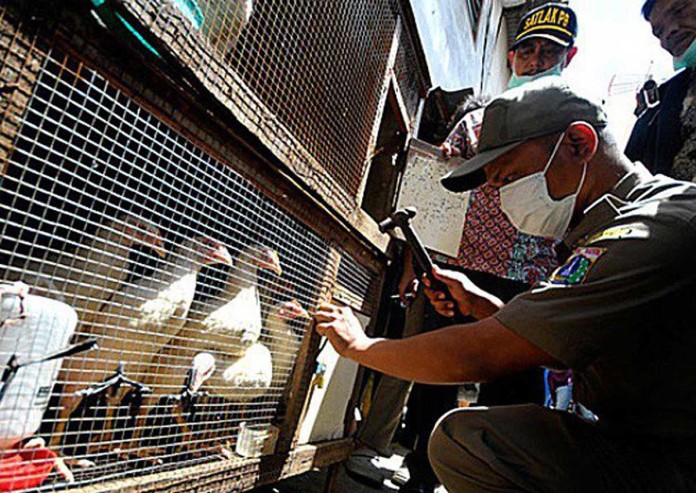
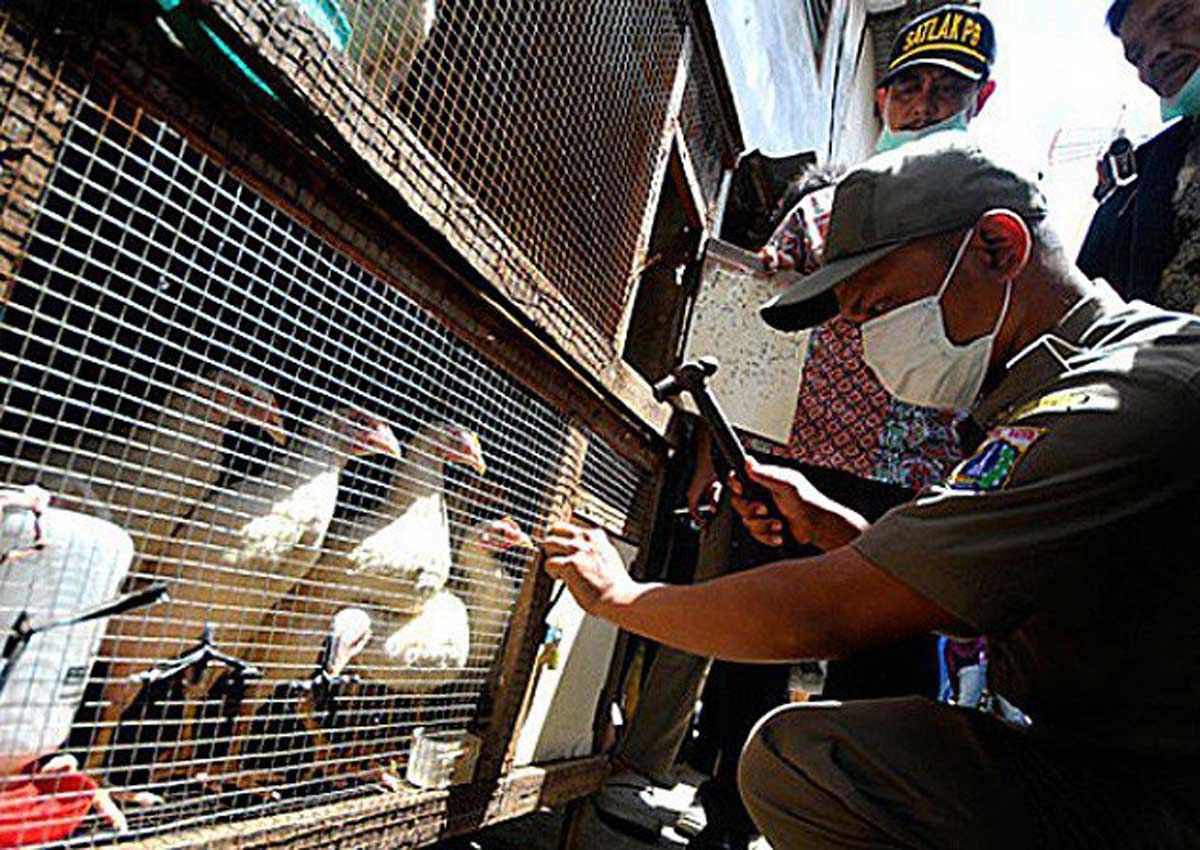
With new reports of human infections in China, Indonesia says it is supporting the return of avian flu, which is expected to be a major health risk next year.

The Ministry of Health said bird flu was the most concerned about its disease in 2017.

“If we talked about next year, we’ve seen trends, and we’re most concerned about bird flu,” says Muhammad Subuh, director of disease control for the department.

He said Indonesia should be cautious because of an outbreak in China, at least seven people were reported to have contracted the virus, and two had died as a result of the disease.

“There is an avian flu outbreak in China and a high mortality rate. We are looking at this trend by looking at a number of countries and we are in a position to match Indonesia, which is why we have to be prepared,” Subuh said.

Prior to March 2013, H7N9 avian influenza virus was not detected in Chinese humans or animals.

Since then, China in the end of 2013 to early 2014, a large-scale avian influenza outbreak, killing 36 people were killed, resulting in the loss of the agricultural sector more than 6 billion US dollars.

A recent outbreak of the virus in South Korea resulted in the government ordering 1.6 million destroyed birds on Monday, the country’s largest poultry slaughter.

The latest culling In the first confirmed outbreak on 18 November, the total number of birds destroyed will be reduced to 26 million. Isolation and hygiene restrictions are imposed after the initial case, but the flu has spread.

After the outbreak, the World Health Organization has advised travelers to avoid poultry farms in countries known to have avian flu outbreaks, to come into contact with animals on live birds markets, to areas where poultry may be slaughtered, or to surfaces that appear to be contaminated With poultry or other animal faeces.

“Travelers should also routinely wash their hands with soap and water and follow good food safety and good food hygiene practices,” it said in a statement.

In spite of the outbreak, WHO did not recommend special screening at the point of entry, nor any travel or trade restrictions.

For the first time in 2005, the first infection of Indonesian avian influenza transmitted by the H5N1 virus was first detected.

In 2006, the country had an infectious disease peak, with 55 deaths and 45 deaths.

There were also concerns of human-to-human transmission.

After the outbreak of poultry and human subsided.

The country’s latest case is documented in 2015, with two deaths, one adult and one child in Banten Grande.

Between 2005 and 2016, bird flu has infected 199 people in Indonesia and 167 people have died, according to the Ministry of Health.

WHO also encourages countries to continue to strengthen influenza surveillance, including monitoring of severe acute respiratory infections and influenza-like illnesses, and to carefully examine any unusual patterns to ensure that human infections are reported and that national health preparedness actions continue.

According to the WHO recommendations, the Indonesian government plans to start the influenza prevention program.

The first step of the plan is to establish an Epidemiologist Operation Center (EOC).

Read: South Korea’s first bird flu alert to the highest level

“In January 2017, we will set up a 24-hour EOC that will monitor all Indonesia, which will be the only disease surveillance agency in Indonesia that has a monitoring method,” Subuh said.

In the operation of the Equal Opportunities Commission, the Indonesian government will work with the US Centers for Disease Control and Prevention (CDC), as well as other disease control and prevention agencies in Europe and East Asia.

“So they can give us information,” Subuh said.

Image:

Category:
Publication Date:
Friday, December 30, 2016 – 15:29
Send to mobile app:
Source:

Story Type:
Others

Source link

Cable TV? No, give me Netflix please

0

For a long time, Singaporeans have been watching television and films at home either on free-to-air channels or via a cable TV subscription.

Then, in January, American streaming service giant Netflix went live in 190 territories around the world, including Singapore, and shook up TV viewing habits here.

Suddenly, viewers could access hundreds of programmes on demand and on the go using their smartphones, tablets and laptops – all at an affordable price of about $11 a month.

Netflix users could also cancel or renew their subscriptions at any time – a much more flexible option than the complicated subscription-pack model used by pay-TV operators StarHub and Singtel.

Of course, pockets of viewers have accessed the American version of Netflix using VPN (virtual private network) before, but that was limited to the tech-savvy crowd.

Given the ease with which the average Singaporean can now use the service, Netflix has been giving pay-TV operators some serious competition.

StarHub has actually been running its own Web streaming service, StarHub Go, since August last year, but the impact of its launch was not felt as strongly as Netflix’s, given that many people already have StarHub television subscriptions via the established set-top box route.


Still, the fact that StarHub even launched a Web pay-TV platform at all is a clear sign that Singaporean TV audiences are increasingly going online.

It is therefore no surprise that so many Internet streaming services have launched here this year, following Netflix’s much-hyped introduction.

Hong Kong’s Viu debuted a week after Netflix, giving audiences access to a wide library of Asian TV titles, including one of the hottest Korean dramas of the year, Descendants Of The Sun, starring Song Joong Ki and Song Hye Kyo.

In August, Taiwanese on-demand service Catchplay started operations here, introducing viewers to a wide selection of movies from around the world.

Last month saw the launch of streaming service Hooq, a joint venture among Singtel, Warner Bros Entertainment and Sony Pictures Television.

It has a catalogue of more than 20,000 films and TV series from Asia and beyond.

Earlier this month, Amazon also launched its Prime Video service, which offers award-winning Amazon TV originals such as dramedy Transparent (2014 – present), on top of a vast library of film and TV content.

As a recent survey commissioned by subscriber management specialist Paywizard indicated, Singaporeans are one of the fastest-growing audiences in the world for online pay-TV platforms, with the number of subscribers for such services here doubling in the past 12 months.

As there are so many streaming services offered by different companies, however, it remains to be seen whether their individual take-up rates will be high enough to keep them all sustainable.

Still, are the days of conventional television viewing via the set-top box numbered?


This article was first published on Dec 30, 2016.
Get a copy of The Straits Times or go to straitstimes.com for more stories.

Image: 
Publication Date: 
Friday, December 30, 2016 – 16:00
Keywords: 
Send to mobile app: 
Source: 


Story Type: 
Others

Source link

Madrasahs sending more teachers abroad to hone their skills

0

The madrasahs are looking beyond the shores of Singapore to give teachers a leg-up in training, venturing to places such as the United States and Japan, so that students in religious schools can match up to their peers in mainstream ones.

Since the Government’s pledge last year to work with the Islamic Religious Council of Singapore (Muis) to strengthen the teaching of secular subjects such as science and mathematics, and give financial aid to improve teachers’ skills, more teachers have been travelling abroad for training.

This year alone, nine madrasah teachers were sent overseas for training. Six went to the Research for Better Teaching centre in Boston, United States, a professional development institute, in July.

Meanwhile, another three went on an immersion study programme in Tokyo, Japan, last month.

This makes it the highest number of madrasah teachers sent abroad in a year, so far.

From 2011 to last year, about 20 madrasah teachers went overseas for conferences and training.

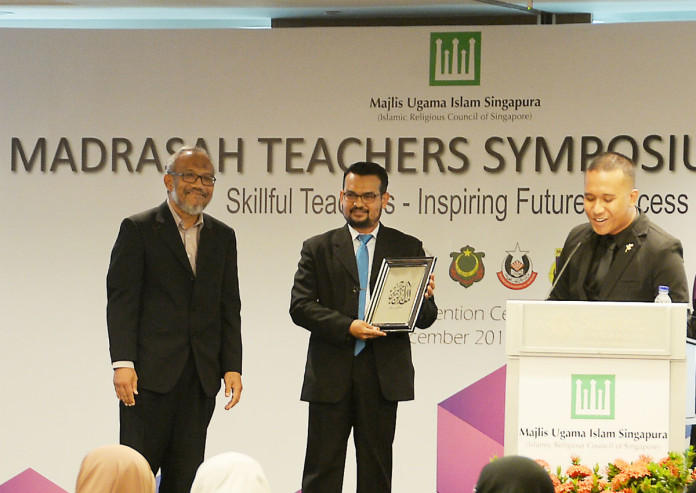
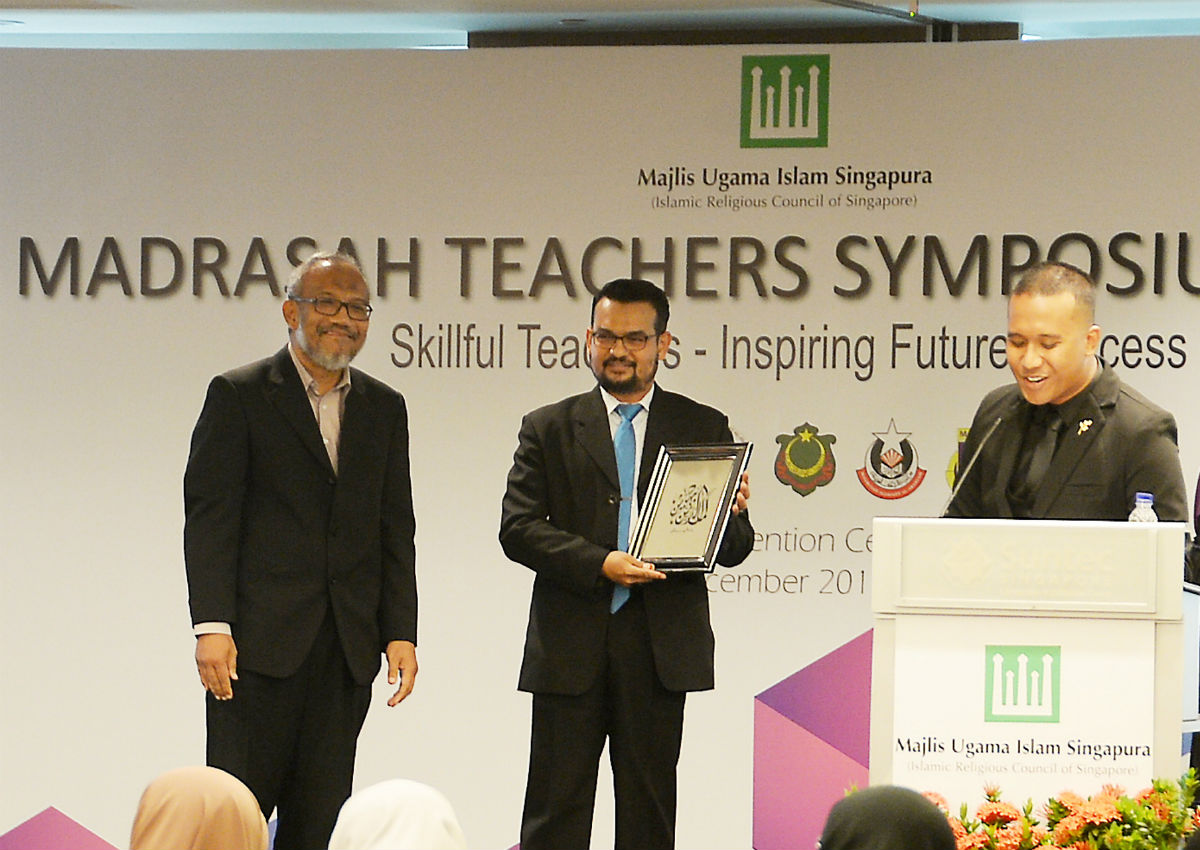
At the first Madrasah Teachers Symposium yesterday, held at the Suntec Convention Centre, Muis deputy chief executive Albakri Ahmad said that more than 90 per cent of the 250 or so madrasah teachers have a recognised teaching diploma from institutions such as the National Institute of Education.

This is in comparison to less than 10 per cent of teachers who had such qualifications back in 2003.

Over the past two years, the madrasah teachers have also been attending workshops on teaching skills and subject content, coordinated by Muis.

Ustazah Juyda Mohd Noor, the head of department for English and Malay at Madrasah Al-Maarif Al-Islamiah in Geylang, said that she valued the cross-cultural exposure that she received in the US.

“In Singapore, we are afraid to voice our opinions and ask questions in class because we think that we will be judged.

“But we saw how teachers reassured students that it was OK to fail and make mistakes, as long as they made an effort,” said Ustazah Juyda, 34, who has since been using the same method to encourage class interaction.

At the symposium yesterday, she shared with other madrasah teachers what she had learnt.

Muis has spent more than $3 million on training for teachers and madrasah leaders to date.

More of such symposiums to encourage sharing of knowledge among the six madrasahs here could be conducted in the future.

Despite fears that madrasah students will not be able to handle the demands of the Primary School Leaving Examination (PSLE) when it was made compulsory for them in 2008, they have done well, with 97.6 per cent of this year’s PSLE cohort being able to move on to secondary school.

yuensin@sph.com.sg 


This article was first published on Dec 30, 2016.
Get a copy of The Straits Times or go to straitstimes.com for more stories.

Image: 
Category: 
Publication Date: 
Friday, December 30, 2016 – 15:00
Keywords: 
Send to mobile app: 
Source: 


Story Type: 
Others

Source link

FairPrice extends Pioneer Generation discounts

0

NTUC FairPrice said yesterday it will be extending the Pioneer Generation discount scheme for another year, until Dec 31 next year.

The scheme will also be expanded to include Thursday from Jan 1.

Currently, the discount applies only on Monday.

Under the scheme, members of the Pioneer Generation enjoy a 3 per cent discount when shopping at FairPrice supermarkets, FairPrice Finest outlets and FairPrice Xtra hypermarkets.

The Pioneer Generation comprises the 450,000 Singaporeans aged 65 or older in 2014 who were citizens on Dec 31, 1986.

This is the third year that FairPrice has extended the initiative.

Close to $6.4 million in savings have been disbursed since its launch in 2014.

Mr Seah Kian Peng, chief executive of NTUC FairPrice, said pioneers save more with the inclusion of Thursday as it is “typically the day when attractive promotions are announced each week”.

Shoppers above 60 years old also get a 2 per cent discount on Tuesday under the seniors discount scheme.

These rebates come on top of existing initiatives – such as LinkPoints, membership discounts, purchase-with-purchase, Housebrand, Every Day Low Price and Yellow Dot products – to help shoppers maximise their savings.

Members of the Pioneer Generation will also get to use designated priority payment counters at FairPrice supermarkets and hypermarkets islandwide.

They just have to present their Pioneer Generation cards, provided as part of the Pioneer Generation Package from the Government, at cashier counters to enjoy the discount and priority queuing.

Mr Seah said: “We continue to honour our pioneers for their contributions to Singapore by providing them with greater savings for their daily necessities.”

fabkoh@sph.com.sg


This article was first published on Dec 30, 2016.
Get a copy of The Straits Times or go to straitstimes.com for more stories.

Image: 
Category: 
Blurb: 
Publication Date: 
Friday, December 30, 2016 – 15:00
Send to mobile app: 
Source: 


Story Type: 
Others

Source link

Running on a high: Prof Bala of NIE aims to develop track stars for Singapore

0

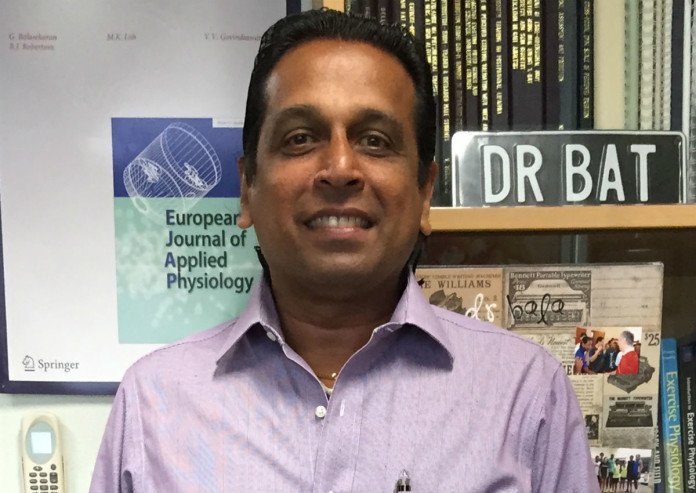
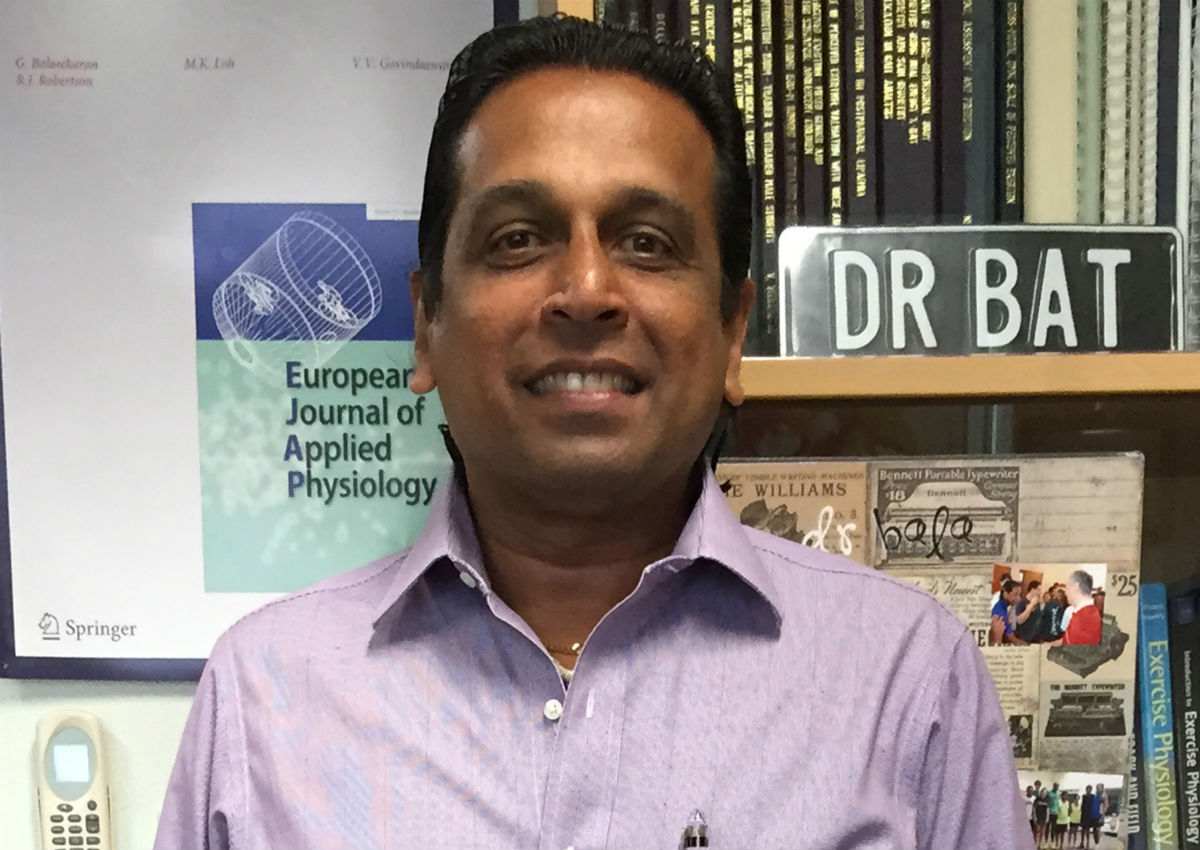
In a room at the end of a long corridor in one the National Institute of Education’s (NIE) buildings sits Prof G. Balasekaran.

The room is filled with memorabilia collected over the years.

Portraits of late singer Prince and images of Genghis Khan vie for space with that of the professor in his younger days – a slim figure with long hair.

That hair has since become shorter and Prof Bala (as he is popularly known) has put on some weight.

He is 53 but the former Singapore national champion in the 3,000m steeple chase still runs five to 10km four times a week.

Running is his passion.

He does it not just to keep himself fit.

He runs with his trainees who he wants to become champions in long-distance running.

Prof Bala is the Head of Department of the Physical Education and Sports Science (PESS) Academic Group, NIE and Programme Director of Sports Science and Management, NTU.

Trainee teachers with diploma, graduate and post-graduate qualifications are trained at PESS to teach physical education in the schools here.

The Sports Science and Management students are trained for the sports industry.

Some of the trainee teachers are taken under Prof Bala’s wings to train in long-distance running.

This is something that he has volunteered to do. And it has brought in good results.

One of those who trained under him, Eliza Ng, qualified for three events; 800 metres (6th), 1500 metre (6th) and 3000 metre steeplechase (8th) in last year’s SEA Games.

Said Prof Bala: “At NIE I teach anything to do with physiology.

So performance, adaptations, and ways to increase muscles and fitness are all part of it.

Now as part of my volunteer effort, I am nurturing a few youngsters.

This volunteer coaching helps me to know the ground as well as helps me to keep fit as I run with the athletes when they warm up and cool down.”

Running is something that Prof Bala has been fond of since his school days.

He used to play hockey and take part in track and field meets during his primary school days.

While at Anglo Chinese School he won the 3,000m and 2,000m steeple chase.

During his junior college days, he decided to focus more on running although he was still playing hockey.

He gave up team sports after NS to concentrate on running.

His logic: “I could control why I lost and won as opposed to a team sport where one is dependent on 10 other players to win or lose.”

So he trained hard in running.

Once he finished his NS he took part in the national athletic meet and was Singapore champion in the 3,000m steeple chase for five years.

He also represented Singapore in the 1,500m, 4x 1600m relay, 5000m, 10,000m and marathon races.

During this time he also took up a diploma in PE and taught at his alma mater, ACS.

But he felt he needed advanced training and also improve his educational qualification.

So he applied to the Indiana University of Pennsylvannia in 1987. Why this university?

“I had met a lecturer Ms Helen Gilbey who studied there and she advised me to go there to do a degree. I was about 22 then and I bought a one way ticket. The only problem was money,” he said.

His parents, from Thanjavur in Tamil Nadu, moved here and his dad worked in the Public Utilities Board.

To overcome the problem of money, he trained harder.

The university told him that if he finished in the top two in his pet event and the top seven in the cross country team, he would get a fee waiver.

He did it and became part of the university’s travelling team.

“This fee waiver helped me a lot and eventually I qualified and represented and ran in National Collegiate Athletic Association (NCAA) cross country championships in the USA,” said Prof Bala with pride.

He was away for five years finishing his degree and masters in sports science.

Once he finished his studies, he did not have a full-time job but worked in the college lab and also trained the local police in fitness.

That was when he got a call from ACS asking him if he was interested to take up a job at the school.

So he returned and taught again but not for long.

He headed again to Pittsburgh to do his PhD.

This time he got a Singapore government scholarship which meant he had to return to fulfil his bond.

After five years teaching at NIE the itch to learn more about sports science and improve his skills grew and he headed back to Pittsburgh to do post-doctoral research in molecular genetics with a world renowned professor.

Almost three years later, he got an email from NIE asking him if he was keen to come back to join the faculty and so he returned in 2006.

Teaching sports science and training athletes at NIE is not all what he does.

Prof Bala is also the vice-president (training & selection) of Singapore Athletics Association.

He feels Singapore needs to nurture a large pool of youngsters, especially from the schools.

With that strong interest and passion, Prof Bala set up the Cougars Athletics Association which is a non-profit track and field club that helps to groom, develop and nurture young athletes in Singapore.

He strongly believes in developing these young athletes to be the future stars of Singapore.

He added that sports in Singapore is on a steady rise and there is a need to train the next generation of Singapore athletes and provide them holistic development.

The animal that represents the association is cougar, which he said is mysterious and magical and also similar to symbol of Panthers of his alma mater University of Pittsburgh.

“Cougars are hard to spot in the wild. They are smart and amazing hunters. The athletes who are Cougars will possess such aptitude, values and qualities.

“I believe Singapore has the talent but we also need to encourage youngsters to stay in the sport for some time after their school days are over. We have to look into their career path and provide them with incentives,” said Prof Bala who is of the view that more money needs to be invested in getting specialised coaches for each category of athletics.

He said that the best time to start training youngsters is from the age of eight.

The trouble with training students who come to NIE, he said, is that they already have running habits “which I have to change”.

He added that in the US, when it comes to training children in athletics there is lot of parental involvement.

“If some parents here come up to me and ask me to train their children then I will be willing” he said.

Prof Bala has worked on human performance predictions for the last six years and has come up with a unique model to predict performance.

“I am in the midst of publishing these findings and I hope to use them in athletes in Singapore and the world in the future.”

But how long can athletes break records, is there a limit?

“Human beings evolve and adapt. I think they can go far but there are limitations.”

patrickj@sph.com.sg


Get a copy of tabla! for more stories.

Image: 
Category: 
Publication Date: 
Friday, December 30, 2016 – 14:15
Keywords: 
Send to mobile app: 
Source: 


Story Type: 
Others

Source link

Let students deal with setbacks on their own, says Ng Chee Meng

0

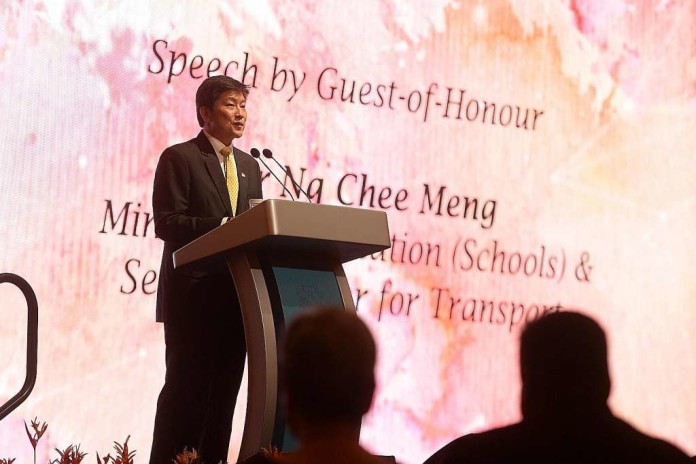
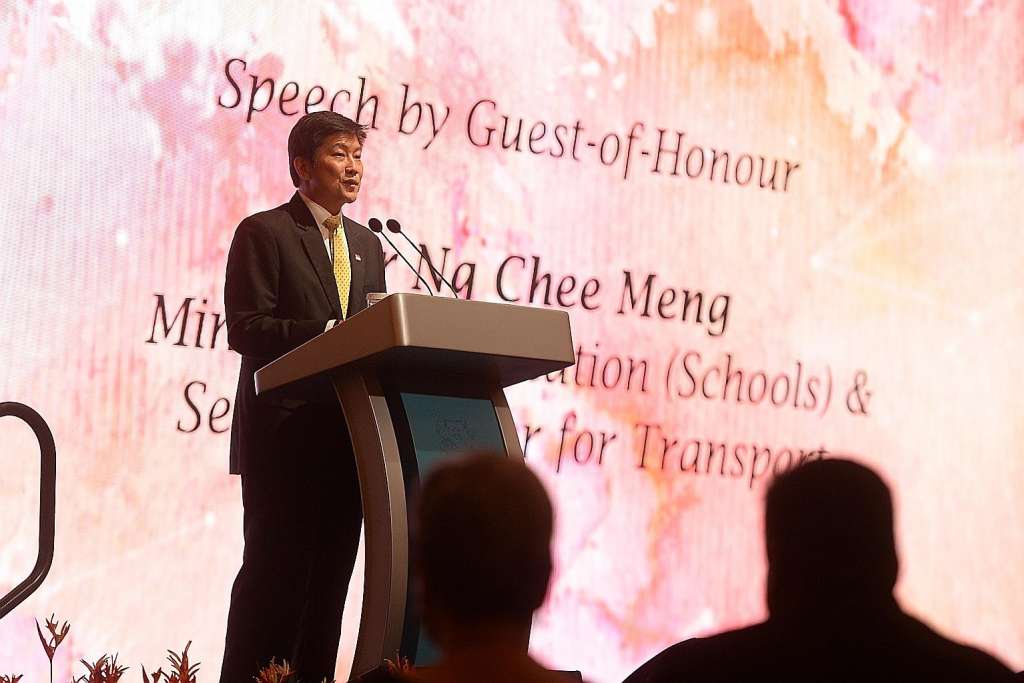
Give students the space to learn from their mistakes, find their own answers and put in the hard work to make solutions succeed – this was the call from Minister for Education (Schools) Ng Chee Meng to educators yesterday.

This will allow Singapore’s next generation to build the resilience to bounce back in a world that is increasingly having to cope with disruptive changes.

He also urged them to give students the chance to “initiate, take charge and act”, instead of simply following a script designed by the Education Ministry and schools, to help raise a rugged generation as well.

Speaking at the appointment and appreciation ceremony for principals, Mr Ng said education has to keep pace with changes in the way society works and lives.

But he admitted that nurturing resilience is not easy.

“Because it often requires us, whether it be parents or teachers, to take a step back and let our students learn to deal with challenges and setbacks on their own and not be too quick to intervene, no matter how good our intentions may be,” he told the audience of more than 500 people, most of them educators, at Shangri-La Hotel.

He also spoke of the need to prepare students for an increasingly connected and high-tech workplace to reduce the “growing skills gap between what we learn in schools and the jobs (graduates) are applying for”.

But skills mastery is just one aspect. Broader social skills and the ability to collaborate with those of different disciplines matter, too.

“Workplaces as a whole,” said Mr Ng, “will become more diverse and connected through social networks… People skills, an ability to communicate well with others from different cultures and backgrounds, will become increasingly important.”

He gave the assurance that his ministry will continue to place strong emphasis on 21st-century competencies, including critical and inventive thinking, communication and collaboration skills, as well as global awareness and cross- cultural skills.

The Applied Learning Programme, which introduces students to hands-on learning such as robotics in schools, is already helping to nurture innovation and entrepreneurial learning.

He said: “Let’s consider how these programmes can be bolder, more innovative, more impactful. How should schools encourage these to flourish?”

Educators agreed with the need to encourage students to learn how to bounce back and innovate.

Madam Rabiathul Bazriya Abubakar, 48, who will leave her post as principal of Seng Kang Primary School to helm Evergreen Primary, believes schools should create a safe environment for students to take risks, and “try that which hasn’t been tried and tested, to look for breakthroughs”.

She also believes that school leaders must create an environment that allows teachers to have autonomy and not penalise them for trying something new.

Then, students might innovate more too.

Underpinning this push for resilience and innovation involves fostering in students an innate curiosity and a thirst for lifelong learning.

Said Mr Ng: “Having a joy of learning and being curious all the time, built upon a strong academic foundation, will stand our students in good stead for life.”

tohwenli@sph.com.sg


This article was first published on Dec 30, 2016.
Get a copy of The Straits Times or go to straitstimes.com for more stories.

Image: 
Category: 
Publication Date: 
Friday, December 30, 2016 – 15:00
Keywords: 
Send to mobile app: 
Source: 


Story Type: 
Others

Source link

Cricket: The year that was

0

It was a year of conflict and achievement in Indian cricket.

Conflict dragged Indian cricket down and into the courts and lawyers threatened to become as important as cricketers.

It was a sordid, unhappy year with neither the Lodha Commission nor the BCCI willing to blink.

That kind of contest is a spectacle best reserved for the cricket ground.

Happily, achievement kept drawing attention towards itself, it replaced a frown with a smile and through the extraordinary performances of two players, ably supported by willing compatriots, took the on-field game to memorable highs.

There was much joy too from the West Indies and as Carlos Brathwaite smote Ben Stokes to distant corners of the field, happiness erupted beyond the Caribbean and into faraway houses where their style of play has many friends.

They just get T20, these West Indians, and they do a better celebration than anyone else.

The women joined in too, and by winning told the world that their game had moved beyond the traditional bastions of Australia, England and New Zealand.

The World T20 was a spectacular tournament, it gave the people what they wanted and closed the debate on whether or not it should be played every two years.

The mighty Australians looked a little less so in 2016.

I have admired their tenacity, their ability to look a situation in the eye from the time I started watching this sport.

But much like they did in India in 2013, they crumbled against Sri Lanka losing all three Tests, sent out the first 15 that caught the eye to South Africa and lost all five one-day internationals and against India, a contest between the two homes of T20 cricket, failed to win a single game either.

There were more Australian fast bowlers strewn around beyond the boundary than within it and there has hardly been a better time in their history to be a middle order batsman.

But cricket itself flourished. Test matches were well attended, and the latest edition of the Big Bash is on the way to becoming a blockbuster.

Australia, though, took the lead in playing day/night Tests and while their climate helps, their thinking did too.

Much to my joy, the pink ball was accepted and people turned up in large numbers to watch a game where dinner was, for over a hundred years, something you had after a match, not during it.

Much like the World T20 in India, the people had spoken. Wherever conditions permit, day/night Tests will henceforth become part of the calendar.

Many bright young stars emerged and told us that we must cherish the great performers of the past but not let us be imprisoned by their feats.

Haseeb Hameed, Babar Azam and young Mehedi Hasan, you wouldn’t have imagined some years ago that these three would represent three different cricketing countries and cultures, made us watch them as did the delightful Kagiso Rabada.

Lokesh Rahul and Jasprit Bumrah took their place at different ends of the batting order for India, Mitch Santner teamed up with Ish Sodhi in Nagpur to outspin India and Mustafizur Rahman announced himself with many wickets and few words in the IPL.

Away in South Africa, Mpumalanga’s Shania Lee Swart made 160 in a T20 game and her 10 colleagues weren’t needed to score a run.

You will never see a scorecard like that again.

An erudite engineer who spins words with the same intent as he did his off-breaks, became the first spinner to become the ICC Cricketer of the Year.

Ravichandran Ashwin was my joint player of the year for constantly raising the bar himself, a quality the genuine champions possess.

He brought back the thrill of watching classical finger spin and you almost waited to see what trick he had up his sleeve next.

Seventy-two wickets in 12 Tests (to go with 612 runs at 43.71 with two centuries) and a place in a crowded pantheon of great spinners appeared for Ashwin in 2016.

On the way, another baby arrived, obediently waiting while her father finished off another series before taking her place in the world.

Ashwin, and the delightful Rangana Herath, the shape of a chef, the guile of a magician and 56 wickets from 9 tests, made finger spin alluring all over again.

Virat Kohli had passion etched on every expression and with every shot held a country’s attention like few had before him.

It was a year he will never forget for every dawn brought runs with it.

The numbers were everywhere, the eyebrows constantly raised and many of us wondered if there was a landmark beyond reach at all.

Out of many, many extraordinary achievements in 2016, two stood out for me.

He made the centuries count in Test cricket, converting them to doubles and putting matches beyond reach of the opposition.

In doing so, he showed a generation younger than his, the many joys of Test cricket.

His average of 75.93 for the year though was to be annihilated.

In T20 cricket, he averaged 89.66 at a strike rate of 147.12 and he topped that with 92.37 in one-day internationals as he consumed run chases without indigestion.

So what was that second dazzling achievement if indeed one could pinpoint it?

It came in the IPL, a tournament where the text book is sometimes wilfully misplaced and balls fly in all directions like pigeons do when disturbed from the nothingness that defines their existence – 700 runs meant you had an outstanding IPL.

Kohli made 973 in 16 innings at 81.08 and a strike rate of 152.03.

You would have thought his bat was swung around like Jadeja’s is after a landmark.

Far from it. Kohli played the most wonderful orthodox shots, hardly ever losing his shape while hitting a cricket ball and redefined what could be achieved in T20 cricket.

My list is not done though.

For that I must take you to Perth, Australia, and to a Test match played in early November between South Africa and Australia.

The visitors come from a land in the throes of change and must constantly make peace with racial differences to move ahead together.

It is not easy as we saw during the World Cup in 2015 but they manage it.

The quotas in cricket were deemed regressive but politics so often over-rides sport.

Having to play men of colour (an appalling description that apartheid has bequeathed) was seen as a hindrance to sporting achievement.

But something remarkable happened over that week in Perth.

After they had made but 242, they saw Australia sail to 158-0 whereupon the mighty Dale Steyn got a wicket and soon thereafter left the ground never to return again in the series.

Things couldn’t be stacked more against the South Africans.

But life had a twist in store. Australia collapsed to 244, South Africa declared at 540-8 and proceeded to bowl the home side out for 361 to make it a great win.

So why have I spent so many words on a distant Test match?

Because after Steyn had to leave with a fractured right shoulder, the next 19 wickets were taken, dare I say it again, by men of colour, not one of whom would have played for South Africa a mere 25 years ago and a bit earlier.

Vernon Philander took 4-56 and 1-55, Rabada took 2-78 and 5-92, Keshav Maharaj had 3-56 and 1-94, JP Duminy followed up with 141 runs and 1-51 and even little Temba Bavuma, who had scored a fine half century in the first innings, took 1-29.

For telling me what is possible beyond the limitations in the mind, that was my event of the year.

tabla@sph.com.sg


Get a copy of tabla! for more stories.

Image: 
Category: 
Publication Date: 
Friday, December 30, 2016 – 14:02
Keywords: 
Send to mobile app: 
Source: 


Story Type: 
Others

Source link

Carrie Fisher’s dog Gary is at his new home, but he’s not tweeting

0


Though it was always pretty safe to assume that Twitter user @Gary_TheDog isn’t really Carrie Fisher’s beloved Frenchie pawing away at a keyboard, now we know for certain.

We also know that “Carrie Fisher’s Dog” is just a fan account – not connected to the family – because whoever’s been running it cleared things up once and for all.

on Twitter

“I should say that this account is not affiliated with anyone inside the family,” wrote @Gary_TheDog, who’s now up to 67,000 followers, Wednesday night.

on Twitter

As for the real Gary Fisher, the French bulldog that was always at Fisher’s side, he will be taken care of by Billie Lourd, Carrie’s 24-year-old daughter, TMZ reported Wednesday.

Also read: Still waiting for you: Carrie Fisher’s therapy dog mourns her death along with millions of fans

Apparently Lourd, the Scream Queens star who appeared with her mother in Star Wars: The Force Awakens, has a Frenchie of her own, named Tina – and the two are longtime best doggy friends.

on Twitter

Gary Fisher does have an “official” Instagram account, which is linked off of Carrie Fisher’s official website.

Fisher died Tuesday at age 60 after suffering a heart attack on a flight from London to LAX a few days prior. Her mother, Hollywood megastar Debbie Reynolds, died the following day after what appeared to be a stroke. She was 84.


Mashable is the go-to source for tech, digital culture, and entertainment content for its dedicated and influential audience around the world.

Image:
Category:
Publication Date:
Friday, December 30, 2016 – 14:00
Keywords:
Send to mobile app:
Source:

Story Type:
Others

Source link

Electricity charges for first quarter to go up

0

Households will pay a higher electricity charge of 5.6 per cent for the first quarter of next year.

The electricity tariff for January to March will be 20.20 cents per kwh, up from 19.13 cents now, SP Services announced today.

With the increase, the average monthly electricity bill for families living in a four-room Housing Board flat is expected to rise by $4.30, from $76.88 to $81.18.

On average, those living in single-room flats will pay $1.54 more a month, while families living in private apartments will pay $6.31 more.

The electricity charge of 20.20 cents per kwh for households is the highest in more than a year. This year, prices ranged from 17.68 cents to 19.50 cents per kwh.

“The tariff increase is due to the higher cost of natural gas for electricity generation, which increased by 10.6 per cent, compared with the previous quarter,” said SP Services.

SP Services said that on average, electricity tariffs will rise by 5.7 per cent across the board.

Tariffs are reviewed on a quarterly basis by SP Services, based on guidelines set by the Energy Market Authority.


This article was first published on Dec 30, 2016.
Get a copy of The Straits Times or go to straitstimes.com for more stories.
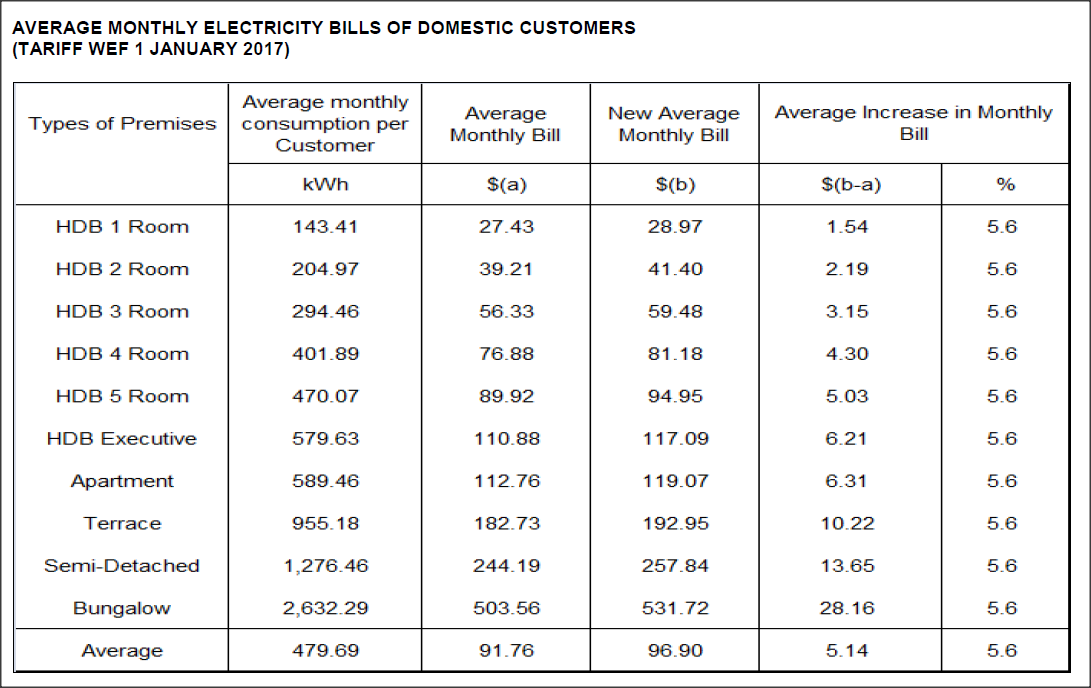
Image: 
Category: 
Publication Date: 
Friday, December 30, 2016 – 14:00
Send to mobile app: 
Source: 


Story Type: 
Others

Source link